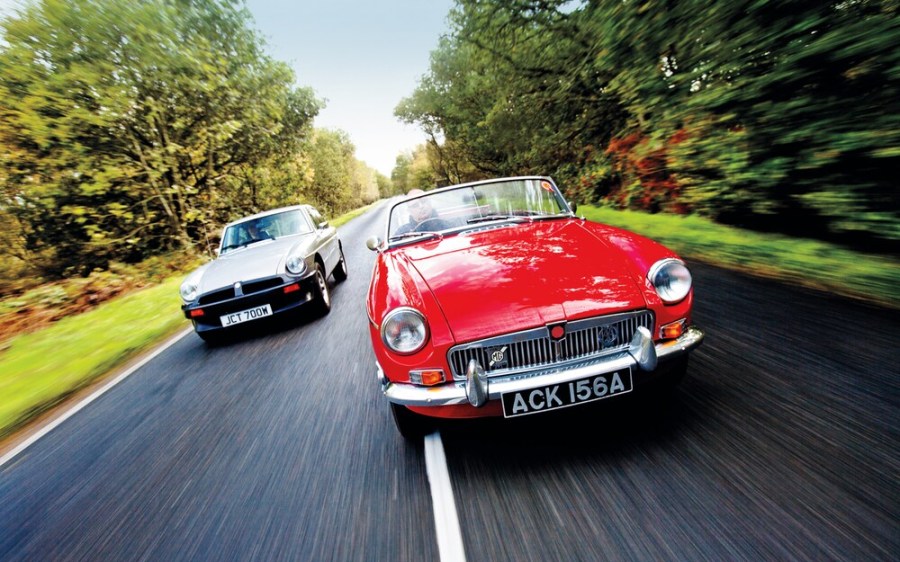
As we’re still in the first half of summer in the Northern hemisphere, the theme of a nice roadster continues to feel very timely. A few months ago I wrote about the legendary Triumph Spitfire, perhaps the easiest and cheapest entry into the British roadster tradition, and more recently we also looked at the forgotten Porsche 914, a German take on the roadster concept. This week we’re back in the UK for a slightly more robust alternative to the Spitfire that remains very reasonable budget-wise – the MGB. And you may be surprised to hear that the car we’re all somehow familiar with ranks as the UK’s most successful sports car ever!
It’s also very timely to look at the MGB right now, not just because we’re in the summer, but also since not only is it 100 years since the Morris Garages (MG) brand was founded, it’s also 60 years since the MGB was premiered. Originally however, MG wasn’t a proper car brand but rather a side kick to the regular garage business belonging to a certain William Morris in Abingdon, UK. In the side business, Morris and his colleagues would take boring Morris Oxford cars, work on them and hereby especially the chassis frame and transform them into if not sports, then at least sportier cars that they would then take to the race track on weekends.
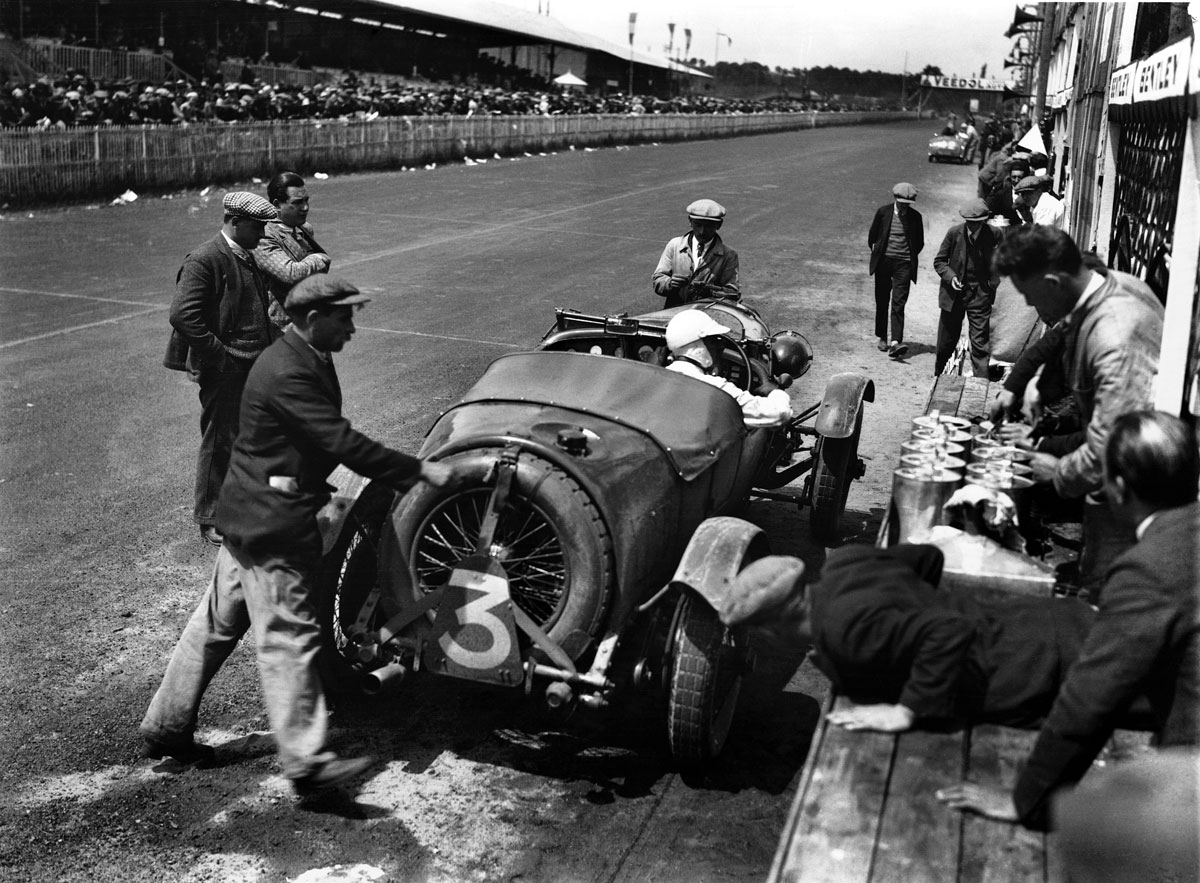
In the late 20’s the MG brand separated from Morris Garages and start to make a name for itself in on the racing circuit. It hereby also created a bit of a mystical reputation, often being talked about as a car company with a soul that was almost palpable when you entered the factory. Be that as it may, it was certainly a car company with guts, as the MG guys choose to race the MGB’s predecessor, the MGA, in prototype form at Le Mans in 1955, managing to finish the race with two cars. They continued to do well in 1956, the first official year of production of the MGA, notably in the Mille Miglia.
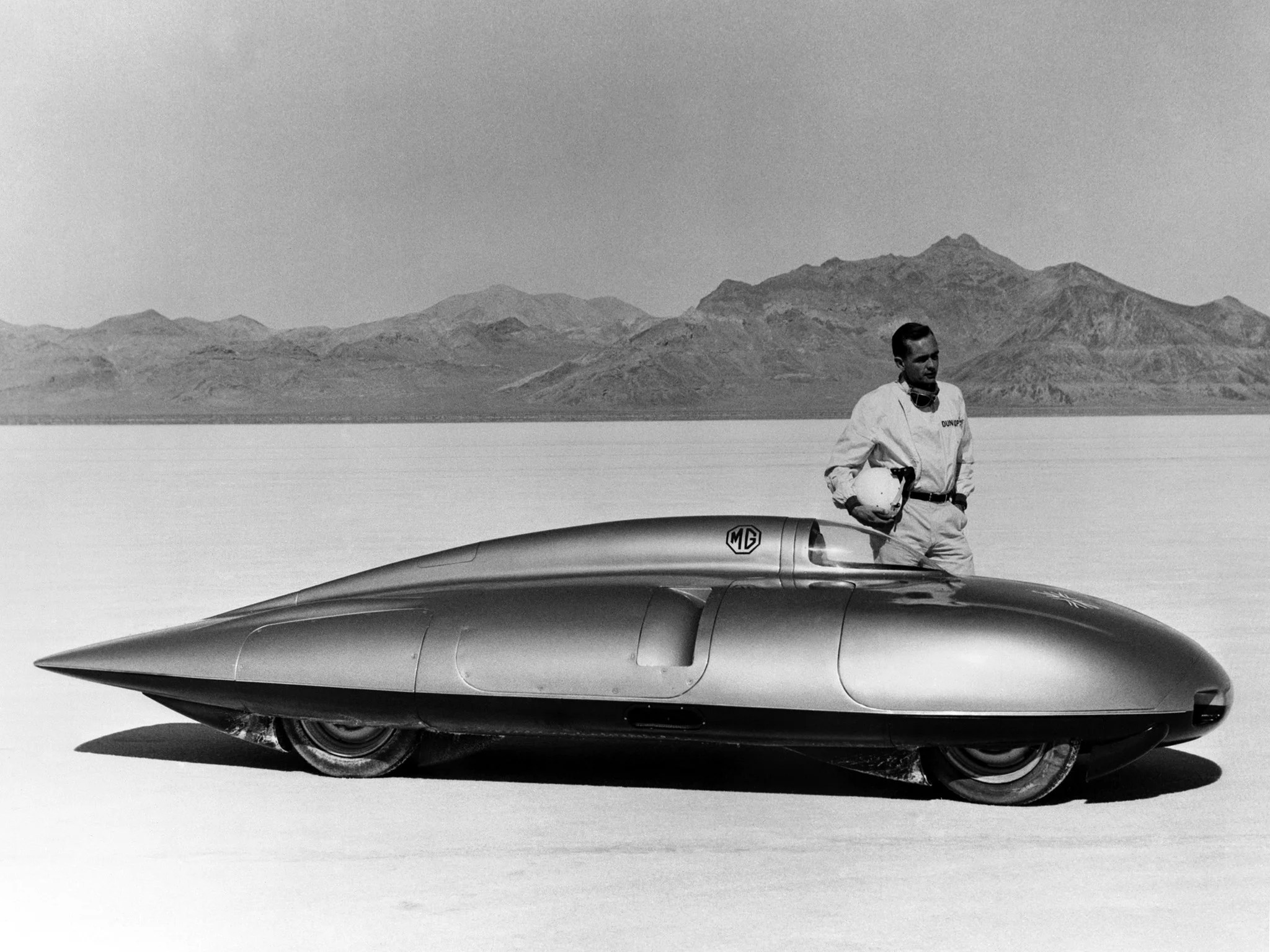
Fast forward to the early 60’s and MG had become part of BMC, later to become the British Leyland group, as was notably Triumph. The time was rife for a replacement to the MGA had come but before that, as a side project, MG built a machine called the EX-181 that looked like a soap and was powered by a 300 hp, supercharged engine. Driven by Phil Hill, the car would set a speed record of 254 Mph (408 km/h) on the Salt Flats in Utah, thereby also doing wonders for MG’s racing reputation. When MG introduced the new MGB roadster in 1963 as the MGA’s replacement, they actually claimed the design was derived directly from the EX-181, which is perhaps something that doesn’t exactly jump to the eye…
MG’s original plan was to use the MGA chassis for the MGB as well, but in the development process it was discovered that it didn’t leave enough designer freedom to create the wider but still low car they wanted the MGB to be. MG therefore re-thought the whole project and in the end, built the MGB as a monocoque rather than the traditional body-on-frame construction. One of the advantages of the new construction was enough strength to handle considerably bigger engines but as it turned out, MG would only make use of that in the MGB GT V8, more on that later.
The design of the new car was a purely internal affair, with no fancy Italian design houses involved. Basically the head of design brought his idea to the model maker, who in turn built a small model for approval by the CEO, after which he would do a full-scale model. The development would then start, leading to the finished car a few months later. Not many committees or Zoom meetings there! Even if the MGB didn’t really look much like the EX-181 record setter, most would agree that it’s a nice design, very roadster-specific and relatively timeless. It was also hugely successful notably in the US, to which MG started shipping around 40.000 cars per year in the mid-60’s, as compared to around 5.000 for the UK market.
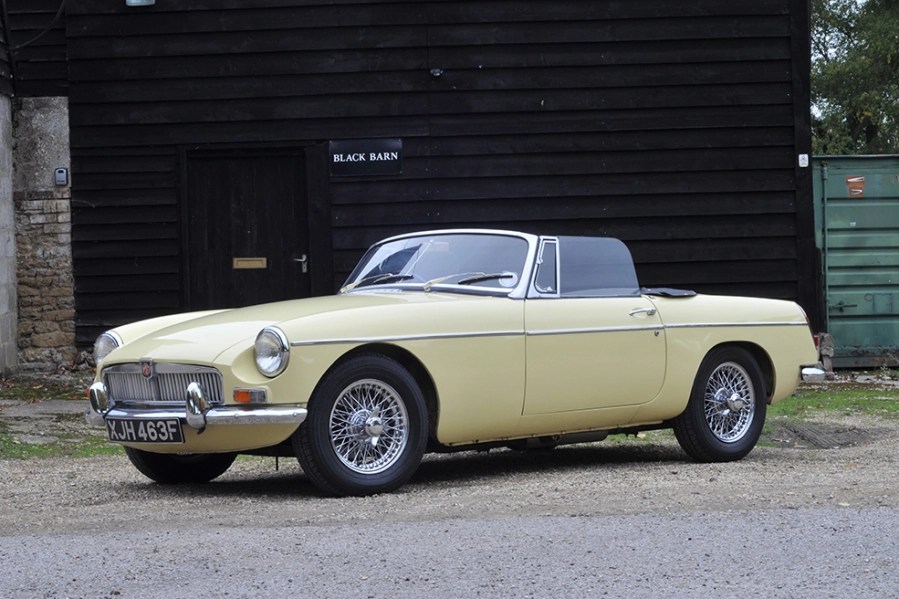
A selling point for the MGB was clearly the superior room both for people and their luggage that the relatively wide car body offered. Another was no doubt its relative simplicity. The power unit in the form of an 1800 cc, four-cylinder, transersal BMC engine was perhaps not very exciting as it was essentially a larger version of the engine used in the MGA. The 95 hp it developed were however sufficient, but when emission regulations became stricter in the crucial US market, the power number started dropping to just below 70 hp for MGB’s from the mid-70’s. The engine was coupled to a four-speed gearbox with overdrive available as an option, and disc brakes in the front were combined with drum brakes in the back.
To increase the appeal of the car, MG were set on offering the MGB also with a roof, but the MG guys didn’t manage to find a solution that looked attractive, so in the end the had to turn to, you guessed it, one of those fancy Italian design houses. Pininfarina created the MGB GT that was shown to the world three years after the roadster, in 1965. It was also the GT that in 1973 finally saw MG making use of that larger engine bay, by fitting the Rover V8 engine used notably in the Range Rover Classic in it.

The V8 may have been bigger but given it was an aluminium construction, it actually weighed less than the 1800 cc four-cylinder, meaning not many modifications were required. There were however various other problems, leading to very few V8’s being produced. On one hand MG could never get enough engines from Rover to build as many cars there was demand for, and on the other that demand quickly vanished with rising oil prices in the 70’s. In the end, the V8 would be taken out of production only two years later, in 1975, after no more than some 2.600 GT V8’s had been built.
Given the increasingly tough regulations not only on emissions but also on safety standards in the US, the 70’s weren’t kind to the MGB. I’ve mentioned the dropping engine power of the 1800 cc unit above, and added to that were some pretty horrific, moulded rubber bumbers that MG had to fit to the cars from 1975 onwards, replacing the stylish chrome model that had been used until then.

There were other, corporate problems as well, linked to a generally cash-strapped British car industry and other British Leyland brands such as Triumph that were given higher priority to develop the futuristic TR7, rather than trying to modernize the ageing MGB. And so the last MGB rolled out of the factory in Abingdon in 1980, and the factory itself closing its doors later the same year.
Between 1963 and 1980, no less than 387.000 MGB’s were produced, a record for any UK sports car. To that should also be added 125.000 GT’s, a pretty remarkable number given the far shorter production run, but only 2600 MGB GT V8’s. This is of course reflected in today’s prices with the V8’s being most sought-after. They start at roughly twice the USD/EUR 20.000 the four-cylinder roadster or coupé trade at in good condition. At that level it’s difficult to go wrong, as the MGB is also a simple and thereby economical car. Get a nice roadster version with chrome bumpers, and as a US MG commercial at the time would say: “at no extra cost, MG gives you the sun!”.
 The Thrill of Driving
Pingback: The UK’s most successful sports car! – MGB tips mods and maintenance