
One of the nice things with writing a blog that enjoys a growing circle of readers, other than boosting your ego, is that the chances increase by the week of actually meeting your readers in the flesh. Of course this has happened before in the circle of close friends, but in the last couple of months I’ve run into people I didn’t know from before, and it’s subsequently become clear that they read this blog. That’s of course great in general, but it’s even more so when they help generate ideas to write about. Because coming up with exciting content every week isn’t always easy, even in the car world!
This week I’ll therefore start a mini series much like the one on classic car races that I write about from time to time. I’ve decided to call this new one Auto Legends, as it will be about the men (and yes, it so happens they are almost exclusively men) who have helped shape and put their mark on the automobile industry. I can almost feel many of you now expecting to see a picture of an old man with big, black sunglasses here below, i.e. Enzo “Il Commendatore” Ferrari. Actually though, to mix it up a bit (and also as there has been a fair bit of “Italinanitâ” on the blog lately), we’ll start in Germany with a man who has a CV that may make even Enzo blush – Ferdinand Piëch.
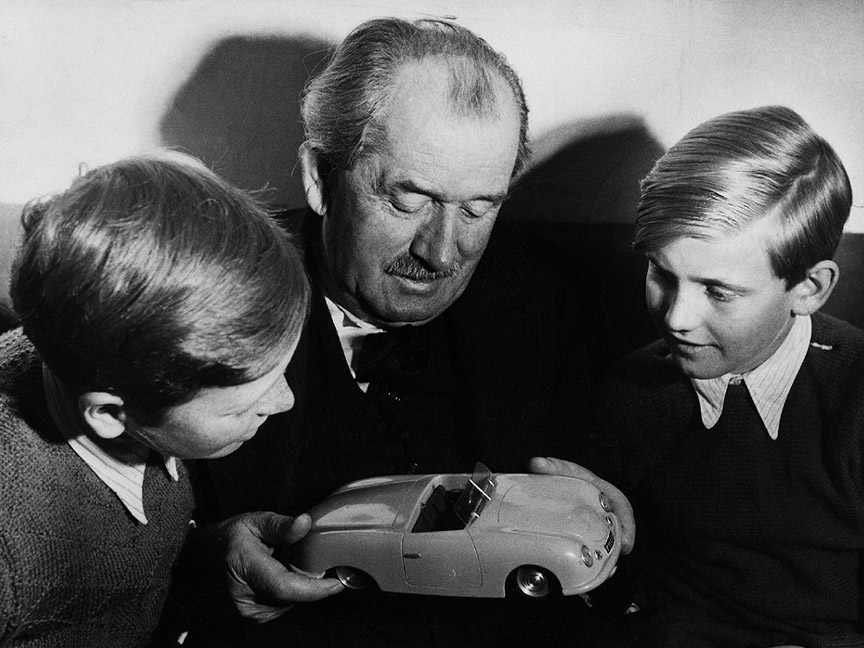
If the slightly strange, Austrian name Piëch doesn’t ring a bell with you, the first thing to note is that Ferdinand, born in 1937, was the grandson of another legendary car man with whom he shared his first name, namely Ferdinand Porsche. It’s therefore no big surprise that he started his career at Porsche, but that’s not where he became most well-known. Rather, that was as chairman of VW that he completely re-modelled in the 1990 and 2000’s, turning it into an automobile giant, and earning himself a reputation as a, let’s say less likeable personality. But let’s take it from the start.
Young Ferdinand Piëch was head of the motor sport division at Porsche in the 60’s. This included the role as head of testing, where his focus was on very light racing cars such as the Porsche 906, which after modifications also became known as the 910. From the post on the Targa Florio earlier this year, you may remember that this lead Porsche to completely dominate that and other races in the late 60’s, by which time Piëch was no more than 30 years old. He was also instrumental in the development of the Porsche 914 that we looked at a few weeks ago, and most other things that came out of Zuffenhausen in the 60’s and early 70’s. Then however, following a feud between different fractions of the Porsche family, he had to leave the company.
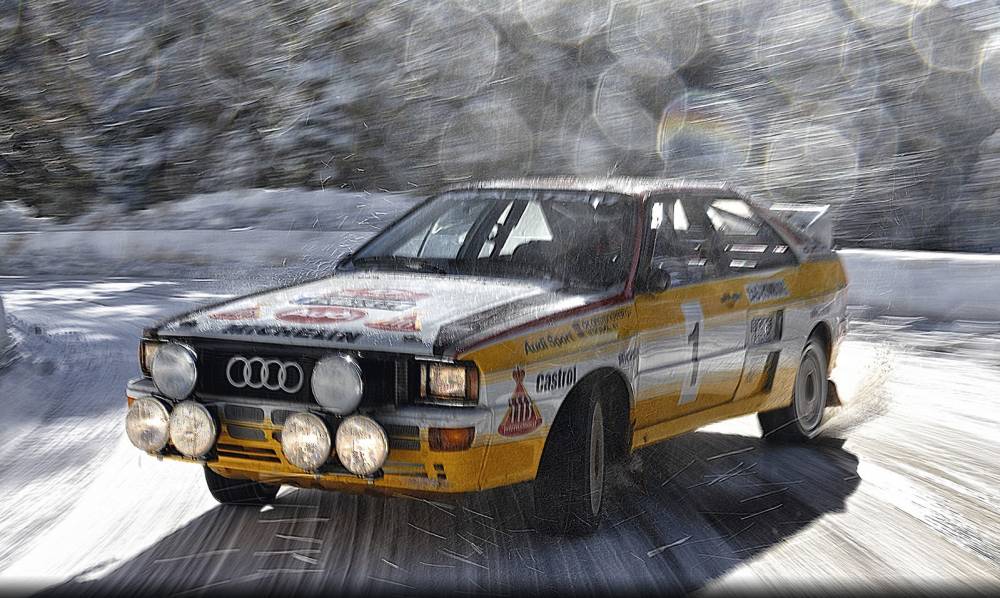
In 1975 Piëch thus became head of technical development at Audi, notably leading the development of the Audi Quattro. The subsequent success it had lead Piëch first to the position as co-CEO of the company, and then from the late 80’s its CEO. If you think back to the second half of the 80’s, this is of course exactly the period when Audi went from being a very sleepy brand for old people with hats to something far more modern and desirable. Piéch however kept a strong focus on motor racing when at Audi as well, with next to the rally wins of the Audi Quattro, also various wins notably in the German DTM series for touring cars.
Ferdinand’s star continued to rise on the VW sky and in 1993, he became CEO of the VW group, Audi’s mother company. Having proven his capabilities as a car man, this is the period when his business understanding really starts to shine through. 1998 was a big year in this sense, and more than one eyebrow was raised when in the same year, VW acquired Bentley and Lamborghini (the latter through Audi) and also the rights to the Bugatti trademark.
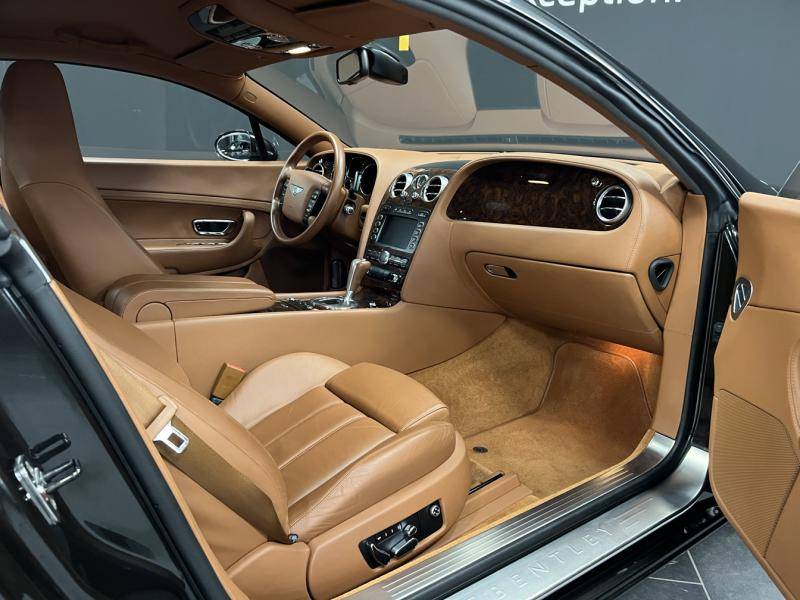
The early 00’s then became the period when Piéch aimed for the stars with the whole VW line-up, arguably with a slight lack of understanding of the perceived prestige of some of its brands. The VW Phaeton with a W12 engine thus never became more than a curiosity, but the Audi A8 with the same engine and of course the Bentley Continental saw far more success. Especially the latter was by many considered the best Bentley ever, and Ferdinand certainly took a lot of pride in knowing how to build a British luxury cars better than the Brits. However, one piece was still missing in Ferdinand’s puzzle.
Even if he hadn’t worked actively for the company, Piéch had sat on the board of Porsche, where his career once started, since the early 90’s. Of course he also had family ties to the brand, so it’s no surprise that he felt especially strongly about it. In 1998 however, in one of his razor-sharp statements, he said that for as long as he lived, Porsche would remain independent from VW. Well, that was to change 14 years later when VW acquired Porsche, while Piëch was still very much alive. To Ferdinand, Porsche became the most important brand in the group, and the group he had built had by now also become one of the largest and most profitable car groups in the world.

When Piëch passed away in 2019 his legacy was thus utterly impressive, not only in sales numbers, but also in the cars that were developed under his watch (you could also add here the fact that he was the father of no less than 12 children as well…). The W12 Phaeton may not enter the history books, but the Bugatti EB110 certainly will, and without it, we wouldn’t have seen neither the Veyron, nor the Chiron. And without the Bentley Continental, I’m pretty certain that Bentley as a brand would also have belonged to the past. Adding to this the development of Porsche that was on the brink of bankruptcy 30 years ago, what Piëch managed to build is truly fantastic.
So what about the likability part? To start with, I very much doubt there’s a single global company in any sector who has a Mr. Nice Guy as its CEO. That said, Piëch was known for a very authoritarian, if not dictatorial style of management. He had absolutely no time for errors and wouldn’t tolerate mistakes. Maybe the himself legendary Bob Lutz put it best, saying that Piëch although he didn’t agree with his dictatorial style of management, there’s no question that Piëch was a brilliant person and leader. Today’s VW group is the best proof of that!
 The Thrill of Driving
Pingback: Classic races – the 24 hours of Le Mans! – The Thrill of Driving
Pingback: Auto legends: the story of Enzo Ferrari! – The Thrill of Driving