
When I bought my 2015 Range Rover a couple of years ago (for which I’m sad to say, I’m not even close to finding a satisfactory replacement, but thanks to those of you who have helped me trying!), there were a lot of people telling me how it was no doubt the beginning of the end, provided long assessments of everything that would break and how the car would drive me in financial ruin. Of course most of these had never actually owned a Range but of course they knew anyway, especially since the car had around 100.000 km on the clock.
As mentioned previously, there were a number of factors that made me confident with the purchase, most importantly the selling garage’s excellent reputation, the fact that they were willing to extend a two-year full warranty, and that I knew that the car had mostly been used for longer distances. Cars are made for driving, not being parked in a garage, so in many instances a car with more km’s can be preferable to one with less. To that came the fact that the car was extremely well maintained and that the Land Rover V8 is not only a very solid engine that is just about run in at 100.000 km’s, but also quite an economical one. I’m currently averaging at around 12l / 100 km, roughly 8l less than what the self-proclaimed experts told me would be the case. This is of course mostly long distance, but that’s what I bought the car for.

Of course I could still have had issues and no, Land Rover certainly doesn’t have the best reputation for reliability. Maybe I’ve just been lucky, just like I was 10 years ago when I owned an Alfa 166 a few years without a single issue. The fact of the matter is however that now, two years after I bought the Range, I’ve forgotten where I put the warranty papers as not a single thing has gone wrong. The lesson there is certainly not that I’m never wrong, but rather that here as well as in other areas, you shouldn’t believe everything you hear, but rather do your own research and form your own opinion.
Against that background, let’s look at a similar case to my Range but one that no doubt will cause severe cardiac issues for every naysayer. Because if the Range would drive one to financial ruin, this machine would probably do so with the rest of your family and neighbors as well. It’s a car that was actually suggested as replacement to me as alternative to the Range, but that unfortunately doesn’t really fit the bill. Because in terms of bang for the buck, there can’t be much that beats an early version of the by now classic Bentley Continental GT.
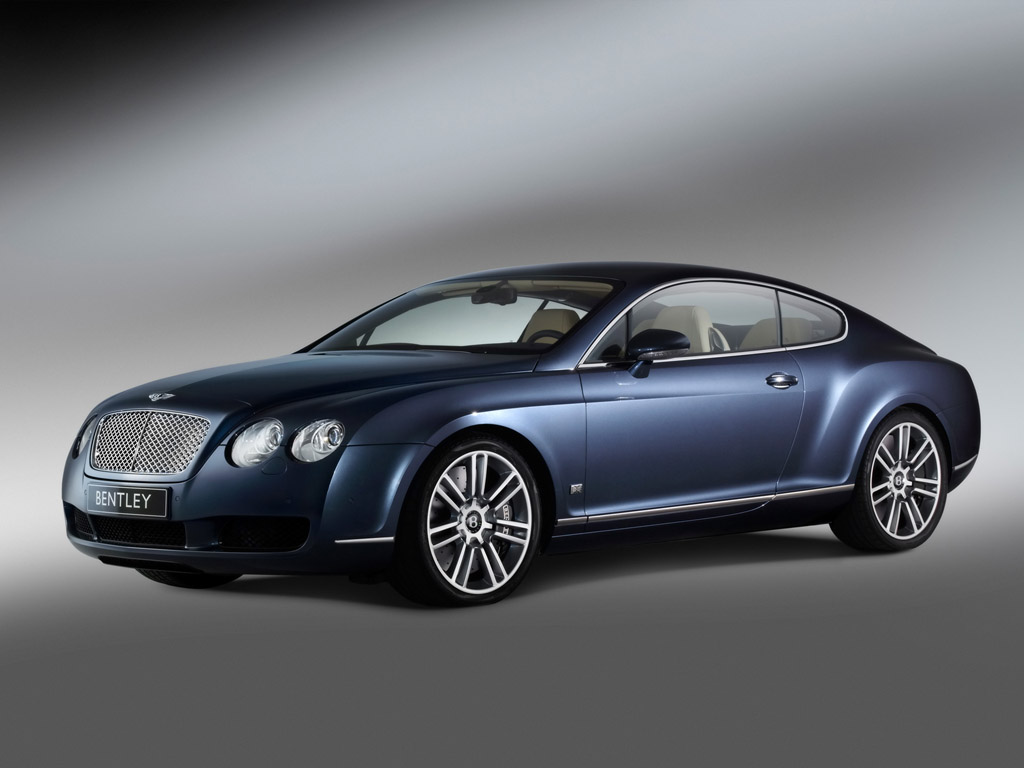
11 years ago, in the early days of this blog when it was still in Swedish, my co-blogger Sven drove a Continental GT after its first face-lift (more on that below), and provided a rather sober assessment of the car not being for him (he’s a fan of Maranello machines) and also not really being worth the money as new. That I won’t argue with, but now 11 years have passed since the face-lift and 20 since the new Continental GT was premiered, so that second point has certainly changed. This makes it worth revisiting the case, also since I had the opportunity to drive an early Continental GT last week.
For memory, Volkswagen bought Bentley in 1998 and five years later, launched the Continental GT as the first Bentley ever to be produced not by hand by elderly men in coats up in Crewe, but rather by modern production techniques to a budget. Those last words are important as they certainly contributed to putting quite a few Audi parts in the car as part of the process, which made the true enthusiasts reject the Continental right away as some kind of pimped Audi not worthy of the brand.

I think a more sober assessment makes it pretty clear that without the VW take-over and the launch of the Continental GT, the Bentley brand would be long gone. Instead there are today 4000 car builders working in Crewe, compared to around 1500 at the time of the take-over. It’s also worth noting that with every new series of the Continental, it has become less and less Audi – at least in the visible parts. Here we’ll focus on the two first series, i.e. not including the current one launched in 2018, as these cars are still quite pricey.
To me, the Contintental has always been a good-looking and timeless creation. Seen from the side it’s a testament to many classic Bentleys, and the front is just about aggressive enough. Its least good angle is certainly the rear which lacks a bit of finesse, something that didn’t really change until the current series. The first version was produced until 2011 and was only available with the W12 engine that VW had previously featured in the Phaeton (another car that can be had for not much these days but that contrary to the Bentley, there is no reason to get…). It put out 560 hp with much, but not all the refinement of a more traditional V12.

All cars had four-wheel drive and were also available as convertible, and the Speed that appeared in 2007 along with the Supersports from 2009 deserve a special mention. The former saw power increased to 608 hp and rode lower on larger wheels, the latter had performance pushed even further to 630 hp, which along with a 110 kg weight reduction made it the fastest Bentley ever at the time, with a top speed of 330 km/h.
The Series II, launched in 2012, introduced the double-turbo, four-liter V8 as alternative to the W12. At 500 hp it was less powerful but the car was also lighter and still capable of a top speed of over 300 km/h. Cosmetic changes on the outside were limited but the inside showed an improved cabin less reminiscent of Ingolstadt. Above all though, the ride, handling and steering were clearly improved over the first version. As with the first series, various special editions including Speed and Supersports were launched through the years.

I drove a W12 from 2008 this week and driving-wise, I can only concur with what my friend Sven observed 11 years ago, which basically boils down to the fact that you can’t hide 2.3 tons. That means the Continental in all versions, possibly with the exception of the Supersports, is far more a GT than a true sports car. That’s however something it does very well. Comfort is opulent, the ride is sublime, isolation from the outer world almost total.
Of course anything in terms of infotainment feels very old, but you don’t really think about it and if you do, there are after-market options for most things. Leather and wood however both age pretty well, and that’s what dominates the interior. This is a car that will transport two in utter comfort on longer journeys, be it in summer or winter, and that will allow you to stretch your legs on more or less frequent fuel stops, depending on which engine you opt for…

An early, well-maintained first series Continental GT with decent mileage will today be yours from EUR 25-30.000 in Europe, a second series is around twice that, whether with the V8 or the W12. For the first series, that means around 10-20% of the car’s price as new. Of course a Continental in any version, but especially as W12, will never be a cheap car to run, and buying one should always come with a budget for running costs and unforseen repairs. If you buy a first series and set EUR 10-20.000 aside for unforseen repairs however, you will sleep well at night knowing you’ll be able to cover most things that can come up.
The main reason that a Continental GT is an easier purchase than with the Ferraris and Porsches we love, is that most of these have previously been owned by elderly people with money who don’t know what a track day is, read the manual from the first to the last page, never rev the car beyond 2000 rpm and follow the service intervals meticulously. And it that wasn’t enough, I would also think that the fact that Audi bought Bentley five years before the Continental was launched bodes pretty well. This certainly made the modern Continental more reliable than its predecessor, that cost EUR 120.000 more as new, 12 years earlier!

Cars like the Continental and engines like the W12, or even the double-turbo V8, belong to the past as we all know, and will never be built again. It’s very difficult to know which way the car world will evolve in the coming years but at this price point, if you’re into big, opulent GT cars, then a Continental of the first or second series is a wonderful proposition. It may come at a bargain price but will always look like a million bucks, but if you do your research carefully, chances are it doesn’t require you to be a millionaire. All in all, that’s not a bad proposition, and this is clearly a case of now or never!
 The Thrill of Driving
Pingback: Finally driving the Macan! – The Thrill of Driving
Pingback: Driving the Speed Demon! – The Thrill of Driving