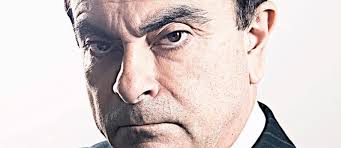
Before we start off, just a note to say that the fact that last week’s post came out on Friday rather than Sunday doesn’t mean a change of schedule, it was quite simply a mistake by yours truly. Sunday night European time it has been, and Sunday night it will stay! And with that, on to this week’s program.
____________
When you set out to write about a legend from the automobile industry, you have a pretty good feel for what it will run like. From the youth and dreams of making it big, over education, the first jobs, through the career to the older days. The story usually doesn’t include murders (indirectly), prison escapes and financial fraud. Until you get to Carlos Ghosn, that is, because writing about the man who revolutionised first Renault and then Nissan, is like writing a pretty good thriller story. So buckle up for the ride!
Carlos Ghosn is Lebanese, born in Brazil in 1954, but the family then moved back to Lebanon in 1960. HIs father was a diamond trader who after the return was convicted in Lebanon of murdering a priest. Given murder usually doesn’t do wonders for your reputation, he would move back to Brazil when the Lebanese civil war broke out in the mid 1970’s.

Carlos, after his graduation, moved to France instead where he would spend close to 20 years at Michelin, the tire maker, making a name for himself in the 80’s notably by turning around first Michelin’s failing South American operations in two years, and after that the one in the US. He reported directly to Francois Michelin, the company’s CEO, and would then move on to Renault.
At Renault, Ghosn performed roughly the same trick at the company’s South American operation as he had done at Michelin, which made Renault’s then CEO Louis Schweitzer notice him. The French automaker had just recorded a loss of over USD 500m the year before (doesn’t sound like much today, I know, but this was the age when money was still worth something…), one of the first in its history.
Schweitzer was looking for help to turn the ship around and for the right man to do it. He had also started to think about his own successor a bit further down the line. It took him only one face-to-face meeting with Carlos Ghosn to decide that he was the one. This may not sound too surprising, but we have to take a step back here to put it in the local context at the time.
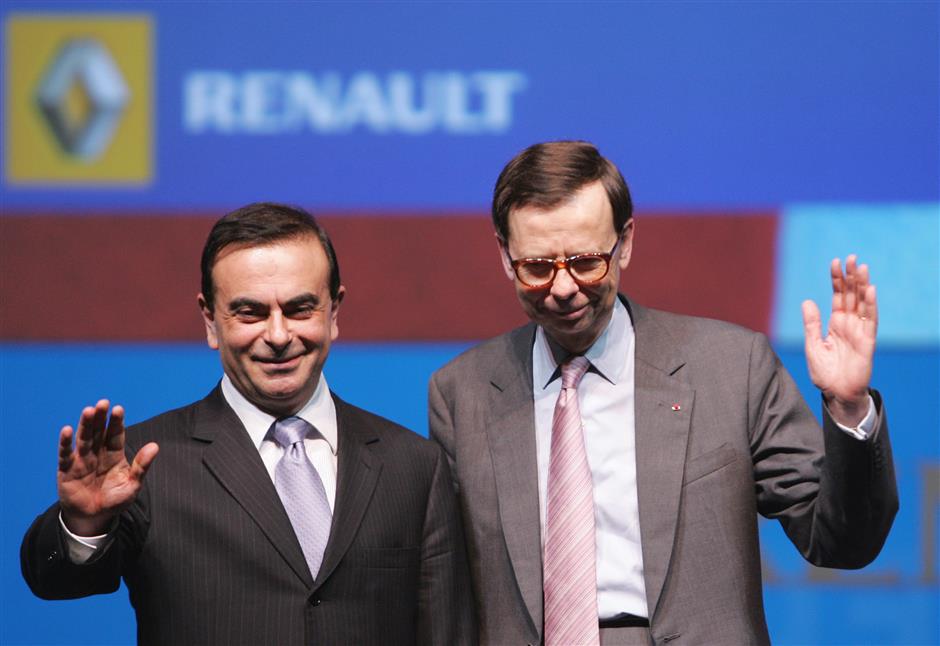
Renault is the crown jewel of the French car industry. It was founded in 1898 and the French state has held a minority stake since the end of WW2. It was completely unheard of that the coming CEO of Renault would not be French, and would not come from the inner circles of the French establishment. Ghosn certainly didn’t, and was at the time only a Lebanese citizen. He would later also acquire French citizenshop.
It wasn’t just that Ghosn didn’t come from the inner Parisian circles, it was also that he had no desire at all of becoming part of them. He was certainly not the party-going, champagne-drinking small talker seen at parties among other bosses in the French capital. He hated these occasions, meaning no one really knew him. And what you don’t know, you sometimes don’t like. This has a certain relevance for the rest of the story: Ghosn has always been the outsider, and although a power player, he never really created a support network around him.
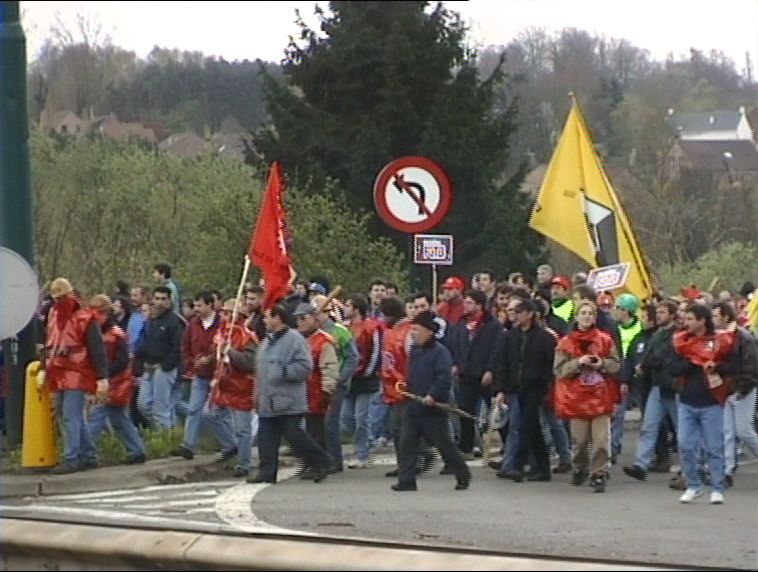
When Ghosn was called upon by Schweitzer as head of production for Renault in the mid-90’s, he went through pretty much every single of the thousands of parts making up an automaker. He analyzed each function, gave out objectives for each division, and started cutting excess fat, meaning laying people off. In 1996, 3.000 workers thus lost their job in Renault’s Belgian factory. A couple of years later though, Renault had turned the largest loss in its 100-year history to over USD 1bn in profits. The man dubbed “Le Cost-Cutter” had done it again.
Schweitzer was at the same time making strategic plans, since in spite of his right-hand man’s good work, it was clear to him that long-term, Renault was too small to survive as a stand-alone manufacturer. His vision was for an alliance with an Asian manufacturer, and when Renault acquired 1/3 of Nissan in 1999, Schweitzer took a big bet on not only Renault’s future, but also on Carlos Ghosn whom he made CEO of Nissan, and without whom he’s said that he would never had done the deal.

When Ghosn came to Nissan, he found what he was used to: a loss-making company without great hope. Its line-up was out of fashion and according to insiders, Nissan had forgotten how to build attractive cars. In addition, with USD 20bn in debt, the company was on the brink of insolvency. Ghosn wasted no time in pretty much rebuilding the company from the bottom and up. He did so spending as little time Japanese cultural courses as he had drinking champagne in Paris, realizing that he would anyway always be the outsider in Japan.
As he had done a few years earlier at Renault, Ghosn travelled through Japan, visiting every Nissan factory and shaking a lot of hands. He then developed a three-year plan to return the company to profitability, based partly on the cost-cutting approach he had become known for, and which Nissan no doubt needed. As a consequence he would fire 21.000 employees, 14% of Nissan’s work force. In the consensual Japanese culture, this was unheard of.
It wasn’t all about cost-cutting though, as another, arguably even more important part, was re-creating the model line-up. For car enthusiasts, the most important here are on one hand the 350Z, a very well balanced sports car that also has the benefit of being easy to tune, and on the other of course, the legendary rebirth of the GT-R, partly referred to as Skyline in Japan.

The success followed shortly thereafter. In just a few years, Ghosn had changed Nissan’s whole line-up, launched two sports car considerably improving its reputation, and turned USD 20bn in debt to USD 15bn in the bank. Nissan also produced and sold twice as many cars than just a few years before, meaning more than 5.5 million.
The launch of the GT-R in 2007 was no doubt Ghosn’w peak moment at Nissan, and also the start of his downfall. Ghosn was by now hailed as a superstar and was very smart about cultivating his profile and media presence. His aura was so bright that no one really paid attention to what happened behind it, for example the fact that Ghosn owned about seven times more than the CEO of Toyota, and still felt he was underpaid. He had also made sure Nissan hadn’t reported his salary according to stock market rules.
When Louis Schweitzer stepped down as CEO of Renault in 2005, Ghosn succeeded him, but in spite of promises made previously, insisted on staying on as CEO of Nissan. He thus managed to global car companies 10.000 km apart, something that everyone but him clearly saw didn’t work.
Clearly losing touch with the wider world, Ghosn now started to create companies on various warm islands around the world, that he filled with Nissan’s corporate money with the official purpose of investing in riskier ventures and start-ups. In the resulting lack of transparency, it then became clear that some of the money had rather been used for everything from private houses to family holidays. Mr. Cost Killer was certainly not cutting costs for himself…
As can happen to people with nothing but yes-sayers around him, Ghosn started to develop a certain paranoia. So in 2010, when he received an anonymous letter claiming that three highly placed executives at Renault were involved in selling company secrets to the Chinese, Ghosn had them all fired in a major public exercise, only to admit a few months later that the claims had been unfounded.
The scandal was so big that French president Sarkozy was asking for heads to roll, so Ghosn sacrificed his COO without blinking. The French did not approve, and if you remember from further up, Ghosn didn’t have a powerful network in France to protect him. That was starting to show.

In 2018, after close to 20 years at the top at Nissan, Carlos Ghosn was arrested by Japanese police when landing in Tokyo, and charged with fraud. The charges came from a Nissan internal investigation that had been going for months, and no doubt also triggered by Ghosn’s failure to report his salary.
The former yes-sayers at the top of Nissan didn’t just want him gone – they wanted him in prison. And for that, Japan is a great place since once you’re arrested, there is a quasi-certainty that you will also be found guilty. Which, by all probability, Carlos Ghosn was.
The fact is though, that we’ll never know. Ghosn was held in captivity for 130 days, being interrogated every day. His lawyers tried to have his trial moved to France, but with no one in France was really interested in that and as said, Ghosn lacked a strong personal network.
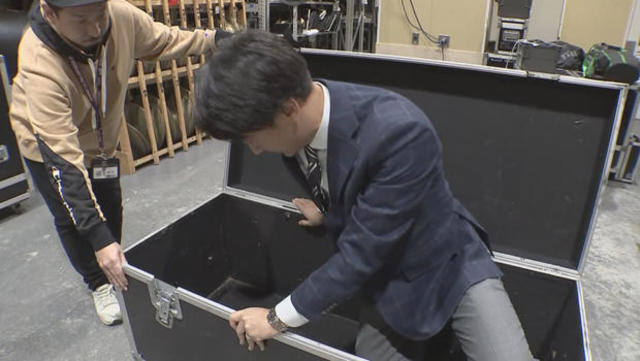
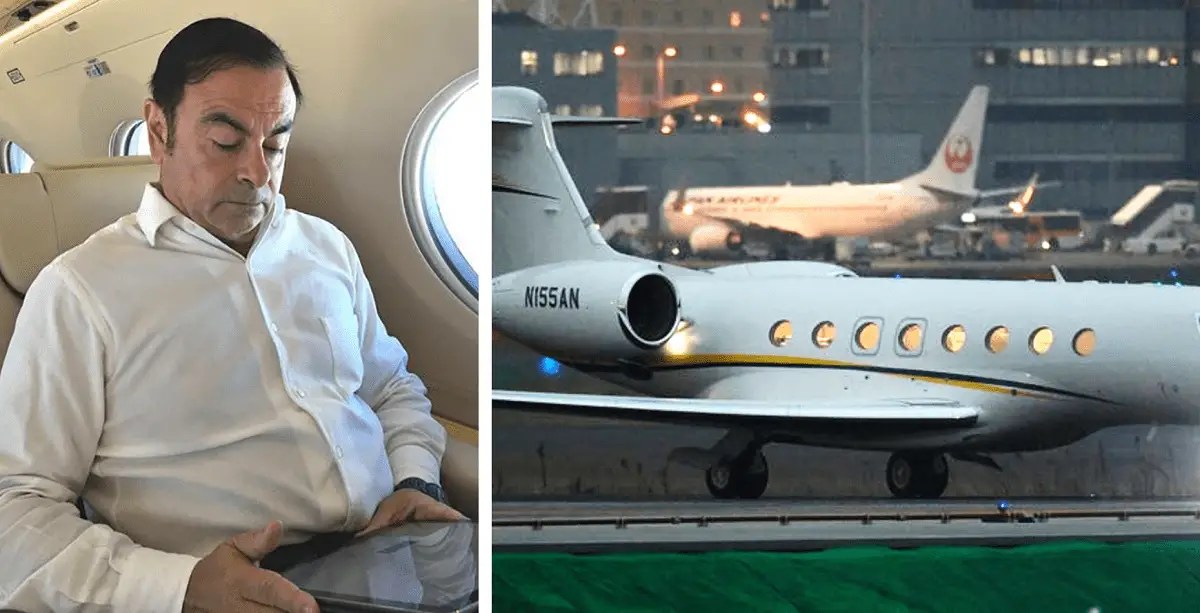
He was finally released on bail awaiting the trial, but it would never come to that. In a masterful exercise, the details of which go beyond this blog, Ghosn escaped Japan on a private jet, hidden in an instrument box, and fled to Lebanon.
As per today, Carlos Ghosn lives in Beirut and will most probably stay there, as there is an international warrant for his arrest if he leaves Lebanon. He has always claimed his innocence and says he would be happy to stand trial in any country but Japan because of, in his words, the biased judicial system, but that will probably never happen. Nissan has an outstanding personal claim on him of EUR 83m, that will most probably never be paid.
The Renault-Nissan alliance still exists and these days also includes Mitsubishi. In the current setup a co-CEO system is in place, and there is no more reliance on one person. That’s probably good, but It’s also difficult to find three car companies with a less exiting model line-up than these three.

There is no doubt that Carlos Ghosn was exceptionally good at turning businesses to profit and also understanding what customers wanted. It’s also true that he spent 20 years on the other side of the world, in a completely different culture and language, which most certainly contributed to the rest of the story. It’s a shame that it ended like it did, but it’s yet another proof that even the most brilliant men and women often are their own worst enemy. And while Ghosn is gone, quite a few of us are thankful to him for creating the wonderful GT-R!
 The Thrill of Driving