Have you ever dreamt of creating your own sports car? I can’t say it’s something I think of on a regular basis, but when I was younger, I remember sitting with pen and paper, trying to draw a spectacular shape on a piece of paper. Given my extremely limited drawing skills I failed every time, however, when I was at it and thought about what I would call my future brand, at no time did I have the idea of naming it “sports car maker”.
Some people did though, and today we’ll look at a car that I’d honestly be surprised if any of those reading this has ever seen live. I certainly don’t mean to sound condescending, but a French brand from the 80’s building less than 1000 cars during its lifetime is not what you see on every corner. I hadn’t either until I all of a sudden did so, last week, at a red light in Nice. If you haven’t guessed it yet, I’m talking about the MVS Venturi, later only referred to as Venturi, a French creation from the late 80’s from a brand called MVS, Manufacture de Véhicules Sportifs, French for, you guessed it, sports car maker.
The Venturi story starts in 1984 when the French engineer Claude Poiraud meets the designer Gérard Godfroy. The latter had worked at Peugeot, notably on the 205, and was also responsible for other design masterpieces like, well, the Citroën Visa. More relevant perhaps was the fact that Poiraud had worked at Alpine, the only real sports car maker in France at the time, where he had led the development of the A110, that I wrote about almost four years back.

The two decided to put some fresh air in the French sports car scene by starting a new company called Ventury, a name that was supposed to lead thoughts to “aventure” (adventure in French), and the Venturi wind effect, coming from air flow analysis. By writing it with an “y” at the end, they apparently also felt they made the name more European. Be that as it may, but a first mock-up was produced and shown at the Paris auto salon in 1984. It was met with instant success and people reportedly didn’t believe it was French, given they hadn’t exactly been spoiled with sports cars up until then – and as it turned out, wouldn’t be so going forward either…
From here on things accelerated for the company, and the first production cars were introduced in 1987. The “y” had then been dropped for some unclear reason, with the first car called the Venturi Coupé. it was equipped with the well-known V6 engine from the collaboration between Peugeot, Renault and Volvo, referred to as the PRV V6, mid-mounted with a power output of 210 hp. It wasn’t the sportiest engine around, but with a body built in glass fibre, the Venturi didn’t weigh more than 1300 kg.
In 1989 power was increased to 260 hp from the same engine, in a version suitably named Venturi Coupé 260. The last cars in that series would be referred to as Atlantique, as would the last road version of the last Venturi, the 300. You will have guessed it had a power output of 300 hp, however now from a newer Peugeot-Citroën, six-cylinder engine, and Atlantique referred to a sportier and lighter interior, contributing to a weight saving of around 165 kg, making a light car even lighter.
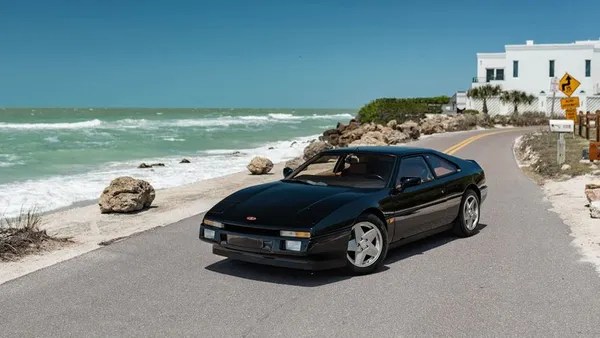
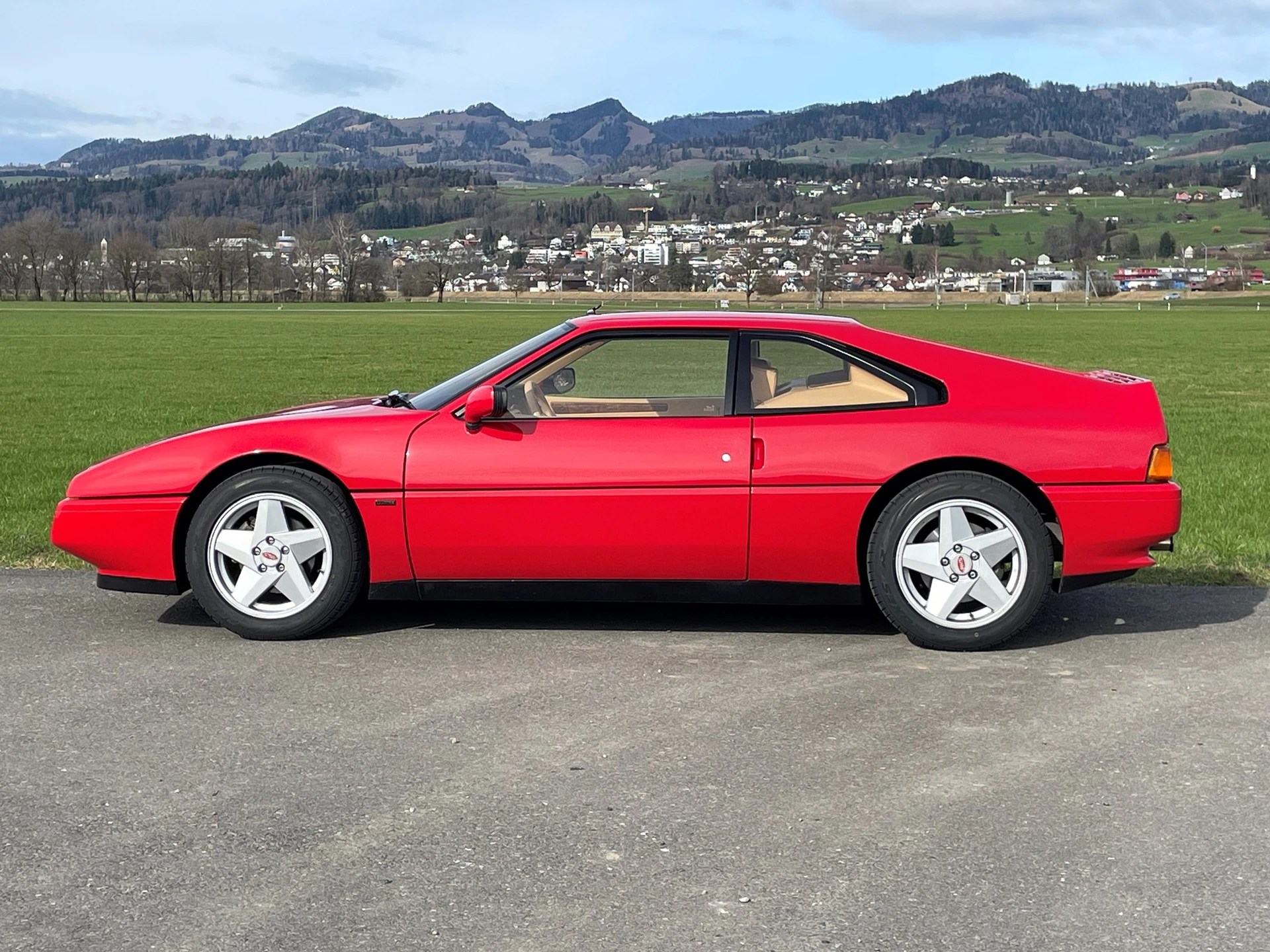
Given all these looked pretty much the same from the outside, which is pretty much like a Ferrari F355 without the Testarossa-like wind intakes, I can’t say which version I saw, and naturally I didnt’ get my phone up in time before the light turned green. The Venturi looks very stylish though, in an 80’s supercar kind of way. At just over four metres in length it’s a small and low car, and next to the F355, other natural references are the Honda NSX and also the Lotus Esprit. i would say it’s less spectacular than both those, but also has a more classical design.
The few who have driven a Venturi talk about a slightly chunky gearbox but a very nice and precise hydraulic steering. The car may look like a Ferrari but the engine has precious little in common with Maranello, with a red line already around 6.000 rpm, and a sound that’s only exciting if you’re an EV driver. Venturi compensated that with a very nice, and leather-rich interior, far more luxurious and well appointed than most cars of the time.

During the 90’s, Venturi went through several ownership changes and with that, more business strategies than you can count. There were notably plans to build a family car that were never realized, high ambitions for making Venturi a racing brand, and notably no less than seven Venturis participating in the Le Mans race in 1993. In the end Venturi ran out of money, and having been saved by a Thai group when it was first placed in liquidation in 1995, the subsequent Asian crisis meant that the lights went out for good in the Venturi factory in 2000. It also meant that of the 44 Venturi 300 Atlantique that had been ordered by then, only 13 were ever delivered. Those that have survived certainly belong to a lucky bunch of people!
All in all, no more than 641 Venturis would be built in total. Such a small series obviously means they’re very rare 30 years later. There’s not a single one for sale in France, neither in Germany, but there are two in Switzerland, a first series at around USD 40.000, which is the red car on the photo above, and an Atlantique of the 260 series, seen below. That’s by the way the first car of that series, in other words the first Atlantique ever built, making the price of around USD 60.000 very reasonable. Unfortunately though, it’s also a bit of a renovation object…

If you’ve always dreamt of a Venturi, Switzerland thus seems to be a good place to start. And in terms of spare parts, it’s actually not as bad as you may first think, given that as a small brand, Venturi had to buy what they could from other brands. The PRV engine will not be a problem, neither will many of the switches or side mirrors, coming from Citroën, or the rear lights from Ford… The list goes on. Not much to fear in other words, and if your highest dream is a car you can be certain of not seeing on your neighbour’s drive, it’s hard to find a better option than a Venturi!
 The Thrill of Driving
Pingback: The world’s rarest, luxury SUV! – The Thrill of Driving