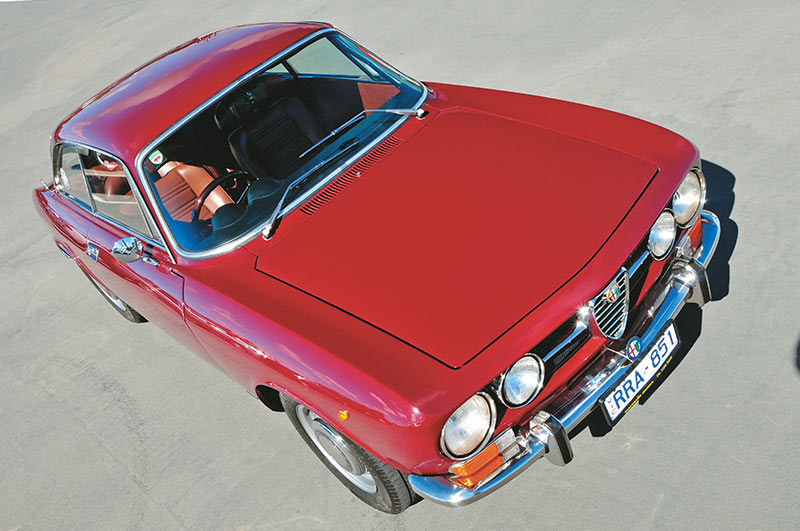
As noted in my recap of 2025, one of the most read posts on the blog is the one I made on what my generation, i.e. the X-ers born in the 70’s, understand as “the” Alfa GTV. However, as those slightly older or just more read up on the topic know, that GTV wasn’t the first model to carry the name, but the second. Its predecessor, the Alfa 105 series, was however originally called the Giulia 1600 Sprint before being renamed GTV, and as a two-door coupé, it’s no doubt one of the most classic examples of Italian car design in modern times!
The story of the Giulia Sprint, later GTV (which of course is a short for Grand Touring Veloce, meaning fast), starts in the early 60’s when Giorgietto Giugiaro, later to become one of Italy’s most well-known and acclaimed car designers, was still a young man. He hadn’t set out on his own yet and was working for the even more well-known Bertone house, for whom the Giulia Sprint, both Sedan and Coupé, would become one of its first major projects. For the Coupé that we’re concerned about today, Giugiaro gave the world a design that is certainly not timeless and doesn’t deny its 1960’s roots, but which still looks as dynamic, compact and sporty as ever!
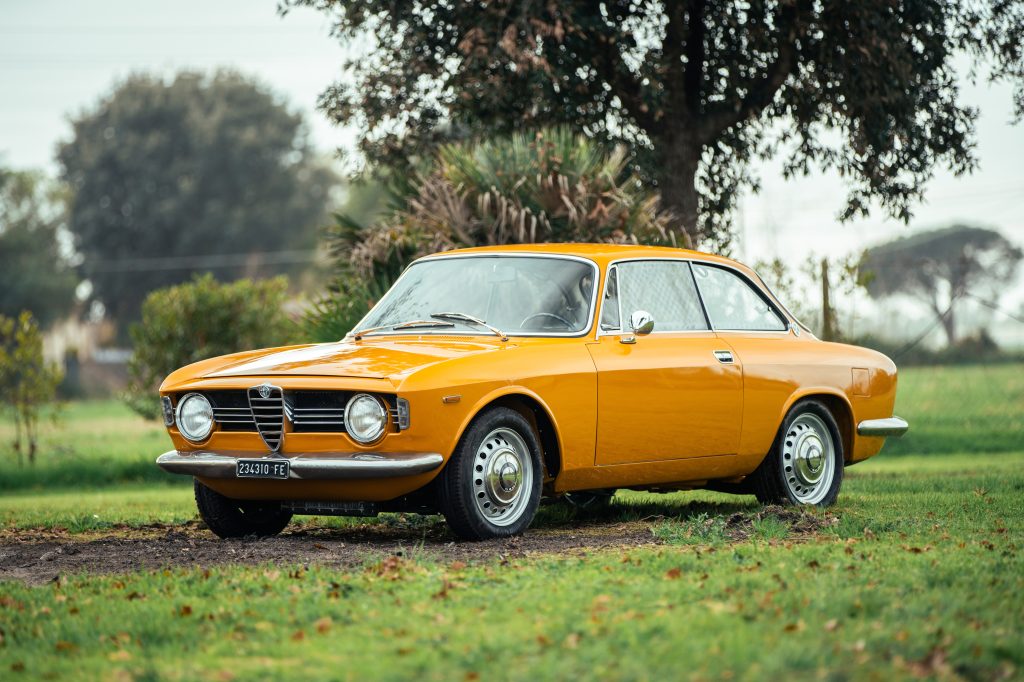
All Giulia Sprints / GTV’s had the same basic engine, being an all-aluminium, two valve per cylinder, twin-cam four cylinder with volumes from 1300 to 2000 cm3 and 105 to 130 hp, a very modern engine for the time. All models also came with a five-speed gearbox and disc brakes all around, meaning that technically, the Giulia was way ahead of notably the British competition. For better or worse, it was ahead in price as well. It cost about as much as the king of the hill, the Jag E-Type, which of course had a far more exciting engine and was arguably more exciting to look at as well. Sales would therefore need a while to take off for real.
The very first Giulia Sprint was presented to the world in 1963 with a 1600 cm3 engine which, thanks to two wonderful Weber carburetors, took the power to 105 hp and enabled a top speed of over 180 km/h. The 4hp more powerful Veloce version came in 1966 and was replaced by the 1750 Veloce the year after. The most powerful version 2000 Veloce premiered in 1971. From 1965 onwards there was also a 1300 cm3 GT Junior version, which through its lesser volume was advantageous tax-wise in Italy. Equipment was somewhat simpler and at 89 hp the smaller engine was also less powerful.
It’s mostly the 1750, 2000 and Junior that have survived until today, and they were also the models with the largest production numbers. The first two had not only more power, but also more equipment and from around 1970 also a better suspension, with McPherson struts which helped improve the handling even further. So in symmary, the Junior no doubt sold on its looks, but also on a lower price and a lower tax if you were in Italy, whereas the larger engine versions found buyers on their elegance, sportiness, and southern prestige, none of which really diminished until the end of production in 1977.
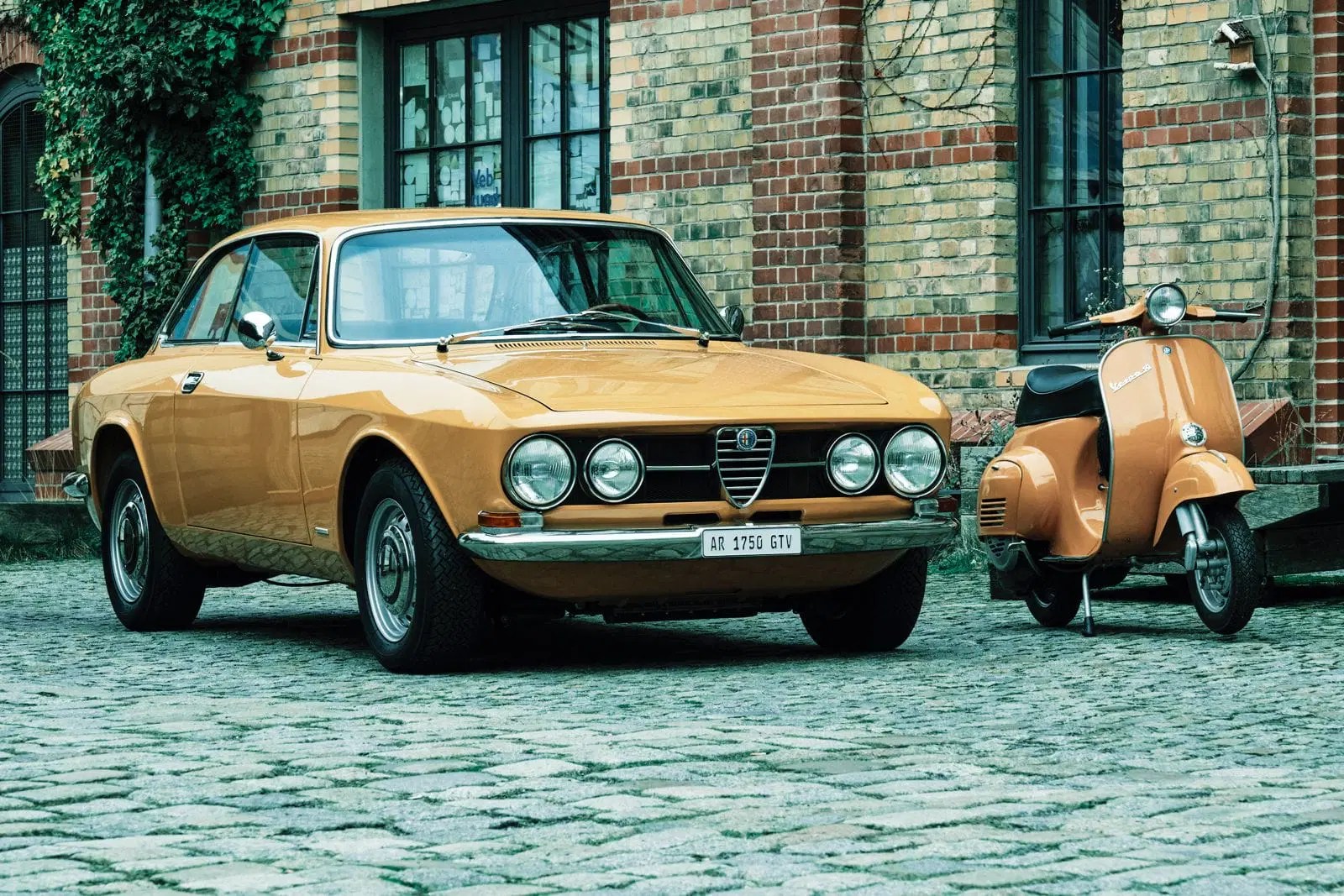
As noted above, the Giulia/GTV was a modern car for its time and in comparison with other sport coupés or roadsters from the same period, notably from the UK. However modernity also meant more maintenance and a higher degree of craftmanship. When it was still possible to fix an English roadster with some rather basic tools (VERY long-term readers of this blog may remember I literally fixed my Triumph TR4 with a hammer back in the day…), the Giulia required more finezza, meaning it was more expensive to maintain. And as so often, that lead to many owners not doing so.
For those who did and cared for their GTV, it was and still is a wonderful drive. As noted so many times before, a size of just over four metres for 950 kg weight means you don’t need much more than 120 hp to make you feel like you’re going fast enough, and the Alfa delivered those in high comfort and low road noise (for the time). The engine received much praise, as did the precise five-speed box with a gear knob positioned perfectly to rest your right hand on, and the disc brakes. Bar the fact that you’ll be looking into other people’s 23-inch wheels given how low the car is, I would claim that a GTV presents no issue at all in modern traffic.
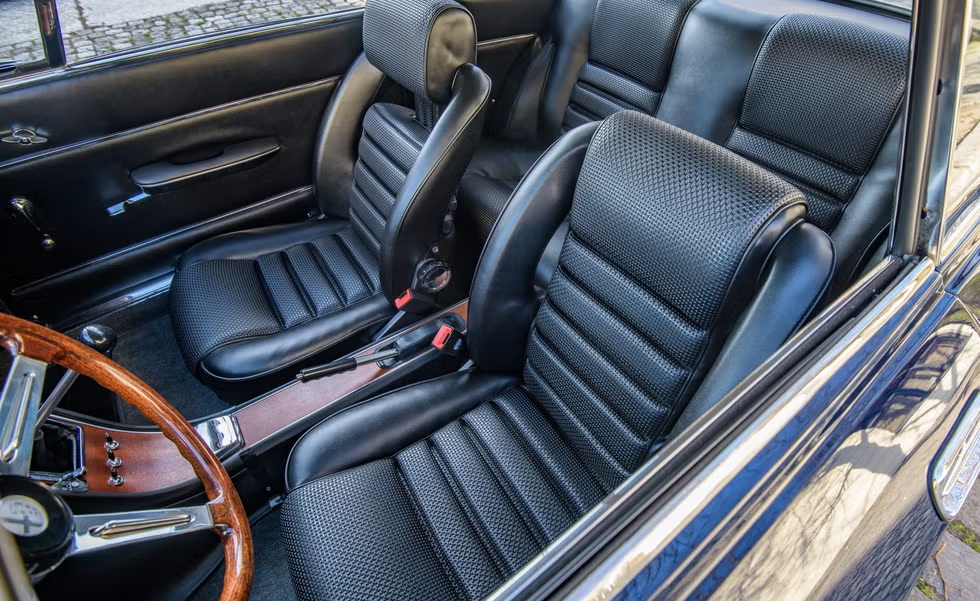
While doing my research for this post, I came upon a test drive of a 1750 GTV from 1968 from a British car magazine where a journalist had set out on a 1000-mile drive from London up to Ireland and back. It was a highly entertaining description from another time of everything from cows and logs on the road (hence the requirement for good brakes) to the Alfa’s well-polstered rear seats, that made them “more comfortable than in a 911”. People were indeed much smaller back then… The journalist was right though; Alfa initially wanted to call the Coupé a four-seater but in the end, opted for 2+2. Which is also true, but indeed, a 2+2 offering far more room than a 911 in the back.
The article however also mentioned a few problems that developed during the long drive. Most serious among them was certainly a beating transmission tunnel on what was then a new car, which takes us to the quality aspects of the GTV. In short, quality was so-so, as was generally the case back then, but even more worrisome than mechanical issues was the rust protection, or rather the more or less complete lack thereof. That led to an early demise of many thousand GTV’s spending their lives outside of sunny Italy, and also to those still being around practically all having been renovated. Then again, that’s not really extraordinary for a car that by now is over 50 years old!
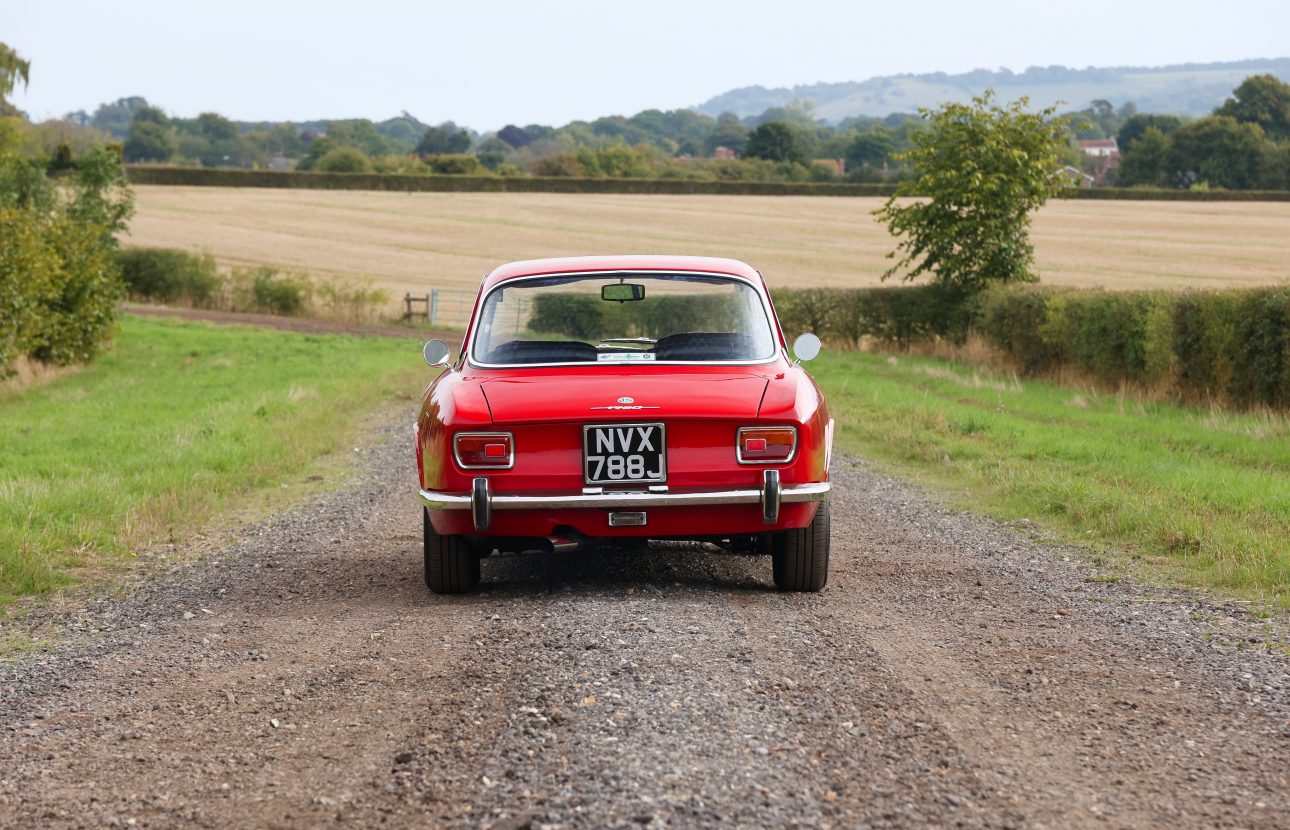
The GTV is thus not only pretty but also a true driver’s car, and one that is as fun today than back in the 70’s, perhaps even more so given how automobiles have evolved. The later versions are the most mature and objectively the best, and whether it’s a 1750 or a 2000 is rather irrelevant. Everything will anyway depend on the condition and most probably, the quality of the restoration that has most probably been done. Prices have shot up in the last years with decent cars starting around EUR 40-50.000. Then again, that’s what you pay for a new Mini these days.
Another way to enjoy the Alfa 105-series’ looks as a modern drive is as a restomod, and the GTV is popular with many small outfits focused on preserving the classic design but modernizing the mechanics and the chassis. I wrote about restomods in a post back in 2021, notably highlighting Alfaholics in the UK, who do a brilliant job with the 105-series in this regard. So as full classic or modern classic, the choice is yours. Whichever way you choose, the original 105-series GTV will always be a true classic and a wonderful example of Italian car design!
 The Thrill of Driving
Pingback: The ToD podcast! – The Thrill of Driving