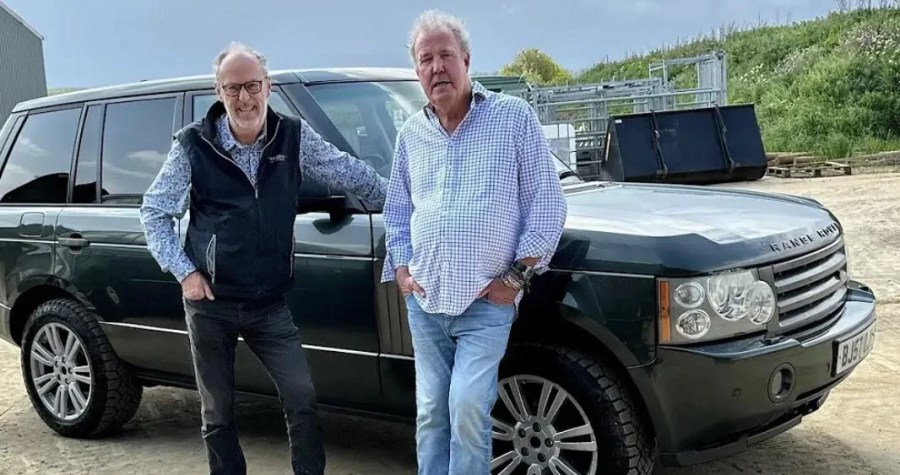
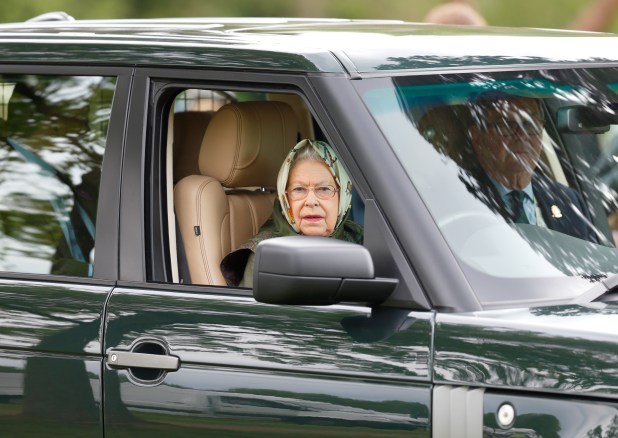
It’s hailed as the best ever by people who are the heroes and grand old men of the car world, and quite a few others who are not. Jeremy Clarkson and Harry Metcalfe qualify in the former category, Bruce Springsteen, Jay-Z and of course, the late Queen Elizabeth in the latter. They all own or have owned at least one, and they generally refer to them as the best car ever.
I’m talking about the L322 Range Rover, a car that is currently riding higher in terms of buyer interest than most other automobiles of any kind. Prices for the few that are left in reasonable condition and mileage range from high to ridiculously high. Is it all warranted? Is the L322 actually better than its successor, the L405, as its supporters claim, and given how close top examples of the L322 are to the L405 price-wise? Alternatively, could it be that this is just an unwarranted hype?
A few weeks ago, I had the pleasure to drive an L322 for the first time. I did so on the back of an increasing number of voices and Youtube clips hailing the Range as a gem not to be missed. What many of these mentioned as an advantage over its successor, the L405, is the slightly smaller size, which especially in width makes a big difference in European parking garages. With this in mind and for all the hours I’ve spent watching Clarkson and Harry Metcalfe, it was high time to try out the machine they consider as the best ever for myself.
Before going into that actual experience, let’s start by looking a bit closer at the L322 and its 10-year history, ranging from 2002 to 2012. It succeeded the P38 as the third generation of the Range Rover and was developed under BMW’s ownership of Land Rover, with a budget said to have been three times that of the P38. It clearly signalled BMW’s intention to make the new Range Rover a 7-series with terrain capabilities, but before the project reached production, Land Rover was sold on to Ford, and it was thus under Ford ownership that the L322 was launched in 2002.
Given the car was fully developed by BMW, Ford launched the new Range Rover with two BMW engines. A 3-litre, 6-cylinder diesel with a somewhat paltry 177 hp, given the car’s considerable weight of 2.7 tons. The 4.4 litre, V8 petrol was clearly the better, albeit thirstier choice. Both these were replaced during the new Range’s first facelift in 2005 in favour of two engine options derived from Jaguar. The 3.6 litre, V8 diesel was now 100 hp more powerful, and the eight-cylinder, 4.2 litre petrol is generally considered one of the best and most reliable engines out there.
Further facelifts followed through the years, updating the L322 in small steps both technically and interior-wise. The last happened in 2010 and was the most significant, as the two engines were again replaced by a larger, 313 hp 4.4 litre diesel V8, and a 5-litre supercharged petrol V8 with 510 hp. An 8-speed ZF auto box replaced the earlier 6-speed box, and both the engines and gearbox were later carried over to the L322’s successor, the L405, in 2012.
The car I looked at was a 2010 (post facelift) 4.4 litre V8 diesel with as little as 99.000 km on the clock. To put the mileage into context, at the time of my test drive, this was one of only five (!) cars for sale from the whole range across the main markets in Europe with less than 100.000 km’s on the clock. It’s far easier to find cars that have done 150’, 200’, even up to 300’ km’s. L322’s are thus used rather heavily by their owners, which as long as they’re well maintained, is a good sign. However, even if you push the limit to 150′ km’s, we’re still talking no more than 20-30 cars all over Europe.
Furthermore, to describe what the current market is like, the seller of this car had already been contacted by 5-6 people from all over Europe when I called him only a few hours after he had listed the car. One buyer from Holland was particularly insistent and was ready to buy the car unseen. Of course I had told the seller I was interested and would decide quickly if I liked it, and luckily for me, he preferred a buyer from across the Zurich lake rather than from 800 km away. We thus decided to meet up the next day.
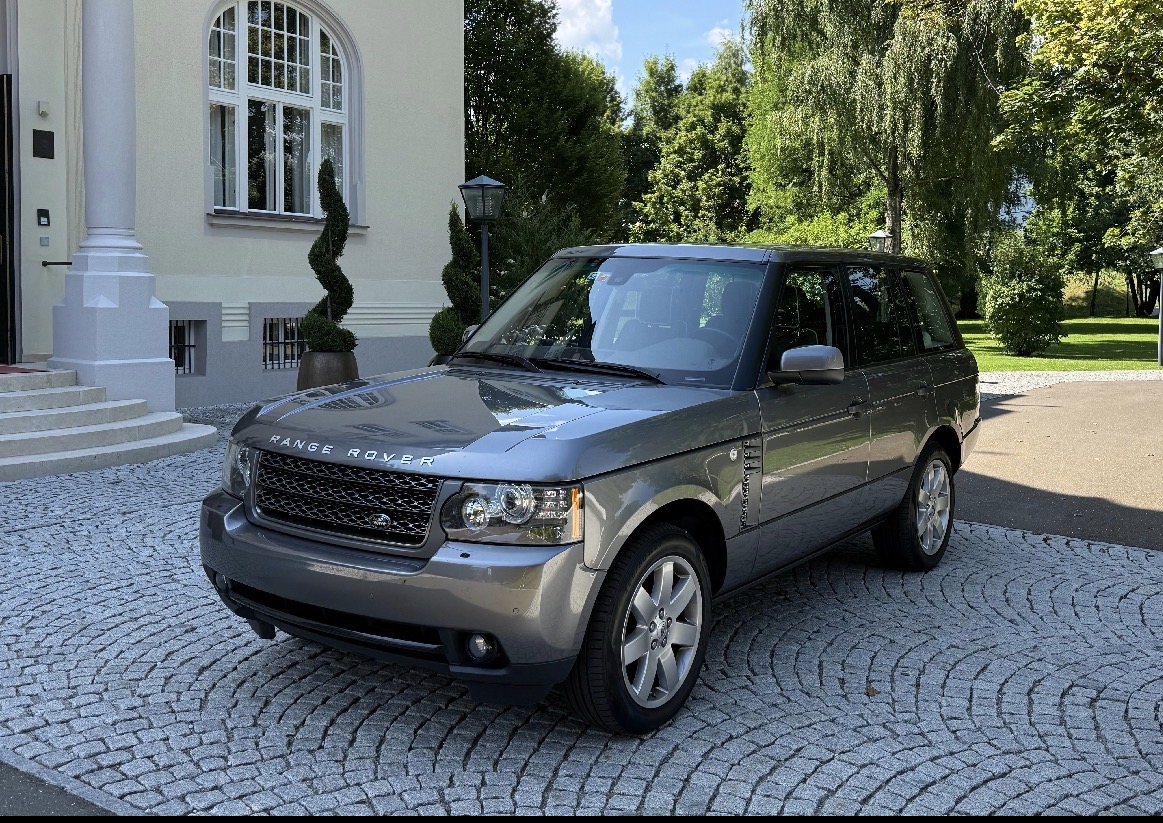
The grey L322 certainly looked far less fancy live than it had in the pictures of the ad, squeezed as it was against a garage wall. First impressions are important as we all know, and the seller could certainly have done a better job here. That said, there was nothing wrong with the car on the outside, and although the inside in beige-brown was perhaps not the most obvious color combination, it was fine. The cabin felt even more airy than in my L405, a function of you sitting even higher with even bigger windows, and everything seemed to be working as it should, which is never a given with a Land Rover.
The diesel V8 spun to life and did a very fine job during the test drive we went out on together. It’s clearly a perfect power unit for the car, having no trouble at all with the 2.7 ton weight, notably thanks to all the torque you could wish for. It’s also considered reliable as long as you don’t do all your miles in the city or on short distances, and service it regularly. The whole driving experience was actually surprisingly similar to an L405 in a good sense, with the only exception being an even more indirect steering, meaning a hole lot of wheel turning at roundabouts. Otherwise the drive was completely unproblematic and, with the power at hand, actually quite entertaining. Clearly, this was a car you could do long miles in.
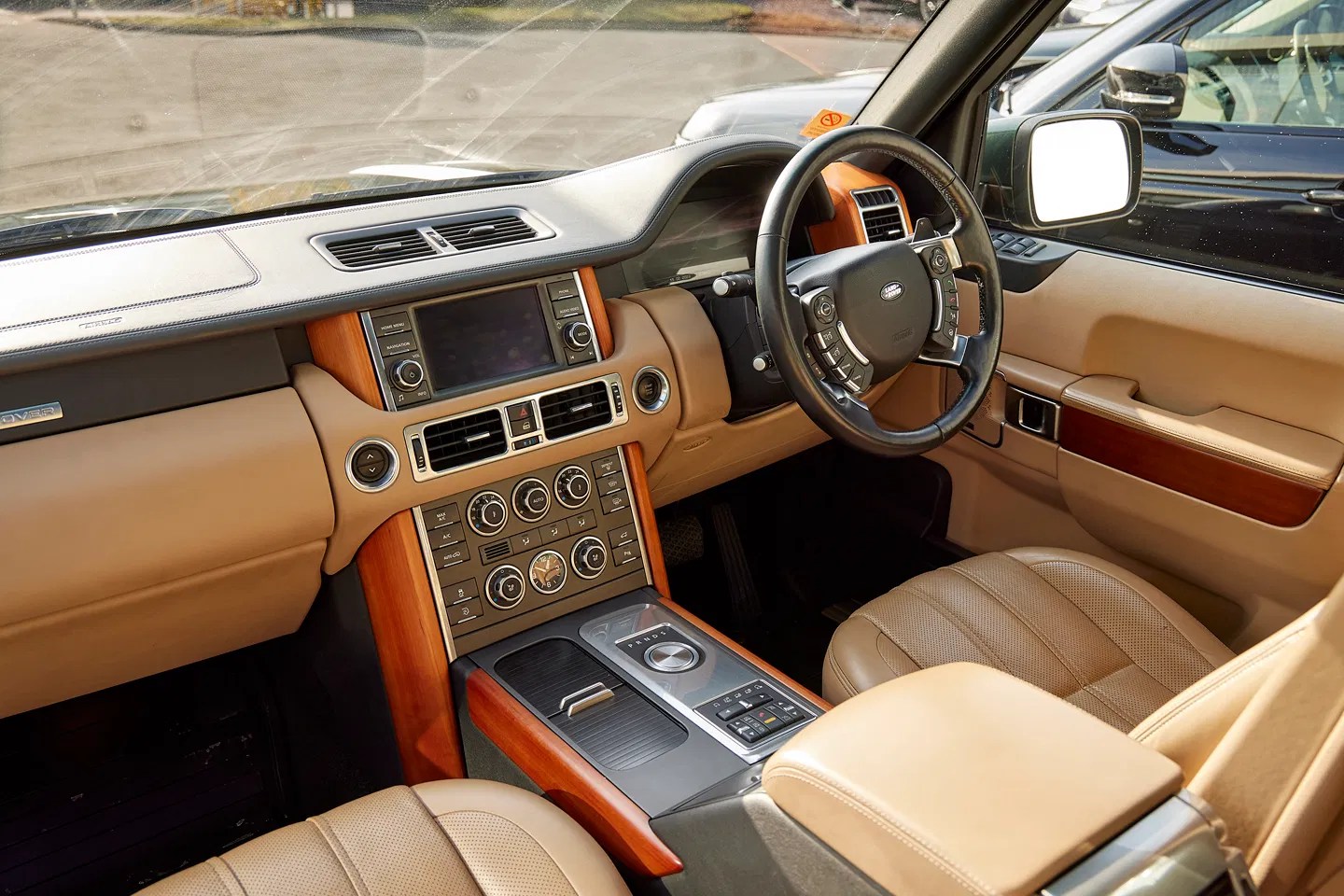
With the driving box thus ticked, I started checking things out in the car, in other words, in the interior L322 enthusiasts will tell you is so great because it’s full of large switches and controls that you can operate with your gloves on. I’m not sure why you would need to do that given to my knowledge, all L322’s have a good heating system, but indeed, switches are big and easy to find. When you do so, you discover they’re made of surprisingly cheap plastic, and when you start looking around, you notice that other parts of the cabin aren’t as nice as they look on distance either, but rather on the cheap side.
The seats were great though, and I agree with many people who say they’re better than on the L405. The sound from the Harman Kardon loudspeakers was fine, but the infotainment system is of course completely outdated, and according to the seller, lacked a reliable bluetooth connection to your phone. That’s of course easy to fix but slowly but surely, small details added up to a car which in spite of all its character, didn’t speak to me. It just felt old.
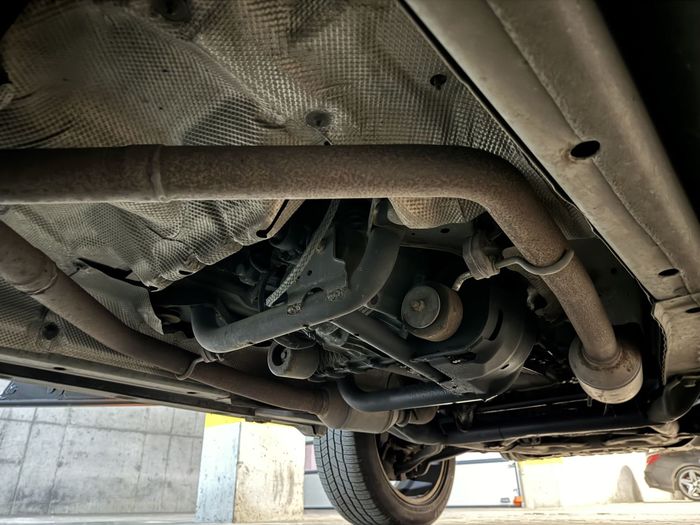
We made it back and before handing back the keys, I checked how rusty the exhaust and rear suspension were, because they’re typically not flawless. It wasn’t dramatic, but superficial corrosion could be seen in various places. It didn’t help the general impression, and unfortunately the service history didn’t do so either, not at all being as complete as the seller had told me. The rear brake discs didn’t have far left, and the seller didn’t know when they’d been changed last. As I’ve said so often, you should always scrutinize a car’s service history carefully, and if there’s one brand that’s especially important for, it’s any kind of Land Rover
I never really had a serious interest in the car but if there had perhaps been a small thought in that direction lingering in the back of my mind, it was gone. This car wasn’t for me, and I don’t think another representative of the L322 would have been so either. I say this having driven many cars from the 2010-2015 period, including an L405, which as you know I consider as one of the peak car periods, but none of them has really felt old as the L322 did. Looking at it somewhat objectively, there’s really no doubt that the succeeding L405 is a better car in practically all areas, except perhaps for the working horse usage the Clarksons of this world use the L322 for, most probably with their gloves on.
If the L322 speaks more to you than it did to me, be aware that you’re part of a growing crowd of prospective buyers looking for very few good cars still out there. More than ever, general condition, mileage and service history should be in focus. In terms of engines, you can find endless discussions on forums as to which one is best, but for most types of usage, the 4.4 litre TDV8 will be pretty much perfect and do the job at 10-11 litres per 100 km, For petrols, the 4.2 litre is generally considered more reliable than the 5-litre V8, but be aware that engine didn’t make it over the last facelift, meaning you’ll have to do with a 6-gear box and a less modern car.
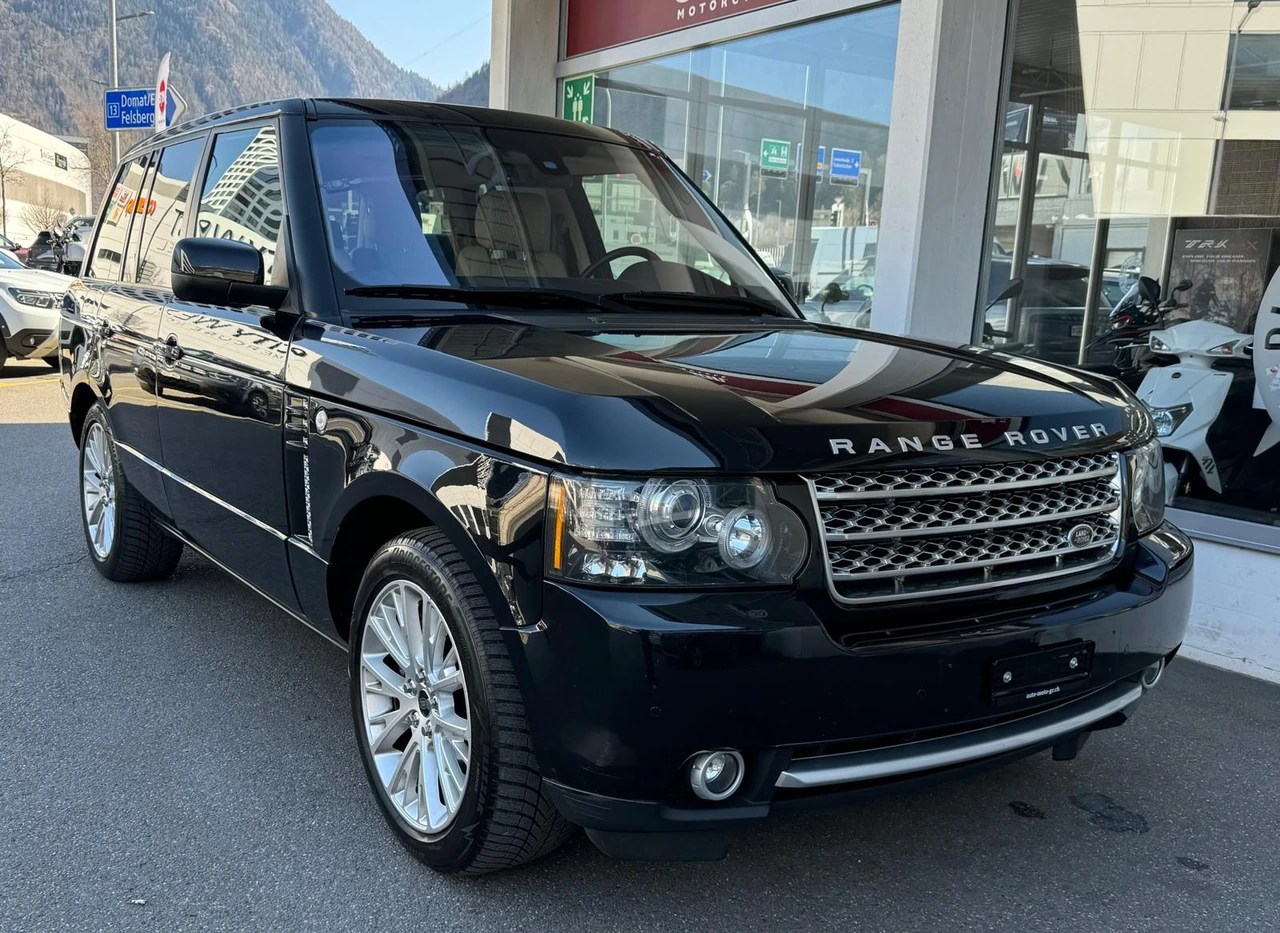
The market reflects this pretty well, with cars from after the last facelift being the most difficult to find and the most sought after. Be prepared to pay EUR 30-40.000 for really good cars, whereas EUR 20.000 will get you a well looked after 4.2 litre from before the last facelift. The 5-litre petrol is very rare, at least in Europe, and prices asked can go even higher. If you find one of those, you’ll want to check potential timing chain issues, something the engine is known for in the L322.
In conclusion, I politely disagree with Clarkson, Metcalfe and the queen, as I don’t think the L322 is the best car in the world. It certainly is far more suitable on Clarkson’s farm and other terrain-related usage, which is, after all, what it was intended for. As said, you can certainly do big miles in it, but if that’s the intended usage, I can make a long list of cars in that price segment I would consider better at it.
With that said, the L322 market is ultra hot and the car I looked at sold the following day for the ask of CHF 30.000. If you take your time and find the right car, you should be able to limit your downside and even enjoy a bit of upside, as prices will most probably continue to rise in the coming years.
 The Thrill of Driving
Pingback: The five-door GT car! – The Thrill of Driving