It’s high time for a long overdue F1 update, and like me, you may just have seen Lando Norries winning the Austrian GP, the 11th of the season. We’re thus not fully half way in as this season will coujnd 26 races, but not far from it, and even though we’re still two races out from formal half time, I would claim we’re well beyond it in terms of seeing where the season is heading – and the color of that is a solid orange. That’s however not the orange of Max Verstappen and the Netherlands we’ve gotten used to, but rather the papaya orange of McLaren!
That the team from Woking in the UK has emerged as the top team in 2025 is not a big surprise. After all they won the Constructors’ title last year and many counted them as favorites going into the season. What is perhaps more suprrising is that it’s not Lando Norris but Oscar Piastri who leads the ranking, even if it’s only 15 points ahead of Norris. McLaren has won eight of the 11 races so far this season, with Piastri winning five and Norris three. As a team McLaren is already way ahead of the three following teams Mercedes, Ferrari and Red Bull, with roughly twice as many points as the second Mercedes.
Full harmony so far – let’s see if it lasts!
Another thing that the first 11 races of the season has made clear is that Red Bull has issues. It may not look it at first sight with Max Verstappen currently in P3 in the Drivers’ Championship, but the fact that he scored almost all the team’s points demonstrates – again – what we now know. Which is that Max is one hell of a driver, and the Red Bull car is one hell of a car, in the negative sense, for anyone but Max to drive.
Alex Albon couldn’t do it. Checo Perez was in the end so intimidated by the car that he could barely finish a race. Liam Lawson, to be fair, was never given a fair chance being kicked out after 2 1/2 races, and now it’s Yuki Tsunoda, who has proven many times in the past that he can drive, who cannot get to grips with the Red Bull car and just like Perez did, gets increasingly frustrated, thereby making mistakes. Max may bring out 110% of that same car, but that’s currently not enough to win races, and unless things change drastically, Red Bull won’t take neither the Drivers’, nor the Constructors’ title this year.
Max has had many better seasons…
Red Bull also suffers in this sense against both Mercedes and Ferrari, which both have two drivers who regularly score points. Kimi Antonelli is not at George Russell’s level, but with 63 points scored so far this season, he still ranks seventh in the Drivers’s behind his team mate Russell, Charles Leclerc and Lewis Hamilton as the leading rookie. The latter would certainly have wished to be at least on a podium this season which hasn’t happened yet, but he’s had an ok start at Ferrari and with significant updates to the car coming out just before today’s race in Austria where Ferrari finished on P3 and P4, it bodes rather well for the coming races.
In my first post after the first race in the season, I speculated that Williams could be the positive surprise this year. To the extent that the team scores points regularly, mostly through Alex Albon and so far less with Carlos Sainz, I guess that was correct, but there’s a long way to go from the top four teams to Williams and the rest, although Williams are now somewhere in between the midfield and the top teams. In Austria however, Sainz couldn’t start as his whole break system locking up and going up in flames before the race start. Not necessarily something that should happen to an aspiring top team.
George Russell won the Canadian GP, the only race not going to McLaren or Max. As things are currently looking, he’s unfortunatley not close to repeating it.
As we are (almost) half way into the season, it’s thus difficult to imagine anything other than McLaren winning both the Constructors’ and the Drivers’ titles this year, but it’s far more difficult to say if it’ll be Lando or Oscar winning the title. And as things heat up in the second half, that may of course have implications on the harmony in the team, which still pretty much looks to be total. Whoever it is, it will be McLaren’s first Driver’s title since 2008, when Lewis Hamilton secured it with less than a lap to go at the Brazilian GP, winning it by a single point. Chances are there will be less drama this year, at least between McLaren and other teams, if not necessarily within the orange team…
Speaking of harmony, we’ll also see how Max handles no longer being in the fastest car. In Spain he drove into the side of George Russell out of sheer frustration you have to think, since Max doesn’t make those kinds of mistakes. On the other hand, his genius move in the second corner of the Emilia Romagna GP that he went on to win is the kind of thing only a world champion would dare – and succeed with. Unfortunately though, the opportunities for doing so to win races seem ot be diminishing as the season progresses.
After today’s race in Austria, we’re off to Silverstone next for the British GP, which is of course also McLaren’s home GP. It’s also the home race off both George Russell and Lewis Hamilton, and perhaps Lewis’s first podium? A week from now we’ll know!
I’m currently enjoying a bit of vacation in the south of France, and the other day we went into Nice to explore the area around the port. A lot has happened in the city in the last 10 years, transforming it from a place that at least in some areas was quite rough in my youth, to the delightful city it’s become today.
A lot of the improvements have come with a new tramline system that provide an excellent alternative to car driving in the city itself. And with less people driving, some lanes have been converted to bike lanes, trees have been planted, and it all looks much nicer than before. It proves the point that as long as there are good alternatives, most of us are happy not to drive around in city centers – but the alternatives need to be in place first, which is a point a lot of politicians seem to struggle with.
The tram line running all the way to the airport to the west of the city starts in the port area in the easternmost part. This is maybe the part of Nice that has seen most improvements over the last years, and it was while exploring the streets on the east side of the port that we stumbled upon a small alley with a garage at the end. And the garage had a few interesting cars up front, making it worthy of a closer look.
A Daytona convertible next to an F355 – and this was just the beginning…
What we came upon and that I had no idea of, was a garge called Motors Corner, boasting a showroom iof over 1000 sqm, with what must be Nice’s largest collection of interesting automobiles. It must also be the most space efficient car collection anywhere, and should they need to move out a car in the back part of the garage for some reason, that would probably take a working day!
Motors Corner specialize in all parts of motoring, from sales and restoration to concierge services, and the collection also reflects the varying nature of the business. Most cars are for sale, others are being renovated, and the company also has an off-market collection that is not exposed at the garage but that boasts some real jewels like the Ferraris F40 and F50, a Bugatti Chiron La Noire, and a McLaren Senna, among many others.
Many cars are on foreign plates, and this is no doubt a European business
The highlights in the showroom itself included two beautifully restored 911 S’s from the early 70’s, a Ferrari Daytona Convertible (top picture, can’t promise it was genuine though…), a beautiful Mercedes 540 above, a bunch of other Ferrari’s to die for, including a 250 GT Lusso. Just next to the entrance is the workshop where a Lancia Delta Integrale was being worked on, which at least by the stickers had been around on quite a few races! Next to it stood an E-type Lightweight. And I could go on…
An E-type lightweight, a Lancia Delta… and a 3-seater Matra in the background!
The pictures don’t tell the full story and the exhibition is not easy to take in given how cramped it is, but if you’re in Nice, it’s definitely worth stopping by! Until then, you’ll find all the cars for sale (a large part of the collection in the garage) on motors-corner.com, as I’ve discovered since, a site you can spend a lot of time on while sitting in the sun sipping your rosé!
Time flies -as if that’s a surprise to anyone. And in the same vein of kicking in open doors, it’s not much of a secret that I have a soft spot for France, as long term readers of this blog will have noted. If memory serves me right, the first “French” post on this blog was that on the wonderful Citroën DS, which I just saw that I wrote five years ago, during the first Covid summer. Those were not happy times so I guess we should be grateful that time flies at least in that respect, but also that floating down a French “départementale” (country road) in a DS has lost none of its charm ever since.
The French have a thing for trees as crash protection…
If Citroën was the technologically leading car brand in the late 1950’s and 60’s, Renault was still the largest. Unfortunately, design-wise the brand was far behind the competition in Sochaux, something that became shockingly clear when Renault launched the R8 sedan in 1962, later called only the 8. Just by looking at one and comparing it to a DS, you would think 20 years sets them apart. Of course it was the DS that was the exception, as at the time, far more cars still looked like the R8 than the other way around.
The R8 was a rear-wheel drive, small family sedan with the engine in the back as was still popular at the time. The standard version of the R8 was the definition of unspectacular, but I remember it clearly as it was also built on license in Romania under the name Dacia 1100. Growing up in Stockholm a couple of blocks away from the Romanian embassy, on the way to school, I would see some of these Dacias parked on the street in front of the embassy, together with a later version based on the Renault 10. Somehow the design felt like a far better fit to a Soviet-era, communist dictatorship than to lovely France!
“Pretty” is not the first word that comes to mind…
American readers may be interested to learn that the R8 was sold in the US as well, with the French trying to position it as the nimble city and close proximity car it was typically used as in France. At the time however, the US was all about far longer drives on the new interstate highway net, an environment where the small R8 with its 43 hp made much less of an impression. Needless to say, the R8 never became much of a success on the other side of the Atlantic
In Europe however, things were about to improve a couple of years later, in 1964. The regular R8 got a performance boost to 50 hp, but more importantly, the 8 Gordini was launched. Initially only available in the elegant blue called “bleu de France”, which has become a signature color for Renault’s sports versions, the extra power came from greater displacement (all of 1.1 litres!) and a different Weber carburettor setup. Power would be further increased to 100 hp in 1967, when the Gordini also got the double headlights it’s become known for.
The Gordini deinitely changed things for the better!
The name Gordini comes from the company of the same name and its founder, Amédée Gordini. Specialized in tuning and motor racing, Gordini was founded in 1946 and competed in F1 in the 1950’s and Le Mans in the 60’s. Amédée Gordini was so good at building race cars that he became known as “The Sorcier” (the sorcerer) and whilst he also worked both on Simca and Fiat cars through the years, most of his work was on Renaults, who bought his company and incorporated it as a subsidiary in 1968. Before the Renault 8, Gordini had also built notably the Renault Dauphine Gordini, another rear-engined, small family car.
The 8 Gordini was a true race car, not only with more power than the standard version, but also with lowered suspension and various other technical modifications throughout. It had assisted steering, a five-speed box and disc brakes on all four wheels. And those wheels were typically very small and very wide! For homologation purposes the 1967 version was also produced as a road car, with a few horse power less than the rally version and a different light setup at the front, but otherwise pretty much the same car. This made it one of the first road-legal race cars, as well as arguably the first GTI car (sorry Golf!). Of the few Gordini’s that remain, it’s mostly this street-legal version you see.
The 8’s predecessor, the Dauphine Gordini, had a lot o success on the rally scene in the early 60’s and sticking with tradition, Renault entered no less than six brand new 8 Gordini in the 1967 Corsica rally. Remember that back in the 60’s, motorsport was almost synonymous with rallying as F1 had not yet got the popularity that would follow in the 70’s. The 1967 Corsica rally would very much lay the foundation for the 8 Gordini’s future success on the rally scene and its position as one of the 60’s leading rally cars. In the first year, the winner and a further three cars in the top five were Gordinis. It would go on to win the Corsica rally another two years, and a long list of other rally victories until 1970 would follow.
Not many cars would keep up with the Gordini in the late 60’s!
If the regular Renault R8 still looks like a not very exciting 60’s family car, the 8 Gordini is a different story. Everything from the front lights to the lower suspension and the small wheels give it a cool poise, and the 100 hp have no problem with the car that weighed it at around 800 kg. Neither do the disc brakes, leaving the gearbox and rust protection as the weak spots. The gear change, given the gearbox in the back next to the engine and thus a long way from the gear lever makes it quite vague, and rust protection as on any French car form the 60’s is largely non-existent.
That said, if you’re lucky enough to find an 8 Gordini today, it will most certainly have been renovated. Rare as they are, a good car will be yours for EUR 30-40.000 and will provide the kind of pure mechanical driving pleasure only a 60’s car can, including the drifts from rear-wheel drive combined with the rear-engine setup. All of it brings back memories of an era when Renault was not just a manfacturer of boring family vans, but a name to be counted with on the rally scene!
I hate to break it to you, but you’re wrong. Unless of course you’re one of the 250 lucky souls with a contract for delivery, from 2026, of the world’s most exclusive car – the Bugatti Tourbillon. Now should you indeed be one of those 250 and read this blog, I would of course be very honored!
Bugatti’s new hypercar is also its first hybrid, and the first car to be developed under the joint company Bugatti-Rimac, where Rimac is the Croatian supercar EV brand of Matje Rimac, Croatia’s version of Christian von Koenigsegg. Since 2021, Matje is CEO of the joint company with Bugatti, and there’s no doubt a lot of Rimac’s knowledge that have gone into the Tourbillon’s hybrid solution.
The numbers are, as always, completely bonkers. Up to 1800 hp out of a combination of an 8.3 litre W16 petrol engine and three electrical engines together with an eight-speed double-clutch gearbox enable a top speed of 455 kph. The Tourbillon is of course four-wheel drive and Bugatti-Rimac have managed to make the car weigh in at (just) below two tons. If you were ever lucky enough to drive it, preferably on a circuit, you’d reach 100 kph in below two seconds, 200 in five, 300 in about 10, and 400 kph in 25 seconds. If you have the balls and don’t run out of runway, that is.
Nothing for your local garage…
The mighty engine has been developed together with Cosworth and has a crankshaft that is longer than one meter. It’s mid-mounted, visible through the transparent hood, and good for 1.000 hp and 900 Nm. It’s complemented by two electric engines up front and one in the back. These are fed by up to 25 KwH from an 800 volt battery and are said to be the most powerful electric engines ever made. They should enable about 60 km of fully electric range.
Of course, this being a Bugatti, all this happens in ocean of luxury and style. The name Tourbillon comes from the movement in mechanical watches set to correct gravity for a more precise time-keeping. The Tourbillon’s gauge cluster (a complete misnomer), of course developed with Swiss watchmakers, consists of over 600 parts made in titan, sapphires and rubies. The floating center console out of crystal glass and aluminum is produced in 13 steps to ensure it doesn’t break in an accident. And so on.
Honestly, not sure how to describe this!
The Tourbillon’s design is said to be inspired by traditional Bugatti masterpieces, notably the Type 57SC Atlantique, considered one of the world’s prettiest cars. It was presented earlier this spring to a selected few at the company’s headquarters in Molsheim in eastern France, and any car that might not have been sold before certainly found a new owner then. Like previous ones, they would most probably be asked to make a pretty sizeable down payment on the total price, set to 3.8 million EUR. I hope any American buyers paid up earlier this year, because with the dollar on a downward trend, that’s about USD 300.000 more now than it would have been in January. Then again, in this price segment, that’s not much more than a rounding error…
I like Audi. I’ve only owned one myself, but growing up, my father had two Audi 80’s, a red one that looked like, well, like cars did in the early 80’s, and that I was adamant he fit a rubber spoiler to such as to make it more alike the more powerful E-version, which if memory serves me right had all of 113 hp… He then traded it for the last Audi 80, the one that looked like a soap, which he for some reason ordered in beige metallic, like the one below. I’ve so far only owned one Audi myself, an A6 3-litre diesel that I ran as company car back in the days you had those, some 20 years ago. It was a great car and so far the only car I’ve owned that I’ve managed to fill up with the wrong fuel.
Not Audi’s greatest design achievement
It was on the way back to Zurich from Lugano in southern Switzerland that I stopped to re-fuel at the last station before the 17km long Gotthard tunnel. The Audi was the first diesel I ever had, so by habit I grabbed the petrol hose which, being thinner, fits into a diesel tank opening. I made it three km into the tunnel before the car stopped, and only then did I realize my mistake. I managed to roll onto an emergency parking, opened the door, and was first struck by the heat in the tunnel, and then almost by a truck that ran by half a metre away. No doubt one of the scariest moments in my relatively peaceful life!
An emergency truck came within 10 minutes (they’re pretty alert on each side of the tunnel as to avoid any mishaps, which I’m eternally grateful for!). He loaded up the car and drove us to the nearest garage in a small Swiss moutain village. The garage owner looked all happy when he realized it was a quattro, as that meant the car had two fuel tanks that are separate, meaning he would earn twice the money. You see, the way to empty a tank, at least back then, is to put the car in a rotating frame which turns it on its side so that the fuel runs out. Which in my case had to be done twice. He no doubt thought I was a complete big city idiot, but he congratulated me on having filled up when the tank was practically empty. Had it been half full, he said, the engine would have run, but you would have ruined it completely. Oops.
This, in the other hand, is one of the best in all areas!
Coming back to Audi, more recently, before buying my current BMW 540i, I thought long and hard about an RS4 of the 2011-2015 B8 generation instead, with the fabulous 4.2 litre, naturally aspirated V8. Reason prevailed then, but in my quest for something more GT-like, I’ve recently looked closer at the RS5 coupe from the same generation. More on that to follow in later posts. The point I want to make, and which both those cars examplify brilliantly, is that they’re not only good-looking, but also built with an interior quality that is so solid it feels like nothing could break it. That by the way also goes for the D2 Audi A8 that I wrote about last year. Unfortunately, it seems to be something Audi’s engineers have since forgotten how to do.
European, and especially the German luxury car brands are all struggling to find their place in a world that somehow is supposed to become fully electric, but where the goal posts keep moving. Certainly no easy task and manufacturers have my sympathy, at least to a certain extent. As the completely unrealistic political EV targets have been revised, Mercedes, BMW and Audi have for now settled on a combination of ICE’s, hybrids and EV’s, such as to be covered whichever way the wind blows next.
Ursula von der Leyen, president of the European Commission. She’s never been publicly elected. Had she been, you bet the policies she advocates would be different.
As part of this process, Audi last year decided to let the model names reflect the power source so that cars with an even number, like the A4, would henceforth be EV’s, and cars with uneven numbers, like the A5, would be ICE’s. It was of course too bad they had just launched the A8 which is an ICE, so they added that this would only apply to new models. Like the new A6 that was introduced at the beginning of this year. Except for the fact that the A6 is not only an EV, but also available with various petrol and diesel engines. I would love to have listened in on the meetings in Ingolstadt when the decision on this complete mess was taken!
Luckily, it didn’t prevent the design department from continuing to do a great job. Taste is individual but personally I love Audi’s current line-up in terms of exterior design, from the muscular A3 up to the Q8, especially as coupe, but also including the spectacular E-tron coupe. The cars look bloody good, with the difference between EV’s and ICE’s limited to minor points like a different front grill. I’m glad to see that this validates a point I made in post a couple of years ago, that the innovative design language that Audi and other brands limited to EV’s at the time, as it was said to be the only future, is now carried over also to ICE’s, as it becomes clear we’ll have them for far longer than some people imagined.
ICE and EV look very similar, meaning they both look great!
What Audi seem to have forgotten however, is how to build an interior that is as solid as in a B8 from 10 years ago. Seeing the new S6 station wagon (which, just to clarify, is an EV) at my local Audi dealer last week, I went in for a closer look. Opening the door, you’re greeted by an interior dominated by the mandatory giant infotainment screen. Audi have opted for a horizontal layout that goes from the door to the middle of the car. It looks nice and modern, although perhaps unnecessarily big, until you realize that next to it is another, optional screen for the passenger. That smaller screen is in a different shape and shows parts of the information from the main screen. But given the main screen stretches well into the passenger’s field of vision, why on earth would anyone need it? Obviously Audi isn’t the only manufacturer doing passenger screens, but that doesn’t make it better.
Audi making sure you’re never bored!
As also seems to be mandatory today, the S6 has tactile controls on the steering wheel as well as on the inside of the door. Apparently these have become so fashionable because tactile surfaces are cheaper to produce than traditional switches, and they certainly feel like it. The S6 has a plethora of functions on the door side in addition to the window controls, all within one tactile plate that feels like it moves when you touch it. Forget about adjusting anything here while driving!
Slightly further below the door handle is however where it gets really bad. The plastic used for door pockets and most of the trim below your waistline is hard plastic of the really cheap-feeling kind, the type that makes nasty sounds when you scratch it. We’re talking many quality levels below what you find in a B8 from 2014, or indeed what would have been deemed acceptable at the time. Plastic of course has the benefit of not only being cheap, but also light. And that’s something the S6 definitely needs, given it’s a car that being the EV it is, weighs in at an almost obscene 2.500 kg. That’s more than my old Range Rover with that wonderful V8, and without any interior plastics of any kind.
A lot going on there!
The list price for the S6 in Switzerland is CHF 105.000, around USD 125.000. You read that right, and that’s before options, of which the list is long in Audi’s world. Based on early tests, the S6 is a great family drive, but quality-wise it feels like it’s worth half its price and above all, it feels far cheaper than a Chinese EV that costs far less whilst giving you a better range. It’s simply not good enough. The ICE-hybrid version of the same car is less powerful but can be filled up at any petrol station when you run out of battery power, and doesn’t cost as much, even fully optioned. It still won’t give you better plastics or real switches though.
Of course, Mercedes and BMW are not much better than Audi, and all of them are worse today than five years ago. At which time they were already worse than five years prior to that. It’s a sad truth that my E63 Wagon from 2014 had a better interior quality than my BMW 540i from 2019, which in turn is miles better than the new 5-series. It’s becoming increasingly clear that the peak of German automobile building was around 10 years ago, in the mid-2010’s. The residual values of cars from that generation compared to later generations will confirm that story, and also show you that I’m not alone neither in thinking so, nor in appreciating it.
Quality-wise, the W212 was close to perfection, and it’s worth more today than when I sold mine 5-6 years ago.
Let me therefore make a humble suggestion to the management teams in Ingolstadt, Stuttgart and Munich. You’re currently on the road to perdition, so please reverse course while you still can as it’s getting really late. There is good news though: a vast majority of your clients don’t want EV’s anyway, so just leave that market to the Chinese, especially since you can’t compete with them anyway.
What most of your clients love on the other hand is the great cars you used to build. So stop the screen size race with functions we neither want, nor use. We don’t need to talk to our cars, or have it point out the next restaurant. Scrap the tactile surfaces and give us real switches. Adjusting the seat position on the side of the same seat worked absolutely fine. We want the solidity of an RS4/B8 or an E63/W212, combined with the playfullness of an M3/F80, all at well under two tons. We all know ICE’s will still be around for a long time, and adding a sufficient number of hybrids will allow you to comply with legal requirements. Therefore, go back to building the best ICE cars in the world before it’s too late!
if you’re wondering about the headline, it’s to be pronounced as an expression of pain at something that is, but doesn’t have to be…
Oh how quickly things can change! Three months ago, most of us would agree that we were in a very different place, and nowhere more so than at Tesla, who at the time was valued at more than all other car companies in the world combined. Yes, you read that right, as incredible as it may sound. And even after it’s lost close to 50% of its value this year (with the stock trading at around USD 240 as I write this), that still values the company at around USD 800bn, about three times the value of Toyota, or 12 times the valuation of GM or Mercedes-Benz. Perhaps most relevant, it means that Tesla is currently valued eight times higher than BYD, the leading Chinese EV brand that has now surpassed it in number of cars sold.
The BYD Seal – a superior competitor to Tesla’s Model Y
The first quarter of 2025 was not kind to Tesla. Not only has the stock price imploded, the company has also seen sales dip heavily in several key markets, with a corresponding loss of market share. And nowhere more so than in China, the most important market of them all and of course, the home market of BYD and other Chinese EV’s. During the first quarter of the year, Tesla’s Chinese deliveries were down 13% as compared to 2024, with its EV market share dropping to 7%, down from 12% a year earlier.
Q1 2025 was also the first quarter when BYD delivered more pure EV’s than Tesla (BYD sells plug-in hybrids as well). In 2024, the two companies sold almost exactly as many EV’s at 1.75m each, but this year, BYD is projected to double that number, and given the brand isn’t present at all in the US and so far on a very limited scale in Europe, most of these will be sold in China and across Asia. And yet, even at a stock price of USD 240, Tesla’s valuation is eight times higher than that of BYD.
Tesla’s stock price evolution year-to-date. Not what many expected.
If it was just to prove that Tesla’s valuation makes no sense, we could probably stop right here. However, there’s a lot more to say and as we’ll see, it only gets worse from here. Tesla has no doubt been instrumental in making EV’s part of today’s car landscape, but I would argue they’ve now fallen so far behind Chinese brands such as BYD that their market share, and thereby stock price, will only keep on falling. I would even say that it’s doubtful whether Tesla will continue to build cars in the coming years, and if that’s even what they aspire to.
To understand why that is, let’s start with the line-up. Models S and X have now been on the market for 13 years, with the Model 3 not too far behind at nine years. That’s an eternity in modern car cycle terms. Their battery packs have seen continuous improvements, but both the exterior and interior have seen nothing more than a quite mild face-lift over the whole period. The Model Y, the best-selling car in the world in 2024 (obviously quite an achievement!), has recently seen a similar cosmetic update, but it’s six years old by now. We’ll never see the Cybertruck in Europe (thank God for that…) just as little as any of us will probably ever see the roadster or the sub-$25.000 car Elon has been promising for years. That means that Tesla has an older model line-up than all the other car brands, the valuation of which it exceeds by up to 12 times.
The Tesla Roadster is suppose to come out next year. I wouldn’t bet on it…
Next, there’s the quality which was terrible in the early years but has gotten better such as to be more or less ok today. As a comparison however, I was in a Polestar store the other day and checked out the Polestar 4, the SUV coupe without a rear window. Polestar may market themselves as Swedish, but they’re owned by Chinese Geely and all models are these days built in China. Except for a bit of Nordic interior design, it’s therefore a Chinese car. In terms of interior quality however, it’s on another planet compared to not only Tesla, but also to any EV coming out of Germany these days (and even worse, of any ICE car the likes of Audi, BMW and Mercedes have in their current lineup).
Beautiful materials, plush seats, no hard plastics anywhere, lots of space and all the features you could wish for. Everything is solid and well put together and as I’m lead to believe, Polestar is hereby not the exception, but rather quite representative of modern Chinese EV’s. They even drive well, in the not very passionate but comfortable way EV’s do. Given Tesla’s European charging network is now open to other brands as well, if I were in the market for an EV, I wouldn’t hesitate a second between a Polestar 4 and a Tesla Model S. I’d actually be prepared to pay a premium for the former, but I wouldn’t have to, given it’s 20% cheaper.
The Polestar 4 – one of the nicest car interiors I’ve ever seen, any category.
Then there’s the whole self-driving thing. Basically since the first Model S came out, buyers have been given the option to add thousands of dollars to the price by opting for self-driving packages that were set to become reality “soon”. Well, in over 10 years, “soon” hasn’t happened yet, which makes you think that at least in Europe, some kind of consumer protection body should step in. How can you be allowed to sell options for functions that never become reality? And for each passing day, Connectivity Day is becoming less likely to happen, quite simply because Tesla’s technology isn’t even close to where it needs to be.
If you’ve been to Austin, San Francisco or a few other American cities in the last years, you will have seen or perhaps been in a Waymo driverless taxi. Based on the Jaguar I-Pace, they transport people around the cities like a normal taxi without any issues. Given they’ve been doing so for some years now, it makes you wonder why they haven’t spread to more places, which may have something to do with their price tag of over USD 250.000 per car. The price is explained by the fact that a Waymo is equipped with not only cameras, but also a radar system and Lidar (Light Detection and Ranging), all necessary for self-driving.
A Waymo in Frisco. USD 250.000 cars usually look differently…
Tesla doesn’t have that. In fact, Tesla is the only brand promoting self-driving on a large scale which relies completely on cameras. That’s of course because it’s a cheaper technology, but it brings the slight disadvantage that cameras struggle to see some things that a radar or Lidar system pick up. Driving in the dark is one of those things you would need to be really stu…. brave to do in a self-driving Tesla. Youtube also has illustrations of someone putting up a picture looking like the continuation of the road at some distance in front of a self-driving car. The Waymos and other radar cars all pick up that it’s not the continuation of the road, and stop. Teslas just run through the picture. Trust me, with the current system and without major developments, no Tesla will ever be fully self-driving, whatever the regulation says, and whatever was promised at the time.
You’ll notice that at no point so far, I’ve mentioned Elon Musk’s politics. Doing so doesn’t improve things. This is not a political blog, so let’s just say that the position he’s assumed in the new US administration doesn’t sit well with his cult-like following, who now start putting stickers on their cars like the one below. No doubt this has also contributed to the falling sales numbers, as apparently, if you buy a Tesla, it’s important that the CEO shares your political positions. I guess I should call BMW then, to make sure the current CEO Oliver Zipse shares my beliefs?
The problem with cults…
More seriously, the problem is of course that if your sales were based on cult-like, non rational behaviour and the cult then disappears, you’re in trouble. In the case of Tesla, what remains is a heavily top-run business where the guy at the top is no longer fully committed to the company. At this point in time, given all the other issues the company is confronted with, that’s not a very good sign.
You’ll also notice than when Elon talks about his companies these days, it’s usually not so much about the cars as it is about AI robots, energy storing and space travel. Given the man is obviously quite talented and probably not as crazy as his once followers believe, I have no doubt he’s very aware of everything I’ve written above, but doesn’t really care, as he may see Tesla’s future elsewhere than in the car business. The problem however, is that no one outside of his head has an idea of what that business is, and thus how to value it.
Coming back to what we can measure, Tesla is a car company on a slippery slope that is likely to continue downwards. EV’s will not take over the world anytime soon but China will most probably take over most of the EV market, such is on one hand the quality of what they build and on the other the size of their domestic market, where various kinds of incentives go towards promoting EV’s.
BYD’s new factory is bigger than San Francisco. Elon, they’re coming for you!
Tesla’s home market is far smaller, and the wind has turned against it. They may get some protection from tariffs, but they don’t solve the fundamental issues of the company. And Elon would do well to remember the 70’s, when the US tried to protect Detroit from superior Japanese cars by imposing tariffs. It made Japanese cars more expensive but Americans still bought them, because they were better.
Then again, none of this matters if Tesla’s future isn’t in the car business. I don’t have more of an idea than anyone else of what goes on inside Elon’s head, but I’d say it’s more likely that Tesla focuses on other things than cars, rather than that they turn the numbers around and bring a new model line-up to market in the coming years.
Whatever the scenario, it remains that Tesla is hopelessly overvalued as a car company and the brand’s cult-like followers are now to a large extent gone. And if you’re in the market for an EV, you’d do well to look at a few options before signing a check for the 13-year old Model S. The Chinese are coming big time, and it will be interesting to see how things evolve in the coming years!
if there’s one car that is underrepresented on this blog, it’s no doubt the 911. And the reason is not that I’m part of the strange crowd who have something fundamental against the legend from Zuffenhausen – quite the contrary. I do however have enormous respect for on one hand everything that has already been written about the most legendary of sports cars, and on the other for all the people who no doubt have far more knowledge on the 911 topic than I do.
I therefore welcome every opportunity there is to learn more about the 911, and having had the opportunity to drive quite a few 997’s over the years, until recently I had actually never driven a 991. The opportunity to do so came about as my favourite garage in the Zurich region traded in a 991.1 Turbo S in perfect condition with about 85.000 km on the clock and a price below CHF/EUR 100.000, (which as I noticed is where the market for these currently is). It felt like an opportunity not to be missed. After all, as great as my BMW 540i Touring is, I don’t really plan to drive a station wagon for the rest of my life, and few things beat a top of the range 911 as possible replacement!
Definitely looks better than a 540i Touring…
If I were to replace the 540i though, what I would be looking for is a stylish and fun to drive coupe with enough room for two people but ideally not too big, to take my wife and I the 600 km down to the south of France a few times per year. The BMW does an absolutely fine job here, but it’s unnecessarily big and as said, as stylish as it may be, I no longer need all the space. For what follows, it’s however important to remember that what I would be looking for is more of a GT-car than a track weapon. And from all that I’ve read, it felt like the 991 Turbo S would be close to the perfect proposition here.
This first series of the Porsche 991 was built between 2011 and 2015, with the Turbo S being produced between 2013 and 2015 (production years, that is). It featured the 3.8 litre flat six with twin turbos, putting out 560 hp through all four wheels and a seven-speed PDK box. For a 911 it was rather well-equipped from the factory, with (in most markets) rear-wheel steering and center-lock wheels as standard. Ceramic brakes were a frequent option and the car I drove had them, along with a plethora of other things.
The first thing you notice when you stand in front of a 991 is how much larger it looks than a 997. It is indeed bigger, about 4 cm both in length and width, but the impression is of an even bigger difference. Stepping inside, the difference is even more striking, greatly helped by the 10 cm longer wheelbase as compared to the 997. Two people with reasonable but perhaps not excessive luggage will have enough space for a good vacation, and the whole car feels more mature and more GT-like than the more intimate 997. No doubt that the 991 is the more grown-up car, although I still feel the 997 looks better.
Purposeful rear, beautiful center-lock wheels. It does feel big though!
As the pictures show, the car I drove was white and as you’ll see below, had a read leather interior. And whereas I’m certainly not part of those who follow the Henry Ford motto that you can have any color as long as it’s black, a red interior is perhaps a bit over the top. That said, in the case of this car it was really a combination of red and black that made it rather decent, and I quickly stopped thinking about it. There are cars who are fully red on the inside, including the dashboard, and that to me is then really a bit too much. As for the exterior, white is a color I personally feel suits the 911 quite well.
I familiarized myself with the car as I drove off and let the engine warm up, which really didn’t take long. The logic is the same as in the 997, but the 991’s array of empty buttons on the center console that glare you in the face to remind you of all the options you didn’t spec aren’t particularly nice. Could it be that the quality of materials was just slightly better in the 997? Anyway at low speeds, at least on smooth, Swiss roads, the car is very compliant and not unnecessarily hard. Sports-car like rather than track car.
Such reflections soon gave way to real driving, now that we’d reached a decent temperature and the road opened up. It will be no surprise that the first, second and last impression is that of the flat six, which is simply magnificent. Power is never-ending, the sound is great but to my ears, could be even louder than what the sports exhaust produces, and the engine harmonizes perfectly with the excellent PDK. That said, the turbo lag is more obvious than I was expecting, with a small but still very noticeable hesitation before all the 560 horses wake up.
Clearly more spacious than a 997, and with a black dash, still looks decent in red.
A lot has been said about the 991’s electronic steering as compared to the mechanical 997, which no doubt was one of the best 911’s of all in this regard. For the driving I did in a combination of B-roads and motorway, I can only say that the 991 is great as well, and that you need to be a 911 aficionado or drive the two cars back to back to notice any real difference. And compared to basically any other car, the 991 is miles ahead in terms of precision and road feel. Needless to say that very much goes for the chassis as well, with no real possibility to test it fully on the roads I was driving.
Where it isn’t ahead of the competition however is road noise. This was a surprise given how much more mature the car feels compared to the more rustic 997, but noise-wise theyr’re not far apart, with especially noise from the wheels being very present in the 991, at normal motorway speeds. You would need to raise your voice to communicate with your passenger (or, as in my case, increase the volume of the excellent, optional Burmester sound system), which doesn’t feel very GT-like. Except for that, it’s an excellent motorway cruiser as well, and the ceramic brakes were easy to modulate much like normal discs.
As no one can sit in the back anyway, you have room for a lot of stuff.
When I handed back the keys to the white beauty, it was therefore with mixed feelings. The Turbo S is a fabulous car, and the 991 feels more modern and more mature, albeit not as good-looking, as the 997. It’s however still far more sports car than GT, meaning it’s not the right car for the use I would make of it. But even if I were, I wouldn’t go for the Turbo S. The 991 was also the last 911 that could be had with a naturally aspirated engine, and for normal road use, I would gladly sacrifice 150 hp in favor of a 991 S or GTS, with an even better sound and without turbo lag.
If the Turbo S sounds like your thing, you should be aware of the higher maintenance costs compared to a standard 911 that one of my 911-savvy friends made me aware of. The turbo engine contributes here, as do the center-lock wheels, however only if you’re set on changing wheels yourself, which I doubt (and given how good the center-lock ones look, I’d be happy to take the extra cost!). Also, many cars will be equipped with ceramic brakes, said to be good for a lifetime but costing a fortune to replace, should anything still happen to them.
The 991 is a great car and a far more mature proposition than the 997. It’s however not the perfect GT, and I can’t help feeling that the Turbo S misses the mark. As a daily driver or a back-road companion, a 997 will be even better, as will a 991 S. For track use, you should rather go for a a GT-version. And as a Grand Tourer car for long distances, I think there’s better options out there. We’ll see if I’m right!
Well, that didn’t last long. 2 1/2 (if you count the China spring GP as 1/2) races into the season and Liam Lawson is already out of his Red Bull seat, being degraded to Racing Bulls and switching places with Yuki Tsunoda. I don’t have the stats to prove it, but I’m guessing this is the least patience any F1 team has ever shown with a new driver, especially a youngster who’s 20 years old…
As noted in my F1 post last week, Lawson isn’t completely new to F1, having started in 11 races and finished P9 at best. That said, his first races at Red Bull have been a complete nightmare, qualifying in P18 at best and not finishing better than P12. That’s not good enough for Red Bull, and Lawson thereby becomes the next in a relatively long line of second drivers at the team who don’t manage to perform in a car that by the looks of it, only Max Verstappen can handle. However, the question still remains if Red Bull didn’t test Lawson enough before signing him to notice it?
Red Bull are of course stressed about the Constructors’ title that they in my opinion will struggle greatly to regain this year. There is however another reason next to Lawson’s poor results playing in here, and as so often, it’s called money. The next GP is at Suzuka in Japan, and rumor has it that Tsunoda’s sponsors have paid north of USD 10m to Red Bull on the condition that they put Yuki in Lawson’s seat in time for it. Let’s see what happens. No doubt Tsunoda is a fast driver, but other second drivers at Red Bull have been so as well – in other cars. We’ll see if Yuki manages to handle that raging bull any better than Lawson in front of his home crowd! If so, Lawson isn’t about to return, at least not this season.
The F1 season 2025 has finally started! We’ve been waiting for it and of course, now for the seventh year, Netflix has contributed to the build-up by launching the latest season of “Drive to Survive” a week ago (I’m not through it yet…). Anyway the new F1 season started today if you read this on the day of publication, and if so, you may just have seen Lando Norris win the first GP of the season in Melbourne, allowing a McLaren driver to lead the Drivers’ championship for the first time since 1992! If you look back on the practice sessions of the last weeks that was hardly a surprise, and Norris may well stay at the top far longer than just until next race.
Whatever happens, 2025 is the last season with F1 in its current form before some major changes in 2026. More on that later this year but it will affect fuels, engines and downforce, with signs that cars will not be as fast as in 2025. Therefore, we should enjoy the current season for as long as it lasts, especially since it promises to be even more exciting than last year, which itself was of course the most exciting season in many years!
Things have started well for Norris, who may well be the title favourite this season!
Starting with the driver line-up, the biggest news of the season is of course something that was announced already last season, namely Lewis Hamilton taking Carlos Sainz’ seat at Ferrari, with the latter joining Williams. Lewis is of course a true legend with seven world championship titles under his belt, but he will still have his work cut out for him, not only in comparison to Charles Leclerc but actually also to his predecessor who had a great season in 2024.
We know now that Sainz had the choice to join Alpine or Kick-Sauber in addition to Williams. Kick-Sauber is set to become Audi in 2026 and would perhaps have been most promising in that regard, seen from the outside. That Sainz still opted for Williams hopefully says a lot about the potential the team has this year. In the first, chaotic Melbourne GP he didn’t manage to capitalize on that, but his teammate Alex Albon finishing fourth may have been an early indication.
I think everyone wish that things go well for Sainz at Williams!
Lewis’ departure from Mercedes also meant Toto Wolf as team principal had a seat to fill, with quite some pressure to get it right. Toto, in my view wisely, chose not to go for Sainz or another more experienced driver, but rather for perhaps the most exciting of the five newcomers this season. The Italian Kimi Antonelli is only 18 years old and has been a part of the Mercedes Junior Team since 2019. Last year was his first in F2, he won several races and now gets the chance to drive for Mercedes in F1. That’s quite a development for a teenager who only got his driver’s license a few months ago… Together with George Russell who is now Mercedes’ first driver, that gives the team not only the youngest, but perhaps also the most exciting driver line-up.
This kid just got his driving license…
The other newcomers include 19-year old Englishman Oliver Bearman from the Ferrari academy driving for Haas, the 22-year old Australian Jack Dohan on Alpine, from the team’s own academy and the son of the MC legend Mick Dohan, and the 20-year old Brazilian Gabriele Bortoleto who won the F2 championship last year and now drives for Kick-Sauber. Last but not least is 20-year old Isack Hadjar who was the runner up in F2 last year and drives for Red Bull’s junior team Racing Bulls. Hadjar is French-Algerian, meaning he will be the first F1 driver ever from the African continent, outside of South Africa.
This means that only Aston Martin and McLaren have an unchanged driver line-up in 2025. Haas has replaced both their drivers, with Bearman coming in alongside Esteban Ocon, who lost his Alpine seat to Jack Dohan. None of the Kick-Sauber drivers, Bottas and Zhou, will drive in F1 this season, replaced by Bortoleto and Nico Hulkenberg from Haas. Most importantly however, Liam Lawson has graduated from Racing Bulls to Red Bull, being replaced by Hadjar, and now drives for Red Bull alongside Max Verstappen.
All newcomers crashed out of today’s rainy Melbourne GP – except Antonelli
Lawson is a 23-year old New Zealander who during last season was Red Bull’s reserve driver and came in to replace Daniel Ricciardo at the junior team Racing Bulls (previously called Alpha Tauri) when he broke his hand mid-season. Lawson has driven a total of 11 GP’s, finishing ninth at best, but proving he’s got the speed on a couple of occasions last year. And that’s probably a good thing, since it’s still a bit of a mystery how fast the Red Bull car really is.
McLaren of course won the Constructors’ title last year and clearly had the fastest car in the latter part of the season. At least at the beginning of this season, that still looks to be the case. Behind McLaren, we’ll have to see if Red Bull still has any kind of edge on Ferrari and Mercedes. It’s no secret that the car has a narrow window where it performs at 100%, and the question will be whether that window has become wider or not. If not, it’s difficult to see how Verstappen will be able to hold on to his title, and how the team could win back the Constructor’s title. And looking at the other teams, if the first race and Carlos Sainz’s experience is anything to go by, Williams could be the positive surprise of this season!
Flavio is back – the other team bosses better take notice!
Before we close, it’s also great to see that F1’s leading playboy is back! Flavio Briatore doesn’t need much of an introduction, he was of course team head at Renault in the 90’s during Schumi’s time, when the team was still called Renault, and returned to the team in the middle of last season. Back in the day, he helped Renault win three Constructors’ titles and four Drivers’ titles with Schumi, but was then banned from F1 in 2008 following “Crashgate”, when he was accused of instructing Nelson Piquet Jr. to crash, such as to help his teammate Fernando Alonso to win the race.
Flavio was later acquitted, and none of this prevented him, on a personal level, from having affairs both with Naomi Campbell and Heidi Klum, with whom he has a child. Briatore now returns to Alpine as “executive advisor”, but few doubt he’s running the team. And that’s a good thing, because not only is Briatore widely respected, he also has more charisma than all the other team heads taken together!
On Saturdays when the weather is nice, you see youngsters hanging on every street corner in Zurich’s main shopping district. with their phones ready. They’re waiting for what has become a standard Zurich Saturday feature, namely a parade of various supercars that tour the same 3-4 blocks time after time. The kids of course love to film them, and it’s usually a parade of GT3’s, lots of Lambos, various Ferraris, and if you’re lucky, maybe even a Bugatti.
This Saturday however, there was another car that stole the attention – the unique DeLorean. The car was in really good condition and being very aware of the attention he was getting, just after I took this picture, the driver opened both gullwing doors to the cheer of the bystanders, and drove on with the doors open. The reason there’s not a picture of that is that my phone was of course jammed, proving beyond any doubt that I’m part of the wrong generation for this kind of thing…
I wrote a piece on the DeLorean a few years ago that you can catch here!
The section on automotive legends has been rather dead for a while. There’s been plenty of other stuff to write about, but also, anyone featured in this section should be a real legend. And although some may contest it, I really don’t think there’s any doubt that the man who not only has the most elegant name in the car industry but also, in typical Italian style, dresses better than the rest of the industry combined, is a true legend. Without Luca, I’d claim that not only would we have missed out on some legendary Ferrari models, but we may actually not have Ferrari left as a brand anymore. And a certain Michael Schumacher would probably have had a far less illustrous career as well!
Luca di Montezemolo (LdM) was born in Bologna in northern Italy in 1947. As you would suspect, the name has an aristocratic background with his family being descendants of an aristocrat family that had served the Royal House of Savoy over generations, long before Italy became a nation as we know it today. LdM studied law in Rome and New York and did a bit of racing in minor Italian teams, and somehow Enzo Ferrari noticed him and hired him to Ferrari in 1973 as his assistant. Luca obviously made a quick and good impression as shortly thereafter, he was appointed head of Scuderia Ferrari, the company’s F1 team, that he helped to two world championship titles in 1975 and 1977, both years with Niki Lauda as driver. His accomplishments were certainly noticed by the bosses at Fiat, who owned Ferrari at the time and made sure LdM was given even more responsibility over the years.
Luca with Niki Lauda in the mid-70’s
Ferrari is a unique brand in the tight connection between the F1 team and the road-going cars, where the sale of the latter finance the cost of the former, but also where sales of the road-going cars show a strong correlation to the success of the F1 team. When the team does badly, less people buy road cars. And in the late 80’s, especially after the Commandante Enzo Ferrari’s death in 1988 (obviously another car legend that you can read more about here), the team was far from successful, making the whole brand vulnerable. Fiat’s president Gianni Agnelli realized the danger and in 1991 appointed di Montezemolo, no doubt based on his background in the F1 team, as president of Ferrari.
To call Agnelli’s decision a good one is an understatement. What the Ferrari F1 team accomplished under Luca’s leadership in the late 90’s and 00’s is nothing short of sensational. He quickly implemented a number of changes, appointing Niki Lauda as the team’s consultant and later, Jean Todt as team manager. Subsequently between 1999 and 2008, the team went on to win no less than eight constructors’ world championships and five driver’s titles with Michael Schumacher, who also won a total of 72 races while at Ferrari.
Those were happy days…
In parallel however, di Montezemolo was confronted with piles of debt that Ferrari had taken on in previous years, and knew that any success depended on reducing the debt burden and hence on selling more road cars. And so in parallel to making the F1 team successful, Ferrari also worked on a long list of new road cars that would reach the market from the early 90’s until LdM stepped down from Ferrari in 2014. These include legendary models as the F50 (1995), Enzo (2002) and of course LaFerrari (2013), but they were also complemented by more “volume” cars like the 355 and F360, the (not universally loved) California, the 458, and many many more.
Opinions on which among these are the real great ones will of course vary, also in terms of money as there is a couple of zero’s between the cheapest and the most expensive on the list. If you ask the car and Evo legend Chris Harris, today with his own pod- and videocast, it’s the 458, which to him is the best GT in the world and the best representative of the LdM generation of cars. He recently made a very nice road video that explains why, driving from the UK down to see LdM in Bologna this winter, in his grey 458. Together with his friend Manish Pandey, he’s also just finished a film on LdM’s career called “Luca – seeing red”, that you can catch on various media.
The LaFerrari is no doubt the most spectacular car from LdM’s time at the helm of Ferrari.
In 2014 di Montezemolo resident as president and CEO of Ferrari, and it’s no big secret that this was a consequence of Sergio Marcchione taking over as CEO at Fiat. Marcchione and LdM didn’t see eye to eye neither on Ferrari’s future, nor on clothing style, and Luca chose to end his legendary car career there, moving on to head the Italian bid for the 2024 Olympics. He was inducted into the Automotive Hall of Fame in 2015, and in his speech at the ceremony, chose to give credit for a large part of his achievements to Michael Schumacher who he said “is fighting his greatest battle” – and as far as we know, still does.
Without taking anything away from Schumi, di Montezemolo’s role in the development of Ferrari’s F1 team and the Ferrari brand over more than 30 years cannot be overestimated, and with with Lewis Hamilton taking over the wheel from Carlos Sainz, it certainly feels like the interest in the Italian team is greater now than in quite a few years. I’m sure that from his residence in his native Bologna, his flat in Rome, or one of his sailing and motor yachts, Luca will be watching closely how the team does. Doing so, he doesn’t need to worry any longer about the survival of Ferrari. The stock price evolution over the last years should put any such worries to rest, and when it was confirmed that Ferrari had signed Lewis, it rose 10% overnight…
In 1992, Mercedes launched a car internally known as the C140, the first big coupe from the brand officially referred to as the S-class coupe. Obviously Mercedes had been building luxury coupes since the 50’s that were often seen as the two-door version of the S-class at the time, but the name S-class coupe had never been used before.
The C140 was based on the W140 S-class that was a bulky, heavy-looking thing, never considered particularly beautiful. It quickly became popular in the former eastern block, notably in Russia, which only a couple of years earlier had lifted the Soviet curtain for good. In the short time since, Russia had transformed to the wild East, and as I could see myself, living in Moscow in 1992-1993, the preferred mode of transportation for the Nouveaux Riches was the C140, alternatively the fully grown W140. Tasteful is neither a word you would associate with those times, nor with the W140/C140, and as much as it was loved in the East, as little it was considered beautiful in the West.
Big, imposing, but lacking in elegance – the first S-class coupe C140 from the early 90’s
Fast forward to 1999 and the C140 was replaced by the better-looking CL-coupe (C215), which would live on until 2008. The S-class coupe name was thus dropped again in favour of CL, which means “Coupe Leicht (light)”, where the “light” part must be one of the biggest misnomers in history. After the CL, it would take six long years before the next S-class coupe called C217 was launched, and in terms of design, Mercedes has come a very long way from the bulky C140. Most people would agree that in terms of GT’s, the C217 is one of the most beautiful cars around.
Last week I had the opportunity to try out an S560 Coupe from 2018, a jaw dropping exercise that made me confident enough to state that the C217 is most probably not only good-looking, but actually the best GT in the world, if you define in line with ChatGPT: “a GT car is a type of high-performance luxury sports car designed for long-distance driving at high speeds while maintaining comfort and practicality”. I can’t imagine a single car that fits the bill better than the big Merc!
The S560 Coupe from 2018 I had the opportunity to test – needs bigger wheels!
In C217 terms there’s before and after 2018, knowing the car was discontinued in 2020. The 2018 facelift didn’t change the looks much, but it gave the car a far more modern infotainment system with notably integrated Apple CarPlay and Android Auto, as well as a 9-gear auto box on most models. In terms of engines, both pre- and post-facelift cars had a six-cylinder engine with 333 resp. 367 hp as entry model in most markets. You should disregard both. As ChatGPT correctly states, a GT should be a “high-performance” car, and given the C217’s weight of around two tons, none of them fit the bill.
Luckily most buyers agreed, and those buying any kind of S-class new usually also have the money to do things properly. And doing it properly in this case means a V8, of which there were two pre-facelift: a 4.7 litre V8 twin turbo with 455 hp in the S500, and the well-known and quite wonderful 5.5 litre V8 twin turbo in the S63 AMG coupe with 585 hp. Post facelift, the S500 became the S560 and got the new 4-litre, twin turbo V8 with 469 hp, and the updated S63 had a developed version of that same engine with 612 hp. To round it off, both cars were also available with a V12, which was thirstier and made the car even heavier, so not making it faster. You can safely ignore those as well.
One of the finest interiors around
The S560 I had the pleasure of trying set the tone from the moment I opened the very large door and notice it’s both frameless and has double-glazing. I slid into what must be not only one of the most comfortable, but also one of the biggest car seats ever built, and with a discrete tone, the seatbelt butler brought the seatbelt forward. Looking around the cabin with its fantastic materials and beautiful wood applications, it struck me that this must be one of the most beautiful car interiors ever built. Plastic? Aber nein! The S coupe is leather and wood only, wherever you look.
Looking around is also helped by the absence of a b-pillar, a Mercedes tradition that gives the car a uniquely elegant line with the windows down. The back seats are less opulent than the front but they will carry two adults in full comfort with enough head- and legroom, which is a big difference to most other large GT’s such as the Bentley Conti GT or the Aston Martin DB 11, two of this car’s natural competitors (although both are more expensive at similar build years to the Merc).
Post-facelift the rear lights are OLED, and look really cool!
Turning the key (sorry, pushing the button) produces a somewhat surprising growl – mein Gott, ze engine zounds schporty! After having signaled it’s alive, the V8 quiets down quickly as you roll away. The steering is very light, and you quickly notice that you have a lot of car with a considerable width around you. Picking up speed, you see the needle moving, but you don’t hear anything. This must be the quietest car I’ve ever been in. Luckily the motorway ramp left enough room for me to floor it and after a slight hesitation, the V8 was back in full force, pushing the car forward more like an airplane engine than a sports car, but again with a surprisingly nice tone. The needle was at 150 kph in no time and this being Switzerland, I had to lift off. Any outside noise was still largely absent.
Having settled down for a while in the fantastic chair and turned up the volume of the absurdly good Burmester 3D sound system this car was equipped with, I left the motorway and chose a country road back. With little traffic around, I put the car in sport and started pushing a bit. To my great surprise, the car tightened up quite a bit and felt far more light-footed than I expected, and the V8 became far more present. Of course it’s no sports car, but the big Benz proved to be far more agile than you would expect. The gear changes are still so perfect that you don’t notice them, and the steering was now a touch heavier, but still didn’t communicate much of what was happening on the road. I guess in this segment, it’s not supposed to. It also became clear to me that no one needs the S63 version of this car. This is not an AMG car, it’s not supposed to be driven like one, and the “standard” V8 has enough power.
Always get a car with the AMG package though – it adds a necessary, sporty touch!
Returning the S-class coupe to its rightful owner, I felt humbled by a sense of having just experienced automobile perfection in the GT sense of the world. An S-coupe from this generation is Mercedes at its finest, before things started going south with King Plastic making as a necessary consequence of the EV trend and required weight savings everywhere. An S-class coupe of this generation must truly be one of the finest automobiles ever built. A Conti GT or a DB11 may be more exotic (at least the latter), but in terms of sheer quality, they’re not on this level. I’d bet that even the number of dead cows used in the interior is higher in an S-coupe than in a Conti. That probably deserves to be checked though…
The good news is of course that if a big GT is what you need (and who doesn’t?), you should know that no other car type other than EV’s loose value quicker. That means that you can pick up a S560, i.e. a facelifted car, that cost more than EUR 200′ as new, from around EUR 80-90′, with 70-80.000 kms on the counter, which means that the car is just about run in. If you don’t need the infotainment upgrade, a pre-facelift car will give you largely the same experience for 15-20.000 less, but be aware that some first generation cars are RWD rather than AWD, and have a seven- rather than a nine-speed box, which in my experience is less smooth, and also slightly less economical.
Should you prefer your S-class coupe as convertible, no problem. But you loose the beautiful silhouette…
Then again, if you focus on the economy, this is quite obviously not the car for you, but I’d still claim that a C217 coupe on average will be far less costly and far more reliable than most of its competitors. Consumption-wise I know from personal experience that those engines are good for 11-12 litres per 100 km if driven legally, which given the size of the thing is impressive, but of course parts and maintenance will be on the expensive side. As always, buy wisely from trusted dealers and with enough history to make you confident – and always buy the best car you can afford.
If you disregard the S-class coupe as an old man’s car, you most probably haven’t driven one. I would suggest you do, because if you find it in the right color combination (which isn’t the one I drove) and with at least 20″ wheels (which mine didn’t have) it just looks beautiful, especially with those side-windows down. So if you’ve reached the age when the kids have moved out and you’re looking for something to move your partner and you in in style across longer distances in southern direction at brisk speed, and have no ambitions for track days, at least not with this car, I don’t think there’s a better car around. Did I just describe myself there? Jawohl Herr Doktor!
In my last post on the 2024 F1 season from December that you can read in full here, should you want to, I wrote the following with regards to Lewis’s move to Ferrari in 2025: “At Ferrari, Charles Leclerc who doesn’t mind the limelight will have quite a lot of competition for it with Lewis alongside him (…)”. Well, it took about as long for that to come through as it took president Trump to issue his first executive order. In his first official picture for Ferrari, Lewis puts any doubts as to who is the current king of F1 to rest.
Lewis loves fashion, but it’s usually in the XXXL rapper style that isn’t necessarily to everyone’s taste. Not so here. In a perfect, carefully selected suit, along with coat and accessories, he’s also chosen as car the most iconic Ferrari of them all if you’re a Gen X:er. By pure coincidence, that’s not only the core generation among current F1 enthusiasts, but also the group with capital. It’s a masterful illustration of who’s in charge, and something Max Verstappen can match as little as Novak Djokovic can match the aura of Roger Federer or Rafa Nadal.
Let’s remember that what Lewis has done is pretty remarkable. I’m not referring to his seven world titles here, but rather to the fact that having been on a downward slope for the last years with Mercedes and with most thinking it more likely that he leaves F1, not only did he manage to pick up the pace at Mercedes in the last year, he also made Ferrari believe enough in him to offer him a contract – at the age of 40. The first picture proves them right, and I for one cross my fingers that next season does so even more!
Back in April of 2022 (almost three years ago, time does really fly!), I did a piece on the Opel Manta, a European sports coupé from the 60’s that has a huge following in Germany and notably also served as inspiration for a movie by the same name. At the time, I remember thinking that for the story of German sports coupes from the 60’s and 70’s to be complete, I would need to add another car to the mix as well, namely the Ford Capri. After all, if you ask true Capri fans, they’ll tell you not only that it was Europe’s first pony car, but also that explaining its history is difficult, since it goes into your attitude to life. As if that wasn’t a good place to start?
The success of the Ford Capri is difficult to overstate, as between 1969 and 1986, more than two million cars were built. But the Capri story doesn’t start there. As readers of a slightly older vintage may remember, Ford already had a car called the Capri under its American Lincoln brand. And Ford in the UK had also developed a 2+2 coupé called the Capri, based on the Ford Consul. None of those were however the “real” Capri. Instead, the story of the first European pony car really starts in the US in 1964, with the success of a certain Ford Mustang.
A Mk1 Capri, as so often, the purest design-wise compared to later versions.
Shortly thereafter, Ford in Germany and in the UK (regrouped to Ford Europe), seeing the enormous success the Mustang had had in the US, put some 200m Deutschmarks (DM) on the table and started developing the Capri coupe, with the Ford Cortina as basis. A big part of the success was in the design; not only was the US-inspired Capri with its long hood and short rear end pleasant to look at in a pony car kind of way, but it was also quite roomy, offering enough space for four and (at least some) of their luggage. As we all know everything was smaller back in the day, including both people and their luggage, and the fact that quite a few family fathers could thus opt for a flashy Capri rather than a more boring car, lay the ground for the sales numbers early on.
Between 1969 and 1986, the two million Capris that were sold would come in three series. The Mk1 actually represented half of the whole production, selling in more than 1.1 million units until 1974. The cheapest version was positioned very much on price, with a base version being squeezed in just at 6.995 DM, and marketed as a true sports car for under 7.000 DM. You should put a big question mark around the sports car thing however, given the car had a 1.3 litre four-pot delivering no more than around 50 hp and needing not 10, not 20, but all of 24 seconds to reach 100 km/h.
The interior of a Mk2 car – at least it looks quicker than 24 seconds to 100 km/h!
At the other end of the spectrum for the German-built cars (which constituted a clear majority) were however also a 2-litre and a 2.3 litre V6 (later 2.6 litre), delivering 90 and 125 hp. Two optional sport packages called GT and R added various sporty design touches, but in the first series, it was only the V6 cars that had the most important of them all: the bulge in the hood! With sales numbers starting to drop in 1974, it was time for a revised Mk 2 version, which was however not much more than a cosmetic update of the Mk1, with most mechanical parts remaining unchanged.
Correctly identifying many buyers as not that sporty, Ford softened the suspension on the MK2 and a revised rear end improved the practicality with a larger rear window and boot cover. Something far more debatable and typically not ageing very well was the vinyl roof many cars came with. The MK2 premiered in 1974 in the middle of the first oil crisis, which became clear when you look at the sales numbers of the 3-litre V6 that was now available as the top engine: only 188 cars with that engine were sold the first year in all of Germany!
There’s tuned cars of all generations. Unless you know the tuner, stay clear of them!
The third series, which for some reason was officially referred to as Mk2 ’78, was again mostly a cosmetic exercise, trying to make the Capri 80’s chic. Under the body, the early 70’s technology was however still very present, including the rigid rear axle with leaf springs. By the end of production in 1986, that made the Capri the last car in Germany to be built with such an antiquated suspension, hardly something to write home about. The fact that the top version was now quite luxurious and available with an automatic transmission and a 2.8-litre V6 putting out 160 hp was then more so!
If you have some space left in your garage and a strong urge to fill it with a Capri, you’ll be happy to learn that contrary to its bigger brother, the Mustang, the European pony car can be had for not much money at all. If you except the sleepy 1.3 litre engine, good cars can be had for around EUR 25.000. The later series are more difficult to find, but actually less expensive. In between, you’ll find a lot of tuned cars, both optically and mechanically, that you will want to steer very clear of. I’d go for the first series with the biggest engine possible, thus combining purity with power. That’s the best attitude to life I can think of!
Dear fellow car enthusiasts, firstly a Happy New Year, I sincerely hope that 2025 will be a healthy and successful year for you all! That’s certainly not what’s happening in LA as I write this and my thoughts are with any of you who may be directly or indirectly affected, sincerely hoping the fires get under control soon and that 2025 improves from there!
As we set off on a new year in the wonderful world of cars, I’m thinking about a few changes to the format of the blog that you may discover during the year. One thing you’ll see me do is become a bit more flexible in the format and perhaps also the regularity of posts. The idea is not to drive less, but rather to do so in a variation of long and short, such as to be able to better “seize the moment” when for once, I get my phone up quickly enough to catch that wonderful car just passing. We’ll see how the year develops, but before that, we’ll start it off in the spirit of what we’re seeing in various areas right now and that you could call reality catching up. In this case, it’s yet another illustration of the wonders of electric mobility, but here in the form of an example I had trouble believing myself.
The non-Swedes among you will most probably never have heard of Malung, an unspectacular small town in the middle of the country. That would probably go for many Swedes as well if it weren’t for the fact that it’s located about 350 km north of Stockholm, on the way to some of Sweden’s leading ski resorts. 350 km is obviously close to the true (not claimed) range of EV’s with large battery packs in winter (best case really, since there’s no motorway leading to Malung and the traffic typically rolls at 80-90 km/h, otherwise they wouldn’t even get this far), and what the picture below shows is a part of the very long waiting line to one of Malung’s two Tesla charging stations last weekend.
This is not a joke – but it’s only a small part of the looong waiting line…
What you can’t see from the picture is on one hand the full length of the line (you’ll have to resort to this link for that, scrolling down a bit in the article) but also that the outside temperature was -20C, and that at one point more than 150 cars were waiting up to 3-4 hours. The issue is not only that the EV range falls even quicker at -20C, but also that EV’s don’t heat up in the same way as an ICE does, meaning the interior cools down much quicker. So in other words, you had dozens of families waiting for hours in sub-zero temperatures to charge their Tesla. What a pleasant way to start or end your vacation!
I can easily imagine some “why on earth did you say we should buy an EV??” going in that line in the cold, but If you think this has led to a big re-think on electric mobility in Sweden and the realisation that EV’s may have their place, but not as a viable transportation for long winter journeys, then think again. Tesla has an ongoing conflict with a labour union in the country, so the debate is instead focused on the company’s unwillingness to come to an agreement with the union, and that being the cause of the issue. To put this in context, around 10.000 people live in Malung, so conflict or not, I think it’s rather improbable that Tesla would build another few charging stations in a small city in Sweden for a few hundred cars when demand is at its peek, three-four weeks per year, don’t you?
This is what Sweden can look like in the winter. Not EV-friendly.
The issue is of course another. If it took 30 minutes to fill up an ICE and you needed to do so every 350 km, then we’d see lines at petrol stations as well during the holidays. This is thus another fundamental downside of EV’s, to add to an already long list. This particular weekend is one of a handful of similar outliers per year in terms of peak demand, but they will continue to happen, and as the number of EV’s increase, charging stations will not do so exponentially, as that is not economical. In other words, expect waiting times to become worse, not better.
The local who filmed this whole thing didn’t queue up with the rest as he drives a diesel and according to the interview in the article, has no plans to change to an EV anytime soon. The title of the article reads “the kids are cold”. I would think that goes for the driver’s love of the recently acquired Teslas as well…
The year 2024 is pretty much done and boy has it been an eventful one! Conflicts and wars are not the topic of this blog, but just looking at the car world, few of us would have thought so much would happen during the coming 12 months when we sipped our New Year’s champagne a year ago. Perhaps most notably, at the time it very much seemed we were set on pushing on with the electrification phantasy and that as a consequence, large-volume combustion engines were very much a thing of the past.
Well, just as little as Max Verstappen won his fourth world championship title without any opposition, that didn’t happen. What did happen though, is that the threat to Western automakers from China became very real, and will certainly continue to be so in 2025 – tariffs or not. What else can we expect? Well, taking the first letter of the coming 12 months and finding a word starting with the same letter on a car related topic, here’s what I think. If the past is any indication it won’t be much more than a somewhat qualified guess, meaning 2025 will be another year full of surprises!
That’s far more hood than any EV will ever need…
January: it wasn’t long ago that Jaguar announced its complete rebranding with a marketing campaign that made everyone in the car world and lots of people outside of it shake their heads. I wrote about it back in November, in a post you can read here, and basically argued that if Jaguar was a healthy company to start with, it wasn’t a branding campaign that would break it. The problem is of course that it isn’t. A week after the post, Jaguar presented the first concept car for its all electric future, which surprised everyone again, given it’s most prominent feature was a long hood, which of course you don’t need for an EV. Anyway, the new line-up is set to hit the market in 2026. I’ll stick my neck out and say that won’t happen, and that Jaguar may not be around 12 months from now.
February: Just as everyone was writing off the large combustion engine as a concept, Ferrari presented the 12 Cilindri, its splendid new GT featuring a derivative of the 812 Superfast’s naturally aspirated, 6.5 litre V12, here putting out more than 800 hp, without any turbo-chargers or hybrid solution. Long live Maranello and contrary to what was the common belief a year ago, I still believe the rumors around the V8 and V12’s imminent death are largely overdone!
This is what a naturally aspirated V12 still looks like!
March: the new F1 season kicks off in Australia on March 16 2025, and Max Verstappen will of course have his mind set on his fifth world championship driving title. Will he succeed? That’s of course impossible to say but the competition looks fiercer than in many years with Norris and Piastri at McLaren, Leclerc and eight-time world champion Lews Hamilton at Ferrari, and Russell (more than Leeson) at Mercedes. I’ll stick my neck out (again) and say that this becomes a bit too much for Max, and that Lando Norris and McLaren will be world champions in 2025.
April: the month of April is often characterized by what we call April weather, meaning quick changes between sun and rain – a bit like a modern hybrid switches quickly between electricity and petrol or diesel. And whereas new sales of EV’s continue to be dismal, growing by only 8% in Europe in the first half of 2024, according to stats from The Economist, hybrid sales grew by over 50% over the same period. That’s of course what I’ve long argued on this blog, i.e. that if we don’t want everyone to park two cars in their garage, then a hybrid is a much wiser solution than an EV for most people. That’s therefore a trend I very much expect to continue!
May: think how much richer the car world has become through the various media channels we now have at our disposal! There’s of course the private Youtubers as well as the more official Youtube channels of leading car magazines such as Evo, but lately, I’ve even discovered some really nerdy car podcasts that are highly enjoyable – none more so than Chris Harris’ The Car Podcast. Together with some of his blokes, Chris will hear answer some life-critical questions, such as which car to buy for a budget of 30.000 if you want it to work both as a family car and on track. Essential stuff with a healthy touch of British humour!
Podcast of the year!
June: I really don’t set out to pick on Japan, but somehow it seems I still do every year, quite simply because we don’t see anything exciting coming out of the land of the rising sun anymore. Sure, Toyota are doing really well by sticking to their hybrid technology, but what about the others? I heard an interview with ex-Nissan CEO Carlos Ghosn the other week, talking about how insignificant Nissan has become, but you could say the same about Honda. Or Mazda. They all lose market share, and nothing exciting is on the horizon. Will that change in 2025? Don’t think so.
July: what I’m pretty certain won’t change neither in 2025, nor in the years therafter, is the steering wheel. We won’t convert to joysticks, yolks or anything else. And with the exception of Tesla, all other car brands will retain the good old stick as turn signal, quite simply because it’s vastly better than two buttons on the wheel. And we all know Tesla knows so as well, but hey, anything’s good for cutting a few dollars…
August: Renault did really well when they decided to resurrect the classic Alpine brand, and the A110 coupé has received a lot of praise as one of the most fun cars to drive out there. Unfortunately, the market for two-seaters with practically no luggage space is limited, even at the A110’s quite modest price point, so it was obvious that Renault would need to do more if they wanted to keep the Alpine brand. And of course, they couldn’t resist doing so by promising to launch a range of EV’s over the coming years. Given ambitions for sold cars are modest, they may well make it.
We went from the A110 to this – that’s not progress
September: next year will mark the 15-year anniversary of the Swedish brand Saab’s disappearance, which many of us regret to this day. But actually, the traditional Saabs most of us regret are far older than that. I saw a first-gen Saab 900 Aero the other day, and it was my 22-year old son, not me, who said “that’s a cool car”. It is, and a practical one at that. I know, because my father had one, and my wife and I also had a wonderful 9-3 convertible around 20 years ago. Unfortunately the engineers at Saab were always better than the marketing people, which is what ultimately led to the brand’s demise. Saab will certainly not be reborn in 2025!
October: with the general insecurity surrounding the car world, it’s not fully clear what will happen to our dear oldltimers. I don’t doubt for a second that the real fanatics dream of the day when these polluting, terrible old things will all be forbidden, but I think that will remain a dream. Oldtimers are often owned by people with large wallets who tend to be large taxpayers as well, that the state doesn’t want to rub the wrong way. Oldtimers will be with us for many years to come, and I expect their secondary values to continue their upward path!
Buying an E-type as an oldtimer may be a particularly good idea!
November:Nio is one of the new Chinese EV brands we may have to get used to, and it’s about as remarkable as any of the others, i.e. not at all. Were it not for the fact that it has one more trick up its sleeve than the others, as next to charging it normally, it’s also been built for a so called battery swap. That means driving to a battery swapping station where in five minutes, your whole battery pack is swapped against a new one. What a brilliant idea! Now we don’t only need to build traditional charging stations around Europe, but also plenty of battery swapping stations, where in addition, a number of fully charged battery packages need to be kept. And this only for Nio, since as of now, no other brand is equipped with this technology. Seriously – who comes up with these ideas? This one will not be long-lived, and thank God for that.
December: to round it off, dodici means 12 in Italian, and I can’t really get over the Ferrari 12 cilindri, and the fact that they really did it – they built another coupé with a naturally aspirated V12. And then some journalists took it to a track and told us it was more a GT than a true track car, as if someone really cares. The point is that it exists, and that Ferrari went against everything they were told, for the love of the car. And for that, we love them dearly!
The longest F1 season in history is over since a week back, and I think most would agree that it wasn’t only the longest, but also the best in a long time. In the end, Max Verstappen claimed the title as expected, but didn’t manage to wrap it up until the third last race of the season, and his Red Bull team was also far from the double, ending third in the Constructors’ championship behind McLaren and Ferrari.
Behind that summary, there’s however a whole lot more to dwell into that contributed to making this season as good as it was. An essential ingredient is of course that after a few years’ of complete Red Bull domination, there’s now four teams that compete for every race. Next to Max, both drivers of the McLaren, Mercedes and Ferrari teams won at least two races during the season, and these same four teams also managed at least one race where they finished first and second.
Title nr 4 in the bag – but a harder one than any of the previous three!
Of the four, there is no doubt that Red Bull was the most unbalanced in terms of drivers. The team managed three 1-2’s, however all of them during the first five races, and without Sergio “Checo” Perez winning a single race. And after the first part of the season, he was really nowhere near a podium and scored less points during the remaining 18 races than he did during the first six. That’s obviously also what led to Red Bull not winning the Constructors’ championship. Perez didn’t have to do as well as Max for that to happen, but he would have had to do much better than he did.
That Red Bull will break the contract with Perez that would otherwise be valid for another two years seems rather obvious, and team boss Christian Horner recently declared that current RB drivers Yuki Tsunoda and Nigel Lawson are his preferred replacement candidates. Horner said he feels both of them did a good job in challenging circumstances – obviously implying that’s not how he feels about Checo Perez, and rightly so.
In the end it was McLaren that took the Constructors’ title, and what a line-up they had, and will continue to have next year, with Norris and Piastri. Between them, the two won six races during the season with Norris in the lead, clinching four, and they ended second (Norris) and fourth (Piastri) in the Drivers’ ranking. Even more importantly, it very much felt not only like Piastri caught up to Norris as the season progressed, but also like the car kept improving. If the trend continues next year, McLaren will certainly be a serious challenger for both the Constructors’ and Drivers’ titles.
A very well-deserved Constructors’ title for F1’s most sympathetic team!
Mercedes on the other hand really found their speed in the second part of the season, with George Russell and Lewis Hamilton each winning two races and finishing only 22 points apart as sixth and seventh in the Drivers’ championship (Russell ahead of Lewis). Just like with McLaren, the direction of travel is the right one, but there’s obviously an element of insecurity tied to Lewis moving to Ferrari after no less than 12 seasons and six world championship titles at Mercedes. That there was some emotion tied to this was very visible after the last race of the season at Abu Dhabi, and who can blame him. Faces at Mercedes were certainly happier a few years ago before Red Bull’s domination started, but it doesn’t change the fact that Lewis’s time at Mercedes has been one of the most successful runs ever in F1.
Just like Mercedes, Ferrari also became more competitive as the season progressed, with Charles Leclerc winning three races against Carlos Sainz’ two. The big surprise was however the announcement already before the first race of the season that Lewis would replace Sainz in 2025. The jury is certainly still out as to the wisdom of the switch. As Carlos would go on to prove during the season, he is very much a top driver more or less on par with Charles Leclerc, and both of them seem to have gotten along quite well, and together with team boss Cédric Vasseur creating more harmony in Ferrari than in many years.
Let’s hope the happy faces last…
That Lewis feels he needs a new challenge after 12 seasons at Mercedes is certainly not surprising, but he’s no longer a young man, and most of us would probably have thought he would rather be retiring. Ferrari hasn’t always been known for a wise strategy, and you can’t help but wonder if this decision will go down as another of those that in hindsight was less well thought through.
Carlos Sainz was thus left out in the cold and it took a while for him to find a new seat, which in the end turned out to be with Williams, where he will drive alongside Albon, replacing Logan Sargeant. Williams is certainly in far better shape than a few years ago, but the team is still miles away from the big four. In terms of Alex Albon, he’s certainly proven he can drive a car fast after his less than memorable run at Red Bull, but contrary to him, Carlos Sainz has nothing to prove in the driving department. You can’t help but feeling sorry for Carlos, and hope things at Williams will turn out better than there is reason to expect.
It would seem winning races is not enough…
Next to Sargeant, three other drivers will leave the circus after this season, namely both Alfa Romeo Sauber drivers, Valtteri Bottas and Zhou Guanyu, and Kevin Magnussen at Haas. Both Bottas and Magnussen are well past their prime and will leave F1 altogether, whereas it’s unclear what Guanuy will do. Newcomer Oliver Bearman will replace Magnussen at Haas, whereas Alfa Romeo Sauber is in a bit of a flux, with the team set to become Audi in 2026. In 2025, Nico Hülkenberg and newcomer Gabriel Bortoleto will make up the line-up.
As we close the books on 2024, it’s thus on a season that was really exciting, with four different teams winning races and seeing their highs at different times during the season. Hell, even Max Verstappen proved he was human in the last race, driving in to the side of Oscar Piastri in such an obvious driver mistake that not even he could contest it (he couldn’t help himself contesting the penalty though). Is he the best F1 driver ever? He’s certainly a candidate, and next to driving skills, he clearly has the mindset of a Senna, Schumacher or Prost (think competitive to a rather unpleasant level) to back it up.
Whoever replaces Checo Perez at Red Bull doesn’t matter, Max will completely dominate the team in 2025. At Ferrari, Charles Leclerc who doesn’t mind the limelight will have quite a lot of competition for it with Lewis alongside him, and over at Mercedes, George Russell is all of a sudden the team’s first driver. Will it perhaps be McLaren who in the end draw the longest straw out of all this? We’ll have a first indication in mid-March, as the new season kicks off in Melbourne!
I travel quite frequently to London on business and on my last trip a few weeks ago, I had some time to escape the work routine and actually enjoy the city a bit. Of course, London is just as little representative of the UK as New York is of the US. Still, the things we consider as British are very present in London as well: rain for one, especially at this time of year, but then also the pubs, the Guinness they serve, the men in tweed jackets who drink it… And then, there’s of course the cars. Rolls Royce, Bentley and Aston Martin certainly rank as more fancy, but the brand most people associate with the UK, and also the one most of us can reasonably aspire to, is Jaguar.
Rule good old Britannia!
Unless you’ve lived under a rock the last two weeks, you’ve no doubt seen the storm erupting over the video announcing Jaguar’s re-branding. To say that it’s been criticized is a serious understatement. Everything, from the androgyne AI-like people, over the fact that no cars are shown, to the new logo: Jaguar lovers (of which all of a sudden, there seems to be a suprisingly large number) have been on the barricades over the sacrilege of destroying Jaguar’s image and by extension, the Britain they cherish. And since we’re on video clips, this one illustrates that view pretty well.
You certainly don’t need me to write yet another post on how terrible the rebranding is, there’s already plenty of those around. And actually, even though I believe Jaguar’s (I’ll still write that with a capital J, thank you very much) days are counted, I’m not sure the rebranding is the cause. Because just as little as the UK can today be summarized as a pint of Guinness in a tweed jacket or whatever way Jeremy Clarkson would like it to be, Jaguar was very far from a healthy car brand to start with. And, whetheryou like it or not, Britain has moved on, as has the rest of the world.
This was a long time ago.
Jaguar is part of the Land Rover group, which in turn is owned by the Indian Tata Group. However, contrary to Land Rover itself who under Tata has profited, and continues to profit from the SUV trend, Jaguar’s model line-up hasn’t really done so. There were two small SUV’s, the E-Pace and the F-Pace, both of which are quite alright (and one of those especially so, more on that below) but also quite far from the British spirit described above and also from the the poise of the Land Rover line-up, which I guess you could call less understated and far more in your face design-wise, which seems to be what people want.
Then there was the I-Pace, an EV SUV which wasn’t very remarkable at all. The four-door XE sedan and XF station wagon were even less interesting, and the line-up was rounded off by the only car Jaguar really deserve credit for, namely the F-type coupé and roadster. However, the F-Type is a 10-year old model by now and thus one due for replacement quite soon, and anyway a two-seat sports car is not something a brand can build its existence on.
An excellent drive and good-looking too, for those wanting something else than a 911.
To summarize all of this in numbers, Jaguar sold around 150.000 cars in 2019, a number that they couldn’t have survived on long-term, had they remained a stand-alone brand. This year, that number was down to 50.000 cars before Jaguar earlier this year suspended all new car sales, hence the usage of past tense in the paragraphs above. They do this to re-launch – surprise surprise – as a fully electric brand in 2026, which is of course what the rebranding campaign is meant to illustrate.
Jaguar was thus quite far from doing well at the launch of this campaign, and anyway, very few marketing campaigns through the years have had enough effect to make or break a brand, as some of the comments around this would have you believe. I’d even question whether rebranding in Jaguar’s case is such a bad idea, when you see the convulsions some car brands have ended up in, trying to combine EV’s and ICE’s. If your ICE sales numbers are dipping and your line-up is old and mostly uninspiring, and you’re convinced a new era is around the corner, maybe a rebranding is the right way to go?
Will the whole thing end with a contested re-branding video?
Unfortunately, there is a couple of issues. The first of those is timing, and the second is a five-litre V8. Starting with timing, my reasoning would have been far more convincing had this happened two-three years ago, when everyone (well, almost) was still convinced that EV’s would take over the world. Now, we’re at a stage where EV sales are crumbling in every single market (except perhaps China where to put it mildly, you can force people’s hand…), and car manufacturers are doing all they can to pedal back on their “full EV” commitments. In that market, Jaguar now wakes up and goes full EV in a way that doesn’t allow for any pedaling back, should it not succeed.
Then, there’s the five-litre compressor V8 that is one of the greatest engines out there. I had it in my Range and in the Jaguar line-up, it’s fitted in the top-of-the-range F-Type and F-Pace models. The F-Pace received quite a complete overhaul in 2022 and the five-litre V8 version called SVR has had motor journalists drooling all over it, calling it the best small SUV out there, and perhaps the best car in the market in terms of engine sound. That’s a sound it shares with the F-Type, a less spectacular but very capable coupé-roadster in an attractive packaging.
Going out with a bang – the lovely, 5-litre compressor V8!
Jaguar has thus sacrificed two great V8 models for a full EV experiment, debuting not now, but in two years, but already now being two-three years late. They do so with cars that so far no one has seen, but that they claime will be REALLY luxurious, and REALLY expensive. If you’re wondering how that could possibly go well, you’re not the only one. But it’s the full strategy they’ve embarked on, rather than a rebranding campaign or a new logo, that is Jaguar’s real problem.
Meanwhile, for all intents and purposes, what we used to know as Jaguar just ceased as a brand, meaning that if you can track down a new F-Type or F-Pace in V8 form, you could be down for the deal of your life, since dealers will be really anxious to get these out of their shops. And in the pre-owned market, I strongly suspect both of those will hold their value better than most at their respective, depreciated price point, and especially in the case of the F-Type, perhaps even become a collectible down the line. Until that day comes, I promise you’ll never get tired of listening to that V8!
If you’re anything like me (and given you read this blog, I guess there’s a fair chance you are), you’ll be familiar with the situation: you see a car that causes a severe, possessive reflex of the “I have to have it!” type, and rather than defining your needs beforehand as any normal person would when looking to buy a car (to the extent that was your intention, which in these situations, it usually isn’t), you instead try to define your needs ex-post to suit the object of desire.
This is what happened to me (again…) a couple of weeks ago, and it’s all the fault of the classic car dealer called Emil Frey Classics that I mentioned in my post on the wonderful MB 500 SLC that they had in the showroom back in August. That car caused a similar reflex but not on the same level, and they luckily sold the MB before I had time to do something completely irrational.
Just for memory and as a short background, the Swiss car import market is dominated by a few privately-owned, large importing groups that split the brands between. Emily Frey is the largest of these, and the family behind it and other similar groups regularly rank among the richest in the country (which in the case of Switzerland is saying a lot…). Emil Frey’s “Classics” division handles the exotic cars they trade in from some of their many wealthy customers, and they expose the best of these in a beautiful showroom about 200 metres from where I spend my working day – the definition of professional hazard!
“My” Rapide, in the deepest blue metallic I’ve ever seen…
As you may have guessed, the car that’s messed up my mind in the last couple of weeks is arguably the most beautiful four-door sedan on the planet – the Aston Martin Rapide, here in the shape of 2017 Rapide S in the deepest dark blue metallic I’ve seen, with a black leather interior, driven no more than 13.000 kms since new, and traded in from a client’s Aston Martin collection – the poor guy had apparently run out of space. Needless to say, the car was in mint condition.
I’ve always found the Rapide to be a beautiful but intriguing car, and a rare one at that. Over the full 10 years of production no more than 10.000 cars were built, meaning roughly 1.000 per year (but as it was, far more in the first few years and very few from 2017 and onwards), so you don’t see many of them. And you may actually miss it even when doing so, since seen from the front or even from 1/4, you risk taking it for just a regular DB9. It’s only from the side and back that you note that it’s significantly longer.
Indeed, the Rapide is built on the same platform as the DB9 and the V12 Vanquish, but here extended by 30 cm such as to enable two back seats. These are real, separate seats making the Rapide a comfortable four-seater, provided your back passengers aren’t bigger than around 175 cm (5’9″). And should there only be two of you traveling, the two rear backrests can be folded, thereby creating a very sizeable luggage space, given the Rapide is actually not a sedan, but a very stylish hatchback.
An additional 30 cm from the b-pillar backwards make the DB9 a four-seater
First shown as a concept car in 2006, the first series was actually not built in the UK but rather at Magna Steyr in Austria (most famous for building the G-wagon), with final assembly in Gaydon, and with the full production moved there in 2012. In the year after, the second series Rapide S premiered, with power boosted to 558 hp from the initial 470 hp and with other updates, of which the vastly bigger grill is the most obvious one. From 2014 the S also got an eight-speed auto box, replacing the original six-speed. Finally, the Rapide AMR was sold in the last years from 2018 to 2020, limited at 210 cars, and with the engine beefed up to 600 hp and various visual items to underline its sportiness.
Of course a lot of the Rapide’s thrill is in the engine, that wonderful, 5.9-litre naturally aspirated V12, that for some reason says 6.0 litre on the engine block when you open the hood. It’s a well-known engine across the Aston range and considered very reliable if you treat it right. In the Rapide, it provides the jet engine kind of acceleration – not explosive or high-pitched, more of a relentless push, with a satisfying growl. It’s also the type of non-supercharged, non-hybrid engine that we will never see being built again, whatever happens to the car world going forward.
It may say 6 litres on it, but in truth, it’s 5.9… Wonderful nonetheless!
Coming back to the Rapide S I was drooling over, it was as said a 2017 car which is good, as in the Rapide world, the newer, the better (or as the salesman said, in the first series, there were quite a few Mondays in the week on the final assembly line in Gaydon…). Stepping into it, and thereby opening the “swan door” that opens outward but at an upward angle, you find yourself sitting just as low as in a DB9, with what feels like an immense hood in front of you. The cabin is pretty much identical to a DB9 as well, with beautiful materials, leather from more cows than you care to think about, and a really nice and solid feel to everything.
We went for a drive, but it wasn’t one that in any way tested the car’s capabilities. The feeling of driving a big car however disappears quite quickly, and the accompanying, soft growl from the exhaust is very satisfying indeed. Those that have had the chance to drive the Rapide on track however talk about it as very agile and playful for its size, far more so than the Panamera or Mercedes-Benz CLS it’s usually compared to (and both of which it obviously also outclasses in looks).
Old school? Yes, if infotainment screens is you’re idea of fun. Timeless is the word!
As we came back, my mind was working in overdrive to create a case for this car. Of course there’s quite a long list of negatives that you can think of and that go from, well, the whole package really, from the V12 engine to the electrical system, where if anything goes wrong, the downside is potentially limitless. Running costs are also on the high side, to put it mildly. That said, it’s far cheaper to run than the only competitor I see, namely the Ferrari FF / GTC 4, where the FF price-wise is comparable, and it’s not like it lacks positives either: the sheer beauty, the rarity, the relative practicality which is really all a couple needs when the kids have moved out, and of course that V12 which beats most of what’s out there.
If, having read this, you feel like me, do note that parking a Rapide in your garage is very much a case of buying the best one you can afford. There are super cheap first series cars out there that are tempting, but not where you want to go. Rather, aim for the second series (the S version), and do so from 2015 such as to benefit from the 8-speed box which helps lower the fuel consumption from something really indecent to half acceptable. Maintenance is really critical, but if done correctly, the Rapide is fundamentally a solid car.
Speculation is no more than that, but I wouldn’t be too surprised if the Rapide price-wise stabilizes at this point, for the above mentioned reasons and because there are so few around. As for me, I tried to find other directions for my lunch walks last week, such as not to pass in front of that shop window, where the very friendly salesman will wave to me every time. Luckily I’m traveling next week, and hopefully someone else will have had time to buy it before I get back…
Are you a weather person? The expression which I know is used in at least some languages (although I’m not sure English is one of them) refers to someone whose mood stands in strong correlation to the weather. My wife would tell you that I’m definitely part of this group, meaning I’m happy when the sun shines and get grumpy if it rains for more than a day or so, which unfortunately is often the case in Switzerland.
That’s also to say that the end of October up until early December is my least favored part of the year. Before that, it’s usually still pretty summer-like, and from mid-December onwards, the skiing season starts, which is an obvious change for the better. But during those weeks from mid-October until mid-December, where others see leaves in beautiful colors, I only see shorter and colder days, morning fog, and the world generally being in various shades of grey. Which of course makes this week’s street find all the more remarkable: not only totally unexpected, but at this time of year, also in a color that really stood out on a street full of silver, grey and black cars!
It’s easy to see why Giugiaro would call this his best ever design!
This wonderful example of the original Maserati Ghibli, that a happy owner had no doubt put a lot of money into, quite obviously has nothing to do with the four-door sedan Maserati sells under the same name since around 10 years, and which isn’t shooting the lights out in any respect. The original Ghibli very much does, with its typical long and wide 70’s body, from the pop-up headlights, over the immense bonnet, all the way back to the quite abrupt hatchback-like end.
Giorgetto Giugiaro (featured numerous times on this blog, notably here, here and here) created the car while working for Bertone in the 60’s, and afterwards, referred to it as his best creation. It’s easy to see why! The Ghibli was first shown in Turin in 1966 and went into production two years later. In 1970 Giugiaro drew a convertible that would complement it. However, you only need to look at the lines of the coupé to realize that removing the roof can never produce a car that is as pretty. Buyers seem to agree, as only 125 convertibles were ever built.
This was really a car in mint condition, with lots of money invested…
There would have been plenty of room for a 12-cylinder under the bonnet and had the Ghibli come from Ferrari or Lamborghini, that’s no doubt what you would have found. Maserati however has far less of a 12-cylinder tradition than the others, and the Ghibli was powered by a 4.7 litre V8, derived from the earlier racing car 450S, and here producing around 320 hp. The car was certainly large at almost 5 metres length and around 2 metres width, but it weighted in at under 1700 kg, so in that sense, power was plentiful.
Unfortunately, timing-wise, the Ghibli was a bit like Andy Roddick. If you’re into tennis, you may remember him as a very talented US player who at his peak certainly had the game to become world no 1, had it not been for the small fact that he played at the same time as the trio Federer, Djokovic and Nadal. As we know timing is everything, and in that respect, when the Roddick-Ghibli went on sale in 1968, it did so in direct competition with a certain Ferrari 365 GTB/4 Daytona, and also the Lamborghini Miura. Not only that – it was more expensive than both of those, although both of them had an additional four cylinders under the bonnet.
A wonderful sight on a grey day and on a street with only grey-black cars!
The Ghibli’s price and competition certainly contributed to the car not becoming as successful as Maserati had hoped, and in 1973, the beauty was discontinued after only 1249 cars (including the spider) had been built. This means it’s a very rare car today, and finding one in the condition of “my” car is certainly even rarer. As it stood there, it’s probably worth around EUR 250-300.000, which means that you’ll get two and a half Ghiblis for one Daytona. That to me is the only real competitor, as the Miura is a far more uncompromising proposition.
Be that as it may, the Ghibli certainly lighted up the otherwise very grey day of this weather person . Looking at a tree full of yellow leaves just afterwards, I even thought about how that color really matched the new leather interior of the beauty I had just seen. Maybe there is some beauty to autumn, after all…
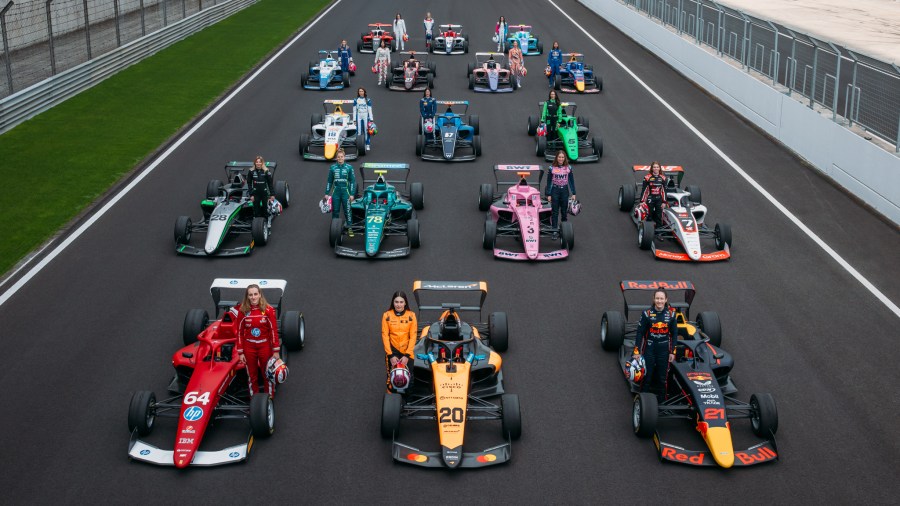

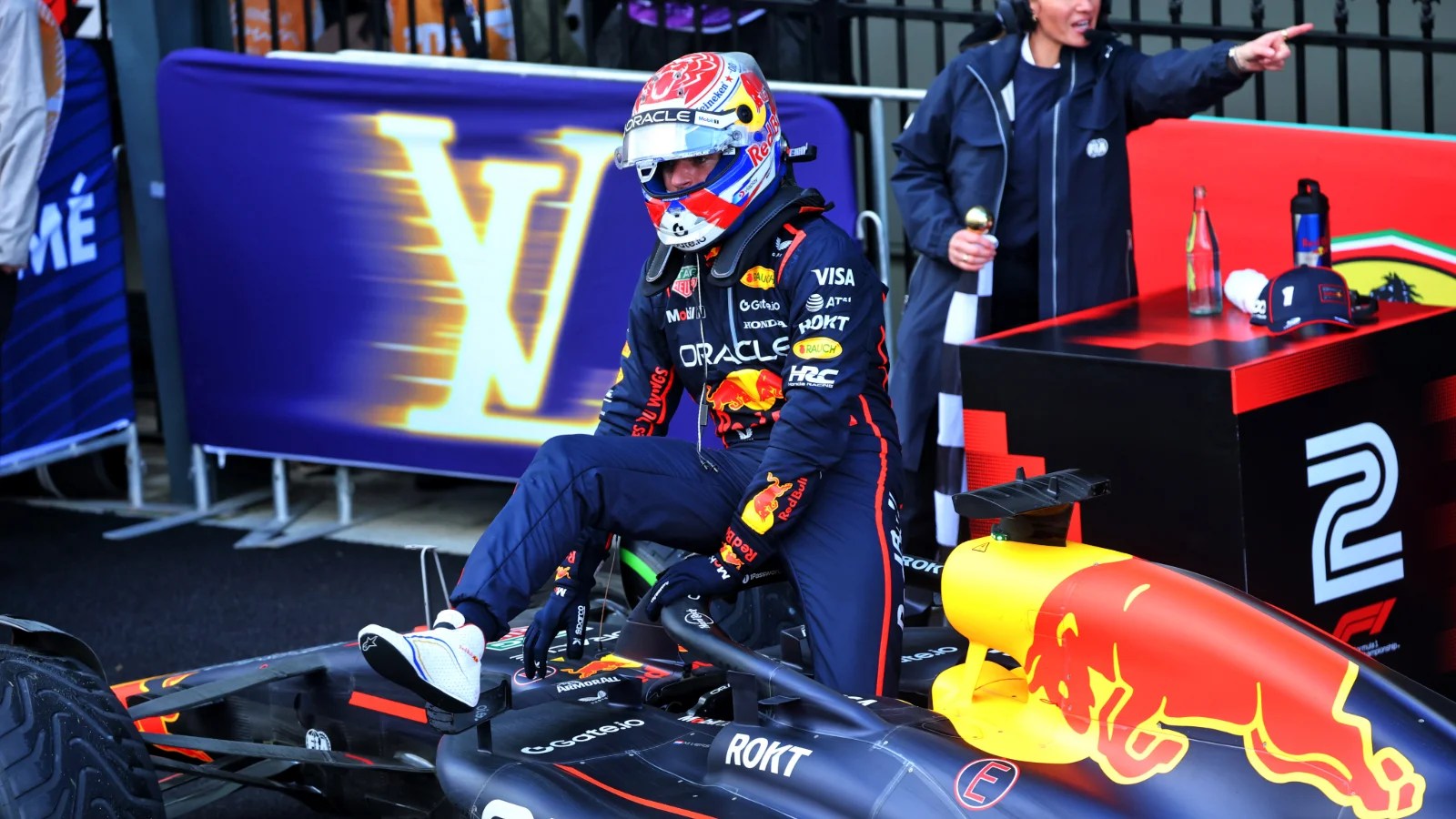
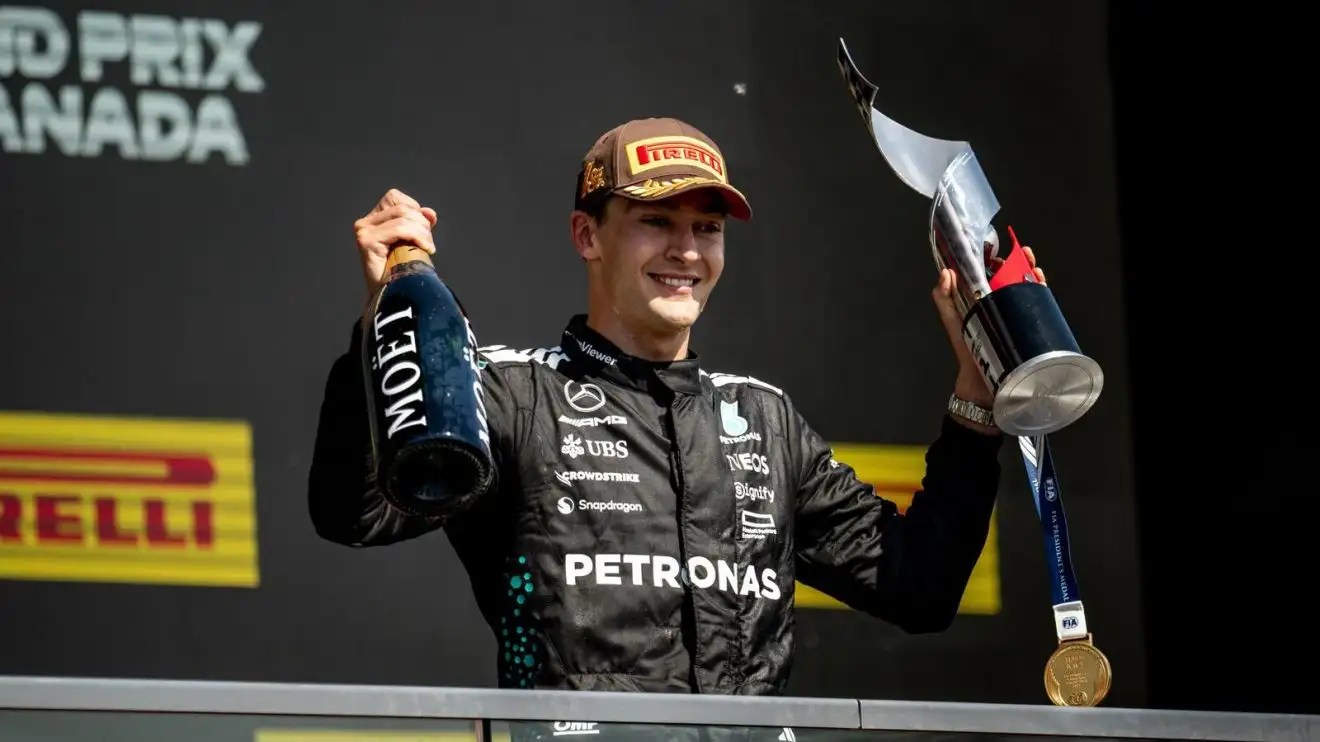
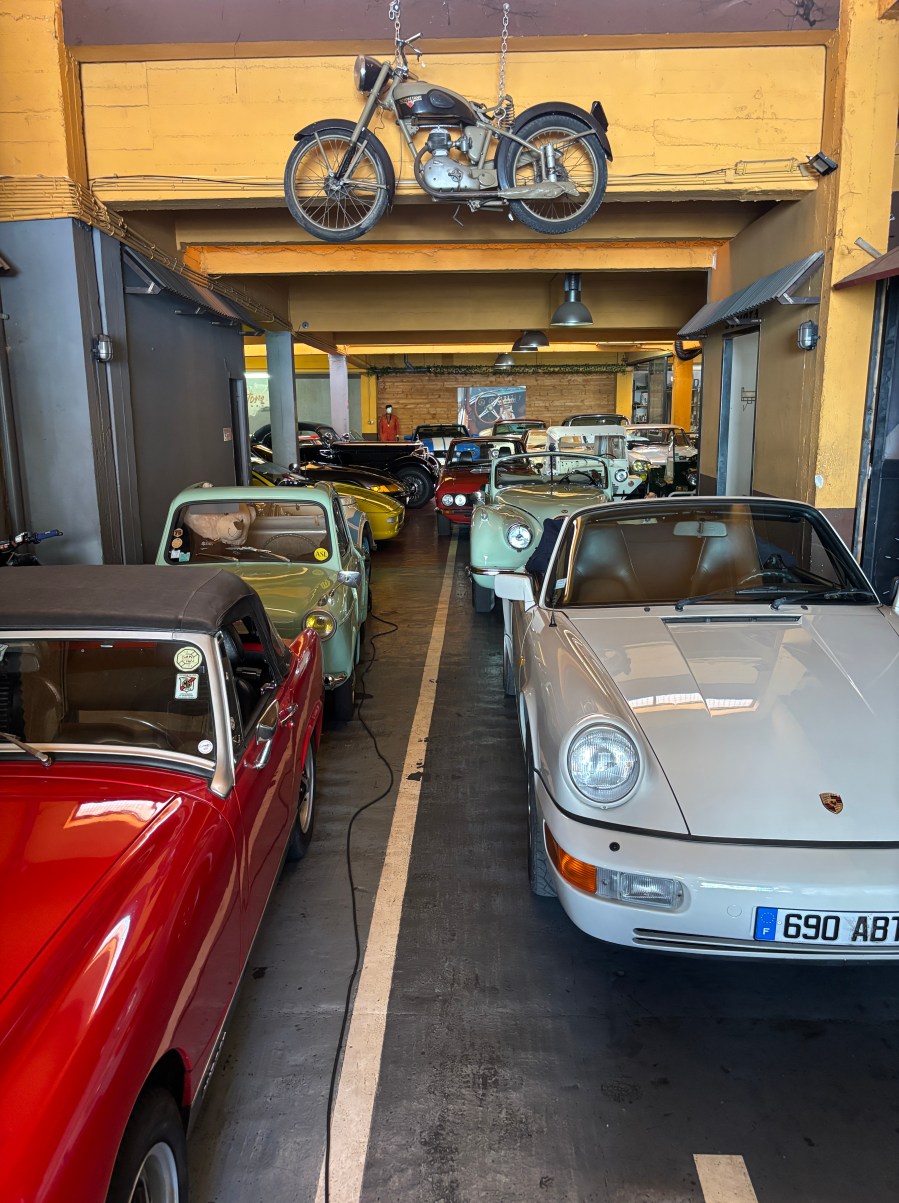


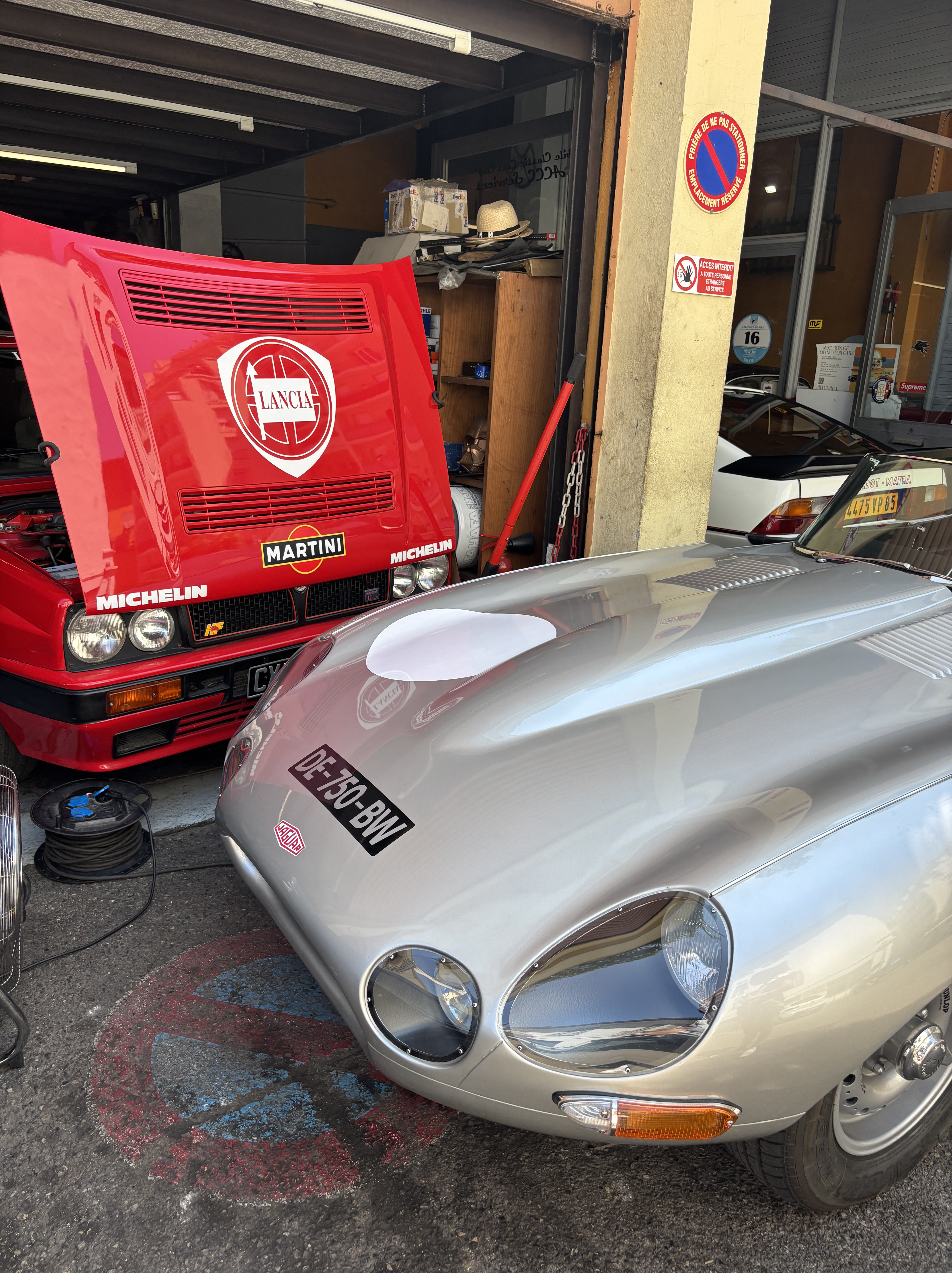


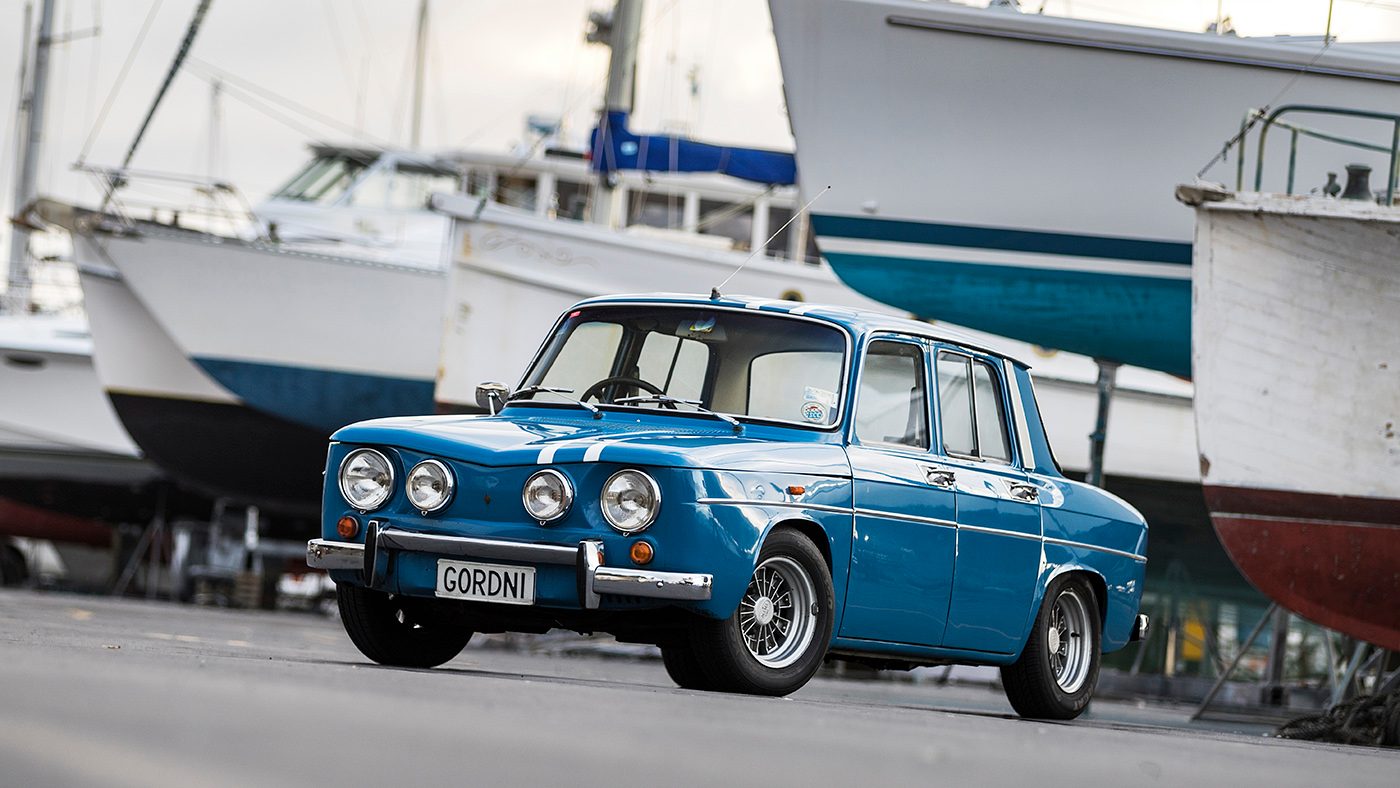
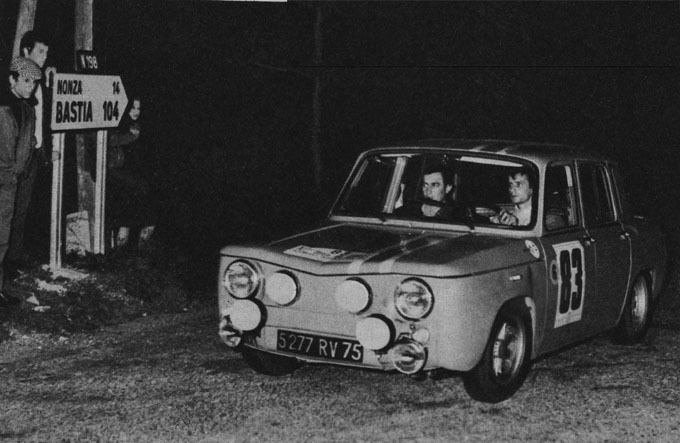
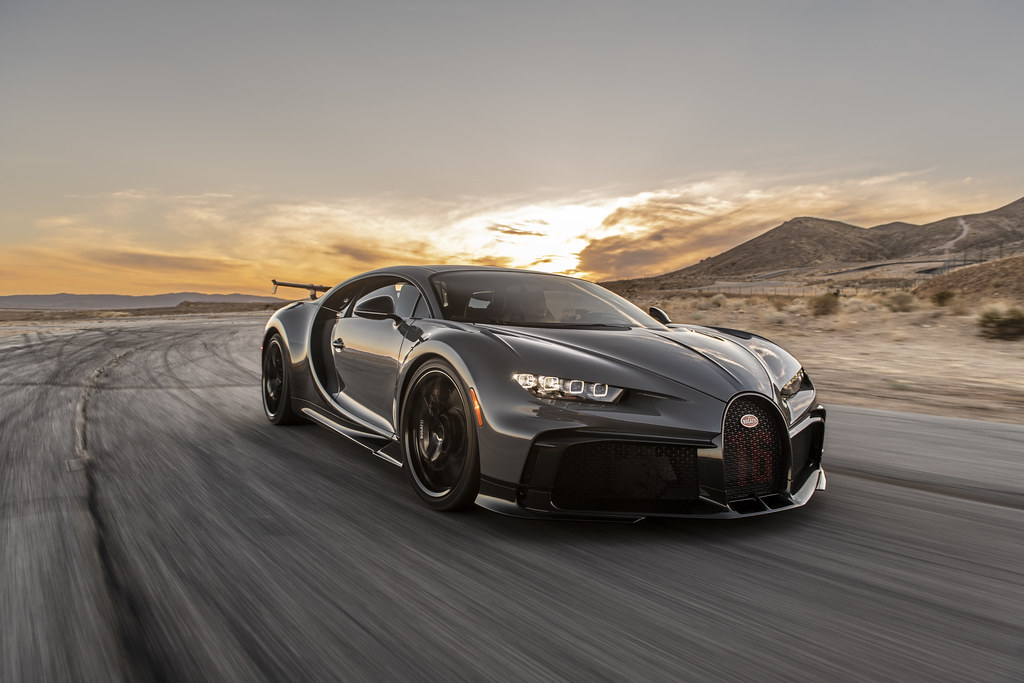


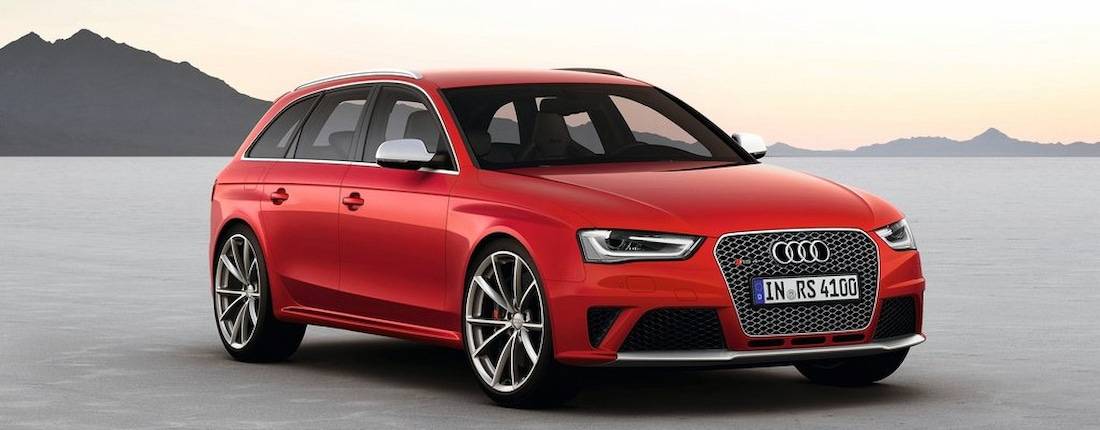


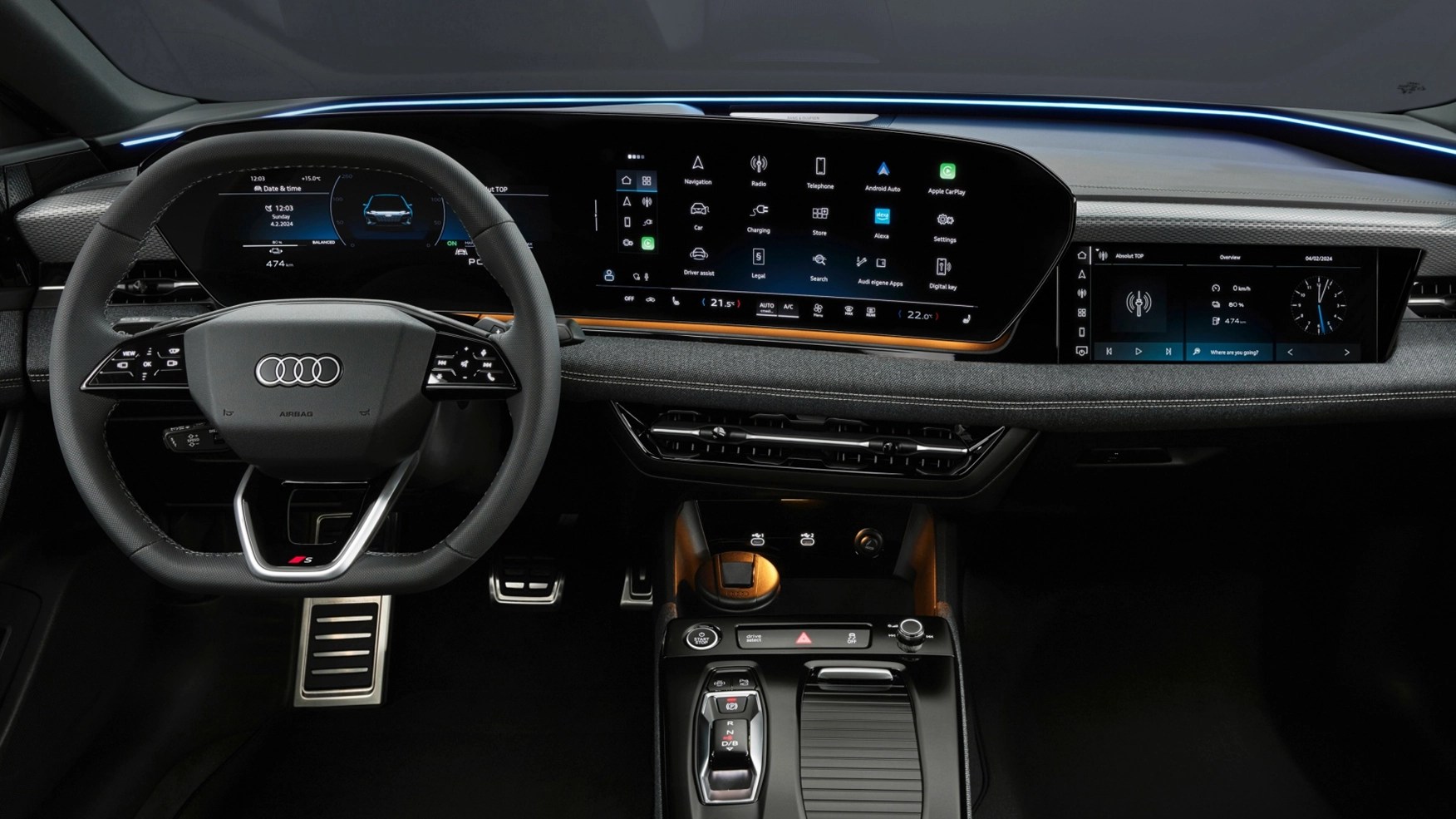
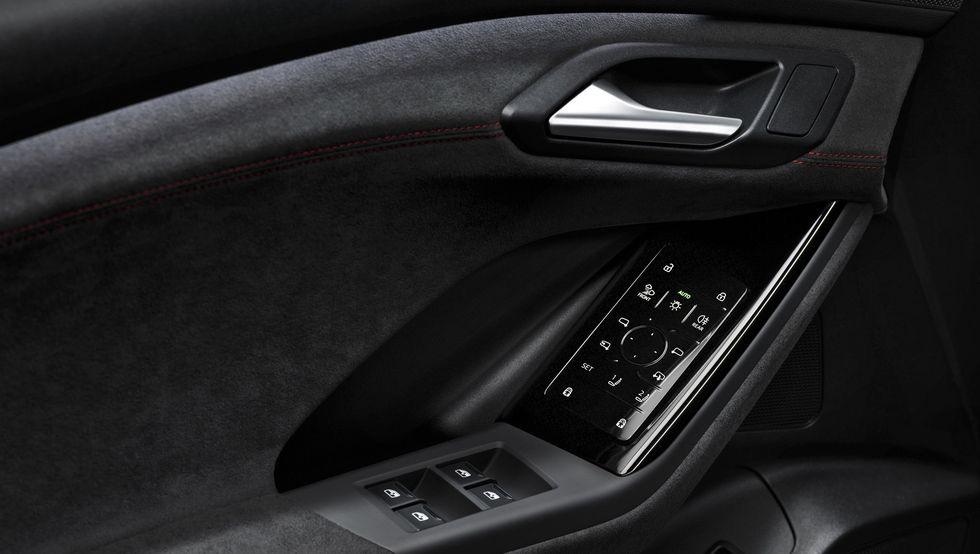


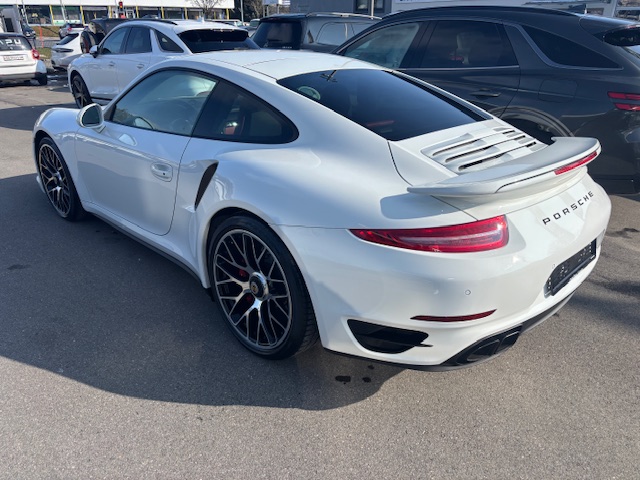


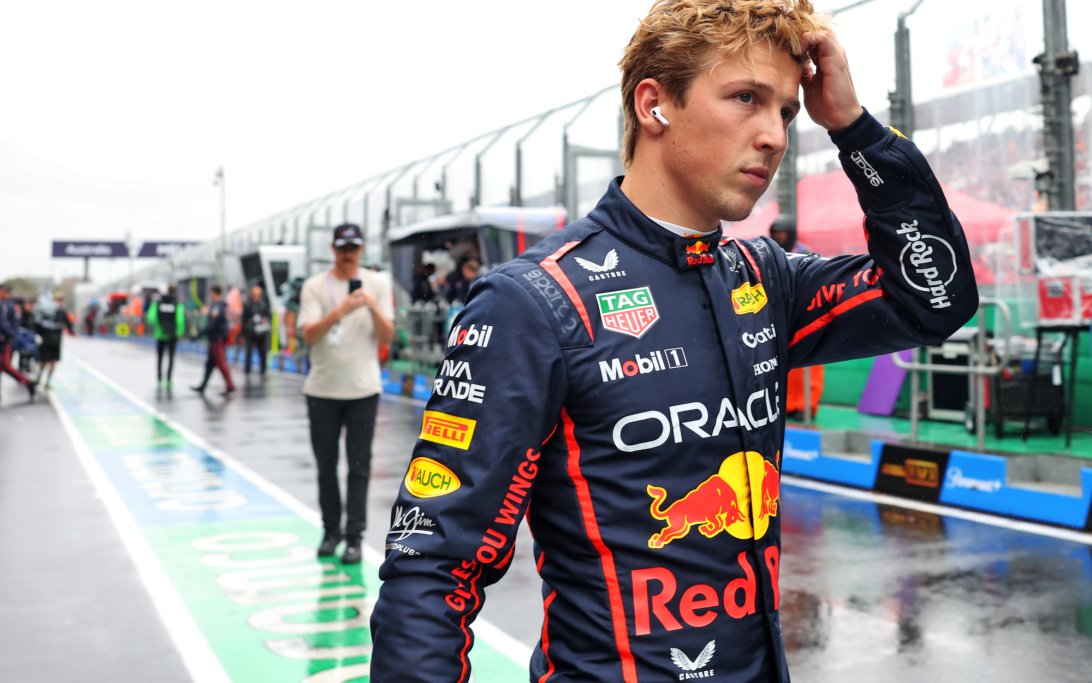


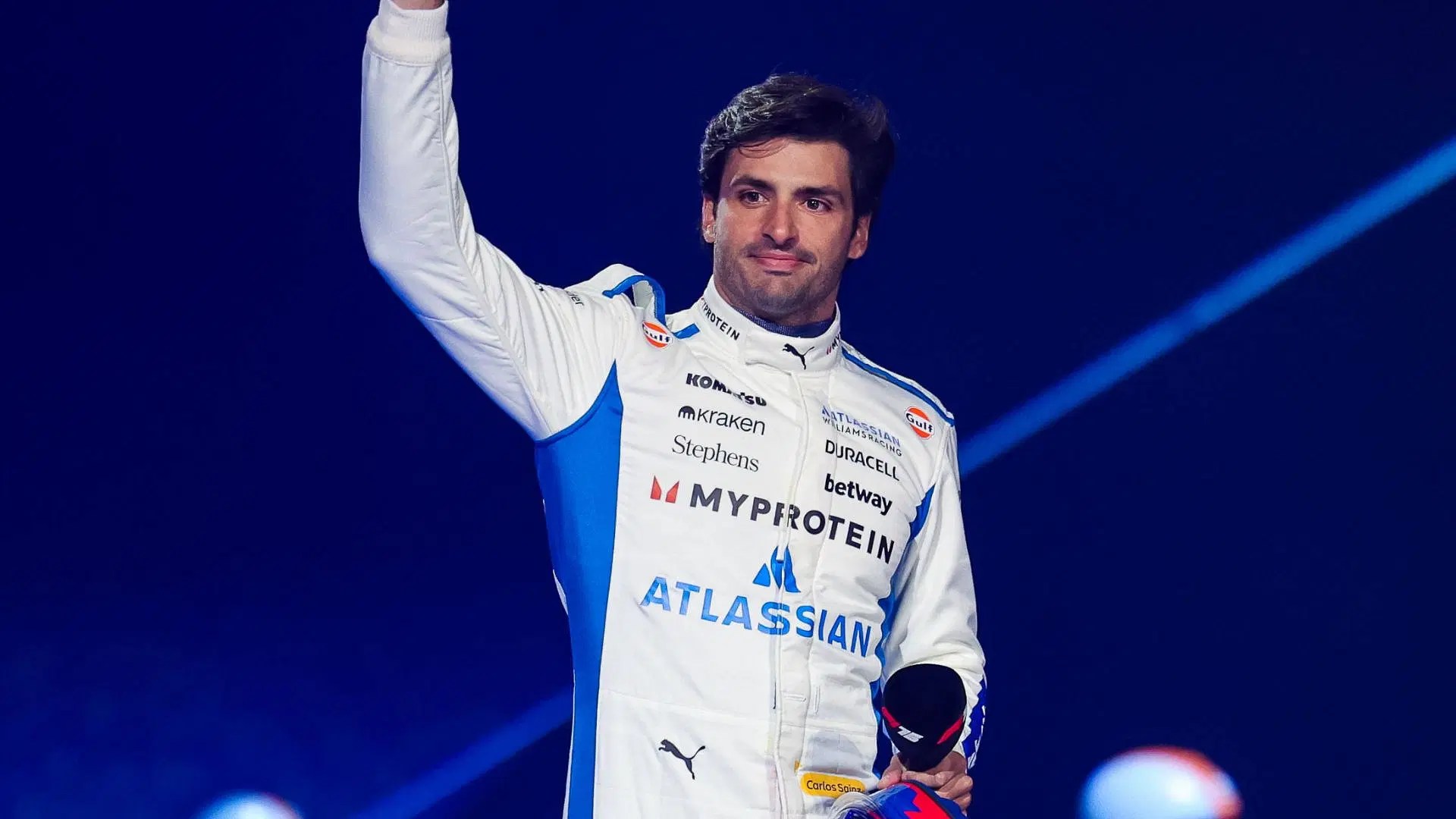


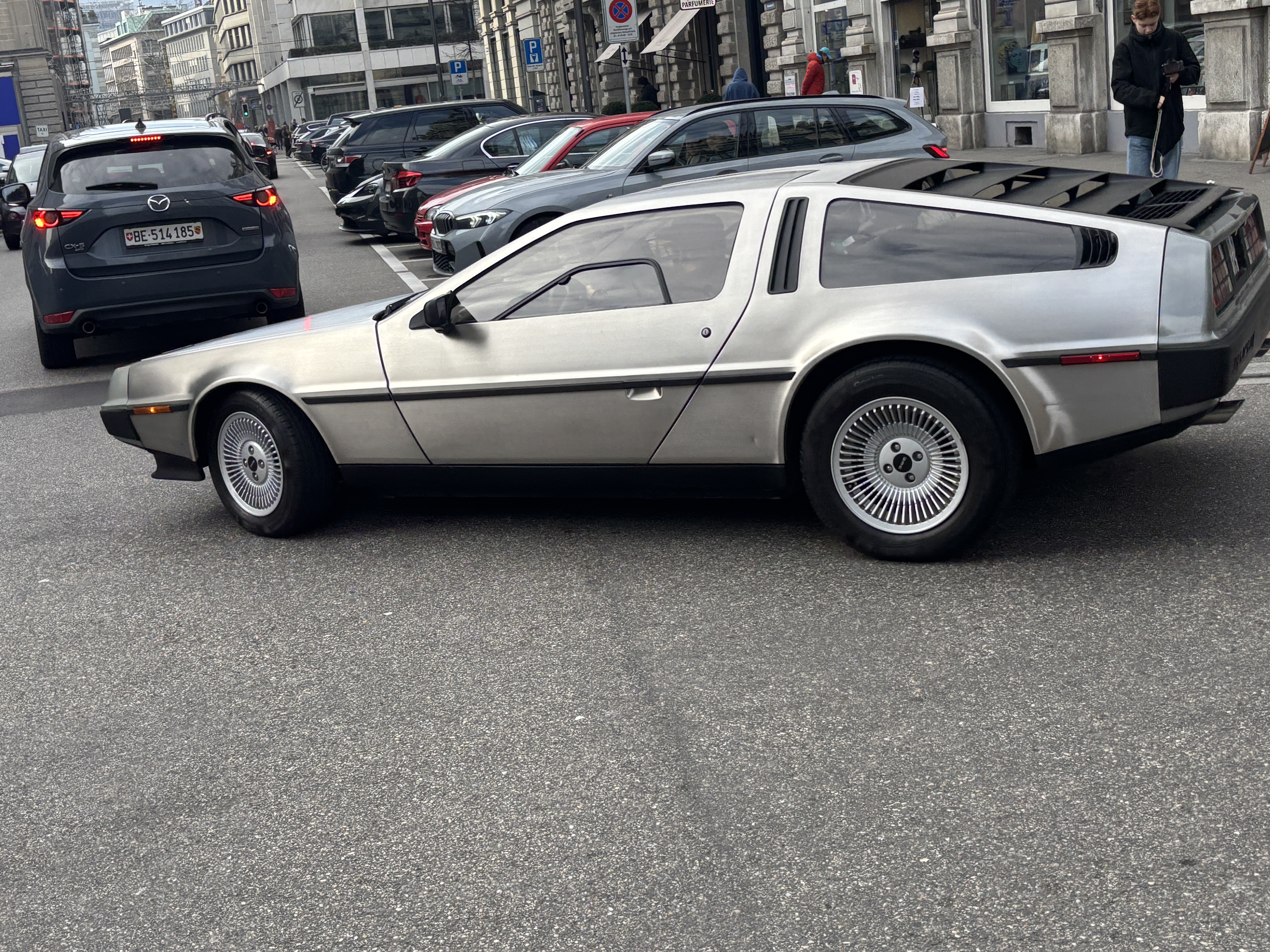
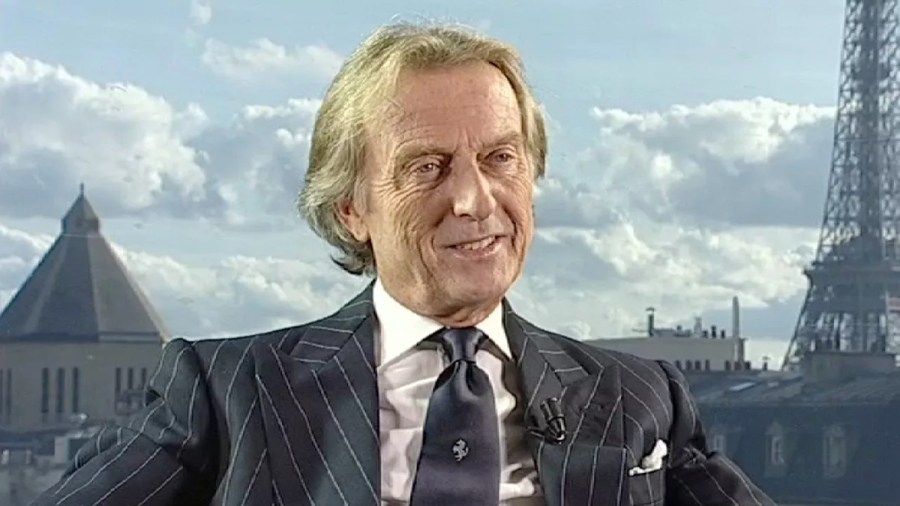


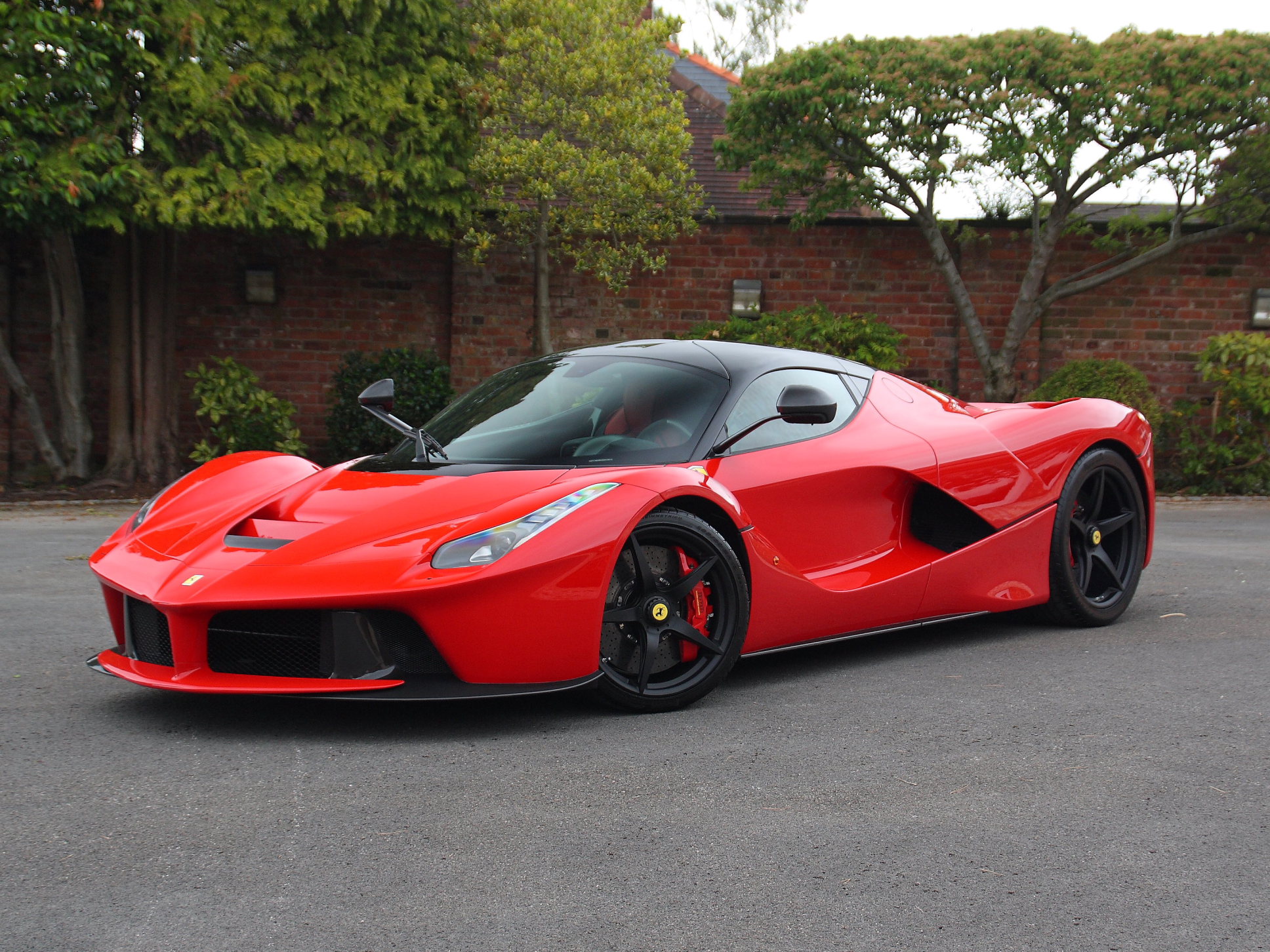

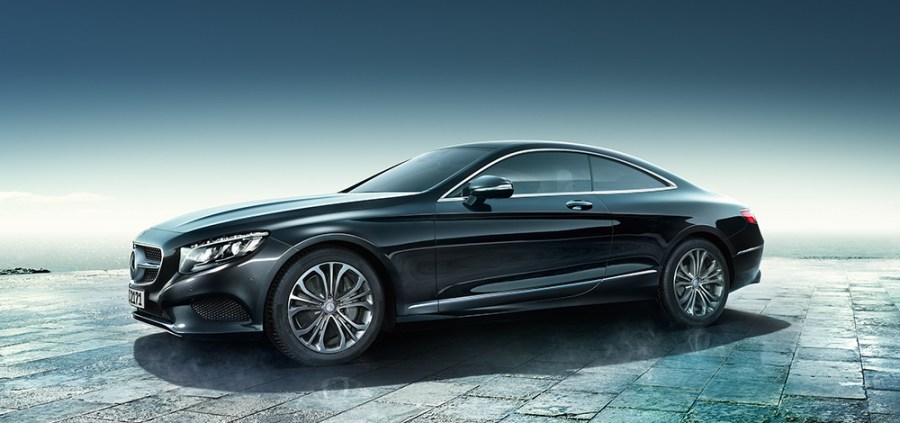


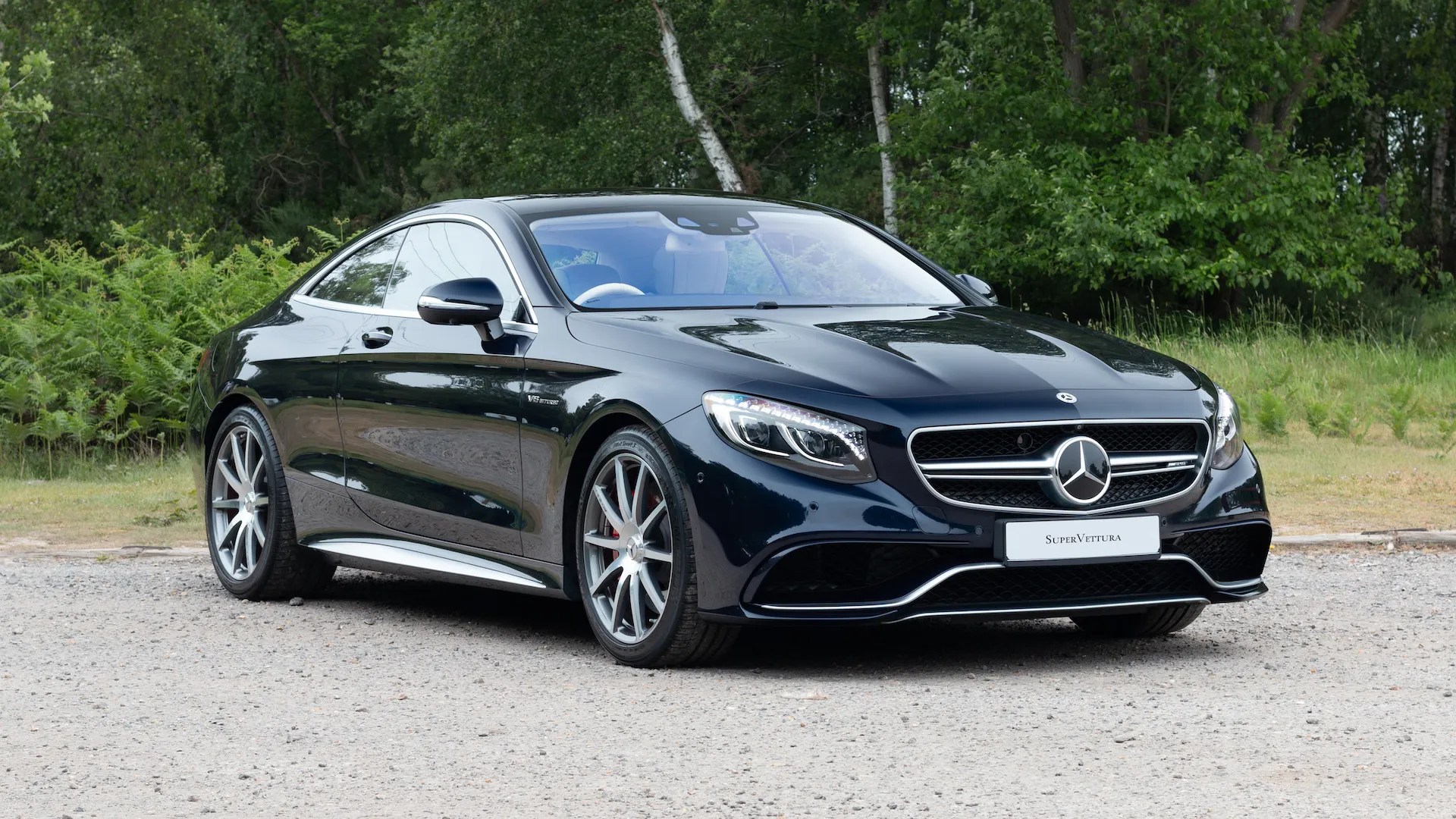

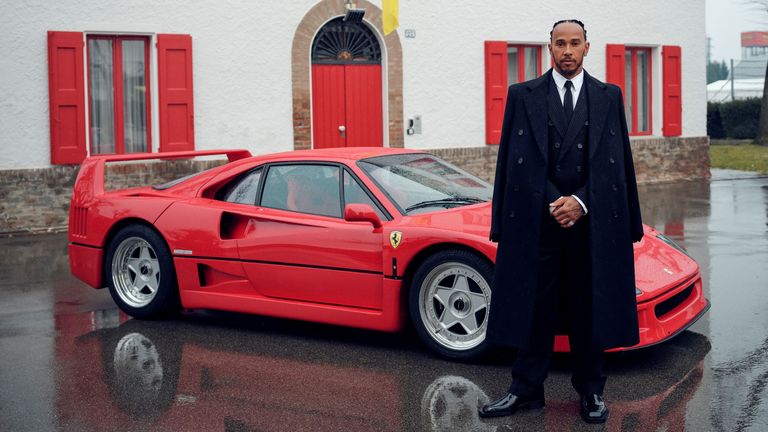


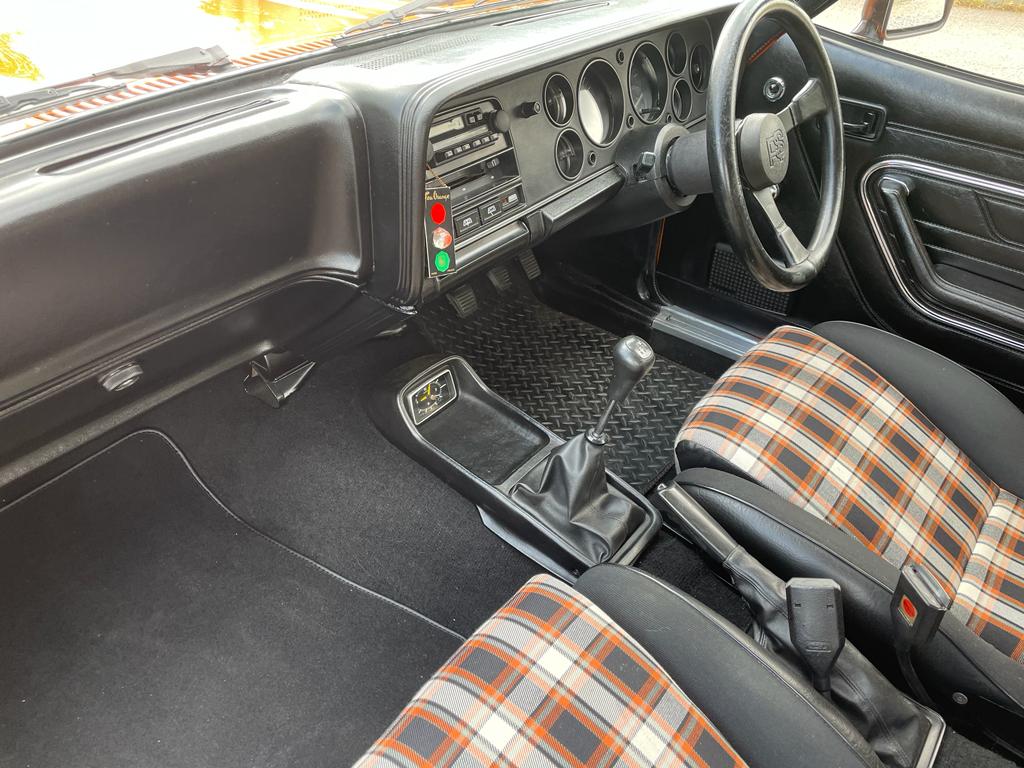




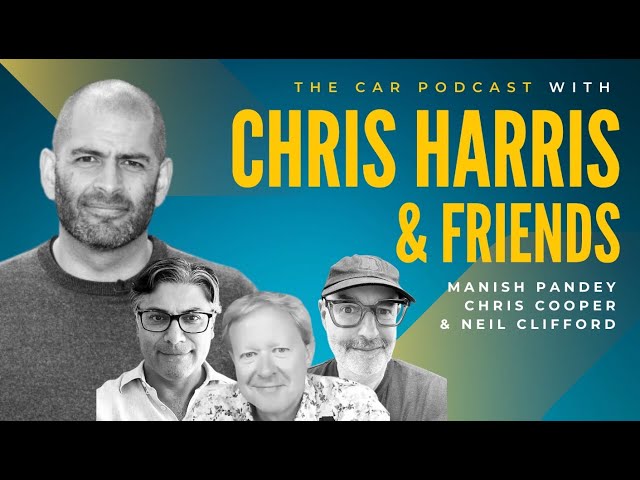
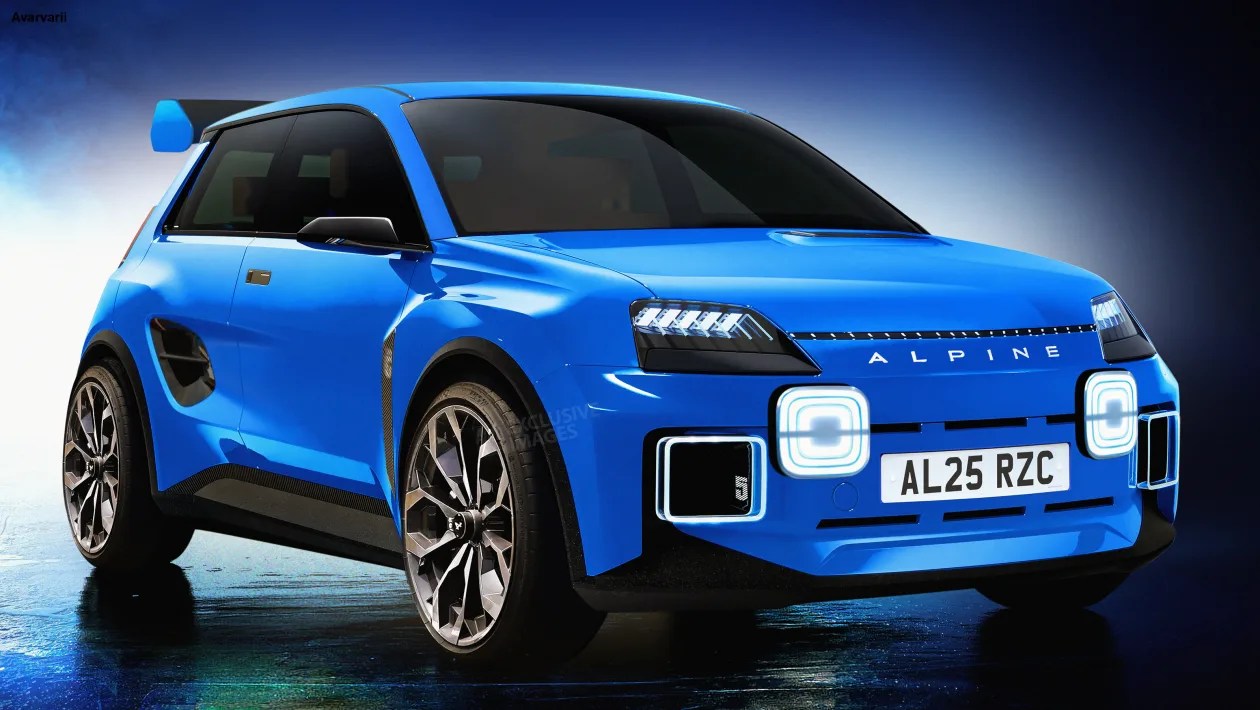


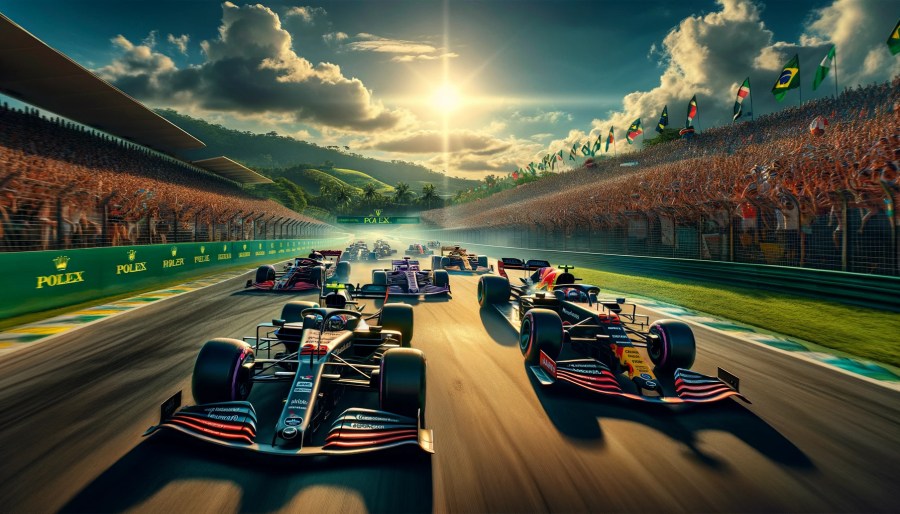



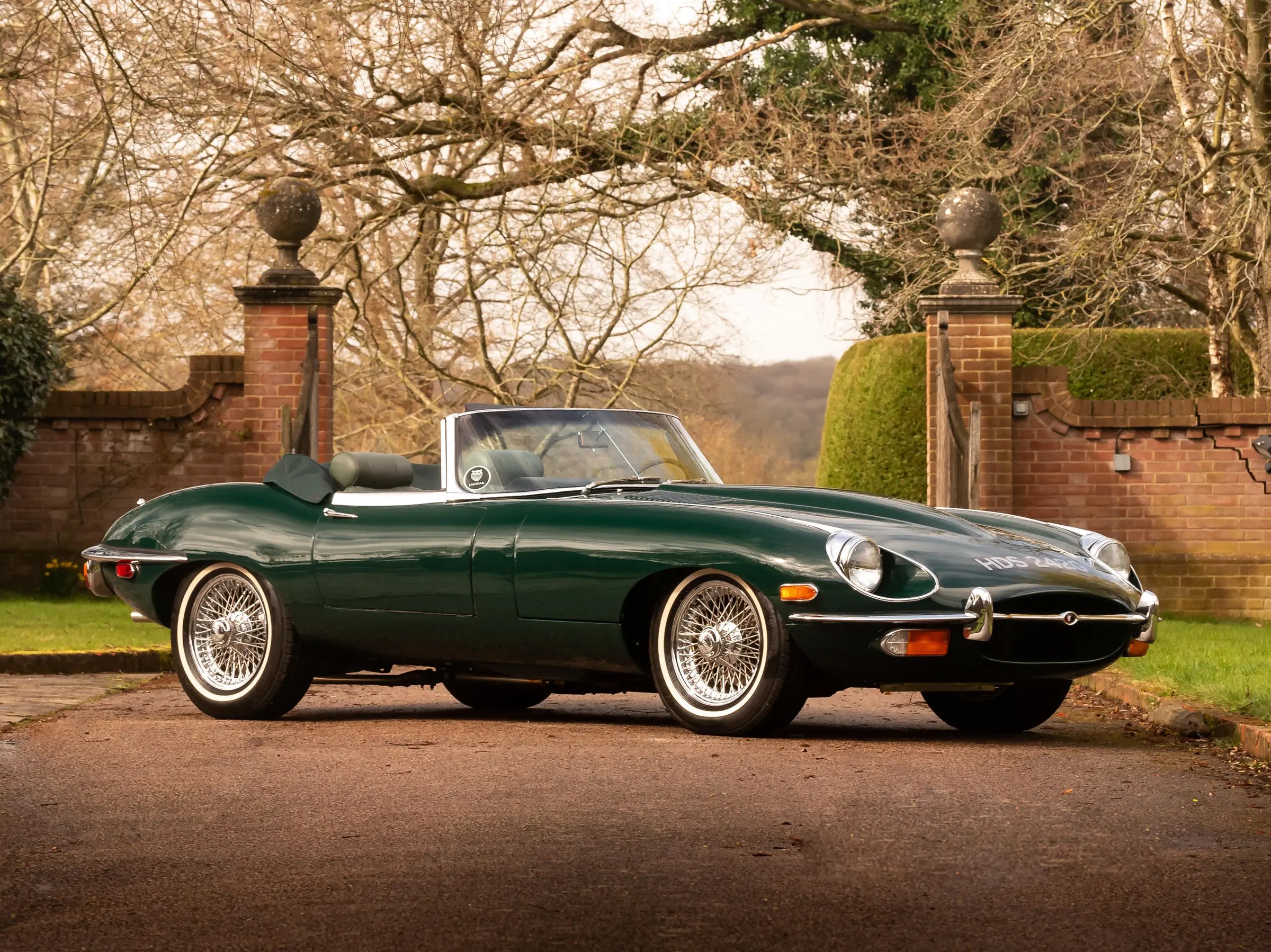






 The Thrill of Driving