It’s a pretty established phenomenon that as we grow older, we tend to look back on our younger days with a feeling that life was both better and simpler then. That it was better is nothing but a myth as any statistic, and I do mean any statistic, will tell you. In terms of simplicity however, it’s a different story. Earlier this week I was sitting at a corporate dinner when the discussion turned to the early gigantic mobile phones at the turn of the 80’s and 90’s. I said something about life being simpler before the mobile phone and to my surprise, all of the far younger than me basically gave up a cheer.
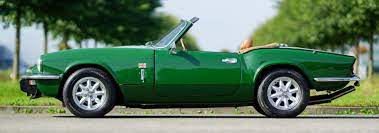
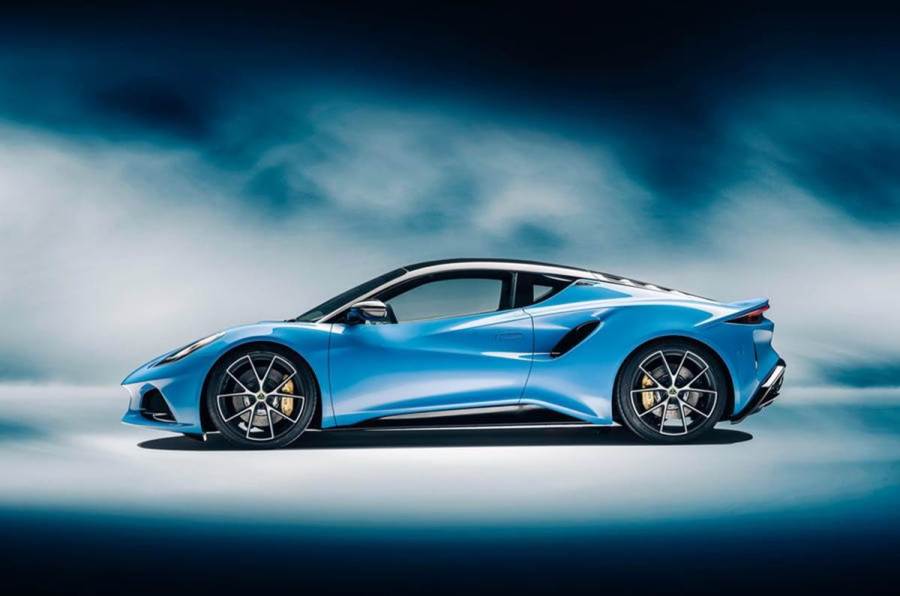
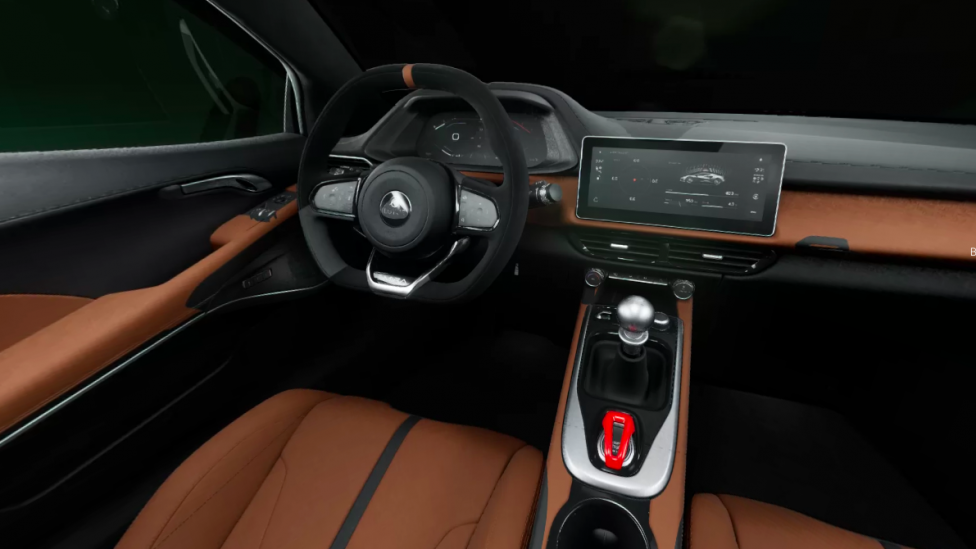
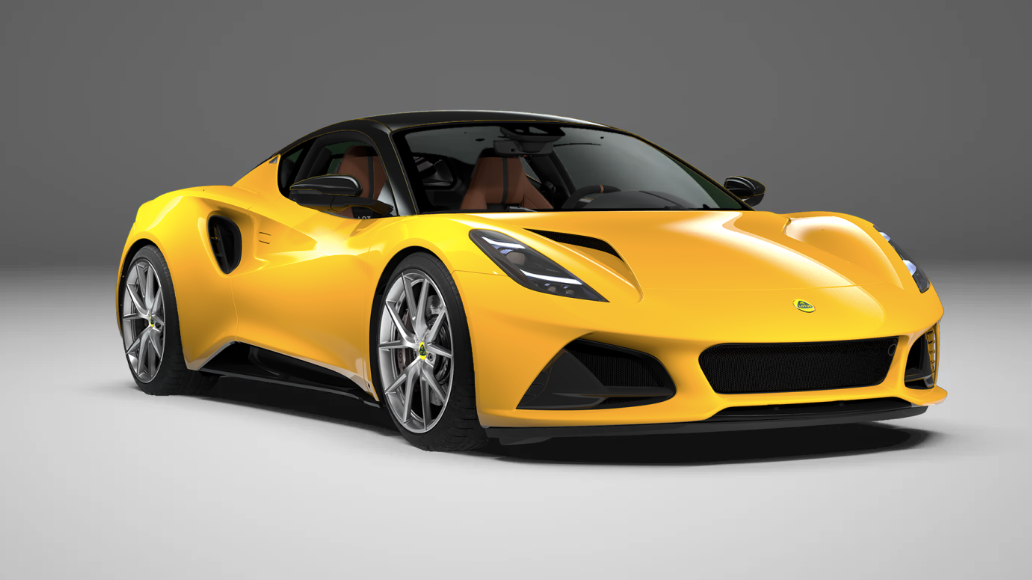
Simplicity is of course something we’ve lost in the car world too. It feels like most new cars today have more chips than bolts (and quite some difficulty sourcing all of them!), and even a lightweight fanatic like Lotus has with the new Emira crossed the line to something more settled and mature for an audience today expecting more comfort, even in a Lotus. Not too long ago, this was very different, which is of course part of the charm of classic cars. So if you’re wishing for a simpler life and perhaps also for a classic set of wheels to put in your garage without having to rob the bank, let’s look at a cheap and simple option that has enchanted car enthusiasts for 60 years. A car that is one of the biggest successes of UK car industry ever, and that has also inspired further more modern legends, such as the Mazda Miata. I’m of course talking about the wonderful Triumph Spitfire!

The story starts in the UK in the late 50’s, when the UK car industry was cash strapped as always but not yet in the very dire straits it would find itself a few years later. Triumph watched the success Austin Healy was having with the Sprite, a simple roadster with a small engine and an equally small price tag launched in 1958. Triumph had themselves built the TR2 and TR3 since the early 50’s, but realized there was market share to be taken by marketing a cheaper and simpler car, that was still better than the Sprite. The design was commissioned to Giovanni Michelotti, a legendary Italian designer with cars from Maserati to Ferrari under his belt, but also less exotic ones of which notably quite a few for Triumph, including the TR4 and (later) the Stag.
And yet, the car that was to become one of few real successes of the UK car industry almost never happened. In 1960, Triumph was sold to Leyland Motors and in the midst of the merger, the Spitfire which at that time was only a single prototype, was forgotten in the corner of the Triumph factory in Coventry. If not for a Leyland manager poking around and finding the car under the dust, it may never have been. As it happened, not only did it come to be but it did so very quickly, as the first car was presented only 18 months later, in 1962. The name obviously comes from the Spitfire fighter plane from WW2 and it’s unclear to this day how Triumph agreed with Vickers, makers of the Spitfire plane, agreed to use the name – if they ever did.

Presented in 1962, The Triumph Spitire 4, where “4” represented the 1.1 litre, four-cylinder engine with 63 hp, was a simple car indeed. It only weighed around 700 kg so even with 63 hp, it had reasonable speed for the time, but the reason it weighed so little was that things we would tend to think of as quite standard even for classic cars, such as carpets and heating, were optional. It also had a very light folding top that should perhaps better have weighed a couple of kilos more, as it was almost impossible to use. Of course, at 63 hp, the Spitfire wasn’t what we would call a sports car today. It needed around 16 seconds to reach 100 km/h, but given you’re basically sitting on the road given how low the car is, that actually feels like plenty. Especially when you notice that the rear end is very lively indeed when the road starts to turn, something that wouldn’t be solved on later Spitfires until the 70’s.
The little modified Mk II Spitfire came in 1965 with now 67 hp. Sales in the US were really picking up and Triumph encouraged owners to race their cars on weekends, advertising any success they would have in the Triumph name. The “race on Sunday, sell on Monday” philosophy led to the Mk III in 1967 now with a larger engine at 1.3 litre, and – horray! – an updated soft top that could actually be closed. By this time you also got carpets in your Spitfire. By 1968, 100.000 Spitfires had been sold of which over half to the US. Two years later Michelotti did a pretty complete re-design for the Mk IV version, including the same rear lights as on the Triumph Stag, and a heater as standard. The final Spitfire 1500 that came in 1974 was the most powerful version there would be at 71 hp, however only outside of the US as there, emission regulations actually made it slower than its predecessors.
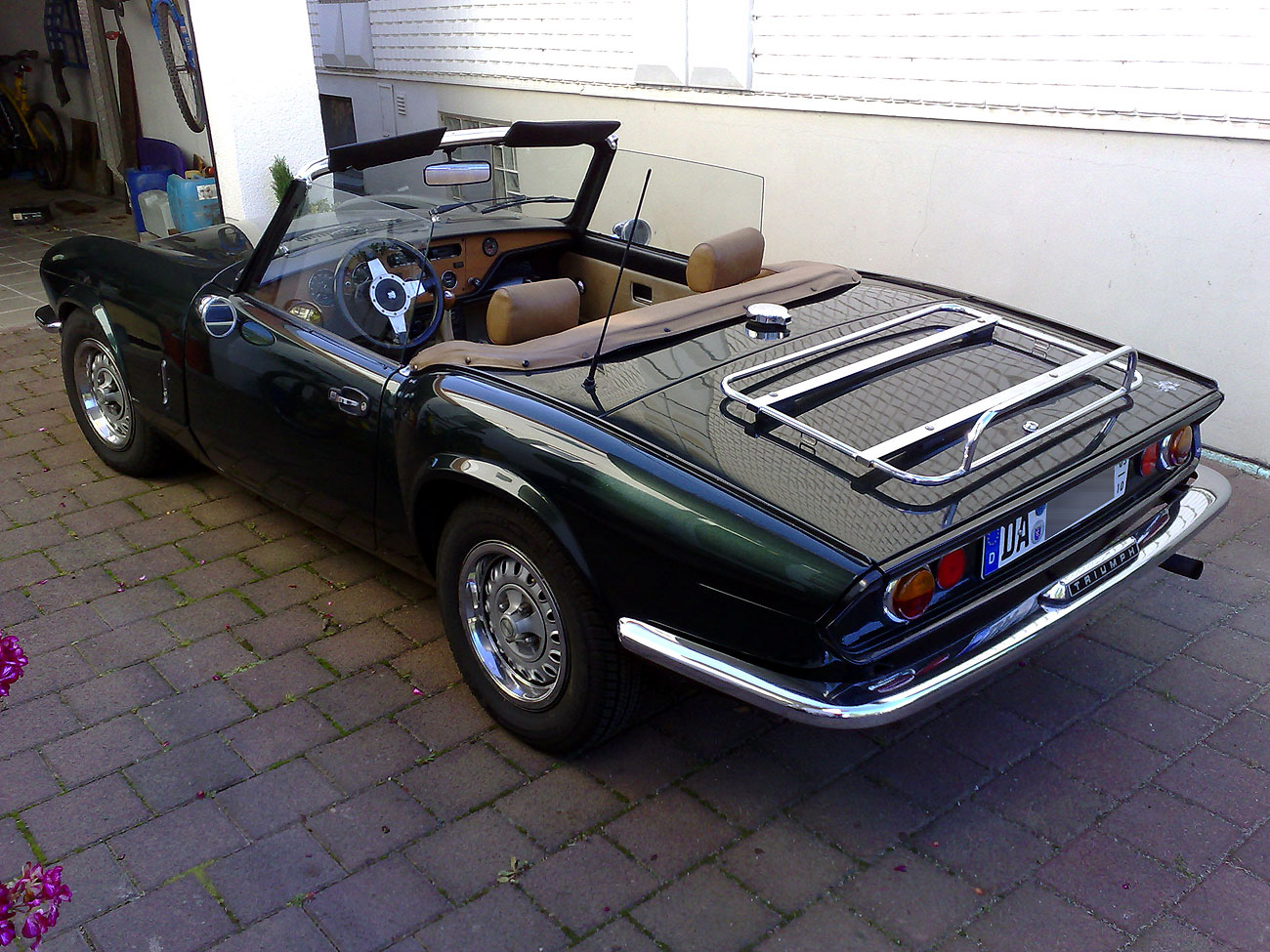
In the mid-70’s, the UK car industry was in full crisis mode and there was no money to further update the Spitfire as would have been required to keep the car competitive in view of increasing competition, notably from Japan. The GBP/USD exchange rate also meant the car became expensive in the US, with sales numbers starting to dip. The Spitfire would be with no further updates done to the car until the end of production in 1980. By then, over 300.000 Spitfires had been built with the last version, the 1500, representing about a third of total sales and no doubt also being the best car.
Even for an ex-TR4 owner like myself, driving a Spitfire as I did a few years ago, is a different experience. It feels like you literally sit on the ground, everything is smaller and trust me, the least of your concerns is a lack of speed, especially as the small four-cylinder produces a wonderful sound! That said, the early cars are perhaps a bit too simple even for those looking for the simple life this post started with. So if a Spitfire sounds like your thing, I would go for a late, 1500 car or if you prefer the earlier design, then for a Mk III. A good car will be yours for around EUR 15-20.000, a small price to pay for a pure driving experience. So leave the mobile phone at home, put on the gloves and go for a drive in a truly simple UK car legend!




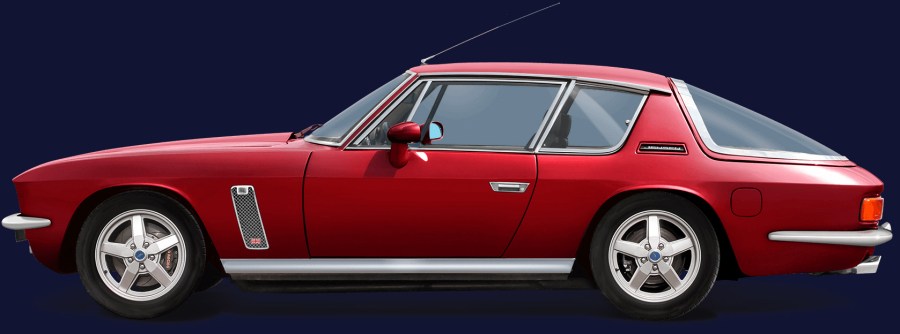
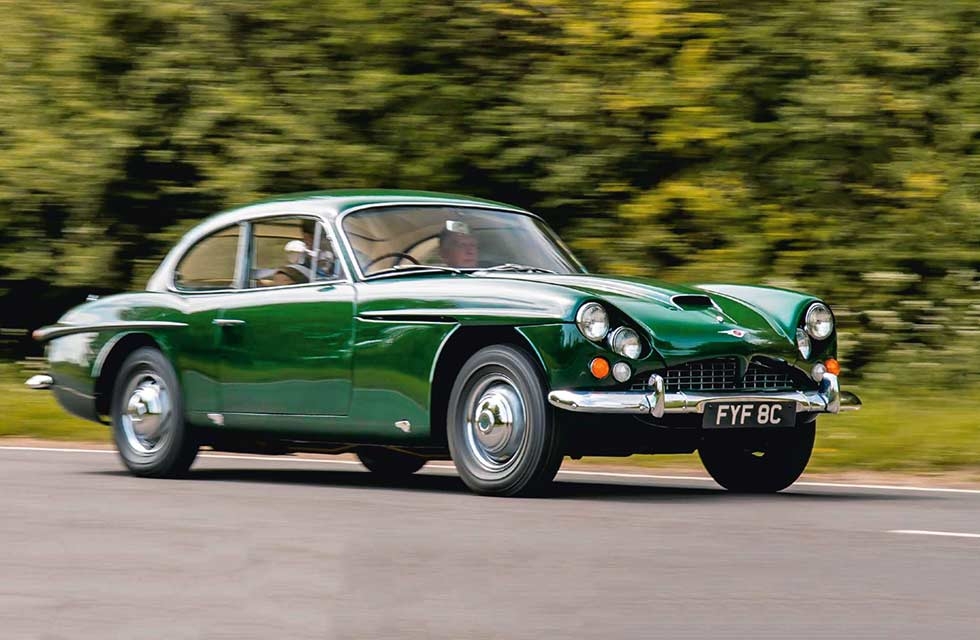 It was the search for a somewhat more successful car than the C-V8 that led to the Interceptor, Jensen’s by far most well-known car, presented in 1966. This time the design had been commissioned to the Italians at Carrozzeria Touring (another company that would go bust a few years later) and although certainly more convincing than the C-V8, it was definitely still quite original. The front looked like many sports car in the day, the rear which in the UK became known as the “fish bowl”, is rather reminiscent of the 70’s AMC Pacer (which was of course designed after the Interceptor). If the exterior isn’t to everyone’s taste the interior is much more so, with a selection and quality of materials that led to the Interceptor being compared to high-end brands such as Aston Martin, Bristol or even Rolls-Royce.
 We’ll make a quick pit stop here for a small side story that I find a wonderful illustration of Jensen and British car industry of the time. Jensen in parallel to the Interceptor built another model referred to as the FF. That’s actually a historic car as it was the first non-SUV passenger car with four-wheel drive, and thus highly innovative for its time. Neither in the 60’s nor now however does it snow a lot in the UK so if you build a four-wheel drive car close to Birmingham, you have to assume it was also intended for exports. All good so far. It’s just that no one in the Jensen factory apparently thought about the fact that most of the world outside of the UK by now had the steering wheel on the left side. So the FF only came as right-hand drive. Let’s just say it wasn’t a tremendous recipe for export success…
Back to the Interceptor, which during the 10-year production came in three series with only subtle design differences between them but where the MK III was by far the most produced. The MK III also came with three different bodies: the most common “glass bowl” saloon, the much rarer and arguably better-looking convertible, and the ultra-rare coupé with a plexiglass rear. All three series had Chrysler big block V8’s and 3-speed automatic transmissions, but whereas the first two shared the same 6.3 litre, 325 hp V8 as the predecessor C-V8, the MK III had an even bigger, 7.2 litre engine, however at 285 hp with less power. This all had to do with the new US emission rules that limited the power of large engines quite heavily. Not only was the 7.2 litre engine less powerful, it was of course also heavier, and just a tad thirstier: apparently we’re talking 25-30 litres per 100 km (8-10 MPG) …
We’ll make a quick pit stop here for a small side story that I find a wonderful illustration of Jensen and British car industry of the time. Jensen in parallel to the Interceptor built another model referred to as the FF. That’s actually a historic car as it was the first non-SUV passenger car with four-wheel drive, and thus highly innovative for its time. Neither in the 60’s nor now however does it snow a lot in the UK so if you build a four-wheel drive car close to Birmingham, you have to assume it was also intended for exports. All good so far. It’s just that no one in the Jensen factory apparently thought about the fact that most of the world outside of the UK by now had the steering wheel on the left side. So the FF only came as right-hand drive. Let’s just say it wasn’t a tremendous recipe for export success…
Back to the Interceptor, which during the 10-year production came in three series with only subtle design differences between them but where the MK III was by far the most produced. The MK III also came with three different bodies: the most common “glass bowl” saloon, the much rarer and arguably better-looking convertible, and the ultra-rare coupé with a plexiglass rear. All three series had Chrysler big block V8’s and 3-speed automatic transmissions, but whereas the first two shared the same 6.3 litre, 325 hp V8 as the predecessor C-V8, the MK III had an even bigger, 7.2 litre engine, however at 285 hp with less power. This all had to do with the new US emission rules that limited the power of large engines quite heavily. Not only was the 7.2 litre engine less powerful, it was of course also heavier, and just a tad thirstier: apparently we’re talking 25-30 litres per 100 km (8-10 MPG) …
 The convertible version of the Interceptor was presented in 1974 and is another example of Jensen’s risk-willingness or complete ignorance of the world beyond the UK, depending on how you see it. At this time most other brands were halting the development of new convertibles altogether, as it was widely expected that US safety authorities would enact a complete ban on open cars without roll-over bar. So Jensen was basically the only brand brave or foolish enough to launch a new convertible in this period. They were ultimately right given a ban was never enacted but they were kind of wrong anyway, since the whole company went bust only two years later, in 1976. By then they had produced about 500 convertibles, out of a total of some 6400 Interceptors.
 Although the big block Chrysler engines were quite bullet proof, the fact that they all had carburettors and lots of them, didn’t make them any easier to run or service. The carburettors had to be adjusted frequently for optimal performance, apparently up to as often as every 1000-2000 km. Cooling was another issue Interceptors were known to struggle with and then there was of course the same issue as with all other cars in the 70’s – rust. You can certainly convert the engines to injection and upgrade the cooling system, an idea that some won’t like at all given the car is then no longer original. It will however be far more drivable, and thus possibly a solution for those preferring to spend time on the road rather than in the garage.
Cooling and carburettors aside, the Interceptor is known as quite a wonderful GT car, offering loads of 70’s luxury and charm typically for far less money than a comparable Aston or Rolls (who as we all know also tend to have an issue or two…). There aren’t many in the market which makes pricing uncertain, but good saloons tend to start somewhere around EUR 50′ with convertibles costing much more. If this wonderful example of British ingenuity combined with a dinosaur-engine of a type will certainly never see again, then please make sure that if you’re not mechanically talented, you know someone who is, and go for a car as perfect as possible, as finding replacement parts for an Interceptor risks being as hard as finding a UK prime minister who will stay longer than a few months!
Although the big block Chrysler engines were quite bullet proof, the fact that they all had carburettors and lots of them, didn’t make them any easier to run or service. The carburettors had to be adjusted frequently for optimal performance, apparently up to as often as every 1000-2000 km. Cooling was another issue Interceptors were known to struggle with and then there was of course the same issue as with all other cars in the 70’s – rust. You can certainly convert the engines to injection and upgrade the cooling system, an idea that some won’t like at all given the car is then no longer original. It will however be far more drivable, and thus possibly a solution for those preferring to spend time on the road rather than in the garage.
Cooling and carburettors aside, the Interceptor is known as quite a wonderful GT car, offering loads of 70’s luxury and charm typically for far less money than a comparable Aston or Rolls (who as we all know also tend to have an issue or two…). There aren’t many in the market which makes pricing uncertain, but good saloons tend to start somewhere around EUR 50′ with convertibles costing much more. If this wonderful example of British ingenuity combined with a dinosaur-engine of a type will certainly never see again, then please make sure that if you’re not mechanically talented, you know someone who is, and go for a car as perfect as possible, as finding replacement parts for an Interceptor risks being as hard as finding a UK prime minister who will stay longer than a few months!

































 The Thrill of Driving