The 8 Gordini – a true rally legend!

Time flies -as if that’s a surprise to anyone. And in the same vein of kicking in open doors, it’s not much of a secret that I have a soft spot for France, as long term readers of this blog will have noted. If memory serves me right, the first “French” post on this blog was that on the wonderful Citroën DS, which I just saw that I wrote five years ago, during the first Covid summer. Those were not happy times so I guess we should be grateful that time flies at least in that respect, but also that floating down a French “départementale” (country road) in a DS has lost none of its charm ever since.

The French have a thing for trees as crash protection…

If Citroën was the technologically leading car brand in the late 1950’s and 60’s, Renault was still the largest. Unfortunately, design-wise the brand was far behind the competition in Sochaux, something that became shockingly clear when Renault launched the R8 sedan in 1962, later called only the 8. Just by looking at one and comparing it to a DS, you would think 20 years sets them apart. Of course it was the DS that was the exception, as at the time, far more cars still looked like the R8 than the other way around.

The R8 was a rear-wheel drive, small family sedan with the engine in the back as was still popular at the time. The standard version of the R8 was the definition of unspectacular, but I remember it clearly as it was also built on license in Romania under the name Dacia 1100. Growing up in Stockholm a couple of blocks away from the Romanian embassy, on the way to school, I would see some of these Dacias parked on the street in front of the embassy, together with a later version based on the Renault 10. Somehow the design felt like a far better fit to a Soviet-era, communist dictatorship than to lovely France!

Pretty” is not the first word that comes to mind…

American readers may be interested to learn that the R8 was sold in the US as well, with the French trying to position it as the nimble city and close proximity car it was typically used as in France. At the time however, the US was all about far longer drives on the new interstate highway net, an environment where the small R8 with its 43 hp made much less of an impression. Needless to say, the R8 never became much of a success on the other side of the Atlantic

In Europe however, things were about to improve a couple of years later, in 1964. The regular R8 got a performance boost to 50 hp, but more importantly, the 8 Gordini was launched. Initially only available in the elegant blue called “bleu de France”, which has become a signature color for Renault’s sports versions, the extra power came from greater displacement (all of 1.1 litres!) and a different Weber carburettor setup. Power would be further increased to 100 hp in 1967, when the Gordini also got the double headlights it’s become known for.
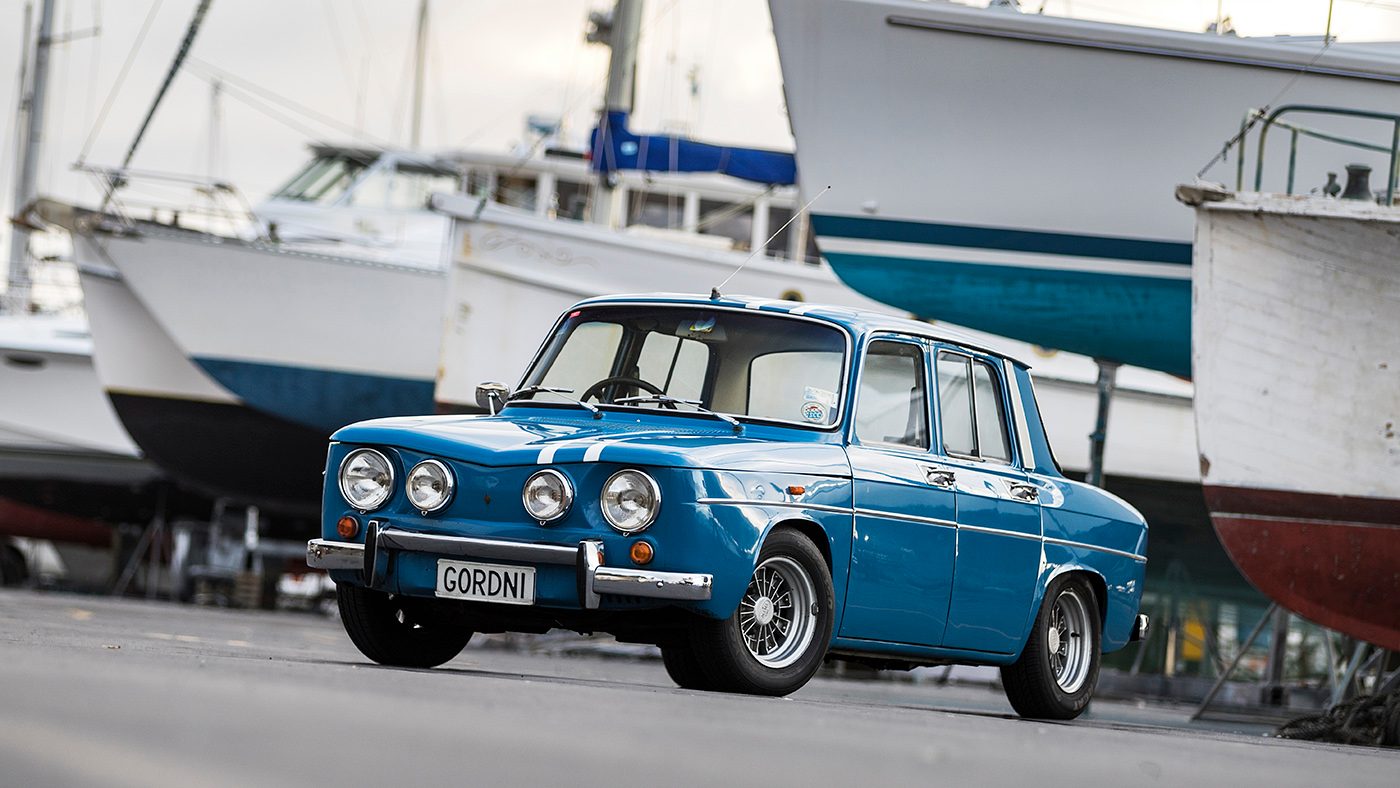
The Gordini deinitely changed things for the better!

The name Gordini comes from the company of the same name and its founder, Amédée Gordini. Specialized in tuning and motor racing, Gordini was founded in 1946 and competed in F1 in the 1950’s and Le Mans in the 60’s. Amédée Gordini was so good at building race cars that he became known as “The Sorcier” (the sorcerer) and whilst he also worked both on Simca and Fiat cars through the years, most of his work was on Renaults, who bought his company and incorporated it as a subsidiary in 1968. Before the Renault 8, Gordini had also built notably the Renault Dauphine Gordini, another rear-engined, small family car.

The 8 Gordini was a true race car, not only with more power than the standard version, but also with lowered suspension and various other technical modifications throughout. It had assisted steering, a five-speed box and disc brakes on all four wheels. And those wheels were typically very small and very wide! For homologation purposes the 1967 version was also produced as a road car, with a few horse power less than the rally version and a different light setup at the front, but otherwise pretty much the same car. This made it one of the first road-legal race cars, as well as arguably the first GTI car (sorry Golf!). Of the few Gordini’s that remain, it’s mostly this street-legal version you see.

The 8’s predecessor, the Dauphine Gordini, had a lot o success on the rally scene in the early 60’s and sticking with tradition, Renault entered no less than six brand new 8 Gordini in the 1967 Corsica rally. Remember that back in the 60’s, motorsport was almost synonymous with rallying as F1 had not yet got the popularity that would follow in the 70’s. The 1967 Corsica rally would very much lay the foundation for the 8 Gordini’s future success on the rally scene and its position as one of the 60’s leading rally cars. In the first year, the winner and a further three cars in the top five were Gordinis. It would go on to win the Corsica rally another two years, and a long list of other rally victories until 1970 would follow.
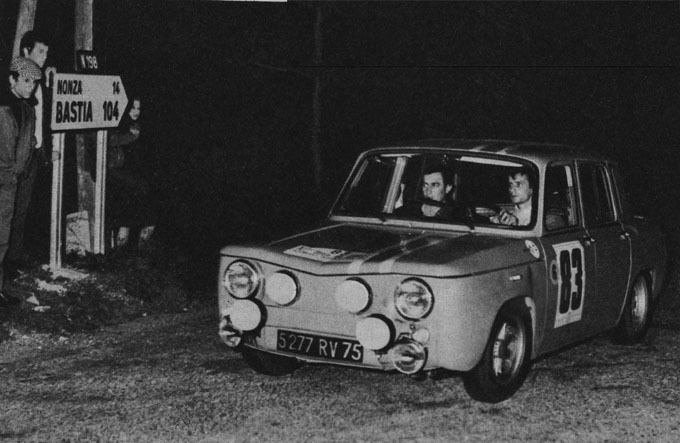
Not many cars would keep up with the Gordini in the late 60’s!

If the regular Renault R8 still looks like a not very exciting 60’s family car, the 8 Gordini is a different story. Everything from the front lights to the lower suspension and the small wheels give it a cool poise, and the 100 hp have no problem with the car that weighed it at around 800 kg. Neither do the disc brakes, leaving the gearbox and rust protection as the weak spots. The gear change, given the gearbox in the back next to the engine and thus a long way from the gear lever makes it quite vague, and rust protection as on any French car form the 60’s is largely non-existent.

That said, if you’re lucky enough to find an 8 Gordini today, it will most certainly have been renovated. Rare as they are, a good car will be yours for EUR 30-40.000 and will provide the kind of pure mechanical driving pleasure only a 60’s car can, including the drifts from rear-wheel drive combined with the rear-engine setup. All of it brings back memories of an era when Renault was not just a manfacturer of boring family vans, but a name to be counted with on the rally scene!
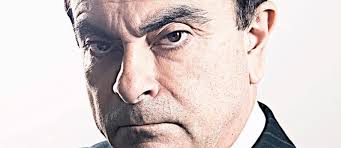
Auto legends: the story of Carlos Ghosn!

Before we start off, just a note to say that the fact that last week’s post came out on Friday rather than Sunday doesn’t mean a change of schedule, it was quite simply a mistake by yours truly. Sunday night European time it has been, and Sunday night it will stay! And with that, on to this week’s program.

____________

When you set out to write about a legend from the automobile industry, you have a pretty good feel for what it will run like. From the youth and dreams of making it big, over education, the first jobs, through the career to the older days. The story usually doesn’t include murders (indirectly), prison escapes and financial fraud. Until you get to Carlos Ghosn, that is, because writing about the man who revolutionised first Renault and then Nissan, is like writing a pretty good thriller story. So buckle up for the ride!

Carlos Ghosn is Lebanese, born in Brazil in 1954, but the family then moved back to Lebanon in 1960. HIs father was a diamond trader who after the return was convicted in Lebanon of murdering a priest. Given murder usually doesn’t do wonders for your reputation, he would move back to Brazil when the Lebanese civil war broke out in the mid 1970’s.

One of few pictures of Ghosn as a young man, here as a student in Paris

Carlos, after his graduation, moved to France instead where he would spend close to 20 years at Michelin, the tire maker, making a name for himself in the 80’s notably by turning around first Michelin’s failing South American operations in two years, and after that the one in the US. He reported directly to Francois Michelin, the company’s CEO, and would then move on to Renault.

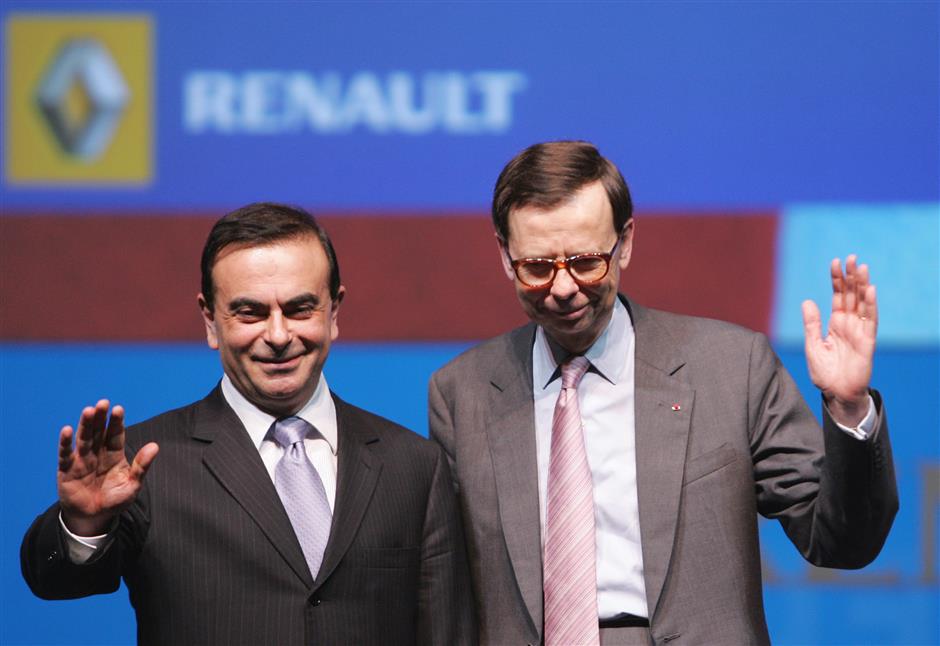
At Renault, Ghosn performed roughly the same trick at the company’s South American operation as he had done at Michelin, which made Renault’s then CEO Louis Schweitzer notice him. The French automaker had just recorded a loss of over USD 500m the year before (doesn’t sound like much today, I know, but this was the age when money was still worth something…), one of the first in its history.

Schweitzer was looking for help to turn the ship around and for the right man to do it. He had also started to think about his own successor a bit further down the line. It took him only one face-to-face meeting with Carlos Ghosn to decide that he was the one. This may not sound too surprising, but we have to take a step back here to put it in the local context at the time.

Schweitzer (right) and Ghosn, when things were still going well

Renault is the crown jewel of the French car industry. It was founded in 1898 and the French state has held a minority stake since the end of WW2. It was completely unheard of that the coming CEO of Renault would not be French, and would not come from the inner circles of the French establishment. Ghosn certainly didn’t, and was at the time only a Lebanese citizen. He would later also acquire French citizenshop.

It wasn’t just that Ghosn didn’t come from the inner Parisian circles, it was also that he had no desire at all of becoming part of them. He was certainly not the party-going, champagne-drinking small talker seen at parties among other bosses in the French capital. He hated these occasions, meaning no one really knew him. And what you don’t know, you sometimes don’t like. This has a certain relevance for the rest of the story: Ghosn has always been the outsider, and although a power player, he never really created a support network around him.

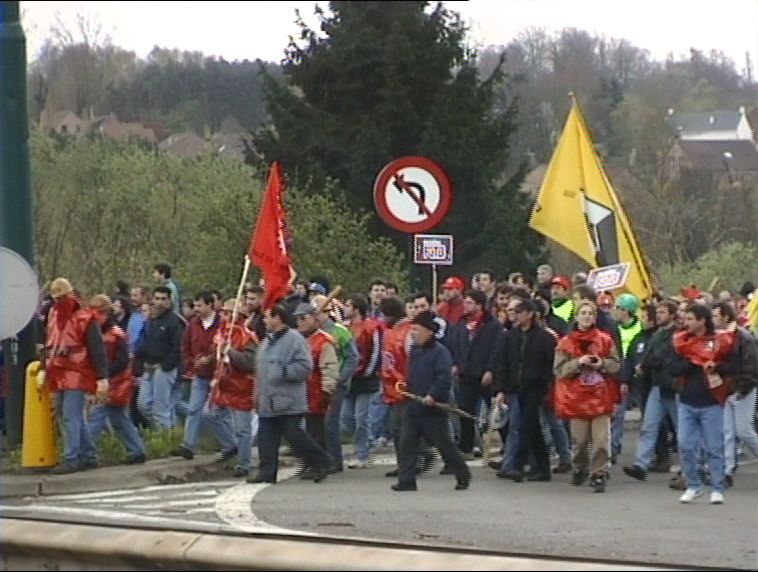
The closure of the Belgian Renault factory didn’t go down very well

When Ghosn was called upon by Schweitzer as head of production for Renault in the mid-90’s, he went through pretty much every single of the thousands of parts making up an automaker. He analyzed each function, gave out objectives for each division, and started cutting excess fat, meaning laying people off. In 1996, 3.000 workers thus lost their job in Renault’s Belgian factory. A couple of years later though, Renault had turned the largest loss in its 100-year history to over USD 1bn in profits. The man dubbed “Le Cost-Cutter” had done it again.

Schweitzer was at the same time making strategic plans, since in spite of his right-hand man’s good work, it was clear to him that long-term, Renault was too small to survive as a stand-alone manufacturer. His vision was for an alliance with an Asian manufacturer, and when Renault acquired 1/3 of Nissan in 1999, Schweitzer took a big bet on not only Renault’s future, but also on Carlos Ghosn whom he made CEO of Nissan, and without whom he’s said that he would never had done the deal.

The Nissan line-up in the 90’s was…. yeah. Here the Nissan Pulsar

When Ghosn came to Nissan, he found what he was used to: a loss-making company without great hope. Its line-up was out of fashion and according to insiders, Nissan had forgotten how to build attractive cars. In addition, with USD 20bn in debt, the company was on the brink of insolvency. Ghosn wasted no time in pretty much rebuilding the company from the bottom and up. He did so spending as little time Japanese cultural courses as he had drinking champagne in Paris, realizing that he would anyway always be the outsider in Japan.

As he had done a few years earlier at Renault, Ghosn travelled through Japan, visiting every Nissan factory and shaking a lot of hands. He then developed a three-year plan to return the company to profitability, based partly on the cost-cutting approach he had become known for, and which Nissan no doubt needed. As a consequence he would fire 21.000 employees, 14% of Nissan’s work force. In the consensual Japanese culture, this was unheard of.

It wasn’t all about cost-cutting though, as another, arguably even more important part, was re-creating the model line-up. For car enthusiasts, the most important here are on one hand the 350Z, a very well balanced sports car that also has the benefit of being easy to tune, and on the other of course, the legendary rebirth of the GT-R, partly referred to as Skyline in Japan.

Peak Nissan and peak Ghosn: the GT-R Nismo launch

The success followed shortly thereafter. In just a few years, Ghosn had changed Nissan’s whole line-up, launched two sports car considerably improving its reputation, and turned USD 20bn in debt to USD 15bn in the bank. Nissan also produced and sold twice as many cars than just a few years before, meaning more than 5.5 million.

The launch of the GT-R in 2007 was no doubt Ghosn’w peak moment at Nissan, and also the start of his downfall. Ghosn was by now hailed as a superstar and was very smart about cultivating his profile and media presence. His aura was so bright that no one really paid attention to what happened behind it, for example the fact that Ghosn owned about seven times more than the CEO of Toyota, and still felt he was underpaid. He had also made sure Nissan hadn’t reported his salary according to stock market rules.

When Louis Schweitzer stepped down as CEO of Renault in 2005, Ghosn succeeded him, but in spite of promises made previously, insisted on staying on as CEO of Nissan. He thus managed to global car companies 10.000 km apart, something that everyone but him clearly saw didn’t work.

Ghosn’s globetrotter lifestyle didn’t go down well with the low-key Japanese culture…

Clearly losing touch with the wider world, Ghosn now started to create companies on various warm islands around the world, that he filled with Nissan’s corporate money with the official purpose of investing in riskier ventures and start-ups. In the resulting lack of transparency, it then became clear that some of the money had rather been used for everything from private houses to family holidays. Mr. Cost Killer was certainly not cutting costs for himself…

As can happen to people with nothing but yes-sayers around him, Ghosn started to develop a certain paranoia. So in 2010, when he received an anonymous letter claiming that three highly placed executives at Renault were involved in selling company secrets to the Chinese, Ghosn had them all fired in a major public exercise, only to admit a few months later that the claims had been unfounded.

The scandal was so big that French president Sarkozy was asking for heads to roll, so Ghosn sacrificed his COO without blinking. The French did not approve, and if you remember from further up, Ghosn didn’t have a powerful network in France to protect him. That was starting to show.

Sarkozy (right) wasn’t amused. Ghosn was happy to drop his COO to make him happier

In 2018, after close to 20 years at the top at Nissan, Carlos Ghosn was arrested by Japanese police when landing in Tokyo, and charged with fraud. The charges came from a Nissan internal investigation that had been going for months, and no doubt also triggered by Ghosn’s failure to report his salary.

The former yes-sayers at the top of Nissan didn’t just want him gone – they wanted him in prison. And for that, Japan is a great place since once you’re arrested, there is a quasi-certainty that you will also be found guilty. Which, by all probability, Carlos Ghosn was.

The fact is though, that we’ll never know. Ghosn was held in captivity for 130 days, being interrogated every day. His lawyers tried to have his trial moved to France, but with no one in France was really interested in that and as said, Ghosn lacked a strong personal network.

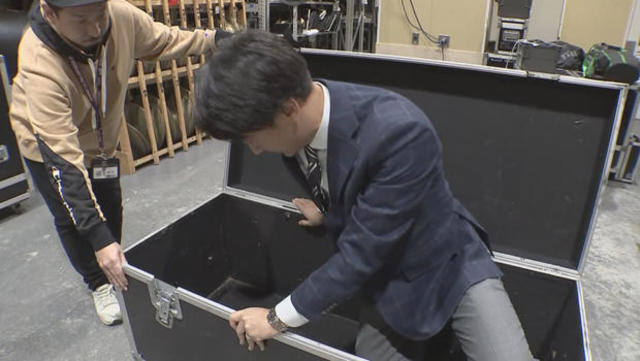
A similar box to the one Ghosn escaped in

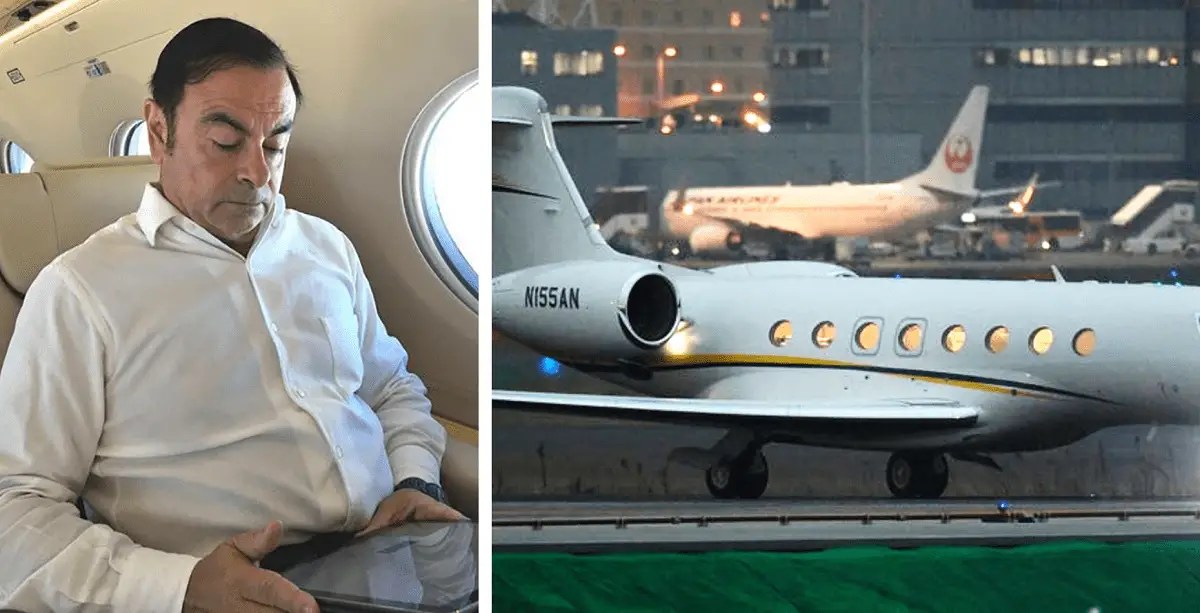
He was finally released on bail awaiting the trial, but it would never come to that. In a masterful exercise, the details of which go beyond this blog, Ghosn escaped Japan on a private jet, hidden in an instrument box, and fled to Lebanon.

As per today, Carlos Ghosn lives in Beirut and will most probably stay there, as there is an international warrant for his arrest if he leaves Lebanon. He has always claimed his innocence and says he would be happy to stand trial in any country but Japan because of, in his words, the biased judicial system, but that will probably never happen. Nissan has an outstanding personal claim on him of EUR 83m, that will most probably never be paid.

The Renault-Nissan alliance still exists and these days also includes Mitsubishi. In the current setup a co-CEO system is in place, and there is no more reliance on one person. That’s probably good, but It’s also difficult to find three car companies with a less exiting model line-up than these three.

The “corporate” Nissan house in Lebanon Ghosn now lives in…

There is no doubt that Carlos Ghosn was exceptionally good at turning businesses to profit and also understanding what customers wanted. It’s also true that he spent 20 years on the other side of the world, in a completely different culture and language, which most certainly contributed to the rest of the story. It’s a shame that it ended like it did, but it’s yet another proof that even the most brilliant men and women often are their own worst enemy. And while Ghosn is gone, quite a few of us are thankful to him for creating the wonderful GT-R!

Auto legends: the story of Enzo Ferrari!

When one of my readers gave me the idea to the section on legendary personalities from the auto industry, he did so specifically mentioning Ferdinand Piëch, whom I therefore did the first portrait of earlier this summer. Had I come up with the idea myself though, I wouldn’t have started with Piëch. If someone says “automotive legend” to me, there’s really one name that springs to mind before the others, and it is that of Enzo Ferrari. I kind of suspect it may be the same for some of you, so in this second portrait, we’ll have a look at the Commandatore himself, the legendary man who spent his life in northern Italy between Turin, Milan, Maranello and Modena, and whose legend has only grown since he passed away around 35 years ago.

Young Enzo on an Alfa Romeo, sometime in the 1920’s

It apparently took little Enzo 10 years from his birth in 1898 to be stung by the racing bug, which happened when his father took him to a car race in Bologna. Enzo had an older brother and early on dreamt of becoming an opera singer, but the Spanish flu that swept across the world at the time killed both Enzo’s older brother and his father, forcing him to grow up quickly and lay his ideas of a singing career to rest. He joined the army in 1917 and was very close to dying from the flu as well shortly thereafter, but survived and was honorably discharged the same year. Rather than becoming a soldier, his big dream was now to work for Fiat, but his application was rejected, which we should perhaps all be grateful for.

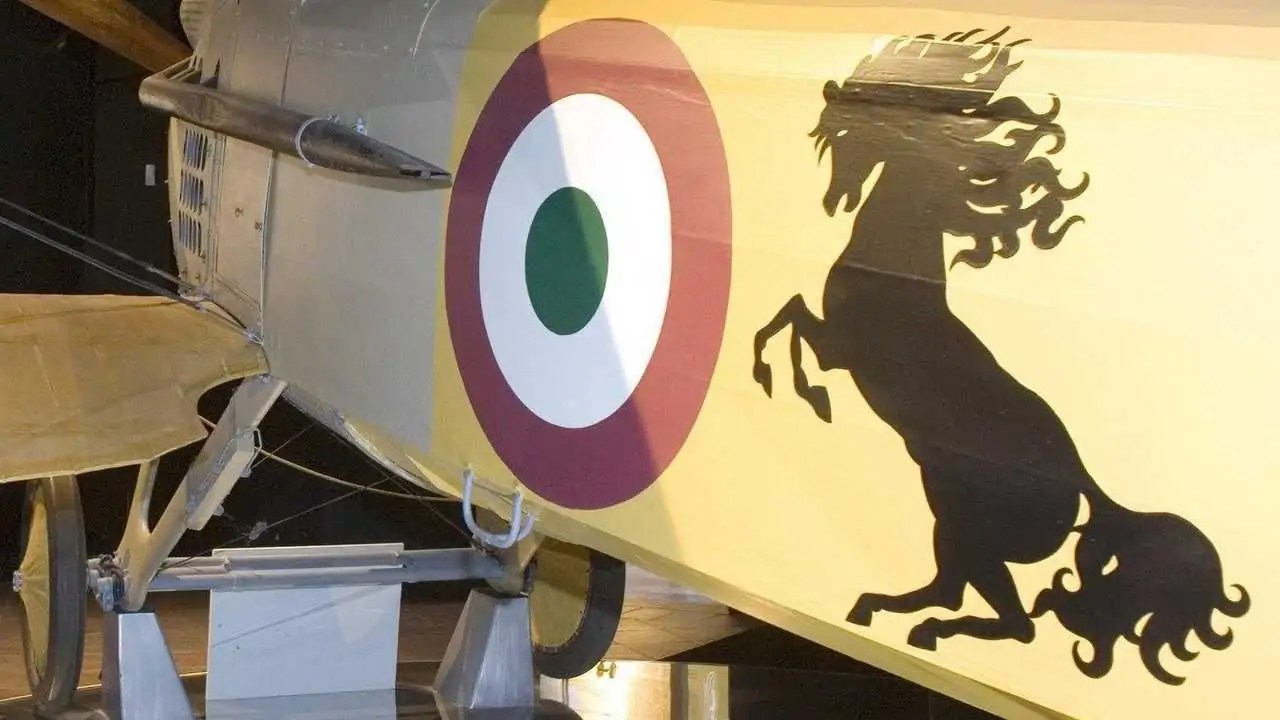
Enzo instead went on to work for a company called Costruzioni Meccaniche Nazionali for whom he also debuted as a racing driver. He took part in a number of races over the coming years with quite some success, before a very defining moment for him but also for the larger automobile world occurred in 1923, when Enzo met the parents of the noble flying ace Francesco Baracca. Baracca had done some heroic flights but later perished in the war, and his parents now invited Enzo to use their son’s coat of arms on his cars for good luck. You’ve guessed it, that coat of arms was none other than a prancing horse, and the Ferrari logo had thus been born.

The original look, and use of the Cavallino Rampante!

In 1929, Enzo’s racing career was crowned when he was knighted for his achievements and given the title “Commandatore” (Commander), that would stick with him for the rest of his life. He would end his driving career in the coming years and instead set up the sporting society Scuderia (“team”) Ferrari, a kind of racing club for aspiring drivers with as symbol the prancing horse. The club would a few years later become affiliated to Alfa Romeo, but the association would only last a few years.

Enzo had now also become the proud father of a boy called Dino, but as he didn’t know then, Dino would only have a short life, dying of dystrophy in 1956. Between the Spanish flu, his son’s dystrophy and other terrible viruses and bugs at the time, it doesn’t hurt to remember that modern medicine has done quite a few wonders in curing and exterminating what people died of less than 100 years ago… Dystrophy however, as a genetic disease, is unfortunately one we don’t yet have a remedy to.

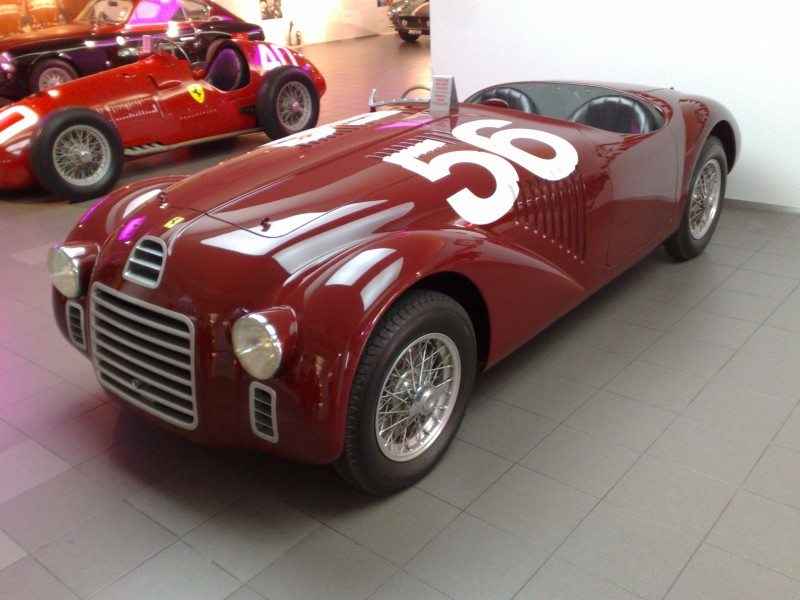
The 125 S was the first Ferrari car to score a race win.

Just before WW II broke out, Enzo had founded his new company Auto Avio Costruzioni in Modena, later moved to Maranello. As soon as the war was over, Ferrari started racing and the 125 S would score its first victory in 1947. That would be the start of many race wins over the coming years, including notably the Mille Miglia in 1948, the 24 hours of Le Mans in 1949, and the world racing championship both in 1952 and 1953, in both cases with the legendary Alberto Ascari as driver. it was at this time that Ferrari also started producing road cars, already then with the rich and famous in mind.

If the late 40’s were all happy days, the 50’s and early 60’s would be less so. Next to the loss of his son, six Ferrari drivers would be killed between 1955 and 1965, Enzo as head of Ferrari would be charged with manslaughter following the accident in the Mille Miglia in 1957 that I described in my post about the race, and Enzo would also lose several of his top people in the Palace Revolt in 1961, that we looked into in the post on Bizzarrini back in February 2021. These events and of course, especially the death of Dino, changed Enzo into a reclusive man. It was most probably also these events that led him to consider a sale of Ferrari to Ford in the 60’s, that would however never happen. Instead it was Fiat that Enzo sold half of the company to in 1969, because Ferrari by then had serious financial issues.

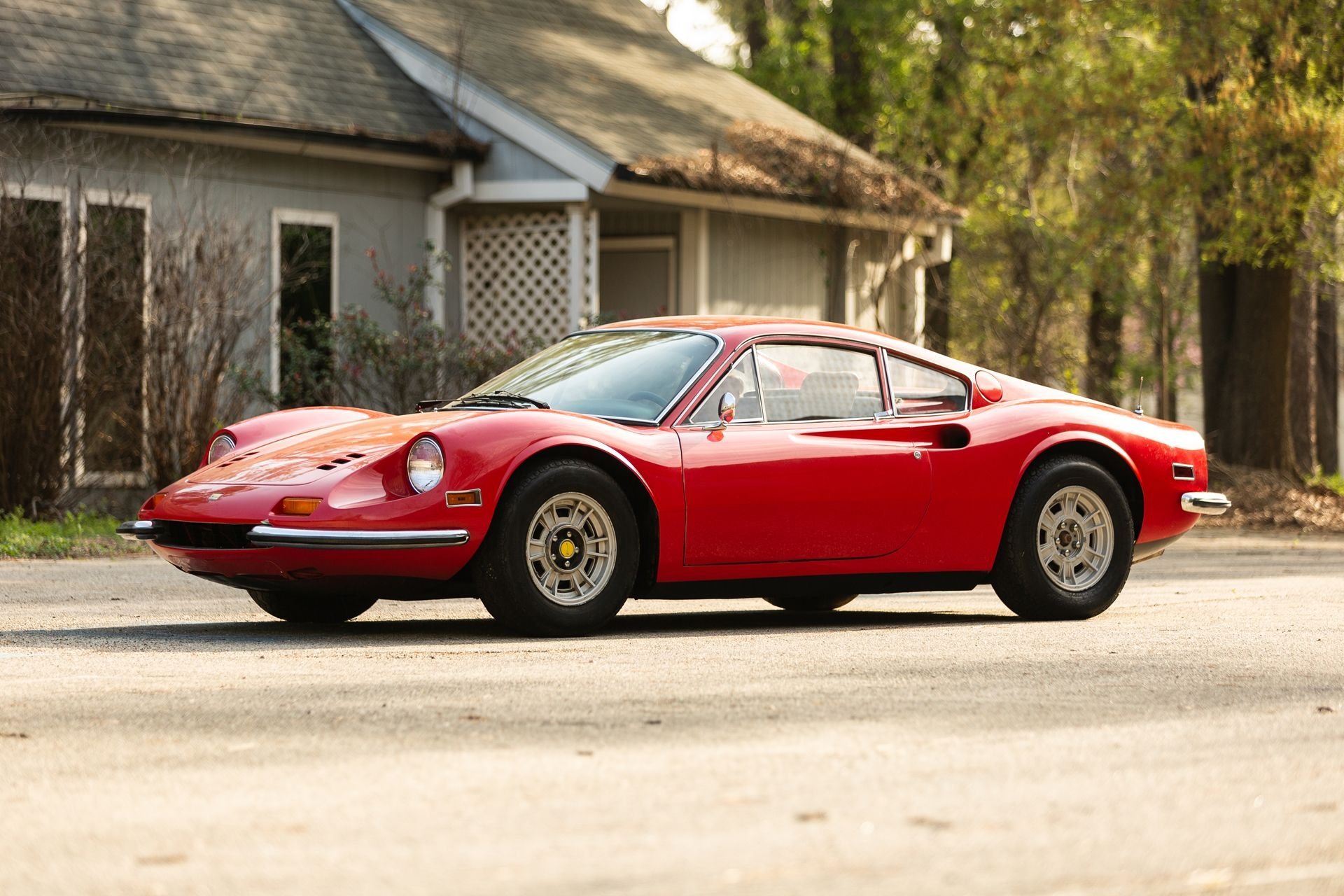
The Dino, one of the most beautiful of them all

At the age of 79, Enzo would resign as president of the company he founded in 1977, but president or not, it was still clear to everyone who was really running the company. A further personal blow was the death of his beloved wife the year after, and finally Enzo himself took his last breath in 1988 at the age of 90, in Maranello that he made so famous. He was later introduced to the International Motorsports Hall of Fame, given the 13 world championships and 4.000 race wins achieved over his lifetime.

Next to the racing successes, Enzo of also led the development of Ferrari’s road cars during the decades he was active. Going through them all is a post by itself, but let me pick two of my (and many others’) favorites. The Dino, named in honor of Enzo’s son, is to me one of the most beautiful Ferraris, and the F40, which was the last car Enzo signed off on personally, one of the most spectacular. These and others are shown in the Ferrari gallery in Maranello that it’s well worth visiting if you’re in this beautiful region of Italy, going by a single motto: Forza Ferrari!

Auto legends: the story of Ferdinand Piëch!

One of the nice things with writing a blog that enjoys a growing circle of readers, other than boosting your ego, is that the chances increase by the week of actually meeting your readers in the flesh. Of course this has happened before in the circle of close friends, but in the last couple of months I’ve run into people I didn’t know from before, and it’s subsequently become clear that they read this blog. That’s of course great in general, but it’s even more so when they help generate ideas to write about. Because coming up with exciting content every week isn’t always easy, even in the car world!

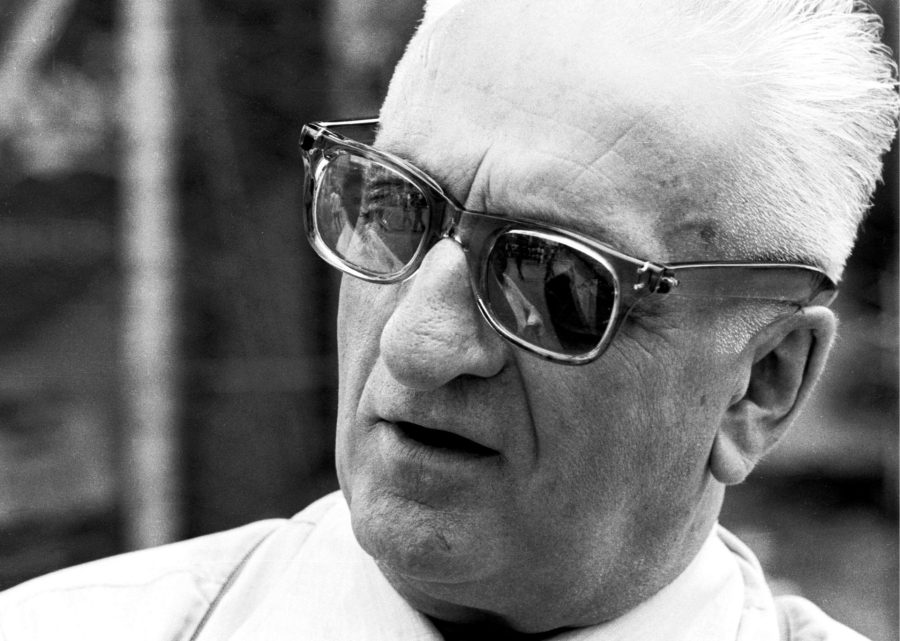
This week I’ll therefore start a mini series much like the one on classic car races that I write about from time to time. I’ve decided to call this new one Auto Legends, as it will be about the men (and yes, it so happens they are almost exclusively men) who have helped shape and put their mark on the automobile industry. I can almost feel many of you now expecting to see a picture of an old man with big, black sunglasses here below, i.e. Enzo “Il Commendatore” Ferrari. Actually though, to mix it up a bit (and also as there has been a fair bit of “Italinanitâ” on the blog lately), we’ll start in Germany with a man who has a CV that may make even Enzo blush – Ferdinand Piëch.

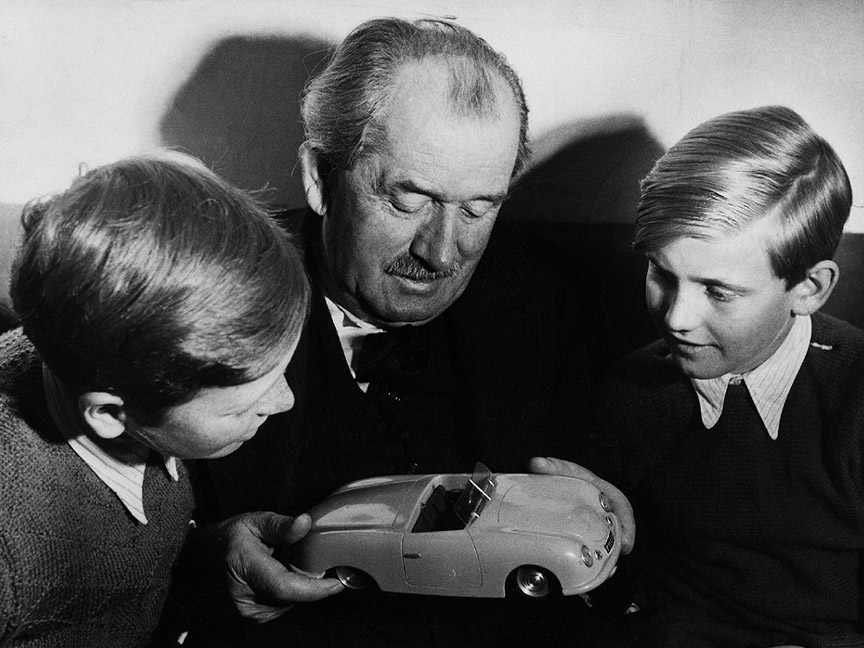
Grand old man Porsche in the middle, young Piëch to the right

If the slightly strange, Austrian name Piëch doesn’t ring a bell with you, the first thing to note is that Ferdinand, born in 1937, was the grandson of another legendary car man with whom he shared his first name, namely Ferdinand Porsche. It’s therefore no big surprise that he started his career at Porsche, but that’s not where he became most well-known. Rather, that was as chairman of VW that he completely re-modelled in the 1990 and 2000’s, turning it into an automobile giant, and earning himself a reputation as a, let’s say less likeable personality. But let’s take it from the start.

Young Ferdinand Piëch was head of the motor sport division at Porsche in the 60’s. This included the role as head of testing, where his focus was on very light racing cars such as the Porsche 906, which after modifications also became known as the 910. From the post on the Targa Florio earlier this year, you may remember that this lead Porsche to completely dominate that and other races in the late 60’s, by which time Piëch was no more than 30 years old. He was also instrumental in the development of the Porsche 914 that we looked at a few weeks ago, and most other things that came out of Zuffenhausen in the 60’s and early 70’s. Then however, following a feud between different fractions of the Porsche family, he had to leave the company.

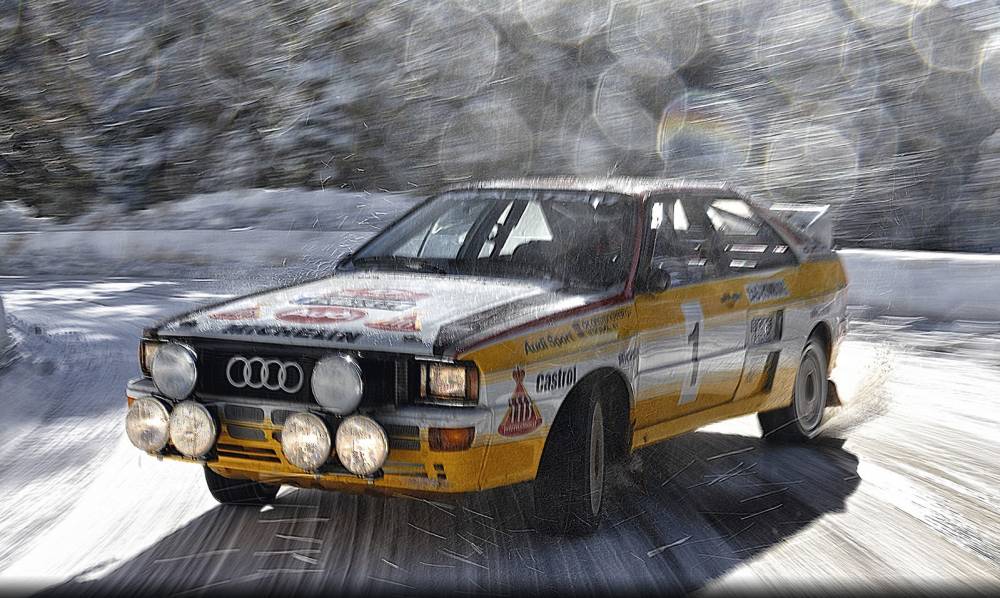
Piéch was the brain behind the four-wheel drive Quattro

In 1975 Piëch thus became head of technical development at Audi, notably leading the development of the Audi Quattro. The subsequent success it had lead Piëch first to the position as co-CEO of the company, and then from the late 80’s its CEO. If you think back to the second half of the 80’s, this is of course exactly the period when Audi went from being a very sleepy brand for old people with hats to something far more modern and desirable. Piéch however kept a strong focus on motor racing when at Audi as well, with next to the rally wins of the Audi Quattro, also various wins notably in the German DTM series for touring cars.

Ferdinand’s star continued to rise on the VW sky and in 1993, he became CEO of the VW group, Audi’s mother company. Having proven his capabilities as a car man, this is the period when his business understanding really starts to shine through. 1998 was a big year in this sense, and more than one eyebrow was raised when in the same year, VW acquired Bentley and Lamborghini (the latter through Audi) and also the rights to the Bugatti trademark.

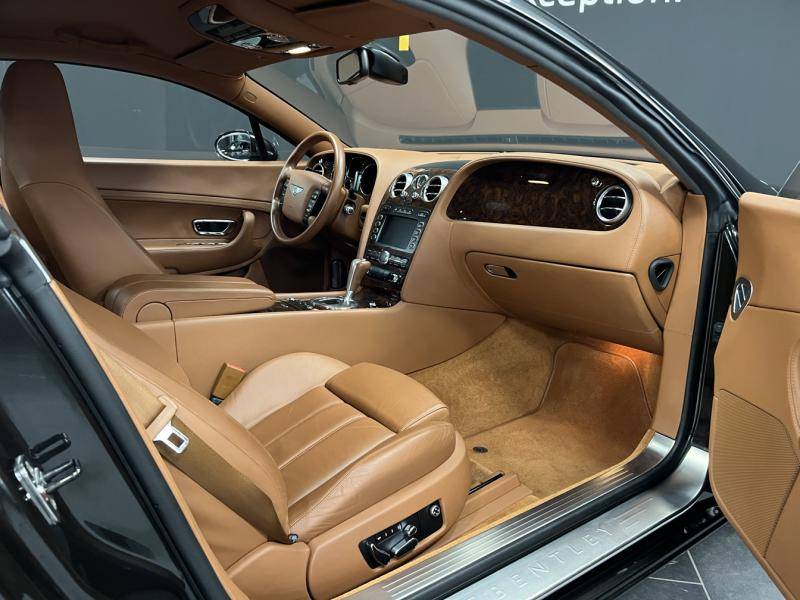
The best Bentley ever – built by an Austrian

The early 00’s then became the period when Piéch aimed for the stars with the whole VW line-up, arguably with a slight lack of understanding of the perceived prestige of some of its brands. The VW Phaeton with a W12 engine thus never became more than a curiosity, but the Audi A8 with the same engine and of course the Bentley Continental saw far more success. Especially the latter was by many considered the best Bentley ever, and Ferdinand certainly took a lot of pride in knowing how to build a British luxury cars better than the Brits. However, one piece was still missing in Ferdinand’s puzzle.

Even if he hadn’t worked actively for the company, Piéch had sat on the board of Porsche, where his career once started, since the early 90’s. Of course he also had family ties to the brand, so it’s no surprise that he felt especially strongly about it. In 1998 however, in one of his razor-sharp statements, he said that for as long as he lived, Porsche would remain independent from VW. Well, that was to change 14 years later when VW acquired Porsche, while Piëch was still very much alive. To Ferdinand, Porsche became the most important brand in the group, and the group he had built had by now also become one of the largest and most profitable car groups in the world.

The Porsche 910, the Bugatti Veyron and the Audi A2 – Piéch was behind them all!

When Piëch passed away in 2019 his legacy was thus utterly impressive, not only in sales numbers, but also in the cars that were developed under his watch (you could also add here the fact that he was the father of no less than 12 children as well…). The W12 Phaeton may not enter the history books, but the Bugatti EB110 certainly will, and without it, we wouldn’t have seen neither the Veyron, nor the Chiron. And without the Bentley Continental, I’m pretty certain that Bentley as a brand would also have belonged to the past. Adding to this the development of Porsche that was on the brink of bankruptcy 30 years ago, what Piëch managed to build is truly fantastic.

So what about the likability part? To start with, I very much doubt there’s a single global company in any sector who has a Mr. Nice Guy as its CEO. That said, Piëch was known for a very authoritarian, if not dictatorial style of management. He had absolutely no time for errors and wouldn’t tolerate mistakes. Maybe the himself legendary Bob Lutz put it best, saying that Piëch although he didn’t agree with his dictatorial style of management, there’s no question that Piëch was a brilliant person and leader. Today’s VW group is the best proof of that!