Classic races – the Monte Carlo Rally!

If there’s one classic car race that is special to me, it’s the Monte Carlo rally. When I was seven, I moved to Monaco with my family, and in the three winters we were there, my father and I went up into the French hills above the Principality where the race takes place to watch it.

Of course in those days, watching rallies from the road side was a bit more intense than now, given there were practically no safety measures whatsoever. In terms of childhood memories that stick, I can thus tell you that standing right next to the road in complete darkness and hear an engine roar building long before you see the headlights, and then have the car pass one meter before you at a speed that if it hit you, would send you fly all the way back down to the beach – that’s definitely one of them!

First run in 1911 when it was inaugurated by Prince Albert 1, the Monte-Carlo Rally actually counts as the oldest rally in the world, and no doubt also as one of the most famous. The organization of the race has since the beginning been the responsibility of the Automobile Club de Monaco, in turn founded as early as 1890.

It’s unclear how long it took Rougier to reach Monaco…

As with so many races in the old days, things were a tad less organized. The 23 cars in the first ever race started from nine different locations in France, with a certain Henri Rougier, who was the main dealer for his car brand Turcat-Mery, starting with some others in Paris. From there they drove the more than 1000 km to Monaco, where Rougier was judged as winner in his Turcat-Mery 25HP.

It’s a bit unclear if he arrived first as the judging also included some rather arbitrary categories such as elegance of the car and its condition at arrival. Far from everyone apparently agreed with Rougier’s win, but it didn’t change the result. A gentleman named Justin Beutler finished third but would win the race the next year, after which there wouldn’t be any further races until 1924.

Moving forward to the post WW2 period, the race was resumed in 1949, with an array of different cars and drivers winning it in subsequent years. A Hotchkiss Gregoire is perhaps not what we imagine under a rally car today, but it was part of the winners, as were notably also the Lancia Aurelia GT and the Jaguar MK VII. And then came the Swedes…

Erik “on the roof” showing some inspired driving!

In 1962, Saab entered the Monte Carlo Rally with the Saab 96, driven by Erik Carlsson. He was one of the world’s best rally drivers in the early 60’s, and in Sweden carried the nickname “on the roof”, since that was where he had landed his car during a race early in his career.

He was however also known as Mr. Saab as he would never drive another brand, and he won the Monte Carlo Rally in 1962-1963, finishing third in 1964. That year, the next car that would dominate the race in the coming years won for the first time – the Mini!

Mini would win three races officially in the coming years, and four years unofficially. In 1966, no less than three Minis were the fastest, but they were all disqualified for having incorrect headlights. That was apparently a bit of a scandal, but it only increased the Mini’s popularity over the coming years.

Two of the four Minis finishing 1-4 in 1966, only to be disqualified

Since the start, the Monte Carlo Rally had remained a so called concentration rally, meaning cars would start at different locations at roughly equal distance to Monaco, around which there would be a few special stages. This would be the case all through 1991, making the rally very special – as did no doubt the fact that it was run in the winter when there would typically be snow in the final mountain stages.

It was these stages, especially those run at night, that captivated me in the late 70’s and early 80’s. And the stage that has always been the most captivating is the one on the 31 km between La Bollène-Vésubie and Sospel, passing the famous Col de Turini. In some years it’s been run at night, officially referred to as “the night of the long knives”, a reference to the headlights I mentioned initially cutting through darkness.

In some years when spectactors have felt there wasn’t enough snow on the road, they’ve brought shovels to add some from the side of the road. That notably led to both Marcus Grönholm and Petter Solberg crashing heavily in 2005, being surprised there was all of a sudden snow on the road. That’s the Monte Carlo Rally!

1977 was a snowy year – and the Stratos reigned supreme!

In the late 70’s, the Lancia Stratos was by far the coolest car, and also won the rally a couple of years. The king of the rally in this period was however German Walter Röhrl, who won the rally four times – in four different cars! In the 80’s it was then all about the Audi Quattro, before recent history has seen a mix of the same cars winning other rallies.

With a lot of non-French drivers dominating the rally over earlier decades, in the 2000’s it’s mostly been about Frenchman Sébastien Loeb and his countryman Sébastien Ogier. Loeb won a total of eight races since the 00’s, and Ogier no less than nine times since 2009, making him the most successful Monte Carlo driver in history.

Sebastien Ogier killing it in the 2023 rally

The next Monte Carlo rally will be run on 21-24 January 2024, and includes the famous Col de Turini stage. If you happen to be in southern France then, you know where to go!

If you’re not, check this link for a 5-minute video showing Walter Röhrl driving the Col de Turini in an Audi Quattro on its 30-year anniversary, perfectly illustrating that neither the car, nor him haven’t lost the magic! And if that’s too old for you, you may want to see Sébastien Ogier giving lessons in inspired driving in this year’s rally by clicking here!

Classic races – the 24 hours of Le Mans!

Le Mans is a quiet, French town of about 150.000 inhabitants in the western part of the country. It has a few churches and monuments and is, I’m sure, a pleasant place to live, however one that for anyone without connection to it would go unnoticed. If it weren’t for one thing that is, namely one of the most famous car races in the world: the 24 hours of Le Mans. Every year, the event engages pretty much every single family in the town, now as well as in the past, in various volunteering roles at and around the race. The whole region around Le Mans thus breathes the famous 24 hours, to the extent you can’t imagine the town without the race.

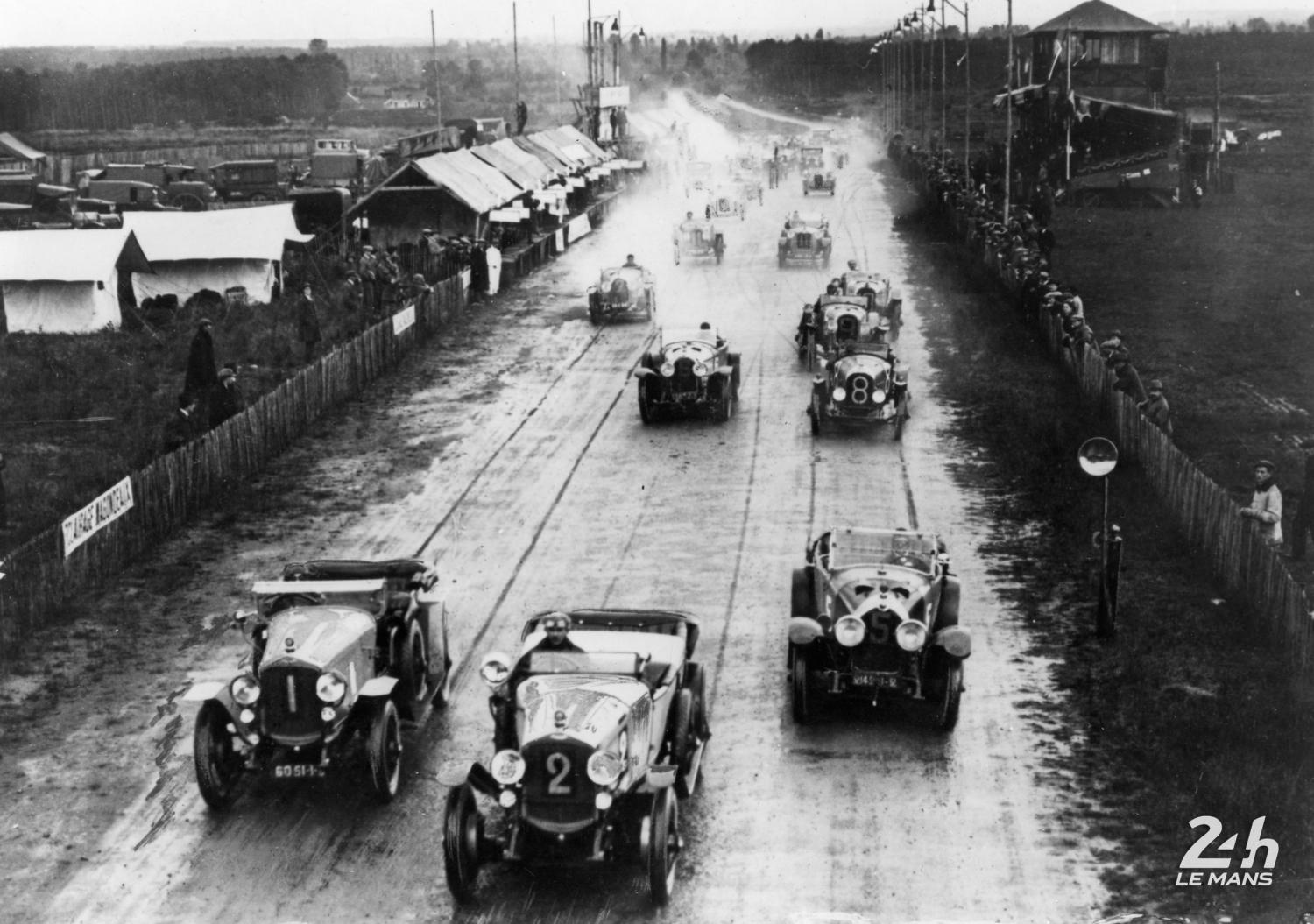
A few weeks ago in June the 24 hours celebrated its 100 years of existence, a time over which the race has seen not only typical racing bravery but also several evolutions in terms of brands, car types and even different fuels that have won the race. Famous drivers have proven their talent in Le Mans, and the race has figured in several movies. This week therefore, let’s look closer at the race that for 100 years has been, and today still is, one of the leading car races of the world!

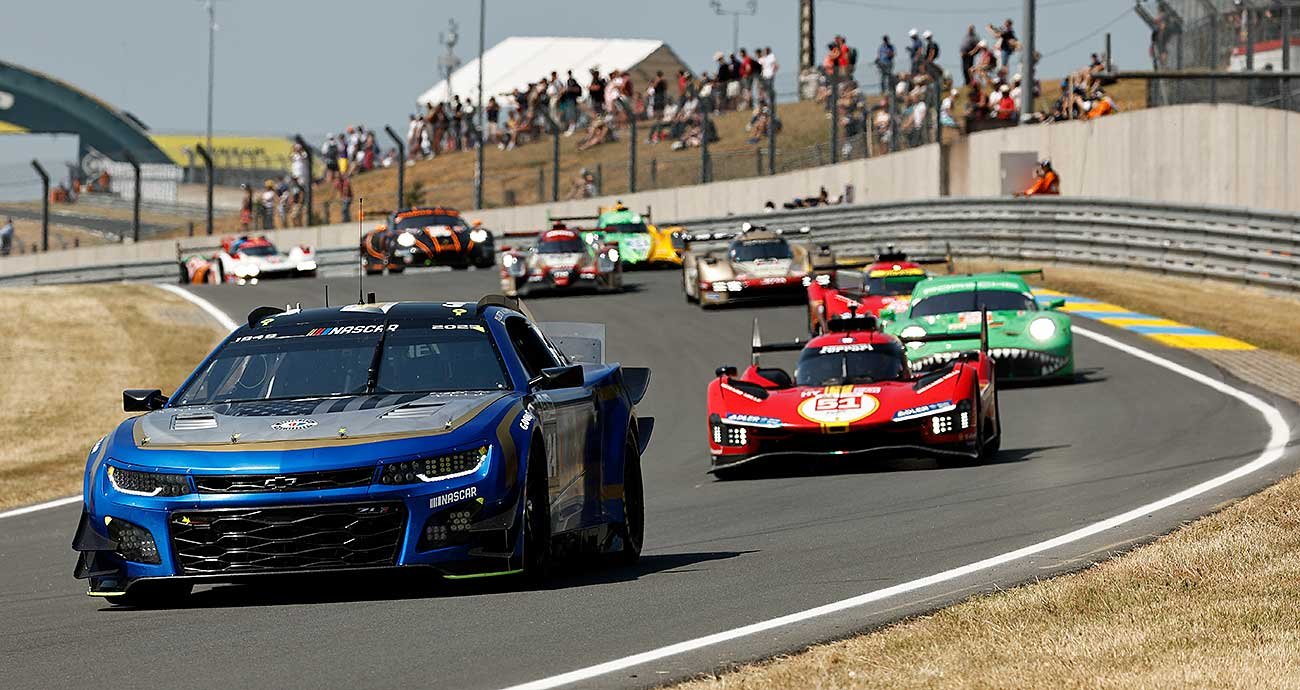
Due to the different classes, there’s a great mix of cars on the track at the same time!

Everything started in the early 1920’s when the French gentlemen Charles Faroux and Georges Durand, the latter president of the Automobile Club de l’Est (ACO), decided to organize a new car race in the region in the form of a “confrontation” between the leading French car makers of the time. This would constitute a rebirth of racing after the first world war, but also after a number of other races and, well, pretty bad accidents before it. The ACO remains the organizer until this day, however the confrontation initially imagined is now of course no different from other races, if it weren’t for the distance and the format, i.e. the 24 hours of racing. The initial idea in 1923 not to let the winner count as such until he had won the race again the subsequent year was however dropped. Even for the French with their penchant for the slightly complicated, this was apparently a bit too much…

The early days…

The 24 hours is driven on a 17 km (11-mile) track called Circuit de la Sarthe, a combination of normal roads and racing sections that in spite of going through a number of changes through the years, has remained largely the same since 1923. It’s thus quite a long track and one where more or less every curve is known to enthusiasts. Landmarks include the Dunlop corner and footbridge, allowing spectators to cross above the track at the height of the curve, the Tertre Rouge curve, named after the red soil where it’s located and where many races have been lost, as well as the famous Mulsanne straight, 5.5 km (3.5 mile) long where in 1988, a speed record of 407 km/h was set, leading to a couple of chicanes being added to the track to make sure that record stands forever…

The famous Circuit de la Sarthe, close to Le Mans

What is special about the race is of course that it’s run over 24 hours and won by the team which in that time covers the longest distance. Nowadays with modern cars, this leads to winning teams covering more than 5000 kms during the race, far longer than most other somehow comparable events, such as the Indy 500. Above all though, and especially in earlier days, there’s quite a bit of tactic involved in correctly weighing outright speed with the cars’ durability, the longevity of brakes and tires, and of course also drivers, who tend to switch at least every two hours.

If the race initially was a confrontation between different car brands, those days are long passed and now it’s of course dedicated race cars that compete in different classes. It has however remained a largely European affair both in terms of drivers and teams, without forgetting however the Ford GT40 that counts among the most successful cars historically. Some others include the 1970 Porsche 917, driven in 1969 by a certain Ferdinand Piëch and also featured in the film “Le Mans” with Steve McQueen from 1971, the Audi R18 from 2013 which with different drive trains from diesel to hybrid became a winner, and also the 1995 McLaren F1 GTR, considered McLaren’s best race car ever, also since it was fundamentally a street car. The list could of course be made much, much longer.

The 917 was Porsche’s first Le Mans winner – a true legend!

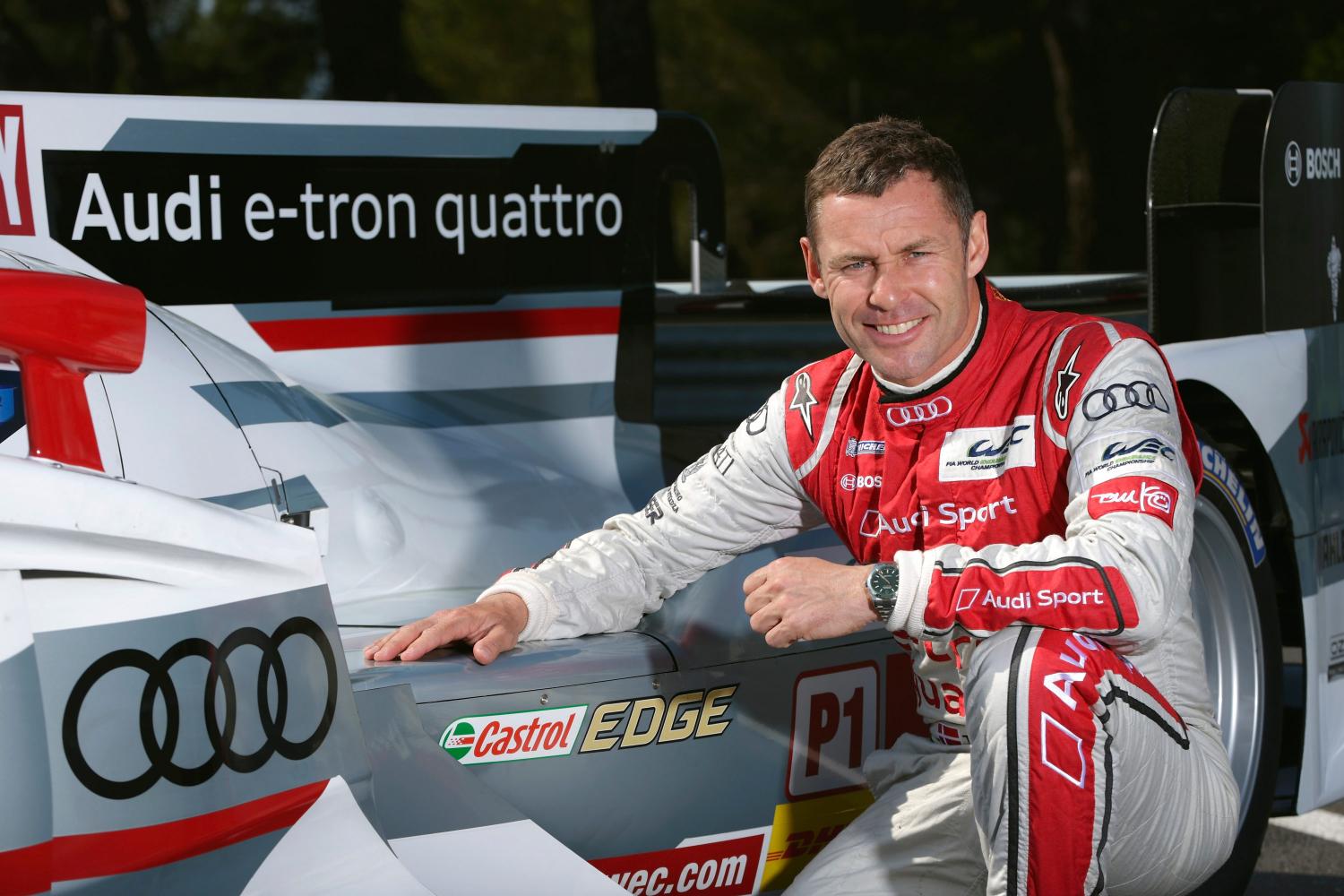
In terms of the brave men driving those and other cars, these come in teams as no one would manage to drive the full 24 hours on his own. These days teams typically consist of three drivers and of these, no one has been more successful than Tom Kristensen, referred to as “Mr. Le Mans”. The very fast Dane won his first race in 1997 and went on to win another eight races until 2013. A certain Jacky Ickx won six races in the 60’s and 70’s while racing in F1 at the same time. He shared three of those victories with team mate Derek Bell, who appeared in no less than 26 races until 1996. Again the list could be made much longer, but in general, accumulating multiple victories wasn’t possible in the early years, such were the strains both on machines and drivers.

As for the races, it’s of course hard to do them justice in writing, given they run over 24 hours in day- and night time and all kinds of conditions, quite often including heavy rain. To name at least a few however, 1933 counts as the first tightly fought Le Mans race. Tazio Nuvolari and his team mate Raymond Sommer were set to win on their Alfa Romeo 8C when, shortly before the end, their fuel tank started leaking. Having repaired the leak with chewing gum (!), the caught up with he two other Alfas that had passed them and won by a margin of 400 meters – which was however plenty compared to Jacky Ickx’s margin of 120 metres in 1969!

Jacky Ickx in 1969. The running start was skipped a few years later.

In 1988, Jaguar scored its first Le Mans victory in 30 years, however with only a two-minute margin to Porsche, the dominant team at the time, sounding far more than it really was. As became known after the race, the last Jaguar driver Raul Boesel noticed a strange sound from the gearbox towards the end and decided to leave the car in fourth gear for the remainder of the race. He also turned off the radio, not really feeling like discussing his tactic with the team. He finally held off the chasing Porsche but had the race gone on for five more minutes, the roles may well have been reversed.

Le Mans is however noteworthy as one of very few, if not the only race format where diesel cars have been successful. This is of course linked to their fuel economy, potentially leading to fewer stops. Both Audi and Peugeot have won the race with diesel engines, and their struggle in 2008 counts as the greatest Le Mans race ever. Audi’s highly successful R10 TDI was getting old by then, and the more modern Peugeot 908 HDi was the favorite. However the Audi was better in the rain that came in the middle of the night, expected by Audi but not by Peugeot. Tom Kristensen, Allan McNish and Rinaldo Capello on the Audi lost the lead again when it dried up, but a short rain spell towards the end where Peugeot chose to leave their car on slicks finally made the difference, allowing “Mr. Le Mans” Kristensen to score on of his nine wins.

Mr. Le Mans himself: Tom Kristensen

100 years later, the 24 Hours of Le Mans is thus alive and well and will hopefully remain so for many years to come. Teams and drivers will vary, as will fuel types. And if you happen to be in western France in June and feel like doing an all-nighter on a racing track, there’s certainly no better place to go than Le Mans!

Classic races – the Targa Florio!

It’s high time to return to the my series of classic car races, started last year. Races from a time when motorsport was something very different to today, run in far simpler cars, mostly on muddy roads, and without as much as a seat belt as protection, far away from today’s F1 halos. Better? Not unless you have a death wish, but certainly more genuine, unpredictable and exciting! This time we’ll travel to one of the souternmost parts of Europe, namely Sicily, and look closer at the very genuine, certainly unpredictable, and definitely exciting Targa Florio!

The Targa saw the light of day in 1906 and got its name from its founder Vincenzo Florio, a proud Sicilian who wanted to create a race on his native island. He was looking to do something that would be challenging both for man and machine, and settled on a track (big word…) in the mountainous Madonie region near Palermo. The original route was 148 km long, starting in a village called Cerda and ending in what was to take his name and become known as Floriopolis, by the coast. Ten teams started in the first race that was run over three laps, i.e. 446 km, on steep, mountainous and certainly quite bad roads. After 9 1/2 hours, a brave man called Alessandro Cagno won the first edition, but the race saw a great success right from the start and the year after, no less than 51 teams were at the start.

Vincenzo Florio himself (right) in the 1906 inaugural race

The Targa went on every year until 1914 and then resumed again after WW1 in 1919. The route had then been shortened, but more interesting than the new route was a young Italian driver by the name of Enzo Ferrari. He ended the race in second place in 2020, which would be one of his best results as a racing driver before moving on to other, greater things. Although becoming an international event in the 20’s, the races in this decade would largely be an affair between Alfa Romeo and Bugatti. An exception was however the Hispano-Suiza of French pastis maker André Dubonnet who would finish in sixth place in 1926, in a car with a fram built of tulipwood to save weight! The course kept changing and in the final years before WW2, it was held on the streets of Palermo itself.

Two Maseratis fighting it out on the streets of Palermo in 1938

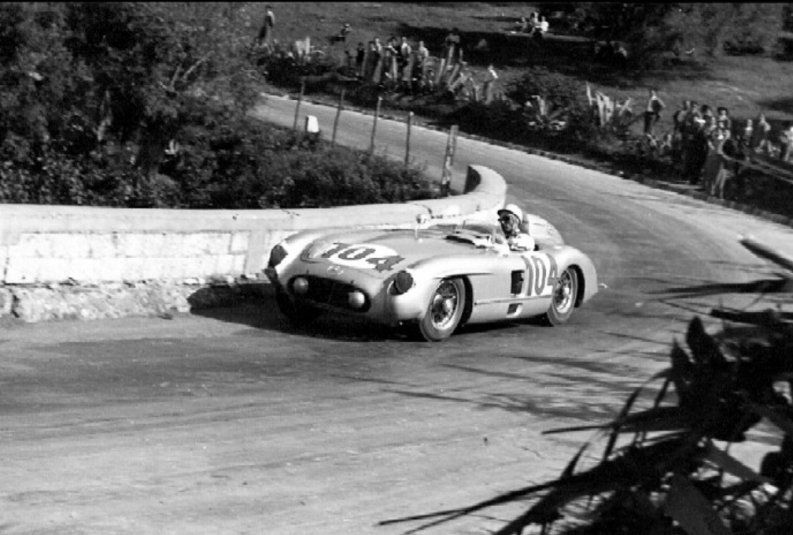
In 1955 the Targa was included in FIA’s (Fédération Internationale de l’Automobile) World Championship series, together with notably the 24 hours of Le Mans, the Mille Miglia and the 12 hours of Sebring. This established the Targa as an event known worldwide and it was moved from spring to autumn as the last race of the 1955 series. Unfortunately the whole series that year would be overshadowed by a terrible accident in Le Mans, when French driver Pierre Levegh crashed his Mercedes Benz 300 SLR into the grandstands, killing himself and 83 spectators. MB decided to stop their racing activities after that season, but still came to the Targa with three cars and that of Stirling Moss ending as winner after having led the first half of the race, then driven off the road and being puhsed back onto it by spectators, and then catching up with Juan Manuel Fangio towards the very end. Having won the F1 championship the same year, Mercedes ended their race participation for the coming decades in style!

Stirling Moss fighting the laws of physics in Mercedes’ last victory in 1955

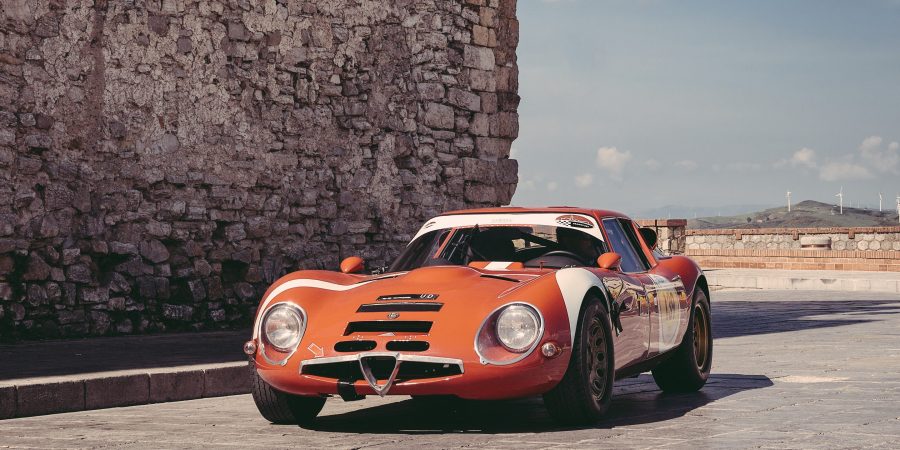
The Targa would be run in most years over the coming decades, mostly with Italian cars from Ferrari, Alfa Romeo and Maserati dominating the action, but with Porsche also making a name for itself. A variety of car types were allowed to participate through the years, with monocoques being banned in the early years but dominating proceedings in the late 60’s and early 70’s. It was these faster cars that finally rang the bell for the Targa as it was impossible for the organizers to meet the more stringent safety standards on the local Sicilian roads. The Targa lost it World Championship status after 1973, but remained as a local race over the coming years. It was then changed to a rally which from 1984 would be part of the European Rally Championship. Since the late eighties the Targa has also become a very popular event for historic cars which it remains to this day, with the 2023 event taking place early May.

The historical race remains very popular to this day

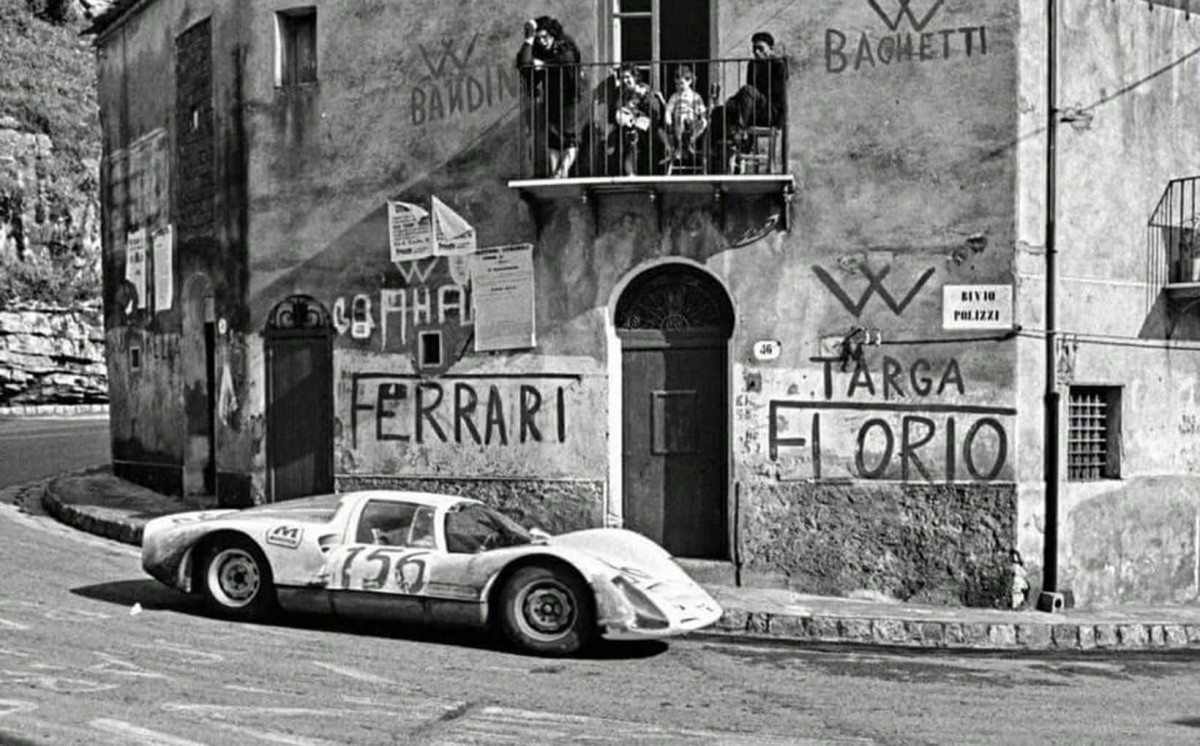
If you travel to Sicily and go to Cerda, you will still the run down tribunes as a reminder of the Targa’s glorious past. You will no doubt wonder at the average speed over 100 km/h that the drivers managed to achieve on these roads already back in the 60’s, before some of them were paved. but you will wonder far less at the fact that there were numerous accidents through the years, some of them unfortunately deadly. You will still see some grafitti on the walls in support of some of the drivers from the 70’s and 80’s, and you can also visit the Targa museums of which there are two, in Cerda and Collesano. The Targa Florio was the last of the great open road races and a perfect representation of just how genuine, unpredictable and exciting motor sport was in the old days. Vincenzo Florio’s contribution to the pageant of motor sport is thus firmly rooted in its history!

The graffitti from the old days has proven to be sticky!

Classic races: the Carrera Panamericana!

In the series on classic races from the crazy days of motorsport, we’ll today travel to Mexico and learn more about the legendary Carrera Panamericana, a race that was cancelled after only five years, that is one of the most deadliest in motorsport history, but the name of which has also inspired two world-leading firms in naming their products sine more than 50 years. Unfortunately I’ve never been to Mexico which would certainly be an advantage in trying to describe a race as colorful as the Carrera in all its dimensions, although that would probably still be a problem to do in writing. Let me give it a try though, because the Carrera Panamericana (PC hereunder) certainly deserves its place among the truly classic motorsport races!

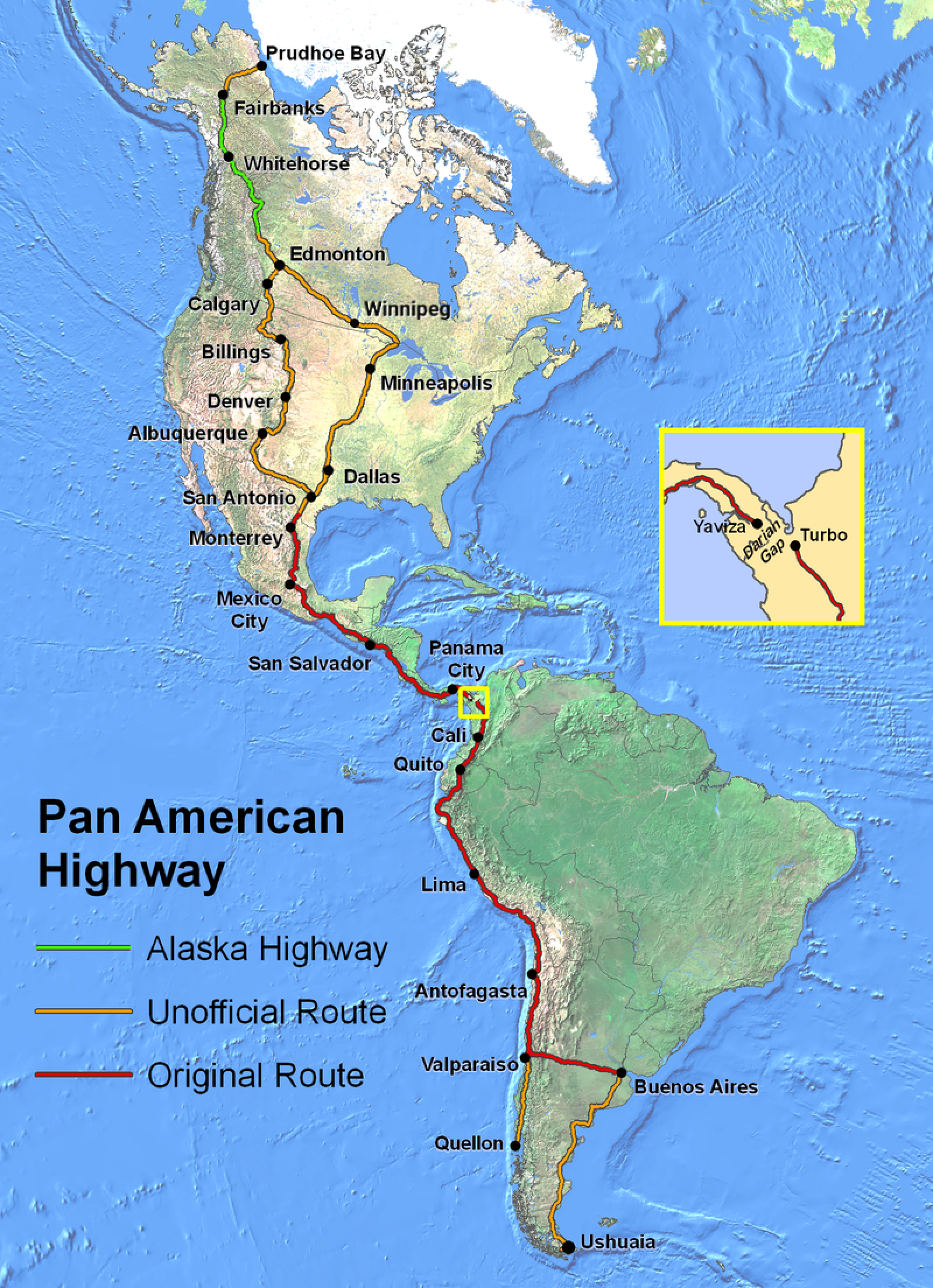
The PC was conceived as a road race by the Mexican government to showcase the opening of the Mexican stretch of the Panamerican Highway, a 30.000 km long highway stretch linking North and South America from Alaska in the north to Ushuaia in the south of Argentina. Well, at least almost linking, because in the middle between Panama and Colombia, there’s a break of around 100 km where there’s no road at all and you need to engage in a dangerous, four-day hike through the rainforest (without your car…) to link the two parts. Still, the Mexicans were really proud o having completed their part, and decided to celebrate it with a race.

The (almost) full stretch from north to south

In 1950 the first edition took the drivers from Juarez in the north of Mexico down to Chiapas in the south on the border with Guatemala, over a total distance of around 2000 miles (3200 km). Considering we’re back in 1950 there was obviously no 2000-mile race stretch available, so cars were driven on completely public and open roads, just like in the Mille Miglia we looked at a few weeks ago. In Mexico at the time and maybe still, many of those roads were made of mud, they cross mountains over passes and vast stretches of desert among cacti, over passes and through valleys. Then as now it’s also warm in Mexico, at times really warm, but at other times really cold as well, and none of this made the whole thing easier.

One of few color pictures – a Porsche during the PC

The first race in 1950 was made up of adventure-hungry amateur drivers from around the world, without any fuzzy rules whatsoever – the first car to cross the finish line was the winner. For some reason the first race was limited to five-seat sedans, a rule that was however changed in subsequent years. The race was anyway off to a strong start in the first year, with no less than three drivers and one fan dying… Over the coming years it would earn a reputation as perhaps the greatest motorsport adventure there was, attracting both brands and drivers that were more professional than in the first year. Until the original race came to an end in 1954, drivers like Juan Manuel Fangio, Carroll Shelby and Phil Hill had all competed in the race, with Fangio being the only F1 world champion to have won the PC as well.

1952. The three men in ponchos are Hans Klenk, Karl Kling and Hermann Lang, all successful Mercedes drivers in the Carrera Panamericana.

Just as in the Mille Miglia, there is a great number of stories that could be told about incidents during the different races. A great one is from 1952 when Mercedes had entered three 300 SL’s in the race, one of which was driven by Karl Kling with co-driver Hans Klenk. Taking a fast right-hander, a vulture smashed headlong into Kling’s windshield with the glass cutting Klenk’s face quite badly. The pair carried on regardless and still managed to take the win by half an hour. Another far less entertaining incident was during the 1953 race, the deadliest of all, with a total of eight spectators dying, including six who were hit by a car as they tried to help another car that had tumbled down an embankment. Just like in the Mille Miglia, one of the main problems was that the average speed climbed steadily every year and was by the end close to 160 km/h. That’s quite a lot when you consider the muddy roads, the mountain passes and deserts, and the 1950’s technology!

Klenk and the 300 SL after the encounter with the vulture

A total of 27 participants died during the five original PC races. That’s a truly astonishing number, but it fades somewhat (but not much) when you consider it’s estimated that over 2 million spectators watched the race on the roadsides between 1950 and 1954. What made Mexican authorities cancel the race was however not the race itself, but rather the dramatic accident in Le Mans in 1955 that killed 83 (!) people. More than 30 years later in 1988, the PC made a comeback as a professional race over a completely different stretch that is driven to this day, but that’s also a completely different story.

The Italian Maglioli won the last race in 1954 on his Ferrari 375 Plus

There we go – the Carrera Panamericana was perhaps the most dangerous of the classic motorsport races in the roaring 50’s and was cancelled after only five years. It was enough to make its reputation well beyond the race though, most notably of course with Porsche choosing to use the word Carrera, Spanish for race, to name first the 911 Carrera RS 2.7 and today, their 911 base models. The other company that took a liking in the name is the Swiss watch manufacturer Tag Heuer, that would obviously later also team up with Porsche with several dedicated watches, using the Carrera name. Time-keeping was certainly less precise during the PC than if Tag Heuer had handled it, but then again, that was never the main issue with the legendary, Mexican motorsport adventure!

“Luck, for a racing driver, is to survive”

Hans Herrmann, motorsport legend and Carrera Panamericana driver for Porsche in 1953 and 1954

Classic races: The Mille Miglia!

This week sees the start of a new section on the blog called “Classic races”, where at more or less regular intervals, the idea is to tell the story of some of the most famous and legendary classic car races of the last century. As is often the case the idea came out of nowhere, or at least not following any logical path. More precisely, last week when walking down the street, I saw a grown man in a business suite on a non-powered, two-wheel scooter, kicking himself forward on the sidewalk and wearing – a helmet. It struck me how in spite of fatalities from most activities being lower and longevity obviously higher than at any time in history, in the perception of some people, the world has become incredibly dangerous. Somehow that made me think of cars (never far away…) and especially classic cars, and thereby of a time when the drivers indeed risked their lives for the sport and cars they loved. In other words, classic car races!

I’m sure you could have a lengthy argument of what race you should start such a section with and I certainly don’t intend for this section to follow any kind of order of importance, but somehow you need to start with one of the most well-known ones, which at least from a European perspective is no doubt the famous thousand miles through the northern half of Italy, more well-known as the Mille Miglia (hereinafter also MM)! Given the 2022 race took place in the second half of June this may ring more than one bell, but today’s race is not the same as the original one, so let’s take things in good order.

Neither helmets, nor paved roads

It was back in the 1920’s when, as part of the strong rivalry between the two northern Italian cities Milan and Brescia, the Brescians weren’t happy to see the completion of the Monza race track close to Milan in 1925. Some resourceful merchants from Brescia got their heads together and thought up a race that would be driven on (unprepared and unpaved) roads rather than on track, but be of the same length as a Grand Prix at the time, namely 1000 miles (1600 km). Why on earth would Italians think in miles you may think, but actually the old Romans used miles as measure, so it’s indeed a measure which at least historically has been used in Italy as well. The race would start in Brescia, lead to the eternal city of Rome before ending back in Brescia, along a route as figured out by two of the more enthusiastic merchants, Aymo Maggi and Franco Mazzotti.

Aymo Maggi, one of the four men who gave us the Mille Miglia!

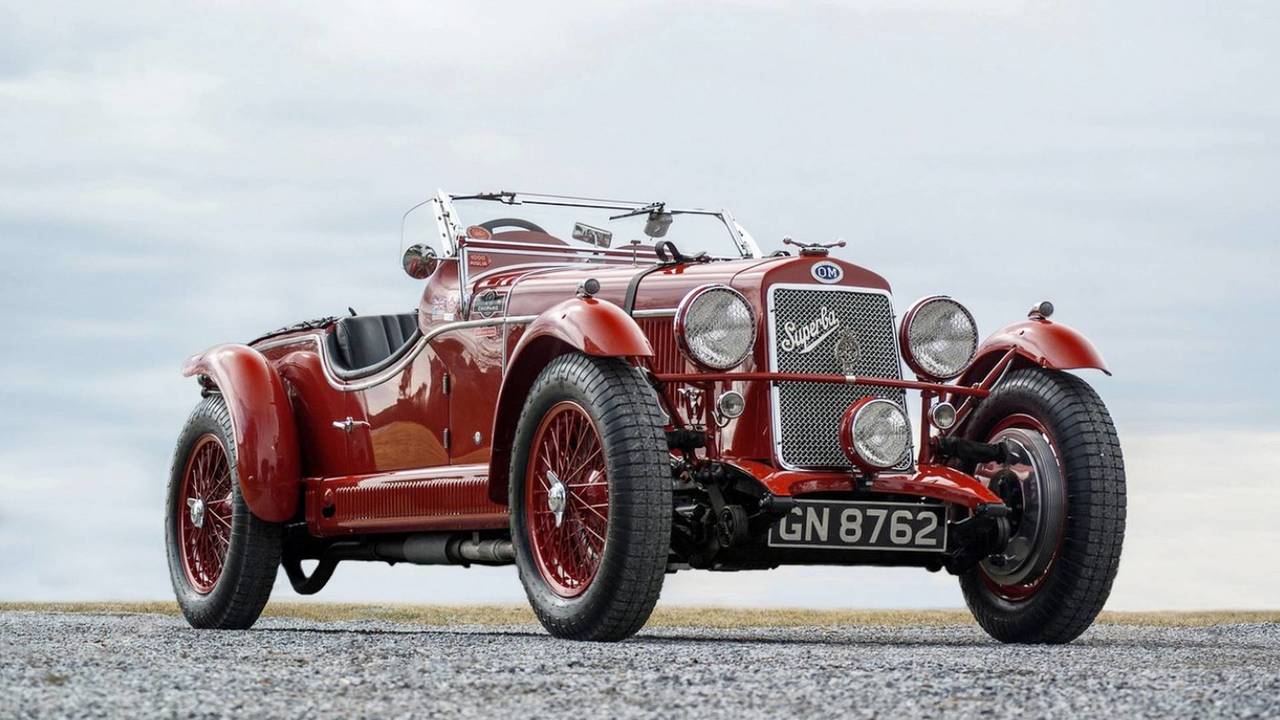
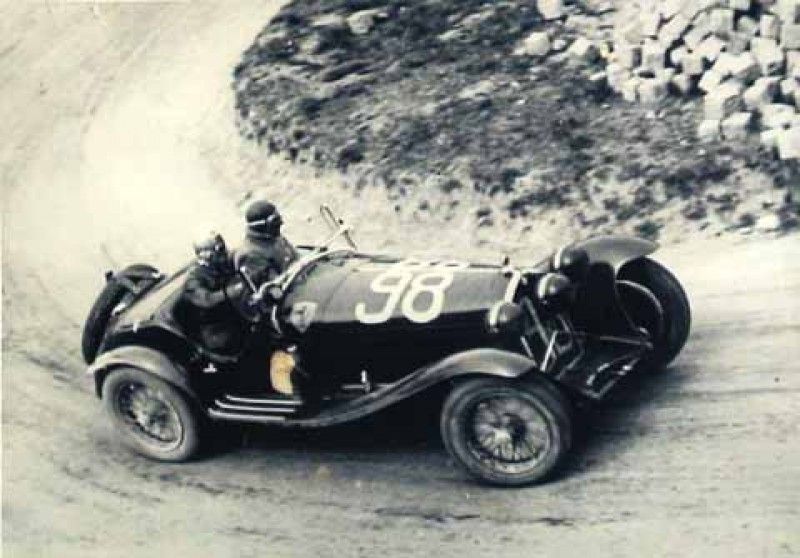
Two years later in 1927, a total of 77 cars took part in the first Mille Miglia. Ferdinando Minoia and Giuseppe Morandi needed a bit more than 21 hours to win the first race in their OM 665, thereby managing an average speed of 77 km/h. Not bad for the 1920’s, but it didn’t take more than three years for a certain Tazio Nuvolari from Mantua, also known as “The Flying Mantuan”, to increase that to over 100 km/h. The Mille Miglia was however not reserved for sports cars with both smaller cars such as the Renault 4CV and family cars taking part as well. In a logic that would arguably not be applied today, the slower cars started ahead of the faster ones such as to reduce the time officials had to spend along the route. This was certainly one, but not the only cause of accidents, of which a serious one in 1938 led to the original route being changed to a shorter 165 km route driven several laps in 1940 (no race took place in 1939). After the war however, the MM went back to the original route – having seen the horrors of war during five years, the general view was that in comparison, the original route was child’s play!

The OM 665, winner of the first Mille Miglia in 1955

When the MM resumed after the war it remained, as in previous years, very much an Italian story. In most years both the winning cars and their drivers were Italian. In the years before the war it was Alfa Romeo that was most successful with the 6C and 8C, after the war Ferrari had most success with various models. Among drivers, Tazio Nuvolari is perhaps the most legendary, and in some years the route was even changed in his honour so that it went through his home town of Mantua. This is not to say that foreigners didn’t have some success as well; Juan Manuel Fangio participated in the race but never won, and the most well-known foreigner is no doubt Stirling Moss who won in 1955 in the Mercedes 300 SLR. That was only two years before the last Mille Miglia race in 1957 when a tragic accident killed not only the driver and his co-pilot but also 10 spectactors of which five were children. This meant the end for the original Mille Miglia race.

The Flying Mantuvan Nuvolari in full action!

As a largely pre-WW2 car race, there’s obviously a number of stories to be told from the young age of automotive sport. One of the best ones is certainly from 1954, when German driver Hans Herrmann participated in a Porsche 550 together with co-driver Herbert Linge and decided to save some time at the sight of a rail crossing – and an approaching train. Given the 550 was quite low, Herrmann accelerated and both Linge and him sunk down in the seats such as to be able to pass under the barrier… Stirling Moss’s victory in 1955 is also a story in itself since he managed to set an all-time speed record, averaging close to 160 km/h. Given the non-paved, dwindling roads of the race with hundreds of spectators alongside them, that remains difficult to understand to this day. His co-driver during the race was the journalist Denis Jenkinson who later in the magazine Motorsport told the story of what was in his words a terrifying experience. If you’re curious, you’ll find it here!

An artistic view of Moss and Jenkinson in the 1955 race

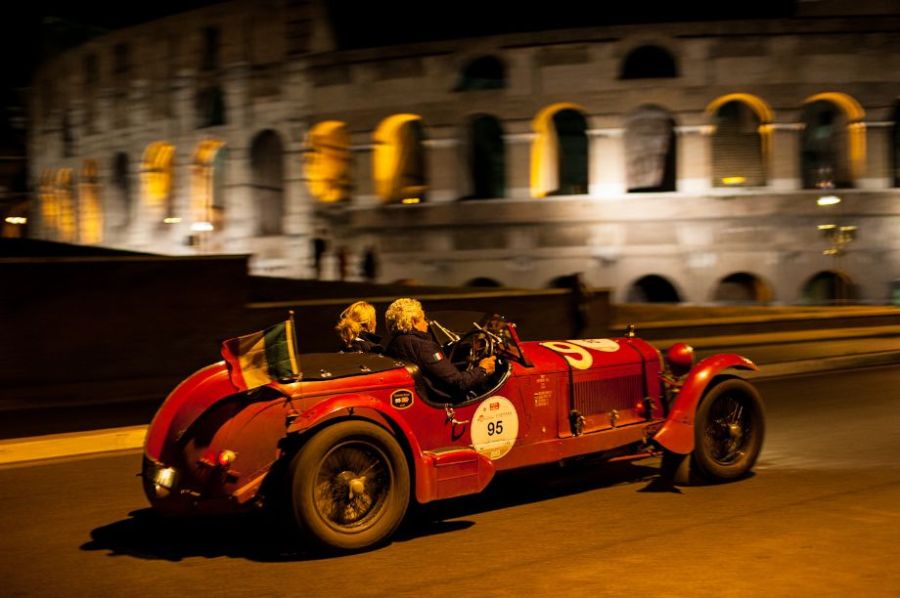
In 1977 The Mille Miglia was revived as a tourist race with the current, annual format being in place since 1987. The race is today open to cars that either participated in the original race, or are of the same type. Either or, needless to say that these are worth quite a lot of money these days and the race has thereby become a wonderful exhibition of automobiles from a bygone era. The initial technical inspection in Brescia on the eve of the race is something not to be missed if you happen to be in northern Italy around this time of year! Every year around 400 cars take parto out of around 1500 applicants, and the route still leads from Brescia to Rome but varies a bit from year to year. As a tourist rally it’s no longer about outright speed but more about typical classical car race moments such as regularity and navigation. The risk of accidents and need for helmets has thereby diminished heavily, and it’s also highly improbable that any driver chooses to cross a railway under the barrier!