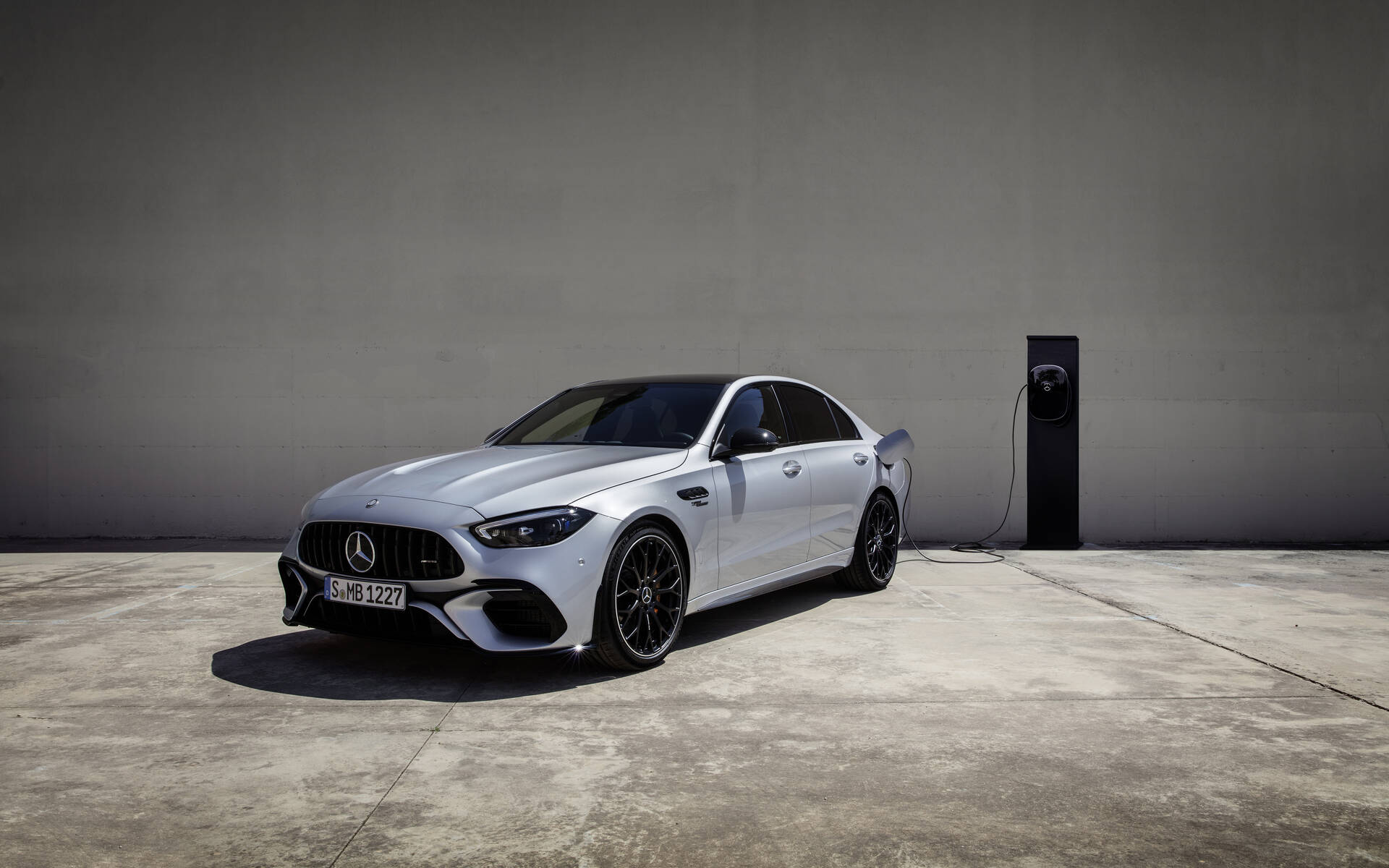
The world’s best EV? Driving the Taycan 4S

In a post back in August that you can find here. I made a very unscientific comparison of the depreciation of EV’s vs traditional ICE cars. The conclusion was on one hand that EV depreciation is indeed as bad as it feels, but also that ICE’s depreciate quite heavily as well and seemingly, far more so than they used to. I’m pretty certain that most of you reading this blog agree that “peak car” is pretty far behind us, and the conclusion from the comparison therefore seemed to make the case for hanging on to your existing jewel for a while longer.

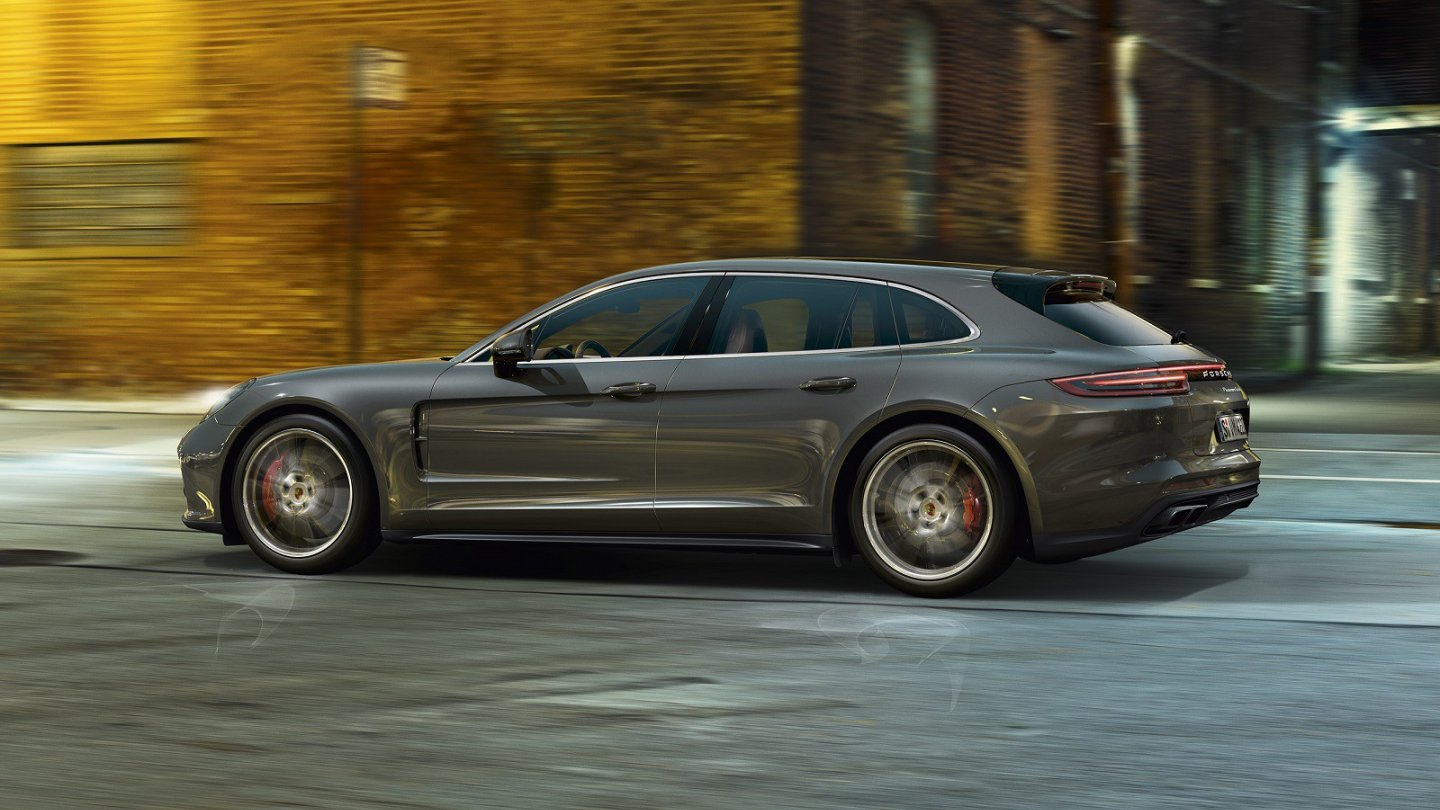
That said, the thought has been nagging me that I may be missing out on something. After all, billions after billions has gone into the development of this new car concept referred to as of EV’s, and these cars cost half a fortune as new. Surely it must have led to something that is the next step in automobile development? To me, the car my thoughts have focused on is the Porsche Taycan, hailed by many as the best EV out there, and no doubt the best-looking.

When talking about the Taycan, like most people I initially preferred the station wagon. With time though, the sedan has kind of grown on me and today, I find it at least as stylish as its equally good looking EV sibling, the Audi e-tron. As mentioned in the post back in August, although prices have started to stabilize, there’s definitely still deals to be made, so when I saw a well equipped Porsche Taycan 4S being advertised by a Porsche dealer close to me for CHF 64.000, from an original price of close to CHF 180.000 four years ago, I figured it was worth checking out.
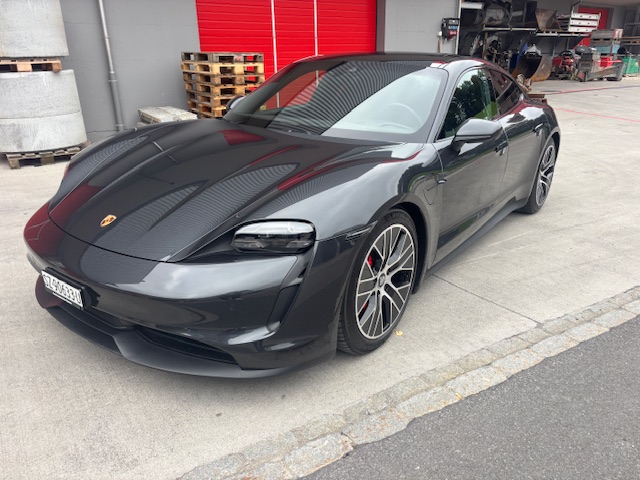
It definitely has the Porsche look!

Given this is not an EV blog, it’s perhaps useful to remind us of the history of the Taycan. It was launched as a 2020 model in late 2019, initially as Turbo and Turbo S (leading to a pretty meaningless discussion on how on earth they could be called Turbos when they didn’t have one…), later complemented by the 4S and the entry level only called Taycan. The station wagon was launched a year later on an extended platform, either as a sleek wagon or as Cross Turismo with a slightly more rugged look. At least here in Zurich, it’s the Cross Turismo you see most of on the road.

The Turbo and Turbo S came with the so called Performance Plus battery as standard, a 93 KwH pack giving them a theoretical range of around 430 kms. The 4S however came with a smaller, 79 KwH pack as standard, with the larger pack being optional. Given the smaller battery pack only has a realistic range of around 350 kms, that option is pretty critical for having any kind of secondary value on your Taycan. The good news is however that all Taycans run on an 800V platform, meaning charging times are among the best in the business. The bad news, which depending on where you live is pretty bad indeed, is that they’re not compatible with the Tesla superchargers.

The boot space behind the relatively small opening is not very big

The Taycan 4S I tested at my local Porsche center came from one previous owner with around 60.000 km on the meter. Importantly, given the many electronic issues many Taycans suffered from initially, the car was Porsche Approved with a 12-month guarantee. As can be seen, it was dark grey on black and quite well equipped with the larger battery package. In this configuration, it weighed in just shy of 2.600 kgs, without driver… The exterior colour suited the car well, but the black interior made the whole thing a bit somber. That said, black is the best colour if you want to hide plastics of which the Taycan’s interior has a lot, although they seem to be of better quality than on some other brands.

Walking around the car (which was parked next to a 992.1 on one side and my BMW 540i Touring on the other), it was easy to see that the Taycan was far more comparable in size to my Beamer than the 911. Checking the numbers later, it’s actually 2 cm longer than the G31 BMW at just under 5 metres, and 10 cm wider, at just under 2 metres width. Sitting behind the wheel, you also have a feeling of a big car.

They’re plenty of space in the front, far less so in the back, and not very much at all in the boot, although the Taycan has a relatively useful frunk to complement it. The interior otherwise looks nice and feels well put together, and given how well its screens are laid out and how good the tactile response is, to my surprise I didn’t miss physical buttons. Screens will never be better, but in the Taycan it’s at least almost as good.

A fine interior. Lots of plastic, but overall a solid feel.

Taking off means pressing the start button left of the steering wheel where traditionally the Porsche key should sit, and then a lever on the right hand side. The immediate feeling which, was then confirmed over the following drive, is again that of a big car that it takes some practice to place correctly. It feels very well balanced between front and rear, no doubt helped by the low center of gravity, but it’s nothing you throw into a corner like a 911. The steering is ok, although those complaining about the steering on the 991 generation that I mentioned in my post on the 911 Turbo S would be apalled by it, as it feels very synthetic and not that precise. I’d claim the steering in my 540i is better overall.

Even though the car is heavy, the 563 hp from the two electric engines (520 hp with the smaller battery pack) are plentiful, and no one needs more power than this. Unlike most EV’s, Porsche also uses a two-speed auto box sitting on the rear axle, with a short first gear to preserve the full acceleration and a longer second gear for higher top speed than a one-speed box would allow for. This also makes the electric engines run more efficiently as high speeds, saving energy – which again makes you wonder why the very sleek car doesn’t have a better range? The box is only noticeable when it shifts under hard acceleration, but that’s also what Porsche wants, trying to give the Taycan more of a mechanical feel.

The technical setup of a Taycan. An advanced – and heavy – thing…

The talented engineers in Zuffenhausen have also chosen a different braking and regeneration (regen) setup than most EV’s, again trying to make the Taycan feel more like a “normal” car. If you lift off the accelerator, the car will only coast (roll freely) with no regen, and thus no braking. When you brake however the regen kicks in fully, so that it’s only under heavy braking that you use the actual brakes. I would say that whether it was regen or actual braking, this is where you really feel how heavy the car is. The braking is solid enough, but it feels like the brakes have to work pretty hard to bring all of the 2.6 tons to a standstill. The km’s left in the range did however climb a little after some pretty heavy braking, so I guess it works.

This leads to the same conclusion as always with EV’s, that weight is the elephant in the room. My 540i station wagon weighs just under two tons or around 600 kgs less than the Taycan, a difference which roughly equals the weight of the battery pack. The Taycan is a fine car that drives really well for an EV, but it’s no sports car, and whoever calls this an electric 911 doesn’t know what they’re talking about.

Then again, that’s probably not a fair comparison given it has four seats and a decent luggage space. So what do you compare it to? To keep things simple and staying with BMW, if you want a sports car, an M3 or an M4 of a similar age are of similar size and price. They have about 100 hp less, but also weigh close to a ton (that’s 1000 kgs!) less. And if it’s more the GT aspect you’re after, a 4-series coupe in an equally stylish body will do the job with less power, but also far less weight. Of course there are other comparable models from Merc, Audi and others, and all are in the same price range.

As an example, a 4-series grand coupe is yours for even less money. In every aspect a better car.

Would I consider a Taycan? If for some reason I was forced to buy an EV, a used one like the one I drove would probably be a good choice. Whoever paid more than EUR 180.000 for it initially must be out of their mind or really convinced they were saving the planet (which, talking about EV’s, boils down to the same thing…). Therefore, unless someone forces me, I’ll just note that although impressive, the Taycan doesn’t move the needle neither in automobile terms, nor in Prosche terms. It’s not better, and much less spacious than my G31 540i Touring of the same age, or other comparable ICE cars.

The only needle the Taycan moves is that of the scale, and no weight-loss medicine beyond plastic is on the horizon for EV’s. That’s a nut even Porsche can’t crack. Driving the Taycan did one thing for me – it put the nagging feeling that I may have missed out on something to rest. When I take the trouble to test drive a car, I usually come away with a general feeling that it’s more exciting or better than my, by all means excellent 540i. The Taycan was the exception to the rule.

The best of both worlds!

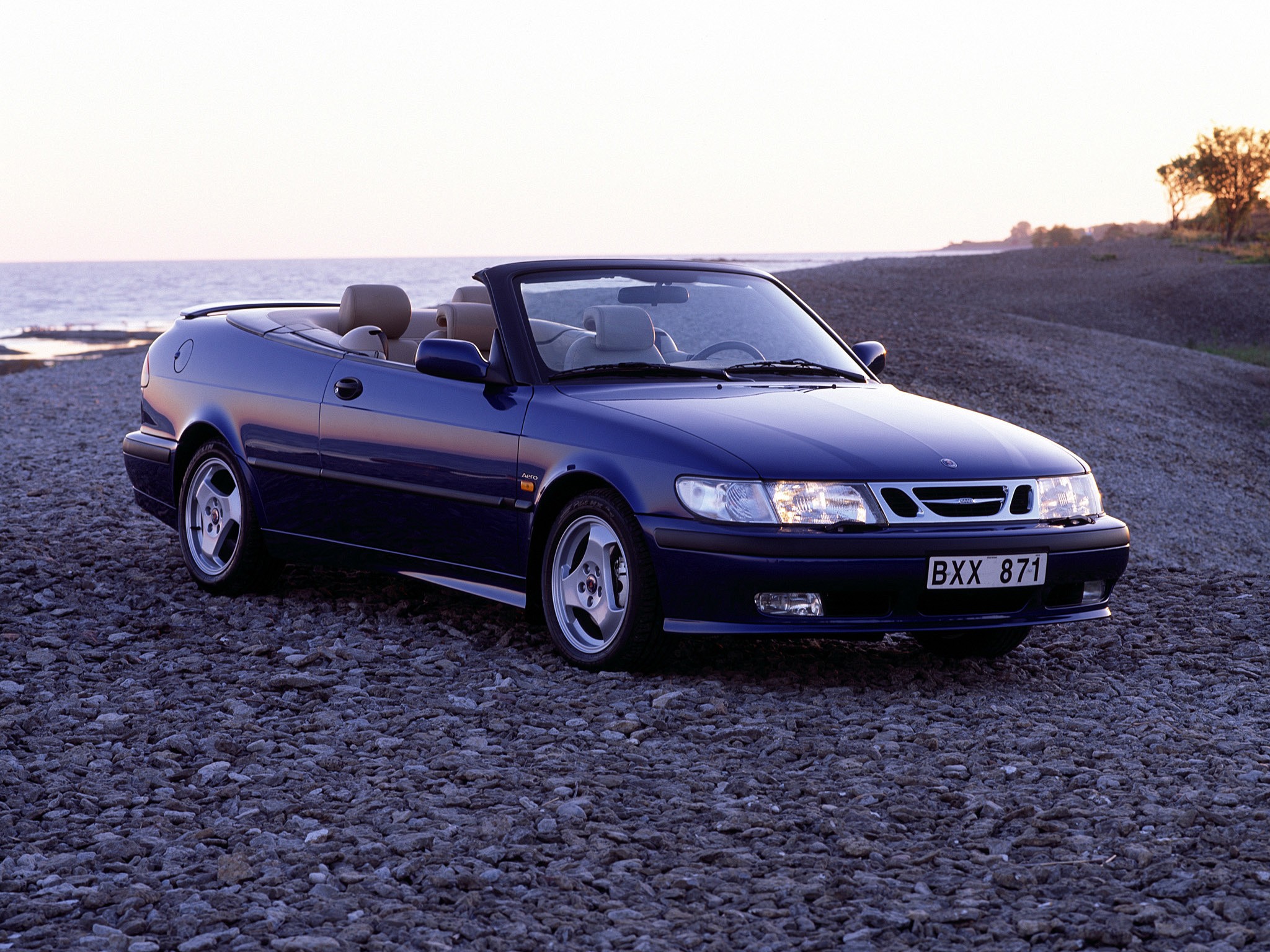
The last time I bought a new car was in 1999. You could also say it was last century, to make it a bit more dramatic. I remember it clearly, firstly because the car in question was a beautiful, dark blue Saab 9-3 Convertible with a beige leather interior, but also since it was only shortly thereafter that my wife became pregnant with our daughter. Judging by comments from friends and family, the normal course of action would have been to say “too bad”, sell the convertible and buy a family station wagon. I didn’t.

Instead, together with my better half, who to her credit fully supported me in this, we set about finding a baby pram that when folded, would be small enough to go into the Saab’s boot, at least with the rooftop up. I seem to remember that the one we ended up with was rather expensive, but if you folded it properly and removed the wheels (of the pram that is, not the car), you could just about squeeze it into the boot.

More practical than you would think!

The point here is not to further investigate the baby pram market. However, when we eventually bought a more traditional family car, it was the first of many to follow on the used car market. My reason for this is the same as for most people: I’ve mostly bought my cars privately and have wanted to avoid the massive depreciation all but a very small number of exotic cars see in the first two to three years. The smell of a new car is certainly great, but to me, it hasn’t been worth 30% or more of the car’s price.

When talking about depreciating car values, in the last years the discussion has mostly been about EV’s and the astronomic depreciation they saw in the first 2-3 years, i.e. from 2019-2020 and onwards. This was certainly an effect of the highly inflated prices many of them were sold at as new. On one hand they were more expensive to produce, but carmakers also knew that many of them would be leased by companies, making price is less of a factor given all the incentives companies in most countries were handed out by the state, i.e. you and I.

Three years later, corresponding to the typical European lease period, many of them hit the used market at the same time as the popularity of EV’s started to crumble. Today, you can easily pick up an early 2020 Taycan for 30% of its price as new. The question is rather if you’re brave enough to do so, given quite a long list of issues those early cars had, and what even in EV terms was quite a poor range.

An early Taycan may be cheap, but it’s a car for the brave (without range anxiety…)

However, although it’s been less discussed, the depreciation of traditional internal combustion cars (ICE’s) hasn’t made anyone happy either. When I sold my Saab convertible in the early 00’s after about two years, I remember losing roughly 30%. That’s far less than what the typical ICE loses today over a similar time period. And given that, now that we’re a few years further down the line, does it still hold true that EV’s depreciate more in the first years than ICE’s? In a very unscientific way, that’s what I’ve spent part of this week looking at.

For this exercise, I’ve taken an EV and an ICE in the same category and from the same brand, produced in 2022-2023, and with less than 50′ km’s on the clock. EV’s have a lot of horsepower, so I made it a condition for the ICE’s to have around 500 hp as well, but steered clear of the M-cars and AMG versions. For the EV’s, I made a theoretical range of at least 400 km a condition, knowing that will in reality be far less. Equipment-wise, I tried to get comparable cars with similar equipment levels.

Looks weren’t part of the criteria – there wouldn’t have been enough EV’s to choose from otherwise…

I looked at this across four categories: SUV’s, four-door sedans, sports coupés and shooting brakes. That also means that I made it a condition that the same brand had both an ICE and an EV in the same category in 2022-2023. I picked the BMW X5 and iX for the SUV category, the MB EQS (sedan) and S580 for the sedans, the Audi e-tron GT and TT RS for the sports coupes, and finally the Porsche Taycan and Panamera for the shooting brakes. And before you tell me shooting brakes isn’t really a category, the reason for including them is that both of them look bloody good! Interestingly, both also sell far better as shooting brakes than as sedans.

Before going into the results, this whole exercise is obviously not more than an indication. The cars aren’t perfectly comparable, as notably the exact equipment may vary. You could obviously compare models from different brands, but that makes it more complicated as brands depreciate differently. And you can certainly argue that an e-tron is not very comparable to a TT, given it’s a proper four-seater. That’s however the best I could think of given the condition of having an ICE and an EV from the same brand. The prices are my estimates of what you would have to pay after a bit of negotiation, and they are from the Swiss market. However, that’s usually a good approximation at least for the rest of Europe.

What the above results show is that all EV’s in the sample from 2022-2023 have indeed lost more value than their ICE counterpart, but that the difference isn’t huge, and smaller than a couple of years earlier. That’s however not because EV’s have become more stable in value, it’s rather the ICE’s that depreciate faster than they used to. What also seems to be true though, is that it’s not only ICE’s that eventually find a floor – as said, you can pick up a 2020 Taycan at 30% of the price as new, but those values seems to have stabilized now, five years later.

The Audi e-tron and BMW iX have certainly not been good to your wallet if you’ve bought them privately, but in both cases, part of the reason is an inflated price as new. That said, the regular BMW X5 is also not a car you would have wanted to buy as new. The Taycan has retained about half its value making it the best EV over the period, and the Panamera is the only car that has held its value significantly better than the others.

The Panamera Hybrid is arguably a better choice than all the others.

Where does this take us? Well, as little as I wanted to back in the early 00’s, I still wouldn’t buy a new car today, if it’s my money we’re talking about. That’s especially true if it’s an EV, but that said, even EV’s eventually see an end to their depreciation. So if it’s an EV you’re after, I would buy a Taycan or an e-tron, but rather one from 2022-2023 than the first two years. However, if like most, you drive a lot of short distances but don’t want to buy a second car for your longer trips, then I would argue that the best choice is none of the above, but rather a modern hybrid.

Taking the Panamera hybrid from 2022-2023 as example, it has a depreciation that is no different to the ICE version and offers you around 50km of electric range, whilst also lowering your fuel consumption overall. Some other hybrids will have even better electric ranges. The downside is extra weight over a regular ICE, but automakers have become very good at hiding that, especially the one from Zuffenhausen. Finally, if you only drive long distances, then nothing has changed and a 2-3 year old ICE remains the best choice!

When the cold reality catches up…

Dear fellow car enthusiasts, firstly a Happy New Year, I sincerely hope that 2025 will be a healthy and successful year for you all! That’s certainly not what’s happening in LA as I write this and my thoughts are with any of you who may be directly or indirectly affected, sincerely hoping the fires get under control soon and that 2025 improves from there!

As we set off on a new year in the wonderful world of cars, I’m thinking about a few changes to the format of the blog that you may discover during the year. One thing you’ll see me do is become a bit more flexible in the format and perhaps also the regularity of posts. The idea is not to drive less, but rather to do so in a variation of long and short, such as to be able to better “seize the moment” when for once, I get my phone up quickly enough to catch that wonderful car just passing. We’ll see how the year develops, but before that, we’ll start it off in the spirit of what we’re seeing in various areas right now and that you could call reality catching up. In this case, it’s yet another illustration of the wonders of electric mobility, but here in the form of an example I had trouble believing myself.

The non-Swedes among you will most probably never have heard of Malung, an unspectacular small town in the middle of the country. That would probably go for many Swedes as well if it weren’t for the fact that it’s located about 350 km north of Stockholm, on the way to some of Sweden’s leading ski resorts. 350 km is obviously close to the true (not claimed) range of EV’s with large battery packs in winter (best case really, since there’s no motorway leading to Malung and the traffic typically rolls at 80-90 km/h, otherwise they wouldn’t even get this far), and what the picture below shows is a part of the very long waiting line to one of Malung’s two Tesla charging stations last weekend.

This is not a joke – but it’s only a small part of the looong waiting line…

What you can’t see from the picture is on one hand the full length of the line (you’ll have to resort to this link for that, scrolling down a bit in the article) but also that the outside temperature was -20C, and that at one point more than 150 cars were waiting up to 3-4 hours. The issue is not only that the EV range falls even quicker at -20C, but also that EV’s don’t heat up in the same way as an ICE does, meaning the interior cools down much quicker. So in other words, you had dozens of families waiting for hours in sub-zero temperatures to charge their Tesla. What a pleasant way to start or end your vacation!

I can easily imagine some “why on earth did you say we should buy an EV??” going in that line in the cold, but If you think this has led to a big re-think on electric mobility in Sweden and the realisation that EV’s may have their place, but not as a viable transportation for long winter journeys, then think again. Tesla has an ongoing conflict with a labour union in the country, so the debate is instead focused on the company’s unwillingness to come to an agreement with the union, and that being the cause of the issue. To put this in context, around 10.000 people live in Malung, so conflict or not, I think it’s rather improbable that Tesla would build another few charging stations in a small city in Sweden for a few hundred cars when demand is at its peek, three-four weeks per year, don’t you?

This is what Sweden can look like in the winter. Not EV-friendly.

The issue is of course another. If it took 30 minutes to fill up an ICE and you needed to do so every 350 km, then we’d see lines at petrol stations as well during the holidays. This is thus another fundamental downside of EV’s, to add to an already long list. This particular weekend is one of a handful of similar outliers per year in terms of peak demand, but they will continue to happen, and as the number of EV’s increase, charging stations will not do so exponentially, as that is not economical. In other words, expect waiting times to become worse, not better.

The local who filmed this whole thing didn’t queue up with the rest as he drives a diesel and according to the interview in the article, has no plans to change to an EV anytime soon. The title of the article reads “the kids are cold”. I would think that goes for the driver’s love of the recently acquired Teslas as well…

Fat cats and tweed jackets!

I travel quite frequently to London on business and on my last trip a few weeks ago, I had some time to escape the work routine and actually enjoy the city a bit. Of course, London is just as little representative of the UK as New York is of the US. Still, the things we consider as British are very present in London as well: rain for one, especially at this time of year, but then also the pubs, the Guinness they serve, the men in tweed jackets who drink it… And then, there’s of course the cars. Rolls Royce, Bentley and Aston Martin certainly rank as more fancy, but the brand most people associate with the UK, and also the one most of us can reasonably aspire to, is Jaguar.

Rule good old Britannia!

Unless you’ve lived under a rock the last two weeks, you’ve no doubt seen the storm erupting over the video announcing Jaguar’s re-branding. To say that it’s been criticized is a serious understatement. Everything, from the androgyne AI-like people, over the fact that no cars are shown, to the new logo: Jaguar lovers (of which all of a sudden, there seems to be a suprisingly large number) have been on the barricades over the sacrilege of destroying Jaguar’s image and by extension, the Britain they cherish. And since we’re on video clips, this one illustrates that view pretty well.

You certainly don’t need me to write yet another post on how terrible the rebranding is, there’s already plenty of those around. And actually, even though I believe Jaguar’s (I’ll still write that with a capital J, thank you very much) days are counted, I’m not sure the rebranding is the cause. Because just as little as the UK can today be summarized as a pint of Guinness in a tweed jacket or whatever way Jeremy Clarkson would like it to be, Jaguar was very far from a healthy car brand to start with. And, whetheryou like it or not, Britain has moved on, as has the rest of the world.

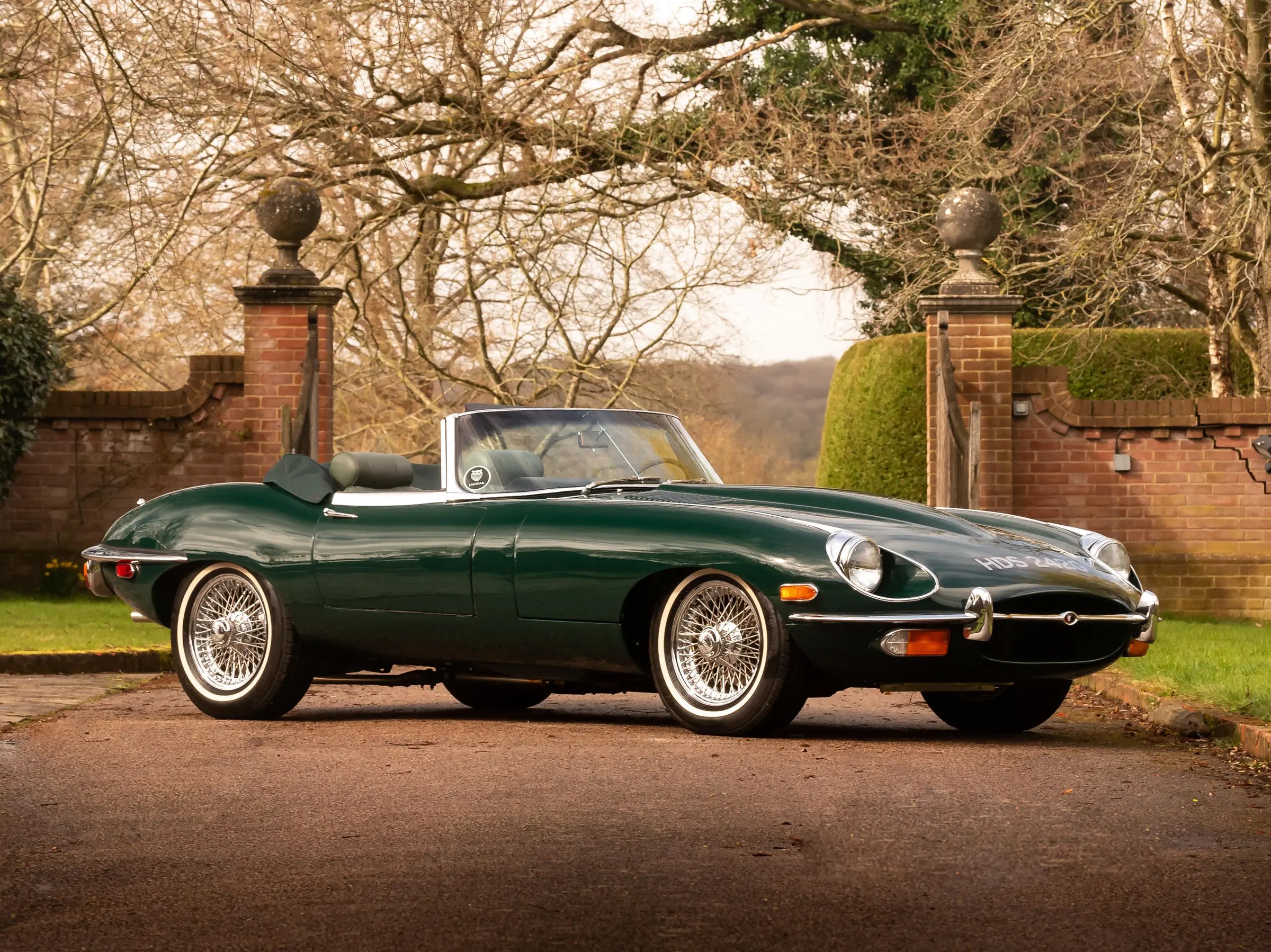
This was a long time ago.

Jaguar is part of the Land Rover group, which in turn is owned by the Indian Tata Group. However, contrary to Land Rover itself who under Tata has profited, and continues to profit from the SUV trend, Jaguar’s model line-up hasn’t really done so. There were two small SUV’s, the E-Pace and the F-Pace, both of which are quite alright (and one of those especially so, more on that below) but also quite far from the British spirit described above and also from the the poise of the Land Rover line-up, which I guess you could call less understated and far more in your face design-wise, which seems to be what people want.

Then there was the I-Pace, an EV SUV which wasn’t very remarkable at all. The four-door XE sedan and XF station wagon were even less interesting, and the line-up was rounded off by the only car Jaguar really deserve credit for, namely the F-type coupé and roadster. However, the F-Type is a 10-year old model by now and thus one due for replacement quite soon, and anyway a two-seat sports car is not something a brand can build its existence on.

An excellent drive and good-looking too, for those wanting something else than a 911.

To summarize all of this in numbers, Jaguar sold around 150.000 cars in 2019, a number that they couldn’t have survived on long-term, had they remained a stand-alone brand. This year, that number was down to 50.000 cars before Jaguar earlier this year suspended all new car sales, hence the usage of past tense in the paragraphs above. They do this to re-launch – surprise surprise – as a fully electric brand in 2026, which is of course what the rebranding campaign is meant to illustrate.

Jaguar was thus quite far from doing well at the launch of this campaign, and anyway, very few marketing campaigns through the years have had enough effect to make or break a brand, as some of the comments around this would have you believe. I’d even question whether rebranding in Jaguar’s case is such a bad idea, when you see the convulsions some car brands have ended up in, trying to combine EV’s and ICE’s. If your ICE sales numbers are dipping and your line-up is old and mostly uninspiring, and you’re convinced a new era is around the corner, maybe a rebranding is the right way to go?

Will the whole thing end with a contested re-branding video?

Unfortunately, there is a couple of issues. The first of those is timing, and the second is a five-litre V8. Starting with timing, my reasoning would have been far more convincing had this happened two-three years ago, when everyone (well, almost) was still convinced that EV’s would take over the world. Now, we’re at a stage where EV sales are crumbling in every single market (except perhaps China where to put it mildly, you can force people’s hand…), and car manufacturers are doing all they can to pedal back on their “full EV” commitments. In that market, Jaguar now wakes up and goes full EV in a way that doesn’t allow for any pedaling back, should it not succeed.

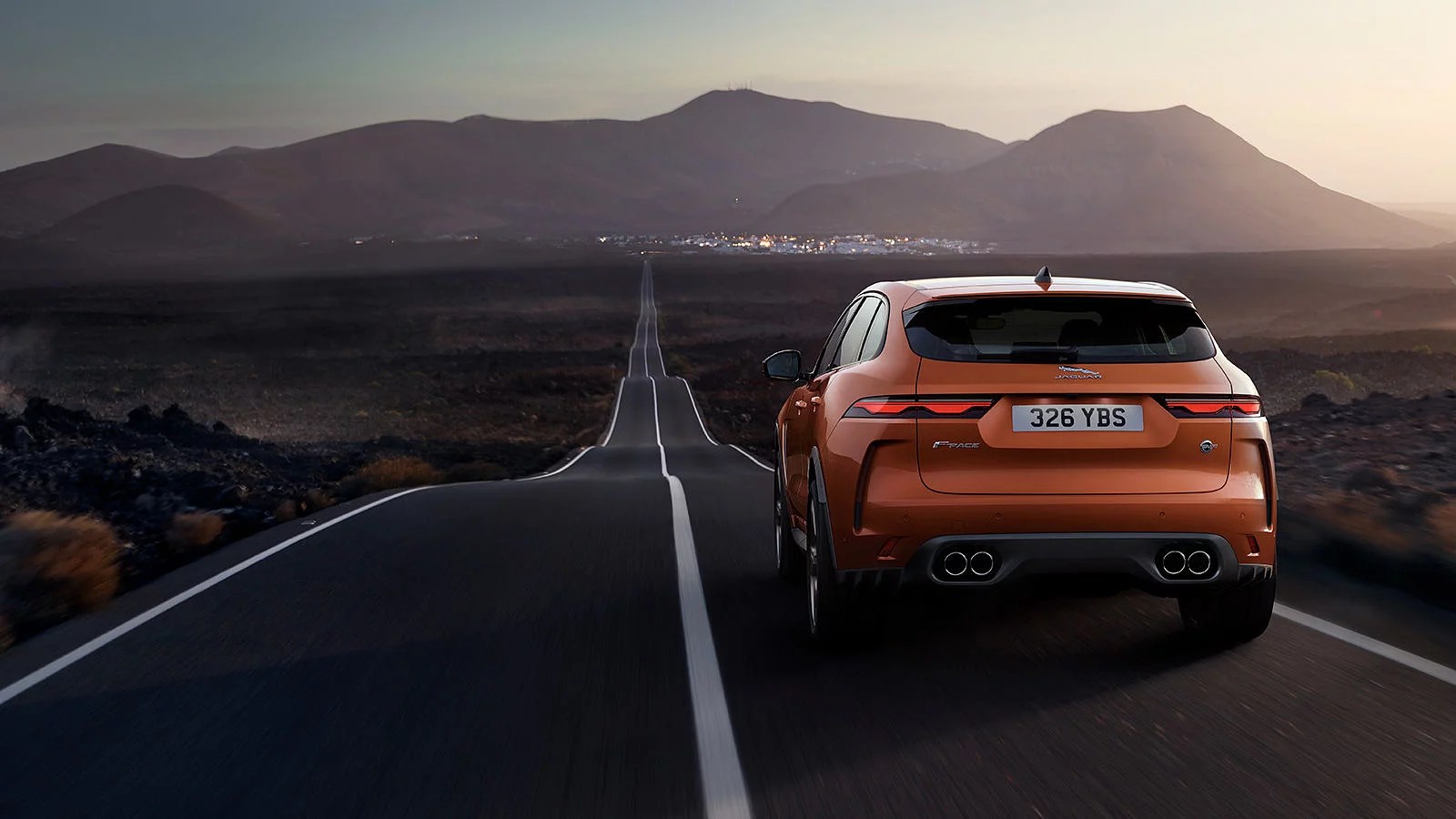
Then, there’s the five-litre compressor V8 that is one of the greatest engines out there. I had it in my Range and in the Jaguar line-up, it’s fitted in the top-of-the-range F-Type and F-Pace models. The F-Pace received quite a complete overhaul in 2022 and the five-litre V8 version called SVR has had motor journalists drooling all over it, calling it the best small SUV out there, and perhaps the best car in the market in terms of engine sound. That’s a sound it shares with the F-Type, a less spectacular but very capable coupé-roadster in an attractive packaging.

Going out with a bang – the lovely, 5-litre compressor V8!

Jaguar has thus sacrificed two great V8 models for a full EV experiment, debuting not now, but in two years, but already now being two-three years late. They do so with cars that so far no one has seen, but that they claime will be REALLY luxurious, and REALLY expensive. If you’re wondering how that could possibly go well, you’re not the only one. But it’s the full strategy they’ve embarked on, rather than a rebranding campaign or a new logo, that is Jaguar’s real problem.

Meanwhile, for all intents and purposes, what we used to know as Jaguar just ceased as a brand, meaning that if you can track down a new F-Type or F-Pace in V8 form, you could be down for the deal of your life, since dealers will be really anxious to get these out of their shops. And in the pre-owned market, I strongly suspect both of those will hold their value better than most at their respective, depreciated price point, and especially in the case of the F-Type, perhaps even become a collectible down the line. Until that day comes, I promise you’ll never get tired of listening to that V8!

The roaring comeback of the ICE!

Between US elections, the wars in Ukraine and the Middle-East, and whatever else may have passed through your news flow this summer, chances are that you’ve missed something that’s gone a bit under the radar. And that, my friends, is more or less a complete turnaround in the business plans of the world’s leading car manufacturers, and the roaring comeback of the good old combustion engine!

The ICE is making a comeback at a level that no one would have expected just a couple of months ago. Doing so, it proves a few points that won’t be new to readers of this blog, but that I’m happy to note anyway, since it’s always nice to be right: firstly, if you want to sell stuff, there needs to be demand. Secondly, if something cannot hold in the long term, it will break sooner or later. And thirdly, it’s unwise to bet against the world’s largest car company, especially when it’s Japanese. Let’s dig in and look at what you may have missed while sipping your pina colada at the beach!

To set the scene, let’s start with something that EVO, the UK car magazine that this blog takes its inspiration from, noted in its editorial back in July, namely that within just the last month, three new combustion engines involving five global car brands were announced. In all cases, it was about ICE’s optimized for hybrid usage with electrical motors, efficiency measures, adaptations to sustainable fuels etc. Other signs that the combustion engine is far from dead have also flourished over the last year, perhaps nowhere more so than in Modena with the Purosangue’s naturally aspirated V12. The fact that Ferrari shares are among the best investments you could have done over the last years also don’t really speak in the direction of a quick demise of the ICE.

Owning Ferrari stock would have given you more than 700% in the last 10 years, most of it in the last two years. Hell, you could buy an ICE-powered Ferrari for that!

It’s also interesting how differently car CEO’s speak today, compared to just a few months back. The first one that made me swallow my coffee the wrong way was Peugeot CEO Carlos Tavares, who during a car show went on camera, stating in the blunt way only a Frenchman can that electrification is nothing car manufacturers have chosen – it’s something Brussels (meaning the EU) has imposed. His body language made clear he enjoyed it about as much as a rotten slice of foie gras. Unfortunately, Stellantis (the group Peugeot belongs to) have replaced him since the interview.

A few weeks later it was Ola Källenius, the Swedish CEO of Mercedes-Benz, who until recently was very happy to tell everyone about Mercedes’s fully electrical future but now sings a different tune, whereby combustion cars are still very much part of the Mercedes mix, alongside hybrids and EV’s. That’s of course a direct consequence of the lukewarm reception Mercedes EV’s have gotten from the market, especially the soap-like EQS. Now the talk is of a new S- and even E-class coming with as options combustion, hybrid and electrical engines.

What a new S-class could look like – far better than the EQS! (Illustration Larson)

A few months earlier the same message had come from BMW in Munich, confirming several combustion engine initiatives over the coming years. To round it off, in the same week as this is published, Volvo joined the long list of manufacturers stepping away from an all-electrical future, in Volvo’s case by 2030. The talk is now of reaching 90%, however including various types of hybrids.

None of this is really surprising. Because what all these car CEO’s seem to have forgotten, but actually should know better than various politicians and other policy makers, are the laws of supply and demand. And what has become painfully clear is that there is no demand for EV’s on the scale the political class would like there to be (if you need to read up on why they won’t do anything for the climate and are currently one of the most unethical industries around, see here, here, and here). From a European perspective it’s actually even worse, since the day, should it come, when demand improves, it’s not European, but rather Chinese manufacturers who stand to profit from it.

Let me give you a couple of pretty staggering examples of this in real life. The Porsche Taycan is generally hailed as the best EV around from both a driving and a charging perspective (if not range). Two years old and with less than 30.000 km’s on the meter, it can easily be had for 30-40% of the price as new – that’s a depreciation of over 50% in less than two years for the best car in the segment! And with the new model out, those numbers will certainly not improve going forward.

A Polestar 2, a European EV favourite, far less good than a Taycan but also far cheaper at around 75-80′ as new, will without problems be yours for 30-35′ with the same kind of mileage as the Taycan. And should you like soap, the numbers for the Mercedes-Benz EQS are similar. It’s getting to a point where European car dealers no longer want to trade in EV’s, not just because of the insecure value, but also since they tend to sit in the courtyard far longer than traditional cars.

A year ago, it would have been in front of the dealer’s entrance. Today, it’s hidden in the backyard.

What’s happening is that disappointed owners, either outright or through various types of leases which typically have a 36-month life (at least in Europe), trade in their EV’s and when doing so, opt for a conventional car to replace it with. That’s the case in up to 90% of cases in the US, as various reports have shown. Why? Well, unrealistic range promises, especially in winter, a lacking charging infrastructure, and various technical and quality issues with many EV’s all make for a not very attractive cocktail. As energy prices rose in parallel to the ownership and will continue to do so for every windmill and solar farm that is set to replace conventional energy, it turns out the savings over a traditional car aren’t that big.

The combustion engine technology is now over 150 years old, removing the technology risk that is very much present in the EV market, and that all the talk of battery revolutions only contribute to. Two years ago it was just a matter of time before solid state batteries once and for all solved the range and charging issues. Now, it’s instead sodium batteries that will do the same, and are simpler to develop. Who in their right mind would buy an EV, more expensive than a traditional car, with a technology that risks being obsolete in a year? You take this together with all the other EV issues you know well by now, and the logical conclusion is that other than in cities or for shorter trips, the ICE still reigns supreme.

As this sinks in, the effect is that conventional manufacturers go back to what they’re good at, i.e. technological innovation around the combustion engine, and EV manufacturers that are not very well capitalized start going belly up. Fisker already did (making it the second time the Dane Henrik Fisker manages to bankrupt the same brand), others are heavily at risk (Polestar starts having pretty severe cash issues and a share price that is at rock bottom) or not in control of their destiny (Lucid who are at the mercy of the Saudi money tap). All this is normal – every new industry has a lot of companies who don’t make it. It was just the buzz of the last years that may have made it look different.

Marcus Brownlee called the Fisker Ocean the worst car he had ever tested. Six months later, the company was bankrupt and owners have hopefully learnt to check the health of the brand next time around.

What is not normal is however the elephant in the room called China, that as said previously, I believe will dominate the low- to mid-priced EV market going forward. Why? Well, with a home market of over a billion people, unlimited state subsidies and a supply chain of rare metals especially from Africa that has been carefully crafted over the last decade, China has done everything Europe should have done to be successful, had they really meant business. Instead, the EU now wants to put tariffs on Chinese EV’s, which less than a month after it was announced, was countered by China doing a deal with Saudi Arabia, where Chinese EV’s for Europe will be produced with no tariffs. And there won’t be any sanctions or tariffs on Saudi going forward either, that oil they also sell, is very helpful when it gets cold.

Going forward, the world will thus hardly be fully electric, and this is where the world’s largest brand Toyota comes in. Although they were heavily criticized by the environmentalist lobby, the Japanese stuck to their guns and continued to produce and perfect hybrid solutions. Their logic is simple and should have been easy enough for every car company to understand: if the supply of rare metals and other input materials is limited, then splitting a large battery pack into four smaller packs for four cars, rather than a big one for one, makes a lot of sense. Hybrids also eliminate all the issues linked to range, charging, and under-capitalized car brands no one has heard of.

A Toyota hybrid drvetrain – expect to see more of these going forward!

So where does all this leave us? Well, conventional manufacturers will be all too happy to reverse course and fall back on what will be the conventional car market going forward – meaning hybrid solutions around the combustion engine. And should there be an evolution around e-fuels, we can probably do without the whole hybrid package as well. On the other side, there will be EV’s at various price points, working well for cities, shorter trips or people preferring the technology. And yes, should we in the end get a battery revolution in terms of range, charging and more sustainable input materials, maybe they will take over -but that’s neither for tomorrow, nor next year.

It’s pretty incredible that it’s taken us this long to get us to the only place that made sense from the beginning, but as said initially, if something cannot hold, it will break sooner or later, and the dreams of 100% EV’s just did. Personally, i’d be delighted to consider a hybrid. I’d have nothing against driving fully electric on shorter distances, and reducing my fuel consumption on longer trips. The ethical issues linked to rare metal excavation are still not solved, but I guess you can’t have everything, and things are at least improving in this regard. Mark Twain once replied to a letter by saying that “the report of my death was an exaggeration”. Mid-2024, the same thing is just as true for the combustion engine!

The sand pile is crumbling

If you’ve studied economics like me, the name Hyman Minsky may be familiar. He was an American economist who developed the financial stability theory, basically saying that stability breeds instability. Think of a sand pile: at some point, adding one more grain, although infinitely small in itself, will make the pile crumble. That’s more or less what we’re witnessing right now for the sand pile called “Ev’s for all”, crumbling far quicker than even I had imagined. I wasn’t planning to return to the topic anytime soon but sometimes events force your hand, and there’s just too much that’s happened in the last weeks and months not to take note of, as it is kind of important for the whole car world.

The starting point as I remember it was sometime back in February when two things happened. Mercedes boss Ola Källenius, roughly at the same time as presenting the stupidest EV of them all this side of the Hummber EV, the electric G-class, came out and said that electrification of the whole Mercedes fleet would take longer than expected. That’s of course another way of saying that demand is lacking. Mercedes have pushed the date for the last combustion engine forward from 2030 to 2035, where it most certainly won’t stay.

Time will tell, but this could go down as the symbol of when the tide turned…

Roughly at the same time, the FT ran an article on Lucid Motors, where Lucid boss Peter Rawlinson said that his company cannot rely on “bottomless wealth” from its 60% Saudi owners. In other words, the sheiks in the country of many sand piles are thinking of turning off the tap, if they haven’t done so already. Lucid has close to USD 5bn in the bank but is currently burning USD 1bn per quarter and lost close to USD 3bn in 2023. Given they’re not close to making a profit anytime soon, they will thus need to fundraise again before the end of the year to survive. In the current market, I wish them luck.

Luck is also what Rivian still needs, and this one hurts a bit more since I find it a really innovative company that have brought something new to the market, and have plans for continuing to do so in the future as well. A friend of mine drives the Rivian SUV and is thrilled about the car, its features and gadgets. However given a lack of Rivian car buyers, the company urgently needs to save money and announced in March that production has been paused in their new factory in Georgia and that instead, they will fall back on their old production plant which is cheaper to run. And whilst we’re on SUV’s, if anyone is curious about Fisker, they’re so close to the brink that they can go belly up at any point in time, and contrary to Rivian, the SUV called Ocean they’ve launched is crap in most testers’ view.

A small opening side window in the back is the only attraction of the Ocean. Literally.

Moving on to the EV wannabes, Porsche is making all kinds of strange sounds around the all-electric new Macan. The idea was that the combustion one would be taken out of production in 2025-2026, and the all new E-Macan, launched as we speak, would then fully replace it. Now, the talk is of not replacing the ICE one until 2030. The issue for Porsche is that the new Macan is built as an EV from the first screw, meaning it’s not made for a combustion engine. Therefore, it’s most probably the old Macan that will be updated such as to live a bit longer. That’s certainly very far from what Porsche, blinded by the general EV trend, originally intended. It’s really terrible when client demand isn’t where you want it to be.

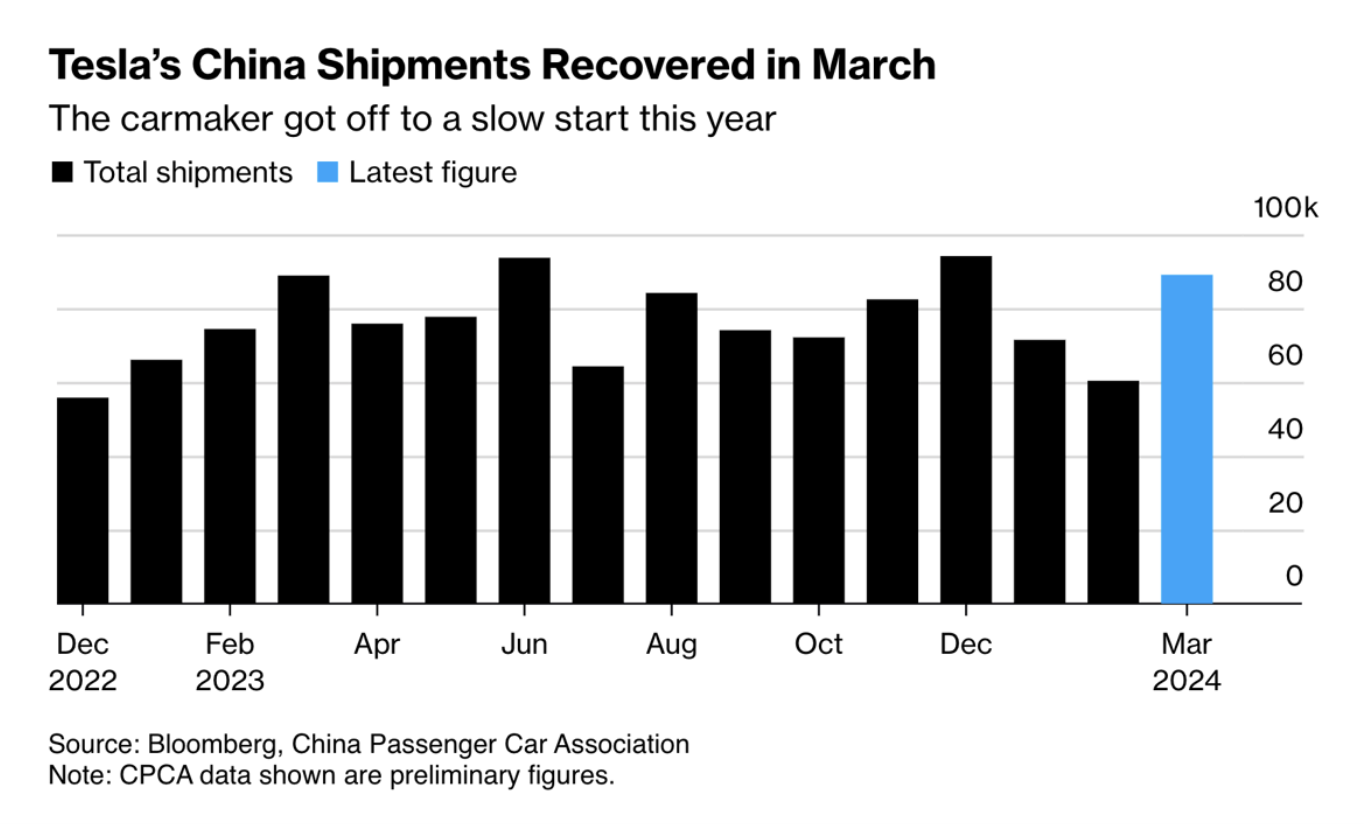
To round it all off, even the king of the hill Tesla has come down the hill, at least a bit. Firstly in stock price, where it’s down about 1/3 this year, making it by far the worst performer of the so called Magnificent Seven. That said, it’s still worth more than twice what Toyota is. Then there’s production numbers, where Tesla not only ships less cars than a year ago, but also produced around 70′ less cars in the first quarter than analysts were counting on. Tesla has also lost around 1/3 of its market share in the all-important Chinese market, falling from 10.5% to around 7% as per the Chinese Passenger Car Association, all due to the intense Chinese competition discussed in earlier posts.

As the headline says, things improved in March, let’s see if it’s the start of a new trend.

You’ll note that all of this has to do with falling client demand, and nothing has to do with the other fundamental EV issues, such as not even being close to having enough metals and related stuff to produce the EV’s our politicians plan for, and that the battery production with all its required input materials is both highly polluting and highly unethical. That comes on top of the waning demand, and as Ineos’ founder Jim Rathcliffe says, you can’t force EV’s down people’s throat – although I’m sure at least some politicians will try.

I yelled at European luxury automakers pathetic efforts to build competitive EV’s a few weeks ago, and also said the cheap part of the market risks being taken over by Chinese EV’s. That’s exactly what’s happening, and in addition, growth has stalled in the developed world for all the reasons we’ve already gone into. A challenging capital raising environment means that many of the new EV brands risk going under, and (especially European) politicians who are still incapable of delivering a charging network commensurate to the growth they want to see have done the rest. I’d say they should take most of the blame.

At the same time, I was surprised earlier this week to see the Biden Administration’s projection for what the US car market will look like in 2050. As can be seen above, EV’s aren’t expected to take over anytime soon, although they are projected to grow quite a lot. Hybrids continue to grow too, which we’ve been discussing here, and what for example Toyota has said all along. Most people drive short distances, and thus splitting a big battery pack in one car into five smaller packs in five cars makes most sense when materials are limited. Anyhow, by 2050, 2/3 of all cars are still expected to be what should be called combustion engine cars, since by then, I’m willing to bet we’ll have other stuff than fossil fuels to power combustion engines with, which also means they may be around for far longer than anticipated.

If you really want an EV, then as I’ve said before, there really is no better alternative than a Tesla, pretty much wherever you live. But if you don’t, be aware you’re part of a growing crowd and that your petrol car will be fine for years to come. As I was finishing this post, I saw the news that the European car safety organization Euro NCAP has come out with new rules, requiring a car’s essential functions to be handled by physical buttons, not over a screen, for a car to get the maximum five safety stars starting in 2026. Trying to sell a car in Europe that has less than five safety stars is all but impossible, so this will obviously cause further pain for many, especially most EV manufacturers. If we keep going at this pace, the future starts looking really bright!

A tech revolution dressed in stainless steel!

This is not a post on the Cybertruck. After all, if you follow this blog, you’ve hopefully realized that I try to cover things at least slightly out of the ordinary, so adding another post to the hundreds that have already been written on the Cybertruck isn’t really the spirit. To say nothing about the fact that this is, at least mostly, a blog for petrol heads.

It’s also not a post on Elon Musk. I personally find it fascinating how one man year after year continues to stir up such emotions with all kinds of people, and I have a lot of respect for a man who built a leading car brand from zero, using new technology. Not to speak of the fact that he also built a few rockets pretty much from scratch in a backyard, shot them into space, landed them again and then sold them to NASA. He still does by the way.

It’s also pretty clear that no one but Elon would have come up with the idea for something like the Cybertruck. And also, that only Elon would use it to premier some technological developments that the world has been waiting for in some cases more than 50 years. That to me is what’s exciting in the Cybertruck story, not really the truck itself. And that is indeed what this week’s post is about!

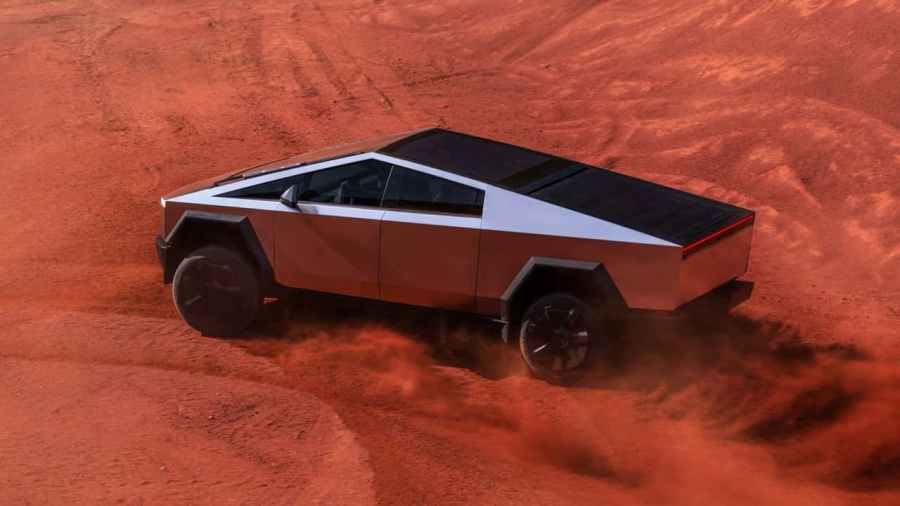
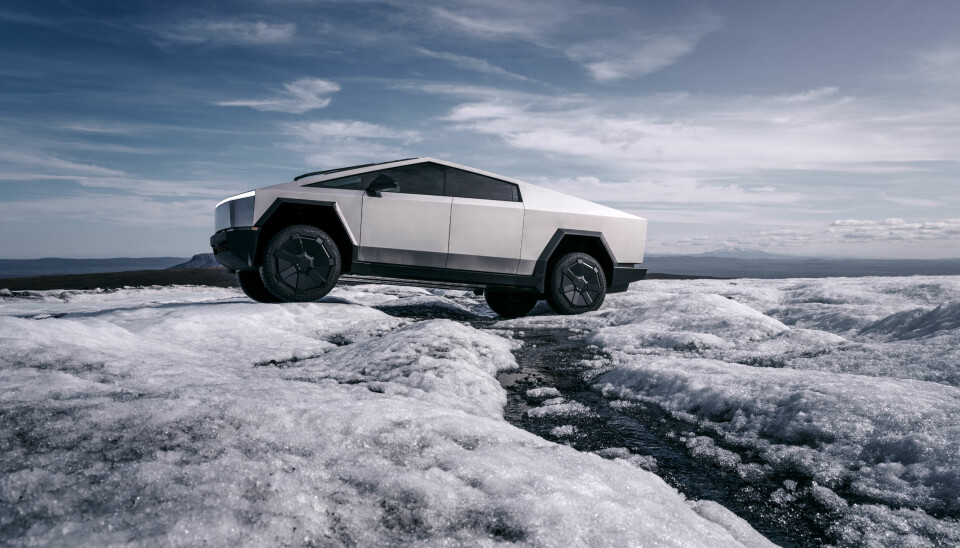
Not pretty, but definitely imposing…

Before we get into it however, this is after all a car blog, so a few words on the Cybertruck are warranted. The saying goes that it was Elon’s son who asked his father why the future doesn’t look like the future, alluding to the fact that pick-ups have looked more or less the same for the last 50 years, and neither the Hummer EV, nor the Rivian have really changed that.

That’s apparently what gave us the Cybertruck that at least Tesla thinks looks like the future. At 5.7 metres long, 2.4 metres wide and a weight exceeding 3 tons, it’s a giant car that also has the biggest windscreen of any car ever, as well as at 1.2 metres, the biggest windshield wiper ever seen. It also looks very much not like any other truck on the road.

The stainless steel body makes it pretty clear why we typically don’t build cars in steel. Sure, you can throw rocks at it (not sure why you would) and it’s also light, but it can’t easily be formed and can thus only ever be used for a design resembling something Elon’s son would draw, and perhaps did. As for the inside, there’s a lot of Tesla minimalism, and a lot of plastic.

Minimalistic, Tesla-like interior, rich in plastic

No matter what you think of the looks, I have no doubt Tesla will sell every Cybertruck they build in the US and elsewhere, however not including Europe, since there’s really no chance that something that large, and without sufficient pedestrian protection zones, makes it here.

So what about the technological developments? There’s three things worth mentioning: the induction engines, the 48V system and the steering by-wire, each of them a small revolution in their own, and far more so than the car itself.

To start with the engines, in the strongest version of the truck called the Cyberbeast, there’s three of them, together putting out 845 hp. Only one of these is however a permanent magnet engine, the other two are so called induction engines. This is a type of electric engine the first Tesla (Nikola, that is) patented already back in the 1880’s, and the big difference to a magnet is that it doesn’t use any rare metals.

As you know, this is one of the things that has gotten me really excited about the EV “save the world” talk, so this is definitely a big step in the right direction, which will hopefully give the children in the Congo a longer life. Induction motors are said to be slightly less efficient than magnet motors, but also much cheaper to produce, so we’re likely to see more of them in EV’s in the coming years.

The load space is huge, and various tents and other gimmicks will certainly come with time…

Continuing along the same path, let’s talk power. The Cybertruck’s engine runs on 800V which is a lot, but something for example the Porsche Taycan also does. More importantly however is that the rest of the car runs on 48V system rather than the 12V of every other car. This is a number that in spite of improving technology, hasn’t evolved in the last 70 years!

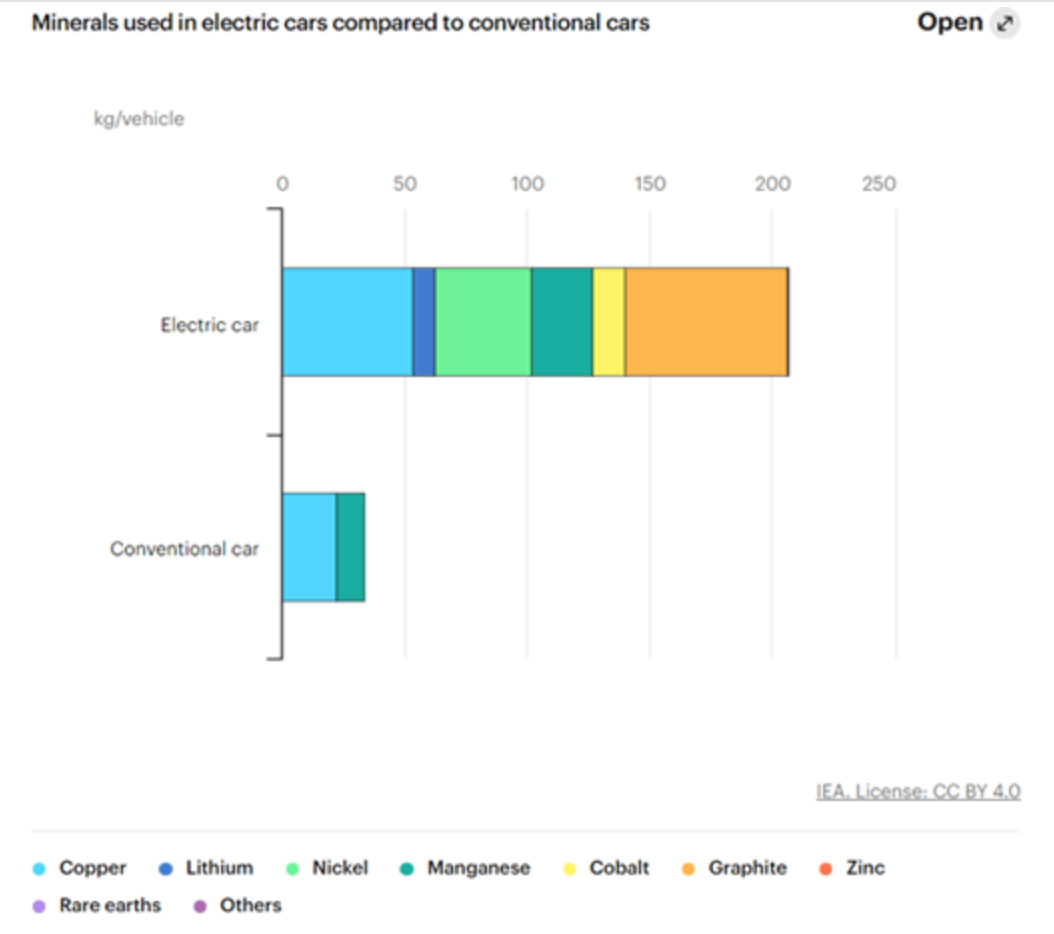
Power equals voltage + current, so the higher the voltage, the less current you need. And by reducing the current you can reduce the wiring, which both saves weight and many kilos of copper and other things. Going from 12 to 48V thus means a reduction of 75%. If we keep going at this speed, I guess EV’s may actually become environmentally-friendly one day!

The last and clearly most visible technical revolution is the by-wire steering, which is only made possible by the 48V system. The Cybertruck is the first mass-produced car in the world without a physical connection between the steering wheel and the front wheels. Instead, these have one motor each (plus a third for the rear wheels, since the Cybertruck has rear-wheel steering), which together use more power than a family house in the 70’s, hence the requirement for 48V.

The fact that a computer tells the steering what to do means it can be adapted such as never to have more than one turn lock to lock (or whatever you decide on), and also makes it highly adaptable at speed. Crossing hands is thus a thing of the past. This of course takes some getting used to, but contrary to the yolk, is definitely a big step forward.

With a CW-value of 0.34, the Cybertruck is not only heavy but also not very aerodynamic. But with a 2.6 seconds time to 100 km/h, the Cyberbeast still kicks the behind of both the most powerful Rivian and the Hummer EV despite being less powerful in hp – and on mud tires. This is thanks to lower weight (yes, astoundingly the others are even heavier!), but also to efficiency, which is perhaps not a technical revolution, but an area where Tesla also shines.

The Cyberbeast also outpaces a 911 Turbo – whilst trailing another 911…

Starting with the battery cells, these are far larger than anything used so far, meaning they’re more efficient. They are designed and produced in-house at Tesla, as are the engines, and it’s no secret that controlling the whole production line makes Tesla’s EV’s more efficient than other brands, resulting in a longer range. It’s really surprising that a company that manages all this under the nose of established car brands at the same time doesn’t manage to fit a few body panels properly!

Of course, the technology introduced in the Cybertruck is already making it over to other Tesla cars, or will do so over the coming months and years. You can love or hate the the Cybertruck as much as you want, but that really is besides the point. Because the point is that once again, it’s Tesla that is the disruptor to an industry that still doesn’t manage to get its act together.

In spite of the billions invested, the fact of the matter is that the the traditional car industry still can’t manage to build an EV as efficient as Tesla’s. In parallel, Tesla cars are improving quality-wise, and the Supercharger network continues to be a huge advantage.

The Supercharger network is still globally unrivalled

I’ve said all along that the traditional industry didn’t miss the EV wave, they just waited until it made economic sense. I may have been right on that, but I was definitely wrong in terms of my expectations on what the industry would deliver, once it got up and running. The sad truth is that in terms of technology, they’re still not competitive with a company that is less than 20 years old. That will have global implications that we’ll look at more in detail in the coming weeks.

Induction engines and a 48V system will revolutionize the EV industry for the better, which is great. I still don’t think the future will be fully electric for a number of factors that long-term readers will be well familiar with. However, what Tesla has hidden beneath the stainless steel body of the Cybertruck makes at least Elon’s dream of an electrical future somewhat more realistic!

Pretty little lies…

You remember Dieselgate? If not, it was the emissions scandal in 2015 when it emerged that Volkswagen, keen to sell more diesel cars in the US and doing so under the slogan “clean diesel”, had manipulated the software of several diesel engine types so that these produced less emissions only during test cycles, not in real life thereafter. It emerged that a total of 11 million cars with the same software had been sold in other regions as well, notably in Europe, and after a few months of management denying any knowledge of anything at all (What? Do we build cars??), the group’s chairman Martin Winterkorn had to resign.

Martin Winterkorn having a bad day at work…

Of course this was nowhere close to the first scandal in the car industry. To stay in modern times, just the year before, issues emerged around GM’s management after it had delayed a major recall regarding ignition switches which could lead to the engine turning off while driving. In 2009, Toyota scared the world as some of its cars accelerated unintentionally, which of course no one at management level knew anything about. And in 2016 and 2019, as if Dieselgate had never happened, Mitsubishi and Fiat Chrysler were caught violating emission regulations or lying about fuel consumption. The list goes on and on, and now it seems we’re there again. This time however, it’s the stock market darling that has been found with not one but both hands very deep in the battery p… sorry, cookie jar.

Toyotas accelerated by themselves, long before self-driving…

As Reuters uncovered a couple of weeks ago, since about 10 years, Tesla has been programming their cars to show rosy range projections and use these in their marketing. More precisely, the software was set to show a longer, unrealistic range until the battery was half depleted, and then to switch to a more realistic one. The result (and desired effect) was of course that customers bought cars believing they would have a longer range than they actually did. Many of them would then complain to Tesla and book an appointment to investigate the issue. In between the contact and the appointment however, Tesla would tell them they had performed a remote diagnostic on their car, that everything was fine with the battery, and that the appointment was therefore cancelled.

With time, the number of complaining customers apparently became so great so that Tesla created a separate team with the task of killing complaints by proceeding as described, something that saved Tesla around USD 1000 per cancelled appointment. Apparently it was common for the responsible team to sound xylophones and dance on their desks for every cancellation. Personally this reminds me of “The Wolf of Wall Street” which is an excellent movie, but perhaps not the culture the renewables’ hero company is meant to portray. In a test from April this year by the engineering organization SAE International, it was shown that most EV manufacturers lie about range, but none more so than Tesla, whose three tested cars in reality had a range that was on average 26% inferior to what was claimed. Ouch.

That’s 2.5 tonnes to push..

The range of an EV will vary with conditions, driving style and temperature, as will that of a combustion engine, however then mostly depending on driving style. This leads to the two important differences with EV’s we all know of: firstly, that low temperatures limit the EV range disproportionally (and this by the way also if the car is parked in the cold during for example your ski holiday, as a friend of mine discovered in the French Alps last year…). Secondly, the fact that charging, although slowly improving, is still not comparable to filling up at a petrol station, neither in speed, nor in availability. What Reuters uncovered however helps solve the mystery around Tesla’s superior range claims. As it turns out, it had little to do with more efficient battery integration as a consequence of internal battery production, and more with dirty business practices, not too far from Dieselgate. Who would have thought?

Staying on the electrification theme, one thing that has been noticeable in Europe this summer is an increased number of EV’s from Chinese brands. It seems these are making rapid progress in Europe, doubling their market share from 4 to 8% (as a group) of EV sales since 2021. The biggest brands include MG (yes, sorry to say it’s Chinese these days), BYD (short for Build Your Dreams, the second largest EV manufacturer globally after Tesla) and Lynk & Co (owned by Geely). My understanding is that of these, only BYD is present in the US, however building buses rather than selling cars. In Europe however, given none of these brands have any brand recognition, they sell on the only argument of being cheaper than Western EV’s. And now Western car executives are getting nervous, promising to offer cheaper their own, cheaper EV’s going forward.

This is what an MG looks like these days

This means that range numbers, real or invented, will not be improving in the coming years. You see, the costliest part of any EV is the massive, 400-600 kg battery pack. It’s also the most controversial, as I’ve illustrated on this blog with a focus on cobalt, but where you could say the same about many other materials as well. Many of the metals in current lithium-ion batteries will quickly become a scarce resource since we are nowhere near extracting the quantities required for the electrification of the world, especially since the green movement in their infinite wisdom do everything they can to stop any additional mining. This also leaves us at the mercy of great countries like China and Russia, where China already sits on the extraction of a lot of these resources, and something like 15 of the 18 major cobalt mines in the Congo. When metals get scarce, China will of course make sure their manufacturers are supplied first.

Lynk & Co, becoming increasingly frequent on European roads

This bodes well for Chinese EV manufacturers, however given it takes decades to build a brand, they will keep selling on being cheaper for the foreseeable future, meaning keeping battery costs down. The way to do that is to substitute metals where possible, especially cobalt (horray!), against cheaper alternatives. Substitutes are however not as performing as metals used so far, meaning less stability and less range. Assuming Western manufacturers get their hands on enough metals to be part of the race at all, and that they indeed wish to build cheaper cars, they will obviously have to do the same. This will not change until we have some kind of technological revolution in batteries, which looks to be well beyond 2030.

The moral of the story is thus that EV builders are no more honest than traditional car manufacturers (if anyone really thought so), but also that Chinese EV’s will tend to make EV’s globally even less competitive. That they contribute nothing whatsoever to a cleaner planet is well known to those of you reading this blog regularly – otherwise please see here, here and here. In Germany, the MG ZS or Lynk pictured above are yours for EUR 35.000-40.000. They will take you something like 300 km, best case. The same money will buy you a VW Tiguan, equal in size, better in quality, with a modern, low emission petrol engine taking you twice as far and then needing five minutes to fill up. It’s also built in the West, not by underpaid workers without rights in a Communist dictatorship. Seems like a sensible choice to me!

The latest from the car world!

It’s been a while since we did a roundup of news from the car world, which isn’t because there hasn’t been any, on the contrary, rather because there have been other things to write about. There’s of course a lot happening that you could theoretically write about all the time, but a few more specific things happened this week, making me think it’s high time to provide you with a very arbitrary selection of the most important recent news from all our favourite pasttime. Let’s dig in!

To start of on a positive note, Aston Martin‘s owner Lawrence Stroll, pictured above in his usual, low-key style, apparently let the Aston team know in no uncertain words that the new DB12, expected next year, was a tad too expensive to feature a 10-year old infotainment system from Mercedes. This was of course the case both in the DB11 and in the DBX, as I wrote about back in Oct -21. I don’t think Lawrence reads this blog but if he would, then there’s a small chance both the DB11 and DBX are, by any objective measure.

No, it’s not a DB11, it’s the new DB12. Why change a winning look?

Given Aston sources not only the outdated infotainment unit but also the even more important engine from Mercedes/AMG, Lawrence’s hope was probably to get his hands on the MBUX system, but that didn’t happen. Instead therefore, Aston have developed their own system, which according to the first test drives is a pretty laggy thing, quite a bit off the MBUX or BMW’s latest unit. So getting better, but still not there. The DB12 does look very promising though, more on that next year. And for those not interested in infotainment but rather in driving, expect quickly deteriorating second-hand prices on the DB11!

You may have seen that the DB12 will no longer feature a V12, in spite of its name, but only an AMG V8. That’s however plenty compared to what Mercedes have put in their new E63. This is a theme I’m sensitive about, having owned, and on a day where the starts really didn’t align, sold, an E63 2014 with the fantastic, bi-turbo V8. The E63’s before and after have until now all had V8’s, but the new one doesn’t. Neither does it have a V6. It has precisely four cylinders, combined to an electric engine. One of the most legendary four-door power cars out there has become a four-cylinder hybrid…

Find one mistake with this picture…

That could theoretically have been fine even if it’s a lot to take in. Some hybrids work great though, such as the V60 Polestar that I drove the other week. It didn’t convince me but it wasn’t the fault of the hybrid solution. Trouble is, again according to early reports, the rest of the new E63 isn’t that great either, especially the chassis, which obviously makes the whole thing totally unacceptable. No one, I repeat no one, ever asked for a hybrid E63, so why on earth did they build it? If Mercedes finds that eight cylinders doesn’t go down well with the electrification strategy they’ve chosen, then just don’t build any more E63’s. I wouldn’t be surprised if demand for previous V8 ones picks up though!

Otherwise the world’s electrification journey rolls on, with Tesla setting new records in sales numbers, shipping close to half a million cars in the first quarter. The stock is up more than 100% so far this year, so great for shareholders – so far. However, Tesla must also have set a new record in terms of various types of discounts both in the US and elsewhere so as always with Elon’s companies, how much they’re actually earning is rather difficult to figure out. That goes for Rivian as well by the way. The company that didn’t even build 50.000 cars last year still spent roughly as much money as Tesla in the first quarter, namely around USD 6.5bn. They claim bottle necks in production are now behind them and that’d better be the case if Rivian wants to survive in the far less favourable financing environment we’re now in. The target for this year is 50.000 cars, and we’ll see if they get there.

Rivian isn’t out of the woods yet…

Interestingly, Toyota continues to refuse getting in line with everyone else, instead digging in to their hybrid technology. That earns them lots of bashing from the green lobby who are as bad as doing the maths here as when it comes to counting emissions from battery production. Toyota on the other hand remain as calm as Mount Fuji, simply stating that in total, hybrids achieve greater emission reductions than trying to supply the whole world with EV’s does. I haven’t verified their numbers but my intuition, combined with the fact that they are after all not only the world’s second largest company, but also Japanese, tells me they’re right.

Toyota also came out with another piece of news recently, namely that they expect to put solid state batteries into production in five years. Don’t focus too closely on that number since they’ve promised that before, but clearly, the solid state technology is making progress. In practical numbers in the case of Toyota, this means an indicative range of 1200 km for much less battery weight and only 10 minutes of charging. As discussed back in January 2021, solid state batteries would be a true revolution, but we’ll see when we get there. When I wrote that piece I said three-four years, which obviously was too optimistic. Sometime around 2030 is perhaps a realistic target.

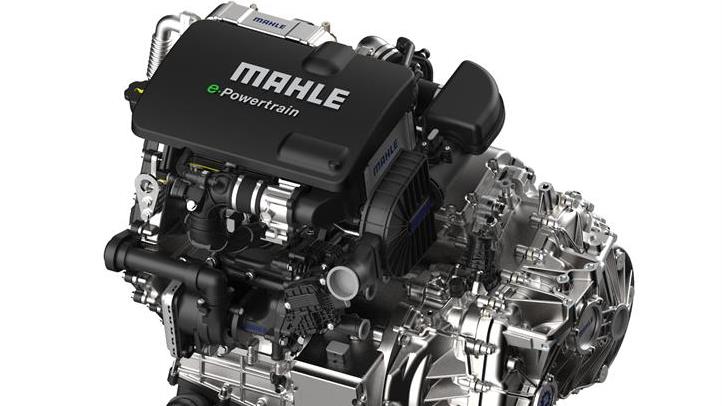
The Mahle engine – is this what will revolutionize the EV world?

Solid state batteries are better than the current lithium ion ones, but they’re not without issues, meaning metals. Which is why a piece of news from Germany this week caught my eye. The German engine building company Mahle, that I had never heard about, is developing a new type of electrical engine that not only promises to be even more efficient than current ones, but in addition, does without any metals. It’s called the Magnet-free Contactless Transmitter (MCT) and as the name suggests, works without magnets. They’re replaced by an electricity-induced tension field, and the energy then flows inductively, reducing frictions and thereby energy loss as well as wear and tear. The technology has apparently already been proven to work in various prototypes.

Mahle is currently in talks with several manufacturers, targeting to make the engine ready for mass production in three-four years. This is a fantastic example not only of how to develop batteries, but also how it has always been, and always will be, innovation that leads the world forward. We’ll see if it’s Mahle’s technology, alternative fuels or something else that becomes the new standard at the end of the day. I remain convinced that it will not be EV’s as we currently know them. Until we’re certain, it’s difficult to find a more compelling proposition than an Aston DB11 with a V12, even with an aged infotainment!

African children dying for our “green” energy revolution

“A young woman named Priscille stood in one of the pits with a plastic bowl in her right hand. She rapidly scooped dirt and water with the bowl and flung it onto a sieve a few feet in front of her. Her motions were precise and symmetrical, as if she were a piece of machinery designed only for its purpose. After the sieve was filled with gray-colored mud and sand, Priscille yanked the sieve up and down until only the sand remained. That sand contained traces of cobalt, which she scooped with her plastic bowl into a pink raffia sack.

I asked Priscille how long it took her to fill one sack with the sand. “If I work very hard for twelve hours, I can fill one sack each day,” she replied. At the end of the day, the women helped each other to haul their fifty-kilogram sacks about a kilometer to the front of the site where négociants purchased each from them for around $0.80. Priscille said that she had no family and lived in a small hut on her own. Her husband used to work at this site with her, but he died a year ago from a respiratory illness. They tried to have children, but she miscarried twice. “I thank God for taking my babies,” she said. “Here it is better not to be born.”

This terrifying quote is taken from Siddharth Kara’s book “Cobalt Red – how the blood of the Congo powers our lives” that you may remember me mentioning in the first post of the year, before it appeared but after Kara had appeared on Joe Rogan to talk about it.

As a reminder, he has done what no EV buyer or Western politician promoting the “green energy revolution” has ever done, namely travelled to the Democratic Republic of the Congo (DRC) and at considerable risk to his own life, visited all the large cobalt mines around the country that together make up around 70% of the cobalt that powers the Western world’s electrification.

That it doesn’t power the DRC itself or provides it with any riches is well illustrated not only by the $1-2 the diggers earn per day, but also by the fact that the country’s own electrification has so far reached less than 10% of the population. Not measured in EV’s, but in lightbulbs.

When your family is starving, school is not an alternative

The DRC is basically filled with all the minerals, metals and precious stones you can think of, yet its population is one of the world’s poorest. Over the last 150 years it’s been plundered more times than anyone can remember and when it wasn’t by Western colonialists, it was then just as effectively by one in the long line of ruthless dictators who enriched themselves on the back of an increasingly poor population.

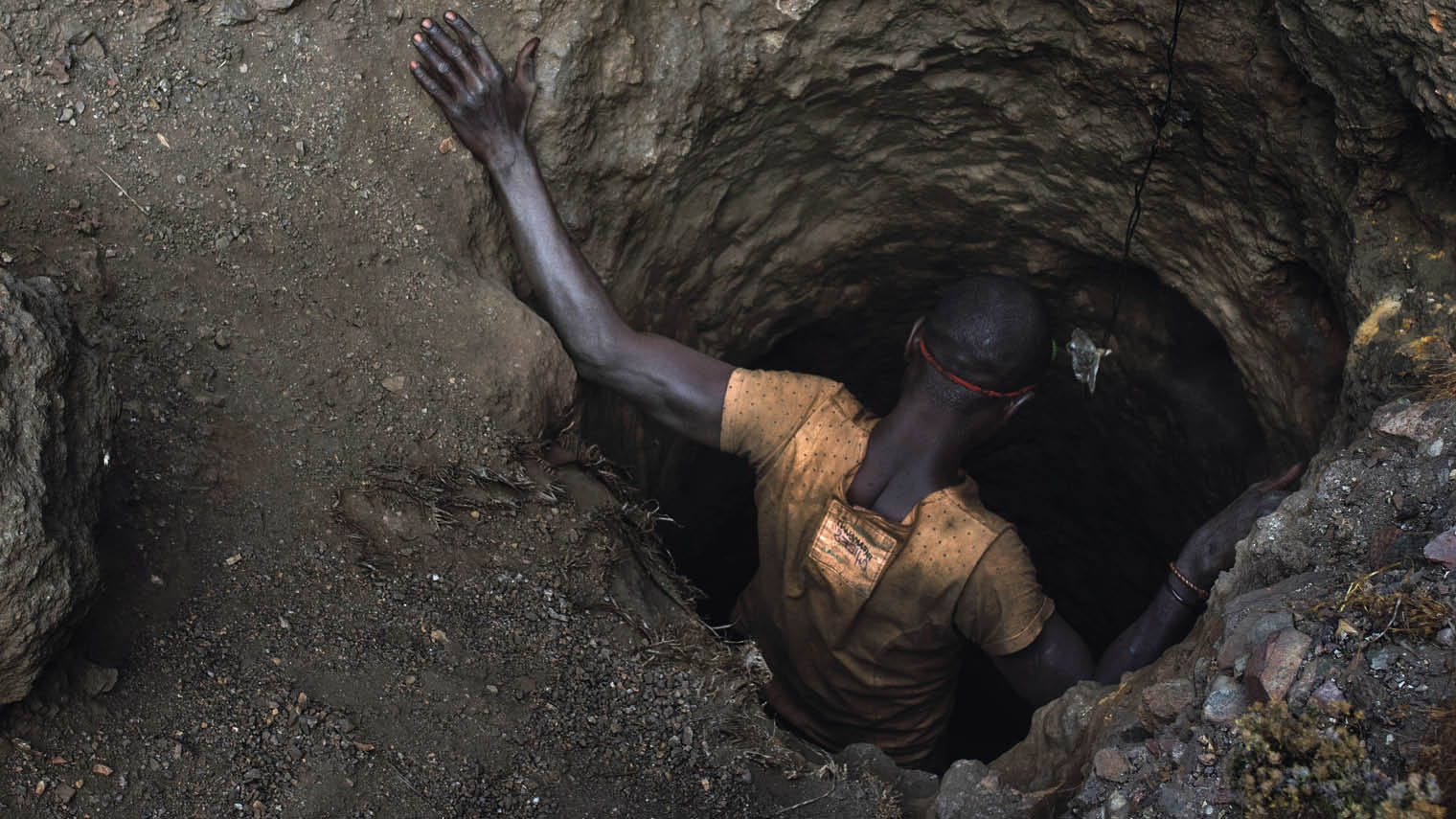
The latest robbery is for cobalt of which there is plenty in various parts of the country. Some of it can be found on the surface with a simple shovel, but most of the reserves require tunnels to be dug. A fair amount of such tunnels are artisanal, dug by simple workers with shovels, mostly so small that only young children fit in them. Artisanal tunnels crumble regularly, on average once a week somewhere in the country, thereby severely injuring the children or burying them alive.

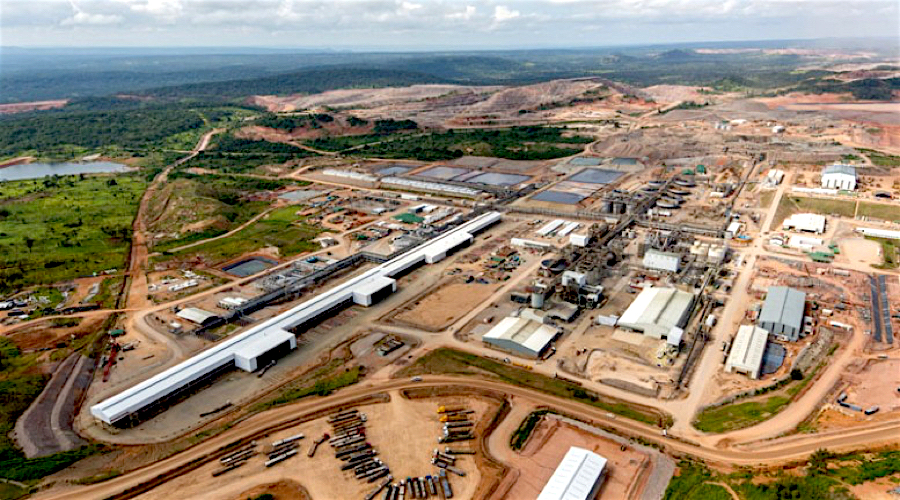
You read that right. In spite of no news channel bothering to show you this, 10-11-year old children are regularly buried alive at dozens of meters under ground in complete darkness. 80% of the mines are owned by Chinese operators who share the profits with the dictator in power at the time. Paying taxes, that would potentially support the development of local communities, is however something they do all they can to avoid.

If you ever felt your office was too small, this is the entrance ot his…

When Priscille and the thousands of other diggers across the country have carried their heavy sacks to their “négociant” (the dealer who pays them), these are transported away for further refinement on enormous, diesel-powered trucks.

The traffic to and from the main mines is so intense that there is often long colons of trucks blocking the roads for miles, together with the mine operations themselves contributing to the terrible air quality plaguing most of the primitive villages the diggers live in, and heavily polluting their waterways and lakes.This is a big problem given fish is an essential food for many.

When the trucks reach their destination, their load is mixed with the load of all the other trucks and from that point on, there is no way of separating cobalt from one place from that of another. There is thus no way for any company, Chinese or Western, to claim that their cobalt hasn’t been excavated through child labor. Then again, Kara didn’t find one single mine on his travels where hundreds of children were not heavily at work.

Mines do not appear out of nowhere. They have been developed by mining companies starting around 30 years ago and have seen an exponential growth in the last 10 years when the race for cobalt really got going. There used to be villages, jungle and forests where the mines are today, and the few people who live long enough to remember those days will tell you they were never rich, but they had a decent life.

That changed when the miners came, chopped the trees, burnt the villages, polluted the local water and with time the air, and everything then got worse again when more recently, the Chinese mining companies took over.

Today the same people struggle to survive in primitive sheds and have no other choice than to work in the mines. I guess someone who earns $1-2 a day is technically not a slave, but it’s a very subtle difference. Most don’t live beyond 30 years. And like Priscille, those without children will thank God for that, that many strangely still believe in.

There used to be villages and trees here

Kara’s book appeared in January and is no literary masterpiece, but the fact that its content hasn’t lead to an intense debate and calls for an immediate stop to this murderous practice, which indirectly is subsidized by Western governments through EV subsidies out of our tax money, says a lot about our society.

Around 120 years ago, Belgian king Leopold II spread terror across all of central Africa, killing millions, at the time for rubber. Back then, Westerners could be forgiven for not knowing what was going on, given the lack of information. Today and especially after Siddharth Kara’s book, the information is there for anyone who is interested.

This makes us all guilty because there is cobalt in pretty much every appliance you have at home, but the quantities are measured in grams and not in kg’s as in EV’s, where a large EV battery pack contains around 10 kgs of cobalt. There are currently around 16 million EV’s in the world and children are dying in the Congo every day for them to function.

International climate agreement calls for that number to increase more than five-fold over the coming decades. Putting aside the simple fact that at no point in human history have we succeeded in doubling (much less increasing five-fold) the amount of any input material in a 10-year period, you wonder how many children are yet to die, buried alive, handicapped with crushed legs, or from the poisoned water and air, until the dime drops.

50 kgs in one sack means $1-2 per day

Since reading the book and realizing the full scale of the catastrophy, I’ve taken upon me to try to spread the word about it. Engaging on Twitter on the subject with so called environmentalists (not a practice I would recommend to anyone with heart problems) typically gives two types of reactions. The first is a pretty astounding level of whataboutism, along the lines of oil and natural gas excavation being terrible as well. I’m sure it is, but to my knowledge children aren’t systematically killed on oil wells.

The other is to refer to the constant progress made on batteries and that soon, these problems will be behind us – so let’s close our eyes until that’s the case? It’s true that batteries will evolve but it’s neither for next week, nor for next year. And yes, you can build EV batteries without using cobalt (Tesla does for a fair part of their cars), but that reduces the energy density (i.e. the range), the stability (notably increasing the fire risk) and the longevity. And what replaces the cobalt is mostly nickel, of which Russia is the world’s leading producer.

You’ve seen it before, but this is a graph worth repeating

What goes on in the DRC is far from acceptable in a world that at least on the face of it makes a lot of noise on equal opportunities for all and not just the few. Not a single phone and certainly not a single EV should be built until the mining companies in the DRC can clearly demonstrate that child labor and artisanal mining is a thing of the past, that workers are paid a decent salary (we’d still be well below $10 per hour here, so it wouldn’t kill them), that they’ve built schools for the diggers’ children, and that they’re taking serious action against the environmental catastrophies they continue to cause.

I’m far too old and cynical for thinking that will happen, but I do think it’s at least our duty to try to shed light on this terrible practice. The children currently digging in the mining districts of the Congo are doomed anyway, but perhaps we can contribute to a better life for the next generation. It’s a small hope but if you don’t believe in that, it’s very difficult to believe in anything.

He will never drive a Tesla

Siddharth Kara’s book can be bought on Amazon here. Joe Rogan’s podcast witih him can be found here. If you’re new to the blog, you may want to read one of my previous posts on the topic of the unsustainability of EV’s that you’ll for example find here.