Did you know that the cobra is not one snake, but rather a family of snakes? In other words, that there are far more variations of this frightful animal than one? I didn’t, at least until I started to write this. There are at least six species that are usually included when you talk about cobras, notably the king cobra, which according to the definition of a “true” cobra would otherwise not count as one. That definition is limited to the Naja species, itself containing around 20 different types that you’ll find across large parts of Asia and some parts of Africa.

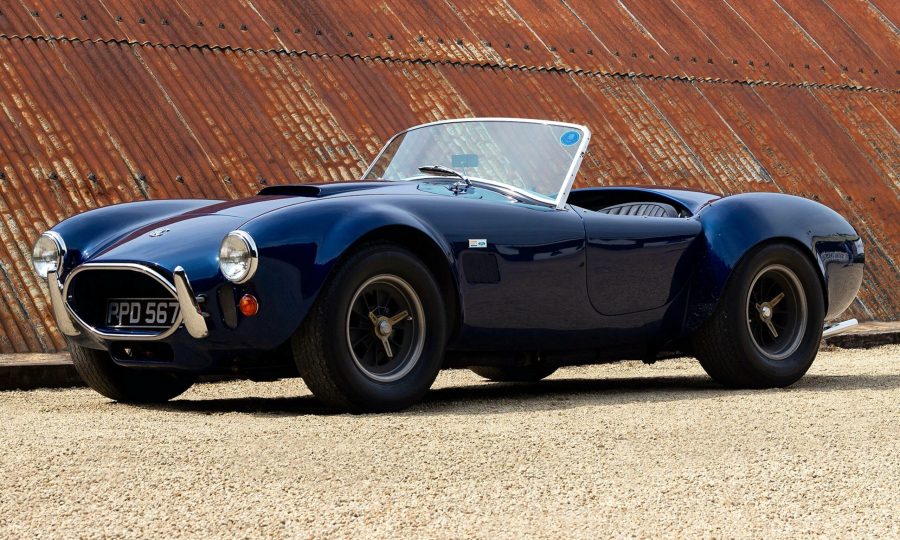
What these all have in common is being 1.5 to 3m long, able to raise around a quarter of their body and flatten their neck to appear larger than they are, and spit. The mechanism of that, which is apparently more a squirt than a spit, goes beyond this post, but the venom they deliver in this and other ways attacks the nervous system and can be deadly. As you’ve probably gathered by now, snakes is not one of my favorite animals. I like cars though, and I certainly don’t mind the one carrying the cobra name, as AC Cobra or Shelby Cobra. Without the risk of being spat at, let’s have a closer look at it this week!
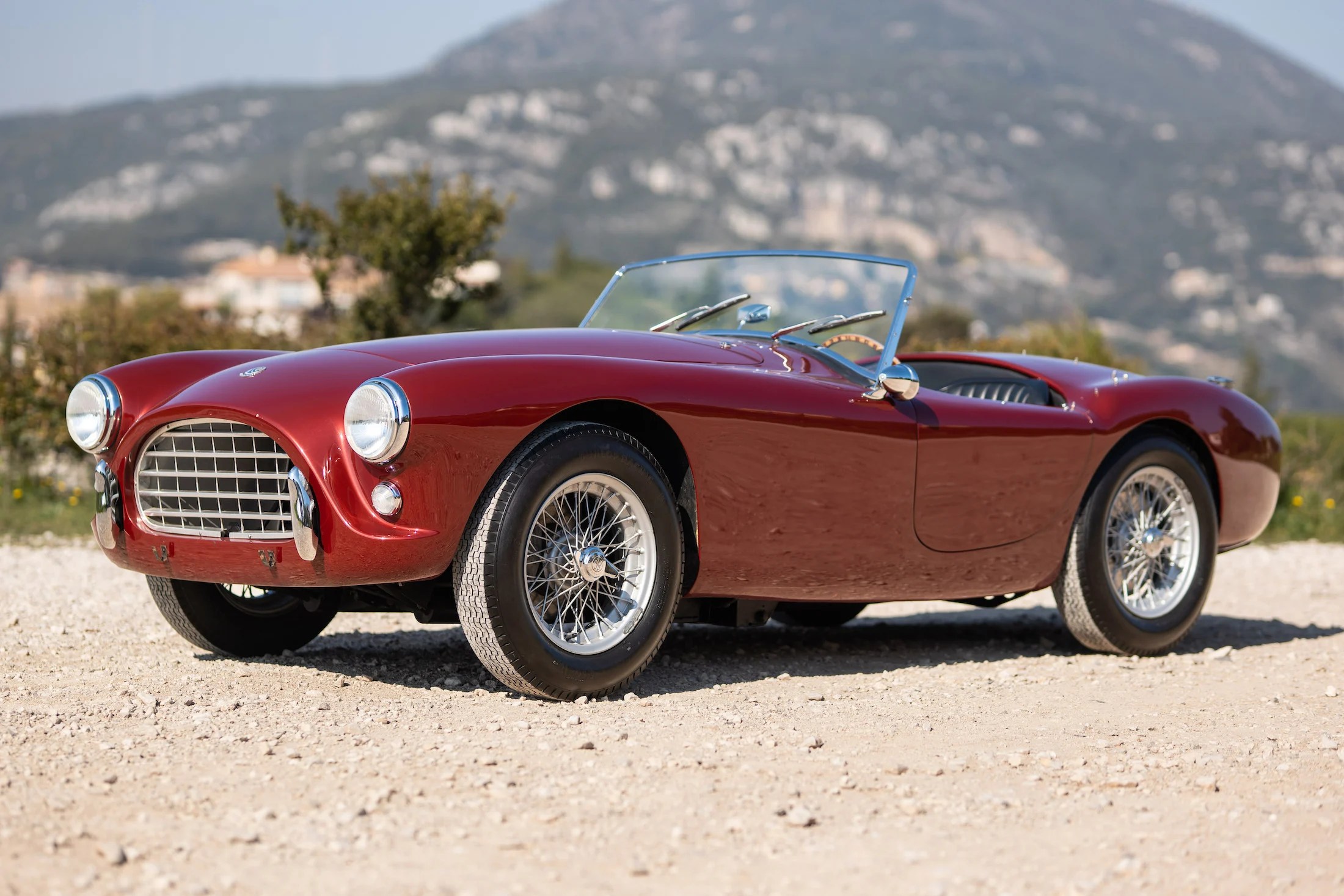
To do so, we need to go back to our old friends at Bristol that I wrote about in a post earlier this year. That’s where it starts as you may remember that in the 50’s, the aeroplanec ompany that was to become Bristol was set on building a light, two-seated sports car, which they also did. It was referred to as the AC Ace and was powered by a two-litre, straight six derived from BMW and delivering around 130 hp, tuned to a bit more for racing purposes. Of course the car was light and given it also had quite an advanced independent suspension, it did really well in different European races at the time, although it didn’t win any major ones.
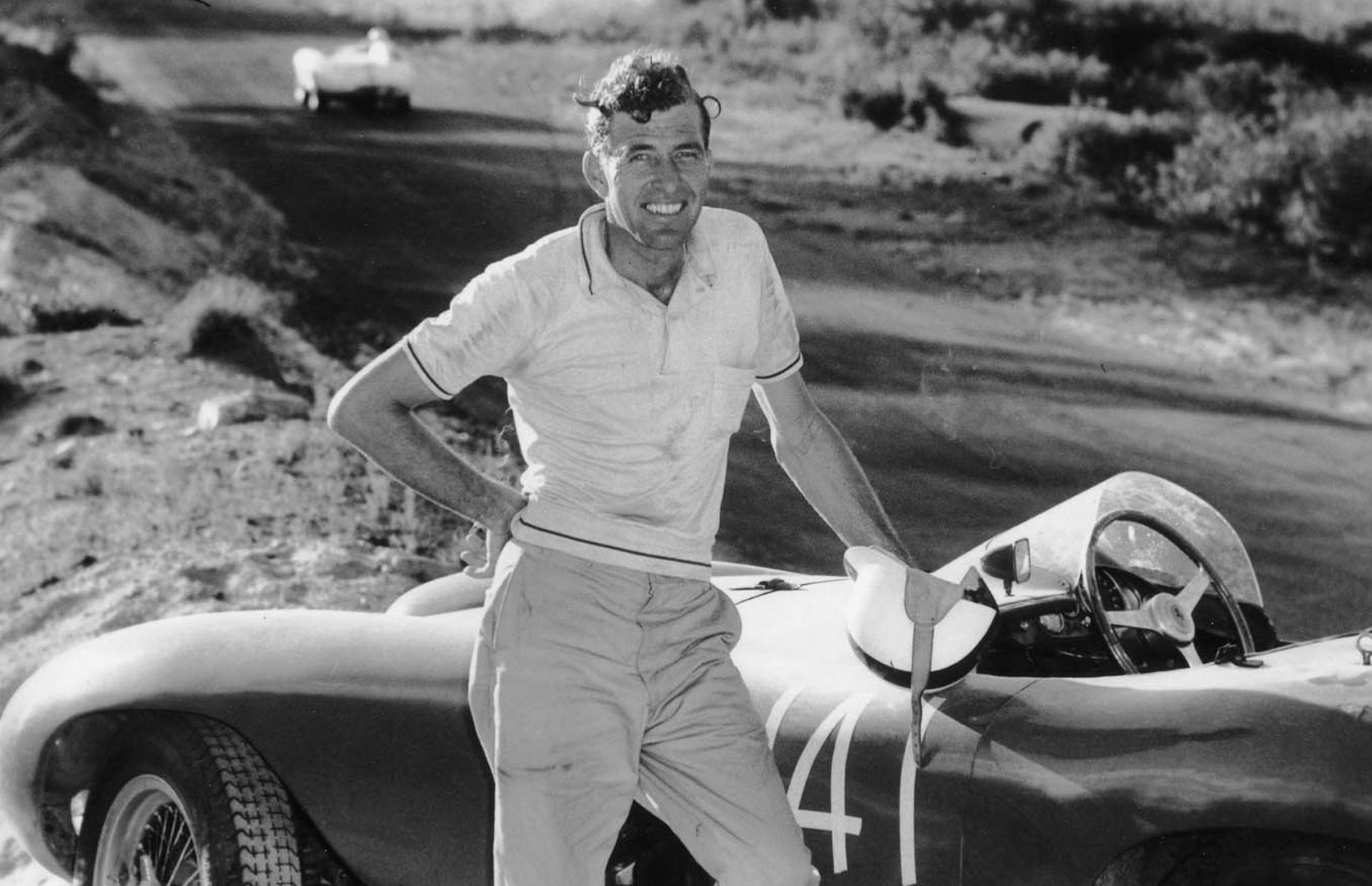
On the other side of the pond, Carroll Shelby’s career as a racing driver was coming to an end and his next one as constructor was about to start. Shelby was a living legend already then as one of the most successful racing drivers of the time, winning most of what there was to win at the time over in America. Now in the early 60’s he was starting off as a constructor and was looking for what he called “a winning bet”. It was over at Bristol in the UK that he found it. The Brits certainly didn’t mind because by this time, they had lost the rights to use the engine the Ace had been powered by and this at least created some demand for a car, the future of which was otherwise uncertain.
Shelby had seen the success of the Ace in Europe and now came up with the very American idea of trying to squeeze a V8 into it. The car already then looked like a slimmed down version of what the AC Cobra would later become, but just to get the context right, let’s remember that at 3.6 metres and 850 kg weight, this wasn’t really a car for which a V8 had ever been intended. AC did however send over an empty car to America where Shelby was just starting his relationship with Ford that would over the years develop into a very close one. Ford thus delivered the engines that Shelby squeezed into the car that he now started calling the Cobra.
The first V8 was a 260 c.i. (4.3l), which was quickly followed by a 289 c.i. (4.7l) second one. Shelby still didn’t feel the Cobra was fast enough though, and of course this was the time when in the US, there was really no substitute for cubic inches. In 1964 therefore, with what must have been a mighty shoe horn, Shelby finally stuffed the 427 c.i. (7l) legendary Ford V8 big-block into the Ace engine bay that had been, conceived for a 2-litre six-cylinder. In order to do so, he basically had to rebuild the whole car. The body was stretched, transmission and suspension were altered and moved but by 1964, the job was done. The “true” 427 AC Cobra was born, with only the windshield and trunk lid being identical to earlier cars.
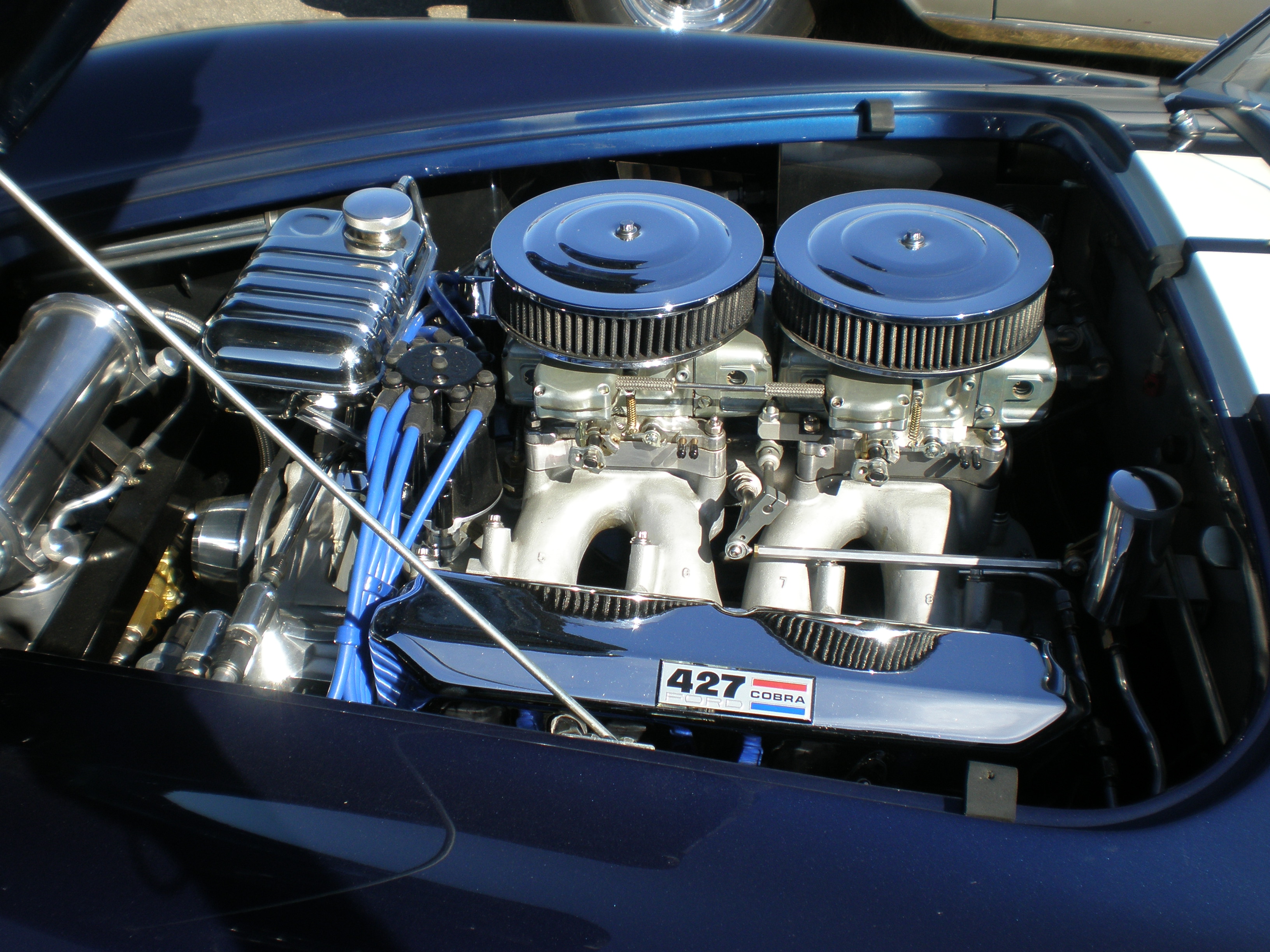
It’s not fully clear how much power the 427 Cobra had, but Shelby believed it was around 550 hp with about 700 Nm of torque. For a rear-wheel drive car weighing in at just over 1100 kg, this meant a 0-100 km/h time of below five seconds, unseen at the time. Like the animal from which it took its name, the 427 Cobra could certainly both bite and kill you if you weren’t attentive, but much as animals such as the cobra fascinate us, the car certainly had the same effect on Shelby’s clients. Even if demand was healthy enough as it was, Shelby would use a few tricks to spur it further, such as taping a $100 bill to the dashboard and tell his passenger they could have it if they could grab it. Given he pushed the pedal to the metal at the same time, rumor has it that this marketing trick never even cost him $100…

Unfortunately the AC Cobra would only be built until 1968 when AC stopped producing the base body that was still required to build the car. In total only 998 cars were built between 1962-1968, about a third of these were 427 Cobras, and only 250 of these were street cars. Best estimates have it that around 100 of those are left today. You’re free to guess what those trade for…
The success of the Cobra was however such that already in the 70’s, different firms started to produce replica’s of the Cobra, something that goes on to this day. With time and improving technology, many of these are better cars than the original Cobra, which of course is completely irrelevant. There is no substitute for the original (or, to be honest, for cubic inches…), and if you push it hard enough, I’m quite sure the AC Cobra can also raise at least a quarter of its body as it takes off towards the horizon!
 The Thrill of Driving