All good things come to an end…

There’s obviously a lot of things changing in the car world these days, and with that, it’s no surprise that many good things also come to an end. Today we’ll look at two of those, and luckily we’ll do so before it’s too late so that should you take the wise decision to join in before the lights go out (so to say), in both cases that’s still possible!

The first piece of sad news reached us recently from Buchloe, the small German town made famous by Burkard Bovensiepen, founder of Alpina, a company today run by his two sons. If you missed my story on Alpina you can read it here, and unfortunately what the company communicated was that they have sold the rights to the Alpina name to BMW, effective end 2025. For BMW, the interest in the Alpina name apparently comes from the wish for a sub-brand to sit between BMW and Rolls-Royce, which BMW also owns, but if that becomes the case, the cars will be fully built by BMW with no involvement of what is currently Alpina.
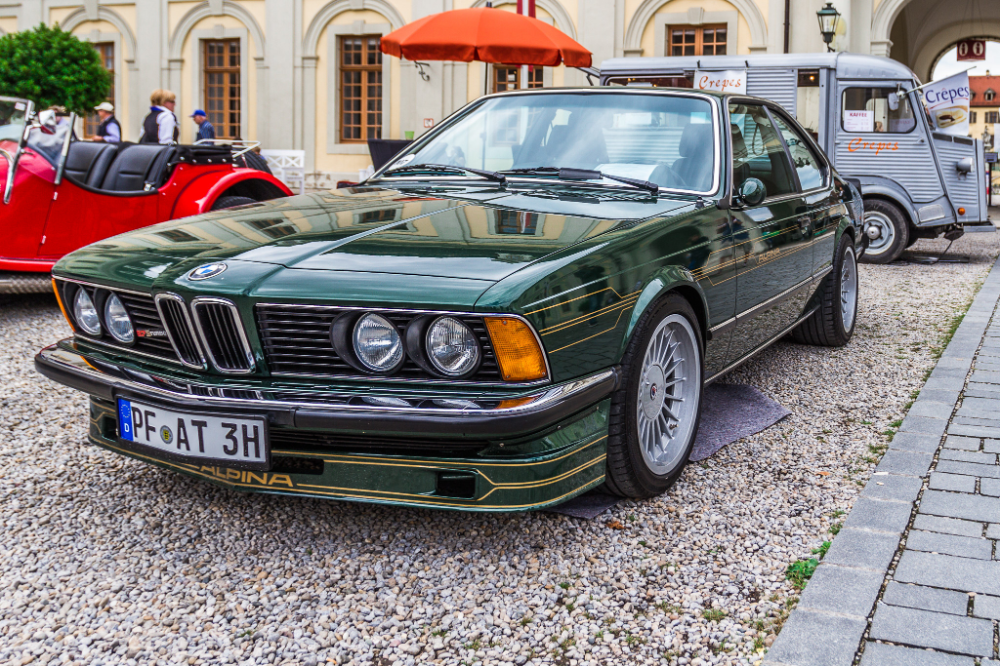
The legendary stripes will soon be gone!

You may of course ask why Alpina chooses to give up, especially when you hear that 2021 was their best year ever in terms of sales. The answer is that it costs Alpina somewhere between EUR 10-15m to develop a new model on the basis of the corresponding BMW, a cost that needs to be amortized over the coming 6-7 years. Unfortunately the general insecurity with regards to future drivetrains, regulations, penalty taxation in some markets etc. no longer affords Alpina (or for that matter, other small brands) enough planning security to make that a viable proposition. It’s indeed a sad although unintended consequence of the industry’s current development and will most probably lead to more brand concentration among non-EV brands.

The recently introduced Alpina B4/D4 S Gran Coupé is thus the last Alpina model we will see leaving Buchloe (and it will do so, along with the other current models, until 2025), but the Bovensiepens guarantee that until then, they will not turn down a single order for any of their current cars. They also don’t plan to go anywhere, but rather to continue their business under a different name. On one hand it’s about servicing and supplying parts for the 25.000 Alpina cars currently on the road, which for discerning Alpina clients often also means for example redoing a full interior. On the other, the future Alpina company will continue to work on some projects as they already do today, such as developing improved drivetrains, steering etc. for other manufacturers.
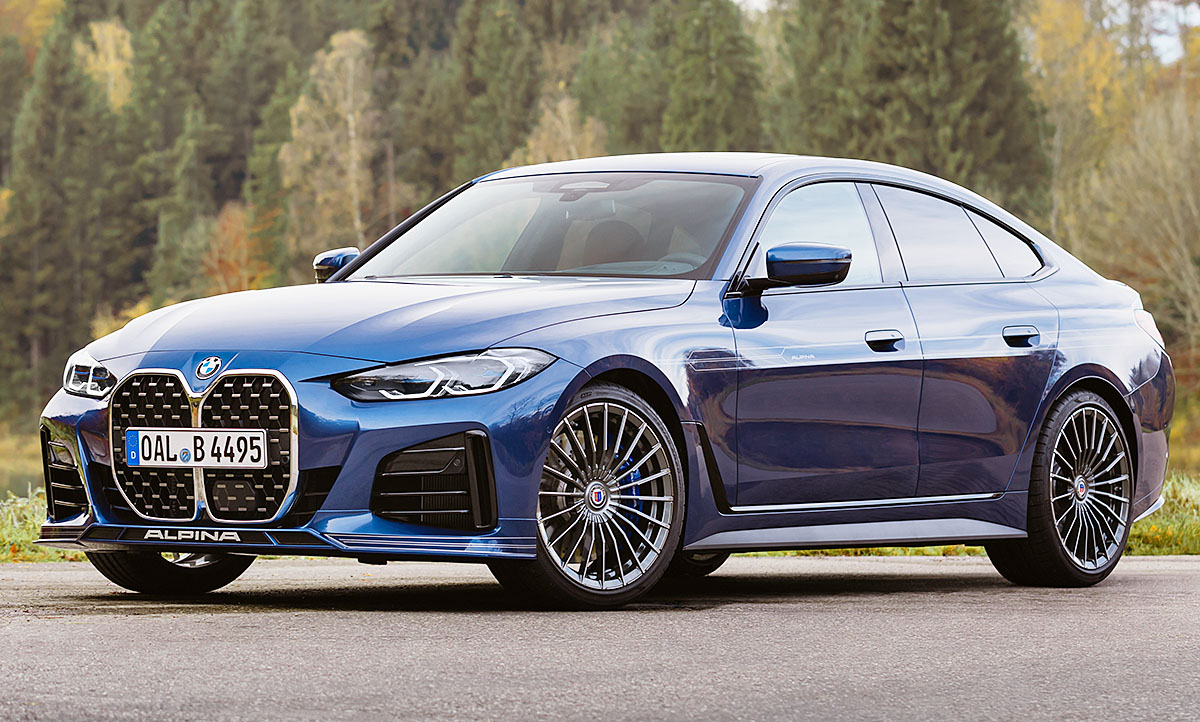
The last Alpina – but not even they can fix the number plate positioning…

It takes around an hour and a half to drive from Buchloe to Ingolstadt, home of Audi and thereby also of one of the most discrete, polished, usable and reliable supercars in the world – the R8. It’s been with us since 2007, a very long time for any car these days and with very few design updates through the years, it still looks modern to this day. It will however be replaced next year and when it is, that will also mean good-bye to the last engine of its kind still produced. I’m of course talking about the wonderful, naturally aspirated V10 that these days is the only available power source for the R8. It is however on the way out as Audi have already confirmed that the new R8 coming out in 2024 will be fully electric. The same V10 is of course also in service in the far less discrete Lamborghini Hurracan, but here again the engine won’t be available in the new Hurracan set to come out in the same year as the R8, i.e. 2024. It’s not fully clear what will replace it, but current rumours point at some kind of hybrid combined with a no longer naturally aspirated V8.

15 years later, still one of the best looking supercars!

The naturally aspirated engine in the R8 and Hurracan is thus the last V10 in production. There’s one naturally aspirated 12-cylinder engine still out there and it’s of course the sensational, 6.5-litre one in the Ferrari 612 Superfast, putting out a crazy 818 hp and revving all the way to 9500 rpm. Then we’re however down to eight cylinders and in terms of naturally aspirated ones, options are few and far between. There’s of course the very discrete and also not very inspiring Lexus LC500, and there’s various versions of the 5.7 or 6.2 litre V8 in various cars in the Dodge/Chrysler/Jeep/RAM family of mostly trucks. But then there’s also the new Corvette where the top model features the 6.2 litre V8 putting out 482 hp. And that’s basically it.
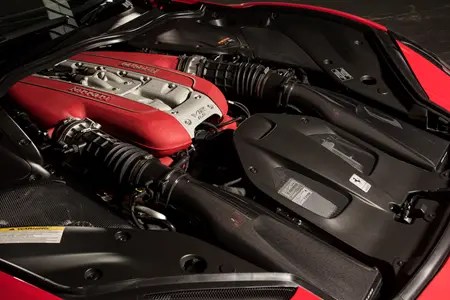
The 6.5 litre Ferrari V12 is the last of its kind

It’s safe to say that we’re clearly well into the last straight as concerns natural aspiration in general, and for big cylinder engines in particular. Given this, buying a new R8 between now and 2024 could actually turn out to be a better deal than buying a new car usually is, as the last year of production is often sought after, especially if it features an engine that can then no longer be had. Of course that goes for the Hurracan as well. And if we forget about natural aspiration, it’s no doubt also true if you buy one of the last Alpinas!

Alpina – the exclusive BMW cousin!

Everyone knows AMG, the independent company specialized in the tuning of Mercedes engines that the latter took over in 2005 and that is since fully owned by MB. Next to building the most powerful version in most product lines, having AMG inhouse also enables MB to stick various AMG logos on lots of other models as well (and whether that “logo inflation” is a good thing or not is something that certainly can, and perhaps will be discussed in a future post). AMG is thereby comparable to the M-division at BMW. M didn’t start as an individual company, but today represents the same for BMW that AMG does for Mercedes, i.e. various cosmetic sports packages as well as the most powerful models.

But if you’re a BMW fan. there’s also the option of getting an Alpina. To clarify, given this is sometimes misunderstood, Alpina is neither an M car badged differently, nor is it a brand owned by BMW. It is something far more exclusive. An Alpina can be viewed as the grand tourer version of BMW’s M offer, different in character, very individual and built in small quantities. BMW and Alpina work closely together since more than 50 years, but BMW has no ownership in the little known manufacturer from the small town of Buchloe, close to Munich. Today we’ll look closer at the company’s history and whether, if you’re a market for a “real” BMW M, you should consider the corresponding Alpina before deciding. I don’t think I’m ruining the party by answering that last question straight away: in most cases, yes you should!

Burkhard Bovensiepen from Buchloe (an alliteration as good as any) could have had an easy if not very exciting life, had he decided to take over the family’s thriving typewriter business. But somehow, back in the early sixties, he decided that this wasn’t what he wanted his life to be about. A couple of years earlier, Bovensiepen had owned a Fiat 1500 he felt needed more power, so on a trip to Italy he had visited a local tuner who sold him the standard kit of improved camshaft and double Weber carburettors, thereby managing to squeeze out a bit more power from the small engine. Unfortunately though the treatment wasn’t long-lived, and the motor literally fell apart on Bovensiepen’s way back to Buchloe. That convinced him of two things: firstly, more power was fun (as long as the engine doesn’t break), and secondly, professional tuning had to be done in a way adapated to the specific car, rather than as standardized after-market kits for various engines. On the basis of that philosophy Alpina was born in 1962, and Bovensiepen decided to focus on cars from the automaker right around the corner in Munich: BMW.

Alpina’s first car, the 1500, in an alpine setting!

BMW had at this time launched the 1500 (yep, same name and nope, that wouldn’t be possible today!) that was to become Alpina’s first project car. Bovensiepen bought one and started working on the carburettors, exhaust and various other parts, hereby improving the output by 10 hp to 90 hp. The rather basic marketing effort consisting of sticking notes under the wipers of BMW 1500’s, inciting owners to give their cars the Alpina treatment for around 1000 DM. The very basic marketing proved surprisingly successful and in 1965, BMW approved of the modifications and went as far as granting Alpinas the same guarantee package as the original cars. That’s how a close collaboration that lasts until this day started, with Alpina, initially with only 8 employees, tuning most new BMW models and with time, also offering further options for interior design and suspension.

During the 70’s Alpina competed in German car races with its own team next to BMW, in both cases based on the BMW 02-series. Both teams were very successful and with drivers such as Niki Lauda, James Hunt and Jacky Ickx, they would go on to win most races both in the European and German championships, be it touring, rallies or mountain races. In 1977, Alpina ended the racing adventure as other projects had now become more important, most notably three new developments: BMW Alpina B6 2,8 based on the 3-series, the B7-Turbo based on the 5-series, and the B7 Turbo Coupé, based on the 6-series. Both B7’s, thanks to a KKK turbo and intercooler, would develop up to 330 hp and had a top speed over 260 km/h, but were at the same time very civilized to drive, thereby setting the mark for Alpina’s niche: powerful but not edgy, more grand tourer than sports car.

The Alpina B7 Turbo Coupé – powerful yet civilized

Alpina continued to grow and develop through the years, although the number of cars built on each specific BMW model in the 80’s and 90’s could be as low as 20-30, so very small series, obviously making these very sought-after today. A further recognition of the seriousness of the Alpina proposition came in 1983 when the company was registered as a car brand in Germany, i.e. not just a tuner. Other notable developments were the first bi-turbo engine in 1989 and the first diesel Alpina ten years later, in 1999. Today, diesels make up close to half the cars produced.

It’s difficult to summarize all the models Alpina have worked on over the years and the highlights are to a certain extent a matter of personal preferences, but a couple of noteworthy ones are clearly the two BMW Alpina Roadsters based on the Z1 and the Z8 (and where Alpina fitted an auto box to the otherwise manual Z8 to boost US sales), as well as the Alpina B6 GT3, based on the BMW 6-series and that in 2010 marked Alpina’s return to racing, going on to win the German GT3 series the year after. Today the company offers a version of most BMW models, including the big X7 SUV (of which there is no M-version). Many of the engine parts as well as gearbox, instruments and wheels are today sent to BMW from Alpina. BMW then build and paint the cars before returning them to Alpina for fitting of tailor-made interiors and aerodynamic kits etc.

The B12 5.7 Coupé – rarely have wheels looked better on a car!

There’s basically three ways to distinguish an Alpina from the corresponding regular BMW: firstly by colour, at least if it’s in the specific Alpina green or blue, both rather bright and flashy, and colours Alpina also like to do interior stitching in. Secondly, by side stripes. Because yes, the stripes that to all intents and purposes look like something straight out of the 70’s and aren’t necessarily very elegant, is something Alpina still sticks on its cars if they owner wants them to. There seems to be roughly a 50/50 split between those opting for and against them. Finally though, and by far the nicest mark of an Alpina, are the lovely, 20-inch and beyond multi-spoke wheels. Interiors can be individualized and are again, often a matter of taste, but typically include different steering wheels, gauge clusters, seats, wood trim etc. Nothing very spectacular, and arguably also not always of good taste, but with a high degree of individualization.

An 80’s B6 interior – still BMW yet distinctive

Whether an Alpina is a better proposition than an M-car depends on what you’re looking for. Driving-wise it’s been described pretty well as the M-version being the track car, and the Alpina the car to get you to the track. After the racing era in the 70’s, Alpina’s focus has been to build powerful but easy to drive cars, which in most tests are described as less sporty than M-cars, but also a more rounded experience all in all. So it’s really up to your personal preferences. If you’re looking for the sports car characteristics of an M-car, that’s probably the way to go. If however you’re looking for more of a GT nature, then you really can’t go wrong with an Alpina. Warranties are the same as for any BMW car, and the local BMW garage will also not have any issues servicing it. The starting price of an Alpina tends to be close to the corresponding M-car (net of some equipment differences) with resale values typically higher, obviously due to the fact that in spite of its success, Alpina even today sticks to building no more than 1500-1700 cars per year. You’ll thus pay more if you buy a used one (especially if it’s one of the smaller series), but future values can be estimated to remain very stable. Given this, although there’s nothing wrong with answering the question on what car you drive with “BMW”, saying “Alpina” definitely has a more exclusive ring to it!