
Is the European, and especially the German car industry heading for a fall? As we enter the new year, it’s a good time to ask the question. Why? Because the full turn towards electric, the inability to sell EV’s without subsidies, bringing cars to market that nobody wants and a whole block of new brands from China undercutting the market are all part of what I believe will be a very bleak future for European manufacturers, unless a change of strategy happens pretty soon. Let’s dig in.
With financial conditions turning for the worse in the last couple of years and inflation making a rather spectacular return, it’s no big surprise that consumers think twice about capital expenditures such as getting a new car, especially when there’s so much insecurity as to what the future of mobility will look like. And what goes for consumers also goes for states, especially when those in Europe have a whole set of geopolitical worries to think about, and spend money on.

Therefore, in their infinite wisdom, European politicians in various countries have decided to scrap or heavily reduce subsidies on new EV’s. This is not because they’ve read this blog and come to better thoughts, at least I don’t think so. Rather, they probably believed their own propaganda and that everyone had bought fully into their electrical mantra, so that subsidies were no longer needed. Oh how wrong they were…
According to EV-Volumes.com, a database tracking worlwide EV sales, the sales growth rate has fallen from over 100% YoY to around 10% in the last two years. And let’s remember this is starting from a low base, so that when Ola Källenius, Mercedes-Benz CEO says like he did a few weeks ago, that Merc’s EV sales in the last year grew by 70%, it really doesn’t mean that our streets are crowded with EV’s from Stuttgart.
But wait you’ll object, haven’t you told us that the Tesla Model Y and 3 are among the bestselling cars even in Europe? Yes I have and indeed they are, but this is a sign of Tesla doing this right rather than a general market trend. We’ll come back to that a bit later, however anyone doubting the correlation between EV sales and subsidies can look back to a I wrote piece back in 2018 using the example from Hong Kong.

In April of 2017, EV subsidies on more expensive cars like Tesla were removed in Hong Kong, and during the rest of the year, sales dropped from almost 3.000 sold in the one month of March of that year, to a few dozen during the remaining nine months. And then Hong Kong went over to China who are very keen to subsidize the EV sector in general, so now sales have short up again. That same mechanism is exactly what we’re now seeing in Europe.
As we start 2024, EV’s still make up less than 2% of the European car fleet. That’s how big what the press likes to describe as “tremendous success” really is, and that shows you how very far we still have to go if the EU is serious about its ban on combustion cars in 2030. It’s also a bit of an issue if, as an automaker, you’ve committed yourself to go all-electric, and then produce cars that in value for money are frankly so awful that they shouldn’t have made it to market in the first place.
BMW has just presented the top-of-the-line new electric 5-series called the i5 M60. The new 5-series generation is over five meters long, or as big as a 7-series used to be, to offer enough room for the electric version’s battery pack. That pack also means the EV version weighs in at over 2.300 kg, around 500 kg or half a ton more than the combustion version of the same car. In spite of that it only has an 80 KwH battery, meaning a realistic range of something like 250-400 km depending on driving style, season and conditions.
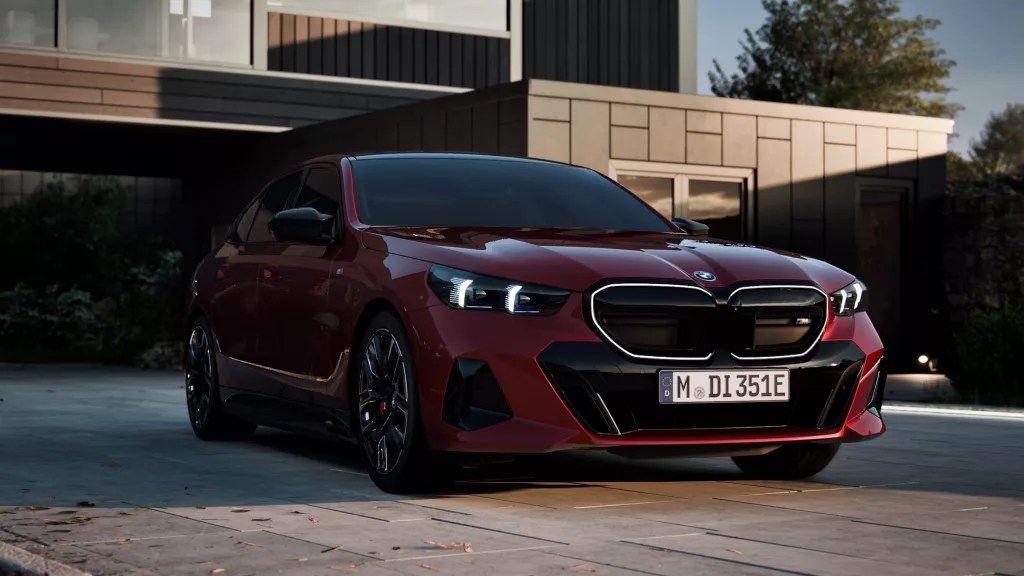
The inside is nice as it should be, however quality-wise, the previous generation that I drive myself is as superior as a Merc S-class is to an EQS. The increased use of cheap materials is of course to save weight, and instead electric gimmicks like games and movies are the new selling points, supposed to keep you entertained while you’re charging. For all this, the i5 M60 with options will cost you around EUR 150.000, or almost double of what the diesel version of the same car costs – which as said, weighs half a ton less, has a range of about 900-1000 km on one tank and takes two minutes to refuel.
If you think that really is a lot of money you’re completely right, but it’s still less than you’ll need to buy the new Lotus Eletre, which in its cheapest version starts roughly there and goes up to a rather incredible EUR 200.000. It’s an even bigger car, Range Rover-like in size, as gimmicky and plasticky as the Beamer on the inside, but with even more range issues and an efficiency loss vs. a Tesla of over 50%. It also has an infotainment system heavily over-estimating the remaining range, creating a real possibility that you’ll be stranded with an empty battery.
These are two rather awful examples, but at least they look rather stylish and have an excellent wind drag coefficient (or CW-factor) of below 0.30, which is obviously critical for an EV. So what does Mercedes do? It’s preparing to give us an EV version of the G-class, called the EQG, that will launch in 2025 at prices above USD 150.000. The current G-class has a wind drag factor of 0.54, but I’m sure Mercedes will bring that down to below 0.30, right?

In the year 2024, no one in their right mind should put up this much money to buy a BMW they can drive 300 km, or for that matter, give 200.000 to an English manufacturer with less than a stellar reputation for a car that cannot be relied on to tell you how far you still have to go. It’s frankly both embarrassing and scary to see that in the decade they’ve had to prepare for what they knew was coming, leading car manufacturers still can’t manage to build a car that is better, or range-wise not even as good, as a 10-year old construction from Tesla, costing half the money.
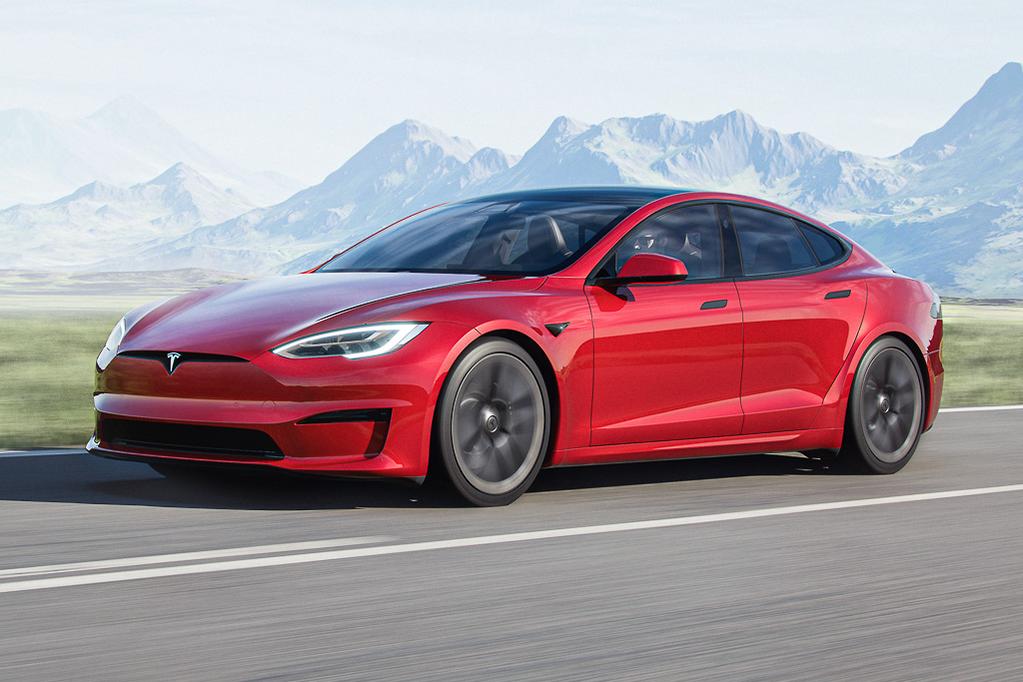
Tesla on the other hand are doing great, and models Y and 3 are now established as some of the best-selling cars in Europe. They may look the same as they always have, but constant efficiency improvements mean that on a technical level, they’ve maintained the distance to other manufacturers. Also and critically, the strategy to launch a functioning charging network themselves rather than relying on governments, was a genius move. This is still a factor that heavily hinders sales in some markets, especially when many park in the street and can’t charge overnight.
Tesla proves that there can indeed be a demand for EV’s if the packaging, price and range are reasonable. A Tesla Model S was never a luxury car, but at its current price point and with considerably more range than the three examples given above, if I were to buy an EV today, it’s the only one I would consider.
Of course not everything is about luxury cars, and the bulk of sales is of course in lower segments. But of course, cars there may be cheaper but they’re certainly not better than the top of the line, rather the contrary. Also and increasingly, the competition in these lower segments doesn’t come from the US, but rather from China, as a number of Chinese EV makers are now entering Europe, with an increased number of cars on our roads.
They’re of course cheaper than both Teslas and European EV’s, also thanks to very generous, Chinese state subsidies, and the almost complete integration of the production line, from the mines in Africa over the battery production in China, to the finished car, is of course a far more efficient way to produce. To this, you should also add a 1.5 billion domestic market, meaning they definitely have scale in their favor.
The cars themselves are, at least so far, inferior products. But exactly how inferior? In terms of range, they’re pretty close to European EV’s not only in the luxury segment but overall. In terms of build and ride quality they’re getting there, especially since this is much easier than for a traditional car, given EV’s score points not primarily on how it drives, but rather on how much it costs and how many gimmicks it has.

In summary therefore, EV sales are stalling, subsidies are being removed, and the Chinese undercut European manufacturers in price. Surprisingly enough, all of these seem to have been fast asleep at the wheel for the last years. And at the end of this decade, we’re supposed to stop producing combustion cars, which still made up 80% of car sales in 2022 and are thus, you have to think, what people want to buy.
If Europe wants to keep a car industry in the future, manufacturers need to start building cars that people want, which make economic sense, and that can differentiate themselves against Chinese imports. That probably means leaving a large part of the lower EV market to the Chinese, and instead reverse the full electrification strategy, rather reverting to diesel and petrol hybrids, in a mix with modern, non-polluting diesels.
Manufacturers will tell you EU politicians haven’t given them any choice, and this is all policy. But policy can be influenced and if they want to have a brand at all in a few years, they should probably get in a car (preferably not an EV), drive over to Brussels and make the case for why the current strategy and timetable for the phasing out of combustion cars is a death threat to the industry and thereby to the one million people it directly employs.
In view of the mass protests against fuel prices by farmers in Germany in the last weeks, which have now spread to France, that might actually be an argument these people are inclined to listen to. At least they wouldn’t be able to claim that they hadn’t been warned.
 The Thrill of Driving