M88 – 3x magic!

Remember Rod Stewart? I know he’s one of those artists you need to check whether he’s died since you last heard of him, but given I just did, I can confirm he’s still alive, and by the looks of it, still kicking. Back in the 80’s, Rod did a song called “Some guys have all the luck”. Given he’s known not only as a Scotsman with a smoky voice but also as a great womanizer, it’s pretty clear what “all the luck” was referring to. This week however, we’ll talk about another guy who really has all the luck – in car terms.

Still alive

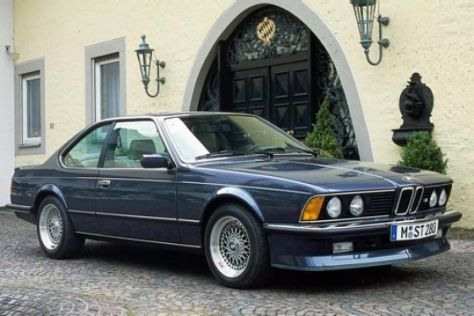
It all started during an innocent catch-up lunch with an old friend from university back in Sweden, before we both moved to Switzerland many years ago. I know he’s interested in cars, so naturally, that’s the turn the discussion took after we’d updated each other on jobs, travels and families. It turned out my friend had just bought himself the nowadays quite rare BMW M635 Csi, one of my all time favorites and a car I wrote about back in 2020. My friend went through the purchase that was a bit our of the ordinary, but will stay between him and me, and then said, kind of matter-of-fact like, that it was nice to finally complete his line-up of three cars with the same engine.
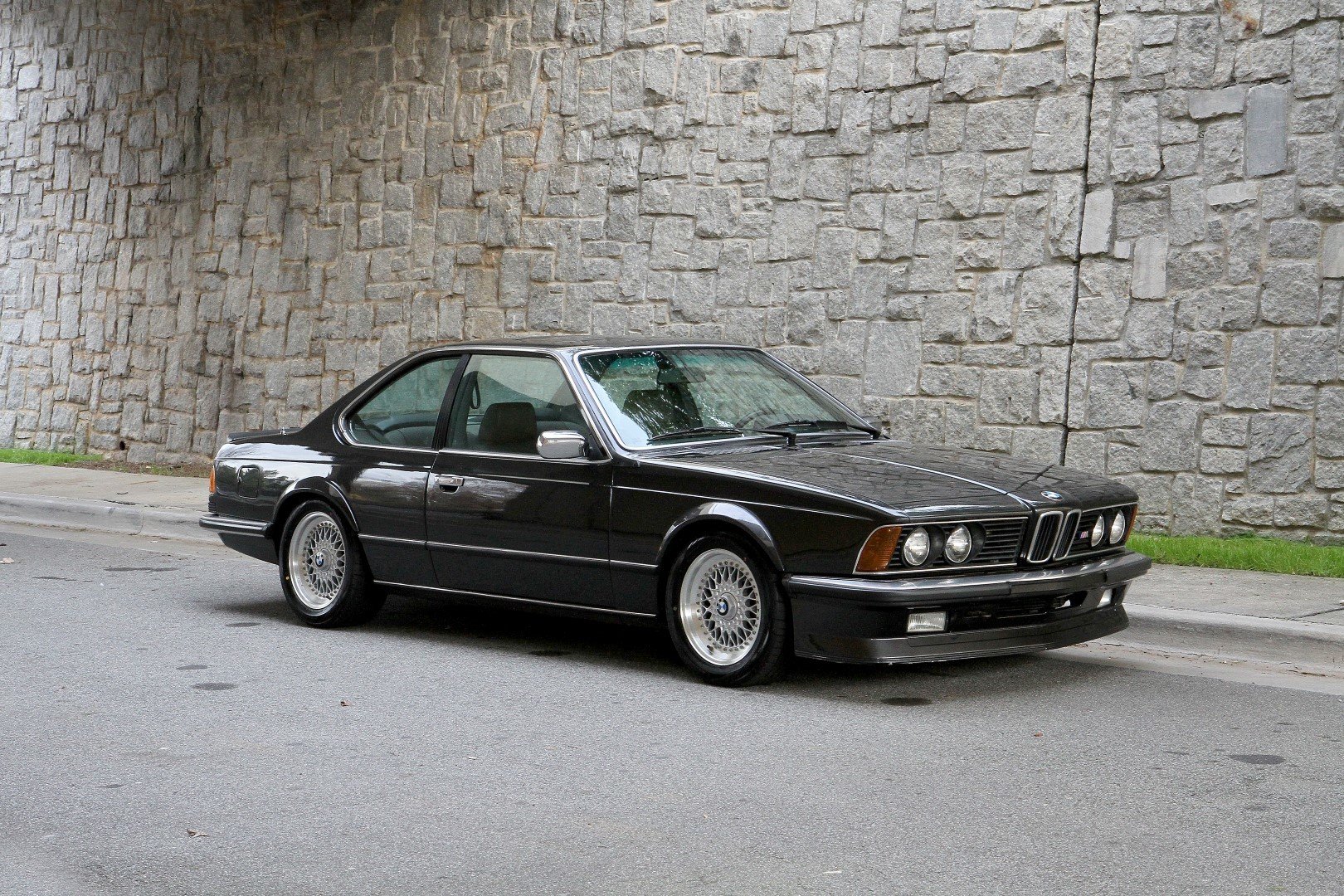
The first of BMW’s large coupés – the M635 Csi

My brain was working intensely while my jaw was seeking the ground, as my friend (who by now was rapidly taking on a heroic status) told me he’s also the owner of an M5 of the first, E28 generation, and even more incredibly, of an original M1. The M5 is up in Sweden, but the M1 is a car he regularly drives down here in Zurich. And of course, these three wonderful cars are all powered by one of the greatest engines of all time – the so called M88. a suitably legendary engine for one hell of a car line-up!

The M88 engine was first featured in the M1, after the prototype cars had been tested also with a four-cylinder, turbo engine. The straight, 3.5 litre six cylinder with the so called DOHC dual overhead camshaft and four valves per cylinder produced around 280 hp with fuel injection, and around 330 Nm of torque at a relatively low 4500 rpm.

The M1 was a sensation when it was shown to the world in 1978

The power was enough to take the light and aerodynamic M1 to 100 km/h in around six seconds, a spectacular time in the late 70’s. Combined with a top speed of around 260 km/h, this made the M1 the fastest standard German sports car when it was launched in 1978, a crown it held onto until its end of production in 1983, when Porsche updated the 911 Turbo.

The M5 (E28) was launched in 1985, two years after the M1 had been discontinued. The four-door sedan was hand-built and powered by the third version of the M88 engine, referred to as M88.3, with around 10 hp more than in the M1 in the non-catalyzed, European version. The M5 was however a car BMW intended for the US market, where the catalytic converter reduced the power somewhat. It would only be produced for three years until 1987.

Oh how discrete power sedans were back in the 80’s!

The M635 Csi had seen the light a year earlier than the M5, in 1984. Contrary to the latter, it was built by BMW itself and not the separate M division, officially called BMW Motorsport. It rode 10 mm lower than the standard 635i and also had reinforced brakes, a lower front spoiler and two side mirrors – as standard! As its M brothers, the gearbox was of course a manual, 5-speed dogleg box from Getrag.

So there we go, three absolute legends of the automobile world, all powered by the same legendary engine – and all in my school friend’s garages. As it turned out, this was far from the ordinary catch-up lunch! Looking at it a bit closer though made it clear just how extraordinary his small collection is. Rarest of the three is the M1, of which only 453 were built. The M5 was made in 2241 units, but more than half of these were sold to the US. At 5855 units, the M635 Csi was the mass-produced car of the three.

An amazing power unit!

As long-term readers know by now, Switzerland is a rich country and one that is full of car enthusiasts, so that you usually see all kinds of car legends in quite high numbers. When it comes to this trio however, not a single one of either car is for sale at the moment on the regular sites, not even an M635 Csi. Checking Classic Driver turns up three M1’s currently for sale, starting at around half a million USD. The M5 is slightly more common and will set you back around USD 100′. The M635 Csi is the cheap one of the bunch, with good cars starting at around USD 60′.

It’s in other words quite a good pension fund for his older days my friend has collected. But knowing him, I know that’s also not the reason he got them, and I know he drives and enjoy all three cars. Good for him! And in terms of having all the luck, I guess you can be lucky in other things than cars – as well. I’ll settle for that for now…

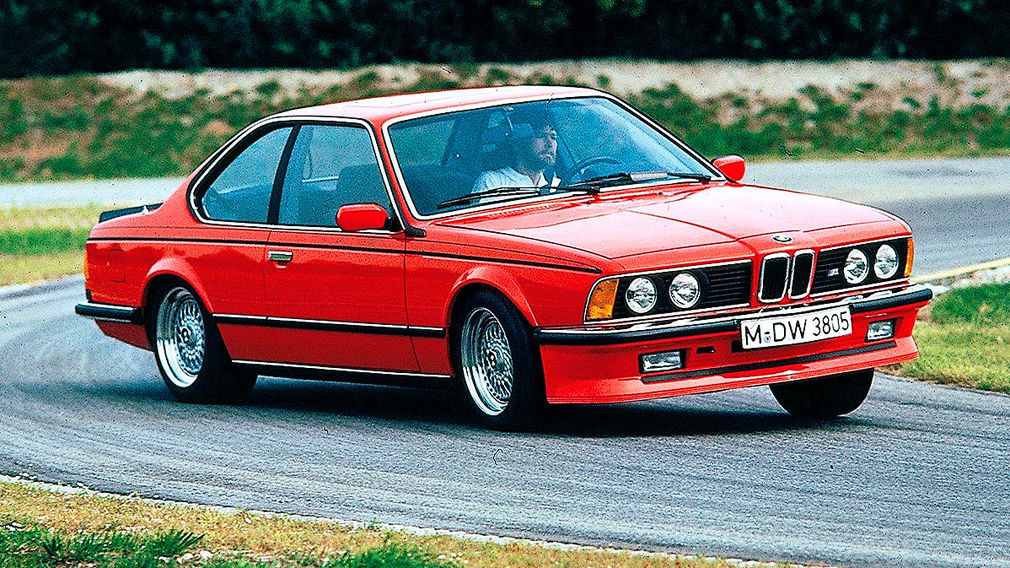
The Bavarian long-runner!

A first week with the 650i is now behind me (if you missed the story from last week you can read it here), and thankfully the weather Gods were kind enough to let the sun shine from a blue sky everyday, meaning I’ve been able to enjoy the car as it should be, with the roof down. Impressions so far are very positive and having now experienced a bit more of the quality, comfort and power train of the 650i, my unofficial rating of it as the most mispriced used car in the market is confirmed – not that I’m complaining!

Therefore, feeling a bit Bavarian this week (and thus sad to hear earlier in the week that this year’s Oktoberfest is cancelled), I thought we’d have a look at last time BMW had a 6-series, back in the 70’s-80’s. The first 6-series indeed still has a lot going for it, as is proven notably by the fact that its 13-year production run is the longest of any BMW model!

The 6-series was introduced at the Geneva Motor Show in 1976 and was produced with relatively minor updates until 1989 to a total of over 85.000 cars. The E24 as it’s called internally replaced the E9, and although it mostly resembles the 7-series that followed a year later in 1977, it was built on the smaller, 5-series chassis, as a true four-seat GT car, that over the 13 years of production was only ever available with 6-cylinder engines.

The original line-up included the 630cs and the 633csi, complemented in 1978 by the 218hp, top of the line sport version 635csi that I’ll focus on here since it’s the car to have in the range. The 635csi was easily distinguishable already in the first generation through its front and rear spoilers and ultra-cool, 80’s-style BBS wheels.

Some of the best looking wheels in the last 40 years!

The first (and only) major model update in 1982 was important as the chassis was more or less replaced by that of the second 5-series, giving the whole car far more rigidity and stability in combination with lower weight. From 1982 ABS breaks came as standard on the 635csi, and on the inside, the equally-sized speed and rpm gauges so typical for BMW had now found their place in the gauge cluster. Various other cosmetic touches contributed to give the car a more modern look. Oh, and I almost forgot that the pre-infotainment check control, that allowed the driver to test various functions in the car, was now automatic and didn’t have to be activated by pushing a button. There was also the optional board computer that let the driver check the outside temperature, the average consumption and the total distance driven. That was advanced stuff back in the early 80’s!

Check control far left, board computer far right – this owner was king of the hill in 1982!

In 1984 BMW introduced the top-of-the-line M635csi with a re-worked version of the M1 engine, with four valves per cylinder and dual overhead camshafts (DOHC). The M-version produced 286hp and from 1986 260hp with catalyst, and was only available as manual (by then, catalytic cleaning meant the regular 635csi was down to 185hp).

In 1987, a second and last facelift mostly consisting in various chrome pieces being replaced by black metal and plastic, helped the by now quite old 6-series live for another two years. The last car was produced in April 1989 and the 6-series was replaced only a few months later by the the 8-series and the 12-cylinder 850i, but that’s another story (that I’ve written about here should you want to read it).

M635csi – 30mm lower, larger front spoiler

The clean lines of the 6-series are purest in the simpler versions, but to me the 635csi has always been the one to have. That is except for the M-version of course, but at the EUR 60.000 and upwards good M-cars cost today, they are at roughly double the price of the standard 635csi, which given the car’s age in my view delivers sufficient power and driving pleasure. And driving pleasure there is, in a very 80’s style; I drove a 185hp, 635csi recently, briefly considering it as I was selling my Triumph. No doubt it’s a car that works perfectly as both a daily driver and a GT car for longer trips. The steering is surprisingly good, the manual gearbox is distinct, although with long throws, and the breaks work just fine. The six-cylinder has a nice tone to it and you’re left with the feeling that the only thing missing is an old Modern Talking cassette in the standard Becker cassette radio!

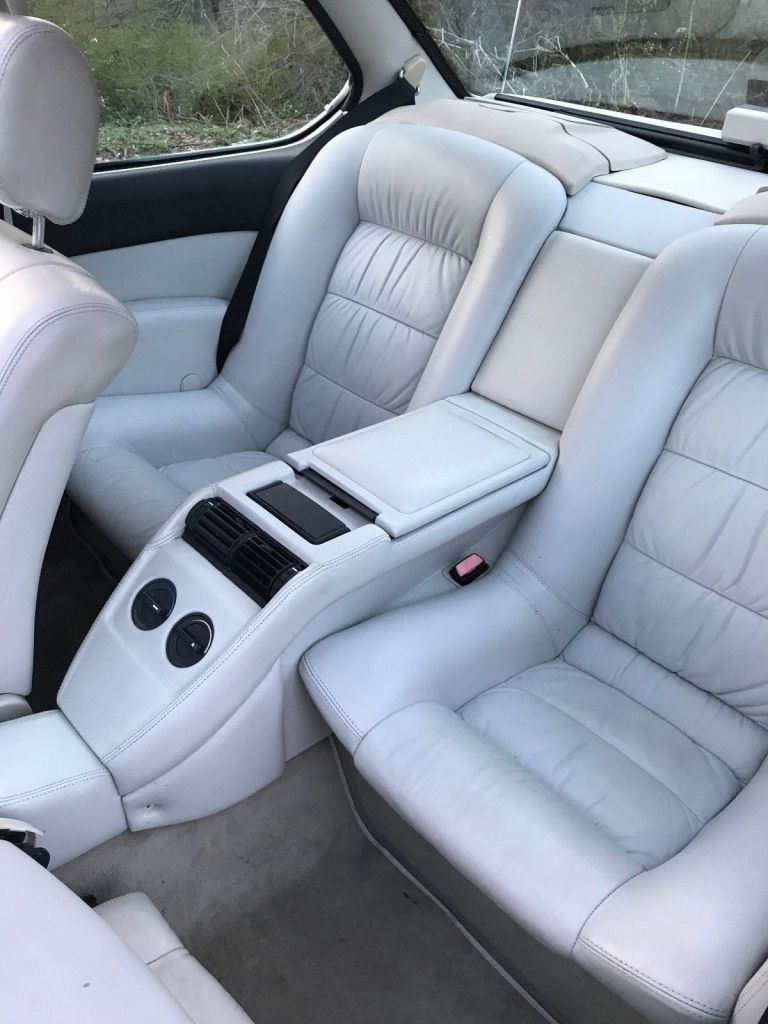
A late 635 with a custom center piece – the coolest back seats ever!

Although it was produced in a total of more than 85.000 cars, the original 6-series is becoming increasingly rare, and if you ask me it’s no doubt one of the best cars coming out of the 80’s. Its combination of good looks, great engine and practicality make it a very usable youngtimer at a still attractive price. I would opt for a manual 635 from after 1982, paying more attention to the car’s history and condition than the exact model year. Go through all the usual checks and in terms of equipment, make sure you get the original BBS wheels, a nice leather interior and a Becker cassette radio, and you should still be on the right side of EUR 30.000. The only thing left before hitting the road will then be trying to remember in which box you stuck those 80’s cassettes many years ago…

We hope you like this blog – please help us keep it interesting by subscribing!