The last real Citroën (sort of…)

When you speak to fans of the French automaker Citroën (something which unfortunately happens less and less often as most of the true enthusiasts are getting old!), one of the most sensitive topics is no doubt which model of the legendary brand constitutes the last real Citroën. To a real “citroënniste”, nothing in today’s line-up is even close to fitting the bill. Some say it all ended with the legendary DS that I wrote about a while ago (see here). Others are more progressive and would draw the line at the 90’s XM, a strange, space-ship like creation and certainly a true Citroën in terms of quirkiness, but to me a car that lacked both looks and innovation. I’m rather in the camp in between the two. To me, the last real Citroën is the CX launched in 1974, notably as it was the last Citroën designed and developed before Citroën was bought by Peugeot and became a part of the PSA group the same year. Next to that however, the CX can be described as the every day version of the SM that I wrote about in January (see here), but also taking the best of the DS and modernizing the rest in a packaging that was truly Citroën. It thus forms the last chapter in the trilogy of the DS-SM-CX, reason why we’ll look closer at it this week!

An aerodynamic design with (today sough after) TRX wheels.

It’s never easy to succeed a true legend and with very few exceptions, there’s really no greater legends than the DS and SM. The CX however did a great job, being built during 15 years until 1989 (the estate all the way to 1991) and selling more than 1.1 million times. Given that it’s surprising how few have survived until today, something that also goes for its two predecessors. Then again, quality is not the first word you think about when talking about cars from the 70’s and it didn’t prevent people from being amazed when the CX was first shown to the world in 1974. The name makes reference to the wind resistance coefficient in French which for the CX was 0.37, not as good as the SM but still much better than most cars at the time.

When the development of the CX started in 1969 as an “inofficial” successor to the DS, a clear objective was to make the car easier and thereby cheaper to build than its complicated predecessor. That goal was achieved in a Citroën kind of way, meaning that everything except the bodyparts was fixed onto the chassis, with the body being screwed onto it at the very end of the production process and fixed with six rubber-metal fixings. No one but Citroën would probably think of this construction as a good way to save costs, but it worked well in terms of rigidity and also in isolating passengers from vibrations. Here, the legendary hydro-pneumatic suspension that the CX inherited from the DS was obviously a great help as well.
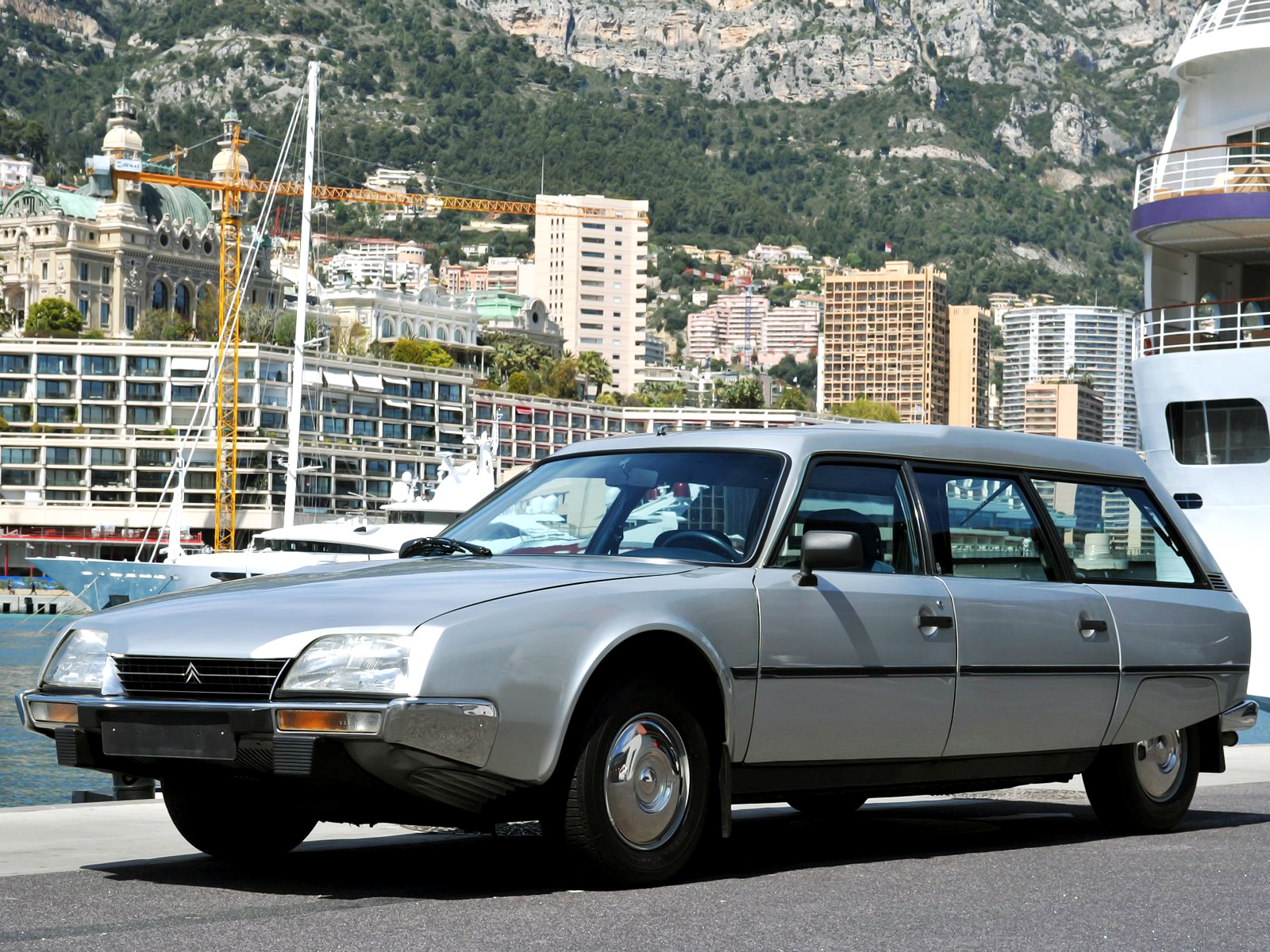
The cavernous CX station wagon, here in the first series

Another arbuably less glamorous thing the CX inherited from its predecessor was the engine. Not that Citroën didn’t have grand plans here as well. The original idea was to fit the car with a Wankel engine which with a planned 170 hp would have given the car sportscar like performance, and also suited it well given the Wankel construction’s lack of vibrations. That plan had to be scrapped for cost reasons though and instead, the CX inherited the 2-litre and 2.2-litre engines from the DS, developing 102 and 112 hp respectively, a bit later complemented by a diesel with 66 tired horses. These engines helped sell more than 100.000 CX’s in the first year of production, more than the DS had sold in any year but one. In 1975 Citroën also introduced the CX station wagon, a 25cm longer version of the car with a cavernous luggage space in the back. It was that same extended chassis that would also be used for the Prestige model that appeared shortly thereafter but where the extra 25cm instead benefitted the back seat passengers, making it a favourite car for many heads of state. Interestingly though, it wouldn’t be so for the French president until Jacques Chirac in 1995, when the CX was no longer manufactured.

An ocean of 70’s plastic around a bathroom scale!

If the CX was a revelation on the outside, it was no less so once you entered it. Once you’ve taken place in the extremely soft seats, you look out over, or rather through the one-spoke steering wheel at something which at first looks like a bathroom scale, but is in fact the speedomoter and rev counter. You then notice the lack of levers on the sides of the wheel, as the CX instead had two satellites with all necessary functions that you are supposed to operate with your left and right hand finger tips. The right satellite includes the horn, but any need for it will probably have passed by the time you find the right switch. The turn signal on the left is no less surprising since you have to actively turn it off – it doesn’t reset automatically when you straighten the steering wheel. Better? Not really. Different? Bien sûr! And by the way, if you think the CX is a hatchback, think again. In fact the concave and thereby self-cleaning rear window doesn’t open, meaning it has a traditional boot below it which is quite low and small. This was one example of the CX’s success becoming its enemy: it was well known that CX owners wanted Citroën to make the car a hatchback, something that could easily have been done, but the responsible people at PSA just looked at the strong sales numbers, shrug their shoulders and put that budget somehwere else in the large group.

Not a hatchback – that would have been too… logical.

The first series of the CX was built until 1984 and luckily the strong sales numbers didn’t prevent PSA from improving the engines on offer with more powerful versions. The 138 hp GTI was introduced in 1983 and the most powerful CX in the line-up, the 2.5 litre turbo developing 168 hp came a year later. The turbo had an impressive top speed of 220 km/h, of course thanks to the excellent aerodynamics. When the second series was presented in 1985 the most notable difference were the plastic front and rear bumpers which replaced the previous metal ones and helped further lower wind resistance to a quite astonishing 0.28, in line with the SM. A turbo was now fitted also to the diesel engines but the most powerful version remained the petrol 25 GTI Turbo II, the “II” coming from it now having an intercooler. The interior of the second series was modernized and for the Turbo II even quite sporty with red piping on the seats and dash in some countries, but not necessarily more logical. As an example the radio was moved from the dashboard to down between the seats, next to the handbrake. Changing radio station had just become something you needed to look away from the road for a couple of seconds to do…

A turbo II with optional leather seats – note the radio’s position…

If the above all sounds irrestistible and owning the – perhaps – last real Citroën is something you cannot go through life without having done, the good news is that the CX remains and under-apprecitated car to this day. It’s not easy to find a good one but when you do, it will still be cheap – we’re usually talking EUR 15-20.000. That means it’s much cheaper than either a good DS or a good SM, and much cheaper to own, while still giving you a good piece of the real Citroën experience! The second series looks more modern but the first has all the coolness of the original car, and the metal bumpers resist sunlight better than the 80’s plastic. Most CX’s were sold as manual which was a good thing. It’s also good to know that cars after 1981 have better rust protection, a big issue with earlier cars. As someone who grew up in the 80’s, the thought of a Turbo II is hard to resist. Objectively though, the best one to go for would probably be a late first series GTI – less prone to issues than the turbo, and with all of the Citroën genius intact!
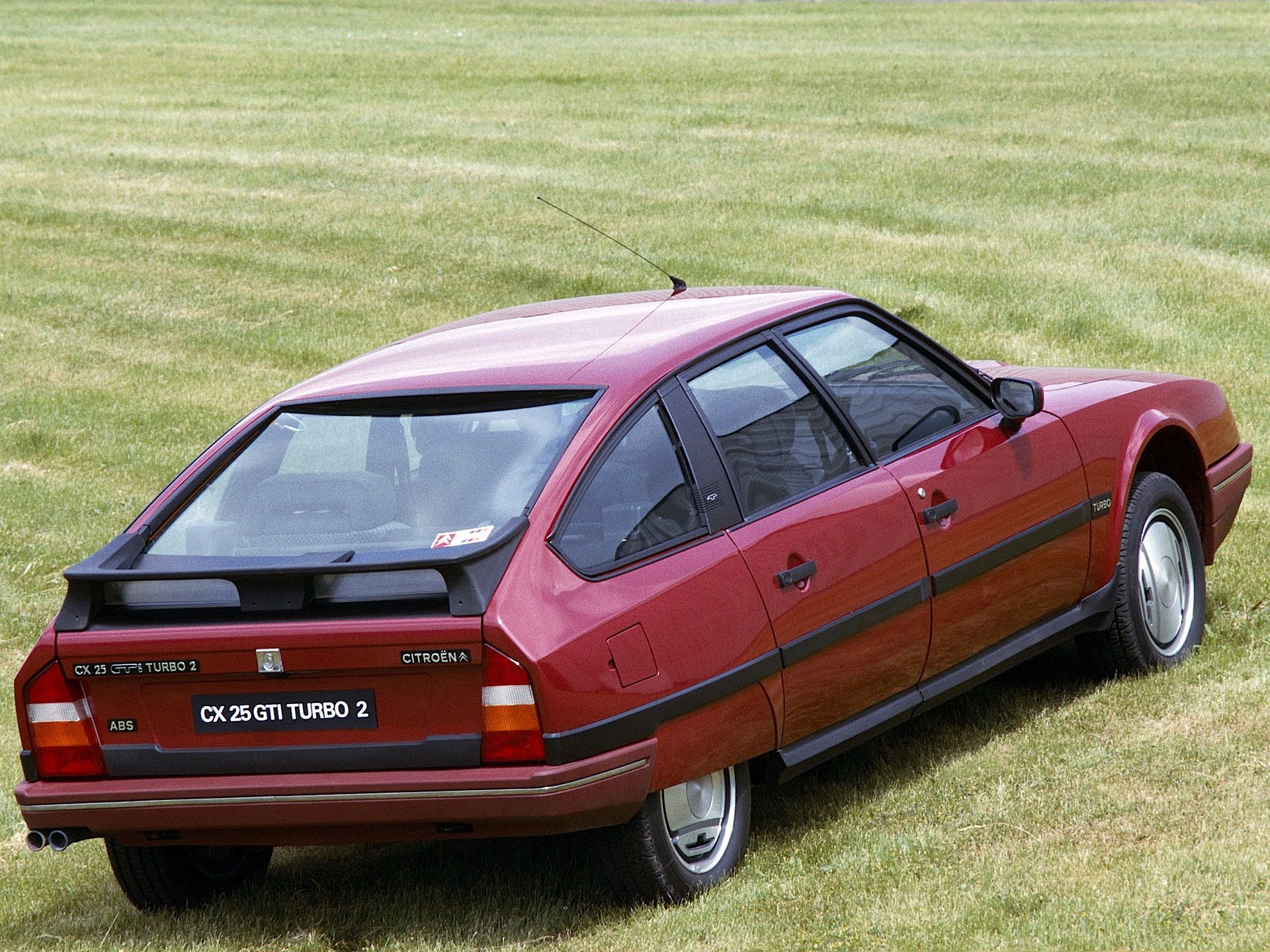
Note the T for turbo in the wheels!

The Goddess in the 1950’s

It’s vacation time! But this year being like no other, for many of us it has made changing plans or holiday habits. Most won’t fly far, we cannot visit certain countries and generally, many feel an unease for the hole concept of travelling. In our case it will mean spending our well-deserved weeks close to home, or rather within driving distance. A bit like it was back when our parents were young in the 50’s and 60’s. So this week, whether you’re at home or not, let’s take a trip down memory lane back in time, more precisely to France in 1955. Because there and then, “la révolution” was about to hit the car world!

First though, let’s picture what Europe was like in 1955. The war was over since 10 years and the worst memories had faded somewhat. The economy was strong as Europe was rebuilding – in fact we were already 10 years into the 30-year expansion period that lasted until the mid-70’s and in France was referred to as the “30 glorieuses”, the 30 glorious years. There were plenty of jobs, things were looking up – maybe peace would last this time and Europe had a bright future?

Paris in 1955 – color returning to a city still showing the scars of war.

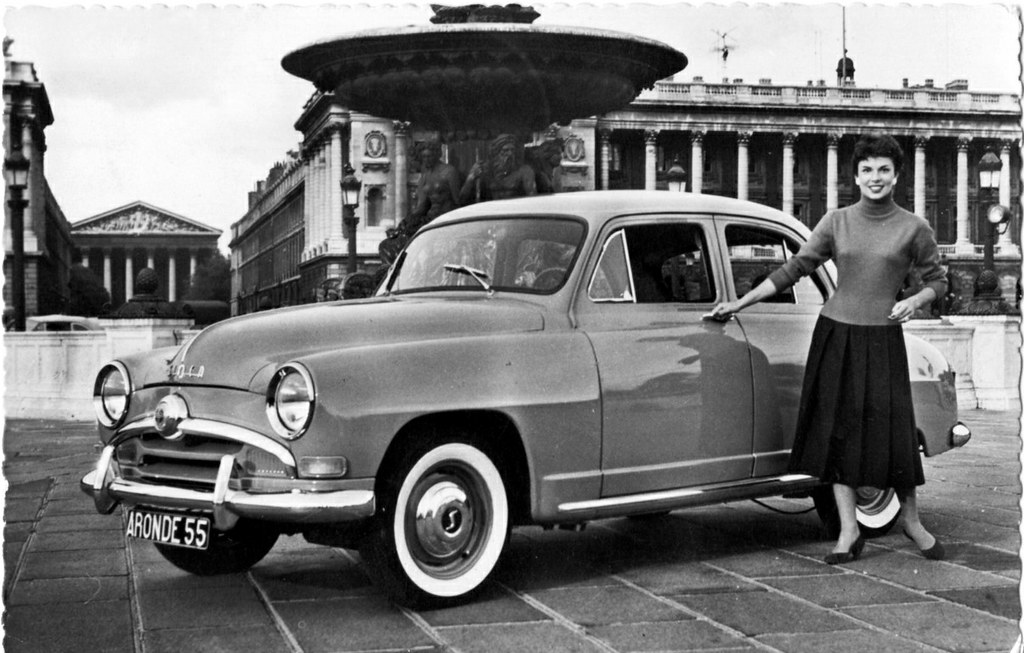
With a bit more money in their pockets, people started going on holidays. In France, the first motorway construction projects had just started, but “la route des vacances”, the holiday road, was still the Nationale 7 that ran for almost 1000 kms from Paris to Menton on the Côte d’Azur, just next to the Italian border. This is the road most holiday makers took in cars that were a mix of pre-war models and some early 50’s models. Many were French, and many were Citroëns, at the time the second largest French brand behind Renault but just ahead of Peugeot, with Simca in fourth place. Citroëns at the time were mostly the famous 2CV and the Traction Avant. But in 1955, Citroën introduced the car that would leave a mark for many decades to come – the DS.

A “Déesse” from 1957 – like nothing seen before!

Citroën at the time were not only innovative when it came to building cars but also in naming them. Pronouncing DS in French can be transcribed as “Déesse”, meaning Goddess. The DS would have many nicknames through the years, but notably in Germany it was most known as the German translation of the word – “Göttin”.

When the Salon de l’Auto opened its doors in October 1955 the car got more attention than anyone could have hoped for, and by the time it closed its doors, Citroën had taken 12.000 orders for the new car, almost equivalent to half the brand’s total annual production at the time! This was obviously a great success and the start of the DS story, that was to last no less than 20 years with more than 1.3 million cars sold in total. What was it then that was so exciting about this car, and that gave it such a long life?

Let’s start with the design. In 1955 cars didn’t look like the DS. If you don’t believe me, have a look at the above selection, all cars from the same era. In comparison, the DS was modern, daring and futuristic. The front axle was 20mm wider than the rear, giving the car a droplet form. The roof-mounted, rear turn lights looked like small turbine engines. The sloaping front was a clear break with other cars at the time. And when other cars still had flat windscreens, the DS’s was arched in a way that was hugely complicated to produce. Given the the car also offered generous interior space (for the time), it quickly became General de Gaulle’s official presidential car.

A design study of the original DS

There was also the technology and innovations that were at a level to make a 1950’s Elon Musk blush. From the start the car offered hydraulic, assisted steering (a first on mass-produced cars) and hydraulic front disc brakes. The steering wheel, originally a model from 1904, was constructed such as not to pierce the driver’s torso in case of accident. The wheels had a single, central bolt until 1966. During the car’s life a number of other technological features were added, most notably the turning headlights in 1967, that turned in the same direction as the steering wheel. Other car brands needed more than 30 years to come up with a similar solution!

Then again, this was a French car, meaning all ideas weren’t necessarily logical to the non-French. Putting the spare wheel under the front hood in front of the radiator was smart, the fact that you needed to remove the rear side body part to change a back wheel less so. And in spite of thousands of tests having been performed, it took Citroën a few years to find the right liquid to circulate through what the car has become most famous for – its hydraulic system and hydraulic suspension.

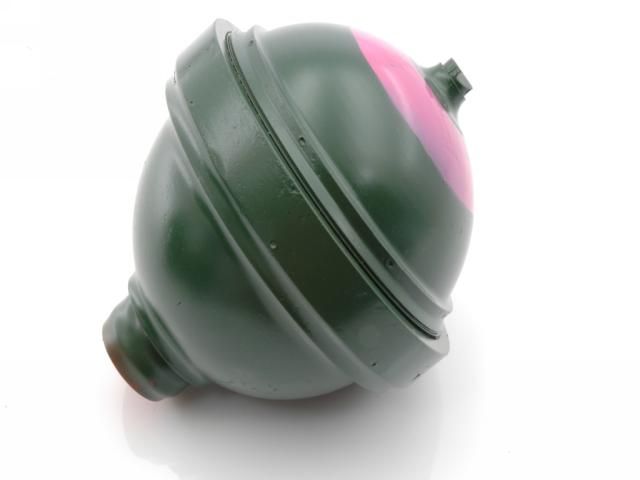
A DS suspension sphere, at the core of a suspension system that was revolutionary.

Citroën had actually launched its hydraulic suspension system already in 1952 on the Traction Avant, but it wouldn’t become famous until the DS. To provide a simplified explanation, where a normal car has springs and dampers, a DS has spheres filled with gas in one half and hydraulic fluid in the other. Given gas compresses but fluid doesn’t, gas takes the role of a spring and the fluid of a damper. The system was often accused of being complicated and a nightmare for later owners, but provided it doesn’t leak and is being regularly maintained, it basically relies on the laws of physics who work as well today as in 1955.

The hydraulic suspension gave the car a ride quality that was sensational for the time, and still today is a fascinating experience. A DS literally floats over the road, so much so that some people feel seasick when riding in one. Further advantages with the system are notably that you can raise and lower the car, and Citroen’s innovative marketing people were also happy to show how the car could ride on three wheels in case… you had forgotten the fourth one. In 1962 a very capable driver actually managed to save President de Gaulle’s life, escaping from an attack on him at high speed down a bad road – with two flat tyres. Perhaps even more suprising to most is that the DS during 15 years proved a very capable rally car, winning a number of classical rally races such as Monte-Carlo, Marocco and the Thousand Lakes up in Finland.

Should you not have four wheels, three will do the trick!

The DS was built at a high technological level for the time, and a couple of years after it had been introduced, the mechanically far simpler and thereby cheaper ID model was produced in parallel. ID cars had vinyl roofs, a different dashboard, less equipment but above all, a simpler hydraulic system, not including for example the hydraulic steering. They did however retain the same suspension system.

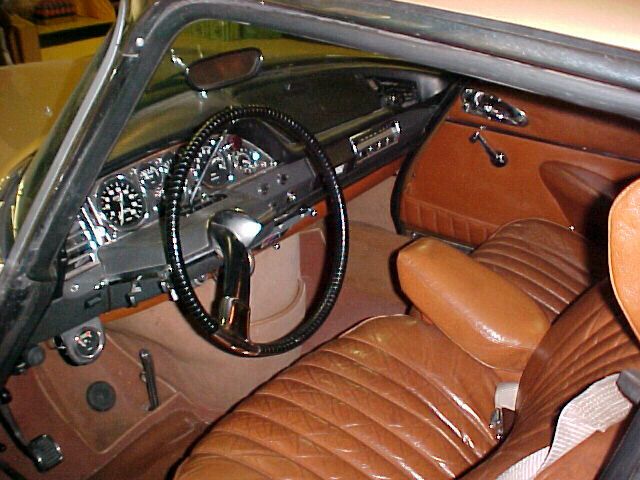
A DS provides a peaceful, floating driving experience. Power evolved through the years from initially 75 hp with the old Traction Avant engine during the first years, to 130 hp for the later years, adequate but not more. The steering is a strange experience with no natural feel whatsoever and requiring very little effort. Much has also been said about the breaking as the DS doesn’t have a conventional brake pedal but rather a sort of mushroom-like rubber button sitting on the floor. Every person driving a DS for the first time will apply too much breaking pressure as you really only need to touch the mushroom lightly for the car to stop.

The black round thing on the floor is the break “mushroom”. The non-intrusive steering wheel was originally designed in 1904.

In the 1970’s the DS started to age and even more importantly, the way it was built was no longer at a modern standard. Citroën was losing money on every car and had run into great financial difficulties in the early 70’s, so that Peugeot had stepped in as owner. This meant the end of the DS that was to be replaced by the no-less futuristic CX – but that’s a different story.

Should you wish to have a bit of French history in your garage you would have been able to pick up a nice DS for EUR 10-15.000 no longer than 10 years ago. Today you won’t find a good one below EUR 30.000, with no real difference between model years or even the ID/DS models as the condition is far more important. Should you want to go for the beautiful convertible model, of which only some 1300 were built by Henri Chapron, it will set you back quite a bit more, currently around EUR 200.000. Whatever you choose, why not take it for a ride this summer? Maybe even to France? Parts of the Nationale 7 are still there and I’m sure the sun will be shining as you gently float towards the south!