The last real Citroën (sort of…)

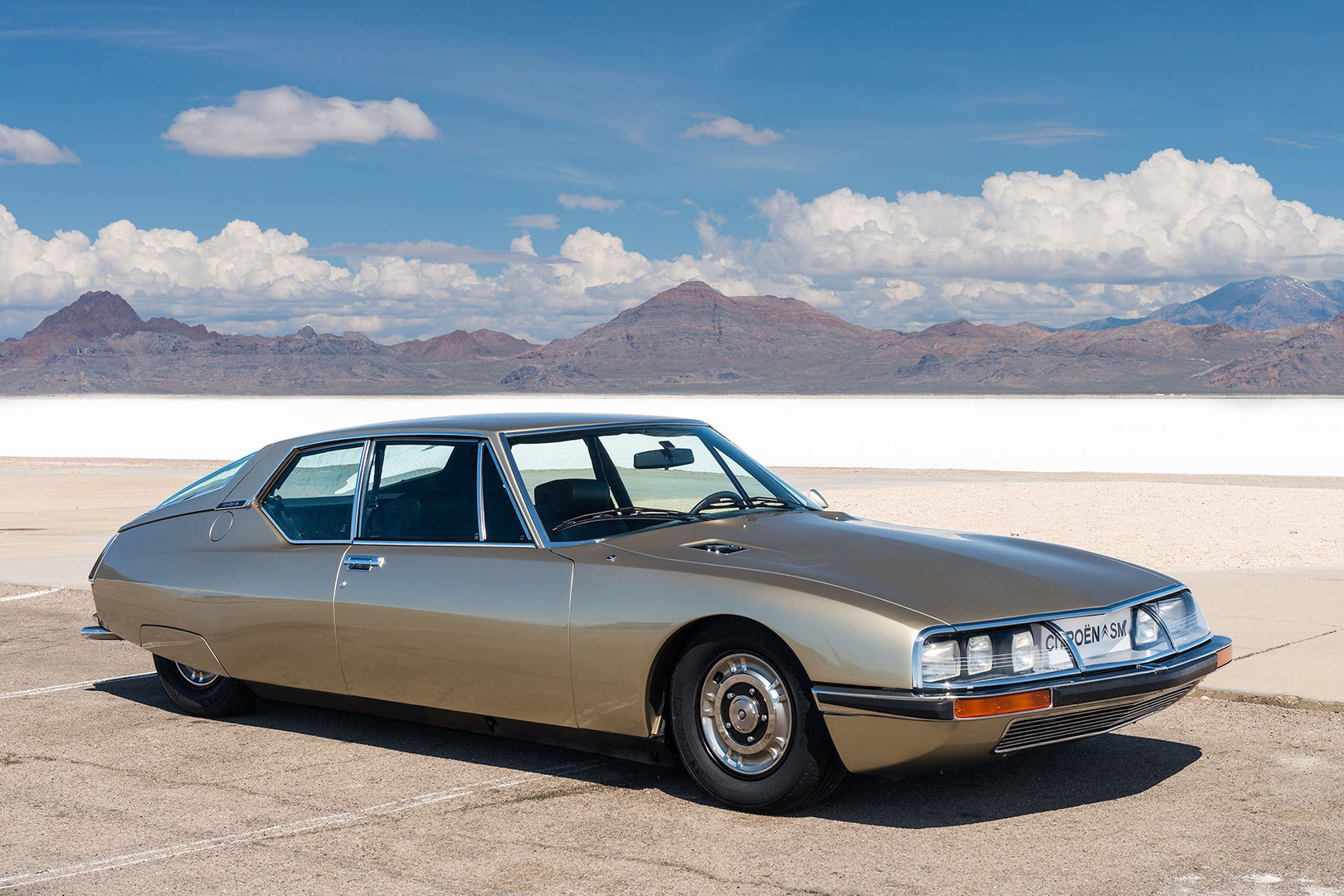
When you speak to fans of the French automaker Citroën (something which unfortunately happens less and less often as most of the true enthusiasts are getting old!), one of the most sensitive topics is no doubt which model of the legendary brand constitutes the last real Citroën. To a real “citroënniste”, nothing in today’s line-up is even close to fitting the bill. Some say it all ended with the legendary DS that I wrote about a while ago (see here). Others are more progressive and would draw the line at the 90’s XM, a strange, space-ship like creation and certainly a true Citroën in terms of quirkiness, but to me a car that lacked both looks and innovation. I’m rather in the camp in between the two. To me, the last real Citroën is the CX launched in 1974, notably as it was the last Citroën designed and developed before Citroën was bought by Peugeot and became a part of the PSA group the same year. Next to that however, the CX can be described as the every day version of the SM that I wrote about in January (see here), but also taking the best of the DS and modernizing the rest in a packaging that was truly Citroën. It thus forms the last chapter in the trilogy of the DS-SM-CX, reason why we’ll look closer at it this week!

An aerodynamic design with (today sough after) TRX wheels.

It’s never easy to succeed a true legend and with very few exceptions, there’s really no greater legends than the DS and SM. The CX however did a great job, being built during 15 years until 1989 (the estate all the way to 1991) and selling more than 1.1 million times. Given that it’s surprising how few have survived until today, something that also goes for its two predecessors. Then again, quality is not the first word you think about when talking about cars from the 70’s and it didn’t prevent people from being amazed when the CX was first shown to the world in 1974. The name makes reference to the wind resistance coefficient in French which for the CX was 0.37, not as good as the SM but still much better than most cars at the time.

When the development of the CX started in 1969 as an “inofficial” successor to the DS, a clear objective was to make the car easier and thereby cheaper to build than its complicated predecessor. That goal was achieved in a Citroën kind of way, meaning that everything except the bodyparts was fixed onto the chassis, with the body being screwed onto it at the very end of the production process and fixed with six rubber-metal fixings. No one but Citroën would probably think of this construction as a good way to save costs, but it worked well in terms of rigidity and also in isolating passengers from vibrations. Here, the legendary hydro-pneumatic suspension that the CX inherited from the DS was obviously a great help as well.
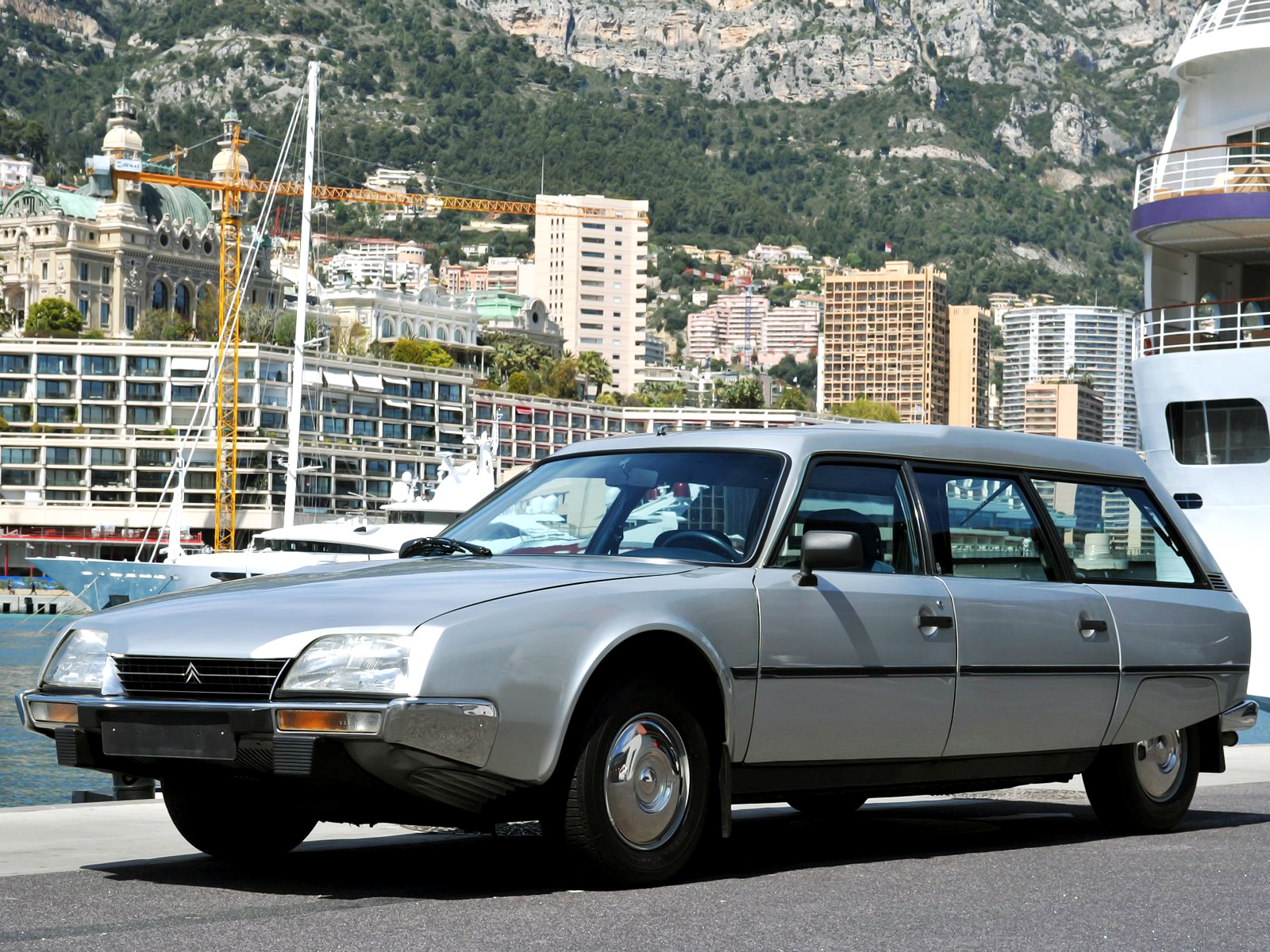
The cavernous CX station wagon, here in the first series

Another arbuably less glamorous thing the CX inherited from its predecessor was the engine. Not that Citroën didn’t have grand plans here as well. The original idea was to fit the car with a Wankel engine which with a planned 170 hp would have given the car sportscar like performance, and also suited it well given the Wankel construction’s lack of vibrations. That plan had to be scrapped for cost reasons though and instead, the CX inherited the 2-litre and 2.2-litre engines from the DS, developing 102 and 112 hp respectively, a bit later complemented by a diesel with 66 tired horses. These engines helped sell more than 100.000 CX’s in the first year of production, more than the DS had sold in any year but one. In 1975 Citroën also introduced the CX station wagon, a 25cm longer version of the car with a cavernous luggage space in the back. It was that same extended chassis that would also be used for the Prestige model that appeared shortly thereafter but where the extra 25cm instead benefitted the back seat passengers, making it a favourite car for many heads of state. Interestingly though, it wouldn’t be so for the French president until Jacques Chirac in 1995, when the CX was no longer manufactured.

An ocean of 70’s plastic around a bathroom scale!

If the CX was a revelation on the outside, it was no less so once you entered it. Once you’ve taken place in the extremely soft seats, you look out over, or rather through the one-spoke steering wheel at something which at first looks like a bathroom scale, but is in fact the speedomoter and rev counter. You then notice the lack of levers on the sides of the wheel, as the CX instead had two satellites with all necessary functions that you are supposed to operate with your left and right hand finger tips. The right satellite includes the horn, but any need for it will probably have passed by the time you find the right switch. The turn signal on the left is no less surprising since you have to actively turn it off – it doesn’t reset automatically when you straighten the steering wheel. Better? Not really. Different? Bien sûr! And by the way, if you think the CX is a hatchback, think again. In fact the concave and thereby self-cleaning rear window doesn’t open, meaning it has a traditional boot below it which is quite low and small. This was one example of the CX’s success becoming its enemy: it was well known that CX owners wanted Citroën to make the car a hatchback, something that could easily have been done, but the responsible people at PSA just looked at the strong sales numbers, shrug their shoulders and put that budget somehwere else in the large group.

Not a hatchback – that would have been too… logical.

The first series of the CX was built until 1984 and luckily the strong sales numbers didn’t prevent PSA from improving the engines on offer with more powerful versions. The 138 hp GTI was introduced in 1983 and the most powerful CX in the line-up, the 2.5 litre turbo developing 168 hp came a year later. The turbo had an impressive top speed of 220 km/h, of course thanks to the excellent aerodynamics. When the second series was presented in 1985 the most notable difference were the plastic front and rear bumpers which replaced the previous metal ones and helped further lower wind resistance to a quite astonishing 0.28, in line with the SM. A turbo was now fitted also to the diesel engines but the most powerful version remained the petrol 25 GTI Turbo II, the “II” coming from it now having an intercooler. The interior of the second series was modernized and for the Turbo II even quite sporty with red piping on the seats and dash in some countries, but not necessarily more logical. As an example the radio was moved from the dashboard to down between the seats, next to the handbrake. Changing radio station had just become something you needed to look away from the road for a couple of seconds to do…

A turbo II with optional leather seats – note the radio’s position…

If the above all sounds irrestistible and owning the – perhaps – last real Citroën is something you cannot go through life without having done, the good news is that the CX remains and under-apprecitated car to this day. It’s not easy to find a good one but when you do, it will still be cheap – we’re usually talking EUR 15-20.000. That means it’s much cheaper than either a good DS or a good SM, and much cheaper to own, while still giving you a good piece of the real Citroën experience! The second series looks more modern but the first has all the coolness of the original car, and the metal bumpers resist sunlight better than the 80’s plastic. Most CX’s were sold as manual which was a good thing. It’s also good to know that cars after 1981 have better rust protection, a big issue with earlier cars. As someone who grew up in the 80’s, the thought of a Turbo II is hard to resist. Objectively though, the best one to go for would probably be a late first series GTI – less prone to issues than the turbo, and with all of the Citroën genius intact!
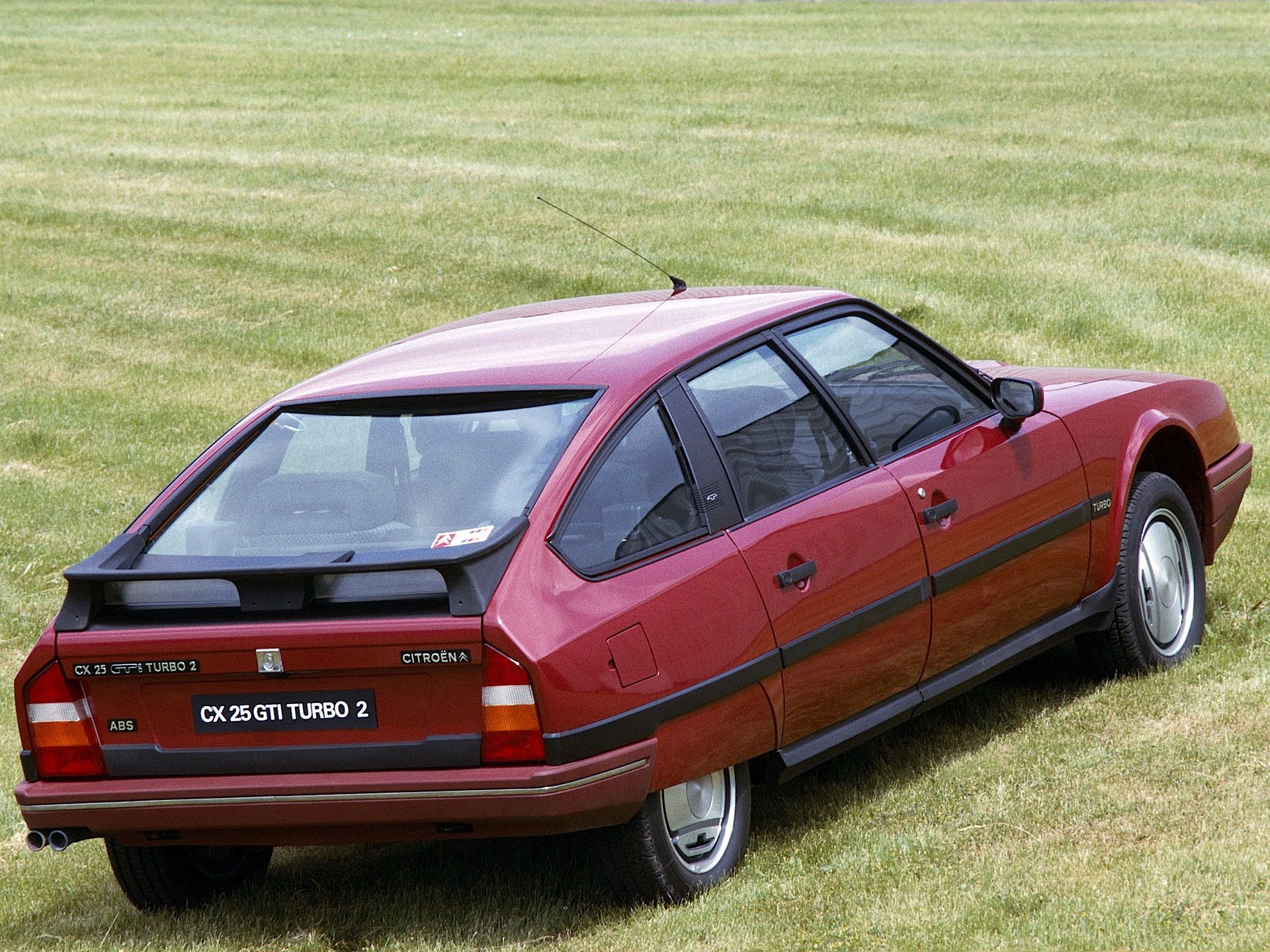
Note the T for turbo in the wheels!

The most exciting Citroën ever!

What do Leonid Brezhnev (ex Soviet leader), Idi Amin (ex Ugandan dictator) and Adam Clayton (present U2 member) have in common? Well, hopefully not more than the fact that they were all proud owners of one of the most legendary cars of all times and the subject of this week’s post – the wonderful Citroën SM! Actually so did further, less democratic guys like Haile Selassie and the shah of Iran, but let’s please not consider this wonderful automobile creation as a transport for dictators – it was more a testament to the position of the SM as one of the most spectacular cars in the world at the time of launch, and therefore something political leaders of different kinds (and also including some more democratic ones like the French president) were keen to be seen in.

I’ve wanted to write about the SM for a long time as to me, no other car symbolizes the true innovation and great engineering from the mechanical age. Long before computers, the SM had some features that it’s taken the automobile world 40 years to catch up with, as we’ll see below. And it was all packed in a format that in my opinion has stood the test of time better than most. And…. Hold it. Before I get too carried away, let’s take it from the beginning, which in the case of the SM means going back to the early 60’s.

Some of you may remember my post on the Goddess, the Citroën DS last summer, that you can otherwise read here. The DS had been launched in 1955, and ever since, Citroën had wanted to add a more luxurious but beyond that, initially quite undefined luxury car to its line-up. This project went under the name S and was officially started in the early 60’s. When Citroën aquired Maserati in -68, the plans to build a GT had taken shape, and the SM was launched in 1970 with an engine provided by the new Italian colleagues. Or rather, an engine newly developed by them, since there was not enough room for the Maserati V8 of the time under the bonnet of the SM, and so it had to be shortened to a V6 with an unusual 90 degree angle. The volume was limited to 2.7 litres, a tribute to France’s fiscal system that ever since WW2 has been very mean to large engine volumes. And so, the Citroën SM also became known as the Maserati Citroën, and was the only Citroën ever to use a Maserati engine.

V6 far back behind the gearbox and suspension clocks

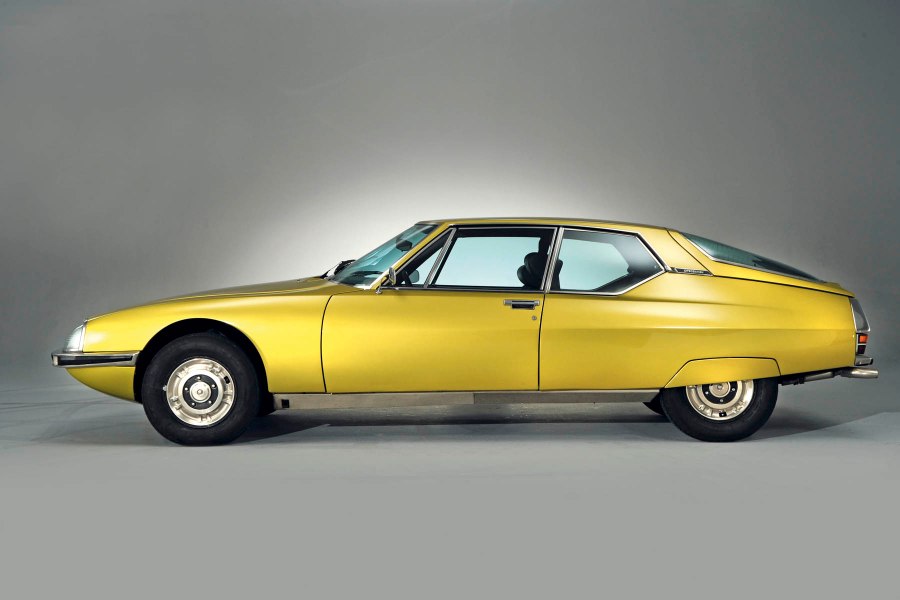
The DS had a futuristic form when it was launched back in 1955, and the SM was no less remarkable in that regard. The body has the shape of a droplet with a wider front than rear axle, as was also the case in the DS. The sleak body with the typical back wheel covers and the abrupt rear all helped achieve a wind resistance CV-value of 0.26, basically unheard of at the time. In its low position (more on the suspension below) the car looks very futuristic still to this day, and it should be noted that in spite of the shape, the SM offers sufficient room for 4, including a boot of a reasonable size. It was only sold in one version that equipment-wise was very complete, and the SM was in other words a true GT.

So what about all the innovations? Well, to start off, the SM obviously retained the hydraulic, self-leveling suspension system from the DS. I covered it in the post last summer I won’t do so again, but given it can be adjusted in height, the SM can go from very low to indeed very high by using a mechanical lever on the left side of the driver’s seat. The high position could for example be used on uneven roads or in snow, the lowest corresponds to its “resting” position. But there is a lot beyond the suspension to be mentioned. This includes the turning headlights that saw into corners, and that were also featured on late DS’s. There are the rain-sensitive windshield wipers, a first that it took decades for other car brands to replicate, the inboard front disc breaks, reducing the unsprung weight of the wheels and thereby improving ride quality, and of course the steering called DIRAVI, providing much assistance at low speeds and progressively less as the speed increases, again a first at the time. The DIRAVI steering in the SM had only 2 turns from lock to lock and a very strong centering back. In combination with the mushroom brake, another feature taken from the DS, the steering makes anyone driving an SM for the first time look like a beginner. Just as you will always apply too much breaking pressure, you will also steer far too much. The SM is a car that you have to learn, but when you do, boy does it allow you to travel in utter comfort and style!

The rear is the least beautiful part, but the shape helped the CV value

Unfortunately the Maserati engine wasn’t very spectacular but it sure sounded better and was more powerful than the 4-cylinder Citroën had used in the DS. With a power output of 174 hp it put the SM in the middle of the GT pack at the time in terms of performance, with a time of something like 8.5 seconds to 100 but given the aerodynamic shape, a top speed around 220 km/h, making it the fastest front-wheel drive car in the world in 1970. The shape also saves fuel as an SM will roll better than most modern cars without loosing much speed. Given it’s a 50-year old construction, that in itself is quite remarkable!

Citroën thus built a Maserati-powered car that was unlike anything the world had seen, and unlike anything it had driven as well. The car is far sportier than the DS with the exhaust providing a relatively raw exhaust note. Ride comfort is exquisite and superior to the DS, and once you get used to the steering and breaking, the SM is a cruiser by excellence. it’s actually capable of much more than that, as proven by some rally wins in the early 70’s. The standard power output didn’t make it a sports car however, and today few would think of doing more than cruising, something it excels in.

Ferari-like gear shift, radio between the seats, as it was later on the CX

Unfortunately, after a 5-year run and 12.900 cars produced, the SM story came to an end due to a number of factors. For one, Citroën had gone bankrupt in 1974 and been taken over by Peugeot who were far less keen on the SM and also on Maserati, that they sold a few years later. Secondly, the SM had always been destined for the US but ran into various issues in the US market, notably the fact that headlights at the time had to be fixed in the US, so the turning headlights had to be replaced by some of the ugliest fixed lights the world has ever seen. Thirdly, Citroën messed up a bit in terms of after-service both in the US and elsewhere. They didn’t give the US market the attention it deserved and they didn’t make buyers aware of some quite critical timing chain adjustments. This latter point was also a more general problem with the Maserati engine, which Citroën garages often didn’t know how to handle, meaning owners basically had to visit two different garages to service the car. Not a recipe for success and after five years, production of the SM came to an end.

Like so many other youngtimers, finding a good SM today has become an expensive story that starts somewhere around EUR 50.000. As said there is only one version and most cars are also manual, as they should be. Injection models made up some 3500 of the total production are to be preferred, all else equal. Otherwise your attention should go to a thorough check of the body where rust can hide in many places, and a likewise very thorough check of the engine. The timing belt issue can be fixed and has been so on many cars, make sure to choose one of these. Obviously check the suspension as well and how it has been maintained, but of the three areas mentioned, that’s by far the least worrisome one.

I don’t fall in love with all cars I write about, but I find the SM very, very hard to resist. No doubt there are many astounding innovations on our modern cars, but there is something truly special with the revolutionary stuff that was developed by engineers with the help of nothing but brains and tools. No other car pays tribute to the mechanical age better than the SM with its unique shape, its many ground-breaking innovations and of course, the lovely sound of the Maserati engine. A few weeks ago when writing about the DeLorean, I got some criticism for referring to it as legendary. Point taken in that regard, but I’ll dare use the word again when speaking of the SM – I really struggle to imagine a more legendary car!