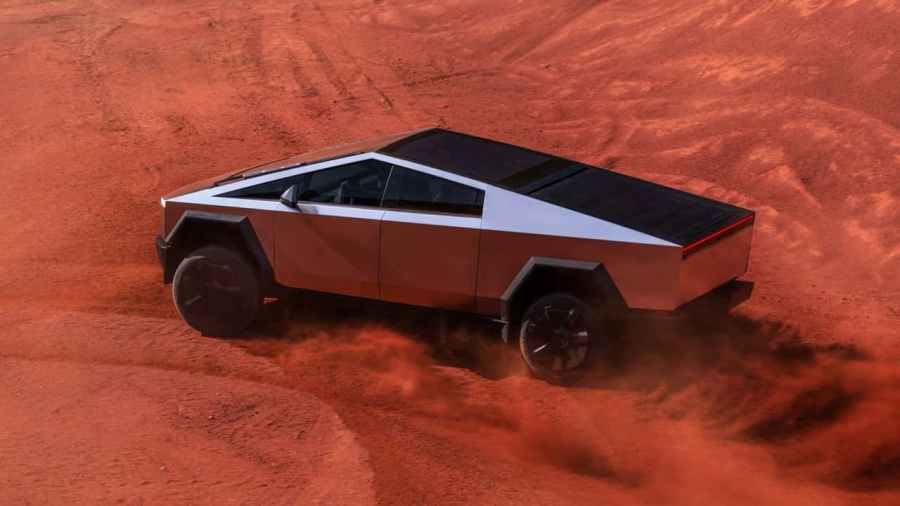
This is not a post on the Cybertruck. After all, if you follow this blog, you’ve hopefully realized that I try to cover things at least slightly out of the ordinary, so adding another post to the hundreds that have already been written on the Cybertruck isn’t really the spirit. To say nothing about the fact that this is, at least mostly, a blog for petrol heads.
It’s also not a post on Elon Musk. I personally find it fascinating how one man year after year continues to stir up such emotions with all kinds of people, and I have a lot of respect for a man who built a leading car brand from zero, using new technology. Not to speak of the fact that he also built a few rockets pretty much from scratch in a backyard, shot them into space, landed them again and then sold them to NASA. He still does by the way.
It’s also pretty clear that no one but Elon would have come up with the idea for something like the Cybertruck. And also, that only Elon would use it to premier some technological developments that the world has been waiting for in some cases more than 50 years. That to me is what’s exciting in the Cybertruck story, not really the truck itself. And that is indeed what this week’s post is about!
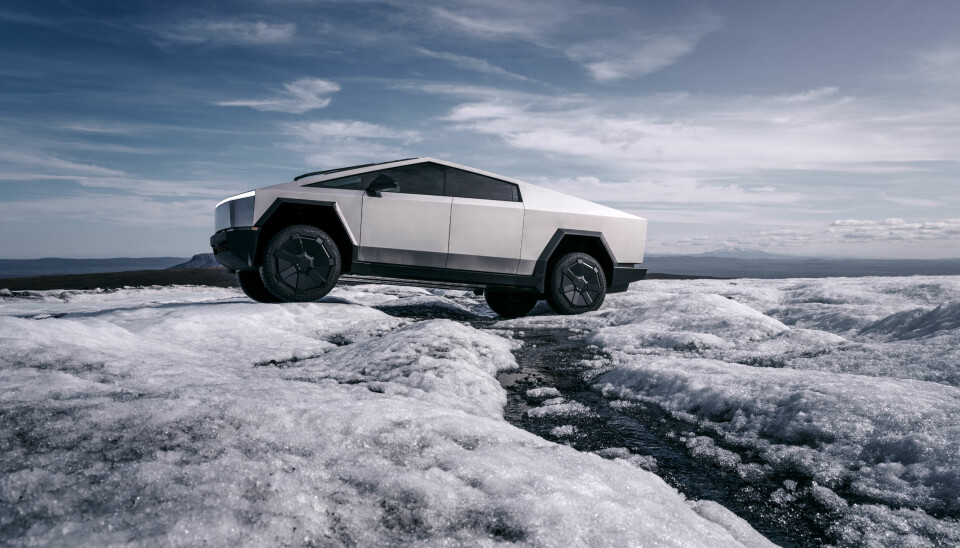
Before we get into it however, this is after all a car blog, so a few words on the Cybertruck are warranted. The saying goes that it was Elon’s son who asked his father why the future doesn’t look like the future, alluding to the fact that pick-ups have looked more or less the same for the last 50 years, and neither the Hummer EV, nor the Rivian have really changed that.
That’s apparently what gave us the Cybertruck that at least Tesla thinks looks like the future. At 5.7 metres long, 2.4 metres wide and a weight exceeding 3 tons, it’s a giant car that also has the biggest windscreen of any car ever, as well as at 1.2 metres, the biggest windshield wiper ever seen. It also looks very much not like any other truck on the road.
The stainless steel body makes it pretty clear why we typically don’t build cars in steel. Sure, you can throw rocks at it (not sure why you would) and it’s also light, but it can’t easily be formed and can thus only ever be used for a design resembling something Elon’s son would draw, and perhaps did. As for the inside, there’s a lot of Tesla minimalism, and a lot of plastic.

No matter what you think of the looks, I have no doubt Tesla will sell every Cybertruck they build in the US and elsewhere, however not including Europe, since there’s really no chance that something that large, and without sufficient pedestrian protection zones, makes it here.
So what about the technological developments? There’s three things worth mentioning: the induction engines, the 48V system and the steering by-wire, each of them a small revolution in their own, and far more so than the car itself.
To start with the engines, in the strongest version of the truck called the Cyberbeast, there’s three of them, together putting out 845 hp. Only one of these is however a permanent magnet engine, the other two are so called induction engines. This is a type of electric engine the first Tesla (Nikola, that is) patented already back in the 1880’s, and the big difference to a magnet is that it doesn’t use any rare metals.
As you know, this is one of the things that has gotten me really excited about the EV “save the world” talk, so this is definitely a big step in the right direction, which will hopefully give the children in the Congo a longer life. Induction motors are said to be slightly less efficient than magnet motors, but also much cheaper to produce, so we’re likely to see more of them in EV’s in the coming years.

Continuing along the same path, let’s talk power. The Cybertruck’s engine runs on 800V which is a lot, but something for example the Porsche Taycan also does. More importantly however is that the rest of the car runs on 48V system rather than the 12V of every other car. This is a number that in spite of improving technology, hasn’t evolved in the last 70 years!
Power equals voltage + current, so the higher the voltage, the less current you need. And by reducing the current you can reduce the wiring, which both saves weight and many kilos of copper and other things. Going from 12 to 48V thus means a reduction of 75%. If we keep going at this speed, I guess EV’s may actually become environmentally-friendly one day!
The last and clearly most visible technical revolution is the by-wire steering, which is only made possible by the 48V system. The Cybertruck is the first mass-produced car in the world without a physical connection between the steering wheel and the front wheels. Instead, these have one motor each (plus a third for the rear wheels, since the Cybertruck has rear-wheel steering), which together use more power than a family house in the 70’s, hence the requirement for 48V.
The fact that a computer tells the steering what to do means it can be adapted such as never to have more than one turn lock to lock (or whatever you decide on), and also makes it highly adaptable at speed. Crossing hands is thus a thing of the past. This of course takes some getting used to, but contrary to the yolk, is definitely a big step forward.
With a CW-value of 0.34, the Cybertruck is not only heavy but also not very aerodynamic. But with a 2.6 seconds time to 100 km/h, the Cyberbeast still kicks the behind of both the most powerful Rivian and the Hummer EV despite being less powerful in hp – and on mud tires. This is thanks to lower weight (yes, astoundingly the others are even heavier!), but also to efficiency, which is perhaps not a technical revolution, but an area where Tesla also shines.

Starting with the battery cells, these are far larger than anything used so far, meaning they’re more efficient. They are designed and produced in-house at Tesla, as are the engines, and it’s no secret that controlling the whole production line makes Tesla’s EV’s more efficient than other brands, resulting in a longer range. It’s really surprising that a company that manages all this under the nose of established car brands at the same time doesn’t manage to fit a few body panels properly!
Of course, the technology introduced in the Cybertruck is already making it over to other Tesla cars, or will do so over the coming months and years. You can love or hate the the Cybertruck as much as you want, but that really is besides the point. Because the point is that once again, it’s Tesla that is the disruptor to an industry that still doesn’t manage to get its act together.
In spite of the billions invested, the fact of the matter is that the the traditional car industry still can’t manage to build an EV as efficient as Tesla’s. In parallel, Tesla cars are improving quality-wise, and the Supercharger network continues to be a huge advantage.

I’ve said all along that the traditional industry didn’t miss the EV wave, they just waited until it made economic sense. I may have been right on that, but I was definitely wrong in terms of my expectations on what the industry would deliver, once it got up and running. The sad truth is that in terms of technology, they’re still not competitive with a company that is less than 20 years old. That will have global implications that we’ll look at more in detail in the coming weeks.
Induction engines and a 48V system will revolutionize the EV industry for the better, which is great. I still don’t think the future will be fully electric for a number of factors that long-term readers will be well familiar with. However, what Tesla has hidden beneath the stainless steel body of the Cybertruck makes at least Elon’s dream of an electrical future somewhat more realistic!
 The Thrill of Driving