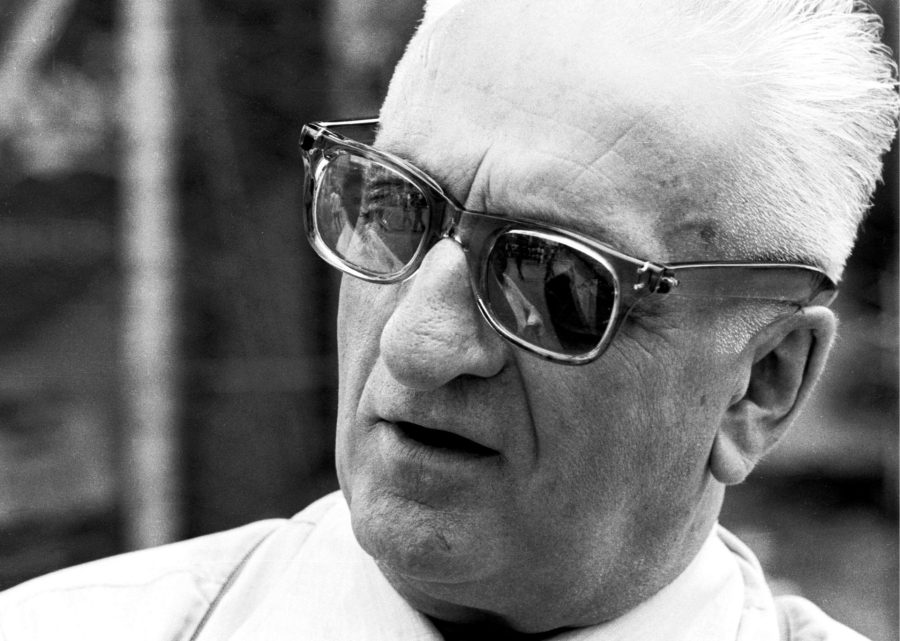
Enzo Ferrari is a name that probably rings a bell even if you don’t have the slightest interest in cars. The father of the most legendary sports car brand of all needs no further introduction, as my portrait of him on this blog back in 2023 hopefully showed. Less well-known, and arguably less legendary, is Luca di Montezemolo, Ferrari’s president until 2014 who was a central figure in the development of many modern Ferraris. Again, I did a portrait of Luca almost exactly a year ago, which will notably tell you that he started with the company back in 1973, moving up the ranks to become its president in 1991.
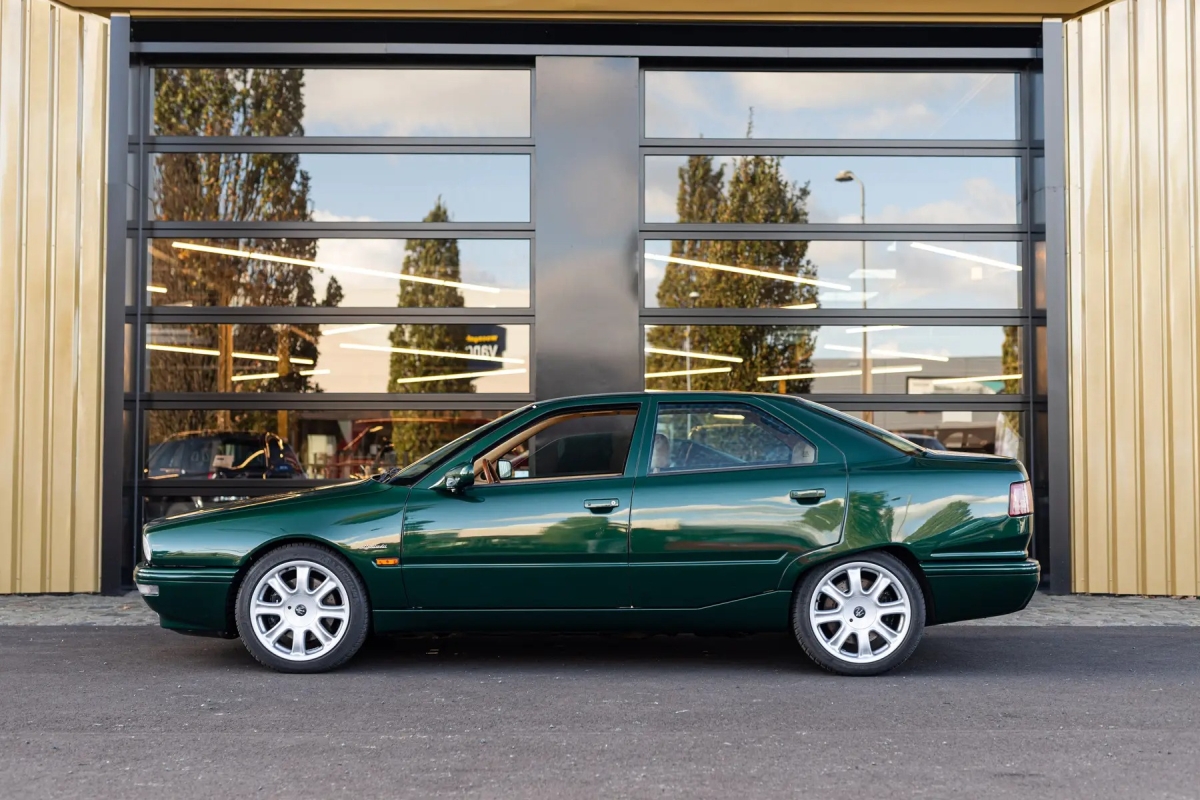
di Montezemolo is instrumental to this post, because it was him and no one else that in the late 90’s was appalled to see that Italian politicians and other VIP’s had to resort to being driven around in German limousines, as Italy at the time did not produce anything that fitted the bill. The Lancia Thema 8.32 may have had a Ferrari engine, but it was old by then and never on par with an S-class. Ferrari was only building two-seaters, and Maserati, which at the time belonged to Ferrari, had a Quattroporte, meaning a four-door, four-seater sedan, but the 90’s version, which was the fourth iteration of the Quattroporte, was far too small for a limousine.
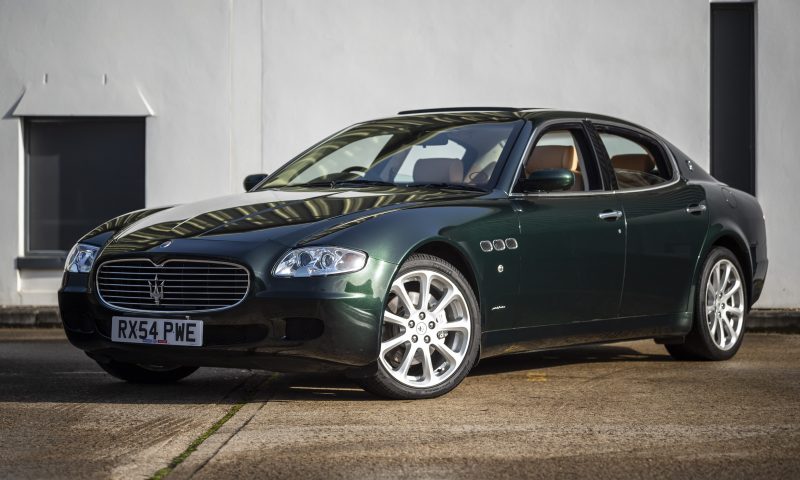
This had to change, and so di Montezemolo’s Ferrari group started developing the stately limousine that became the Quattroporte series V, one of the most elegant cars that’s ever been built and the first Ferrari four-door. Yes, you read that right. The fifth series Quattroporte may have carried Maserati’s neptune trident logo, which you can also admire on a fountain in the middle of the brand’s home town Bologna, but for all intents and purposes, it was a Ferrari, including the wonderful engine and the far less wonderful single-clutch automated manual transmission, here called DuoSelect.
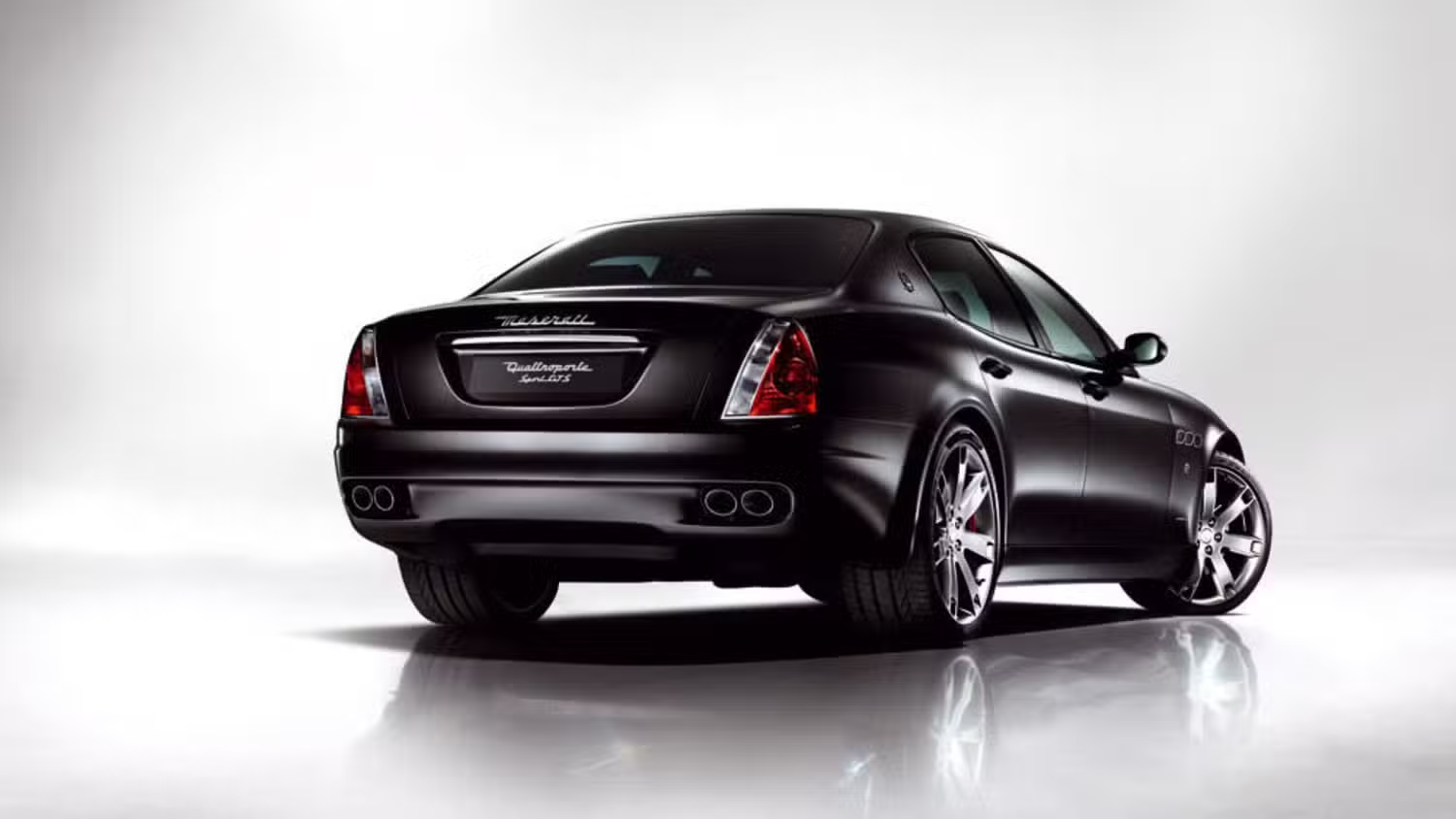
Pininfarina was in charge of the design of the new Quattroporte, giving it a look that is the very definition of timeless elegance. It does without any wings or spoilers, something Pininfarina has never been a fan of, preferring sweeping lines that require no special effects or drama to come into their own right. A quick comparison with the Chris Bangle-designed 7-series from the same period illustrates the point quite well. The Quattroporte brilliantly conveys its class through small details like the trident logo on the c-pillar and of course, the three side skirts behind the front wheels, Another way to look at it is that the fifth series Quattroporte looks as good whatever the color, perhaps the best testament to a truly great design.
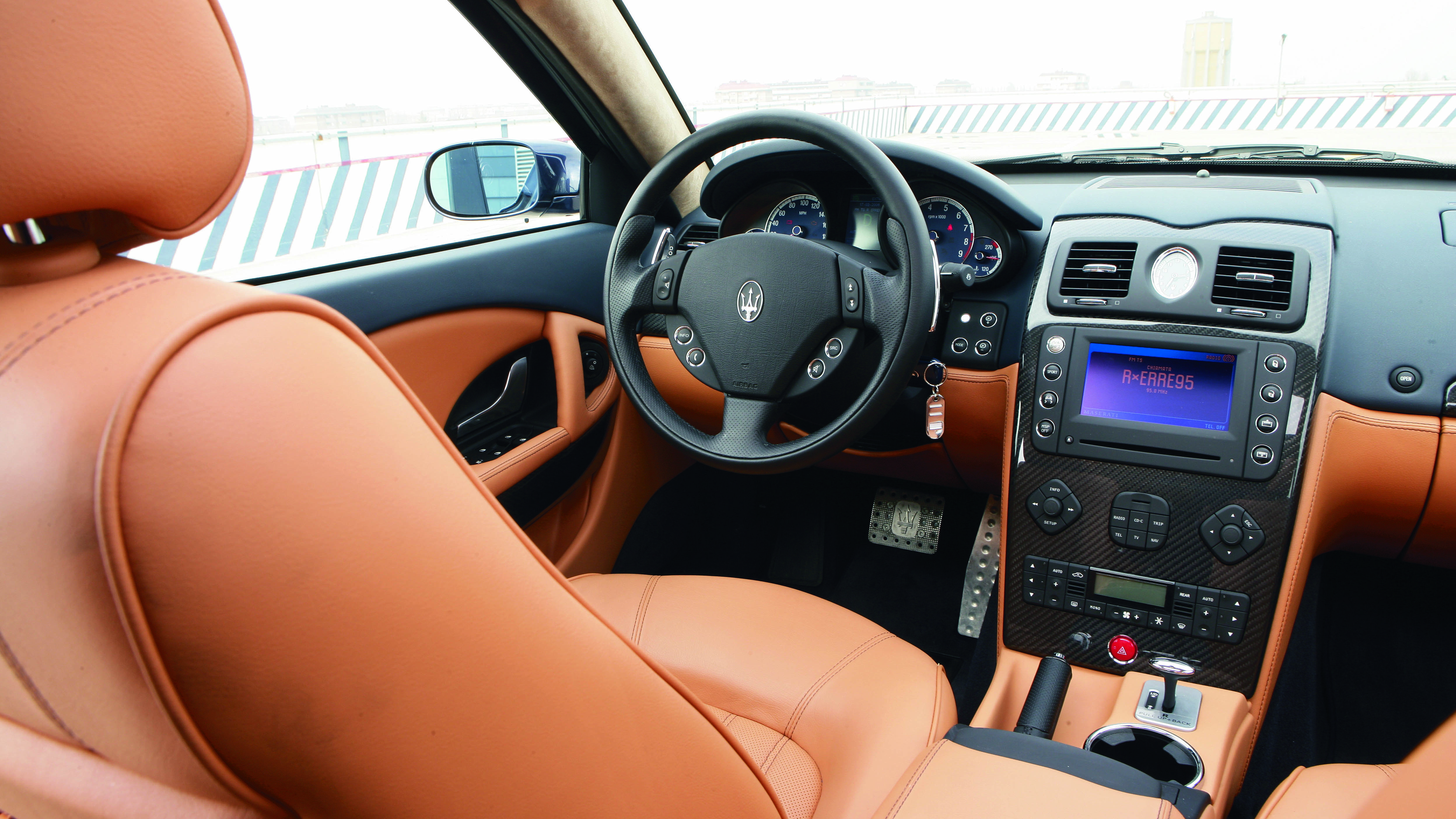
What the outside promises, the inside doubles up on. Leather of the finest Italian quality is complemented by wood inserts along with alcantara notably for the roof lining. The look is distinctive and elegant, with a comfort to go with it. In spite of the car being over five meters long (5.09 metres to be exact), room in the back isn’t opulent, but sufficient for four to travel in great style.
And yet, all of this is secondary to what you find under the hood, home of essentially the same Ferrari V8 as in the F430 or 458. Initially at 4.2 litres, the V8 in the Quattroporte delivers a healthy 400 hp with a sound you won’t hear in a new car ever again, modern regulations have made sure of that. At idle the Quattroporte growls impressively, and as the revs rise, so does its tone. It’s quite simply a wonderful engine that I promise will give you goose bumps every time, even if you were to drive the car as a daily. Maserati have also placed the engine as low and as far into the car as possible, meaning it sits behind the front axle.
The DuoSelect gearbox risks giving you goose bumps as well, however for a completely different reason. The single-clutch, automated manual is fine on long distances or for real sporty driving, as it kicks in the gears like a true racing car, and being a transaxle construction, it also gave the big limousine an almost perfect weight distribution of 47-53. Unfortunately though, the gearbox is far less great in slow-moving traffic or any kind of hill start or parking. On one hand for the jerkiness of the gear change, but also since its construction means that any such driving formally eats the clutch, and letting the car hang in first gear during a hill start will make you aware of this through a distinct smell of burned clutch.
The fifth series of the Quattroporte premiered in 2003 with the above mentioned engine and the DuoSelect gearbox as only option. It generally received a good reception from the motoring press with praise going mostly to the engine and the ride, with the standard-fitted Skyhook adaptive damping, Unsurprisingly, the gearbox was far less appreciated. In 2005 two specific versions called Executive GT and Sport GT were added to the line-up, the former with more luxury, the latter, you guessed it, with more sportiness, notably an X-shaped sports exhaust that gave the Sport GT the best tone of them all, a metallic growl worthy of a true race car.
In 2007 Maserati then bowed to the pressure from its customers and replaced the DuoSelect box with a six-speed automatic from German ZF. Or rather Fiat did, because by then, Maserati had passed from the house of Ferrari to the house of Fiat. The change of gearbox however meant major changes to the whole car, as the box was now moved forward to sit right behind the engine. Roughly 25% of all parts in the car had to be changed as a consequence, and the weight distribution became slightly less favorable at now 49-51. Given how much better the new gearbox was, most buyers found this very easy to stomach.
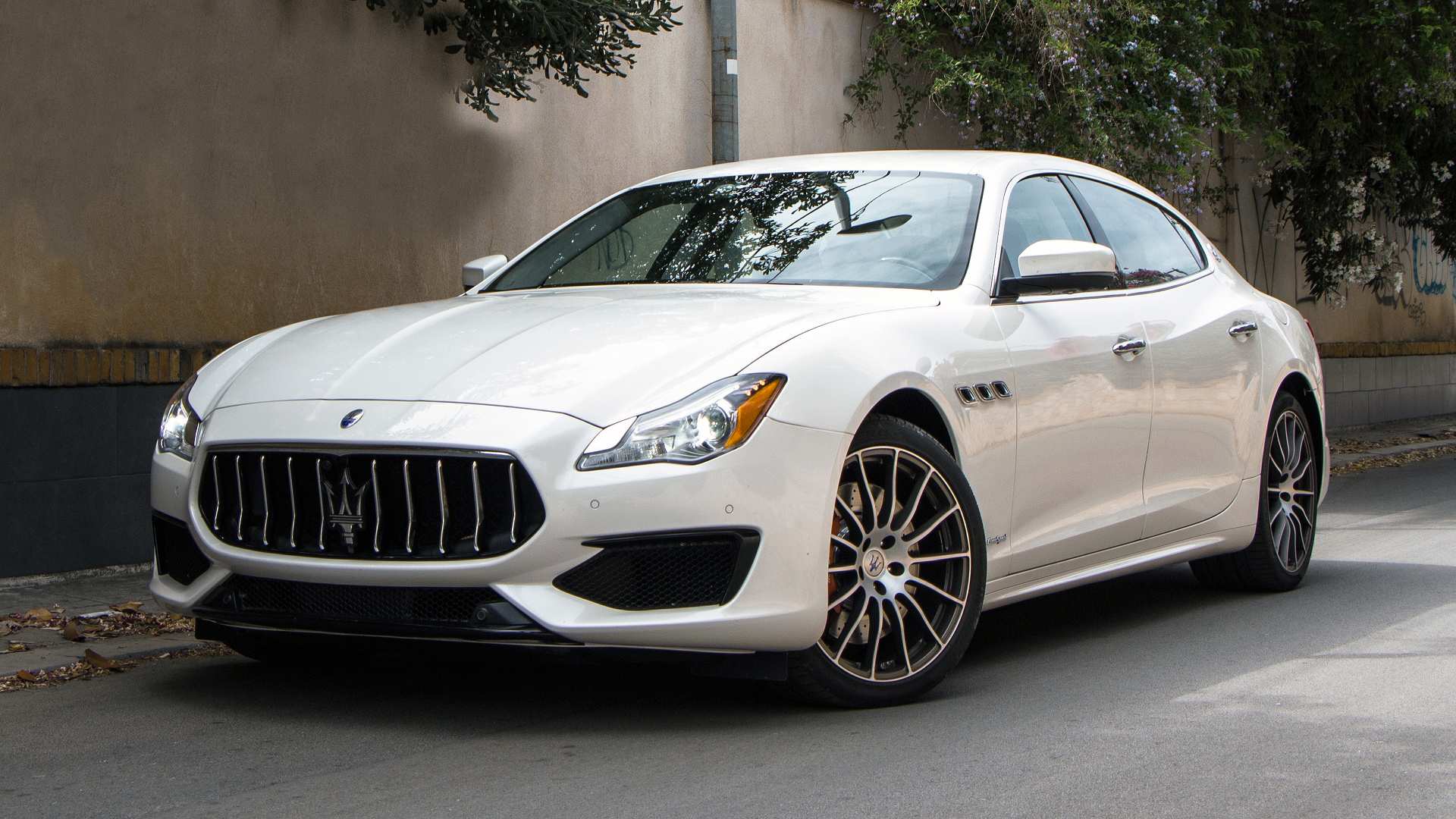
What is generally considered the best pick of the Quattroporte range is the Sport GTS from 2008 onwards, the sportiest version of them all. Chrome parts were here blackened and the suspension was changed to conventional Bilstein dampers rather than the Skyhawk setup, generally considered better. Wheels were bigger at 20 inch, the grille was turned inward, all giving it a more aggressive look. In the same year, the engine volume was increased to 4.7 litre and 430 hp in the Quattroporte S and Sport GTS versions. The Series V was discontinued in 2012, and unfortunately replaced by two far less charismatic cars – the Ghibli at around five metres and the new Quattroporte at almost 5.3 metres, comparable to an extended S-class.
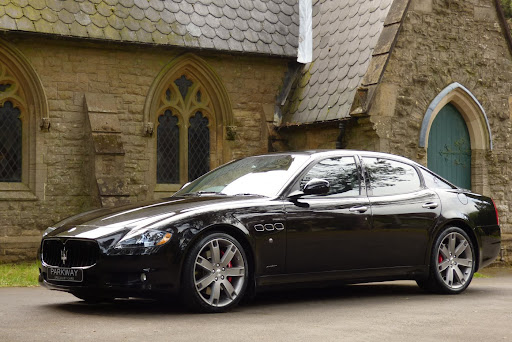
Of course, a five-meter, two ton limousine isn’t in its element in the city. It’s built for the large Autostrade or sweeping country roads of Italy and elsewhere, and it’s here the car really comes into its element. The steering which can feel a bit dead at lower speeds is now communicative, the ride is subtle, and the car is a better drive than any automobile of this size should be allowed to be. It’s difficult to fault it, and in this environment, it’s really irrespective of version. Perhaps even more surprisingly, Quattroporte’s have a generally very good reputation quality-wise, often scoring better than S-classes of a similar age. If, and this is one of the biggest if’s you’ll ever read, if and only if they’ve been properly maintained.
No luxury limousine is cheap to run. Big engines and considerable weight means maintenance costs for, next to the engine, things like dampers or air suspension, brakes and tires will be high. In a certain way, the often low price of the car is only the entry ticket to a hopefully happy ownership. If you can’t budget the necessary maintenance costs, then it’s generally better to stay away. Which of course also means a need to ensure that the previous owner or owners (the fewer the better!) have done so as well.
The above has never been more true than for the Quattroporte. Some of these are very cheap, meaning around EUR 10.000. The general rule is to steer away from those, or any car which doesn’t have a complete owner and servicing history. Let me illustrate why. Remember the DuoSelect gearbox? If badly driven, the clutch could need replacement already after 20.000-30.000 kms, and will most certainly have to be changed at twice that, even if you treat it with silk gloves. That replacement is about EUR 5.000. A pair of break pads is around EUR 600, which is interesting since the pads are identical to those on a Mercedes ML, where they cost EUR 50. A pair of disc brakes will be EUR 1.000-1.500. And so on.
The implication of this is of course that if a perfect car with perfect history costs 5.000 more than a less perfect one, that will be the best 5.000 you’ve ever invested. The good news is however that if annual servicing intervals have been maintained at a serious garage, then the engine is pretty bullet proof, and slightly higher mileage needn’t therefore be a deal killer. That goes for the gearbox as well – the six-speed automatic that is, which is the only one you should get. As for the rest, at least statistically, a Quattroporte won’t be worse than any other luxury limousine, but it will always be more beautiful and incite more emotions!
The day I have more time and space, meaning that five-place garage I’ll never find as long as we live in Switzerland, then a Quattroporte is probably the first car I’ll park there. To my mind, it’s quite simply the best modern Maserati. I’ll follow my own advice above, going for an automatic but not caring too much about the version, or even whether it’s a 4.2 or 4.7 litre, both are great. I’ll park it so that I can admire it every day, in whichever color it is, and I will most probably used it as a daily, to enjoy the best engine sound in the world over, and over, and over again!



 The Thrill of Driving