Auto legends: the story of Ferdinand Piëch!

One of the nice things with writing a blog that enjoys a growing circle of readers, other than boosting your ego, is that the chances increase by the week of actually meeting your readers in the flesh. Of course this has happened before in the circle of close friends, but in the last couple of months I’ve run into people I didn’t know from before, and it’s subsequently become clear that they read this blog. That’s of course great in general, but it’s even more so when they help generate ideas to write about. Because coming up with exciting content every week isn’t always easy, even in the car world!

This week I’ll therefore start a mini series much like the one on classic car races that I write about from time to time. I’ve decided to call this new one Auto Legends, as it will be about the men (and yes, it so happens they are almost exclusively men) who have helped shape and put their mark on the automobile industry. I can almost feel many of you now expecting to see a picture of an old man with big, black sunglasses here below, i.e. Enzo “Il Commendatore” Ferrari. Actually though, to mix it up a bit (and also as there has been a fair bit of “Italinanitâ” on the blog lately), we’ll start in Germany with a man who has a CV that may make even Enzo blush – Ferdinand Piëch.
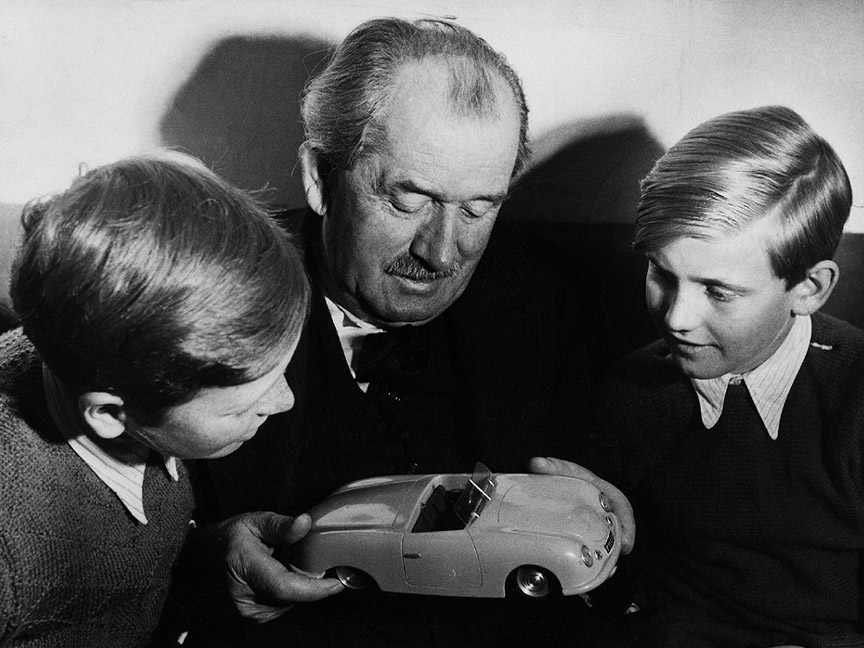
Grand old man Porsche in the middle, young Piëch to the right

If the slightly strange, Austrian name Piëch doesn’t ring a bell with you, the first thing to note is that Ferdinand, born in 1937, was the grandson of another legendary car man with whom he shared his first name, namely Ferdinand Porsche. It’s therefore no big surprise that he started his career at Porsche, but that’s not where he became most well-known. Rather, that was as chairman of VW that he completely re-modelled in the 1990 and 2000’s, turning it into an automobile giant, and earning himself a reputation as a, let’s say less likeable personality. But let’s take it from the start.

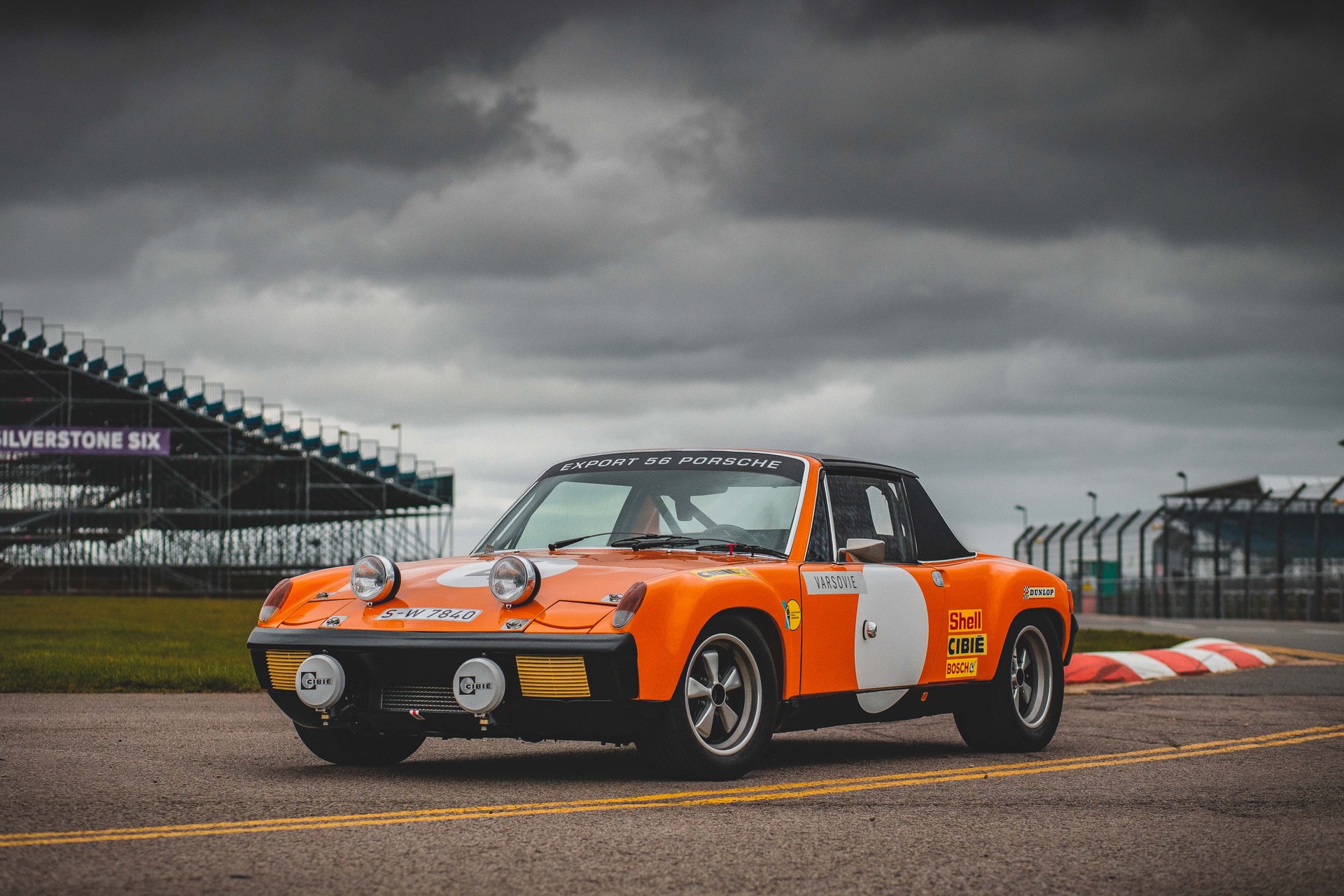
Young Ferdinand Piëch was head of the motor sport division at Porsche in the 60’s. This included the role as head of testing, where his focus was on very light racing cars such as the Porsche 906, which after modifications also became known as the 910. From the post on the Targa Florio earlier this year, you may remember that this lead Porsche to completely dominate that and other races in the late 60’s, by which time Piëch was no more than 30 years old. He was also instrumental in the development of the Porsche 914 that we looked at a few weeks ago, and most other things that came out of Zuffenhausen in the 60’s and early 70’s. Then however, following a feud between different fractions of the Porsche family, he had to leave the company.
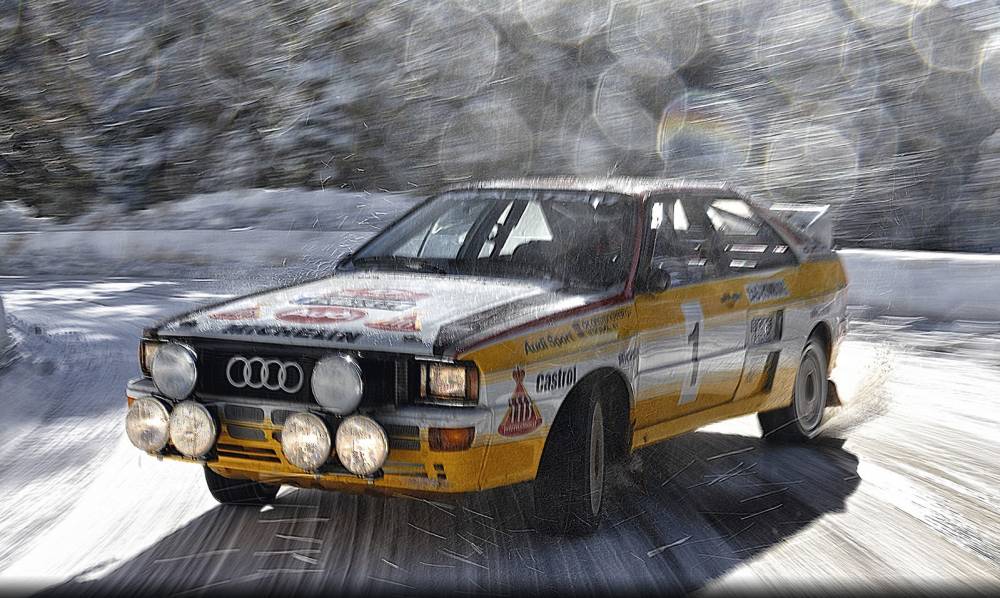
Piéch was the brain behind the four-wheel drive Quattro

In 1975 Piëch thus became head of technical development at Audi, notably leading the development of the Audi Quattro. The subsequent success it had lead Piëch first to the position as co-CEO of the company, and then from the late 80’s its CEO. If you think back to the second half of the 80’s, this is of course exactly the period when Audi went from being a very sleepy brand for old people with hats to something far more modern and desirable. Piéch however kept a strong focus on motor racing when at Audi as well, with next to the rally wins of the Audi Quattro, also various wins notably in the German DTM series for touring cars.

Ferdinand’s star continued to rise on the VW sky and in 1993, he became CEO of the VW group, Audi’s mother company. Having proven his capabilities as a car man, this is the period when his business understanding really starts to shine through. 1998 was a big year in this sense, and more than one eyebrow was raised when in the same year, VW acquired Bentley and Lamborghini (the latter through Audi) and also the rights to the Bugatti trademark.
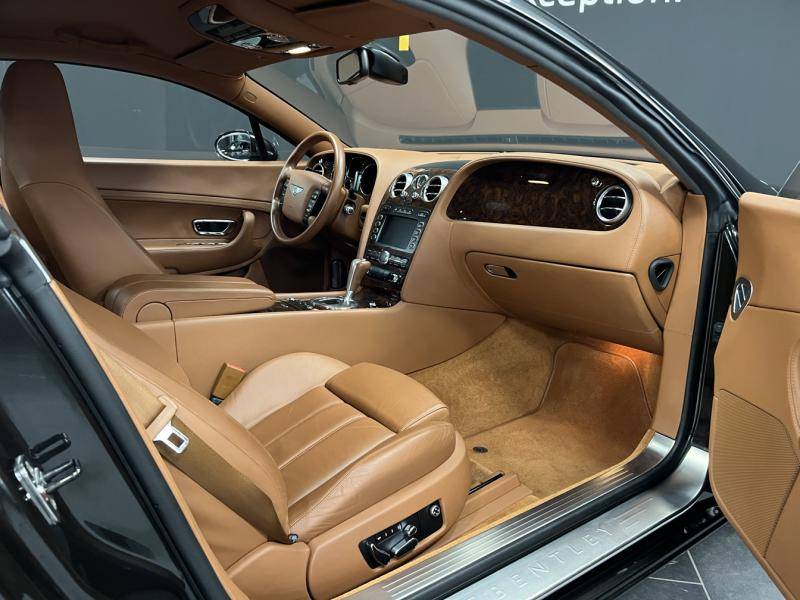
The best Bentley ever – built by an Austrian

The early 00’s then became the period when Piéch aimed for the stars with the whole VW line-up, arguably with a slight lack of understanding of the perceived prestige of some of its brands. The VW Phaeton with a W12 engine thus never became more than a curiosity, but the Audi A8 with the same engine and of course the Bentley Continental saw far more success. Especially the latter was by many considered the best Bentley ever, and Ferdinand certainly took a lot of pride in knowing how to build a British luxury cars better than the Brits. However, one piece was still missing in Ferdinand’s puzzle.

Even if he hadn’t worked actively for the company, Piéch had sat on the board of Porsche, where his career once started, since the early 90’s. Of course he also had family ties to the brand, so it’s no surprise that he felt especially strongly about it. In 1998 however, in one of his razor-sharp statements, he said that for as long as he lived, Porsche would remain independent from VW. Well, that was to change 14 years later when VW acquired Porsche, while Piëch was still very much alive. To Ferdinand, Porsche became the most important brand in the group, and the group he had built had by now also become one of the largest and most profitable car groups in the world.

The Porsche 910, the Bugatti Veyron and the Audi A2 – Piéch was behind them all!

When Piëch passed away in 2019 his legacy was thus utterly impressive, not only in sales numbers, but also in the cars that were developed under his watch (you could also add here the fact that he was the father of no less than 12 children as well…). The W12 Phaeton may not enter the history books, but the Bugatti EB110 certainly will, and without it, we wouldn’t have seen neither the Veyron, nor the Chiron. And without the Bentley Continental, I’m pretty certain that Bentley as a brand would also have belonged to the past. Adding to this the development of Porsche that was on the brink of bankruptcy 30 years ago, what Piëch managed to build is truly fantastic.

So what about the likability part? To start with, I very much doubt there’s a single global company in any sector who has a Mr. Nice Guy as its CEO. That said, Piëch was known for a very authoritarian, if not dictatorial style of management. He had absolutely no time for errors and wouldn’t tolerate mistakes. Maybe the himself legendary Bob Lutz put it best, saying that Piëch although he didn’t agree with his dictatorial style of management, there’s no question that Piëch was a brilliant person and leader. Today’s VW group is the best proof of that!

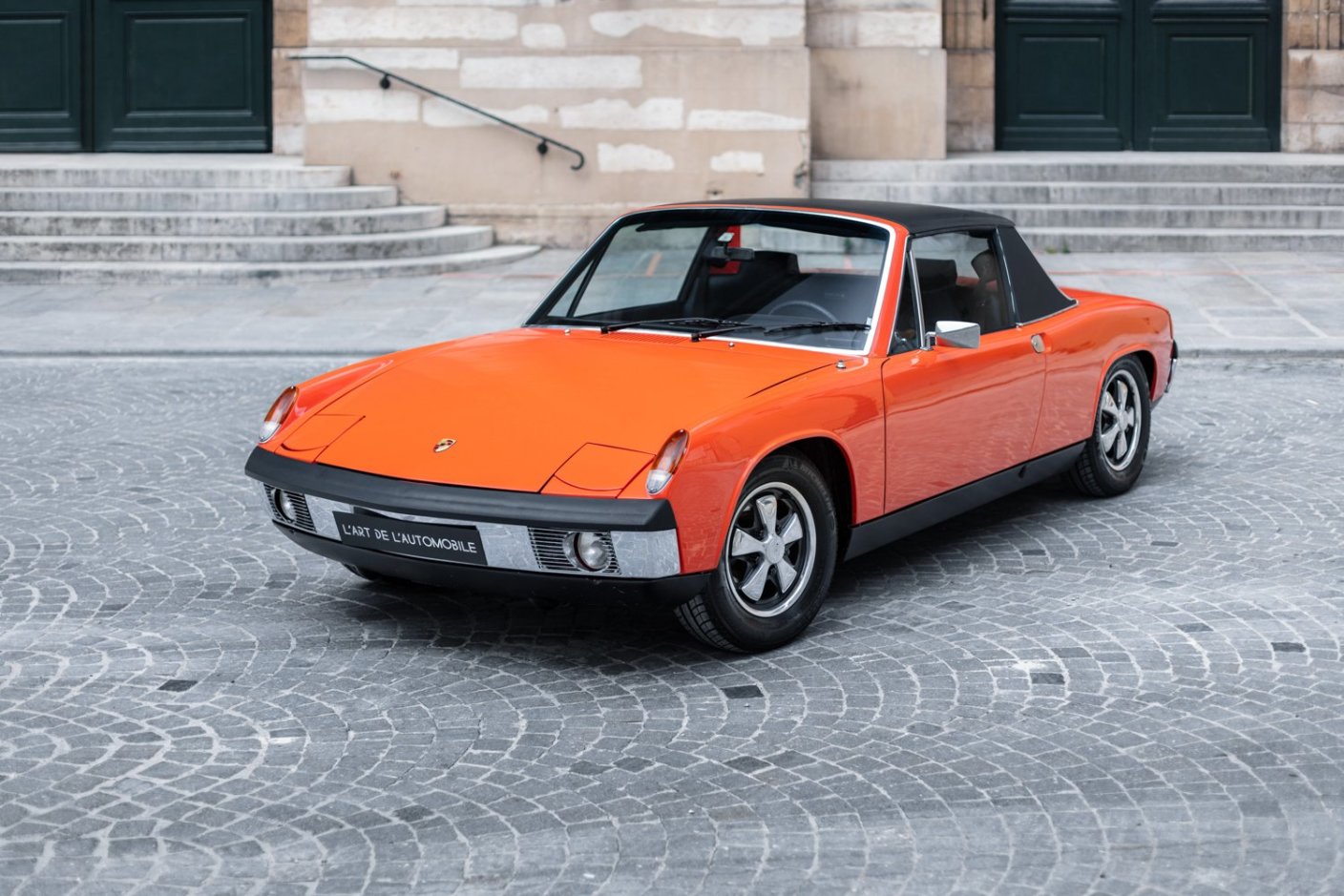
The forgotten (and underrated?) Porsche 914!

It may look like an improbable combination but as many will know, there have always been strong historical ties between Volkswagen (VW) and Porsche. This goes all the back to the birth of VW since the company was founded by Ferdinand Porsche, and Ferdinand Piech, who later became the company’s very prominent president and who is arguably the man behind much of VW’s modern success, was Piëch’s grandson.

Most of us will also feel that we know the recipe for success of a classic Porsche. Six rather than four cylinders and the engine in the back rather than the front. It also goes without saying that the car should be engineered by Porsche rather than any other suspect brand, such as… Audi. And yet, a car that at least partly followed that brief not only wasn’t much of a success, but is today largely forgotten. I’m of course talking about the Porsche 914 – how long has it been since you last saw one?

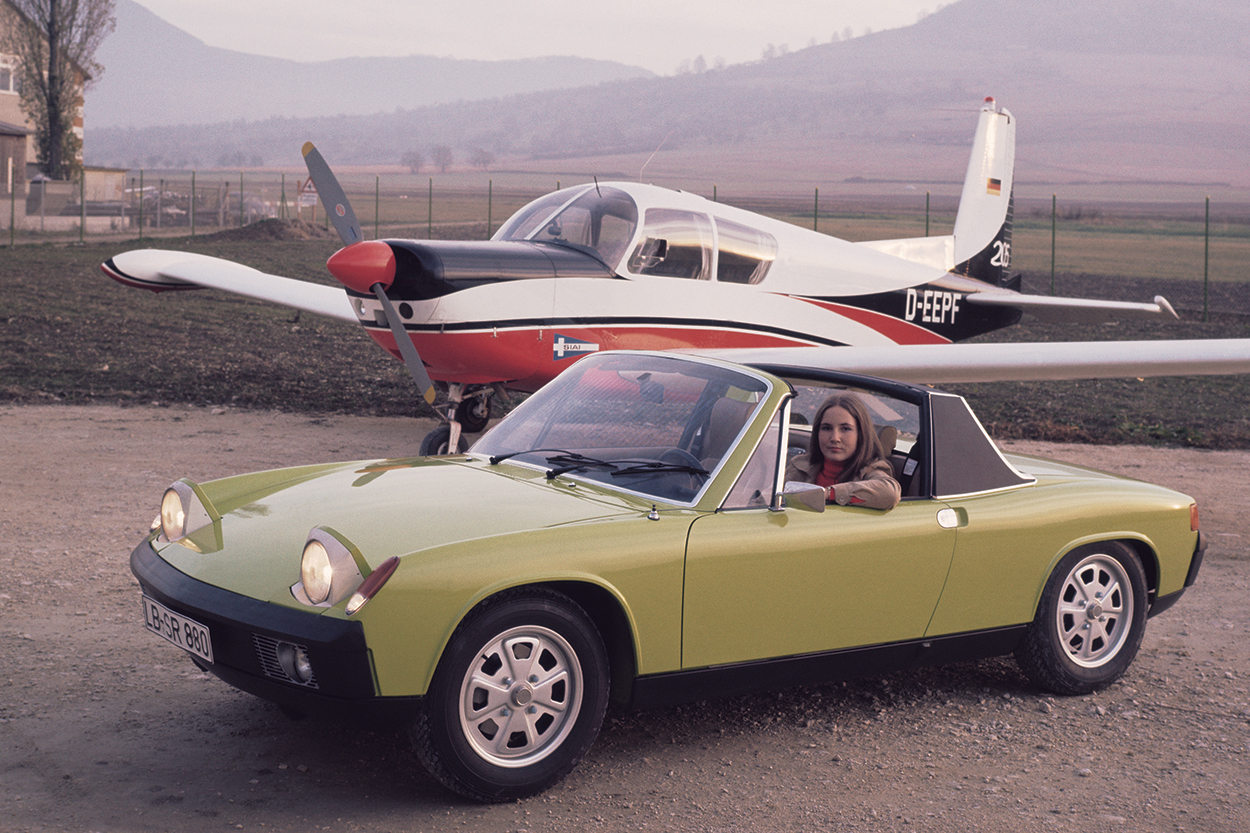
The 914, most often in typical 70’s colors, was quite a neat car

The recipe for a successful Porsche is actually something the company had deviated from already in the 60’s when it offered the 912 as a cheaper version of the 911. The untrained observer wouldn’t spot much of a difference between the two, but the crucial point was of course the engine in the back, where the 912 had a four-pot derived from the 356, making it a much cheaper entry model. However, by the late 60’s it was getting old and needed a replacement.

Over in Wolfsburg, home of Volkswagen, the situation was a bit the same, albeit with a different car. The VW Karmann Ghia had been built since the mid-50’s, had never been very sporty, and was starting to get old. it would continue to be built until the mid-70’s, thus overlapping with the 914 during the whole lifetime of the latter, but VW saw the new car as a way to get a sportier, entry-level car in its line-up, and also one that would (at least partially) carry the Porsche badge.

Many interiors are in leather or vinyl, but the cloth definitely brings more 70’s feeling!

The two companies thus entered into a joint venture aiming at combining Porsche’s engineering prowess with VW’s mass production capabilities. The project was led by none other than Ferdinand Piëch who at the time was the head of development at Porsche, and the VW-Porsche 914 was introduced in 1969 under a new distribution company founded jointly by the two brands. When it was presented to the world at the Frankfurt auto show the same year, it was shown both on Porsche’s and VW’s stand, and the decision was taken to brand it VW-Porsche in Europe, but only Porsche in the US. With regards to Europe, that probably ranks near the top of the list of great marketing mistakes…

The initial 914, referred to as 914/4, was powered by a 1.7 litre, four-cylinder engine developing a whopping 80 hp and sitting behind the seats ahead of the rear-axle, making it a mid-engined car. During the production time the volume of the four-cylinder increased to two litres, and the power up to 100 hp. Certainly not much by modern standards, but the favorable weight distribution and the low weight just over 900 kg meant that the 914 achieved higher cornering speeds than its big brother, the 911!

The favorable weight distribution meant that the 914 did well in GT racing

In 1970 the line-up would be complemented by the 914-6, featuring the 110 hp six-cylinder engine from the 911 and also taking over notably breaks and wheels from the latter. The simpler 914/4 had these and other parts coming from the VW 411, a not very exciting family car. Irrespective of engine, all 914’s came with a five-speed manual gearbox, the 914-6 could in addition be had with a so called Sportomatic four-speed automatic, with hydraulic gear changes and the clutch replaced by a torque-converter.

On paper the 914 had a lot going for it. Its looks were certainly not offensive and rather modern for the time. The weight distribution was better than that of the 911, as was the space, with both a front and a back booth behind the engine. The car was of course also a Targa with a detachable roof, opening the passenger space to the elements. The 914-4 was relatively cheap and as if that wasn’t enough, in 1970 it was also voted “Import car of the year” in the US – arguably quite a small category back then…

Once removed, the roof could be stored in the rear luggage compartment

And yet, the 914 never managed to enchant neither the masses in general, nor the Porsche crowd in particular. Porsche enthusiasts at the time would of course not accept anything but the original 911, an early version of the skepticism that would later befall the 914’s replacement, the 924. The marketing strategy VW and Porsche had gone for in Europe, notably deciding to call the car VW-Porsche rather than only Porsche like in the US, didn’t help either.

That said the 914 didn’t really see real success in the US either, with quality and rust issues on early cars not helping. To that came competition, notably in the form of the Chevy Corvette, as well as the relatively hefty price tag of the 914-6, far from the entry model price tag of the simpler 914-4. Porsche would do what they could when it was already too late, notably publishing press releases specifically pointing out that the car wasn’t supposed to be called the “Volksporsche” (People’s Porsche), which of course had the opposite effet and became the 914’s nickname that lives on until today.

Given how cheap it is, maybe you can afford the plane too?

Still, Porsche built a total of 119.000 914’s between 1969-1975, so to call the model a coplete failure would be exaggerated. Unfortunately, what wasn’t exaggerated were the corrosion issues, which combined with the fact that the 914 never really gained in value and thus often came in the hands of owners not really taking care of them, means that not many of the over 100′ cars are left today. Then again as said, for the ones that remain, prices haven’t evolved anywhere near those of 911’s of the same period!

In Europe the fun starts around EUR 25-30.000 for good cars, with four-cylinder cars easier to find and cheaper both to buy and maintain than the six-cylinder version. In an “everything else equal” world you’d of course choose the latter, but given everything isn’t equal most of the time, I would claim you get almost as much of the 914 feeling with the four-cylinder, and finding a car in good condition is therefore more important than the engine. You’ve probably never had a poster of the 914 on your bedroom wall, but if you’re looking for a relatively cheap entry oldtimer carrying the Porsche badge, the 914 is certainly not a bad place to start!