Look for your very own Peak Car!

Hardly a day goes by without negative news from the car industry, especially the premium German brands. Talk is of falling sales, rising inventory and risk of bankruptcy. And a look at the car market tends to validate the concerns – gone are the days when a new Porsche 911 GT3 was worth more three months after delivery. The same goes for the Ferrari 296 and other models from previously infallible brands. This isn’t a completely new phenomenon, but rather one that started with the hybrid supercars a few years ago. the Ferrari SF90 provides a good example of a car that has only fallen in price since new, in spite of having more horsepower than any Ferrari before it.

Car pundits scratch their head, advancing various theories. Electrification is certainly one explanation, and one I’ve touched on here as well. The billions that went into producing EV’s that no one bought could certainly have been put to better use. Car Youtubers also advance the view that manufacturers have forgotten the enthusiasts, and again, Ferrari is mentioned as the prime example. Let me however present you with a far simpler theory, that I’ll develop further below: whether in supercars, sports cars or family hatchbacks, the world has moved beyond Peak Car, and except for what goes on in the market for the ultra wealthy, buyers don’t find the large piles of money new cars command worth it anymore, as they don’t see new models being fundamentally better than previous generations.

The new 5-series. Had someone told me it was Chinese, I would have believed them.

As an example from last week, I watched a German car Youtuber comparing BMW’s new 5-series station wagon in the top diesel version, the 540d, to the previous 540d from the G31 generation, the same generation as my 540i. The G31 was from 2021 and had more than 130.000 km on the clock but was fully loaded equipment-wise, and in immaculate condition. It was for sale at EUR 39.000, whereas the new car with less equipment cost far more than EUR 100.000. The question was whether the new car was worth the difference. The answer wasn’t clearcut.

On the positive side, the new car consumes about 10% less fuel than the previous version, thanks to a mild-hybrid system. It is said to drive slightly sharper and has a bigger infotainment screen (I’ll let you be the judge over whether that’s a positive or not). The list of negatives is unfortunately far longer. It starts with the bland body style, where the side is now completely flat, given it’s cheaper to press that way than with the more dynamic lines and shapes that characterized the G31. When you open the door, there’s no metal door sill with the M logo on greeting you anymore. In fact, there’s no door sill at all. The plastics are of the cheapest type throughout, and both the seats themselves and the leather on them seem of lesser quality than on the previous model. Finally, the new car is down 17 hp on power, but weights 200 kg more. You can thank the same mild-hybrid system for that.

It used to be that when a car brand such as BMW introduced a new generation of one of its large volume models, no one would even question whether it was better the previous generation – that was a given. And yet, at the end of my 20-minute Youtube clip, the conclusion was not at all obvious, even whn the older car had more than 130.000 km on the clock. You be the judge on whether you would invest around EUR 70.000 more for the new 5-series.

The G31 M5, here in CS shape. Oh how far we’ve fallen…

To me, the G31 is the better car, but it’s not perfect. The fact that in 2020, BMW wasn’t capable of building parking sensors that work with less than a 2-3 second delay is a mystery. This means the car will sound warnings the whole time given the number of sensors, but they’re so delayed so that in the end, you have no idea where the obstacle is. The cameras aren’t of much help, as the angles and lines are so confusing I still haven’t figured them out after more than 35.000 kms. The gesture control is certainly more a gimmick than an essential feature and not one I would have optioned had I bought the car as new, but it’s quite enfuriating not being able to move your right hand without changing radio stations. The lane keep assist is completely useless, as the car floats between the two lines to an extent that makes it look like whoever’s driving is drunk.

Of course, other features are more useful. The adaptive cruise control is one, and it works great, even in stop and go. The side warning against crossing traffic when you’re in reverse has saved me a couple of times. Having recently driven down to southern France at not very legal speeds, I would claim 8.5l / 100km is an excellent value, as is the sublime comfort of the car. It’s just that pretty much all those things were there already around 10 years ago. What wasn’t, and what’s been introduced in the last years, except for larger screens, are things like gesture control or 67 different interior colours. And complicated hybrid systems that make cars hundred of kgs heavier.

In terms of family cars, my peak car is probably around the mid-2010’s. My E63 AMG was a great example. It had enough modern features, some of which worked even better than on the 540i. It had one interior light color which was all I needed. And above all, it had a wonderful V8 engine, without any complicated hybrid system, and with around 560 hp that had no trouble whatsoever with the 1850 kg weight. Everything felt solid as a rock.
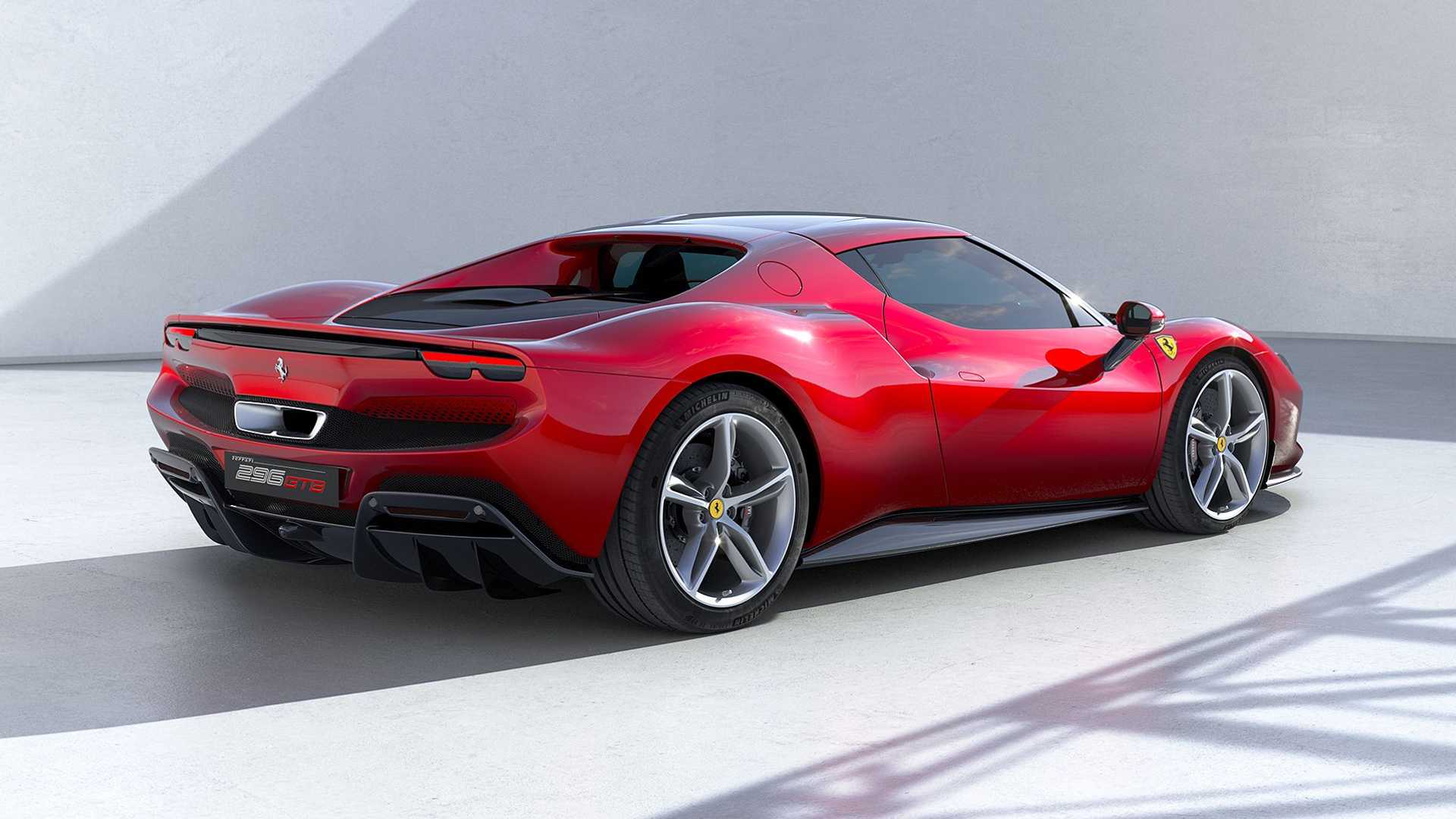
The Ferrari 296 GTB. Too much power.

If you look at sports cars and supercars, I would claim the logic is the same. Sports car buyers aren’t especially interested in hybrid systems in general, and especially not when they make the car 200 kg heavier. They don’t need all the infotainment features, and would prefer switches to tactile surfaces. And very few people would feel they need over 800 hp – in fact a regular criticism of the Ferrari 296 is that at 830 hp, it has too much power. Remove the hybrid system and you’re left with 660 hp at less weight. If you had the option, would you even think twice about it?

That said, Ferrari has a brand value like no one else, and you only need to look at the stock price over the last years to see that they’re clearly doing quite a few things right. They may well have forgotten about the enthusiasts, at least those with limited resources, but they certainly haven’t forgotten about their best clients, since over 80% of new cars go to existing Ferrari owners. This means that the brand from Maranello can allow itself things that othe manufacturers can only dream of. Ferrari is the Hermès of the car world.

That enviable position is something none of the big German brands have, and as argued previously, the active dilution of BMW’s M-division and Mercedes’ AMG by sticking corresponding logos on a few models of every line-up has made the whole thing worse than it needed to be. These guys are all volume producers, as is Porsche, and if people stop buying the new cars in volumes, especially the top models, there’s a big problem.
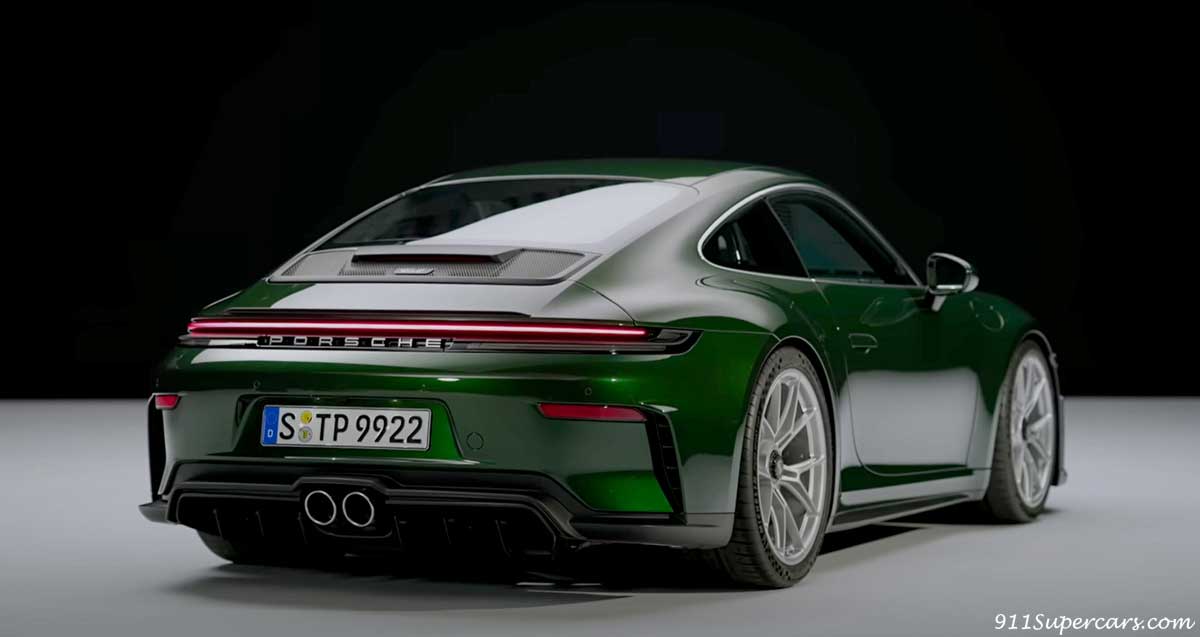
Not even the pretty stunning 992.2 GT3 preserves value llike its predecessors

To come to some kind of conclusion, I don’t know anyone interested in cars who thinks what’s on sale today is exciting, or anywhere near something that could be referred to as Peak Car. On the other hand, I know a lot of people who talk about the cars built 10-15 years ago with some nostalgia. In a couple of weeks, I’m sharing a Glühwein with a reader of this blog who’s thinking of the BMW 635 CSI as a possible daily. I haven’t planned drinks with anyone who has questions on the new, 2.6 ton M5 Touring.

Things are not about to look up for our beloved German brands anytime soon. They can’t revert to things as they were before, even if they wanted to, and I’m not even sure they understand the issue, even though it’s pretty much painted on the wall. That also means that many of them are probably doomed in the longer term. We don’t need to be, however. We don’t even need to move to other brands, but rather think about what we really value in our cars, which of the ones we’ve owned we look back most fondly at, and which of those would cover our daily needs. Many of those will come from the same brands as before.
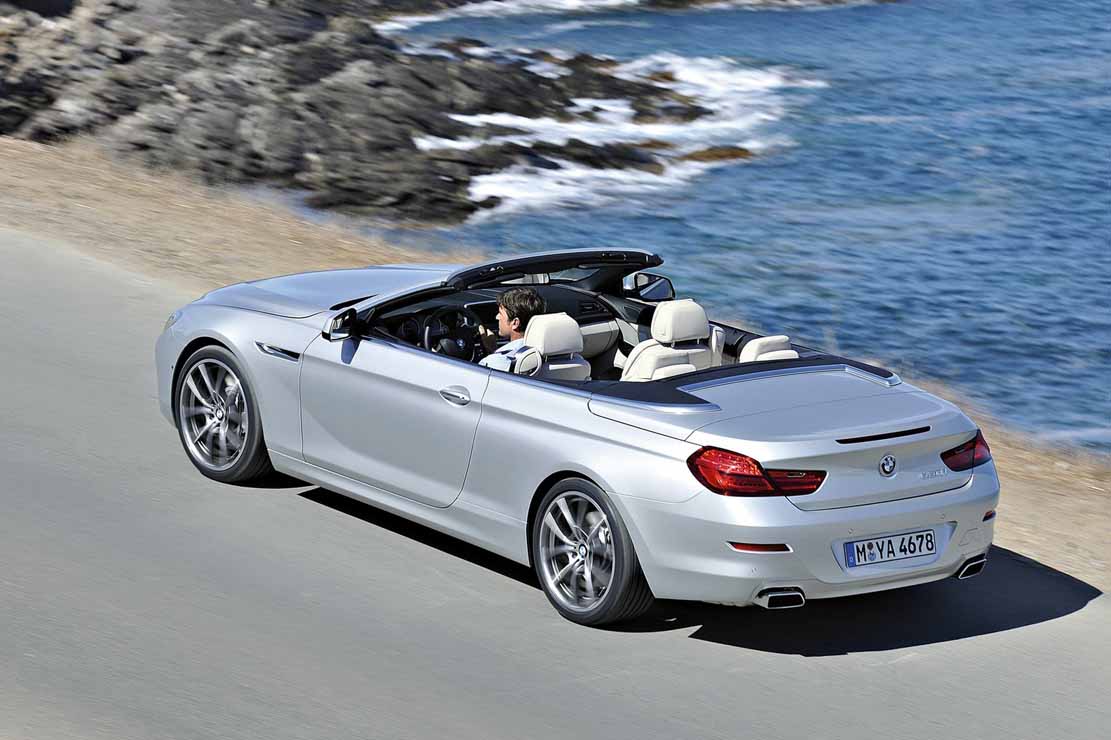
I seem to recall having one of these in the garage. Still looks far better than any new BMW!

For me, that means the 2010-2015 era for everyday cars, and perhaps the 00’s for sports cars (I’d pick a Porsche 997.2 any day over a 991.1, or why not make a deal on a 997.1 that has had the IMS issue fixed? The price difference in the market is hardly motivated). Your era may be another one – for another one of my readers, it’s for some reason the 90’s Land Rover Discovery. The point is that there’s no absolute Peak Car – it’s up to you and your preferences. The only thing absolute is that it’s not what comes out of the factories today. A well-kept, low mileage example from whatever era is your Peak Car will most probably make both you and your wallet happier, and holds it value better, than what they’re trying to sell us today.

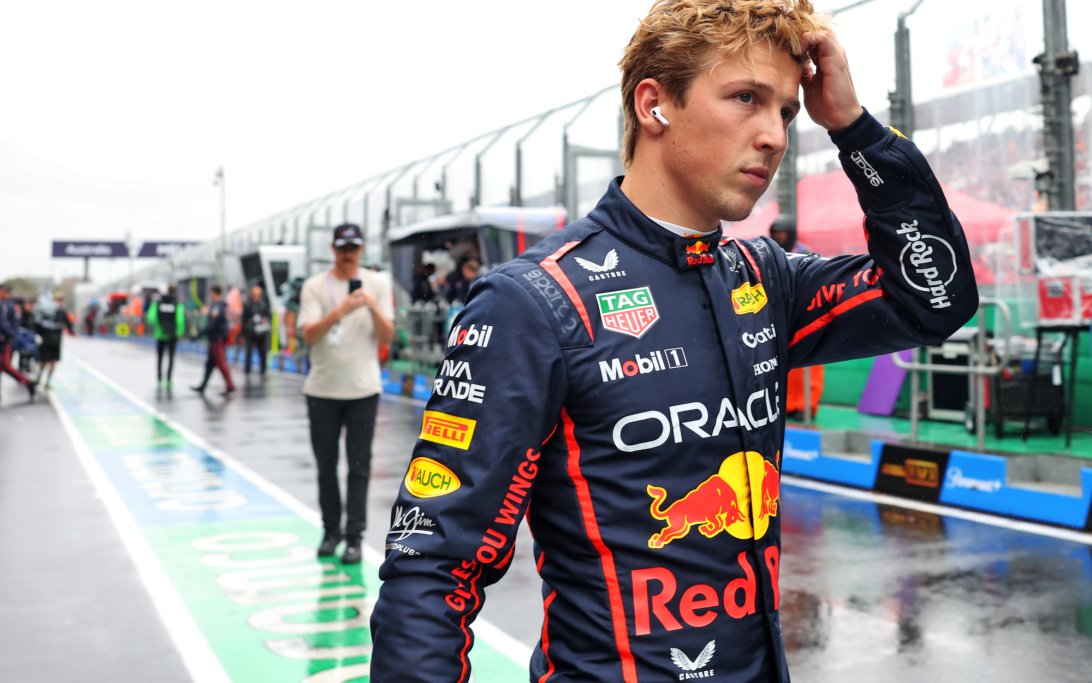
Lawson out – Tsunoda in!

Well, that didn’t last long. 2 1/2 (if you count the China spring GP as 1/2) races into the season and Liam Lawson is already out of his Red Bull seat, being degraded to Racing Bulls and switching places with Yuki Tsunoda. I don’t have the stats to prove it, but I’m guessing this is the least patience any F1 team has ever shown with a new driver, especially a youngster who’s 20 years old…

As noted in my F1 post last week, Lawson isn’t completely new to F1, having started in 11 races and finished P9 at best. That said, his first races at Red Bull have been a complete nightmare, qualifying in P18 at best and not finishing better than P12. That’s not good enough for Red Bull, and Lawson thereby becomes the next in a relatively long line of second drivers at the team who don’t manage to perform in a car that by the looks of it, only Max Verstappen can handle. However, the question still remains if Red Bull didn’t test Lawson enough before signing him to notice it?

Red Bull are of course stressed about the Constructors’ title that they in my opinion will struggle greatly to regain this year. There is however another reason next to Lawson’s poor results playing in here, and as so often, it’s called money. The next GP is at Suzuka in Japan, and rumor has it that Tsunoda’s sponsors have paid north of USD 10m to Red Bull on the condition that they put Yuki in Lawson’s seat in time for it. Let’s see what happens. No doubt Tsunoda is a fast driver, but other second drivers at Red Bull have been so as well – in other cars. We’ll see if Yuki manages to handle that raging bull any better than Lawson in front of his home crowd! If so, Lawson isn’t about to return, at least not this season.

King Lewis the First!

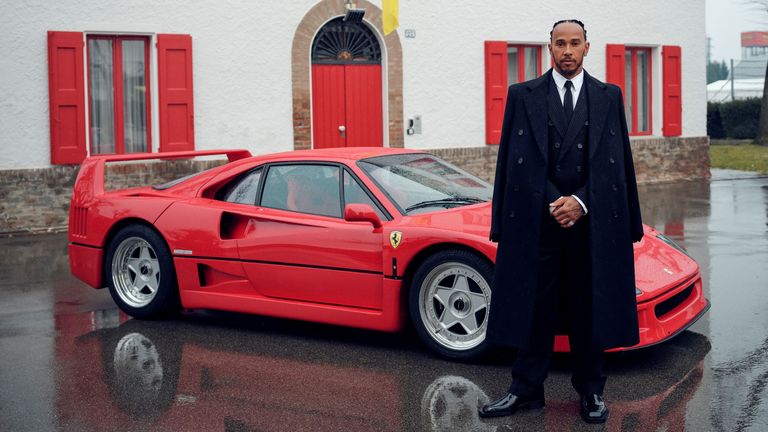
In my last post on the 2024 F1 season from December that you can read in full here, should you want to, I wrote the following with regards to Lewis’s move to Ferrari in 2025: “At Ferrari, Charles Leclerc who doesn’t mind the limelight will have quite a lot of competition for it with Lewis alongside him (…)”. Well, it took about as long for that to come through as it took president Trump to issue his first executive order. In his first official picture for Ferrari, Lewis puts any doubts as to who is the current king of F1 to rest.

Lewis loves fashion, but it’s usually in the XXXL rapper style that isn’t necessarily to everyone’s taste. Not so here. In a perfect, carefully selected suit, along with coat and accessories, he’s also chosen as car the most iconic Ferrari of them all if you’re a Gen X:er. By pure coincidence, that’s not only the core generation among current F1 enthusiasts, but also the group with capital. It’s a masterful illustration of who’s in charge, and something Max Verstappen can match as little as Novak Djokovic can match the aura of Roger Federer or Rafa Nadal.

Let’s remember that what Lewis has done is pretty remarkable. I’m not referring to his seven world titles here, but rather to the fact that having been on a downward slope for the last years with Mercedes and with most thinking it more likely that he leaves F1, not only did he manage to pick up the pace at Mercedes in the last year, he also made Ferrari believe enough in him to offer him a contract – at the age of 40. The first picture proves them right, and I for one cross my fingers that next season does so even more!

F1 pitstop: the best season many years!

The longest F1 season in history is over since a week back, and I think most would agree that it wasn’t only the longest, but also the best in a long time. In the end, Max Verstappen claimed the title as expected, but didn’t manage to wrap it up until the third last race of the season, and his Red Bull team was also far from the double, ending third in the Constructors’ championship behind McLaren and Ferrari.

Behind that summary, there’s however a whole lot more to dwell into that contributed to making this season as good as it was. An essential ingredient is of course that after a few years’ of complete Red Bull domination, there’s now four teams that compete for every race. Next to Max, both drivers of the McLaren, Mercedes and Ferrari teams won at least two races during the season, and these same four teams also managed at least one race where they finished first and second.

Title nr 4 in the bag – but a harder one than any of the previous three!

Of the four, there is no doubt that Red Bull was the most unbalanced in terms of drivers. The team managed three 1-2’s, however all of them during the first five races, and without Sergio “Checo” Perez winning a single race. And after the first part of the season, he was really nowhere near a podium and scored less points during the remaining 18 races than he did during the first six. That’s obviously also what led to Red Bull not winning the Constructors’ championship. Perez didn’t have to do as well as Max for that to happen, but he would have had to do much better than he did.

That Red Bull will break the contract with Perez that would otherwise be valid for another two years seems rather obvious, and team boss Christian Horner recently declared that current RB drivers Yuki Tsunoda and Nigel Lawson are his preferred replacement candidates. Horner said he feels both of them did a good job in challenging circumstances – obviously implying that’s not how he feels about Checo Perez, and rightly so.

In the end it was McLaren that took the Constructors’ title, and what a line-up they had, and will continue to have next year, with Norris and Piastri. Between them, the two won six races during the season with Norris in the lead, clinching four, and they ended second (Norris) and fourth (Piastri) in the Drivers’ ranking. Even more importantly, it very much felt not only like Piastri caught up to Norris as the season progressed, but also like the car kept improving. If the trend continues next year, McLaren will certainly be a serious challenger for both the Constructors’ and Drivers’ titles.

A very well-deserved Constructors’ title for F1’s most sympathetic team!

Mercedes on the other hand really found their speed in the second part of the season, with George Russell and Lewis Hamilton each winning two races and finishing only 22 points apart as sixth and seventh in the Drivers’ championship (Russell ahead of Lewis). Just like with McLaren, the direction of travel is the right one, but there’s obviously an element of insecurity tied to Lewis moving to Ferrari after no less than 12 seasons and six world championship titles at Mercedes. That there was some emotion tied to this was very visible after the last race of the season at Abu Dhabi, and who can blame him. Faces at Mercedes were certainly happier a few years ago before Red Bull’s domination started, but it doesn’t change the fact that Lewis’s time at Mercedes has been one of the most successful runs ever in F1.

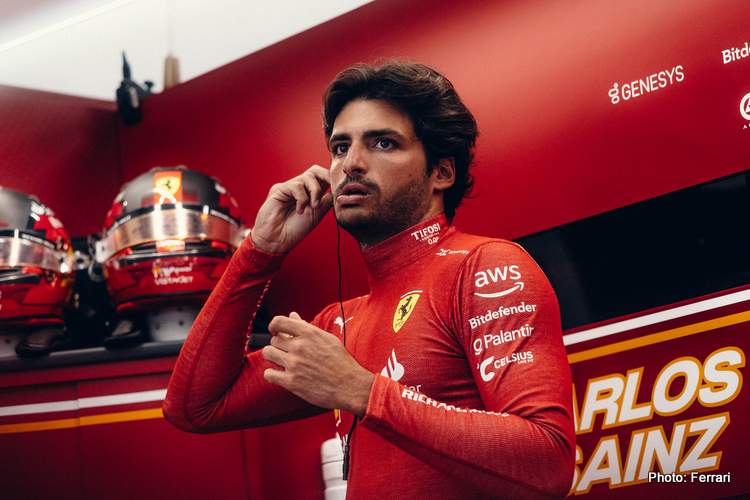
Just like Mercedes, Ferrari also became more competitive as the season progressed, with Charles Leclerc winning three races against Carlos Sainz’ two. The big surprise was however the announcement already before the first race of the season that Lewis would replace Sainz in 2025. The jury is certainly still out as to the wisdom of the switch. As Carlos would go on to prove during the season, he is very much a top driver more or less on par with Charles Leclerc, and both of them seem to have gotten along quite well, and together with team boss Cédric Vasseur creating more harmony in Ferrari than in many years.

Let’s hope the happy faces last…

That Lewis feels he needs a new challenge after 12 seasons at Mercedes is certainly not surprising, but he’s no longer a young man, and most of us would probably have thought he would rather be retiring. Ferrari hasn’t always been known for a wise strategy, and you can’t help but wonder if this decision will go down as another of those that in hindsight was less well thought through.

Carlos Sainz was thus left out in the cold and it took a while for him to find a new seat, which in the end turned out to be with Williams, where he will drive alongside Albon, replacing Logan Sargeant. Williams is certainly in far better shape than a few years ago, but the team is still miles away from the big four. In terms of Alex Albon, he’s certainly proven he can drive a car fast after his less than memorable run at Red Bull, but contrary to him, Carlos Sainz has nothing to prove in the driving department. You can’t help but feeling sorry for Carlos, and hope things at Williams will turn out better than there is reason to expect.

It would seem winning races is not enough…

Next to Sargeant, three other drivers will leave the circus after this season, namely both Alfa Romeo Sauber drivers, Valtteri Bottas and Zhou Guanyu, and Kevin Magnussen at Haas. Both Bottas and Magnussen are well past their prime and will leave F1 altogether, whereas it’s unclear what Guanuy will do. Newcomer Oliver Bearman will replace Magnussen at Haas, whereas Alfa Romeo Sauber is in a bit of a flux, with the team set to become Audi in 2026. In 2025, Nico Hülkenberg and newcomer Gabriel Bortoleto will make up the line-up.

As we close the books on 2024, it’s thus on a season that was really exciting, with four different teams winning races and seeing their highs at different times during the season. Hell, even Max Verstappen proved he was human in the last race, driving in to the side of Oscar Piastri in such an obvious driver mistake that not even he could contest it (he couldn’t help himself contesting the penalty though). Is he the best F1 driver ever? He’s certainly a candidate, and next to driving skills, he clearly has the mindset of a Senna, Schumacher or Prost (think competitive to a rather unpleasant level) to back it up.

Whoever replaces Checo Perez at Red Bull doesn’t matter, Max will completely dominate the team in 2025. At Ferrari, Charles Leclerc who doesn’t mind the limelight will have quite a lot of competition for it with Lewis alongside him, and over at Mercedes, George Russell is all of a sudden the team’s first driver. Will it perhaps be McLaren who in the end draw the longest straw out of all this? We’ll have a first indication in mid-March, as the new season kicks off in Melbourne!

The roaring comeback of the ICE!

Between US elections, the wars in Ukraine and the Middle-East, and whatever else may have passed through your news flow this summer, chances are that you’ve missed something that’s gone a bit under the radar. And that, my friends, is more or less a complete turnaround in the business plans of the world’s leading car manufacturers, and the roaring comeback of the good old combustion engine!

The ICE is making a comeback at a level that no one would have expected just a couple of months ago. Doing so, it proves a few points that won’t be new to readers of this blog, but that I’m happy to note anyway, since it’s always nice to be right: firstly, if you want to sell stuff, there needs to be demand. Secondly, if something cannot hold in the long term, it will break sooner or later. And thirdly, it’s unwise to bet against the world’s largest car company, especially when it’s Japanese. Let’s dig in and look at what you may have missed while sipping your pina colada at the beach!

To set the scene, let’s start with something that EVO, the UK car magazine that this blog takes its inspiration from, noted in its editorial back in July, namely that within just the last month, three new combustion engines involving five global car brands were announced. In all cases, it was about ICE’s optimized for hybrid usage with electrical motors, efficiency measures, adaptations to sustainable fuels etc. Other signs that the combustion engine is far from dead have also flourished over the last year, perhaps nowhere more so than in Modena with the Purosangue’s naturally aspirated V12. The fact that Ferrari shares are among the best investments you could have done over the last years also don’t really speak in the direction of a quick demise of the ICE.

Owning Ferrari stock would have given you more than 700% in the last 10 years, most of it in the last two years. Hell, you could buy an ICE-powered Ferrari for that!

It’s also interesting how differently car CEO’s speak today, compared to just a few months back. The first one that made me swallow my coffee the wrong way was Peugeot CEO Carlos Tavares, who during a car show went on camera, stating in the blunt way only a Frenchman can that electrification is nothing car manufacturers have chosen – it’s something Brussels (meaning the EU) has imposed. His body language made clear he enjoyed it about as much as a rotten slice of foie gras. Unfortunately, Stellantis (the group Peugeot belongs to) have replaced him since the interview.

A few weeks later it was Ola Källenius, the Swedish CEO of Mercedes-Benz, who until recently was very happy to tell everyone about Mercedes’s fully electrical future but now sings a different tune, whereby combustion cars are still very much part of the Mercedes mix, alongside hybrids and EV’s. That’s of course a direct consequence of the lukewarm reception Mercedes EV’s have gotten from the market, especially the soap-like EQS. Now the talk is of a new S- and even E-class coming with as options combustion, hybrid and electrical engines.

What a new S-class could look like – far better than the EQS! (Illustration Larson)

A few months earlier the same message had come from BMW in Munich, confirming several combustion engine initiatives over the coming years. To round it off, in the same week as this is published, Volvo joined the long list of manufacturers stepping away from an all-electrical future, in Volvo’s case by 2030. The talk is now of reaching 90%, however including various types of hybrids.

None of this is really surprising. Because what all these car CEO’s seem to have forgotten, but actually should know better than various politicians and other policy makers, are the laws of supply and demand. And what has become painfully clear is that there is no demand for EV’s on the scale the political class would like there to be (if you need to read up on why they won’t do anything for the climate and are currently one of the most unethical industries around, see here, here, and here). From a European perspective it’s actually even worse, since the day, should it come, when demand improves, it’s not European, but rather Chinese manufacturers who stand to profit from it.

Let me give you a couple of pretty staggering examples of this in real life. The Porsche Taycan is generally hailed as the best EV around from both a driving and a charging perspective (if not range). Two years old and with less than 30.000 km’s on the meter, it can easily be had for 30-40% of the price as new – that’s a depreciation of over 50% in less than two years for the best car in the segment! And with the new model out, those numbers will certainly not improve going forward.

A Polestar 2, a European EV favourite, far less good than a Taycan but also far cheaper at around 75-80′ as new, will without problems be yours for 30-35′ with the same kind of mileage as the Taycan. And should you like soap, the numbers for the Mercedes-Benz EQS are similar. It’s getting to a point where European car dealers no longer want to trade in EV’s, not just because of the insecure value, but also since they tend to sit in the courtyard far longer than traditional cars.

A year ago, it would have been in front of the dealer’s entrance. Today, it’s hidden in the backyard.

What’s happening is that disappointed owners, either outright or through various types of leases which typically have a 36-month life (at least in Europe), trade in their EV’s and when doing so, opt for a conventional car to replace it with. That’s the case in up to 90% of cases in the US, as various reports have shown. Why? Well, unrealistic range promises, especially in winter, a lacking charging infrastructure, and various technical and quality issues with many EV’s all make for a not very attractive cocktail. As energy prices rose in parallel to the ownership and will continue to do so for every windmill and solar farm that is set to replace conventional energy, it turns out the savings over a traditional car aren’t that big.

The combustion engine technology is now over 150 years old, removing the technology risk that is very much present in the EV market, and that all the talk of battery revolutions only contribute to. Two years ago it was just a matter of time before solid state batteries once and for all solved the range and charging issues. Now, it’s instead sodium batteries that will do the same, and are simpler to develop. Who in their right mind would buy an EV, more expensive than a traditional car, with a technology that risks being obsolete in a year? You take this together with all the other EV issues you know well by now, and the logical conclusion is that other than in cities or for shorter trips, the ICE still reigns supreme.

As this sinks in, the effect is that conventional manufacturers go back to what they’re good at, i.e. technological innovation around the combustion engine, and EV manufacturers that are not very well capitalized start going belly up. Fisker already did (making it the second time the Dane Henrik Fisker manages to bankrupt the same brand), others are heavily at risk (Polestar starts having pretty severe cash issues and a share price that is at rock bottom) or not in control of their destiny (Lucid who are at the mercy of the Saudi money tap). All this is normal – every new industry has a lot of companies who don’t make it. It was just the buzz of the last years that may have made it look different.

Marcus Brownlee called the Fisker Ocean the worst car he had ever tested. Six months later, the company was bankrupt and owners have hopefully learnt to check the health of the brand next time around.

What is not normal is however the elephant in the room called China, that as said previously, I believe will dominate the low- to mid-priced EV market going forward. Why? Well, with a home market of over a billion people, unlimited state subsidies and a supply chain of rare metals especially from Africa that has been carefully crafted over the last decade, China has done everything Europe should have done to be successful, had they really meant business. Instead, the EU now wants to put tariffs on Chinese EV’s, which less than a month after it was announced, was countered by China doing a deal with Saudi Arabia, where Chinese EV’s for Europe will be produced with no tariffs. And there won’t be any sanctions or tariffs on Saudi going forward either, that oil they also sell, is very helpful when it gets cold.

Going forward, the world will thus hardly be fully electric, and this is where the world’s largest brand Toyota comes in. Although they were heavily criticized by the environmentalist lobby, the Japanese stuck to their guns and continued to produce and perfect hybrid solutions. Their logic is simple and should have been easy enough for every car company to understand: if the supply of rare metals and other input materials is limited, then splitting a large battery pack into four smaller packs for four cars, rather than a big one for one, makes a lot of sense. Hybrids also eliminate all the issues linked to range, charging, and under-capitalized car brands no one has heard of.

A Toyota hybrid drvetrain – expect to see more of these going forward!

So where does all this leave us? Well, conventional manufacturers will be all too happy to reverse course and fall back on what will be the conventional car market going forward – meaning hybrid solutions around the combustion engine. And should there be an evolution around e-fuels, we can probably do without the whole hybrid package as well. On the other side, there will be EV’s at various price points, working well for cities, shorter trips or people preferring the technology. And yes, should we in the end get a battery revolution in terms of range, charging and more sustainable input materials, maybe they will take over -but that’s neither for tomorrow, nor next year.

It’s pretty incredible that it’s taken us this long to get us to the only place that made sense from the beginning, but as said initially, if something cannot hold, it will break sooner or later, and the dreams of 100% EV’s just did. Personally, i’d be delighted to consider a hybrid. I’d have nothing against driving fully electric on shorter distances, and reducing my fuel consumption on longer trips. The ethical issues linked to rare metal excavation are still not solved, but I guess you can’t have everything, and things are at least improving in this regard. Mark Twain once replied to a letter by saying that “the report of my death was an exaggeration”. Mid-2024, the same thing is just as true for the combustion engine!

F1 pit stop: could it be?

We’re around a third into the 2024 F1 season and until a couple of races ago, it did look like it would again be a very one-sided affair, with Max in his Red Bull having claimed all pole positions so far, winning 5 races, and looking unstoppable on the way to his fourth consecutive world championship title. 

And then came Emilia Romagna in Italy, which Verstappen did win but not quite like before, where Max wasn’t even close to the podium. Ever so slowly a bit of excitement has returned – what has happened? To recap for those who may have gotten tired of following this every other week (you have my sympathy), it’s really two teams that have made notable progress and have gotten a bit too close to comfort for Red Bull. 

If they fired him to make him faster, it worked

The first one is Ferrari, currently second in the championship and the team that so far had been closest to Red Bull. And with two great drivers, it’s both Carlos Sainz and Charles Leclerc who at least to some extent give Verstappen a run for the money. Sainz’s improving results showed a strong correlation with Ferrari’s decision to sack him, replacing him with Lewis Hamilton, in 2025 and could perhaps be seen as his pride having been hurt. Personally, I think it’s more a case of a great driver in an improved car. 

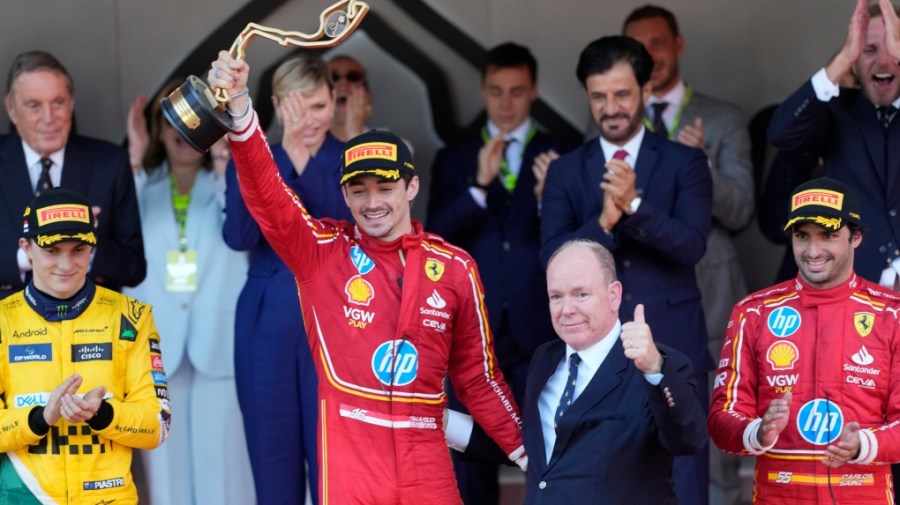
Leclerc’s results seem to validate that theory and at no time more so than last week in Monaco when he won his home race for the first time, having previously not even been on the podium in the Principality. Leclerc is one of a few thousand Monegasques so this was also the first time a native won the very special Monaco race, and did so in quite a dominant way. 

The second team that has come closer to Red Bull, perhaps even more so than Ferrari, is of course McLaren. Here Lando Norris has led the charge and nowhere more so than in Miami where he won his first race of the season, his fourth podium for the season. Oscar Piastri is also finding more speed in his car, with a first podium finish in Monaco where he was second. 

I’m willing to bet this wasn’t the lsat time we see Lando on P1

So what about Red Bull? Well, when Norris won in Miami in the first days of May, Max finished second and Perez fourth. And then in Monaco, Verstappen wasn’t on pole for the first time this year, starting six. Perez, also a first for this year, was however eliminated in Q1, starting impossibly far back. Of course Monaco is a very special race and not really indicative of things to come, but the team confessed to the car having a problem when driven on curbs which obviously penalized lap times, and Max also hit a wall in qualifying, ruining his chances of starting higher up. For a driver never making mistakes, that’s telling.

I may be grasping for straws here and of course Red Bull is still the leading team this season with a very healthy lead both in the team and driver rankings. The most likely scenario is no doubt still that Max and Red Bull win both titles. But Perez’ renewed performance dip is worrying, and there’s little doubt that Verstappen feels both McLaren and Ferrari breathing down his neck more than in the first part of the season. In that sense, the coming races will be very interesting, especially Barcelona on 23 June, since that is the next real driving course.

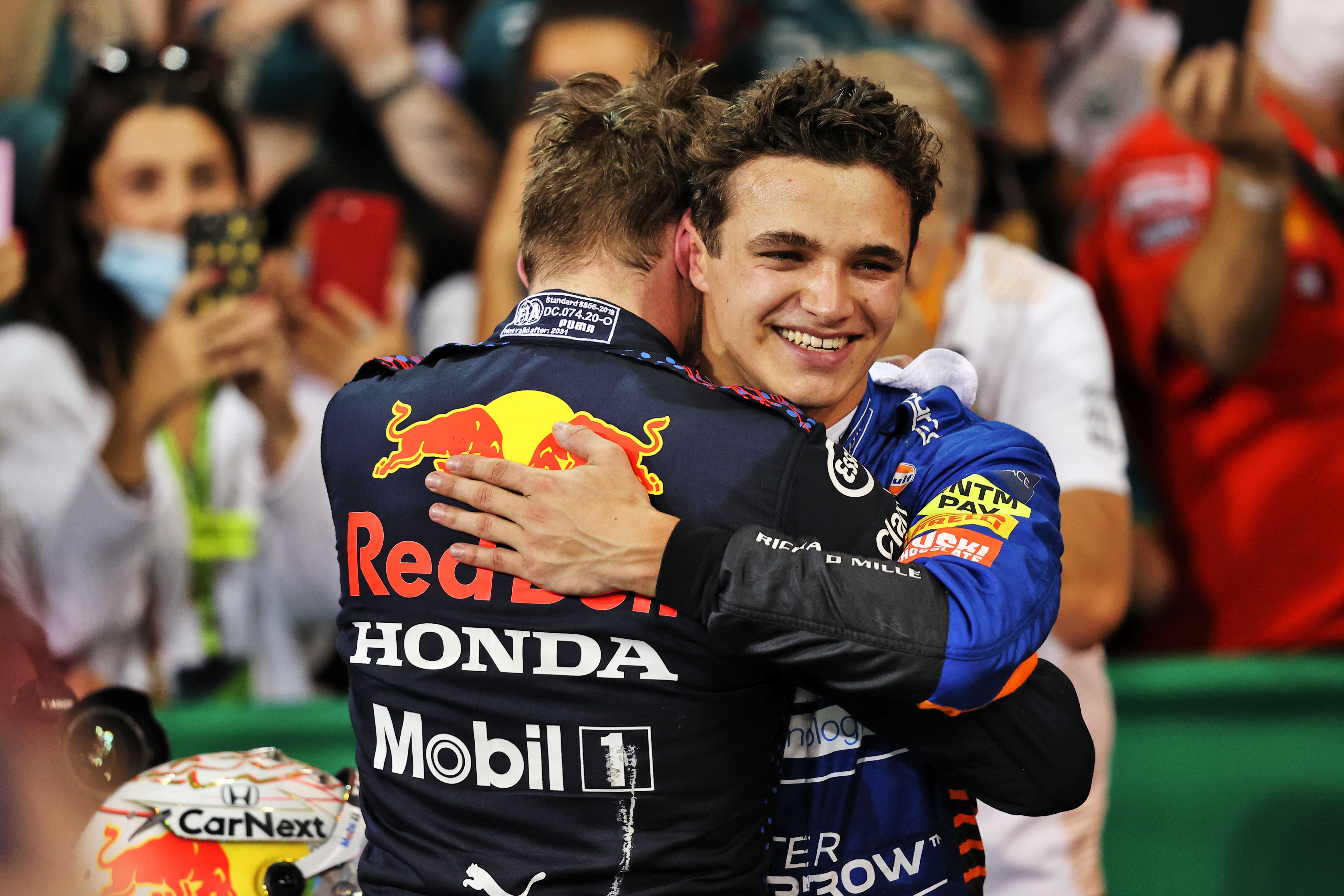
It’s all hugs and smiles for now – hopefully it’ll stay that way

Further down the field, not much has changed. Unfortunately Mercedes hasn’t found the same speed as Ferrari and McLaren, and now rank clearly behind the two. Further down, Alonso does what he can in the Aston Martin car, with the team is a solid fifth in the championship. Even Stroll manages to score a few points here and there, knowing that Aston Martin no doubt has the most unbalanced driver line-up of all…). As for the rest of the teams, there really isn’t much to mention.

We’ll see over the next races how this pans out. Can Max preserve his lead and for the team’s sake, can Perez find his speed again? Will Leclerc be able to build on Monaco and keep that competitiveness over the coming races? Or will Lando Norries be the hungrier one, extending his nice podium run? I guess the season does have some excitement in it, after all!

PS. Make sure you don’t miss the documentary “Senna” on Netflix, a nice portrait of the man who was perhaps the greatest of them all. It also serves as a reminder of how very different the F1 sport was 30 years ago. Not to take anything away from the drivers nowadays, but the level of courage of those guys… You’ll see what I mean if you watch it!

F1 season 2024 – the calm before the storm?

If you read this on the Sunday of publication, it means the F1 season 2024 is only one week away with the engines revving up for the first time on March 2 in Bahrain. 24 races are planned this year, making it the longest season ever if they all take place. The season will end not far from where it starts, in Abu Dhabi, in early December, and as I finish this post, the last day of official testing is already underway!

In a way, the 2024 season is shaping up to be a repeat of 2023. No one really doubts that Max Verstappen will add another world champion title to his and Red Bull’s belt, at least not yet, all drivers are in the same seat as last year, and all teams are the same, except in name. And yet, there have been two pieces of news before the season kicks off that have made the headlines: the first was Günther Steiner being fired as team head of Haas, and the second that Lewis Hamilton is leaving Mercedes for Ferrari at the end of the season.

The news were certainly unexpected!

To start with the Lewis, this is of course both surprising and exciting. Surprising since Hamilton has been part of Mercedes since what feels like forever and is in reality 11 years, a very long time in F1. He’s of course one of the most successful drivers of all time, but we also know of the difficulties Mercedes have seen in the last seasons, probably making a change feel like a good option, both for Lewis and the team.

I think we all look forward to seeing Lewis in a red car from Maranello, and we should also be thankful that the news was this rather than that of him retiring, which could also have been the case. It does leave the question however why the announcement comes now, given it’s a year away, but it’s probably as simple as once the decision was taken, the news would have come out anyway, and no one really doubts that Lewis is professional enough not to be distracted by this in his last Mercedes season.

Yet another reason for announcing the move now if of course also to leave Carlos Sainz enough time to find a new seat. Ferrari have very little reason not to be pleased with Sainz, who together with Charles Leclerc has formed on of the best driving duos the last years in a car that hasn’t always been as good as it should be. The decision to replace Carlos with Lewis cannot have been an easy one, especially since Lewis probably won’t hang on for the next five-six years. So far, it’s unclear if, and if so, for what team Carlos will drive in 2025, but I’d bbet a lot on him doing all he can in 2024 to prove Ferrari wrong!

“What the f* Gene? It wasn’t my fault!”

The other piece of pre-season news was that Günther Steiner, one of the most carismatic profiles of F1, is no longer at the helm of Haas. He’s being replaced by Ayao Komatsu who’s been an engineer with the team since 2016. Let’s just say that I’d be very surprised if a Japanese engineer reaches the same level of flamboyancy as good ol’ Günther… He for one isn’t happy about the decision, although he’s made clear that Gene Haas as owner is in his right to do whatever he likes.

To an outside observer, it seems pretty obvious that Haas’s issues have very little to do with Steiner as a team head, and a lot to do with Haas suffering from too small a budget and resources to keep up, and thus have a car that simply wasn’t fast enough. I’d be very surprised if Komatsu-San can do a better job result-wise than Günther, but I guess time will tell! If the testing that just ended is anything to go by, it doesn’t look good, since both Haas cars ended last…

Coming back to this year’s season, I really can’t think of a year when there was as little movement between drivers and teams as now, given we’re at zero. Daniel Ricciardo is now confirmed as permanent and not just a replacement for Nicky de Vries, next to Yoki Tsunoda in the second AlphaTauri, this year renamed to RB. Those who follow F1 know that Ricciardo’s career has been rather shaky in the last years and not characterized by the best decisions, so let’s hope this works out for him.

Whether first or last on the grid, Sauber will certainly be seen!

Next to that, the only piece of news on the team and driver side is that what used to be the Sauber team and then became Alfa Romeo Racing is now again called Sauber (or rather Kick Sauber, with Kick being the new sponsor). For someone living less than 10 kms from the factory here in Switzerland that’s pretty cool, especially since the team has managed to hang in there since 1993, and has nurtured some of the best drivers out there, including Kimi Räikkönen and Sergio Perez, among others.

Of course all 2024 cars are new, but technical changes are largely absent, knowing that 2025 will be the last year with the current V6 engines. We’re not fully clear on what will replace them, but let me stick my neck out and say that it will probably not be rumbling V8’s…

With such calm before the season starts, will there be a bit more storm when the lights turn to green next Sunday? Let’s indeed hope so, since yet another season with Red Bull and Verstappen dominating proceedings as has been the case in the last years would be slightly…. boring? I’ll leave you to guess who was fasted in the last pre-season training session…

Anyone wants to bet against this ending?

Closing out 2023…

It seems yet another year is coming to an end and at least if you ask me, it’s been one that’s passed quicker than most! I guess that may be a sign of our accelerating society, where everything seems to move at an ever increasing pace. Except for the adoptions of EV mobility that is, but let’s not get ahead of ourselves. As usual, in expectation of a hopefully good 2024, I’ve compiled a few paragraphs of stuff that we’ve seen, may see, or is just interesting to think about, following the first letters of the 12 months of the year. Enjoy the reading and the holidays!

January

The J for January this year is for Japan, not because of the exciting cars they bring to market (they don’t), but rather because they’ve become the last bastion of some kind of realistic thinking around future electric mobility, continuing to largely ignore full EV’s in favour of various types of hybrids, and with a number of projects also in e-fuels. It’s actually a rather simple calculation to see that if for all the reasons we know, your battery producing capacity is limited, then splitting what you have between several cars and complementing it with a combustion engine is far more efficient than building a small number of full EV’s. Let’s hope Japan can export its thinking to other countries in 2024 – but I wouldn’t hold my breath…

February

The February F is for Ferrari, and the fact that the Maranello company is doing better than ever before. Looking over the last 10 years, production numbers have more than doubled, the product range receives praise from motor journalists and is up to date. and had you bought the stock five years ago, you would have tripled your money. Not only that, if you were one of the lucky few to get your hands on a Purosangue, the most elegant SUV (kind of…) on the market, you could re-sell it for around twice what you bought it for – if you find one. There’s currently not a single one for sale in Germany, as an example. In two words already used when I wrote about the FF a few weeks ago: Forza Ferrari!

The first Purosangue I’ve seen in Zurich, as late as last week. Worth a fortune!

March

We’ll take the March M to mean money, since no month starts with an E, in which case I would have said Euros. Because it’s largely in Europe that money is getting increasingly scarce, and nowhere more so than in Germany, where the government is trying to find enough money to fill a small EUR 17bn budget hole that was “discovered” a few weeks ago. One of the measures taken is an immediate scrapping of the EUR 4.500 cash premium for buying an EV, and I’ll let you guess how that will affect already slowing sales numbers. Things are getting harsher, or let’s say less subsidized for EV’s in many other countries as well, so at least for now, the party looks to be over before it even started. Except for Tesla that is, more on that in May…

April

Before May though we have April with A for Alfa Romeo, that returned to full form five-six years ago with both the Giulia and Stelvio Quadrifoglio, a 500hp sedan and mid-sized SUV that received praise all over, and to everyone’s surprise, saw Alfa all of a sudden being able to compete with cars like the BMW M3. Given many of us enthusiasts are Alfistis at heart, this looked like the new dawn we had been waiting for since the 80’s – but then nothing happened. No further exciting models, an ageing line-up, and with as latest addition the small SUV called Tonale, which is unexciting, uninteresting, and overpriced. C’mon Alfa, time to wake up before it’s too late!

The Giulia was the most positive Alfa Romeo surprise since the 80’s!

May

Even though this is a blog for those of us favouring combustion engines, I’ll take the second M for the year to mean Musk, as I continue to be fascinated by the man. As mentioned last week when writing about the Cybertruck, it’s amazing what he has achieved with Tesla in only 10 years, and at the same time, it’s rather pitiful how the traditional industry still isn’t managing to produce good alternatives. This is something we’ll come back to next year, but looking at it now, the Model Y is the best-selling car this year in Europe, it ranks no 4 in the US, and the motoring press seems to agree on the Model 3 currently being the best EV out there. So was I wrong about e-mobility not taking off? No, but Tesla is the shining exception. I still don’t want one, but I’ll take my hat off for Elon!

June

J for June or a Jubilant Max Verstappen, who took his third consecutive F1 title in 2023 and by June of last year, had basically already settled the whole thing. Max is the best driver on the grid and also has the the best car from what is currently also the best team. He also has the aggressiveness and sometimes carelessness that can be irritating but, that almost every true champion has, and although the other teams came closer towards the end of the year, as discussed in the last round-up of the 20230 F1 season, it seems unlikely that he will not be on top again when we sum up 2024. Well done Max!

July

The second J is for Jaguar, that a bit like Alfa, I can’t really get my head around. Jaguar has all the tradition and brand name you can ask for, but currently a line-up which is not only small, but also pretty unexciting. In Europe as we end 2023, there’s only three models: the obligatory EV SUV called the I-Pace, a conventional one called the F-Pace, that is mildly exciting at best, and the F-Type sports coupé or convertible, that in V8 shape sounds really good, but is also getting rather old. The sedan called XF isn’t even on sale here anymore, neither is the smaller, E-type SUV. Given Land Rover has a fully up to date line-up, let’s hope it’s time for Jaguar in 2024, but it currently doesn’t look like it.

As mentioned in the post, it’s a good-looking car, but it’s getting old…

August

The second A of the year is for August and the auto shows, which are no longer the same, especially not in… you guessed it, Germany. The IAA used to be one of Europe’s largest auto salons, that would alternate with Paris every other year, and that has been at home in Frankfurt for longer than anyone can remember. In its old form it’s gone, replaced by a smaller event that will alternate between different German cities, and of course focus on EV’s. The show saw a 30% drop in visitors during Covid and somehow never recovered, at the same time as auto makers prefer invest the millions these events cost in more lucrative parts of the world, i.e. Asia and especially China. At least we still have the Auto Salon in Geneva – for now…

September

The only month with S in its name is September, that will here represent senses. This is something I’ve thought quite a lot about lately, and that became painfully obvious when re-acquainting myself with the wonderful Ferrari FF recently. Like most cars featured on this blog, it very much appeals to all your senses at once. But the EV’s we’re supposed to drive going forward don’t have much going for them in this regard. I think there’s very few people who would choose between accelerating to 100 km/h in sub-3 seconds in an EV, compared to doing it in sub 4 seconds in a V8, V12, or for that matter, turbo four-cylinder. And that’s before even looking at the car, since for efficiency reasons, every EV looks like a soap. How will our senses get any form of excitement from our future mobility? You tell me…

October

The O of October goes to Opel (Vauxhall in the UK), a brand that will never be a regular feature on the blog, as with very few exceptions, Opel builds practical cars of average looks, average quality and average size, that have absolutely zero attraction for anyone with an interest in cars. So what are the exceptions? I can think of three: the Speedster, a sister car to the Lotus Elise which was said to actually work, the Lotus Omega, an early kind of super-saloon from the 90’s that Lotus helped develop, and of the course the Opel Manta, that in certain circles in its native Germany has a very loyal following which has even been caught on film, as you may remember from the post back in the spring of 2022. So here’s to Opel, probably for the last time.

The Manta – probably the only Opel to ever be featured on this blog!

November

The N for November stands for Nio, one of the many new Chinese car brands, mostly electric, that sell literally millions of cars in China and that are now increasingly making it to Europe. Others include names such as BYD, Aiways and of course also MG, that has gone from a stylish UK builder of roadsters to a Chinese producer of basic EV SUV’s. Supported by their domestic market and rich on capital, many of these groups have now become a serious threat to especially European manufacturers, who still can’t get their act together when it comes to electrification and also can’t compete on price, something we’ll look closer at in 2024. The Chinese of course have the huge advantage of also controlling a lage part of the global battery market, which certainly helps!

December

We close out with a D for December and for the good old Defender, Land Rover that is, in the generation prior to the current one (that is also cool, but doesn’t quite have the same personality). Although becoming less frequent, you still see them more or less regularly, and they still have as much presence. These days, they also represent a simplicity that is otherwise long gone in a world where cars are judged by the size of their infotainment screens and the number of interior light colors. They still hold their value really well, even though you’d be forgiven for thinking that should no longer be the case. I have no idea where they will go, but I wouldn’t be surprised if people continue to be attracted to them, in our increasingly complex world. I’ll have a 90 version please, in dark green or black, with the optional Recaro seats!

It’s still the only car you’ll ever need – and the coolest!

F1 update: Lewis the Legend!

With four races left to go after today’s, it’s time to do a quick pit stop and look at what we’ve seen and can still expect to see in this year’s F1 season.

To start with the most deserving, a week ago Lewis Hamilton became truly legendary in beating Michael Schumacher’s record of F1 race wins. After today, Lewis now totals an incredible 93 wins, 9 of which so far this season. He also equals Schumacher’s record for the most wins with the same team (72), and today’s Hamilton-Bottas double means Mercedes clinched their 7th constructor world title. Lewis is Formula 1’s uncontested number 1, obviously helped by driving the car that is still relatively far ahead of the competition.

It’s good to be the king!

If Lewis is already the de facto world champion, it’s far more contested who will finish second and third – and who won’t. Valtteri Bottas is probably the ideal second driver with Mercedes eyes. He’s loyal to the team and occasionally manages to challenge Lewis, and so far this year has won two races. The question is however rather if what Max Verstappen (Red Bull) and Charles Leclerc (Ferrari) manage to achieve in inferior cars isn’t more impressive. Even though Ferrari is improving and Charles’s results is the only thing that may save Mattia Binotto’s job as team head, they are still far from Mercedes and Charles’s driving is the only thing making Ferrari look slightly better than the mid-field teams. Max on the other hand does a very good job of scoring podium finishes, including one race win this year, and is still in competition with Valtteri for second place in the championship. Red Bull and Max is also the only constellation that occasionally has managed to challenge Mercedes this season.

A good summary of Ferrari’s season so far…

Charles and Max’s relative success also make it very clear that driving skills still count and that it’s not all about the car. The last two races in Portugal and Italy were a good illustration of how far behind Leclerc Sebastian Vettel currently is, in spite of Ferrari confirming both drive identical cars. Seb had officially doubted this but also admitted that Charles is currently in another league. There is probably little hope of things improving before Seb leaves Ferrari for Racing Point / Aston Martin at the end of the season, and you have to wonder whether Racing Point don’t ask themselves whether switching Perez for Vettel was a wise move. I guess time will tell.

There’s equally little hope of Alex Albon retaining his seat in Red Bull. His oddds improved slightly last week when Pierre Gasly confirmed he’s staying with Red Bull’s little brother Alpha Tauri next year. This beats me as Alpha Tauri is Red Bull’s farm team and Pierre’s stellar performance this season with notably one race win stands in stark contrast to Albon’s total lack of results. Today in Italy, Albon then put what is probably the last nail in his coffin himself, when after a mediocre race he completely messed up the restart after the safety car phase with 7 laps to go, managing to lose the car and end up last. Before Portugal, team boss Christian Horner last had given Albon two races to start performing. The fact that he couldn’t and hasn’t been able to all season most probably means we’ll see another second driver at Red Bull next year.

“How the hell can Max be so fast??”

Behind Mercedes and the best half of Red Bull and Ferrari, the mid field is as competitive as ever with Racing Point, McLaren, Renault and Alpha Tauri all very close, and even Alfa Romeo Racing (ex Sauber) managing to pick up points here and there. Although he’s leaving at the end of the season, Daniel Ricciardo certainly doesn’t lack motivation and looks to be finishing his short spell with the Renault team in style, something that may have been really important when Renault decided to stay committed to F1. The team won’t have much time to regret Ricciardo though, as they will instead need to focus on Fernando Alonso returning to the team he won his two world titles with . With an improving car, it will be very interesting to see what an experienced driver like Alonso will be able to achieve.

Will Alonso be able to recreate the magic?

At the back of the field the most interesting is certainly the discussions around Williams, its new owners (the US investment company Dorilton), and whether George Russell will stay on as driver (apparently Nicolas Latifi has enough financial backing to be certain of his seat). Russell has done a fantastic season given what could be expected, notably reaching qualifying P2 on eight occasions (I know, but we’re talking about Williams here!) and also refers to the fact that he has a contract covering 2021. Then again so did Sergio Perez at Racing Point and that didn’t stop the team from firing him and hire Vettel instead. Perez is still looking for a new seat, and it’s not impossible that he kicks Russell out of Williams. Or maybe Perez could be the one replacing Albon at Red Bull?

The UK seems to have a promising successor to Lewis!

As for Haas, last years’ rock’n’roll team notably thanks to the Netflix documentary “Formula 1 – drive to survive” (watch it if you haven’t!) and the charismatic team boss Günther Steiner with his unique version of German English, it’s been a sad season. The team is nowhere to be seen and not even Steiner’s swearing seem to help anymore. Magnussen and Grosjean are both leaving the team next season, Gene Haas is however said to be committed to another season, so Haas will line up two new drivers in 2021. The rumours have it that one of those may be Michael Schumacher’s son Nic… It also means that both Magnussen and Grosjean could be competing for that second seat at Red Bull, both bringing as much experience as Perez.

With four races to go after today there’s thus still some excitement left, however rather off the track given we already know that Lewis will with very high certainty clinch his well-deserved seventh driver’s title soon, with a new record in the number of race wins! Just a small point though – Lewis doesn’t have a contract for next year, which is slightly strange given how late in the season we are. Most probably he’ll re-sign with Mercedes in the coming weeks, because he wouldn’t be retiring now that he’s beaten most records, would he?

F1 action off the track

In the absence of driving, the F1 circus has still managed to produce some entertainment these last weeks. Mid-May we learnt that Daniel Ricciardo is leaving Renault after only 12 months to join McLaren, and around a week before the real bombshell was dropped, namely that Sebastian Vettel is leaving Ferrari at the end of the season. He will be replaced by Carlos Sainz Jr., and will move on to…. Right. We don’t know, even three weeks after the announcement (and waiting for that piece of news has now made this post a bit old…).

To start with the less surprising news, Daniel Ricciardo leaves Renault after only one season, in a move that made Renault F1 principal Cyril Abiteboul frustrated and speak of a lack of trust. My guess is that Ricciardo is at least as frustrated by a car that last season failed to show any kind of progress over 2018, and you have to believe didn’t give any reason to think it would be better this year. Renault didn’t deliver on everything Ricciardo was promised when joining, and Cyril should thus stop complaining and work on getting his team to perform instead.

Didn’t have much to laugh about lately…

That of course assumes he still has a team, which is far from certain given Renault’s and France’s current status. The French state owns 15% of stumbling mother company Renault, which sacked 15.000 employees last week and has seen demand rock bottom in Covid times. It wouldn’t be a massive surprise that the French state pressures Renault to pull the plug on F1, making Ricciardo’s move look even wiser. Let’s be honest: Daniel should never have left Red Bull and joined Renault in the first place. But with McLaren, he’ll at least be driving for a team that seems to be on a roll, that has plenty of money from Lando Norris’s father Adam, who seems to be slightly more business-minded than the French state, and where next to Lando, he’ll probably have a first driver status.

The far larger surprise came a week earlier with Vettel announcing he’s leaving Ferrari at the end of the season (if we end up having one), when his contract comes to an end. Given it’s unclear where he’s going or if he’s leaving the sport altogether, this has led to loads of speculation as to his reasons. It’s unclear if he was offered more than a one-year extension and on what terms, some therefore claiming money played a role. A lot has also been focused on the lack of a cultural fit at Ferrari after Luca di Montezemolo left and was replaced by the not-very-FI-loving Sergio Macchione and his foot soldier Maurizio Arrivabene. There may be some truth to both points, but you have to believe Vettel is mainly in it for winning races, not for the money. And in terms of culture, the changes didn’t happen yesterday. Vettel has been driving under new management since 2015 and there didn’t seem to be any issues until he started making mistakes. And that was after a certain Charles Leclerc joined, and regularly drove faster – and better.

Not Seb’s prowdest moment

If there is indeed a cultural issue, it has no doubt been complicated by the Monegasque Leclerc, a true Southerner who is fluent in Italian, both language- and cultural-wise. Leclerc is also young enough not to have demands on anything but driving his car, which he does very well. But I doubt this is fundamentally about culture. My guess would be that it’s more related to Vettel sensing he’s losing his first driver status and as a four-time world champion, maybe just not having the energy to go for it again. He has nothing left to prove, which is also the reason he may be leaving the sport.

All good things come to an end sometime

If Vettel says on, his options are rather limited. That he would go to a smaller team with no chance of winning races doesn’t feel very likely. That basically limits it to one option, given Albon doesn’t seem to be at risk at Red Bull (and Verstappen most certainly isn’t). That would be to take the second seat at Mercedes next to Lewis, replacing Valtteri Bottas who’s been on rolling one-year contracts since joining the team in 2017. However, whether Mercedes would be prepared to open such a potential powder keg and whether Lewis Hamilton would agree to it is far from certain. It’s also highly doubtful whether Vettel, who could never challenge Lewis’s first driver status, would accept to play second fiddle to him.

The winner in all this is of course Carlos Sainz Jr, son of legendary rally driver Carlos Sainz, who did an excellent job at McLaren in 2019. By contracting him for 2021, Ferrari also completes the transition to the next generation of drivers. If Albon starts delivering, Red Bull can be said to have done the same thing, leaving Mercedes trailing behind – and making it even less probable they would engage an ageing Sebastian Vettel. The most likely option therefore seems to be that it’s “Tschüss, Seb” thanks for everything!

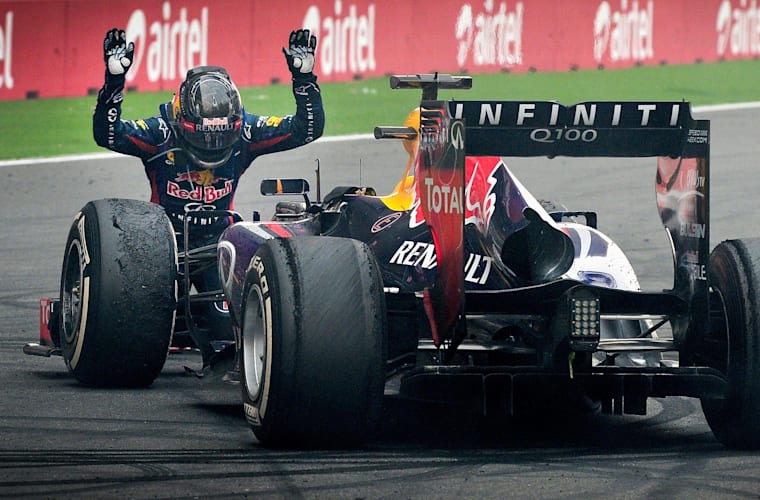
World champion for Red Bull in 2013 – Vettel’s really happy days!

What is up with Sebastian Vettel?

Sebastian (Seb) Vettel is a four-time F1 world champion and generally considered one of the very best drivers in history. Lately though, Seb has lost his mark and nowhere more so than in today’s Italian GP in Monza.

Whereas Vettel’s Ferrari team mate Charles Leclerc drove brilliantly and won the race although arguably having an overall slower car than Mercedes (although Ferrari’s straight line top speed was amazing!), Seb himself not only ruined the day for himself, but did his best to do so for Lance Stroll as well, in a manoeuvre that was certainly not worthy his capabilities. Having gone off the track all by himself in a fast corner, he then regained the track in front of the nose of Stroll’s car, as he came rushing through the same corner. Luckily nothing happened but the resulting 10 second stop-and-go penalty meant the end of Seb’s day and he finished the race in the part of the result list no one looks at.

The problem is that this is not a one-off; Vettel has not won a single race this season and has mixed podium positions with rankings at the bottom of the list. He has started to lose out in qualifying to Leclerc, and also to make mistakes we’ve never seen him make before and at times, like today, showing bad judgement on a level very untypical of him.

Vettel crashing out of the lead in the German GP this year

Italy and Ferrari will be celebrating all night long and rightly so, as Leclerc leaves no doubt that he is currently Ferrari’s Nr 1 driver, also passing Vettel in the overall championship. The question is whether Vettel will be able to come back.

Lewis Hamilton finished third today behind Valtteri Bottas, but the championship is virtually already decided in his favour, also in view of the fact that Ferrari’s two last wins in Monza and Spa have been on circuits very well suited to them, which will not be the case going forward.

Mr Ferrari says arrividerci

A couple of weeks ago it became clear that Luca Cordero di Montezemolo, president of Ferrari since 1991, had lost the power battle against his boss and arch rival Sergio Marchionne, CEO of Fiat Chrysler Automobiles, and will leave the company.

Montezemolo was hired by Enzo Ferrari as his PA in 1973, 41 years ago (!) and could well be described as the last Ferrari man of the old school and also the man that since 1991 led the company from close to bankruptcy through ist commercially most successful period in history. In his 23 years as CEO, Ferrari launched 19 new models and became F1 world champion six times under the F1 leadership of Jean Todt, Montezemolo’s most successful hire. He developed new businesses for Ferrari including personalized cars and Corse Clienti, where old racing cars were sold to (very wealthy!) clients. He was key to re-shaping Ferrari into the company it is today.
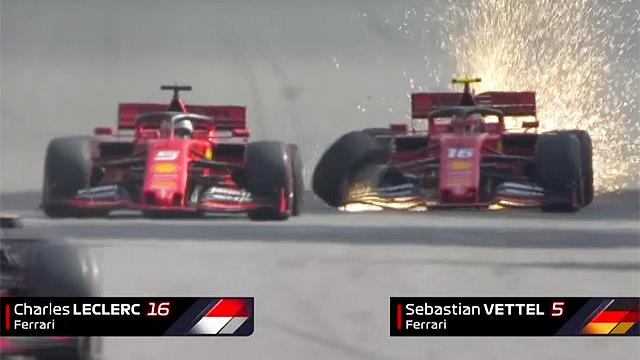
The lack of success in F1 since 2007 did however increasingly become a burden for Montezemolo and a good excuse for Marchionne to push him out. Marchionne already started the process a while ago when recruiting Marco Mattiacci as new F1 boss, who at the time claimed never having seen an F1 race and was as far from Montezemolo’s style as you can get.

Montezemolo leaves a very big pair (no doubt hand-sewn) Italian leather shoes to fill, as he himself moves on to try to achieve the same wonders with another Italian company close to bankruptcy – Alitalia. Ciao Luca, we wish you the best of luck, it seems you may need it…

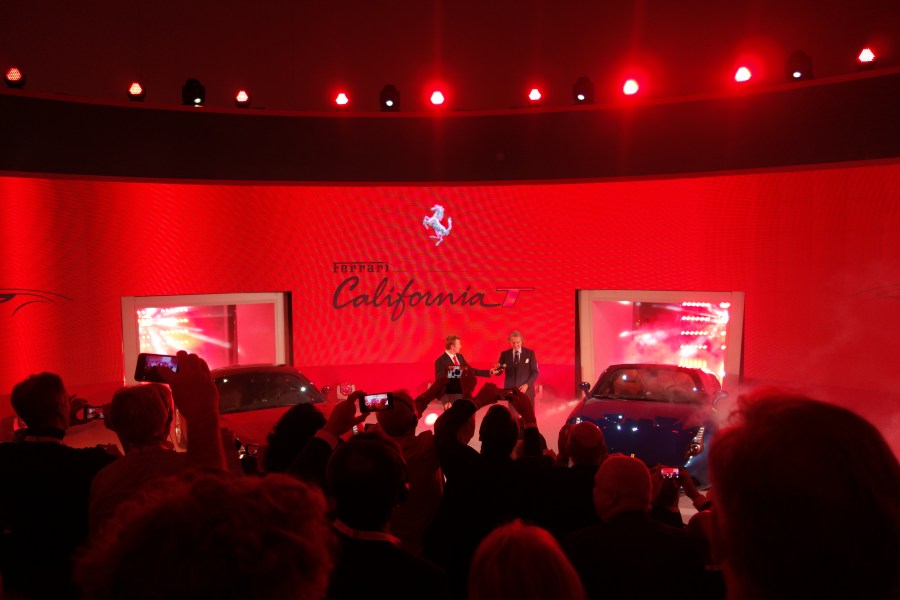
Ferrari California T – World Première – the turbo is back!

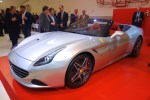
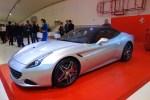
I had the privilege to attend the world première of the new Ferrari California T at the Museo Casa Enzo Ferrari in Modena in February.

Ferrari California T

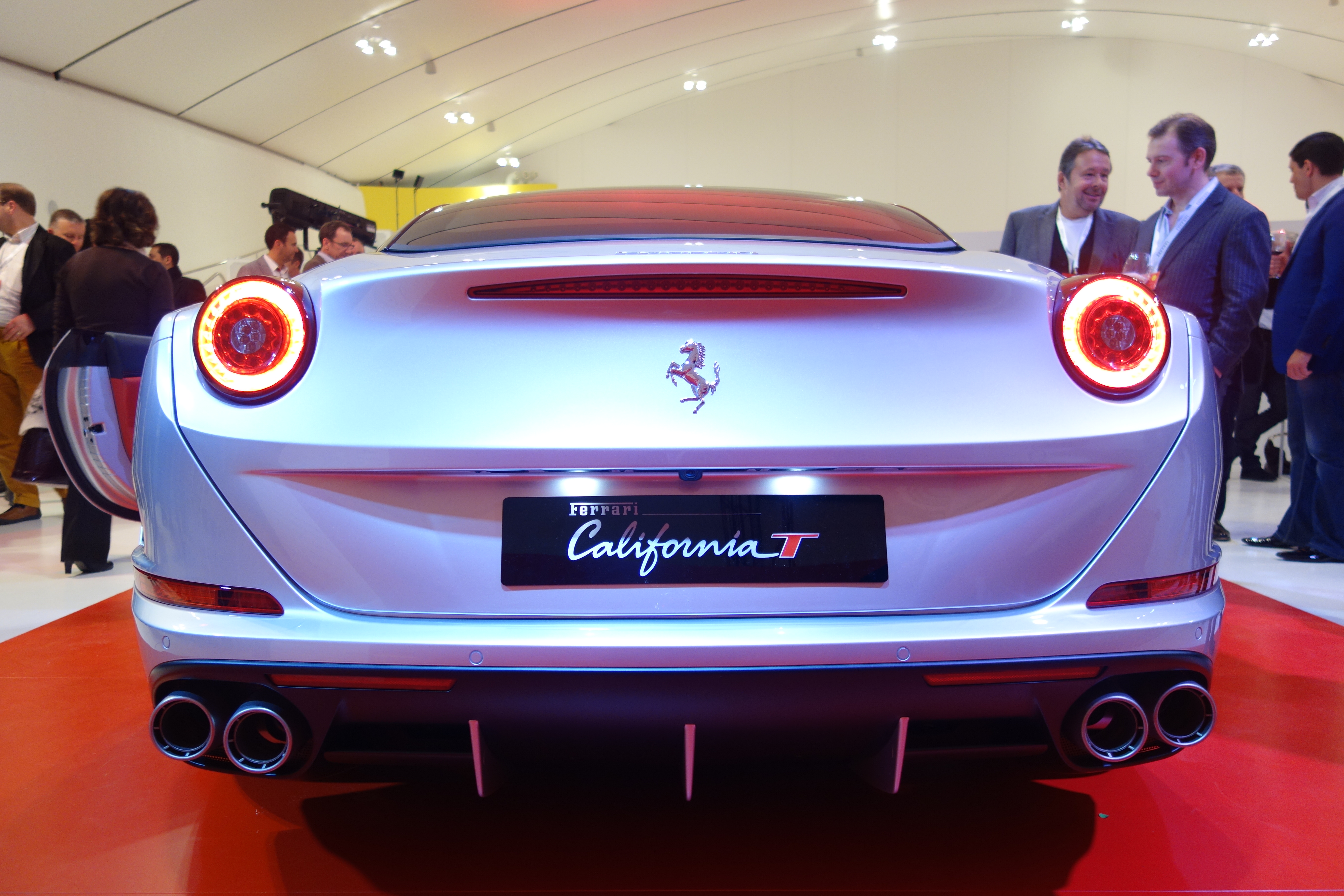
The front is all new and inspired by the Ferrari F12 and FF. It is much sportier and I have to say it looks much better than the original California (which I had the privilege to own). The back of the car, exhausts, diffuser etc. also looks better and sportier. The shape of its flanks is inspired by the classic Ferrari 250 Testa Rossa; not bad at all… It also has some resemblance to the beautiful (moderon) Alfa Romeo 8C.

Ferrari California T

Ferrari California T

The rear has been improved and is now lower and better looking.

The interior has been overhauled as well and is more in line with the other Ferrari models (458, FF and F12). The seats are thinner and thus provide more space in the back.

Technical highlights
The big news is the use of a turbocharger in a Ferrari. The last Ferrari with at turbo was the Ferrari F40, more than 20 years ago!

The specs are amazing; remember this is the “entry-level” Ferrari… (original California in brackets):

  • Power: 560 HP (460 HP)
  • Acceleration 0-100 km/h: 3.6 s (3.9 s)
  • Top speed 316 km/h (310 km/h)

Power is really up. To put this into perspective: it has 10 HP less than the 458, more power than any Lamborghini Diablo, only 20 HP less than the original Lamborghini Murcielago or 45 HP more than the Ferrari 575M V12.

Ferrari states, with a lot of emphasis, that there is no turbo lag and that the California T sounds like a proper Ferrari. Let’s wait and see…

Summarising it looks better and more athletic than the original California and it has the power to match it.

For those he want the tech details; the presentation:

Ferrari quickest on first day of F1 testing in Jerez

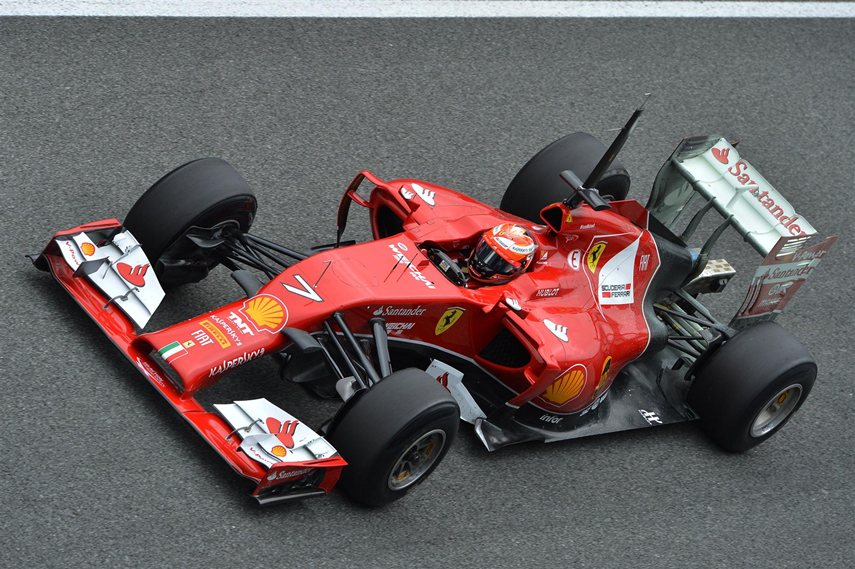
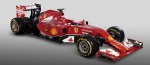
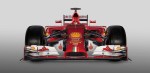
Räikkönen in the Ferrari F14-T was quickest on the first day of pre-season testing on tuesday.
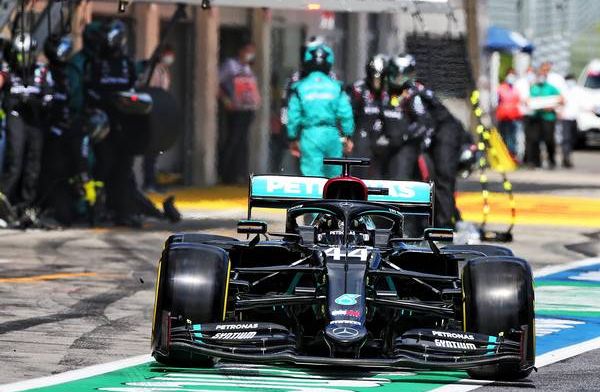
Ferrari F14-T

Only eight cars set times in a session where some teams didn’t run at all and other teams had serious reliability problems. Lewis Hamilton crashed due to a front wing failure.
Unofficial Tuesday test times from Jerez:
1. Kimi Raikkonen, Ferrari, 1m 27.104s, 31 laps
2. Lewis Hamilton, Mercedes , 1m 27.820s, 18 laps
3. Valtteri Bottas, Williams, 1m 30.082s, 7 laps
4. Sergio Perez, Force India, 1m 33.161s, 11 laps
5. Jean-Eric Vergne, Toro Rosso, 1m 36.530s, 15 laps
6. Esteban Gutierrez, Sauber, 1m 42.257s, 7 laps
7. Sebastian Vettel , Red Bull, No time, 3 laps
8. Marcus Ericsson, Caterham, No time, 1 lap