GTO – three-letter magic!

I spent a few weeks in Singapore some years ago and notably had the opportunity to catch up with a local reader of this very blog, as crazy about cars as I am. He was kind enough to take me to one of the leading, local supercar dealers on what felt like the outskirts of the city, and what he had on offer was very impressive indeed.

The issue is however that if you think speed limits are tough in Europe, that’s nothing compared to Singapore. In addition, the number of cars in the small country is regulated, so before buying a car, you need to buy a license giving you the right to buy one. The number of licenses is of course limited and the price for one varies a bit but was around $100.000 in 2022, and that’s before you’ve spent a dime on the car itself.

It’s not far from Marina Bay to Malaysia…

That said, if you have the money to buy a supercar, spending another 100 grand on a license may not a big deal. The remaining question is however where then to drive the car like it’s supposed to be driven. As it turned out, the supercar crowd in Singapore had a plan for that as well. As a member of the local Ferrari club told me, for their club outings they drive across the border to Malaysia and rent the Sepang F1 circuit for one day. That’s what I call a track day!

Of course, track days is something we have in Europe and the US as well, although in a slightly less dramatic setting. These days however, the car you take to a track day is typically a racing-oriented street car, such as for example a 911 GT2-GT3. Looking back, it used to be the other way around….

One of, if not the, most legendary car in the world – the 250 GTO

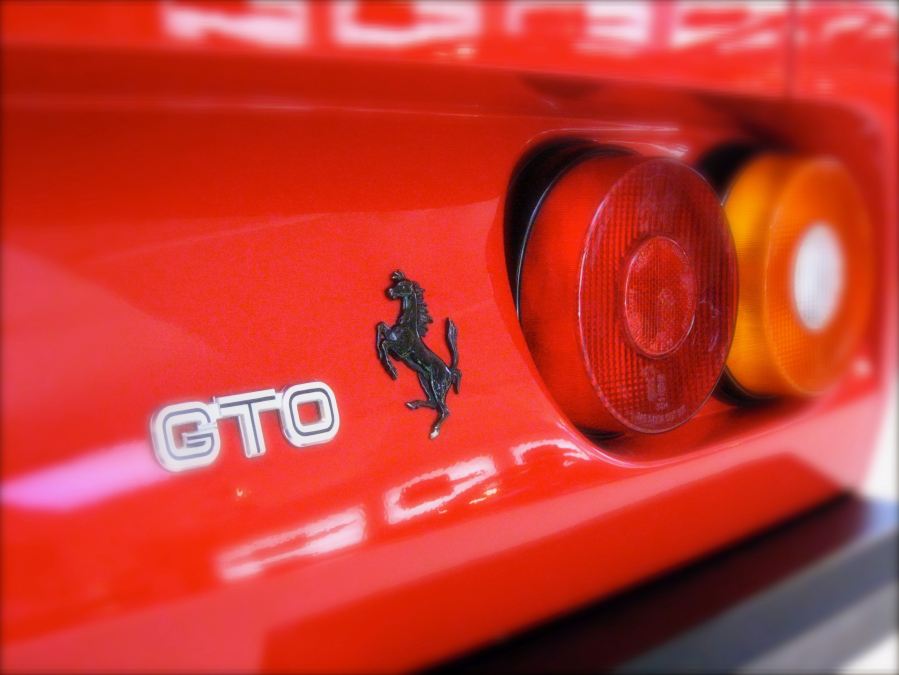
To come back to the heading of this post, the three letters GTO have a direct connection to what we today associate with track days. They stand for Grand Turismo Omologato (homologated), meaning the cars a manufacturer had to build for road use for a race version of the same car to be approved. When hearing GTO many of you will directly think of the most expensive and perhaps the most legendary car in the world, the Ferrari 250 GTO, of which 36 cars were homologated for road use.

It’s often referred to as the last true road racing car since after it, safety regulations would put a stop to such extreme machines being used on public roads. In other words, this wasn’t a street car you could race on weekends, but rather a race car you could drive on public roads. Or as Shelby Myers, a car specialist at RM Sotheby’s put it: “this was the last car that you could park in your garage, drive to the track, win the race, and then drive home.”

Racing on Sunday, commuting on Monday…

All 36 Ferrari 250 GTO’s were built between 1962 and 1964, and none of them were identical. They were a development of the 250 GT-series with the center piece being the 3 litre, 300 hp strong V12 with six Weber carburetors and a five-speed gearbox (increased to 4 litres and 390 hp on the three cars built in 1964). The development of the car was led by the legendary Giotto Bizzarrini (read more on him here and here), although he left Ferrari before the GTO was launched.

The cars were built by Scaglietti and Enzo himself apparently selected who was allowed to buy them. With a top speed around 270 km/h, the GTO won the GT World Championships in 1962-1964 and various other races such as Le Mans, Targa Florio (see here) and the 1000 km race at Spa Francorchamps. In total, it accumulated more than 300 race wins under its belt.

At $70m, the price record for this GTO still stands

The GTO is often considered the last great front-engine GT car built by Ferrari. That’s not the only thing it’s been called though. Other descriptions include the most beautiful Ferrari ever built, a true living legend, and rightfully, the most expensive car in the world, It’s perhaps no surprise that buying one takes a big wallet, but just how big is illustrated by the fact that in 2014, a GTO was sold for $38m and in 2018, the current record was set at $70m. The car in question was the 1964 Tour de France winner which thereby became the most expensive vehicle ever sold. Its price as new in today’s money would have been around USD 150′, so in other words, a pretty solid investment return!

The 250 may thus have been the last true GT car, but it was not the last GTO. Fast forward to 1984, when Ferrari introduced the 288 GTO at the Geneva Auto Salon. The car cost around $300.000 at the time, for which you could have got no less than for example three MB 500 SL’s, and it sold out before the Salon was over. If you find a 288 GTO today you can add a zero to that number, which still makes it a bargain compared to the 250 GTO. It may be far less legendary but not less important – rather the contrary.
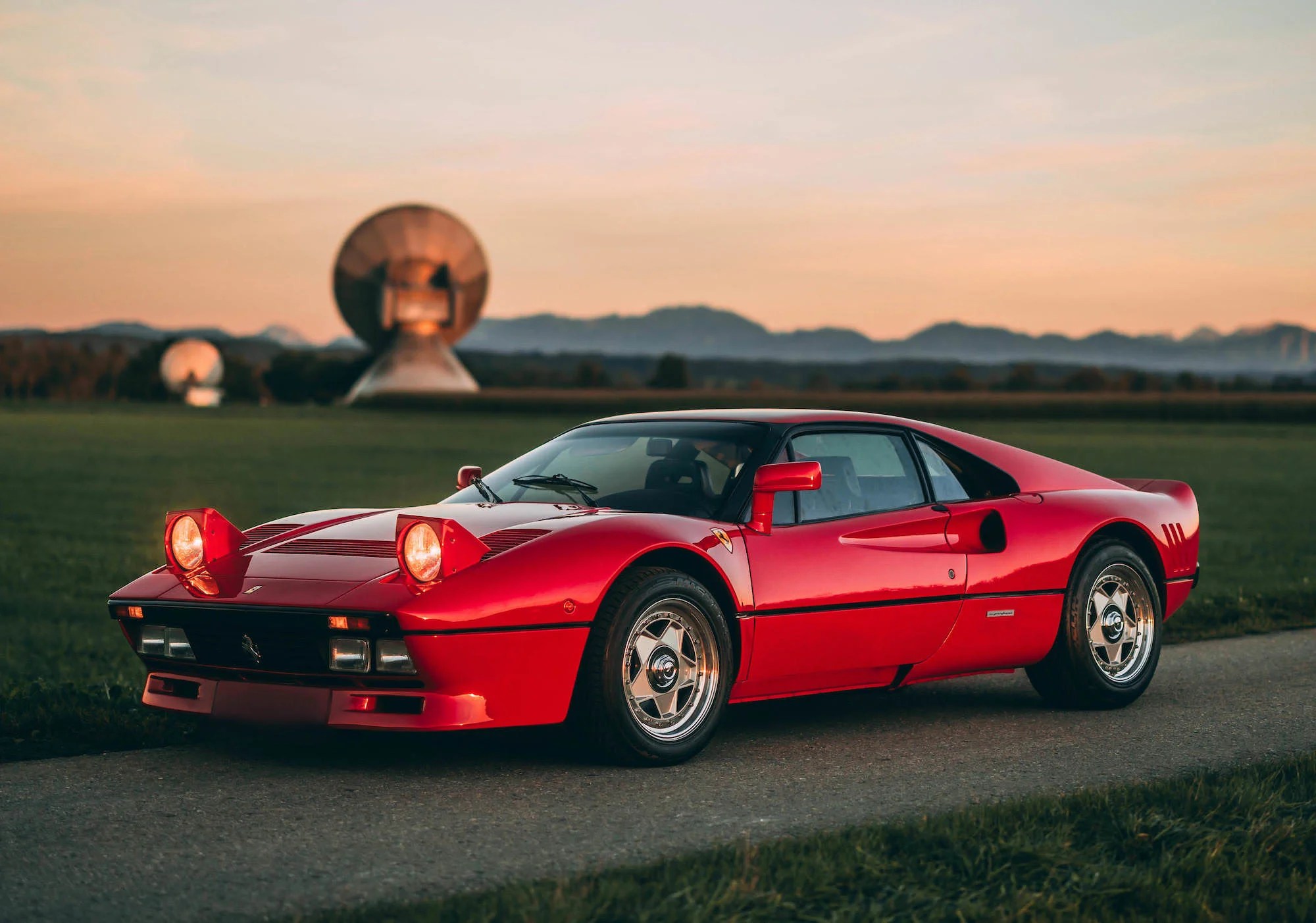
The 288 GTO set Ferrari’s hyper car strategy for the future!

The 288 GTO (later called only GTO) was launched in period where Ferrari’s line-up with the 308, 328, Mondial and 412 was not the best it had ever been, and the company wasn’t doing very well financially. The new 512 was indeed an extravagant sports car in Enzo Ferrari’s taste, but he wanted something more. Or was it maybe the changes in the Group B rally regulation that motivated the GTO?

We’ll never know for sure, but what we do know is that the racing version of the GTO never happened. Instead, Ferrari reluctantly agreed to increase the street car production from 200 to 274 cars (yo have to think that some of their most faithful owners were pretty influential people already then…). And hereby, without knowing it, Ferrari had also found the formula for hyper car success that’s taken them all the way to today.

For the untrained eye, a GTO could be mistaken for a regular 308. If you look closer though, you see that it’s a bit longer (110 mm to be exact) different headlights. It’s a beautiful car in a more dynamic way than the original 250 GTO was, and looking at it today, it has an 80’s cool factor about it. The longitudinal, double-turbo 2.9 litre V8 put out 400 hp and given the car only weighed 1300 kg, that was enough for a 300 km/h top speed. The GTO hereby became the fastest Ferrari ever, and one of the fastest cars of its time.
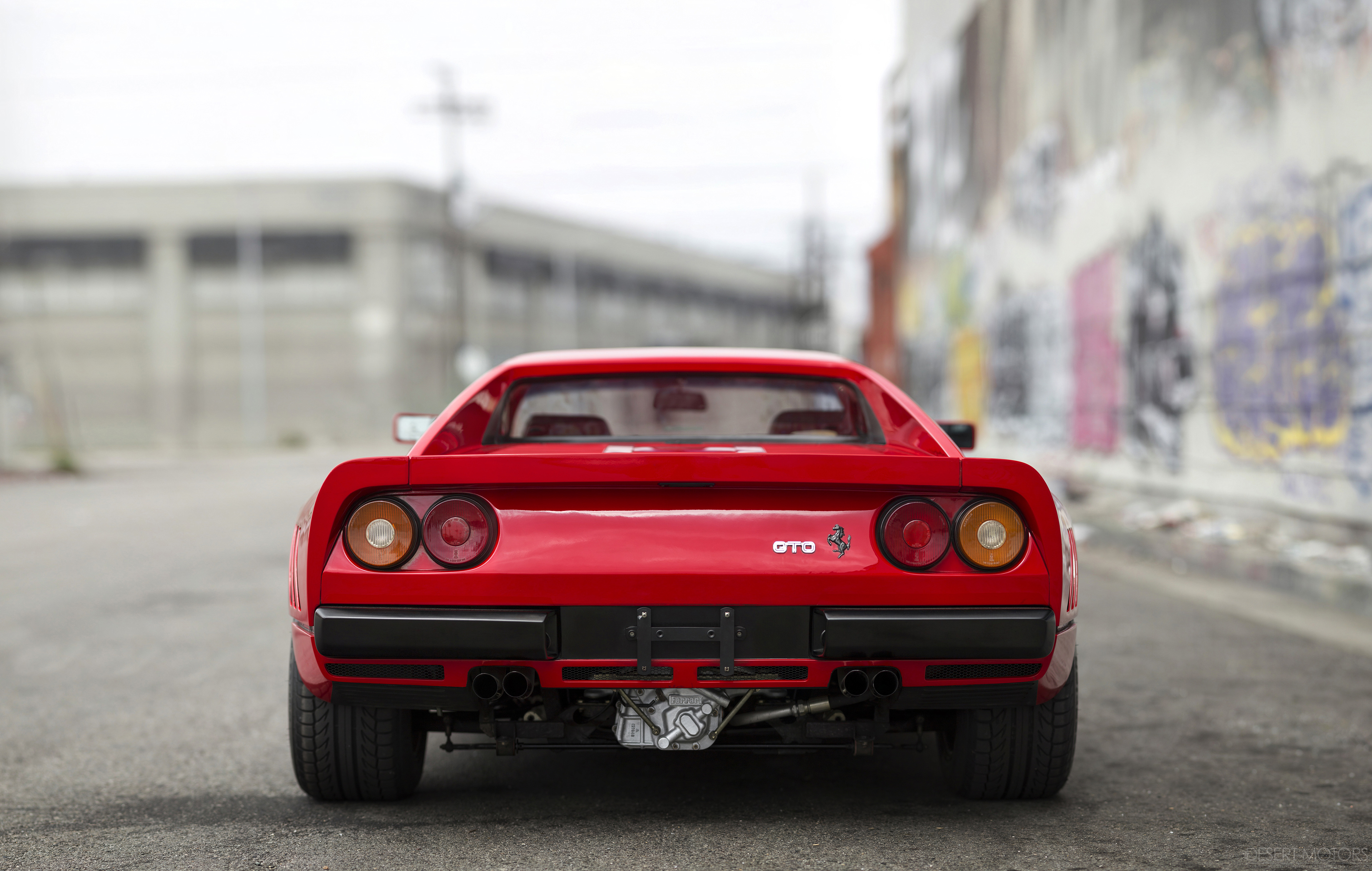
As for Ferrari’s future strategy, the attention the GTO got helped lay the foundation for what would become a very successful formula for hyper cars from Maranello: no more than 500 built, technologically at the top, and buyers carefully selected. The F40 followed the same logic as did the F50, the Enzo, and later the LaFerrari.

As a side benefit the increase in value would follow almost automatically. Apparently the group of owners who were selected and thus own all the cars listed above is larger than you think, and they’re no doubt thankful to the 288 GTO for being not only a great car, but also for making what followed possible!

Street finds: the great Bizzarrini!

A great thing with writing this blog is that whereas in some weeks I know well in advance what to write about, in others I don’t have a clue. This is a bit of a thrill since inspiration (at least so far) then comes somehow, but very rarely does it do so in such an inspired way as this week! Taking a lunch walk on Tuesday in the currently locked-down and therefore half empty city of Zurich, I turned a corner and saw something low and red that looked very much like a 60’s Ferrari but was… something else. A model name I didn’t recognize, and a logo that said Bizzarrini. I know we have some really knowledgeable readers here and as those of you familiar with Bizzarrini will know, seeing one doesn’t happen every day; nor every week, month or year! I had never seen a Bizzarrini before which is perhaps not very surprising, given the whole production of Bizzarrini automobiles in the 60’s amounted to a few dozen cars (more on that below). The 5300 GT I had in front of me looked spectacular, and when doing some research around Giotto Bizzarrini and his brand, a wonderful story of great engineering in a bygone era combined with the temper of several protagonists, including a certain Enzo Ferrari emerged. So this week will be about Giotto Bizzarrini and his cars, from the age when cars were sketched with a ruler and built with sweat rather than computers!

What I couldn’t identify straight away – a Bizzarrini GT 5300 Strada!

Giotto Bizzarrini was born in 1926 close to the port city of Livorno near Pisa in Italy, and as a young engineer started working for Alfa Romeo where he quickly made a name for himself as a very promising and talented engineer with a special love for racing cars. He was in fact so promising that the great Enzo Ferrari became aware of him and quickly recruited him, so from 1958, Giotto worked at Ferrari where he led the development of several Ferrari GT cars, notably the legendary 250 GTO. No doubt that Giotto had his career cut out for him at Ferrari had it not been for Enzo’s strong personality, Latin temper – and love for his wife Laura. Laura was not as loved by other key Ferrari employees, especially on the sales side where Ferrari’s sales manager Girolamo Gardini was getting very tired of Laura messing up his sales plans by always requesting special deliveries of race cars for personal contacts and friends. Betting on his long and successful background at the firm, Gandini together with a group of other senior executives, including Bizzarrini, one day walked into Enzo’s office and basically told him “it’s her or us”, confident Enzo would see the logic. He didn’t. Laura stayed and Enzo fired the senior executives (consisting of most of the race team at Ferrari) in what was referred to as the Palace Revolt or the Great Walkout. You’d better know what you’re doing before you mess with the boss’s wife, especially if that boss is (or rather was) Enzo Ferrari!

The Ferrari 250 GTO – 36 built, all of them still in existance, changing hands at USD 50-75m…

Giotto Bizzarrini was especially passionate about engines and before the Palace Coup had started a department within Ferrari where engines were tested and notably the Testa Rossa 3-litre engine was developed. When he left Ferrari, Giotto went on to found a company named ATS with the ambition to build a Formula 1 car (which he never did), before founding his next company called Società Autostar as a freelance design house (chassis and engines) in Livorno. One of his first clients was a a certain Ferruccio Lamborghini who was set on building a V12 engine and much like Bizzarrini, wasn’t best friends with Enzo. Bizzarrini took on the project and thus built Lamborghini’s first V12, with an architecture that was far ahead of what Ferrari was producing at the time and so powerful it had to be tuned down from its original 375 hp for street usage. This is in other words how Lamborghini’s first V12 came about, and you have to believe Giotto wasn’t too displeased to indirectly get back at Enzo…

The first Lambo V12 – Bizzarrini to the far left

Autostar under Bizzarrini also worked on a number of other cars, notably for Iso, another small Italian automaker from the 60’s, including the Iso Rivolta and Grifo, especially the race version of the Grifo called A3/C. For these, as well as for the later cars in the Bizzarrini name, he would however not be using that Lambo V12 but rather the small block Chevy V8 from the Corvette. Throughout his career he had developed a love for the larger volume, US engines, and even tried (unsuccessfully) to convince Ferrari to build a larger volume engine. A year later Giotto ended the collaboration with Iso, took the A3/C with him and fulfilled his dream by starting Automobili Bizzarrini Spa, where the A3/C was to become the first Bizzarrini car under the name GT 5300.

The GT 5300 was produced both in a Corsa (race) and a Strada (street) version, with a power output from the Chevy small block of between 350-400 hp. The car was front-mid-engined with the engine sitting behing the front axle, probably sharing quite a lot of heat with the passengers but above all, producing a sound out of this world… The body was a combination of aluminium and fibre glass, the rear axle was independent and brakes were inboard i.e. mounted on the axles such as to remove weight from the wheels, as notably on the Citroën SM. The box was a Chevy four-speed manual. Giotto raced the Corsa version himself notably in Le Mans, and it’s hard to believe today when you learn that doing so, he drove the car himself from Livorno to Le Mans, won his class and then drove back home!

The rear is the part most will have seen of the 5300 GT, and it’s a good-looking one!

Unfortunately, although there’s no doubt about his capabilities as an engineer, car designer or for that matter driver, Giotto Bizzarrini wasn’t very talented as a businessman. The race career never really took off, notably since Giotto didn’t have enough money to homologate the GT 5300 Corsa. Even worse, the whole company was permanently under-capitalized, the GT 5300 never became a success, and after the bankruptcy filing of the company in 1969, Giotto even admitted that he had not keep track of how many cars had been built. This is still a debated topic today. It’s clear that the GT 5300 Strada was the most popular car with presumably 50-75 cars produced. The Corsa version is estimated to have been built no more than 10 times, thus making it three times rarer than a GTO, and the following and last race car, the P 538, was only built a few times. So the total production of Bizzarrini during five years was probably no more than 100 cars. Those still in existance mostly sit in car museums (if you happen to be in LA, the Peterson Automobile Museum is said to have one) or personal collections, so I was indeed a lucky guy to see one parked in the street with the window half-opened!

I’m not a 100% sure but as late as last November Giotto was still alive, so chances are he still is, in that case 95 years old and most probably quite surprised to see the prices his cars fetch on the few occasions they change owners. A Bizzarrini would have been a great investment around 20 years ago when they traded for somewhere around USD 100.000, today you need to add a zero to that. But that’s of course not what makes the story special. Rather, it’s the story of a man who today counts as one of the gratest racing engineers ever, not only in Italy but globally, who developed Lamborghini’s first ever V12 and,who could probably have helped Ferrari became even more successful as a racing team, had Enzo had his wife and temper under control!