The roaring comeback of the ICE!

Between US elections, the wars in Ukraine and the Middle-East, and whatever else may have passed through your news flow this summer, chances are that you’ve missed something that’s gone a bit under the radar. And that, my friends, is more or less a complete turnaround in the business plans of the world’s leading car manufacturers, and the roaring comeback of the good old combustion engine!

The ICE is making a comeback at a level that no one would have expected just a couple of months ago. Doing so, it proves a few points that won’t be new to readers of this blog, but that I’m happy to note anyway, since it’s always nice to be right: firstly, if you want to sell stuff, there needs to be demand. Secondly, if something cannot hold in the long term, it will break sooner or later. And thirdly, it’s unwise to bet against the world’s largest car company, especially when it’s Japanese. Let’s dig in and look at what you may have missed while sipping your pina colada at the beach!

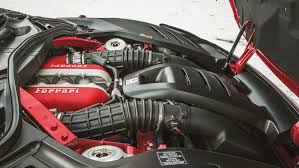
To set the scene, let’s start with something that EVO, the UK car magazine that this blog takes its inspiration from, noted in its editorial back in July, namely that within just the last month, three new combustion engines involving five global car brands were announced. In all cases, it was about ICE’s optimized for hybrid usage with electrical motors, efficiency measures, adaptations to sustainable fuels etc. Other signs that the combustion engine is far from dead have also flourished over the last year, perhaps nowhere more so than in Modena with the Purosangue’s naturally aspirated V12. The fact that Ferrari shares are among the best investments you could have done over the last years also don’t really speak in the direction of a quick demise of the ICE.

Owning Ferrari stock would have given you more than 700% in the last 10 years, most of it in the last two years. Hell, you could buy an ICE-powered Ferrari for that!

It’s also interesting how differently car CEO’s speak today, compared to just a few months back. The first one that made me swallow my coffee the wrong way was Peugeot CEO Carlos Tavares, who during a car show went on camera, stating in the blunt way only a Frenchman can that electrification is nothing car manufacturers have chosen – it’s something Brussels (meaning the EU) has imposed. His body language made clear he enjoyed it about as much as a rotten slice of foie gras. Unfortunately, Stellantis (the group Peugeot belongs to) have replaced him since the interview.

A few weeks later it was Ola Källenius, the Swedish CEO of Mercedes-Benz, who until recently was very happy to tell everyone about Mercedes’s fully electrical future but now sings a different tune, whereby combustion cars are still very much part of the Mercedes mix, alongside hybrids and EV’s. That’s of course a direct consequence of the lukewarm reception Mercedes EV’s have gotten from the market, especially the soap-like EQS. Now the talk is of a new S- and even E-class coming with as options combustion, hybrid and electrical engines.

What a new S-class could look like – far better than the EQS! (Illustration Larson)

A few months earlier the same message had come from BMW in Munich, confirming several combustion engine initiatives over the coming years. To round it off, in the same week as this is published, Volvo joined the long list of manufacturers stepping away from an all-electrical future, in Volvo’s case by 2030. The talk is now of reaching 90%, however including various types of hybrids.

None of this is really surprising. Because what all these car CEO’s seem to have forgotten, but actually should know better than various politicians and other policy makers, are the laws of supply and demand. And what has become painfully clear is that there is no demand for EV’s on the scale the political class would like there to be (if you need to read up on why they won’t do anything for the climate and are currently one of the most unethical industries around, see here, here, and here). From a European perspective it’s actually even worse, since the day, should it come, when demand improves, it’s not European, but rather Chinese manufacturers who stand to profit from it.

Let me give you a couple of pretty staggering examples of this in real life. The Porsche Taycan is generally hailed as the best EV around from both a driving and a charging perspective (if not range). Two years old and with less than 30.000 km’s on the meter, it can easily be had for 30-40% of the price as new – that’s a depreciation of over 50% in less than two years for the best car in the segment! And with the new model out, those numbers will certainly not improve going forward.

A Polestar 2, a European EV favourite, far less good than a Taycan but also far cheaper at around 75-80′ as new, will without problems be yours for 30-35′ with the same kind of mileage as the Taycan. And should you like soap, the numbers for the Mercedes-Benz EQS are similar. It’s getting to a point where European car dealers no longer want to trade in EV’s, not just because of the insecure value, but also since they tend to sit in the courtyard far longer than traditional cars.

A year ago, it would have been in front of the dealer’s entrance. Today, it’s hidden in the backyard.

What’s happening is that disappointed owners, either outright or through various types of leases which typically have a 36-month life (at least in Europe), trade in their EV’s and when doing so, opt for a conventional car to replace it with. That’s the case in up to 90% of cases in the US, as various reports have shown. Why? Well, unrealistic range promises, especially in winter, a lacking charging infrastructure, and various technical and quality issues with many EV’s all make for a not very attractive cocktail. As energy prices rose in parallel to the ownership and will continue to do so for every windmill and solar farm that is set to replace conventional energy, it turns out the savings over a traditional car aren’t that big.

The combustion engine technology is now over 150 years old, removing the technology risk that is very much present in the EV market, and that all the talk of battery revolutions only contribute to. Two years ago it was just a matter of time before solid state batteries once and for all solved the range and charging issues. Now, it’s instead sodium batteries that will do the same, and are simpler to develop. Who in their right mind would buy an EV, more expensive than a traditional car, with a technology that risks being obsolete in a year? You take this together with all the other EV issues you know well by now, and the logical conclusion is that other than in cities or for shorter trips, the ICE still reigns supreme.

As this sinks in, the effect is that conventional manufacturers go back to what they’re good at, i.e. technological innovation around the combustion engine, and EV manufacturers that are not very well capitalized start going belly up. Fisker already did (making it the second time the Dane Henrik Fisker manages to bankrupt the same brand), others are heavily at risk (Polestar starts having pretty severe cash issues and a share price that is at rock bottom) or not in control of their destiny (Lucid who are at the mercy of the Saudi money tap). All this is normal – every new industry has a lot of companies who don’t make it. It was just the buzz of the last years that may have made it look different.

Marcus Brownlee called the Fisker Ocean the worst car he had ever tested. Six months later, the company was bankrupt and owners have hopefully learnt to check the health of the brand next time around.

What is not normal is however the elephant in the room called China, that as said previously, I believe will dominate the low- to mid-priced EV market going forward. Why? Well, with a home market of over a billion people, unlimited state subsidies and a supply chain of rare metals especially from Africa that has been carefully crafted over the last decade, China has done everything Europe should have done to be successful, had they really meant business. Instead, the EU now wants to put tariffs on Chinese EV’s, which less than a month after it was announced, was countered by China doing a deal with Saudi Arabia, where Chinese EV’s for Europe will be produced with no tariffs. And there won’t be any sanctions or tariffs on Saudi going forward either, that oil they also sell, is very helpful when it gets cold.

Going forward, the world will thus hardly be fully electric, and this is where the world’s largest brand Toyota comes in. Although they were heavily criticized by the environmentalist lobby, the Japanese stuck to their guns and continued to produce and perfect hybrid solutions. Their logic is simple and should have been easy enough for every car company to understand: if the supply of rare metals and other input materials is limited, then splitting a large battery pack into four smaller packs for four cars, rather than a big one for one, makes a lot of sense. Hybrids also eliminate all the issues linked to range, charging, and under-capitalized car brands no one has heard of.

A Toyota hybrid drvetrain – expect to see more of these going forward!

So where does all this leave us? Well, conventional manufacturers will be all too happy to reverse course and fall back on what will be the conventional car market going forward – meaning hybrid solutions around the combustion engine. And should there be an evolution around e-fuels, we can probably do without the whole hybrid package as well. On the other side, there will be EV’s at various price points, working well for cities, shorter trips or people preferring the technology. And yes, should we in the end get a battery revolution in terms of range, charging and more sustainable input materials, maybe they will take over -but that’s neither for tomorrow, nor next year.

It’s pretty incredible that it’s taken us this long to get us to the only place that made sense from the beginning, but as said initially, if something cannot hold, it will break sooner or later, and the dreams of 100% EV’s just did. Personally, i’d be delighted to consider a hybrid. I’d have nothing against driving fully electric on shorter distances, and reducing my fuel consumption on longer trips. The ethical issues linked to rare metal excavation are still not solved, but I guess you can’t have everything, and things are at least improving in this regard. Mark Twain once replied to a letter by saying that “the report of my death was an exaggeration”. Mid-2024, the same thing is just as true for the combustion engine!

The sand pile is crumbling

If you’ve studied economics like me, the name Hyman Minsky may be familiar. He was an American economist who developed the financial stability theory, basically saying that stability breeds instability. Think of a sand pile: at some point, adding one more grain, although infinitely small in itself, will make the pile crumble. That’s more or less what we’re witnessing right now for the sand pile called “Ev’s for all”, crumbling far quicker than even I had imagined. I wasn’t planning to return to the topic anytime soon but sometimes events force your hand, and there’s just too much that’s happened in the last weeks and months not to take note of, as it is kind of important for the whole car world.

The starting point as I remember it was sometime back in February when two things happened. Mercedes boss Ola Källenius, roughly at the same time as presenting the stupidest EV of them all this side of the Hummber EV, the electric G-class, came out and said that electrification of the whole Mercedes fleet would take longer than expected. That’s of course another way of saying that demand is lacking. Mercedes have pushed the date for the last combustion engine forward from 2030 to 2035, where it most certainly won’t stay.

Time will tell, but this could go down as the symbol of when the tide turned…

Roughly at the same time, the FT ran an article on Lucid Motors, where Lucid boss Peter Rawlinson said that his company cannot rely on “bottomless wealth” from its 60% Saudi owners. In other words, the sheiks in the country of many sand piles are thinking of turning off the tap, if they haven’t done so already. Lucid has close to USD 5bn in the bank but is currently burning USD 1bn per quarter and lost close to USD 3bn in 2023. Given they’re not close to making a profit anytime soon, they will thus need to fundraise again before the end of the year to survive. In the current market, I wish them luck.

Luck is also what Rivian still needs, and this one hurts a bit more since I find it a really innovative company that have brought something new to the market, and have plans for continuing to do so in the future as well. A friend of mine drives the Rivian SUV and is thrilled about the car, its features and gadgets. However given a lack of Rivian car buyers, the company urgently needs to save money and announced in March that production has been paused in their new factory in Georgia and that instead, they will fall back on their old production plant which is cheaper to run. And whilst we’re on SUV’s, if anyone is curious about Fisker, they’re so close to the brink that they can go belly up at any point in time, and contrary to Rivian, the SUV called Ocean they’ve launched is crap in most testers’ view.

A small opening side window in the back is the only attraction of the Ocean. Literally.

Moving on to the EV wannabes, Porsche is making all kinds of strange sounds around the all-electric new Macan. The idea was that the combustion one would be taken out of production in 2025-2026, and the all new E-Macan, launched as we speak, would then fully replace it. Now, the talk is of not replacing the ICE one until 2030. The issue for Porsche is that the new Macan is built as an EV from the first screw, meaning it’s not made for a combustion engine. Therefore, it’s most probably the old Macan that will be updated such as to live a bit longer. That’s certainly very far from what Porsche, blinded by the general EV trend, originally intended. It’s really terrible when client demand isn’t where you want it to be.

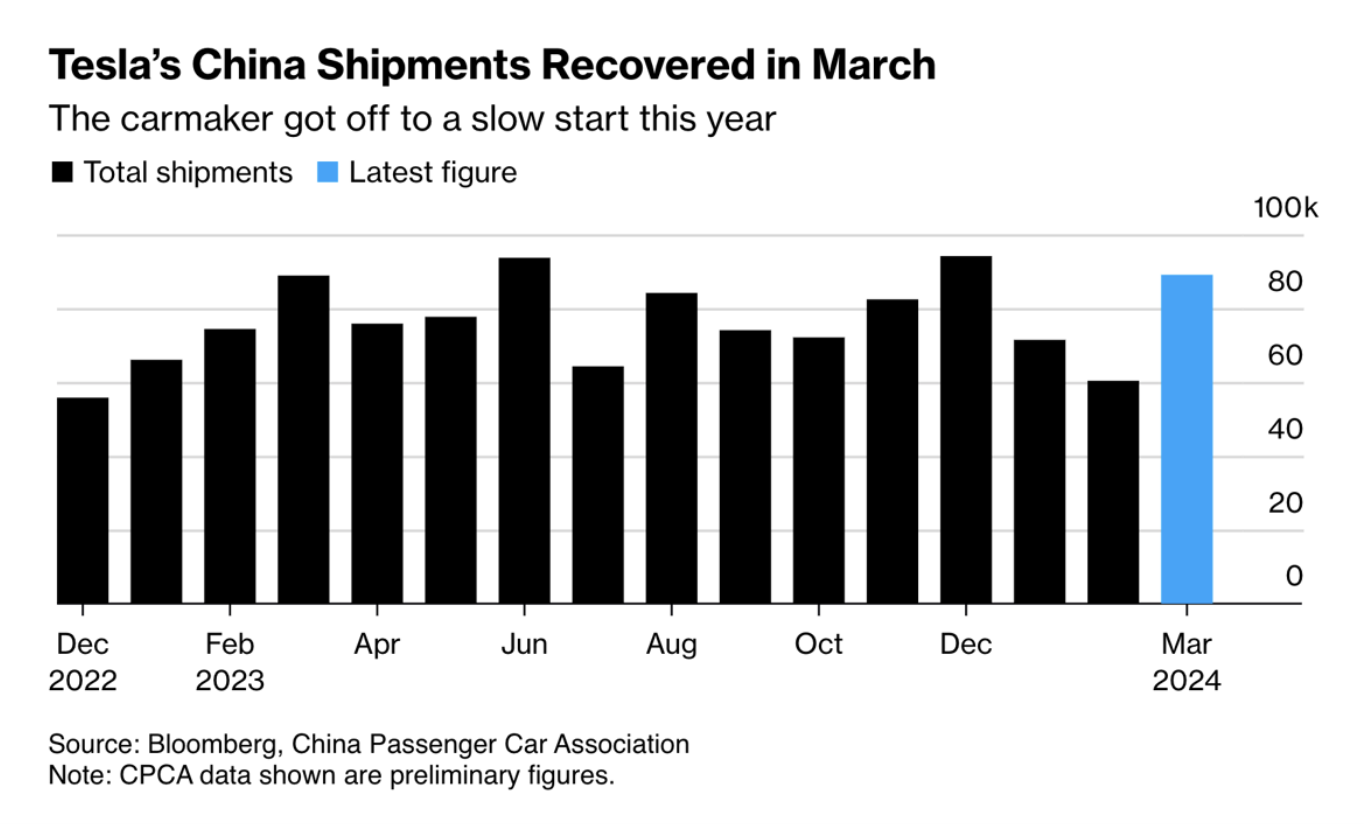
To round it all off, even the king of the hill Tesla has come down the hill, at least a bit. Firstly in stock price, where it’s down about 1/3 this year, making it by far the worst performer of the so called Magnificent Seven. That said, it’s still worth more than twice what Toyota is. Then there’s production numbers, where Tesla not only ships less cars than a year ago, but also produced around 70′ less cars in the first quarter than analysts were counting on. Tesla has also lost around 1/3 of its market share in the all-important Chinese market, falling from 10.5% to around 7% as per the Chinese Passenger Car Association, all due to the intense Chinese competition discussed in earlier posts.

As the headline says, things improved in March, let’s see if it’s the start of a new trend.

You’ll note that all of this has to do with falling client demand, and nothing has to do with the other fundamental EV issues, such as not even being close to having enough metals and related stuff to produce the EV’s our politicians plan for, and that the battery production with all its required input materials is both highly polluting and highly unethical. That comes on top of the waning demand, and as Ineos’ founder Jim Rathcliffe says, you can’t force EV’s down people’s throat – although I’m sure at least some politicians will try.

I yelled at European luxury automakers pathetic efforts to build competitive EV’s a few weeks ago, and also said the cheap part of the market risks being taken over by Chinese EV’s. That’s exactly what’s happening, and in addition, growth has stalled in the developed world for all the reasons we’ve already gone into. A challenging capital raising environment means that many of the new EV brands risk going under, and (especially European) politicians who are still incapable of delivering a charging network commensurate to the growth they want to see have done the rest. I’d say they should take most of the blame.

At the same time, I was surprised earlier this week to see the Biden Administration’s projection for what the US car market will look like in 2050. As can be seen above, EV’s aren’t expected to take over anytime soon, although they are projected to grow quite a lot. Hybrids continue to grow too, which we’ve been discussing here, and what for example Toyota has said all along. Most people drive short distances, and thus splitting a big battery pack in one car into five smaller packs in five cars makes most sense when materials are limited. Anyhow, by 2050, 2/3 of all cars are still expected to be what should be called combustion engine cars, since by then, I’m willing to bet we’ll have other stuff than fossil fuels to power combustion engines with, which also means they may be around for far longer than anticipated.

If you really want an EV, then as I’ve said before, there really is no better alternative than a Tesla, pretty much wherever you live. But if you don’t, be aware you’re part of a growing crowd and that your petrol car will be fine for years to come. As I was finishing this post, I saw the news that the European car safety organization Euro NCAP has come out with new rules, requiring a car’s essential functions to be handled by physical buttons, not over a screen, for a car to get the maximum five safety stars starting in 2026. Trying to sell a car in Europe that has less than five safety stars is all but impossible, so this will obviously cause further pain for many, especially most EV manufacturers. If we keep going at this pace, the future starts looking really bright!

Provkörning av elbilen Fisker Karma – framtiden är här!

Att köra en Fisker Karma känns verkligen speciellt. Bilen ser annorlunda ut, är annorlunda att köra och att äga. Framtiden är här!

Körkänsla
Det känns som om bilen går på räls. Det är en klyscha, men det finns inget bättre sätt att beskriva det på. Huvudorsaken till detta är att bilen knappt kränger alls, trots en vikt på 2,4 ton, och skälet till det är att vikten sitter på rätt ställe: lågt och centralt. Batteripaketet är i mittkonsolen mellan fram och bakstolar.

Överhuvudtaget känns bilen faktiskt lätt i kurvorna. Ett gott betyg till chassit som är mycket väl avstämt. Även känslan i styrning är bra.

Drivlina
Fisker Karma drivs alltid av sina två elmotorer. Utöver det finns det en förbränningsmotor som fungerar som elgenerator. På el blir räckvidden 80 km men tack vare bensinmotorn blir den totala räckvidden 483 km.

Bilen startar upp i stealth-läge som innebär ren eldrift och begränsad prestanda. Genom att dra i paddeln till vänster om ratten byter man till sportläge och full effekt, men då går bensinmotorn igång.

Trots 400 hästar så är inte accelerationen blixtsnabb. Vid acceleration på landsväg känns den inte snabbare än min BMW X3 som har 313 hästar. Här måste det vara vikten som spelar ut sin rätt. Fiskern väger ett halv ton mer än BMW:n. Bilen är snabb men det riktiga suget uteblir.

Bilen är självklart väldigt tyst när den går på el. Förexemplar som har testas i pressen har fått kritik för att det brummar väldigt mycket om bensinmotorn när den är igång. Jag vet inte om Fisker har ändrat på detta till produktionsbilarna, men den bilen jag körde led inte av detta.

Utseende
Designen är förutom den elektriska drivlinan bilens främsta USP. Den är vacker på bild och ännu vackrare i verkligheten!

Inredning/utrustning
Inredning ger en rejäl premium-känsla. Reglage, material, etc. känns av genomgående mycket hög kvalité.

Det är väldigt få knappar kring instrumentbrädan och på mittkonsolen. I stället är det en enorm skärm (10,2″ eller lite större än en iPad) mellan framstolarna med vilken man styr allting. En cool finess är att skärmen har haptisk feedback. När man trycker på en “knapp” på skärmen så får man en liten vibration i fingret.

Bagageutrymme är mycket litet, strax under 200 liter, och är bilens akilleshäl

Baksäte är helt ok, om än lite lågt i tak. För mig som är 1,78 funkar det nätt och jämt, men det går inte att vara mycket längre. Den höga mittkonsolen, där batterierna sitter ger en ombonada sitta “inuti”-känsla, såväl i fram- som baksäte. Känslan i baksätet är inte helt olikt 6-serie Gran Coupé, även om denna känns marginellt lite sportigare och exklusivare.

Ekonomi
Jag brukar inte ha ett avsnitt om ekonomi i mina provkörningar, men det här är en speciell bil. Eftersom bilen är klassad som en laddningsbar elbil blir det 40% rabatt på förmånsvärdet och gör den väldigt intressant för t.ex. egna företagare.

Ett frågetecken är förstås livslängden på batterierna. Fisker själva anger 10 år eller 160.000 km.

Slutsats
Som sagt: framtiden är här. Att köra Fisker Karma känns lite som första gången jag testade en iPhone. Å ena sidan är det en bil “2.0”, å andra sidan så finns det några saker att putsa på. Precis som Apple gjorde när det “återuppfann” telefonen, så har Fisker i mångt och mycket utgått från ett blankt ark och inte från gamla plattformar som bygger på ett gammaldags tänk.

Som vanligt, avslutar jag med lackmustestet: vill jag ta med mig bilen hem? Svaret är både ja och nej… Utseende och spjutspetstekniken ger enorm “vill-ha”-känsla; när man har sett och provkört bilen vill man ha ett kontrakt att skriva på.
Men frågan är vad jag ska ha bilen till. Vi har en familjebil och en sportbil och Karman ersätter ingen av dem. För långfärd är den inte optimal och för att lasta många personer har den för lite plats. Fantastisk bil, men jag har inte funnit användningsområde som motiverar ett köp…