When youngsters create legends!

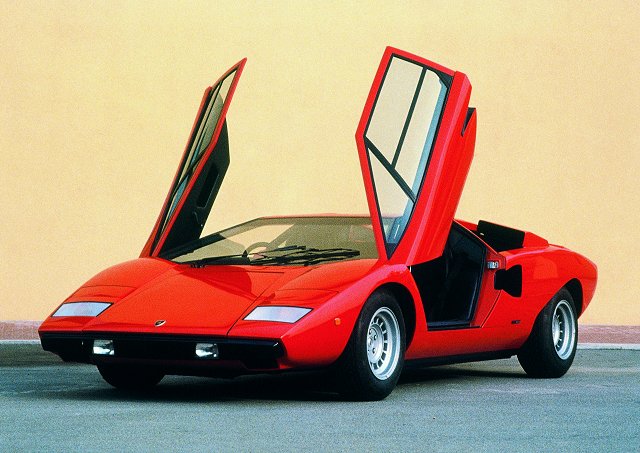
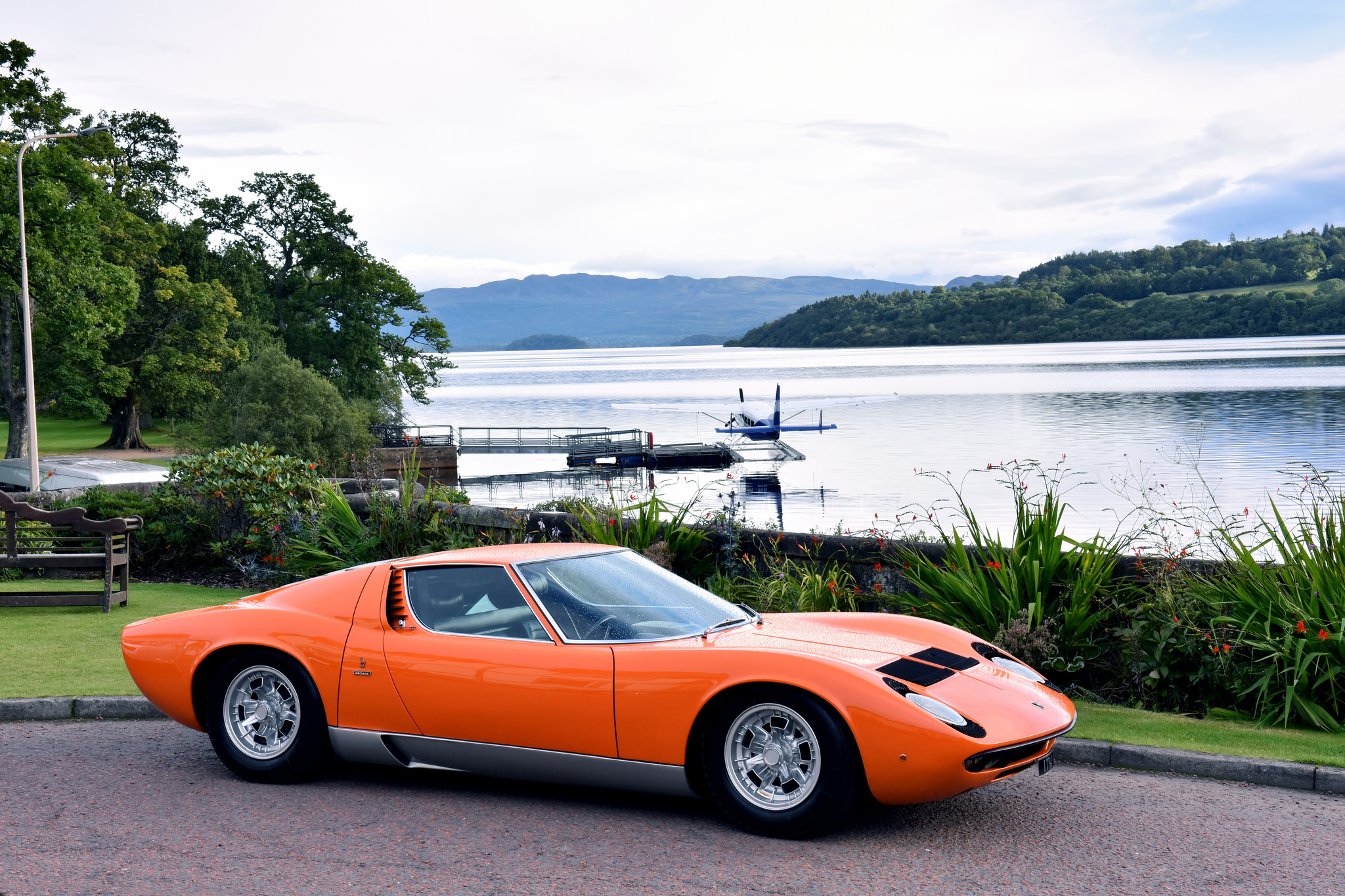
Long-term readers of this blog will probably have understood by now that I have a bit of a weakness for the mechanical age, and a fascination for the fantastic engineers and mechanics that built incredible automobiles in the age before computers and modern production methods had conquered the world. And when all this comes together in the lovely Italian car tradition, then that’s basically as good as it gets – if you ask me. This week we’ll look at what is perhaps the best demonstration of such inspired, but not fault-free engineering. We’ll do so with a bunch of engineers and designers that have already featured a couple of times on this blog, and actually also with an element that can be described as a lesson in good management. This week is about the Lamborghini Miura, small in size but very large in supercar tradition!
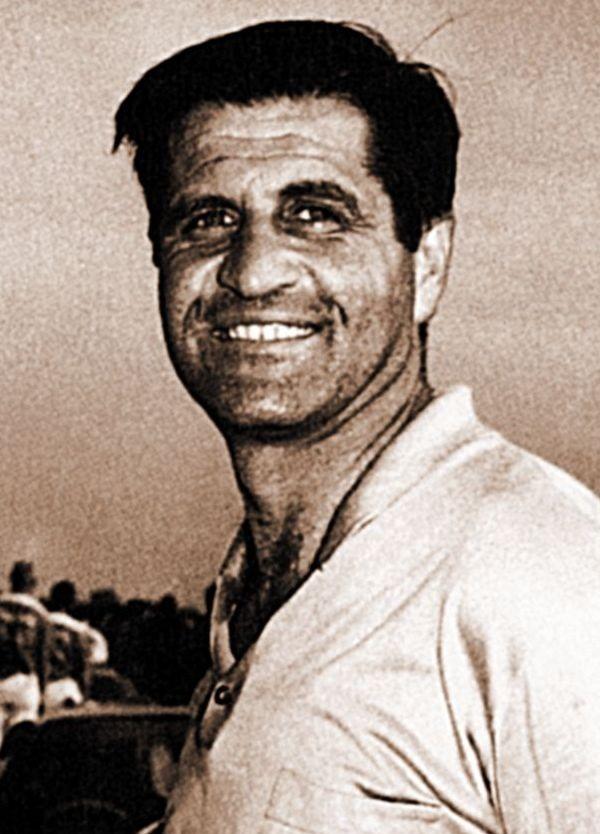
We’re back in the mid-60’s and Ferruccio Lamborghini, who has so far introduced three cars to the market, is set on building a better GT car than what Ferrari has to offer. Better in reliability but also better in parts, not recycling racing parts but rather with cutting edge technology. He doesn’t care much for low, loud and uncomfortable sports cars, but he’s keen on using the 12-cylinder engine our old friend Giotto Bizzarrini developed after he left Ferrari to set up his own company (I wrote about Bizzarrini a year ago, see here). That is indeed one hell of an engine which produced 350 hp and revved all the way up to 9800 rpm. That was a bit too much for Ferruccio and he therefore gave the engine to his two engineers Stanzani and Dallara (the latter also the chief engineer of the whole car) to reduce the rev range somewhat and make the engine more reliable. They did so, managing not to lose power in the operation (well, at least not officially), but it doesn’t change the fact that Bizzarrini indeed developed Lamborghini’s first 12-cylinder engine. In Ferruccio’s mind, the only thing missing now was a GT car to put it in.

What Ferruccio had at his disposal next to the engine was an enthusiastic group of young engineers and a designer we’ve also met before, Marcello Gandini, who had just been hired by Bertone. These young stars didn’t really share Ferruccio’s vision of the next Lambo being a GT car, and they were also heavy influenced by a certain Ford GT40 which at the time was big news in the US. The Ford was essentially a race car and heavily inspired by it, the engineers set off on the concept of a race car for the road rather than for the track. Ferruccio watched – and stood back, leaving the youngsters to it. That may not sound as impressive as it actually was. You see, at this time in 1965, in a world where age still counted for quite a lot, chief engineer Dallara was 29 years old, as was Stanzani. Soon-to-be designer Gandini was 27. In a world where old men still ruled, it was in other words a bunch of kids that designed the world’s first true supercar!

Dallara and Stanzani built a frame of a size suitable for the sports car they had in mind, but not necessarily suitable for a large V12. But rather than making the frame any larger, they turned the engine around and basically merged the transmission with it, as there was really nowhere else to put it. This was undoubtedly the tightest package around a V12 ever built and must have been a complete nightmare to work on as a mechanic – and quite a few mechanics would be doing so in subsequent years. The engineers put some wheels on the frame with the engine fitted, and now only the body was missing.

As mentioned, Ferruccio had let the youngsters work on this in peace and probably thought of the project as a good showcase for Lamborghini in general, and the coming GT car in particular. That’s also why the soon-to-be Miura was presented just like that, without a body, at the Turin car show in 1965. To Ferruccio’s great surprise, this was all it took for the first ten orders to come in. For the chassis that is, not for the coming GT car. It became obvious that a body was now needed, and the job was given to 27-year old Marcello Gandini who had started at Bertone two days earlier. He certainly didn’t sit around, but rather designed the Miura in as many days as he’d been employed. Thanks to this, the car in its final layout could be presented just five months later, at the Geneva Auto Show in 1966. 30 more orders came directly at the show, bringing the total to 40, growing to 75 by the end of the year.

Everyone including Ferruccio were obviously happy about the great success, but it also created a bit of stress in Sant’Agata. You see, at the time, Lamborghini employed all of… 78 people. Around 40 of those were engineers, and another 20 were apprentices. The first remark is that it’s remarkable to take an idea to production in as little as two years with such a small team, and even more so when you think of how complicated the Miura was. The second remark is that it would maybe have been good if those apprentices had been real mechanics, as was to be discovered later. For now, everyone was highly motivated, working long shifts all days of the week. Ferruccio was happy to let them work, brought them food at night, and continued to keep out of the way.

Unfortunately the quality of the first cars was problematic to say the least, and probably sensing this would be the case, Lamborghini made sure to deliver the first cars to Italian clients. As the cars came in for service, the clients were then taken to some very long lunches, giving the mechanics enough time not only to service the cars, but actually to do some quite fundamental changes and improvements to them. The first series was thus far from perfect, something that however improved with the updated Miura S in 1969, which produced 25 hp more and had a slightly wider track. Some quite serious problems did however persist during the Miura’s whole production run, including engines breaking down completely because of failing lubrification, and cars catching fire due to a less successful positioning of the tank. On the less than perfect side was also the heat caused in the cabin through the positioning of the engine, and the fact that the slightest touch of the accelerator made any conversation impossible. At the same time, that’s of course one of the Miura’s greatest thrills!

The Miura may not have been a race car but it certainly looked like one. It was also really fast for the time, meaning a 0-100 km/h of around 5.5-6 seconds and a top speed of around 280 km/h. The car was light, as was the front end, causing quite a few rollover accidents. The Miura S was replaced by the last version, the SV, in 1971, and even thought things kept improving, the Miura never became trouble-free. Finally in 1973 Ferruccio decided to pull the plug, but he didn’t do it as you may think, by firing the team behind the less than perfect Miura project. Instead he not only delegated the management of Lamborghini’s whole production to Stanzani, but he even accepted the latter’s demands not to interfere in the day to day work, and never to challenge his decisions. Stanzani, clearly a fan of the saying “when in trouble, double!” quickly moved on to create the Countach, a car no less exotic, but which would become much more well-known and much more legendary than the Miura (see here if you missed my review of it last year).

It may have been the first, but the Miura was thus by no means the perfect supercar. But honestly, how could it have been, with the limited resources and experience Lamborghini had at its disposal? That doesn’t change the fact that what a bunch of under-30-year-olds created in a few months was truly impressive in everything from idea to realization. It’s also a good lesson in management, illustrating that letting young people pursue their ideas usually produces good results! Accidents, fires and breaking engines has reduced the number of Miuras left on the road today from close to 500 produced to no more than a few dozen, and finding one isn’t easy. It’s also not cheap. For most of us, the Miura will thus remain something we may see at a car show, and otherwise a wonderful story of young talent from the golden age of the automobile!

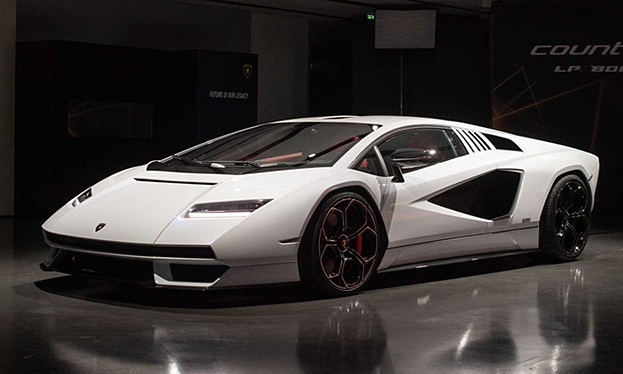
Celebrating the real legend!

You may have seen that Lamborghini has re-introduced the Countach. Yes, you read that right, the most legendary of all sports cars of the 80’s – scrap that, of all times! The one a fair number of us born in the early 70’s with a head full of petrol dreamt about and put a poster of on our bedroom wall, next to Samantha Fox, Sabrina or Miami Vice. Just hearing the news, I imagine I wasn’t the only one filled with not just a little excitement. It didn’t last long though. The fall back to reality was heavy a few moments later as I learnt more about the new car.

You see, what Lambo dares calling the new Countach, under the official name LPI 800-4, has precious little to do with Marcelo Gandini’s jawdropping design from back then – nor is it a modern interpretation of the same theme. Nope, visually the new Countach is nothing more than a relatively modestly re-designed Aventador with some clumsy Countach references, of which 112 will be built (that’s good as it reduces the risk of being disappointed seeing it “live”). They’re of course extremely expensive (price not known at this point but probably around USD 3m), atrociously fast with 814 hp leading to a 0-100 time of below 3 seconds, naturally hybrid with a small electric engine making up 45 of those 814 hp, supporting the V12 and, it goes without saying, all sold, presumably to buyers of which a majority will park them in a garage and never drive them. Disappointed? Me?

The new Avent… sorry, Countach.

That is however all I’ll say about the new Countach and I also promise not to make this a long rant about how much modern supercars lack the heart and soul of the true legends. Instead we’ll do something much more fun: we’ll travel back to our younger years when our jeans were stone-washed, our socks white and our shoulders impossibly wide. For a few minutes, we’ll return to that poster on the bedroom wall (no, not Samantha) and have a good look at the original, REAL Countach! Interestingly, doing so also involves coming back to some legendary Italian car builders that have been featured on this blog earlier and only serve to highlight the true legend that the original Countach is.

The story begins in the early 70’s with Bertone being commissioned by Lamborghini to come up with a replacement for the Miura, which had only been on sale for a few years but already faced strong competition from the new Ferrari Daytona, introduced in 1969. Marcello Gandini, lead designer at Bertone, had a few years earlier started to experiment with a new design language as notably shown in the Lancia Stratos: a much more wedge-like, angular shape, and he took on the new Lambo project in the same spirit while the engineers were working on the engine. It was clear that the new car would remain rear-wheel drive with a rear-mid 12-cylinder engine as on the Miura, but for weight distribution along with some mechanical reasons, not transversally mounted as on the latter.

The true legends – from left to right, Giotto Bizzarrini, Ferruccio Lamborghini and Gian Paolo Dallara in 1963, admiring a prototype of the coming Lamborghini V12, designed by Bizzarrini!

The name Countach has always been a bit of a riddle and is a story in itself. Countach doesn’t mean anything in Italian and is also not following Lambo’s tradition of naming cars after bulls or bullfights. The story goes that one of the mechanics in the Sant’Agata factory only spoke Piedmontese, a regional language closer to French than to Italian in which there is the word “contacc”, an expression showing astonishment. The unnamed mechanic used it quite frequently when working on the car and Marcello Gandini therefore half jokingly sugested it as a possible name to Bob Wallace, Lambo test driver at the time, who confirmed it worked in English with a minor adaptation. The most spectacular supercar of all times was thus named on the factory floor and not in a board room! The first prototype was presented to the public at the Paris Auto Show in 1971 with sales starting three years later in 1974. They wouldn’t stop until 16 years later, in 1990.

A 1974 Countach, with 14″ inch wheels and lovely rear wheelarches!

Next to the long production time itself, it’s impressive how well the new design held up (and still holds up if you’re lucky to see one!). If you remove the increasing amount of spoilers and skirts that were added over the years, the basic design of the car remained unchanged throughout the 16 years of production. I guess I wasn’t the only one who in my youth found things like the giant spoiler on some later cars ultra-cool, but looking back with (slightly) more mature eyes today, it’s pretty clear the the first iteration was the cleanest and best-looking. I’m not sure beautiful is the right word, but spectacular definitely is. The wedge shape, the side air intakes, the forward movement created by the cutting of the rear wheelarches – and of course the scissor doors. The doors did not only come about for show though, as given how wide the Countach is and especially how massive its doorsills are, fitting conventional doors would have been both unpractical and complicated. Owners of later Countaches with the dome on the engine are especially thankful for that given for them, sitting on the doorsill with the door open and turning your head backwards is the only way to have any kind of rear-view visibility. If the Countach was wide (almost 2 metres) with poor rear visibility, it certainly wasn’t long. At 4.15 metres it’s far smaller than you would imagine, and actually shorter than a Lotus Evora!

As long as your garage is high enough, you’ll never have issues getting in!

If the design was spectacular, the engine was of course not less so. The V12 came from the Miura and as shown in the first picture, had its origins back in 1963, having been designed by Giotto Bizzarrini, whom you can read an earlier post of here. Also as mentioned it was longitudinally mounted such as to improve notably weight distribution and solve some other issues, with the 5-speed manual transmission being placed in front of the engine. The initial Countach LP-400 had the same 3.9 litre volume as the Miura, with a power output of 375 hp. It was later increased first to 4.7 litres in the LP5000S in 1982, and then 5 litres in the LP5000 QV (Quattrovalvole, four valves per cylinder) version from 1985 with 440 hp. It’s noticeable that until the end in 1990, the engine retained carburettors when everyone else had switched to fuel injection (for emission reasons the Countaches going to the US had to be injected). Having originally been side-mounted, the carburettors moved to the top of the engine on later cars, explaining the dome over the engine. This wonderful machine would outlive the Countach over the Diablo all the way to the Murcielago, meaning a production time of almost 50 years! Contrary to what you would maybe think, it also has a reputation of not being very primadonna-like, but rather very reliable.

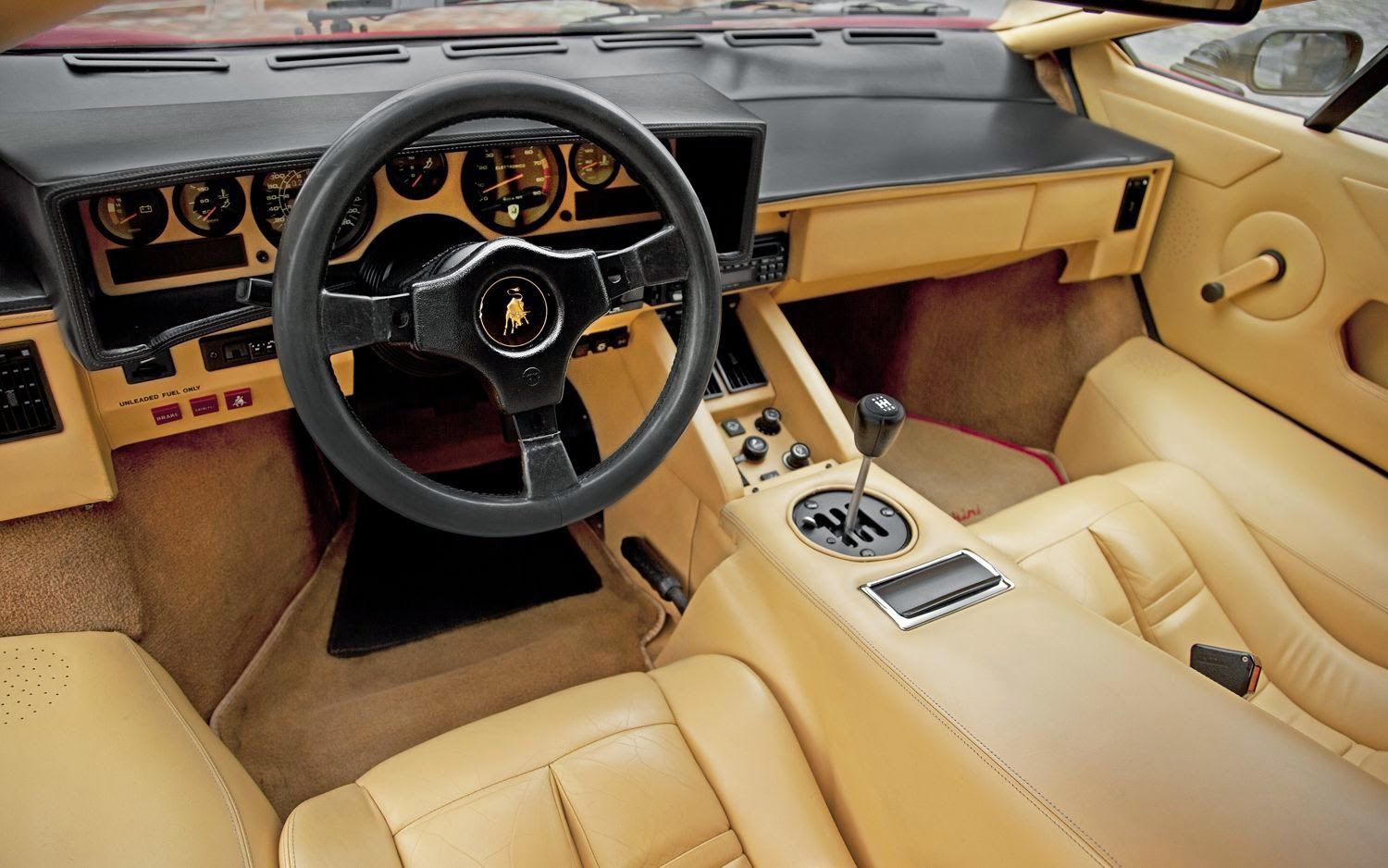
Except for in my dreams I’ve never been in a Countach, much less driven one, but this is very high on the bucket list (you wouldn’t happen to own one, would you?). I have however peaked in to several of them and as anyone who does so, you may not realize that the window you look through only opens 5cm or so, but definitely that the money had run out before the time had come to design the interior. Not that it’s worse than on many other 80’s cars but the grand plans Lambo had for notably digital instruments never materialized and the interior is thus very conventional compared to the spectacular body. The seats are however a wonder of comfort compared to modern bucket seats, but they can only be adjusted in length. If you’re taller than 180 cm you should also be prepared to have contact with the roof lining (here, the later cars helped, giving another 3cm of head space in the “high” versions). And when it comes to driving, taking it from multiple reviews, it’s all hard work with an unassisted steering, a heavy clutch (those six carburettors are partly to be thanked for that, but you can’t have it all!) and a general experience of needing to work hard to get the most out of the car. Then again, isn’t that the way it should be in a true supercar?

Initial plans for a singe-spoke, Citroën-style steering wheel were also dropped

Production of the Countach came to an end in 1990, with the 25th anniversary edition introduced in 1988 with a certain Horacio Pagani (on whom you can read more here) being responsible for a lot of the restyling. The final iteration wasn’t loved by everyone given it departed from some of the most classical design features on previous Countaches and had a bit too many skirts, even for the late 80’s. It was however the fastest version of the Countach, capable of a top speed of 295 km/h and a 0-100 km/h time of 4.7 seconds. Remember this is 30 years ago on a car that was equipped by 345 mm rear tires, however only 15″ in wheel size! At the time, those were the biggest tires on the market.

The Anniversary edition was also the most popular version in production numbers, built 657 times and thus making up a third of the total production of around 1970 Countachs ever built. That’s right, the most legendary supercar of all times was built less than 2.000 times, to be compared for example with the over 7.000 Testarossas (not counting the 512’s). Not only that, a third of all Countaches were sold when it had already been on the market for 14 years! Another third was made up of the Quattrovalvole version (610 cars), thus leaving just a third of the early Countachs. Good luck finding one of those today… The easiest one to find today is the QV with prices starting around EUR 300′, with real jewels going for up to EUR 700′. That’s a lot of money, and a lot more than you would have paid ten years ago. Having said that, it’s still a couple of million less that you would pay for the new 2022 version if you were on the list of the selected 112 owners, and seen in that light, probably one of the greatest bargains out there! Junior may have more power and features, but in the Countach world, there’s no doubt that Daddy still rules big time!

Street finds: the great Bizzarrini!

A great thing with writing this blog is that whereas in some weeks I know well in advance what to write about, in others I don’t have a clue. This is a bit of a thrill since inspiration (at least so far) then comes somehow, but very rarely does it do so in such an inspired way as this week! Taking a lunch walk on Tuesday in the currently locked-down and therefore half empty city of Zurich, I turned a corner and saw something low and red that looked very much like a 60’s Ferrari but was… something else. A model name I didn’t recognize, and a logo that said Bizzarrini. I know we have some really knowledgeable readers here and as those of you familiar with Bizzarrini will know, seeing one doesn’t happen every day; nor every week, month or year! I had never seen a Bizzarrini before which is perhaps not very surprising, given the whole production of Bizzarrini automobiles in the 60’s amounted to a few dozen cars (more on that below). The 5300 GT I had in front of me looked spectacular, and when doing some research around Giotto Bizzarrini and his brand, a wonderful story of great engineering in a bygone era combined with the temper of several protagonists, including a certain Enzo Ferrari emerged. So this week will be about Giotto Bizzarrini and his cars, from the age when cars were sketched with a ruler and built with sweat rather than computers!

What I couldn’t identify straight away – a Bizzarrini GT 5300 Strada!

Giotto Bizzarrini was born in 1926 close to the port city of Livorno near Pisa in Italy, and as a young engineer started working for Alfa Romeo where he quickly made a name for himself as a very promising and talented engineer with a special love for racing cars. He was in fact so promising that the great Enzo Ferrari became aware of him and quickly recruited him, so from 1958, Giotto worked at Ferrari where he led the development of several Ferrari GT cars, notably the legendary 250 GTO. No doubt that Giotto had his career cut out for him at Ferrari had it not been for Enzo’s strong personality, Latin temper – and love for his wife Laura. Laura was not as loved by other key Ferrari employees, especially on the sales side where Ferrari’s sales manager Girolamo Gardini was getting very tired of Laura messing up his sales plans by always requesting special deliveries of race cars for personal contacts and friends. Betting on his long and successful background at the firm, Gandini together with a group of other senior executives, including Bizzarrini, one day walked into Enzo’s office and basically told him “it’s her or us”, confident Enzo would see the logic. He didn’t. Laura stayed and Enzo fired the senior executives (consisting of most of the race team at Ferrari) in what was referred to as the Palace Revolt or the Great Walkout. You’d better know what you’re doing before you mess with the boss’s wife, especially if that boss is (or rather was) Enzo Ferrari!

The Ferrari 250 GTO – 36 built, all of them still in existance, changing hands at USD 50-75m…

Giotto Bizzarrini was especially passionate about engines and before the Palace Coup had started a department within Ferrari where engines were tested and notably the Testa Rossa 3-litre engine was developed. When he left Ferrari, Giotto went on to found a company named ATS with the ambition to build a Formula 1 car (which he never did), before founding his next company called Società Autostar as a freelance design house (chassis and engines) in Livorno. One of his first clients was a a certain Ferruccio Lamborghini who was set on building a V12 engine and much like Bizzarrini, wasn’t best friends with Enzo. Bizzarrini took on the project and thus built Lamborghini’s first V12, with an architecture that was far ahead of what Ferrari was producing at the time and so powerful it had to be tuned down from its original 375 hp for street usage. This is in other words how Lamborghini’s first V12 came about, and you have to believe Giotto wasn’t too displeased to indirectly get back at Enzo…

The first Lambo V12 – Bizzarrini to the far left

Autostar under Bizzarrini also worked on a number of other cars, notably for Iso, another small Italian automaker from the 60’s, including the Iso Rivolta and Grifo, especially the race version of the Grifo called A3/C. For these, as well as for the later cars in the Bizzarrini name, he would however not be using that Lambo V12 but rather the small block Chevy V8 from the Corvette. Throughout his career he had developed a love for the larger volume, US engines, and even tried (unsuccessfully) to convince Ferrari to build a larger volume engine. A year later Giotto ended the collaboration with Iso, took the A3/C with him and fulfilled his dream by starting Automobili Bizzarrini Spa, where the A3/C was to become the first Bizzarrini car under the name GT 5300.

The GT 5300 was produced both in a Corsa (race) and a Strada (street) version, with a power output from the Chevy small block of between 350-400 hp. The car was front-mid-engined with the engine sitting behing the front axle, probably sharing quite a lot of heat with the passengers but above all, producing a sound out of this world… The body was a combination of aluminium and fibre glass, the rear axle was independent and brakes were inboard i.e. mounted on the axles such as to remove weight from the wheels, as notably on the Citroën SM. The box was a Chevy four-speed manual. Giotto raced the Corsa version himself notably in Le Mans, and it’s hard to believe today when you learn that doing so, he drove the car himself from Livorno to Le Mans, won his class and then drove back home!

The rear is the part most will have seen of the 5300 GT, and it’s a good-looking one!

Unfortunately, although there’s no doubt about his capabilities as an engineer, car designer or for that matter driver, Giotto Bizzarrini wasn’t very talented as a businessman. The race career never really took off, notably since Giotto didn’t have enough money to homologate the GT 5300 Corsa. Even worse, the whole company was permanently under-capitalized, the GT 5300 never became a success, and after the bankruptcy filing of the company in 1969, Giotto even admitted that he had not keep track of how many cars had been built. This is still a debated topic today. It’s clear that the GT 5300 Strada was the most popular car with presumably 50-75 cars produced. The Corsa version is estimated to have been built no more than 10 times, thus making it three times rarer than a GTO, and the following and last race car, the P 538, was only built a few times. So the total production of Bizzarrini during five years was probably no more than 100 cars. Those still in existance mostly sit in car museums (if you happen to be in LA, the Peterson Automobile Museum is said to have one) or personal collections, so I was indeed a lucky guy to see one parked in the street with the window half-opened!

I’m not a 100% sure but as late as last November Giotto was still alive, so chances are he still is, in that case 95 years old and most probably quite surprised to see the prices his cars fetch on the few occasions they change owners. A Bizzarrini would have been a great investment around 20 years ago when they traded for somewhere around USD 100.000, today you need to add a zero to that. But that’s of course not what makes the story special. Rather, it’s the story of a man who today counts as one of the gratest racing engineers ever, not only in Italy but globally, who developed Lamborghini’s first ever V12 and,who could probably have helped Ferrari became even more successful as a racing team, had Enzo had his wife and temper under control!