The best of both worlds!

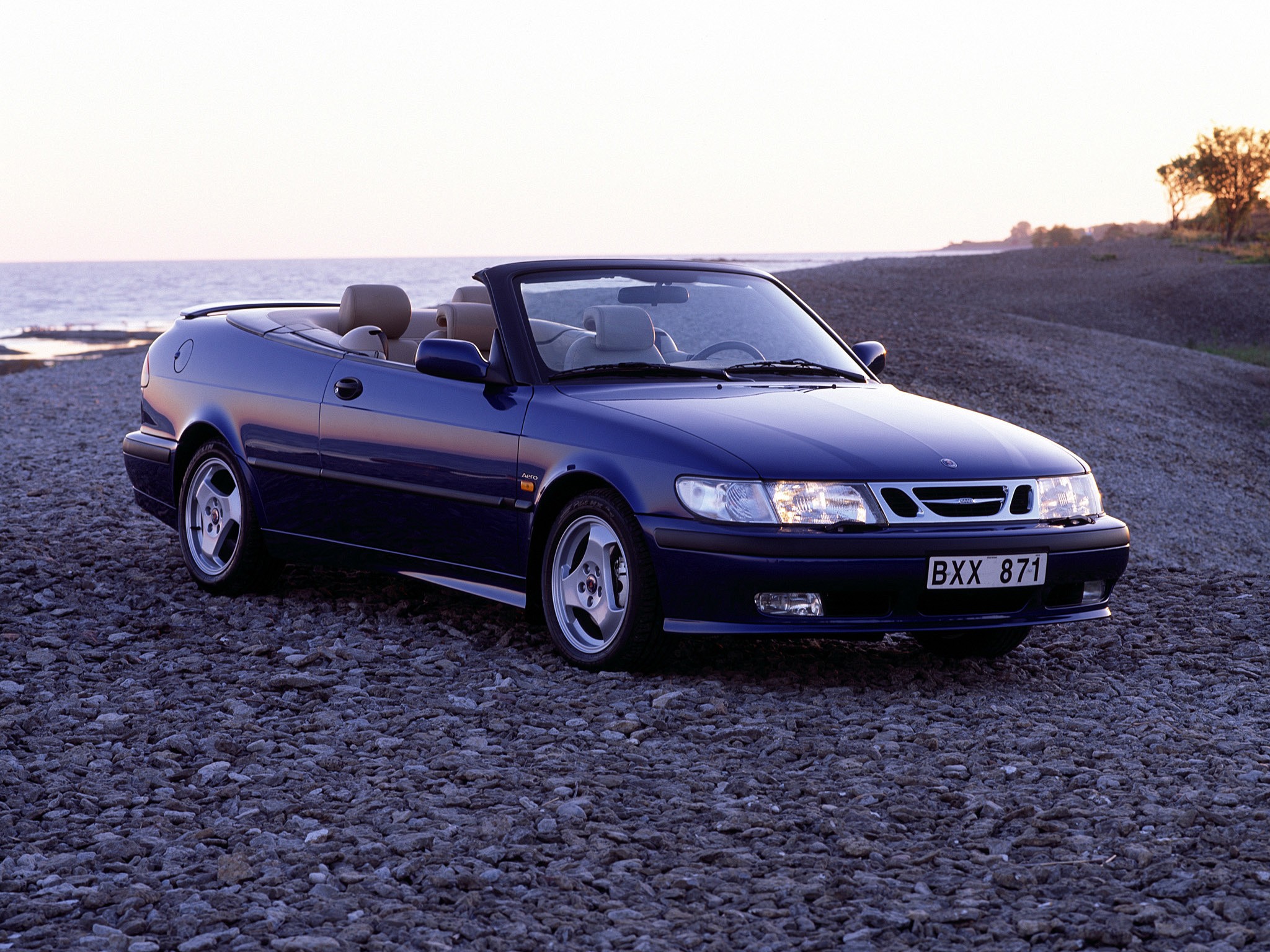
The last time I bought a new car was in 1999. You could also say it was last century, to make it a bit more dramatic. I remember it clearly, firstly because the car in question was a beautiful, dark blue Saab 9-3 Convertible with a beige leather interior, but also since it was only shortly thereafter that my wife became pregnant with our daughter. Judging by comments from friends and family, the normal course of action would have been to say “too bad”, sell the convertible and buy a family station wagon. I didn’t.

Instead, together with my better half, who to her credit fully supported me in this, we set about finding a baby pram that when folded, would be small enough to go into the Saab’s boot, at least with the rooftop up. I seem to remember that the one we ended up with was rather expensive, but if you folded it properly and removed the wheels (of the pram that is, not the car), you could just about squeeze it into the boot.

More practical than you would think!

The point here is not to further investigate the baby pram market. However, when we eventually bought a more traditional family car, it was the first of many to follow on the used car market. My reason for this is the same as for most people: I’ve mostly bought my cars privately and have wanted to avoid the massive depreciation all but a very small number of exotic cars see in the first two to three years. The smell of a new car is certainly great, but to me, it hasn’t been worth 30% or more of the car’s price.

When talking about depreciating car values, in the last years the discussion has mostly been about EV’s and the astronomic depreciation they saw in the first 2-3 years, i.e. from 2019-2020 and onwards. This was certainly an effect of the highly inflated prices many of them were sold at as new. On one hand they were more expensive to produce, but carmakers also knew that many of them would be leased by companies, making price is less of a factor given all the incentives companies in most countries were handed out by the state, i.e. you and I.

Three years later, corresponding to the typical European lease period, many of them hit the used market at the same time as the popularity of EV’s started to crumble. Today, you can easily pick up an early 2020 Taycan for 30% of its price as new. The question is rather if you’re brave enough to do so, given quite a long list of issues those early cars had, and what even in EV terms was quite a poor range.

An early Taycan may be cheap, but it’s a car for the brave (without range anxiety…)

However, although it’s been less discussed, the depreciation of traditional internal combustion cars (ICE’s) hasn’t made anyone happy either. When I sold my Saab convertible in the early 00’s after about two years, I remember losing roughly 30%. That’s far less than what the typical ICE loses today over a similar time period. And given that, now that we’re a few years further down the line, does it still hold true that EV’s depreciate more in the first years than ICE’s? In a very unscientific way, that’s what I’ve spent part of this week looking at.

For this exercise, I’ve taken an EV and an ICE in the same category and from the same brand, produced in 2022-2023, and with less than 50′ km’s on the clock. EV’s have a lot of horsepower, so I made it a condition for the ICE’s to have around 500 hp as well, but steered clear of the M-cars and AMG versions. For the EV’s, I made a theoretical range of at least 400 km a condition, knowing that will in reality be far less. Equipment-wise, I tried to get comparable cars with similar equipment levels.

Looks weren’t part of the criteria – there wouldn’t have been enough EV’s to choose from otherwise…

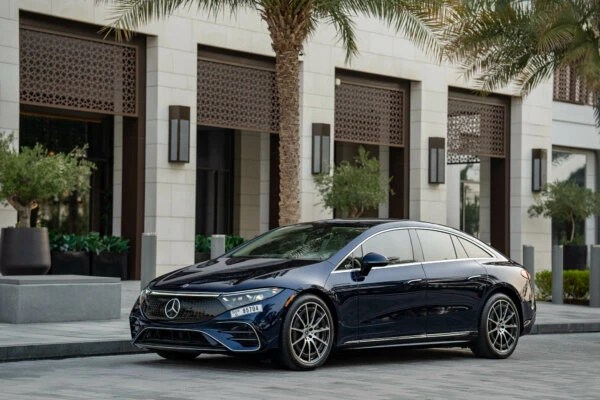
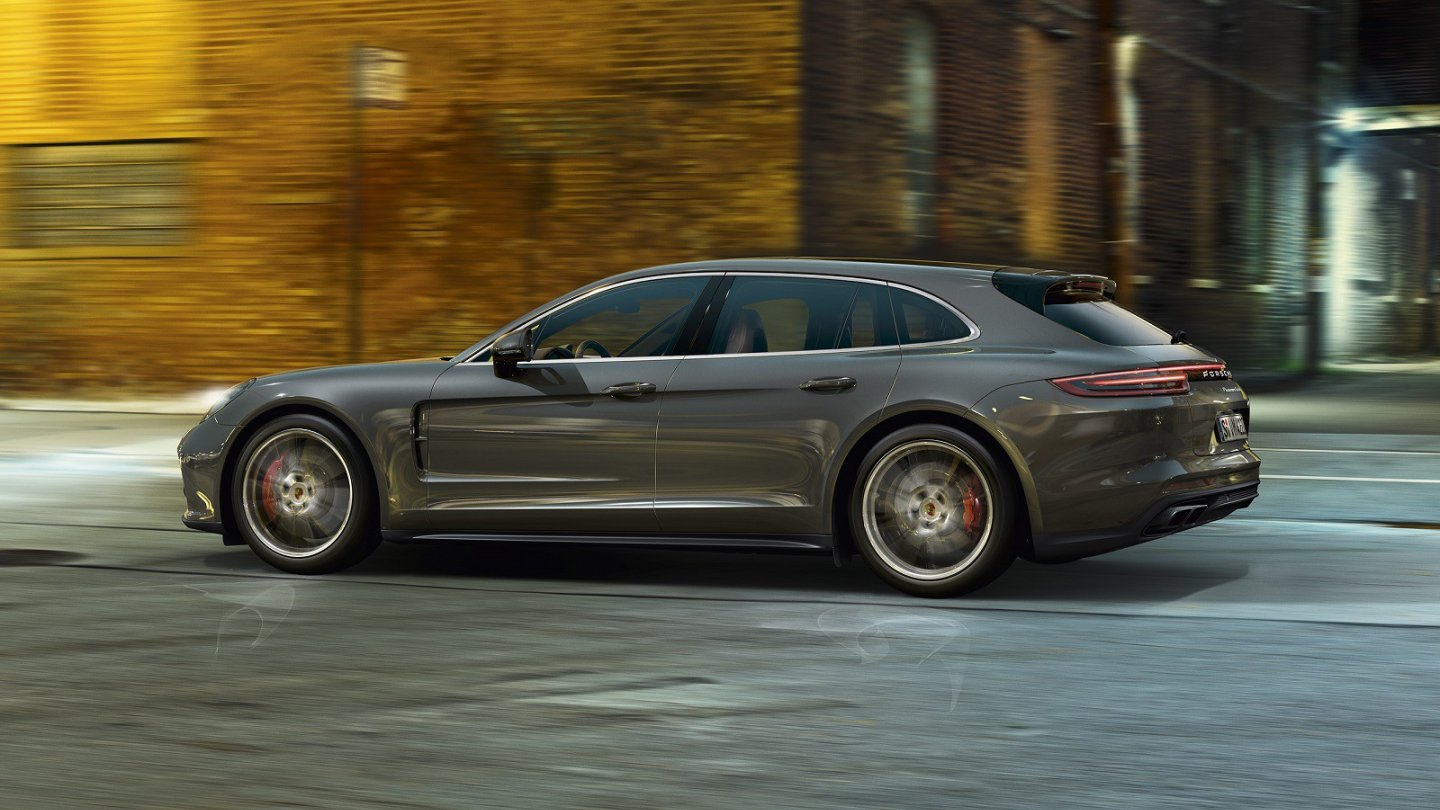
I looked at this across four categories: SUV’s, four-door sedans, sports coupés and shooting brakes. That also means that I made it a condition that the same brand had both an ICE and an EV in the same category in 2022-2023. I picked the BMW X5 and iX for the SUV category, the MB EQS (sedan) and S580 for the sedans, the Audi e-tron GT and TT RS for the sports coupes, and finally the Porsche Taycan and Panamera for the shooting brakes. And before you tell me shooting brakes isn’t really a category, the reason for including them is that both of them look bloody good! Interestingly, both also sell far better as shooting brakes than as sedans.

Before going into the results, this whole exercise is obviously not more than an indication. The cars aren’t perfectly comparable, as notably the exact equipment may vary. You could obviously compare models from different brands, but that makes it more complicated as brands depreciate differently. And you can certainly argue that an e-tron is not very comparable to a TT, given it’s a proper four-seater. That’s however the best I could think of given the condition of having an ICE and an EV from the same brand. The prices are my estimates of what you would have to pay after a bit of negotiation, and they are from the Swiss market. However, that’s usually a good approximation at least for the rest of Europe.

What the above results show is that all EV’s in the sample from 2022-2023 have indeed lost more value than their ICE counterpart, but that the difference isn’t huge, and smaller than a couple of years earlier. That’s however not because EV’s have become more stable in value, it’s rather the ICE’s that depreciate faster than they used to. What also seems to be true though, is that it’s not only ICE’s that eventually find a floor – as said, you can pick up a 2020 Taycan at 30% of the price as new, but those values seems to have stabilized now, five years later.

The Audi e-tron and BMW iX have certainly not been good to your wallet if you’ve bought them privately, but in both cases, part of the reason is an inflated price as new. That said, the regular BMW X5 is also not a car you would have wanted to buy as new. The Taycan has retained about half its value making it the best EV over the period, and the Panamera is the only car that has held its value significantly better than the others.

The Panamera Hybrid is arguably a better choice than all the others.

Where does this take us? Well, as little as I wanted to back in the early 00’s, I still wouldn’t buy a new car today, if it’s my money we’re talking about. That’s especially true if it’s an EV, but that said, even EV’s eventually see an end to their depreciation. So if it’s an EV you’re after, I would buy a Taycan or an e-tron, but rather one from 2022-2023 than the first two years. However, if like most, you drive a lot of short distances but don’t want to buy a second car for your longer trips, then I would argue that the best choice is none of the above, but rather a modern hybrid.

Taking the Panamera hybrid from 2022-2023 as example, it has a depreciation that is no different to the ICE version and offers you around 50km of electric range, whilst also lowering your fuel consumption overall. Some other hybrids will have even better electric ranges. The downside is extra weight over a regular ICE, but automakers have become very good at hiding that, especially the one from Zuffenhausen. Finally, if you only drive long distances, then nothing has changed and a 2-3 year old ICE remains the best choice!

The EV market takes off for real

Ten days ago, in a flashy, high-tech online show that you can watch here if you missed it, Mercedes-Benz presented the new EQS, the fully electric version of the S-class. I would claim that rather than just another car launch, the EQS is a real game-changer in the EV market, and likewise the last confirmation needed that the big guys are now entering this segment for real. Interestingly, it’s also a (positive!) game changer with regards to environmental factors and sustainability. This week we’ll take a look at the new EQS, which even without considering the drive train looks to be one hell of a car, and talk a bit more about why it’s important and how it will influence the market going forward. If your love for traditional cylinders (to which we’ll return next week) runs so deep that it prevents you from reading any further, in summary I think you can say that whereas the planned Super League in European football came to a very sudden death this week, there will be nothing stopping the EV Super League from taking off in 2021!

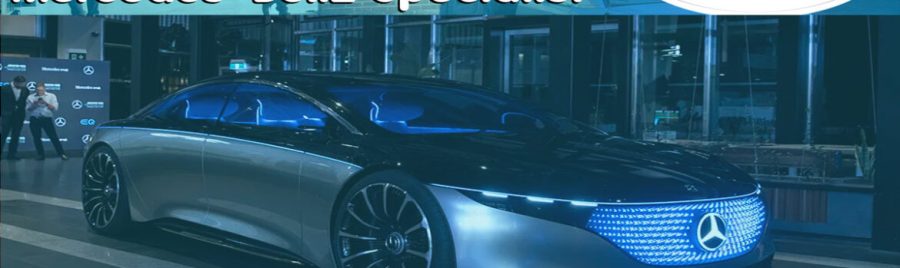
Starting with the EQS, In one simple sentence it can of course be described as an electric S-class, whis is perhaps what many people will do – but that would mean missing the whole point. Because by bringing an S-class to the EV market, Mercedes is also bringing a whole new level of luxury and car quality, where until now the only luxury has been Tesla’s giant infotainment screen.

The new EQS – notice the very long wheelbase

Starting from the bottom (literally), the EQS is built on Mercedes’s first EV-specific platform. So far EV’s not only from the Stuttgart brand but also from other large manufacturers have been built on traditional platforms, and this makes a big difference as one specifically developed for EV’s can take into account the absence of an engine and battery space far better. The new platform can also be adapted to different car sizes, something Mercedes intends to do as it rolls out an electric version of all cars in its current line-up over the coming years, some of them already in 2021. To those who know Tesla this is obviously not new, however what happens above the platform, inside the car, definitely is.

The EQS doesn’t look like an S-class and is actually a hatchback (without a frunk, as that space is taken up by various air-cleaning filters). At over 5.20 metres it’s a big car, with lots of interior space, and luggage space of around 650 litres (in addition to which you can fold the rear seats). If the design can be debated, what cannot is the fact that it’s the most aerodynamic car currently in production, with a Cw/Cd-value of 0.20. Also not open to debate is not only the quality, but also the innovativeness of the interior space, at or beyond S-class level. The most spectacular parts are probably the (optional) self-opening-and-closing doors and the gigantic so called hyperscreen (actually consisting of three screens) that extends over the whole dashboard and enables the passenger to for example watch Youtube whilst the driver has access to the navigation. Noteworthy is also that front and rear passengers are independent both in infotainment and speech commands, and chan thus address the car by “Hey Mercedes” independently of each other. The EQS also sets new standards in driver profiles and indiviualization, and the list goes on, and on, and on. Two interior design lines are planned, a more elegant and a more sporty one, and if the hyperscreen for some reason isn’t your thing, you can opt for the mid-mounted “iPad” of the new, “normal” S-class instead – a simple example of how a large car manufacturer can cross-fertilize various items between product lines.

The hyperscreen in the elegant layout version

The EQS is set to come to dealers this summer and will initially be available with 333 or 524 hp as rear- and all-wheel drive. An AMG version is set to follow later. The range will be up to 770 km WLTP, which should translate to something like 600-650 km in real life under pretty ideal conditions. This is a really important point, as no one has so far been able to compete with Tesla’s superior range – until now. Prices aren’t known, German media expect them to start around EUR 110.000 (with as always an almost unlimited upside…), which means pretty much on par or actually even slightly below the regular S-class. Mercedes have stated that they will earn less by car produced than for conventional cars, which in turn means they believe strongly in the growth of the EV segment. If pricing at this level is confirmed it goes against what has been the case so far, where EV-versions from traditional brands such as the Audi E-tron or the MB EQC tend to come at a premium to diesel or petrol versions.

The hatchback rear with the mandatory light bar

As stated previously on this blog, I don’t subscribe to the view that the big car companies have missed the EV train, quite simply as it hasn’t left the station yet. Although the amount of media attention it gets would make you believe it’s already a significant percentage of new car sales, the global EV market is still around only 2%, however with growth really starting to take off in selected markets in Europe, as well as in California and other places. Also, if you except small EV’s with a 150 km range, the market has basically been owned Tesla until now, as we know a three-model car company with only one of them, the Model 3, selling outside of the US, and with the exception of improved range and software, no significant facelifts or updates since the models were launched. I’m sure most large car brands have watched the market carefully whilst preparing in the background for the day growth takes off, and nowhere more so than in Germany. From that perspective, Mercedes’s timing looks pretty impeccable to me. The VW group is about to introduce its new EV platform with notably 20 electric Audi models rolled out over the coming five years, and others will follow close behind. Given the expertise all of these have in building not only cars, but also real luxury cars, the fundamentals of the market are probably about to change, which in turn will make life hard for Tesla, especially in Europe.

Last but not least, let me come back on the sustainability of EV’s that I was very critical of in my post back in January (see here), and that indeed still deserves to be looked at critically, notably in terms of the “CO2 cost” of battery production. If you saw the introduction of the EQS, you may have noted Mercedes CEO Ola Källenius saying that the battery train of the EQS will be produced in Germany in a carbon-neutral way. This sounded a bit too good to be true, so I was in touch with Mercedes’s customer relations this week to have it confirmed, and very impressively, they came back to me in 24 hours. Not only did they confirm that from the first car built, the EQS’s battery pack will be produced exclusively with fossil-free, CO2-neutral energy. They also said that every Mercedes factory in the world will be carbon-neutral by 2022, with some of those in Germany already being so. This is obviously very good as it resolves one of the main issues around EV’s, and will hopefully influence both the public and competitors..

The car can still charge quicker than most stations, but Ionity has really taken off!

EV’s have a lot going for them, and resolving some of the issues with the battery production adds to the positive list. I believe that what Mercedes now starts with the EQS will be a game-changer for the direction of the EV market, as others can be expected to follow close on their heels. In parallel, the European Ionity charging network is growing quickly, already providing a far better coverage than could be expected a few months ago. So whereas I still don’t think you should take your 10-year old car to the car scrap, it definitely looks like the future is electric, and that it may happen quick than I would have thought only a few months ago. Thus, if I were in the market for a new S-class, I would probably think twice about which one to get. In a couple of years, maybe that won’t even be the main question for the typical S-class buyer, but rather if an S-class can really be a hatchback…