Sports Car Maker!

Have you ever dreamt of creating your own sports car? I can’t say it’s something I think of on a regular basis, but when I was younger, I remember sitting with pen and paper, trying to draw a spectacular shape on a piece of paper. Given my extremely limited drawing skills I failed every time, however, when I was at it and thought about what I would call my future brand, at no time did I have the idea of naming it “sports car maker”.

Some people did though, and today we’ll look at a car that I’d honestly be surprised if any of those reading this has ever seen live. I certainly don’t mean to sound condescending, but a French brand from the 80’s building less than 1000 cars during its lifetime is not what you see on every corner. I hadn’t either until I all of a sudden did so, last week, at a red light in Nice. If you haven’t guessed it yet, I’m talking about the MVS Venturi, later only referred to as Venturi, a French creation from the late 80’s from a brand called MVS, Manufacture de Véhicules Sportifs, French for, you guessed it, sports car maker.

The Venturi story starts in 1984 when the French engineer Claude Poiraud meets the designer Gérard Godfroy. The latter had worked at Peugeot, notably on the 205, and was also responsible for other design masterpieces like, well, the Citroën Visa. More relevant perhaps was the fact that Poiraud had worked at Alpine, the only real sports car maker in France at the time, where he had led the development of the A110, that I wrote about almost four years back.

The Citroën Visa – perhaps not the best design reference…

The two decided to put some fresh air in the French sports car scene by starting a new company called Ventury, a name that was supposed to lead thoughts to “aventure” (adventure in French), and the Venturi wind effect, coming from air flow analysis. By writing it with an “y” at the end, they apparently also felt they made the name more European. Be that as it may, but a first mock-up was produced and shown at the Paris auto salon in 1984. It was met with instant success and people reportedly didn’t believe it was French, given they hadn’t exactly been spoiled with sports cars up until then – and as it turned out, wouldn’t be so going forward either…

From here on things accelerated for the company, and the first production cars were introduced in 1987. The “y” had then been dropped for some unclear reason, with the first car called the Venturi Coupé. it was equipped with the well-known V6 engine from the collaboration between Peugeot, Renault and Volvo, referred to as the PRV V6, mid-mounted with a power output of 210 hp. It wasn’t the sportiest engine around, but with a body built in glass fibre, the Venturi didn’t weigh more than 1300 kg.
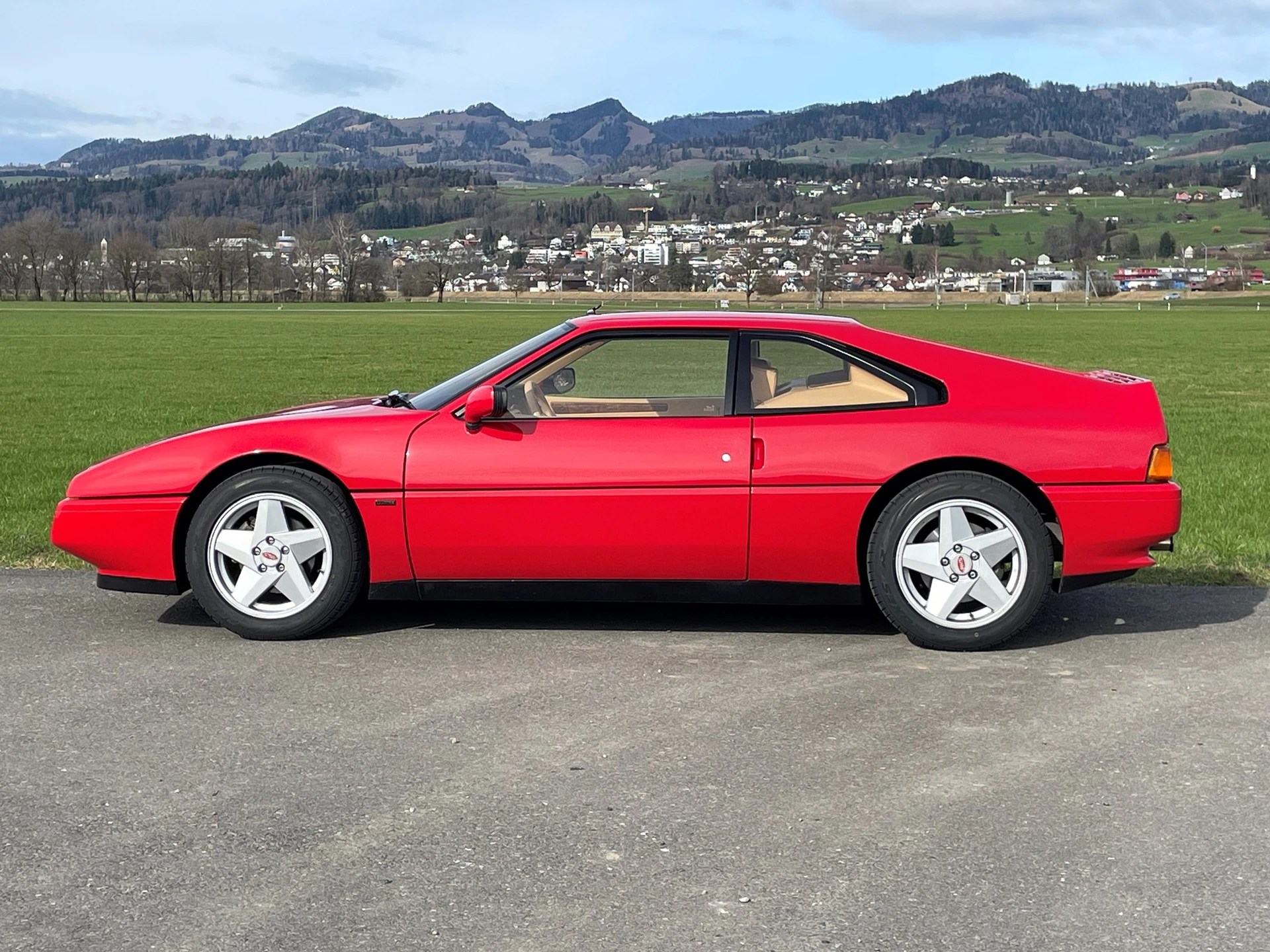
That the Venturi is Ferrari-inspired is an understatement…

In 1989 power was increased to 260 hp from the same engine, in a version suitably named Venturi Coupé 260. The last cars in that series would be referred to as Atlantique, as would the last road version of the last Venturi, the 300. You will have guessed it had a power output of 300 hp, however now from a newer Peugeot-Citroën, six-cylinder engine, and Atlantique referred to a sportier and lighter interior, contributing to a weight saving of around 165 kg, making a light car even lighter.

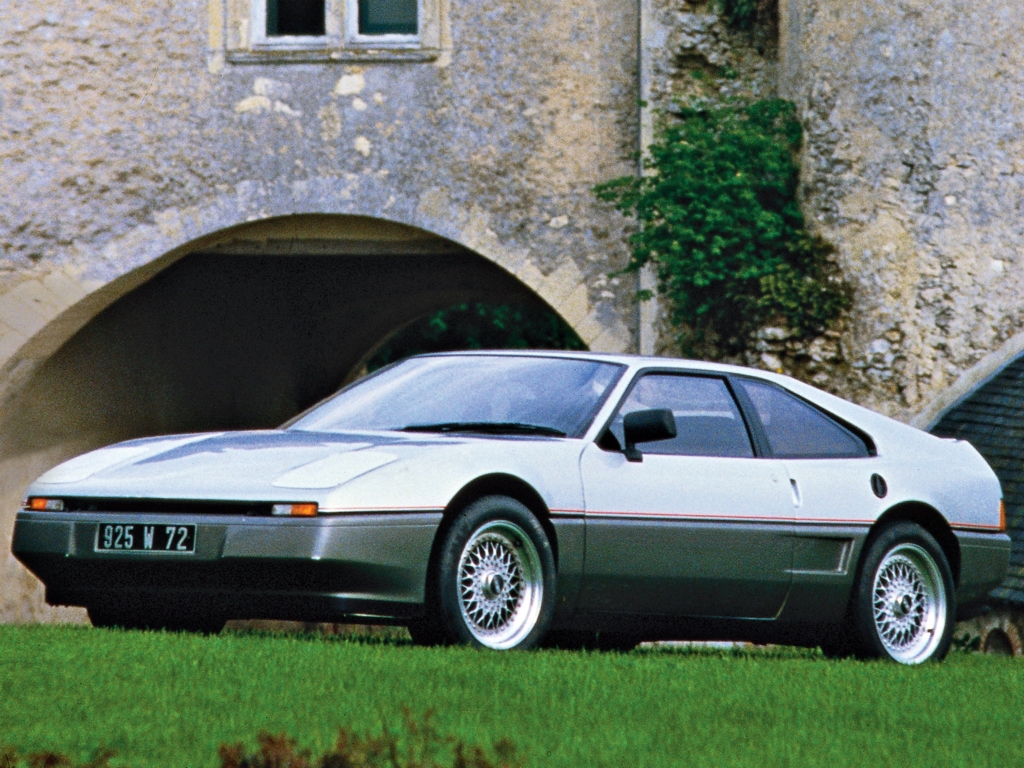
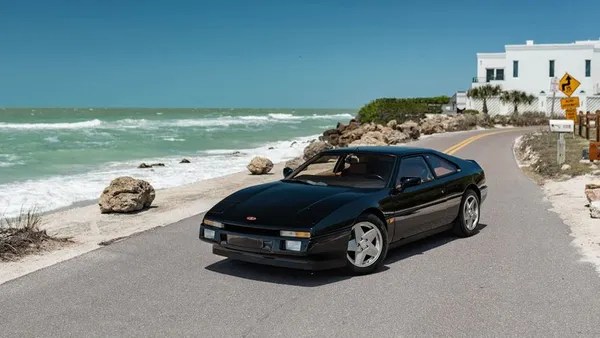
Given all these looked pretty much the same from the outside, which is pretty much like a Ferrari F355 without the Testarossa-like wind intakes, I can’t say which version I saw, and naturally I didnt’ get my phone up in time before the light turned green. The Venturi looks very stylish though, in an 80’s supercar kind of way. At just over four metres in length it’s a small and low car, and next to the F355, other natural references are the Honda NSX and also the Lotus Esprit. i would say it’s less spectacular than both those, but also has a more classical design.

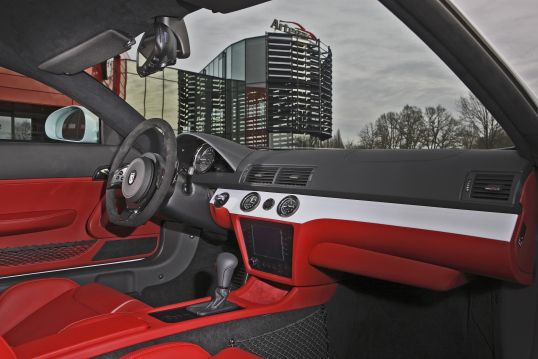
The few who have driven a Venturi talk about a slightly chunky gearbox but a very nice and precise hydraulic steering. The car may look like a Ferrari but the engine has precious little in common with Maranello, with a red line already around 6.000 rpm, and a sound that’s only exciting if you’re an EV driver. Venturi compensated that with a very nice, and leather-rich interior, far more luxurious and well appointed than most cars of the time.

A nicer place to be than many other 90’s cars!

During the 90’s, Venturi went through several ownership changes and with that, more business strategies than you can count. There were notably plans to build a family car that were never realized, high ambitions for making Venturi a racing brand, and notably no less than seven Venturis participating in the Le Mans race in 1993. In the end Venturi ran out of money, and having been saved by a Thai group when it was first placed in liquidation in 1995, the subsequent Asian crisis meant that the lights went out for good in the Venturi factory in 2000. It also meant that of the 44 Venturi 300 Atlantique that had been ordered by then, only 13 were ever delivered. Those that have survived certainly belong to a lucky bunch of people!

All in all, no more than 641 Venturis would be built in total. Such a small series obviously means they’re very rare 30 years later. There’s not a single one for sale in France, neither in Germany, but there are two in Switzerland, a first series at around USD 40.000, which is the red car on the photo above, and an Atlantique of the 260 series, seen below. That’s by the way the first car of that series, in other words the first Atlantique ever built, making the price of around USD 60.000 very reasonable. Unfortunately though, it’s also a bit of a renovation object…

If you’re up for renovating the first Venturi Atlantique, let me know…

If you’ve always dreamt of a Venturi, Switzerland thus seems to be a good place to start. And in terms of spare parts, it’s actually not as bad as you may first think, given that as a small brand, Venturi had to buy what they could from other brands. The PRV engine will not be a problem, neither will many of the switches or side mirrors, coming from Citroën, or the rear lights from Ford… The list goes on. Not much to fear in other words, and if your highest dream is a car you can be certain of not seeing on your neighbour’s drive, it’s hard to find a better option than a Venturi!

The forgotten ones

In the last weeks I’ve published posts about Porsches, Aston Martins and Alpines. All fantastic cars, but also cars that you – more or less frequently – see on the streets. There is nothing wrong with that, and you could argue that a car that is never seen is probably not worth seeing. Yet, precisely that is the point for some of us. Having a car that is unique. That makes people point fingers, ask what it is, even give a thumbs up (when did that happen to a 911 driver the last time?). And contrary to what you may think, there are indeed cars that for various reasons never reached high production numbers but are still very much worth considering!

If you’re part of the club of those loving the unknown, here are three great but rare sports cars that definitely deserve a place in the dream garage, and perhaps even the real garage one day. We’ll go from my own assessment of most known to least known and at the end, some general thoughts on small scale productions and their often visionary founders.

Wiesmann

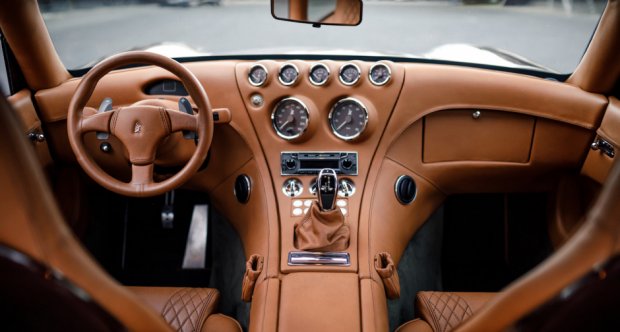
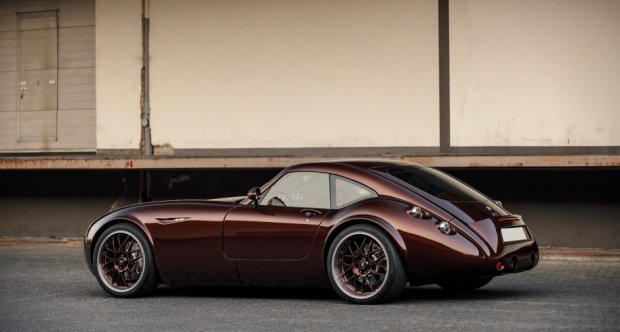
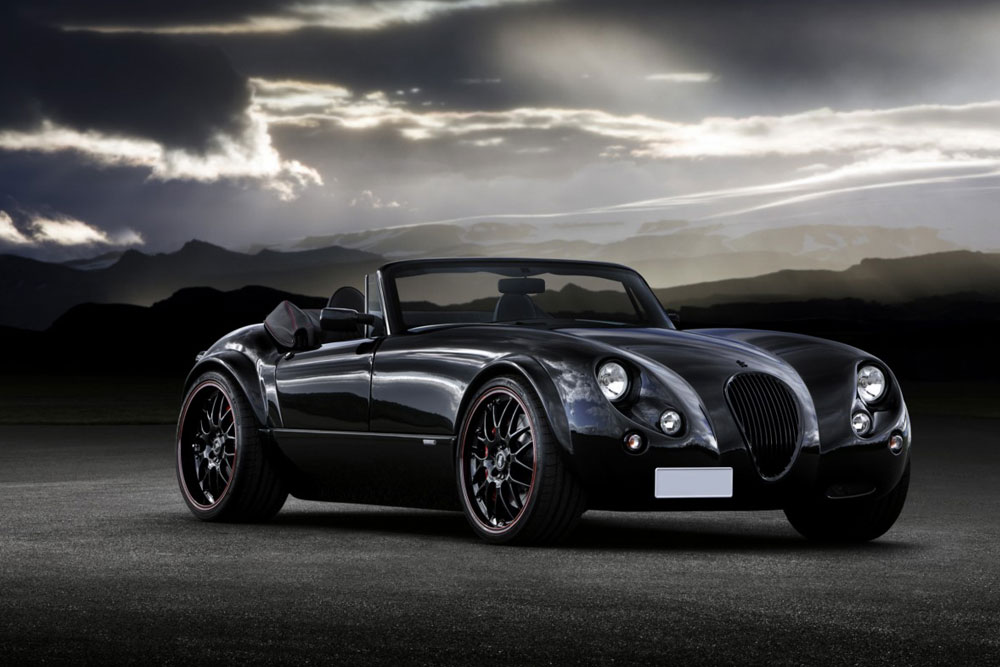
The story of the German manufacturer of BMW-powered roadsters and coupés starts in 1988 when brothers Martin and Friedrich (forming the MF in the model names) went from producing hardtops to cars. They had a vision of building a beautiful and luxurious but mechanically rather traditional roadster, and so they did. The Wiesmann design is timeless and features a (very!) leather-rich, beautifully crafted interior. Attention was also given to keeping the weight low, with Wiesmanns weighing in at between 1100-1300 kg. Last but not least, getting access to BMW engines meant that the cars were equipped with some of the best 6, 8 and 10-cylinder engines in the world!

The first Wiesmann to see the light of day was the MF3, powered by the brilliant 343 hp strong, straight-six from the BMW M3 (E46). The design later models remained more or less the same and it’s difficult to say anything negative about it!

Note all instruments being centered.

The MF4 coupé presented in 2003 was Wiesmann’s first coupé, now powered by BMW V8’s. The MF4 roadster followed in 2009 before the last model MF5 saw the light, also available as coupé and roadster. The MF5 featured the BMW 10-cylinder from the late 00’s M5 and M6, developing first 507hp and later in the twin-turbo version 555hp. The MF5 was sold in parallel to the MF4.

My only experience with Wiesmann goes back a few years when I was passenger in an MF3. It was a true, hardcore roadster experience with a brilliant engine roar, but also lots of other mechanical sounds. There were no squeaks or rattles though, even though the car was a few years old, and the owner also said he had practically had no issues at all with the car that he had owned since new.

Wiesmann increasingly ran into financial difficulties in the 10’s and went bankrupt in 2014 after a failed rescue attempt. About 1600 cars had been produced when the lights went out, and finding one today is actually easier than you could expect. At the time of writing there are about 80 cars available in Germany, by far the largest market. Prices depend on version and engine but are generally between EUR 120.000-EUR 250.000, meaning quite close to their price as new. With a weight of 1100-1200 kg, my choice would be the MF3 with the 343hp six-cylinder from the E46. Power is plentiful, the engine is lighter and you’ll be towards the lower end of the price range.

Artega

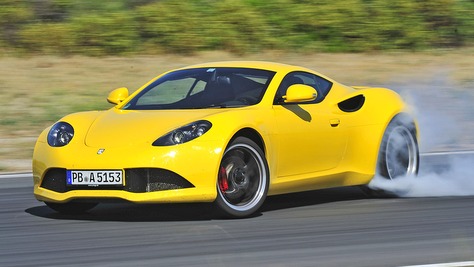
Usually, car brands are born out of more or less eccentric engineers or designers with rather empty pockets, who manage to convince someone with somewhat deeper pockets to finance the initial stage. Not so Artega which was born as a project of the very established German car supply firm paragon AG, at the time an established supplier of auto electronics to all major German car brands. Feeling he knew a thing or two about the car industry in which he had worked for 25 years, and that he could do things better, paragon CEO Klaus D Frers set out on the project that was to become Artega GT, a light, mid-engined sports car built on Volkswagen technology, initially intended only as a showcase for the company but later making it into production.

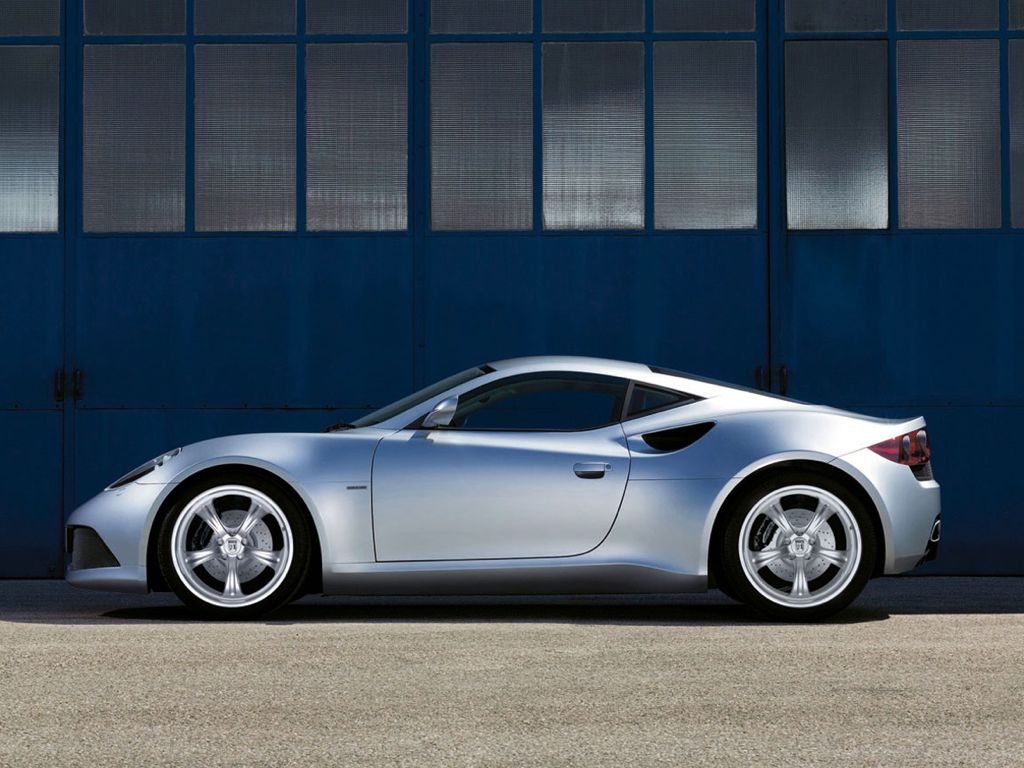
The Artega was designed by Henrik Fisker, known from beauties such as the BMW Z8, the Aston Martin DB9 an obviously his own Fisker Karma. The whole development process was advised by a number of German car gurus and car professors, the likes of whom you only find in the land of free speed. The car was finally presented at the Geneva Car Salon in 2007 and received wide praise from the motoring press, being referred to by some as “the Porsche killer”. An innovative construction with an aluminium space frame and other light-weight materials helped keeping the weight down to 1285 kg, an easy match for the 300 hp VW V6 engine and the DSG gearbox.

Inspired by the DB9 and a car from which the Alfa 4C seems to have got some inspiration!

Various tests of the Artega speak of a very accomplished sports car that was for example still quicker around Hockenheim than a Porsche Cayman in 2013, four years after its market introduction. it is however a small (4m long) and low (1.12 m high) car, so large drivers may have problems finding a good position. Obviously also, the selling point of being a technology showcase ten years ago feels a bit different a decade later.

Neither the position, nor the angle of the satnav screen are ideal…

153 Artegas were produced between 2009 and 2012 when the company went bankrupt. Reasons are a bit unclear but if you are to believe CEO Frers, the Mexican financiers he had manged to pull in didn’t understand the car business, an almost-made deal with a Chinese group never came through, and there were disagreements within the company where some wanted to make Artega a European Tesla and switch to electrical power.

Given the low production number, it’s surprising how relatively easy it is to find one that will be yours for around EUR 50.000-70.000 – not bad for a very capable sports car relying on both the knowledge of VW and a leading automotive supplier, and that you are guaranteed never to see in the supermarket parking lot!

MVS Venturi

The Venturi story starts in 1983 when engineer Claude Poiraud and designer Gérard Godfroy come up with the somewhat crazy idea of launching their own sports car brand. Having found some money, they manage to present a full-scale, mid-engined mock-up at the car salon in Paris in 1984. In the following years, production starts under the company name MVS (Manufacture de Voiture de Sport) which literally translates to Sports Car Manufacturer…

A few hundred cars are produced between 1987-1990, mostly equipped with the PRV V6 engine from Renault. The cars are very much hand-made with a luxurious interior according to the taste of the time. The handling and driving experience are said to be brilliant, weight distribution with the engine in the middle is next to perfect, and the body, very much reminiscent of the Ferrari F355, is maybe a bit anonymous but has aged quite well until today, although the 80’s lines are clear for all to see.

Notice the very after-market cassette radio!

Sales never take off though, with no more than 200-300 cars produced until 1990 when new ownership and capital lead to the Venturi Atlantique, the most accomplished car that will be built in various models until the company’s bankruptcy in 2000. The shape is still that of the original Venturi, but in the 400 hp Atlantique 400 GT race version, this was actually the world’s first car with carbon brakes, on par with Ferrari and other sports cars in terms of power, and generally highly praised by motor journalists as one of the best drives on the market in the 90’s. It’s also the most powerful sports car built in France to this day!

The Venturi Atlantique 400 GT

When Venturi threw in the towel in 2000 it had sold less than 700 cars in the 13 years of production. And unlike the other cars presented here, finding a Venturi of any type today is hard work – a quick check before writing this post indicates there’s less than 10 available in Europe (including a bit surprisingly 3-4 in the UK). Based on this very small sample, prices at around EUR 40.000-50.000 seem quite reasonable for car that not only is a great drive but that also will make you truly unique on the road, knowing you’re driving a bit of automotive history from La Grande Nation!

Conclusion

Is buying a car produced in such small numbers as the three described here synonymous with economic ruin? Not necessarily. These three examples all rely on technique from large manufacturers (in order BMW, VW and Renault), so mechanically they don’t present too much of an issue. The bodywork is obviously a different story – here it may well be impossible to find old parts, meaning repairing collision damage could been having to produce new parts…

The examples also illustrate that as could be expected, financing is the hardest nut to crack for the visionary creators. Wiesmann, Artega and Venturi all struggled with somewhat unclear financing from parties not always aligned or serious, and when these then run out of cash or bow out, bankruptcy comes quickly. The main problem is obviously that going to see your bank and asking for a loan to start a new car company has never been easy – neither in the 80’s, nor today.

What these cars also illustrate is the at the same time creative and traditional thinking of their founders. Traditional in their conception of a true sports car as light-weight and rear-wheel drive, focusing on driving pleasure, creative in their usage of modern materials to get there. It’s indeed a shame that with the possible exception of Lotus and Alpine, all large manufacturers today seem to move in a different direction.

Finally if all goes well, all three brands presented here may re-appear in the coming years. The rights to Venturi have been bought by a Monegasque millionaire who wants to produce an electric super car. Artega presented the Scalo at the IAA in 2015, basically an electric version of the GT but only build on order, so not really a mass production item. Finally Wiesmann are planning a comeback still this year with Project Gecko, a rather traditional roadster said to resemble the MF5 and equipped with a BMW 4.4 litre V8. Nothing wrong with that either. Sounds good to me!

The Gecko – will it see the light of day still this year?