
It’s summer in the northern hemisphere and this year in Europe, one of the warmest in a long time, courtesy of a particularly strong El Nino effect. If you’re into sports, and as if you needed more heat, the World Cup is currently entering its final stretch, as is Wimbledon. After that though, we’ll come to the more critical stages of the Tour de France. Who said summer was relaxing, at least if you’re into sports?
Many people wish for somewhat colder weather, and the management floor at VW headquarters in Wolfsburg certainly wouldn’t mind a bit less heat as well. I have no doubt that floor is nicely air conditioned, in contrast to large parts of Germany where for some bizarre reason, buying an AC for your home is considered a crime comparable to far darker days in German history. In the case of VW in 2026 though, all the AC’s in the world won’t help its current situation.
Back in October I wrote a piece here on the blog called “Is Porsche going bust?”. I concluded it wasn’t, and one of the reasons I gave was that Porsche is majority-owned by VW, in turn partly owned by the German sate of Lower Saxony. And as we all know, state officials shun bankruptcies and resulting job losses as much as Lance Armstrong shunned doping checks.
As it turns out, the question I asked in my headline in October was recently asked to the members of VW’s nine-person board: was there a risk VW could go bust? Six of them answered it positively. That’s not very recomforting.

Since then, the bad news have only gotten worse. A few weeks ago, VW confirmed they will reduce their headcount by 50.000 until 2030. This week, the number was increased to 100.000, equivalent to 15% of the company’s global workforce, and the closing of four VW/Audi factories was also announced. One of these is Emden, VW’s most recent factory and designed as the flagship site for its EV range.
It’s important to understand the context all this is happening in. Currently not much is going well in Germany. Growth is inexistent with GDP having shrunk by 0.5% in -24 and only grown by 0.2% in -25. This makes Germany, Europe’s largest economy, its 2nd slowest growing after Finland. Bankruptcy filings are at a multi-year high.
Since 2019 the country has shed over 300.000 industry jobs, corresponding to 6-7% of the industrial workforce. Much of this is the result of Germany’s senseless energy policy, giving the country the world’s highest energy prices, bar Ireland and some island in the West Indies. Companies far outside the automobile sector are increasingly moving operations to the US or Asia.

When things were still going well in Germany some 10-15 years ago and energy was cheap and plentiful (albeit Russian), Germany made roughly half its GDP from exports. And boy did they export, especially cars and especially to China. Of course, the Chinese being Chinese, copied as much as they could. And then one day, they had learnt how to build cars. In the meantime German energy had become expensive. It was still cheap in China though. And then, the US as the other critical export market imposed tariffs.
So much for the background, and that’s bad enough. However, the crisis is also of VW’s own making. Beyond an EV line-up that has gone from frankly disastrous to just a tad worse than anybody else’s, VW in the last 20 years has gone from a middle class car brand that combined practical family cars with some sporty highlights, to a middle class car brand that doesn’t build a single model worth remembering.
VW basically invented modern car mobility with the Beetle and when the Golf GTI was launched in the mid-70’s, it started off the whole hot hatch segment. The GTI is still around, but the last generations have been so uninspired and deprived of any emotion that I know several people who just never bothered upgrading to the new model. And who can forget the old VR6 and G60 models?
The Passat was always a rather boring family car, but then someone in Wolfsburg came up with the idea to put a W8 in the top model. And of course we all remember the Touareg SUV and its crazy six-litre, W12 engine, also fitted into the Phaeton, VW’s expensive attempt to build a luxury limousine. Sure, VW was mostly a family car brand, but just under the surface, there was a bit of craziness as well. For most of it we can thank VW’s then-president, Ferdinand Piëch, portrayed on the blog in 2023.

Today the VW group includes several other brands that could take on the role of bringing a bit of fun to the group’s line-up. It’s just that few of them do, and these don’t bring the margins anymore that they used to. The “Core” group that next to VW includes Skoda and Seat sells the largest number of cars (around 5m last year out of a total of 9m for the whole group) but at only 3%, has the lowest profit margin in the group. When things were going well, Porsche only made up 4% of cars sold in the VW group, but stood for almost 1/3 of the profit with solid, high-teens profit numbers. Today that number has fallen sharply to barely 5%.
In the “Progressive” group of brands with Audi, Bentley and Lamborghini, margins used to be higher as well, although not as high as Porsche, but just as with the Zuffenhausen brand, profitability is in free fall. That may also have something to do with a not very exciting line-up below half a million EUR.
If VW lays off 100,000 people and axes four assembly plants, that would be the largest restructuring in automotive history. It even beats GM’s restructuring during its 2009 bankruptcy, costing 74,000 jobs. VW’s savings plan also includes further actions, closures and divestitures, but it’s difficult getting the hang of it all at this stage. What is clear though, is that none of this will go down easy. German unions have already taken action to delay both layoffs and closures and VW’s state ownership will only complicate things further.
Writing this from the south of France where we’re not far away from a large Renault dealership, it’s interesting to see how much better the Renault group has navigated the difficult market in the last years. VW and Renault aren’t perfectly comparable, as Renault is only a quarter the size of VW and was never a high margin business. Also, there are no flashy brands under Renault ownership, except perhaps for Alpine, but that was never a volume business. That’s however also why the comparison is interesting.

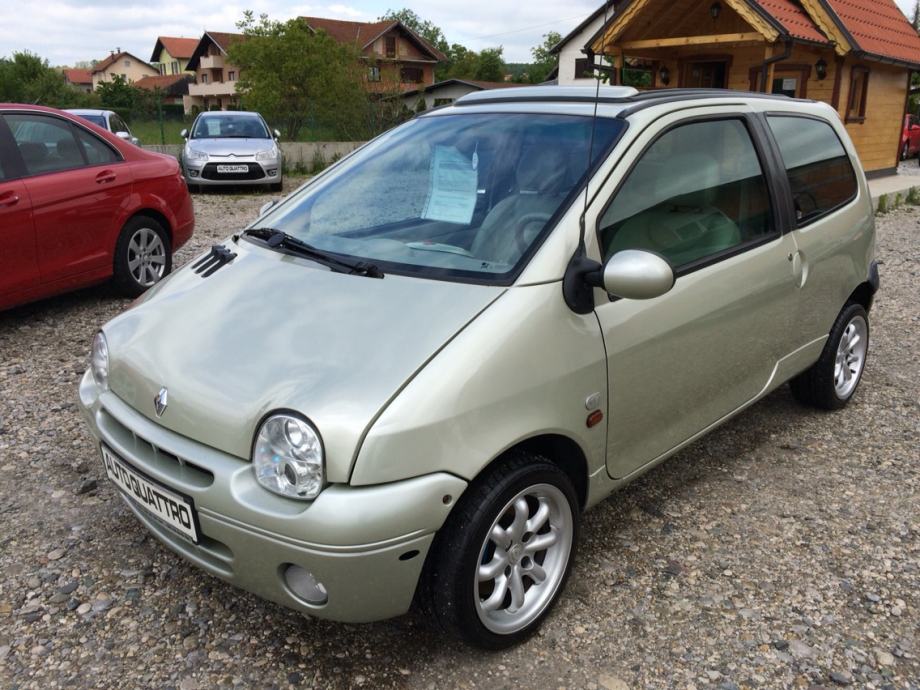
Renault sells on volume, and taking over Romanian Dacia in 1999 was business-wise a genius move. Dacia is today not only Europe’s cheapest, but also its best selling car brand. Renault’s own cars are also based on high volumes, and with the EV line-up of the retro-inspired and cool electric Twingo, R4 and R5, they’ve understood how to build EV’s that make sense and that people actually want to buy. Last month, they passed the cap of one million EV’s sold.
Strong volumes and a country with a sensible energy policy and thereby lower energy prices have also enabled Renault to improve on profitability, so that its margins are today higher than those of the VW group. To me, that’s the most worrying aspect of all. If a group with small hatches and Europe’s cheapest brand at its core manages to make more money than a group including Audi and Porsche, then something is indeed very wrong.
It will take years for Germany to change course, and it will cost many more jobs than those at VW until we get there. With regards to one of the world’s largest automakers, the question is how long it will take them to turn the ship around, and how realistic it is that they do. If you believe their board, not very, which probably means one of the first actions should be to replace them with a more optimistic – and realistic – bunch.
If VW manages to stay alive, it will be because they re-focus on Europe. That’s the region Renault sells 70% of its cars in. China is over and to a large extent, so is the US. Not just for VW, but for many brands across many sectors. In that sense, globalization is over for now.





 The Thrill of Driving