The sand pile is crumbling

If you’ve studied economics like me, the name Hyman Minsky may be familiar. He was an American economist who developed the financial stability theory, basically saying that stability breeds instability. Think of a sand pile: at some point, adding one more grain, although infinitely small in itself, will make the pile crumble. That’s more or less what we’re witnessing right now for the sand pile called “Ev’s for all”, crumbling far quicker than even I had imagined. I wasn’t planning to return to the topic anytime soon but sometimes events force your hand, and there’s just too much that’s happened in the last weeks and months not to take note of, as it is kind of important for the whole car world.

The starting point as I remember it was sometime back in February when two things happened. Mercedes boss Ola Källenius, roughly at the same time as presenting the stupidest EV of them all this side of the Hummber EV, the electric G-class, came out and said that electrification of the whole Mercedes fleet would take longer than expected. That’s of course another way of saying that demand is lacking. Mercedes have pushed the date for the last combustion engine forward from 2030 to 2035, where it most certainly won’t stay.

Time will tell, but this could go down as the symbol of when the tide turned…

Roughly at the same time, the FT ran an article on Lucid Motors, where Lucid boss Peter Rawlinson said that his company cannot rely on “bottomless wealth” from its 60% Saudi owners. In other words, the sheiks in the country of many sand piles are thinking of turning off the tap, if they haven’t done so already. Lucid has close to USD 5bn in the bank but is currently burning USD 1bn per quarter and lost close to USD 3bn in 2023. Given they’re not close to making a profit anytime soon, they will thus need to fundraise again before the end of the year to survive. In the current market, I wish them luck.

Luck is also what Rivian still needs, and this one hurts a bit more since I find it a really innovative company that have brought something new to the market, and have plans for continuing to do so in the future as well. A friend of mine drives the Rivian SUV and is thrilled about the car, its features and gadgets. However given a lack of Rivian car buyers, the company urgently needs to save money and announced in March that production has been paused in their new factory in Georgia and that instead, they will fall back on their old production plant which is cheaper to run. And whilst we’re on SUV’s, if anyone is curious about Fisker, they’re so close to the brink that they can go belly up at any point in time, and contrary to Rivian, the SUV called Ocean they’ve launched is crap in most testers’ view.

A small opening side window in the back is the only attraction of the Ocean. Literally.

Moving on to the EV wannabes, Porsche is making all kinds of strange sounds around the all-electric new Macan. The idea was that the combustion one would be taken out of production in 2025-2026, and the all new E-Macan, launched as we speak, would then fully replace it. Now, the talk is of not replacing the ICE one until 2030. The issue for Porsche is that the new Macan is built as an EV from the first screw, meaning it’s not made for a combustion engine. Therefore, it’s most probably the old Macan that will be updated such as to live a bit longer. That’s certainly very far from what Porsche, blinded by the general EV trend, originally intended. It’s really terrible when client demand isn’t where you want it to be.

To round it all off, even the king of the hill Tesla has come down the hill, at least a bit. Firstly in stock price, where it’s down about 1/3 this year, making it by far the worst performer of the so called Magnificent Seven. That said, it’s still worth more than twice what Toyota is. Then there’s production numbers, where Tesla not only ships less cars than a year ago, but also produced around 70′ less cars in the first quarter than analysts were counting on. Tesla has also lost around 1/3 of its market share in the all-important Chinese market, falling from 10.5% to around 7% as per the Chinese Passenger Car Association, all due to the intense Chinese competition discussed in earlier posts.
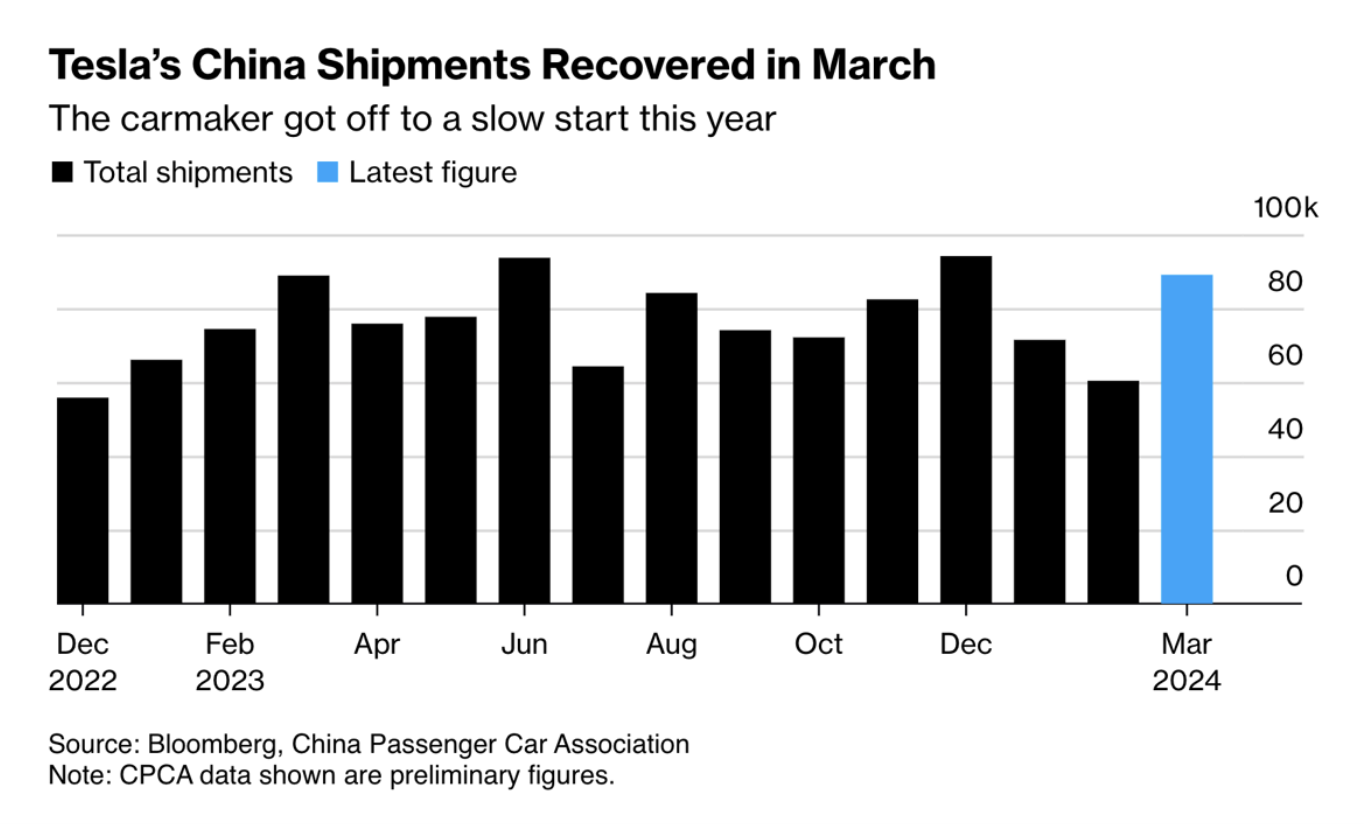
As the headline says, things improved in March, let’s see if it’s the start of a new trend.

You’ll note that all of this has to do with falling client demand, and nothing has to do with the other fundamental EV issues, such as not even being close to having enough metals and related stuff to produce the EV’s our politicians plan for, and that the battery production with all its required input materials is both highly polluting and highly unethical. That comes on top of the waning demand, and as Ineos’ founder Jim Rathcliffe says, you can’t force EV’s down people’s throat – although I’m sure at least some politicians will try.

I yelled at European luxury automakers pathetic efforts to build competitive EV’s a few weeks ago, and also said the cheap part of the market risks being taken over by Chinese EV’s. That’s exactly what’s happening, and in addition, growth has stalled in the developed world for all the reasons we’ve already gone into. A challenging capital raising environment means that many of the new EV brands risk going under, and (especially European) politicians who are still incapable of delivering a charging network commensurate to the growth they want to see have done the rest. I’d say they should take most of the blame.

At the same time, I was surprised earlier this week to see the Biden Administration’s projection for what the US car market will look like in 2050. As can be seen above, EV’s aren’t expected to take over anytime soon, although they are projected to grow quite a lot. Hybrids continue to grow too, which we’ve been discussing here, and what for example Toyota has said all along. Most people drive short distances, and thus splitting a big battery pack in one car into five smaller packs in five cars makes most sense when materials are limited. Anyhow, by 2050, 2/3 of all cars are still expected to be what should be called combustion engine cars, since by then, I’m willing to bet we’ll have other stuff than fossil fuels to power combustion engines with, which also means they may be around for far longer than anticipated.

If you really want an EV, then as I’ve said before, there really is no better alternative than a Tesla, pretty much wherever you live. But if you don’t, be aware you’re part of a growing crowd and that your petrol car will be fine for years to come. As I was finishing this post, I saw the news that the European car safety organization Euro NCAP has come out with new rules, requiring a car’s essential functions to be handled by physical buttons, not over a screen, for a car to get the maximum five safety stars starting in 2026. Trying to sell a car in Europe that has less than five safety stars is all but impossible, so this will obviously cause further pain for many, especially most EV manufacturers. If we keep going at this pace, the future starts looking really bright!
The latest from the car world!

It’s been a while since we did a roundup of news from the car world, which isn’t because there hasn’t been any, on the contrary, rather because there have been other things to write about. There’s of course a lot happening that you could theoretically write about all the time, but a few more specific things happened this week, making me think it’s high time to provide you with a very arbitrary selection of the most important recent news from all our favourite pasttime. Let’s dig in!

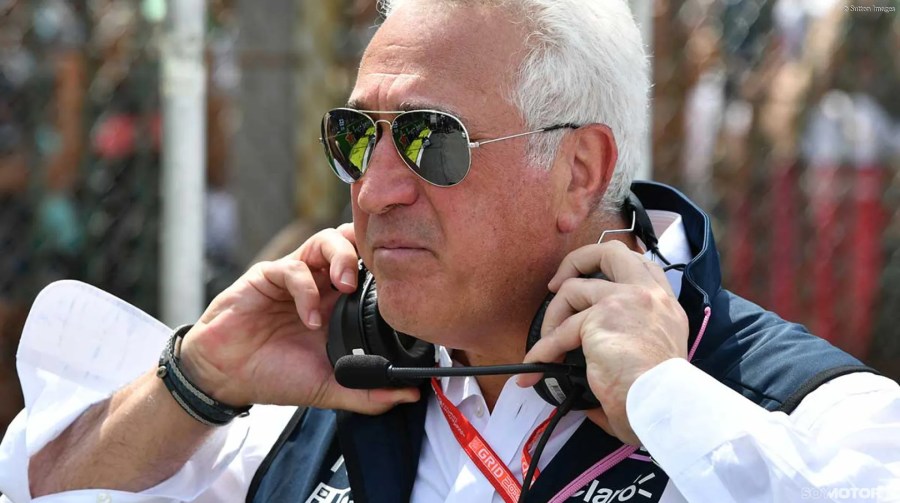
To start of on a positive note, Aston Martin‘s owner Lawrence Stroll, pictured above in his usual, low-key style, apparently let the Aston team know in no uncertain words that the new DB12, expected next year, was a tad too expensive to feature a 10-year old infotainment system from Mercedes. This was of course the case both in the DB11 and in the DBX, as I wrote about back in Oct -21. I don’t think Lawrence reads this blog but if he would, then there’s a small chance both the DB11 and DBX are, by any objective measure.

No, it’s not a DB11, it’s the new DB12. Why change a winning look?

Given Aston sources not only the outdated infotainment unit but also the even more important engine from Mercedes/AMG, Lawrence’s hope was probably to get his hands on the MBUX system, but that didn’t happen. Instead therefore, Aston have developed their own system, which according to the first test drives is a pretty laggy thing, quite a bit off the MBUX or BMW’s latest unit. So getting better, but still not there. The DB12 does look very promising though, more on that next year. And for those not interested in infotainment but rather in driving, expect quickly deteriorating second-hand prices on the DB11!

You may have seen that the DB12 will no longer feature a V12, in spite of its name, but only an AMG V8. That’s however plenty compared to what Mercedes have put in their new E63. This is a theme I’m sensitive about, having owned, and on a day where the starts really didn’t align, sold, an E63 2014 with the fantastic, bi-turbo V8. The E63’s before and after have until now all had V8’s, but the new one doesn’t. Neither does it have a V6. It has precisely four cylinders, combined to an electric engine. One of the most legendary four-door power cars out there has become a four-cylinder hybrid…

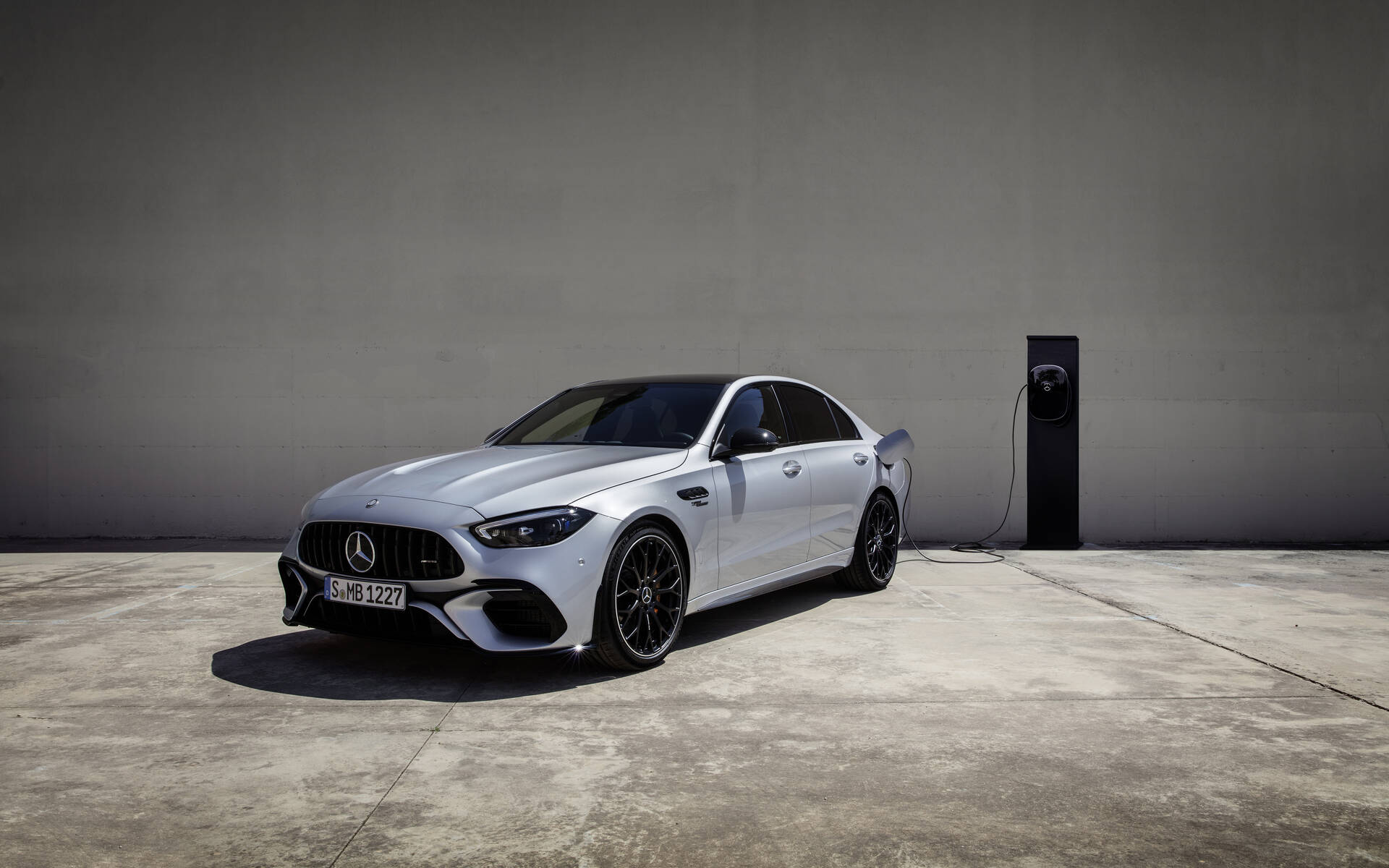
Find one mistake with this picture…

That could theoretically have been fine even if it’s a lot to take in. Some hybrids work great though, such as the V60 Polestar that I drove the other week. It didn’t convince me but it wasn’t the fault of the hybrid solution. Trouble is, again according to early reports, the rest of the new E63 isn’t that great either, especially the chassis, which obviously makes the whole thing totally unacceptable. No one, I repeat no one, ever asked for a hybrid E63, so why on earth did they build it? If Mercedes finds that eight cylinders doesn’t go down well with the electrification strategy they’ve chosen, then just don’t build any more E63’s. I wouldn’t be surprised if demand for previous V8 ones picks up though!

Otherwise the world’s electrification journey rolls on, with Tesla setting new records in sales numbers, shipping close to half a million cars in the first quarter. The stock is up more than 100% so far this year, so great for shareholders – so far. However, Tesla must also have set a new record in terms of various types of discounts both in the US and elsewhere so as always with Elon’s companies, how much they’re actually earning is rather difficult to figure out. That goes for Rivian as well by the way. The company that didn’t even build 50.000 cars last year still spent roughly as much money as Tesla in the first quarter, namely around USD 6.5bn. They claim bottle necks in production are now behind them and that’d better be the case if Rivian wants to survive in the far less favourable financing environment we’re now in. The target for this year is 50.000 cars, and we’ll see if they get there.

Rivian isn’t out of the woods yet…

Interestingly, Toyota continues to refuse getting in line with everyone else, instead digging in to their hybrid technology. That earns them lots of bashing from the green lobby who are as bad as doing the maths here as when it comes to counting emissions from battery production. Toyota on the other hand remain as calm as Mount Fuji, simply stating that in total, hybrids achieve greater emission reductions than trying to supply the whole world with EV’s does. I haven’t verified their numbers but my intuition, combined with the fact that they are after all not only the world’s second largest company, but also Japanese, tells me they’re right.

Toyota also came out with another piece of news recently, namely that they expect to put solid state batteries into production in five years. Don’t focus too closely on that number since they’ve promised that before, but clearly, the solid state technology is making progress. In practical numbers in the case of Toyota, this means an indicative range of 1200 km for much less battery weight and only 10 minutes of charging. As discussed back in January 2021, solid state batteries would be a true revolution, but we’ll see when we get there. When I wrote that piece I said three-four years, which obviously was too optimistic. Sometime around 2030 is perhaps a realistic target.

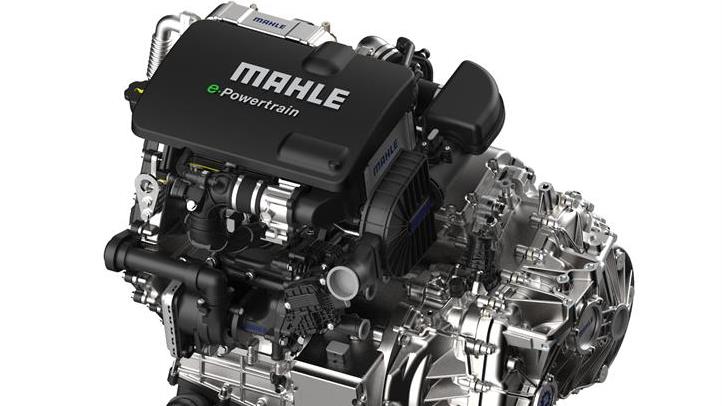
The Mahle engine – is this what will revolutionize the EV world?

Solid state batteries are better than the current lithium ion ones, but they’re not without issues, meaning metals. Which is why a piece of news from Germany this week caught my eye. The German engine building company Mahle, that I had never heard about, is developing a new type of electrical engine that not only promises to be even more efficient than current ones, but in addition, does without any metals. It’s called the Magnet-free Contactless Transmitter (MCT) and as the name suggests, works without magnets. They’re replaced by an electricity-induced tension field, and the energy then flows inductively, reducing frictions and thereby energy loss as well as wear and tear. The technology has apparently already been proven to work in various prototypes.

Mahle is currently in talks with several manufacturers, targeting to make the engine ready for mass production in three-four years. This is a fantastic example not only of how to develop batteries, but also how it has always been, and always will be, innovation that leads the world forward. We’ll see if it’s Mahle’s technology, alternative fuels or something else that becomes the new standard at the end of the day. I remain convinced that it will not be EV’s as we currently know them. Until we’re certain, it’s difficult to find a more compelling proposition than an Aston DB11 with a V12, even with an aged infotainment!

Robust management and struggling EV’s

This week will be a small overview of various things happening in the car industry as well as around it, highlighting some current developments and issues and some others that may become important in the coming years. This will of course touch on EV’s that seem to become a crucial part of that future whichever way you turn, but we’ll actually start in the (still) conventional industry, up at Aston Martin’s HQ in Gaydon in the UK. That is where Tobias Moers, previous CEO of Mercedes-AMG, moved in two years ago, with a mission to improve profitability at Aston. He did, quicker than most expected, but in spite of that, last week he was forced to clean his desk.

I’ve touched upon Moers both in my post on AMG and in that on the Aston DBX last year. He was the boss of AMG between 2013 and 2020, leading Mercedes’s sub-brand in a short-term successful, but in my humble opinion a long-term somewhat risky brand dilution strategy, and was hired by Aston’s strong man Lawrence Stroll in 2020 (father of F1 driver Lance Stroll) to accelerate Aston’s turnaround. Moers said himself that he would never have taken the job hadn’t it been for Aston’s line-up, especially the DBX, and he started the transformational Project Horizon straight away, contributing to rapidly increasing profit numbers for Aston, to a large extent built on the DBX. There’s no doubt he greatly improved and streamlined Aston’s production processes, but in parallel he also became known for his “robust management style”, apparently contributing to many senior departures and a general bad climate in the Gaydon factory. This to me sounds very much like a cultural clash between German efficiency and British, well, uniqueness, but Moers is anyway now replaced by ex-Ferrari chief executive Amedeo Felisa as Aston prepares to launch a new range of sports cars, most of them electric.

Well, he does look rather “robust”…

That brings us to the latest from the EV world, and I believe what we’re witnessing right now and will continue to witness over the coming months and years, is the great pains associated with going from the production of a few hundred cars to true mass production. The two new EV brands mostly in the news and also those with the most exagerrated valuations (although those are far less exagerrated now than a few weeks ago) are no doubt Lucid Motors, the American luxury EV builder, and Rivian, the equally American EV pick-up builder. Starting with the latter, it recently had to increase the price of its R1T by up to 20% and halve its production target of 25′ cars this year. So far, around 900 Rivians have been built. Lucid on the other hand, saying it wants to get its first car “exactly right” has pushed back the production start several months.

There’s a few things here worth considering. No doubt part of the problems can be traced back to the global supply chain issues the world is currently experiencing, more on that later. That’s however far form the whole story, the most important component of which to my mind boils down to whether these new car builders can emulate the Tesla success story with the same kind of “mojo” that made Tesla what it is. I’m not saying they can’t, but it’s certainly not a given. Firstly, there are very few Elon Musks in the world. Secondly, it’s very easy to forget the production hell Tesla went through over close to ten years before starting to make money. At one point that production hell was so bad that dealers had to fit the wheels on the cars, just to give an example, and quality issues plagued the company on several occasions (and to be honest, still do).

Personally I think it would be great if Rivian made it!

That’s all changed now, but the change consists in a development which has made Tesla much more of a standardized car company, whether they like it or not. Which then of course brings us back to all the traditional carmakers who now all have a number of EV’s in their line-up. They were certainly neither first, nor very innovative, but they know how to build cars and have the production process not only under control, but perfected over decades. I’m sure we’ll have a new Tesla at some point. It may be a brand we’ve yet to hear of, or it may be Lucid and Rivian, but that’s far from certain. They probably have about 12 months to make or break it, and I wouldn’t put my oney on them making it.

Things would certainly become much easier for not only Lucid, Rivian and Tesla, but also for all other car makers in the world if the current supply chain disruptions were solved, or at least improving. Currently however, rather the contrary is the case. Many of you have probably already seen the below picture in various forms, showing all ships currently waiting to unload in China, mainly in locked-down Shanghai. The total number is over 500, and they’re not waiting because the port is full of ships leaving…

Zero Covid has a price…

Shanghai is in a lockdown that doesn’t seem to end anytime soon, rather the contrary as imposing similar lockdown measures in Peking is now being discussed. We’re not going into Covid policies here, let’s just say that the combination of a zero Covid policy leading to most people not having antibodies in combination with clearly less efficient domestic vaccines (no Western vaccines are allowed in China) make even the current Omicron variant potentially quite dangerous. And “dangerous” in a country of 1.5bn in habitants could mean a few million deaths. The current situation will therefore not change soon, but at some point China will have to decide between an economic depression an relaxing measures. Not only car builders hope for the latter.

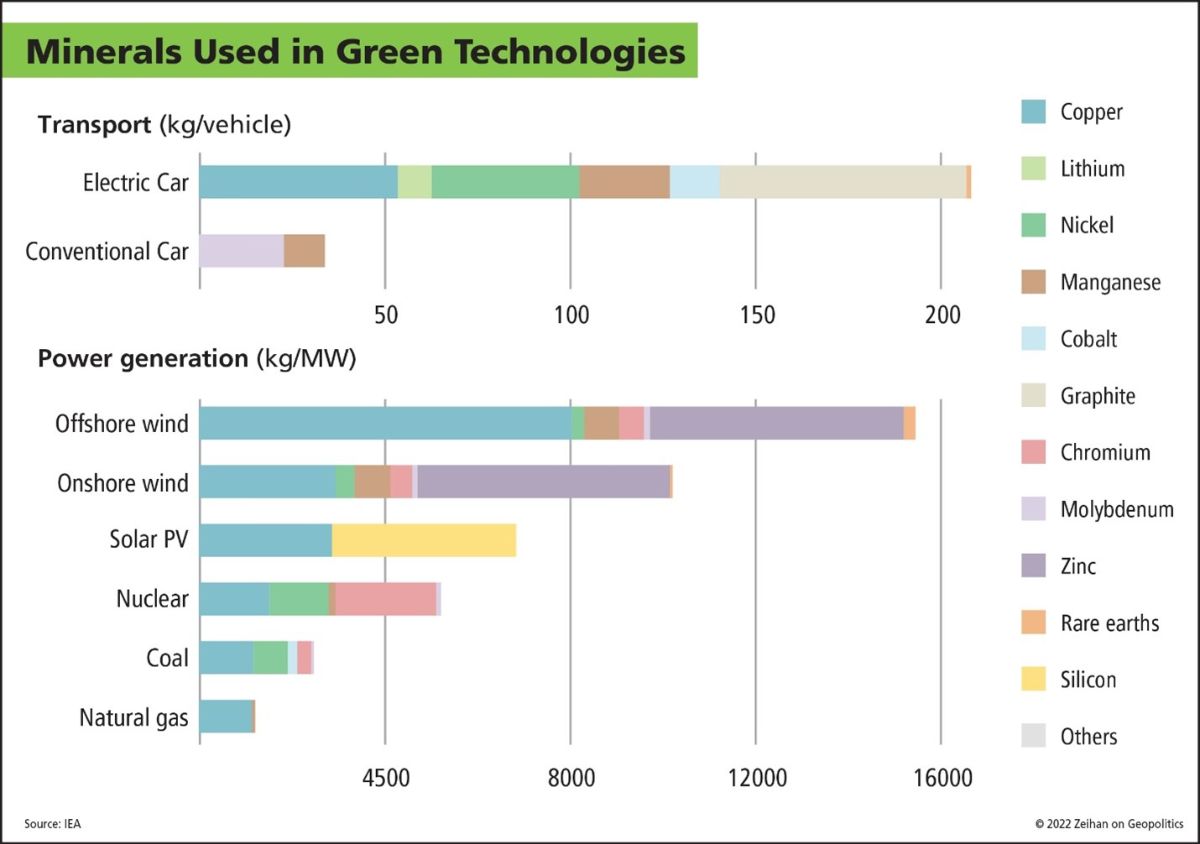
To conclude, let me share an interesting picture from Zeihan on Geopolitics (highly recommended for those with an interest in geopolitics!), showing the material consumption of EV’s vs conventional cars, as well as materials used in various energy sources. It’s no secret that EV’s require a greater quantity of most materials than conventional cars, quite a few of which are problematic, as highlighted in my post on why EV’s won’t save the world a bit more than a year ago. It’s also true that things are improving, which is great. I notably learnt from a trustworthy source last week that Tesla has now managed to eliminate cobalt in roughly half their batteries. Such and other improvements also mean EV’s make up the CO2 deficit from their production in fewer km’s which is also great – although that calculation never includes the fact that you’re building a whole new car often only to replace a still fully functional existing one, as I believe it should, given we still have no answer to what should happen to all the cars we plan on replacing with EV’s.

These are not produced in your typical holiday destination…

There will however always be more problematic materials needed in EV’s and renewable energy sources, and if we think about where these are produced, that puts Russia’s current invasion of Ukraine into perspective. We’re currently all dreaming of eliminating Russia as an energy supplier (and please, also as an aggressive invader of other countries!), and few people think of Saudi Arabia and Iran as other great countries to do business with, but as we electrify the world and need to get to the minerals mentioned above, we’ll have to deal with a far larger number of other not-so-great countries than we did in the oil days. These notably include Bolivia, Chile, Brazil, Mozambique, Guinea, Gabon, China, Congo and yes, Russia. That’s obviously not ideal in any way, but it’s the price to pay for a future based on windmills and solar panels!