
One of the funny things with writing a blog on a weekly basis is that you’re sometimes not sure if you’ve covered a car or not. So when I went by a Ferrari dealer close to my home last week and saw a beautiful FF, I was quite certain I had already written about it, given I have fond memories of it from previously, and it is, after all, one of the most capable cars ever built – but was pleasantly surprised to discover that wasn’t the case!
All the more reason then for doing so this week, for a bunch of good rasons: firstly, it’s my all-time favourite among Ferrari GT’s. Secondly, it has a 12-cylinder, naturally aspirated engine of a kind we’ll never see again. And thirdly, whilst still pretty much a bargain, FF’s seemed to have reached a bottom and may slowly be on their way upwards in price, making it quite a rare opportunity from Maranello, given it’s one of the most complete cars Ferrari ever built!

Big GT cars with four seats and a big 12-cylinder engine up front (although typically behind the front axle) have a long tradition at Ferrari, although the four seats have usually more been of the 2+2 kind, such as in the 612 Scaglietti that the FF succeeded when it was launched in 2011. Although there’s no way to compete with that name, the FF itself is definitely a more interesting proposition, and not only in terms of backseats.
People tend to have opinions of the negative kind of the wonderful, Pininfarina-designed FF looks, especially from the 3/4 rear angle. Well, anyone not appreciating the sublime shooting brake shape urgently needs a (new) pair of glasses, in my completely objective opinion. But be that as it may, the advantages the shape brings both in rear and booth space are quite astonishing.
The two back seats are of adult size and set slightly higher than the front seats, meaning they feel less cramped. In addition, the luggage space behind them is impressive, and should only two of you travel, the FF is as spacious as a hatchback. But that’s where the similarities end…

Before we get to the main course, i.e. one of the most wonderful engine ever built, let’s look at another FF perk, namely its first four-wheel drive system. You see, not only is the FF Ferrari’s first-ever 4WD car, but it is so thanks to one of the most advanced systems in the market – for good and bad.
When the decision was taken that the FF should drive on all four wheels, Ferrari wasn’t happy with the compromises a traditional 4WD system would give, notably in additional weight moving the weight distribution upwards. Instead, they went ahead and developed their own system in the shape of a simplified, second two-speed gearbox (plus reverse) that sits behind the engine, allowing the latter to be positioned as low in the car as in any other Ferrari.
The system is called 4RM and can in a simplified way be described as the two gears having two clutches that constantly slip, thus meaning the system doesn’t need a differential. It’s only active in gears 1-4, and never with more than around 20% of the car’s 650 Nm of torque. The FF remains fundamentally rear-wheel drive, but thanks to the so called PTU (Power Transfer Unit) which transfers power to the front wheels independently when required, the front wheels can complement the rear ones.

There’s no doubt it’s a highly advanced system from a technological point of view, and one of its advantages is the weight saving, given it’s around 50% lighter than other 4WD systems. Unfortunately it’s not all rosy though, as we’ll see later.
So what about that engine? Well, it really is everything you could ever ask for. As a naturally aspirated, 12-cylinder, 6.3 litre piece, it was the biggest engine in the world when the FF was launched, and putting out around 660 hp, it ensures that even at close around 1900 kg, the FF is seriously fast at 3.7 seconds to 100 km/h and a top speed of around 330 km/h. I don’t need to tell you how well the engine sounds, and it’s paired to a seven-speed, DSG box from Gertrag that does an excellent job.
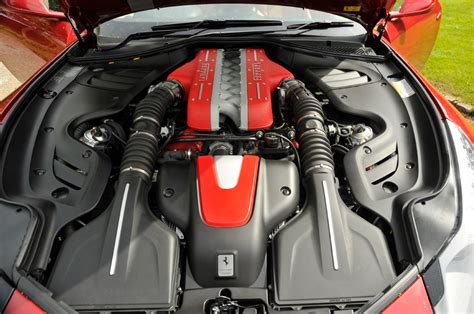
So with all this said, who is the typical FF-buyer? Some Youtuber suggested it’s someone who would otherwise consider an Audi RS6, which I personally think is utter b’shit. I would rather think of three types: the supercar driver with need for more room, the parent with small children and an understanding other half, or the parent with grown-up children, thus only looking at transporting himself and his partner. If it weren’t for the dog cage, I would fit perfectly into that third category…
If you feel like this describes you, there are a few things you should consider before parking a 6.3 litres V12 in your garage. The first is that the FF is a big car. At almost five metres long and two metres wide, it’s only marginally smaller than a Range Rover, meaning it’s not a car for narrow streets or congested cities, but rather for long stretches of motorway travelling. That also means you will manage a few more km before re-fueling, which is something you’ll be doing a lot of, in spite of a 90-litre tank. It all depends on your driving, but 1.7-2 litres per 100 km is what you’re likely to see.
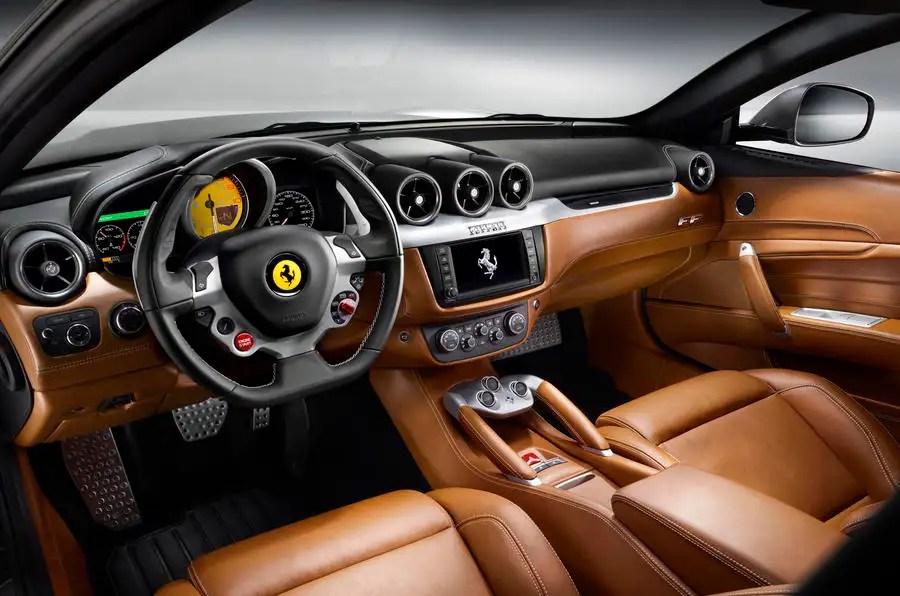
And then there’s the PTU issue. As ingenious as the construction may be, it quickly became a major issue for Ferrari, since the PTU would leak in a large number of cases. At first Ferrari would replace it under warranty, then at cost, meaning more than EUR 25.000, but after that, specialist companies have come up who can renovate the box without replacing it, cutting the cost to EUR 8-10.000. So before buying an FF, make sure the PTU has been replaced or renovated, and otherwise negotiate the price heavily!
Next to that however, the FF rather has less issues than other supercars. It’s quite simply a great and very capable proposition, with the added advantage that it looks to have bottomed out, price-wise. Even if it was built during five years between 2011-2016, only some 2300 cars were produced in total, which is certainly one factor in keeping prices steady. The fact that most PTU’s have been fixed is another, as is of course one of the last true engines out there!
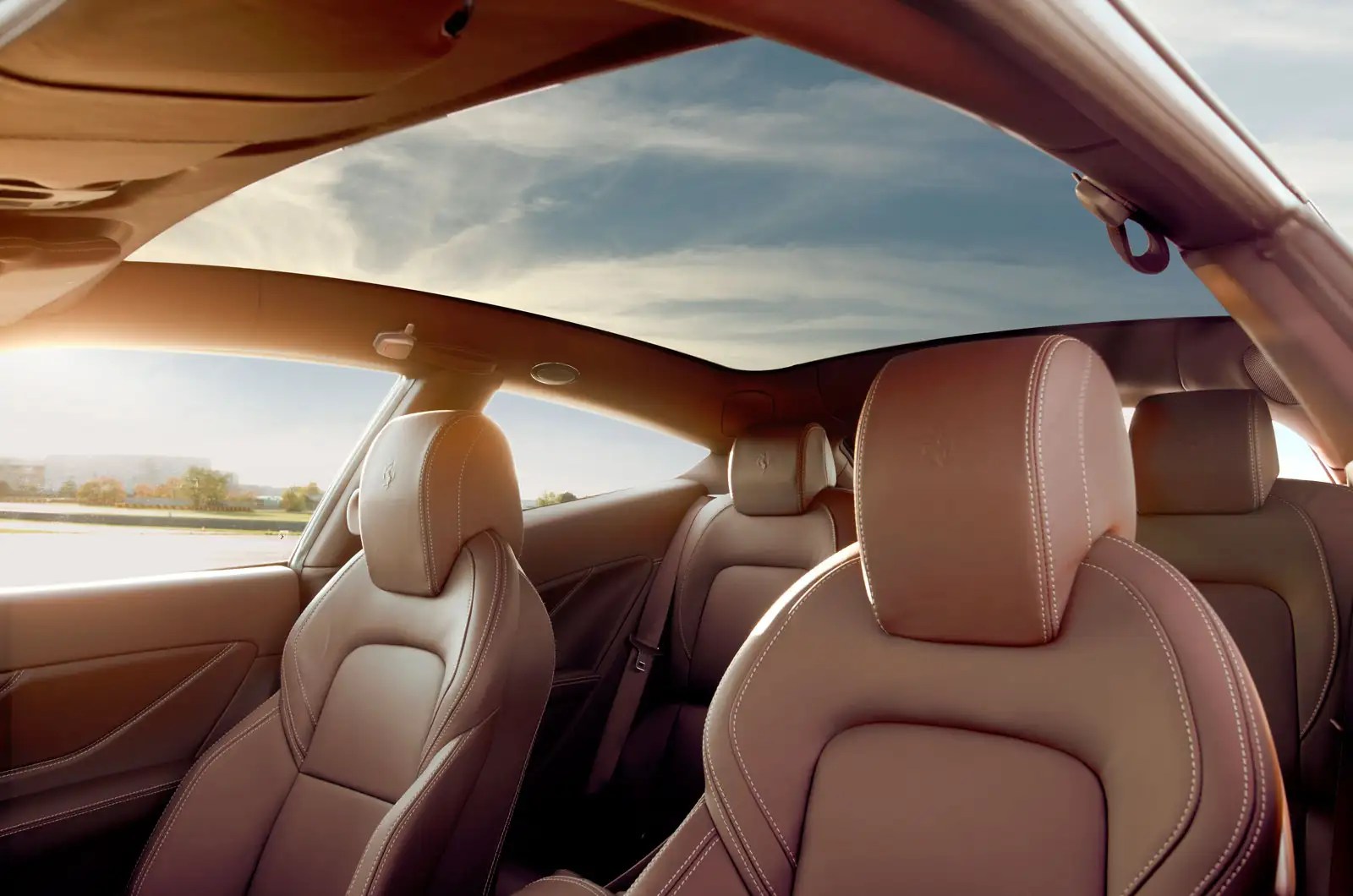
Most FF’s sold as new for EUR 350.000-400.000, depending on equipment, and most can today be had for EUR 100.000 (early cars with around 90.000-100.000 km on the clock) to 150.000, meaning less than half of their value as new. You will typically see higher mileages than for other Feraris, as FF’s tend to be used, which is a good thing! The condition, the PTU and the equipment are more important than the year of production, but if you have the choice, go for a newer car such as to avoid some small issues early cars may have. On that equipment list, the glass roof is a great option if you will regularly carry people in the back, but it’s one that will push up the price.
I could go on, but I think you got it by now. The FF is a car which as a package we will never see again. It’s far sportier than a Bentley Continental GT, and it it’s not only prettier, but also far roomier than the Aston Martin Rapide, which isn’t four-wheel drive. What’s more, it’s successor, the GTC4, is basically a face-lifted version of the same car, for which you’ll still pay around EUR 50-70.000 more, which there really isn’t any reason to do. Thus, if you have the passion and the money (including a budget for things that shouldn’t, but could go wrong), at least this blogger can’t think of a better option. FF is officially short for Ferrari Four, referring to both wheels and seats. I’ll take it to mean Forza Ferrari!
 The Thrill of Driving
Pingback: Closing out 2023… – The Thrill of Driving