Forever young!

Today we’ll talk about the truly thrilling topic of how to make your next car purchase not the worst deal you’ve ever made, but rather the best one. And I’m not talking about an attractive financing rate or a smaller down payment. Rather, this is about how to buy cars that are better than what you see in the showroom today for 20-30% of the value.

This is not a new theme on the blog but rather one that, as long time readers know, is very close to my heart. I haven’t bought a new car in over 20 years and probably never will again. The two new cars I’ve ever bought were in both cases only because we moved abroad and could thus get them tax-free. Interestingly both were also Saabs, one 9-3 with a roof and one without. I’ve never regretted the first, but the convertible was a great car.
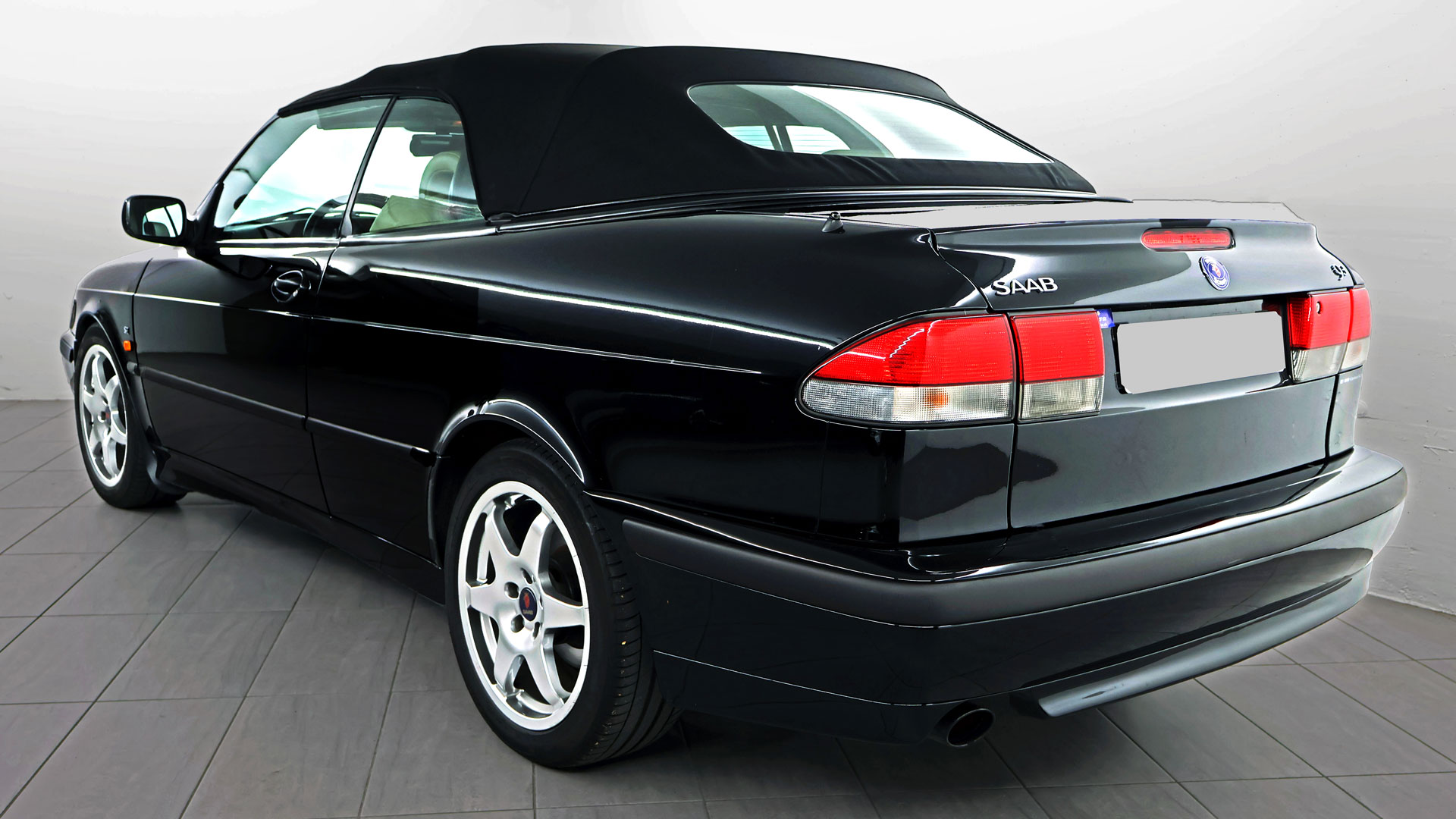
Those were the days – a true Trollhättan-Saab!

The reason for bringing this up again is that not a day goes by without me seeing, on the street or online, a great set of wheels, the price of which is more ridiculous than it’s ever seemed before. I’m therefore really keen to make sure you don’t miss out on what is a truly great opportunity.

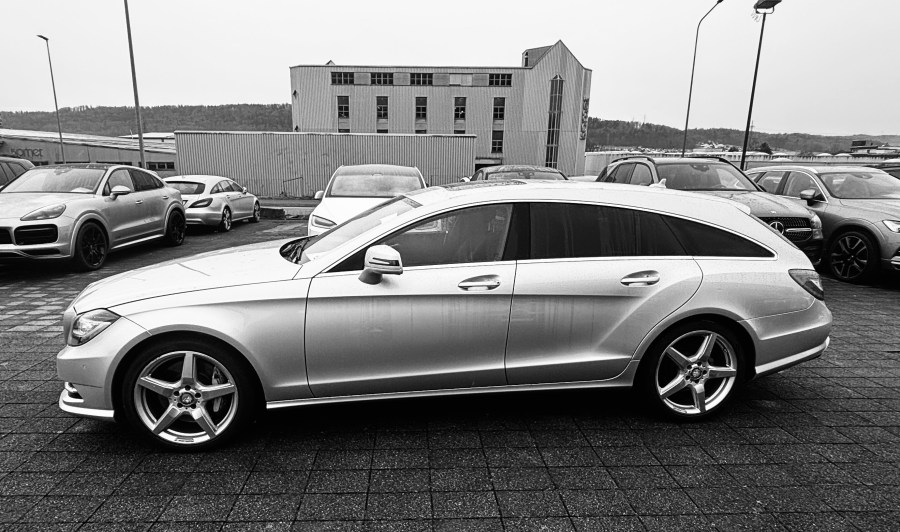
In the last 10 years I’ve owned five daily drivers: an AMG E63 -14 that I loved, an XC90 -19 that I hated, a Range Rover -13 that was wonderful but a bit too fat, and a BMW 540i Touring -19 that was clinical. And then six months ago, I bought my current daily, a 2014 MB CLS 500 Shooting Brake.

As I’ve written several times and you’ll see from the above, I believe peak car when it comes to daily transport was around 10 years ago. At that point cars were safe, of better quality than in previous decades (and, as was to become clear, also than in future ones!), and developed enough to have all the features that are useful, but none of the far less useful and far more intrusive ones we would get over the coming years.
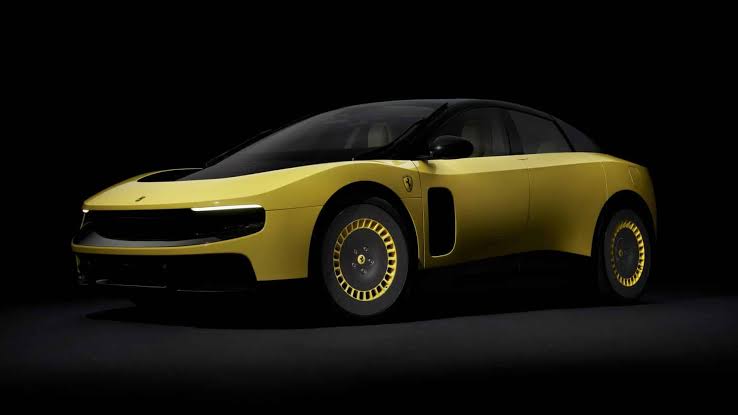
Apparently this is what progress looks like.

There is also a logic in this. 10 years ago is about when car development started becoming more about politics, directives and elecrrification than about satisfying buyer demand, and that’s where the development money went. ICE’s where set to disappear soon anyway.

That doesn’t change the fact that if you tell a normal person, i.e. not a car fanatic, that you’ve sold your relatively modern car and instead bought an older one, they will think you’re strange. Especially so in Switzerland and other countries where service packs are included with the purchase. Those typically last 100.000 kms, which surely means that after that, the car breaks down and gets awfully expensive to repair. Better to be on the safe side and buy a new one!

We in the car community should be thankful for all these less-informed people, or indeed, for all those who much like a modern car journalist judge the quality of a car by the size and speed of its infotainment screen. The more people buy these computers on wheels, the less they will buy the cars from a decade ago, leaving those of us who do with tremendous opportunities!
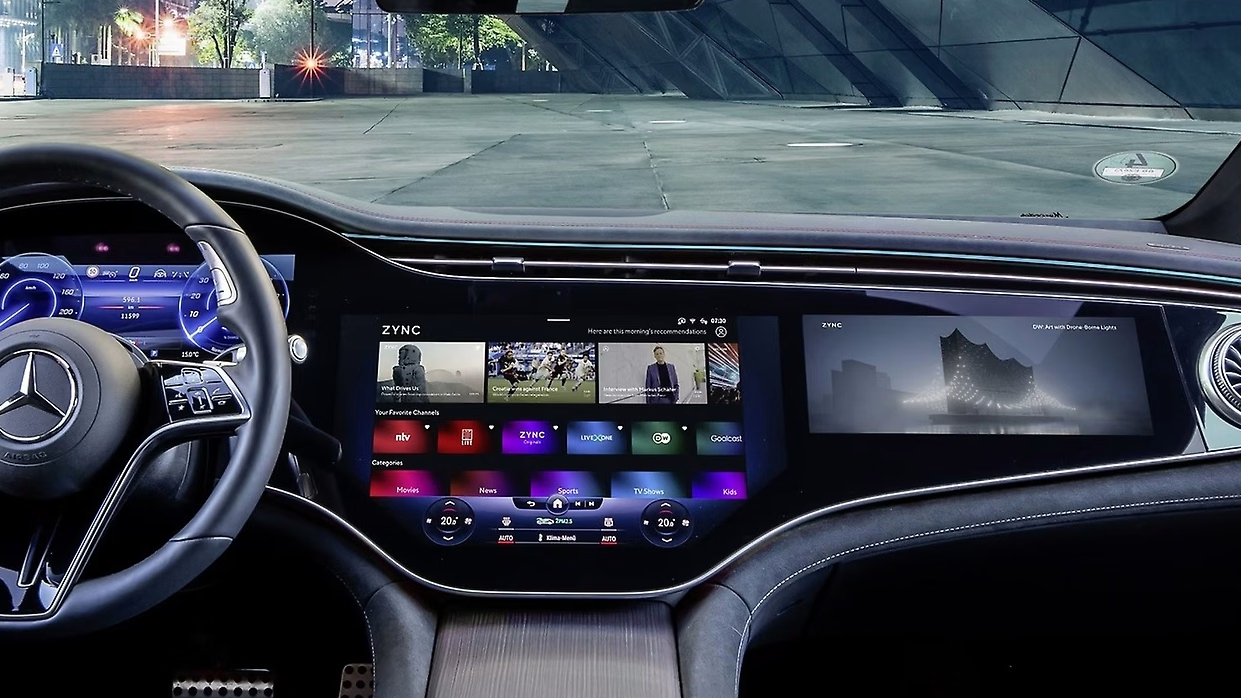
The modern Nirvana.

The last six months in my CLS are a brilliant example. The car is quieter and more comfortable than my 540i was. It has a far better Harman Kardon sound system, because as a car audiophile explained to me, sound systems in the last years have been more about producing light loudspeakers than well-sounding ones.

The list goes on. The interior materials are incomparable, and the exterior paint is far thicker. And that wonderful, bi-turbo V8 putting out 408 hp consumes less than a litre more per 100 km than the less powerful and character-lacking straight six I had in the 540i. And of course, at the price I bought it for, depreciation isn’t even anything you need to consider – should there be any.

For memory, I bought the CLS with full history from one owner with 107.000 kms on the clock, one year full warranty and a complete service book for about 20% if its price as new. Can a 10-year old car break down? Of course, but if you pay ridiculous money to buy it, you’ll have some reserves if it does. So far, it hasn’t.

The risk of stuff breaking down however doesn’t only have to do with age, but also with said build quality, and also complication. A new car is far more complicated than a 10-year old one, with more parts that can break. We saw and still see this with the electronics in many EV’s. A small four-cylinder engine associated to a complicated hybrid system of the type Mercedes had the audacity to try to sell us under the AMG badge will be more likely to break than a V8 turning at 2′ RPM.
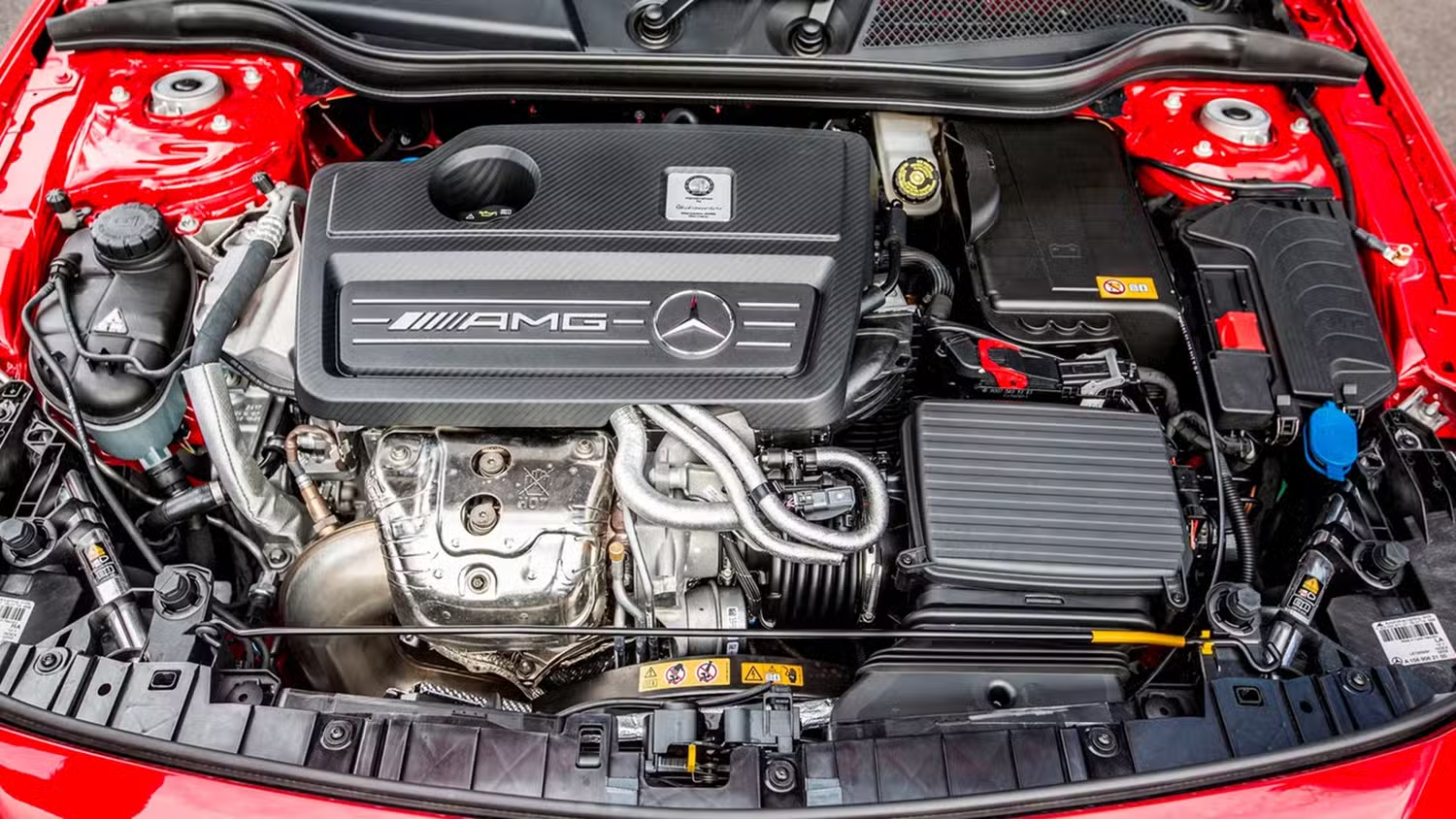
The most power-dense four cylinder in the world – what could possibly go wrong??

Still, could it be that I’ve just been lucky with my CLS? I guess, but in that case I was awfully lucky with my E63 and Range as well. They were both completely problem-free as opposed to the XC90, that had brakes that didn’t make it down an alpine pass, and a paint that was so thin it would scratch if you looked to hard at it.

Let’s test this on the current market in a way you can do yourself (and I’m quite sure, in many cases already do). Set your favourite car search engine to a period like 2013-2015, km’s to 100.000-120.000 and the price to something in the range of 20-30% of what you would have paid as new. If you haven’t done this already, a whole new world is about to open up.

Taking the above parameters and setting a price range of CHF 25.000 – 40.000 just for illustration, here’s a small selection:

  • For a stylish coupe, why not get an Audi TTS or a Jaguar F-Type, V6 or the crazy V8? If you need four seats, there’s of course also the Audi RS5 with that wonderful, naturally-aspirated 4.2 litre V8…
  • If a convertible is your thing, BMW has you covered. A Z4 for two seats, a 6-series for four. And plenty in between.
  • For a big sedan, I could certainly live with an Audi S8, or for that matter, a Porsche Panamera 4S.
  • Finally, if you’re after an SUV, I would happily buy a V8 Range Rover again (they’re even cheaper now!) but if you need something smaller, a Macan or a Cayenne is certainly not a bad choice.
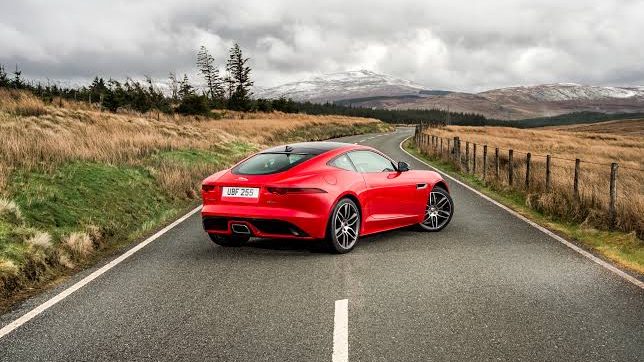
The loudest V8 in the business can be yours for 35′ – a steal!

These are all great cars, and they’re all cars which, if cared for and serviced properly, are just about run in at 100′ kms. And trust me, the price bracket works at all levels. A wonderful (and family friendly!) Ferrari FF will be yours for about 1/3 of its price as new, meaning around 120′-130′ with far less than 100′ kms.

As I showed in my post on the Jaguar XJ from this spring, many slightly older, wonderful sedans will cost you even less. And if a Jag isn’t luxurious enough for you, how about a Bentley Arnage R for around 40-50′? Sure, the 6.75 litre V12 has more thirst than an alcoholic, but 10%-15% of its price as new? Seriously?

A Jag and a Bentley would probably not be daily drivers, and it’s here that the same principles don’t always work. 911’s obey. their own rules, as do some Ferraris and other collectibles. Well, why not get an Aston V8 Vantage instead, it’s far prettier anyway and will cost you very reasonable money.

The daily drivers that hold their value better are found among the Skodas and Volvos normal people love. Who cares? Life is far too short to drive boring cars.
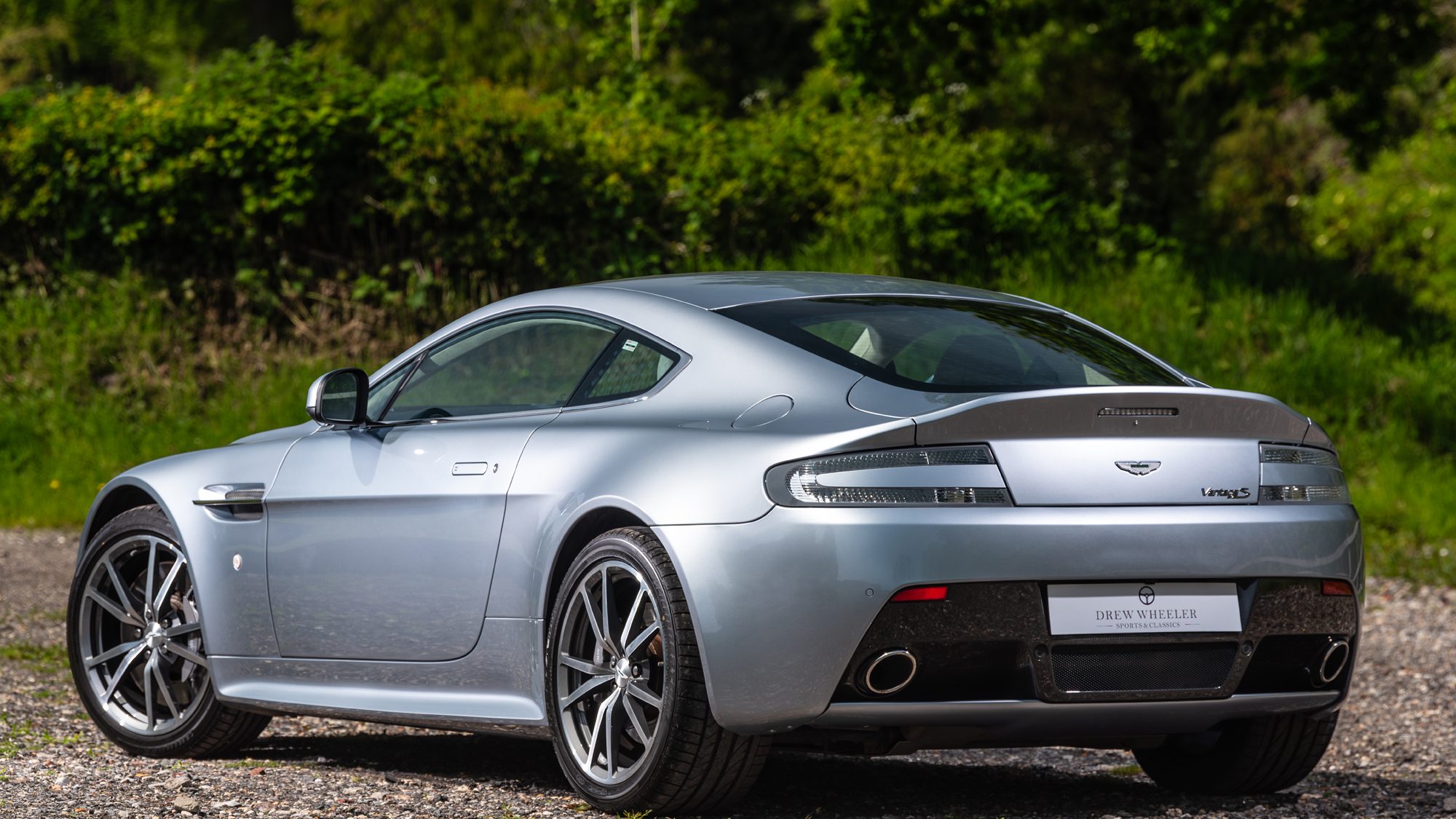
You’ll see 20 911s (or more) for every Vantage

Times are indeed dire for European car builders, many of which are on the ropes and at least some of which will not survive. The more forced savings they implement, the less good their future cars will become. But cash-strapped as they are, don’t expect prices to fall as a consequence. And certainly don’t expect to see any kind of non-hybrid engine with more than four cylinders being developed again.

Therefore do your research and buy a daily from the peak car period. I promise you, everytime you walk up to it, you’ll do so witha smile on your face. Keep some money aside for maintenance and wear and tear stuff that can always happen. And of course, if you’re lucky enough to have a larger budget, then there’s even more money to spend on the gem you take out on Sundays!

FF = Forza Ferrari!

One of the funny things with writing a blog on a weekly basis is that you’re sometimes not sure if you’ve covered a car or not. So when I went by a Ferrari dealer close to my home last week and saw a beautiful FF, I was quite certain I had already written about it, given I have fond memories of it from previously, and it is, after all, one of the most capable cars ever built – but was pleasantly surprised to discover that wasn’t the case!

All the more reason then for doing so this week, for a bunch of good rasons: firstly, it’s my all-time favourite among Ferrari GT’s. Secondly, it has a 12-cylinder, naturally aspirated engine of a kind we’ll never see again. And thirdly, whilst still pretty much a bargain, FF’s seemed to have reached a bottom and may slowly be on their way upwards in price, making it quite a rare opportunity from Maranello, given it’s one of the most complete cars Ferrari ever built!

Pininfarina’s design language is the same as notably for the 458

Big GT cars with four seats and a big 12-cylinder engine up front (although typically behind the front axle) have a long tradition at Ferrari, although the four seats have usually more been of the 2+2 kind, such as in the 612 Scaglietti that the FF succeeded when it was launched in 2011. Although there’s no way to compete with that name, the FF itself is definitely a more interesting proposition, and not only in terms of backseats.

People tend to have opinions of the negative kind of the wonderful, Pininfarina-designed FF looks, especially from the 3/4 rear angle. Well, anyone not appreciating the sublime shooting brake shape urgently needs a (new) pair of glasses, in my completely objective opinion. But be that as it may, the advantages the shape brings both in rear and booth space are quite astonishing.

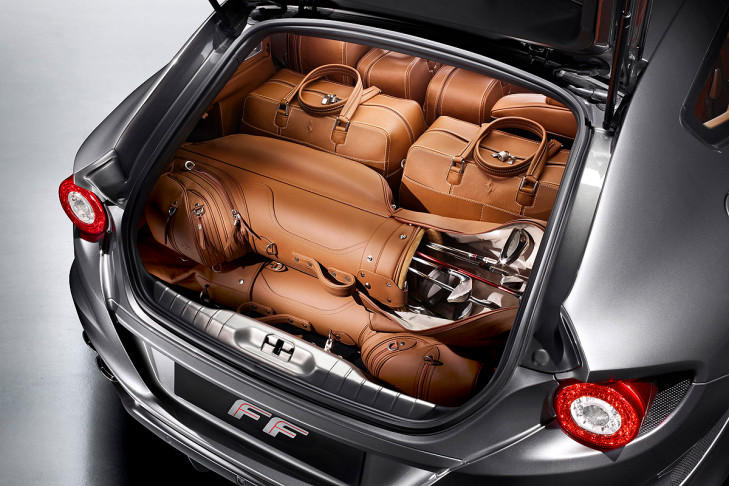
The two back seats are of adult size and set slightly higher than the front seats, meaning they feel less cramped. In addition, the luggage space behind them is impressive, and should only two of you travel, the FF is as spacious as a hatchback. But that’s where the similarities end…

You can fit a lot in here and if you’re four, it’s not too bad either

Before we get to the main course, i.e. one of the most wonderful engine ever built, let’s look at another FF perk, namely its first four-wheel drive system. You see, not only is the FF Ferrari’s first-ever 4WD car, but it is so thanks to one of the most advanced systems in the market – for good and bad.

When the decision was taken that the FF should drive on all four wheels, Ferrari wasn’t happy with the compromises a traditional 4WD system would give, notably in additional weight moving the weight distribution upwards. Instead, they went ahead and developed their own system in the shape of a simplified, second two-speed gearbox (plus reverse) that sits behind the engine, allowing the latter to be positioned as low in the car as in any other Ferrari.

The system is called 4RM and can in a simplified way be described as the two gears having two clutches that constantly slip, thus meaning the system doesn’t need a differential. It’s only active in gears 1-4, and never with more than around 20% of the car’s 650 Nm of torque. The FF remains fundamentally rear-wheel drive, but thanks to the so called PTU (Power Transfer Unit) which transfers power to the front wheels independently when required, the front wheels can complement the rear ones.

This is not the road to Verbier, but the FF will definitely take you there!

There’s no doubt it’s a highly advanced system from a technological point of view, and one of its advantages is the weight saving, given it’s around 50% lighter than other 4WD systems. Unfortunately it’s not all rosy though, as we’ll see later.

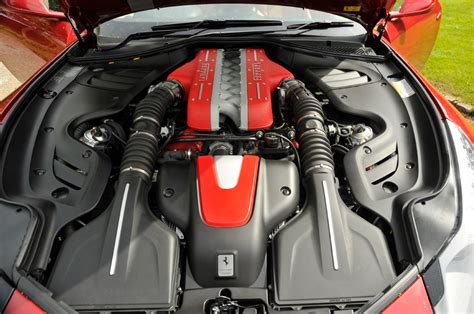
So what about that engine? Well, it really is everything you could ever ask for. As a naturally aspirated, 12-cylinder, 6.3 litre piece, it was the biggest engine in the world when the FF was launched, and putting out around 660 hp, it ensures that even at close around 1900 kg, the FF is seriously fast at 3.7 seconds to 100 km/h and a top speed of around 330 km/h. I don’t need to tell you how well the engine sounds, and it’s paired to a seven-speed, DSG box from Gertrag that does an excellent job.

One of the best engines ever built!

So with all this said, who is the typical FF-buyer? Some Youtuber suggested it’s someone who would otherwise consider an Audi RS6, which I personally think is utter b’shit. I would rather think of three types: the supercar driver with need for more room, the parent with small children and an understanding other half, or the parent with grown-up children, thus only looking at transporting himself and his partner. If it weren’t for the dog cage, I would fit perfectly into that third category…

If you feel like this describes you, there are a few things you should consider before parking a 6.3 litres V12 in your garage. The first is that the FF is a big car. At almost five metres long and two metres wide, it’s only marginally smaller than a Range Rover, meaning it’s not a car for narrow streets or congested cities, but rather for long stretches of motorway travelling. That also means you will manage a few more km before re-fueling, which is something you’ll be doing a lot of, in spite of a 90-litre tank. It all depends on your driving, but 1.7-2 litres per 100 km is what you’re likely to see.

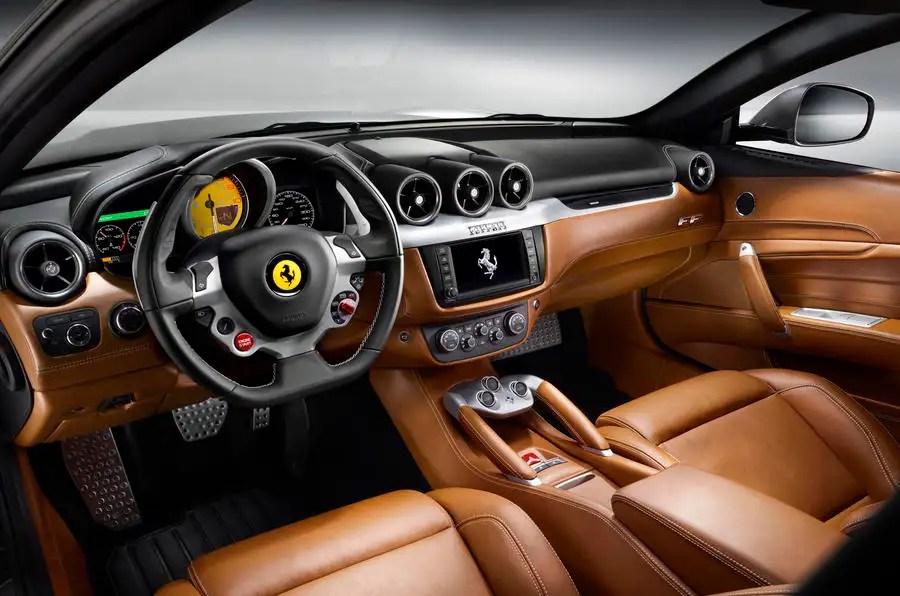
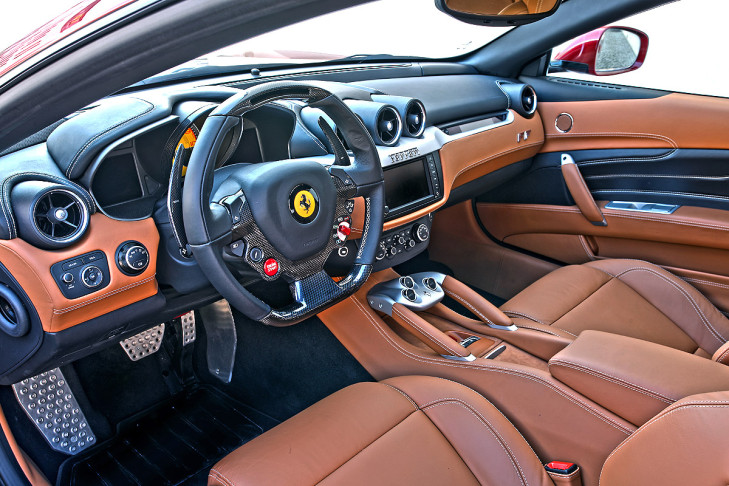
Intsead of worrying about fuel costs, enjoy the wonderful interior!

And then there’s the PTU issue. As ingenious as the construction may be, it quickly became a major issue for Ferrari, since the PTU would leak in a large number of cases. At first Ferrari would replace it under warranty, then at cost, meaning more than EUR 25.000, but after that, specialist companies have come up who can renovate the box without replacing it, cutting the cost to EUR 8-10.000. So before buying an FF, make sure the PTU has been replaced or renovated, and otherwise negotiate the price heavily!

Next to that however, the FF rather has less issues than other supercars. It’s quite simply a great and very capable proposition, with the added advantage that it looks to have bottomed out, price-wise. Even if it was built during five years between 2011-2016, only some 2300 cars were produced in total, which is certainly one factor in keeping prices steady. The fact that most PTU’s have been fixed is another, as is of course one of the last true engines out there!

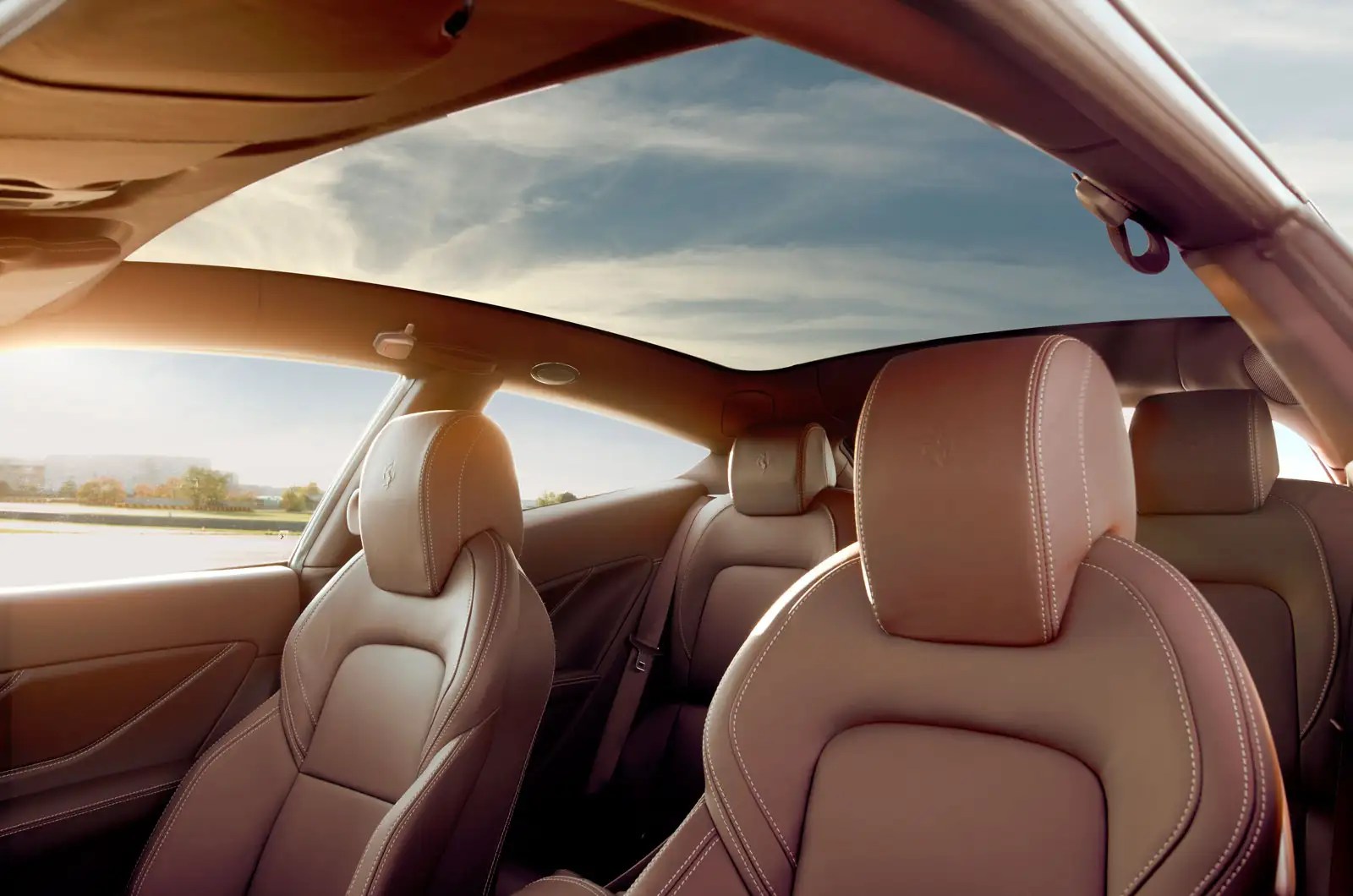
The glass roof adds a lot of airiness especially to the back seats

Most FF’s sold as new for EUR 350.000-400.000, depending on equipment, and most can today be had for EUR 100.000 (early cars with around 90.000-100.000 km on the clock) to 150.000, meaning less than half of their value as new. You will typically see higher mileages than for other Feraris, as FF’s tend to be used, which is a good thing! The condition, the PTU and the equipment are more important than the year of production, but if you have the choice, go for a newer car such as to avoid some small issues early cars may have. On that equipment list, the glass roof is a great option if you will regularly carry people in the back, but it’s one that will push up the price.

I could go on, but I think you got it by now. The FF is a car which as a package we will never see again. It’s far sportier than a Bentley Continental GT, and it it’s not only prettier, but also far roomier than the Aston Martin Rapide, which isn’t four-wheel drive. What’s more, it’s successor, the GTC4, is basically a face-lifted version of the same car, for which you’ll still pay around EUR 50-70.000 more, which there really isn’t any reason to do. Thus, if you have the passion and the money (including a budget for things that shouldn’t, but could go wrong), at least this blogger can’t think of a better option. FF is officially short for Ferrari Four, referring to both wheels and seats. I’ll take it to mean Forza Ferrari!

Maranello’s best daily driver!

A couple of weeks ago I wrote about the Panamera (see here if you missed it), a family hatchback that translates the true Porsche feel as much as its format and weight allows for, and the first generation of which currently offers pretty exceptional value for money. But whereas to my mind, the Panamera is the daily driver that presents the best “price-adjusted” offer in the EUR 40-50.000 price segment, it’s not the only car out there providing a nice bridge between a word leading sports car tradition and something that actually qualifiees as (almost) reasonable with daily driving potential. This week we’ll therefore travel south from Zuffenhausen, over the Alps to Maranello, to explore Ferrari’s best offer in this regard: the splendid, 12-cylinder Ferrari FF. Just like the Panamera, in addition to all its practical benefits (and there are a lot!), it remains one hell of a car that right now offers exceptionally good value for money – albeit in a higher segment.

Looks that have aged very well!

The FF (Ferrari Four) was presented in 2011 and built until 2016 as successor to the 612 Scaglietti, and as could be expected, it split opinions among Ferraristis right from the start. Obviously this wasn’t the first four-seater from Ferrari, but “Four” in the name also referred to this being the first four-wheel drive Ferrari in history. The system was developed by Ferrari and doesn’t weigh more than 45 kg. Without becoming too technical, a second, two-gear gearbox right over the front axle complements the main, 7-gear dual clutch box and transfers power to the front axle over two multi-plate clutches. The low weight comes at the expense of function as the system only works in gears 1-4, which doesn’t change that it’s perfectly useful for example on snow. On solid ground and in all gears, the car is otherwise rear-wheel drive, and the 45 kg are a reasonable price to pay for the increased function, although the true purists will remark that the driving experience becomes less playful than with a rear-wheel drive, “classic” Ferrari. All others will find it a true sports car to drive, also with an almost perfect 53-47% weight split (rear-front). The FF also has an adaptive suspension with five driving programs, controlled by the “manettino” on the steering wheel, and the car can and will be raised a few cm as required.

Not where you would take your 458!

The other area of contention ten years ago was the looks. 2011 was still a few years before shooting breaks became as popular as they are today, so for most, those concerns are largely gone by now. Looking at the FF today I think it’s aged extremely well. Given we started this with a comparison with the Panamera, there’s no real contention on which one looks the best… Pininfarina has done an excellent job in a classic combination of a long front and a short, dynamic rear gives the car perfect dimensions.

All this is of course fine and good, but the most exciting part of the FF is no doubt what you find under the hood, namely a 6.3 litre, naturally aspirated V12, derived from the Enzo and the biggest V12 Ferrari had ever put into production at the time. Producing 660 hp and 683 Nm torque, those who don’t get goose bumps when it comes alive are either deaf or completely heartless. Ferrari will tell you that the incredible sound is helped by the 65-degree angle, i.e. 5 degrees more “open” than a typical V12 engine is built in. I find it hard to believe that it would have sounded much less with less of an angle though… Once alive, the incredible engine will take the FF all the way to 335 km/h, of which the first 100 km/h only need 3.7 seconds.

The wonderful engine behind the front axle, with the second gearbox in front

If this doesn’t sound like an (almost) reasonable daily driver so far, let’s look at the practical side of the FF. Firstly, it’s a true four-seater rather than a 2+2, and the rear seats are really quite comfy, even for grown-ups. Secondly they as well as the central part can be individually folded, the central part for example to transport skis. Thirdly, with all seats in place the FF offers 450 litres of luggage space, which increases to over 800 litres once the seats are folded. What Ferrari will not offer, but offer you to buy, is of course a very chic luggage set to help you make the most of that space to arrive in style! And finally the FF has a 91-litre tank, meaning you can do at least 500 km before you have to stretch your legs and admire it from the outside, which certainly won’t hurt. The quality of a daily-driver however also lies in its quality and reliability, and it’s here that the FF impresses even more. The interior looks fantastic and is well built – clearly a level above the previous generation. Guarantee and service packages when the car was new were extensive in most markets, and the quality is also proven by how unlike many other Ferraris, most FF’s have a lot of km on the clock and it’s rare to find a car that has barely been driven.

The FF offered owners a lot of options for individualization and it’s not rare to find cars that cost EUR 350.000 or more as new. This can obviously be interesting when you look to pick one up today, and if you plan on buying one and will be more than two persons using it, I would be on the lookout for the panoramic glass roof which makes the rear much lighter. Quite obviously though, the most important by far is making sure the car has been properly serviced and that both the engine and the electronics are in order. Ideally, one owner will have used the car in a way where it wasn’t his city driver and where he didn’t require assistance of the four-wheel drive system too often. If you can find that, then it’s less important if the car has 20.000 or 50.000 km on the clock. And if you know your Ferraris, there’s nothing hindering you from considering cars with even higher mileage. Those will start at EUR 90-100.000, those with less km start coming in at EUR 120-130.000, and there’s quite a few cars in the market, so realistically some negotiating potential as well. That price fall is not unique compared to other Ferrari models but at one third of the price as new, to me the FF is the one that offers the best combination of many qualities, making it an (almost) reasonable purchase, and one that will make you smile every time you turn the key!

PARIS: Ferrari och bagage – hur hänger det ihop egentligen?

Ferrari FF är en oerhört praktisk bil. Jag skojar inte. Provade att sitta “bakom mig själv” i baksätet och det är mycket bra långfärdskomfort för fyra(!) vuxna. Och bagageutrymmet är stort, se bilden på de bruna väskorna nedan (det är alltså stora väskor även om det inte syns på bilden). Som en jämförelse kan ni också se hur mycket bagage det går in i en 458 Italia; inte så dåligt det heller i och för sig, för en så extrem bil.

En nyhet för i år på FF är att det går att få ett glastak som skapar stor rymd i coupén.

Egentligen är FF den ultimata bilen; praktisk och extrem på en gång. Synd bara att jag fortfarande inte kommer överens med utseendet…