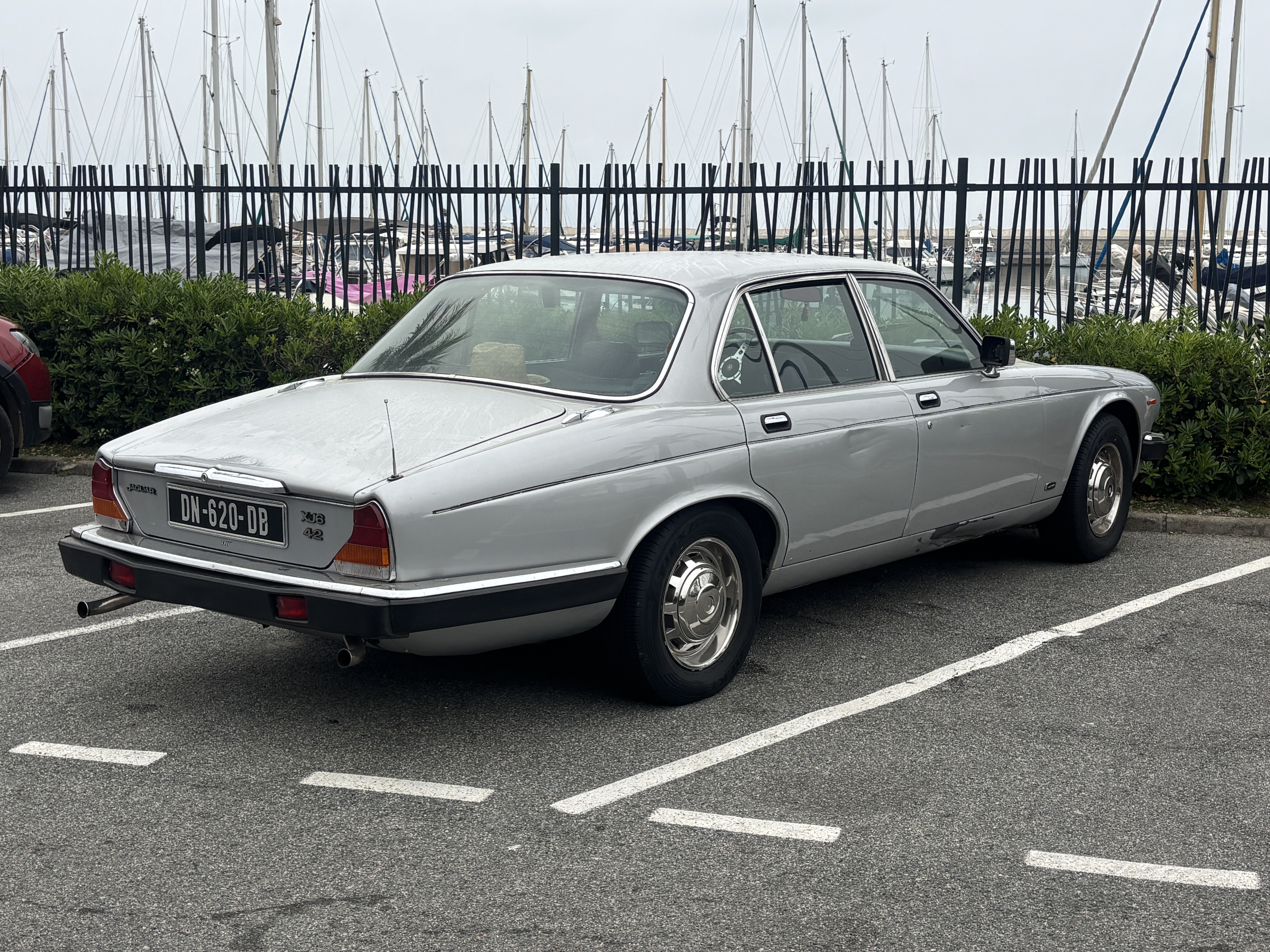
I saw it on every morning walk with the dogs, down in the harbor close to our place in southern France. It was by no means in pristine condition, rather well used and a bit beyond what you could refer to as patina with a straight face. Quite a bit actually. However, the genuine elegance of the sweeping bodywork still came through and somehow, seeing it parked in the harbor close to the sailing boats felt right – the shape is one that I’ve always associated with an old, beautiful, wooden sailing boat.
The Jaguar XJ is one of the real long-termers in the car world. For most of us it’s been around for all our grown up life, and it definitely still counts as more of a mark of class and traditional luxury than most other cars. Seeing an XJ in good condition, as many of them still are, is typically not something you would associate with a car which today costs less than a Dacia (for US readers, the cheapest brand in Europe) even in the most basic version! Because if there’s something the XJ isn’t, it’s definitely basic!
Let’s start from the beginning though and take a closer look at one of the legends of the modern car industry. The original Jaguar XJ in the form of the XJ6 was revealed to the world almost 60 years ago, in 1968. It would retain at least parts of its original DNA all the way through to 1994, when a new version, clearly reminiscent of its first iteration, was presented. The original car had a 2.8 litre, six-cylinder engine coupled to a 3-speed auto box. Jaguar had initially had far greater ambitions with plans both for a V12 and a V8 to go under the new car’s bonnet, but none of these engines were ready for the launch.
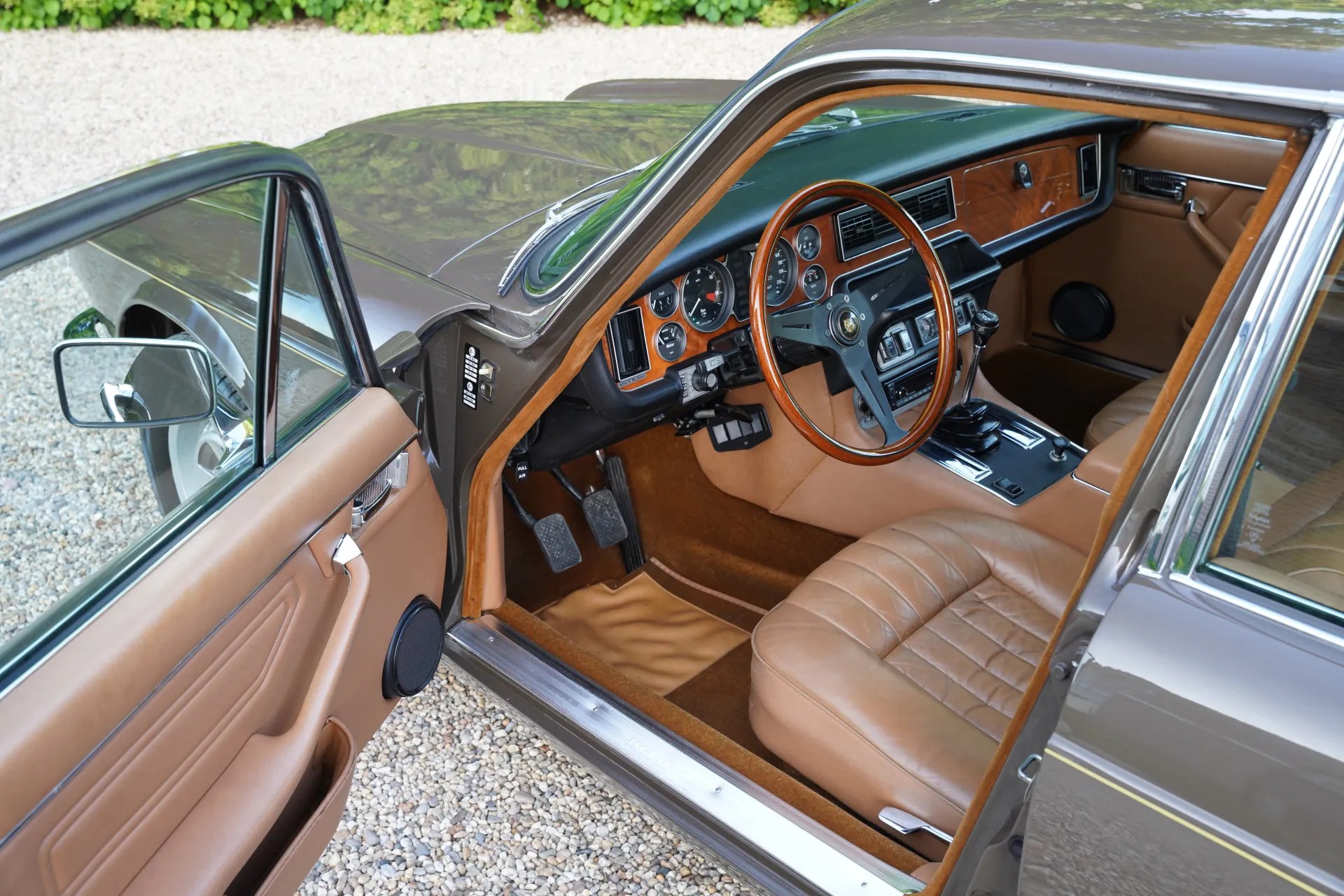
Even with a six-cylinder though, the XJ was a bit of a revelation. The elegance of the body combined with the sublime interior of wood and leather was something else, and very different to what other brands from Stuttgart and Munich offered. The XJ was also seen as the better drive, with notably lower road noise and more comfortable suspension than its competitors. The motoring press gave a nod of approval, which helped Jaguar to a good start for the new model.
Three years later, in 1971, the V12 was then ready to go into the Series 2 of the XJ, and completely transformed the car. With more than 100hp of extra power and much higher torque, it was the perfect engine for long trips across the growing road network in the UK and Europe. If the six cylinder had been more focused on economy, the V12 was certainly not, but it was an overall better fit for the car.
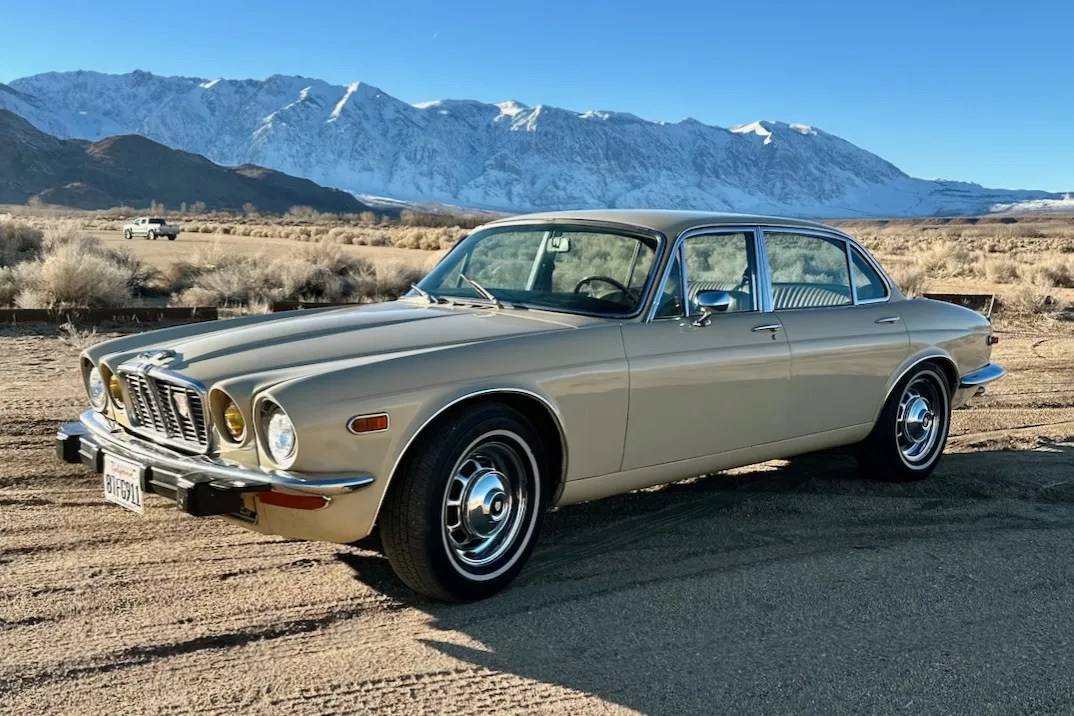
The XJ continued to develop and improve through the 70’s and 80’s, with notably carburettors replaced by fuel injection, improving fuel economy (whilst still not making it anything to write home about…) and more power, climbing all the way to 300 hp. The next major update would follow in 1986, when the very 80’s looking, new XJ called XJ40 was launched.
The new car was easily identified on the outside, the new body being more square-formed, i.e. less boat-like than earlier cars. A clear sacrilege but also signs of the times were the shaded rear lights and the partly digital dash. However, the XJ40 was of far better build quality than its predecessors. Panels were lighter, the chassis was improved, all of it contributing to a more comfortable and even more silent car. The new, six-cylinder engine was also more economical.
Jaguar had been an independent company since 1984, having previously been owned by British Leyland. The Ford Motor Company in the late 80’s was looking to get into the luxury segment, which lead them to buy Jaguar for USD 2.5bn in 1989. It would come to form the basis of Ford’s Premier Automotive Group, which from 2000 also included Land Rover that Ford bought from BMW for another 2.7bn.
With Ford as new owner, pretty much everyone was convinced that would be the end of it. Jaguar would just become a sub-brand of Ford, indistinguishable from other Ford products, and with all the Britishness lost. Well, as it turned out, everyone was wrong, which is very refreshing to see given many other failed takeovers by US car groups (Saab anyone?).
Ford instead invested heavily in Jaguar and the next iteration of the XJ, the X300 from 1994, was thus a Ford product. It was also a car that went back to the origins in terms of the design. Over the coming 12 years, further updates internally named X308, X350 and X358 would follow, as would new engines, notably a new, 4-litre V8 in the X308 in 1997, and subsequently the 4.2 litre V8, both naturally-aspirated and supercharged, and well known from the Jaguar-Land Rover product range.
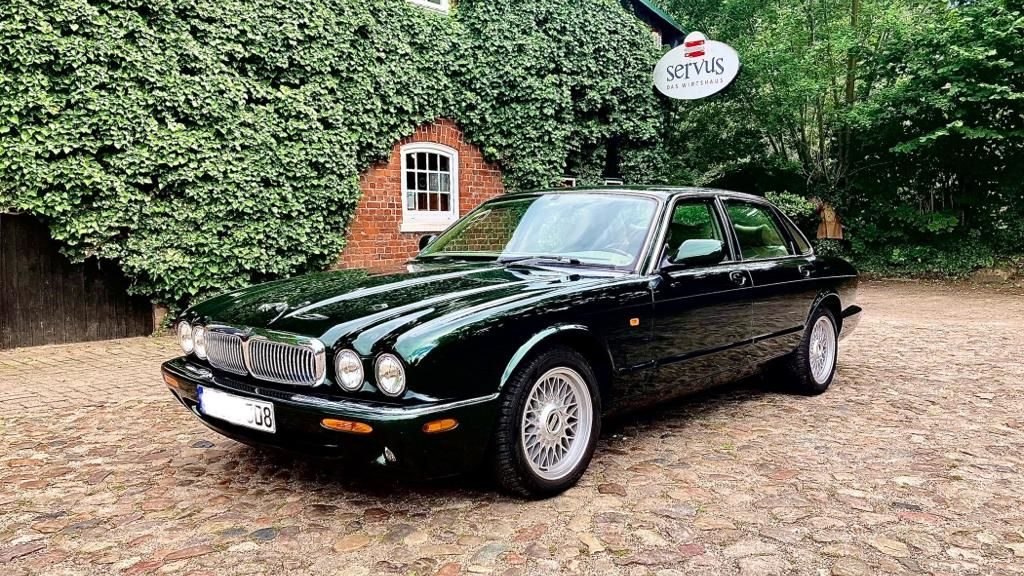
The last two iterations of the XJ with a connection to the original shape were the all aluminium X350 and X358 in the 00’s. In many aspects though, the looks was the only thing they had in common with their predecessors. Ian Callum had become Jaguar’s chief designer a few years earlier and would very much put his mark on the succeeding, new XJ from 2010 and onwards. He wasn’t able to do so with the already far progressed X350 though, so although he wasn’t happy with the XJ’s retro look, it wasn’t until the X358 that he could add some design elements that spoke more to him than to me. I find the X358 a bit too boxy and clumsy compared to its more elegant predecessors. It should also be noted that the two last iteration introduced a LWB version, giving rear passengers more legroom.
The first XJR, i.e. supercharged version, appeared already in the X300 in 1994 and after that became the sporty version of the range. In its first iteration, the compressor-loaded six-cylinder engine had around 325 hp, helping the car to 100 km/h in around 6 seconds, and on to a (restricted) top speed of 250 km/h. Later the XJR would be based on the 4.2 litre, 8-cylinder engine, with a power output close to 400 hp. There would also be further engine options, including a diesel from 2005 onwards, with which Jeremy Clarkson in a competition based on driving as uneconomically as possible, still managed to get a real world range of 1450 kms on one tank!
The whole new, Callum-designed car which replaced the XJ in 2009 means that our overview of the original XJ history stops here. Ford sold Jaguar and Land Rover to Tata in 2008 for USD 2.3bn, less than half they paid for both brands around a decade earlier. That’s a heavy loss, which is also what anyone buying an XJ new has encountered. And that’s precisely what makes these cars so interesting today!
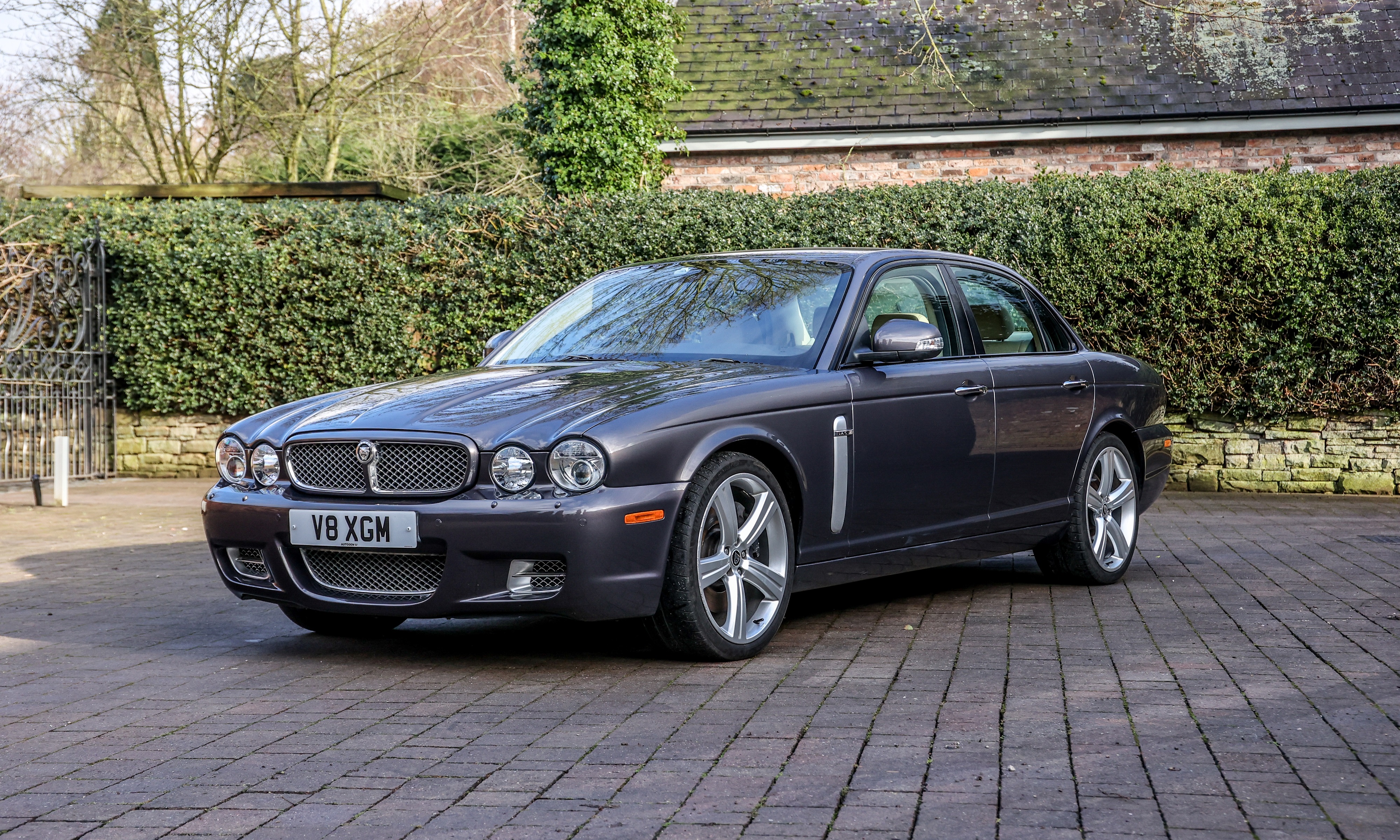
I usually don’t dwell too much on car design since taste is an individual matter. When it comes to the XJ though, you can’t help by admiring the inherent beauty in everything from the original design, at least until the X308. The all-aluminium X350 and X358 are probably the best cars in the range, but as said, I feel they’ve lost a bit of that original elegance, especially the X358. And no, the 80’s XJ40 wasn’t great either. The others are though, in a way that’s very far from an S-class from Stuttgart or even what Rolls Royce and Bentley built at the time. The XJ has a natural, understated British elegance meaning that you’re never underdressed in one, irrespective of the occasion.
That elegance today costs you less than a Nissan Micra. Not only that, XJ’s have often had one owner only, who typically has been closer to retirement than to getting his driving license and has cared for the car properly. Many of them even come with far less than 100′ kms, even cars which are more than 20 years old. Today around 20.000 in CHF/EUR/USD is at the top of what you pay for really good cars, irrespective of version, including XJR’s. Earlier cars, today considered veterans, can be had for far less.
And it gets even better, because if an older XJ will require a bit of mechanical knowledge (or a corresponding budget set aside), most of the more modern ones are very reliable cars. Except for the regular checks you should do on all cars, be mindful of rust as well, including on the aluminium X350 and 358’s, as of the air suspension on those, and ensure that it works properly. Also, the roof lining has a tendency to start falling in and if so will need replacement. Engine-wise, all petrols are pretty bullet proof but the diesel mentioned above that Clarkson drove is a bit less so, especially if you do a lot of short distances. Be careful with the history of XJR’s though, as they may have been driven differently, and by younger owners.
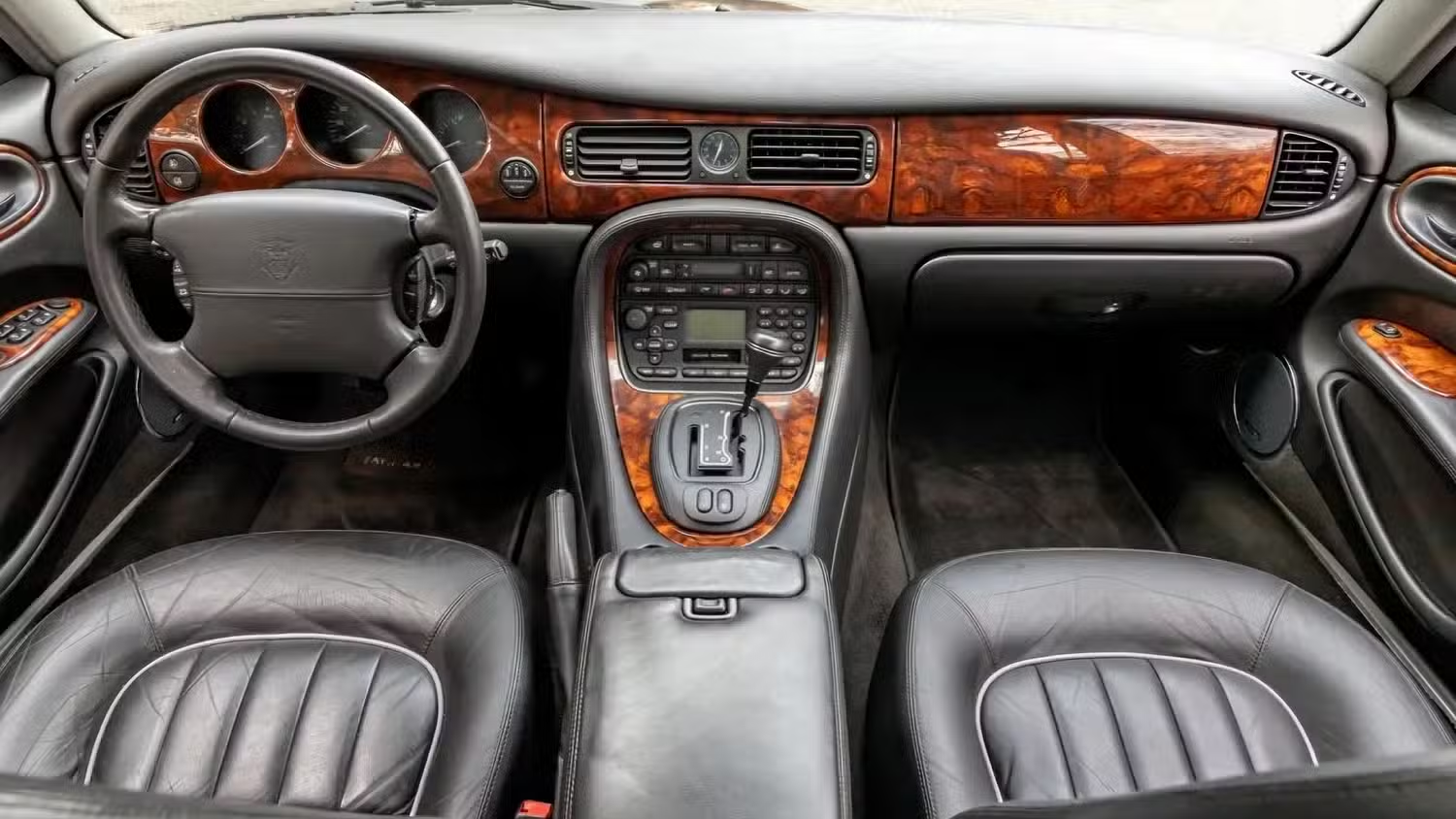
Given the solidity of both car and engine, higher mileages need not the first concern when looking for an XJ. As said, many haven’t been driven that much, and for those it might actually be more important to check that they haven’t been tucked away in a garage for a few years with resulting damage. Try them, and feel for yourself how the XJ tucks you in. It may be over 5 metres long but it never feels like it when driving it. Overall it’s a good, well-balanced and comfortable cruiser, for which even one of the more basic V6 engines will do the job perfectly.
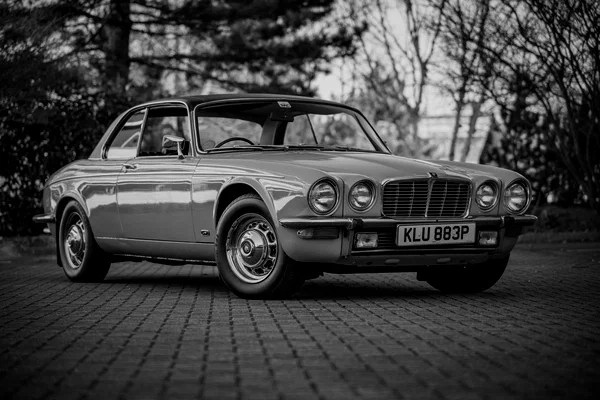
An early XJ is a given in any oldtimer garage – why not the three-door coupe XJ, referred to as XJ-C, from the mid-70’s? As a daily driver, I’d opt for an X308. Modern enough and yet with all the elegance preserved. Why not in the shape of a four-litre, supercharged V8 with a very healthy 363 hp? If you’re concerned about quality, the later X350 is a more solid car which retains more of its elegance than the later X358.
Oh do we live in interesting times! You can buy a top XJ for 20′ and park it in front of the casino in Monaco without blushing. My CLS which becomes better by the day didn’t cost much more, and a few weeks ago we looked at the fabulous Maserati Quattroporte, which is in similar territory. You could actually by all three and still have money left over compared to buying a 2.5 ton EV which looks like it’s been designed by a four-year old with a ruler!
To quote Hagerty: “never stop driving”, but also, never stop doing so in style!


Pingback: The true cost of connected cars – The Thrill of Driving
Pingback: Forever young! – The Thrill of Driving
Pingback: The forgotten one – The Thrill of Driving