As a petrol head, I have little doubt that you’ve often wondered, as have I, when a friend, spouse or child with a limited car interest says something like “I don’t know, all sports cars look alike”. Are they blind? How can they fail to spot all the details that in your eyes make a huge difference?
In the last years though, I’ll confess that I’ve heard myself utter something similar on a few occasions. It could be age, but I have a feeling it has more to do with a general trend of sports cars becoming more similar. Hand on your heart – have you never at fisrt glance mistaken a Corvette C8 for a Ferrari of some kind? Not to speak of Chinese EV’s of course that are perfectly indistinguishable.
Be that as it may. Today we’ll talk about a sports car that doesn’t resemble any other car out there, in anyone’s eyes. And it comes from a brand whose automobiles, although largely unchanged through the decades, have always been easy to recognize. This week is thus about Morgan, British quirkiness and the Batmobile.
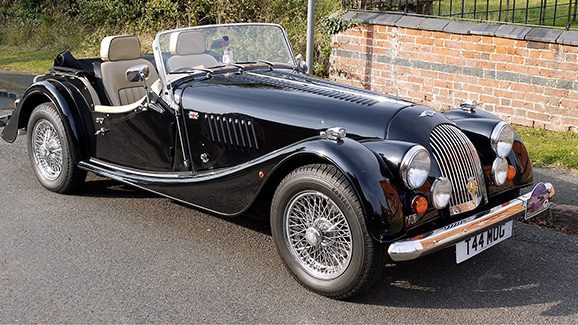
Morgan’s home town of Malvern on the British countryside is geographically far from Zuffenhausen, Maranello or Sant’Agata. Philosophically, the distance is even greater. Founded by H.F.S. Morgan in 1909, Morgan started out building lightweight three-wheelers, a formula that worked better than expected, and the three wheels were joined by a fourth in 1936 with the arrival of the Morgan 4/4.
If you ask one of those who claim all cars look the same, they would actually be right when it comes to Morgan’s line-up. Over the coming decades, all Morgans did look the same, with an underlying philosophy that barely changed. Morgans should be lightweight, simply engineered, built with love and a craftsmanship which always mattered more than production volumes.
Over the following decades, Morgans would remain true to that philosophy with an ash-framed body built over a steel chassis, and a production process that looked more like traditional coach building than modern automobile manufacturing. Even the arrival of the Plus 8 in 1968, featuring a Rover V8, did little to change the basic character.
The break with tradition happened a few decades later, at the turn of the millennium. Morgan announced a completely new car, the first brand-new design since 1964. It had all come about when founder Charles Morgan met a certain Karl-Heinz Kalbfell on a racetrack a few years earlier. Kalbfell was the president of BMW M, and what started as a chat ended up in what was to become a decade-long collaboration between Morgan and BMW, lasting to this day.
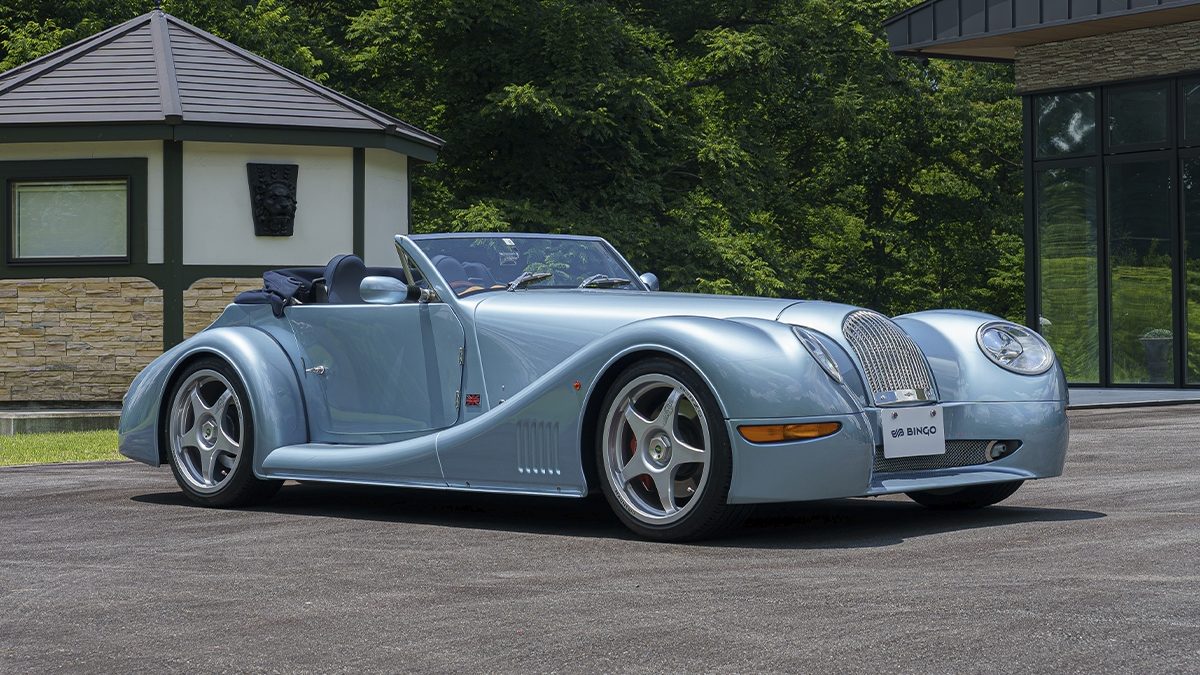
The new car, called the Aero 8, premiered in Geneva in 2000. It featured a new aluminium chassis on which a wooden frame was mounted with the hand-built bodywork then built over the frame. Under the – as always – split hood, Morgan had managed to squeeze in BMW’s naturally aspirated 4.4 liter V8 from the time, initially rendering about 270 hp, later growing both in volume in power to as much as 367 hp. For a weight of around 1200 kgs, no Aero driver was thus ever short on power.
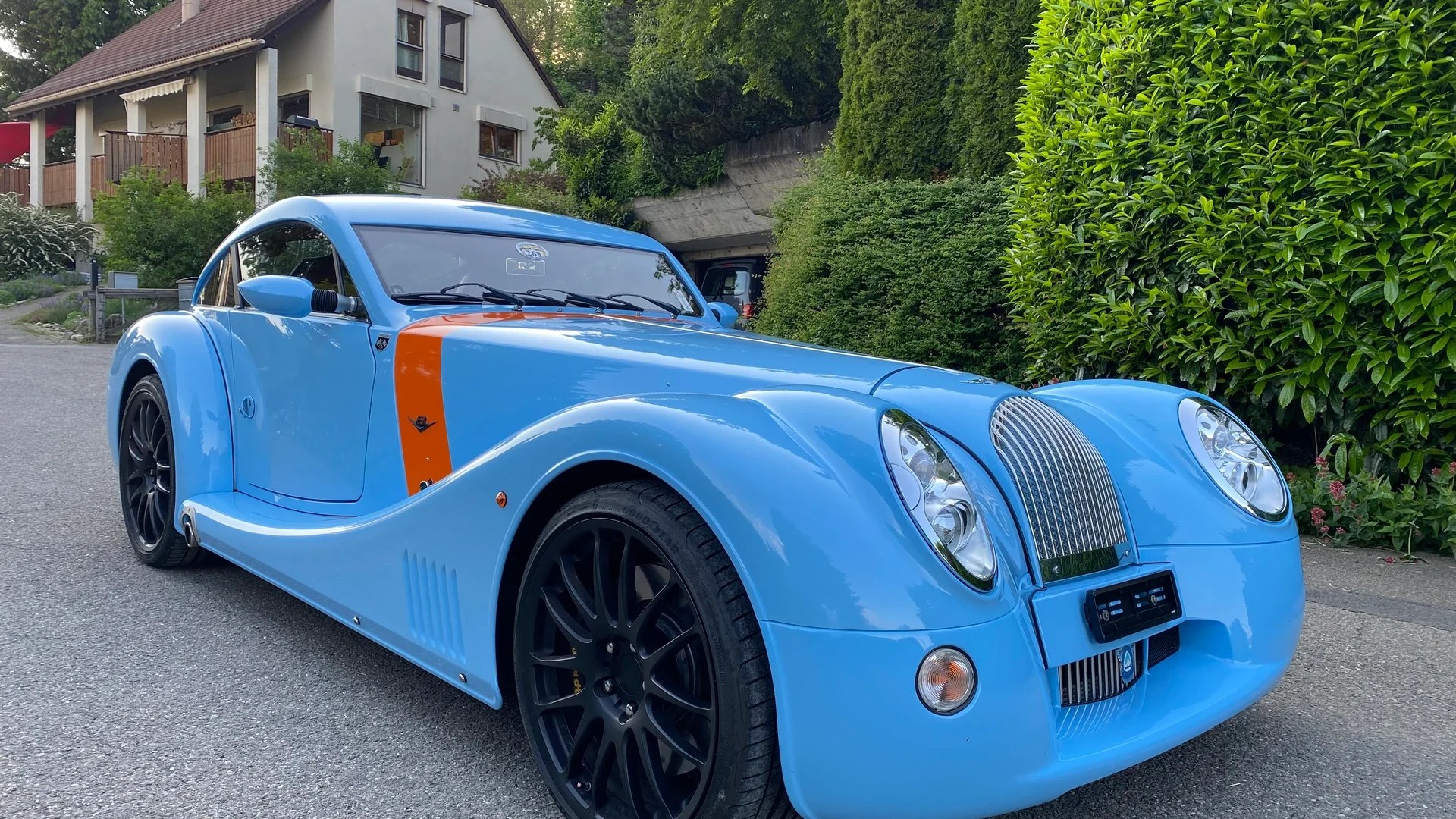
The hand-worked body is a fascinating combination of traditional Morgan with some more fanciful design elements. On early cars, the front lights sit relatively tight and point every so slightly towards each other, making the car look cross-eyed. There’s a bit too much chrome up front for my taste, but the chrome was tuned down over the years. The rounded rear works well, but the rear lights remind you of something.
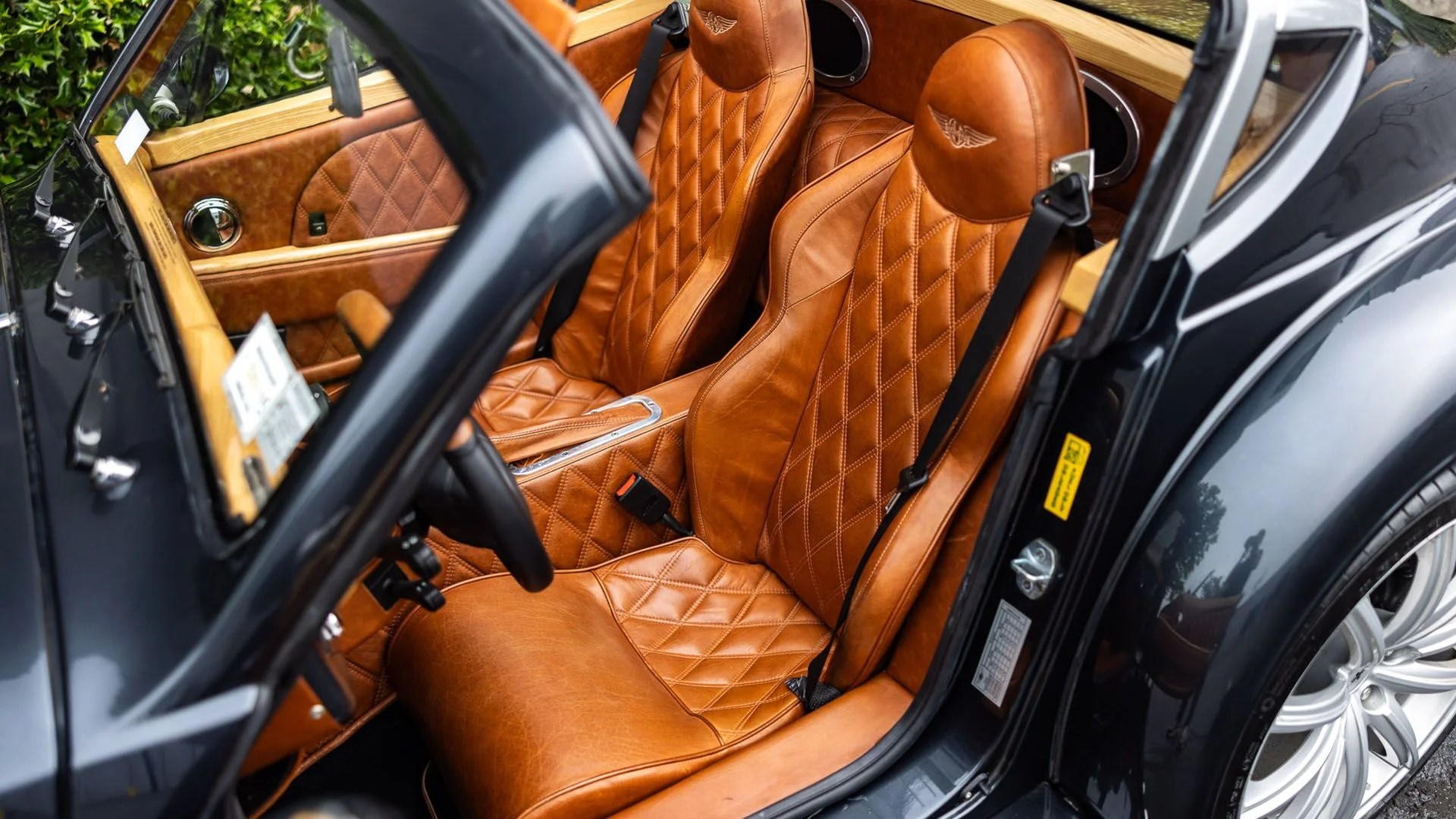
As it turns out, they come from the Lancia Thesis, an Italian sedan that led a life in obscurity in the 2000’s. Then again, not all Aero 8’s have those lights, some of them instead have round rear lights from Mini. And when you sit down in the car, you will quickly recognize quite a few parts that you’ve seen elsewhere. BMW supplied not only the steering column, but also a lot of dials and switches. The steering wheel came from Aston Martin. Then again, that’s the price of being a small manufacturer with limited means! By the way, those cross-eyed headlights came from the VW New Beetle.
The Aero 8 went into production shortly after its introduction and would be built in five series (although series 2 and 3 are often seen as one) all the way to 2018. The cross-eyed look was fixed in the third series from 2005, and the larger, 4.8 liter V8, still naturally aspirated, replaced the previous 4.4 liter in 2007. From then, the Aero 8 could also be had with a six-speed ZF auto box. The final series 5 from 2015 saw some major changes and improvements to the car, no doubt making it the most accomplished series. Around 150-200 cars were built of each series, meaning a total production of less than 1000 cars.
The story could have ended here, unless a Swiss banker and car collector called Eric Sturdza had contacted Morgan in 2004. Sturdza was well-known to the brand, having previously been a backer of Morgan’s GT3 racing series. With a rather unlimited budget, Sturdza had taken a strong liking in the Aero 8 but would have preferred a coupe. He thus commissioned Morgan to build him a one-off coupe with the Aero 8 as basis.
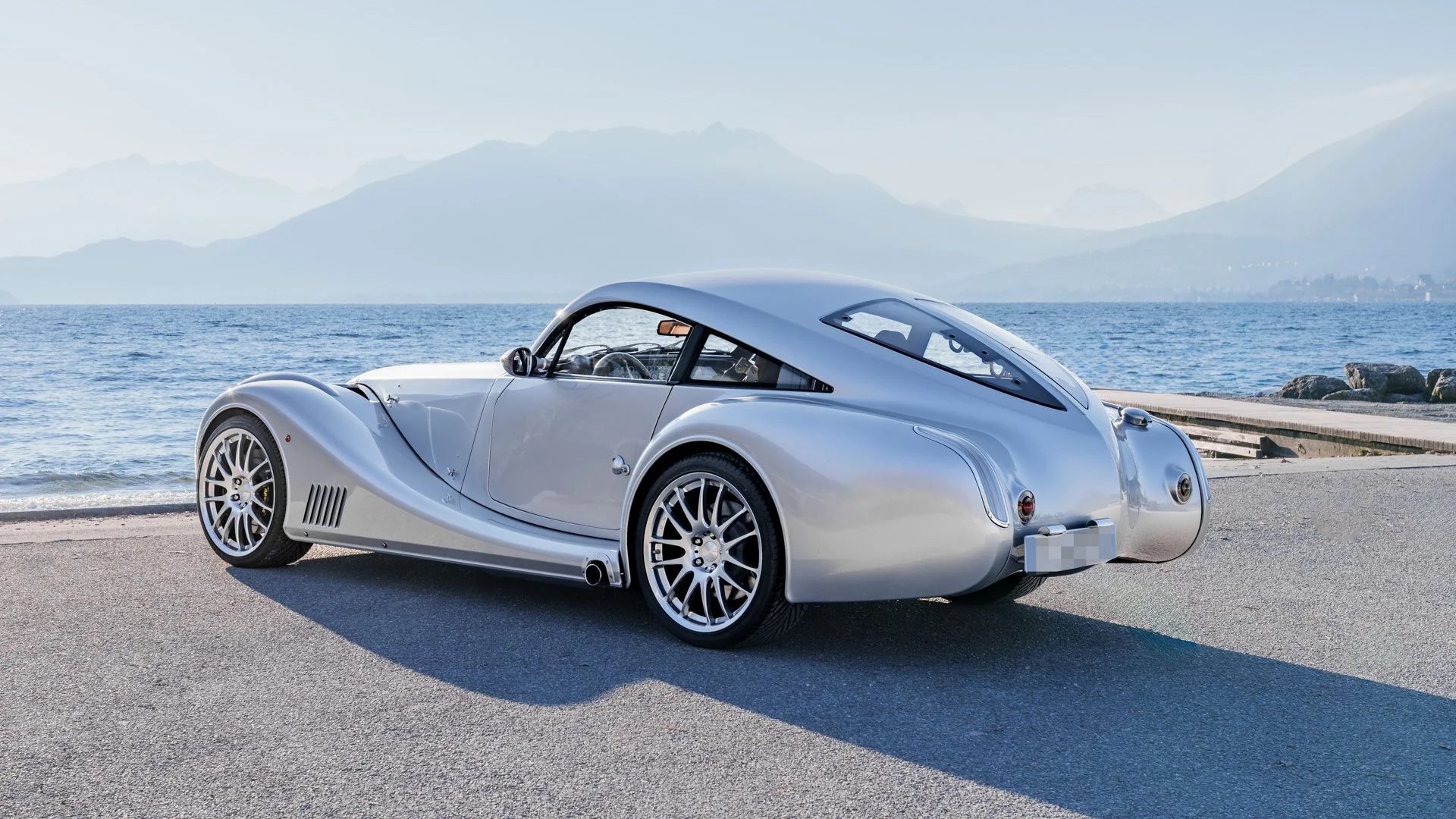
Charles Morgan was happy to oblige. Let’s take a pause here to state the obvious – irrespective of your wallet, it’s difficult to imagine larger brands agreeing to build a single car with a new bodywork. And what Moran did next was even more surprising: they trusted a 21-year intern called Matthew Humphries with the design of the car. Whether Sturdza was informed is not fully clear…
Young Matthew got to work and quickly came up with a design like only a 21-year old could. It was quickly approved, the project progressed incredibly fast and already the year after, in 2005, Morgan reveiled the one-off car at the Geneva auto show. It was named the Aeromax after Charles Morgan’s only son Maximus, and Sturdza took delivery shortly after.
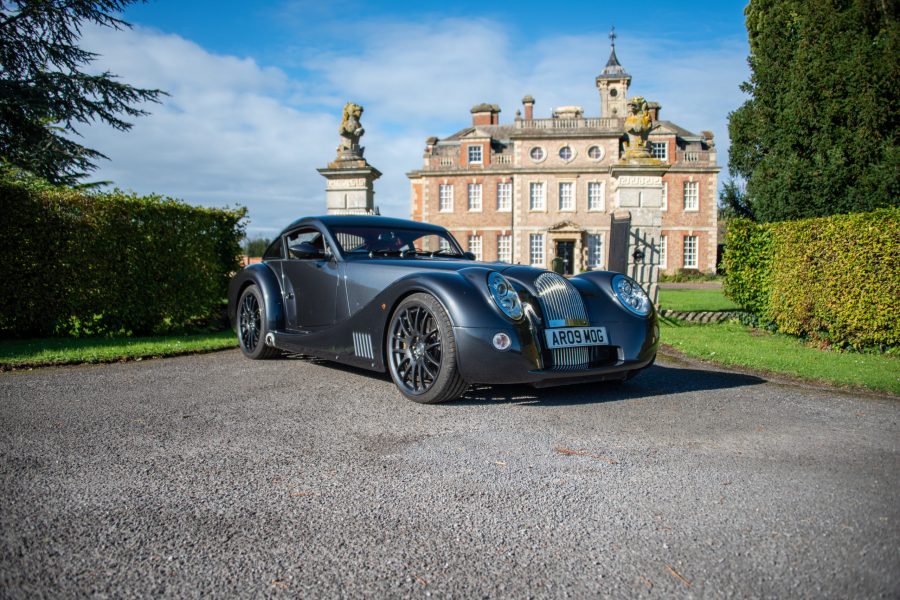
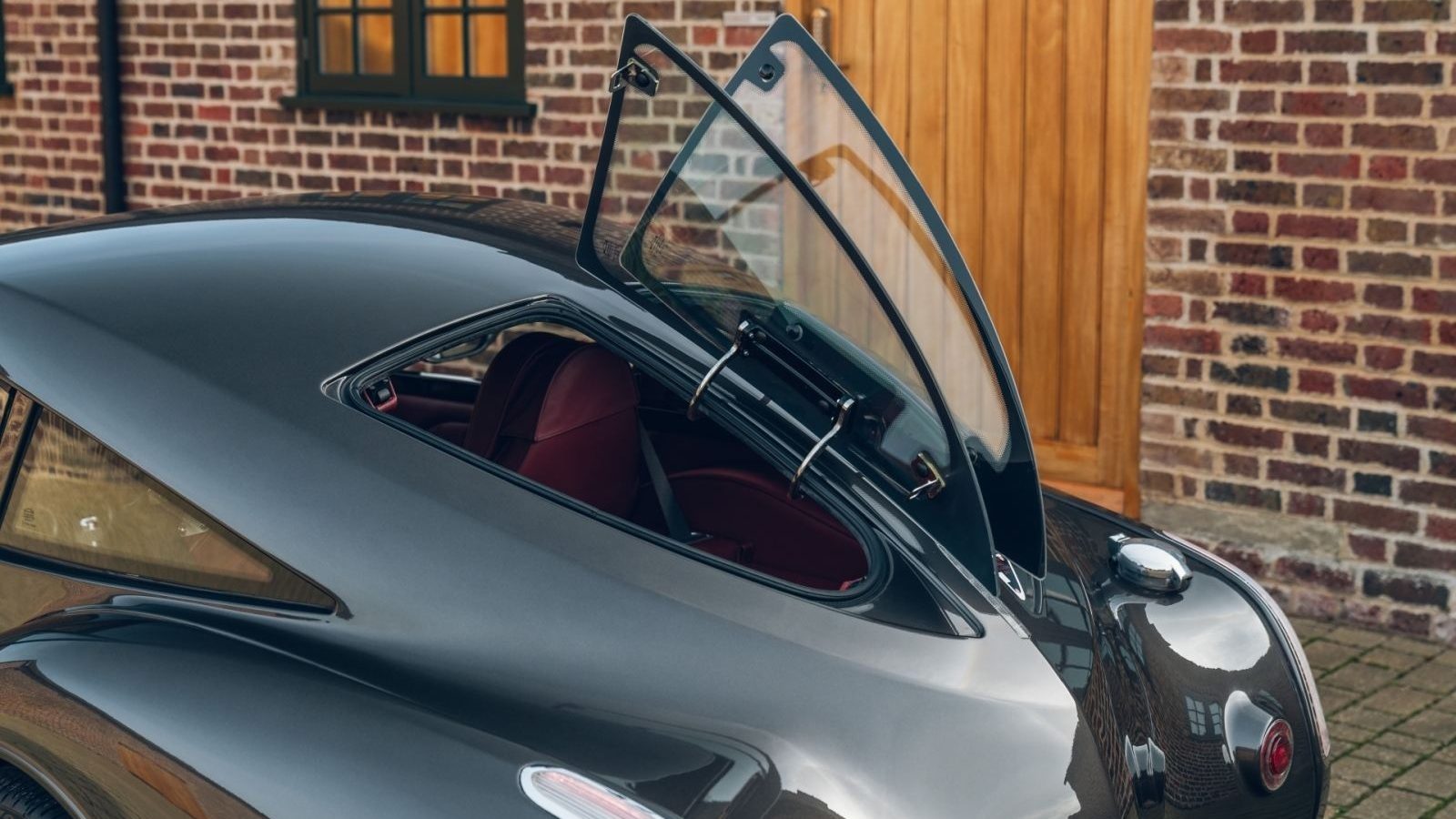
The Aeromax looked like nothing ever had or ever will. It’s a pretty safe bet that young Matthew liked Batman, because if a car ever resembled the Batmobile, this was it. Whereas the front stayed unchanged, the Aeromax got side exhausts, and Humphries designed a spectacular new rear with a boat-tail like rear incorporating gullwing-like glass doors.
It’s through the glass doors that you access the boot space, unlocking the doors from the inside, and the fact that they are split makes it pretty hopeless to fit as much as you would actually have room for in that boot. But boy do they look cool!
The Aeromax saw an enormous interest at the Geneva show and with Sturdza’s blessing, Morgan decided to build a limited run of 100 cars, half manual, half automatic. These came together in 2008-2009, thereby becoming a celebration of Morgan’s hundredth anniversary.
Over 90 Aeromaxes are still around, also since Morgan had built a few extra chassis, allowing them to salvage a few crashed cars, one by none less than ex-Top Gear presenter Richard Hammond. Around 20 cars are in the UK with the remainder in central Europe, notably in Switzerland.
Today, both Aero 8’s and Aeromax’s are of course to be considered collector cars given how few were built. This goes especially for the Aeromax, today trading at between EUR 150-200′, albeit in very small numbers. There are currently 25-30 14 Aero 8’s for sale across Europe, but only around five coupes.
Many Morgan enthusiasts consider both convertible and coupes as the best cars Morgan ever built. However, it’s important to understand that all cars that ever came out of Malvern are hand-built in the true sense of the word. In our age, it’s rather incredible that a relatively modern car like the Aero still exists in truly hand-built form. It also means that no two cars will be completely alike, as they were all specced individually.
If however your reference is a more mainstream sports car, an Aero will probably disappoint you. Quality, rigidity etc. will never be the same. Some solutions are awkward, to say the least, such as the fact that to access the engine’s air filter, it needs to be lifted out. Or those gullwing doors on the Aeromax, that would never have been approved by a mainstream brand.
Morgan has just introduced yet another new car, the Supersport, with a modernized design, however much more aligned with traditional Morgans than with the Aeros. They will remain a one off, and a true statement to the charm of small manufacturers, creative designwork and true craftsmanship. There’s a heading on this blog called “The Thrill of Owning”. If ever there was a dar qualifying for it in all senses of the word, it’s no doubt the Aeromax!

