F1 pit stop: …and the winner is…

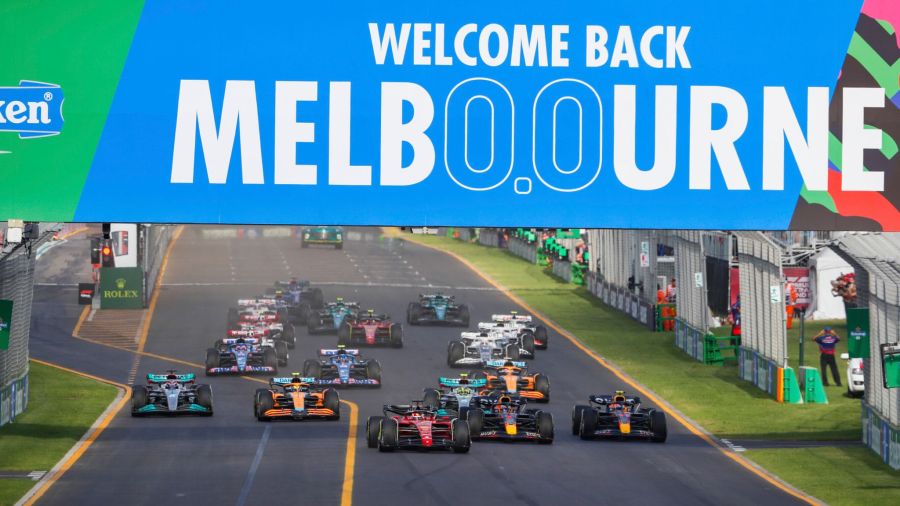
…Lando Norris! In the end by a margin of two points on Max Verstappen, and 13 on his team mate Oscar Piastri. In my before-last F1 update back in June that you’ll find here, yours truly wrote: “I would claim we’re well beyond it (referring to halfway into the season, my remark) in terms of seeing where the season is heading – and the color of that is a solid orange. That’s however not the orange of Max Verstappen and the Netherlands we’ve gotten used to, but rather the papaya orange of McLaren!

Given the double Constructors’ and Drivers’ titles McLaren took this year, I guess I could say I was right, but of course, what I meant at the time was that McLaren would dominate the rest of the season as they had the first part. In my defence, I think few would have contested my statement back then. Only a few weeks later however, Red Bull’s team principal Christian Horner was sacked, and the summer thereafter became somewhat of a turning point, making the fight for the F1 Drivers’ title 2025 the most exciting it’s been since 2010, when Sebastian Vettel clinched it as one of four contenders in the last race of the season, also in Abu Dhabi.

Until the end of August this year, McLaren had won 12 of the 15 races, split 7-5 in Oscar Piastri’s favour over Lando Norris. Of the remaining three, Max Verstappen had won two, and George Russell one. Piastri was at the time in a relatively comfortable Championship lead, with Lando Norris a solid second. Verstappen at most was all of 104 points behind Piastri. It all looked like a McLaren internal fight for both world titles, with not even Max Verstappen being close.

Up until and including the Dutch GP in August, it was all very papaya orange!
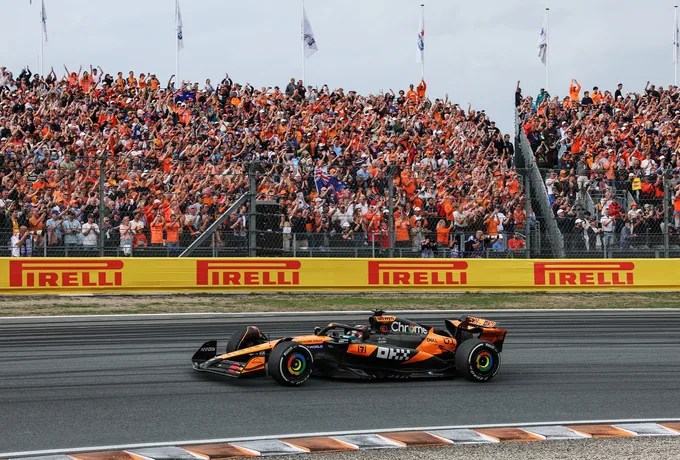
From September onwards we had another nine races, including the last race of the season today in Abu Dhabi. George Russell won his second race of the season in this period, but that’s the only similarity with the first 2/3 of the season. Because of the remaining eight, Oscar Piastri has won none, Lando Norris has won two, and Max Verstappen no less than six. Going into today’s race, the three of them thus all had the chance to win the Drivers’ title, something that hasn’t happened in years.

Digging into this a bit closer and starting with Max and Red Bull, it’s no doubt true that he’s done far better in the last part of the season, meaning more or less since the departure of Christian Horner. The conclusion has to be that letting go of Horner was the right move, as it’s pretty clear the team does quite well without him. However, all of it is neither on the back of Horner, nor of Max’s doing either. McLaren has combined mistakes with a bit of bad luck since the summer, helping Max unexpectedly get a renewed chance at the title. And with Max, that’s really all he needs.

It started in Austin, where none of the McLarens finished the sprint race, which Verstappen won. In Las Vegas, both papaya cars were disqualified for skid wear (referring to too much wear on the plank running below the car, meaning it could run lower than allowed by regulation). Again, Verstappen won the race. And as late as last week in Qatar, when Norris was supposed to tie it all up, for some inexplicable reason, McLaren was the only team not to pit in a safety car phase early in the race, leaving both Piastri and Norris in complete limbo with some hilarious radio conversations between the drivers and the team we all could listen to taking place. Who won the race? You guessed it.

Max didn’t need much to be back in the game when McLaren ran into problems.

This isn’t meant to take anything away from Max Verstappen though. Until the end of the season, everyone would agree that McLaren had the better car, but in spite of that, as soon as there was a glimmer of hope, Max stepped it up and grasped it, pulling what feels like 130% out of the McLaren car in a way only he knows the secret of. It didn’t take him all the way but boy was it close, and as many that agree that McLaren had the better car would probably also agree that Max Verstappen is still the best driver.

It’s worth looking at bit closer at Oscar Piastri as well, who after winning seven races in the first part of the season, and having been on the podium in 13 of the first 15 races, has only been so three times since the summer. F1 veteran Martin Brundle named five reasons for this turnaround for the worst, being head, luck, setup, tracks, and Norris. I won’t go through all of them and it’s no doubt a mix of everything, also including team orders and tactics, which Brundle didn’t name. Piastri is a very good soldier, never contesting team orders and playing it all by the book. It pains me to say so, but that’s not exactly the traits of a world champion (did anyone mention Max?).

Behind McLaren and Red Bull, Mercedes-AMG has emerged as a solid third, even beating Red Bull in the teams’ classification. Much of this is thanks to Kimi Antonelli’s fantastic driving in his first season, scoring no less than three podiums and 150 points (that’s three podiums and 117 points more than Red Bull’s second driver Yuki Tsunoda…). That’s not bad for a 19-year old, and although it’s only less than half the points his teammate George Russell scored, the pair is more complementary than many would have thought.

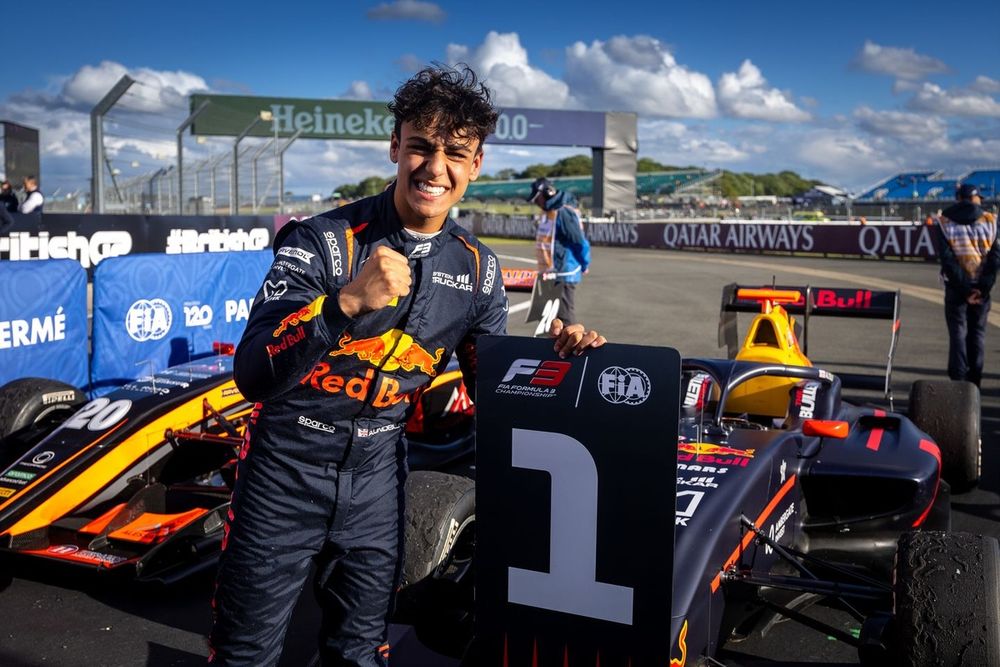
19 years old and doing a splendid job in his first season. A coming world champion?

In comparison, what happens down in Maranello has us all scratching our heads, especially when it comes to Lewis Hamilton. How can it be that a seven-time world champion doesn’t manage it beyond Q1 in the last two qualifiers when his teammate Charles Leclerc does so with a margin? Plenty of theories are going around, essentially boiling down to Lewis at one end complaining and calling his first season at Ferrari a nightmare, and others pointing out that as a 40-year old driver with seven world titles, you should perhaps be able to make it beyond Q1, and if you don’t, that it’s perhaps time to say arrividerci.

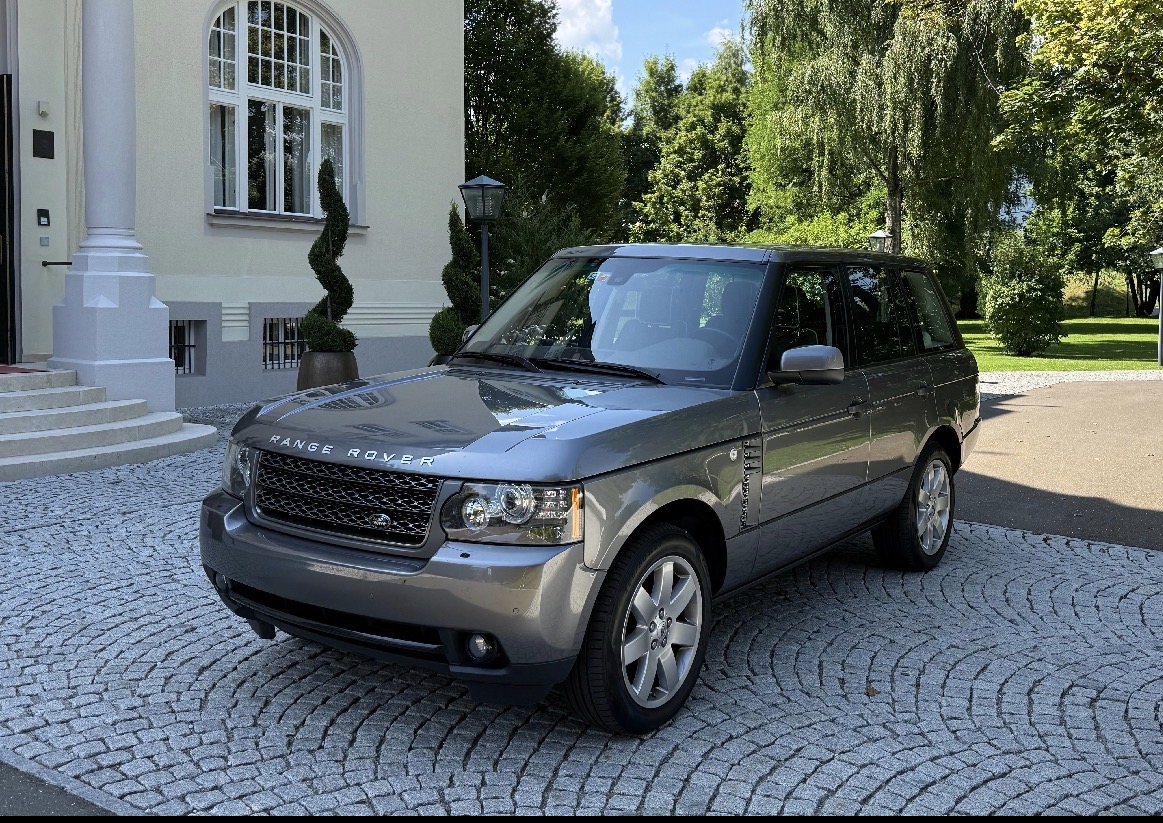
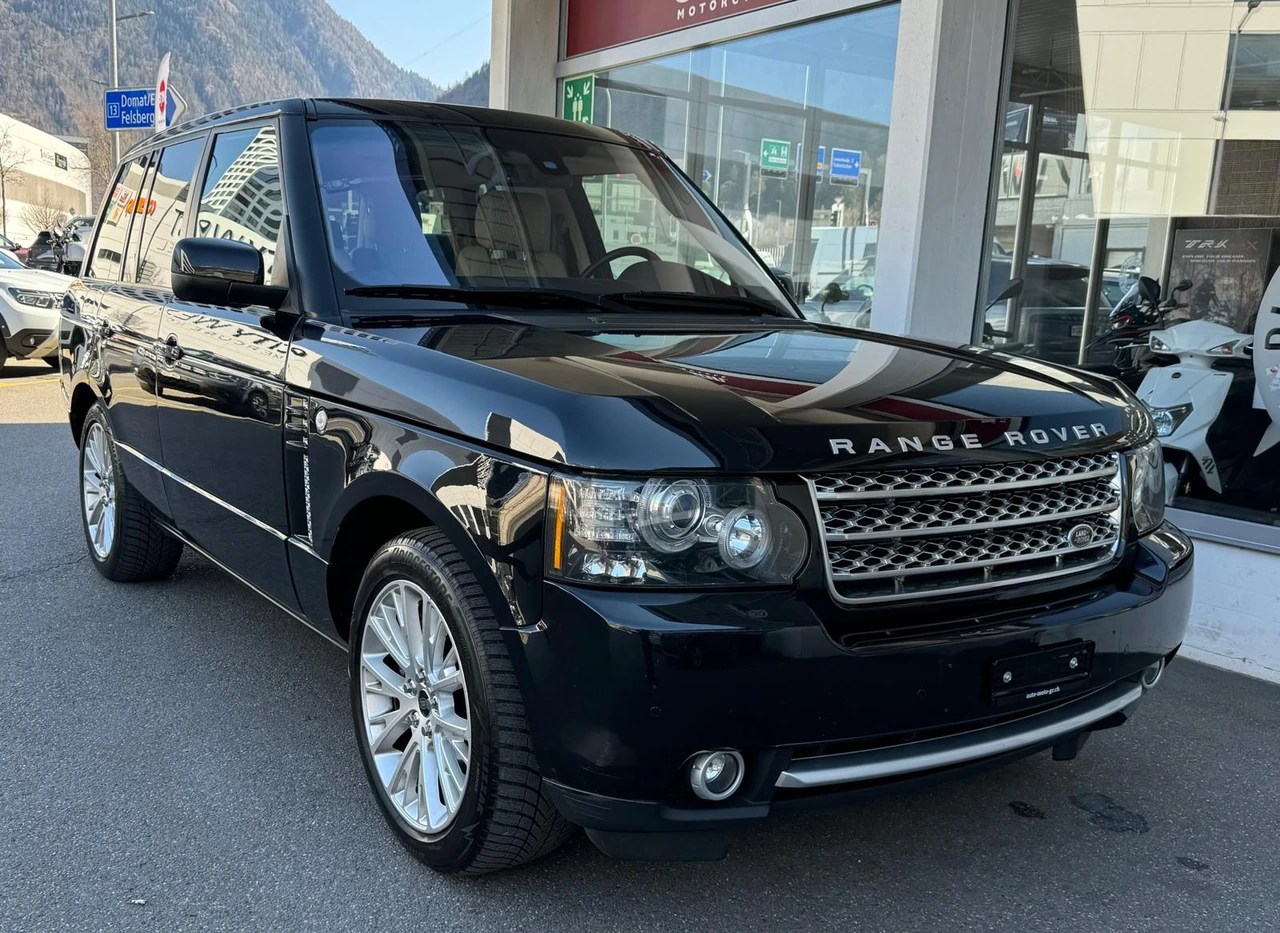
I would tend to agree and also point out that it would be good for Lewis to change his tune before the team loses confidence in him as well. Ferrari is a Latin outfit which Seb Vettel and especially Schumi learnt to handle and exploit fully, but which Lewis seems to struggle with. That’s a bad direction to go in, especially when you’re 40 years old and cash a very big cheque. Before the season, I would definitely have put the Ferrari duo ahead of Russell and Antonelli at Mercedes, again showing that my predictive powers are about as reliable as worn-down Range Rover.

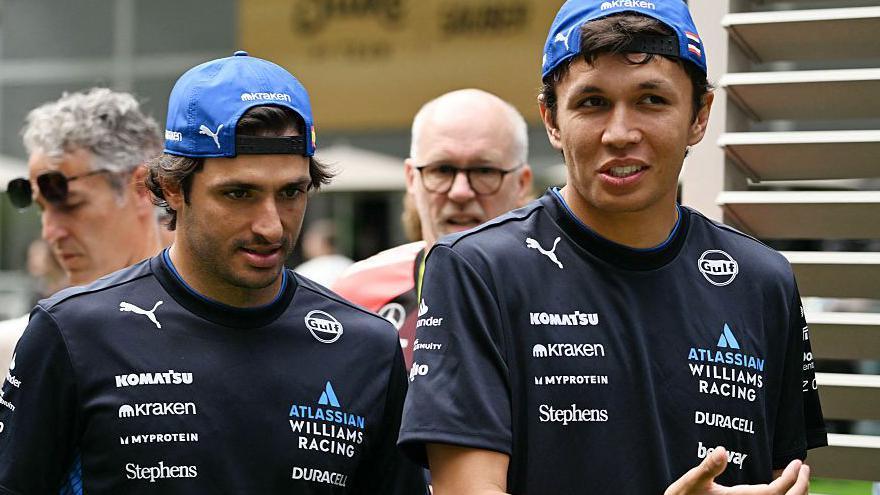
The other teams are all miles from the leading four, but it’s worth mentioning Williams who for many years were at the very back of the field but who now regularly score points with the well-functioning duo Alex Albon and Carlos Sainz. They both scored a similar amount of points (Albon at 73, Sainz at 64), with Carlos notably finishing third in the before-last race this season in Qatar. That’s nice to see, although it’s difficult to see the team moving further up the ranks.

Things are going well at Williams, and Albon and Sainz have emerged as a great duo.

As we close the books on 2025, we do so with Lando Norris as brand new world champion and McLaren thus taking the double. Seen over the full season, I would say it’s well deserved, as he’s been more constant than Oscar Piastri over the full season, and McLaren has clearly been the best team. Max Verstappen finishing second, only two points behind, is no doubt a disappointment for him, but far more than he could have hoped for a few weeks ago. Oscar Piastri’s disappointment is no doubt bigger, having basically had it all in his own hands back in September.

Of course, Piastri will have a new chance next year, as there is little doubt McLaren will be among the top teams then as well. It’s difficult to say more though, since the 2026 season will see a total revamp of the cars, with major changes notably to the power unit, chassis and aerodynamic rules. More on that next year before we start off the season 2026, but even as we conclude 2025, we know that it will be a tall order for the new cars in the new year to beat the excitement of the 2025 season!

Look for your very own Peak Car!

Hardly a day goes by without negative news from the car industry, especially the premium German brands. Talk is of falling sales, rising inventory and risk of bankruptcy. And a look at the car market tends to validate the concerns – gone are the days when a new Porsche 911 GT3 was worth more three months after delivery. The same goes for the Ferrari 296 and other models from previously infallible brands. This isn’t a completely new phenomenon, but rather one that started with the hybrid supercars a few years ago. the Ferrari SF90 provides a good example of a car that has only fallen in price since new, in spite of having more horsepower than any Ferrari before it.

Car pundits scratch their head, advancing various theories. Electrification is certainly one explanation, and one I’ve touched on here as well. The billions that went into producing EV’s that no one bought could certainly have been put to better use. Car Youtubers also advance the view that manufacturers have forgotten the enthusiasts, and again, Ferrari is mentioned as the prime example. Let me however present you with a far simpler theory, that I’ll develop further below: whether in supercars, sports cars or family hatchbacks, the world has moved beyond Peak Car, and except for what goes on in the market for the ultra wealthy, buyers don’t find the large piles of money new cars command worth it anymore, as they don’t see new models being fundamentally better than previous generations.

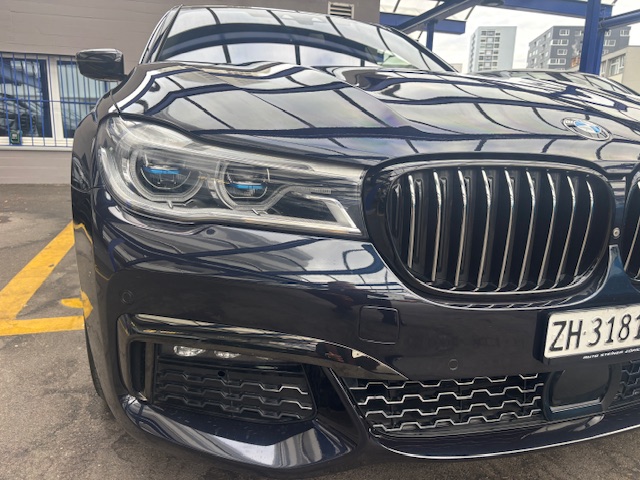
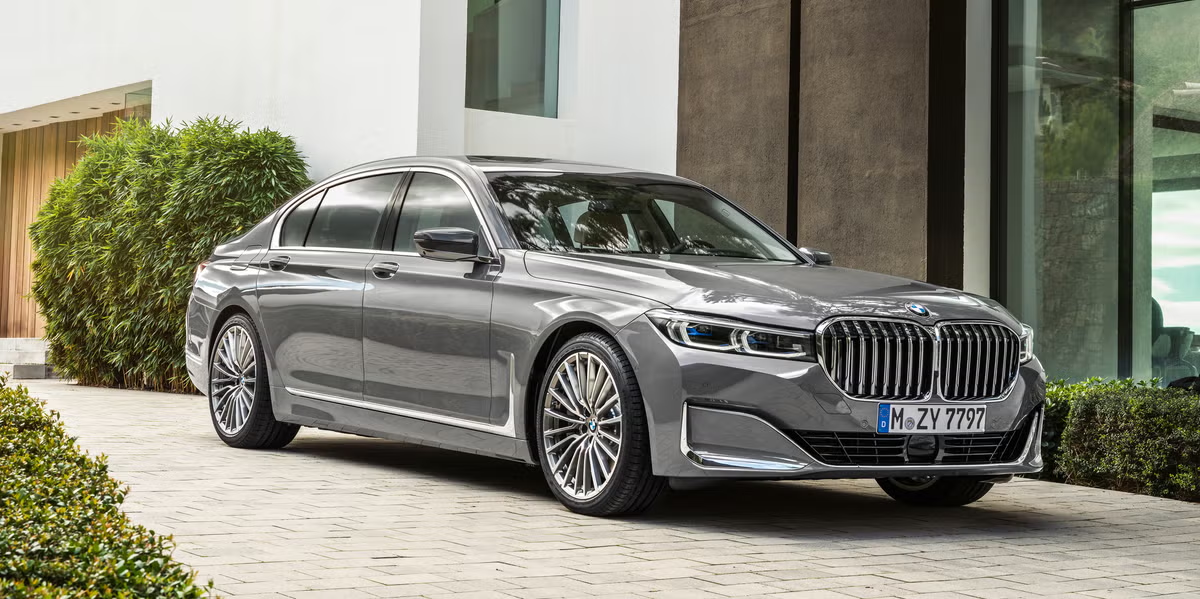
The new 5-series. Had someone told me it was Chinese, I would have believed them.

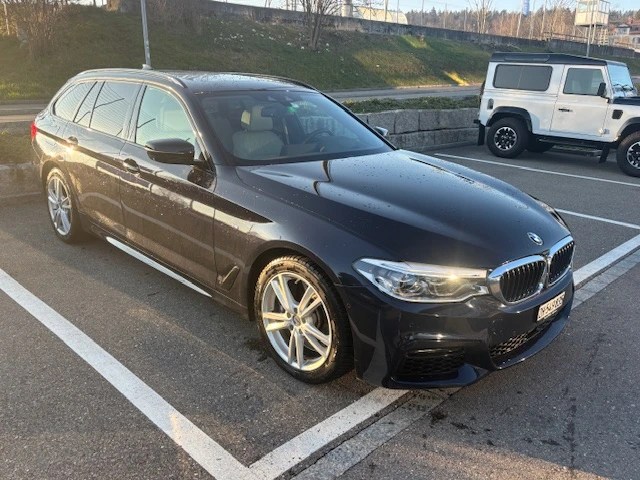
As an example from last week, I watched a German car Youtuber comparing BMW’s new 5-series station wagon in the top diesel version, the 540d, to the previous 540d from the G31 generation, the same generation as my 540i. The G31 was from 2021 and had more than 130.000 km on the clock but was fully loaded equipment-wise, and in immaculate condition. It was for sale at EUR 39.000, whereas the new car with less equipment cost far more than EUR 100.000. The question was whether the new car was worth the difference. The answer wasn’t clearcut.

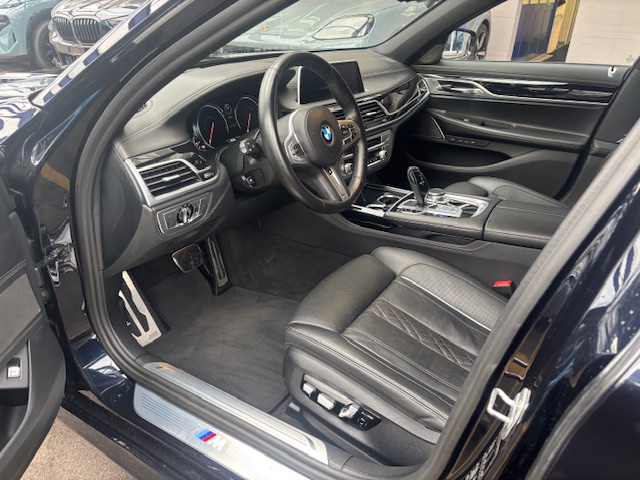
On the positive side, the new car consumes about 10% less fuel than the previous version, thanks to a mild-hybrid system. It is said to drive slightly sharper and has a bigger infotainment screen (I’ll let you be the judge over whether that’s a positive or not). The list of negatives is unfortunately far longer. It starts with the bland body style, where the side is now completely flat, given it’s cheaper to press that way than with the more dynamic lines and shapes that characterized the G31. When you open the door, there’s no metal door sill with the M logo on greeting you anymore. In fact, there’s no door sill at all. The plastics are of the cheapest type throughout, and both the seats themselves and the leather on them seem of lesser quality than on the previous model. Finally, the new car is down 17 hp on power, but weights 200 kg more. You can thank the same mild-hybrid system for that.

It used to be that when a car brand such as BMW introduced a new generation of one of its large volume models, no one would even question whether it was better the previous generation – that was a given. And yet, at the end of my 20-minute Youtube clip, the conclusion was not at all obvious, even whn the older car had more than 130.000 km on the clock. You be the judge on whether you would invest around EUR 70.000 more for the new 5-series.

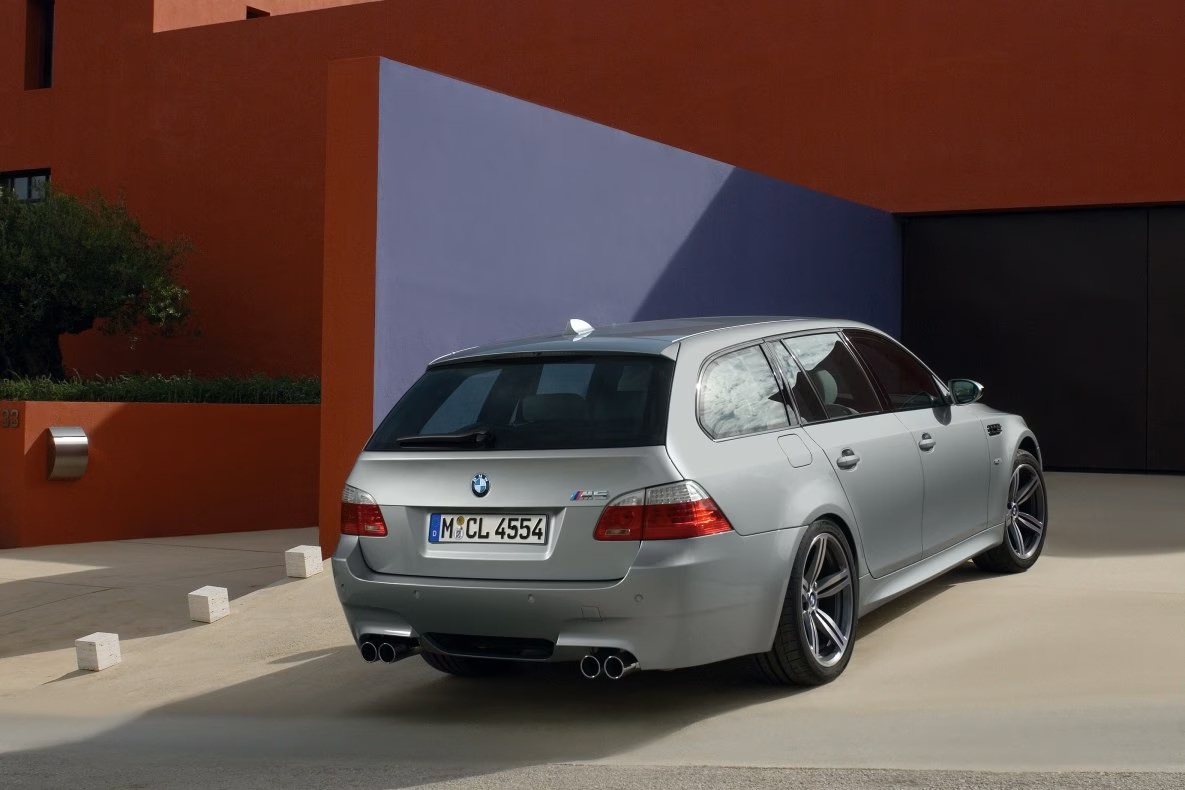
The G31 M5, here in CS shape. Oh how far we’ve fallen…

To me, the G31 is the better car, but it’s not perfect. The fact that in 2020, BMW wasn’t capable of building parking sensors that work with less than a 2-3 second delay is a mystery. This means the car will sound warnings the whole time given the number of sensors, but they’re so delayed so that in the end, you have no idea where the obstacle is. The cameras aren’t of much help, as the angles and lines are so confusing I still haven’t figured them out after more than 35.000 kms. The gesture control is certainly more a gimmick than an essential feature and not one I would have optioned had I bought the car as new, but it’s quite enfuriating not being able to move your right hand without changing radio stations. The lane keep assist is completely useless, as the car floats between the two lines to an extent that makes it look like whoever’s driving is drunk.

Of course, other features are more useful. The adaptive cruise control is one, and it works great, even in stop and go. The side warning against crossing traffic when you’re in reverse has saved me a couple of times. Having recently driven down to southern France at not very legal speeds, I would claim 8.5l / 100km is an excellent value, as is the sublime comfort of the car. It’s just that pretty much all those things were there already around 10 years ago. What wasn’t, and what’s been introduced in the last years, except for larger screens, are things like gesture control or 67 different interior colours. And complicated hybrid systems that make cars hundred of kgs heavier.

In terms of family cars, my peak car is probably around the mid-2010’s. My E63 AMG was a great example. It had enough modern features, some of which worked even better than on the 540i. It had one interior light color which was all I needed. And above all, it had a wonderful V8 engine, without any complicated hybrid system, and with around 560 hp that had no trouble whatsoever with the 1850 kg weight. Everything felt solid as a rock.

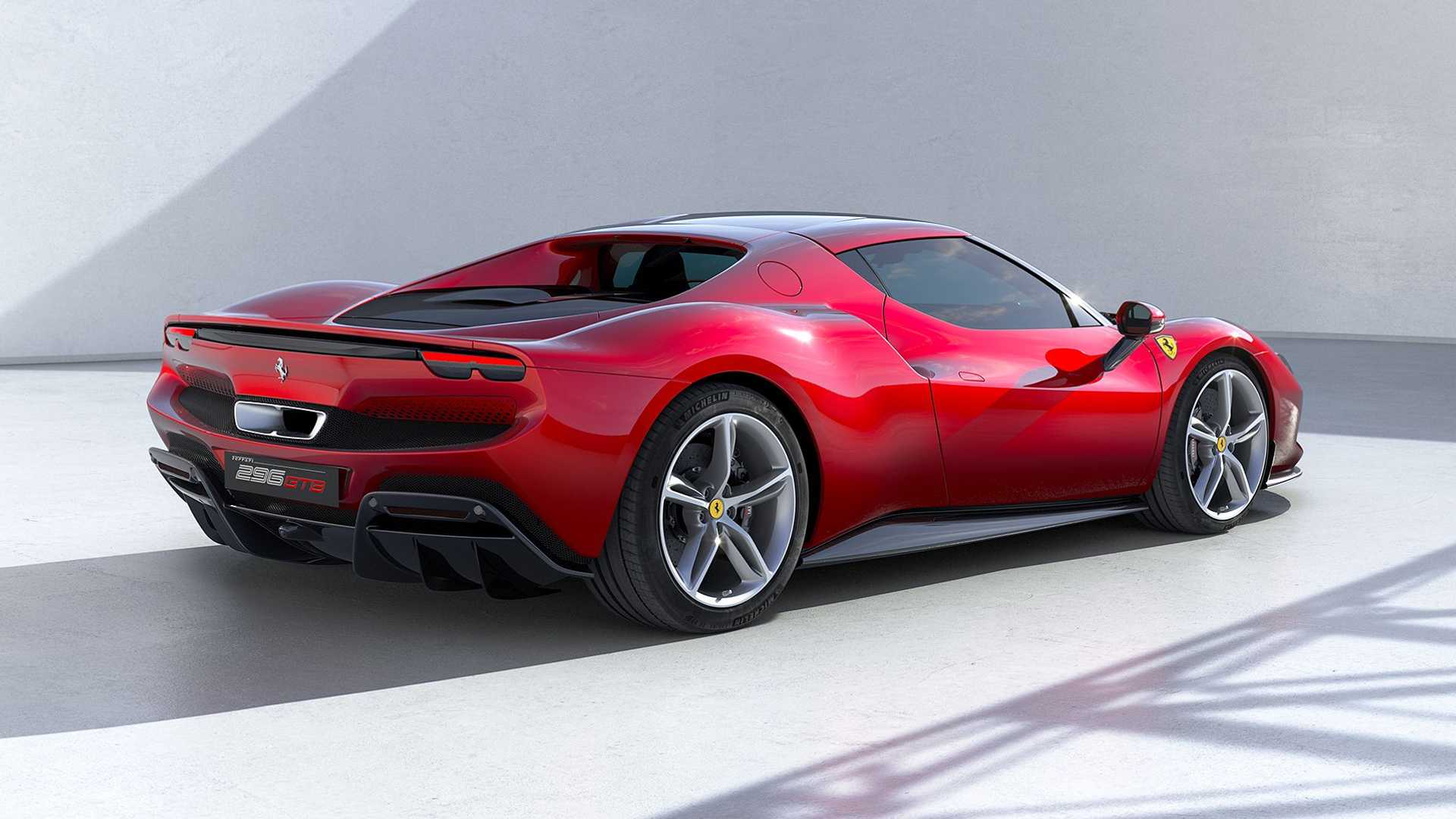
The Ferrari 296 GTB. Too much power.

If you look at sports cars and supercars, I would claim the logic is the same. Sports car buyers aren’t especially interested in hybrid systems in general, and especially not when they make the car 200 kg heavier. They don’t need all the infotainment features, and would prefer switches to tactile surfaces. And very few people would feel they need over 800 hp – in fact a regular criticism of the Ferrari 296 is that at 830 hp, it has too much power. Remove the hybrid system and you’re left with 660 hp at less weight. If you had the option, would you even think twice about it?

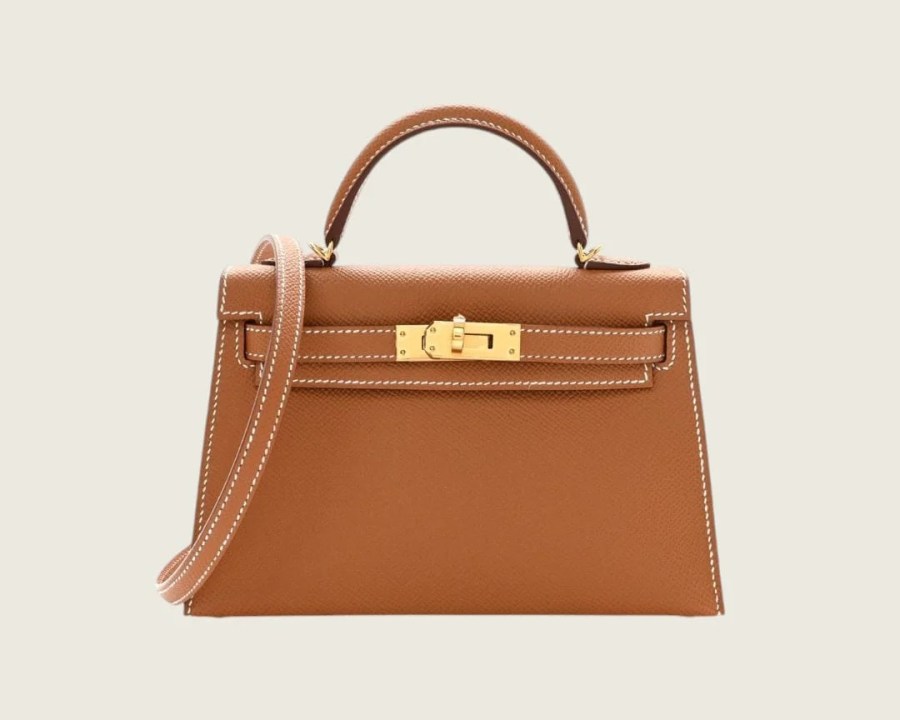
That said, Ferrari has a brand value like no one else, and you only need to look at the stock price over the last years to see that they’re clearly doing quite a few things right. They may well have forgotten about the enthusiasts, at least those with limited resources, but they certainly haven’t forgotten about their best clients, since over 80% of new cars go to existing Ferrari owners. This means that the brand from Maranello can allow itself things that othe manufacturers can only dream of. Ferrari is the Hermès of the car world.

That enviable position is something none of the big German brands have, and as argued previously, the active dilution of BMW’s M-division and Mercedes’ AMG by sticking corresponding logos on a few models of every line-up has made the whole thing worse than it needed to be. These guys are all volume producers, as is Porsche, and if people stop buying the new cars in volumes, especially the top models, there’s a big problem.

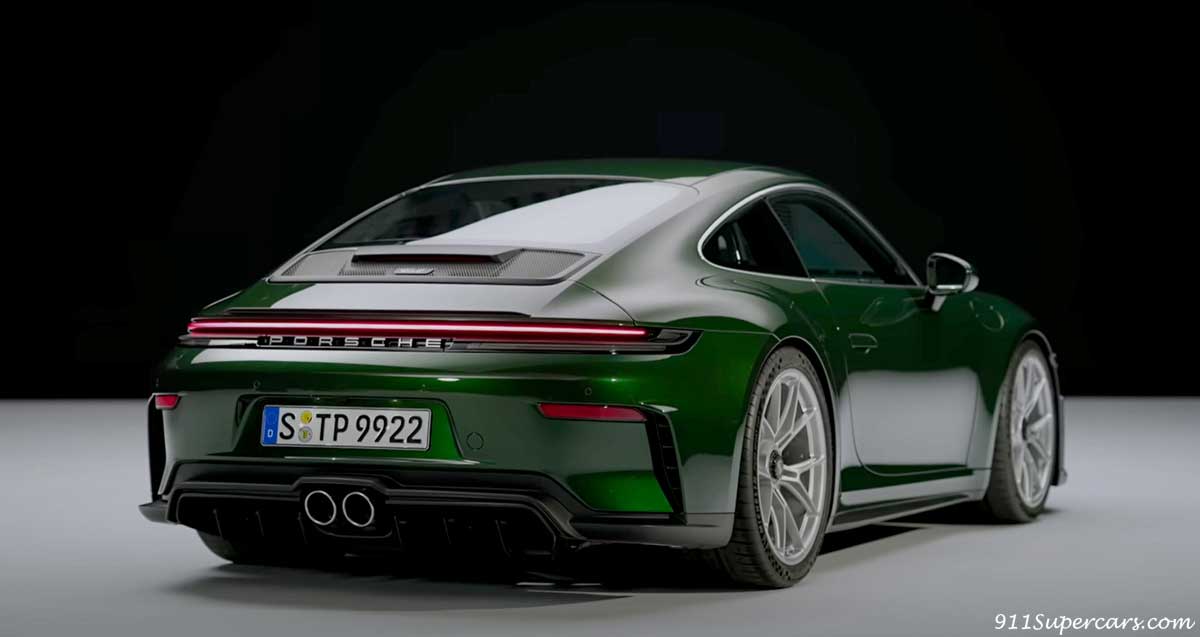
Not even the pretty stunning 992.2 GT3 preserves value llike its predecessors

To come to some kind of conclusion, I don’t know anyone interested in cars who thinks what’s on sale today is exciting, or anywhere near something that could be referred to as Peak Car. On the other hand, I know a lot of people who talk about the cars built 10-15 years ago with some nostalgia. In a couple of weeks, I’m sharing a Glühwein with a reader of this blog who’s thinking of the BMW 635 CSI as a possible daily. I haven’t planned drinks with anyone who has questions on the new, 2.6 ton M5 Touring.

Things are not about to look up for our beloved German brands anytime soon. They can’t revert to things as they were before, even if they wanted to, and I’m not even sure they understand the issue, even though it’s pretty much painted on the wall. That also means that many of them are probably doomed in the longer term. We don’t need to be, however. We don’t even need to move to other brands, but rather think about what we really value in our cars, which of the ones we’ve owned we look back most fondly at, and which of those would cover our daily needs. Many of those will come from the same brands as before.

I seem to recall having one of these in the garage. Still looks far better than any new BMW!

For me, that means the 2010-2015 era for everyday cars, and perhaps the 00’s for sports cars (I’d pick a Porsche 997.2 any day over a 991.1, or why not make a deal on a 997.1 that has had the IMS issue fixed? The price difference in the market is hardly motivated). Your era may be another one – for another one of my readers, it’s for some reason the 90’s Land Rover Discovery. The point is that there’s no absolute Peak Car – it’s up to you and your preferences. The only thing absolute is that it’s not what comes out of the factories today. A well-kept, low mileage example from whatever era is your Peak Car will most probably make both you and your wallet happier, and holds it value better, than what they’re trying to sell us today.

Driving the Speed Demon!

My music-producing son and I don’t agree on everything in music, but on many things we luckily do. I struggle with some of his modern stuff, and he definitely does so with some of what I like from past decades. We do however find common ground quite frequently, which from my generation includes for example Fleetwood Mac, Tom Petty and Genesis. And also on Michael Jackson (MJ) being the best pop singer of all times (and Quincy Jones definitely the most legendary producer!).

In 1989, said MJ wrote a song called Speed Demon, which relates perfectly to this week’s post. Googling will tell you the song is about driving fast, but if you dig a bit deeper, you’ll learn that more specifically, it’s about MJ himself driving so fast on his way to the studio that he got a ticket. Those two things, driving fast and getting not one, but most probably lots of tickets, is something you definitely should plan for if you go anywhere near the Bentley Continental GT Speed in the top of the line, 6-litre, W12 version.

“My” Continental against a suitable background…

“Here we go again” some of you may think, he’s on about a Bentley again. You would have a point since I wrote about the Conti in 2023 and it’s also been mentioned in various other posts. However that’s never been in the top Speed version and until recently, I didn’t realize what a difference that would make. The opportunity to find out practically jumped at me when scrolling through interesting car ads, something I suspect I’m not the only one on this blog having as a favorite pass time…

The car in question was a 2014 Speed in the W12 version in dark blue with a blue-brown leather interior, fully serviced and with one owner since new. With 110.000 km on the clock, the ask was CHF 57.000 (about USD 65′ / EUR 60′), from a new price of around CHF 250.000. 2014 means second generation which is good, and the seller’s garage was of a type you could imagine doing business with, which isn’t always the case when it comes to old Bentleys (then again, those cars tend to have had far more than one owner…).

In the quest for the perfect transport for my better half of me to southern France, I thought I may just have found it, and after a quick call, I met up with what turned out to be Zurich’s nicest car salesman. He had previously spent a few years as a salesman at Schmoll, the leading garage for Rolls Royce and Bentley in Zurich, before setting up his own business. Next to “my” Continental, his showroom had a nice collection of further Bentleys and a few Rolls Royces, along with a few supercars and some more ordinary stuff.

I’ve always liked the Continental’s shape, especially in the 3/4 angle

The Conti was stunning. A deep metallic blue which, bar a few small stone chip marks on the front, was in beautiful condition. The dark blue-brown interior may have sounded strange on paper but turned out to be the perfect combination. Classy is very much the word. The salesman told me the car came from one owner with a full service history from two Bentley garages in Switzerland. No less than 11 stamps in total, one per year. “It’s a Bentley” he said with a smile when I questioned whether this wasn’t overdoing it a bit?

That perfectly colored interior turned out to be perfect in all other aspects as well, and looked like it had left the factory yesterday. It was a reminder of what I’ve been on about before, namely that leather doesn’t equal leather, and no car this side of a Rolls makes that clearer than a Bentley. Combined with the metal knobs, chrome and wood details, the thick carpet and the leather lining, this was an exquisite place to be. It also included the obligatory Naim premium sound system, as the regular one is really nowhere near worthy a car that was CHF 250.000 as new.

We took the Conti for a spin and I asked the salesman to come with me. I had no intention of doing anything foolish with this impressive piece of kit, and he was a nice guy with far more knowledge about the car than me, so I was keen to talk a bit longer to him. Leaving the garage we made it to the highway in a few minutes, the right environment for this big GT. Driving down the half circle access ramp, it struck me that there was practically no rolling at all and throughout the half hour drive, I was stunned at how well-balanced, direct and light the Conti felt to drive. Clearly the Speed’s stiffer suspension setup and the 22-inch wheels helps a lot.

You see the real quality of an interior after 110.000 km…

Nice as they look, those wheels do however contribute to more road noise than you would expect. A few minutes on a Swiss highway, typically better surfaced than highways in surrounding countries, made clear that the Bentley was not quieter than my modest Beamer, and louder than my previous Range Rover. You certainly don’t need to shout to your passenger, but it’s also not as silent as you may, and probably should expect.

And then the engine was at temperature, and everything I’ve written so far went out the window.

I didn’t floor it but rather pushed the pedal about half way. The thrust that followed is something only a 12-cylinder can produce. There’s a guttural roar building in strength as you’re pushed towards the seat, much like in a big airplane accelerating down the runway. Where a V12 from Maranello or Sant’Agata will give you a Pavarotti pitch, the Bentley rumbles in an impressive bass. Power feels limitless and endless, and while this moment felt like it had just begun, we were already north of any type of legal speed, which can quickly become quite costly in Switzerland.

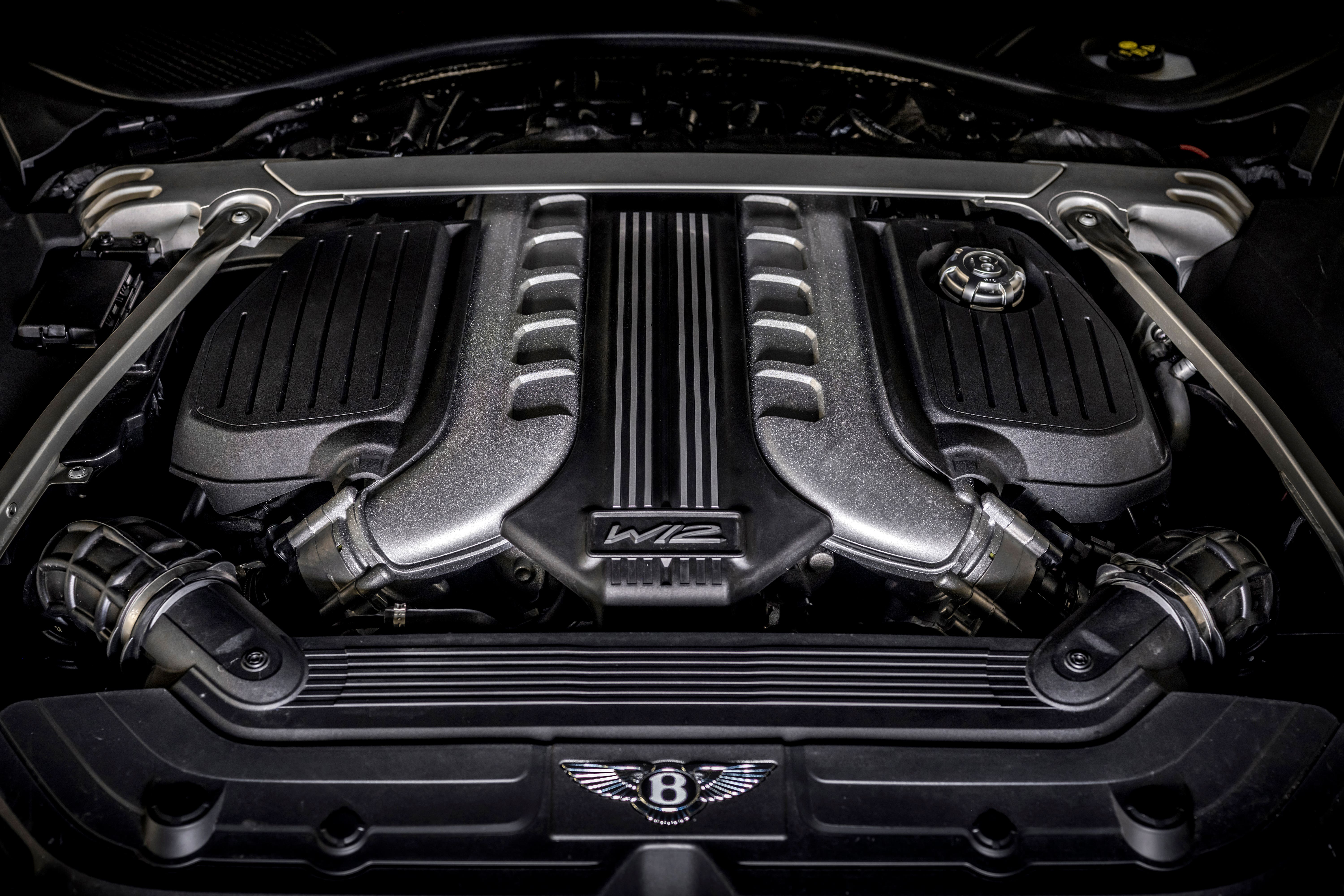
What an engine! In numbers, the twin-turbo, 6-litre W12 puts out 625 hp and 800 Nm of torque, taking the 2.4 ton Conti to 100 km/h in four seconds and further on to a top speed of 330 km/h. All that is however completely irrelevant. I couldn’t care less if the sprint to 100 km/h took three or five seconds – it’s that feeling of propulsion in combination with a sublime interior that makes it a close to unique experience. You expect a Ferrari to kick your butt, but not this opulent, 2.5 ton creation.

If you could ever only have one engine, this would be my choice!

After making sure a couple of times that what I had just experienced was indeed real, we settled to a legal pace and started talking about the car. The first thing the salesman said was that he found it incomprehensible that Bentley didn’t manage to build dead-angle side mirrors until much later. I hadn’t noticed, but he was indeed right – this CHF 250.000 Speed didn’t have it. Nor did it have a head-up display which I find a pretty useful invention, and although the interior was magnificent, it was also quite dark and could have done with a glass sunroof. The roof could have been optioned by the owner, but not the head-up display. Here again, Bentley was far behind many others, including it’s mother company Audi, which is a bit strange.

Coming back to those 11 service stamps, the salesman was clear on one service per year really being what you should plan for, if you want to keep your Bentley happy. The service is not more than around CHF 1.000 CHF he said, but they will always find something that should be done whilst you’re at it. So it’s better to budget about 2.500 per service. Right. And then there’s the 22 inch tires, which given that power of that engine will need replacing at least every other year. And neither the insurance, nor the road tax look very kindly on an old, heavy and complicated Bentley with a giant engine.

To lighten up the discussion a bit, I mentioned that I assumed 15 litres per 100 km was what you need to budget. No way, said the salesman, if you use this car properly, you’ll be north of 20 litres. Even with a 90 litre tank, that means no more than 400 km’s of range, basically like a modern EV – although quicker to fill up. I did the numbers in my head and realized that it would easily cost me CHF 8.000-10.000 per year to run this wonderful machine, and that’s before any major issues.

Head- and backlights are the best way to differentiate the first and second series

In terms of those potential issues, the W12 is known to be pretty bullet-proof and the 110.000 km are certainly no problem if the car has been properly serviced and cared for, which was clearly the case here. The second generation Continental is generally quite good quality-wise, with most issues coming from the air suspension and the many meters of rubber hoses that run throughout the car. If one of those lets loose, good luck in finding it. In some cases, it will mean removing the engine, which will then double the budget mentioned above.

There is a cheaper way to enjoy a Continental and that’s to go for the smaller V8 engine, preferably in S form. That’s certainly a great engine that has a reputation for making the Conti more light-footed. V8 Contis are however far more expensive to purchase, and although the V8 is no doubt adequate, it doesn’t have the magic of the W12. As I started to realize, it’s actually the engine that is more or less the magic of the whole car. The rest of the package is very nice, but not as outstanding as it was in 2014, and not necessarily better than for example an S-class Coupé.

Perhaps not an alternative to the Bentley folks, but certainly to most other people….

I have no problem spending money on cars (ask my wife about that…) but in the case of the Conti, the breakdown doesn’t add up. To make the running costs somewhat defensible, the car would really need to be perfect in every aspect, and the Conti clearly isn’t. Unfotunately, neither will it ever become a classic, given how many were produced. In Bentley’s eyes there is of course no competition to the winged logo from Crewe, but in reality there is, even if they don’t have a wonderful W12 up front. For me, the Conti is a flawed proposition – too complicated and expensive as a daily, and not a classic contender given how many were built.

You may see this differently and then I can only congratulate you on being less of a plebian than me. My salesman, who was a bit too nice and honest for his own good, was certainly right when he said he had always felt that if you go for a car, you should go for the top version. So if you go for a Conti, only do so for the W12 Speed, and only if you have the budget to care for it properly. Make sure it’s been serviced properly and don’t try to save a buck if you’re offered an insurance – take as much and as long as you can get. Perhaps get a brighter interior and a sunroof to lighten things up a bit.

Only do this if you’re not the kind of person who will lay awake at night thinking of everything that could go wrong. Nor the type who doesn’t like the local petrol station, because you’ll be seeing a lot of it. And whether you’re on the way to a music studio or not, be careful with those speeding tickets – the Conti Speed won’t help you out there either. As for me, I may have to revisit that S-class Coupé…

Is Porsche going bust?

Given I’m not into sensationalist journalism, I’ll take the risk of losing you right here by giving you the answer, which is no. And it’s also not my review of the Porsche Taycan that caused the rumours… However, what’s happening at the legendary car maker right now is quite dramatic and became even more so when Porsche presented its Q3 numbers this week. Therefore the question deserves to be asked, and a deeper look into the current issues at Zuffenhausen is warranted. As it turns out, there is not one, but rather three major issues that together have caused the current situation.

Before going into those issues ni turn, let’s look at what happened last week. Porsche’s Q3 numbers came in at a loss of a bit more than EUR 1bn for the quarter, which is a lot of money. it’s especially bad when it’s about EUR 400m more than the analysts had expected, and corresponds to a spectacular loss QoQ (compared to the same quarter in 2024) of 96%. That does for really nice headlines, as does the decision to sack CEO Oliver Blume and replace him with ex-McLaren CEO Michael Leiters early 2026, slash 2.000 temporary jobs, and announce that you will cut at least another 2.000 in the coming years.

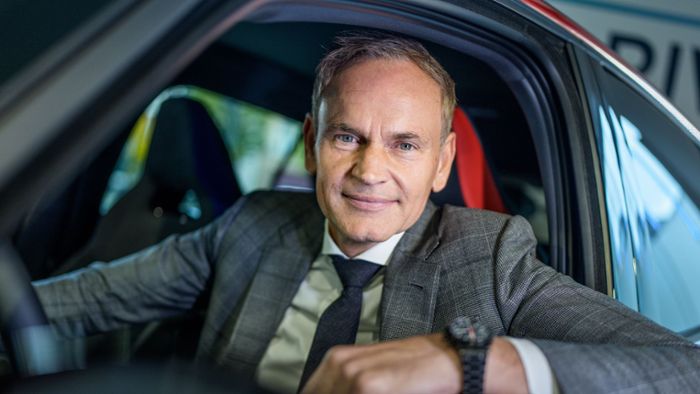
Blume, who’s also the CEO of VW is out, but will no doubt have enough to do at VW.

Porsche’s first issue is – of course – the politically forced adaptation to building a car type the public doesn’t want, namely EV’s. According to Porsche’s plans made as late as last year, far more cars powered by electric power were supposed to be produced and sold now than is currently the case. This was part of an electric transition that Porsche has invested many billions in during the last years. However, with not enough people buying EV’s, Porsche is now trying to pedal back quicker than Tadej Pogacar pedals up the mountains in the Tour de France. Still, this will hit profits this year by more than EUR 3bn. Such a change of strategy also takes time, but Porsche hopes things will look up in 2026 with an increase in sales of combustion engines and hybrids.

Contrary to Jaguar, one of the (many) other brands in crisis that you can read more about here, Porsche still builds cars and manages to sell quite a lot of them. A bit more than 210.000 cars have hit the road so far this year per end September, which only corresponds to -8% compared to the same period last year. That however takes us to the next two issues, namely the US and China.

If it ain’t built in the US of A, it’ll be expensive…

To start with the former, it’s of course the newly imposed tariffs that are the problem. Porsche currently has no production onshore in the US, so all cars sold need to be shipped there from Europe and are therefore hit by the full tariffs, currently at 15%. Porsche has so far partly offset this themselves, resulting in another, estimated EUR 700m hit this year. Going forward, they will have no other choice than to raise prices in the US and pass the cost onto customers, which certainly won’t help sales, especially not of the top models with the highest margins. There is also talk of a possible future US plant.

In China, the issue is not a lack of demand for EV’s, quite the contrary. The one party in the one-party state has told people they should buy EV’s, and that local, Chinese brands should build them. Which they do, and the loyal population buys them. That’s not the issue though, as Chinese brands do not compete in the same segment as Porsche. Rather, the issue is that China has seen slowing growth as well, especially in the luxury segment, and that is very much where Porsche is playing. Or trying to. In Q1 of 2025, Porsche’s deliveries to China were down 42% compared to the same period in 2024. And again, it’s no longer the top of the range cars with the highest margins which are mostly sold.

China was once the promised land, but those days are gone.

Luckily, Porsche has a strong balance sheet and is also majority-owned by Volkswagen (around 75%), in turn partly owned by the state of Lower Saxony and by itself, through a cross-holding. That’s never really been an advantage as it’s made the owner structure rather complex, with resulting issues we’ve seen played out at different times in history. However at this stage with all the uncertainties around automotive policies, and knowing how sensible local politicians are to job losses in their region, the partial state ownership probably acts as an additional buffer for both VW and Porsche, should it be required.

Long-term readers of this blog know that I firmly believe that the self-imposed, completely unrealistic ICE ban in the EU from 2035 will not stand, and Porsche as well as other car manufacturers are now increasingly lobbying for the ban to be postponed or lifted. They do so from a different position than when this was originally imposed, as they can now say we did what you asked for and built EV’s, quite nice ones in some cases, but the public didn’t buy them.

Not the kind of company local politicans are keen on losing.

Even if the 2035 ICE ban is postponed or lifted, let’s please not forget that bad policies carry a heavy price. Porsche’s shareholders have lost money, the 2.000 employees who have been sacked no longer have a job, and billions of EUR that could have been put to better use have gone down the drain, all because unelected EU politicians took a populist decision not anchored in reality. And whilst I’m at it, the US tariffs certainly won’t help either. It didn’t help in the 80’s when the same trick was tried to counter superior Japanese car imports, it hasn’t helped in other sectors, and it won’t work this time. Ultimately, tariffs make everyone worse off.

It may be a bit early but if I can have one wish for the new year, it would be that we return to free trade in the West, knowing it’s benefited the world more than most things over the last decade, and also, to a world where companies are allowed to produce and build the products their customers ask for. If not, we’ll start looking an awfully lot like China.

The world’s best EV? Driving the Taycan 4S

In a post back in August that you can find here. I made a very unscientific comparison of the depreciation of EV’s vs traditional ICE cars. The conclusion was on one hand that EV depreciation is indeed as bad as it feels, but also that ICE’s depreciate quite heavily as well and seemingly, far more so than they used to. I’m pretty certain that most of you reading this blog agree that “peak car” is pretty far behind us, and the conclusion from the comparison therefore seemed to make the case for hanging on to your existing jewel for a while longer.

That said, the thought has been nagging me that I may be missing out on something. After all, billions after billions has gone into the development of this new car concept referred to as of EV’s, and these cars cost half a fortune as new. Surely it must have led to something that is the next step in automobile development? To me, the car my thoughts have focused on is the Porsche Taycan, hailed by many as the best EV out there, and no doubt the best-looking.

When talking about the Taycan, like most people I initially preferred the station wagon. With time though, the sedan has kind of grown on me and today, I find it at least as stylish as its equally good looking EV sibling, the Audi e-tron. As mentioned in the post back in August, although prices have started to stabilize, there’s definitely still deals to be made, so when I saw a well equipped Porsche Taycan 4S being advertised by a Porsche dealer close to me for CHF 64.000, from an original price of close to CHF 180.000 four years ago, I figured it was worth checking out.

It definitely has the Porsche look!

Given this is not an EV blog, it’s perhaps useful to remind us of the history of the Taycan. It was launched as a 2020 model in late 2019, initially as Turbo and Turbo S (leading to a pretty meaningless discussion on how on earth they could be called Turbos when they didn’t have one…), later complemented by the 4S and the entry level only called Taycan. The station wagon was launched a year later on an extended platform, either as a sleek wagon or as Cross Turismo with a slightly more rugged look. At least here in Zurich, it’s the Cross Turismo you see most of on the road.

The Turbo and Turbo S came with the so called Performance Plus battery as standard, a 93 KwH pack giving them a theoretical range of around 430 kms. The 4S however came with a smaller, 79 KwH pack as standard, with the larger pack being optional. Given the smaller battery pack only has a realistic range of around 350 kms, that option is pretty critical for having any kind of secondary value on your Taycan. The good news is however that all Taycans run on an 800V platform, meaning charging times are among the best in the business. The bad news, which depending on where you live is pretty bad indeed, is that they’re not compatible with the Tesla superchargers.

The boot space behind the relatively small opening is not very big

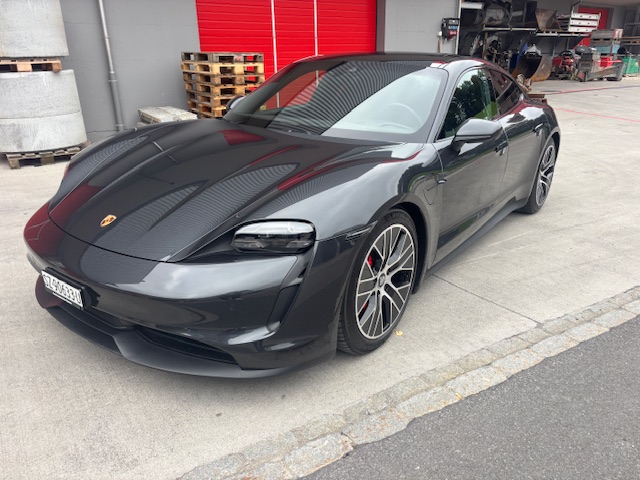
The Taycan 4S I tested at my local Porsche center came from one previous owner with around 60.000 km on the meter. Importantly, given the many electronic issues many Taycans suffered from initially, the car was Porsche Approved with a 12-month guarantee. As can be seen, it was dark grey on black and quite well equipped with the larger battery package. In this configuration, it weighed in just shy of 2.600 kgs, without driver… The exterior colour suited the car well, but the black interior made the whole thing a bit somber. That said, black is the best colour if you want to hide plastics of which the Taycan’s interior has a lot, although they seem to be of better quality than on some other brands.

Walking around the car (which was parked next to a 992.1 on one side and my BMW 540i Touring on the other), it was easy to see that the Taycan was far more comparable in size to my Beamer than the 911. Checking the numbers later, it’s actually 2 cm longer than the G31 BMW at just under 5 metres, and 10 cm wider, at just under 2 metres width. Sitting behind the wheel, you also have a feeling of a big car.

They’re plenty of space in the front, far less so in the back, and not very much at all in the boot, although the Taycan has a relatively useful frunk to complement it. The interior otherwise looks nice and feels well put together, and given how well its screens are laid out and how good the tactile response is, to my surprise I didn’t miss physical buttons. Screens will never be better, but in the Taycan it’s at least almost as good.

A fine interior. Lots of plastic, but overall a solid feel.

Taking off means pressing the start button left of the steering wheel where traditionally the Porsche key should sit, and then a lever on the right hand side. The immediate feeling which, was then confirmed over the following drive, is again that of a big car that it takes some practice to place correctly. It feels very well balanced between front and rear, no doubt helped by the low center of gravity, but it’s nothing you throw into a corner like a 911. The steering is ok, although those complaining about the steering on the 991 generation that I mentioned in my post on the 911 Turbo S would be apalled by it, as it feels very synthetic and not that precise. I’d claim the steering in my 540i is better overall.

Even though the car is heavy, the 563 hp from the two electric engines (520 hp with the smaller battery pack) are plentiful, and no one needs more power than this. Unlike most EV’s, Porsche also uses a two-speed auto box sitting on the rear axle, with a short first gear to preserve the full acceleration and a longer second gear for higher top speed than a one-speed box would allow for. This also makes the electric engines run more efficiently as high speeds, saving energy – which again makes you wonder why the very sleek car doesn’t have a better range? The box is only noticeable when it shifts under hard acceleration, but that’s also what Porsche wants, trying to give the Taycan more of a mechanical feel.

The technical setup of a Taycan. An advanced – and heavy – thing…

The talented engineers in Zuffenhausen have also chosen a different braking and regeneration (regen) setup than most EV’s, again trying to make the Taycan feel more like a “normal” car. If you lift off the accelerator, the car will only coast (roll freely) with no regen, and thus no braking. When you brake however the regen kicks in fully, so that it’s only under heavy braking that you use the actual brakes. I would say that whether it was regen or actual braking, this is where you really feel how heavy the car is. The braking is solid enough, but it feels like the brakes have to work pretty hard to bring all of the 2.6 tons to a standstill. The km’s left in the range did however climb a little after some pretty heavy braking, so I guess it works.

This leads to the same conclusion as always with EV’s, that weight is the elephant in the room. My 540i station wagon weighs just under two tons or around 600 kgs less than the Taycan, a difference which roughly equals the weight of the battery pack. The Taycan is a fine car that drives really well for an EV, but it’s no sports car, and whoever calls this an electric 911 doesn’t know what they’re talking about.

Then again, that’s probably not a fair comparison given it has four seats and a decent luggage space. So what do you compare it to? To keep things simple and staying with BMW, if you want a sports car, an M3 or an M4 of a similar age are of similar size and price. They have about 100 hp less, but also weigh close to a ton (that’s 1000 kgs!) less. And if it’s more the GT aspect you’re after, a 4-series coupe in an equally stylish body will do the job with less power, but also far less weight. Of course there are other comparable models from Merc, Audi and others, and all are in the same price range.

As an example, a 4-series grand coupe is yours for even less money. In every aspect a better car.

Would I consider a Taycan? If for some reason I was forced to buy an EV, a used one like the one I drove would probably be a good choice. Whoever paid more than EUR 180.000 for it initially must be out of their mind or really convinced they were saving the planet (which, talking about EV’s, boils down to the same thing…). Therefore, unless someone forces me, I’ll just note that although impressive, the Taycan doesn’t move the needle neither in automobile terms, nor in Prosche terms. It’s not better, and much less spacious than my G31 540i Touring of the same age, or other comparable ICE cars.

The only needle the Taycan moves is that of the scale, and no weight-loss medicine beyond plastic is on the horizon for EV’s. That’s a nut even Porsche can’t crack. Driving the Taycan did one thing for me – it put the nagging feeling that I may have missed out on something to rest. When I take the trouble to test drive a car, I usually come away with a general feeling that it’s more exciting or better than my, by all means excellent 540i. The Taycan was the exception to the rule.

The timeless land shark from Zuffenhausen!

Very few people would object to the statement that the Porsche 911 is the most successful sports car of all time – and they would be wrong. That said, and in spite of that, it’s also a car that Porsche tried to kill off at least 911 times before it earned the unshakable position it has today. It started all the way back in the mid-70’s, when the newly developed 928 was supposed to replace the already then ageing 911.

As we all know, replacing the 911 didn’t work then, it hasn’t worked since, and it’s improbable to work in the foreseeable future. Today we’re glad that Porsche failed and be that as it may, the 928 became a great complement to the 911 when it was launched, as the GT car it really is. Fast forward to today, and it remains a great car and something you could still call a bargain, especially in comparison to classsic 911’s.

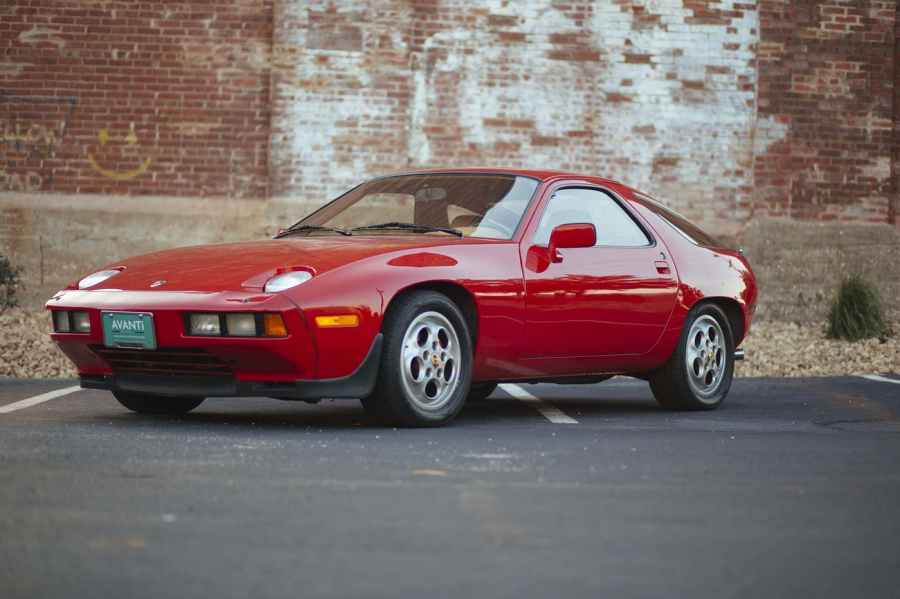
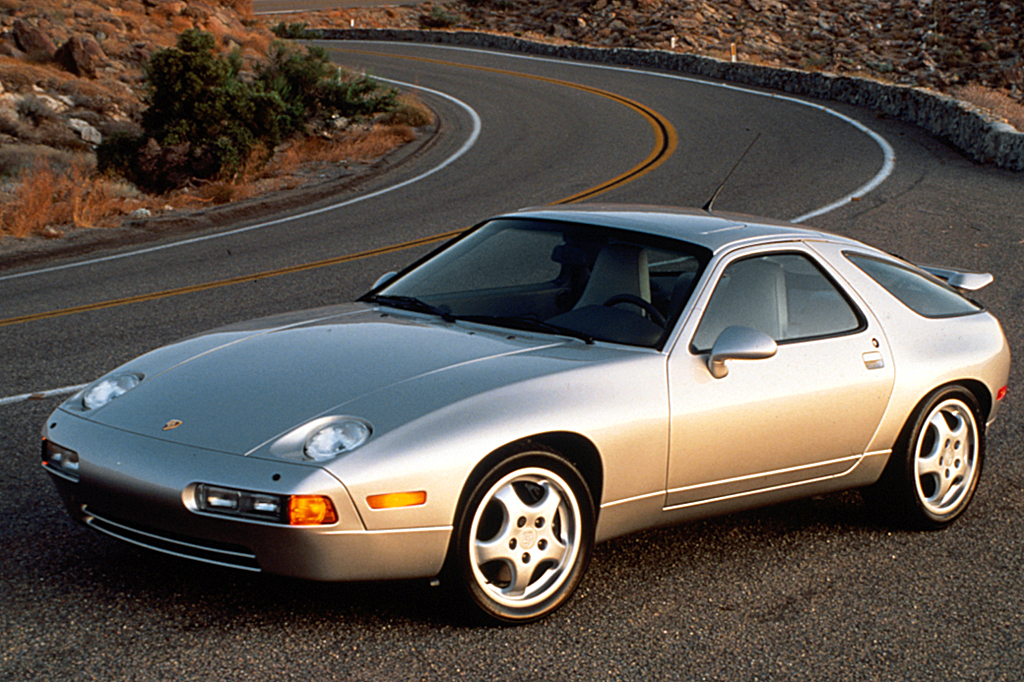
The general 928 shape remained largely unchanged from 1977 (as here) until the end in 1995

Design is a matter of personal taste, but unless you’re heavily into psychedelics, you’ll probably agree that the 70’s weren’t a happy period. The world was mostly brown and orange and cars generally looked like they’d been drawn with a ruler by someone loving 90-degree angles. When it was launched in 1977, the 928 was therefore a true revolution design-wise. The long hood and the “reversed” pop-up headlights earned it the nickname “land shark” in some countries, and the rounded rear with integrated shock absorbers doesn’t look dated to this day. To my mind, the 928 is probably the 70’s car desugb that has best stood the test of time. This was also proven by the production which ran for almost 20 years until 1995, with most of the design remaining pretty much unchanged until the end.

Coming back to where we started, it’s however difficult to see how Porsche actually thought that fans of the air-cooled, rear-engined 911 would ever consider the 928 as a replacement. Firstly it was obviously a larger car, even if it’s better described as a 2+2 seater than a real four-seater. Secondly it has quite a large boot, meaning the engine is up front. Thirdly, that engine was a newly developed, water-cooled V8 rather than a legendary, air-cooled six-cylinder. This led to the 928 being heavier, much more at home on the Autobahn than on curvy mountain roads. To this day, it remains a true motorway cruiser that sat nicely alongside a 911 at the time, although it never saw its success its smaller brother did.

The “phone dial” wheels are sought after today – here on a 928S, distinguishable by the rear spoiler

There was no getting around the 928 being a heavier car than the 911, but Porsche were very focused on doing what they could to keep its weight down. The doors, front aisles and hood are thus all made out of aluminium, and the front and rear bumpers were in composite material around a metal core. The original, 4.5 litre V8 with 240 hp was at the time the second most powerful engine from Zuffenhausen, losing out only to the 911 Turbo, and the 928 was thus well motorized from the beginning, helping offset the additional weight. It was available with either a 5-speed manual or a 3-speed automatic from Mercedes (later a 4-speed) from the start, mounted on the rear axle and thus contributing to the excellent balance.

The 928 was generally an advanced construction with notably double wishbone suspension all around and Porsche’s so called “Weissach axle” in the back of which I’ll spare you the technicalities but which can be described as a system for greater stability and less oversteer. That system was certainly never fitted to the 911’s of the time, and even 911 fans would probably agree that the 928 was in many areas far ahead of not only the 911, but of most other cars from the same period as well.

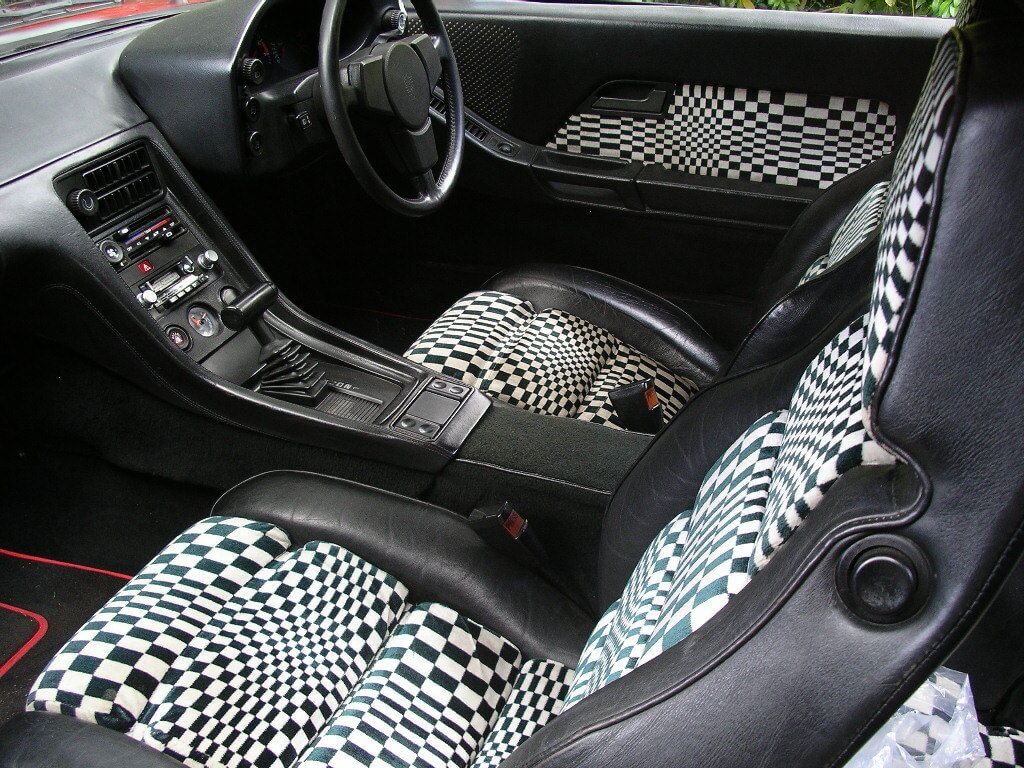
…as is the psychedelic, pepita square interior offered on the first series!

The first series was built between 1977-1982, with the 300 hp 928S launched as a more powerful version in 1980, and a couple of years later becoming the only available version. The S managed the sprint to 100 km/h in 6.6 seconds, a very respectable time in the early 80’s. It was also the car Porsche ran for 24 hours non-stop on the Nardo track in Italy, achieving an average speed of 250 km/h! Think of that a minute – we’re talking 24 hours with the pedal to the metal at top speed, back in the fully mechanical age! Porsche kept improving the S interior and equipment with notably ABS breaking, before it was replaced by the face-lifted 928 S4 in 1987.

The 928 S4 had a face-lifted body, best visible in the rear through new lights and a standard-fitted wing. Engine-wise it went form two to four valves and an output of 320 hp. The 0-100 km/h time was now sub-six seconds with a top speed of 270 km/h. The even sportier GT was introduced in 1989, adding another 10hp and only being available as a five-speed manual. Both versions were replaced by the 350 hp GTS in 1992, produced until 1995 and actually Porsche’s last GT car until the Panamera 15 years later. Over its full lifetime, a bit more than 62.000 928’s were built. Not a huge but still quite a large number, and in that sense it’s surprising how few of them you see on the roads today.

The rear part of the S4 shows where the Panamera inspiration came from!

Unless you’re not a die-hard, nothing-but-911 kind of person, a 928 will deliver the true Porsche feeling from behind the wheel. The engine is like a solid companion at all speeds, especially in combination with the manual box. The suspension is superb given the car’s age, but It’s clear from the first meters you drive that although smaller than modern cars and in spite of all the Porsche attributes, this is a true GT that is most at home on long distances with two (or 2+2) passengers and surprisingly, quite a lot of their luggage. On such trips, it will also surprise on the upside not only by its comfort, but also its lack of wind noise, one of the advantages of the soap-like design.

When writing about classics, I usually add a sentence along the lines of “make sure you check the history and the condition”. Never ever has that sentence been more true than if you consider a 928. As mentioned, the car is a complex construction. Parts have always been expensive and haven’t become less so today, only in some cases harder to find. The engine and gearbox are of course the most critical parts and inspecting the car from underneath before the purhcase is mandatory. If you’re unsure about what to look for, get a specialist to help you or take it to a Porsche garage. Trust me on this but also know that even if you go through all the checks, you shouldn’t buy a 928 with your last money, but rather keep a reserve for things that may come up.

As in late 944’s, the 928 interior has stood the test of time surprisingly well

So which one? Well, no surprise that a manual is preferrable, but the automatic is actually not as bad as you may think, so potentially try it if the rest of the car is good. Do get a four-peed automatic though. Design-wise it’s a matter of taste between the first and second generation, but be aware that the two-valve engine is easier (and thereby cheaper) to service than the four-valve from the S4 onwards. If that doesn’t scare you, the 928 GT of which only around 2000 were built is especially interesting. Otherwise, the 300 hp second series is also a good choice. Please don’t go for the Strosek or Gemballa 80’s versions with massive plastic wings, but rather try to find a car that is as original as possible. For the first series, both the phone dial wheels and the pepita interior you can see higher up are sought after today.

A good first series 928 will set you back around EUR 25-35.000, probably around 50% more than 10 years ago (but you’ve hopefully gotten richer in those 10 years as well!), however not much more than a few years ago, as values seem to have stabilized. The second series will typically cost around EUR 10.000 more with the GT and GTS potentially even more for low-mileage cars. High kilometres need not be a problem though, if the car has a solid and well documented history – but only then.

In terms of value for money, this means that you still get one of the best GT’s ever built for less than half of a classic 911, and no more than a third of what a power-wise more comparable 911 Turbo from the same period would cost. That my friends not only makes this a bargain among Porsche classics, it does so among classic GT cars in general as well!

Yes, design is personal, but no one can really fault the 928, can they?

F1 (extra) pit stop – inter-season action!

it was in late June that I published the latest F1 update, which was also the half of the season one. Rest assured that it’s not a lack of other stuff to write about which motivates another one so soon thereafter, but there’s been some inter-season action this summer that needs to be commented on. So in terms of race updates, I’ll come back to those yet another time before the season ends, in a few races from now. Today, we’ll look at the big news from behind the F1 scene.

“Thank you for everything, Christian, and you will forever remain an important part of our team history.”. Those were some of the words Red Bull’s MD Oliver Mintzlaff expressed when he earlier this summer announced that after 20 years, the Red Bull team had rather abruptly decided to sack team principal Christian Horner. By the looks of it, no one was more surprised than Christian himself, which is perhaps an indication that everything was actually not hunky dory at Milton Keynes, Red Bull’s HQ. When the boss doesn’t realize what’s going on, it’s usually not a good sign.

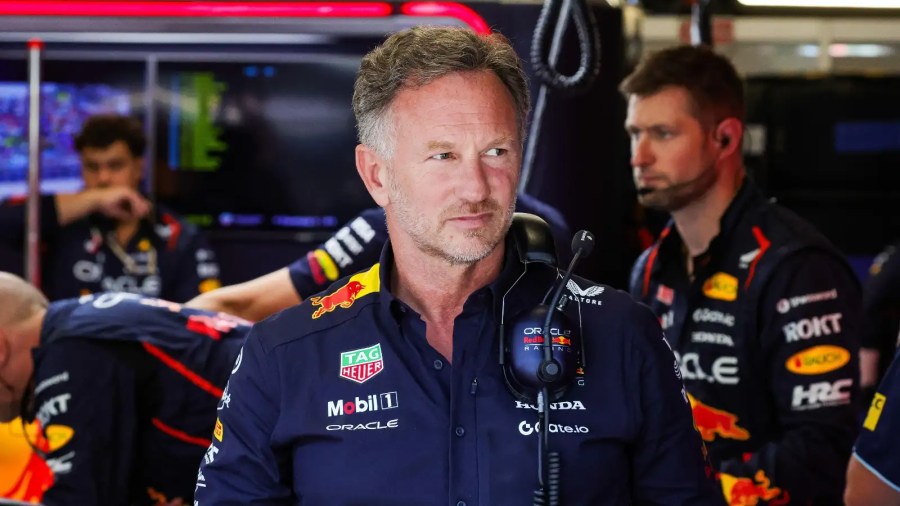
There have definitely been better days, if you’re Christian Horner…

Horner’s story with Red Bull is of course both a unique and a uniquely successful one. After some limited success as a driver in F2 and F3 during the 90’s, Christian admitted to himself that he didn’t have the balls for F1, and instead set off on a quest to build his own team in F3000, at the time the junior class acting as a stepping stone to F1. Doing so he met Red Bull’s grand old man Dr. Helmut Marko the first time, and it was no doubt their prior relationship that made Red Bull and Marko confident enough to choose him as (a 31-year old) untested team principal, when in 2001, they decided to launch their own F1 team. That was a bold move, but boy was it rewarded!

With Red Bull, Christian Horner went on to become the longest serving and one of the most successful team principals in F1 history. Over 20 years and 373 races, the team under his command recorded 113 race victories and six constructors’ titles. In the team’s best season 2022, Red Bull had a race win percentage of over 95%. And as the team’s uncontested first driver, Max Verstappen has won four world titles, the latest in 2024. So why on earth was Horner let go of?

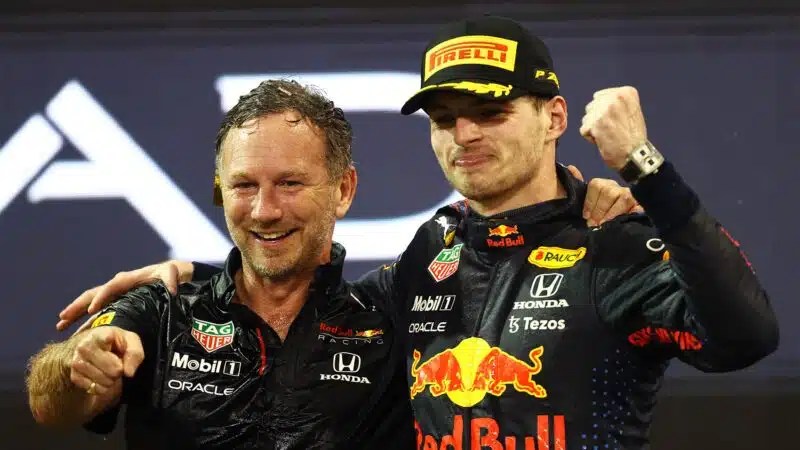
Those were the days!

The first cracks started to appear in early 2024, when Horner was accused of inappropriate behavior by a female Red Bull employee. He was later acquitted, but neither Red Bull, nor Helmut Marko, nor Max Verstappen’s influential father Jos appreciated the negative PR, and openly stated so. A bit later the same year, both team manager Jonathan Wheatley and the legendary designer Adrian Newey, who had been instrumental in Red Bull’s success over many years, announced they were leaving. At the same time, not even Verstappen could handle the Red Bull car anymore, and other teams, especially McLaren, were catching up. Race-wise the 2025 season hasn’t been any better, and 2/3 into the season, Red Bull has no practical chance of winning neither the Constructors’, nor the Drivers’ title this year.

Without Newey, even Horner would admit that Red Bull would never have had the success they did.

The other way of looking at it is also that with each passing year, the Red Bull car seems to be increasingly developed for Max Verstappen – and only Max Verstappen. It’s almost comical how many second drivers have passed through Red Bull and failed to get anywhere near Verstappen’s results. It started with Ricciardo (who arguably, made one of many bad choices in joining Renault, but he didn’t do so on the back of massive success at Red Bull). Then came Pierre Gasly, followed by Alex Albon, in turn followed by Sergio Perez, Liam Leeson, and now Yuki Tsunoda. That’s six guys in 10 years. Six guys that may not have Max’s talent, but all of which have recorded better results with other teams than with Red Bull’s world champion outfit. If you build a car that is really tailor-made to one driver and that driver doesn’t win anymore, as a team principal in F1 where memory only goes back to last Sunday’s race, you leave yourself exposed.

I think it would be suprising if Christian Horner doesn’t return to F1 in some capacity. During the summer, there’s been plenty of rumours on him joining Ferrari, setting up his own team again, or perhaps becomes the principal of the new team for the 2026 season, which is the other big piece of news from this summer: Cadillac’s F1 entry.

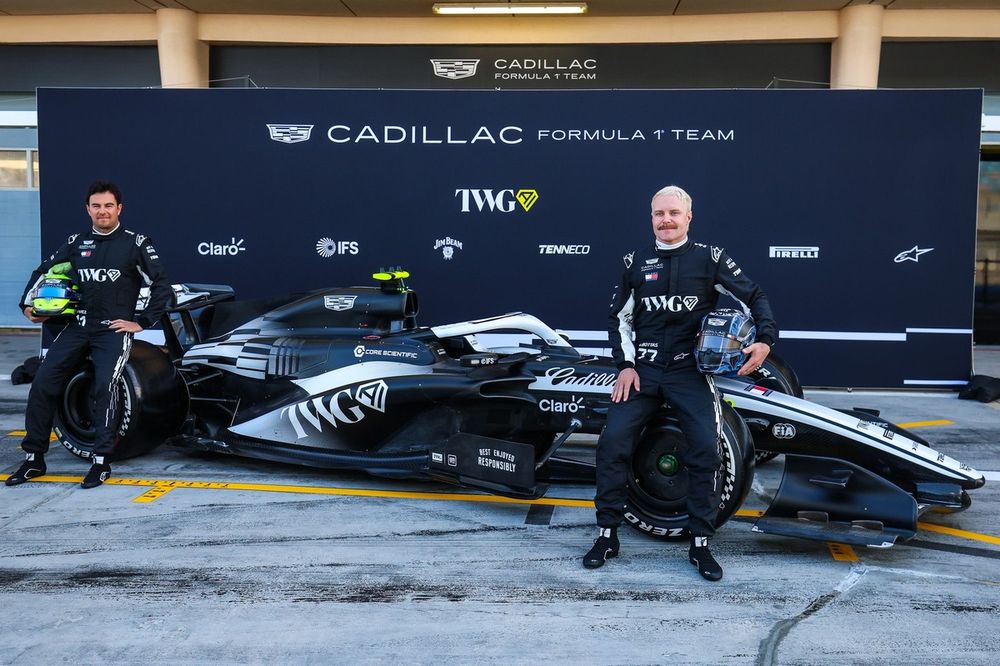
Two happy 35-year olds, a bit unexpectedly back in action!

Of course, the news that there will be another team in F1 next year is older than this summer, but it was in August that Cadillac announced its driver line-up for 2026. Contrary to the recent trend among the more established F1 teams, Cadillac goes for experience all the way, with Mexican Sergio “Checo” Perez on one hand, and Finnish Valtteri Bottas on the other. None of them have a seat this season, with Bottas being test driver at Mercedes, and Perez having taken the year out to spend time with his family. They do however have a total of 106 podiums in F1 between them, and the idea is that both now bring their extensive experience to Cadillac to help shorten the time it will take the time to establish itself.

Cadillac will be the 11th team on the grid and is a brand new outfit, in a collaboration between Cadillac, GM and TWG Global, a Chicago-based investment company active in sports, media and entertainment. Former Virgin and Marussia team boss Graeme Lowdon will run it (so no, it won’t be Christian Horner taking up the job). The engine will initially be supplied by Ferrari, but will be replaced by a GM powertrain by 2029, and it’s no secret that it’s the new engine regulations for next year, that we’ll come back to before the 2026 season, that make the entry possible.

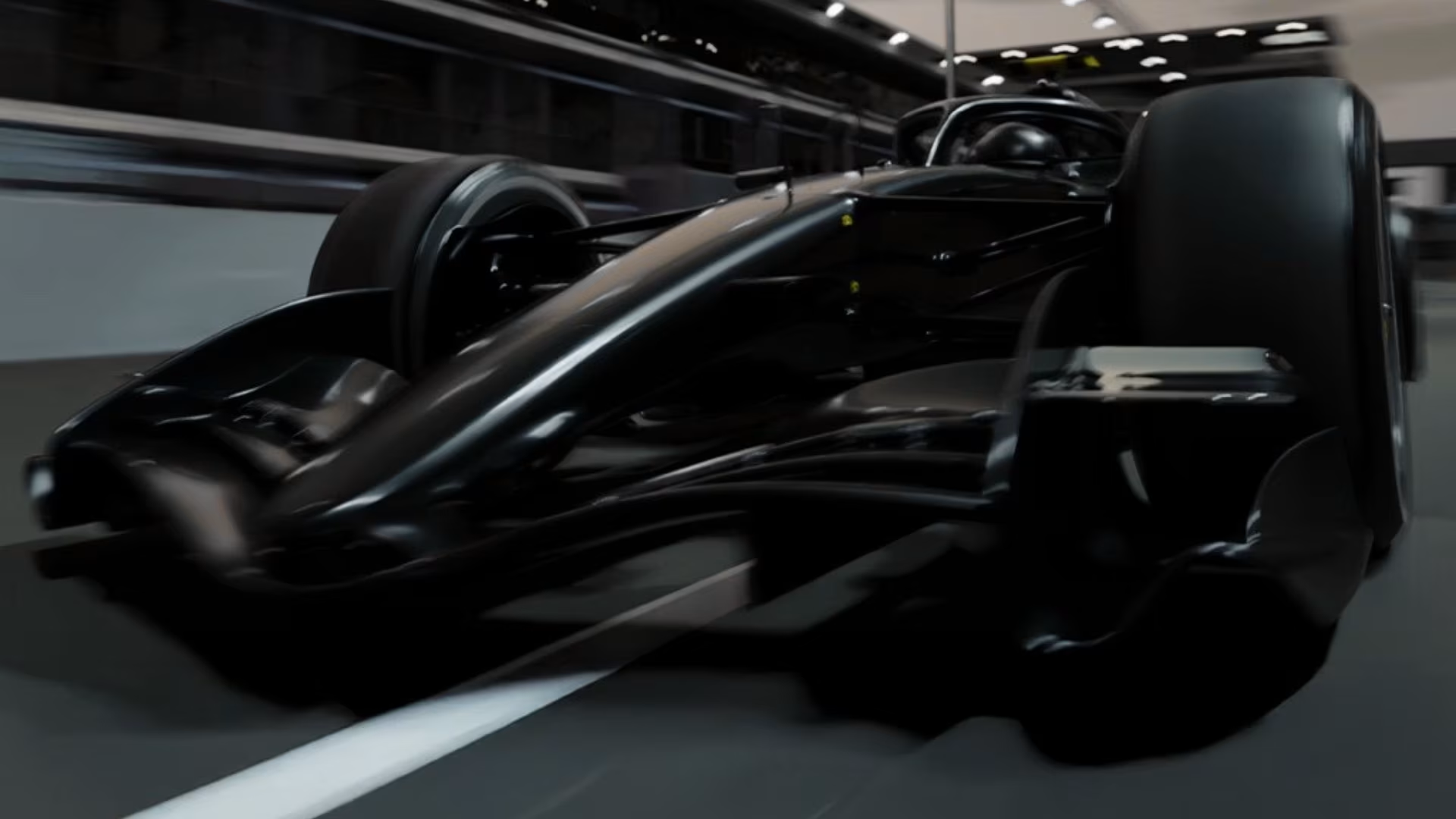
Images so far tell a very black story…

There’s no doubt that F1 and its boss Stefano Domenicali has thought long and hard about Cadillac’s entry as there isn’t room for any more teams behond this in F1, and any new entrants after this will therefore have to buy an existing team (is that perhaps where we’ll see or friend Christian Horner reappear?). There’s thus little doubt that Cadillac is serious about a long-term commitment. No F1 newcomer can however expect to be close to the podium in its first season(s), so don’t expect too much.

Come to think of it though, that’s not quite true. A young David Coulthard finished fourth in his first race for a brand new team in the 2005 season. The new team he was racing for was called Red Bull, and its principal was a rather unknown 31-year old, called Christian Horner…

Pictures from f1.com and Motorsport

The V10 is dead – long live the V10!

To borrow from John Cleese in the legendary Monty Python scene from the animal shop with the dead parrot, the V10 is no more. It has ceased to be and gone to meet its maker, and for all those of us who felt it was something truly special, that’s obviously very sad news. That said, there’s a bit of a delay in this post given production of the last V10 engine took place in late 2024, but if you haven’t gone into mourning yet or perhaps hadn’t realized it, the time has definitely come to do so. Let’s therefore look back into what made the V10 so special, the most prominent street cars that featured it, and, should you decide to help preserve the V10 for coming generations, which cars you should consider!

The V-shaped, 10-cylinder engine has been around far longer than many people think. Its roots go back to the 1940’s, but its history in street cars is far shorter, starting in the early 90’s. In the era when naturally aspirated engines were still the way to go, the V10 became a good alternative for when a V12 was too big and heavy, but a V8 wasn’t powerful enough. It produced more power than a V8 and often also ran smoother with less vibrations. And whereas it was less powerful than a V12, it typically had more torque, and was obviously also smaller and lighter. And then there was of course the sound that many still consider unequalled. I won’t even try to describe it in words, but let’s just say that if you’ve heard a V10 in higher rev’s, you’re not likely to forget it!

The V10 era was arguably the best sounding in modern F1 racing!

V10’s were also the main engine used in F1 during two decades. They appeared in the late 80’s after FIA’s ban on turbo engines, when manufacturers during a couple of years used everything from V8’s to V12’s (imagine that today…), Notably thanks to its greater efficiency and lower weight, the V10 then became the F1 engine of choice in the late 90’s and the first half of the 00’s, when all cars ran V10’s in what’s probably the best sounding period of F1 history. The fun ended when FIA made the small, 2.4 litre V8’s mandatory in the mid-00’s, making V10’s became a thing of the past.

In terms of street cars, surprisingly few brands have featured them in their line-up. The first was Chrysler in the 10-cylinder Viper. In the true American spirit of there being no substitute for cubic inches, the V10 was developed from the Chrysler V8 to which two extra cylinders and an aluminum block from Lamborghini were added. The initial version displaced no less than eight liters, putting out 400 hp, which in subsequent versions would increase to 8.3 liters at most, and over 500 hp.

The gigantic Viper V10 looks good, and sounds even better!

BMW also built a V10 engine, however only one, which was featured in the E60 5-series and the E63 6-series from the (Chris) Bangle-era between 2000-2005. At 507 hp, the 5-litre engine was the most powerful, naturally-aspirated engine BMW has ever built, and also one of the most high-revving V10’s ever produced. Importantly it also featured in the 5-series station wagon called E61, the only M-wagon ever built until the current M3 and M5 Touring, and perhaps the most collectible of the three models today.

The brand family that made the V10 most famous is however Audi-Lamborghini. Audi bought the Italian brand from Sant’Agata in 1998, and when the Gallardo was presented five years later, it was with the same base V10 engine that would be featured in the Audi R8 a few years later, from 2009 onwards. It displaced 5 litres in the Gallardo and 5.2 litres in the R8, but with a similar power output at around 520 hp in both. To round it all off, both cars were also available with a manual gearbox. And whereas the R8 later also came with a V8 option, the Gallardo was ever only available with the V10, as was its later replacement, the Huracan. The special version Huracan STJ, presented in 2024, would be the last production car to feature the V10, in its final form delivering all of 640 hp.

The Lamborghini Huracan STJ – a worthy end to an era!

Whatever you think about our coming electrification or lack thereof, the probability of the V10 making a comback is slim, to say the least. So if you want to add an example of this wonderful engine to your garage, you’ll have to look at pre-owned cars. Should you? The answer is a resounding yes, as long as you know what you’re doing. BMW’s V10 wasn’t directly derived, but borrowed heavily from the early 00’s F1 engine the company ran, meaning it’s at heart a race engine and needs to be serviced accordingly. That may be obvious if you buy an R8 or a Huracan. Somewhat unfortunately however, as you’re able to buy both the V10 M5 and (especially) M6 for below EUR 50.000, all buyers don’t realize that. Just as little as previous owners may have.

Therefore, buying a more recent and certainly more expensive R8 or Huracan is probably a safer bet, but as always, if you do your homework properly, nothing fundamental speaks against a BMW V10 either, or a Gallardo for that matter. Personally, I would park an early Gallardo in my garage and make sure it’s a manual. It may have been Lambo’s first mass-produced car, but it was certainly also the best. Now ask yourself when you last saw one? Exactly. Especially in manual form, the Gallardo is certainly a coming classic, with a design language that is as much early 00’s as it gets.

The E61 M5 Touring – one cool family car!

That said, you can’t really fault anyone buying an R8 or a Huracan either – far from it. And the guy that packs his family and luggage into an M5 Touring with a V10 up front before heading south for the summer vacation will obviously always be a hero. The V10 options may thus be few, but they’re all great, so there’s clearly hope that this wonderful engine will live on for many years to come!

The best of both worlds!

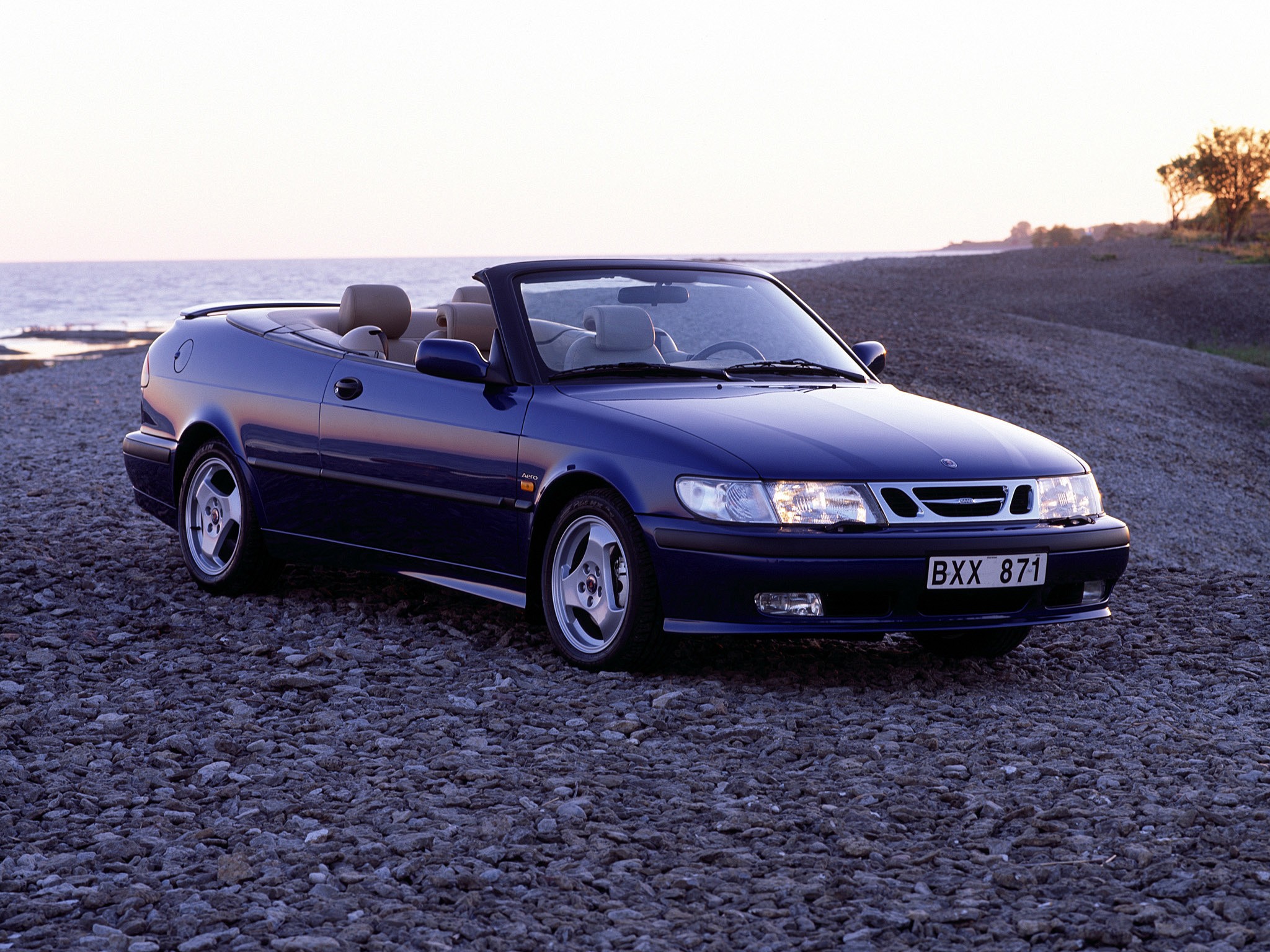
The last time I bought a new car was in 1999. You could also say it was last century, to make it a bit more dramatic. I remember it clearly, firstly because the car in question was a beautiful, dark blue Saab 9-3 Convertible with a beige leather interior, but also since it was only shortly thereafter that my wife became pregnant with our daughter. Judging by comments from friends and family, the normal course of action would have been to say “too bad”, sell the convertible and buy a family station wagon. I didn’t.

Instead, together with my better half, who to her credit fully supported me in this, we set about finding a baby pram that when folded, would be small enough to go into the Saab’s boot, at least with the rooftop up. I seem to remember that the one we ended up with was rather expensive, but if you folded it properly and removed the wheels (of the pram that is, not the car), you could just about squeeze it into the boot.

More practical than you would think!

The point here is not to further investigate the baby pram market. However, when we eventually bought a more traditional family car, it was the first of many to follow on the used car market. My reason for this is the same as for most people: I’ve mostly bought my cars privately and have wanted to avoid the massive depreciation all but a very small number of exotic cars see in the first two to three years. The smell of a new car is certainly great, but to me, it hasn’t been worth 30% or more of the car’s price.

When talking about depreciating car values, in the last years the discussion has mostly been about EV’s and the astronomic depreciation they saw in the first 2-3 years, i.e. from 2019-2020 and onwards. This was certainly an effect of the highly inflated prices many of them were sold at as new. On one hand they were more expensive to produce, but carmakers also knew that many of them would be leased by companies, making price is less of a factor given all the incentives companies in most countries were handed out by the state, i.e. you and I.

Three years later, corresponding to the typical European lease period, many of them hit the used market at the same time as the popularity of EV’s started to crumble. Today, you can easily pick up an early 2020 Taycan for 30% of its price as new. The question is rather if you’re brave enough to do so, given quite a long list of issues those early cars had, and what even in EV terms was quite a poor range.

An early Taycan may be cheap, but it’s a car for the brave (without range anxiety…)

However, although it’s been less discussed, the depreciation of traditional internal combustion cars (ICE’s) hasn’t made anyone happy either. When I sold my Saab convertible in the early 00’s after about two years, I remember losing roughly 30%. That’s far less than what the typical ICE loses today over a similar time period. And given that, now that we’re a few years further down the line, does it still hold true that EV’s depreciate more in the first years than ICE’s? In a very unscientific way, that’s what I’ve spent part of this week looking at.

For this exercise, I’ve taken an EV and an ICE in the same category and from the same brand, produced in 2022-2023, and with less than 50′ km’s on the clock. EV’s have a lot of horsepower, so I made it a condition for the ICE’s to have around 500 hp as well, but steered clear of the M-cars and AMG versions. For the EV’s, I made a theoretical range of at least 400 km a condition, knowing that will in reality be far less. Equipment-wise, I tried to get comparable cars with similar equipment levels.

Looks weren’t part of the criteria – there wouldn’t have been enough EV’s to choose from otherwise…

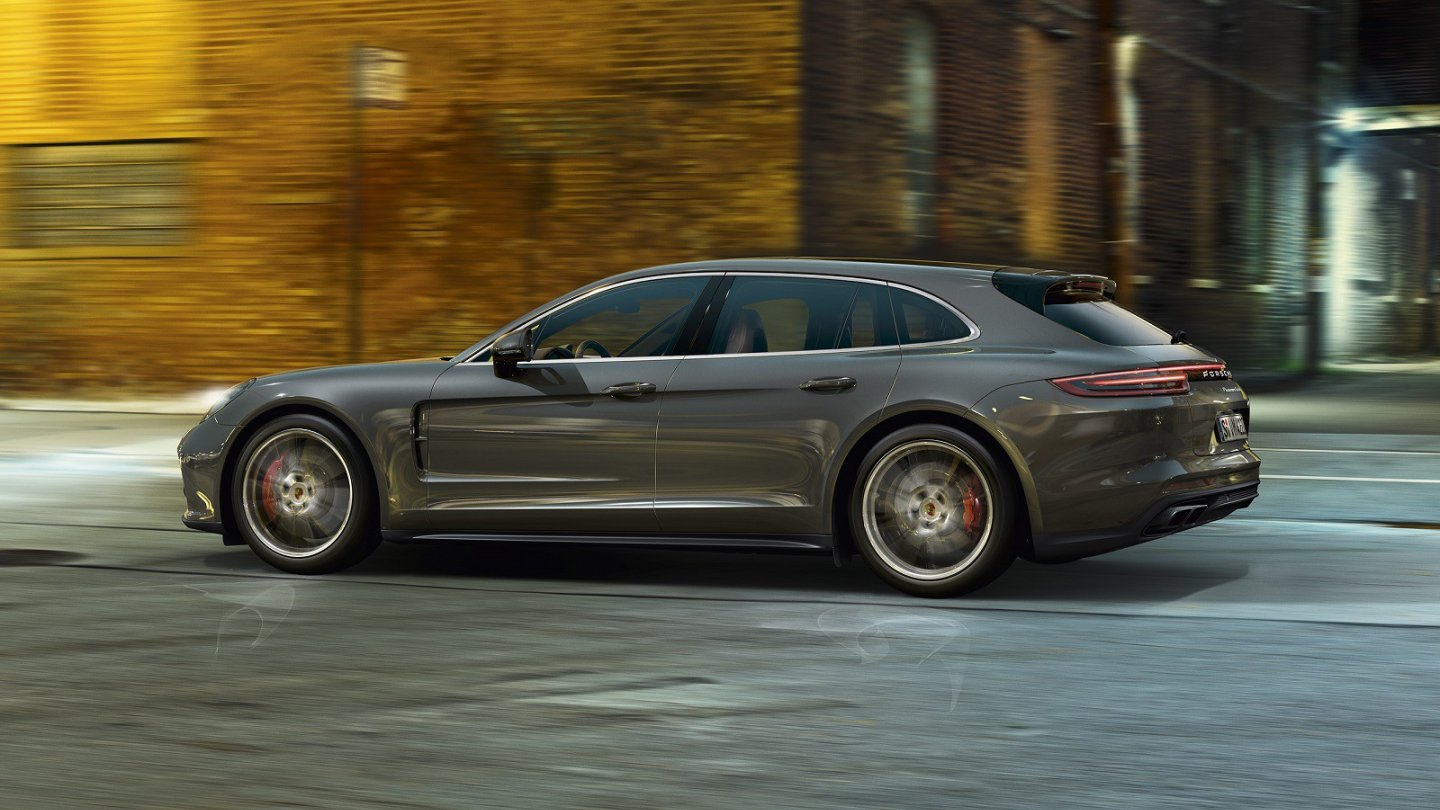
I looked at this across four categories: SUV’s, four-door sedans, sports coupés and shooting brakes. That also means that I made it a condition that the same brand had both an ICE and an EV in the same category in 2022-2023. I picked the BMW X5 and iX for the SUV category, the MB EQS (sedan) and S580 for the sedans, the Audi e-tron GT and TT RS for the sports coupes, and finally the Porsche Taycan and Panamera for the shooting brakes. And before you tell me shooting brakes isn’t really a category, the reason for including them is that both of them look bloody good! Interestingly, both also sell far better as shooting brakes than as sedans.

Before going into the results, this whole exercise is obviously not more than an indication. The cars aren’t perfectly comparable, as notably the exact equipment may vary. You could obviously compare models from different brands, but that makes it more complicated as brands depreciate differently. And you can certainly argue that an e-tron is not very comparable to a TT, given it’s a proper four-seater. That’s however the best I could think of given the condition of having an ICE and an EV from the same brand. The prices are my estimates of what you would have to pay after a bit of negotiation, and they are from the Swiss market. However, that’s usually a good approximation at least for the rest of Europe.

What the above results show is that all EV’s in the sample from 2022-2023 have indeed lost more value than their ICE counterpart, but that the difference isn’t huge, and smaller than a couple of years earlier. That’s however not because EV’s have become more stable in value, it’s rather the ICE’s that depreciate faster than they used to. What also seems to be true though, is that it’s not only ICE’s that eventually find a floor – as said, you can pick up a 2020 Taycan at 30% of the price as new, but those values seems to have stabilized now, five years later.

The Audi e-tron and BMW iX have certainly not been good to your wallet if you’ve bought them privately, but in both cases, part of the reason is an inflated price as new. That said, the regular BMW X5 is also not a car you would have wanted to buy as new. The Taycan has retained about half its value making it the best EV over the period, and the Panamera is the only car that has held its value significantly better than the others.

The Panamera Hybrid is arguably a better choice than all the others.

Where does this take us? Well, as little as I wanted to back in the early 00’s, I still wouldn’t buy a new car today, if it’s my money we’re talking about. That’s especially true if it’s an EV, but that said, even EV’s eventually see an end to their depreciation. So if it’s an EV you’re after, I would buy a Taycan or an e-tron, but rather one from 2022-2023 than the first two years. However, if like most, you drive a lot of short distances but don’t want to buy a second car for your longer trips, then I would argue that the best choice is none of the above, but rather a modern hybrid.

Taking the Panamera hybrid from 2022-2023 as example, it has a depreciation that is no different to the ICE version and offers you around 50km of electric range, whilst also lowering your fuel consumption overall. Some other hybrids will have even better electric ranges. The downside is extra weight over a regular ICE, but automakers have become very good at hiding that, especially the one from Zuffenhausen. Finally, if you only drive long distances, then nothing has changed and a 2-3 year old ICE remains the best choice!

BMW’s 80’s Ztar!

We’re in the middle of summer, the time of year when convertibles and sports cars that have slept through the winter have now been polished such as to make them ready for the warm season. A ride with the roof down under a sky full of stars in July is an experience most treasure, probably irrespective of the age or typ of convertible they do it in. That said, dropping the roof of a car with a bit more under the bonnet is usually even more enjoyable. With very few exceptions though, no convertible allows you to drop the doors as well. The main exception to that rule is one of the most innovative cars of the 80’s – the BMW Z1.

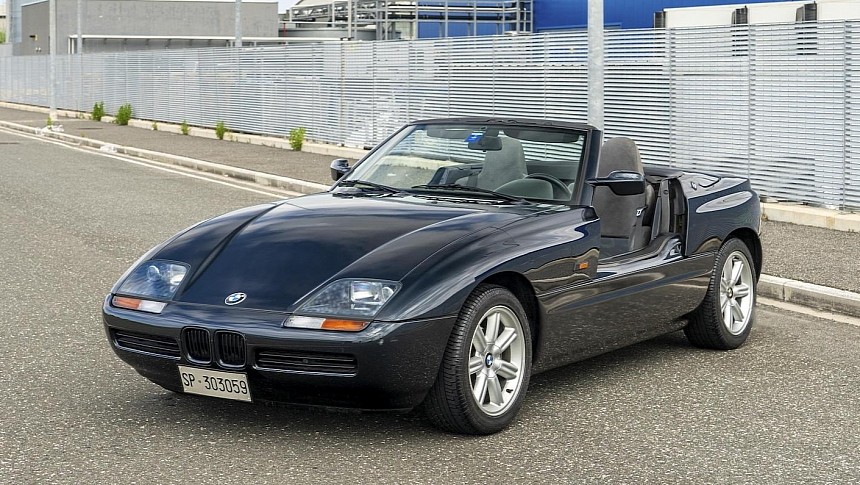
Small kidneys reminiscent of the M1, but it’s the doors that catch the eye!

The story of the Z1 starts in 1987, when Whitney Houston wanted to dance with somebody and Glenn Close was cooking rabbits in Fatal Attraction. Those lucky enough to visit the BMW boot at the Frankfurt car salon that year saw a strange convertible looking like a prototype. It no doubt got a lot of attention, putting other cars that year like the Ferrari F40 and the 911 Speedster a bit in the shade, but no one really thought it would be put into production a couple of years later. Well, they were wrong. Sales of the Z1 started in 1989, and to everyone’s surprise, it looked pretty much like the prototype seen in Frankfurt.

The Z1 was a product of a new daughter company BMW had founded a couple of years earlier under the name BMW Technik. Its role was to develop innovative technologies for future BMW’s, and the Z1 was the first car the team worked on. Lead engineer at BMW Technik was by the way a certain Ulrich Bez, who would later work for Porsche and after that also run Aston Martin between 2000 and 2013, a period that many would describe as the golden era for Aston in modern times.

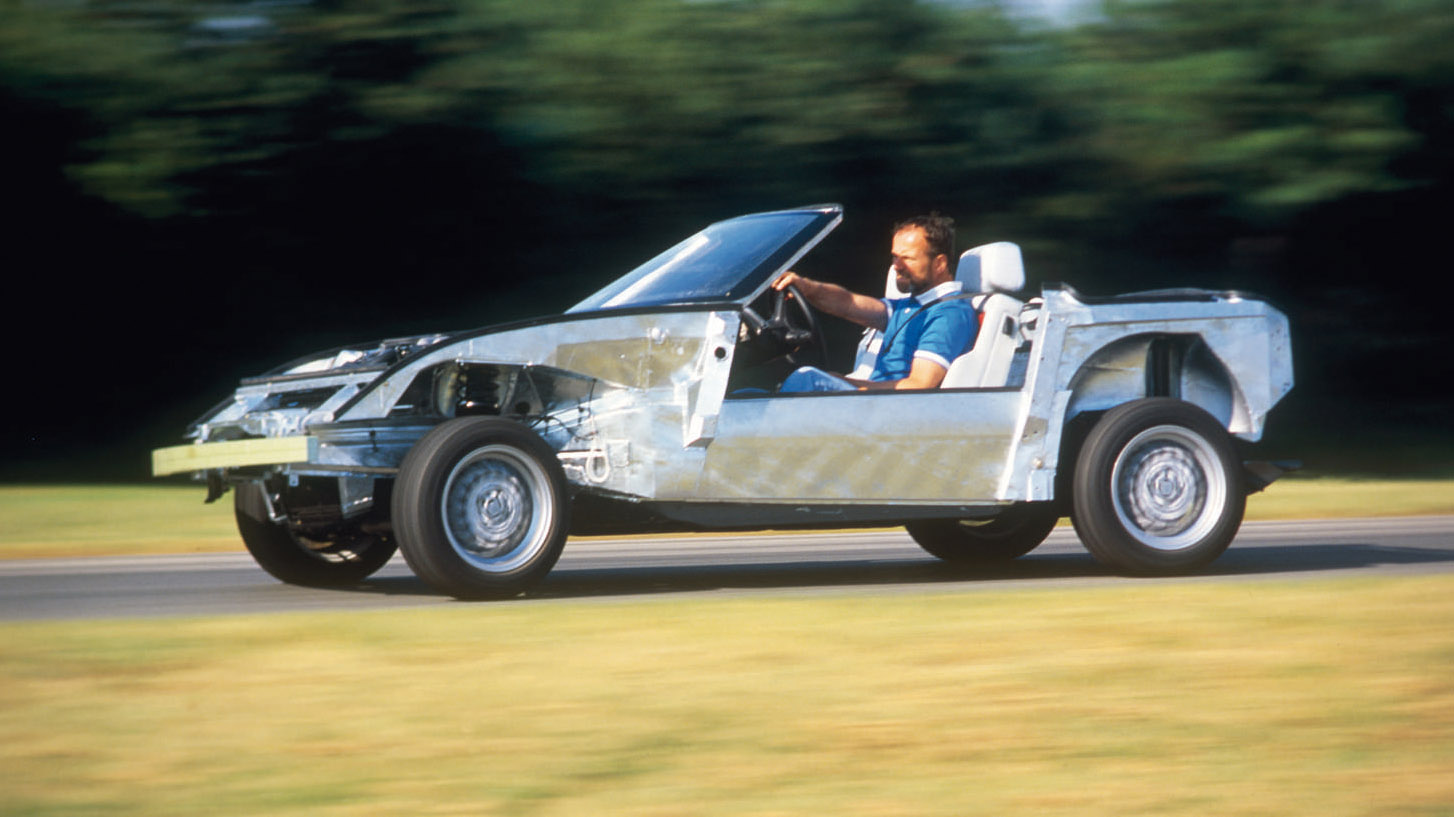
The body parts in the picture provide give enough rigidity – the rest is in plastic!

BMW Technik’s definition of new technologies also included new materials. of which extensive use was made in the Z1. The chassis was however made out of steel and was fire galvanised in one piece. This technology was new for the time and meant the chassis lived longer, but also that it was far more rigid than non-galvanised, or otherwise galvanised chassis. That meant that other body parts didn’t need to contribute to the car’s rigidity and could therefore be made in thermoplastic materials. This included the doors, making the party trick possible by which they disappear into the lower chassis at the press of a button.

On those sweet summer nights, you could thus drive the car with both the top and doors down, and before the summer rain started falling, you would just raise the doors and close the soft top. The doors also saved space when parking of course, although you had to live without door pockets. Next to the doors, the Z1 was a car of its time with headlights under protective glass and some other 90’s design features. The inside was far less innovative, which was not a bad thing as BMW interiors in general, and especially at this time, were the best in the business.

A traditional – and beautiful 80’s BMW interior

Under the bonnet the two-seater had the 2.5 litre, six cylinder engine also featured in the 325i with a power of 170 hp. At a weight of around 1200 kg, the Z1 was quick enough, and being rear-wheel drive with the engine placed behind the front axle, the weight distribution was close to perfect. As always though, new technologies have their price, and the only thing not perfect with the Z1 was exactly that.

At 85.000 D-Marks, roughly EUR 100.000 / USD 115.000 in today’s money, the Z1 was rather expensive, and only three years and 8.000 cars later, production was halted. On one hand, that’s of course made the Z1 a sought-after roadster today, with prices for good cars starting around EUR 50.000. On the other, the Z1 was critical for the development of both the roadster segment in general, that would grow in popularity over the coming years (notably with the Mazda MX-5 launched in parallel to the Z1), but more specifically for BMW’s future roadsters, first and foremost the Z3 and Z8, but later also the Z4.

The rear is probably the least spectacular part of a spectacular car!

Any of those will be an excellent companion on those warm summer nights, but none will provide the same feeling of liberty as the Z1. it’s a car from an era where cars were simpler, and where small series thinking was still possible. Most things were not better before, but the simple, rear-wheel driven roadster arguably was, especiall without doors!

Jaaaaaguar…

Yep, that headline refers to the one called “Aaaaaudi…” from a few weeks ago, where I described my limited enthusiasm for Audi’s newfound love for King Plastic. This time, I’m afraid we’re back to one of the all-time great brands who have proven to be completely detached from reality.

Some readers will perhaps remember my post from December 2024 where we dealt with Jaguar’s re-branding and its incomprehensible decision to throw all the positive, historical values of the brand over board in favor of something that can perhaps be described as “Electric DEI (Diversity, Equity, Inclusion)”. Not that they didn’t need the re-branding – they certainly did, as mentioned in the post. They just didn’t need this one.

A restomod re-branding would have made more sense…

As part of the effort to go fully electric by next year, Jaguar are currently not building any cars and any sales are therefore of stock vehicles. As predicted in the post back in December, quite a lot of those are at bargain prices. Not that it matters much though. Sales in Europe in April 2025 came in at 49(!) cars, 97.5% lower than April 2024. And in the four first months of the year until and including Apirl 2024, sales are down over 70%. Again, certainly to be expected when you don’t build cars. But a shocker nonetheless. And if you doubt that Jaguar dealers still have new cars in stock to sell, check any of them on the net. There are plenty of cars, just no buyers.

Jaguar went all-in in a re-branding exercise which, had it been in 2021 or 2022, they could perhaps still have claimed to be part of the “EV for all” future. But in December of last year, it was pretty clear to everyone that the race was run and it didn’t go as planned. Other brands saw the writing on the wall and paddled back as well as they could. Not Jaguar.

The choice is yours – they’re all cheap!

As always though, there is good news as well. The XJ-S that I wrote about back in 2020 has been seen as a future classic for many years now and may turn out like a hedge fund manager I know speaks of Brazil: “It has always been the market of the future and will remain so”. I wrote back in 2020 that “Still to this day, the XJS remains something of a bargain – at least in purchase price. That will most probably change in the future.” That’s so far been a lousy prediction – but all the better if you still haven’t bought one!

This means that you can still pick up a fabulous looking, Connolly-leather oozing classic Jag in top condition for USD-EUR 15-20k, and should you prefer the more modern XK-series, it’ll be yours for the same kind of money. Buy one, enjoy a classic piece of British automobile history, and rest assured that if, or rather when Jaguar goes broke for good, the value of the classic cars won’t suffer. The re-branding on the other hand will be forgotten quite quickly.

F1 pit stop: half way in!

It’s high time for a long overdue F1 update, and like me, you may just have seen Lando Norries winning the Austrian GP, the 11th of the season. We’re thus not fully half way in as this season will coujnd 26 races, but not far from it, and even though we’re still two races out from formal half time, I would claim we’re well beyond it in terms of seeing where the season is heading – and the color of that is a solid orange. That’s however not the orange of Max Verstappen and the Netherlands we’ve gotten used to, but rather the papaya orange of McLaren!

That the team from Woking in the UK has emerged as the top team in 2025 is not a big surprise. After all they won the Constructors’ title last year and many counted them as favorites going into the season. What is perhaps more suprrising is that it’s not Lando Norris but Oscar Piastri who leads the ranking, even if it’s only 15 points ahead of Norris. McLaren has won eight of the 11 races so far this season, with Piastri winning five and Norris three. As a team McLaren is already way ahead of the three following teams Mercedes, Ferrari and Red Bull, with roughly twice as many points as the second Mercedes.

Full harmony so far – let’s see if it lasts!

Another thing that the first 11 races of the season has made clear is that Red Bull has issues. It may not look it at first sight with Max Verstappen currently in P3 in the Drivers’ Championship, but the fact that he scored almost all the team’s points demonstrates – again – what we now know. Which is that Max is one hell of a driver, and the Red Bull car is one hell of a car, in the negative sense, for anyone but Max to drive.

Alex Albon couldn’t do it. Checo Perez was in the end so intimidated by the car that he could barely finish a race. Liam Lawson, to be fair, was never given a fair chance being kicked out after 2 1/2 races, and now it’s Yuki Tsunoda, who has proven many times in the past that he can drive, who cannot get to grips with the Red Bull car and just like Perez did, gets increasingly frustrated, thereby making mistakes. Max may bring out 110% of that same car, but that’s currently not enough to win races, and unless things change drastically, Red Bull won’t take neither the Drivers’, nor the Constructors’ title this year.

Max has had many better seasons…

Red Bull also suffers in this sense against both Mercedes and Ferrari, which both have two drivers who regularly score points. Kimi Antonelli is not at George Russell’s level, but with 63 points scored so far this season, he still ranks seventh in the Drivers’s behind his team mate Russell, Charles Leclerc and Lewis Hamilton as the leading rookie. The latter would certainly have wished to be at least on a podium this season which hasn’t happened yet, but he’s had an ok start at Ferrari and with significant updates to the car coming out just before today’s race in Austria where Ferrari finished on P3 and P4, it bodes rather well for the coming races.

In my first post after the first race in the season, I speculated that Williams could be the positive surprise this year. To the extent that the team scores points regularly, mostly through Alex Albon and so far less with Carlos Sainz, I guess that was correct, but there’s a long way to go from the top four teams to Williams and the rest, although Williams are now somewhere in between the midfield and the top teams. In Austria however, Sainz couldn’t start as his whole break system locking up and going up in flames before the race start. Not necessarily something that should happen to an aspiring top team.

George Russell won the Canadian GP, the only race not going to McLaren or Max. As things are currently looking, he’s unfortunatley not close to repeating it.

As we are (almost) half way into the season, it’s thus difficult to imagine anything other than McLaren winning both the Constructors’ and the Drivers’ titles this year, but it’s far more difficult to say if it’ll be Lando or Oscar winning the title. And as things heat up in the second half, that may of course have implications on the harmony in the team, which still pretty much looks to be total. Whoever it is, it will be McLaren’s first Driver’s title since 2008, when Lewis Hamilton secured it with less than a lap to go at the Brazilian GP, winning it by a single point. Chances are there will be less drama this year, at least between McLaren and other teams, if not necessarily within the orange team…

Speaking of harmony, we’ll also see how Max handles no longer being in the fastest car. In Spain he drove into the side of George Russell out of sheer frustration you have to think, since Max doesn’t make those kinds of mistakes. On the other hand, his genius move in the second corner of the Emilia Romagna GP that he went on to win is the kind of thing only a world champion would dare – and succeed with. Unfortunately though, the opportunities for doing so to win races seem ot be diminishing as the season progresses.

After today’s race in Austria, we’re off to Silverstone next for the British GP, which is of course also McLaren’s home GP. It’s also the home race off both George Russell and Lewis Hamilton, and perhaps Lewis’s first podium? A week from now we’ll know!

Mon Dieu what a collection!

I’m currently enjoying a bit of vacation in the south of France, and the other day we went into Nice to explore the area around the port. A lot has happened in the city in the last 10 years, transforming it from a place that at least in some areas was quite rough in my youth, to the delightful city it’s become today.

A lot of the improvements have come with a new tramline system that provide an excellent alternative to car driving in the city itself. And with less people driving, some lanes have been converted to bike lanes, trees have been planted, and it all looks much nicer than before. It proves the point that as long as there are good alternatives, most of us are happy not to drive around in city centers – but the alternatives need to be in place first, which is a point a lot of politicians seem to struggle with.

The tram line running all the way to the airport to the west of the city starts in the port area in the easternmost part. This is maybe the part of Nice that has seen most improvements over the last years, and it was while exploring the streets on the east side of the port that we stumbled upon a small alley with a garage at the end. And the garage had a few interesting cars up front, making it worthy of a closer look.

A Daytona convertible next to an F355 – and this was just the beginning…

What we came upon and that I had no idea of, was a garge called Motors Corner, boasting a showroom iof over 1000 sqm, with what must be Nice’s largest collection of interesting automobiles. It must also be the most space efficient car collection anywhere, and should they need to move out a car in the back part of the garage for some reason, that would probably take a working day!

Motors Corner specialize in all parts of motoring, from sales and restoration to concierge services, and the collection also reflects the varying nature of the business. Most cars are for sale, others are being renovated, and the company also has an off-market collection that is not exposed at the garage but that boasts some real jewels like the Ferraris F40 and F50, a Bugatti Chiron La Noire, and a McLaren Senna, among many others.

Many cars are on foreign plates, and this is no doubt a European business

The highlights in the showroom itself included two beautifully restored 911 S’s from the early 70’s, a Ferrari Daytona Convertible (top picture, can’t promise it was genuine though…), a beautiful Mercedes 540 above, a bunch of other Ferrari’s to die for, including a 250 GT Lusso. Just next to the entrance is the workshop where a Lancia Delta Integrale was being worked on, which at least by the stickers had been around on quite a few races! Next to it stood an E-type Lightweight. And I could go on…

An E-type lightweight, a Lancia Delta… and a 3-seater Matra in the background!

The pictures don’t tell the full story and the exhibition is not easy to take in given how cramped it is, but if you’re in Nice, it’s definitely worth stopping by! Until then, you’ll find all the cars for sale (a large part of the collection in the garage) on motors-corner.com, as I’ve discovered since, a site you can spend a lot of time on while sitting in the sun sipping your rosé!

The 8 Gordini – a true rally legend!

Time flies -as if that’s a surprise to anyone. And in the same vein of kicking in open doors, it’s not much of a secret that I have a soft spot for France, as long term readers of this blog will have noted. If memory serves me right, the first “French” post on this blog was that on the wonderful Citroën DS, which I just saw that I wrote five years ago, during the first Covid summer. Those were not happy times so I guess we should be grateful that time flies at least in that respect, but also that floating down a French “départementale” (country road) in a DS has lost none of its charm ever since.

The French have a thing for trees as crash protection…

If Citroën was the technologically leading car brand in the late 1950’s and 60’s, Renault was still the largest. Unfortunately, design-wise the brand was far behind the competition in Sochaux, something that became shockingly clear when Renault launched the R8 sedan in 1962, later called only the 8. Just by looking at one and comparing it to a DS, you would think 20 years sets them apart. Of course it was the DS that was the exception, as at the time, far more cars still looked like the R8 than the other way around.

The R8 was a rear-wheel drive, small family sedan with the engine in the back as was still popular at the time. The standard version of the R8 was the definition of unspectacular, but I remember it clearly as it was also built on license in Romania under the name Dacia 1100. Growing up in Stockholm a couple of blocks away from the Romanian embassy, on the way to school, I would see some of these Dacias parked on the street in front of the embassy, together with a later version based on the Renault 10. Somehow the design felt like a far better fit to a Soviet-era, communist dictatorship than to lovely France!

Pretty” is not the first word that comes to mind…

American readers may be interested to learn that the R8 was sold in the US as well, with the French trying to position it as the nimble city and close proximity car it was typically used as in France. At the time however, the US was all about far longer drives on the new interstate highway net, an environment where the small R8 with its 43 hp made much less of an impression. Needless to say, the R8 never became much of a success on the other side of the Atlantic

In Europe however, things were about to improve a couple of years later, in 1964. The regular R8 got a performance boost to 50 hp, but more importantly, the 8 Gordini was launched. Initially only available in the elegant blue called “bleu de France”, which has become a signature color for Renault’s sports versions, the extra power came from greater displacement (all of 1.1 litres!) and a different Weber carburettor setup. Power would be further increased to 100 hp in 1967, when the Gordini also got the double headlights it’s become known for.

The Gordini deinitely changed things for the better!

The name Gordini comes from the company of the same name and its founder, Amédée Gordini. Specialized in tuning and motor racing, Gordini was founded in 1946 and competed in F1 in the 1950’s and Le Mans in the 60’s. Amédée Gordini was so good at building race cars that he became known as “The Sorcier” (the sorcerer) and whilst he also worked both on Simca and Fiat cars through the years, most of his work was on Renaults, who bought his company and incorporated it as a subsidiary in 1968. Before the Renault 8, Gordini had also built notably the Renault Dauphine Gordini, another rear-engined, small family car.

The 8 Gordini was a true race car, not only with more power than the standard version, but also with lowered suspension and various other technical modifications throughout. It had assisted steering, a five-speed box and disc brakes on all four wheels. And those wheels were typically very small and very wide! For homologation purposes the 1967 version was also produced as a road car, with a few horse power less than the rally version and a different light setup at the front, but otherwise pretty much the same car. This made it one of the first road-legal race cars, as well as arguably the first GTI car (sorry Golf!). Of the few Gordini’s that remain, it’s mostly this street-legal version you see.

The 8’s predecessor, the Dauphine Gordini, had a lot o success on the rally scene in the early 60’s and sticking with tradition, Renault entered no less than six brand new 8 Gordini in the 1967 Corsica rally. Remember that back in the 60’s, motorsport was almost synonymous with rallying as F1 had not yet got the popularity that would follow in the 70’s. The 1967 Corsica rally would very much lay the foundation for the 8 Gordini’s future success on the rally scene and its position as one of the 60’s leading rally cars. In the first year, the winner and a further three cars in the top five were Gordinis. It would go on to win the Corsica rally another two years, and a long list of other rally victories until 1970 would follow.

Not many cars would keep up with the Gordini in the late 60’s!

If the regular Renault R8 still looks like a not very exciting 60’s family car, the 8 Gordini is a different story. Everything from the front lights to the lower suspension and the small wheels give it a cool poise, and the 100 hp have no problem with the car that weighed it at around 800 kg. Neither do the disc brakes, leaving the gearbox and rust protection as the weak spots. The gear change, given the gearbox in the back next to the engine and thus a long way from the gear lever makes it quite vague, and rust protection as on any French car form the 60’s is largely non-existent.

That said, if you’re lucky enough to find an 8 Gordini today, it will most certainly have been renovated. Rare as they are, a good car will be yours for EUR 30-40.000 and will provide the kind of pure mechanical driving pleasure only a 60’s car can, including the drifts from rear-wheel drive combined with the rear-engine setup. All of it brings back memories of an era when Renault was not just a manfacturer of boring family vans, but a name to be counted with on the rally scene!

Think you’ve got it all?

I hate to break it to you, but you’re wrong. Unless of course you’re one of the 250 lucky souls with a contract for delivery, from 2026, of the world’s most exclusive car – the Bugatti Tourbillon. Now should you indeed be one of those 250 and read this blog, I would of course be very honored!

Bugatti’s new hypercar is also its first hybrid, and the first car to be developed under the joint company Bugatti-Rimac, where Rimac is the Croatian supercar EV brand of Matje Rimac, Croatia’s version of Christian von Koenigsegg. Since 2021, Matje is CEO of the joint company with Bugatti, and there’s no doubt a lot of Rimac’s knowledge that have gone into the Tourbillon’s hybrid solution.

The numbers are, as always, completely bonkers. Up to 1800 hp out of a combination of an 8.3 litre W16 petrol engine and three electrical engines together with an eight-speed double-clutch gearbox enable a top speed of 455 kph. The Tourbillon is of course four-wheel drive and Bugatti-Rimac have managed to make the car weigh in at (just) below two tons. If you were ever lucky enough to drive it, preferably on a circuit, you’d reach 100 kph in below two seconds, 200 in five, 300 in about 10, and 400 kph in 25 seconds. If you have the balls and don’t run out of runway, that is.

Nothing for your local garage…

The mighty engine has been developed together with Cosworth and has a crankshaft that is longer than one meter. It’s mid-mounted, visible through the transparent hood, and good for 1.000 hp and 900 Nm. It’s complemented by two electric engines up front and one in the back. These are fed by up to 25 KwH from an 800 volt battery and are said to be the most powerful electric engines ever made. They should enable about 60 km of fully electric range.

Of course, this being a Bugatti, all this happens in ocean of luxury and style. The name Tourbillon comes from the movement in mechanical watches set to correct gravity for a more precise time-keeping. The Tourbillon’s gauge cluster (a complete misnomer), of course developed with Swiss watchmakers, consists of over 600 parts made in titan, sapphires and rubies. The floating center console out of crystal glass and aluminum is produced in 13 steps to ensure it doesn’t break in an accident. And so on.

Honestly, not sure how to describe this!

The Tourbillon’s design is said to be inspired by traditional Bugatti masterpieces, notably the Type 57SC Atlantique, considered one of the world’s prettiest cars. It was presented earlier this spring to a selected few at the company’s headquarters in Molsheim in eastern France, and any car that might not have been sold before certainly found a new owner then. Like previous ones, they would most probably be asked to make a pretty sizeable down payment on the total price, set to 3.8 million EUR. I hope any American buyers paid up earlier this year, because with the dollar on a downward trend, that’s about USD 300.000 more now than it would have been in January. Then again, in this price segment, that’s not much more than a rounding error…

Aaaaaudi….

I like Audi. I’ve only owned one myself, but growing up, my father had two Audi 80’s, a red one that looked like, well, like cars did in the early 80’s, and that I was adamant he fit a rubber spoiler to such as to make it more alike the more powerful E-version, which if memory serves me right had all of 113 hp… He then traded it for the last Audi 80, the one that looked like a soap, which he for some reason ordered in beige metallic, like the one below. I’ve so far only owned one Audi myself, an A6 3-litre diesel that I ran as company car back in the days you had those, some 20 years ago. It was a great car and so far the only car I’ve owned that I’ve managed to fill up with the wrong fuel.

Not Audi’s greatest design achievement

It was on the way back to Zurich from Lugano in southern Switzerland that I stopped to re-fuel at the last station before the 17km long Gotthard tunnel. The Audi was the first diesel I ever had, so by habit I grabbed the petrol hose which, being thinner, fits into a diesel tank opening. I made it three km into the tunnel before the car stopped, and only then did I realize my mistake. I managed to roll onto an emergency parking, opened the door, and was first struck by the heat in the tunnel, and then almost by a truck that ran by half a metre away. No doubt one of the scariest moments in my relatively peaceful life!

An emergency truck came within 10 minutes (they’re pretty alert on each side of the tunnel as to avoid any mishaps, which I’m eternally grateful for!). He loaded up the car and drove us to the nearest garage in a small Swiss moutain village. The garage owner looked all happy when he realized it was a quattro, as that meant the car had two fuel tanks that are separate, meaning he would earn twice the money. You see, the way to empty a tank, at least back then, is to put the car in a rotating frame which turns it on its side so that the fuel runs out. Which in my case had to be done twice. He no doubt thought I was a complete big city idiot, but he congratulated me on having filled up when the tank was practically empty. Had it been half full, he said, the engine would have run, but you would have ruined it completely. Oops.

This, in the other hand, is one of the best in all areas!

Coming back to Audi, more recently, before buying my current BMW 540i, I thought long and hard about an RS4 of the 2011-2015 B8 generation instead, with the fabulous 4.2 litre, naturally aspirated V8. Reason prevailed then, but in my quest for something more GT-like, I’ve recently looked closer at the RS5 coupe from the same generation. More on that to follow in later posts. The point I want to make, and which both those cars examplify brilliantly, is that they’re not only good-looking, but also built with an interior quality that is so solid it feels like nothing could break it. That by the way also goes for the D2 Audi A8 that I wrote about last year. Unfortunately, it seems to be something Audi’s engineers have since forgotten how to do.

European, and especially the German luxury car brands are all struggling to find their place in a world that somehow is supposed to become fully electric, but where the goal posts keep moving. Certainly no easy task and manufacturers have my sympathy, at least to a certain extent. As the completely unrealistic political EV targets have been revised, Mercedes, BMW and Audi have for now settled on a combination of ICE’s, hybrids and EV’s, such as to be covered whichever way the wind blows next.

Ursula von der Leyen, president of the European Commission. She’s never been publicly elected. Had she been, you bet the policies she advocates would be different.

As part of this process, Audi last year decided to let the model names reflect the power source so that cars with an even number, like the A4, would henceforth be EV’s, and cars with uneven numbers, like the A5, would be ICE’s. It was of course too bad they had just launched the A8 which is an ICE, so they added that this would only apply to new models. Like the new A6 that was introduced at the beginning of this year. Except for the fact that the A6 is not only an EV, but also available with various petrol and diesel engines. I would love to have listened in on the meetings in Ingolstadt when the decision on this complete mess was taken!

Luckily, it didn’t prevent the design department from continuing to do a great job. Taste is individual but personally I love Audi’s current line-up in terms of exterior design, from the muscular A3 up to the Q8, especially as coupe, but also including the spectacular E-tron coupe. The cars look bloody good, with the difference between EV’s and ICE’s limited to minor points like a different front grill. I’m glad to see that this validates a point I made in post a couple of years ago, that the innovative design language that Audi and other brands limited to EV’s at the time, as it was said to be the only future, is now carried over also to ICE’s, as it becomes clear we’ll have them for far longer than some people imagined.

ICE and EV look very similar, meaning they both look great!

What Audi seem to have forgotten however, is how to build an interior that is as solid as in a B8 from 10 years ago. Seeing the new S6 station wagon (which, just to clarify, is an EV) at my local Audi dealer last week, I went in for a closer look. Opening the door, you’re greeted by an interior dominated by the mandatory giant infotainment screen. Audi have opted for a horizontal layout that goes from the door to the middle of the car. It looks nice and modern, although perhaps unnecessarily big, until you realize that next to it is another, optional screen for the passenger. That smaller screen is in a different shape and shows parts of the information from the main screen. But given the main screen stretches well into the passenger’s field of vision, why on earth would anyone need it? Obviously Audi isn’t the only manufacturer doing passenger screens, but that doesn’t make it better.

Audi making sure you’re never bored!

As also seems to be mandatory today, the S6 has tactile controls on the steering wheel as well as on the inside of the door. Apparently these have become so fashionable because tactile surfaces are cheaper to produce than traditional switches, and they certainly feel like it. The S6 has a plethora of functions on the door side in addition to the window controls, all within one tactile plate that feels like it moves when you touch it. Forget about adjusting anything here while driving!

Slightly further below the door handle is however where it gets really bad. The plastic used for door pockets and most of the trim below your waistline is hard plastic of the really cheap-feeling kind, the type that makes nasty sounds when you scratch it. We’re talking many quality levels below what you find in a B8 from 2014, or indeed what would have been deemed acceptable at the time. Plastic of course has the benefit of not only being cheap, but also light. And that’s something the S6 definitely needs, given it’s a car that being the EV it is, weighs in at an almost obscene 2.500 kg. That’s more than my old Range Rover with that wonderful V8, and without any interior plastics of any kind.

A lot going on there!

The list price for the S6 in Switzerland is CHF 105.000, around USD 125.000. You read that right, and that’s before options, of which the list is long in Audi’s world. Based on early tests, the S6 is a great family drive, but quality-wise it feels like it’s worth half its price and above all, it feels far cheaper than a Chinese EV that costs far less whilst giving you a better range. It’s simply not good enough. The ICE-hybrid version of the same car is less powerful but can be filled up at any petrol station when you run out of battery power, and doesn’t cost as much, even fully optioned. It still won’t give you better plastics or real switches though.

Of course, Mercedes and BMW are not much better than Audi, and all of them are worse today than five years ago. At which time they were already worse than five years prior to that. It’s a sad truth that my E63 Wagon from 2014 had a better interior quality than my BMW 540i from 2019, which in turn is miles better than the new 5-series. It’s becoming increasingly clear that the peak of German automobile building was around 10 years ago, in the mid-2010’s. The residual values of cars from that generation compared to later generations will confirm that story, and also show you that I’m not alone neither in thinking so, nor in appreciating it.

Quality-wise, the W212 was close to perfection, and it’s worth more today than when I sold mine 5-6 years ago.

Let me therefore make a humble suggestion to the management teams in Ingolstadt, Stuttgart and Munich. You’re currently on the road to perdition, so please reverse course while you still can as it’s getting really late. There is good news though: a vast majority of your clients don’t want EV’s anyway, so just leave that market to the Chinese, especially since you can’t compete with them anyway.

What most of your clients love on the other hand is the great cars you used to build. So stop the screen size race with functions we neither want, nor use. We don’t need to talk to our cars, or have it point out the next restaurant. Scrap the tactile surfaces and give us real switches. Adjusting the seat position on the side of the same seat worked absolutely fine. We want the solidity of an RS4/B8 or an E63/W212, combined with the playfullness of an M3/F80, all at well under two tons. We all know ICE’s will still be around for a long time, and adding a sufficient number of hybrids will allow you to comply with legal requirements. Therefore, go back to building the best ICE cars in the world before it’s too late!

if you’re wondering about the headline, it’s to be pronounced as an expression of pain at something that is, but doesn’t have to be…

The big short reloaded!

Oh how quickly things can change! Three months ago, most of us would agree that we were in a very different place, and nowhere more so than at Tesla, who at the time was valued at more than all other car companies in the world combined. Yes, you read that right, as incredible as it may sound. And even after it’s lost close to 50% of its value this year (with the stock trading at around USD 240 as I write this), that still values the company at around USD 800bn, about three times the value of Toyota, or 12 times the valuation of GM or Mercedes-Benz. Perhaps most relevant, it means that Tesla is currently valued eight times higher than BYD, the leading Chinese EV brand that has now surpassed it in number of cars sold.

The BYD Seal – a superior competitor to Tesla’s Model Y

The first quarter of 2025 was not kind to Tesla. Not only has the stock price imploded, the company has also seen sales dip heavily in several key markets, with a corresponding loss of market share. And nowhere more so than in China, the most important market of them all and of course, the home market of BYD and other Chinese EV’s. During the first quarter of the year, Tesla’s Chinese deliveries were down 13% as compared to 2024, with its EV market share dropping to 7%, down from 12% a year earlier.

Q1 2025 was also the first quarter when BYD delivered more pure EV’s than Tesla (BYD sells plug-in hybrids as well). In 2024, the two companies sold almost exactly as many EV’s at 1.75m each, but this year, BYD is projected to double that number, and given the brand isn’t present at all in the US and so far on a very limited scale in Europe, most of these will be sold in China and across Asia. And yet, even at a stock price of USD 240, Tesla’s valuation is eight times higher than that of BYD.

Tesla’s stock price evolution year-to-date. Not what many expected.

If it was just to prove that Tesla’s valuation makes no sense, we could probably stop right here. However, there’s a lot more to say and as we’ll see, it only gets worse from here. Tesla has no doubt been instrumental in making EV’s part of today’s car landscape, but I would argue they’ve now fallen so far behind Chinese brands such as BYD that their market share, and thereby stock price, will only keep on falling. I would even say that it’s doubtful whether Tesla will continue to build cars in the coming years, and if that’s even what they aspire to.

To understand why that is, let’s start with the line-up. Models S and X have now been on the market for 13 years, with the Model 3 not too far behind at nine years. That’s an eternity in modern car cycle terms. Their battery packs have seen continuous improvements, but both the exterior and interior have seen nothing more than a quite mild face-lift over the whole period. The Model Y, the best-selling car in the world in 2024 (obviously quite an achievement!), has recently seen a similar cosmetic update, but it’s six years old by now. We’ll never see the Cybertruck in Europe (thank God for that…) just as little as any of us will probably ever see the roadster or the sub-$25.000 car Elon has been promising for years. That means that Tesla has an older model line-up than all the other car brands, the valuation of which it exceeds by up to 12 times.

The Tesla Roadster is suppose to come out next year. I wouldn’t bet on it…

Next, there’s the quality which was terrible in the early years but has gotten better such as to be more or less ok today. As a comparison however, I was in a Polestar store the other day and checked out the Polestar 4, the SUV coupe without a rear window. Polestar may market themselves as Swedish, but they’re owned by Chinese Geely and all models are these days built in China. Except for a bit of Nordic interior design, it’s therefore a Chinese car. In terms of interior quality however, it’s on another planet compared to not only Tesla, but also to any EV coming out of Germany these days (and even worse, of any ICE car the likes of Audi, BMW and Mercedes have in their current lineup).

Beautiful materials, plush seats, no hard plastics anywhere, lots of space and all the features you could wish for. Everything is solid and well put together and as I’m lead to believe, Polestar is hereby not the exception, but rather quite representative of modern Chinese EV’s. They even drive well, in the not very passionate but comfortable way EV’s do. Given Tesla’s European charging network is now open to other brands as well, if I were in the market for an EV, I wouldn’t hesitate a second between a Polestar 4 and a Tesla Model S. I’d actually be prepared to pay a premium for the former, but I wouldn’t have to, given it’s 20% cheaper.

The Polestar 4 – one of the nicest car interiors I’ve ever seen, any category.

Then there’s the whole self-driving thing. Basically since the first Model S came out, buyers have been given the option to add thousands of dollars to the price by opting for self-driving packages that were set to become reality “soon”. Well, in over 10 years, “soon” hasn’t happened yet, which makes you think that at least in Europe, some kind of consumer protection body should step in. How can you be allowed to sell options for functions that never become reality? And for each passing day, Connectivity Day is becoming less likely to happen, quite simply because Tesla’s technology isn’t even close to where it needs to be.

If you’ve been to Austin, San Francisco or a few other American cities in the last years, you will have seen or perhaps been in a Waymo driverless taxi. Based on the Jaguar I-Pace, they transport people around the cities like a normal taxi without any issues. Given they’ve been doing so for some years now, it makes you wonder why they haven’t spread to more places, which may have something to do with their price tag of over USD 250.000 per car. The price is explained by the fact that a Waymo is equipped with not only cameras, but also a radar system and Lidar (Light Detection and Ranging), all necessary for self-driving.

A Waymo in Frisco. USD 250.000 cars usually look differently…

Tesla doesn’t have that. In fact, Tesla is the only brand promoting self-driving on a large scale which relies completely on cameras. That’s of course because it’s a cheaper technology, but it brings the slight disadvantage that cameras struggle to see some things that a radar or Lidar system pick up. Driving in the dark is one of those things you would need to be really stu…. brave to do in a self-driving Tesla. Youtube also has illustrations of someone putting up a picture looking like the continuation of the road at some distance in front of a self-driving car. The Waymos and other radar cars all pick up that it’s not the continuation of the road, and stop. Teslas just run through the picture. Trust me, with the current system and without major developments, no Tesla will ever be fully self-driving, whatever the regulation says, and whatever was promised at the time.

You’ll notice that at no point so far, I’ve mentioned Elon Musk’s politics. Doing so doesn’t improve things. This is not a political blog, so let’s just say that the position he’s assumed in the new US administration doesn’t sit well with his cult-like following, who now start putting stickers on their cars like the one below. No doubt this has also contributed to the falling sales numbers, as apparently, if you buy a Tesla, it’s important that the CEO shares your political positions. I guess I should call BMW then, to make sure the current CEO Oliver Zipse shares my beliefs?

The problem with cults…

More seriously, the problem is of course that if your sales were based on cult-like, non rational behaviour and the cult then disappears, you’re in trouble. In the case of Tesla, what remains is a heavily top-run business where the guy at the top is no longer fully committed to the company. At this point in time, given all the other issues the company is confronted with, that’s not a very good sign.

You’ll also notice than when Elon talks about his companies these days, it’s usually not so much about the cars as it is about AI robots, energy storing and space travel. Given the man is obviously quite talented and probably not as crazy as his once followers believe, I have no doubt he’s very aware of everything I’ve written above, but doesn’t really care, as he may see Tesla’s future elsewhere than in the car business. The problem however, is that no one outside of his head has an idea of what that business is, and thus how to value it.

Coming back to what we can measure, Tesla is a car company on a slippery slope that is likely to continue downwards. EV’s will not take over the world anytime soon but China will most probably take over most of the EV market, such is on one hand the quality of what they build and on the other the size of their domestic market, where various kinds of incentives go towards promoting EV’s.

BYD’s new factory is bigger than San Francisco. Elon, they’re coming for you!

Tesla’s home market is far smaller, and the wind has turned against it. They may get some protection from tariffs, but they don’t solve the fundamental issues of the company. And Elon would do well to remember the 70’s, when the US tried to protect Detroit from superior Japanese cars by imposing tariffs. It made Japanese cars more expensive but Americans still bought them, because they were better.

Then again, none of this matters if Tesla’s future isn’t in the car business. I don’t have more of an idea than anyone else of what goes on inside Elon’s head, but I’d say it’s more likely that Tesla focuses on other things than cars, rather than that they turn the numbers around and bring a new model line-up to market in the coming years.

Whatever the scenario, it remains that Tesla is hopelessly overvalued as a car company and the brand’s cult-like followers are now to a large extent gone. And if you’re in the market for an EV, you’d do well to look at a few options before signing a check for the 13-year old Model S. The Chinese are coming big time, and it will be interesting to see how things evolve in the coming years!

Driving the 991.1 Turbo S!

if there’s one car that is underrepresented on this blog, it’s no doubt the 911. And the reason is not that I’m part of the strange crowd who have something fundamental against the legend from Zuffenhausen – quite the contrary. I do however have enormous respect for on one hand everything that has already been written about the most legendary of sports cars, and on the other for all the people who no doubt have far more knowledge on the 911 topic than I do.

I therefore welcome every opportunity there is to learn more about the 911, and having had the opportunity to drive quite a few 997’s over the years, until recently I had actually never driven a 991. The opportunity to do so came about as my favourite garage in the Zurich region traded in a 991.1 Turbo S in perfect condition with about 85.000 km on the clock and a price below CHF/EUR 100.000, (which as I noticed is where the market for these currently is). It felt like an opportunity not to be missed. After all, as great as my BMW 540i Touring is, I don’t really plan to drive a station wagon for the rest of my life, and few things beat a top of the range 911 as possible replacement!

Definitely looks better than a 540i Touring…

If I were to replace the 540i though, what I would be looking for is a stylish and fun to drive coupe with enough room for two people but ideally not too big, to take my wife and I the 600 km down to the south of France a few times per year. The BMW does an absolutely fine job here, but it’s unnecessarily big and as said, as stylish as it may be, I no longer need all the space. For what follows, it’s however important to remember that what I would be looking for is more of a GT-car than a track weapon. And from all that I’ve read, it felt like the 991 Turbo S would be close to the perfect proposition here.

This first series of the Porsche 991 was built between 2011 and 2015, with the Turbo S being produced between 2013 and 2015 (production years, that is). It featured the 3.8 litre flat six with twin turbos, putting out 560 hp through all four wheels and a seven-speed PDK box. For a 911 it was rather well-equipped from the factory, with (in most markets) rear-wheel steering and center-lock wheels as standard. Ceramic brakes were a frequent option and the car I drove had them, along with a plethora of other things.

The first thing you notice when you stand in front of a 991 is how much larger it looks than a 997. It is indeed bigger, about 4 cm both in length and width, but the impression is of an even bigger difference. Stepping inside, the difference is even more striking, greatly helped by the 10 cm longer wheelbase as compared to the 997. Two people with reasonable but perhaps not excessive luggage will have enough space for a good vacation, and the whole car feels more mature and more GT-like than the more intimate 997. No doubt that the 991 is the more grown-up car, although I still feel the 997 looks better.

Purposeful rear, beautiful center-lock wheels. It does feel big though!

As the pictures show, the car I drove was white and as you’ll see below, had a read leather interior. And whereas I’m certainly not part of those who follow the Henry Ford motto that you can have any color as long as it’s black, a red interior is perhaps a bit over the top. That said, in the case of this car it was really a combination of red and black that made it rather decent, and I quickly stopped thinking about it. There are cars who are fully red on the inside, including the dashboard, and that to me is then really a bit too much. As for the exterior, white is a color I personally feel suits the 911 quite well.

I familiarized myself with the car as I drove off and let the engine warm up, which really didn’t take long. The logic is the same as in the 997, but the 991’s array of empty buttons on the center console that glare you in the face to remind you of all the options you didn’t spec aren’t particularly nice. Could it be that the quality of materials was just slightly better in the 997? Anyway at low speeds, at least on smooth, Swiss roads, the car is very compliant and not unnecessarily hard. Sports-car like rather than track car.

Such reflections soon gave way to real driving, now that we’d reached a decent temperature and the road opened up. It will be no surprise that the first, second and last impression is that of the flat six, which is simply magnificent. Power is never-ending, the sound is great but to my ears, could be even louder than what the sports exhaust produces, and the engine harmonizes perfectly with the excellent PDK. That said, the turbo lag is more obvious than I was expecting, with a small but still very noticeable hesitation before all the 560 horses wake up.

Clearly more spacious than a 997, and with a black dash, still looks decent in red.

A lot has been said about the 991’s electronic steering as compared to the mechanical 997, which no doubt was one of the best 911’s of all in this regard. For the driving I did in a combination of B-roads and motorway, I can only say that the 991 is great as well, and that you need to be a 911 aficionado or drive the two cars back to back to notice any real difference. And compared to basically any other car, the 991 is miles ahead in terms of precision and road feel. Needless to say that very much goes for the chassis as well, with no real possibility to test it to the full on the roads I was driving.

Where it isn’t ahead of the competition however is road noise. This was a surprise given how much more mature the car feels compared to the more rustic 997, but noise-wise theyr’re not far apart, with especially noise from the wheels being very present in the 991, at normal motorway speeds. You would need to raise your voice to communicate with your passenger (or, as in my case, increase the volume of the excellent, optional Burmester sound system), which doesn’t feel very GT-like. Except for that, it’s an excellent motorway cruiser as well, and the ceramic brakes were easy to modulate much like normal discs.

As no one can sit in the back anyway, you have room for a lot of stuff.

When I handed back the keys to the white beauty, it was therefore with mixed feelings. The Turbo S is a fabulous car, and the 991 feels more modern and more mature, albeit not as good-looking, as the 997. It’s however still far more sports car than GT, meaning it’s not the right car for the use I would make of it. But even if I were, I wouldn’t go for the Turbo S. The 991 was also the last 911 that could be had with a naturally aspirated engine, and for normal road use, I would gladly sacrifice 150 hp in favor of a 991 S or GTS, with an even better sound and without turbo lag.

If the Turbo S sounds like your thing, you should be aware of the higher maintenance costs compared to a standard 911 that one of my 911-savvy friends made me aware of. The turbo engine contributes here, as do the center-lock wheels, however only if you’re set on changing wheels yourself, which I doubt (and given how good the center-lock ones look, I’d be happy to take the extra cost!). Also, many cars will be equipped with ceramic brakes, said to be good for a lifetime but costing a fortune to replace, should anything still happen to them.

The 991 is a great car and a far more mature proposition than the 997. It’s however not the perfect GT, and I can’t help feeling that the Turbo S misses the mark. As a daily driver or a back-road companion, a 997 will be even better, as will a 991 S. For track use, you should rather go for a a GT-version. And as a Grand Tourer car for long distances, I think there’s better options out there. We’ll see if I’m right!

Lawson out – Tsunoda in!

Well, that didn’t last long. 2 1/2 (if you count the China spring GP as 1/2) races into the season and Liam Lawson is already out of his Red Bull seat, being degraded to Racing Bulls and switching places with Yuki Tsunoda. I don’t have the stats to prove it, but I’m guessing this is the least patience any F1 team has ever shown with a new driver, especially a youngster who’s 20 years old…

As noted in my F1 post last week, Lawson isn’t completely new to F1, having started in 11 races and finished P9 at best. That said, his first races at Red Bull have been a complete nightmare, qualifying in P18 at best and not finishing better than P12. That’s not good enough for Red Bull, and Lawson thereby becomes the next in a relatively long line of second drivers at the team who don’t manage to perform in a car that by the looks of it, only Max Verstappen can handle. However, the question still remains if Red Bull didn’t test Lawson enough before signing him to notice it?

Red Bull are of course stressed about the Constructors’ title that they in my opinion will struggle greatly to regain this year. There is however another reason next to Lawson’s poor results playing in here, and as so often, it’s called money. The next GP is at Suzuka in Japan, and rumor has it that Tsunoda’s sponsors have paid north of USD 10m to Red Bull on the condition that they put Yuki in Lawson’s seat in time for it. Let’s see what happens. No doubt Tsunoda is a fast driver, but other second drivers at Red Bull have been so as well – in other cars. We’ll see if Yuki manages to handle that raging bull any better than Lawson in front of his home crowd! If so, Lawson isn’t about to return, at least not this season.

F1 pit stop – we’re off!

The F1 season 2025 has finally started! We’ve been waiting for it and of course, now for the seventh year, Netflix has contributed to the build-up by launching the latest season of “Drive to Survive” a week ago (I’m not through it yet…). Anyway the new F1 season started today if you read this on the day of publication, and if so, you may just have seen Lando Norris win the first GP of the season in Melbourne, allowing a McLaren driver to lead the Drivers’ championship for the first time since 1992! If you look back on the practice sessions of the last weeks that was hardly a surprise, and Norris may well stay at the top far longer than just until next race.

Whatever happens, 2025 is the last season with F1 in its current form before some major changes in 2026. More on that later this year but it will affect fuels, engines and downforce, with signs that cars will not be as fast as in 2025. Therefore, we should enjoy the current season for as long as it lasts, especially since it promises to be even more exciting than last year, which itself was of course the most exciting season in many years!

Things have started well for Norris, who may well be the title favourite this season!

Starting with the driver line-up, the biggest news of the season is of course something that was announced already last season, namely Lewis Hamilton taking Carlos Sainz’ seat at Ferrari, with the latter joining Williams. Lewis is of course a true legend with seven world championship titles under his belt, but he will still have his work cut out for him, not only in comparison to Charles Leclerc but actually also to his predecessor who had a great season in 2024.

We know now that Sainz had the choice to join Alpine or Kick-Sauber in addition to Williams. Kick-Sauber is set to become Audi in 2026 and would perhaps have been most promising in that regard, seen from the outside. That Sainz still opted for Williams hopefully says a lot about the potential the team has this year. In the first, chaotic Melbourne GP he didn’t manage to capitalize on that, but his teammate Alex Albon finishing fourth may have been an early indication.

I think everyone wish that things go well for Sainz at Williams!

Lewis’ departure from Mercedes also meant Toto Wolf as team principal had a seat to fill, with quite some pressure to get it right. Toto, in my view wisely, chose not to go for Sainz or another more experienced driver, but rather for perhaps the most exciting of the five newcomers this season. The Italian Kimi Antonelli is only 18 years old and has been a part of the Mercedes Junior Team since 2019. Last year was his first in F2, he won several races and now gets the chance to drive for Mercedes in F1. That’s quite a development for a teenager who only got his driver’s license a few months ago… Together with George Russell who is now Mercedes’ first driver, that gives the team not only the youngest, but perhaps also the most exciting driver line-up.

This kid just got his driving license

The other newcomers include 19-year old Englishman Oliver Bearman from the Ferrari academy driving for Haas, the 22-year old Australian Jack Dohan on Alpine, from the team’s own academy and the son of the MC legend Mick Dohan, and the 20-year old Brazilian Gabriele Bortoleto who won the F2 championship last year and now drives for Kick-Sauber. Last but not least is 20-year old Isack Hadjar who was the runner up in F2 last year and drives for Red Bull’s junior team Racing Bulls. Hadjar is French-Algerian, meaning he will be the first F1 driver ever from the African continent, outside of South Africa.

This means that only Aston Martin and McLaren have an unchanged driver line-up in 2025. Haas has replaced both their drivers, with Bearman coming in alongside Esteban Ocon, who lost his Alpine seat to Jack Dohan. None of the Kick-Sauber drivers, Bottas and Zhou, will drive in F1 this season, replaced by Bortoleto and Nico Hulkenberg from Haas. Most importantly however, Liam Lawson has graduated from Racing Bulls to Red Bull, being replaced by Hadjar, and now drives for Red Bull alongside Max Verstappen.

All newcomers crashed out of today’s rainy Melbourne GP – except Antonelli

Lawson is a 23-year old New Zealander who during last season was Red Bull’s reserve driver and came in to replace Daniel Ricciardo at the junior team Racing Bulls (previously called Alpha Tauri) when he broke his hand mid-season. Lawson has driven a total of 11 GP’s, finishing ninth at best, but proving he’s got the speed on a couple of occasions last year. And that’s probably a good thing, since it’s still a bit of a mystery how fast the Red Bull car really is.

McLaren of course won the Constructors’ title last year and clearly had the fastest car in the latter part of the season. At least at the beginning of this season, that still looks to be the case. Behind McLaren, we’ll have to see if Red Bull still has any kind of edge on Ferrari and Mercedes. It’s no secret that the car has a narrow window where it performs at 100%, and the question will be whether that window has become wider or not. If not, it’s difficult to see how Verstappen will be able to hold on to his title, and how the team could win back the Constructor’s title. And looking at the other teams, if the first race and Carlos Sainz’s experience is anything to go by, Williams could be the positive surprise of this season!

Flavio is back – the other team bosses better take notice!

Before we close, it’s also great to see that F1’s leading playboy is back! Flavio Briatore doesn’t need much of an introduction, he was of course team head at Renault in the 90’s during Schumi’s time, when the team was still called Renault, and returned to the team in the middle of last season. Back in the day, he helped Renault win three Constructors’ titles and four Drivers’ titles with Schumi, but was then banned from F1 in 2008 following “Crashgate”, when he was accused of instructing Nelson Piquet Jr. to crash, such as to help his teammate Fernando Alonso to win the race.

Flavio was later acquitted, and none of this prevented him, on a personal level, from having affairs both with Naomi Campbell and Heidi Klum, with whom he has a child. Briatore now returns to Alpine as “executive advisor”, but few doubt he’s running the team. And that’s a good thing, because not only is Briatore widely respected, he also has more charisma than all the other team heads taken together!