Auto legends: Luca Cordero di Montezemolo!

The section on automotive legends has been rather dead for a while. There’s been plenty of other stuff to write about, but also, anyone featured in this section should be a real legend. And although some may contest it, I really don’t think there’s any doubt that the man who not only has the most elegant name in the car industry but also, in typical Italian style, dresses better than the rest of the industry combined, is a true legend. Without Luca, I’d claim that not only would we have missed out on some legendary Ferrari models, but we may actually not have Ferrari left as a brand anymore. And a certain Michael Schumacher would probably have had a far less illustrous career as well!

Luca di Montezemolo (LdM) was born in Bologna in northern Italy in 1947. As you would suspect, the name has an aristocratic background with his family being descendants of an aristocrat family that had served the Royal House of Savoy over generations, long before Italy became a nation as we know it today. LdM studied law in Rome and New York and did a bit of racing in minor Italian teams, and somehow Enzo Ferrari noticed him and hired him to Ferrari in 1973 as his assistant. Luca obviously made a quick and good impression as shortly thereafter, he was appointed head of Scuderia Ferrari, the company’s F1 team, that he helped to two world championship titles in 1975 and 1977, both years with Niki Lauda as driver. His accomplishments were certainly noticed by the bosses at Fiat, who owned Ferrari at the time and made sure LdM was given even more responsibility over the years.

Luca with Niki Lauda in the mid-70’s

Ferrari is a unique brand in the tight connection between the F1 team and the road-going cars, where the sale of the latter finance the cost of the former, but also where sales of the road-going cars show a strong correlation to the success of the F1 team. When the team does badly, less people buy road cars. And in the late 80’s, especially after the Commandante Enzo Ferrari’s death in 1988 (obviously another car legend that you can read more about here), the team was far from successful, making the whole brand vulnerable. Fiat’s president Gianni Agnelli realized the danger and in 1991 appointed di Montezemolo, no doubt based on his background in the F1 team, as president of Ferrari.

To call Agnelli’s decision a good one is an understatement. What the Ferrari F1 team accomplished under Luca’s leadership in the late 90’s and 00’s is nothing short of sensational. He quickly implemented a number of changes, appointing Niki Lauda as the team’s consultant and later, Jean Todt as team manager. Subsequently between 1999 and 2008, the team went on to win no less than eight constructors’ world championships and five driver’s titles with Michael Schumacher, who also won a total of 72 races while at Ferrari.

Those were happy days…

In parallel however, di Montezemolo was confronted with piles of debt that Ferrari had taken on in previous years, and knew that any success depended on reducing the debt burden and hence on selling more road cars. And so in parallel to making the F1 team successful, Ferrari also worked on a long list of new road cars that would reach the market from the early 90’s until LdM stepped down from Ferrari in 2014. These include legendary models as the F50 (1995), Enzo (2002) and of course LaFerrari (2013), but they were also complemented by more “volume” cars like the 355 and F360, the (not universally loved) California, the 458, and many many more.

Opinions on which among these are the real great ones will of course vary, also in terms of money as there is a couple of zero’s between the cheapest and the most expensive on the list. If you ask the car and Evo legend Chris Harris, today with his own pod- and videocast, it’s the 458, which to him is the best GT in the world and the best representative of the LdM generation of cars. He recently made a very nice road video that explains why, driving from the UK down to see LdM in Bologna this winter, in his grey 458. Together with his friend Manish Pandey, he’s also just finished a film on LdM’s career called “Luca – seeing red”, that you can catch on various media.

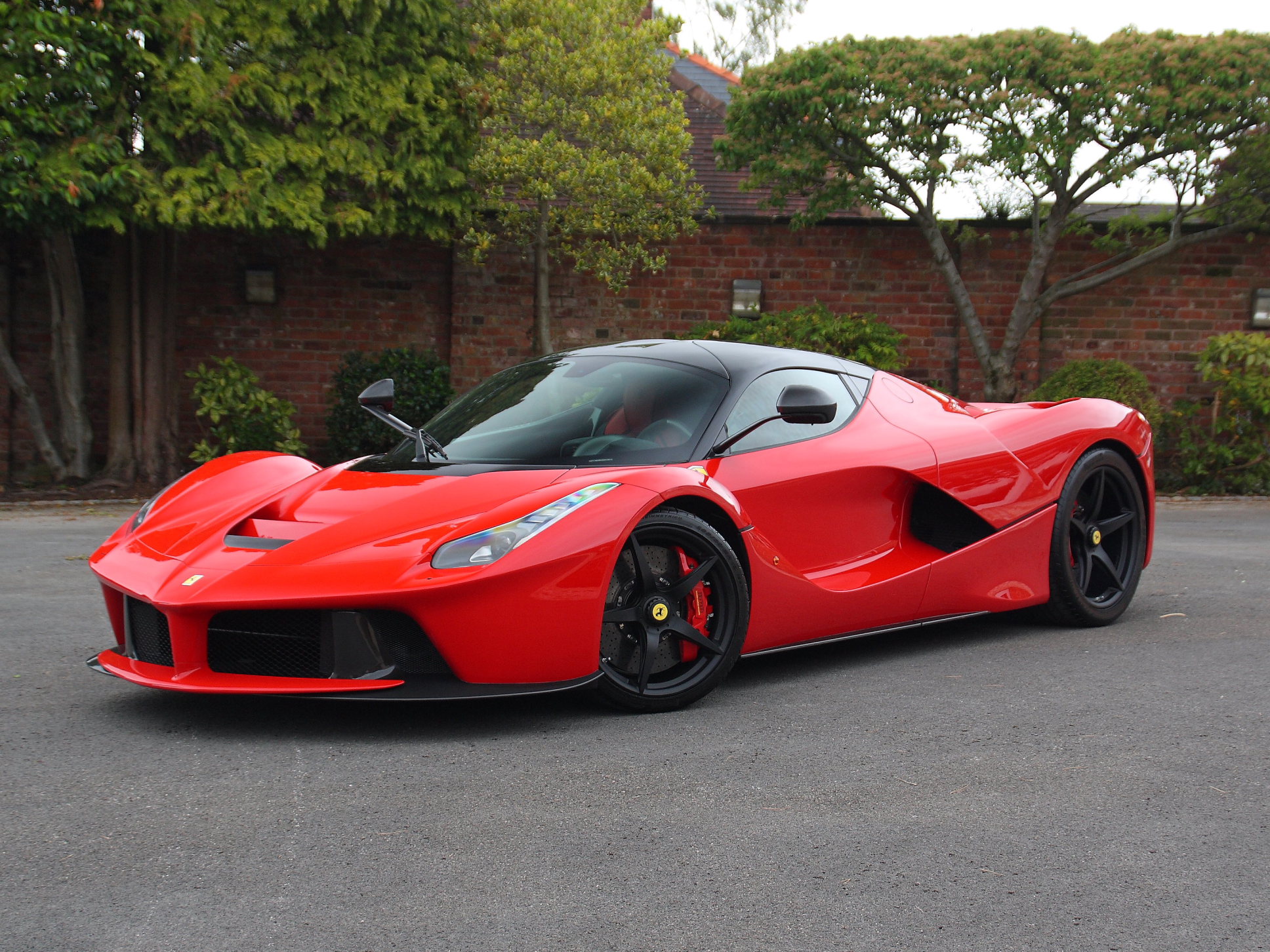
The LaFerrari is no doubt the most spectacular car from LdM’s time at the helm of Ferrari.

In 2014 di Montezemolo resident as president and CEO of Ferrari, and it’s no big secret that this was a consequence of Sergio Marcchione taking over as CEO at Fiat. Marcchione and LdM didn’t see eye to eye neither on Ferrari’s future, nor on clothing style, and Luca chose to end his legendary car career there, moving on to head the Italian bid for the 2024 Olympics. He was inducted into the Automotive Hall of Fame in 2015, and in his speech at the ceremony, chose to give credit for a large part of his achievements to Michael Schumacher who he said “is fighting his greatest battle” – and as far as we know, still does.

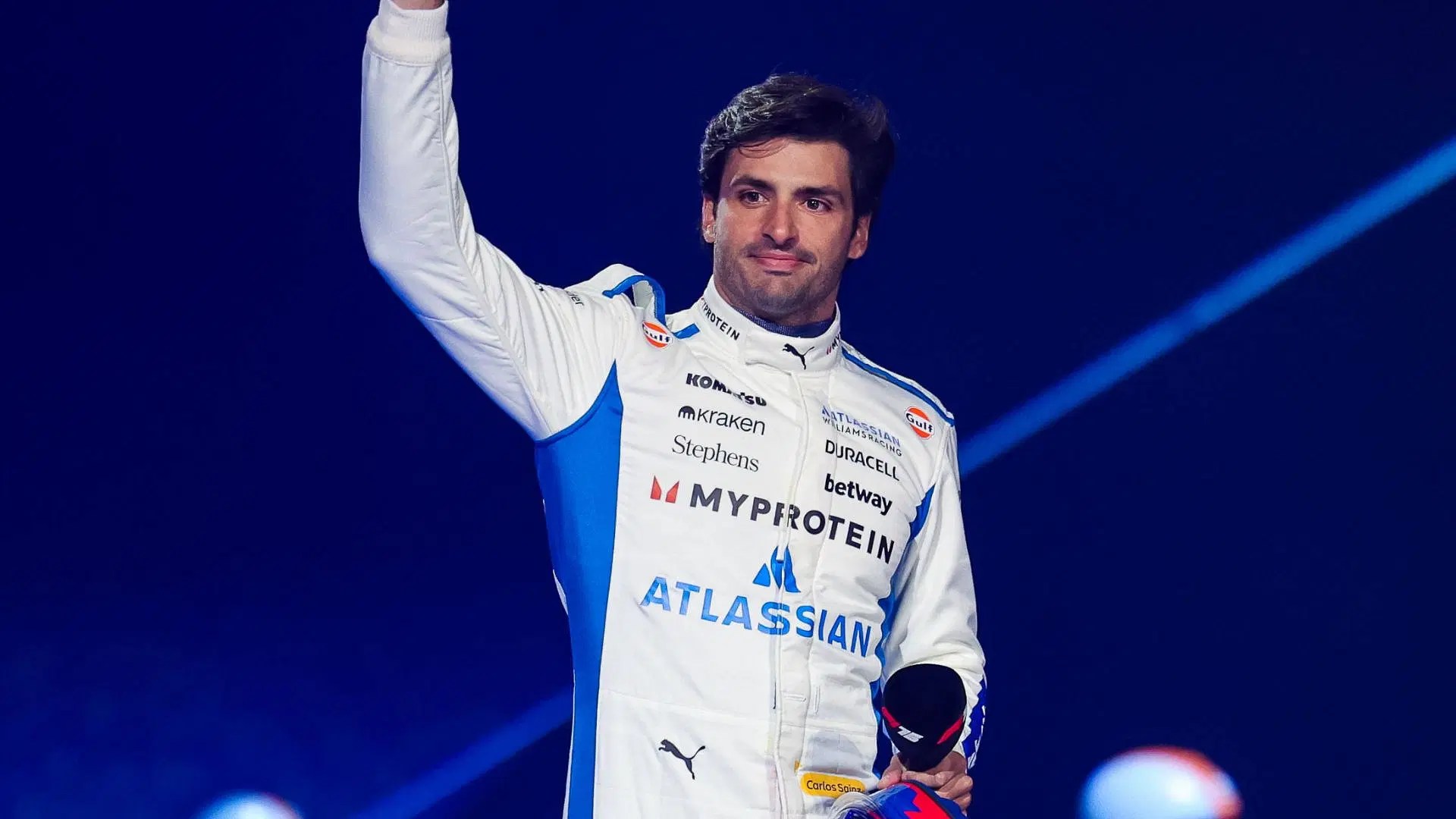
Without taking anything away from Schumi, di Montezemolo’s role in the development of Ferrari’s F1 team and the Ferrari brand over more than 30 years cannot be overestimated, and with with Lewis Hamilton taking over the wheel from Carlos Sainz, it certainly feels like the interest in the Italian team is greater now than in quite a few years. I’m sure that from his residence in his native Bologna, his flat in Rome, or one of his sailing and motor yachts, Luca will be watching closely how the team does. Doing so, he doesn’t need to worry any longer about the survival of Ferrari. The stock price evolution over the last years should put any such worries to rest, and when it was confirmed that Ferrari had signed Lewis, it rose 10% overnight…

218% in five years isn’t too bad…

Driving the world’s best GT!

In 1992, Mercedes launched a car internally known as the C140, the first big coupe from the brand officially referred to as the S-class coupe. Obviously Mercedes had been building luxury coupes since the 50’s that were often seen as the two-door version of the S-class at the time, but the name S-class coupe had never been used before.

The C140 was based on the W140 S-class that was a bulky, heavy-looking thing, never considered particularly beautiful. It quickly became popular in the former eastern block, notably in Russia, which only a couple of years earlier had lifted the Soviet curtain for good. In the short time since, Russia had transformed to the wild East, and as I could see myself, living in Moscow in 1992-1993, the preferred mode of transportation for the Nouveaux Riches was the C140, alternatively the fully grown W140. Tasteful is neither a word you would associate with those times, nor with the W140/C140, and as much as it was loved in the East, as little it was considered beautiful in the West.

Big, imposing, but lacking in elegance – the first S-class coupe C140 from the early 90’s

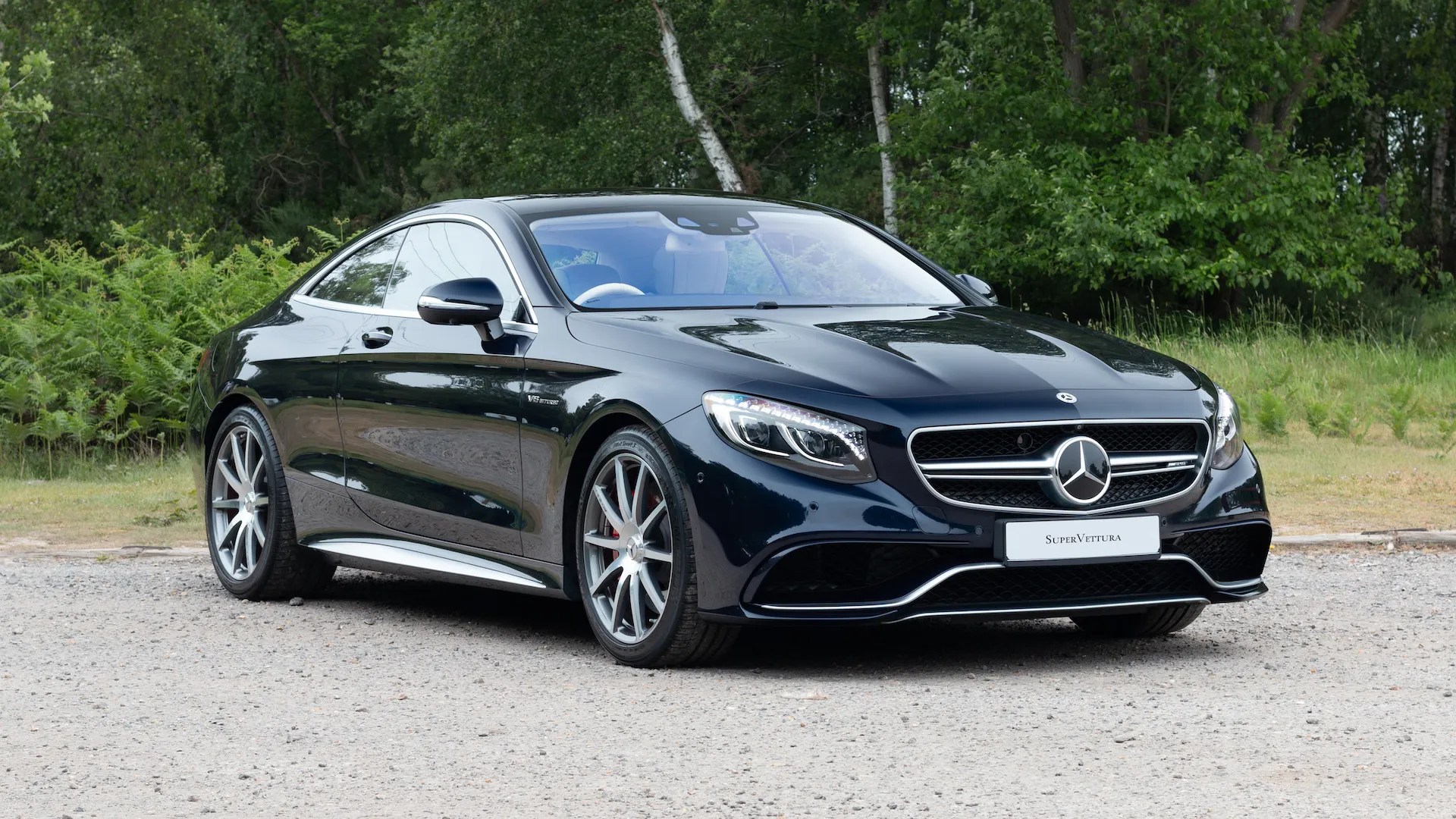
Fast forward to 1999 and the C140 was replaced by the better-looking CL-coupe (C215), which would live on until 2008. The S-class coupe name was thus dropped again in favour of CL, which means “Coupe Leicht (light)”, where the “light” part must be one of the biggest misnomers in history. After the CL, it would take six long years before the next S-class coupe called C217 was launched, and in terms of design, Mercedes has come a very long way from the bulky C140. Most people would agree that in terms of GT’s, the C217 is one of the most beautiful cars around.

Last week I had the opportunity to try out an S560 Coupe from 2018, a jaw dropping exercise that made me confident enough to state that the C217 is most probably not only good-looking, but actually the best GT in the world, if you define in line with ChatGPT: “a GT car is a type of high-performance luxury sports car designed for long-distance driving at high speeds while maintaining comfort and practicality”. I can’t imagine a single car that fits the bill better than the big Merc!

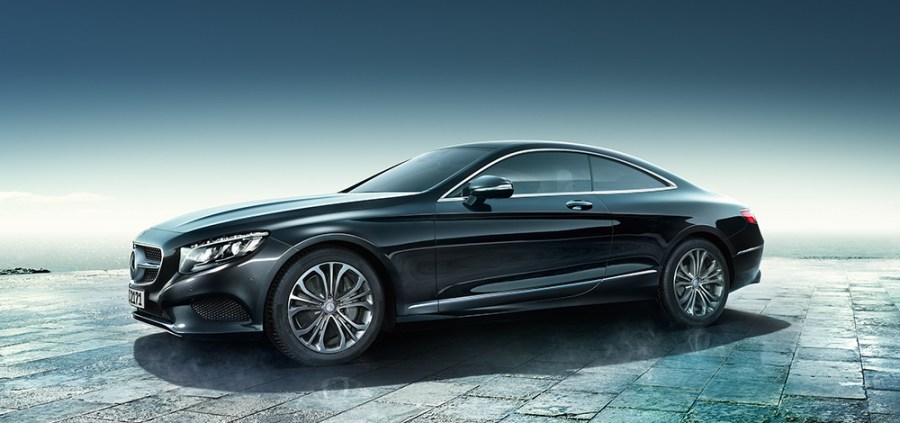
The S560 Coupe from 2018 I had the opportunity to test – needs bigger wheels!

In C217 terms there’s before and after 2018, knowing the car was discontinued in 2020. The 2018 facelift didn’t change the looks much, but it gave the car a far more modern infotainment system with notably integrated Apple CarPlay and Android Auto, as well as a 9-gear auto box on most models. In terms of engines, both pre- and post-facelift cars had a six-cylinder engine with 333 resp. 367 hp as entry model in most markets. You should disregard both. As ChatGPT correctly states, a GT should be a “high-performance” car, and given the C217’s weight of around two tons, none of them fit the bill.

Luckily most buyers agreed, and those buying any kind of S-class new usually also have the money to do things properly. And doing it properly in this case means a V8, of which there were two pre-facelift: a 4.7 litre V8 twin turbo with 455 hp in the S500, and the well-known and quite wonderful 5.5 litre V8 twin turbo in the S63 AMG coupe with 585 hp. Post facelift, the S500 became the S560 and got the new 4-litre, twin turbo V8 with 469 hp, and the updated S63 had a developed version of that same engine with 612 hp. To round it off, both cars were also available with a V12, which was thirstier and made the car even heavier, so not making it faster. You can safely ignore those as well.

One of the finest interiors around

The S560 I had the pleasure of trying set the tone from the moment I opened the very large door and notice it’s both frameless and has double-glazing. I slid into what must be not only one of the most comfortable, but also one of the biggest car seats ever built, and with a discrete tone, the seatbelt butler brought the seatbelt forward. Looking around the cabin with its fantastic materials and beautiful wood applications, it struck me that this must be one of the most beautiful car interiors ever built. Plastic? Aber nein! The S coupe is leather and wood only, wherever you look.

Looking around is also helped by the absence of a b-pillar, a Mercedes tradition that gives the car a uniquely elegant line with the windows down. The back seats are less opulent than the front but they will carry two adults in full comfort with enough head- and legroom, which is a big difference to most other large GT’s such as the Bentley Conti GT or the Aston Martin DB 11, two of this car’s natural competitors (although both are more expensive at similar build years to the Merc).

Post-facelift the rear lights are OLED, and look really cool!

Turning the key (sorry, pushing the button) produces a somewhat surprising growl – mein Gott, ze engine zounds schporty! After having signaled it’s alive, the V8 quiets down quickly as you roll away. The steering is very light, and you quickly notice that you have a lot of car with a considerable width around you. Picking up speed, you see the needle moving, but you don’t hear anything. This must be the quietest car I’ve ever been in. Luckily the motorway ramp left enough room for me to floor it and after a slight hesitation, the V8 was back in full force, pushing the car forward more like an airplane engine than a sports car, but again with a surprisingly nice tone. The needle was at 150 kph in no time and this being Switzerland, I had to lift off. Any outside noise was still largely absent.

Having settled down for a while in the fantastic chair and turned up the volume of the absurdly good Burmester 3D sound system this car was equipped with, I left the motorway and chose a country road back. With little traffic around, I put the car in sport and started pushing a bit. To my great surprise, the car tightened up quite a bit and felt far more light-footed than I expected, and the V8 became far more present. Of course it’s no sports car, but the big Benz proved to be far more agile than you would expect. The gear changes are still so perfect that you don’t notice them, and the steering was now a touch heavier, but still didn’t communicate much of what was happening on the road. I guess in this segment, it’s not supposed to. It also became clear to me that no one needs the S63 version of this car. This is not an AMG car, it’s not supposed to be driven like one, and the “standard” V8 has enough power.

Always get a car with the AMG package though – it adds a necessary, sporty touch!

Returning the S-class coupe to its rightful owner, I felt humbled by a sense of having just experienced automobile perfection in the GT sense of the world. An S-coupe from this generation is Mercedes at its finest, before things started going south with King Plastic making as a necessary consequence of the EV trend and required weight savings everywhere. An S-class coupe of this generation must truly be one of the finest automobiles ever built. A Conti GT or a DB11 may be more exotic (at least the latter), but in terms of sheer quality, they’re not on this level. I’d bet that even the number of dead cows used in the interior is higher in an S-coupe than in a Conti. That probably deserves to be checked though…

The good news is of course that if a big GT is what you need (and who doesn’t?), you should know that no other car type other than EV’s loose value quicker. That means that you can pick up a S560, i.e. a facelifted car, that cost more than EUR 200′ as new, from around EUR 80-90′, with 70-80.000 kms on the counter, which means that the car is just about run in. If you don’t need the infotainment upgrade, a pre-facelift car will give you largely the same experience for 15-20.000 less, but be aware that some first generation cars are RWD rather than AWD, and have a seven- rather than a nine-speed box, which in my experience is less smooth, and also slightly less economical.

Should you prefer your S-class coupe as convertible, no problem. But you loose the beautiful silhouette…

Then again, if you focus on the economy, this is quite obviously not the car for you, but I’d still claim that a C217 coupe on average will be far less costly and far more reliable than most of its competitors. Consumption-wise I know from personal experience that those engines are good for 11-12 litres per 100 km if driven legally, which given the size of the thing is impressive, but of course parts and maintenance will be on the expensive side. As always, buy wisely from trusted dealers and with enough history to make you confident – and always buy the best car you can afford.

If you disregard the S-class coupe as an old man’s car, you most probably haven’t driven one. I would suggest you do, because if you find it in the right color combination (which isn’t the one I drove) and with at least 20″ wheels (which mine didn’t have) it just looks beautiful, especially with those side-windows down. So if you’ve reached the age when the kids have moved out and you’re looking for something to move your partner and you in in style across longer distances in southern direction at brisk speed, and have no ambitions for track days, at least not with this car, I don’t think there’s a better car around. Did I just describe myself there? Jawohl Herr Doktor!

When the cold reality catches up…

Dear fellow car enthusiasts, firstly a Happy New Year, I sincerely hope that 2025 will be a healthy and successful year for you all! That’s certainly not what’s happening in LA as I write this and my thoughts are with any of you who may be directly or indirectly affected, sincerely hoping the fires get under control soon and that 2025 improves from there!

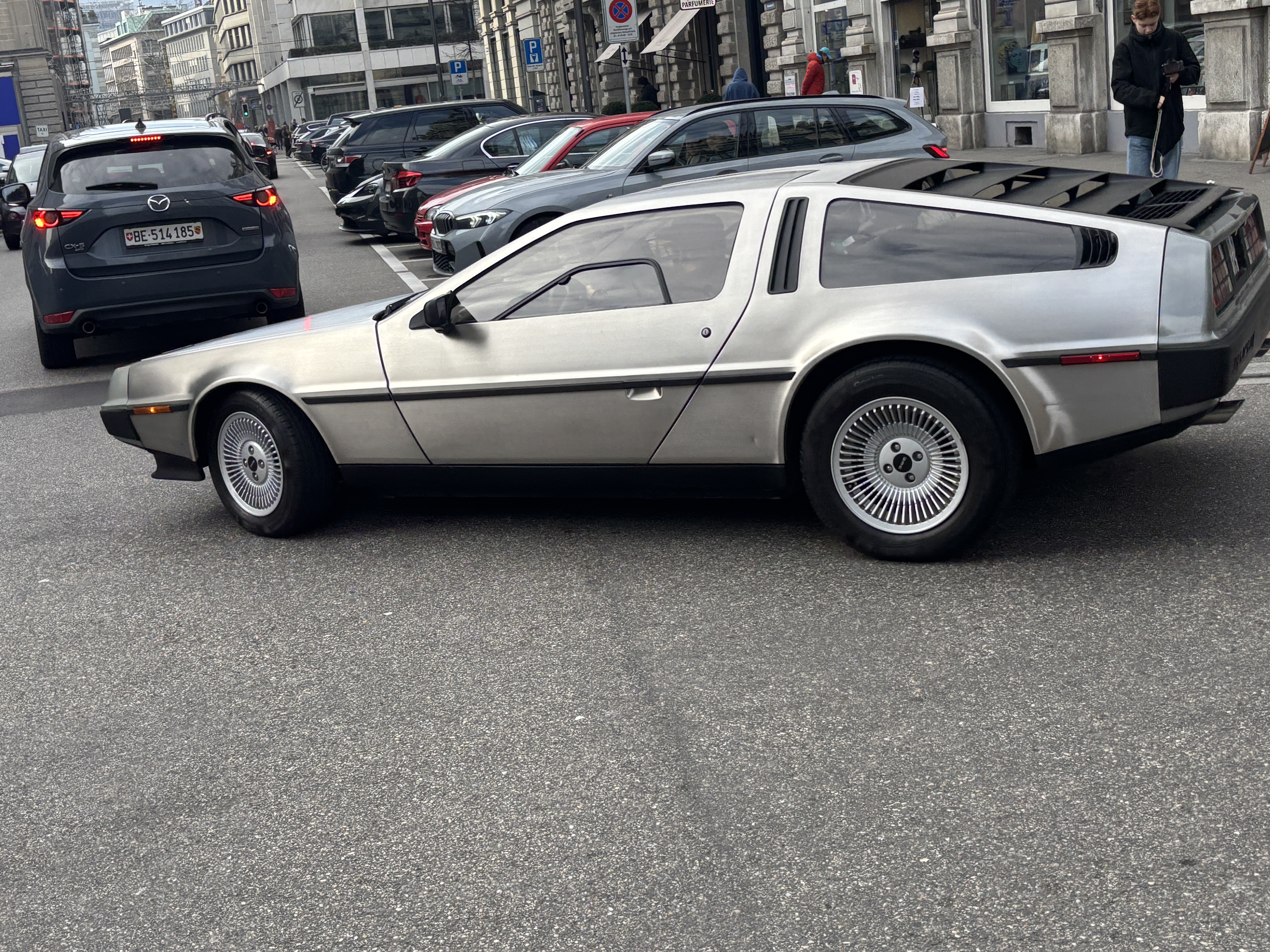
As we set off on a new year in the wonderful world of cars, I’m thinking about a few changes to the format of the blog that you may discover during the year. One thing you’ll see me do is become a bit more flexible in the format and perhaps also the regularity of posts. The idea is not to drive less, but rather to do so in a variation of long and short, such as to be able to better “seize the moment” when for once, I get my phone up quickly enough to catch that wonderful car just passing. We’ll see how the year develops, but before that, we’ll start it off in the spirit of what we’re seeing in various areas right now and that you could call reality catching up. In this case, it’s yet another illustration of the wonders of electric mobility, but here in the form of an example I had trouble believing myself.

The non-Swedes among you will most probably never have heard of Malung, an unspectacular small town in the middle of the country. That would probably go for many Swedes as well if it weren’t for the fact that it’s located about 350 km north of Stockholm, on the way to some of Sweden’s leading ski resorts. 350 km is obviously close to the true (not claimed) range of EV’s with large battery packs in winter (best case really, since there’s no motorway leading to Malung and the traffic typically rolls at 80-90 km/h, otherwise they wouldn’t even get this far), and what the picture below shows is a part of the very long waiting line to one of Malung’s two Tesla charging stations last weekend.

This is not a joke – but it’s only a small part of the looong waiting line…

What you can’t see from the picture is on one hand the full length of the line (you’ll have to resort to this link for that, scrolling down a bit in the article) but also that the outside temperature was -20C, and that at one point more than 150 cars were waiting up to 3-4 hours. The issue is not only that the EV range falls even quicker at -20C, but also that EV’s don’t heat up in the same way as an ICE does, meaning the interior cools down much quicker. So in other words, you had dozens of families waiting for hours in sub-zero temperatures to charge their Tesla. What a pleasant way to start or end your vacation!

I can easily imagine some “why on earth did you say we should buy an EV??” going in that line in the cold, but If you think this has led to a big re-think on electric mobility in Sweden and the realisation that EV’s may have their place, but not as a viable transportation for long winter journeys, then think again. Tesla has an ongoing conflict with a labour union in the country, so the debate is instead focused on the company’s unwillingness to come to an agreement with the union, and that being the cause of the issue. To put this in context, around 10.000 people live in Malung, so conflict or not, I think it’s rather improbable that Tesla would build another few charging stations in a small city in Sweden for a few hundred cars when demand is at its peek, three-four weeks per year, don’t you?

This is what Sweden can look like in the winter. Not EV-friendly.

The issue is of course another. If it took 30 minutes to fill up an ICE and you needed to do so every 350 km, then we’d see lines at petrol stations as well during the holidays. This is thus another fundamental downside of EV’s, to add to an already long list. This particular weekend is one of a handful of similar outliers per year in terms of peak demand, but they will continue to happen, and as the number of EV’s increase, charging stations will not do so exponentially, as that is not economical. In other words, expect waiting times to become worse, not better.

The local who filmed this whole thing didn’t queue up with the rest as he drives a diesel and according to the interview in the article, has no plans to change to an EV anytime soon. The title of the article reads “the kids are cold”. I would think that goes for the driver’s love of the recently acquired Teslas as well…

12 things that will (maybe) happen in 2025!

The year 2024 is pretty much done and boy has it been an eventful one! Conflicts and wars are not the topic of this blog, but just looking at the car world, few of us would have thought so much would happen during the coming 12 months when we sipped our New Year’s champagne a year ago. Perhaps most notably, at the time it very much seemed we were set on pushing on with the electrification phantasy and that as a consequence, large-volume combustion engines were very much a thing of the past.

Well, just as little as Max Verstappen won his fourth world championship title without any opposition, that didn’t happen. What did happen though, is that the threat to Western automakers from China became very real, and will certainly continue to be so in 2025 – tariffs or not. What else can we expect? Well, taking the first letter of the coming 12 months and finding a word starting with the same letter on a car related topic, here’s what I think. If the past is any indication it won’t be much more than a somewhat qualified guess, meaning 2025 will be another year full of surprises!

That’s far more hood than any EV will ever need…

January: it wasn’t long ago that Jaguar announced its complete rebranding with a marketing campaign that made everyone in the car world and lots of people outside of it shake their heads. I wrote about it back in November, in a post you can read here, and basically argued that if Jaguar was a healthy company to start with, it wasn’t a branding campaign that would break it. The problem is of course that it isn’t. A week after the post, Jaguar presented the first concept car for its all electric future, which surprised everyone again, given it’s most prominent feature was a long hood, which of course you don’t need for an EV. Anyway, the new line-up is set to hit the market in 2026. I’ll stick my neck out and say that won’t happen, and that Jaguar may not be around 12 months from now.

February: Just as everyone was writing off the large combustion engine as a concept, Ferrari presented the 12 Cilindri, its splendid new GT featuring a derivative of the 812 Superfast’s naturally aspirated, 6.5 litre V12, here putting out more than 800 hp, without any turbo-chargers or hybrid solution. Long live Maranello and contrary to what was the common belief a year ago, I still believe the rumors around the V8 and V12’s imminent death are largely overdone!
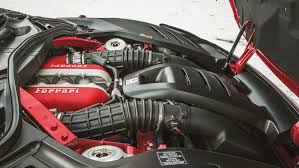
This is what a naturally aspirated V12 still looks like!

March: the new F1 season kicks off in Australia on March 16 2025, and Max Verstappen will of course have his mind set on his fifth world championship driving title. Will he succeed? That’s of course impossible to say but the competition looks fiercer than in many years with Norris and Piastri at McLaren, Leclerc and eight-time world champion Lews Hamilton at Ferrari, and Russell (more than Leeson) at Mercedes. I’ll stick my neck out (again) and say that this becomes a bit too much for Max, and that Lando Norris and McLaren will be world champions in 2025.

April: the month of April is often characterized by what we call April weather, meaning quick changes between sun and rain – a bit like a modern hybrid switches quickly between electricity and petrol or diesel. And whereas new sales of EV’s continue to be dismal, growing by only 8% in Europe in the first half of 2024, according to stats from The Economist, hybrid sales grew by over 50% over the same period. That’s of course what I’ve long argued on this blog, i.e. that if we don’t want everyone to park two cars in their garage, then a hybrid is a much wiser solution than an EV for most people. That’s therefore a trend I very much expect to continue!

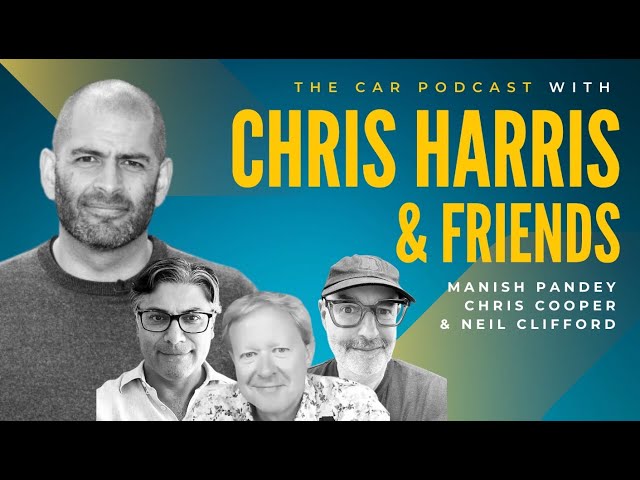
May: think how much richer the car world has become through the various media channels we now have at our disposal! There’s of course the private Youtubers as well as the more official Youtube channels of leading car magazines such as Evo, but lately, I’ve even discovered some really nerdy car podcasts that are highly enjoyable – none more so than Chris Harris’ The Car Podcast. Together with some of his blokes, Chris will hear answer some life-critical questions, such as which car to buy for a budget of 30.000 if you want it to work both as a family car and on track. Essential stuff with a healthy touch of British humour!

Podcast of the year!

June: I really don’t set out to pick on Japan, but somehow it seems I still do every year, quite simply because we don’t see anything exciting coming out of the land of the rising sun anymore. Sure, Toyota are doing really well by sticking to their hybrid technology, but what about the others? I heard an interview with ex-Nissan CEO Carlos Ghosn the other week, talking about how insignificant Nissan has become, but you could say the same about Honda. Or Mazda. They all lose market share, and nothing exciting is on the horizon. Will that change in 2025? Don’t think so.

July: what I’m pretty certain won’t change neither in 2025, nor in the years therafter, is the steering wheel. We won’t convert to joysticks, yolks or anything else. And with the exception of Tesla, all other car brands will retain the good old stick as turn signal, quite simply because it’s vastly better than two buttons on the wheel. And we all know Tesla knows so as well, but hey, anything’s good for cutting a few dollars…

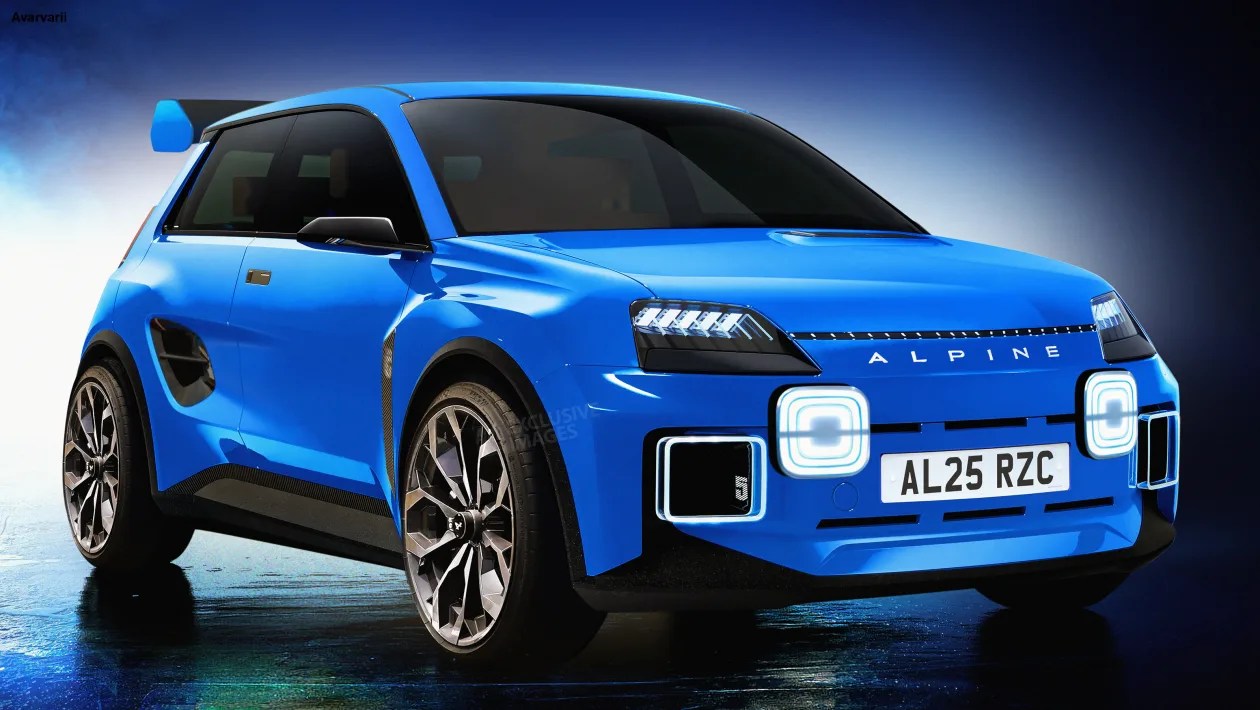
August: Renault did really well when they decided to resurrect the classic Alpine brand, and the A110 coupé has received a lot of praise as one of the most fun cars to drive out there. Unfortunately, the market for two-seaters with practically no luggage space is limited, even at the A110’s quite modest price point, so it was obvious that Renault would need to do more if they wanted to keep the Alpine brand. And of course, they couldn’t resist doing so by promising to launch a range of EV’s over the coming years. Given ambitions for sold cars are modest, they may well make it.

We went from the A110 to this – that’s not progress

September: next year will mark the 15-year anniversary of the Swedish brand Saab’s disappearance, which many of us regret to this day. But actually, the traditional Saabs most of us regret are far older than that. I saw a first-gen Saab 900 Aero the other day, and it was my 22-year old son, not me, who said “that’s a cool car”. It is, and a practical one at that. I know, because my father had one, and my wife and I also had a wonderful 9-3 convertible around 20 years ago. Unfortunately the engineers at Saab were always better than the marketing people, which is what ultimately led to the brand’s demise. Saab will certainly not be reborn in 2025!

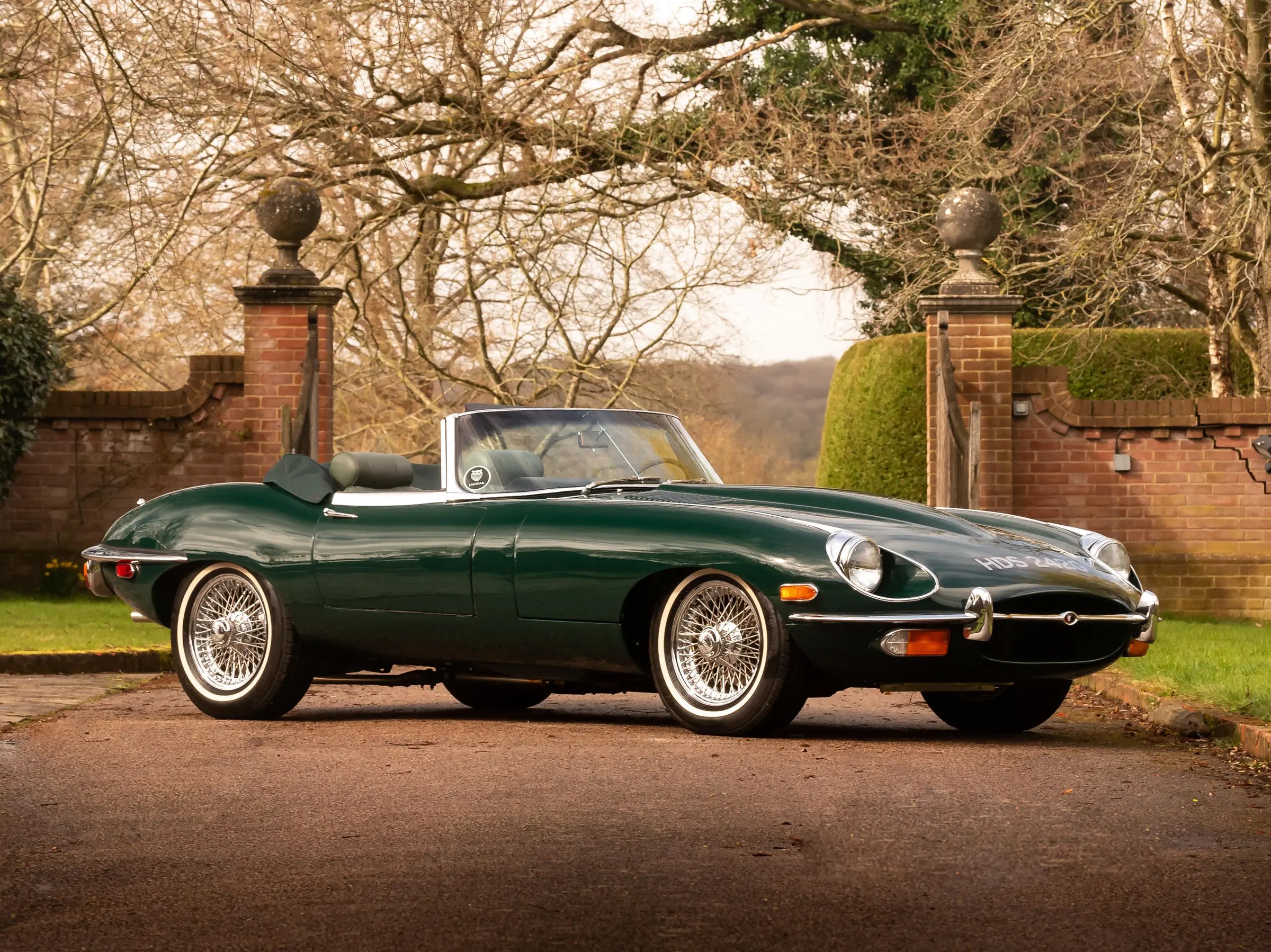
October: with the general insecurity surrounding the car world, it’s not fully clear what will happen to our dear oldltimers. I don’t doubt for a second that the real fanatics dream of the day when these polluting, terrible old things will all be forbidden, but I think that will remain a dream. Oldtimers are often owned by people with large wallets who tend to be large taxpayers as well, that the state doesn’t want to rub the wrong way. Oldtimers will be with us for many years to come, and I expect their secondary values to continue their upward path!

Buying an E-type as an oldtimer may be a particularly good idea!

November: Nio is one of the new Chinese EV brands we may have to get used to, and it’s about as remarkable as any of the others, i.e. not at all. Were it not for the fact that it has one more trick up its sleeve than the others, as next to charging it normally, it’s also been built for a so called battery swap. That means driving to a battery swapping station where in five minutes, your whole battery pack is swapped against a new one. What a brilliant idea! Now we don’t only need to build traditional charging stations around Europe, but also plenty of battery swapping stations, where in addition, a number of fully charged battery packages need to be kept. And this only for Nio, since as of now, no other brand is equipped with this technology. Seriously – who comes up with these ideas? This one will not be long-lived, and thank God for that.

December: to round it off, dodici means 12 in Italian, and I can’t really get over the Ferrari 12 cilindri, and the fact that they really did it – they built another coupé with a naturally aspirated V12. And then some journalists took it to a track and told us it was more a GT than a true track car, as if someone really cares. The point is that it exists, and that Ferrari went against everything they were told, for the love of the car. And for that, we love them dearly!

Grazie Ferrari!

Fat cats and tweed jackets!

I travel quite frequently to London on business and on my last trip a few weeks ago, I had some time to escape the work routine and actually enjoy the city a bit. Of course, London is just as little representative of the UK as New York is of the US. Still, the things we consider as British are very present in London as well: rain for one, especially at this time of year, but then also the pubs, the Guinness they serve, the men in tweed jackets who drink it… And then, there’s of course the cars. Rolls Royce, Bentley and Aston Martin certainly rank as more fancy, but the brand most people associate with the UK, and also the one most of us can reasonably aspire to, is Jaguar.

Rule good old Britannia!

Unless you’ve lived under a rock the last two weeks, you’ve no doubt seen the storm erupting over the video announcing Jaguar’s re-branding. To say that it’s been criticized is a serious understatement. Everything, from the androgyne AI-like people, over the fact that no cars are shown, to the new logo: Jaguar lovers (of which all of a sudden, there seems to be a suprisingly large number) have been on the barricades over the sacrilege of destroying Jaguar’s image and by extension, the Britain they cherish. And since we’re on video clips, this one illustrates that view pretty well.

You certainly don’t need me to write yet another post on how terrible the rebranding is, there’s already plenty of those around. And actually, even though I believe Jaguar’s (I’ll still write that with a capital J, thank you very much) days are counted, I’m not sure the rebranding is the cause. Because just as little as the UK can today be summarized as a pint of Guinness in a tweed jacket or whatever way Jeremy Clarkson would like it to be, Jaguar was very far from a healthy car brand to start with. And, whetheryou like it or not, Britain has moved on, as has the rest of the world.

This was a long time ago.

Jaguar is part of the Land Rover group, which in turn is owned by the Indian Tata Group. However, contrary to Land Rover itself who under Tata has profited, and continues to profit from the SUV trend, Jaguar’s model line-up hasn’t really done so. There were two small SUV’s, the E-Pace and the F-Pace, both of which are quite alright (and one of those especially so, more on that below) but also quite far from the British spirit described above and also from the the poise of the Land Rover line-up, which I guess you could call less understated and far more in your face design-wise, which seems to be what people want.

Then there was the I-Pace, an EV SUV which wasn’t very remarkable at all. The four-door XE sedan and XF station wagon were even less interesting, and the line-up was rounded off by the only car Jaguar really deserve credit for, namely the F-type coupé and roadster. However, the F-Type is a 10-year old model by now and thus one due for replacement quite soon, and anyway a two-seat sports car is not something a brand can build its existence on.

An excellent drive and good-looking too, for those wanting something else than a 911.

To summarize all of this in numbers, Jaguar sold around 150.000 cars in 2019, a number that they couldn’t have survived on long-term, had they remained a stand-alone brand. This year, that number was down to 50.000 cars before Jaguar earlier this year suspended all new car sales, hence the usage of past tense in the paragraphs above. They do this to re-launch – surprise surprise – as a fully electric brand in 2026, which is of course what the rebranding campaign is meant to illustrate.

Jaguar was thus quite far from doing well at the launch of this campaign, and anyway, very few marketing campaigns through the years have had enough effect to make or break a brand, as some of the comments around this would have you believe. I’d even question whether rebranding in Jaguar’s case is such a bad idea, when you see the convulsions some car brands have ended up in, trying to combine EV’s and ICE’s. If your ICE sales numbers are dipping and your line-up is old and mostly uninspiring, and you’re convinced a new era is around the corner, maybe a rebranding is the right way to go?

Will the whole thing end with a contested re-branding video?

Unfortunately, there is a couple of issues. The first of those is timing, and the second is a five-litre V8. Starting with timing, my reasoning would have been far more convincing had this happened two-three years ago, when everyone (well, almost) was still convinced that EV’s would take over the world. Now, we’re at a stage where EV sales are crumbling in every single market (except perhaps China where to put it mildly, you can force people’s hand…), and car manufacturers are doing all they can to pedal back on their “full EV” commitments. In that market, Jaguar now wakes up and goes full EV in a way that doesn’t allow for any pedaling back, should it not succeed.

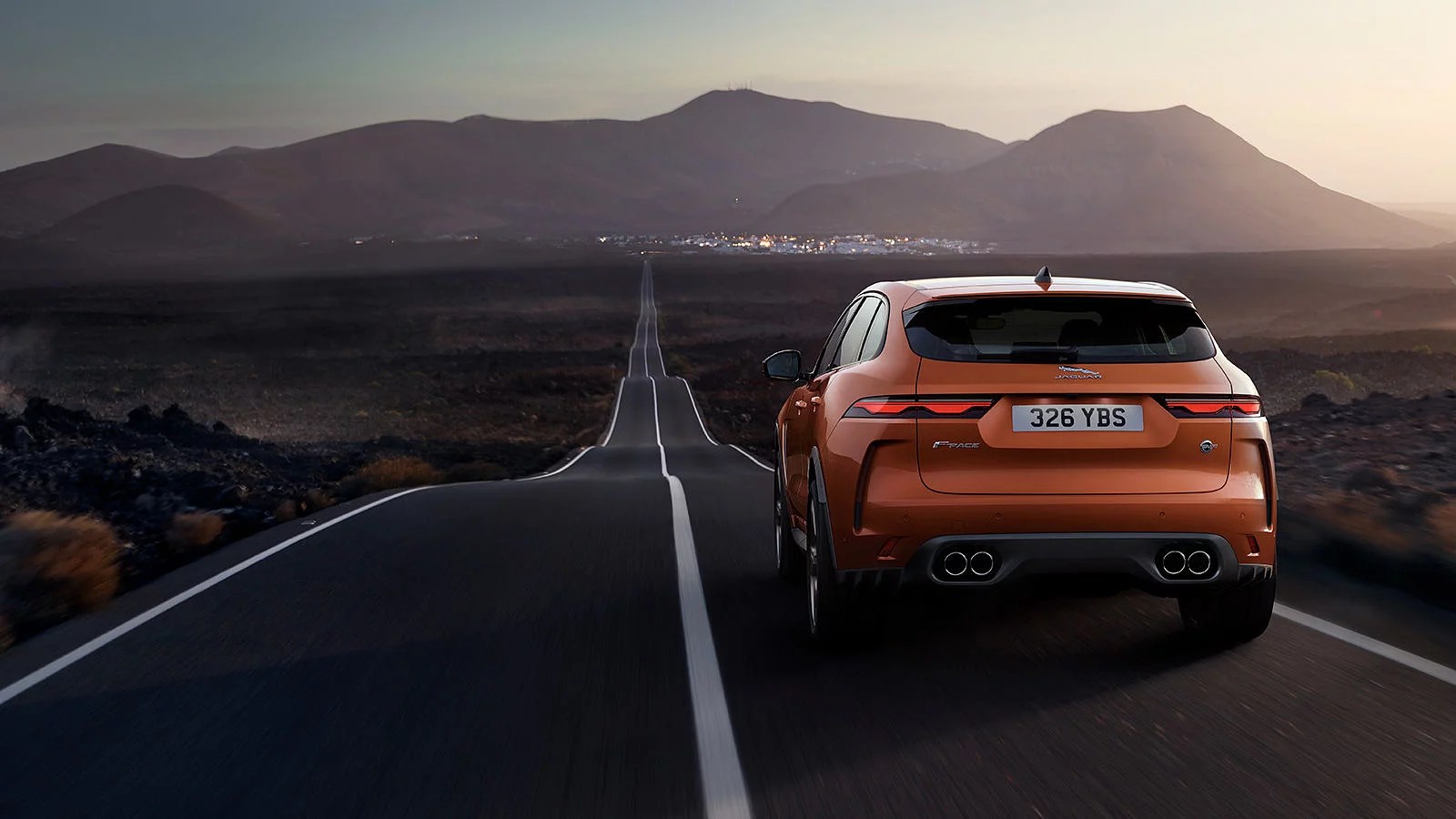
Then, there’s the five-litre compressor V8 that is one of the greatest engines out there. I had it in my Range and in the Jaguar line-up, it’s fitted in the top-of-the-range F-Type and F-Pace models. The F-Pace received quite a complete overhaul in 2022 and the five-litre V8 version called SVR has had motor journalists drooling all over it, calling it the best small SUV out there, and perhaps the best car in the market in terms of engine sound. That’s a sound it shares with the F-Type, a less spectacular but very capable coupé-roadster in an attractive packaging.

Going out with a bang – the lovely, 5-litre compressor V8!

Jaguar has thus sacrificed two great V8 models for a full EV experiment, debuting not now, but in two years, but already now being two-three years late. They do so with cars that so far no one has seen, but that they claime will be REALLY luxurious, and REALLY expensive. If you’re wondering how that could possibly go well, you’re not the only one. But it’s the full strategy they’ve embarked on, rather than a rebranding campaign or a new logo, that is Jaguar’s real problem.

Meanwhile, for all intents and purposes, what we used to know as Jaguar just ceased as a brand, meaning that if you can track down a new F-Type or F-Pace in V8 form, you could be down for the deal of your life, since dealers will be really anxious to get these out of their shops. And in the pre-owned market, I strongly suspect both of those will hold their value better than most at their respective, depreciated price point, and especially in the case of the F-Type, perhaps even become a collectible down the line. Until that day comes, I promise you’ll never get tired of listening to that V8!

Rapid(e) mind mess-up!

If you’re anything like me (and given you read this blog, I guess there’s a fair chance you are), you’ll be familiar with the situation: you see a car that causes a severe, possessive reflex of the “I have to have it!” type, and rather than defining your needs beforehand as any normal person would when looking to buy a car (to the extent that was your intention, which in these situations, it usually isn’t), you instead try to define your needs ex-post to suit the object of desire.

This is what happened to me (again…) a couple of weeks ago, and it’s all the fault of the classic car dealer called Emil Frey Classics that I mentioned in my post on the wonderful MB 500 SLC that they had in the showroom back in August. That car caused a similar reflex but not on the same level, and they luckily sold the MB before I had time to do something completely irrational.

Just for memory and as a short background, the Swiss car import market is dominated by a few privately-owned, large importing groups that split the brands between. Emily Frey is the largest of these, and the family behind it and other similar groups regularly rank among the richest in the country (which in the case of Switzerland is saying a lot…). Emil Frey’s “Classics” division handles the exotic cars they trade in from some of their many wealthy customers, and they expose the best of these in a beautiful showroom about 200 metres from where I spend my working day – the definition of professional hazard!

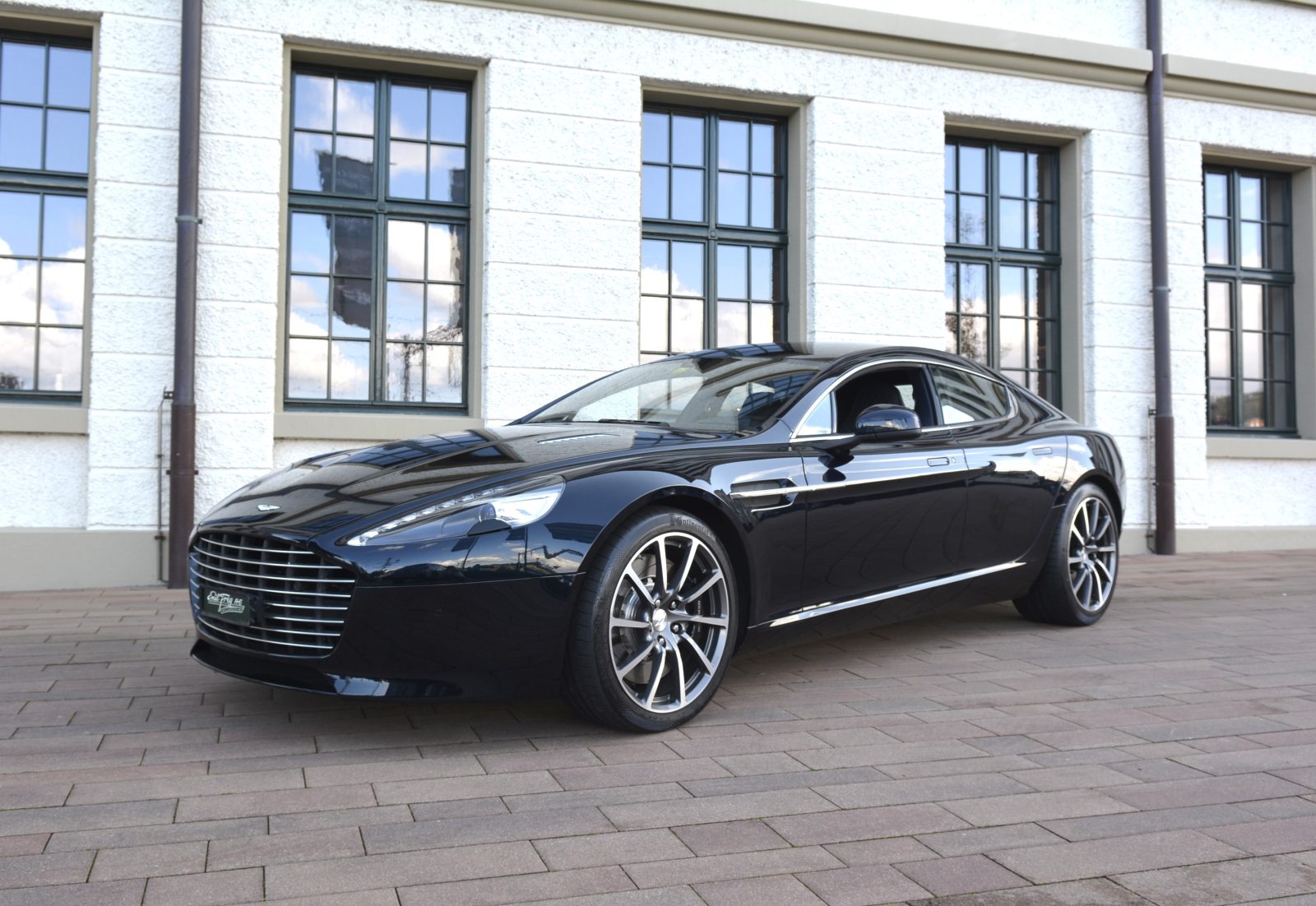
“My” Rapide, in the deepest blue metallic I’ve ever seen…

As you may have guessed, the car that’s messed up my mind in the last couple of weeks is arguably the most beautiful four-door sedan on the planet – the Aston Martin Rapide, here in the shape of 2017 Rapide S in the deepest dark blue metallic I’ve seen, with a black leather interior, driven no more than 13.000 kms since new, and traded in from a client’s Aston Martin collection – the poor guy had apparently run out of space. Needless to say, the car was in mint condition.

I’ve always found the Rapide to be a beautiful but intriguing car, and a rare one at that. Over the full 10 years of production no more than 10.000 cars were built, meaning roughly 1.000 per year (but as it was, far more in the first few years and very few from 2017 and onwards), so you don’t see many of them. And you may actually miss it even when doing so, since seen from the front or even from 1/4, you risk taking it for just a regular DB9. It’s only from the side and back that you note that it’s significantly longer.

Indeed, the Rapide is built on the same platform as the DB9 and the V12 Vanquish, but here extended by 30 cm such as to enable two back seats. These are real, separate seats making the Rapide a comfortable four-seater, provided your back passengers aren’t bigger than around 175 cm (5’9″). And should there only be two of you traveling, the two rear backrests can be folded, thereby creating a very sizeable luggage space, given the Rapide is actually not a sedan, but a very stylish hatchback.

An additional 30 cm from the b-pillar backwards make the DB9 a four-seater

First shown as a concept car in 2006, the first series was actually not built in the UK but rather at Magna Steyr in Austria (most famous for building the G-wagon), with final assembly in Gaydon, and with the full production moved there in 2012. In the year after, the second series Rapide S premiered, with power boosted to 558 hp from the initial 470 hp and with other updates, of which the vastly bigger grill is the most obvious one. From 2014 the S also got an eight-speed auto box, replacing the original six-speed. Finally, the Rapide AMR was sold in the last years from 2018 to 2020, limited at 210 cars, and with the engine beefed up to 600 hp and various visual items to underline its sportiness.

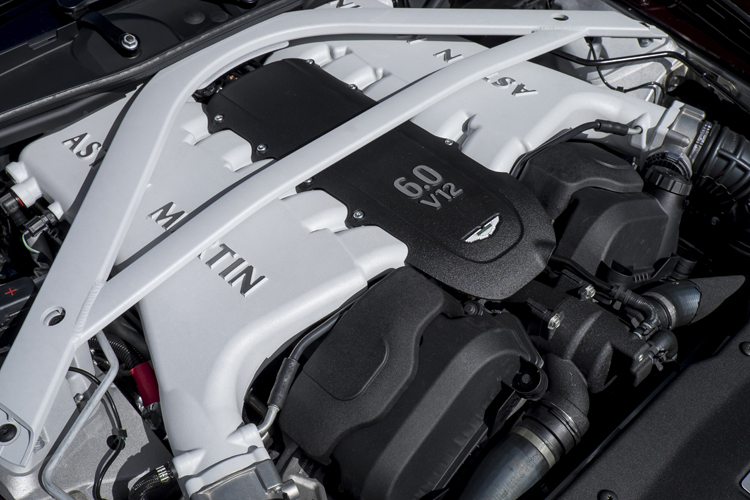
Of course a lot of the Rapide’s thrill is in the engine, that wonderful, 5.9-litre naturally aspirated V12, that for some reason says 6.0 litre on the engine block when you open the hood. It’s a well-known engine across the Aston range and considered very reliable if you treat it right. In the Rapide, it provides the jet engine kind of acceleration – not explosive or high-pitched, more of a relentless push, with a satisfying growl. It’s also the type of non-supercharged, non-hybrid engine that we will never see being built again, whatever happens to the car world going forward.

It may say 6 litres on it, but in truth, it’s 5.9… Wonderful nonetheless!

Coming back to the Rapide S I was drooling over, it was as said a 2017 car which is good, as in the Rapide world, the newer, the better (or as the salesman said, in the first series, there were quite a few Mondays in the week on the final assembly line in Gaydon…). Stepping into it, and thereby opening the “swan door” that opens outward but at an upward angle, you find yourself sitting just as low as in a DB9, with what feels like an immense hood in front of you. The cabin is pretty much identical to a DB9 as well, with beautiful materials, leather from more cows than you care to think about, and a really nice and solid feel to everything.

We went for a drive, but it wasn’t one that in any way tested the car’s capabilities. The feeling of driving a big car however disappears quite quickly, and the accompanying, soft growl from the exhaust is very satisfying indeed. Those that have had the chance to drive the Rapide on track however talk about it as very agile and playful for its size, far more so than the Panamera or Mercedes-Benz CLS it’s usually compared to (and both of which it obviously also outclasses in looks).

Old school? Yes, if infotainment screens is you’re idea of fun. Timeless is the word!

As we came back, my mind was working in overdrive to create a case for this car. Of course there’s quite a long list of negatives that you can think of and that go from, well, the whole package really, from the V12 engine to the electrical system, where if anything goes wrong, the downside is potentially limitless. Running costs are also on the high side, to put it mildly. That said, it’s far cheaper to run than the only competitor I see, namely the Ferrari FF / GTC 4, where the FF price-wise is comparable, and it’s not like it lacks positives either: the sheer beauty, the rarity, the relative practicality which is really all a couple needs when the kids have moved out, and of course that V12 which beats most of what’s out there.

If, having read this, you feel like me, do note that parking a Rapide in your garage is very much a case of buying the best one you can afford. There are super cheap first series cars out there that are tempting, but not where you want to go. Rather, aim for the second series (the S version), and do so from 2015 such as to benefit from the 8-speed box which helps lower the fuel consumption from something really indecent to half acceptable. Maintenance is really critical, but if done correctly, the Rapide is fundamentally a solid car.

Speculation is no more than that, but I wouldn’t be too surprised if the Rapide price-wise stabilizes at this point, for the above mentioned reasons and because there are so few around. As for me, I tried to find other directions for my lunch walks last week, such as not to pass in front of that shop window, where the very friendly salesman will wave to me every time. Luckily I’m traveling next week, and hopefully someone else will have had time to buy it before I get back…

Street finds: the (original) Maserati Ghibli!

Are you a weather person? The expression which I know is used in at least some languages (although I’m not sure English is one of them) refers to someone whose mood stands in strong correlation to the weather. My wife would tell you that I’m definitely part of this group, meaning I’m happy when the sun shines and get grumpy if it rains for more than a day or so, which unfortunately is often the case in Switzerland.

That’s also to say that the end of October up until early December is my least favored part of the year. Before that, it’s usually still pretty summer-like, and from mid-December onwards, the skiing season starts, which is an obvious change for the better. But during those weeks from mid-October until mid-December, where others see leaves in beautiful colors, I only see shorter and colder days, morning fog, and the world generally being in various shades of grey. Which of course makes this week’s street find all the more remarkable: not only totally unexpected, but at this time of year, also in a color that really stood out on a street full of silver, grey and black cars!

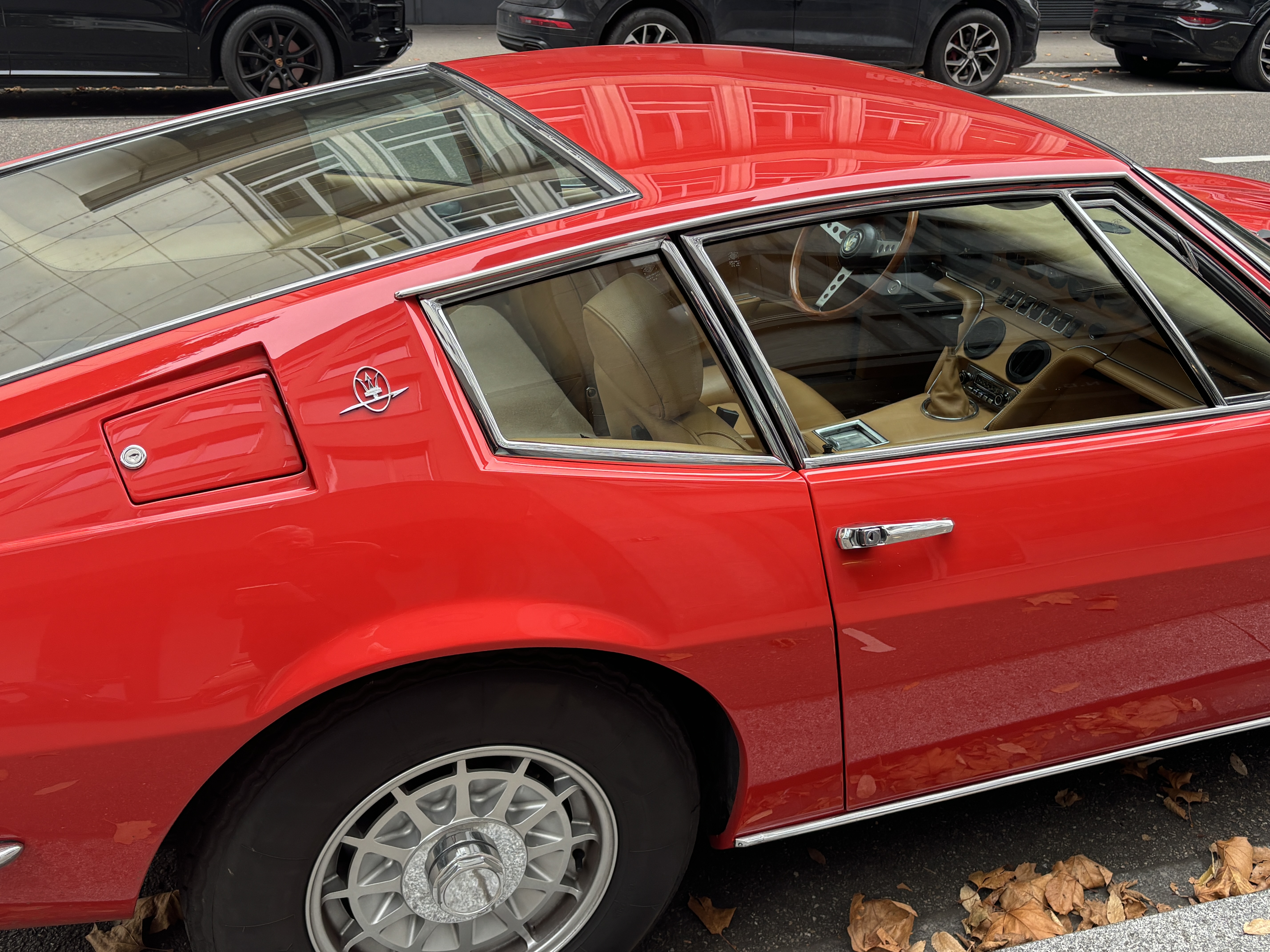
It’s easy to see why Giugiaro would call this his best ever design!

This wonderful example of the original Maserati Ghibli, that a happy owner had no doubt put a lot of money into, quite obviously has nothing to do with the four-door sedan Maserati sells under the same name since around 10 years, and which isn’t shooting the lights out in any respect. The original Ghibli very much does, with its typical long and wide 70’s body, from the pop-up headlights, over the immense bonnet, all the way back to the quite abrupt hatchback-like end.

Giorgetto Giugiaro (featured numerous times on this blog, notably here, here and here) created the car while working for Bertone in the 60’s, and afterwards, referred to it as his best creation. It’s easy to see why! The Ghibli was first shown in Turin in 1966 and went into production two years later. In 1970 Giugiaro drew a convertible that would complement it. However, you only need to look at the lines of the coupé to realize that removing the roof can never produce a car that is as pretty. Buyers seem to agree, as only 125 convertibles were ever built.

This was really a car in mint condition, with lots of money invested…

There would have been plenty of room for a 12-cylinder under the bonnet and had the Ghibli come from Ferrari or Lamborghini, that’s no doubt what you would have found. Maserati however has far less of a 12-cylinder tradition than the others, and the Ghibli was powered by a 4.7 litre V8, derived from the earlier racing car 450S, and here producing around 320 hp. The car was certainly large at almost 5 metres length and around 2 metres width, but it weighted in at under 1700 kg, so in that sense, power was plentiful.

Unfortunately, timing-wise, the Ghibli was a bit like Andy Roddick. If you’re into tennis, you may remember him as a very talented US player who at his peak certainly had the game to become world no 1, had it not been for the small fact that he played at the same time as the trio Federer, Djokovic and Nadal. As we know timing is everything, and in that respect, when the Roddick-Ghibli went on sale in 1968, it did so in direct competition with a certain Ferrari 365 GTB/4 Daytona, and also the Lamborghini Miura. Not only that – it was more expensive than both of those, although both of them had an additional four cylinders under the bonnet.

A wonderful sight on a grey day and on a street with only grey-black cars!

The Ghibli’s price and competition certainly contributed to the car not becoming as successful as Maserati had hoped, and in 1973, the beauty was discontinued after only 1249 cars (including the spider) had been built. This means it’s a very rare car today, and finding one in the condition of “my” car is certainly even rarer. As it stood there, it’s probably worth around EUR 250-300.000, which means that you’ll get two and a half Ghiblis for one Daytona. That to me is the only real competitor, as the Miura is a far more uncompromising proposition.

Be that as it may, the Ghibli certainly lighted up the otherwise very grey day of this weather person . Looking at a tree full of yellow leaves just afterwards, I even thought about how that color really matched the new leather interior of the beauty I had just seen. Maybe there is some beauty to autumn, after all…

Lost in downsizing

The three letters AMG are legendary not only in Mercedes circles, but more generally in the world of car aficionados. I told the story of Messrs. Aufrecht and Melcher from Grossaspach on this blog back in 2021, including that AMG these day is fully owned by Mercedes, who in my view has diluted the heritage of the company at an increasing pace, fitting AMG logos on so many models and engine types that you quickly lose count. Unfortunately they’re not the only ones, as down in Munich, the “M” inflation at BMW is just as noticeable.

Long-term readers may also remember that I was the very happy owner of a W212 MB E63 AMG estate a few years ago – with hindsight, probably the best car I ever owned. The W212 didn’t have the legendary, 6.2 litre, naturally aspirated V8 of its predecessor, the W211, but the bi-turbo, 4.4 litre V8 was still a fantastic engine, and contrary to the W211, it got the power down on the road thanks to four-wheel drive, a pretty decisive argument for me, living in an Alpine country (and probably elsewhere as well if you want to keep you tire budget under control).

The W212 E63 AMG wagon – to this day, one of the best cars ever built, in my modest view

The W213 succeeded the W212 in 2017 and in the AMG E63 version featured a slightly smaller, 4-litre V8 that I haven’t driven but only heard good things about. That engine also made it into the smaller C63 (as well as into other models), but contrary to the E-class, the smaller sibling was rear-wheel drive only. Had that not been the case, given our needs for space have diminished with the children moving out, I would most probably have parked one in my garage by now.

What all these models have in common is that they were “real” AMG cars. As such, the chief engine engineer’s signature is found on the engine block and the whole car has been thoroughly reworked by the AMG team at Mercedes, rather than only the turbo pressure being turned up on a four-cylinder (as we’ll see later…) and various AMG logos being fitted. And of course, under that signed engine block, there’s eight cylinders, because ultimately, a V8 is a large part of the true AMG experience. And that makes the decisions taken by Mercedes on the new C63 AMG, launched in 2023, totally incomprehensible.

The new C63 is a pretty car, best enjoyed when parked…

The development of the new C63 obviously started a few years ago when the whole car world was set on downsizing and electrification faster than you can say “where will all the rare materials needed come from?”. Mercedes was at the time very much at the forefront of these developments with the ambition to be fully electric by 2030, something they’ve stepped away from today. In that spirit, you have to believe that it was too early to fully electrify the C63 – but surely no one would mind a bit of downsizing, right?

As it turns out, the answer to that is a resounding yes. Because the reception the new C63 has received is no doubt the worst any AMG car has ever had, and probably the worst of any other Mercedes model as well. What the engine builders over in Stuttgart have done is to basically take half of the old V8, i.e. make it a 2-litre 4-cylinder, out of which they’ve managed to squeeze 469 hp, thanks to the biggest turbocharger this side of the moon. They’ve then combined that engine with a 150 Kw electric motor on the rear axle, for a total power output of 671 hp and around 1050 Nm of torque. And yes, this time the C63 is indeed all-wheel drive…

Mercedes even wanted to highlight the four cylinders by placing plastic lids on the engine block

Those numbers are obviously complete bonkers, and there’s no doubt the engine is an engineering masterpiece. Until quite recently, that kind of power required a far larger volume, and achieving a seamless collaboration between such a high-pitched engine and quite a powerful electrical motor is no small feat. I take my hat off to the engineers that pulled this off, but at the same time, I’d be very hesitant to pick up such a complicated construction three-four years down the line when it’s out of warranty, as the list of things that could go wrong is a long one.

Unfortunately though, things don’t even need to go wrong for the engine to cause disappointment on a scale rarely seen. Sure, there’s enough power, but somehow Mercedes was so deep into electrification dreams that they confused the massive power output of EV’s with character. Of which all AMG V8’s have had plenty, and the 2-litre four-pot has none. It sounds terrible, doesn’t deploy power anywhere close to how a V8 would, and also makes you hit the limiter rather frequently because they hybrid construction delivers power too fast for you to react.

There’s other problems too. Most decent hybrids these days will manage at least 60-70 km on electricity alone, if not more. The C63 will at best do 10 km, because although its electric motor is strong, it only has a 6 KwH battery. Still, that doesn’t prevent it being around 200 kg heavier than its competitors. In addition, there was apparently no better way to integrate the battery than to create not one, but two bumps in the luggage compartment, heavily reducing both its volume and its practicality. Then, there’s the price, where the C63 starts at around EUR/USD 20.000 more than both the Audi RS4 and the BMW M3 Touring, its most natural competitors.

Not one but two space-stealing bumps – was this really the best you could do?

It’s thus no big surprise to learn that the C63 isn’t selling. Exact numbers are hard to come by, but it seems it’s bad enough for there to be internal discussions at Mercedes about pulling the car from the line-up. I don’t think that will happen, but you can bet what you have dear that the next C63 won’t have a four pot under the hood, and given the updated E63 hasn’t been presented yet, you could well imagine discussions going on here as to what to do with it. Because if this story needed to get any crazier, the variant below the C/E 63 is the 53, currently a hybrid as well with around 600 hp combined, however with the petrol unit being a six-cylinder engine. Go figure.

Back in 2016, Porsche tried to pull a similar stunt with the Boxster, replacing the flat six with a four-cylinder engine, all in the name of downsizing. That car got similar reviews to the current C63 and it took no more than three years for the flat six to make a return. My bet is that it’ll take less than three years this time around, and maybe this time, this can be a lesson for Mercedes for the future: either you build true AMG cars or you don’t. And if you understand who the buyers of those cars are, you would know better than to mess with that V8!

F1 pit stop: buckle up!

The F1 circus is currently on a few weeks’ break before attacking the five last races of the season, starting in Mexico for round 20 on Oct 27, and then concluding in Abu Dhabi on Dec 8. In between are the races in Sao Paolo, Las Vegas and Qatar. As we all take a breather, let’s therefore check in on what’s happened over the last races since my latest update in early June. Because boy has there been some action!

As you may remember, I called the post back in June “Could it be?”, alluding to the fact that it looked like both Ferrari and McLaren had come closer to Red Bull and maybe, just maybe, could bring some excitement to the second half of the season. Well, for once it seems I was right, but little did I think things were about to change so drastically. And I should have added Mercedes to the list of possbiel contenders as well, although their improvement didn’t become apparent until slightly later. As I write this in the first week of October, Red Bull has lost the lead in the constructor standings to McLaren and have Ferrari breathing down their neck. What happened?

No other team has found more speed than McLaren in the second half of the season

There have been 10 races since Monaco at the end of May, and Verstappen, having finished 6th in Monaco, showed that he can still drive by subsequently winning both in Canada and Spain. But in the eight races since Spain, he hasn’t won a single one – yep, you read that right. I might add that Sergio “Checo” Perez hasn’t won any of those eight either, which is perhaps no big surprise, but to be fair, also makes clear that this has more to do with the car then the drivers. Or rather, it has more to do with the other cars in red, orange and silver.

The last eight races have split pretty evenly between McLaren (four victories) Mercedes and (three), with Ferrari and Leclerc picking up the win at home in Monza in front of more than 300.000 jubilant Tifosis, and guaranteeing Leclerc’s legend status in Italy for many years to come (and given the Monegasque Leclerc also won his home GP for the first time this year, he will certainly be happy with the 2024 season!). If you look beyond first place though, it becomes pretty clear that although all three teams have come much closer to Red Bull’s speed, improvements are most notable at McLaren and within the team, things are now much more even between Lando Norris and Oscar Piastri.

It’s probably debatable if Monza or Monaco was Leclerc’s sweetest win…

This is Piastri’s second F1 season and he quickly showed he deserves his McLaren seat, managing to score two podiums and a sprint victory in his first season 2023. In the first part of this year however, Lando Norris had the lead internally at McLaren. But in the last races since Monaco, Piastri has been on seven podiums and won two races, in Hungary and Azerbaijan. Norris hasn’t done too badly either and is firmly in second place in the drivers’ standings, but to have a realistic chance at he title, he would have needed some of Piastri’s results in the last races.

McLaren is thus in great shape with a car that performs well on most type of tracks. And both Mercedes and Ferrari have found more speed than they had earlier in the season. But with that said, it’s not like Red Bull have broken down and Verstappen has taken a leave. Max is still there, he’s still fast and even though he doesn’t win, he’s still regularly on the podium. Right now however, he’s not really faster than the other six drivers in the top teams. But with a lead of over 50 points going into the last five races of the season, it’s most probable that he will clinch the title this year as well.

For the constructors’ title however, things look a bit different. With Checo Perez being nowhere in terms of speed or podiums, Red Bull have lost the lead to McLaren, and as things look right now, the team from Woking in the UK can be expected to hold on to that lead. And Max had better continue to perform, because otherwise Red Bull could end up behind Ferrari as well, which currently trails it by only 34 points. For a team as spoiled as Red Bull, that would be nothing short of catastrophic.

This is not where Max is used to parking…

I’ll dive into all the driver changes for next season in a future post, as there’s plenty to cover. For now however, we need to address the recent mid-season switch at RB, Red Bull’s junior team, where Daniel Ricciardo has been replaced by Liam Lawson. Lawson is already a familiar face, having stepped in for Ricciardo during several races. It’s no secret that Ricciardo’s performance has been declining over the past few years across different teams, so it’s not very surprising that this likely marks the end of his F1 career. Bringing in a younger talent like 22-year old Lawson aligns with Red Bull’s long-term strategy, though Red Bull still need to find a replacement for Checo Pérez, most probably already for next season.

There we are – five races to go, and at least a constructor championship title to fight for with Red Bull, McLaren and Ferrari all in contention. And even though it seems clear that Verstappen will take the driver’s title, Lando Norris most probably hasn’t given up yet. Neither has Oscar Piastri, who would love to score more points than Norris this season. And wouldn’t it be a nice conclusion for Carlos Sainz to win a race for Ferrari before his time with the team ends? And for Lewis to do the same at Mercedes? It’s pretty certain there won’t be any lack of excitement in the last part of the 2024 season – buckle up!

The roaring comeback of the ICE!

Between US elections, the wars in Ukraine and the Middle-East, and whatever else may have passed through your news flow this summer, chances are that you’ve missed something that’s gone a bit under the radar. And that, my friends, is more or less a complete turnaround in the business plans of the world’s leading car manufacturers, and the roaring comeback of the good old combustion engine!

The ICE is making a comeback at a level that no one would have expected just a couple of months ago. Doing so, it proves a few points that won’t be new to readers of this blog, but that I’m happy to note anyway, since it’s always nice to be right: firstly, if you want to sell stuff, there needs to be demand. Secondly, if something cannot hold in the long term, it will break sooner or later. And thirdly, it’s unwise to bet against the world’s largest car company, especially when it’s Japanese. Let’s dig in and look at what you may have missed while sipping your pina colada at the beach!

To set the scene, let’s start with something that EVO, the UK car magazine that this blog takes its inspiration from, noted in its editorial back in July, namely that within just the last month, three new combustion engines involving five global car brands were announced. In all cases, it was about ICE’s optimized for hybrid usage with electrical motors, efficiency measures, adaptations to sustainable fuels etc. Other signs that the combustion engine is far from dead have also flourished over the last year, perhaps nowhere more so than in Modena with the Purosangue’s naturally aspirated V12. The fact that Ferrari shares are among the best investments you could have done over the last years also don’t really speak in the direction of a quick demise of the ICE.

Owning Ferrari stock would have given you more than 700% in the last 10 years, most of it in the last two years. Hell, you could buy an ICE-powered Ferrari for that!

It’s also interesting how differently car CEO’s speak today, compared to just a few months back. The first one that made me swallow my coffee the wrong way was Peugeot CEO Carlos Tavares, who during a car show went on camera, stating in the blunt way only a Frenchman can that electrification is nothing car manufacturers have chosen – it’s something Brussels (meaning the EU) has imposed. His body language made clear he enjoyed it about as much as a rotten slice of foie gras. Unfortunately, Stellantis (the group Peugeot belongs to) have replaced him since the interview.

A few weeks later it was Ola Källenius, the Swedish CEO of Mercedes-Benz, who until recently was very happy to tell everyone about Mercedes’s fully electrical future but now sings a different tune, whereby combustion cars are still very much part of the Mercedes mix, alongside hybrids and EV’s. That’s of course a direct consequence of the lukewarm reception Mercedes EV’s have gotten from the market, especially the soap-like EQS. Now the talk is of a new S- and even E-class coming with as options combustion, hybrid and electrical engines.

What a new S-class could look like – far better than the EQS! (Illustration Larson)

A few months earlier the same message had come from BMW in Munich, confirming several combustion engine initiatives over the coming years. To round it off, in the same week as this is published, Volvo joined the long list of manufacturers stepping away from an all-electrical future, in Volvo’s case by 2030. The talk is now of reaching 90%, however including various types of hybrids.

None of this is really surprising. Because what all these car CEO’s seem to have forgotten, but actually should know better than various politicians and other policy makers, are the laws of supply and demand. And what has become painfully clear is that there is no demand for EV’s on the scale the political class would like there to be (if you need to read up on why they won’t do anything for the climate and are currently one of the most unethical industries around, see here, here, and here). From a European perspective it’s actually even worse, since the day, should it come, when demand improves, it’s not European, but rather Chinese manufacturers who stand to profit from it.

Let me give you a couple of pretty staggering examples of this in real life. The Porsche Taycan is generally hailed as the best EV around from both a driving and a charging perspective (if not range). Two years old and with less than 30.000 km’s on the meter, it can easily be had for 30-40% of the price as new – that’s a depreciation of over 50% in less than two years for the best car in the segment! And with the new model out, those numbers will certainly not improve going forward.

A Polestar 2, a European EV favourite, far less good than a Taycan but also far cheaper at around 75-80′ as new, will without problems be yours for 30-35′ with the same kind of mileage as the Taycan. And should you like soap, the numbers for the Mercedes-Benz EQS are similar. It’s getting to a point where European car dealers no longer want to trade in EV’s, not just because of the insecure value, but also since they tend to sit in the courtyard far longer than traditional cars.

A year ago, it would have been in front of the dealer’s entrance. Today, it’s hidden in the backyard.

What’s happening is that disappointed owners, either outright or through various types of leases which typically have a 36-month life (at least in Europe), trade in their EV’s and when doing so, opt for a conventional car to replace it with. That’s the case in up to 90% of cases in the US, as various reports have shown. Why? Well, unrealistic range promises, especially in winter, a lacking charging infrastructure, and various technical and quality issues with many EV’s all make for a not very attractive cocktail. As energy prices rose in parallel to the ownership and will continue to do so for every windmill and solar farm that is set to replace conventional energy, it turns out the savings over a traditional car aren’t that big.

The combustion engine technology is now over 150 years old, removing the technology risk that is very much present in the EV market, and that all the talk of battery revolutions only contribute to. Two years ago it was just a matter of time before solid state batteries once and for all solved the range and charging issues. Now, it’s instead sodium batteries that will do the same, and are simpler to develop. Who in their right mind would buy an EV, more expensive than a traditional car, with a technology that risks being obsolete in a year? You take this together with all the other EV issues you know well by now, and the logical conclusion is that other than in cities or for shorter trips, the ICE still reigns supreme.

As this sinks in, the effect is that conventional manufacturers go back to what they’re good at, i.e. technological innovation around the combustion engine, and EV manufacturers that are not very well capitalized start going belly up. Fisker already did (making it the second time the Dane Henrik Fisker manages to bankrupt the same brand), others are heavily at risk (Polestar starts having pretty severe cash issues and a share price that is at rock bottom) or not in control of their destiny (Lucid who are at the mercy of the Saudi money tap). All this is normal – every new industry has a lot of companies who don’t make it. It was just the buzz of the last years that may have made it look different.

Marcus Brownlee called the Fisker Ocean the worst car he had ever tested. Six months later, the company was bankrupt and owners have hopefully learnt to check the health of the brand next time around.

What is not normal is however the elephant in the room called China, that as said previously, I believe will dominate the low- to mid-priced EV market going forward. Why? Well, with a home market of over a billion people, unlimited state subsidies and a supply chain of rare metals especially from Africa that has been carefully crafted over the last decade, China has done everything Europe should have done to be successful, had they really meant business. Instead, the EU now wants to put tariffs on Chinese EV’s, which less than a month after it was announced, was countered by China doing a deal with Saudi Arabia, where Chinese EV’s for Europe will be produced with no tariffs. And there won’t be any sanctions or tariffs on Saudi going forward either, that oil they also sell, is very helpful when it gets cold.

Going forward, the world will thus hardly be fully electric, and this is where the world’s largest brand Toyota comes in. Although they were heavily criticized by the environmentalist lobby, the Japanese stuck to their guns and continued to produce and perfect hybrid solutions. Their logic is simple and should have been easy enough for every car company to understand: if the supply of rare metals and other input materials is limited, then splitting a large battery pack into four smaller packs for four cars, rather than a big one for one, makes a lot of sense. Hybrids also eliminate all the issues linked to range, charging, and under-capitalized car brands no one has heard of.

A Toyota hybrid drvetrain – expect to see more of these going forward!

So where does all this leave us? Well, conventional manufacturers will be all too happy to reverse course and fall back on what will be the conventional car market going forward – meaning hybrid solutions around the combustion engine. And should there be an evolution around e-fuels, we can probably do without the whole hybrid package as well. On the other side, there will be EV’s at various price points, working well for cities, shorter trips or people preferring the technology. And yes, should we in the end get a battery revolution in terms of range, charging and more sustainable input materials, maybe they will take over -but that’s neither for tomorrow, nor next year.

It’s pretty incredible that it’s taken us this long to get us to the only place that made sense from the beginning, but as said initially, if something cannot hold, it will break sooner or later, and the dreams of 100% EV’s just did. Personally, i’d be delighted to consider a hybrid. I’d have nothing against driving fully electric on shorter distances, and reducing my fuel consumption on longer trips. The ethical issues linked to rare metal excavation are still not solved, but I guess you can’t have everything, and things are at least improving in this regard. Mark Twain once replied to a letter by saying that “the report of my death was an exaggeration”. Mid-2024, the same thing is just as true for the combustion engine!

Street finds – the Peugeot 205 Rallye!

Finding a true French legend from the 80’s has become increasingly difficult, mostly as they were never the most solid cars around – more on that later. Still, given I spend as much time as possible in southern France these days, the place to find one should logically be on a narrow street in Nice. But of course, according to the law that things never happen as you expect them to, that’s not what happened. The below beauty was parked centrally in Zurich, very close to my office. And what a car it was!

The Peugeot 205 GTI is, next to the VW Golf GTI, the most iconic hot hatch from the 80’s, and the only one that can really compete with the latter in terms of brilliance, and these days, price. It’s almost four years ago that we looked at it, and to me, it’s at the top of my list of hot hatches of any period, were I to get one one day (which I most probably won’t, since it isn’t really my thing, also not for down here in France for which it’s both far too nice).

A 205 Rallye looking as new as when it was delivered, 30 years ago!

Describing a hot hatch from more than 30 years ago as luxurious is perhaps pushing it, but there’s no doubt the GTI was the fancier car when compared to its sibling, the 205 Rallye pictured here – the real hard core version in the 205 line-up! It was created as a cheaper and simpler alternative to the more expensive and mechanically more complex GTI, although calling its grand daddy mechanically complicated today is almost laughable.

The Rallye was derived from the base version of the 205, whereby the volume of its original 1.1 litre four-pot was increased to 1.3 litres and about 105 hp. Given that still wasn’t much to brag about, the engineers at Peugeot-Talbot Sport resorted to the cheapest way possible to reduce the car’s weight, namely to remove sound-deafening and other isolation material not deemed strictly necessary. Tada – the trick was done and the Rallye now weighed in at a very modest 800 kg (794 to be exact). it didn’t improve the comfort of course, but rapidly made the car popular among the many aspiring young rally drivers France has always been blessed with!

A perfectly restored example in every detail

The Rallye also inherited the front suspension and ventilated disc breaks from the 1.6 GTI, keeping the same drum brakes in the rear. The interior (except then for the removed isolation) is also reminiscent of its bigger brother, but the exterior is cleaner, especially in white as they car I saw, and with those wonderful, 80’s-like white wheels (these were however not original, those were also white, however in steel). There was really no doubt that the car I saw had been restored, as it was really in perfect condition, including on the inside.

The Rallye had a far shorter life than the GTI, being produced only between 1988 and 1992, and only sold in a handful of countries in central Europe. Peugeot had initially planned for 5.000 cars but in the end, no less than 30.000 would be built. The Rallye was thus a success, also since it was a car that was really rewarding when you drove it hard. Unfortunately, that together with the quite thin body parts, have contributed to few cars remaining today. As you may remember (or just have read) from my story of the 205 from four years ago, that particular car was written off following a collision that was certainly not nothing, but also not something that would really trouble a car today.

The interior isn’t identical, but close to the 205 GTI

That makes the Rallye even rarer today than the 205 GTI, but price-wise, they fetch around the same money, which is about EUR 25-30.000 for the best cars (and that’s by the way almost twice the money compared to four years ago). The real issue is however finding one – including in France, where even the GTI is not only rare, but today fetches the same price as in other countries, something that wasn’t the case for quite a long time.

I bet this driver doesn’t think about the money though, driving his 205 Rallye, but rather the purest form of driving pleasure, miles from the 1.5 ton hot hatches built today. I just hope he keeps it on the road and avoids close contact with other cars – both for himself and the car!

The unique MB 500 SLC!

Last year in September I moved into a new office space in Zurich, nicely located in the center, close to the sea. It’s surrounded by mostly residential buildings, cafes, restaurants, and a few car dealerships. A perfect surrounding for someone appreciating coffee, cars and good food you might say (after all that’s why I chose the office) but as I’ve come to discover, it’s a more dangerous environment than you would think. Not because of street crime (this is Zurich after all…), nor the cinnamon buns of the local coffee shop. As you’ve guessed, it’s the car dealerships that are the problem.

You see, next to Mercedes and Audi’s small city outlets, more to think of as showrooms, there’s also a dealer specializing in the top-end classic car market. It’s called Emil Frey Classics and belongs to one of Switzerland’s largest car importers by the same name. Funnily enough, it’s in this direction my feet regularly take me, and by now the nice sales guys inside have definitely put me in the category of middle-aged men dreaming of “something above their means”. Which, in the case of the Aston Martin DB2/4 and the Mercedes-Benz 300 SL Gullwing they currently have on display, is very true.

Last week however, a new car was added to the collection and hadn’t it been because it was parked on the street whilst they were re-shuffling the showroom, I may well have missed it. After all, it looked like a nice, but quite regular Mercedes-Benz SLC. However, looking at the fact sheet behind the wind shield (since nothing else would betray it), I saw that it was the ultra-rare 500 SLC, the top version of the SLC series that was only ever sold in Europe, and only built 1143 times in 1980-1981. That, together with the story the seller told me, made for an interesting lunch break!

A wonderful C107 500 SLC a bit too close to my office for comfort…

Before we go into this specific SLC however, let’s just note that the 107 range comprised the very well-known, beautiful (R107) SL convertible (anyone else remembers the bright red one Bobby Ewing drove in “Dallas”?), and the less popular, and according to some, less beautiful (C107) SL Coupé, or SLC. What made both cars so special was the build quality and the fact that in spite of being the sports cars of the range, they would offer a ride as comfortable as the far larger MB’s of the time. That was definitely also one of the reasons why the roadster was built longer than any other MB, for all of 19 years between 1971 to 1989.

The SLC coupé was shown to the world in 1971 in Paris and would be sold for 10 years until 1981. It was built on the roadster R107 platform that had been extended by no less than 36cm, such as to offer four real seats. That does however make it somewhat unique among S-class coupés, which have otherwise always been based on the S-class chassis. The front end of the SLC up to the A-pillar is identical to the roadster, but the cabin is longer, as is best seen from the side, where the side windows end with the legendary curtains. The extension was done in a way such as to avoid a B-pillar, giving the car an elegant, unbroken glass line.

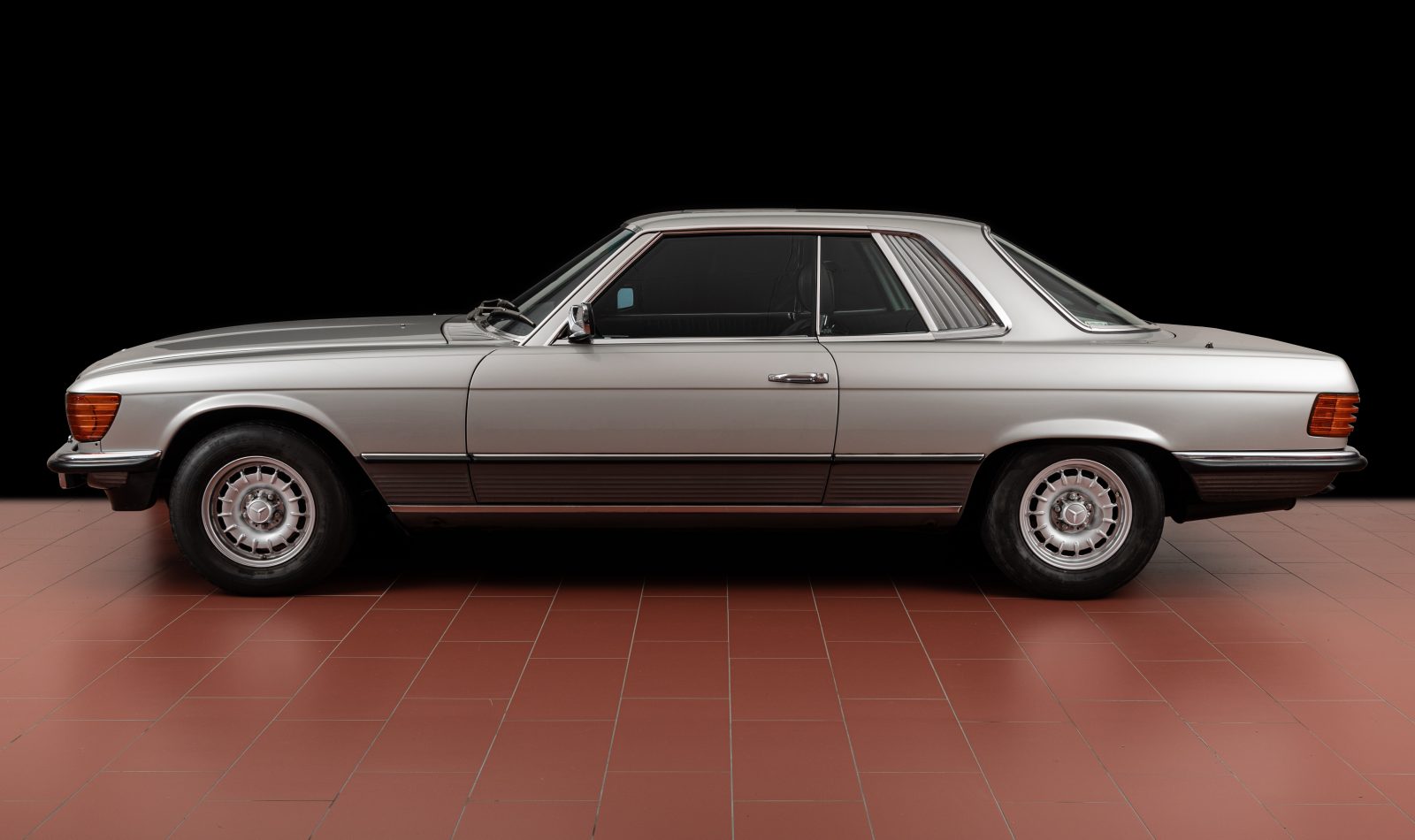
The legendary side curtains and the dome-like rear window (picture Emily Frey Classics)

In terms of overall elegance however, not everyone agrees on the SLC being beautiful, and few MB models have been as widely discussed over the years. The curtains, the long wheelbase and the dome-like rear window are all items that didn’t really go down well with enthusiasts, and it’s not until quite recently that the mood has changed somewhat. In terms of looks, the SLC may lose to its ultra-elegant roadster sibling, but it’s still a beautiful car with great practicality and a more relaxed ride thanks to the longer wheelbase. In other words, a true S-class coupé as you should imagine it!

In terms of engines, the range started with a 185 hp six-cylinder in the 280 SLC, but most coupés came with the eight-cylinder models called 350, 380 or 450 SLC, with the engine being the good old Mercedes cast iron V8 with 218-230 hp, depending on version. In 1978, MB then introduced the aluminium 5-litre engine that was significant in several ways, as it was built in preparation for the successor of the SLC, the SEC coupé. Power output was higher at 240 hp, and importantly, it was coupled to a four-speed automatic, far better than the 3-speed of earlier or simpler versions.

The 5-litre engine has more than sufficient power for the relatively light SLC (picture Emily Frey Classics)

The late 70’s and early 80’s was the time of different emission regulations between Europe and the US. Don’t ask me why, but this led to the 5-litre, which was only sold in the SLC in the two final years 1980-1981, being called 450 SLC 5.0 in the US, and 500 SLC in Europe. As said, only 1147 cars of the European version were ever built, and it was one of these I stumbled upon. These were complemented by around 1.600 of the US version.

As can be seen from the pictures, the particular car I saw looks if not new, then very close to it, as explained by the fact that the previous owner, one of only two, had invested around CHF/USD 80.000 in maintenance and renovation over the last years. But it was all the more remarkable since he hadn’t only invested in the car but also driven it, so that the it has a mileage since new of no less than 260.000 km! If ever proof was needed that there was a time when literally nothing could break a Mercedes, then it was standing right in front of me!

An extremely well preserved and partly restored car in an optimal colour scheme…

That’s not completely true however, at least not talking about the 5-litre engine. It wasn’t only that aluminium was now used rather than cast iron, it was also that plastic had made inroads in car production, and in the rather fragile type so popular in the 70’s, had proven not to be very reliable and prone to cracking. Part of the 80.000 had thus gone into replacing the brittle plastic slide rails of the engine and some other parts. Further money had gone into the gearbox, transmission, suspension etc. You name it, it had all been done, and the car oozed of quality.

The short ride we took didn’t reveal all the facets of the car, but enough to realize that this was a very healthy machine indeed. As tends to be the case with older cars, you sit slightly higher with excellent visibility given the large window areas, and in the case of the SLC, with a big wheel in your hands, that you need to turn more than on a modern car. The engine is present somewhere in the background and won’t be stressed by anything at normal speeds. For its age, the suspension was fine, and the automatic switched as good as a 40-year old box can. Nowhere did the car feel like it had been driven all of 260.000 km!

…with a blue leather interior in a comparable, perfect condition! (pictures Emily Frey Classics)

The dealer wants CHF 60.000 for the 500 SLC, which when knowing how it drives and what’s been invested, together with how rare this version is, sounds reasonable. The issue though, is that any other SLC with another engine and less km’s, but in equally good shape, can be had for half. Also, given how rare the 500 is, it’s difficult to know what the fair value is. Looking into it a bit, it seems a couple of these have traded very selectively at auctions at more than 100.000, then at other times, reserves haven’t been met.

Although a truly beautiful car with a great story and a great ride, the 500 SLC doesn’t really make my heart beat faster, more than seeing a great classic car in general does. If it’s your thing though, you should know that what’s probably the best car on the market is currently for sale in Zurich. And as part of my googling, I also discovered that whereas the dealer wants 59.000, the owner himself has advertised the car privately as well, at a price of 52.000, thus 8.000 lower. That’s a number that although not a bargain, sounds rather reasonable!

Porsche 968 – more than a different number?

Back in the day (here defined as when it was assumed we could drive our cars without 17 cameras in every angle), Porsche was a sports car company with a far larger focus on the 911 than today. SUV’s and other, strange four-door creations were still far from the drawing board, but the company was actively trying not only to diversify away from the 911, but more or less to kill it off. I’ve written about this several times, notably in my posts on the Porsche 928 and 944 respectively, four years ago.

As part of that strategy, it was precisely the Porsche 944, launched in 1982, that was to help where until then, the 928 had failed, and it definitely had a lot going for it. It looked modern in a well-designed and quite practical body, including the pop-up headlights that were mandatory in the 80’s. Especially in later years as it evolved, it was also able to shake off most of the Audi vibes its lesser predecessor, the 924, had given it, at least in the eyes of some. For the purists, that was of course not good enough, as it only had a four-cylinder engine that wasn’t even air-cooled.

Although more modern than the 911, the 944 never won the enthusiasts’ hearts

In spite of that, the 944 continued to evolve with a second series, called S2, launched in 1989, which brought both more power and a far nicer interior. Also, during the S2’s short lifetime of only three years, production was finally moved from the Audi plant in Neckarsulm, Germany, to the Porsche plant in Zuffenhausen near Stuttgart. All that didn’t really help though, as when S2 was discontinued in 1991, it still hadn’t been as successful as Porsche had hoped. And by now, its basic design started to look dated, especially the front and back which went back more than 15 years to the original 924 from the mid-70’s.

Porsche decided to give it one more shot in a Mark III version, internally called the 944 S3. In the eleventh hour, the decision was however taken to change the car more than what had been originally planned, so that when it was launched, Porsche felt it deserved a completely new name – the 968. The exact logic behind the numbers isn’t fully clear, more than Porsche wanting to de-emphasize the connection to the 944, while reinforcing the similarities with the 928 and thereby perhaps also create a positive vibe around the latter.

As always in those days, Porsche supported the launch with some great advertising!

Was this a lot of marketing talk, or was the 968 different enough to motivate the new name? Actually, if you look a bit closer as we’ll do below, I would claim it was. The 968 brought updates in several areas that taken together made it a far more modern car. Prospective buyers obviously felt differently and the 968 was never more of a commercial success than the 944 S2 had been. Fast forward 30 years however and it’s become quite an interesting proposition, as we’ll see.

To start with the exterior, there’s no doubt the 968 took after its bigger sibling, the 928. The pop-up headlights were round and the front spoiler looked the same as on the flagship. The rear was completely re-designed and given completely red rear lights, considered highly modern at the time. The interior was however left pretty much alone as since the S2 revamp, it was fully modern and actually an interior that has stood the test of time really well.

Everything you’ll ever need to drive a car!

The bigger changes were however in the drivetrain, where firstly, thanks to the transaxle construction with the gearbox in the back, the weight distribution pas practically 50/50 (this had obviously been a feature of the 924 and 944 as well). Also, that gearbox was now a new six-speed, replacing the five-speed box of the 944. There was also an automatic option, that we won’t go into more than that. The basis of the engine was not the 944 Turbo but rather the “normal” S2 engine, here as a 3-liter inline four-cylinder with about 240 hp. It was the first Porsche engine to feature Variocam, a system for variable valve timing, improving both performance and efficiency.

This made the 968 less powerful than both the 911 and its predecessor, the 944 Turbo, which in its last iteration had 250 hp, but also less prone to failure than the latter. And in the early 90’s, 6.5 seconds to 100 km/h was still a respectable time. Above all though, the 968 conveys a true Porsche feel of the time in terms of how it drives, less powerful but more predictable than a 911, and much more light-footed and sporty than a 928. Unsurprisingly the 944 Turbo has more low-rev torque, whilst the 968 as naturally aspirated, has a broader performance range and enjoys being revved.

The 3-litre four-cylinder, the biggest in the market at the time, is a brilliant engine!

To prove how good the engine really was, Porsche took it to the Nardo circuit in Italy in the spring of 1992, and drove it flat out for 24 hours. Including fueling stops, the 968 covered a distance of 5566 km, equivalent to an average speed of 232 km/h. Try doing that with an EV!

There’s thus no doubt that the last evolution of the 944 was a pretty big and important one, something I was reminded of when seeing a 968 on the street the other day, and being struck by how good and relatively modern it looked. I did what I’m sure you all do, i.e. checked how much they are these days. To my surprise, it turns out that a nice 968 can easily be yours for around EUR 30.000, with the convertible costing 40-50% more. Somewhat surprisingly, the 944 Turbo is in the same price range as the 968 convertible. As a small comparison, the cheapest 911 of the same age will cost you three times that, and whereas a 928 will be yours for maybe EUR 50.000, it will be much costlier to run than a 968. As will a 911 for that matter, which is also far less practical.

If you have room in your garage and if you still feel confident driving a car without cameras and emergency braking, then you know what to do. And don’t wait too long, as 968’s, of which less than 13.000 were built between 1991 and 1995, are starting to become really rare. The 968 is definitely a real Porsche, and it’s no doubt the best version of the 944 series. It’s both modern and practical enough to be used more than on an occasional Sunday, and all this for a price that is lower than that of a Chinese EV. That makes it really difficult to say no to!

Monaco – between superyachts and Cullinans!

Every year in late June, the European fund management industry congregates in Monaco on the French Riviera for a conference called the Fund Forum. It’s an event that offers the typical conference mix of speakers and panels, various exhibitors and service providers, and if you look really closely among the 1500 participants that attend over two days, even an investor here and there. if you’re not sure who they are, just look for the poor guy who’s constantly encircled by other people…

There’s of course a lot of conferences like Fund Forum happening in the financial industry throughout the year, but there’s only this one taking place in Monaco in the early summer, thus allowing people to book a business trip to the south of France, party on for two days and then pretty much go on holiday. I haven’t attended the Fund Forum for many years but did so this year, notably to check if things were still the same. After two days of exceedingly hard work, I can safely report they are!

The casino – and its parking – are well-known

As most of you know, Monaco is located on the French Riviera but is its own country, a so called Principality with Prince Albert as the hereditary head of state. Most known for its casino and F1 GP, Monaco sprawls over a rocky, coastal formation and is the second smallest country in the world, only bigger than the Vatican. The fact that around 37.000 people squeeze in on two square kms however also makes it the world’s most densely populated country – and one of the richest.

Monaco has neither income nor fortune tax, which together with more policemen and video cameras per capita than anywhere else in the world has also made it one of the most secure places to live in, and hereby a favourite playground for the ultra rich. This has in turn lead to some of the world’s highest property prices. Thinking of a three-bedroom penthouse with a large terrace and a nice sea view? That’ll be between EUR 15-25m, thank you very much. Then again, prices have known only one direction for longer than anyone can remember, and they will most likely continue to do so.

Monaco’s port is even more crowded than its streets

Of course, the rich and beautiful who live in Monaco tend not to spend all of their hard owned dollars on real estate, but keep some to get a decent boat and a nice car stable as well. What we common people think of as boats does however have little connection to what goes on in Monaco, and if there was a ranking of the most crowded ports in the world, Monaco would certainly be high on that list as well. And then, there’s of course the cars – and boy are they worth your while!

I wrote a while ago about the demise of traditional car shows, no longer being as grand as they used to be. If you’re looking for an alternative, let me suggest walking around a day or two in Monaco. It’s practically impossible to do so without having taken in a larger number of supercars than anywhere else, some of which you’ve seen before and some you didn’t know existed. And next to that, there’s of course a number of more or less tasteful ultra luxury sedans and SUV’s as well.

You really thought tuning your Urus would make you stand out? Think again….

As a good friend at the conference (and also reader of this blog, good man!) pointed out to me, what makes this so hilarious is that, as you’ve guessed given its limited size, Monaco is small, very small. It’s therefore really difficult to think of something less fitting on its streets than the huge (and still as ugly) Rolls Royce Cullinan, of which you see more than any other SUV. Of course the climate in Monaco is also a very pleasant one, with temperatures rarely going under 10 degrees C in winter, so the whole point of a four-wheel drive SUV is difficult to see.

That’s of course unless you leave Monaco as theoretically, you could go skiing in the southern Alps in less than two hours in winter. I’m sure some of the Cullinan or Urus people do, but I also know many don’t, as when you’ve spent too much time in Monaco, the world outside its borders starts feeling very dangerous indeed. And so whether it’s luxury SUV’s or supercars, many of them spend their days in a garage or on distances rarely exceeding two kilometres and at speeds of no more than 50 km/h, between the restaurants, private clubs and (botox) bars. Mostly not driven by the owner, but rather the private driver.

The Monegasque Volvo XC90 – only uglier

If you’re in the south of France, make sure to make Monaco part of your list to visit. Enjoy a drink on the terrace of the Café the Paris with a perfect view of the greatest car park in the world, in front of the hotel by the same name on the other side of the square. Stroll down to the beach and pass by the Ferrari, Rolls and McLaren dealers, showcasing both new and old beauties. And if you’re lucky enough to be in the market for a supercar, definitely consider getting one in Monaco, as the odds are that it’s been used very sparsely in its previous life!

On French city cars and incremental changes…

Most things don’t change drastically from one moment to the other, but rather by small increments happening continuously. Taking separately you don’t notice them, but taken together, in the end they make a big difference. Money, or rather means of payment, are a good example: at first, we all had cash. Then, credit card adoption in Europe was good up north and bad in the south (and nowhere as bad as in Germany, in the middle…), but only for larger purchases. Then in the last years with Covid, cards became widely adopted so that today, you can use them for every purchase. Seen in total, in perhaps 10 years, we’ve thus gone carrying a bulky wallet with cash and cards to carrying nothing but a phone on which your cards are stored, since in between, someone invented the card tap function as well.

This is not how it was when we were kids…

As it turns out, my hunt for a small city car to use at our place on the Riviera is illustrating the described sequence of incremental changes quite nicely. Our cars may still be powered (in majority) by internal combustion engines, but pretty much everything else about them has evolved in so many small steps over the last 20 years so that if you landed from another planet today, you’d hardly think it’s the same technology anywhere on the four wheels.

Staying true to my own brief of finding something small (such as to be easy to park), cheap (both to buy and run) not too attractive (such as not to be stolen) and preferrably French (as it seems appropriate) had me circle in, over the last weeks, on the Renault Twingo – a legendary French city car that most Americans have never seen, but which is a perfect representative of the segment. Without going into details, it hits the above described brief bang on, and in addition, has a back seat you can move forward and backwards such as to give more space for luggage (a world first when it was presented!) and on some versions, a very cool canvas, or glass sunroof.

The Twingo – a true French legend of which over 2.5 million were built in the firs series

The first series of the Twingo was built from the early 90’s to 2006 in a more or less unchanged shape, with two engine options: there is the 1.2 litre, 58hp base engine, from 2000 complemented by the 75 hp, 16v version. Except for the above equipment, it also came with an optional four-speed auto box. 30 years later, Mk 1 Twingos have become not only old but also cheap, however not dirt cheap, and seemingly trending somewhat upwards, given they’re also slowly but surely becoming scarce. This of course gave me a familiar tingling – maybe this wasn’t just a cheap car, but also a bit of an investment? All this led to quite a fanatic search for good Twingos in the last weeks, and to me testing out a couple of them – a 60 hp manual, and a 75 hp automatic, both in the (for this project) highly attractive price range of EUR 3.000-4.000.

Starting with the positives, both cars started at the first turn, although they’d clearly been standing for quite a while – I guess the collectors’ market hasn’t really taken off just yet. Opening the door, the first thing you notice is the excellent visibility, with large windows in all directions, making you wonder why we felt a need to increase the size of body panels at the detriment of glass areas of modern cars? I sat down in the surprisingly high chair and set off on a test ride in the 60 hp, manual car.

Visibility is great. Otherwise, it’s pretty much cheap plastics everywhere

58 hp, of which at least some have certainly found other pastures in the last 20 years (the car was a 2002 model) certainly doesn’t make it fast in any way, but weighing in at 800-900 kg meant it still felt fine. The A/C was cooling as it should and the manual box was ok. Less ok were the breaks, since every time I hit them it felt like the front wheels would fall off. They didn’t, and the seller assured me this was only because the car had been standing for a long time. Right.

The 75 hp version was better equipped, with a power-operated glass roof and leather seats – as luxurious as it gets in a first series Twingo! As part of the luxury package it also had the automatic gearbox, which quite effectlvely ate up all of those extra 15 hp, and then some. It literally took 2-3 seconds to switch gears and in the process, the box made sure most of the power was lost. Given the inefficiency of the gearbox you really didn’t need the brakes that much but they were anyway ok although a bit soft, although this car had been standing just as long as the other one.

The so called “Initiale” is the top Twingo version – a real ocean of luxury!

As I sat there on a too high mounted seat, turning the steering wheel the five turns it felt like it needed from left to right, and trying to locate where all the noises that shouldn’t be there came from, it struck me that I haven’t been active in this part of the market for, well, many years, and that you can’t expect too much. However, what also struck me is how old the cars felt. The whole build, the missing isolation, the terrible auto box, the powerless breaks. As someone born in the early 70’s, I still think of things from the 00’s as relatively recent (sounds familiar?), but the Twingo just proved that they aren’t – and by extension, that I’m old.

Some readers may now want to remind me that I used to be the owner of a TR4 Triumph that was much older than the Twingo, built in -65. But that’s precisely the point: with an oldtimer, you marvel at how engineers and workmen managed to build something so great so long ago. But a 20-year old car is not an oldtimer, it’s something you instinctively compare to a modern car, and then understand it isn’t. And by the way, my TR4 drove far better than any of those two Twingos!

Dear old friend, I was just reminded of how great you were!

All this means that the search will be a bit longer than I had initially imagined, and will most probably go through a number of small, incremental changes before we end up with something that, if I listen to my inner voice, will probably be a bit more modern, a bit more powerful, and a bit more expensive. I guess that corresponds to the general evolution of over the last decades. However, cars haven’t just evolved, they’ve also become better – much better. The question is of course, 20 years from now, if we conclude the same thing again? If history is any guide, that’s highly probable!

M88 – 3x magic!

Remember Rod Stewart? I know he’s one of those artists you need to check whether he’s died since you last heard of him, but given I just did, I can confirm he’s still alive, and by the looks of it, still kicking. Back in the 80’s, Rod did a song called “Some guys have all the luck”. Given he’s known not only as a Scotsman with a smoky voice but also as a great womanizer, it’s pretty clear what “all the luck” was referring to. This week however, we’ll talk about another guy who really has all the luck – in car terms.

Still alive

It all started during an innocent catch-up lunch with an old friend from university back in Sweden, before we both moved to Switzerland many years ago. I know he’s interested in cars, so naturally, that’s the turn the discussion took after we’d updated each other on jobs, travels and families. It turned out my friend had just bought himself the nowadays quite rare BMW M635 Csi, one of my all time favorites and a car I wrote about back in 2020. My friend went through the purchase that was a bit our of the ordinary, but will stay between him and me, and then said, kind of matter-of-fact like, that it was nice to finally complete his line-up of three cars with the same engine.

The first of BMW’s large coupés – the M635 Csi

My brain was working intensely while my jaw was seeking the ground, as my friend (who by now was rapidly taking on a heroic status) told me he’s also the owner of an M5 of the first, E28 generation, and even more incredibly, of an original M1. The M5 is up in Sweden, but the M1 is a car he regularly drives down here in Zurich. And of course, these three wonderful cars are all powered by one of the greatest engines of all time – the so called M88. a suitably legendary engine for one hell of a car line-up!

The M88 engine was first featured in the M1, after the prototype cars had been tested also with a four-cylinder, turbo engine. The straight, 3.5 litre six cylinder with the so called DOHC dual overhead camshaft and four valves per cylinder produced around 280 hp with fuel injection, and around 330 Nm of torque at a relatively low 4500 rpm.

The M1 was a sensation when it was shown to the world in 1978

The power was enough to take the light and aerodynamic M1 to 100 km/h in around six seconds, a spectacular time in the late 70’s. Combined with a top speed of around 260 km/h, this made the M1 the fastest standard German sports car when it was launched in 1978, a crown it held onto until its end of production in 1983, when Porsche updated the 911 Turbo.

The M5 (E28) was launched in 1985, two years after the M1 had been discontinued. The four-door sedan was hand-built and powered by the third version of the M88 engine, referred to as M88.3, with around 10 hp more than in the M1 in the non-catalyzed, European version. The M5 was however a car BMW intended for the US market, where the catalytic converter reduced the power somewhat. It would only be produced for three years until 1987.

Oh how discrete power sedans were back in the 80’s!

The M635 Csi had seen the light a year earlier than the M5, in 1984. Contrary to the latter, it was built by BMW itself and not the separate M division, officially called BMW Motorsport. It rode 10 mm lower than the standard 635i and also had reinforced brakes, a lower front spoiler and two side mirrors – as standard! As its M brothers, the gearbox was of course a manual, 5-speed dogleg box from Getrag.

So there we go, three absolute legends of the automobile world, all powered by the same legendary engine – and all in my school friend’s garages. As it turned out, this was far from the ordinary catch-up lunch! Looking at it a bit closer though made it clear just how extraordinary his small collection is. Rarest of the three is the M1, of which only 453 were built. The M5 was made in 2241 units, but more than half of these were sold to the US. At 5855 units, the M635 Csi was the mass-produced car of the three.

An amazing power unit!

As long-term readers know by now, Switzerland is a rich country and one that is full of car enthusiasts, so that you usually see all kinds of car legends in quite high numbers. When it comes to this trio however, not a single one of either car is for sale at the moment on the regular sites, not even an M635 Csi. Checking Classic Driver turns up three M1’s currently for sale, starting at around half a million USD. The M5 is slightly more common and will set you back around USD 100′. The M635 Csi is the cheap one of the bunch, with good cars starting at around USD 60′.

It’s in other words quite a good pension fund for his older days my friend has collected. But knowing him, I know that’s also not the reason he got them, and I know he drives and enjoy all three cars. Good for him! And in terms of having all the luck, I guess you can be lucky in other things than cars – as well. I’ll settle for that for now…

F1 pit stop: could it be?

We’re around a third into the 2024 F1 season and until a couple of races ago, it did look like it would again be a very one-sided affair, with Max in his Red Bull having claimed all pole positions so far, winning 5 races, and looking unstoppable on the way to his fourth consecutive world championship title. 

And then came Emilia Romagna in Italy, which Verstappen did win but not quite like before, where Max wasn’t even close to the podium. Ever so slowly a bit of excitement has returned – what has happened? To recap for those who may have gotten tired of following this every other week (you have my sympathy), it’s really two teams that have made notable progress and have gotten a bit too close to comfort for Red Bull. 

If they fired him to make him faster, it worked

The first one is Ferrari, currently second in the championship and the team that so far had been closest to Red Bull. And with two great drivers, it’s both Carlos Sainz and Charles Leclerc who at least to some extent give Verstappen a run for the money. Sainz’s improving results showed a strong correlation with Ferrari’s decision to sack him, replacing him with Lewis Hamilton, in 2025 and could perhaps be seen as his pride having been hurt. Personally, I think it’s more a case of a great driver in an improved car. 

Leclerc’s results seem to validate that theory and at no time more so than last week in Monaco when he won his home race for the first time, having previously not even been on the podium in the Principality. Leclerc is one of a few thousand Monegasques so this was also the first time a native won the very special Monaco race, and did so in quite a dominant way. 

The second team that has come closer to Red Bull, perhaps even more so than Ferrari, is of course McLaren. Here Lando Norris has led the charge and nowhere more so than in Miami where he won his first race of the season, his fourth podium for the season. Oscar Piastri is also finding more speed in his car, with a first podium finish in Monaco where he was second. 

I’m willing to bet this wasn’t the lsat time we see Lando on P1

So what about Red Bull? Well, when Norris won in Miami in the first days of May, Max finished second and Perez fourth. And then in Monaco, Verstappen wasn’t on pole for the first time this year, starting six. Perez, also a first for this year, was however eliminated in Q1, starting impossibly far back. Of course Monaco is a very special race and not really indicative of things to come, but the team confessed to the car having a problem when driven on curbs which obviously penalized lap times, and Max also hit a wall in qualifying, ruining his chances of starting higher up. For a driver never making mistakes, that’s telling.

I may be grasping for straws here and of course Red Bull is still the leading team this season with a very healthy lead both in the team and driver rankings. The most likely scenario is no doubt still that Max and Red Bull win both titles. But Perez’ renewed performance dip is worrying, and there’s little doubt that Verstappen feels both McLaren and Ferrari breathing down his neck more than in the first part of the season. In that sense, the coming races will be very interesting, especially Barcelona on 23 June, since that is the next real driving course.

It’s all hugs and smiles for now – hopefully it’ll stay that way

Further down the field, not much has changed. Unfortunately Mercedes hasn’t found the same speed as Ferrari and McLaren, and now rank clearly behind the two. Further down, Alonso does what he can in the Aston Martin car, with the team is a solid fifth in the championship. Even Stroll manages to score a few points here and there, knowing that Aston Martin no doubt has the most unbalanced driver line-up of all…). As for the rest of the teams, there really isn’t much to mention.

We’ll see over the next races how this pans out. Can Max preserve his lead and for the team’s sake, can Perez find his speed again? Will Leclerc be able to build on Monaco and keep that competitiveness over the coming races? Or will Lando Norries be the hungrier one, extending his nice podium run? I guess the season does have some excitement in it, after all!

PS. Make sure you don’t miss the documentary “Senna” on Netflix, a nice portrait of the man who was perhaps the greatest of them all. It also serves as a reminder of how very different the F1 sport was 30 years ago. Not to take anything away from the drivers nowadays, but the level of courage of those guys… You’ll see what I mean if you watch it!

Becoming French…

The south of France where I write this from is particularly lovely this time of year. The rainy season (everything’s relative…) ends early May and makes room for an increasingly warming sun. Colors abound as the heat isn’t upon us yet and the ground isn’t dried out. Above all, the big tourist crowds are still a few weeks away, meaning restaurant terraces have free tables, the servers are still in a good mood, and even the food tends to be better than it will be mid-July.

Regular readers of this blog may remember that we bought a place down here last year which we’ve now renovated, managing to somehow coordinate everything to be ready for our first summer season. Our two kids are in the process of moving out so although a flat in southern France is certainly of interest, they don’t join us on every trip. The family however also includes a couple of four-legged members, which is why we usually drive down here from Zurich, a relatively easy six hours. That is, if you know when to leave and which roads to take.

Having your own place also means not having to leave when it looks like this…

For this, the 2019 BMW 540i Touring I use as my daily driver since late last year is pretty much a perfect car. It’s roomy enough, comfortable, quiet, and the straight-six, 340 hp engine is one of the sweetest ever made. Sure, I wouldn’t mind a bit more power, but realistically, it’s all you need (I just realized how old I must be getting, writing that). In good BMW tradition, I do believe though that the engine has a bit more than the quoted 340 hp, but it’s perhaps just an old man’s excuse. Anyway it’s also a fun car to drive for its category, and one always happy to switch from Comfort to Sport or Sport Plus and put those hp to the test.

To get here means a combination of straight but also much more turning roads, which suits the car really well. Once you’re here however, things change a bit. In southern France, contrary to more northern parts of Europe, a 5-series BMW is quite a big car, with everything being pretty much laid out for the smaller kind of vehicles you see all around you. Nowhere do you feel this more acutely than in parking garages. From the aggressive entry angles to very limited space in all directions, to say nothing of the very cramped parking spaces – it’s a thriller every time.

As long as your car is the right size, it all works fine

Every single visit could easily end with at least a scratched rim or a broken rear view mirror, without anyone really being to blame. If you look around you, it’s also quite easy to see that you’re not the only one with issues. No matter the size, finding a car in southern France without a few scratches is really next to impossible. Which makes you feel like quite the hero as long as you manage keeping your big, shiny station wagon in one piece.

Having gone through the exercise quite a few times now, what I’ve increasingly asked myself is whether the plethora of visual and acoustic warning systems modern cars are equipped with really help in any meaningful way, or if they’re rather a huge distraction. I should maybe add here that when buying the car, I deliberately chose the 2019 version such as to avoid the completely screen-based interior system of the latest model. What I didn’t realize was that in terms of safety systems, the 2019 seems to be very much on par with the newer car, meaning a bit too safe for my taste.

Those manual buttons below the screen for the AC and radio are really quite wonderful

Don’t get me wrong – a reverse camera and the 360 degree version that most cars (except the high-tech company Tesla) have these days, are certainly useful. I also like the warning for crossing traffic when you back out of a spot. Thinking of it though, my wife’s Mini doesn’t have a rear camera, just the acoustic warning, which works absolutely fine. Also, her car only beeps when you reverse. That’s very different to the Beamer, that in a garage will literally beep the whole time.

You turn into your spot and you’re close to cars on both sides. The beeping starts, along with fancy camera images on the infotainment screen that I’m still not really sure what they show – and after all, when you park you’re usually aware of other cars around you. As you get further in the front will start beping as well, and if you then go into reverse to straighten your position, the cross-traffic sensor will start warning you. By now, that relatively easy parking doesn’t feel easy at all anymore.

As if this wasn’t enough, BMW (and I’m sure, others as well) have added an additional safety measure called emergency braking. When the car senses a danger, which in the described garage situation is the whole time, it sometimes just brakes on its own until a complete stop. The firs few times this happened, I was convinced I had hit something and slowly started to doubt my driving ability. On one occasion, it did actually help not hitting a small post I hadn’t seen. But as I’ve discovered, the system is far from perfect so that most times, it just brakes without reason. In these situations, the idea that we’ll have self-driving cars anytime soon feels really far away…

As long as he’d had emergency braking, this wouldn’t have happened – right?

In the end, I just do what most test drivers tend to do when they get a new car – I turn off what can be turned off. For some things, you can change the settings such as to avoid them coming back on next time you turn on the engine. For others, you need to go through the exercise every time. Just like you need to change your drive mode every time you start up the car, if your preferred drive mode is something else than Comfort. It beats me why this is desirable.

To come back to the French garages, it’s only a question of time until my luck ends, or the sounds give me a nervous breakdown. In an effort to avoid both, my better half (who is even less a fan of driving the Beamer down here than me) and I have agreed to buy a small car for our local driving, also for the times we may fly down. Given I’m not going to spend a big budget here, we’re talking something well used, more than a few years old, very basic, without any kind of driving helps. Painted bumpers is also something to avoid. Ideally it’ll already have a couple of scratches and the kind of rear view mirrors you buy for a few Euros at your next warehouse.

I actually really look forward to this, and I have a pretty good idea of what I’m after and also where to find it, so stay tuned. Even though the BMW can’t figure out when to emergency brake or not, it’s probably just a matter of time before our driving becomes increasingly automatized. Therefore, while we still remember how to drive and are agile enough to turn our heads when we reverse into a parking spot, let’s enjoy it!

Every man’s sports car!

Car shows are no longer what they used to be and will probably never return to their grandest formats from some years ago. We can certainly blame Covid which put everything to a halt, after which it never quite resumed, but next to that, the electrification trend also caused a lot of insecurity for a number of years among manufacturers about the direction things were taking and thus what to put on their very costly stand.

One of the main attractions at car shows attraction has always been the more or less spectacular project cars that never become reality, but are used as attention-catchers and from which certain elements are eventually carried over to the following production vehicle. Exactly how much of course varies, but one brand which through the years has retained significantly more than most others from the show stand to the production band, is Audi.

There’s a bit less glamour now than 10 years ago…

Today we’re going to look at a car that you’ve all seen, and perhaps driven, more times than you can remember, since it’s been with us in different iterations for 25 years, until production stopped in 2023. When it was presented on the Frankfurt Motor Show in 1995, it showed a design which to everyone’s surprise, except for the side window line, would be carried over 1:1 to the production car in 1998, including on the inside.

That made the Audi TT sports coupe revolutionary in its looks, with no one being indifferent to it. I’m one of those who have always liked it, especially that rounded, slightly heavy-looking first series, which you can today have for pocket change, and in that segment (the pocket change one, that is), it’s probably one of the best cars you can buy! Let’s look at why.

Purposeful, cool – and revolutionary for its time

The TT’s name was derived from the Isle of Man’s motorcycle race called the Tourist Trophy, at which back in the day, NSU, one of the brands which later merged to become Audi, had seen quite some success. It’s however also said to stand for Tradition and Technique, which rhimes rather well with Audi in general. The coupe was launched in 1998 with the roadster following the year after. The car was front-wheel drive as standard with four-wheel drive being optional, and up until 2003, all TT’s were manual, using a five- or six-speed stick shift.

If the exterior and interior design were both rather spectacular, especially at the time, the mechanical parts were less so. The TT was always intended as a sports car for the masses and therefore used the same platform as notably the Golf Mk IV / Audi A3 / Skoda Octavia. It also had an identical powertrain to its Golf siblings, meaning a four-cylinder between 1.8 and 2 litres with 180 to 225 hp, from 2003 complemented by the 3.2 litre VR6 engine with 250 hp from both the Golf and the Passat.

The interior was in line with the exterior’s looks – nice!

The TT design was said to be Bauhaus-inspired (a German artistic design movement form the early 1900’s) which is a fine source of inspiration for furniture, but perhaps less so for cars. Despite looking like a soap, at 0.35 the drag coefficient was ok but certainly not spectacular, which was a bit surprising. Even more suprising and rather disconcerting was that the car became involved in quite a few mysterious high-speed accidents, mainly in its home market Germany.

Slightly more mature readers may remember that when it first came out, the TT didn’t have a rear spoiler. What became apparent a bit too late, i.e. after the launch, was that the shape led to a lack of rear downforce at high speeds. The legendary German rally driver Walter Röhrl described it as a feeling of the car travelling backwards if you lifted the pedal in the middle of a high-speed corner, and added in his typical, dry German humour: “driving backwards is something only Röhrl is good at”.

A cleaner shape – but a dangerous one…

Audi took action by retro-fitting the rear spoiler and also making an ESP system standard, which the TT originally hadn’t had. The problem was solved, but some TT owners chose to ignore the recall such as to have a car in the original shape. Finding one of those today is probably close to impossible, and also not very advisable. Unless you’re Walter Röhrl, that is.

Since the downforce problem was solved, the TT has always been a safe car to drive, even if it’s never been the most fun sports coupe. After all it’s a Golf on the inside, and even if the looks and the interior give some real sports car vibes, you shouldn’t expect miracles. At around 1500 kgs that mostly sit at the front, it’s also not especially light, even if at only 4 metres length, it’s quite handy. All in all, it really is an everyday sports car for the masses, and as long as there’s only two of you, it’s also quite practical with a lot of luggage space if you fold the rear seats, which are unusable for people anyway.

For two, the TT is a roomy car.

Focusing on the first series that was built until 2006, finding low-mileage cars is getting difficult, proving that everyday usability. That doesn’t have to be a problem though, as long as the car has been properly maintained. As with all cheap sports cars, there will always be the risk that it’s been used a bit harshly, so a close inspection and owner history is as always important. The good thing however, is that even good cars from the early years can today be yours for a few thousand EUR, which is also interesting since the first series starts becoming rare.

I would go for a coupe with the 2-litre four cylinder, more potent than the 1.8 litre and lighter than the six-cylinder, combined with a stick shift, front- or four-wheel drive. I’d look for one of the classical colours (silver is by far the most frequent, but the kind of petroleum blue is quite nice as well) and pay attention to owner and maintenance history. The TT is no Ferrari, but it’s a German built coupe with VW servicing costs which is much more enjoyable than a regular Golf to find in the garage in the morning!

Street finds – the bragging car!

In my native Sweden, “April weather” refers to the usually unpredictable and unstable weeks in early spring. This year, that goes for most of central Europe, including freezing temperatures and as I look out the window, snow falling over the lake of Zurich. Luckily though, yours truly was able to spend some time in southern France recently, where April is more associated with perfect temperatures before the big summer heatwaves.

It is thus for meteorological reasons that any kind of street finds in or around Switzerland so far this year have been non existent. In southern France that was a bit different though, and to me, none was more interesting than this rally version of the legendary Renault 4L, a model sold more than eight million times during more than 30 years. Next to the Citroën 2 CV, it was the R4 that led the mobility revolution in France, neighboring countries and slightly later, also more globally. In Sweden, a legendary marketing campaign went under the title “the bragging car” – more on that below.

A rally R4 that means business!

It all started in 1956, when Renault’s chairman Pierre Dreyfus said he found the car industry had become far too conventional in that all cars were basically sedans with four seats and a separate boot. Dreyfus imagined a car with far greater volume for families’ various needs, and so Project 112, later also referred to under the far more poetic name Marie-Chantal, was born. The brief was for a car that would work as well on the country side as in the city, for weekdays and weekends, for work and holidays.

When the Renault 4 was launched at the Paris Auto Salon in 1961, not only was it Renault’s first model with front-wheel drive, it was also the world’s first hatchback. And the launch event was also unlike anything previously seen. Renault had lined up 200 cars so that everyone who was interested could take the new car for a test run. The event was a huge success and over the coming weeks, over 60.000 people in France and other places got the opportunity to experience all the advantages of the new model. In the coming five years, more than a million Renault 4Ls would be sold.

Although built as a road car, the R4 still worked pretty well outside them as well…

Citroën had of course launched the even more legendary 2CV more than 10 years before the 4L, so Renault was able to take the successes and shortcomings of the 2CV into account when designing the new car. The 2CV was a genius concept, but one built for France in the 50’s where roads were still very rustic, and on those and in the countryside in general, the 2CV excelled. Things were however improving quickly, and the 4L was always more intended as a car for the new motorways. To that effect, Renault gave it a more powerful and refined engine than the 2CV ever had, a 600 cc four-cylinder producing around 30 hp and giving the car a top speed of no less than 104 km/h! The engine would grow over the years to at most 1100 cc, but power would not exceed 34 hp in the standard versions.

As mentioned above, the R4 was the world’s first hatchback, so the concept of a big tailgate opening all the way up was revolutionary, and very practical. The car was also generally priced in line with the 2CV, at a price point making it available also for the larger masses. That and the booming economy in most of Europe in the 60’s with improving living standards is no doubt what drove its success – but it wasn’t only a European story.

One of many R4 rallies, this one in Marocco

In parts of south America, the 4L became very well known and was produced under license. In Northern and Eastern Africa, it’s still a common sight, and within Europe, the 4L reached as far as ex-Yugoslavia in the east and Scandinavia in the north. In most of these countries, the car also earned very affectionate nicknames such as “Amigo fiel” in Latin America (Spanish for “faithful friend”), “Roho” in east Africa (Swahili for “spirit”), and “Tipparellu” in Finland, perhaps less poetic but referring to the car not leaking water or producing any grease, and only needing one drop of fuel.

As mentioned initially, in Sweden the 4L was launched under a marketing campaign that became a standard example in subsequent marketing literature. Someone came up with the idea of calling it “Skrytbilen”, Swedish for “the bragging car” or the car to brag about, which was of course exactly what the car wasn’t. But again, the tone was set that it was cool to drive a simple and practical car, and that is the profile the R4 managed to retain during all its lifetime. Unfortunately though, that lifespan was quite short up north, since corrosion protection hadn’t really reached the French automobile industry yet…

The love generation loved the R4

Back to the car I spotted. I didn’t meet the owner, but no doubt he or she was a rally enthusiast, as could be seen not only from the outside, but also from a log book from a rally in Northern Africa on the passenger front seat. Actually the Renault 4 had a pretty successful rally history, including participations at the Paris-Dakar rally, albeit with a more powerful engine.

Whether the rallies this car had participated in happened a long time ago or more recently isn’t clear, but as it stood there, it was clearly in excellent condition and a great testament to things not only being smaller (a 4L is only 3.7 metres long!), but also simpler before. Don’t confuse simple with better though, after all the death toll on French roads in the 60’s rose even quicker than the number of cars!

Not a wild guess that the owner is in the car (Mini?) business…

The last Renault 4L was built in 1992, and at that point, more than 8.2 million cars had been sold in more than 100 countries. Apparently there’s a current project to try to revive the Renault 4 design with an electrical drivetrain. Be that as it may, I’m pretty sure that neither Chairman Dreyfus, nor any one else at Renault could imagine the success the new car would see when they launched project 112 in the late 50’s. In the end, Marie-Chantal became the car that Renault has perhaps had most reason of all to brag about!