On popping balloons and fizzling policies

if you’re a cyclist like me, you’ll know that punctures can happen in many different ways and are completely unpredictable. Two years ago I rode 3.000 km in a season without a single flat tyre, only to have three of them within two weeks the next year. And whereas some punctures are very much like sticking a nail in a balloon, others are of the fizzling kind and you won’t notice them until next time you want to take your bike (typically to the train or bus, that you’ll otherwise miss…).

There are now a growing number of signs that the from the outset completely unrealistic project referred to as the Green Revolution is experiencing precisely that type of fizzling puncture. From north to south and east to west, it’s becoming increasingly clear that the climate goals set by different states, notably with regards to the automobile world, are by all objective measures as good as dead in the water. And it highlighted once again that at the end of the day, politicians will always do what gets them the votes. That’s not a surprise to readers of this blog but still, what’s happened lately is noteworthy.

Somewhat more connected to reality than most Euorpean politicians

10 days ago in the UK, PM Rishi Sunak announced a five-year delay on the planned 2030 ban on new combustion cars. He did so saying that the government could not impose “unacceptable costs” linked to reducing emissions on British families, and that moving too fast on green policies “risks losing the consent of the British people”. That’s a level of realism pretty remarkable for a politician, even though there was of course never any consent by neither the British, nor any other people in this regard.

There is little doubt that Sunak isn’t the last politician reversing course, or for that matter, that he looked to Germany to see what can happen when you ignore the will of the people long enough. In the country anyone putting their trust in clean energy should look twice at, the lack of public support for the government’s policies is now showing in regional elections in a way politicians from traditional parties never could imagine.

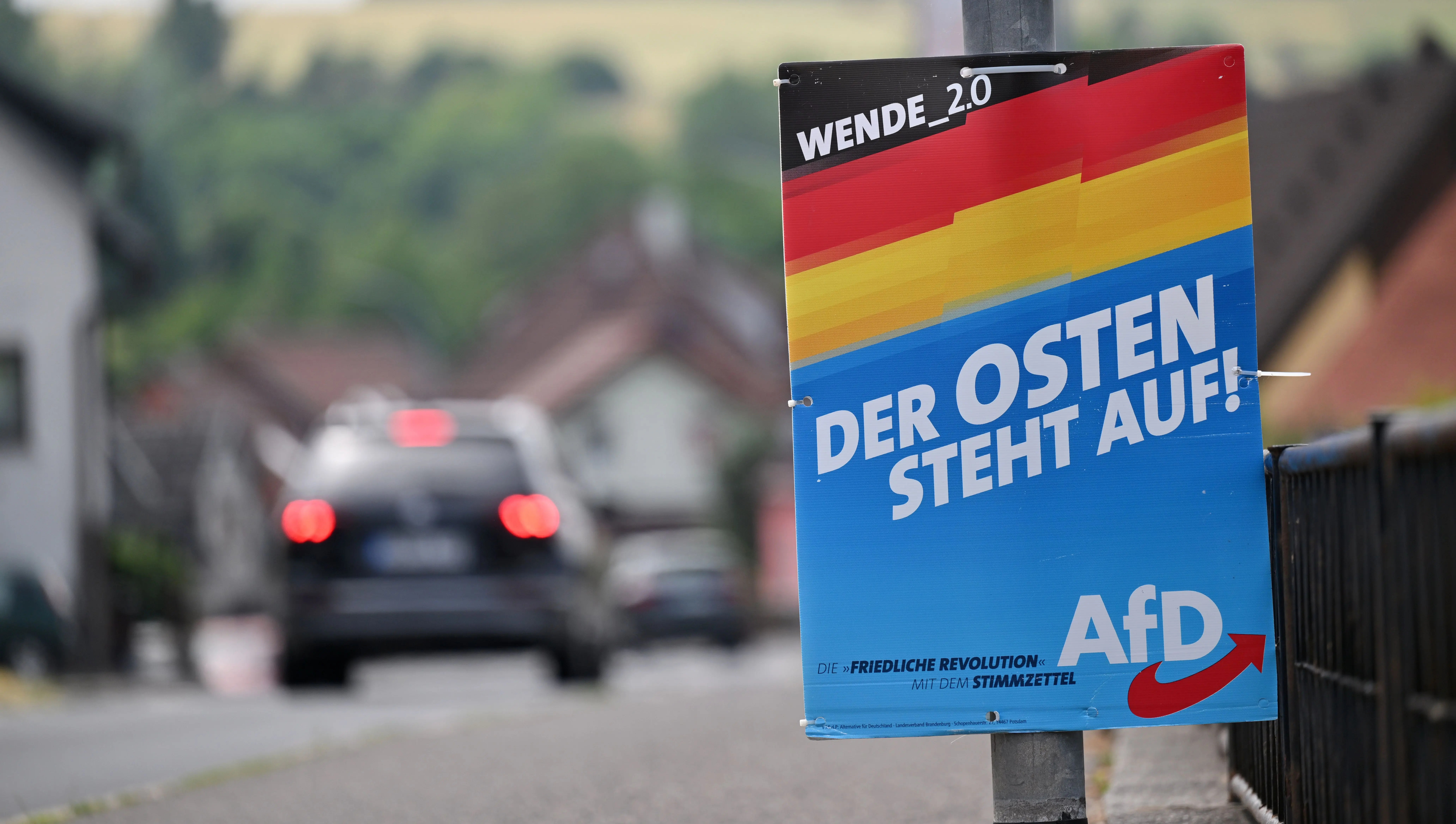
The planned partial ban on fossil-fuel heating boilers that would force people to replace perfectly functioning ones with electrical systems running on green energy at an installation cost of up to EUR 20.000, contributed to the anti-establishment, anti-immigration, anti-everythying AfD party scoring over 20% in regional elections in former eastern Germany. For historical reasons that may feel especially scary in Germany, but what’s happening there is very close to happening in a number of other countriees across Europe and by the looks of it, in the US as well.

“The East (meaning eastern Germany, where AfD has most support) rises!” this election poster says

Germany has a target of putting 15 million EV’s on the road by 2030, seven years from now. There’s currently about 1.5 million, meaning around 13.5 million are missing, which in turn exceeds the current annual EV production. So, 13.5 million Germans need to be forc… sorry, incentivized, to buy an EV in the next seven years in a recessionary economy. By the looks of it, that will be rather difficult, as the Japanese would say when something is completely unrealistic. Firstly there is barely an economic incentive anymore, with a fast-charging KwH now costing 80 Eurocents at a German supercharger, roughly the same cost as running a diesel. Secondly, there’s all the other reasons we’ve discussed previously on this blog. Thirdly however, there’s something else that has emerged in the last weeks.

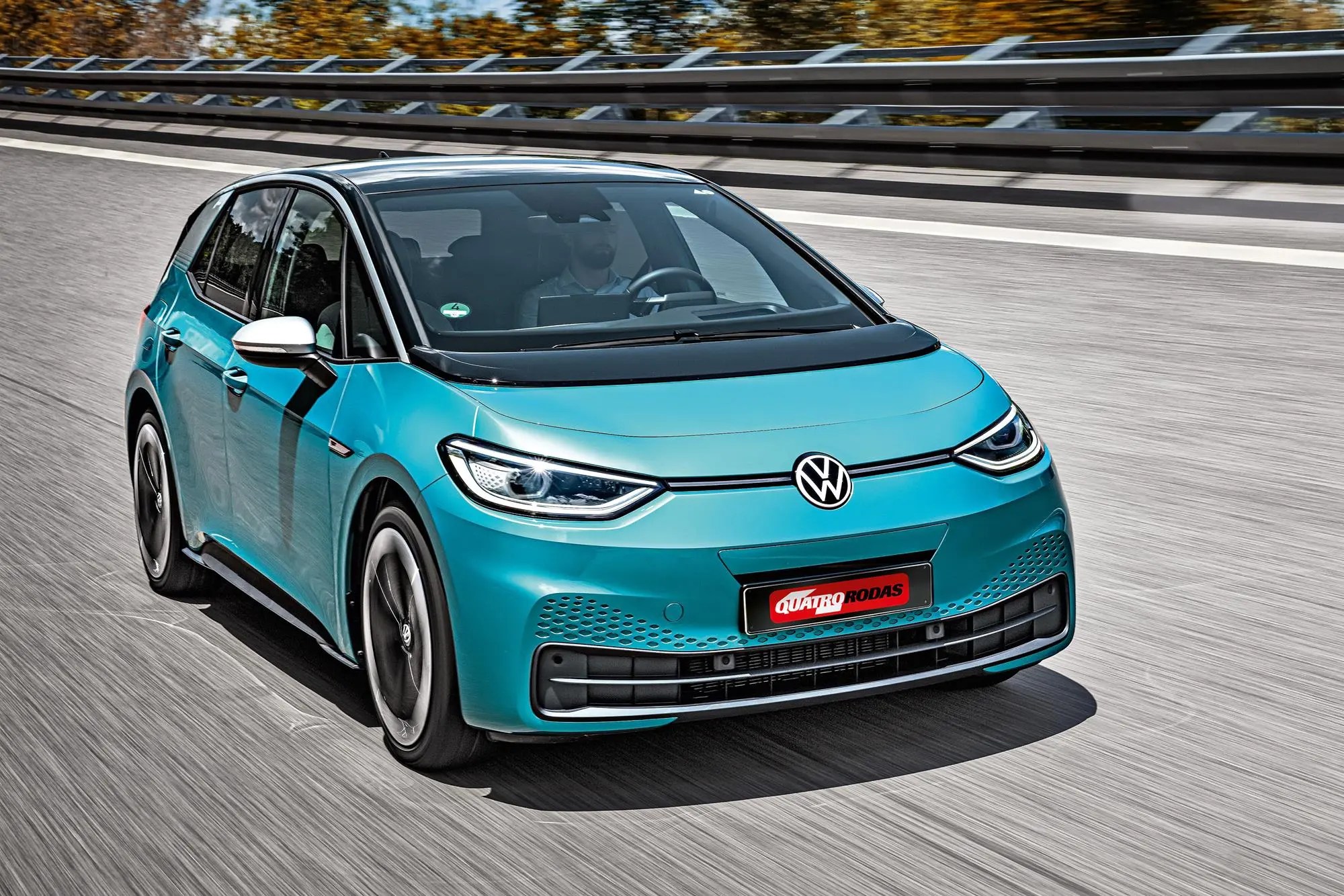
Not only Germany, but the whole of the EU is now talking about limiting imports of Chinese EV’s in order to protect European manufacturers. That’s the same thing as definitely shelving any European EV 2030 targets, as the main obstacle to people not buying EV’s, next to range anxiety, is the cost. China of course has a huge advantage here, with an EV industry that is both heavily subsidized from the state, and with manufacturers controlling the full battery production chain, knowing that the battery pack makes up 40% of the cost of an EV.

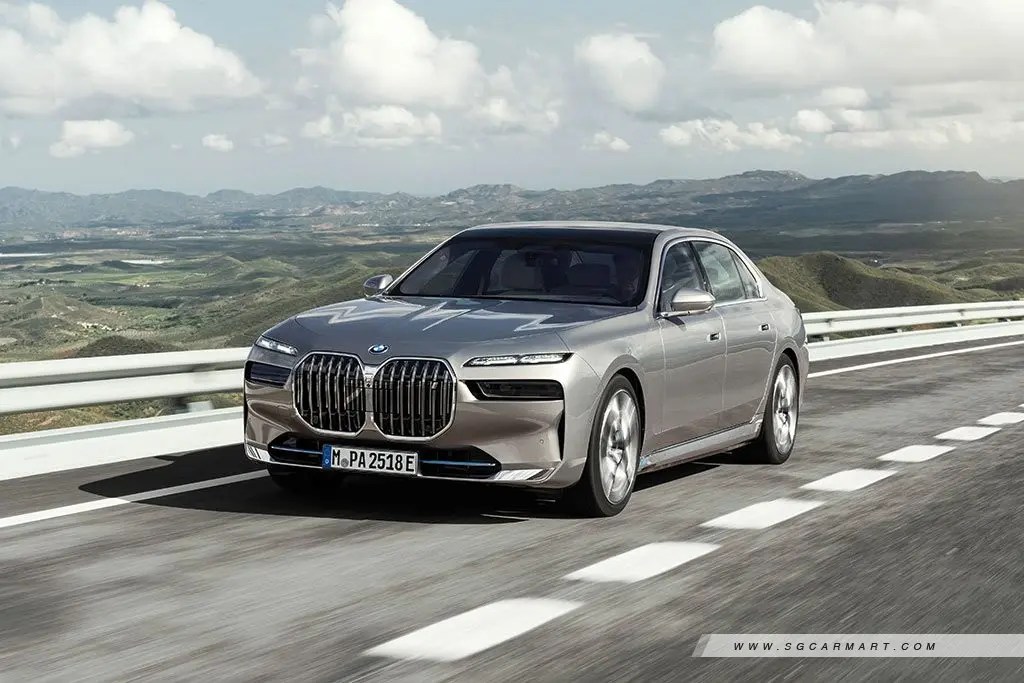
BMW’s EV flagship, the i7: ugly, expensive (150′ EUR), and at 2.700 kgs, heavier than most SUV’s. It’s also more expensive to run than the 500 kg lighter diesel version…

Germany’s car manufacturers cannot compete on cost and have therefore left the budget EV segment largely open to the Chinese. French brands are trying to get a foot in, but can still not compete notably with the scale of Chinese EV manufacturers, with BYD this or next year surpassing Tesla as the largest in the world.

I’m personally all for free trade but that’s certainly not what China practices, so you can have sympathy for Europe not letting state subsidized Chinese EV’s kill the domestic production market. However, that doesn’t mean that you can force European consumers to buy cars they don’t want and can’t afford, as is now illustrated by the falling sales numbers in several markets. Something thus needs to give, and what will give is no doubt the climate goals, since in the end, politicians will always do what it takes to win most votes.

That was further illustrated twice this week, first in Sweden where the new right-wing government is slightly less disconnected to the people than its predecessors, and thus presented a budget that increases emissions short-term. Of course the press in the self-elected, moral superpower was scandalized, but the government knows they have public support. And in California, gorvernor Gavin Newsom this week announced the lifting of an anti-smog ban in the state in an effort to bring down retail gas prices. Newsom has been very efficient these last years in de-stabilizing California’s power grid, but now obviously senses that the wind is changing. As does Donald Trump of course, who my American friends tell me will win next year’s election.

It was the catalyzer, i.e. technical development, that solved the smog issue in LA – not a ban on cars

A fizzling tire can continue to fizzle slowly until it’s completely flat. Alternatively, the hole can increase in size and thus let the air out quicker. What it cannot do however, is repair itself. Once there’s a hole, it needs fixing, something that doesn’t only apply to bicycle tubes. It certainly looks like the people, aka the voters, have had enough, and that we’ve finally reached a point where last years’ crazy policies slowly but surely come to an end. My guess is that Sunak along with a number of PM colleagues in other countries, will need to revise that 2035 date to… whenever. The sooner the better, since we can then perhaps instead start dealing with real solutions to the world’s problems!

F1 pit stop: MAXimizing!

The European summer has come and gone and as always, it leaves me with a sad feeling, especially since in central Europe, it was a very nice one. Although a passionate skier, I’m no friend of the dark season which will soon be upon us, but that also means we’re entering the final straight of the 2023 F1 season. In my last update just before the summer, fresh out of a bull fight in Madrid as I was at the time, the analogy with the charging bull Fernando Alonso was a rather obvious one. A few months later, it’s clear some things have changed while others have stayed the same. The bull analogy is still working, but the green bull has been replaced by its red cousin, which wasn’t doing too bad at the beginning of the season either.

The red bull, or rather bulls, reign supreme!

The way Red Bull has dominated the 2023 season almost makes you forget the pretty significant updates to the cars we saw before last season, aiming at making the races more exciting, and very much succeeding in doing so last season. This year, Max Verstappen has won 12 of 15 races and been on the podium in all but one. By the time of my last update though, Sergio “Checo” Perez had won in Saudi Arabia and Azerbaijan, which made me speculate that Perez may, just maybe, be good enough to challenge Max for the title. Well I was wrong, because since early summer, Max’s winning streak has continued while Checo has faded significantly, as has Alonso on Aston Martin. Instead, we’ve seen a slow but steady return to form of three other teams and drivers: Ferrari, Mercedes and McLaren.

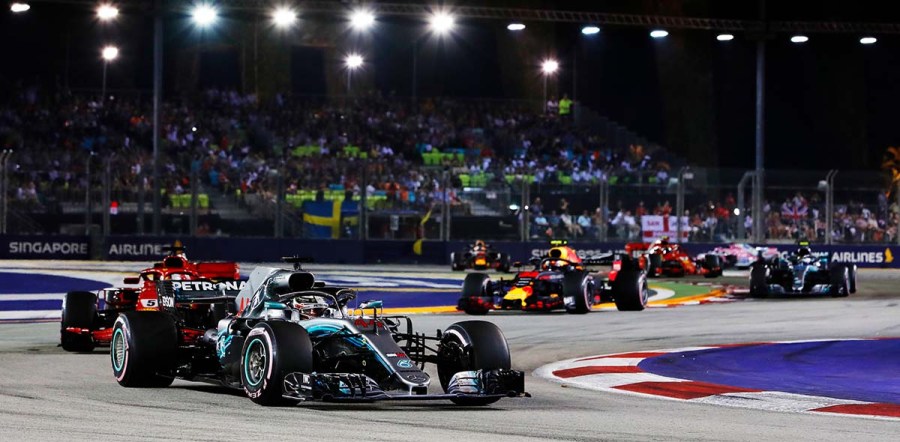
Looking at them in that order, the biggest change in Maranello is probably that with the arrival of Cédric Vasseur as team head, Ferrari now has a strategy when they start a race, something that seemed to be missing most of last season. Nowhere was this more visible than in the fantastic race in Singapore a week ago, where it was the strategy, next to Carlos’ sublime driving that gave him and Ferrari their first win for the season. The end of the race was the most exciting this year, with Sainz managing to keep his first follower Norris behind him but within DRS distance for something like five laps so that the two chasing Mercedeses that were both quicker wouldn’t be able to pass Norris, and thus threaten himself. It was highly impressive driving, and a very deserved win!

Brilliant driving and a brilliant win for Carlos in Singapore!

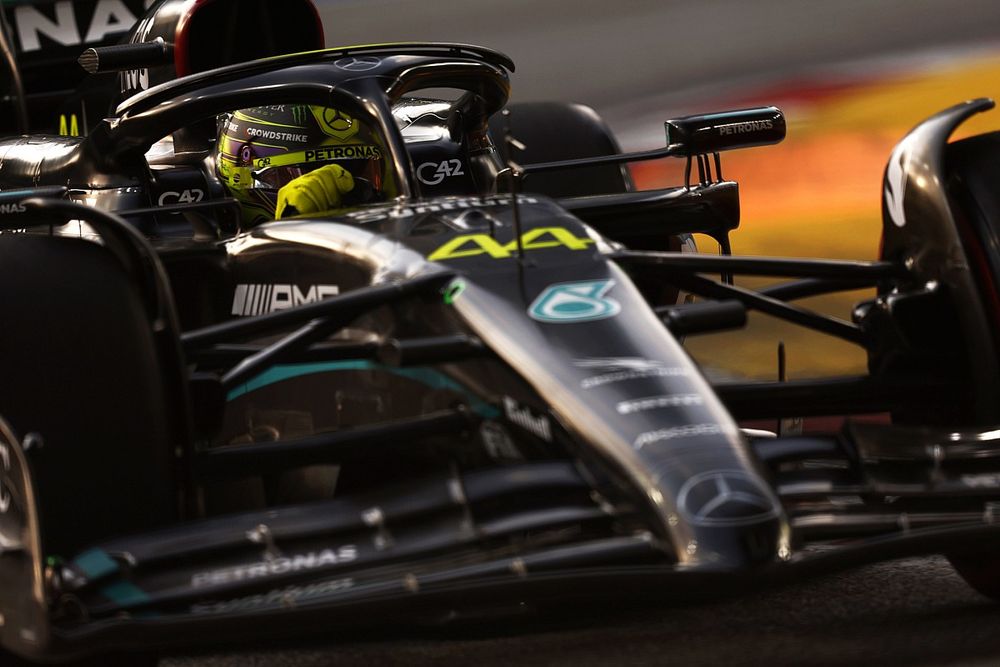
Mercedes on their hand have clearly progressed in the last races with Russell and Hamilton still forming one of the best duos among all the teams. They’re also quite close result-wise, with Hamilton still having the edge, being third in the championship. The biggest progress is however to be found at McLaren. Lando Norris still dominates the young Oscar Pilastri, but the latter is progressing fast in his first full season and in the last races, both have enjoyed a car that’s quicker than both Mercedes and Ferrari.

It’s thus pretty clear that Mercedes, Ferrari and McLaren are the three teams that will finish second-fourth when we round up the season (but not necessarily in that order). It’s also not impossible that whilst no one will challenge Max for the title, should Checo’s recent difficulties continue, both Lewis Hamilton and Fernando Alonso could challenge him for second place, if all the stars align. That would however require Alonso and the Aston Martin returning to the form of the first half of the season.

Mercedes have clearly improved as the season has progressed

Further down the field it’s especially Alex Albon who continues to surprise positively, managing to regularly place the not-very-fast Williams in the points. He seems to be enjoying his time at Williams, but there are of course limits to how fast the team will ever get. That unfortunately goes for the other teams in the second half as well, with both Alfa Romeo Racing and Haas failing so far to progress in any way. Given the experience in the driver line-up of both teams (Bottas on Alfa Romeo, Hulkenberg and Magnussen on Haas), there’s really no doubt the cars, or rather the development budgets, are the real problem.

Things look somewhat better at Alpine (Renault) whereas they look somewhat worse at AlphaTauri, where Tsunoda swears far more while driving than he collects points. AlphaTauri have also replaced Nyck de Vries with our favorite Aussie Daniel Ricciardo, who without wanting to be mean has a great talent for picking teams on their way down rather than up. With AlphaTauri however there’s only one way to go, and Ricciardo will be there for all of 2024, so maybe, just maybe, things will start to look up both for the team and him again. That’s all relative though, since the chance of AlphaTauri or any of the small teams clinching a podium are all but inexistant.

Ricciardo will need all of his significant neck muscles to win points in the AlphaTauri…

As we enter the last straight of the 2023 season, Red Bull is thus as dominant as ever, and Max is in a league of his own. It’s also obvious that he’s gained a new level of maturity in his driving, being far calmer and, by the looks of it, in perfect harmony with the car. Most probably, the season will end with a Red Bull one-two, since although Checo has had a streak of bad luck and seems to be out of form, it should still be enough to hold on to second place.

The other top teams have come somewhat closer but the difference to Red Bull is still significant, and the question is perhaps not if they catch up this year, but rather if they manage to do so next. It’s interesting to listen to Lewis Hamilton in this regard, being very open about what he still sees as a very wide gap to Red Bull, and the Mercedes car still suffering from issues, notably in terms of rear downforce. Leclerc is just as open in terms of Ferrari’s progress but what still remains a significant gap to Red Bull. That doesn’t really bode well for an exciting 2024 season – but let’s perhaps finish 2023 before we worry about that, and hope we get some excitement for second place in the championship!

The lord has moved out, a Bavarian has moved in!

Big change in the family garage a couple of weeks ago as my beloved Range Rover moved out and a Bavarian station wagon moved in. I could tell you a thing or two about selling Ranges (or for that matter, any other car as a private seller in Europe these days) along the lines of people having no shame in offering half the asking price, or giving you all sorts of arguments why they shouldn’t buy it, making you wonder why they contacted you in the first place. I’ll spare you the details…

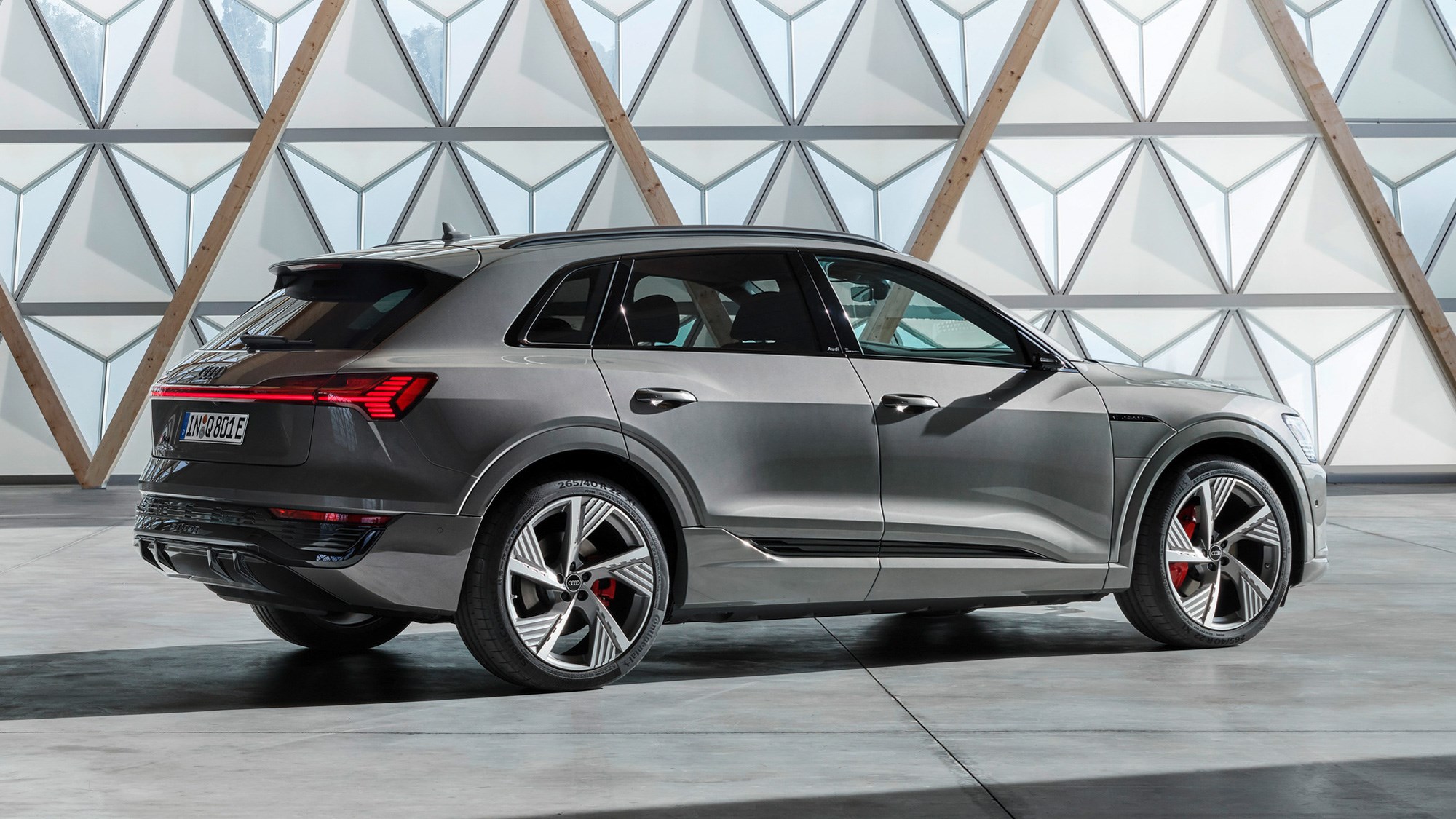
In the end a guy who had previously owned a bunch of Range Rovers got in touch. He ran an independent garage and new all there was to know about them. The week before, his wife had told him to please get rid of the – in her words – awful Audi Q8 he had bought and buy her another Range Rover instead. He was definitely my kind of guy, and evidently had a great taste in women! On a more serious note, I was actually happy to sell the car to someone who had previous experience and mechanical knowledge, should something unexpected occur shortly after the sale.

Apparently not a car to get for your wife…

The Range thus left the family garage and for the first time in many years, I was in the market for a car without trading in another one. That was obviously a situation difficult to handle for a car guy, so a certain frenzy broke out to narrow down the short list I had been preparing over the previous weeks, and which had come together following a bunch of criteria based on the new family situation, with fewer to no children in the car and hence less need for space, and also the limited space available in small, neat villages in southern France, where we will be spending more time going forward. That said, it had to be large enough for the (quite small) dog cage and the (quite large) amount of luggage my better half likes to bring.

Built for 2CV’s, not for Range Rovers…

I was initially quite agnostic between getting a diesel and a petrol. As discussed notably when I drove the Volvo V60 Polestar, for our kind of driving, a diesel would by far be the most efficient choice, but I’ve always struggled with the character of diesels. A test drive of the new Audi A6 in diesel format made clear that notably that slight hesitation whenever you put the pedal down is still there, as is an improved, but still not great engine sound.

That drive made two things clear: I wanted a petrol, ideally a six-cylinder, and not the new A6. Sure, it’s a nice car, but it’s quite big, relatively uninspiring to drive (the RS6 certainly being the exception), and also with a complete absence of switches and buttons in favor of screens. As you know this isn’t my thing, just as little as the surprisingly large amount of plastic in the interior is. The screens are not intuitive, unnecessarily complicated on some fronts, and full of very visible, greasy fingerprints after like five minutes. I won’t go into the arguments around this again, but it was clear to me that I wanted a car that was slightly smaller, still has a traditional A/C setup, along with some other functions, and a bit less plastic.

You’ve seen it many times, it remains a good-looking station wagon

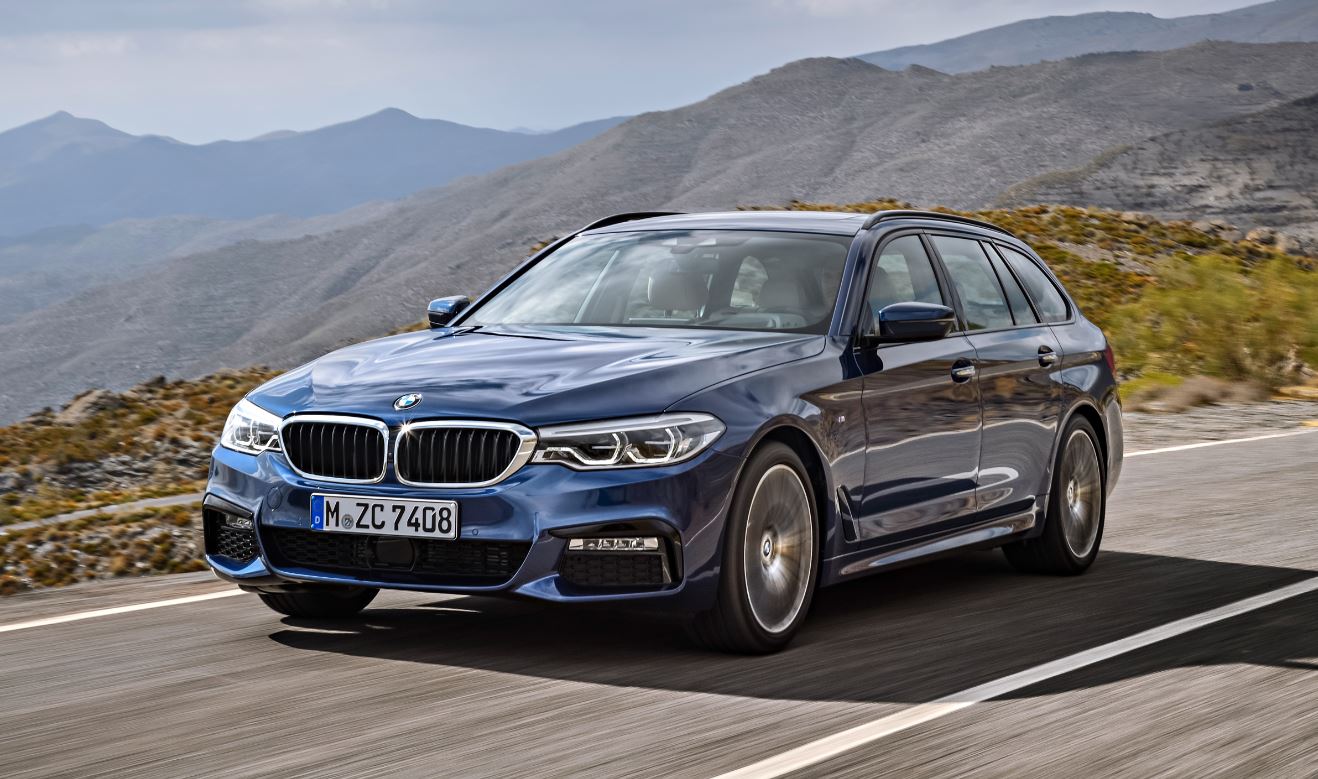
In the end, my choice fell on a BMW 540i X-drive from 2019 with 45.000 km on the meter, in mint condition and at roughly 1/3 of the price as new. The three-liter petrol produces 340 hp (and can easily be tuned to more), and obviously features in a number of BMW’s. It is no doubt one of the best six-cylinderes ever built, smooth as silk and barely noticeable unless you want it to be, when it produces a decent but still somewhat aggressive sound. For the long motorway stretches that dominate our driving the power is clearly sufficient, that said, I’d be curious to see how much difference one of the chip-tuned versions does.

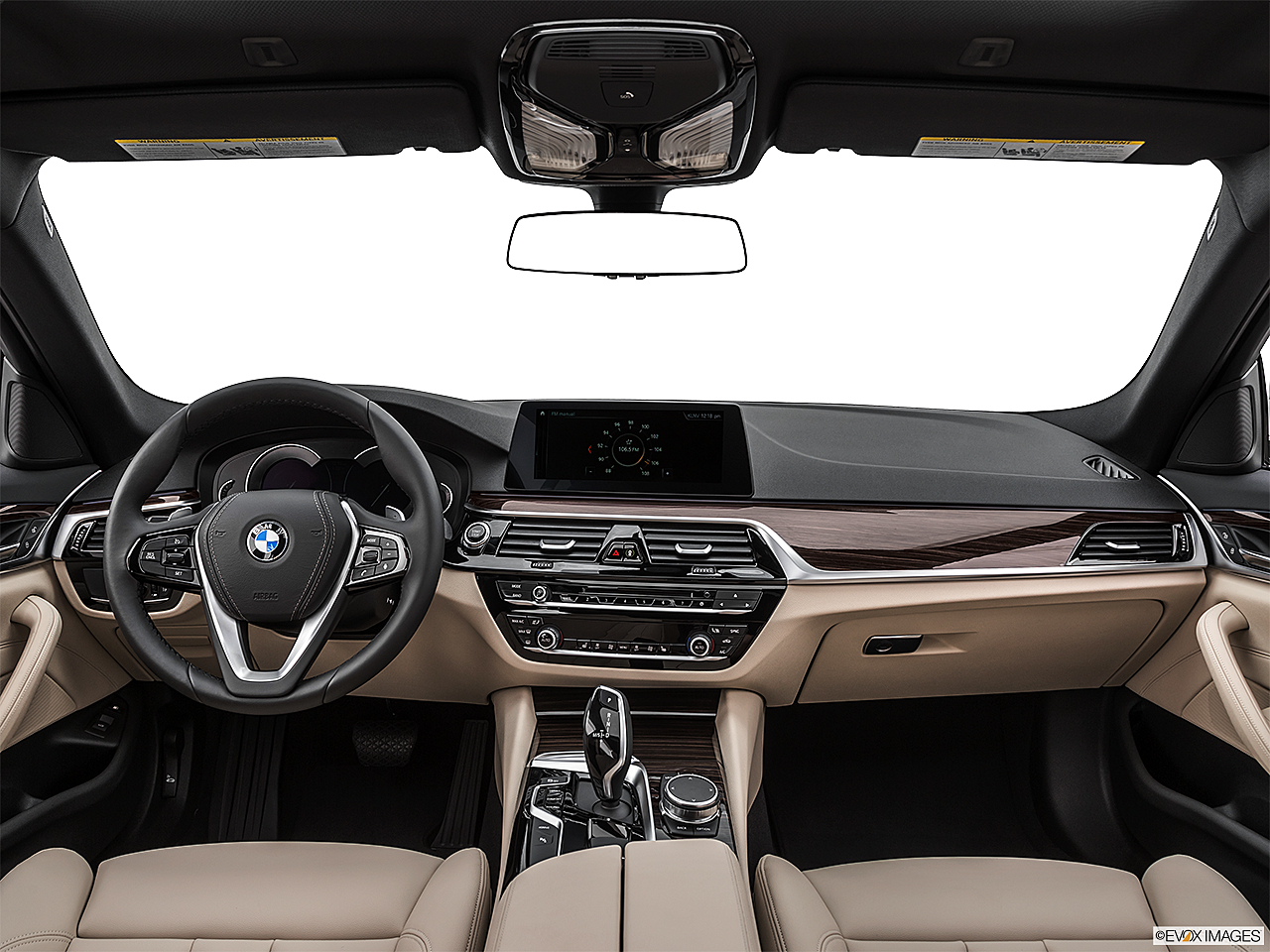
In terms of equipment, I knew I wanted the M-Sports package, giving you not just sportier looks but more importantly, the sporty driving modes and settings. Next to that the Harmann Kardon sound system was important to me (there is a B&O system that is even better, but it’s close to impossible to come by). As for other things the more the better of course, and the car is basically fully loaded. Some stuff I’ll most probably never use, some has surprised me in actually being quite useful, like the gesture controls that didn’t have much faith in. The shortcut buttons BMW offers and that can be used for different functions are also genius.

A pretty perfect mix of new and old if you ask me

The car has only been with us a couple of weeks but we’ve had time for a longer stint south, and it’s so far all positive. If you travelled in style in the Range, this is obviously a different experience as you’re driving much more actively, but the BMW is a true pleasure to drive and feels very nimble with notably great steering, and a very well isolated cabin. The suspension may be traditional but is excellent and the engine as mentioned is fantastic, doing so far around 9 l/100km. Finally the size of the car is perfect for our needs. So far so good, and I’d be surprised if it doesn’t continue.

In Switzerland, a 2019 model will have free service until 100.000 km or 2029 (whichever comes first), meaning running it is almost free of service costs. As a new car, it comes with a 5-year full warranty, meaning there’s one year left. As mentioned, the car is really in mint condition, and all this once again seriously makes me wonder who would be 2/3 more to get these wheels as new. Then again I’m happy there is, because otherwise I wouldn’t have had a nice Bavarian parked in the garage.

Do I miss the Range Rover? Honestly not really, it’s nice to have a car that you’re really driving again, and a station wagon is in many ways more practical than an SUV. There’s one thing though, which is the feeling of driving something special that you got with the Range and that the BMW doesn’t really give you, being a more “ordinary” car. You felt royal travelling in the Range, and it was a pleasure doing so during two years!

Auto legends: the story of Enzo Ferrari!

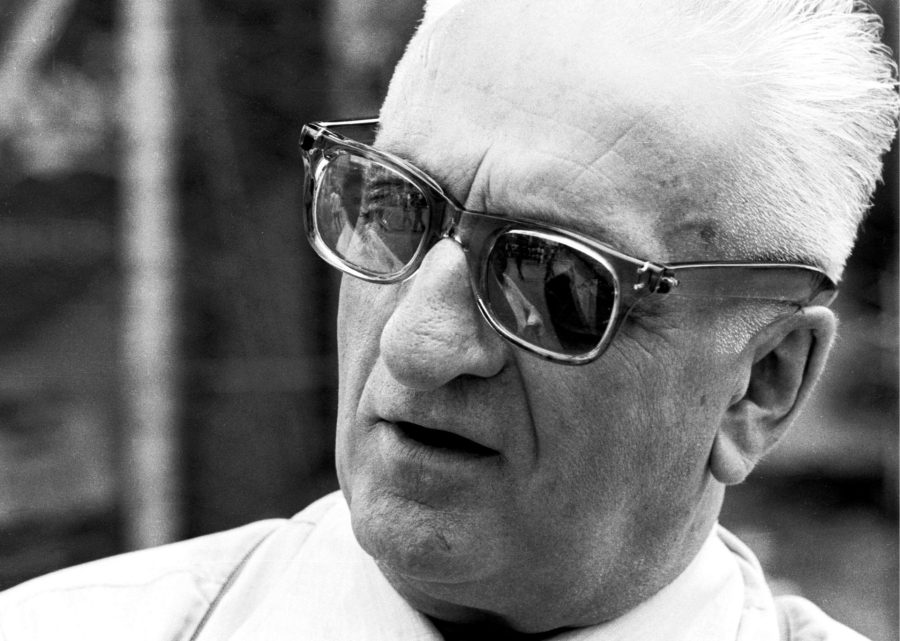
When one of my readers gave me the idea to the section on legendary personalities from the auto industry, he did so specifically mentioning Ferdinand Piëch, whom I therefore did the first portrait of earlier this summer. Had I come up with the idea myself though, I wouldn’t have started with Piëch. If someone says “automotive legend” to me, there’s really one name that springs to mind before the others, and it is that of Enzo Ferrari. I kind of suspect it may be the same for some of you, so in this second portrait, we’ll have a look at the Commandatore himself, the legendary man who spent his life in northern Italy between Turin, Milan, Maranello and Modena, and whose legend has only grown since he passed away around 35 years ago.

Young Enzo on an Alfa Romeo, sometime in the 1920’s

It apparently took little Enzo 10 years from his birth in 1898 to be stung by the racing bug, which happened when his father took him to a car race in Bologna. Enzo had an older brother and early on dreamt of becoming an opera singer, but the Spanish flu that swept across the world at the time killed both Enzo’s older brother and his father, forcing him to grow up quickly and lay his ideas of a singing career to rest. He joined the army in 1917 and was very close to dying from the flu as well shortly thereafter, but survived and was honorably discharged the same year. Rather than becoming a soldier, his big dream was now to work for Fiat, but his application was rejected, which we should perhaps all be grateful for.

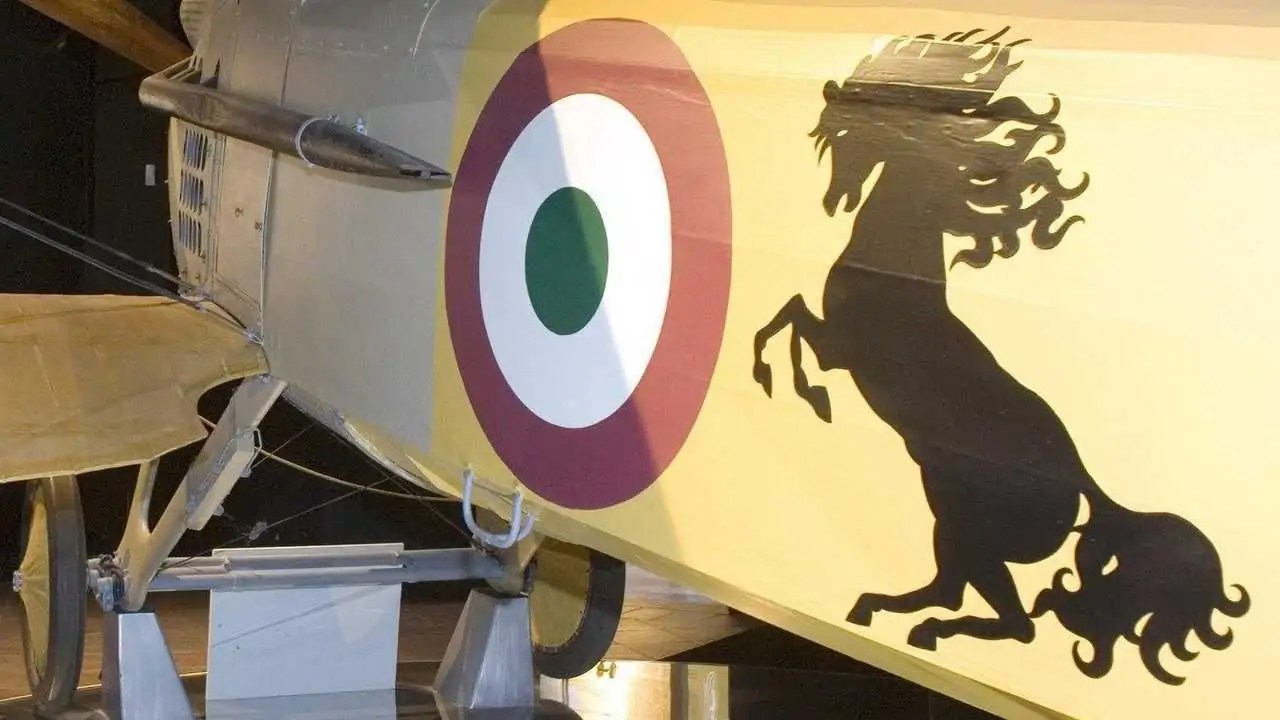
Enzo instead went on to work for a company called Costruzioni Meccaniche Nazionali for whom he also debuted as a racing driver. He took part in a number of races over the coming years with quite some success, before a very defining moment for him but also for the larger automobile world occurred in 1923, when Enzo met the parents of the noble flying ace Francesco Baracca. Baracca had done some heroic flights but later perished in the war, and his parents now invited Enzo to use their son’s coat of arms on his cars for good luck. You’ve guessed it, that coat of arms was none other than a prancing horse, and the Ferrari logo had thus been born.

The original look, and use of the Cavallino Rampante!

In 1929, Enzo’s racing career was crowned when he was knighted for his achievements and given the title “Commandatore” (Commander), that would stick with him for the rest of his life. He would end his driving career in the coming years and instead set up the sporting society Scuderia (“team”) Ferrari, a kind of racing club for aspiring drivers with as symbol the prancing horse. The club would a few years later become affiliated to Alfa Romeo, but the association would only last a few years.

Enzo had now also become the proud father of a boy called Dino, but as he didn’t know then, Dino would only have a short life, dying of dystrophy in 1956. Between the Spanish flu, his son’s dystrophy and other terrible viruses and bugs at the time, it doesn’t hurt to remember that modern medicine has done quite a few wonders in curing and exterminating what people died of less than 100 years ago… Dystrophy however, as a genetic disease, is unfortunately one we don’t yet have a remedy to.

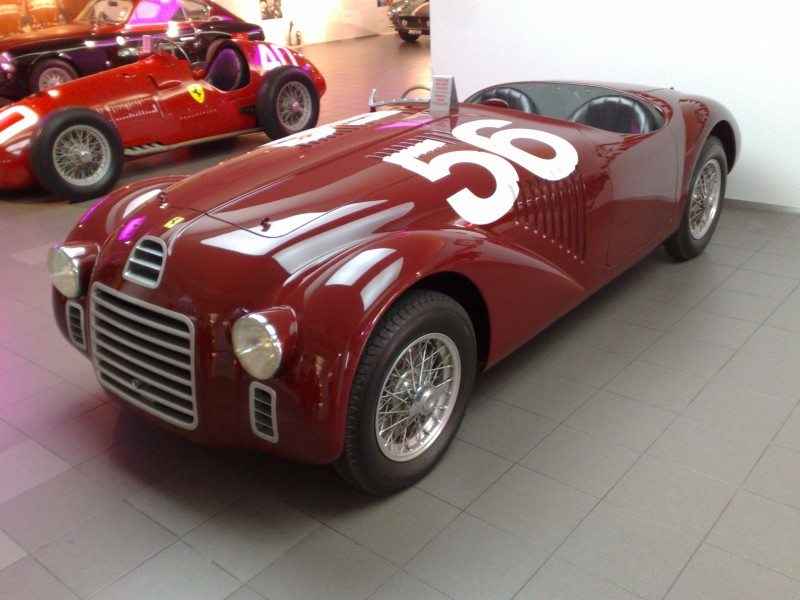
The 125 S was the first Ferrari car to score a race win.

Just before WW II broke out, Enzo had founded his new company Auto Avio Costruzioni in Modena, later moved to Maranello. As soon as the war was over, Ferrari started racing and the 125 S would score its first victory in 1947. That would be the start of many race wins over the coming years, including notably the Mille Miglia in 1948, the 24 hours of Le Mans in 1949, and the world racing championship both in 1952 and 1953, in both cases with the legendary Alberto Ascari as driver. it was at this time that Ferrari also started producing road cars, already then with the rich and famous in mind.

If the late 40’s were all happy days, the 50’s and early 60’s would be less so. Next to the loss of his son, six Ferrari drivers would be killed between 1955 and 1965, Enzo as head of Ferrari would be charged with manslaughter following the accident in the Mille Miglia in 1957 that I described in my post about the race, and Enzo would also lose several of his top people in the Palace Revolt in 1961, that we looked into in the post on Bizzarrini back in February 2021. These events and of course, especially the death of Dino, changed Enzo into a reclusive man. It was most probably also these events that led him to consider a sale of Ferrari to Ford in the 60’s, that would however never happen. Instead it was Fiat that Enzo sold half of the company to in 1969, because Ferrari by then had serious financial issues.

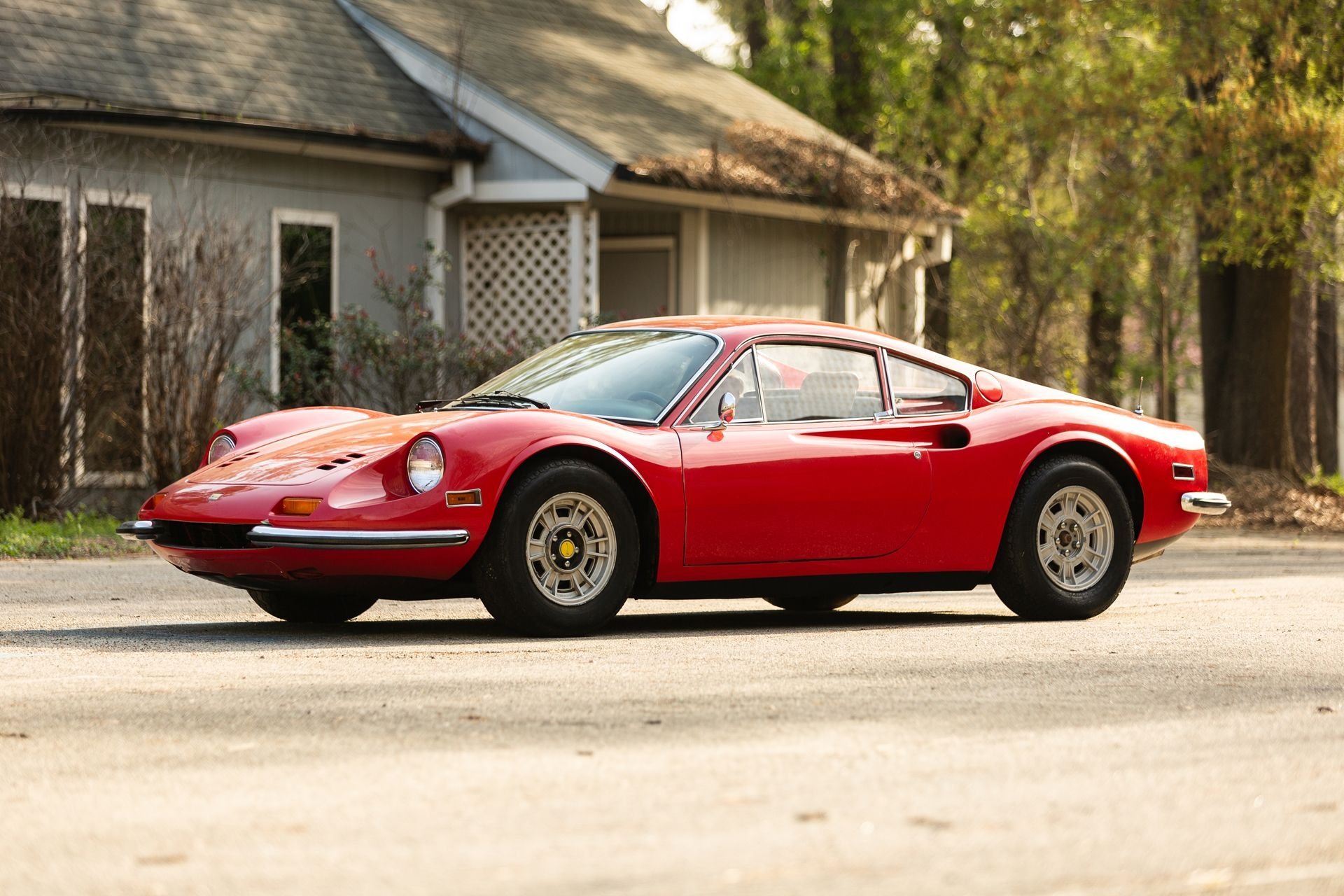
The Dino, one of the most beautiful of them all

At the age of 79, Enzo would resign as president of the company he founded in 1977, but president or not, it was still clear to everyone who was really running the company. A further personal blow was the death of his beloved wife the year after, and finally Enzo himself took his last breath in 1988 at the age of 90, in Maranello that he made so famous. He was later introduced to the International Motorsports Hall of Fame, given the 13 world championships and 4.000 race wins achieved over his lifetime.

Next to the racing successes, Enzo of also led the development of Ferrari’s road cars during the decades he was active. Going through them all is a post by itself, but let me pick two of my (and many others’) favorites. The Dino, named in honor of Enzo’s son, is to me one of the most beautiful Ferraris, and the F40, which was the last car Enzo signed off on personally, one of the most spectacular. These and others are shown in the Ferrari gallery in Maranello that it’s well worth visiting if you’re in this beautiful region of Italy, going by a single motto: Forza Ferrari!

Street finds – the Fiat X1/9!

It’s not only the times that are a’changin, as Bob Dylan noted long ago, but last week in central Europe, very much the weather as well. We thus went from several weeks of wonderful summer days and late dinners on the terrace, to 12-13 degrees C and rain. Luckily things are set to improve, however to something more reminiscent of autumn by the looks of it, so I guess I was very lucky to spot a surprisingly exotic street find just before the weather change – the nowadays very rare Fiat X1/9. It’s no doubt a car that is best enjoyed in the summer, but it’s also a great testament to Bob Dylan’s changing times, as we’ll see!

Angular body, engine right behind the seats and thus perfect weight distribution!

The Fiat X1/9 is also very much the flashy family member in an otherwise quite boring group of 60’s and 70’s Fiat cars. It’s the successor to the Fiat 850, a four-cylinder, 60’s creation that looked like a bun (although to be fair, the Spider looked better than the coupé…). But it also belongs to the Fiat 128 family where the rights to the four-door sedan were later sold by Fiat to Soviet Lada, and which most therefore associate with old east-west spy movies.

Contrast both of those with the very futuristic X1/9, and it’s not only the model name that stands out. The angular design with the pop-up headlights was a design that would be if not copied, then definitely repeated in many other 70’s cars, such as the Lotus Esprit and of course the Lamborghini Countach. The X1/9 didn’t look anything like the rest of the family, but somewhat surprisingly Bertone had still designed all siblings, proving design houses can have good and less good days.

Pop-up headlights were of course a must in the 70’s!

As spectacular as the looks was the fact that the engine was right behind the seats, making the X1/9 Fiat’s first mid-engined car. Unfortunately though, that engine came from the boring part of the family, meaning at the launch in 1972 a 1.3 liter, 4-cylinder with a very modest 75 hp, coupled to a 4-speed manual box. In 1980 that grew to 1.5 liters, another 10 hp and five gears. Of course, at around 900 kg it’s fair to say that they X1/9 was a light-weight, but I think we can safely conclude that it looked about five times faster than it really was. That was of course especially true in the US, where emission regulations made the engines even weaker than in Europe.

It wasn’t only emission standards that became strict on in the 70’s, the same was very much the case for safety, again especially in the US. Fiat had actually built the X1/9 with North America in mind and had thus tried to adapt to the coming rules during the development process. Thanks to the mid-mounted engine and the targa body rather than a full convertible, the X1/9 was one of very few cars had no problem complying with what became the new US safety standards.

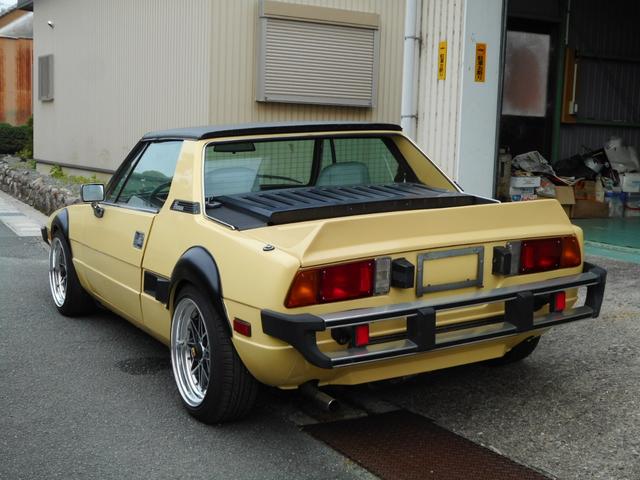
This gave Fiat’s faltering US a welcome boost, especially since the small coupé was far cheaper than other, somewhat comparable sports cars. Everything was going swell until the mid-70’s when those safety standards were developed further, forcing Fiat to fit what must be the ugliest bumpers in automobile history to the X1/9. Luckily these were later re-adapted to what can be seen on my street find, which is most probably a US import. Around 165.000 X1/9’s were produced in total between 1972 and 1988, and no less than 3/4 of those were sold in the US.

The garden hedge – ugliest bumper ever seen!

As observant readers may have noticed on the first picture, the logo isn’t that of Fiat, but rather of designer Bertone. The reason is to be found back in 1982, when Fiat wanted to discontinue the X1/9 and pull out of the US market, and Bertone therefore bought the rights and continued to produce the car in its name all through 1988. Not much changed on the car in the last years but Bertone would improve both equipment and materials, making the Bertone-branded cars such as the one I saw, the most attractive ones.

So what about the changin’ times? Quite obviously, it’s the concept of a sports car weighing in at less than a ton, making even a small, 1.5 litre engine with less than 100 hp if not plenty, then at least enjoyable enough. This is obviously very far from where we are today and if it sounds like your thing, you may think that with 165.000 cars produced, finding one will be easy. That’s however not the case as very few have survived – estimates talk about less than 1.000 cars in the US. Few are thus up for sale, but those that are tend to come in around EUR 15-20.000 in Europe.

Cars from 1980 had five speeds and (slightly) more power

The only question left to solve is then that around the name, because for a company who have typically been naming cars with real names or with numbers relating to the engine size, how did X1/9 come about? It turns out that prototype cars at Fiat were called X1, with the second number indicating the prototype in the order it was developed counting from a certain start date. The small Autobianchi A112 was for example called X1/2 as prototype, and the X1/9 was thus prototype number nine. It was however the only model to retain the prototype name in actual production and why that was, no one seems to know. But who cares? With the wind in your hair and the humming of a four-cylinder right behind you, you’ll have better things to think about!

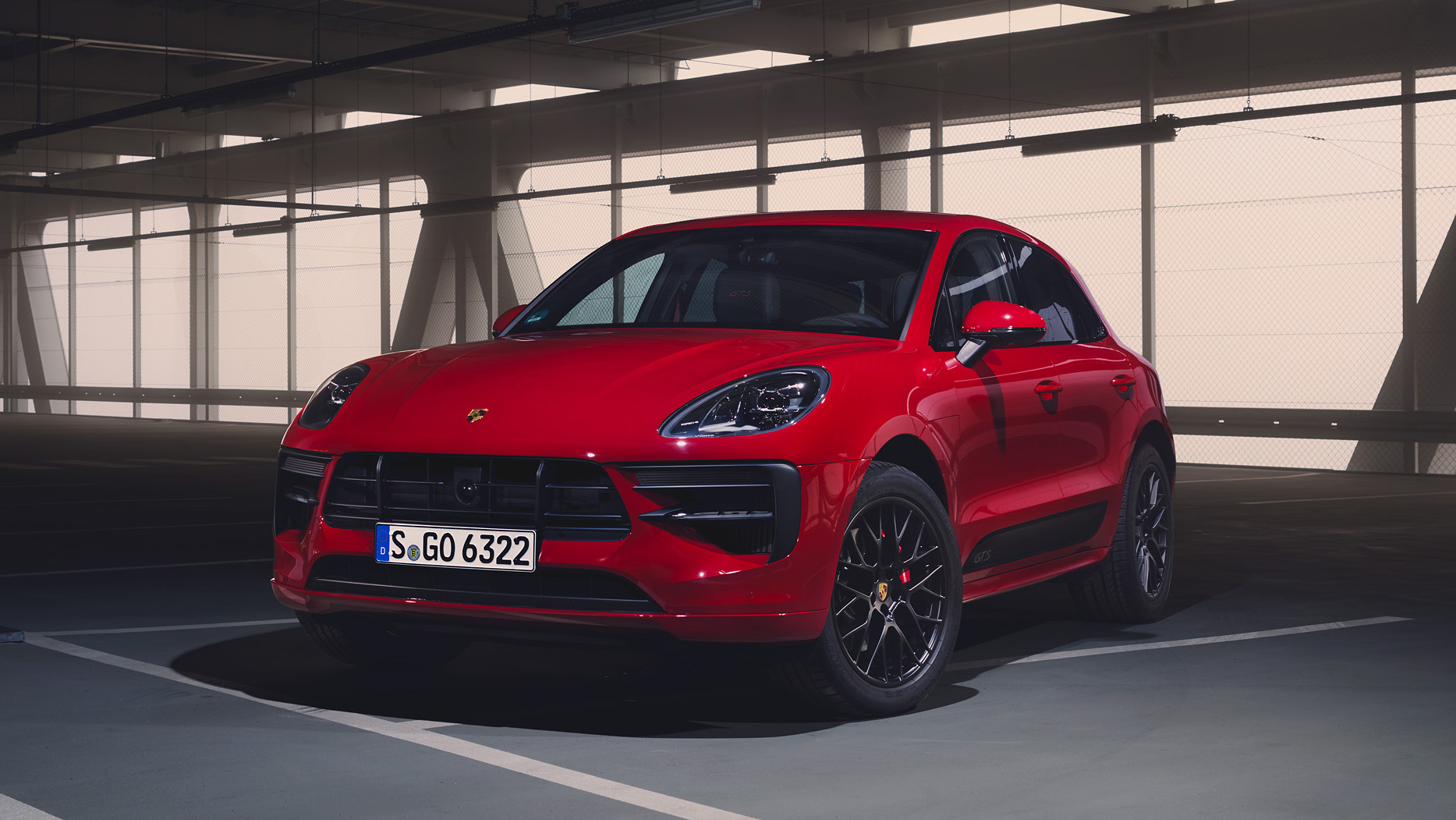
Finally driving the Macan!

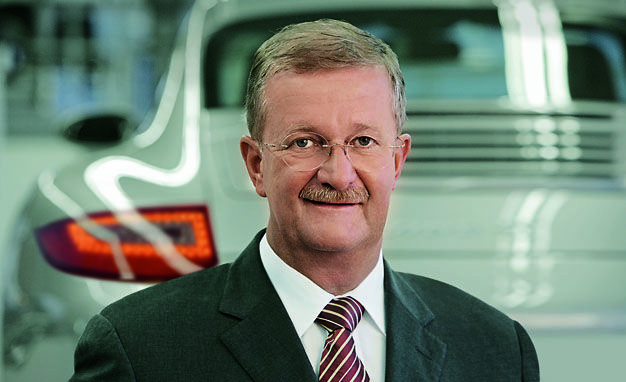
Wendelin Wiedeking is the very German name of one of the most important CEO’s in Porsche’s history. Wiedeking took over the helm in 1993 when Porsche was teetering on the brink of bankruptcy with a stock market value of only EUR 300m, and had a decisive role in turning things around and increasing that to EUR 27bn 15 years later when he left his post. Interestingly he also did so being paid a (relatively) modest base salary with a significant bonus component, directly tied to Porsche’s profitability. Needless to say, this made Wiedeking both a respected and a rich man, and one of the main drivers behind his and Porsche’s success was no doubt reading the market correctly and launching the Cayenne in 2002, as Porsche’s first SUV.

Wiedeking saved Porsche before being forced out in 2017

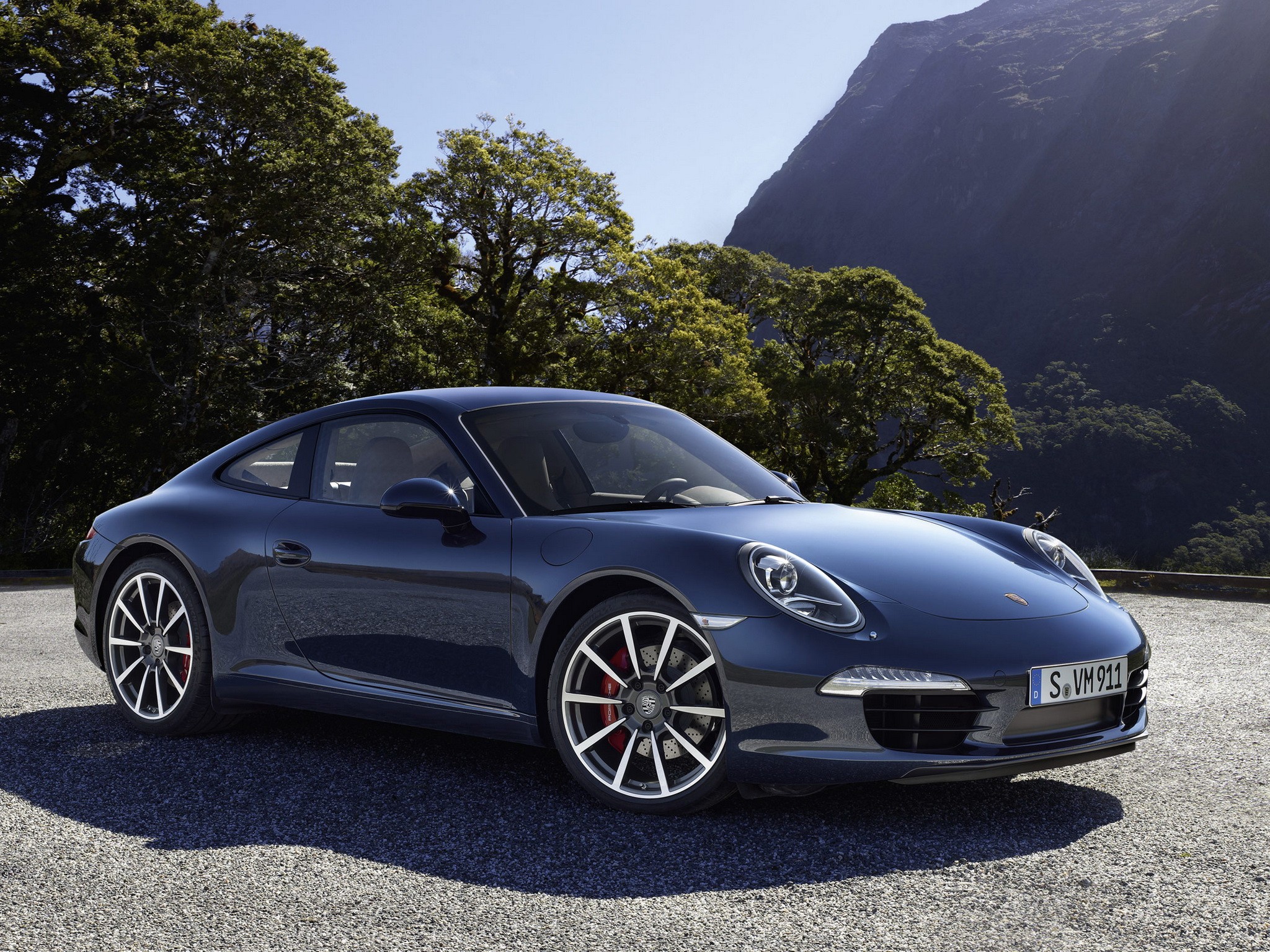
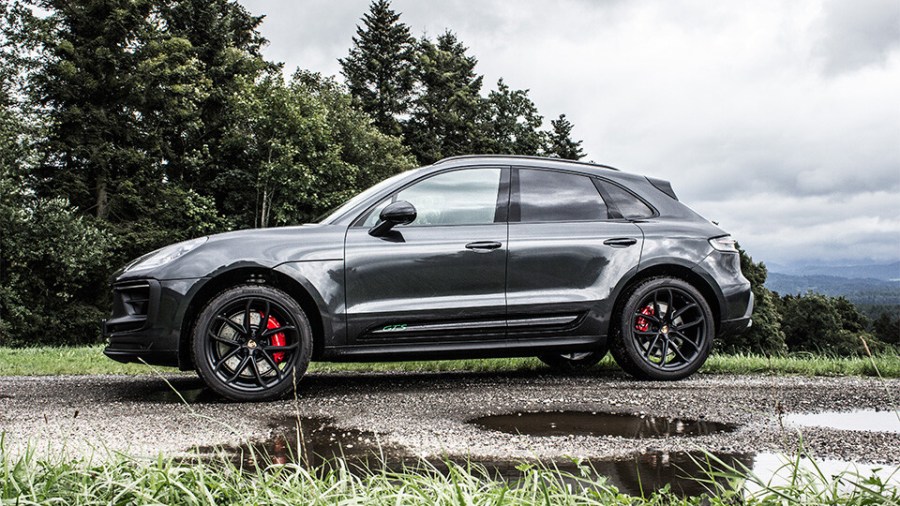
Until then Porsche had only built sports cars, but Wiedeking and his colleagues had noticed that next to their 911/Boxster, most people also had a family car, which increasingly tended to be an SUV. Wiedeking failed to see why that second car shouldn’t be a Porsche as well and from its launch, the Cayenne quickly became crucial in Porsche’s recovery. Without it, Porsche may have gone the same way as Bentley would have without the Continental GT that we looked at a few weeks ago. And to get to this week’s topic, without the Cayenne there would not have been its smaller brother, the Macan, that I had the opportunity to try out last week, and that today is Porsche’s best selling model!

A good-looking car with an almost coupé-like roof line

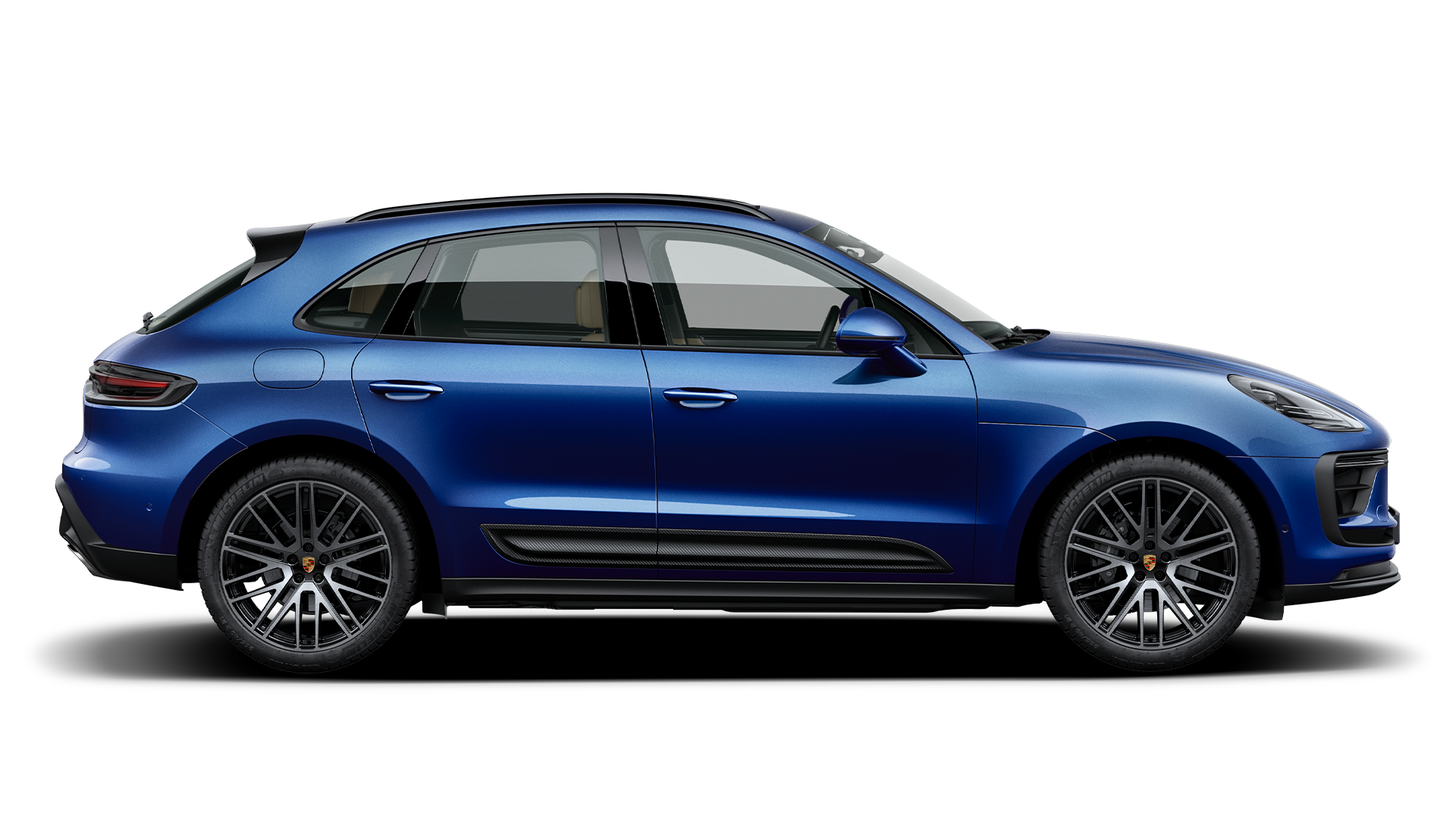
The Macan was launched in 2014 as part of the trend towards smaller SUV’s, and shares its platform with the Audi Q5. A major facelift first took place in 2018 and then again in 2021 and engines will vary with the series and production years. Essentially though, good first series cars with all engine types are now to be had around EUR 50.000 in most markets, while later series are still more expensive. Even for the first series however, this means that a Macan has held its value better than many other cars in its segment, including the Cayenne. The most visible difference between the first two series is the light bar between the rear lights and the updated infotainment screen, but it’s only the still produced third series that saw a more complete overhaul of both exterior and interior.

I had the opportunity to test drive a Macan Turbo from 2015, i.e. the first series, and a GTS from 2020, i.e. the second series. The two engines are a good combination and the two different cars also illustrate the evolution of the Macan quite nicely. The Turbo in the first series produced 400 hp and the GTS in the second 380 hp, however with only slightly less torque (520 Nm vs 550 for the Turbo). Both are also six-cylinders since I personally still struggle at the idea of a Macan, or any Porsche for that matter, with only four cylinders – not to talk about a diesel… In the current series, the GTS is the top-of-the-range engine with 434 hp, as the Turbo has been discontinued.

The light bar between the rear lights was added in the second series

The cars have far more in common than setting them apart, starting with the excellent driving position. You sit low and tucked in in an excellent seat, in a position which doesn’t resemble that of any other SUV, not even the Cayenne. Those who like the sports car feel and don’t have too many kilos around the waist will like both the position and the seat, and everyone will love how the Macan drives. This is by far the most car-like SUV I have ever driven, with a precise steering with lots of feel, and very little and well controlled body roll. We’re not in 911 territory, but for the type of car, it’s really good.

What’s also very good are the engines. Both are supercharged with one turbo for the Turbo and two for the GTS, and you can’t fault either of them. The GTS develops power almost like a naturally aspirated engine would, but the Turbo is also very well behaved with a barely perceptible turbo lag and the sense that it’s more powerful. The PDK box does an excellent and imperceptible job with both engines, being very quick on kick-downs and otherwise mostly unnoticeable.

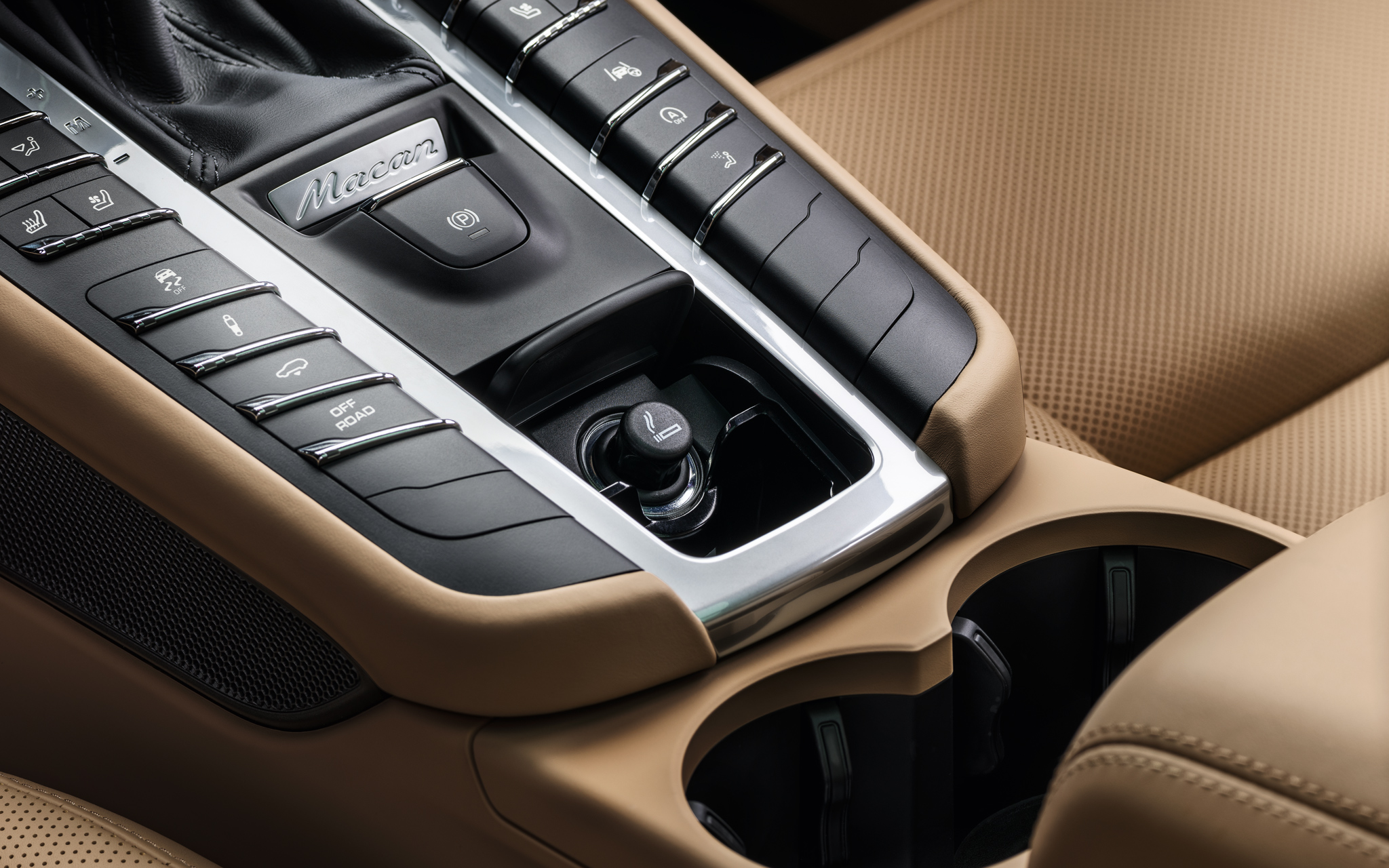
The less options you have, the more black buttons there will be…

Looking round the interior and especially the center console, you notice a very large number of buttons for different functions. The way they’re organized means there will be blank buttons in almost all cars for options that haven’t been selected, which looks a bit cheap. It’s only the current series that changed this into screen-based system, which still isn’t the clearest however. Be careful though, as of all the German automakers, Porsche is the one offering the least as standard equipment, so if you pick up a pre-owned car, make sure the first owner ticked the right boxes!

Interior build quality is otherwise good in both cars, however with lots of relatively cheap looking plastic in the rear, especially in the first series, the second being a bit better. Rear seats are also quite cramped, especially in terms of head room, and behind them, luggage space is on the smaller side, especially in height. This makes the car a non-starter for us given we need to fit a dog cage which there wouldn’t be a chance of doing here. The other argument I have against the car comes back to that excellent resale value, as for a prospective buyer, that means there are quite a few alternatives at the respective price points, depending on your needs and preferences.

In summary, a Macan with the right engine is not only the sportiest, but to my mind probably the best small SUV in the market – and of course it carries the Porsche badge! Even the by now almost 10-year old Macan Turbo I drove felt very solid, and the fact that the difference in looks to later series is small means it’s also aged quite well. It’s a neat car that, if it covers your needs for space, will serve you well, and obviously fit very well alongside the 911 or Boxster you may already have in the garage. If not, perhaps it’s time to get one of those too, to make up the Wiedeking duo?

Pretty little lies…

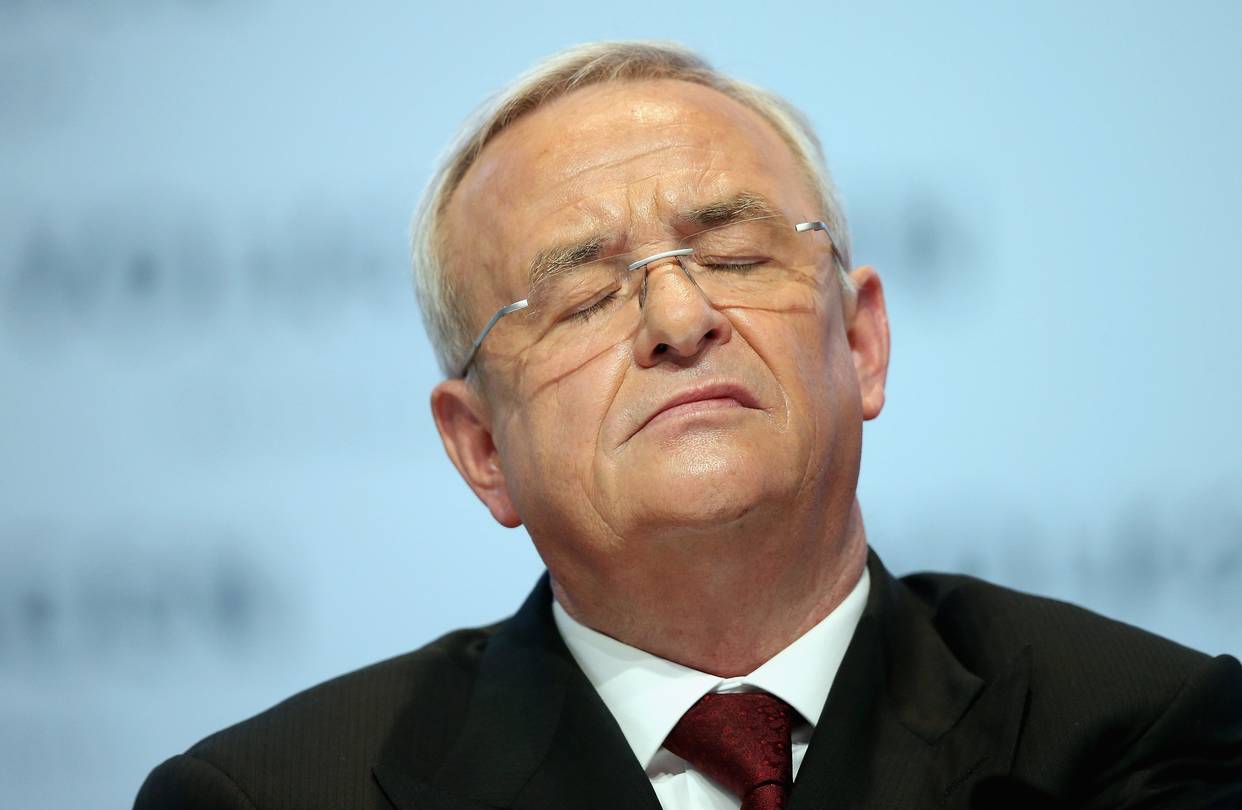
You remember Dieselgate? If not, it was the emissions scandal in 2015 when it emerged that Volkswagen, keen to sell more diesel cars in the US and doing so under the slogan “clean diesel”, had manipulated the software of several diesel engine types so that these produced less emissions only during test cycles, not in real life thereafter. It emerged that a total of 11 million cars with the same software had been sold in other regions as well, notably in Europe, and after a few months of management denying any knowledge of anything at all (What? Do we build cars??), the group’s chairman Martin Winterkorn had to resign.

Martin Winterkorn having a bad day at work…

Of course this was nowhere close to the first scandal in the car industry. To stay in modern times, just the year before, issues emerged around GM’s management after it had delayed a major recall regarding ignition switches which could lead to the engine turning off while driving. In 2009, Toyota scared the world as some of its cars accelerated unintentionally, which of course no one at management level knew anything about. And in 2016 and 2019, as if Dieselgate had never happened, Mitsubishi and Fiat Chrysler were caught violating emission regulations or lying about fuel consumption. The list goes on and on, and now it seems we’re there again. This time however, it’s the stock market darling that has been found with not one but both hands very deep in the battery p… sorry, cookie jar.

Toyotas accelerated by themselves, long before self-driving…

As Reuters uncovered a couple of weeks ago, since about 10 years, Tesla has been programming their cars to show rosy range projections and use these in their marketing. More precisely, the software was set to show a longer, unrealistic range until the battery was half depleted, and then to switch to a more realistic one. The result (and desired effect) was of course that customers bought cars believing they would have a longer range than they actually did. Many of them would then complain to Tesla and book an appointment to investigate the issue. In between the contact and the appointment however, Tesla would tell them they had performed a remote diagnostic on their car, that everything was fine with the battery, and that the appointment was therefore cancelled.

With time, the number of complaining customers apparently became so great so that Tesla created a separate team with the task of killing complaints by proceeding as described, something that saved Tesla around USD 1000 per cancelled appointment. Apparently it was common for the responsible team to sound xylophones and dance on their desks for every cancellation. Personally this reminds me of “The Wolf of Wall Street” which is an excellent movie, but perhaps not the culture the renewables’ hero company is meant to portray. In a test from April this year by the engineering organization SAE International, it was shown that most EV manufacturers lie about range, but none more so than Tesla, whose three tested cars in reality had a range that was on average 26% inferior to what was claimed. Ouch.

That’s 2.5 tonnes to push..

The range of an EV will vary with conditions, driving style and temperature, as will that of a combustion engine, however then mostly depending on driving style. This leads to the two important differences with EV’s we all know of: firstly, that low temperatures limit the EV range disproportionally (and this by the way also if the car is parked in the cold during for example your ski holiday, as a friend of mine discovered in the French Alps last year…). Secondly, the fact that charging, although slowly improving, is still not comparable to filling up at a petrol station, neither in speed, nor in availability. What Reuters uncovered however helps solve the mystery around Tesla’s superior range claims. As it turns out, it had little to do with more efficient battery integration as a consequence of internal battery production, and more with dirty business practices, not too far from Dieselgate. Who would have thought?

Staying on the electrification theme, one thing that has been noticeable in Europe this summer is an increased number of EV’s from Chinese brands. It seems these are making rapid progress in Europe, doubling their market share from 4 to 8% (as a group) of EV sales since 2021. The biggest brands include MG (yes, sorry to say it’s Chinese these days), BYD (short for Build Your Dreams, the second largest EV manufacturer globally after Tesla) and Lynk & Co (owned by Geely). My understanding is that of these, only BYD is present in the US, however building buses rather than selling cars. In Europe however, given none of these brands have any brand recognition, they sell on the only argument of being cheaper than Western EV’s. And now Western car executives are getting nervous, promising to offer cheaper their own, cheaper EV’s going forward.

This is what an MG looks like these days

This means that range numbers, real or invented, will not be improving in the coming years. You see, the costliest part of any EV is the massive, 400-600 kg battery pack. It’s also the most controversial, as I’ve illustrated on this blog with a focus on cobalt, but where you could say the same about many other materials as well. Many of the metals in current lithium-ion batteries will quickly become a scarce resource since we are nowhere near extracting the quantities required for the electrification of the world, especially since the green movement in their infinite wisdom do everything they can to stop any additional mining. This also leaves us at the mercy of great countries like China and Russia, where China already sits on the extraction of a lot of these resources, and something like 15 of the 18 major cobalt mines in the Congo. When metals get scarce, China will of course make sure their manufacturers are supplied first.

Lynk & Co, becoming increasingly frequent on European roads

This bodes well for Chinese EV manufacturers, however given it takes decades to build a brand, they will keep selling on being cheaper for the foreseeable future, meaning keeping battery costs down. The way to do that is to substitute metals where possible, especially cobalt (horray!), against cheaper alternatives. Substitutes are however not as performing as metals used so far, meaning less stability and less range. Assuming Western manufacturers get their hands on enough metals to be part of the race at all, and that they indeed wish to build cheaper cars, they will obviously have to do the same. This will not change until we have some kind of technological revolution in batteries, which looks to be well beyond 2030.

The moral of the story is thus that EV builders are no more honest than traditional car manufacturers (if anyone really thought so), but also that Chinese EV’s will tend to make EV’s globally even less competitive. That they contribute nothing whatsoever to a cleaner planet is well known to those of you reading this blog regularly – otherwise please see here, here and here. In Germany, the MG ZS or Lynk pictured above are yours for EUR 35.000-40.000. They will take you something like 300 km, best case. The same money will buy you a VW Tiguan, equal in size, better in quality, with a modern, low emission petrol engine taking you twice as far and then needing five minutes to fill up. It’s also built in the West, not by underpaid workers without rights in a Communist dictatorship. Seems like a sensible choice to me!

Bentley Continental GT – now or never!

When I bought my 2015 Range Rover a couple of years ago (for which I’m sad to say, I’m not even close to finding a satisfactory replacement, but thanks to those of you who have helped me trying!), there were a lot of people telling me how it was no doubt the beginning of the end, provided long assessments of everything that would break and how the car would drive me in financial ruin. Of course most of these had never actually owned a Range but of course they knew anyway, especially since the car had around 100.000 km on the clock.

As mentioned previously, there were a number of factors that made me confident with the purchase, most importantly the selling garage’s excellent reputation, the fact that they were willing to extend a two-year full warranty, and that I knew that the car had mostly been used for longer distances. Cars are made for driving, not being parked in a garage, so in many instances a car with more km’s can be preferable to one with less. To that came the fact that the car was extremely well maintained and that the Land Rover V8 is not only a very solid engine that is just about run in at 100.000 km’s, but also quite an economical one. I’m currently averaging at around 12l / 100 km, roughly 8l less than what the self-proclaimed experts told me would be the case. This is of course mostly long distance, but that’s what I bought the car for.

Best car I ever had – and it hasn’t ruined me in any way!

Of course I could still have had issues and no, Land Rover certainly doesn’t have the best reputation for reliability. Maybe I’ve just been lucky, just like I was 10 years ago when I owned an Alfa 166 a few years without a single issue. The fact of the matter is however that now, two years after I bought the Range, I’ve forgotten where I put the warranty papers as not a single thing has gone wrong. The lesson there is certainly not that I’m never wrong, but rather that here as well as in other areas, you shouldn’t believe everything you hear, but rather do your own research and form your own opinion.

Against that background, let’s look at a similar case to my Range but one that no doubt will cause severe cardiac issues for every naysayer. Because if the Range would drive one to financial ruin, this machine would probably do so with the rest of your family and neighbors as well. It’s a car that was actually suggested as replacement to me as alternative to the Range, but that unfortunately doesn’t really fit the bill. Because in terms of bang for the buck, there can’t be much that beats an early version of the by now classic Bentley Continental GT.

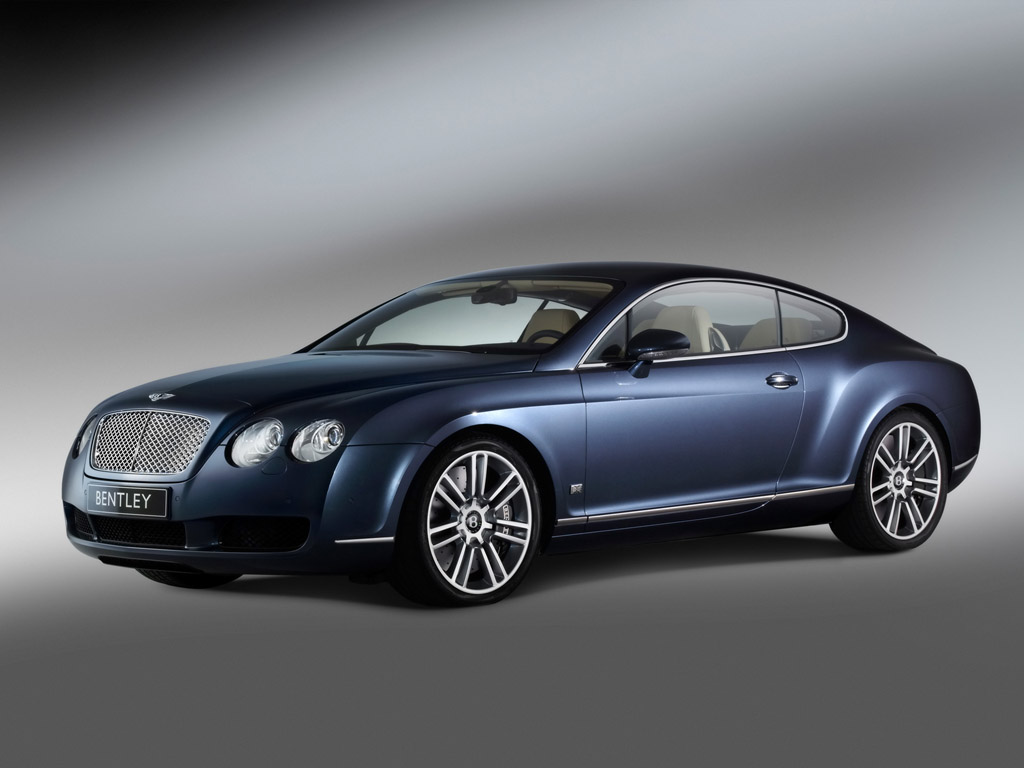
The first series launched in 2003 – slightly heavy, but an elegant design

11 years ago, in the early days of this blog when it was still in Swedish, my co-blogger Sven drove a Continental GT after its first face-lift (more on that below), and provided a rather sober assessment of the car not being for him (he’s a fan of Maranello machines) and also not really being worth the money as new. That I won’t argue with, but now 11 years have passed since the face-lift and 20 since the new Continental GT was premiered, so that second point has certainly changed. This makes it worth revisiting the case, also since I had the opportunity to drive an early Continental GT last week.

For memory, Volkswagen bought Bentley in 1998 and five years later, launched the Continental GT as the first Bentley ever to be produced not by hand by elderly men in coats up in Crewe, but rather by modern production techniques to a budget. Those last words are important as they certainly contributed to putting quite a few Audi parts in the car as part of the process, which made the true enthusiasts reject the Continental right away as some kind of pimped Audi not worthy of the brand.

The permanent 4WD ensures as much fun on snow as on road!

I think a more sober assessment makes it pretty clear that without the VW take-over and the launch of the Continental GT, the Bentley brand would be long gone. Instead there are today 4000 car builders working in Crewe, compared to around 1500 at the time of the take-over. It’s also worth noting that with every new series of the Continental, it has become less and less Audi – at least in the visible parts. Here we’ll focus on the two first series, i.e. not including the current one launched in 2018, as these cars are still quite pricey.

To me, the Contintental has always been a good-looking and timeless creation. Seen from the side it’s a testament to many classic Bentleys, and the front is just about aggressive enough. Its least good angle is certainly the rear which lacks a bit of finesse, something that didn’t really change until the current series. The first version was produced until 2011 and was only available with the W12 engine that VW had previously featured in the Phaeton (another car that can be had for not much these days but that contrary to the Bentley, there is no reason to get…). It put out 560 hp with much, but not all the refinement of a more traditional V12.

Yes, there are some Audi switches, but this is still a beautiful interior!

All cars had four-wheel drive and were also available as convertible, and the Speed that appeared in 2007 along with the Supersports from 2009 deserve a special mention. The former saw power increased to 608 hp and rode lower on larger wheels, the latter had performance pushed even further to 630 hp, which along with a 110 kg weight reduction made it the fastest Bentley ever at the time, with a top speed of 330 km/h.

The Series II, launched in 2012, introduced the double-turbo, four-liter V8 as alternative to the W12. At 500 hp it was less powerful but the car was also lighter and still capable of a top speed of over 300 km/h. Cosmetic changes on the outside were limited but the inside showed an improved cabin less reminiscent of Ingolstadt. Above all though, the ride, handling and steering were clearly improved over the first version. As with the first series, various special editions including Speed and Supersports were launched through the years.

The Supersports is a bit more bad boy, notably sitting lower on bigger wheels

I drove a W12 from 2008 this week and driving-wise, I can only concur with what my friend Sven observed 11 years ago, which basically boils down to the fact that you can’t hide 2.3 tons. That means the Continental in all versions, possibly with the exception of the Supersports, is far more a GT than a true sports car. That’s however something it does very well. Comfort is opulent, the ride is sublime, isolation from the outer world almost total.

Of course anything in terms of infotainment feels very old, but you don’t really think about it and if you do, there are after-market options for most things. Leather and wood however both age pretty well, and that’s what dominates the interior. This is a car that will transport two in utter comfort on longer journeys, be it in summer or winter, and that will allow you to stretch your legs on more or less frequent fuel stops, depending on which engine you opt for…

The rear is the least flattering angle of the first two series

An early, well-maintained first series Continental GT with decent mileage will today be yours from EUR 25-30.000 in Europe, a second series is around twice that, whether with the V8 or the W12. For the first series, that means around 10-20% of the car’s price as new. Of course a Continental in any version, but especially as W12, will never be a cheap car to run, and buying one should always come with a budget for running costs and unforseen repairs. If you buy a first series and set EUR 10-20.000 aside for unforseen repairs however, you will sleep well at night knowing you’ll be able to cover most things that can come up.

The main reason that a Continental GT is an easier purchase than with the Ferraris and Porsches we love, is that most of these have previously been owned by elderly people with money who don’t know what a track day is, read the manual from the first to the last page, never rev the car beyond 2000 rpm and follow the service intervals meticulously. And it that wasn’t enough, I would also think that the fact that Audi bought Bentley five years before the Continental was launched bodes pretty well. This certainly made the modern Continental more reliable than its predecessor, that cost EUR 120.000 more as new, 12 years earlier!

The original Continental was big, heavy, handbuilt and expensive!

Cars like the Continental and engines like the W12, or even the double-turbo V8, belong to the past as we all know, and will never be built again. It’s very difficult to know which way the car world will evolve in the coming years but at this price point, if you’re into big, opulent GT cars, then a Continental of the first or second series is a wonderful proposition. It may come at a bargain price but will always look like a million bucks, but if you do your research carefully, chances are it doesn’t require you to be a millionaire. All in all, that’s not a bad proposition, and this is clearly a case of now or never!

Classic races – the 24 hours of Le Mans!

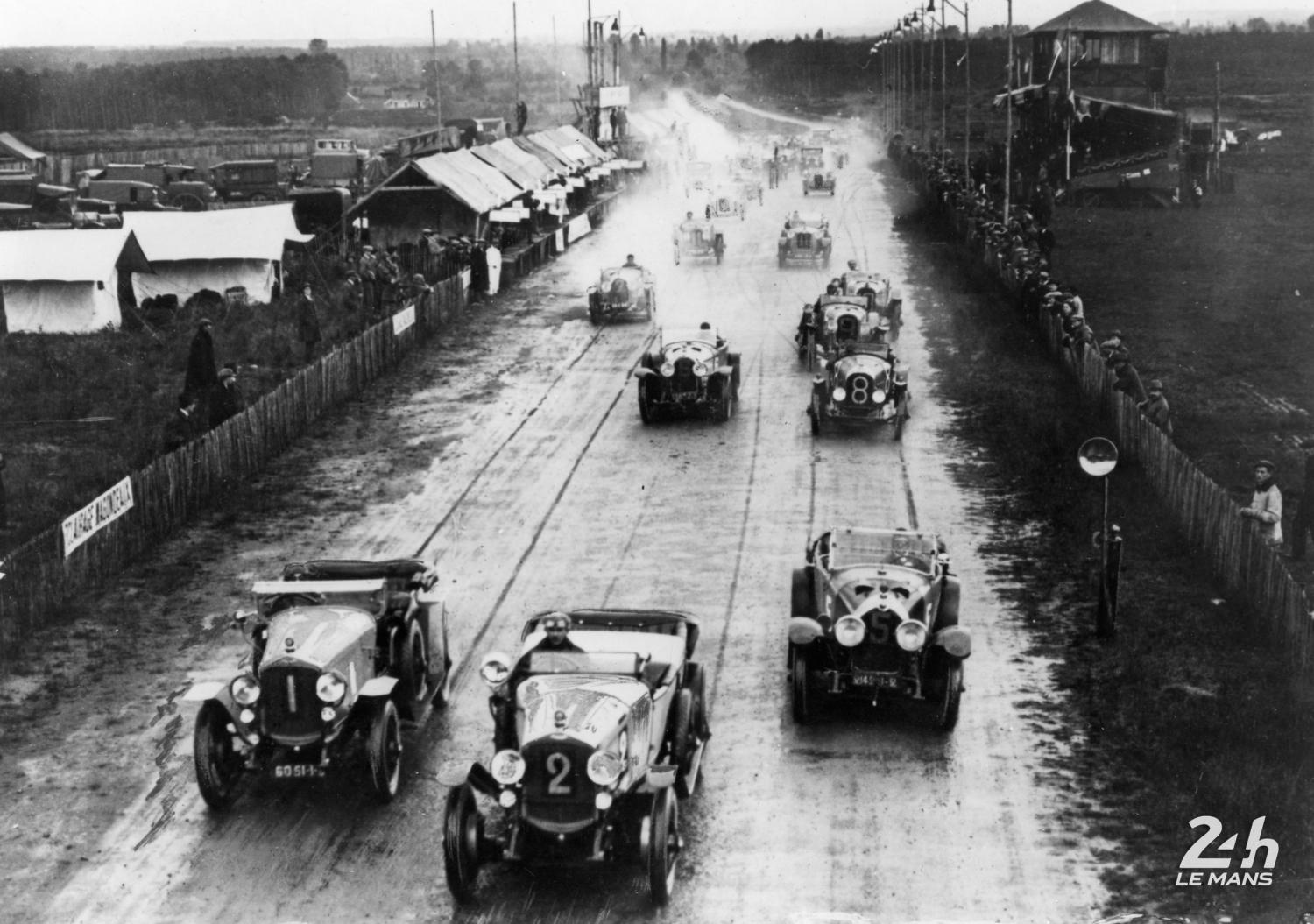
Le Mans is a quiet, French town of about 150.000 inhabitants in the western part of the country. It has a few churches and monuments and is, I’m sure, a pleasant place to live, however one that for anyone without connection to it would go unnoticed. If it weren’t for one thing that is, namely one of the most famous car races in the world: the 24 hours of Le Mans. Every year, the event engages pretty much every single family in the town, now as well as in the past, in various volunteering roles at and around the race. The whole region around Le Mans thus breathes the famous 24 hours, to the extent you can’t imagine the town without the race.

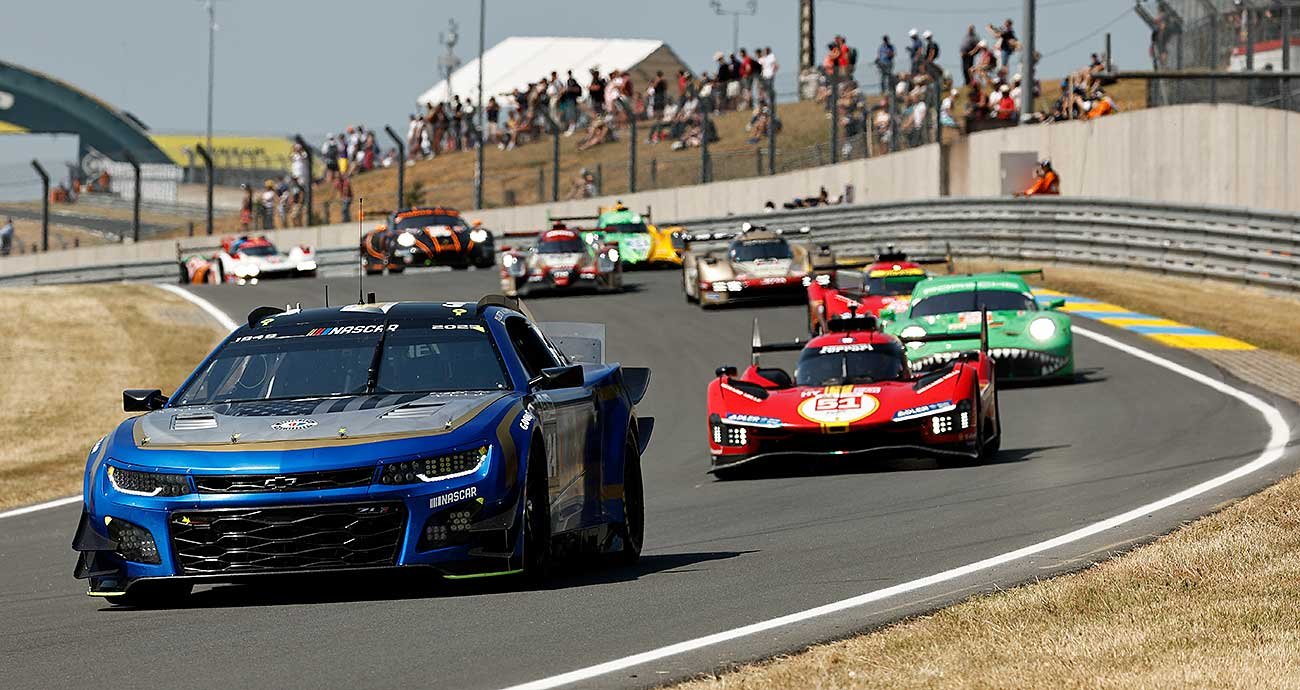
A few weeks ago in June the 24 hours celebrated its 100 years of existence, a time over which the race has seen not only typical racing bravery but also several evolutions in terms of brands, car types and even different fuels that have won the race. Famous drivers have proven their talent in Le Mans, and the race has figured in several movies. This week therefore, let’s look closer at the race that for 100 years has been, and today still is, one of the leading car races of the world!

Due to the different classes, there’s a great mix of cars on the track at the same time!

Everything started in the early 1920’s when the French gentlemen Charles Faroux and Georges Durand, the latter president of the Automobile Club de l’Est (ACO), decided to organize a new car race in the region in the form of a “confrontation” between the leading French car makers of the time. This would constitute a rebirth of racing after the first world war, but also after a number of other races and, well, pretty bad accidents before it. The ACO remains the organizer until this day, however the confrontation initially imagined is now of course no different from other races, if it weren’t for the distance and the format, i.e. the 24 hours of racing. The initial idea in 1923 not to let the winner count as such until he had won the race again the subsequent year was however dropped. Even for the French with their penchant for the slightly complicated, this was apparently a bit too much…

The early days…

The 24 hours is driven on a 17 km (11-mile) track called Circuit de la Sarthe, a combination of normal roads and racing sections that in spite of going through a number of changes through the years, has remained largely the same since 1923. It’s thus quite a long track and one where more or less every curve is known to enthusiasts. Landmarks include the Dunlop corner and footbridge, allowing spectators to cross above the track at the height of the curve, the Tertre Rouge curve, named after the red soil where it’s located and where many races have been lost, as well as the famous Mulsanne straight, 5.5 km (3.5 mile) long where in 1988, a speed record of 407 km/h was set, leading to a couple of chicanes being added to the track to make sure that record stands forever…

The famous Circuit de la Sarthe, close to Le Mans

What is special about the race is of course that it’s run over 24 hours and won by the team which in that time covers the longest distance. Nowadays with modern cars, this leads to winning teams covering more than 5000 kms during the race, far longer than most other somehow comparable events, such as the Indy 500. Above all though, and especially in earlier days, there’s quite a bit of tactic involved in correctly weighing outright speed with the cars’ durability, the longevity of brakes and tires, and of course also drivers, who tend to switch at least every two hours.

If the race initially was a confrontation between different car brands, those days are long passed and now it’s of course dedicated race cars that compete in different classes. It has however remained a largely European affair both in terms of drivers and teams, without forgetting however the Ford GT40 that counts among the most successful cars historically. Some others include the 1970 Porsche 917, driven in 1969 by a certain Ferdinand Piëch and also featured in the film “Le Mans” with Steve McQueen from 1971, the Audi R18 from 2013 which with different drive trains from diesel to hybrid became a winner, and also the 1995 McLaren F1 GTR, considered McLaren’s best race car ever, also since it was fundamentally a street car. The list could of course be made much, much longer.

The 917 was Porsche’s first Le Mans winner – a true legend!

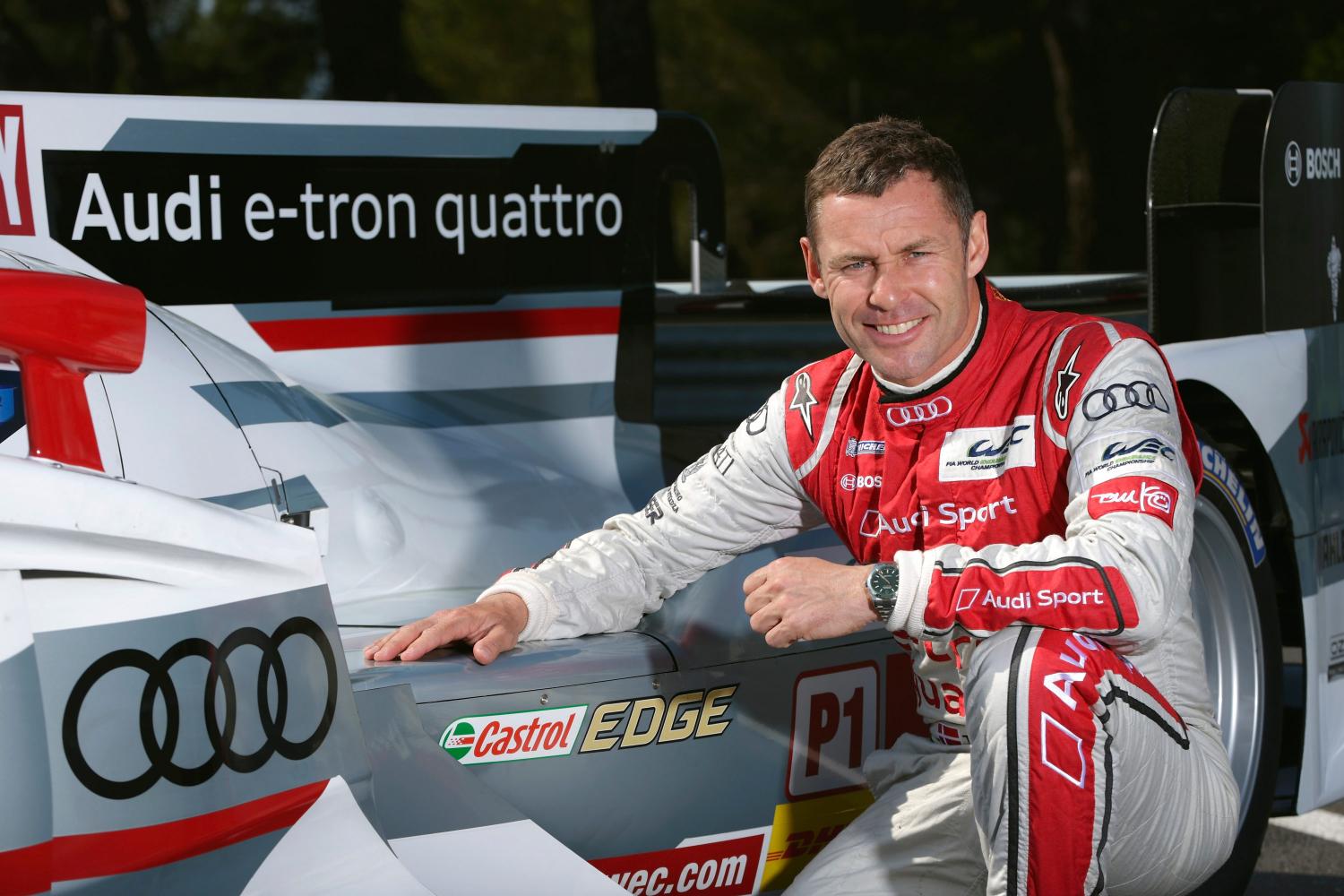
In terms of the brave men driving those and other cars, these come in teams as no one would manage to drive the full 24 hours on his own. These days teams typically consist of three drivers and of these, no one has been more successful than Tom Kristensen, referred to as “Mr. Le Mans”. The very fast Dane won his first race in 1997 and went on to win another eight races until 2013. A certain Jacky Ickx won six races in the 60’s and 70’s while racing in F1 at the same time. He shared three of those victories with team mate Derek Bell, who appeared in no less than 26 races until 1996. Again the list could be made much longer, but in general, accumulating multiple victories wasn’t possible in the early years, such were the strains both on machines and drivers.

As for the races, it’s of course hard to do them justice in writing, given they run over 24 hours in day- and night time and all kinds of conditions, quite often including heavy rain. To name at least a few however, 1933 counts as the first tightly fought Le Mans race. Tazio Nuvolari and his team mate Raymond Sommer were set to win on their Alfa Romeo 8C when, shortly before the end, their fuel tank started leaking. Having repaired the leak with chewing gum (!), the caught up with he two other Alfas that had passed them and won by a margin of 400 meters – which was however plenty compared to Jacky Ickx’s margin of 120 metres in 1969!

Jacky Ickx in 1969. The running start was skipped a few years later.

In 1988, Jaguar scored its first Le Mans victory in 30 years, however with only a two-minute margin to Porsche, the dominant team at the time, sounding far more than it really was. As became known after the race, the last Jaguar driver Raul Boesel noticed a strange sound from the gearbox towards the end and decided to leave the car in fourth gear for the remainder of the race. He also turned off the radio, not really feeling like discussing his tactic with the team. He finally held off the chasing Porsche but had the race gone on for five more minutes, the roles may well have been reversed.

Le Mans is however noteworthy as one of very few, if not the only race format where diesel cars have been successful. This is of course linked to their fuel economy, potentially leading to fewer stops. Both Audi and Peugeot have won the race with diesel engines, and their struggle in 2008 counts as the greatest Le Mans race ever. Audi’s highly successful R10 TDI was getting old by then, and the more modern Peugeot 908 HDi was the favorite. However the Audi was better in the rain that came in the middle of the night, expected by Audi but not by Peugeot. Tom Kristensen, Allan McNish and Rinaldo Capello on the Audi lost the lead again when it dried up, but a short rain spell towards the end where Peugeot chose to leave their car on slicks finally made the difference, allowing “Mr. Le Mans” Kristensen to score on of his nine wins.

Mr. Le Mans himself: Tom Kristensen

100 years later, the 24 Hours of Le Mans is thus alive and well and will hopefully remain so for many years to come. Teams and drivers will vary, as will fuel types. And if you happen to be in western France in June and feel like doing an all-nighter on a racing track, there’s certainly no better place to go than Le Mans!

When the going gets (really) tough!

Are you a fan of classic, serious all-terrain vehicles like the Land Rover Defender or the Mercedes G-Wagon? Are you of the opinion that everything was better in the old days, that the new Defender is far too comfortable, and that the G-Wagon has become a status symbol for people with no interest whatsoever in its off-road capabilities? In both cases (and especially the latter) you have my sympathy, and I’m therefore very happy to say that this week, we’ll lay your worries to rest by talking about not only a new car, but actually a new brand: Ineos and its new Grenadier. And before going any further, let me thank reader John who made me aware of this new machine!

You won’t see too many of these on the high street!

In the unlikely event that Ineos rings a bell, it’s most probably not as a car company but rather as a chemical business, or indeed a road cycling team. It was founded by majority owner and long-term Defender fan Sir John Ratcliffe who may well have been one of the least happy people when the old Defender had to go and was to be replaced with, in his view, a chick city SUV.

When it became clear that there wouldn’t be a “real” successor to the Defender and after Jaguar Land Rover had refused to sell the rights to the original Defender to Ratcliffe, in 2016 he instead approached long-term Ineos employee Dirk Heilmann, today CEO of Ineos’ car business, telling him he wanted to create a true Defender successor. Seven years later I think we can safely conclude that Ratcliffe and Heilmann succeeded, making the Grenadier the closest thing to what a more offroad-focused Defender successor would have looked like!

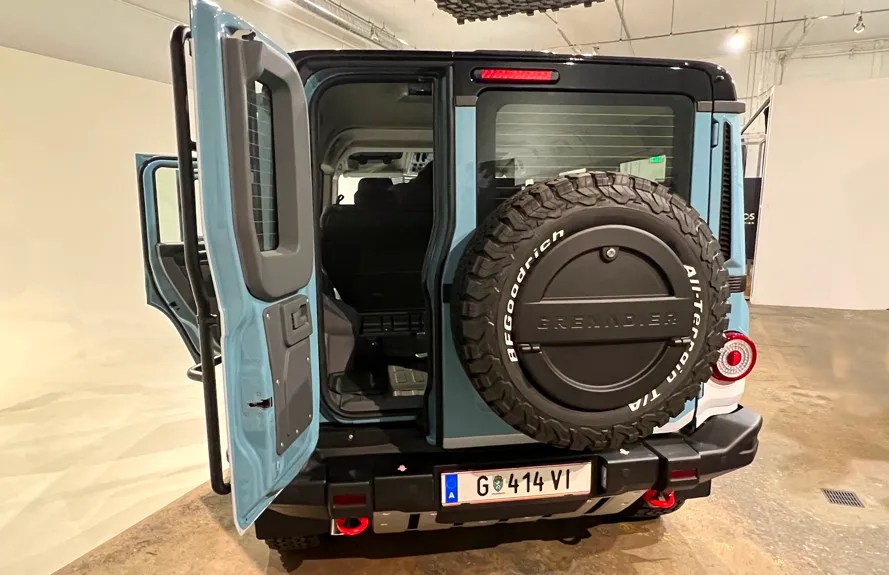
Unfortunately, you need to open the small door also to open the larger one….

So what is then the Grenadier, built since 2022 in France in the old Smart factory in Hambach, close to the German border? Starting on the outside, there is no doubt that what you’re looking at is a Defender at heart, however with subtle differences and improvements. An example are the lateral roof windows that have been replaced with bars to which various pieces of kit can be attached. An even better one is the trunk or rather rear luggage door that has been split into a smaller and a larger part, so that for small items you only need to open the smaller door. Otherwise the Grenadier comes in a few different body styles and trim levels, but what they all have in common is a body with short overhangs, sharp angles and large windows. It’s practical, provides a great overview of the car, and has a strong resemblance to the you-know-what.

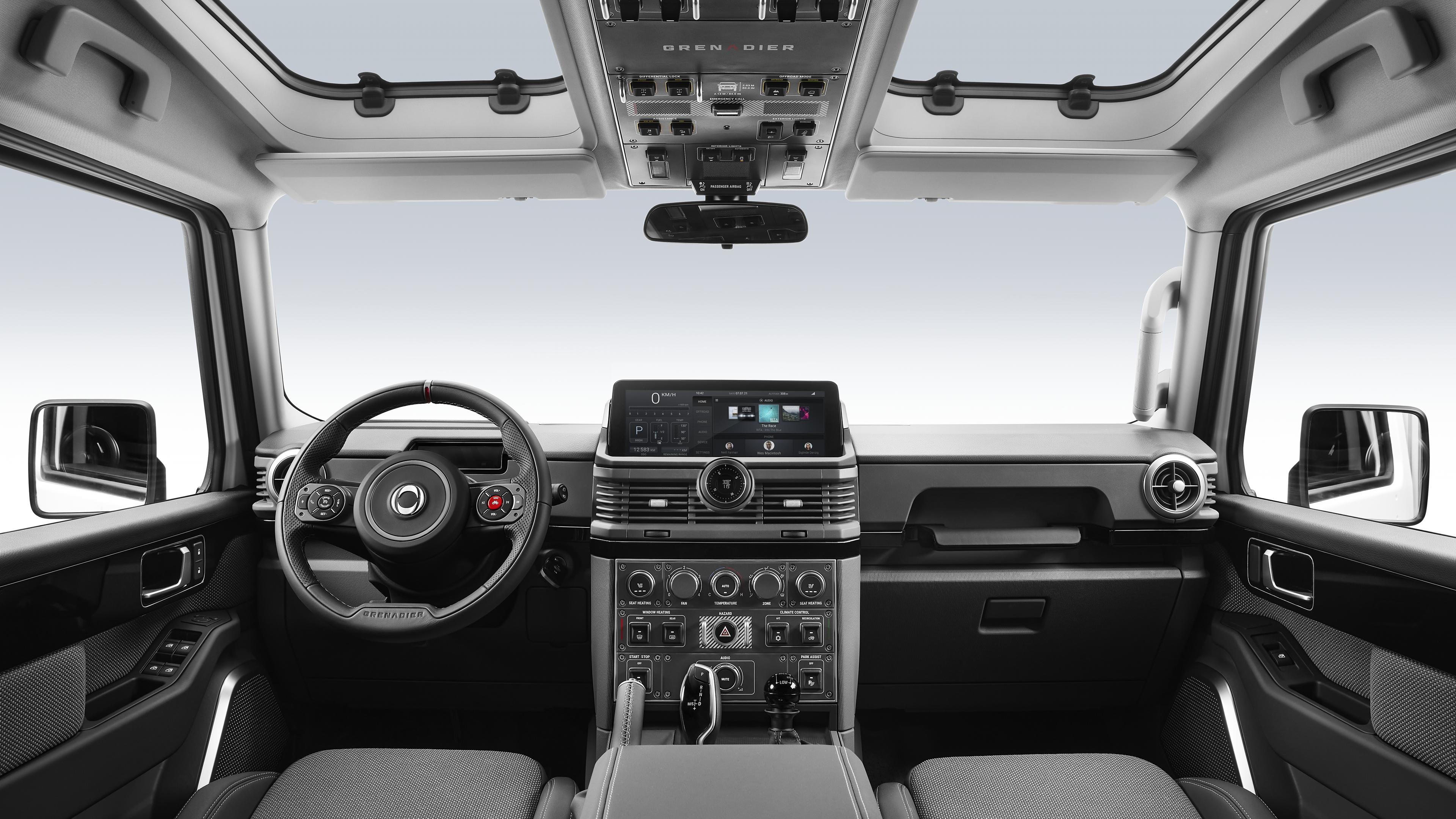
The utilitarian aspect is carried over to the inside which is dominated by a very large, center console. Apparently Ineos have looked at trucks and airplanes when designing the different buttons and switches, and consequently created an interior without shiny surfaces to touch, preferring controls of a size that allows you to operate them with your gloves on. The infotainment screen above the center console is actually a touchscreen, but one that can also be operated by a control in the middle. The unit allows you to save off-road maps on it for when you leave the beaten path, but also offers practicalities like Android Auto and Apple Car Play. A bit strange is of course the absence of a gauge cluster, and also the switches next to your head, which may be cool but are probably quite difficult to read off when driving…

You can have leather seats – if you must…

All Grenadiers will have one of two six-cylinder BMW engines, either a diesel with 249 hp or a petrol with 285 hp. These are coupled to an eight-speed auto box from ZF and permanent all-wheel drive with as standard a central differential. Helping ensure the Grenadier is used as intended is also the fact that both axels are rigid, meaning on-road comfort risks being rather limited. The Italian supplier Carraro is otherwise specialized in axels for agricultural machines and trucks, which can clearly be seen on the size of that central differential…. You have been warned! Both engines will need to work hard though as the Grenadier weighs in excess of 2800 kg, some 600 kg more than a new Defender 110.

The launch of the Grenadier was delayed by Covid, having initially been planned for 2021. However, the company started taking pre-orders last that year and now, it has established a network of sale points, or rather agents, in different European countries and the US. The process is for clients to order their Grenadier directly over the website, and then pick it up at an agent who also acts as service point. And even if the price has increased from that initially planned and advertised, the car, given how capable it is, remains quite a bargain. In Europe a well-equipped Grenadier will come to EUR 90-100.000. By coincidence, that’s more or less aligned with the new Defender, so at least that have that in common…

It’s not everyday that a new car brand is launched and certainly not one that builds true terrain vehicles rather than yet another EV. Somehow however, compared to some others, there doesn’t seem to be any doubt that Ineos will succeed. Ratcliffe is a dedicated man able to secure the financing, but he has also surrounded himself with a team of experienced car people, making the whole setup look very promising.

That said, recent tests indicate that the Grenadier is by no means a perfect car. To name a few things to be aware of before you sign on the dotted line, the steering is very much set up for offroad use, meaning there’s close to no self-centering on road. I’ve already meantioned the weight, which obviously means it’s quite thirsty and generally cumbersome, and it also has a terrible turning circle of around 13.5 metres, 2 metres more than the Defeinder. Differentials are manual, not electronic like in modern terrain cars, adding to the complication. This is explained by Ineos’s wish to create an analogue car – but does it really make sense to ignore modern technology when it improves things? Buyers will need to be the judges of that.

The plan is to produce 40-50.000 cars per year, which given what we know so far seems reasonable, and should they succeed, you can count on further body styles and perhaps also engine options being added to the range. There’s thus little doubt that the Grenadier is the real thing when the going gets really tough. The question is perhaps if it’s also the real thing on the road… Expect to see fewer around than that shiny G-Wagon or the new Defender, but as a Grenadier owner, every time you cross one of those, both of you will know who’s the real king!

Street finds: the Jaguar F-Type!

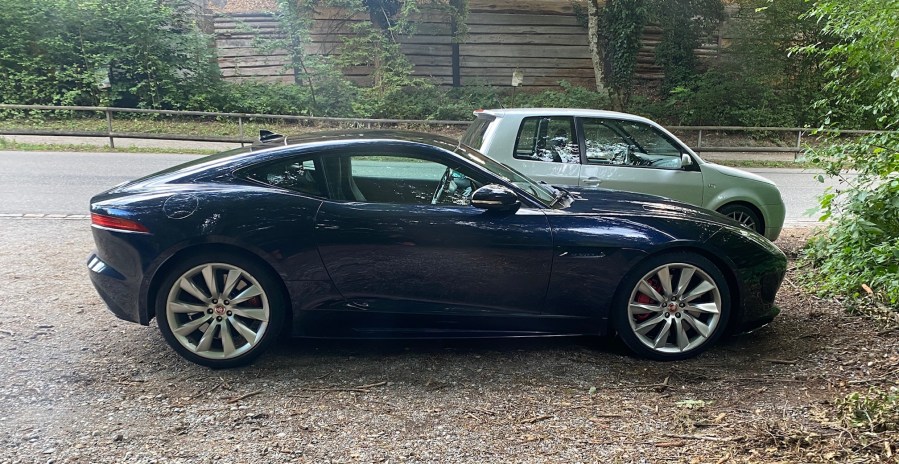
The first street find in a while is actually more a forest find, pictured above next to my son’s Lupo GTI that I used earlier this week for the drive to the local exercise trail. It was when I came back from my run that I saw the F-Type from the angle depicted. Looking at it from the side, I was struck by how nicely the lines flow, something I hadn’t noticed before (my temporary lack of oxygene may have contributed to the revelation moment…). An F-Type isn’t that rare but it’s also not something you see everyday, and given it has its 10-year anniversary this year, I thought we’d have a closer look at the car that was Jaguar’s first two-seater in 50 years!

When the F-type was presented in 2013, it was about 30 years after Jaguar had recognized the need for a replacement for the quickly aging, and by then too big XJ-S, that I wrote about three years ago. Two prototypes were thus developed already in the early 80’s, but then Jaguar was taken over by Ford a few years later, meaning plans and priorities changed. The prototypes instead became the Aston Martin DB9 and Jaguar XK8, which however, at least in theory, are four-seaters. Various other events, notably Jaguar’s decision to enter Formula 1, meant that they F-Type wasn’t shown to the world until 2013, and was then presented as the “spiritual successor” to the legendary E-Type.

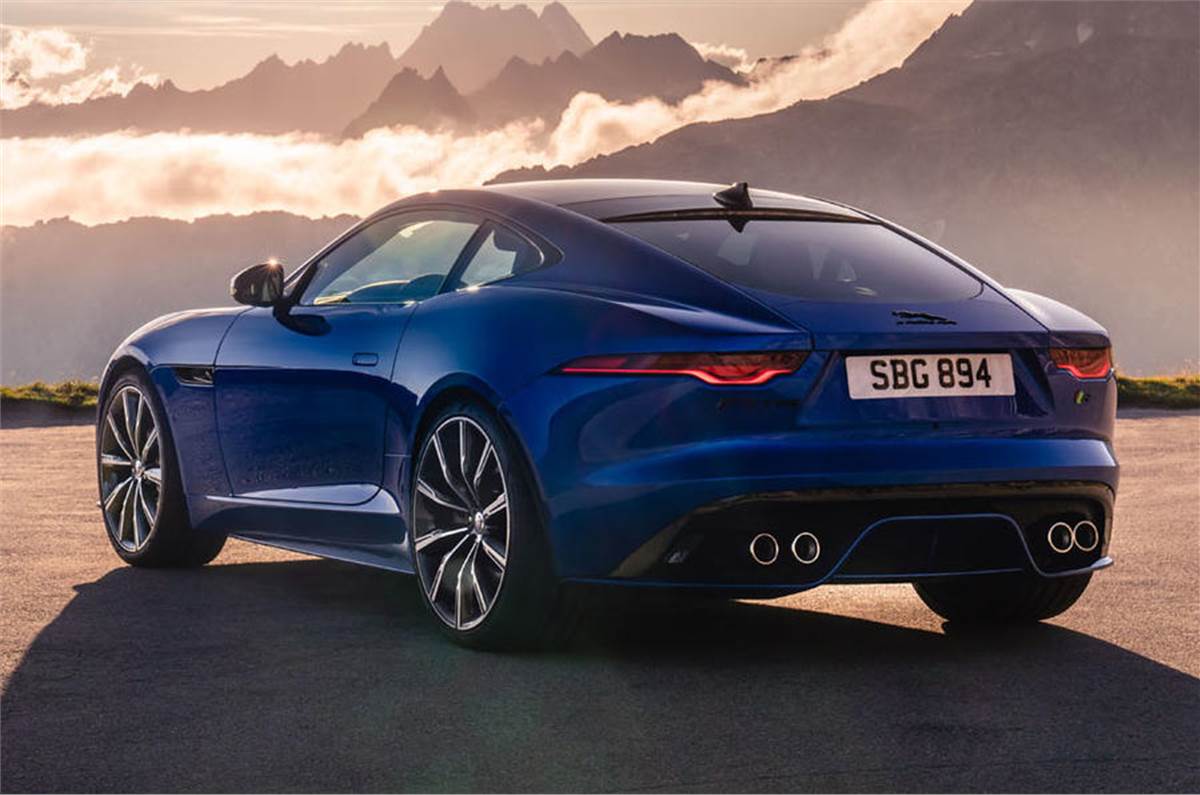
Nice proportions with a touch of E-Type Coupé seen from the rear

Built since 10 years by now, it’s clear that apart from having only two seats, there’s not much the E- and F-types have in common, although the rear of the coupé does bear a certain resemblance to its predecessor. To me the coupé is also the one to go for since it looks far better than the convertible. Designer Ian Callum produced a very well-proportioned and good-looking sports car seen from the side and the rear, with the front being a bit too anonymous. The convertible was launched a few months ahead of the coupé in 2013, and both versions received a face lift in 2020 that notably improves the front.

The face lift version from 2020 has a more aggressive front

The inside is well in line with the F-type’s natural role as a GT car, and anyone familiar with Land Rover and Jaguar interiors from this period will quickly find their mark. Engine-wise, these days the range starts with a 2-litre, 4-cylinder engine with 300 hp, in line with the general trend of less somehow being more. When the car was launched though, it was with two versions of a 3-litre, straight six or alternatively, with the well-known Jaguar/Land Rover 5-litre V8. The V6 versions could be had with a six speed manual rather than the more common 8-speed automatic box, and the stronger version was also available with all-wheel, rather than rear-wheel drive.

At 340 and 380 hp, the strongest six-cylinder was 115 horses down on the V8 (at 495 hp) at launch. It was also slightly, but only sightly less loud. Because if there’s one thing the F-type has in common with the E-type after all, it’s the very loud engine, or rather exhaust sound. With the V8 under the hood, forget all about sneaking away early in the morning without waking up the neighbors…

Not much room, plenty of sound!

This is obviously the same engine I have in my Range, where it’s however so discreet that you sometimes wish they would have allowed for slightly more exhaust noise to come through. The F-Type is in other words a nice testament to the power of a good exhaust! If however nothing’s too loud for you, then be aware there’s also an SVR version of the F-Type, adding another 80 hp to a total of 575 hp and producing even better cornering speeds. In any case, power and sound will be plentiful!

Even if the F-type won’t reach the legendary status of the E-type, the good-looking and driving-wise, well-balanced and well behaving two-seater is quite popular, with second-hand values holding up pretty well. That it appeals to other buyers than those wanting a complement to the family Discovery was clearly shown a few years after the launch, at which point 75% of all F-Type buyers came from other car brands.

The roadster doesn’t look bad, but less special than the coupé

Well-maintained coupés and convertibles trade between EUR 35-50.000 in Europe depending on mileage, the face-lift version will start at about 10.000 more for the 300 hp, two-litre version. If you’re more into nice weekend cruises than track days and can’t withstand a roaring engine, the F-type is probably a good alternative – and one that requires for less maintenance than its “spiritual predecessor”!

The latest from the car world!

It’s been a while since we did a roundup of news from the car world, which isn’t because there hasn’t been any, on the contrary, rather because there have been other things to write about. There’s of course a lot happening that you could theoretically write about all the time, but a few more specific things happened this week, making me think it’s high time to provide you with a very arbitrary selection of the most important recent news from all our favourite pasttime. Let’s dig in!

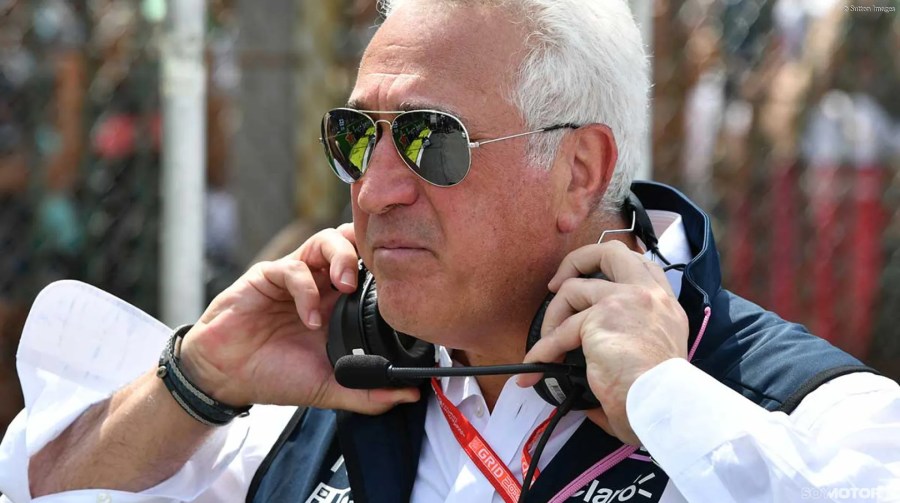
To start of on a positive note, Aston Martin‘s owner Lawrence Stroll, pictured above in his usual, low-key style, apparently let the Aston team know in no uncertain words that the new DB12, expected next year, was a tad too expensive to feature a 10-year old infotainment system from Mercedes. This was of course the case both in the DB11 and in the DBX, as I wrote about back in Oct -21. I don’t think Lawrence reads this blog but if he would, then there’s a small chance both the DB11 and DBX are, by any objective measure.

No, it’s not a DB11, it’s the new DB12. Why change a winning look?

Given Aston sources not only the outdated infotainment unit but also the even more important engine from Mercedes/AMG, Lawrence’s hope was probably to get his hands on the MBUX system, but that didn’t happen. Instead therefore, Aston have developed their own system, which according to the first test drives is a pretty laggy thing, quite a bit off the MBUX or BMW’s latest unit. So getting better, but still not there. The DB12 does look very promising though, more on that next year. And for those not interested in infotainment but rather in driving, expect quickly deteriorating second-hand prices on the DB11!

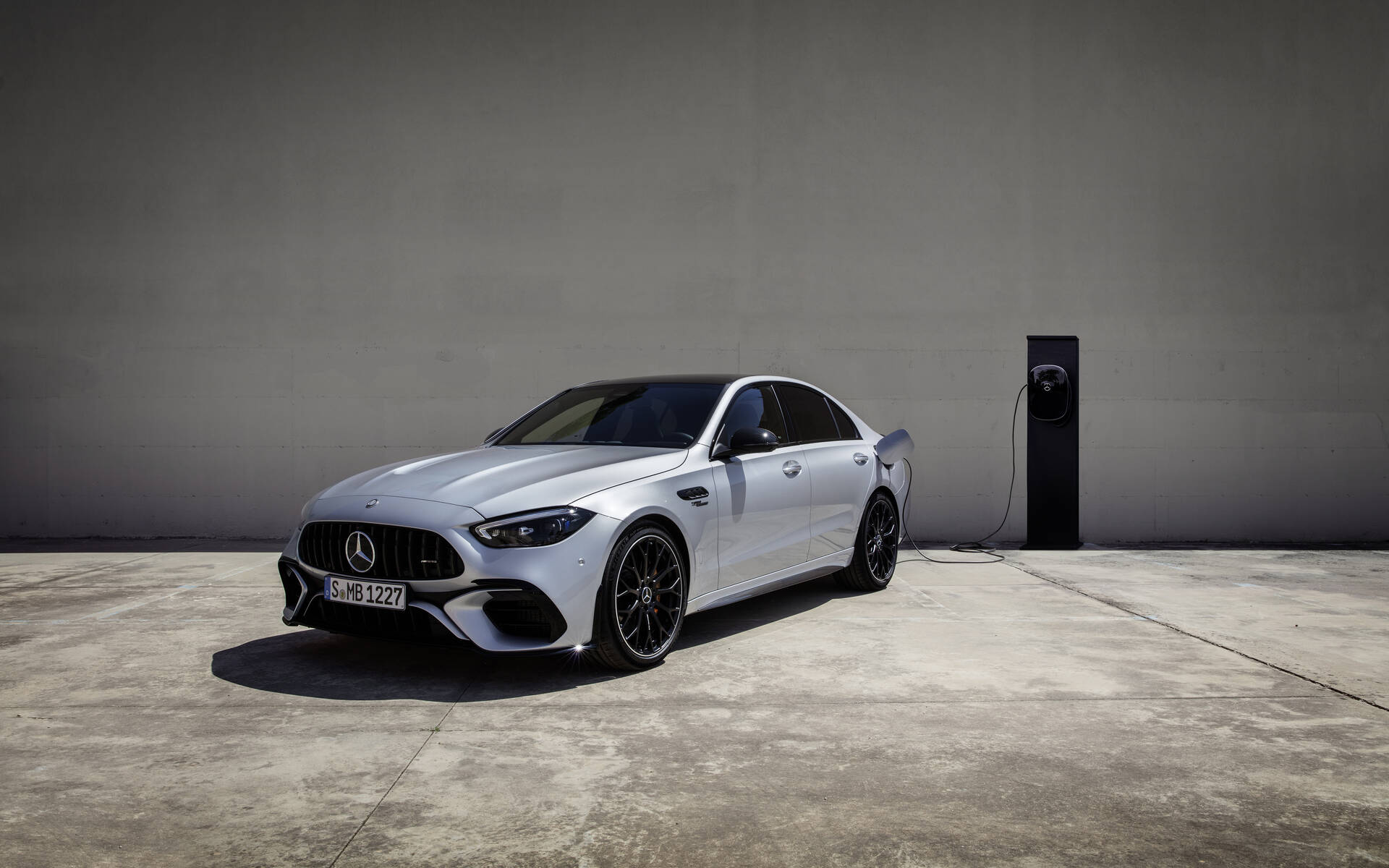
You may have seen that the DB12 will no longer feature a V12, in spite of its name, but only an AMG V8. That’s however plenty compared to what Mercedes have put in their new E63. This is a theme I’m sensitive about, having owned, and on a day where the starts really didn’t align, sold, an E63 2014 with the fantastic, bi-turbo V8. The E63’s before and after have until now all had V8’s, but the new one doesn’t. Neither does it have a V6. It has precisely four cylinders, combined to an electric engine. One of the most legendary four-door power cars out there has become a four-cylinder hybrid…

Find one mistake with this picture…

That could theoretically have been fine even if it’s a lot to take in. Some hybrids work great though, such as the V60 Polestar that I drove the other week. It didn’t convince me but it wasn’t the fault of the hybrid solution. Trouble is, again according to early reports, the rest of the new E63 isn’t that great either, especially the chassis, which obviously makes the whole thing totally unacceptable. No one, I repeat no one, ever asked for a hybrid E63, so why on earth did they build it? If Mercedes finds that eight cylinders doesn’t go down well with the electrification strategy they’ve chosen, then just don’t build any more E63’s. I wouldn’t be surprised if demand for previous V8 ones picks up though!

Otherwise the world’s electrification journey rolls on, with Tesla setting new records in sales numbers, shipping close to half a million cars in the first quarter. The stock is up more than 100% so far this year, so great for shareholders – so far. However, Tesla must also have set a new record in terms of various types of discounts both in the US and elsewhere so as always with Elon’s companies, how much they’re actually earning is rather difficult to figure out. That goes for Rivian as well by the way. The company that didn’t even build 50.000 cars last year still spent roughly as much money as Tesla in the first quarter, namely around USD 6.5bn. They claim bottle necks in production are now behind them and that’d better be the case if Rivian wants to survive in the far less favourable financing environment we’re now in. The target for this year is 50.000 cars, and we’ll see if they get there.

Rivian isn’t out of the woods yet…

Interestingly, Toyota continues to refuse getting in line with everyone else, instead digging in to their hybrid technology. That earns them lots of bashing from the green lobby who are as bad as doing the maths here as when it comes to counting emissions from battery production. Toyota on the other hand remain as calm as Mount Fuji, simply stating that in total, hybrids achieve greater emission reductions than trying to supply the whole world with EV’s does. I haven’t verified their numbers but my intuition, combined with the fact that they are after all not only the world’s second largest company, but also Japanese, tells me they’re right.

Toyota also came out with another piece of news recently, namely that they expect to put solid state batteries into production in five years. Don’t focus too closely on that number since they’ve promised that before, but clearly, the solid state technology is making progress. In practical numbers in the case of Toyota, this means an indicative range of 1200 km for much less battery weight and only 10 minutes of charging. As discussed back in January 2021, solid state batteries would be a true revolution, but we’ll see when we get there. When I wrote that piece I said three-four years, which obviously was too optimistic. Sometime around 2030 is perhaps a realistic target.

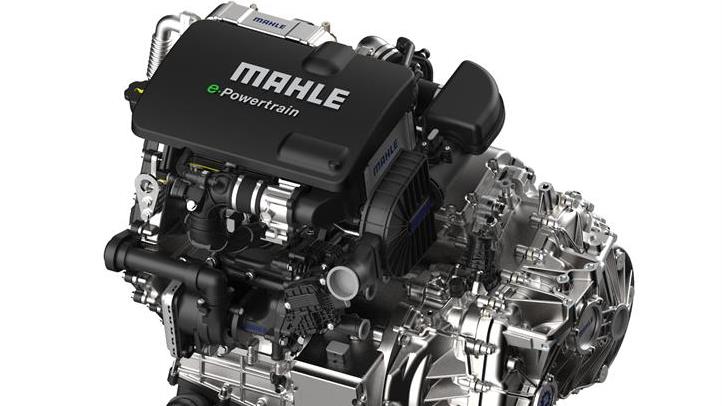
The Mahle engine – is this what will revolutionize the EV world?

Solid state batteries are better than the current lithium ion ones, but they’re not without issues, meaning metals. Which is why a piece of news from Germany this week caught my eye. The German engine building company Mahle, that I had never heard about, is developing a new type of electrical engine that not only promises to be even more efficient than current ones, but in addition, does without any metals. It’s called the Magnet-free Contactless Transmitter (MCT) and as the name suggests, works without magnets. They’re replaced by an electricity-induced tension field, and the energy then flows inductively, reducing frictions and thereby energy loss as well as wear and tear. The technology has apparently already been proven to work in various prototypes.

Mahle is currently in talks with several manufacturers, targeting to make the engine ready for mass production in three-four years. This is a fantastic example not only of how to develop batteries, but also how it has always been, and always will be, innovation that leads the world forward. We’ll see if it’s Mahle’s technology, alternative fuels or something else that becomes the new standard at the end of the day. I remain convinced that it will not be EV’s as we currently know them. Until we’re certain, it’s difficult to find a more compelling proposition than an Aston DB11 with a V12, even with an aged infotainment!

The UK’s most successful sports car!

As we’re still in the first half of summer in the Northern hemisphere, the theme of a nice roadster continues to feel very timely. A few months ago I wrote about the legendary Triumph Spitfire, perhaps the easiest and cheapest entry into the British roadster tradition, and more recently we also looked at the forgotten Porsche 914, a German take on the roadster concept. This week we’re back in the UK for a slightly more robust alternative to the Spitfire that remains very reasonable budget-wise – the MGB. And you may be surprised to hear that the car we’re all somehow familiar with ranks as the UK’s most successful sports car ever!

It’s also very timely to look at the MGB right now, not just because we’re in the summer, but also since not only is it 100 years since the Morris Garages (MG) brand was founded, it’s also 60 years since the MGB was premiered. Originally however, MG wasn’t a proper car brand but rather a side kick to the regular garage business belonging to a certain William Morris in Abingdon, UK. In the side business, Morris and his colleagues would take boring Morris Oxford cars, work on them and hereby especially the chassis frame and transform them into if not sports, then at least sportier cars that they would then take to the race track on weekends.

The guys around the car are probably the ones that built it the week before!

In the late 20’s the MG brand separated from Morris Garages and start to make a name for itself in on the racing circuit. It hereby also created a bit of a mystical reputation, often being talked about as a car company with a soul that was almost palpable when you entered the factory. Be that as it may, it was certainly a car company with guts, as the MG guys choose to race the MGB’s predecessor, the MGA, in prototype form at Le Mans in 1955, managing to finish the race with two cars. They continued to do well in 1956, the first official year of production of the MGA, notably in the Mille Miglia.

Fast forward to the early 60’s and MG had become part of BMC, later to become the British Leyland group, as was notably Triumph. The time was rife for a replacement to the MGA had come but before that, as a side project, MG built a machine called the EX-181 that looked like a soap and was powered by a 300 hp, supercharged engine. Driven by Phil Hill, the car would set a speed record of 254 Mph (408 km/h) on the Salt Flats in Utah, thereby also doing wonders for MG’s racing reputation. When MG introduced the new MGB roadster in 1963 as the MGA’s replacement, they actually claimed the design was derived directly from the EX-181, which is perhaps something that doesn’t exactly jump to the eye…

Phil Hill was a brave man, driving the EX-181 at more than 400 km/h in Utah…

MG’s original plan was to use the MGA chassis for the MGB as well, but in the development process it was discovered that it didn’t leave enough designer freedom to create the wider but still low car they wanted the MGB to be. MG therefore re-thought the whole project and in the end, built the MGB as a monocoque rather than the traditional body-on-frame construction. One of the advantages of the new construction was enough strength to handle considerably bigger engines but as it turned out, MG would only make use of that in the MGB GT V8, more on that later.

The design of the new car was a purely internal affair, with no fancy Italian design houses involved. Basically the head of design brought his idea to the model maker, who in turn built a small model for approval by the CEO, after which he would do a full-scale model. The development would then start, leading to the finished car a few months later. Not many committees or Zoom meetings there! Even if the MGB didn’t really look much like the EX-181 record setter, most would agree that it’s a nice design, very roadster-specific and relatively timeless. It was also hugely successful notably in the US, to which MG started shipping around 40.000 cars per year in the mid-60’s, as compared to around 5.000 for the UK market.

A timeless look, more modern than for example a Triumph TR4

A selling point for the MGB was clearly the superior room both for people and their luggage that the relatively wide car body offered. Another was no doubt its relative simplicity. The power unit in the form of an 1800 cc, four-cylinder, transersal BMC engine was perhaps not very exciting as it was essentially a larger version of the engine used in the MGA. The 95 hp it developed were however sufficient, but when emission regulations became stricter in the crucial US market, the power number started dropping to just below 70 hp for MGB’s from the mid-70’s. The engine was coupled to a four-speed gearbox with overdrive available as an option, and disc brakes in the front were combined with drum brakes in the back.

To increase the appeal of the car, MG were set on offering the MGB also with a roof, but the MG guys didn’t manage to find a solution that looked attractive, so in the end the had to turn to, you guessed it, one of those fancy Italian design houses. Pininfarina created the MGB GT that was shown to the world three years after the roadster, in 1965. It was also the GT that in 1973 finally saw MG making use of that larger engine bay, by fitting the Rover V8 engine used notably in the Range Rover Classic in it.

The roadster is a great looking car, perfectly usable as a practical daily driver

The V8 may have been bigger but given it was an aluminium construction, it actually weighed less than the 1800 cc four-cylinder, meaning not many modifications were required. There were however various other problems, leading to very few V8’s being produced. On one hand MG could never get enough engines from Rover to build as many cars there was demand for, and on the other that demand quickly vanished with rising oil prices in the 70’s. In the end, the V8 would be taken out of production only two years later, in 1975, after no more than some 2.600 GT V8’s had been built.

Given the increasingly tough regulations not only on emissions but also on safety standards in the US, the 70’s weren’t kind to the MGB. I’ve mentioned the dropping engine power of the 1800 cc unit above, and added to that were some pretty horrific, moulded rubber bumbers that MG had to fit to the cars from 1975 onwards, replacing the stylish chrome model that had been used until then.

The late 70’s wasn’t a great design period for the MGB – either…

There were other, corporate problems as well, linked to a generally cash-strapped British car industry and other British Leyland brands such as Triumph that were given higher priority to develop the futuristic TR7, rather than trying to modernize the ageing MGB. And so the last MGB rolled out of the factory in Abingdon in 1980, and the factory itself closing its doors later the same year.

Between 1963 and 1980, no less than 387.000 MGB’s were produced, a record for any UK sports car. To that should also be added 125.000 GT’s, a pretty remarkable number given the far shorter production run, but only 2600 MGB GT V8’s. This is of course reflected in today’s prices with the V8’s being most sought-after. They start at roughly twice the USD/EUR 20.000 the four-cylinder roadster or coupé trade at in good condition. At that level it’s difficult to go wrong, as the MGB is also a simple and thereby economical car. Get a nice roadster version with chrome bumpers, and as a US MG commercial at the time would say: “at no extra cost, MG gives you the sun!”.

Does downsizing have to be boring?

Don’t know about you, but I use ChatGPT more by the day and find it incredibly useful. Earlier this week, I asked it to define downsizing, and it gave me a paragraph on the meaning in the corporate world that ended with the following: “(…) it can also be applied to (…) personal situations where individuals reduce their lifestyle or expenses”. That doesn’t sound like a very exciting topic, but on a larger scale, at least in terms of lifestyle, it’s obviously what the car world is about in general these days. And since recently, it’s part of my own car world as well.

June as been an eventful month for my wife and I, as we’ve realized a long-term dream of buying a place in southern France. This has meant spending more time than usual in that very nice corner of the world, and obviously also that we will do so even more going forward. And that has in turn highlighted how our wonderful, lovely, comfy travel companion, the Range L405, is completely malplacé in French villages and on narrow mountain roads. It’s of course also true that although the 5-liter V8 is not as thirsty as you would think, 12-13 liters per 100 km (18-20 MPG US) is quite a lot when you start adding up the 650 km between Zurich and Nice, as we will be doing.

You’re a wonderful friend, but you’re a bit too big…

Therefore, downsizing is on the order of the day. The Range will need to go and be replaced by something smaller and ideally also more economical. Earlier this week I therefore put it up for sale and then I set out to test some possible candidates in the category “sensible and smaller”. I would think that should be possible while still preserving a bit of style and fun, right?

Until not too long ago, if you lived in Europe and wanted to save on fuel costs, the default choice was a diesel. One of the best modern diesel engines around is BMW’s 3-liter 6-cylinder, offered notably in the 3-series. Given that’s quite a neat car in general and now that the kids are grown up, large enough for our needs, I decided to check it out, in the form of a 2020 BMW 330d.

2019 330d – a good-looking car, especially in the M Sport version

However as we all know, since a few years back, saving fuel increasingly goes over hybrid solutions, with a mild or plug-in electrical engine complementing a petrol or diesel combustion one. Volvo here offers the so called T8e, combining their 2-liter, 4-cylinder petrol engine with an electrical engine on the rear axle. It’s offered across the model range but notably in the very good-looking Volvo V60, which roughly matches the 3-series in size. A V60 from 2021, pre-owned by a Volvo garage and noticeably more expensive than the Beamer, became my second choice in this week’s selection. My objectives were thus to find out not only which one is the best car, but also if they’re viable candidates for us, and finally which way of achieving efficiency is actually superior.

Likewise, the Polestar V60 adds the extra touch to the good-looking V60.

In the 330d, BMW’s diesel gives you 265 hp and 580 Nm of torque. For a family car weighing in at around 1800 kg that’s more than enough and will take you to 100 km/h in about 5.5 seconds. For a diesel the engine is also really smooth without a limited but still noticeable lag when you put your foot down and as always with modern diesels, the torque is impressive. That said, there’s no hiding it runs on diesel oil, and you can hardly call the engine sound sporty.

Handling-wise with a perfect weight distribution and especially in the M-Sport version I drove, to quote Julia Roberts, it really corners like it’s on rails (probably far more than the Lotus Esprit she drove in Pretty Woman!). The interior is solid, noise isolation is good, the quality feel is of course high, although the amount of plastic used in the interior is frankly both surprising and disappointing. In summary, it’s a perfectly good car, but is it fun? Na.

Interior plastics are cheap and light – unfortunately…

Volvo’s four-pot puts out around 310 hp, with the electric engine adding another 90 hp to that. In electric-only mode the V60 has around 40-50 km of range, but both engines also work together for more efficiency, and the electric engine will charge on the combustion engine’s excess energy and through recuperation. Typically though, you would charge the 12 KwH battery at night on a wall socket where depending on charging speed, it will take you a few hours. As other hybrids it doesn’t have a fast charge function so if you stop for lunch along the highway, don’t bother trying to find a charging spot to plug it in as it won’t really make a difference.

Long-term readers of the blog may remember that I had a Volvo XC90 a few years ago, albeit a T6 and not the hybrid T8. The XC90 has been a great success for Volvo and it’s easy to see why, but as my year of ownership showed me at least, it’s not an enthusiast car. Among its two main drawbacks are the pretty awful 4-C air suspension (Volvo should ask Landrover how to do a proper air suspension…) and the clearly undersized brakes. What made me still willing to consider the V60, apart from its looks, was the fact that this was the Polestar version, where the Swedish racing part supplier Öhlins has provided both new suspension and brakes – surely that, as well as the fact that this is a smaller car, must make a difference?

It does and from what I’ve read, this goes for the standard V60 as well, although to a lesser and more under-steered degree. With the Öhlins parts the V60 handles almost on the level of the BMW and although firm, its suspension is far better than the standard package. The main reason it’s not fully on par with the BMW though is clearly its weight, as in the T8e hybrid version, the V60 weighs in at 2130 kg. That’s more than 300 kg more than the 330d, and although Öhlins/Polestar have done their best to hide the kilos, you still feel them. The V60 T8 is certainly not a light-footed car.

Unfortunately, it looks better than it really is – but the seats are lovely!

Apart from the weight, the hybrid solution is a rather pleasant one. You start off in electric mode, clearly indicated in the gauge cluster that also tells you when you move out of it. Whether you want it or not, that motivates you to try to keep it in electric mode, which is obviously also the idea. If you floor it, there’s a small hesitation before both engines put their 400 hp down to all four wheels, producing a similar speed to 100 km/h as the BMW, and a similar torque.

As for the rest, the interior is like any Volvo, meaning good-looking but where the perceived luxury is razor-thin. The car I drove only had 20.000 km on the clock, yet the driver seat already had clear wear marks on the door side (I’ll stop the comparisons now, but just noting that my Range has 100.000 km more and the seat looks like new…). It’s all intuitive though and feels modern, but there’s far more road noise than in the BMW, meaning you don’t actually hear when you’re in electric mode, which is a bit disappointing. Just like the BMW, The V60 is a perfectly good car, although not quite as good in quality and handling as the BMW. It is however about as exciting, meaning not at all.

Trying to sum these two test drives up, the first thing I’ll note is how spoiled I apparently am, coming out of a Range Rover. That said, you may have read my test of an Audi RS4 B8 back in March, a 10-year old car that feels rock solid in comparison to these two. The V60 isn’t a car for me, but I would be willing to give the right 3-series, meaning a better equipped one, a second chance. And I would take the B8 RS4 ahead of both any day but then again, that wonderful 4.2 liter V8 doesn’t fit the efficiency requirement…

Unfortunately, the Chiron the garage selling the BMW had as well doesn’t fit the brief…

In terms of the two technologies however, these highlight what a bizarre world we live in. I looked the Volvo salesman in the eye and asked him how much the V60 would consume on a long trip, when the battery is depleted and the hybrid thus less useful. Adding a margin to his almost honest answer would put it at around 8 liters per 100 km (29 US MPG).

That’s around 2 liters more than the BMW (or any comparable) diesel which gives you as much comfort, is 300 kg lighter, and has far less complication, thus being cheaper to produce. And yet, although a modern diesel is as clean as a petrol engine, governments in almost all countries actively try to suppress them in favor of hybrid solutions. A small note to the US readers here to say I realize this is an issue you don’t really have, but it’s the reality for us in Europe.

A modern hybrid is a highly complex engine…

If you do a lot of short distance drives and less long ones, then, and only then, a hybrid can be a good solution as you will be doing most of them on electric power. If however like for me, your reality is the reverse, i.e. more longer drives than short ones, then efficiency-wise, nothing beats a diesel. Then again, an efficient modern petrol engine doesn’t necessarily consume much more than a diesel and has both a nicer character sound. After all, maybe I don’t need to overdo it on the savings front…

That’s also to say that I have no idea what car I will buy next, and the search will go on over the coming weeks. I probably won’t try more hybrids, but I’ll definitely include some petrols. My fellow blogger Sven feels that a Porsche Macan is really what I need, and that sounds like a reasonably appealing idea. Should you have other suggestions, please don’t be shy and post them in the comments below. I’m not ready to accept just yet that downsizing has to be boring!

Auto legends: the story of Ferdinand Piëch!

One of the nice things with writing a blog that enjoys a growing circle of readers, other than boosting your ego, is that the chances increase by the week of actually meeting your readers in the flesh. Of course this has happened before in the circle of close friends, but in the last couple of months I’ve run into people I didn’t know from before, and it’s subsequently become clear that they read this blog. That’s of course great in general, but it’s even more so when they help generate ideas to write about. Because coming up with exciting content every week isn’t always easy, even in the car world!

This week I’ll therefore start a mini series much like the one on classic car races that I write about from time to time. I’ve decided to call this new one Auto Legends, as it will be about the men (and yes, it so happens they are almost exclusively men) who have helped shape and put their mark on the automobile industry. I can almost feel many of you now expecting to see a picture of an old man with big, black sunglasses here below, i.e. Enzo “Il Commendatore” Ferrari. Actually though, to mix it up a bit (and also as there has been a fair bit of “Italinanitâ” on the blog lately), we’ll start in Germany with a man who has a CV that may make even Enzo blush – Ferdinand Piëch.

Grand old man Porsche in the middle, young Piëch to the right

If the slightly strange, Austrian name Piëch doesn’t ring a bell with you, the first thing to note is that Ferdinand, born in 1937, was the grandson of another legendary car man with whom he shared his first name, namely Ferdinand Porsche. It’s therefore no big surprise that he started his career at Porsche, but that’s not where he became most well-known. Rather, that was as chairman of VW that he completely re-modelled in the 1990 and 2000’s, turning it into an automobile giant, and earning himself a reputation as a, let’s say less likeable personality. But let’s take it from the start.

Young Ferdinand Piëch was head of the motor sport division at Porsche in the 60’s. This included the role as head of testing, where his focus was on very light racing cars such as the Porsche 906, which after modifications also became known as the 910. From the post on the Targa Florio earlier this year, you may remember that this lead Porsche to completely dominate that and other races in the late 60’s, by which time Piëch was no more than 30 years old. He was also instrumental in the development of the Porsche 914 that we looked at a few weeks ago, and most other things that came out of Zuffenhausen in the 60’s and early 70’s. Then however, following a feud between different fractions of the Porsche family, he had to leave the company.

Piéch was the brain behind the four-wheel drive Quattro

In 1975 Piëch thus became head of technical development at Audi, notably leading the development of the Audi Quattro. The subsequent success it had lead Piëch first to the position as co-CEO of the company, and then from the late 80’s its CEO. If you think back to the second half of the 80’s, this is of course exactly the period when Audi went from being a very sleepy brand for old people with hats to something far more modern and desirable. Piéch however kept a strong focus on motor racing when at Audi as well, with next to the rally wins of the Audi Quattro, also various wins notably in the German DTM series for touring cars.

Ferdinand’s star continued to rise on the VW sky and in 1993, he became CEO of the VW group, Audi’s mother company. Having proven his capabilities as a car man, this is the period when his business understanding really starts to shine through. 1998 was a big year in this sense, and more than one eyebrow was raised when in the same year, VW acquired Bentley and Lamborghini (the latter through Audi) and also the rights to the Bugatti trademark.

The best Bentley ever – built by an Austrian

The early 00’s then became the period when Piéch aimed for the stars with the whole VW line-up, arguably with a slight lack of understanding of the perceived prestige of some of its brands. The VW Phaeton with a W12 engine thus never became more than a curiosity, but the Audi A8 with the same engine and of course the Bentley Continental saw far more success. Especially the latter was by many considered the best Bentley ever, and Ferdinand certainly took a lot of pride in knowing how to build a British luxury cars better than the Brits. However, one piece was still missing in Ferdinand’s puzzle.

Even if he hadn’t worked actively for the company, Piéch had sat on the board of Porsche, where his career once started, since the early 90’s. Of course he also had family ties to the brand, so it’s no surprise that he felt especially strongly about it. In 1998 however, in one of his razor-sharp statements, he said that for as long as he lived, Porsche would remain independent from VW. Well, that was to change 14 years later when VW acquired Porsche, while Piëch was still very much alive. To Ferdinand, Porsche became the most important brand in the group, and the group he had built had by now also become one of the largest and most profitable car groups in the world.

The Porsche 910, the Bugatti Veyron and the Audi A2 – Piéch was behind them all!

When Piëch passed away in 2019 his legacy was thus utterly impressive, not only in sales numbers, but also in the cars that were developed under his watch (you could also add here the fact that he was the father of no less than 12 children as well…). The W12 Phaeton may not enter the history books, but the Bugatti EB110 certainly will, and without it, we wouldn’t have seen neither the Veyron, nor the Chiron. And without the Bentley Continental, I’m pretty certain that Bentley as a brand would also have belonged to the past. Adding to this the development of Porsche that was on the brink of bankruptcy 30 years ago, what Piëch managed to build is truly fantastic.

So what about the likability part? To start with, I very much doubt there’s a single global company in any sector who has a Mr. Nice Guy as its CEO. That said, Piëch was known for a very authoritarian, if not dictatorial style of management. He had absolutely no time for errors and wouldn’t tolerate mistakes. Maybe the himself legendary Bob Lutz put it best, saying that Piëch although he didn’t agree with his dictatorial style of management, there’s no question that Piëch was a brilliant person and leader. Today’s VW group is the best proof of that!

Summer cars and value appreciation!

If you live anywhere near central Europe or indeed visited this part of the world during the first three weeks of May, you will have experienced what turned out to be the rainiest May in many years in most places. Villages in northern Italy were flooded but also in other parts, it seemed there was no end to the water falling from the sky. And then as always when despair is near, it all turned at the end of the month, and from North to South, Europe has been sunny ever since. Fingers crossed that it remains so!

Had you been in the market for an enthusiast car in early May, odds are therefore that you would have selected something with a roof. Then again, as soon as the sun comes out, all is forgotten and it becomes obvious that a convertible is the right way to travel through summer. In both cases, if you read this blog regularly, you will have seen my posts on various enthusiast cars, with or without roof, modern or old, and quite often with some kind of idea or prediction as to the direction their price may move going forward.

Nothing like enjoying summer in a nice convertible!

I would claim never to have given any kind of guarantee that this or that car is a safe store of value, or the investment of a lifetime. A professional career in finance and more disclaimers than I care to remember have taught me to be very careful with such statements, but even so, it’s of course a valid question to ask whether my more general statements have been correct? Let’s therefore look back at three enthusiast cars I’ve written about in the last years and where I’ve thought they would move up in value, to see if they’ve done so?

For this exercise to be relevant for as many as possible, we’ll do this looking at three different price segments – the perfect convertible summer car for a small budget, the last naturally aspirated Ferrari, and then also the last non-hybrid Ferrari that I called a supercar bargain back in January 2022 in one of the most read posts on this blog.

The Alfa Spider, here in Mk II, was a delightful long-runner!

It was back in August 2020, almost three years ago, that I wrote about the Alfa Romeo Spider, one of Alfa’s longest-running cars given it was built for almost 30 years, and also the last car to have been designed by the grand old man Battista Pininfarina himself. Nothing has changed in three years as to the Spider’s suitability as a perfect summer roadster for two; it’s a pretty car with plenty of room for your better half and you, and your luggage. At only 1100 kg it’s sufficiently motorized by the 1.7 litre or 2 litre engines, and it’s also more reliable than a comparable English roadster, Oh yeah, it’s cheap as well.

At the time, I wrote that the first, “boat-tail” series had started to get expensive but the later series hadn’t, and that “My guess is that especially the later series that today can still be had for EUR 20.000 or even less for nice examples, still have further to go.”. Well, I guess they still may, but they certainly haven’t gone anywhere yet. There seem to be enough Spiders out there still for prices to remain low for now, which is good news if you’re in the market. But in terms of my predictive power, this isn’t one I was right on.

The F430 is one of the all-time greats from Maranello

Let’s next have a look at the Ferrari F430, also known as the Baby-Enzo because of its backlights, that I wrote about a year ago almost to the day. As said at the time, it’s one of my all-time Maranello favourites and of course, the last naturally aspirated eight-cylinder from Ferrari. It wasn’t just the engine though that was a step forward vs its predecessor, the F360. The driving experience, interior and basically the whole car was so as well.

At the time I wrote that the large price premium on the 10% of cars with a manual box (i.e. around 1500 cars all in all) wasn’t motivated, and that “For a “regular” F430, meaning a coupé with the F1 semi-automatic gearbox, prices start around EUR 80-90.000”. Had I written the piece today, I would rather have said that they start at around EUR 100.000, meaning an increase of about 10% over the last 12 months. Not dramatic, but still not bad in such a short time. I would therefore claim that my statement that it had upwards potential given that it was barely more expensive than the F360 at the time, was correct.

The Spider will of course cost you a bit more than the coupe…

Looking through the stats of the most popular posts on this blog, the one where I called the Ferrari F8 a supercar “bargain” from only six months ago consistently comes out on top. Just like the F430 was the last naturally aspirated V8 from Ferrari, the F8 was the last non-hybrid one. It’s the successor of the 458 and the 488 (a face-lift on a face-lift if you want to be mean) and the model that was the bridge between combustion-engined Ferraris and the new hybrid generation.

At the time of writing, when comparing it especially to its predecessor, the 488 Pista which is a much more hardcore car, the F8 looked very much like a bargain at the EUR 250-260.000 cars then started. That was reinforced by the McLaren 720s that I still think about as the closest competitor, being slightly more expensive. Today, I can only say that I should have acted according to my beliefs, since EUR 290-300.000 is where prices start today, only six months later. And earlier this year production of the F8 ended, so my guess would be that the F8 continues on that trajectory.

The McLaren 720S that I compared the F8 to on the other hand, keeps losing value.

To come back to those disclaimers we like to use in finance, this is of course only what the market looks now, and given this blog has a global audience, it’s important to say that this is written from a European perspective and there may certainly be price differences between this and other regions. Let me also remind you of my post from two weeks ago where I mentioned not only the importance of buying at the right price, but also not to forget associated costs for maintenance storing, etc.

Then again,disclaimers have never been any fun, so that would be a boring way to end the story. A slightly bolder statement is therefore that Ferraris which are something special, such as both the F430 and the F8, will most probably at least hold their value very well. And at EUR 20-25.000, an Alfa Spider remains very much a bargain that will also not break the bank if something goes wrong. Therefore, whichever segment you’re in, congratulations if you’re in the market, choose wisely, and enjoy the summer!

Shelby’s spitting AC Cobra!

Did you know that the cobra is not one snake, but rather a family of snakes? In other words, that there are far more variations of this frightful animal than one? I didn’t, at least until I started to write this. There are at least six species that are usually included when you talk about cobras, notably the king cobra, which according to the definition of a “true” cobra would otherwise not count as one. That definition is limited to the Naja species, itself containing around 20 different types that you’ll find across large parts of Asia and some parts of Africa.

Taking another path is highly advisable

What these all have in common is being 1.5 to 3m long, able to raise around a quarter of their body and flatten their neck to appear larger than they are, and spit. The mechanism of that, which is apparently more a squirt than a spit, goes beyond this post, but the venom they deliver in this and other ways attacks the nervous system and can be deadly. As you’ve probably gathered by now, snakes is not one of my favorite animals. I like cars though, and I certainly don’t mind the one carrying the cobra name, as AC Cobra or Shelby Cobra. Without the risk of being spat at, let’s have a closer look at it this week!

To do so, we need to go back to our old friends at Bristol that I wrote about in a post earlier this year. That’s where it starts as you may remember that in the 50’s, the aeroplanec ompany that was to become Bristol was set on building a light, two-seated sports car, which they also did. It was referred to as the AC Ace and was powered by a two-litre, straight six derived from BMW and delivering around 130 hp, tuned to a bit more for racing purposes. Of course the car was light and given it also had quite an advanced independent suspension, it did really well in different European races at the time, although it didn’t win any major ones.

The Ace wasn’t just good, it was good-looking as well!

On the other side of the pond, Carroll Shelby’s career as a racing driver was coming to an end and his next one as constructor was about to start. Shelby was a living legend already then as one of the most successful racing drivers of the time, winning most of what there was to win at the time over in America. Now in the early 60’s he was starting off as a constructor and was looking for what he called “a winning bet”. It was over at Bristol in the UK that he found it. The Brits certainly didn’t mind because by this time, they had lost the rights to use the engine the Ace had been powered by and this at least created some demand for a car, the future of which was otherwise uncertain.

Carroll Shelby, one of the all-time greats!

Shelby had seen the success of the Ace in Europe and now came up with the very American idea of trying to squeeze a V8 into it. The car already then looked like a slimmed down version of what the AC Cobra would later become, but just to get the context right, let’s remember that at 3.6 metres and 850 kg weight, this wasn’t really a car for which a V8 had ever been intended. AC did however send over an empty car to America where Shelby was just starting his relationship with Ford that would over the years develop into a very close one. Ford thus delivered the engines that Shelby squeezed into the car that he now started calling the Cobra.

The first V8 was a 260 c.i. (4.3l), which was quickly followed by a 289 c.i. (4.7l) second one. Shelby still didn’t feel the Cobra was fast enough though, and of course this was the time when in the US, there was really no substitute for cubic inches. In 1964 therefore, with what must have been a mighty shoe horn, Shelby finally stuffed the 427 c.i. (7l) legendary Ford V8 big-block into the Ace engine bay that had been, conceived for a 2-litre six-cylinder. In order to do so, he basically had to rebuild the whole car. The body was stretched, transmission and suspension were altered and moved but by 1964, the job was done. The “true” 427 AC Cobra was born, with only the windshield and trunk lid being identical to earlier cars.

There isn’t a lot of room left…

It’s not fully clear how much power the 427 Cobra had, but Shelby believed it was around 550 hp with about 700 Nm of torque. For a rear-wheel drive car weighing in at just over 1100 kg, this meant a 0-100 km/h time of below five seconds, unseen at the time. Like the animal from which it took its name, the 427 Cobra could certainly both bite and kill you if you weren’t attentive, but much as animals such as the cobra fascinate us, the car certainly had the same effect on Shelby’s clients. Even if demand was healthy enough as it was, Shelby would use a few tricks to spur it further, such as taping a $100 bill to the dashboard and tell his passenger they could have it if they could grab it. Given he pushed the pedal to the metal at the same time, rumor has it that this marketing trick never even cost him $100…

Muscular yes – but not as pure as the original Ace

Unfortunately the AC Cobra would only be built until 1968 when AC stopped producing the base body that was still required to build the car. In total only 998 cars were built between 1962-1968, about a third of these were 427 Cobras, and only 250 of these were street cars. Best estimates have it that around 100 of those are left today. You’re free to guess what those trade for…

The success of the Cobra was however such that already in the 70’s, different firms started to produce replica’s of the Cobra, something that goes on to this day. With time and improving technology, many of these are better cars than the original Cobra, which of course is completely irrelevant. There is no substitute for the original (or, to be honest, for cubic inches…), and if you push it hard enough, I’m quite sure the AC Cobra can also raise at least a quarter of its body as it takes off towards the horizon!

Buying right, and at the right price!
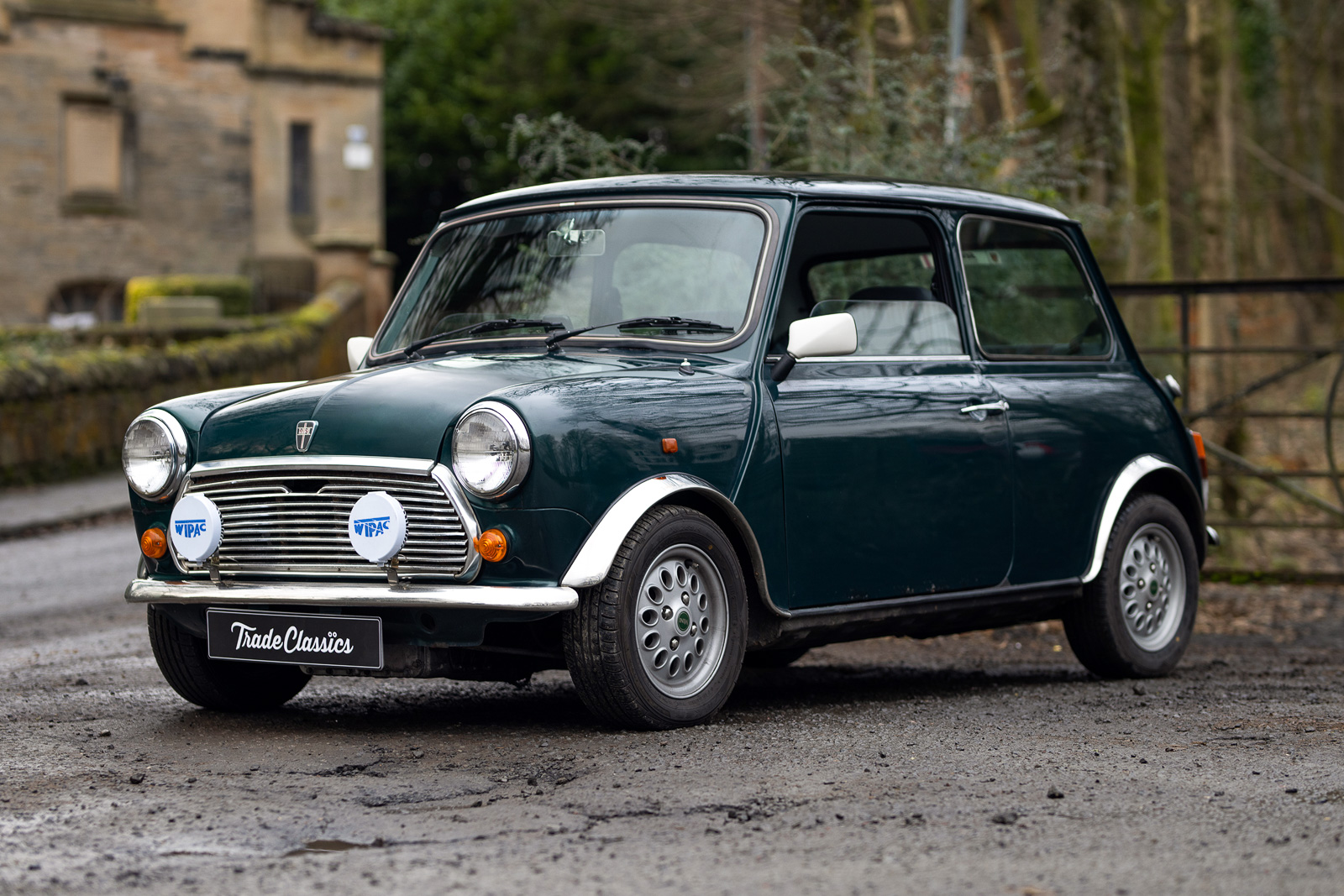
What do you remember about March 2022? Russia had invaded Ukraine only a week earlier, there was a coup d’état in Burkina Faso (yes, I had to look that one up…), and then the Fed started the current rate raising cycle, thereby ending a decade of zero interest rates or if you will, free money. As we know now a year later, the subsequent increases to the current level were the quickest in history, and it’s not clear if we’re done yet. They’ve happened against a background of rising inflation after as said, a decade of zero rates and money printing, by the same central banks who are now trying to contain the inflationary pressures that resulted from it.

When you don’t get any return on your savings, you try to do so by putting your money elsewhere. And so over the last decade, pretty much every type of investment has had a good run that at least partly came to an end a bit more than a year ago. One of the best areas to put your money in this period has been various types of collectible cars – oldtimers, race cars, and then with time, pretty much every car beyond a certain age, never mind really how collectible it really is. That’s what we’ll talk about today, as everything that is priced as a collectible certainly isn’t one, which is something the new market environment will no doubt show us. I have however recently seen some excesses in the market that are frankly just ridiculous and that show that a new balance hasn’t been found yet. Being sensible in your planned car purchase is therefore more important than ever!

Pebble beach and other car shows have been spectacular in the last years!

Back in 2020 I wrote a post you can find here, where I went into some aspects to consider when buying your dream car. I also emphasized precisely that, i.e. that you should really buy the car because of your love and desire for it – not because you think it will increase in value. Although many cars have continued to do so, that’s worth remembering. Firstly, whether a car will rise in value or not is never a given (except perhaps for a small number of hyper-exclusive and very limited series). Secondly maintenance, storing, insurance and running any car, but especially collectibles, eats up much of the potential value increase, so at the end of the day there often isn’t much left. then again, that’s perfectly alright as long as your priority has been to enjoy the time spent behind the wheel!

You may well think this is too negative, and that value appreciation on, say a manual Porsche 911 of certain series is all but guaranteed since they haven’t yet reached the stratosphere (well, most have, but not all), and they’re becoming fewer and further between. That’s true, but then again so is a Porsche 944 which still hasn’t gone anywhere and probably never will – although its sibling (and less good looking) successor, the 968 has. I’m certainly not claiming there aren’t cars that will rise in value going forward, I’m just saying that you shouldn’t bet on it, and it’s not what should guide your purchase.

Today worth twice as much as its better-looking predecessor…

That said, there are a few clues to help you select a car that is both a joy to drive and can be expected to hold its value relatively well. A manual gearbox is certainly one such thing, if you look for example at a 911, a Ferrari F355, and a bunch of other cars that are 10-20 years old. Production numbers is another, as special series or limited production runs tend to hold values better. The right engine will help, as will provenance, given a famous previous owner tends to do wonders for the price. I find this last one a bit strange since it’s not like it says “this used to belong to (select your favorite famous person)” on the car, but I guess there are things that can’t fully be explained by logic…

A case in point is a classic dealer in the Zurich area who has a Porsche 928 GTS standing in the showroom. With 90.000 km on the clock the mileage is ok but not exceptional, as is the general condition of the car – very good, but not mint. The GTS was the last iteration of the 928 produced in the early 90’s. At 350 hp it had the highest power output of all 928 series and is for many the most attractive in the range, provided however that it’s a manual, which this wasn’t. The dealer had tried to compensate this with a big sign saying “Prominent Swiss previous owner”.

The dog is not included in the price…

This country is great in many things, but it’s not like we’re lining up famous people. The only two can think of who would motivate paying more for a car according to this logic would be Roger Federer, who’s however tied to Mercedes-Benz through sponsor contracts and, well, Tina Turner, who spent the last 20 years of her life in a magnificent villa on the shores of the Zurich lake. She obviously just passed away, may she rest in peace, but before that was mostly seen in a green Bentley. The “famous previous owner” is thus most probably no one known outside of the local Zurich circle. And it doesn’t warrant you paying – hold on to your chair – around USD 110.000 for this particular 928, especially when a far more desirable manual GTS can be had in similar condition for USD 20-30.000 less. Which is still double what they cost 2-3 years ago.

Another even stranger category is that of cars that someone bought a number of years ago and never drove, so that they’re now sold with very low mileage, most often in a condition close to new – at least on the outside. Obviously, if you’ve stored a car away for 30-40 years, it’s really important to know how it’s been stored, and also if it’s been maintained throughout. Because a car that is left standing for a number of years without no one attending to it, is not a car you want. Then the question is of course also whether there’s anything attractive with the car apart from the fact that no one’s driven it, or if it’s just an old car?

Irresistible? Rather very resistible…

An example of this is a VW Golf GL Diesel from 1983, advertised by one of the most well-known classic car dealers in the region. Someone bought this 50 hp monster 40 years ago, sealed it, and put it away, so that it only has 2.000 km on the clock. I guess the 50 hp were not that exciting even back then… It’s most probably been stored correctly and maintained throughout, but who on earth would pay the asking price of around USD 28.000 for a car that wasn’t even desirable when it was new? I can think of a large number of far better, more modern and certainly more fun small cars for that money, and I’d be really surprised if this example doesn’t sit with the dealer for a long time. As if this wasn’t enough, the 70’s shade of brown really isn’t a particular desirable color,

It’s not all bad though, because the gems are still out there, you just need to be patient and look out for them. Coming back to 911’s, and more specifically one of my favorites, the 997 Turbo, I’ve spotted a manual 2009 car in silver with a red leather interior and all the carbon packs you could have at the time, and around 85.000 km on the clock. It’s in mint condition and has had one previous owner, the F1 driver Jarno Trulli (who raced between 1997-2011 and had the good taste of scoring his only win in Monaco in 2004).

I need to find a good reason to put my money here…

Whether he’s famous or not is not the point, it’s more that I would assume that an F1 driver for one drives the car correctly (albeit fast…) and also knows, and has the money, to maintain it properly. Then again if that isn’t the case, I wouldn’t hesitate going for a car where it is, no matter who the previous owner is. At an ask price of around USD 85.000, the car is only slightly more expensive than comparable cars, but that is probably warranted by its history.

Desirable? To me, absolutely, I’ve had my eye on the 997 Turbo for a while and actually find the red interior pretty cool, although it’s not for everyone. Will it increase in value? Maybe, then again it certainly won’t be free to run. Does it make my “car buying pulse” increase? Definitely – at the thought of driving it that is, not speculating about its potential future value increase. If you ask me, that’s exactly as it should be. Now I just need to find a half-rational argument for it…

F1 pit stop: the bulls dominate!
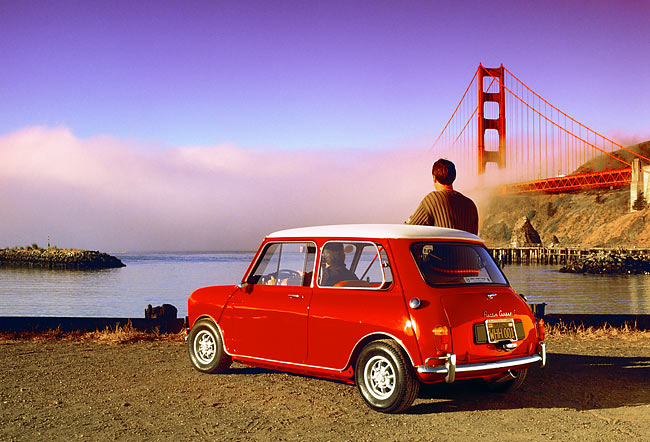
I was in Madrid on a business trip this week and my local business partner took me to experience the Wednesday bull fighting, something I’ve never done before. He had asked very carefully before if I was up for it, and in meetings the subsequent days it became clear that Madrilenes aren’t used to foreigners thinking highly of this local tradition, which has been banned notably in Barcelona.

I won’t claim that I found it particularly exciting, but although I don’t really see the point of making a show out of killing the bull (the meat of which is by the way not wasted but processed and sold), I’m an omnivore and respectful of local traditions. What was amazing though was the aggressiveness and persistence of the bulls (the Spaniards would call it courage), going for the banderilleros and picadores time after time after time, like there was no tomorrow. Which of course there isn’t if you’re the bull.

As Alonso said himself in Monaco: “I’m pushing like an animal!”

So what does my bull fight have to do with F1? Actually I wasn’t primarily thinking about the team with a red bull as symbol that leads the championship and will most probably take the title, but rather of this year’s surprise driver Fernando Alonso, the grand old man of the F1 circus. Alonso is not only from Spain, he charges like a bull in every race and drives like there is no tomorrow. Which for Fernando, there hopefully is!
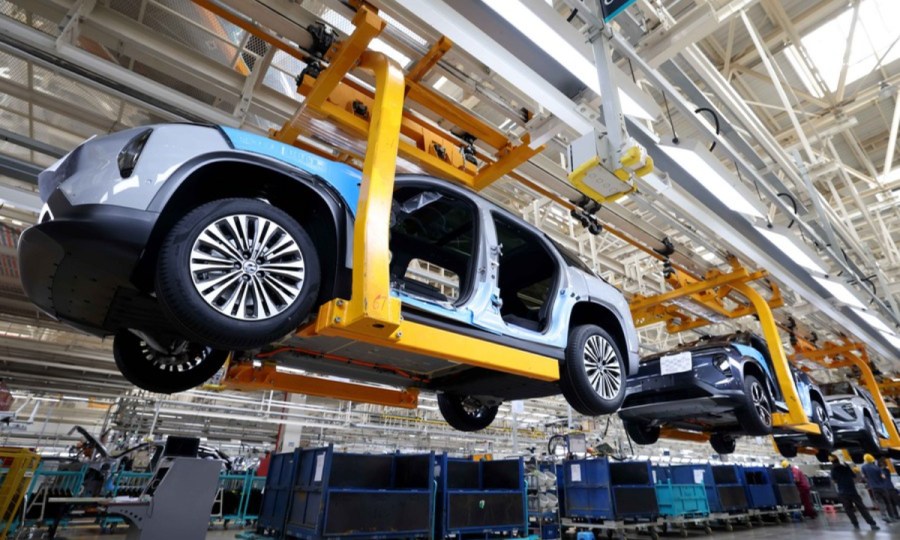
If you read this the Sunday it’s published, you may also have seen the most legendary race of the season on the narrow streets of Monaco earlier today. It sums up the first third of the season and in spite of the chaos caused by heavy rain in the last 20 laps, was pretty much in line with the season so far. The first third was however one race shorter than planned, as the Emilia Romagna GP in Italy had to be cancelled last week because of the severe flooding that hit large parts of northern Italy. Luckily the situation there has improved now, so let’s go back over the previous races that did take place and look a bit closer at what has characterized the season so far.

It’s mostly smiles so far – we’ll see if that lasts all season…

Starting with Red Bull, the team is as dominant, if not more, than last year, with Verstappen and Perez winning all the races so far. To the difference of last year however, Checo Perez is giving Max a run for the money, so far winning two races against Verstappen’s four. The fact that he hit the wall in training and thus started last in today’s Monaco GP meant he didn’t score any points, but otherwise Perez has very much been breathing down Verstappen’s neck and is currently the only real contender to Max claiming another title. Or is he?

If most people expected the Red Bull dominance, not many expected Alonso to do as well as he has. He’s currently third in the overall ranking and has been on the podium in five of the six races so far, four times as third and today in Monaco as second. We knew before the season that Aston Martin had invested heavily in developing a competitive car but that it would be this good, and so clearly ahead of Mercedes and Ferrari was certainly unexpected. It’s also a bit surprising how far ahead Fernando is of his team mate Lance Stroll, at least so far. After today’s race, he’s only 12 points behind Perez in the rankings, so it will be very interesting to see if he can keep it up!

Somehow it was more fun 2-3 years ago…

Ferrari on the other hand is clearly less competitive than last year, and Mercedes hasn’t made much progress either, although changes before today’s race may improve the situation going forward. The respective drivers make up places four to seven in the overall rankings with not much between them, but they’re far behind Red Bull and third placed Alonso.

Cédric Vasseur, Ferrari’s new team principal should be given a bit of time to sort things out as he only joined this season (from Alfa Romeo Racing), but Ferrari has only scored one podium this year, when Leclerc finished third in Azerbaijan. Mercedes’ team boss Toto Wolf looks increasingly tired and confused, as does Lewis Hamilton to be honest. In summary, both for Ferrari and Mercedes, things can thus only get better.

Lance Stroll rounds off the top 8 and behind the top four teams, the remaining have scored 69 points – taken together. And that’s only after today’s race, as before that, it was only half. Then again Alpine did really well in the Principality, with Ocon taking third place and Gasly coming in as seventh. That still shows that the distance to the top teams is huge, but also that the difference between the teams in this group is also far relatively small, as fifth-ranked Alpine is only 34 points ahead of Williams, that ranks last with so far only one point. Alex Albon does impressive things in terms of driving, as much as the car allows for. Then again, when he had the chance to race a capable car at Red Bull, he didn’t take it. The question is whether he gets a second one in a better team?

Alex Albon does as well as the Williams car allows him to

McLaren may be slowly improving, with important changes/improvements having been made to the car ahead of Monaco. Alpine looks quite promising as well, especially if today’s race is anything to go by. For Alfa Romeo Racing, Haas and AlphaTauri, this will most probably be another season to forget.

So there we are after seven races (actually six given the cancelled Emilia Romagna GP) of the 2023 season, and with another 16 to go. Can Sergio Perez really challenge Max for the title, and will the team allow him to do so, should we come to that? Will Ferrari and Mercedes find some speed again, or will the distance to Red Bull continue to grow? And just how far can Fernando “the bull” Alonso take Aston Martin’s renewal? As the European summer nears the end, we’ll check in again to see where things stand!

The forgotten (and underrated?) Porsche 914!

It may look like an improbable combination but as many will know, there have always been strong historical ties between Volkswagen (VW) and Porsche. This goes all the back to the birth of VW since the company was founded by Ferdinand Porsche, and Ferdinand Piech, who later became the company’s very prominent president and who is arguably the man behind much of VW’s modern success, was Piëch’s grandson.

Most of us will also feel that we know the recipe for success of a classic Porsche. Six rather than four cylinders and the engine in the back rather than the front. It also goes without saying that the car should be engineered by Porsche rather than any other suspect brand, such as… Audi. And yet, a car that at least partly followed that brief not only wasn’t much of a success, but is today largely forgotten. I’m of course talking about the Porsche 914 – how long has it been since you last saw one?

The 914, most often in typical 70’s colors, was quite a neat car

The recipe for a successful Porsche is actually something the company had deviated from already in the 60’s when it offered the 912 as a cheaper version of the 911. The untrained observer wouldn’t spot much of a difference between the two, but the crucial point was of course the engine in the back, where the 912 had a four-pot derived from the 356, making it a much cheaper entry model. However, by the late 60’s it was getting old and needed a replacement.

Over in Wolfsburg, home of Volkswagen, the situation was a bit the same, albeit with a different car. The VW Karmann Ghia had been built since the mid-50’s, had never been very sporty, and was starting to get old. it would continue to be built until the mid-70’s, thus overlapping with the 914 during the whole lifetime of the latter, but VW saw the new car as a way to get a sportier, entry-level car in its line-up, and also one that would (at least partially) carry the Porsche badge.

Many interiors are in leather or vinyl, but the cloth definitely brings more 70’s feeling!

The two companies thus entered into a joint venture aiming at combining Porsche’s engineering prowess with VW’s mass production capabilities. The project was led by none other than Ferdinand Piëch who at the time was the head of development at Porsche, and the VW-Porsche 914 was introduced in 1969 under a new distribution company founded jointly by the two brands. When it was presented to the world at the Frankfurt auto show the same year, it was shown both on Porsche’s and VW’s stand, and the decision was taken to brand it VW-Porsche in Europe, but only Porsche in the US. With regards to Europe, that probably ranks near the top of the list of great marketing mistakes…

The initial 914, referred to as 914/4, was powered by a 1.7 litre, four-cylinder engine developing a whopping 80 hp and sitting behind the seats ahead of the rear-axle, making it a mid-engined car. During the production time the volume of the four-cylinder increased to two litres, and the power up to 100 hp. Certainly not much by modern standards, but the favorable weight distribution and the low weight just over 900 kg meant that the 914 achieved higher cornering speeds than its big brother, the 911!

The favorable weight distribution meant that the 914 did well in GT racing

In 1970 the line-up would be complemented by the 914-6, featuring the 110 hp six-cylinder engine from the 911 and also taking over notably breaks and wheels from the latter. The simpler 914/4 had these and other parts coming from the VW 411, a not very exciting family car. Irrespective of engine, all 914’s came with a five-speed manual gearbox, the 914-6 could in addition be had with a so called Sportomatic four-speed automatic, with hydraulic gear changes and the clutch replaced by a torque-converter.

On paper the 914 had a lot going for it. Its looks were certainly not offensive and rather modern for the time. The weight distribution was better than that of the 911, as was the space, with both a front and a back booth behind the engine. The car was of course also a Targa with a detachable roof, opening the passenger space to the elements. The 914-4 was relatively cheap and as if that wasn’t enough, in 1970 it was also voted “Import car of the year” in the US – arguably quite a small category back then…

Once removed, the roof could be stored in the rear luggage compartment

And yet, the 914 never managed to enchant neither the masses in general, nor the Porsche crowd in particular. Porsche enthusiasts at the time would of course not accept anything but the original 911, an early version of the skepticism that would later befall the 914’s replacement, the 924. The marketing strategy VW and Porsche had gone for in Europe, notably deciding to call the car VW-Porsche rather than only Porsche like in the US, didn’t help either.

That said the 914 didn’t really see real success in the US either, with quality and rust issues on early cars not helping. To that came competition, notably in the form of the Chevy Corvette, as well as the relatively hefty price tag of the 914-6, far from the entry model price tag of the simpler 914-4. Porsche would do what they could when it was already too late, notably publishing press releases specifically pointing out that the car wasn’t supposed to be called the “Volksporsche” (People’s Porsche), which of course had the opposite effet and became the 914’s nickname that lives on until today.

Given how cheap it is, maybe you can afford the plane too?

Still, Porsche built a total of 119.000 914’s between 1969-1975, so to call the model a coplete failure would be exaggerated. Unfortunately, what wasn’t exaggerated were the corrosion issues, which combined with the fact that the 914 never really gained in value and thus often came in the hands of owners not really taking care of them, means that not many of the over 100′ cars are left today. Then again as said, for the ones that remain, prices haven’t evolved anywhere near those of 911’s of the same period!

In Europe the fun starts around EUR 25-30.000 for good cars, with four-cylinder cars easier to find and cheaper both to buy and maintain than the six-cylinder version. In an “everything else equal” world you’d of course choose the latter, but given everything isn’t equal most of the time, I would claim you get almost as much of the 914 feeling with the four-cylinder, and finding a car in good condition is therefore more important than the engine. You’ve probably never had a poster of the 914 on your bedroom wall, but if you’re looking for a relatively cheap entry oldtimer carrying the Porsche badge, the 914 is certainly not a bad place to start!