
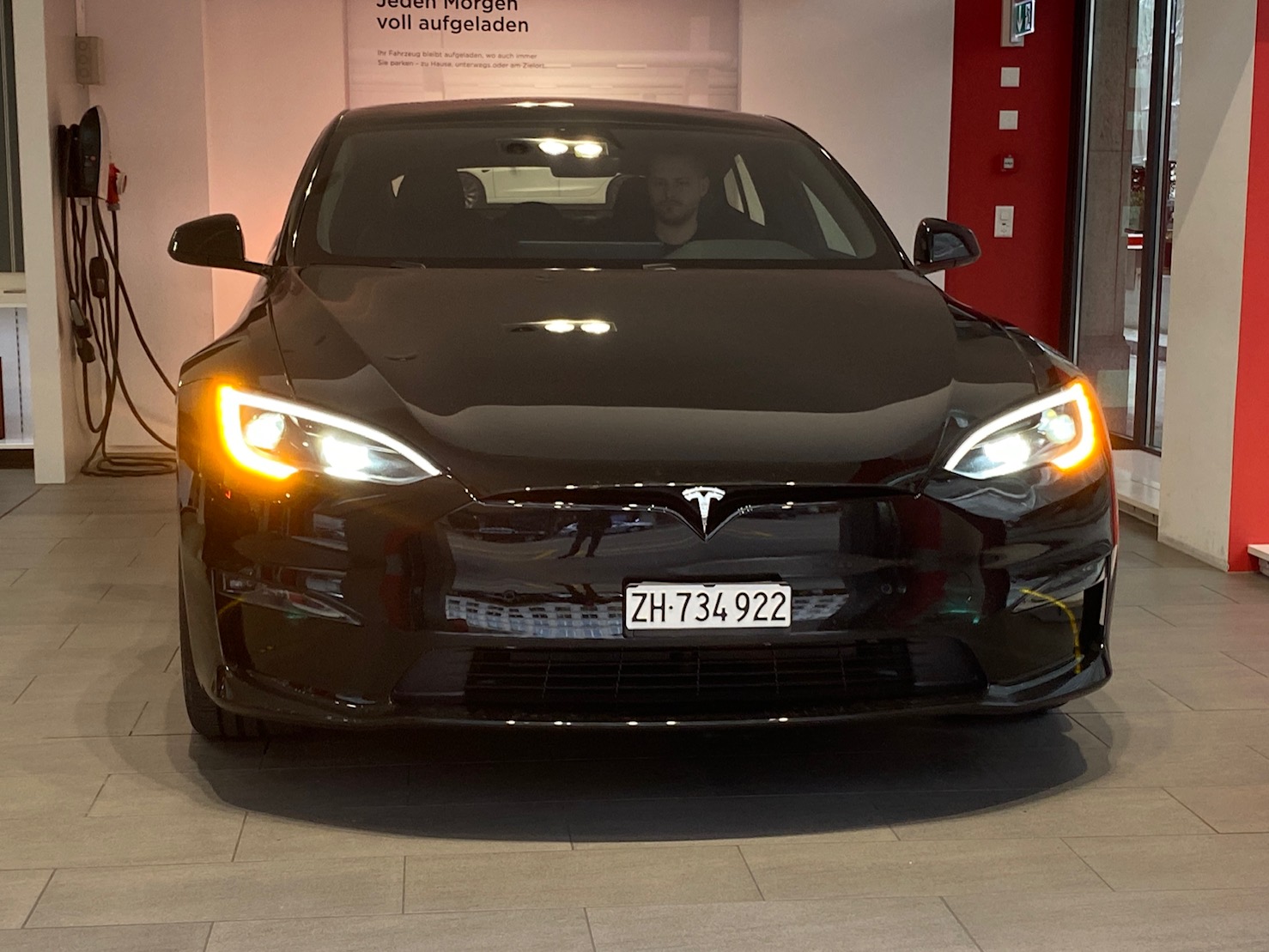
Shortly before Christmas I published my much read “nail in the e-coffin” post, setting out why I’m convinced EV’s are not the only way mobility will develop going forward. At the same time, I made clear that I have no problem with EV’s as a concept, as long as their owners come down form their high horses and stop pretending they’re saving the world. As I said then, this settles the background debate for me (if I didn’t manage to convince you until now, you’ve probably stopped reading anyway). That doesn’t change the fact that EV’s are part of the car world now, and no brand has made more of an impact in this regard than Tesla. Earlier this week it so happened that I had the opportunity to drive the most impactful Tesla of them all – the Model S Plaid. I didn’t know it then, but life was about to enter another dimension…
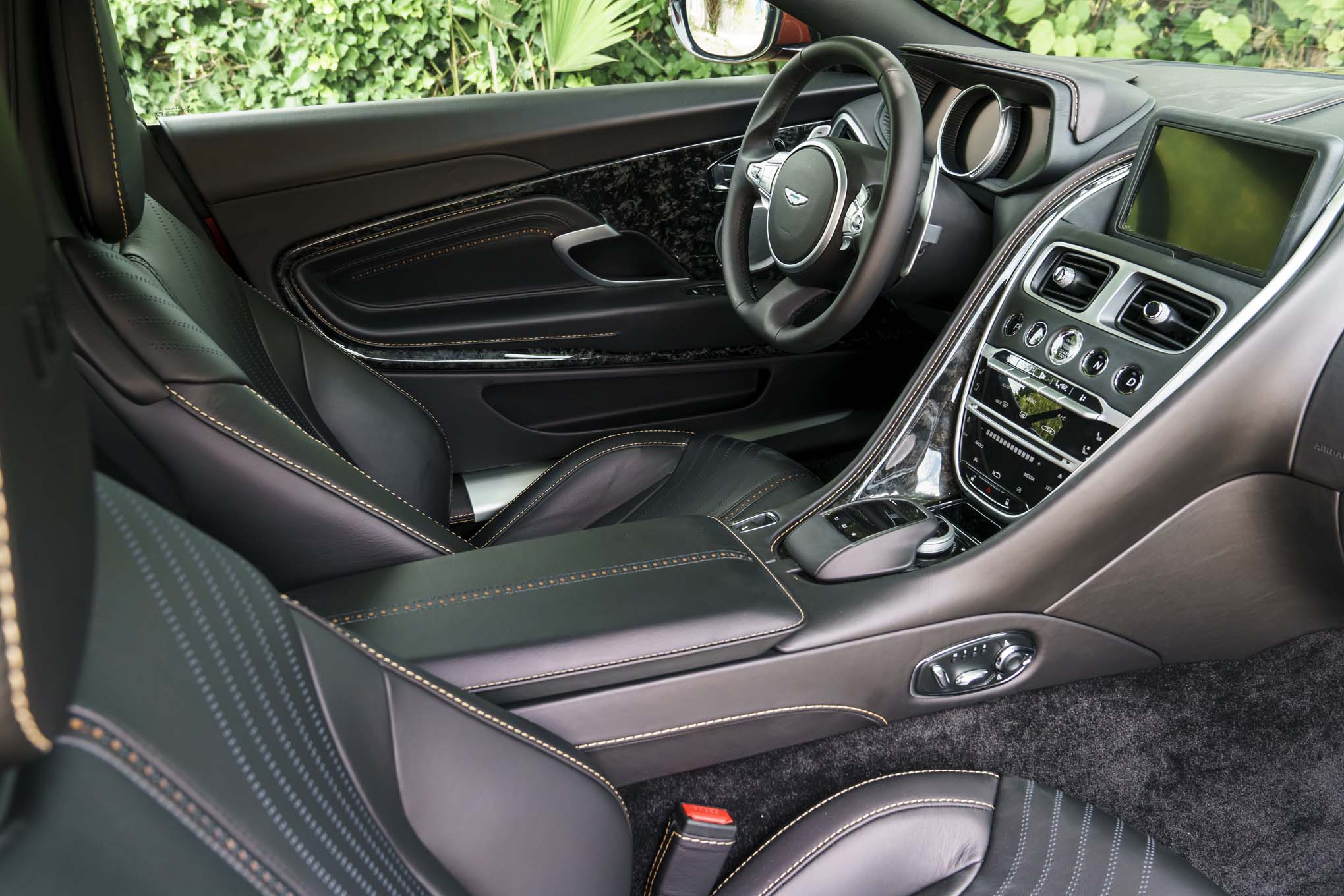
I’ve driven the Model S before but it’s quite a few years ago, so it was nice to see that what was at the time a pretty low-quality cabin now with the introduction of what you could call the second series has been significantly upgraded. The overall layout is still the same but the materials are nicer. It’s no luxury car, but it’s certainly not worse than other EV’s around the same price point (Audi E-tron being an example) The screen is now horizontal across all models, and this Plaid was also equipped with the yolk in place of a steering wheel. This is apparently something that varies by market but at least here in Switzerland, you can choose between a normal steering wheel and the yolk both on the normal S and the Plaid. More on the yolk later, but a clear benefit is that it opens up your vision of the instruments and towards the front of the car.
I chatted about charging, batteries and the new sound system (which is not as good as other high end systems, whatever Tesla says) with a very nice salesman who also showed me some parts of the system. This is of course where any Tesla shines and you have to give it to them, what they do on the tech side is still pretty far ahead of everyone else. An example would be how in other cars, you’re still lucky to find someone offering wireless Apple Car Play, when in a Tesla you don’t need it at all as you have direct access to your Spotify account. Or how I was thinking that it was crap that there was no memory buttons on the electric seats, only to be reminded that you can set up to 10 profiles in the system under which all your seat, mirror and steering wheel adjustments are saved. I may have doubts on our EV future, but such developments will hopefully be part of it more broadly.
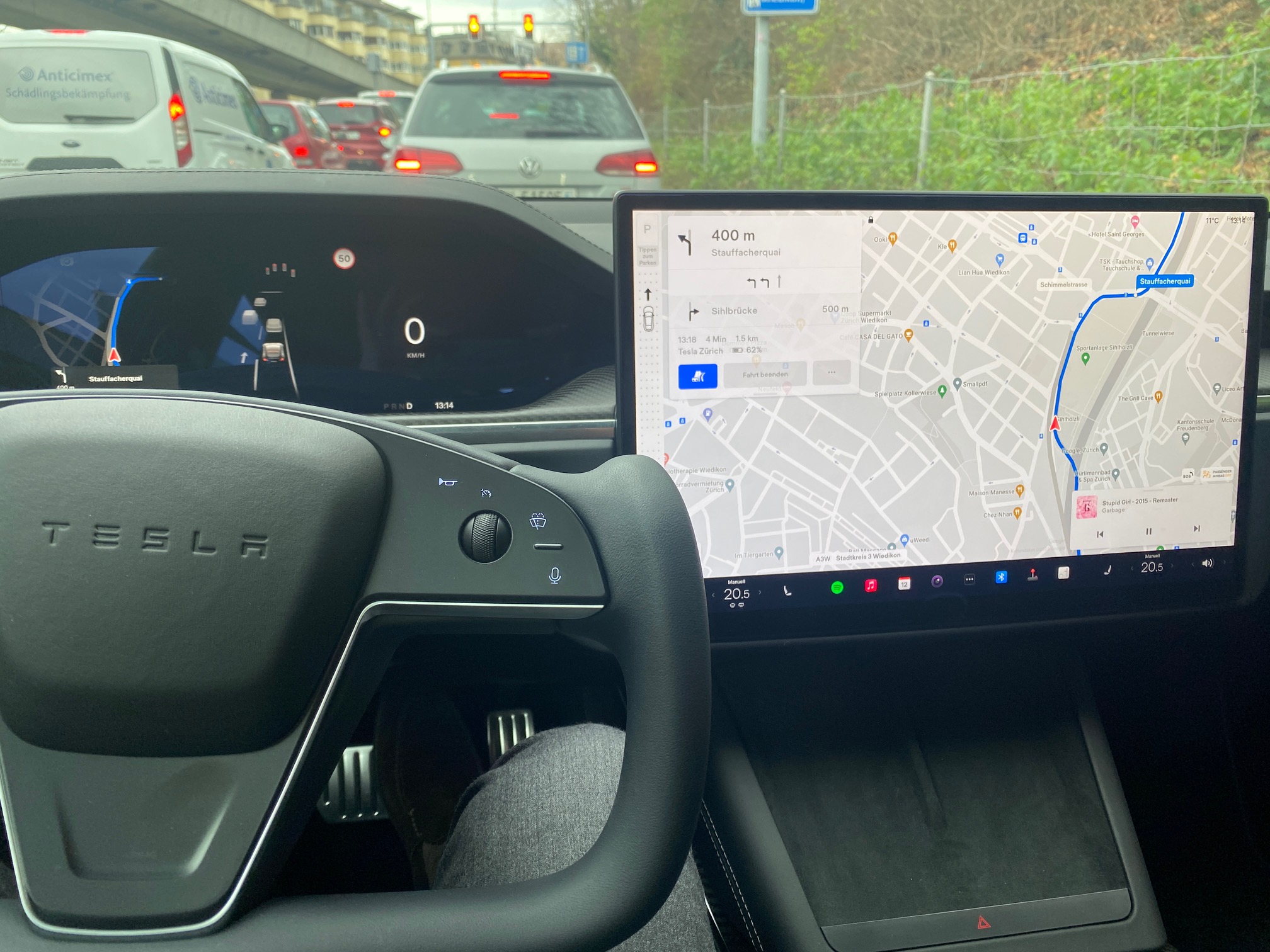
The sales guy then spontaneously offered me to take the car for a ride straight away, which I did. Alone. I followed his recommendation for a route that included both city, motorway and a nice, curvy road over a lower mountain pass, all within 30 minutes of the city (Switzerland is a mountainous country…). I was reminded of two things straight away from previous drives in the Model S, namely to treat the accelerator with some caution (especially in this version…) and also that the recuperation is very strong and as I understand it, no longer adjustable. That really isn’t a problem at all though. It takes you a few minutes to get used to it but not more, and after that you basically drive the car with one foot. I really don’t understand car journalists and vloggers who have a problem with this, however it probably means that you need to actively think of using the breaks from time to time, or your discs risk rusting.
Another very special thing is of course the yolk. I’d like to think that you get used to it and in most situations, meaning everything except roundabouts and sharp turns, you can basically treat it like a wheel. In those situations though, unless you want to cross your arms you’ll need to move your hands without an obvious place to put them. You also need to be careful such as not to hit the small buttons on both sides of the wheel for notably indicators, horn etc. And when you do need the horn, you usually don’t have time to search for a small fiddly button rather than just smash the center of the steering wheel. It is indeed pretty cool not to have the steering wheel blocking your view forward but on balance, the disadvantages with the yolk outweigh the benefits.

The ride is good, as it’s always been with the Model S. I’ve never driven, but ridden in a new Model Y which is a terrible experience, with a suspension that is much to hard. The S is far better, clearly on par with normal cars. Handling is excellent, the car feels planted and neutral. It’s too heavy to dance around the corner but it’s very neutral in its behavior. The steering is precise and can be set with different levels of resistance, but none of them will communicate much of what happens below the car. It’s a different experience driving on a curvy road as you’re not using the break and it takes some getting used to, but I don’t doubt you would get used to it. In summary, I guess you could call it a somewhat synthetic experience. It’s different, but it’s not bad.
And then there’s of course the acceleration. Which is completely freakin’ bonkers. I’ve driven many fast cars, none of which come even close, and I strongly doubt anything does this side of a dragster or a fighter plane. It’s not only about the sheer power though, there’s also the EV immediacy, i.e. the power being delivered without any delay at any point. You hit the pedal (no, you don’t floor it in this car on a public road unless you’re tired of life) and in return you’re pushed back against your seat at the same time as your knuckles whiten. It’s completely and utterly crazy. It’s also completely unusable in anything except a straight line or a drag race. Trust me, I know how to drive on a curvy road and at no point was it possible to use anywhere near the full power of the Plaid.

The new “normal” Model S does the sprint to 100 km/h in 3.2 seconds and has a longer range than the Plaid which is one second quicker to 100 km/h. Except for a carbon fibre spoiler lip on the trunk and the Plaid logo (which looks like the symbol of some religious sect) the cars are identical, and the normal S is 20-30% cheaper. The Plaid is of course nothing more than a prestige object but given that, Tesla should perhaps have worked a bit more on the styling to set it apart? Even putting that aside though, there’s really no reason to go for anything more than a normal Model S, especially since there’s quite a few reports of the brakes overheating quite quickly when the 1000 hp Plaid is driven with some ambition…
For a petrol head deciding to take the – big – step of switching to an EV, at around 100′ CHF in this country, the Model S is probably the best EV you can buy. It’s also the best car in the Tesla range. The Models Y and 3 are both simpler and cheaper in ride and materials, and even though the Model X has had the same interior updates, I’ve never met an X owner who hasn’t had problems with his gull wing doors. The Model S is however not only that, for me it also beats EV’s at a similar price point (think Audi E-tron, Mercedes EQE etc.). It’s better in areas such as range, infotainment and charging infrastructure, and is now also on par in terms of materials. All the others are far less powerful though, meaning they’re less fun. That last part is what makes it worth a consideration for anyone interested in more than the sheer transport from A to B. This petrol head is however not there yet!























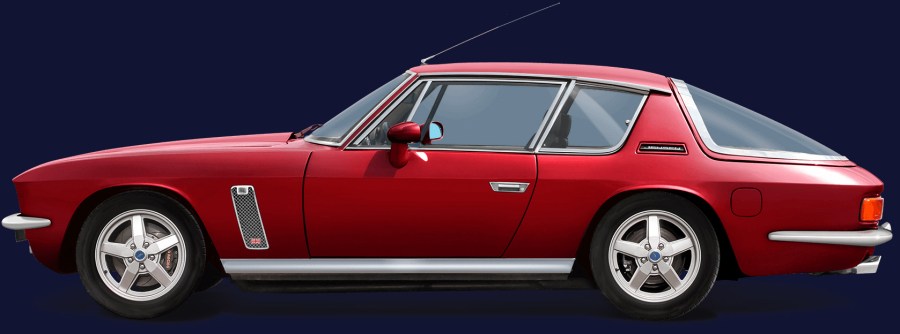
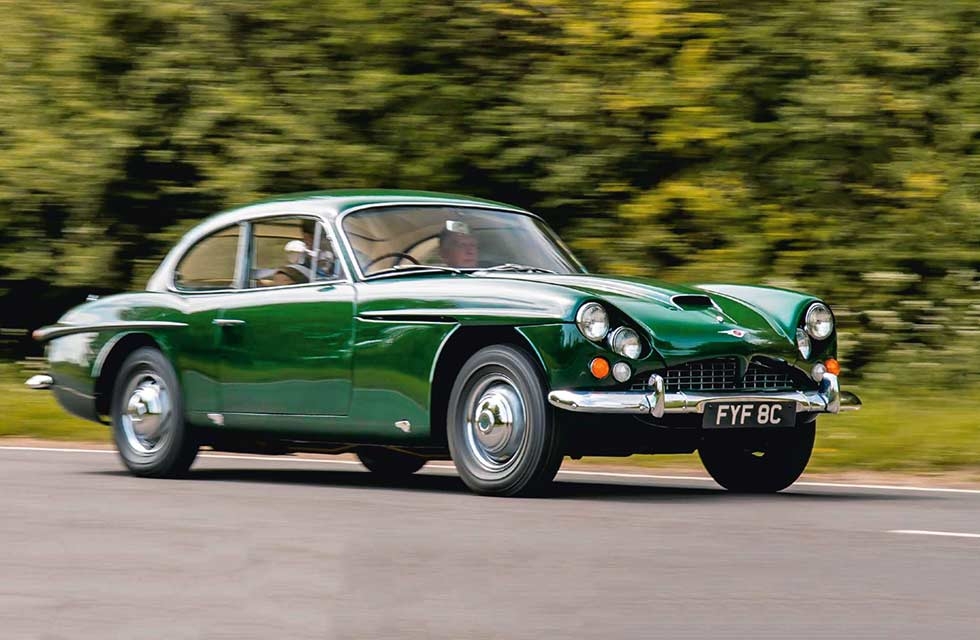 It was the search for a somewhat more successful car than the C-V8 that led to the Interceptor, Jensen’s by far most well-known car, presented in 1966. This time the design had been commissioned to the Italians at Carrozzeria Touring (another company that would go bust a few years later) and although certainly more convincing than the C-V8, it was definitely still quite original. The front looked like many sports car in the day, the rear which in the UK became known as the “fish bowl”, is rather reminiscent of the 70’s AMC Pacer (which was of course designed after the Interceptor). If the exterior isn’t to everyone’s taste the interior is much more so, with a selection and quality of materials that led to the Interceptor being compared to high-end brands such as Aston Martin, Bristol or even Rolls-Royce.
 We’ll make a quick pit stop here for a small side story that I find a wonderful illustration of Jensen and British car industry of the time. Jensen in parallel to the Interceptor built another model referred to as the FF. That’s actually a historic car as it was the first non-SUV passenger car with four-wheel drive, and thus highly innovative for its time. Neither in the 60’s nor now however does it snow a lot in the UK so if you build a four-wheel drive car close to Birmingham, you have to assume it was also intended for exports. All good so far. It’s just that no one in the Jensen factory apparently thought about the fact that most of the world outside of the UK by now had the steering wheel on the left side. So the FF only came as right-hand drive. Let’s just say it wasn’t a tremendous recipe for export success…
Back to the Interceptor, which during the 10-year production came in three series with only subtle design differences between them but where the MK III was by far the most produced. The MK III also came with three different bodies: the most common “glass bowl” saloon, the much rarer and arguably better-looking convertible, and the ultra-rare coupé with a plexiglass rear. All three series had Chrysler big block V8’s and 3-speed automatic transmissions, but whereas the first two shared the same 6.3 litre, 325 hp V8 as the predecessor C-V8, the MK III had an even bigger, 7.2 litre engine, however at 285 hp with less power. This all had to do with the new US emission rules that limited the power of large engines quite heavily. Not only was the 7.2 litre engine less powerful, it was of course also heavier, and just a tad thirstier: apparently we’re talking 25-30 litres per 100 km (8-10 MPG) …
We’ll make a quick pit stop here for a small side story that I find a wonderful illustration of Jensen and British car industry of the time. Jensen in parallel to the Interceptor built another model referred to as the FF. That’s actually a historic car as it was the first non-SUV passenger car with four-wheel drive, and thus highly innovative for its time. Neither in the 60’s nor now however does it snow a lot in the UK so if you build a four-wheel drive car close to Birmingham, you have to assume it was also intended for exports. All good so far. It’s just that no one in the Jensen factory apparently thought about the fact that most of the world outside of the UK by now had the steering wheel on the left side. So the FF only came as right-hand drive. Let’s just say it wasn’t a tremendous recipe for export success…
Back to the Interceptor, which during the 10-year production came in three series with only subtle design differences between them but where the MK III was by far the most produced. The MK III also came with three different bodies: the most common “glass bowl” saloon, the much rarer and arguably better-looking convertible, and the ultra-rare coupé with a plexiglass rear. All three series had Chrysler big block V8’s and 3-speed automatic transmissions, but whereas the first two shared the same 6.3 litre, 325 hp V8 as the predecessor C-V8, the MK III had an even bigger, 7.2 litre engine, however at 285 hp with less power. This all had to do with the new US emission rules that limited the power of large engines quite heavily. Not only was the 7.2 litre engine less powerful, it was of course also heavier, and just a tad thirstier: apparently we’re talking 25-30 litres per 100 km (8-10 MPG) …
 The convertible version of the Interceptor was presented in 1974 and is another example of Jensen’s risk-willingness or complete ignorance of the world beyond the UK, depending on how you see it. At this time most other brands were halting the development of new convertibles altogether, as it was widely expected that US safety authorities would enact a complete ban on open cars without roll-over bar. So Jensen was basically the only brand brave or foolish enough to launch a new convertible in this period. They were ultimately right given a ban was never enacted but they were kind of wrong anyway, since the whole company went bust only two years later, in 1976. By then they had produced about 500 convertibles, out of a total of some 6400 Interceptors.
 Although the big block Chrysler engines were quite bullet proof, the fact that they all had carburettors and lots of them, didn’t make them any easier to run or service. The carburettors had to be adjusted frequently for optimal performance, apparently up to as often as every 1000-2000 km. Cooling was another issue Interceptors were known to struggle with and then there was of course the same issue as with all other cars in the 70’s – rust. You can certainly convert the engines to injection and upgrade the cooling system, an idea that some won’t like at all given the car is then no longer original. It will however be far more drivable, and thus possibly a solution for those preferring to spend time on the road rather than in the garage.
Cooling and carburettors aside, the Interceptor is known as quite a wonderful GT car, offering loads of 70’s luxury and charm typically for far less money than a comparable Aston or Rolls (who as we all know also tend to have an issue or two…). There aren’t many in the market which makes pricing uncertain, but good saloons tend to start somewhere around EUR 50′ with convertibles costing much more. If this wonderful example of British ingenuity combined with a dinosaur-engine of a type will certainly never see again, then please make sure that if you’re not mechanically talented, you know someone who is, and go for a car as perfect as possible, as finding replacement parts for an Interceptor risks being as hard as finding a UK prime minister who will stay longer than a few months!
Although the big block Chrysler engines were quite bullet proof, the fact that they all had carburettors and lots of them, didn’t make them any easier to run or service. The carburettors had to be adjusted frequently for optimal performance, apparently up to as often as every 1000-2000 km. Cooling was another issue Interceptors were known to struggle with and then there was of course the same issue as with all other cars in the 70’s – rust. You can certainly convert the engines to injection and upgrade the cooling system, an idea that some won’t like at all given the car is then no longer original. It will however be far more drivable, and thus possibly a solution for those preferring to spend time on the road rather than in the garage.
Cooling and carburettors aside, the Interceptor is known as quite a wonderful GT car, offering loads of 70’s luxury and charm typically for far less money than a comparable Aston or Rolls (who as we all know also tend to have an issue or two…). There aren’t many in the market which makes pricing uncertain, but good saloons tend to start somewhere around EUR 50′ with convertibles costing much more. If this wonderful example of British ingenuity combined with a dinosaur-engine of a type will certainly never see again, then please make sure that if you’re not mechanically talented, you know someone who is, and go for a car as perfect as possible, as finding replacement parts for an Interceptor risks being as hard as finding a UK prime minister who will stay longer than a few months!



















 The Thrill of Driving