F1 action off the track

In the absence of driving, the F1 circus has still managed to produce some entertainment these last weeks. Mid-May we learnt that Daniel Ricciardo is leaving Renault after only 12 months to join McLaren, and around a week before the real bombshell was dropped, namely that Sebastian Vettel is leaving Ferrari at the end of the season. He will be replaced by Carlos Sainz Jr., and will move on to…. Right. We don’t know, even three weeks after the announcement (and waiting for that piece of news has now made this post a bit old…).

To start with the less surprising news, Daniel Ricciardo leaves Renault after only one season, in a move that made Renault F1 principal Cyril Abiteboul frustrated and speak of a lack of trust. My guess is that Ricciardo is at least as frustrated by a car that last season failed to show any kind of progress over 2018, and you have to believe didn’t give any reason to think it would be better this year. Renault didn’t deliver on everything Ricciardo was promised when joining, and Cyril should thus stop complaining and work on getting his team to perform instead.

Didn’t have much to laugh about lately…

That of course assumes he still has a team, which is far from certain given Renault’s and France’s current status. The French state owns 15% of stumbling mother company Renault, which sacked 15.000 employees last week and has seen demand rock bottom in Covid times. It wouldn’t be a massive surprise that the French state pressures Renault to pull the plug on F1, making Ricciardo’s move look even wiser. Let’s be honest: Daniel should never have left Red Bull and joined Renault in the first place. But with McLaren, he’ll at least be driving for a team that seems to be on a roll, that has plenty of money from Lando Norris’s father Adam, who seems to be slightly more business-minded than the French state, and where next to Lando, he’ll probably have a first driver status.

The far larger surprise came a week earlier with Vettel announcing he’s leaving Ferrari at the end of the season (if we end up having one), when his contract comes to an end. Given it’s unclear where he’s going or if he’s leaving the sport altogether, this has led to loads of speculation as to his reasons. It’s unclear if he was offered more than a one-year extension and on what terms, some therefore claiming money played a role. A lot has also been focused on the lack of a cultural fit at Ferrari after Luca di Montezemolo left and was replaced by the not-very-FI-loving Sergio Macchione and his foot soldier Maurizio Arrivabene. There may be some truth to both points, but you have to believe Vettel is mainly in it for winning races, not for the money. And in terms of culture, the changes didn’t happen yesterday. Vettel has been driving under new management since 2015 and there didn’t seem to be any issues until he started making mistakes. And that was after a certain Charles Leclerc joined, and regularly drove faster – and better.

Not Seb’s prowdest moment

If there is indeed a cultural issue, it has no doubt been complicated by the Monegasque Leclerc, a true Southerner who is fluent in Italian, both language- and cultural-wise. Leclerc is also young enough not to have demands on anything but driving his car, which he does very well. But I doubt this is fundamentally about culture. My guess would be that it’s more related to Vettel sensing he’s losing his first driver status and as a four-time world champion, maybe just not having the energy to go for it again. He has nothing left to prove, which is also the reason he may be leaving the sport.

All good things come to an end sometime

If Vettel says on, his options are rather limited. That he would go to a smaller team with no chance of winning races doesn’t feel very likely. That basically limits it to one option, given Albon doesn’t seem to be at risk at Red Bull (and Verstappen most certainly isn’t). That would be to take the second seat at Mercedes next to Lewis, replacing Valtteri Bottas who’s been on rolling one-year contracts since joining the team in 2017. However, whether Mercedes would be prepared to open such a potential powder keg and whether Lewis Hamilton would agree to it is far from certain. It’s also highly doubtful whether Vettel, who could never challenge Lewis’s first driver status, would accept to play second fiddle to him.

The winner in all this is of course Carlos Sainz Jr, son of legendary rally driver Carlos Sainz, who did an excellent job at McLaren in 2019. By contracting him for 2021, Ferrari also completes the transition to the next generation of drivers. If Albon starts delivering, Red Bull can be said to have done the same thing, leaving Mercedes trailing behind – and making it even less probable they would engage an ageing Sebastian Vettel. The most likely option therefore seems to be that it’s “Tschüss, Seb” thanks for everything!
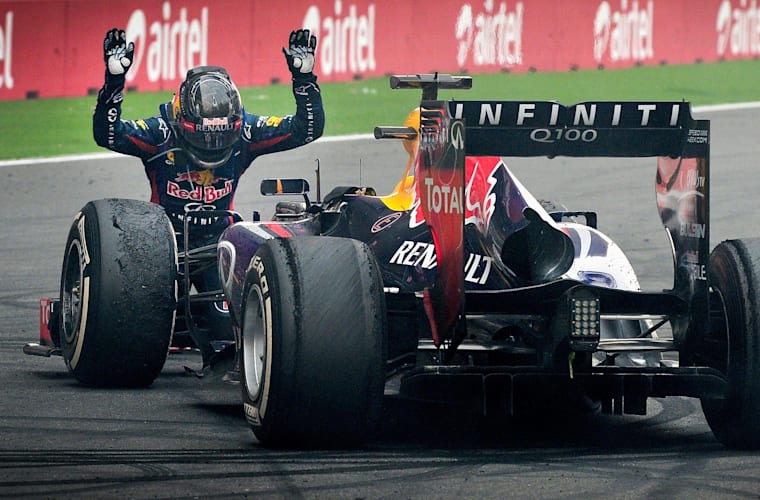
World champion for Red Bull in 2013 – Vettel’s really happy days!

It’s Aston time!

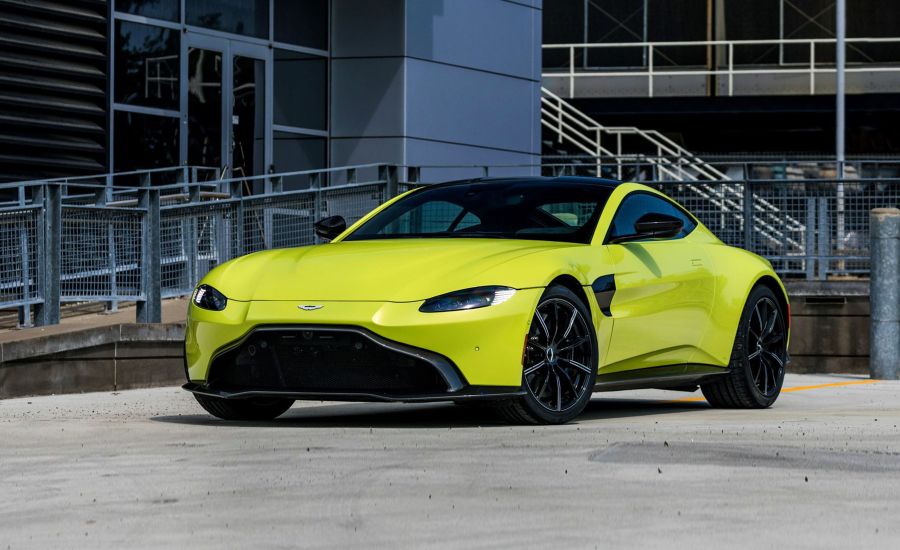
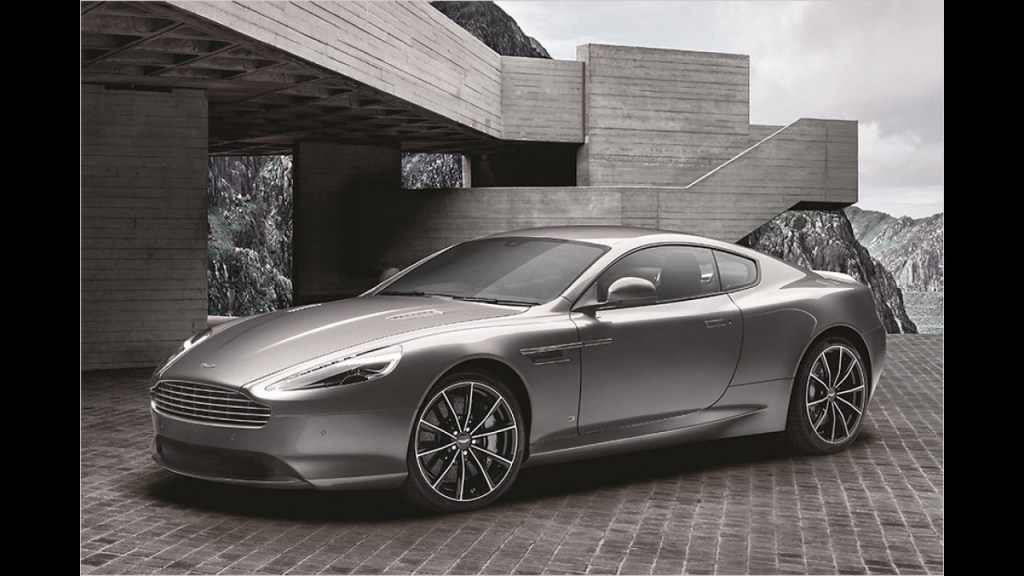
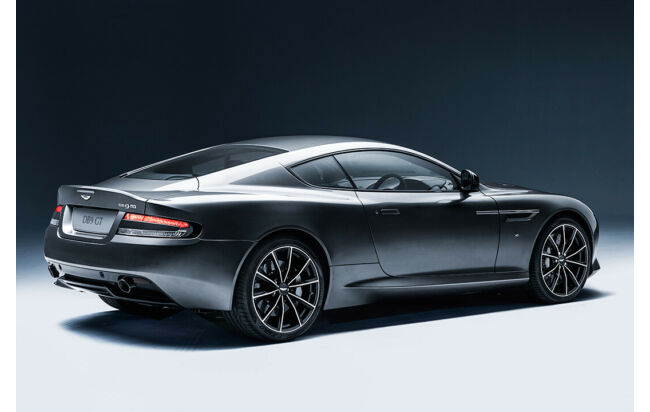
If you were to ask a random bunch of people what they thought was the most beautiful car over the last two decades, I’m quite sure Aston Martin would get a lot of votes. Starting with the DB9 in 2004, following on with the V8 Vantage in 2006, and then the Vanquish in 2012 (that Sven fell in love with in an old post in Swedish that you can read here), we’ve been spoiled with beautiful cars coming out of the factory in Gaydon. The head designer at the time Henrik Fisker, who’s also been featured previously on this blog as we’ve written about the Karma, can take credit for most of these, even if he didn’t fully design the DB9, rather finishing off the car that was done by Ian Callum.

The thing is though, Astons have not only looked expensive – they have been so as well. Until now. Because as we speak, around EUR 40.000 will get you a low-mileage V8 Vantage, or for that matter a DB9. That is pretty much a steal, especially in the case of the DB9 which was considerably more expensive than the V8 when it was new. I strongly doubt good, relatively low-mileage cars will get much cheaper over the coming years.

Let’s first settle the fact that although both exist both with and without roof (the V8 is then called the Roadster, the DB9 the Volante), the design only fully comes into its right in coupe form. The fixed roof also saves around 100 kg (meaning around 1600 kg for the V8 and 100 more for the DB9) and means there are fewer parts that can break – not unimportant when you’re talking about a hand-built British sports car, as we’ll come back to later.

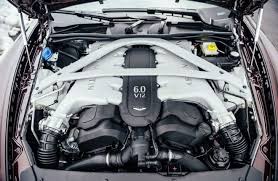
The DB9, as a 2+2 seater, is around 30 cm longer. To me the V8 looks nicer, more compact, with better proportions. And given the back seats cannot by anything but very small children anyway (and by the time you buy an Aston, they will be too big anyway…), there’s little reason to choose the DB9 for them. There is however a very big reason to choose the DB9, and that is of course the fabulous, 6-litre, naturally aspirated V12 from the (old) Vanquish, developing around 450-520 hp depending on construction year. The V8 in the Vantage developed around 380 hp as 4.3-litre, and around 420 hp after 2008 as 4.7-litre (in later years there was also a V12 Vantage, but that’s at a very different price point today). Most will agree that power is thus plentiful in both cases, as is the sound, both with 8 and 12 cylinders.

Oh yes!

Both cars were reworked in 2008, meaning more power but also improved build quality, and some slight design quirks. With some luck you can squeeze in a post-2008 car to the EUR 40.000 budget, or stretch it a bit, in which case it’s probably a good decision.

So what’s the downside? Certainly not the engines, that have a solid reputation even in higher mileage cars, as long as they’ve been properly serviced. The interior has aged less well than the timeless exterior design and should be inspected carefully. Unfortunately, there’s also been quite a few quality issues with everything from the slightly upward-opening swan doors, to – many – electrical issues. Therefore, having a specialist inspect the car you’ve just fallen in love with might be one of your better decisions in life. And then there are of course the running costs, and the insurance, and… But then again, if you’re looking for cheap car to own, an Aston shouldn’t be on your list in the first place.

A V8, here in manual version.

Both the DB9 and the Vantage had long runs and large production numbers in Aston terms. The DB9 was replaced by the DB11 in 2016, the V8 Vantage was produced a year longer. Something like 17.500 DB9’s were produced in total and around 22.000 V8 Vantages (exact numbers seem impossible to find!).

To me an Aston is in a class of its own. The “baby” Aston V8 Vantage was discussed as a 911 alternative when it was launched but I think that misses the point. The 911 (at this price point typically a low-mileage 997, or slightly cheaper as a 996 4S) will objectively always be the better car, but you see one on every corner. How many Astons did you see this week? It’s a rare thing of beauty and a traditional driver’s GT car. It’s actually a car where performance is secondary (but not the engine noise!), since its more about the feel, the sound, the whole experience. Personally I would go for a post-2008 V8. But if you want nothing but the best it can only be the V12 DB9. Because a naturally aspirated V12 can never be wrong!

The return of the car

The world has been in lock down and in a way, so has this blog. Luckily not because of Covid, rather due to a lot of other things going on. But as the world slowly returns to some kind of normal it’s time to take up writing again, and I’ll do so with a bold prediction: one of the winners of this pandemic in the area of transportation will be the car.

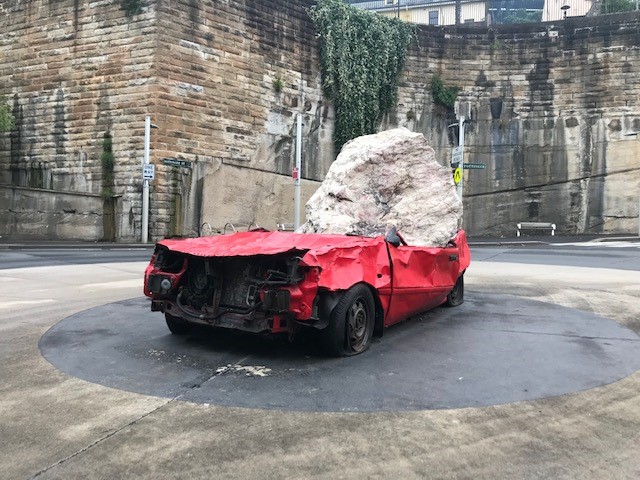
Before the pandemic (in something that now feels like ages ago but is less then six months in the past) we spent Christmas and New Year’s in Australia, where I took the above picture. This relatively brutal work of art in downtown Sydney seemed like a good illustration of the state of the petrol car in late 2019: unpopular, out of fashion and blamed for many of the wrongs in the world. At the time I thought I would use it as illustration to a post on whether our beloved cars were truly becoming a thing of the past. But as we’ve all come to learn over the last weeks, things can change very quickly and quite dramatically, and today I’m quite convinced that it’s the demise of the car rather than the car itself that will soon be forgotten.

Irrespective of whether you’ve spent the last weeks under a severe lock down or under a policy of greater openness, one of the things most of us come out of this crisis with is a feeling of discomfort around mass transportation. We still know surprisingly little about the virus and all the ways it can infect us, but it seems pretty clear that it’s quite contagious, and logic therefore tells us to avoid places with limited air supply for longer periods of time. That rules out certain types of transportation, and also forces us to rethink our travels, both professional and private. 10-hour flight to Asia with 300 others in a cramped cabin? Not if I don’t have to. And given the social distancing measures airlines will be forced to take will undoubtedly reduce the number of passengers, this will lead to higher ticket prices. It therefore seems safe to assume that long-distance travel will diminish.

…and to think this could have been only three months ago… What were they (we) thinking??

However, all problems are not solved just because we avoid flying to other continents. A cruise ship in the Mediterranean is not very far away but proved to be one of the worst Covid traps at the beginning of the pandemic, and the pre-Covid, increasingly popular trend of long train travel suffers from some of the same issues. At least in the short term, the trend is towards vacation in your home country. Here in Switzerland, AirBnB stats tell us that whereas foreign bookings are down 90% for this summer, domestic bookings are very much up.

If we don’t want to fly or take the train, the remaining options have two or four wheels. And whereas the former can be an alternative for commuting, any form of bike is quite lousy for transporting children, dogs and luggage. That’s of course where the car comes in. You could argue this will only be a short term change in habits until we have a vaccine. I wouldn’t agree. Firstly, we don’t know if and when that will be. Secondly, I believe much in our lives has been altered beyond Covid. Thirdly, this is most probably not the last virus pandemic we will see. Therefore, at least in the mid-term, the trend towards more vacation at home is probably here to stay, as is the wish to get there with as little infection risk as possible.

The automotive sector is among the most severely hit following Covid, and that may well be justified. 35 million Americans have lost their job in the last six weeks and they certainly won’t line up to buy a new car, which also goes for many people in other countries whose income is now less secure than it used to be. Logically therefore, this also means that the whole electrification trend will stall somewhat, as will the political bashing of petrol cars, as politics is now about social distancing rather than fuel emissions. We will thus be left with our existing, conventional cars for longer.

Electrification is however not the only area where car technology is developing fast. In the coming 5-10 years, car manufacturing will come to look very different to today, as I’ll come back to in a later post. That could truly revolutionise many aspects of cars and car brands as we know them today, including the cost of manufacturing, and might in the end change the whole concept of personal transportation. But with the long bills we’ll all have to pay for this crisis, both on a personal and a public level, I’m willing to bet you that we won’t be driving in Elon’s high-speed tunnels or fly in our private air planes in the foreseeable future – it feels much more likely that we’ll still be driving cars, hopefully still with some thrill of driving!

The unbreakable, 90’s Mercedes SL

There was a time when Mercedes had a well-deserved reputation for building unbreakable cars. That period reached its peak in the mid-90’s but unfortunately ended with the E-class internally known as the W210, launched in 1995, which tainted the reputation for solid quality quite heavily. In parallel however, Mercedes still built cars based on the previous generation, and one of them, the Mercedes SL (R129), is no doubt the most attractive car from the era – and still a bit of a bargain.

The R129, here with body kit, one of Bruno Sacco’s best designs. Cars from 1995 had white turn signal glasses.

The R129 was built from 1989 through to 2001, an incredibly long lifetime if you compare to today. But again, Mercs from this period were pretty much indestructible, and their buyers, typically elderly German doctors, didn’t look much at driving thrills – so from that perspective, why change a winning concept?

The 90’s SL had a number of different drive trains through the years, from a relatively modest 2.8 litre straight six to a monstrous 7.3 litre AMG V12 developing 525 hp. No doubt the most well-known models in Europe are the 300 SL with a sraight six, and the V8 500 SL developing 326 hp – probably one of the most reliable engines in the modern era.

The 500 V8 with 326 hp in a well-filled engine room.

The SL had some innovative solutions such as an automatic, invisible roll bar and seat belts integrated in the seat backs. The larger the engine, the better the equipment level, but interestingly all cars were delivered with a hard top, to complement the regular soft top. Some cars have (very small) rear seats whereas others only have a flat surface, but in both cases, the area is really only useful as extra luggage space. The SL is a two-seater and an Autobahn cruiser by excellence, steady, heavy, reliable. It will not give you the thrill of an Italian full-blood, but if you choose somewhat wisely, not anywhere near the same running costs either.

A good place to be. The SL is a two-seater, whether it has back seats or not.

A solid, relatively low-mileage SL 500 with the indestructible 326 hp V8 is easily yours for EUR 25.000 or even less, and that’s the wisest choice in the line-up. Cars with smaller engines will not necessarily be cheaper and certainly not give any additional thrills. The same money will buy you a 600 SL with the 394 hp V12, but besides huge running costs, driving-wise that also becomes a very front-heavy car. Finally the AMG models are very rare and correspondingly expensive. Little reason to go there – a 500 SL is good enough, there are plenty of good cars on offer, and it’s doubtful they will get cheaper than today.

The ugliest super-SUV competition is on!

Taste is a subjective matter and if you think it isn’t something that should be discussed in a blog, then feel free to stop reading now, as the below are my very honest thoughts on the increasingly hot competition “Ugliest Super-SUV”.

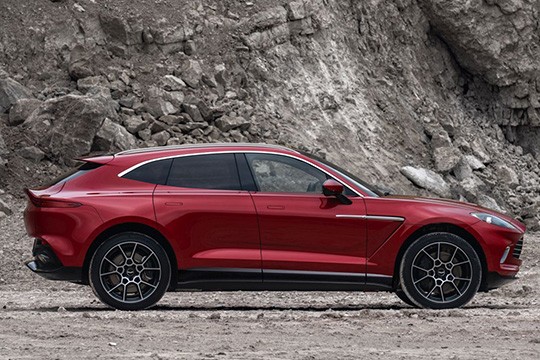
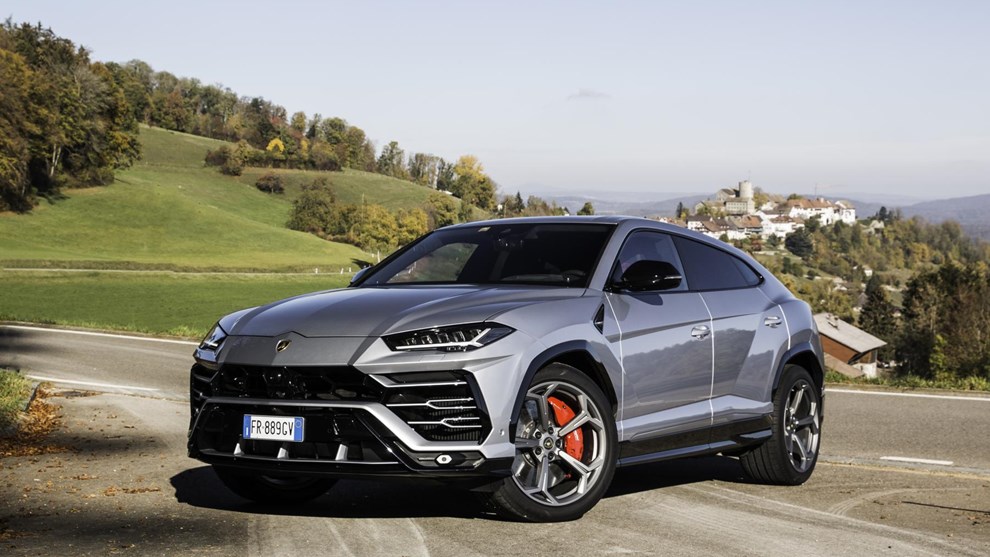
This week Aston Martin joined the other supercar/luxury brands Rolls Royce, Bentley and Lamborghini in launching its first ever SUV. And keeping in the tradition of the others, it’s not pretty. Upfront it’s a strange mix of a Cayenne and a recent Mondeo, from the side the Cayenne also comes to mind, as do current Mazda SUV’s, and from the back, the elevated lip is intended to remind us of the current Vantage (which by the way, I also find less than convincing), but actually looks more like someone gave it a good uppercut. This is all the more extraordinary given on one hand the fantastic designs Aston have spoiled us with ever since the DB9 (until the Vantage) and on the other, the fact that they developed this car from scratch, on a completely new platform, and thus had all the freedom in the world. And yet, this is all they managed to come up with.

The Aston Martin Mondeo

Having said that, Aston joins a club of designs that are far from convincing. I spent a long time studying the RR Cullinan really closely in Geneva in the spring, but that somehow only made it worse. The Audi, sorry, Bentley Bentayga is a rather common sight but the more I see it, the more I interpret the front as a huge pair of frog eyes, suprised at the fact that the car they’re on looks far worse than its cousin, the Q7. The Lamborghini Ursus is spectacular alright, but good-looking? Probably to those that are into stealth planes, but not really those into car design. So with such friends, maybe Aston comes out on top after all?

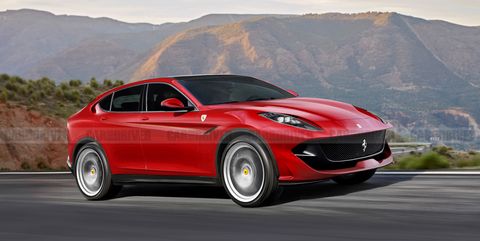
In 2022 Ferrari will complement the others with its first ever SUV. Expectations are rather low by now, but if they bring us a car that has the slightest resemblance to their current line-up, it won’t be difficult to claim the title of least ugly super-SUV.

Do you agree? Do you disagree? Let us know in the comments!

If this is how the Ferrari Purosangue comes out, there’s hope!

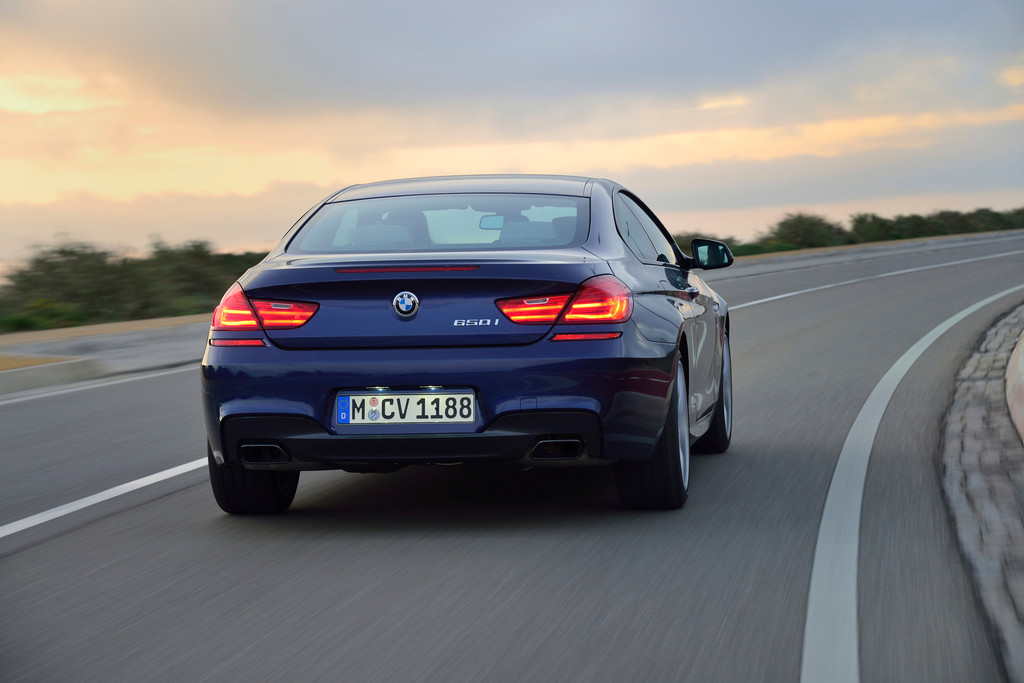
The Bavarian über-coupé

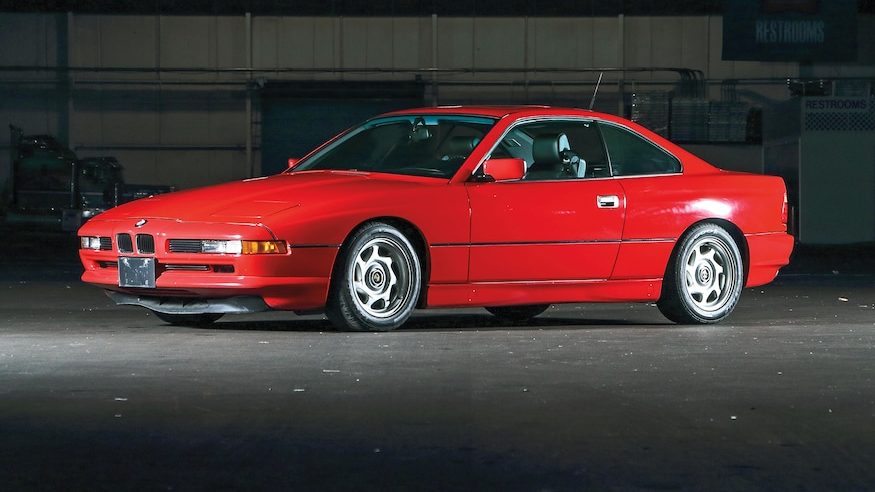
This year marks the 30-year anniversary of the Berlin Wall being torn down, but what few know is that it was actually not until the year after, in 1990, that German unification happened. In the same historical year BMW launched the 12-cylinder 850, a car that didn’t see a successor until this year. I think it’s fair to say that the new 850 didn’t get anywhere close to the attention of its predecessor, but in spite of that, the first 850 can only be described as a failure, its success notably ruined by another world event a short while after – the first Gulf war. Today you can find a really good BMW 850i or Ci for EUR 2.000 per cylinder – and that, my friends, is a bargain worth writing about!

The front is very much M1, the rest of the car very much the 90’s!

I have previously covered both mechanical (here) 12-cylinder and more modern 12-cylinder big coupés (here), but the 850 fell between the chairs on those two occasions and therefore now gets its own post, given my weak spot for this wonderful kind of automobile.

Let’s first do away with a misconception, namely that the 8-series coupé was intended as a successor of the 6-series. That was never the case, BMW clearly positioned the 850 higher up in the market, notably thanks to the famously smooth 5-litre, 12-cylinder engine originally developing 300 hp, a modest number today but oh so impressive back in the early 90’s. It was coupled to either a 4-speed automatic or a 6-speed manual gearbox, making it the the first 12-cylinder road car ever to be offered as a manual.

From 1992, the 8-cylinder 840 was offered in parallel, but the first Gulf war made BMW cancel the plans for an M8 in 1991. Instead the 850 Ci saw its performance boosted to 326 hp in 1992 (the same year the “C” was added to the name), and the top of the range 850 CSi with 381 hp, produced between 1992 and 1996, was the most powerful version in the series. Production ended in 1999 and by that time only slightly over 31.000 cars had been built, of which only some 7.000 had been sold in the US – far below what BMW originally intended.

The enlarged arches over the back wheels are especially nice….

Set low with its stretched body, flowing lines, pop-up headlights (a clear tribute to the M1) and frameless doors, the 8-series has a wonderful 90’s look about it that in my view has aged really well. I remember thinking it was a really big car when I saw one the first time – that’s obviously no longer the case given how cars have evolved, but it’s still a 4.8 metre body and a true 4-seat coupé, although the back seats, especially in the leg-room area, are far more cramped than the size would lead you to believe.

It was few years back I drove one, but I’ll never forget the smoothness of the engine – in normal speeds you can barely hear it and when pushed, it produces a lovely, classy, deep tone, oh so far away from turbo-charged, modern V8’s. The engine and the whole car quickly lets you know that it’s a travel companion, a true cruiser, intended for long, effortless stretches on a Bavarian autobahn or the sweeping curves of the route Napoléon, with those pop-up headlights firmly pointed towards the Côte d’Azur.

It’s sober – but not very joyful…

The interior is quite a somber place with lots of buttons (we’re still talking pre-digital revolution here) and lots of black plastic, but at least there’s no outdated GPS to live with. If you’re lucky though, you may find one with a pre-historical mobile phone, mounted between the seats as on the picture above!

If you’re in the market for an 850, it’s more important to find the right car than whether it’s a manual or automatic, or for that matter if it’s an i (300 hp) or a Ci (326 hp) – both will convey the same impression of superiority, and power will be plentiful. The 8-cylinder 840 with 286 hp will do the job almost as well, but obviously it’s not a 12-cylinder, which is a big part of what makes this car desirable, also from an investment angle.

The only version that has shot up in price today is the top-of-the-line 850 Csi, of which only 1500 were built. Otherwise EUR 25.000 will get you a long way in terms of finding a good car, and I very much doubt they will ever get cheaper – especially the manual version. Maintenance cost will obviously be significant, but at the bargain price you get the car for, that’s where you can invest some of the savings from the purchase!

The best Ferrari is a Maserati

Always dreamt of a youngtimer Ferrari but didn’t get to it before prices sky-rocketed? You’re not the only one, which is why this week I bring you an idea that gets you very close to the real thing without ruining you, even giving you the option of bringing your children along – provided they are small with very thin legs. I am, quite obviously, talking about the Maserati 3200/Coupé.

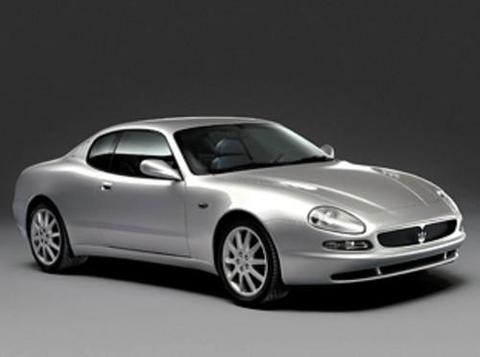
The Maserati 3200 GT was launched in 1998 and became famous for its ultra-cool, boomerang-shaped rear lights. It was produced until 2002 with an 8-cylinder, twin-turbo Maserati engine developing 370 hp. It was replaced in the same year by the Maserati Coupé, looking basically the same but for the rear lights – you see, the Coupé would mark Maserati’s return to the US market after an 11-year absence, and apparently, someone had come to the conclusion that the US didn’t like boomerang lights. Judge by yourself…

The biggest change between the 3200 and the Coupé was under the bonnet, where the previous engine was replaced by a naturally aspirated, 4.2 litre Ferrari unit, developing 390 hp and 450 nm of torque. You may ask how this happened, but Ferrari had taken over the helm at Maserati within the Fiat group already in the late 90’s, so it was therefore not a question if, but rather when Ferrari engines would move into Maseratis.

Next to the regular Coupé version there was a Spyder and a Gransport, a sportier version of the Coupé available both as a manual and with the semi-automatic Cambiocorsa gearbox. Whatever you do, do not buy a Cambiocorsa car. Ever. That box was bad even by the standards 20 years ago and it certainly isn’t any better today.

The 3200 and subsequently the Coupé were both well received by the market notably for their styling, handling and luxurious inerior, with the Coupé also being voted best GT in the US in 2002, the same year it was introduced. Handling-wise the car is more of a GT than a true sports car, although the Gransport muddles that line a bit. The naturally aspirated Ferrari V8 doesn’t muddle any lines at all though, it’s a brilliant engine with a brilliant sound, slightly muted with the standard exhaust but with plenty of sport exhausts and aftermarket options to choose from! It’s also generally considered more reliable then the previous Maserati unit from the 3200 GT.

A Maserati is not an Audi, but that’s precisely its charm. Buttons are not always where you expect to find them, every seam will not be perfect and seats may not have heating. Either you like it or you don’t, and if you don’t, then this is not for you anyway. But if you have some Italianità in you, how on earth could you resist an interior such as the one below?

Early 3200 GT’s with high mileage today start at around EUR 15.000 whilst a good Gransport can be had for around EUR 25.000. Don’t go for the cheapest, and do spend money on a good inspection before you buy – this will never be a cheap car to run, but there are degrees in hell… If you’re speculating on rising values, an early 3200 with the boomerang lights and low mileage is the one to get. If you’re in it for the drive, go for a good Coupé Gransport. You will then be driving a good-looking, Ferrari-powered and well-behaved Maserati for a quarter of what a not-so-nice-looking-or-handling Testarossa will cost you today! But whatever you do, don’t forget it’s a 6-gear manual you want!

Driving the E63 – putting things back in order

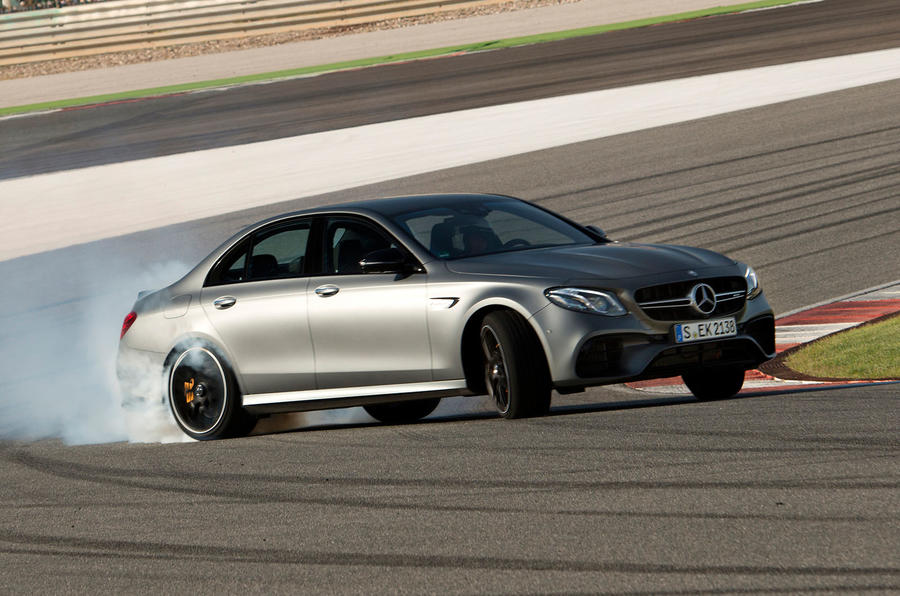
In a post from a couple of weeks ago, I was quite critical of the latest MB E-class. As mentioned then, I had the opportunity to drive a couple of E-classes lately, including the latest E63 – and luckily, driving it pretty much lets you forget any worries you may have about its looks, materials or luggage space!

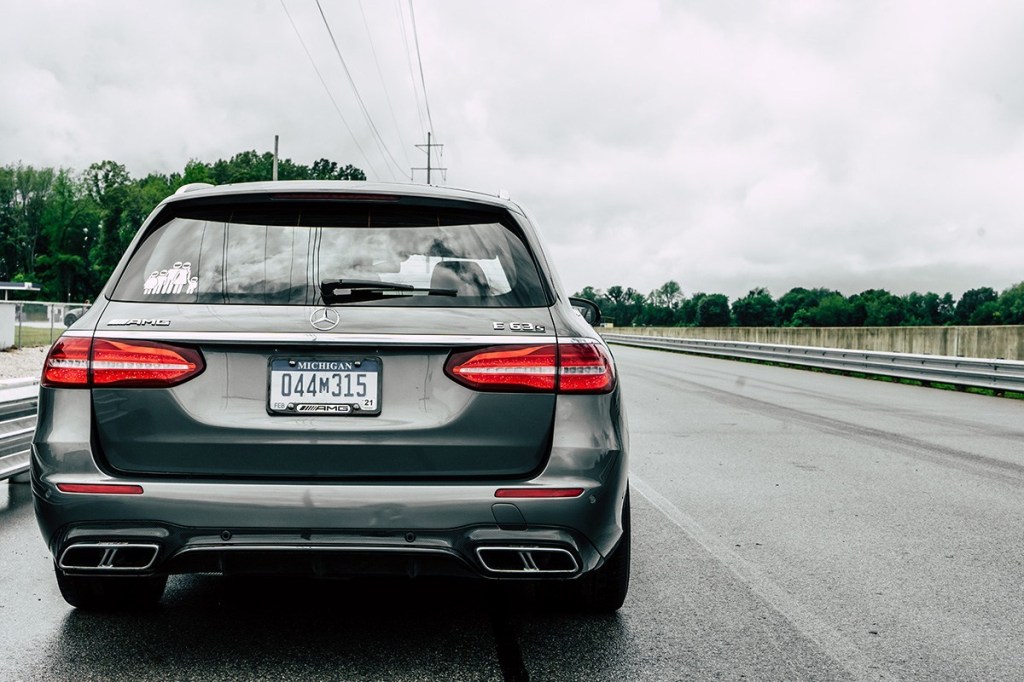
Having owned the previous E63 estate for the last three years (non S-version meaning around 560 hp), it’s of course even more interesting to compare it to the new version. And although the new one I drove was the new S-version with 612 hp, the difference in power is barely noticeable, at least on normal roads. There is a difference in sound though, and that’s not to the new car’s advantage. The deep V8 bass has lost some of that depth in the new, 1.5 litre smaller engine, and where the old car made sure no one failed to notice what you were driving at the turn of the key, the new one in comfort mode (and, I should add, without the optional the sports exhaust) is actually quite discreet.

The optional bucket seats – not fitted in the car I tried, and not advisable as an option according to the sales guy, at least not for daily use.

In terms of driving experience, lets just say that what was always a very good package difficult to fault for its precision, has become even better and more precise. This goes for everything. There is surprisingly even less body roll than in the old car, in view of the cars size and weight. The steering is even more precise than before, and the biggest difference is perhaps the gear changes. I never fully understood the complaints around the old speedshift box – sure, it was slower than many double-clutch boxes, but in my view never so that it was disturbing. The new box however reclaims the lost ground, being on another level. The options in terms of individualizing the set-up are plentiful but the pre-programmed modes leave little to be wished for, at least in normal use. The air suspension is impressive in its capability to cope with everything that comes in its way. Most importantly though, the car still feels playful, ready to shake its behind if you’re up – and prepared – for it.

The proper way to enjoy the E63

So trying to combine the general impressions of the E-class with the very complete package in terms of driving the E63 offers, where does this leave us? To my mind, there is still nothing that rivals the E63 Estate in the combination of supercar and family estate (the RS6 may come close, but it offers far less boot space for those of us who depend on it, and it’s also not as playful as the Merc). In its estate version, the E63 still offers all the advantages of what is still the best family estate on the market, which at a movement of your right foot will leave most other cars, including a fair amount of super cars, behind. On the road that is – and basically assuming you live in Germany and have family members enjoying speed as much as you do. For obvious reasons, the E63 will never be a very good track car.

In this resides the E63s ultimate conflict, as I’ve come to realize during three years of ownership, but more on that in a later post. In the meantime, if you’re in the market for a fast family estate, then to my mind nothing beats the E63, but I would await the face lift next year, that will notably bring the new MBUX infotainment system.

What is up with Sebastian Vettel?

Sebastian (Seb) Vettel is a four-time F1 world champion and generally considered one of the very best drivers in history. Lately though, Seb has lost his mark and nowhere more so than in today’s Italian GP in Monza.

Whereas Vettel’s Ferrari team mate Charles Leclerc drove brilliantly and won the race although arguably having an overall slower car than Mercedes (although Ferrari’s straight line top speed was amazing!), Seb himself not only ruined the day for himself, but did his best to do so for Lance Stroll as well, in a manoeuvre that was certainly not worthy his capabilities. Having gone off the track all by himself in a fast corner, he then regained the track in front of the nose of Stroll’s car, as he came rushing through the same corner. Luckily nothing happened but the resulting 10 second stop-and-go penalty meant the end of Seb’s day and he finished the race in the part of the result list no one looks at.

The problem is that this is not a one-off; Vettel has not won a single race this season and has mixed podium positions with rankings at the bottom of the list. He has started to lose out in qualifying to Leclerc, and also to make mistakes we’ve never seen him make before and at times, like today, showing bad judgement on a level very untypical of him.

Vettel crashing out of the lead in the German GP this year

Italy and Ferrari will be celebrating all night long and rightly so, as Leclerc leaves no doubt that he is currently Ferrari’s Nr 1 driver, also passing Vettel in the overall championship. The question is whether Vettel will be able to come back.

Lewis Hamilton finished third today behind Valtteri Bottas, but the championship is virtually already decided in his favour, also in view of the fact that Ferrari’s two last wins in Monza and Spa have been on circuits very well suited to them, which will not be the case going forward.

How Mercedes ruined the E-class

Ok, time for some serious Mercedes-bashing. Long-time readers of this blog know that I’m a Mercedes driver for family purposes since many years, currently so in the form of a 2013 E 63 AMG Estate, so as a loyal customer I feel I’m entitled to some bashing, especially after some quite serious disappointments on various drives with the new E-class (well, it’s been around since 2017, but that’s still new in my book). The conclusion is quite simply that in a few crucial aspects, Mercedes have built a worse car than its predecessor. Here’s my take on why:

Looks: I guess this one’s debatable but I still haven’t found anyone who finds the new E-class particularly beautiful. The design is kind of uninspired, lacking distinctive features, angles and curves. Now you may claim it’s not the only one (A6 anybody?), but that doesn’t make it any better. The higher in the model range you go, the more obvious it becomes. The new E 63 quite simply doesn’t look the part.

Thankfully there are still four pipes, because otherwise it would be really hard telling the difference to an E220….

Interior quality: the new dashboard has a nice, floating look, with much more choice of materials and looks than the old one (not to mention the dozens of available interior light colours…). The problem is that most of these materials look kind of – cheap. The first person to say so in this family was actually not me but my 19-year old daughter. The quality-feel is also so-so, and not on par with the very solid interior in my 2013 car. Finally some plastic parts that I guess Mercedes doesn’t think you’ll pay attention to, for example the lower parts of the doors and the rear part of the centre armrest, are more reminiscent of the plastic in an old Hyundai than a Merc.

Luggage space: if like us you have two children and a dog cage, there’s basically no other estate that does the trick – the sloping roof line of an A6 or a 5-series make it hopeless to load bulky items like a cage, and still have enough luggage space. Now that the E-class also has a sloping roof line, the cage still fits, but you lose some space vs the old model. It’s still bigger than a 5-series, but in absolute terms it’s a step backwards. And let’s be honest: for many of us, luggage space was a critical factor in opting for an E-class rather than a 5-series.

Back seat: incredible but yes, in the car we’ve all ridden as a taxi, they’ve actually managed to mess up the back seat. It took me three dealers to get confirmation of something that was very obvious as soon as you sat down, but the new E-class has a shorter rear seat bank, meaning you sit with your legs in a steeper angle and lack thigh support. On an 8-hour vacation drive through Europe, that will make quite a difference.

Infotainment: saving the best for last, it’s no secret that for some reason I fail to understand, Mercedes until recently have been far behind competitors in infotainment solutions. Earlier this year the supposedly market-leading MBUX system was launched and is now featured in various models from the A-class to the new GLE and GLS. The problem is, with the E-class having been launched in 2017, you still have the older system (as you do, by the way, if you spend EUR 200.000 on the new G63 which only preceded MBUX by a few months), and will do so until the first face lift sometime next year. This means the screens lack touch functionality. Instead, Mercedes offers you the option to operate them in three ways: over small pads on the steering wheel, on a pad on the centre console, or on a small wheel below that same pad. Having driven a couple of cars a few hours each, I can only say that this remains quite confusing and very counter-intuitive. I felt myself constantly reaching for the screen, then remembering, then going to the control on the steering wheel, then not finding the right menu, then going back to the centre console etc. I guess you figure it out with time, but it’s simply not good. On a brand level, it’s also quite incomprehensible that you get the latest system in an entry A-class but not in top of the line cars until three years later!

U can’t touch this

The E-class is still a great car – but it’s not as great a car as it used to be. Most people probably won’t care and just order a new one when the lease runs out, but given you’re nerdy enough to read this blog, chances are that like me, you do care. You don’t need to agree with me though, and if you don’t, feel free to say so!

The Piëch dynasty – is Toni Ferdinand’s true successor?

As you may have heard Ferdinand Piëch, the legendary (and feared) boss of Audi and Volkswagen and the grandson of Porsche founder Ferdinand (Ferry), passed away this week at an age of 82 years. Piëch was reputed for many things, one of which was his dictatorial way of running first Audi and then VW. There is however no doubt that he was also a brilliant operator, winning numerous fights against both competitors and politicians (VW is still partly state-owned) through the years.

VW patriarch Ferdinand Piëch

Less known is perhaps the fact that Piëch is the father of no less than 12 children from three different mothers. In the coming years one of these, Toni Piëch, will potentially revolutionize the car industry to an even greater extent than his father did.

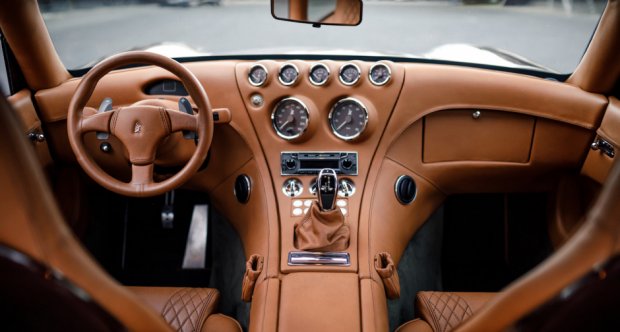
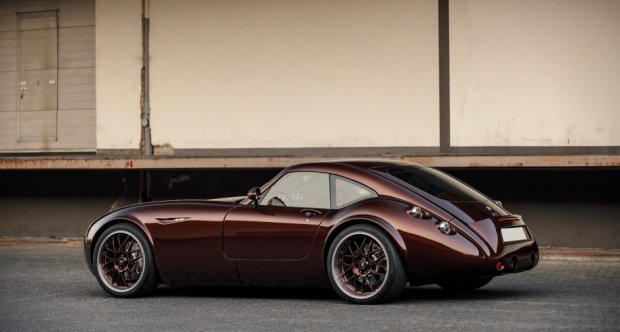
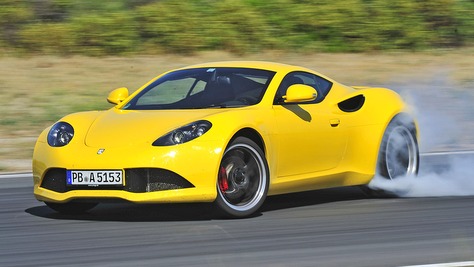
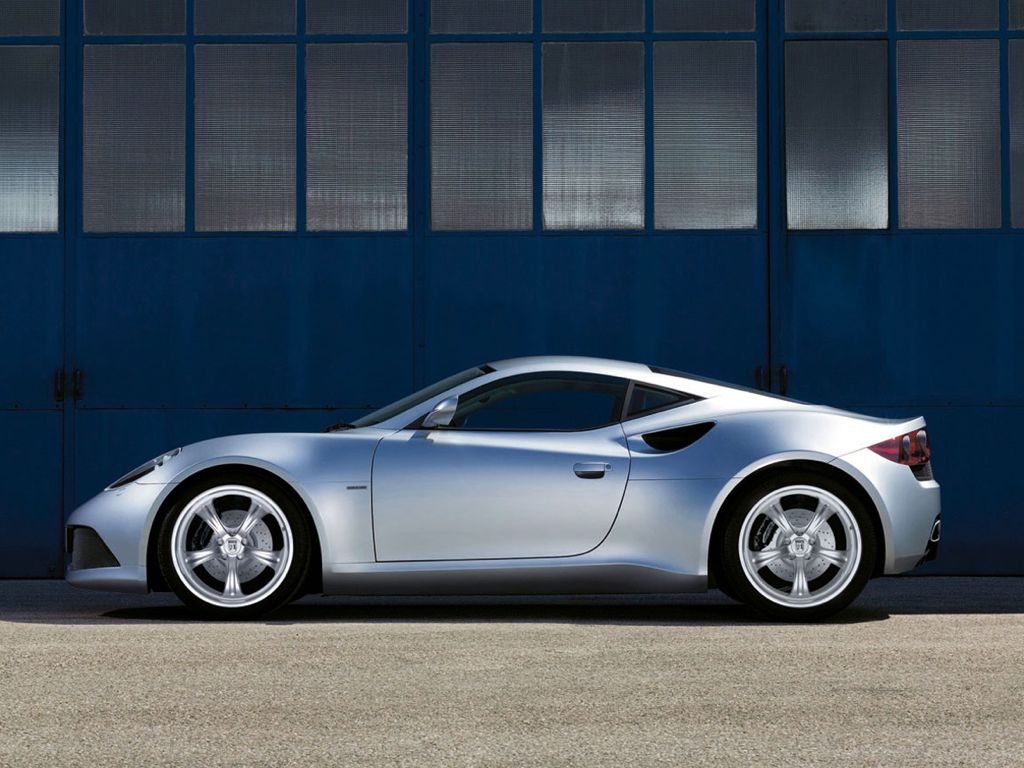
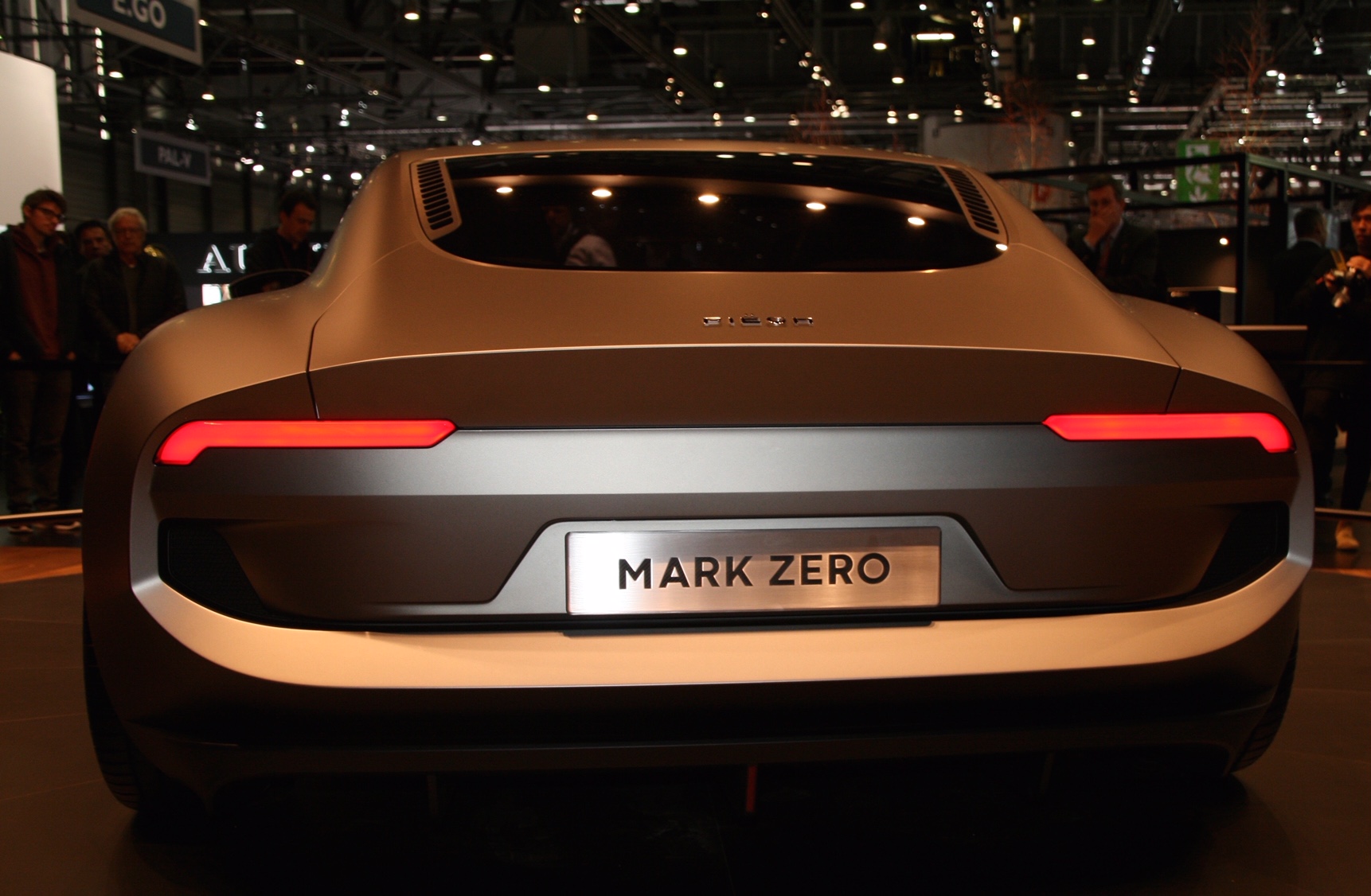
Four years ago, Toni founded the car company Piëch together with his business partner Rea Stark Rajcic. Ever since, the partners have developed a battery-powered sports coupé called the Piëch Mark Zero, based on a new architectural concept said to be able to combine different bodyworks and different engine types. Piëch’s long term objective is to build three cars using the same platform, all through contracted, external constructors. As can be seen below, they’ve done a pretty good work with the first of those bodyworks, and the Mark Zero is a truly beautiful coupé, bearing some resemblance to the DB9 and even more the Alfa 8C, but still with its own look.

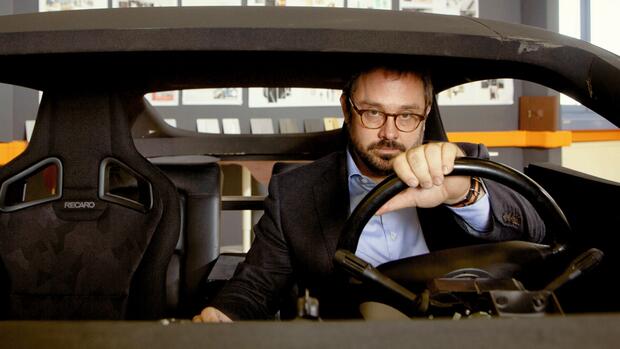
The Mark Zero has been seen at the Geneva Motor Show since 2016, and when I was there this spring, it was in a booth that was among the largest of the whole show – just one sign of the advantages (and financial power) the Piëch name brings with it. On my visit to the show I was invited to the booth and had the pleasure of meeting and chatting with Toni, standing next to the Mark Zero. The man I met had very few of the traits his father was reputed for. Soft-spoken and more looking the part of an engineer than a car boss, he was delighted to tell me about his new baby, its electrical engine with very much similar KwH numbers and range than other current electrical cars (i.e. 80 to 100 KwH, I’m afraid I can’t remember). And then, just in passing, he also mentioned a battery charging capability of around 80% in 5 minutes. Yep, that’s 5 – five – minutes.

At first I was convinced I didn’t hear right, but the same numbers were confirmed a second time, now with the additional information that they work with a revolutionizing battery technology developed in China. This was however as much as Toni was willing to give away.

Piëch recently opened a showroom in Zurich where the company’s headquarters are located, where the Mark Zero is exhibited (actually the same car as in Geneva with production still being a few steps away). The guy in the showroom didn’t tell me much Toni had not already told me in Geneva, but he did confirm that the car will be compatible with the charging stations rolled out for example by Ionity through Europe – that would mean that the revolutionising concept is indeed in the battery technology itself, not in the charging.

Toni Piëch – the disruptor?

This obviously raises a number of questions; why would the developer of this disrupting technology limit himself to working with an unknown, small car brand, rather than make a splash with far larger brands? I actually asked Toni this, and his somewhat evasive answer was that they wanted to preserve their independence and creativity, which doesn’t sound very convincing to my ears. But then again, turning all this around, when Toni set up his car company and developed the Mark Zero, Ferdinand was still very much alive, and knowing what we know about him, it would seem highly improbable that he would let his family name be dragged through the mud with an initiative such as this one, if there wasn’t solid substance behind it. But turning that around again, why would he then not have made sure the VW group could use the technology? Lots of questions with few answers for the time being and if you have thoughts of your own, please feel free to share them below.

Future will certainly tell. Maybe the Mark Zero like so many other initiatives – albeit not carrying the Piëch name – will never reach the market. Then again, the real interesting part is obviously not the car itself but the battery technology it hides under its chassis. If everything said about it is true, this could be the first true disruptor that revolutionises the electric car universe!

Lewis fends of challenge to his crown – for now

Today’s Hungarian GP presented the toughest challenge yet to Lewis Hamilton’s current status as the undisputed Nr 1 F1 driver. Max Verstappen beat him to the pole (as did Bottas, Lewis only starting 3rd) and also took the lead in the race, and further fended off several attacks from Lewis at various points. With 20 laps to go, Mercedes then took the big gamble of calling in Lewis for a change to soft tires, at a point when he was on Verstappen’s heals. The tire change gave Max the benefit of a 20 second lead, but a combination of Lewis’s fantastic driving skills, the faster soft tires and Verstappen’s deteriorating medium tires meant Lewis caught up with him and took the lead almost unchallenged with two laps to go. A brilliant combination of team tactics and top driving!

A very well-deserved, 7th Hungarian GP win for Lewis Hamilton

The weekend was another disappointment for Valtteri Bottas who won second place on the grid only to fall back following an unfortunate accident with Leclerc early in the race, and finished in 8th place. My bet is that he won’t be driving for Mercedes next year, meaning Verstappen could perhaps take his seat, if Mercedes dares having two of the sport’s biggest egos in the same team?

Speaking of changing seats, Daniel Ricciardo’s move to Renault this season with the aim of winning races again will probably go down as one of the worst moves in F1 history. Renault is nowhere near the podium and in Hungary, not even near to claiming any points. I wouldn’t be surprised if Renault pulls the sponsoring for next year, leaving us with one team less and Ricciardo (and Huldenberg) without a seat.

A gullwing on a rainy Tuesday…

It’s not every morning that a 300 SL is parked in front of your office, especially not on a rainy day such as this Tuesday, with no real weather improvement in sight… But if the sun doesn’t light up your day, a Gullwing certainly does, especially the coupe, of which there were only a total of 1400 produced between 1954 and 1957! At the time it wasn’t even the most expensive car in the Mercedes line-up, today at an estimated value of EUR 1.2-1.5m, it probably is…

Speaking of red Gullwings, enclosed below is quite a legendary on board video from the Arosa Classic Car race back in 2012, giving a close-up feel of what it’s like to drive one of these for real – enjoy!

The E-tron – impressive or not?

The E-tron is becoming an increasingly frequent sight on the streets of Zurich and elsewhere. I had the opportunity to study the car in detail at the recent Geneva Salon (check out my video here) and found it a bit difficult to get my mind around: sure, impressive in build quality and good-looking, but that has nothing to do with it being electric and everything to do with it being an Audi. But for the rest?

If you’re a bit cynical, but only a bit, you could say it’s taken Germany’s leading car manufacturers (Mercedes will join the electric SUV party in the coming months with the EQC, a car very similar to the E-tron) seven years since Tesla’s first Model S, and four years since the Model X, to bring out alternatives in the form of cars with less range, less room and, especially critical, far less charging points at present.

Starting with the range, Audi claim an optimal value (also called WLTP range) of 417 km, but are honest with the fact that it’s a distance you’ll only achieve with the AC turned off and ideally neither passengers, nor speed. A more realistic range – in optimal conditions, meaning neither too hot, nor too cold – is, according to multiple tests, somewhere around 300-350 km, and in winter, you can deduct around 30%, bringing you down to as little as 200-250 km per charge. This still supposes driving very legally. The Model X in its latest configuration has an unrealistic WLTP range of 505 km, probably meaning around 400 km in reality, and thus 300 km in winter. Not great, but around 1/3 better.

A short range means you will be charging quite often. Audi will tell you that the E-tron has the mechanical ability to charge up to 350 Kwh, which is more than twice as fast as a Tesla Supercharger (150 Kwh). That’s however in the future, as such chargers are not around yet. Audi is a member of Ionity, a collaboration of leading European car manufacturers currently building charging stations with charging power of up to 150 Kwh across Europe, power-wise on par with Tesla’s supercharger. But in all of Europe, there’s currently not more than 20 such stations. That leaves you with the other 90.000 or so charging stations which are part of the European electric car “roaming” network and that E-tron owners can use (against payment by an E-tron credit card), but the vast majority of those have a charging power of 22 Kwh at most, in many cases even less. Charging an E-tron to 80% at a rate of 22 Kwh means three hours charging time. Taking as example a 600 km holiday drive from Zurich to the French Riviera, there are seven Tesla supercharging stations along the way. With an E-tron, it would mean at least one three-hour stop, and thus more than 2 hours longer travel time – for a six-hour drive.

In terms of interior space, the advantage of Tesla’s swollen egg form is that it offers lots of room, and that its luggage compartments back and front are both roomier, as is the passenger space. An Audi Q7 is much roomier than an E-tron, which more resembles a Q5 space-wise.

So where does this leave us? If space, range and charging times are all irrelevant, then the E-tron is probably the better car – as it should be, given Audi is an established, leading manufacturer and not a Californian startup. But all else is not equal, meaning it’s taken Germany’s leading car brands more than five years to bring out a car that is only almost on par with Tesla, but with a charging network that is comparable to what Tesla offered more than five years ago. That is not very impressive, to say the least.

Keep your hands on the wheel!

The below video made the rounds on Twitter yesterday, so you may already have seen it. If not, it’s quite scary. Five attempts at the same piece of road, but the Tesla autopilot gets it wrong every time, illustrating not only a lack of reliability, but also a lack of self-learning…

Now before you tell me that Tesla recommends drivers only to use the autopilot on motorways, the problem is obviously that you CAN use it on other roads, and as long as you can, someone will – hopefully with better results than this.

There is however – unfortunately – more to the story. The below video was filmed by my co-blogger Magnus, this time on a motorway, a few months ago. The driver talks to Magnus about how long you can hold your hands off the wheel before the car reacts, and after that, what happens speaks for itself. So whatever Elon says, please keep your hands on the wheel!

Three new picks for the Dream Garage

Two super cars and one super classic to the market this week! Do contact me in case of interest in any of the cars, all for which offers are more than welcome.

1958 Aston Martin DB2/4 Mark III

This beautiful Aston has a FIVA identity card and is registered and currently located in Zurich. Its current 5th owner purchased the car from the Aston workshop in the UK in 2015 where the engine had been reviewed and the car stripped and repainted. The car has only added another 2500 km since. It is left hand drive and was imported to Europe from the US in 1989. The requested price is CHF 390.000

2019 Lamborghini Aventador SVJ Coupe

This car is the first of the 900 produced! Outside Giallo Tenerife combined with Nero Cosmos interior and various other options. A European car, the requested price of which is EUR 550.000

2007 Mercedes Benz SLR McLaren

My personal pick if… would be this 2007 SLR with only 15.000 km on the clock. This European car is in mint condition with a requested price of EUR 600.000

F1‘s new star is here!

Charles Leclerc, the 21-year old Monegasque who moved this season from Sauber to Ferrari, is no doubt the new star of F1. Having secured pole position in yesterday’s qualifying, the second youngest driver ever to do so (Seb Vettel being the youngest), he missed the start but only needed a few laps to overtake Vettel and actually making him look quite old. He then drove a perfect race until ten laps from the end when a partial engine breakdown made him lose speed and ending third, much thanks to the safety car in the last two laps. It really doesn’t matter though – Leclerc’s first win will come sooner rather than later.

Elsewhere we’re starting to see first signs of what could be an interesting season. Red Bull (Verstappen finishing 4th today and out of the podium for the first time in seven races) is the only team posing a challenge to Mercedes and Ferrari. Sauber successor Alfa Romeo Racing has good speed with Kimi Räikkönen finishing in the points this time as well. On the other hand Racing Point, ex-Force India, seem to have major issues, as does Renault, continuing the trend of engine failures from last year, this time hitting both cars in the same lap! it’s not fully clear what was behind Ricciardo’s move to Renault, but it doesn’t look like a very lucky one, at least not yet.

How near the brink is Tesla?

Elon Musk was full of praise for Tesla at the launch event of the Model Y last week, starting off with a (not very new) perspective of where Tesla and electric cars stood 10-11 years ago when Tesla built their first car, as compared to today. At the time the world was obviously in the midst of the financial crisis, when some rather large car makers in the US went bankrupt and had to be rescued. Given Tesla’s Q4 -18 and 2018 full year numbers are known, I believe it’s justified to have a closer look at to what extent Tesla in 2019 is comparable to some of those companies in 2008. Unfortunately, this is not that far-fetched if you listen less to Elon and look more at hard numbers.

The Model Y, completing the slightly imperfect S-3(E)-X-Y range

Tesla had current assets of USD 8.3bn at the end of 2018, of which USD 3.8bn in cash. With liabilities at 10bn, the working capital ratio is a negative -1.7bn. The current ratio, i.e. assets over liabilities, comes out at 0.84, and the so called quick ratio, i.e. cash over liabilities, at 0.46. However in Q1 -19, Tesla made a 0.9bn bond payment, thereby bringing the two above ratios to 0.74 and 0.39 respectively. This is where it gets interesting to look at a company like General Motors during the financial crisis, when at the time of bankruptcy the two ratios stood at 0.6 and 0.3. As a further comparison, today the average for the car industry is at 1.36 and 1.2. An established company such as BMW comes in at 1.18 and 0.96, a “new” car brand such as Chinese Geely, at 1.09 and 0.94. There are thus many billions between the car industry at large and Tesla’s current numbers.

It’s also important to remember that a part of Tesla’s cash position is for cars not yet delivered (down payments etc.), and thus not cash in the proper sense. Finally, car sales are still the only meaningful income for the company, with energy sales making up only around 0.3bn per quarter.

SEC darling Elon Musk

Tesla is currently cutting costs by closing its re-sellers and moving to online sales, but savings achieved there will mainly go to reduce prices in the US, where state subsidies to electric cars are about to end. So when Elon announces the launch of the Model Y (and if you want to move directly to the actual showing of the model Y, you can skip a lot of bla-bla to around 27.30 minutes in to the video), completing the slightly imperfect S-E(3)-X-Y range, one can’t help but wonder where the development money will come from. Or will Tesla’s model range effectively end with the slightly less subtle S-E(3)-X?

Preview of the 2019 F1 season

The 2019 F1 season starts this Sunday, as usual down under in Melbourne. The saddest piece of news is clearly that it will do so without one of the leading names in the F1 circus over the last decades, F1 race director Charlie Whiting, who passed away yesterday at the age of 66. RIP!

The very popular Charlie had been part of the F1 circus since the 70’s

Looking at teams, during my visit to the auto salon in Geneva earlier this month, I had the opportunity to chat to the technical team of the Mercedes AMG F1 team, who agreed on the top teams Mercedes-Ferrari-Red Bull probably dominating this season as well, but also saying that it’s very difficult to make out trends among the mid-sized teams. As per one of the technical heads, it is usually pretty easy to get some quite reliable indicators in pre-season testing, but this has not been the case this year, leaving even the top teams relatively clueless as to the capabilities of the mid-sized teams, hopefully setting the stage for an interesting season.

Alfa Romeo has retained Marcus Ericsson as third/reserve driver

In the team line-up, Force India has changed its name to Racing Point, thereby cutting ties with the team’s previous Indian owner Vijay Mallya. Sauber has officially been rebranded Alfa Romeo Racing, putting an end to the name Sauber that has been part of F1 since 1993.

Among the drivers, the following transfers and changes are the most noteworthy:

  • Charles Leclerc has joined Sebastian Vettel at Ferrari. the Monegasque youngster (21 years) drove for Sauber last year and is seen as perhaps the most promising young talent in the field. Kimi Räikkönen has thereby in fact switched seats with Leclerc, joining Alfa Romeo Racing alongside the Italian rookie Antonio Giovanazzi. This is obviously a (quite expected) move in the wrong direction for Kimi, who struggled to keep up with Vettel during most of last season.
  • Daniel Ricciardo has left Red Bull Racing and joined Nico Hulkenberg at Renault. It was no secret that Red Bull increasingly looked to Max Verstappen as the team’s first driver, but Ricciardo certainly had higher hopes than to join the struggling Renault team. Frenchman Pierre Gasly will join Verstappen at Red Bull, leaving no doubt as to who is the team’s first driver.
  • The Canadian billionaire Lawrence Stroll has taken his money from Williams to Racing Point, thereby ensuring a seat for his son Lance (and making Williams’ life even more difficult). The may be a bit harsh since Lance did actually achieve some interesting results last year, but he can’t get away from being the most obvious pay driver in the field.
  • Having first fought for his life, then to keep his right hand, and then to race again, Robert Kubica puts an end to a 7-year struggle by making a remarkable return to the scene this season, driving for Williams. At 34 years Kubica is a veteran who will no doubt struggle, together with the 19-year old English rookie George Russell, to get Williams into the points, as the team on paper is among the weakest in this year’s line-up
Few would have thought Kubica would ever return!

Finally there is a new Netflix documentary on the F1 circus based on the 2018 season that I recommend. It’s called Drive to Survive and you can check it out here. Tune in for a hopefully exciting race on Sunday morning!