Does downsizing have to be boring?

Don’t know about you, but I use ChatGPT more by the day and find it incredibly useful. Earlier this week, I asked it to define downsizing, and it gave me a paragraph on the meaning in the corporate world that ended with the following: “(…) it can also be applied to (…) personal situations where individuals reduce their lifestyle or expenses”. That doesn’t sound like a very exciting topic, but on a larger scale, at least in terms of lifestyle, it’s obviously what the car world is about in general these days. And since recently, it’s part of my own car world as well.

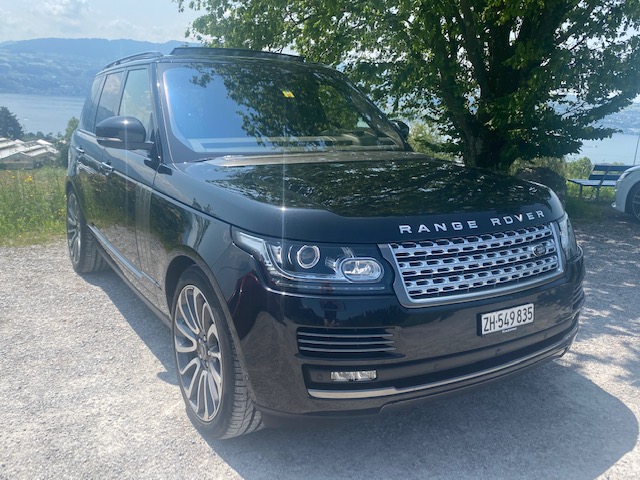
June as been an eventful month for my wife and I, as we’ve realized a long-term dream of buying a place in southern France. This has meant spending more time than usual in that very nice corner of the world, and obviously also that we will do so even more going forward. And that has in turn highlighted how our wonderful, lovely, comfy travel companion, the Range L405, is completely malplacé in French villages and on narrow mountain roads. It’s of course also true that although the 5-liter V8 is not as thirsty as you would think, 12-13 liters per 100 km (18-20 MPG US) is quite a lot when you start adding up the 650 km between Zurich and Nice, as we will be doing.

You’re a wonderful friend, but you’re a bit too big…

Therefore, downsizing is on the order of the day. The Range will need to go and be replaced by something smaller and ideally also more economical. Earlier this week I therefore put it up for sale and then I set out to test some possible candidates in the category “sensible and smaller”. I would think that should be possible while still preserving a bit of style and fun, right?

Until not too long ago, if you lived in Europe and wanted to save on fuel costs, the default choice was a diesel. One of the best modern diesel engines around is BMW’s 3-liter 6-cylinder, offered notably in the 3-series. Given that’s quite a neat car in general and now that the kids are grown up, large enough for our needs, I decided to check it out, in the form of a 2020 BMW 330d.

2019 330d – a good-looking car, especially in the M Sport version

However as we all know, since a few years back, saving fuel increasingly goes over hybrid solutions, with a mild or plug-in electrical engine complementing a petrol or diesel combustion one. Volvo here offers the so called T8e, combining their 2-liter, 4-cylinder petrol engine with an electrical engine on the rear axle. It’s offered across the model range but notably in the very good-looking Volvo V60, which roughly matches the 3-series in size. A V60 from 2021, pre-owned by a Volvo garage and noticeably more expensive than the Beamer, became my second choice in this week’s selection. My objectives were thus to find out not only which one is the best car, but also if they’re viable candidates for us, and finally which way of achieving efficiency is actually superior.

Likewise, the Polestar V60 adds the extra touch to the good-looking V60.

In the 330d, BMW’s diesel gives you 265 hp and 580 Nm of torque. For a family car weighing in at around 1800 kg that’s more than enough and will take you to 100 km/h in about 5.5 seconds. For a diesel the engine is also really smooth without a limited but still noticeable lag when you put your foot down and as always with modern diesels, the torque is impressive. That said, there’s no hiding it runs on diesel oil, and you can hardly call the engine sound sporty.

Handling-wise with a perfect weight distribution and especially in the M-Sport version I drove, to quote Julia Roberts, it really corners like it’s on rails (probably far more than the Lotus Esprit she drove in Pretty Woman!). The interior is solid, noise isolation is good, the quality feel is of course high, although the amount of plastic used in the interior is frankly both surprising and disappointing. In summary, it’s a perfectly good car, but is it fun? Na.

Interior plastics are cheap and light – unfortunately…

Volvo’s four-pot puts out around 310 hp, with the electric engine adding another 90 hp to that. In electric-only mode the V60 has around 40-50 km of range, but both engines also work together for more efficiency, and the electric engine will charge on the combustion engine’s excess energy and through recuperation. Typically though, you would charge the 12 KwH battery at night on a wall socket where depending on charging speed, it will take you a few hours. As other hybrids it doesn’t have a fast charge function so if you stop for lunch along the highway, don’t bother trying to find a charging spot to plug it in as it won’t really make a difference.

Long-term readers of the blog may remember that I had a Volvo XC90 a few years ago, albeit a T6 and not the hybrid T8. The XC90 has been a great success for Volvo and it’s easy to see why, but as my year of ownership showed me at least, it’s not an enthusiast car. Among its two main drawbacks are the pretty awful 4-C air suspension (Volvo should ask Landrover how to do a proper air suspension…) and the clearly undersized brakes. What made me still willing to consider the V60, apart from its looks, was the fact that this was the Polestar version, where the Swedish racing part supplier Öhlins has provided both new suspension and brakes – surely that, as well as the fact that this is a smaller car, must make a difference?

It does and from what I’ve read, this goes for the standard V60 as well, although to a lesser and more under-steered degree. With the Öhlins parts the V60 handles almost on the level of the BMW and although firm, its suspension is far better than the standard package. The main reason it’s not fully on par with the BMW though is clearly its weight, as in the T8e hybrid version, the V60 weighs in at 2130 kg. That’s more than 300 kg more than the 330d, and although Öhlins/Polestar have done their best to hide the kilos, you still feel them. The V60 T8 is certainly not a light-footed car.

Unfortunately, it looks better than it really is – but the seats are lovely!

Apart from the weight, the hybrid solution is a rather pleasant one. You start off in electric mode, clearly indicated in the gauge cluster that also tells you when you move out of it. Whether you want it or not, that motivates you to try to keep it in electric mode, which is obviously also the idea. If you floor it, there’s a small hesitation before both engines put their 400 hp down to all four wheels, producing a similar speed to 100 km/h as the BMW, and a similar torque.

As for the rest, the interior is like any Volvo, meaning good-looking but where the perceived luxury is razor-thin. The car I drove only had 20.000 km on the clock, yet the driver seat already had clear wear marks on the door side (I’ll stop the comparisons now, but just noting that my Range has 100.000 km more and the seat looks like new…). It’s all intuitive though and feels modern, but there’s far more road noise than in the BMW, meaning you don’t actually hear when you’re in electric mode, which is a bit disappointing. Just like the BMW, The V60 is a perfectly good car, although not quite as good in quality and handling as the BMW. It is however about as exciting, meaning not at all.

Trying to sum these two test drives up, the first thing I’ll note is how spoiled I apparently am, coming out of a Range Rover. That said, you may have read my test of an Audi RS4 B8 back in March, a 10-year old car that feels rock solid in comparison to these two. The V60 isn’t a car for me, but I would be willing to give the right 3-series, meaning a better equipped one, a second chance. And I would take the B8 RS4 ahead of both any day but then again, that wonderful 4.2 liter V8 doesn’t fit the efficiency requirement…

Unfortunately, the Chiron the garage selling the BMW had as well doesn’t fit the brief…

In terms of the two technologies however, these highlight what a bizarre world we live in. I looked the Volvo salesman in the eye and asked him how much the V60 would consume on a long trip, when the battery is depleted and the hybrid thus less useful. Adding a margin to his almost honest answer would put it at around 8 liters per 100 km (29 US MPG).

That’s around 2 liters more than the BMW (or any comparable) diesel which gives you as much comfort, is 300 kg lighter, and has far less complication, thus being cheaper to produce. And yet, although a modern diesel is as clean as a petrol engine, governments in almost all countries actively try to suppress them in favor of hybrid solutions. A small note to the US readers here to say I realize this is an issue you don’t really have, but it’s the reality for us in Europe.

A modern hybrid is a highly complex engine…

If you do a lot of short distance drives and less long ones, then, and only then, a hybrid can be a good solution as you will be doing most of them on electric power. If however like for me, your reality is the reverse, i.e. more longer drives than short ones, then efficiency-wise, nothing beats a diesel. Then again, an efficient modern petrol engine doesn’t necessarily consume much more than a diesel and has both a nicer character sound. After all, maybe I don’t need to overdo it on the savings front…

That’s also to say that I have no idea what car I will buy next, and the search will go on over the coming weeks. I probably won’t try more hybrids, but I’ll definitely include some petrols. My fellow blogger Sven feels that a Porsche Macan is really what I need, and that sounds like a reasonably appealing idea. Should you have other suggestions, please don’t be shy and post them in the comments below. I’m not ready to accept just yet that downsizing has to be boring!

Auto legends: the story of Ferdinand Piëch!

One of the nice things with writing a blog that enjoys a growing circle of readers, other than boosting your ego, is that the chances increase by the week of actually meeting your readers in the flesh. Of course this has happened before in the circle of close friends, but in the last couple of months I’ve run into people I didn’t know from before, and it’s subsequently become clear that they read this blog. That’s of course great in general, but it’s even more so when they help generate ideas to write about. Because coming up with exciting content every week isn’t always easy, even in the car world!

This week I’ll therefore start a mini series much like the one on classic car races that I write about from time to time. I’ve decided to call this new one Auto Legends, as it will be about the men (and yes, it so happens they are almost exclusively men) who have helped shape and put their mark on the automobile industry. I can almost feel many of you now expecting to see a picture of an old man with big, black sunglasses here below, i.e. Enzo “Il Commendatore” Ferrari. Actually though, to mix it up a bit (and also as there has been a fair bit of “Italinanitâ” on the blog lately), we’ll start in Germany with a man who has a CV that may make even Enzo blush – Ferdinand Piëch.

Grand old man Porsche in the middle, young Piëch to the right

If the slightly strange, Austrian name Piëch doesn’t ring a bell with you, the first thing to note is that Ferdinand, born in 1937, was the grandson of another legendary car man with whom he shared his first name, namely Ferdinand Porsche. It’s therefore no big surprise that he started his career at Porsche, but that’s not where he became most well-known. Rather, that was as chairman of VW that he completely re-modelled in the 1990 and 2000’s, turning it into an automobile giant, and earning himself a reputation as a, let’s say less likeable personality. But let’s take it from the start.

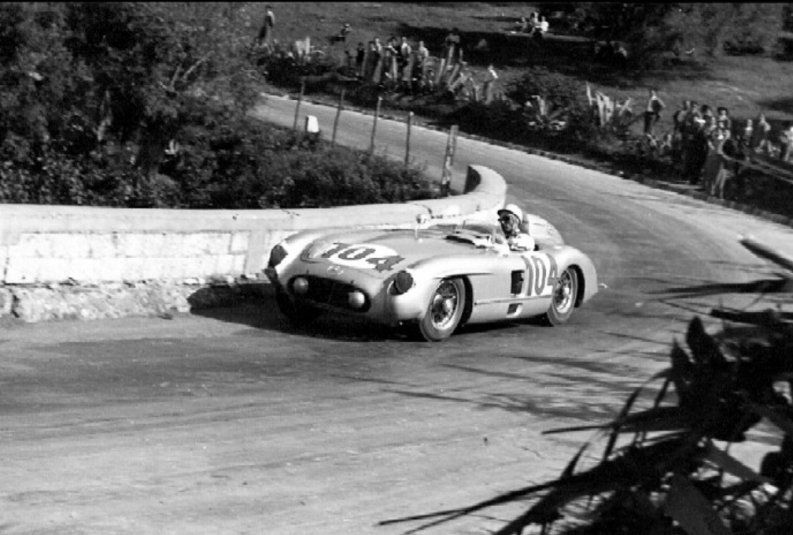
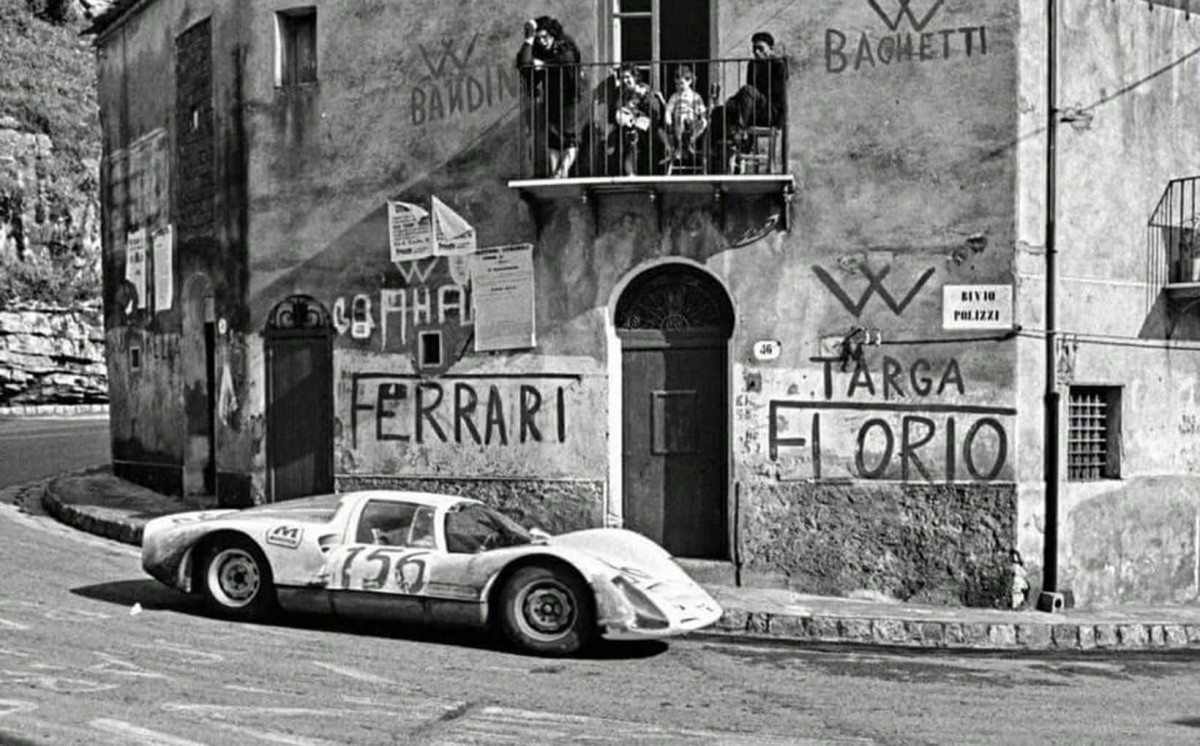
Young Ferdinand Piëch was head of the motor sport division at Porsche in the 60’s. This included the role as head of testing, where his focus was on very light racing cars such as the Porsche 906, which after modifications also became known as the 910. From the post on the Targa Florio earlier this year, you may remember that this lead Porsche to completely dominate that and other races in the late 60’s, by which time Piëch was no more than 30 years old. He was also instrumental in the development of the Porsche 914 that we looked at a few weeks ago, and most other things that came out of Zuffenhausen in the 60’s and early 70’s. Then however, following a feud between different fractions of the Porsche family, he had to leave the company.

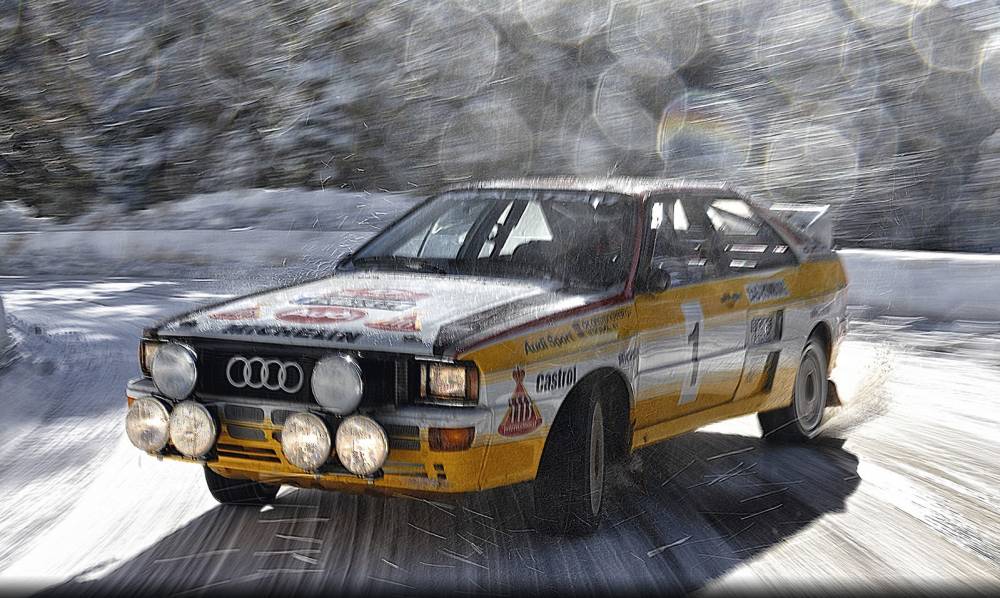
Piéch was the brain behind the four-wheel drive Quattro

In 1975 Piëch thus became head of technical development at Audi, notably leading the development of the Audi Quattro. The subsequent success it had lead Piëch first to the position as co-CEO of the company, and then from the late 80’s its CEO. If you think back to the second half of the 80’s, this is of course exactly the period when Audi went from being a very sleepy brand for old people with hats to something far more modern and desirable. Piéch however kept a strong focus on motor racing when at Audi as well, with next to the rally wins of the Audi Quattro, also various wins notably in the German DTM series for touring cars.

Ferdinand’s star continued to rise on the VW sky and in 1993, he became CEO of the VW group, Audi’s mother company. Having proven his capabilities as a car man, this is the period when his business understanding really starts to shine through. 1998 was a big year in this sense, and more than one eyebrow was raised when in the same year, VW acquired Bentley and Lamborghini (the latter through Audi) and also the rights to the Bugatti trademark.

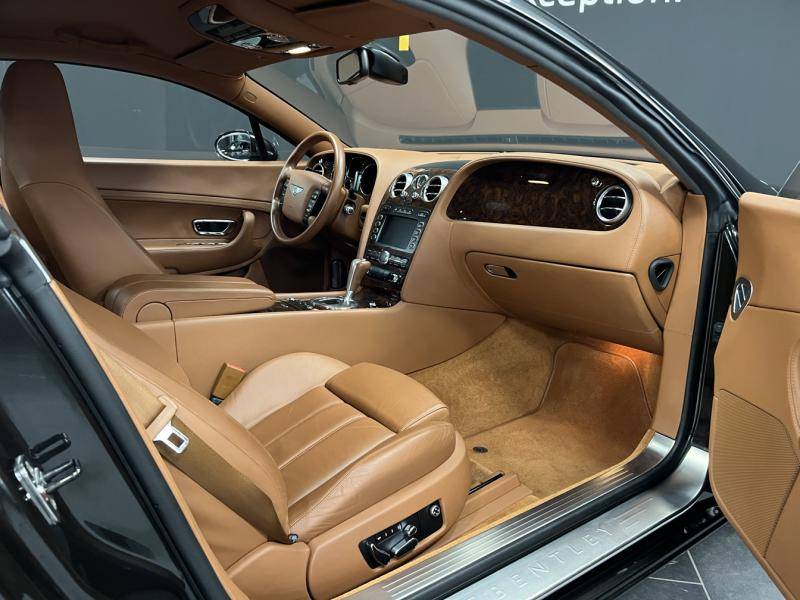
The best Bentley ever – built by an Austrian

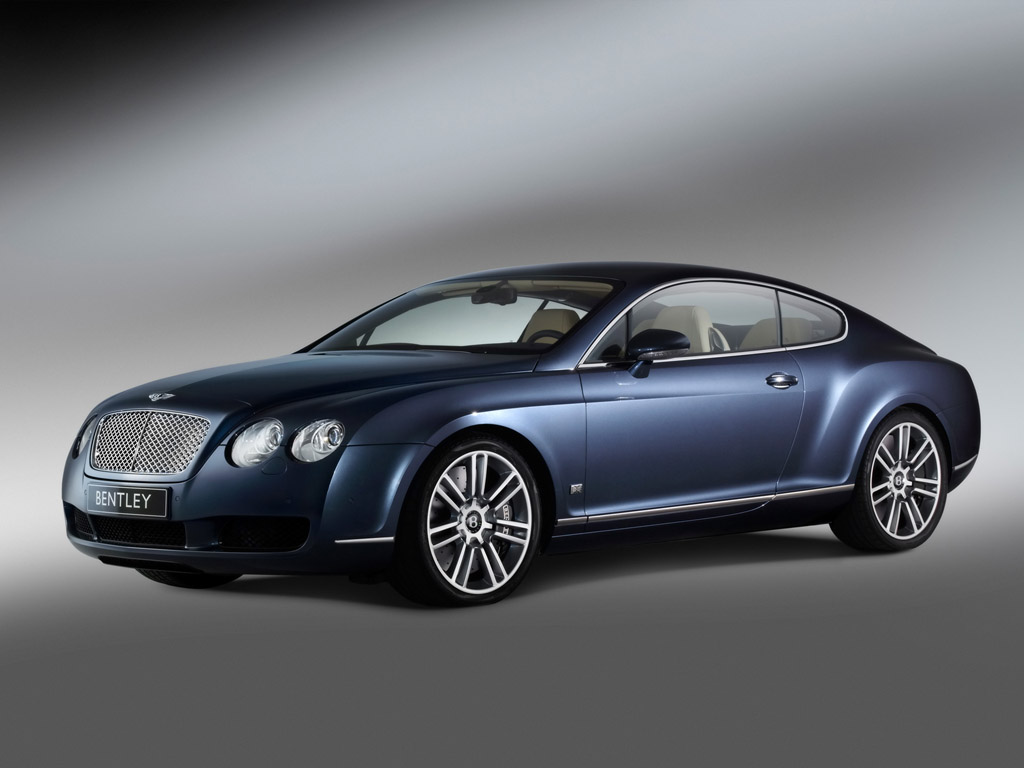
The early 00’s then became the period when Piéch aimed for the stars with the whole VW line-up, arguably with a slight lack of understanding of the perceived prestige of some of its brands. The VW Phaeton with a W12 engine thus never became more than a curiosity, but the Audi A8 with the same engine and of course the Bentley Continental saw far more success. Especially the latter was by many considered the best Bentley ever, and Ferdinand certainly took a lot of pride in knowing how to build a British luxury cars better than the Brits. However, one piece was still missing in Ferdinand’s puzzle.

Even if he hadn’t worked actively for the company, Piéch had sat on the board of Porsche, where his career once started, since the early 90’s. Of course he also had family ties to the brand, so it’s no surprise that he felt especially strongly about it. In 1998 however, in one of his razor-sharp statements, he said that for as long as he lived, Porsche would remain independent from VW. Well, that was to change 14 years later when VW acquired Porsche, while Piëch was still very much alive. To Ferdinand, Porsche became the most important brand in the group, and the group he had built had by now also become one of the largest and most profitable car groups in the world.

The Porsche 910, the Bugatti Veyron and the Audi A2 – Piéch was behind them all!

When Piëch passed away in 2019 his legacy was thus utterly impressive, not only in sales numbers, but also in the cars that were developed under his watch (you could also add here the fact that he was the father of no less than 12 children as well…). The W12 Phaeton may not enter the history books, but the Bugatti EB110 certainly will, and without it, we wouldn’t have seen neither the Veyron, nor the Chiron. And without the Bentley Continental, I’m pretty certain that Bentley as a brand would also have belonged to the past. Adding to this the development of Porsche that was on the brink of bankruptcy 30 years ago, what Piëch managed to build is truly fantastic.

So what about the likability part? To start with, I very much doubt there’s a single global company in any sector who has a Mr. Nice Guy as its CEO. That said, Piëch was known for a very authoritarian, if not dictatorial style of management. He had absolutely no time for errors and wouldn’t tolerate mistakes. Maybe the himself legendary Bob Lutz put it best, saying that Piëch although he didn’t agree with his dictatorial style of management, there’s no question that Piëch was a brilliant person and leader. Today’s VW group is the best proof of that!

Summer cars and value appreciation!

If you live anywhere near central Europe or indeed visited this part of the world during the first three weeks of May, you will have experienced what turned out to be the rainiest May in many years in most places. Villages in northern Italy were flooded but also in other parts, it seemed there was no end to the water falling from the sky. And then as always when despair is near, it all turned at the end of the month, and from North to South, Europe has been sunny ever since. Fingers crossed that it remains so!

Had you been in the market for an enthusiast car in early May, odds are therefore that you would have selected something with a roof. Then again, as soon as the sun comes out, all is forgotten and it becomes obvious that a convertible is the right way to travel through summer. In both cases, if you read this blog regularly, you will have seen my posts on various enthusiast cars, with or without roof, modern or old, and quite often with some kind of idea or prediction as to the direction their price may move going forward.

Nothing like enjoying summer in a nice convertible!

I would claim never to have given any kind of guarantee that this or that car is a safe store of value, or the investment of a lifetime. A professional career in finance and more disclaimers than I care to remember have taught me to be very careful with such statements, but even so, it’s of course a valid question to ask whether my more general statements have been correct? Let’s therefore look back at three enthusiast cars I’ve written about in the last years and where I’ve thought they would move up in value, to see if they’ve done so?

For this exercise to be relevant for as many as possible, we’ll do this looking at three different price segments – the perfect convertible summer car for a small budget, the last naturally aspirated Ferrari, and then also the last non-hybrid Ferrari that I called a supercar bargain back in January 2022 in one of the most read posts on this blog.

The Alfa Spider, here in Mk II, was a delightful long-runner!

It was back in August 2020, almost three years ago, that I wrote about the Alfa Romeo Spider, one of Alfa’s longest-running cars given it was built for almost 30 years, and also the last car to have been designed by the grand old man Battista Pininfarina himself. Nothing has changed in three years as to the Spider’s suitability as a perfect summer roadster for two; it’s a pretty car with plenty of room for your better half and you, and your luggage. At only 1100 kg it’s sufficiently motorized by the 1.7 litre or 2 litre engines, and it’s also more reliable than a comparable English roadster, Oh yeah, it’s cheap as well.

At the time, I wrote that the first, “boat-tail” series had started to get expensive but the later series hadn’t, and that “My guess is that especially the later series that today can still be had for EUR 20.000 or even less for nice examples, still have further to go.”. Well, I guess they still may, but they certainly haven’t gone anywhere yet. There seem to be enough Spiders out there still for prices to remain low for now, which is good news if you’re in the market. But in terms of my predictive power, this isn’t one I was right on.

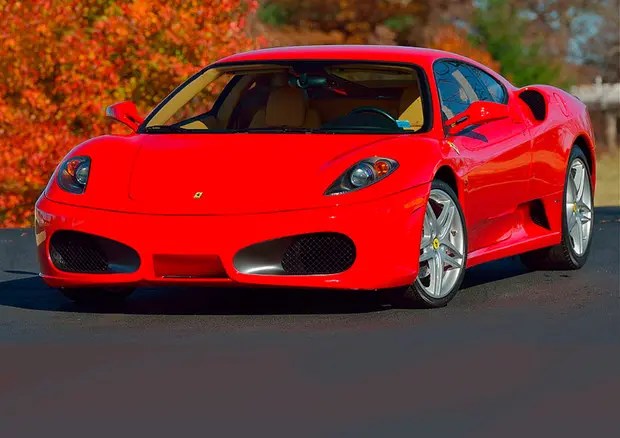
The F430 is one of the all-time greats from Maranello

Let’s next have a look at the Ferrari F430, also known as the Baby-Enzo because of its backlights, that I wrote about a year ago almost to the day. As said at the time, it’s one of my all-time Maranello favourites and of course, the last naturally aspirated eight-cylinder from Ferrari. It wasn’t just the engine though that was a step forward vs its predecessor, the F360. The driving experience, interior and basically the whole car was so as well.

At the time I wrote that the large price premium on the 10% of cars with a manual box (i.e. around 1500 cars all in all) wasn’t motivated, and that “For a “regular” F430, meaning a coupé with the F1 semi-automatic gearbox, prices start around EUR 80-90.000”. Had I written the piece today, I would rather have said that they start at around EUR 100.000, meaning an increase of about 10% over the last 12 months. Not dramatic, but still not bad in such a short time. I would therefore claim that my statement that it had upwards potential given that it was barely more expensive than the F360 at the time, was correct.

The Spider will of course cost you a bit more than the coupe…

Looking through the stats of the most popular posts on this blog, the one where I called the Ferrari F8 a supercar “bargain” from only six months ago consistently comes out on top. Just like the F430 was the last naturally aspirated V8 from Ferrari, the F8 was the last non-hybrid one. It’s the successor of the 458 and the 488 (a face-lift on a face-lift if you want to be mean) and the model that was the bridge between combustion-engined Ferraris and the new hybrid generation.

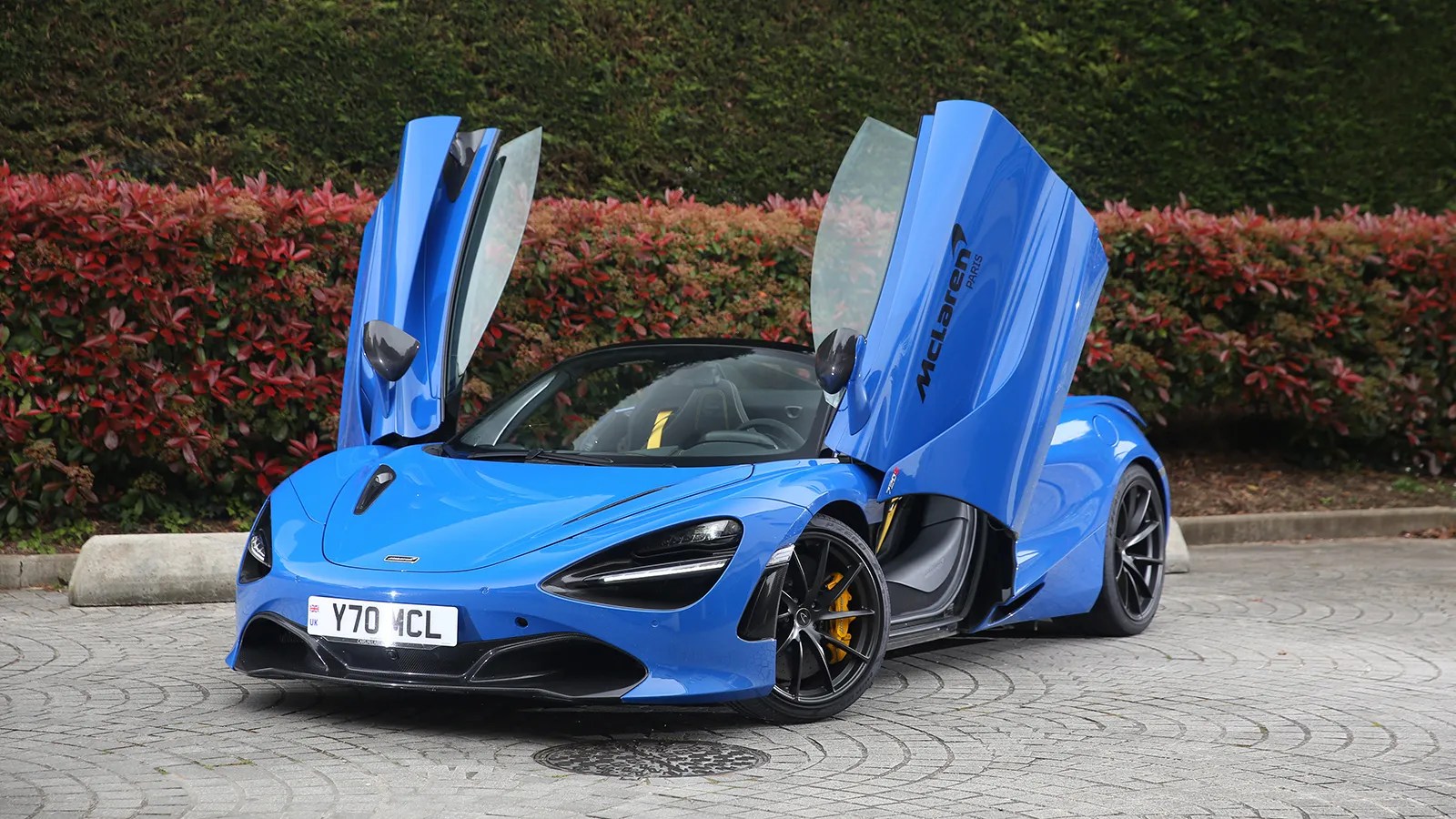
At the time of writing, when comparing it especially to its predecessor, the 488 Pista which is a much more hardcore car, the F8 looked very much like a bargain at the EUR 250-260.000 cars then started. That was reinforced by the McLaren 720s that I still think about as the closest competitor, being slightly more expensive. Today, I can only say that I should have acted according to my beliefs, since EUR 290-300.000 is where prices start today, only six months later. And earlier this year production of the F8 ended, so my guess would be that the F8 continues on that trajectory.

The McLaren 720S that I compared the F8 to on the other hand, keeps losing value.

To come back to those disclaimers we like to use in finance, this is of course only what the market looks now, and given this blog has a global audience, it’s important to say that this is written from a European perspective and there may certainly be price differences between this and other regions. Let me also remind you of my post from two weeks ago where I mentioned not only the importance of buying at the right price, but also not to forget associated costs for maintenance storing, etc.

Then again,disclaimers have never been any fun, so that would be a boring way to end the story. A slightly bolder statement is therefore that Ferraris which are something special, such as both the F430 and the F8, will most probably at least hold their value very well. And at EUR 20-25.000, an Alfa Spider remains very much a bargain that will also not break the bank if something goes wrong. Therefore, whichever segment you’re in, congratulations if you’re in the market, choose wisely, and enjoy the summer!

Shelby’s spitting AC Cobra!

Did you know that the cobra is not one snake, but rather a family of snakes? In other words, that there are far more variations of this frightful animal than one? I didn’t, at least until I started to write this. There are at least six species that are usually included when you talk about cobras, notably the king cobra, which according to the definition of a “true” cobra would otherwise not count as one. That definition is limited to the Naja species, itself containing around 20 different types that you’ll find across large parts of Asia and some parts of Africa.

Taking another path is highly advisable

What these all have in common is being 1.5 to 3m long, able to raise around a quarter of their body and flatten their neck to appear larger than they are, and spit. The mechanism of that, which is apparently more a squirt than a spit, goes beyond this post, but the venom they deliver in this and other ways attacks the nervous system and can be deadly. As you’ve probably gathered by now, snakes is not one of my favorite animals. I like cars though, and I certainly don’t mind the one carrying the cobra name, as AC Cobra or Shelby Cobra. Without the risk of being spat at, let’s have a closer look at it this week!

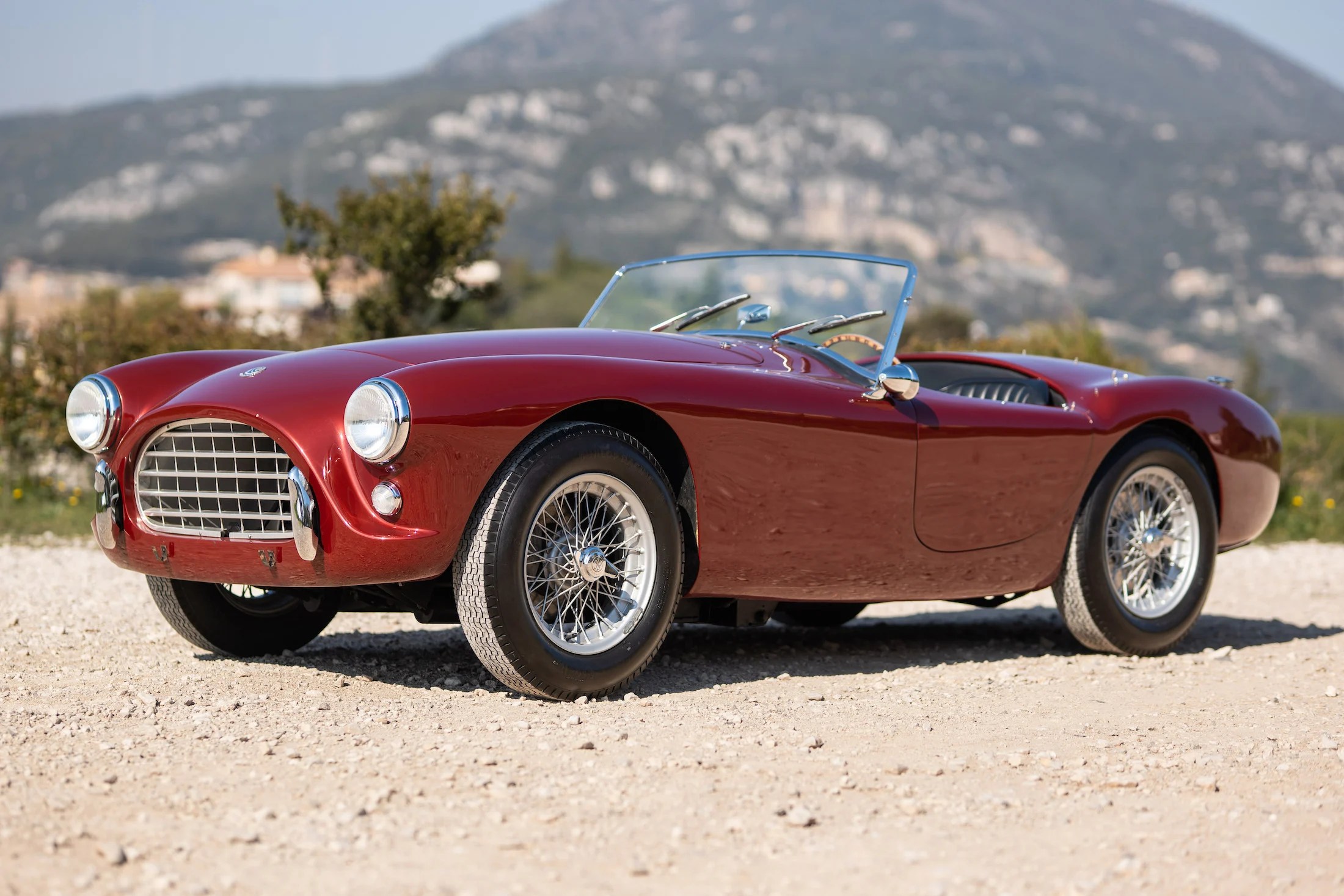
To do so, we need to go back to our old friends at Bristol that I wrote about in a post earlier this year. That’s where it starts as you may remember that in the 50’s, the aeroplanec ompany that was to become Bristol was set on building a light, two-seated sports car, which they also did. It was referred to as the AC Ace and was powered by a two-litre, straight six derived from BMW and delivering around 130 hp, tuned to a bit more for racing purposes. Of course the car was light and given it also had quite an advanced independent suspension, it did really well in different European races at the time, although it didn’t win any major ones.

The Ace wasn’t just good, it was good-looking as well!

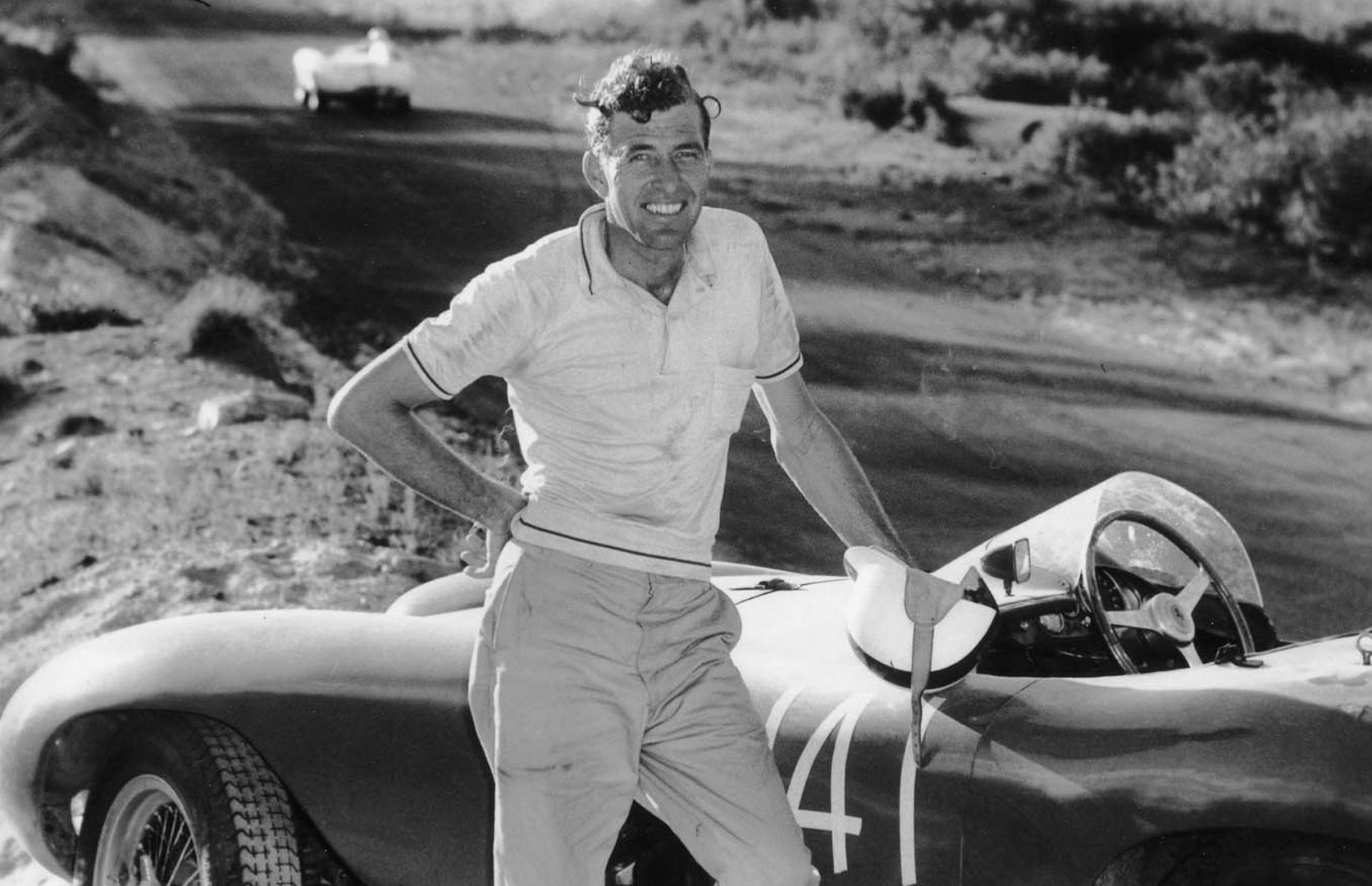
On the other side of the pond, Carroll Shelby’s career as a racing driver was coming to an end and his next one as constructor was about to start. Shelby was a living legend already then as one of the most successful racing drivers of the time, winning most of what there was to win at the time over in America. Now in the early 60’s he was starting off as a constructor and was looking for what he called “a winning bet”. It was over at Bristol in the UK that he found it. The Brits certainly didn’t mind because by this time, they had lost the rights to use the engine the Ace had been powered by and this at least created some demand for a car, the future of which was otherwise uncertain.

Carroll Shelby, one of the all-time greats!

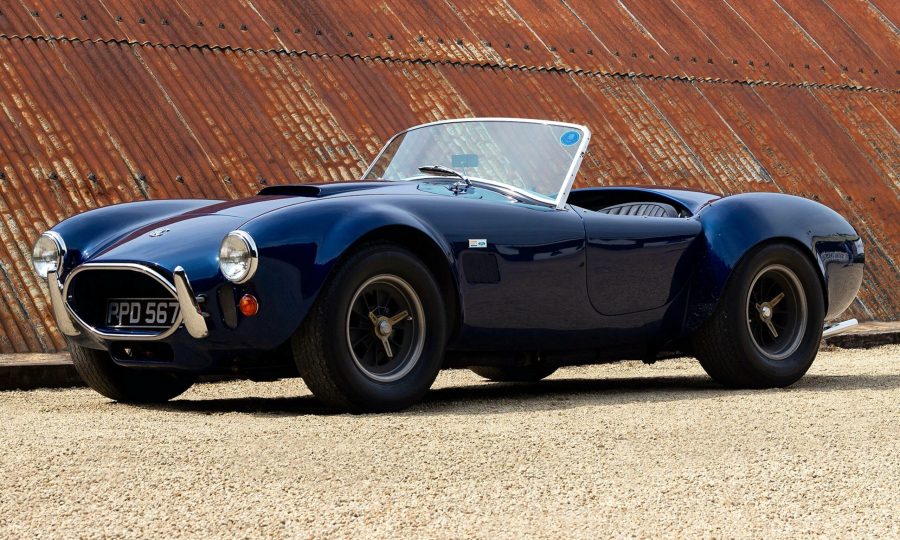
Shelby had seen the success of the Ace in Europe and now came up with the very American idea of trying to squeeze a V8 into it. The car already then looked like a slimmed down version of what the AC Cobra would later become, but just to get the context right, let’s remember that at 3.6 metres and 850 kg weight, this wasn’t really a car for which a V8 had ever been intended. AC did however send over an empty car to America where Shelby was just starting his relationship with Ford that would over the years develop into a very close one. Ford thus delivered the engines that Shelby squeezed into the car that he now started calling the Cobra.

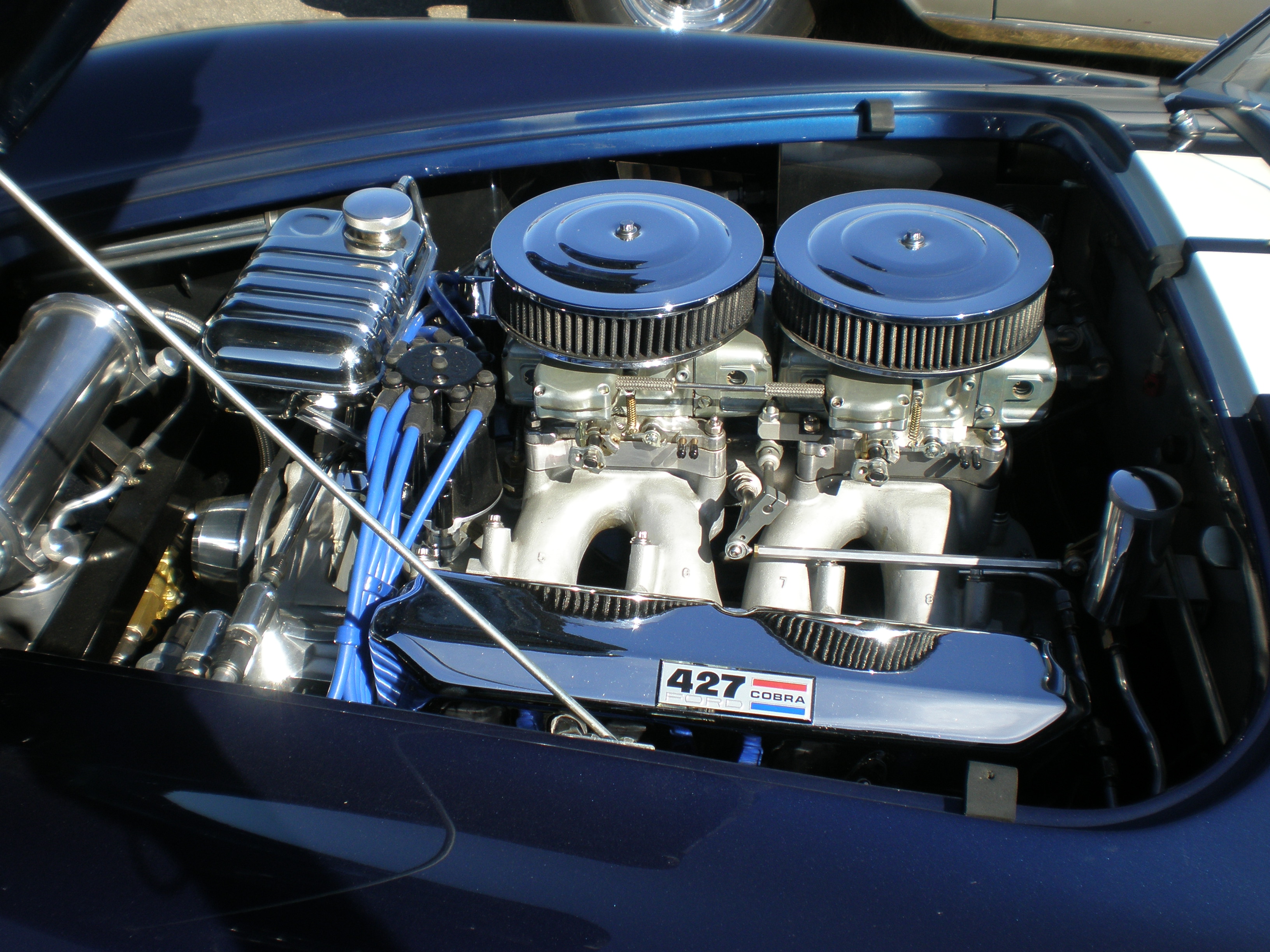
The first V8 was a 260 c.i. (4.3l), which was quickly followed by a 289 c.i. (4.7l) second one. Shelby still didn’t feel the Cobra was fast enough though, and of course this was the time when in the US, there was really no substitute for cubic inches. In 1964 therefore, with what must have been a mighty shoe horn, Shelby finally stuffed the 427 c.i. (7l) legendary Ford V8 big-block into the Ace engine bay that had been, conceived for a 2-litre six-cylinder. In order to do so, he basically had to rebuild the whole car. The body was stretched, transmission and suspension were altered and moved but by 1964, the job was done. The “true” 427 AC Cobra was born, with only the windshield and trunk lid being identical to earlier cars.

There isn’t a lot of room left…

It’s not fully clear how much power the 427 Cobra had, but Shelby believed it was around 550 hp with about 700 Nm of torque. For a rear-wheel drive car weighing in at just over 1100 kg, this meant a 0-100 km/h time of below five seconds, unseen at the time. Like the animal from which it took its name, the 427 Cobra could certainly both bite and kill you if you weren’t attentive, but much as animals such as the cobra fascinate us, the car certainly had the same effect on Shelby’s clients. Even if demand was healthy enough as it was, Shelby would use a few tricks to spur it further, such as taping a $100 bill to the dashboard and tell his passenger they could have it if they could grab it. Given he pushed the pedal to the metal at the same time, rumor has it that this marketing trick never even cost him $100…

Muscular yes – but not as pure as the original Ace

Unfortunately the AC Cobra would only be built until 1968 when AC stopped producing the base body that was still required to build the car. In total only 998 cars were built between 1962-1968, about a third of these were 427 Cobras, and only 250 of these were street cars. Best estimates have it that around 100 of those are left today. You’re free to guess what those trade for…

The success of the Cobra was however such that already in the 70’s, different firms started to produce replica’s of the Cobra, something that goes on to this day. With time and improving technology, many of these are better cars than the original Cobra, which of course is completely irrelevant. There is no substitute for the original (or, to be honest, for cubic inches…), and if you push it hard enough, I’m quite sure the AC Cobra can also raise at least a quarter of its body as it takes off towards the horizon!

Buying right, and at the right price!

What do you remember about March 2022? Russia had invaded Ukraine only a week earlier, there was a coup d’état in Burkina Faso (yes, I had to look that one up…), and then the Fed started the current rate raising cycle, thereby ending a decade of zero interest rates or if you will, free money. As we know now a year later, the subsequent increases to the current level were the quickest in history, and it’s not clear if we’re done yet. They’ve happened against a background of rising inflation after as said, a decade of zero rates and money printing, by the same central banks who are now trying to contain the inflationary pressures that resulted from it.

When you don’t get any return on your savings, you try to do so by putting your money elsewhere. And so over the last decade, pretty much every type of investment has had a good run that at least partly came to an end a bit more than a year ago. One of the best areas to put your money in this period has been various types of collectible cars – oldtimers, race cars, and then with time, pretty much every car beyond a certain age, never mind really how collectible it really is. That’s what we’ll talk about today, as everything that is priced as a collectible certainly isn’t one, which is something the new market environment will no doubt show us. I have however recently seen some excesses in the market that are frankly just ridiculous and that show that a new balance hasn’t been found yet. Being sensible in your planned car purchase is therefore more important than ever!

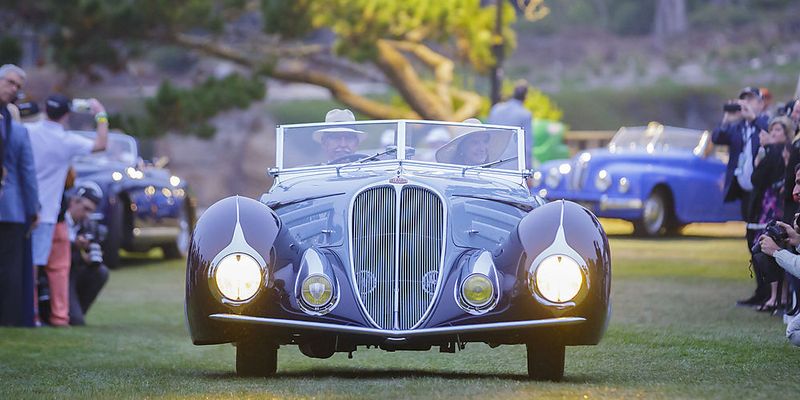
Pebble beach and other car shows have been spectacular in the last years!

Back in 2020 I wrote a post you can find here, where I went into some aspects to consider when buying your dream car. I also emphasized precisely that, i.e. that you should really buy the car because of your love and desire for it – not because you think it will increase in value. Although many cars have continued to do so, that’s worth remembering. Firstly, whether a car will rise in value or not is never a given (except perhaps for a small number of hyper-exclusive and very limited series). Secondly maintenance, storing, insurance and running any car, but especially collectibles, eats up much of the potential value increase, so at the end of the day there often isn’t much left. then again, that’s perfectly alright as long as your priority has been to enjoy the time spent behind the wheel!

You may well think this is too negative, and that value appreciation on, say a manual Porsche 911 of certain series is all but guaranteed since they haven’t yet reached the stratosphere (well, most have, but not all), and they’re becoming fewer and further between. That’s true, but then again so is a Porsche 944 which still hasn’t gone anywhere and probably never will – although its sibling (and less good looking) successor, the 968 has. I’m certainly not claiming there aren’t cars that will rise in value going forward, I’m just saying that you shouldn’t bet on it, and it’s not what should guide your purchase.

Today worth twice as much as its better-looking predecessor…

That said, there are a few clues to help you select a car that is both a joy to drive and can be expected to hold its value relatively well. A manual gearbox is certainly one such thing, if you look for example at a 911, a Ferrari F355, and a bunch of other cars that are 10-20 years old. Production numbers is another, as special series or limited production runs tend to hold values better. The right engine will help, as will provenance, given a famous previous owner tends to do wonders for the price. I find this last one a bit strange since it’s not like it says “this used to belong to (select your favorite famous person)” on the car, but I guess there are things that can’t fully be explained by logic…

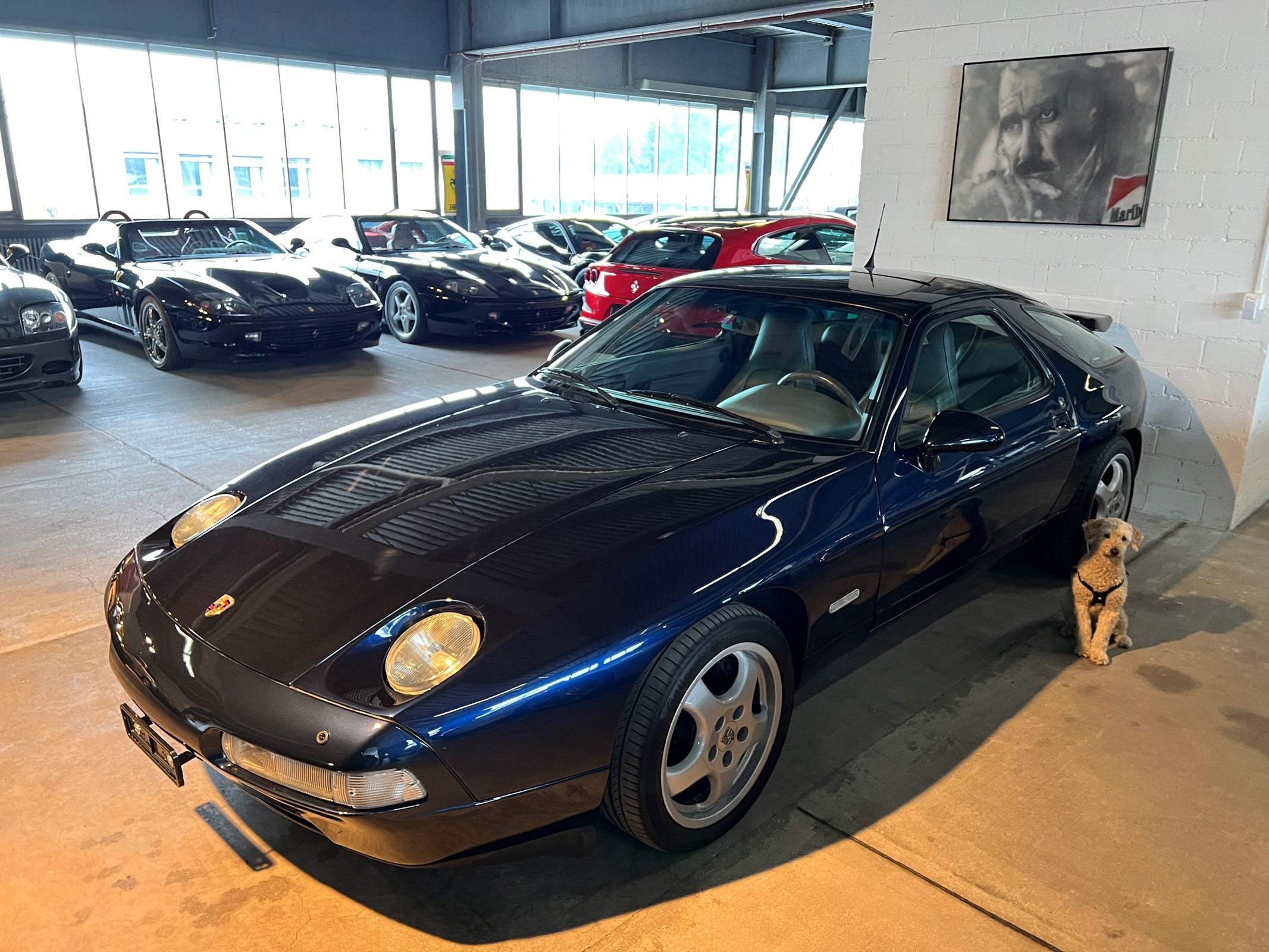
A case in point is a classic dealer in the Zurich area who has a Porsche 928 GTS standing in the showroom. With 90.000 km on the clock the mileage is ok but not exceptional, as is the general condition of the car – very good, but not mint. The GTS was the last iteration of the 928 produced in the early 90’s. At 350 hp it had the highest power output of all 928 series and is for many the most attractive in the range, provided however that it’s a manual, which this wasn’t. The dealer had tried to compensate this with a big sign saying “Prominent Swiss previous owner”.

The dog is not included in the price…

This country is great in many things, but it’s not like we’re lining up famous people. The only two can think of who would motivate paying more for a car according to this logic would be Roger Federer, who’s however tied to Mercedes-Benz through sponsor contracts and, well, Tina Turner, who spent the last 20 years of her life in a magnificent villa on the shores of the Zurich lake. She obviously just passed away, may she rest in peace, but before that was mostly seen in a green Bentley. The “famous previous owner” is thus most probably no one known outside of the local Zurich circle. And it doesn’t warrant you paying – hold on to your chair – around USD 110.000 for this particular 928, especially when a far more desirable manual GTS can be had in similar condition for USD 20-30.000 less. Which is still double what they cost 2-3 years ago.

Another even stranger category is that of cars that someone bought a number of years ago and never drove, so that they’re now sold with very low mileage, most often in a condition close to new – at least on the outside. Obviously, if you’ve stored a car away for 30-40 years, it’s really important to know how it’s been stored, and also if it’s been maintained throughout. Because a car that is left standing for a number of years without no one attending to it, is not a car you want. Then the question is of course also whether there’s anything attractive with the car apart from the fact that no one’s driven it, or if it’s just an old car?

Irresistible? Rather very resistible…

An example of this is a VW Golf GL Diesel from 1983, advertised by one of the most well-known classic car dealers in the region. Someone bought this 50 hp monster 40 years ago, sealed it, and put it away, so that it only has 2.000 km on the clock. I guess the 50 hp were not that exciting even back then… It’s most probably been stored correctly and maintained throughout, but who on earth would pay the asking price of around USD 28.000 for a car that wasn’t even desirable when it was new? I can think of a large number of far better, more modern and certainly more fun small cars for that money, and I’d be really surprised if this example doesn’t sit with the dealer for a long time. As if this wasn’t enough, the 70’s shade of brown really isn’t a particular desirable color,

It’s not all bad though, because the gems are still out there, you just need to be patient and look out for them. Coming back to 911’s, and more specifically one of my favorites, the 997 Turbo, I’ve spotted a manual 2009 car in silver with a red leather interior and all the carbon packs you could have at the time, and around 85.000 km on the clock. It’s in mint condition and has had one previous owner, the F1 driver Jarno Trulli (who raced between 1997-2011 and had the good taste of scoring his only win in Monaco in 2004).

I need to find a good reason to put my money here…

Whether he’s famous or not is not the point, it’s more that I would assume that an F1 driver for one drives the car correctly (albeit fast…) and also knows, and has the money, to maintain it properly. Then again if that isn’t the case, I wouldn’t hesitate going for a car where it is, no matter who the previous owner is. At an ask price of around USD 85.000, the car is only slightly more expensive than comparable cars, but that is probably warranted by its history.

Desirable? To me, absolutely, I’ve had my eye on the 997 Turbo for a while and actually find the red interior pretty cool, although it’s not for everyone. Will it increase in value? Maybe, then again it certainly won’t be free to run. Does it make my “car buying pulse” increase? Definitely – at the thought of driving it that is, not speculating about its potential future value increase. If you ask me, that’s exactly as it should be. Now I just need to find a half-rational argument for it…

F1 pit stop: the bulls dominate!

I was in Madrid on a business trip this week and my local business partner took me to experience the Wednesday bull fighting, something I’ve never done before. He had asked very carefully before if I was up for it, and in meetings the subsequent days it became clear that Madrilenes aren’t used to foreigners thinking highly of this local tradition, which has been banned notably in Barcelona.

I won’t claim that I found it particularly exciting, but although I don’t really see the point of making a show out of killing the bull (the meat of which is by the way not wasted but processed and sold), I’m an omnivore and respectful of local traditions. What was amazing though was the aggressiveness and persistence of the bulls (the Spaniards would call it courage), going for the banderilleros and picadores time after time after time, like there was no tomorrow. Which of course there isn’t if you’re the bull.

As Alonso said himself in Monaco: “I’m pushing like an animal!”

So what does my bull fight have to do with F1? Actually I wasn’t primarily thinking about the team with a red bull as symbol that leads the championship and will most probably take the title, but rather of this year’s surprise driver Fernando Alonso, the grand old man of the F1 circus. Alonso is not only from Spain, he charges like a bull in every race and drives like there is no tomorrow. Which for Fernando, there hopefully is!

If you read this the Sunday it’s published, you may also have seen the most legendary race of the season on the narrow streets of Monaco earlier today. It sums up the first third of the season and in spite of the chaos caused by heavy rain in the last 20 laps, was pretty much in line with the season so far. The first third was however one race shorter than planned, as the Emilia Romagna GP in Italy had to be cancelled last week because of the severe flooding that hit large parts of northern Italy. Luckily the situation there has improved now, so let’s go back over the previous races that did take place and look a bit closer at what has characterized the season so far.

It’s mostly smiles so far – we’ll see if that lasts all season…

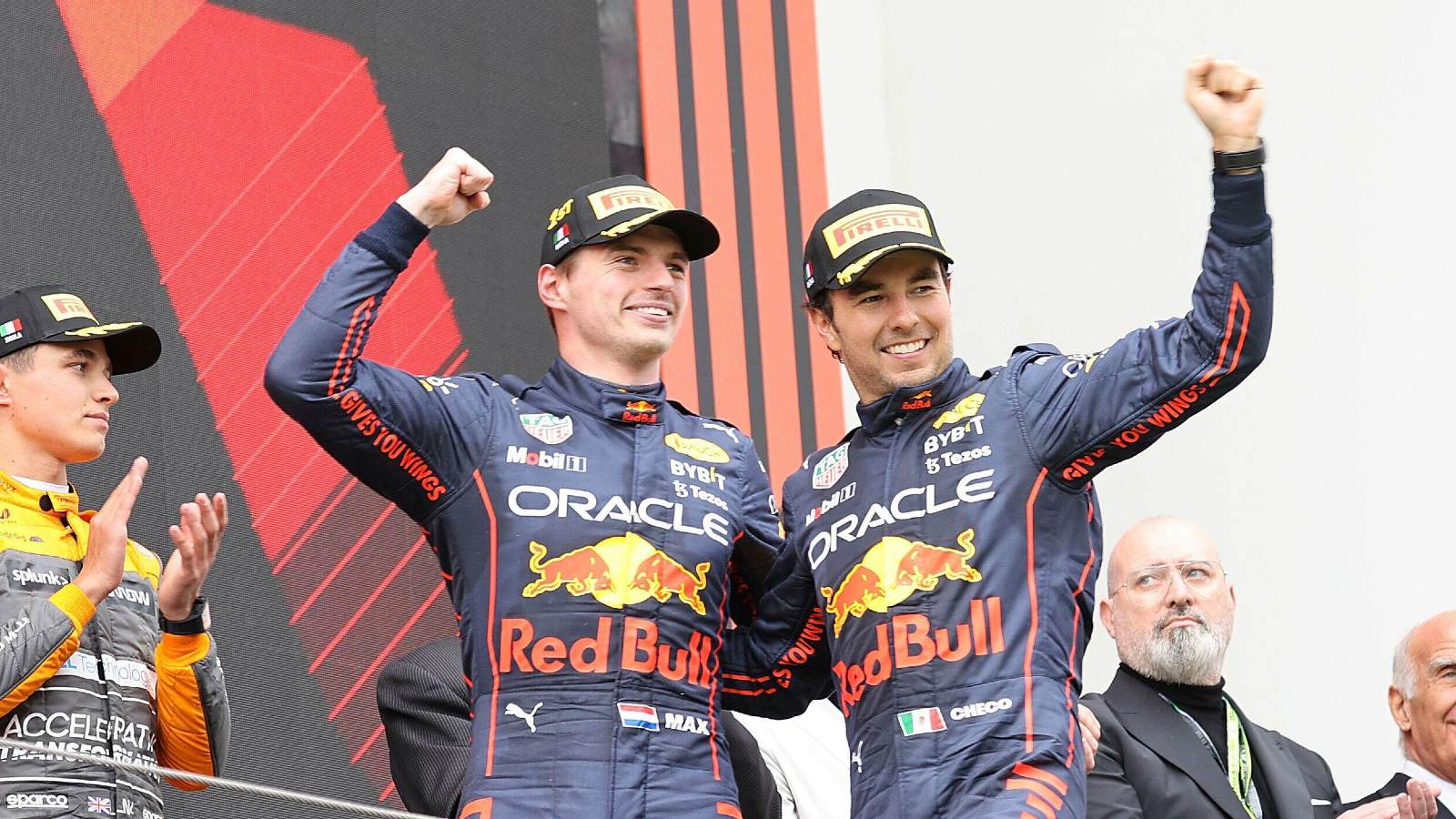
Starting with Red Bull, the team is as dominant, if not more, than last year, with Verstappen and Perez winning all the races so far. To the difference of last year however, Checo Perez is giving Max a run for the money, so far winning two races against Verstappen’s four. The fact that he hit the wall in training and thus started last in today’s Monaco GP meant he didn’t score any points, but otherwise Perez has very much been breathing down Verstappen’s neck and is currently the only real contender to Max claiming another title. Or is he?

If most people expected the Red Bull dominance, not many expected Alonso to do as well as he has. He’s currently third in the overall ranking and has been on the podium in five of the six races so far, four times as third and today in Monaco as second. We knew before the season that Aston Martin had invested heavily in developing a competitive car but that it would be this good, and so clearly ahead of Mercedes and Ferrari was certainly unexpected. It’s also a bit surprising how far ahead Fernando is of his team mate Lance Stroll, at least so far. After today’s race, he’s only 12 points behind Perez in the rankings, so it will be very interesting to see if he can keep it up!

Somehow it was more fun 2-3 years ago…

Ferrari on the other hand is clearly less competitive than last year, and Mercedes hasn’t made much progress either, although changes before today’s race may improve the situation going forward. The respective drivers make up places four to seven in the overall rankings with not much between them, but they’re far behind Red Bull and third placed Alonso.

Cédric Vasseur, Ferrari’s new team principal should be given a bit of time to sort things out as he only joined this season (from Alfa Romeo Racing), but Ferrari has only scored one podium this year, when Leclerc finished third in Azerbaijan. Mercedes’ team boss Toto Wolf looks increasingly tired and confused, as does Lewis Hamilton to be honest. In summary, both for Ferrari and Mercedes, things can thus only get better.

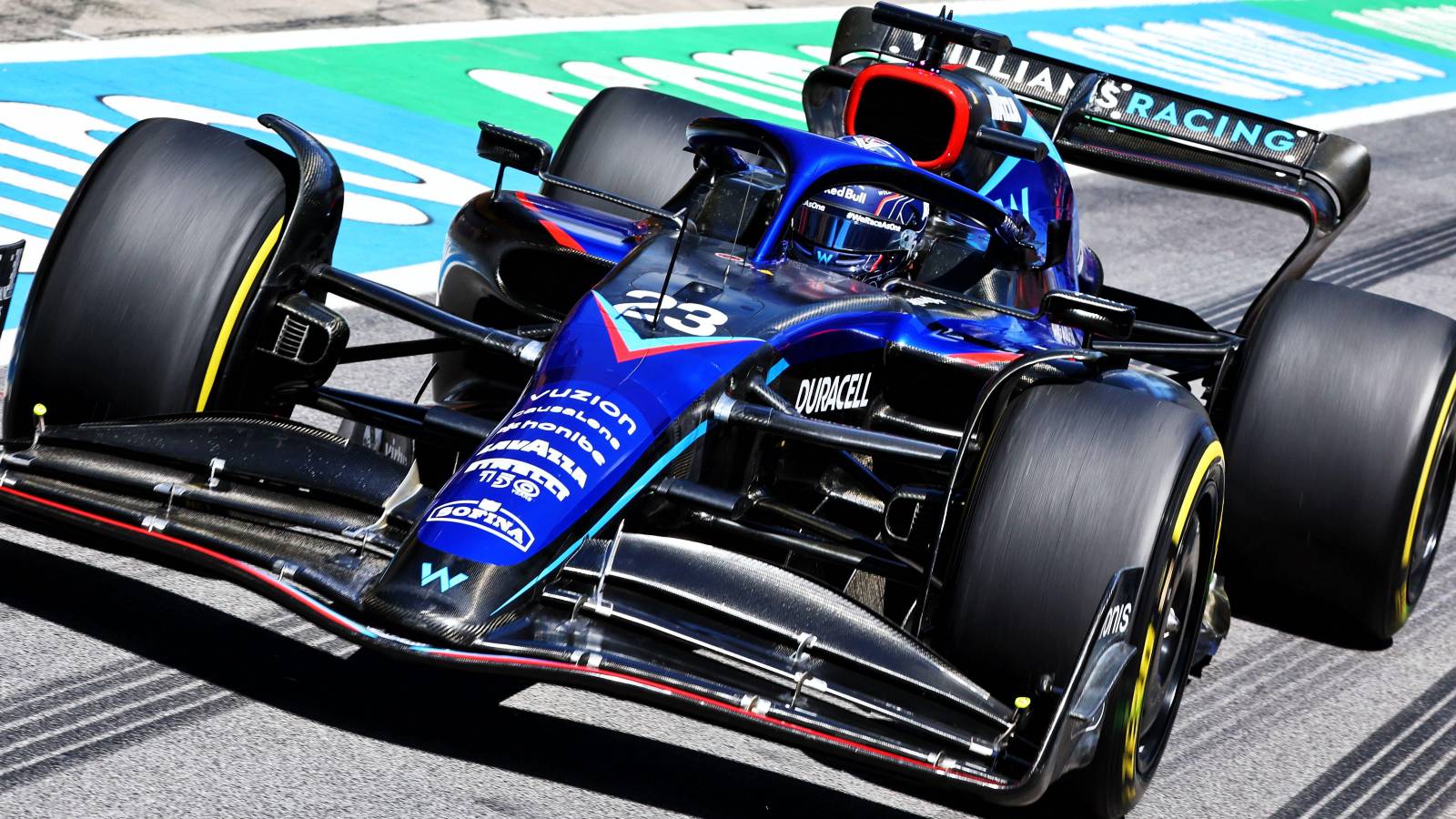
Lance Stroll rounds off the top 8 and behind the top four teams, the remaining have scored 69 points – taken together. And that’s only after today’s race, as before that, it was only half. Then again Alpine did really well in the Principality, with Ocon taking third place and Gasly coming in as seventh. That still shows that the distance to the top teams is huge, but also that the difference between the teams in this group is also far relatively small, as fifth-ranked Alpine is only 34 points ahead of Williams, that ranks last with so far only one point. Alex Albon does impressive things in terms of driving, as much as the car allows for. Then again, when he had the chance to race a capable car at Red Bull, he didn’t take it. The question is whether he gets a second one in a better team?

Alex Albon does as well as the Williams car allows him to

McLaren may be slowly improving, with important changes/improvements having been made to the car ahead of Monaco. Alpine looks quite promising as well, especially if today’s race is anything to go by. For Alfa Romeo Racing, Haas and AlphaTauri, this will most probably be another season to forget.

So there we are after seven races (actually six given the cancelled Emilia Romagna GP) of the 2023 season, and with another 16 to go. Can Sergio Perez really challenge Max for the title, and will the team allow him to do so, should we come to that? Will Ferrari and Mercedes find some speed again, or will the distance to Red Bull continue to grow? And just how far can Fernando “the bull” Alonso take Aston Martin’s renewal? As the European summer nears the end, we’ll check in again to see where things stand!

The forgotten (and underrated?) Porsche 914!

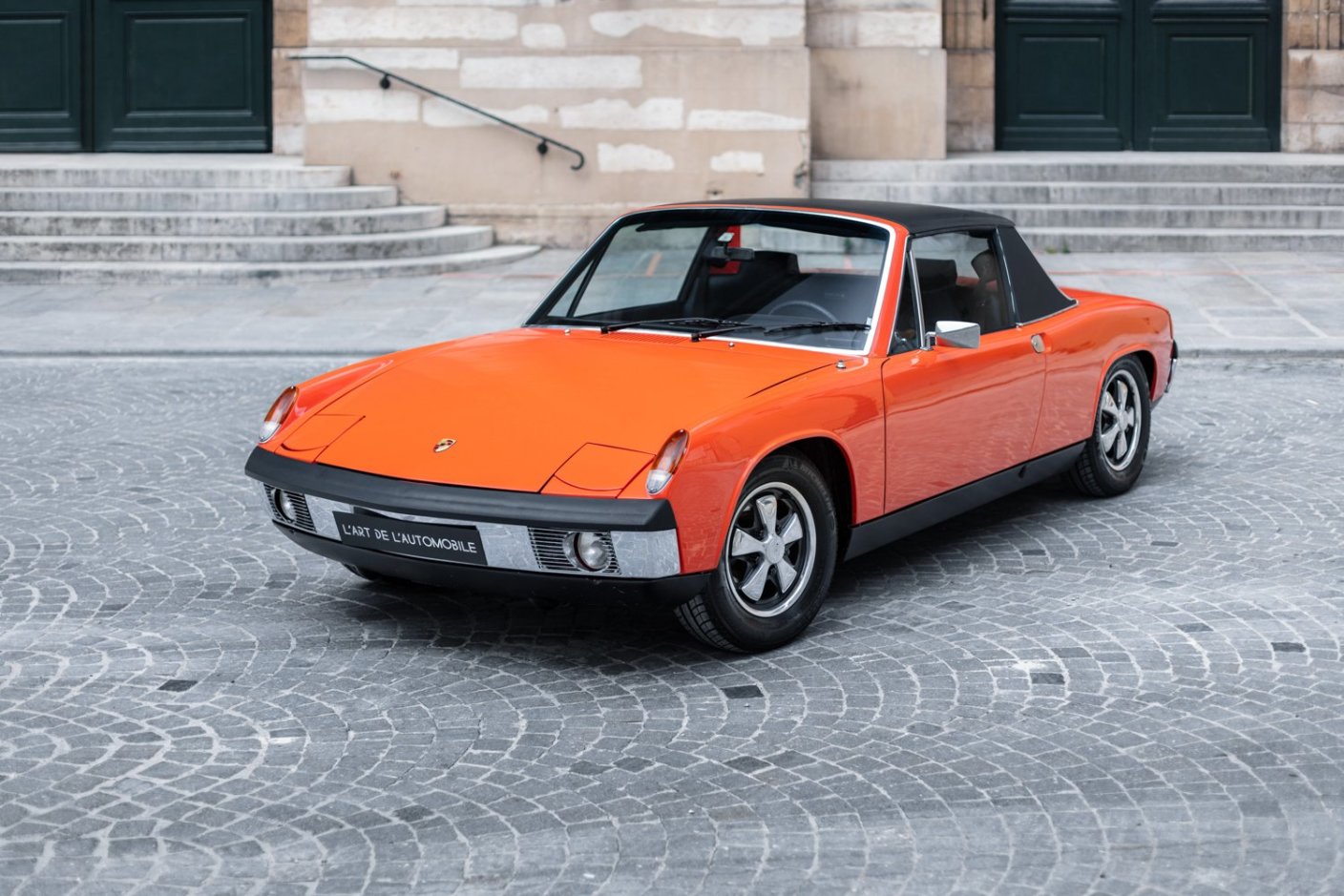
It may look like an improbable combination but as many will know, there have always been strong historical ties between Volkswagen (VW) and Porsche. This goes all the back to the birth of VW since the company was founded by Ferdinand Porsche, and Ferdinand Piech, who later became the company’s very prominent president and who is arguably the man behind much of VW’s modern success, was Piëch’s grandson.

Most of us will also feel that we know the recipe for success of a classic Porsche. Six rather than four cylinders and the engine in the back rather than the front. It also goes without saying that the car should be engineered by Porsche rather than any other suspect brand, such as… Audi. And yet, a car that at least partly followed that brief not only wasn’t much of a success, but is today largely forgotten. I’m of course talking about the Porsche 914 – how long has it been since you last saw one?

The 914, most often in typical 70’s colors, was quite a neat car

The recipe for a successful Porsche is actually something the company had deviated from already in the 60’s when it offered the 912 as a cheaper version of the 911. The untrained observer wouldn’t spot much of a difference between the two, but the crucial point was of course the engine in the back, where the 912 had a four-pot derived from the 356, making it a much cheaper entry model. However, by the late 60’s it was getting old and needed a replacement.

Over in Wolfsburg, home of Volkswagen, the situation was a bit the same, albeit with a different car. The VW Karmann Ghia had been built since the mid-50’s, had never been very sporty, and was starting to get old. it would continue to be built until the mid-70’s, thus overlapping with the 914 during the whole lifetime of the latter, but VW saw the new car as a way to get a sportier, entry-level car in its line-up, and also one that would (at least partially) carry the Porsche badge.

Many interiors are in leather or vinyl, but the cloth definitely brings more 70’s feeling!

The two companies thus entered into a joint venture aiming at combining Porsche’s engineering prowess with VW’s mass production capabilities. The project was led by none other than Ferdinand Piëch who at the time was the head of development at Porsche, and the VW-Porsche 914 was introduced in 1969 under a new distribution company founded jointly by the two brands. When it was presented to the world at the Frankfurt auto show the same year, it was shown both on Porsche’s and VW’s stand, and the decision was taken to brand it VW-Porsche in Europe, but only Porsche in the US. With regards to Europe, that probably ranks near the top of the list of great marketing mistakes…

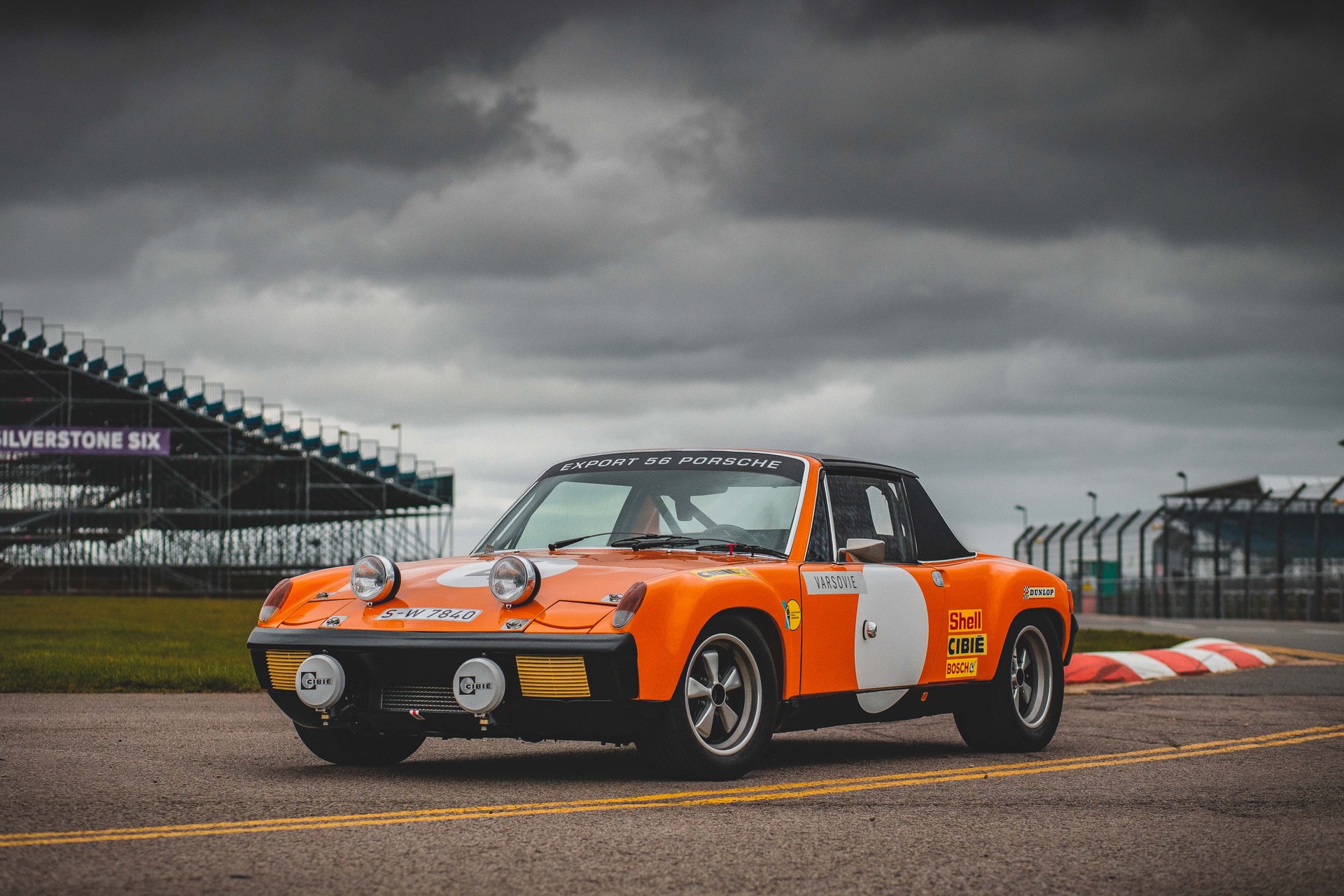
The initial 914, referred to as 914/4, was powered by a 1.7 litre, four-cylinder engine developing a whopping 80 hp and sitting behind the seats ahead of the rear-axle, making it a mid-engined car. During the production time the volume of the four-cylinder increased to two litres, and the power up to 100 hp. Certainly not much by modern standards, but the favorable weight distribution and the low weight just over 900 kg meant that the 914 achieved higher cornering speeds than its big brother, the 911!

The favorable weight distribution meant that the 914 did well in GT racing

In 1970 the line-up would be complemented by the 914-6, featuring the 110 hp six-cylinder engine from the 911 and also taking over notably breaks and wheels from the latter. The simpler 914/4 had these and other parts coming from the VW 411, a not very exciting family car. Irrespective of engine, all 914’s came with a five-speed manual gearbox, the 914-6 could in addition be had with a so called Sportomatic four-speed automatic, with hydraulic gear changes and the clutch replaced by a torque-converter.

On paper the 914 had a lot going for it. Its looks were certainly not offensive and rather modern for the time. The weight distribution was better than that of the 911, as was the space, with both a front and a back booth behind the engine. The car was of course also a Targa with a detachable roof, opening the passenger space to the elements. The 914-4 was relatively cheap and as if that wasn’t enough, in 1970 it was also voted “Import car of the year” in the US – arguably quite a small category back then…

Once removed, the roof could be stored in the rear luggage compartment

And yet, the 914 never managed to enchant neither the masses in general, nor the Porsche crowd in particular. Porsche enthusiasts at the time would of course not accept anything but the original 911, an early version of the skepticism that would later befall the 914’s replacement, the 924. The marketing strategy VW and Porsche had gone for in Europe, notably deciding to call the car VW-Porsche rather than only Porsche like in the US, didn’t help either.

That said the 914 didn’t really see real success in the US either, with quality and rust issues on early cars not helping. To that came competition, notably in the form of the Chevy Corvette, as well as the relatively hefty price tag of the 914-6, far from the entry model price tag of the simpler 914-4. Porsche would do what they could when it was already too late, notably publishing press releases specifically pointing out that the car wasn’t supposed to be called the “Volksporsche” (People’s Porsche), which of course had the opposite effet and became the 914’s nickname that lives on until today.

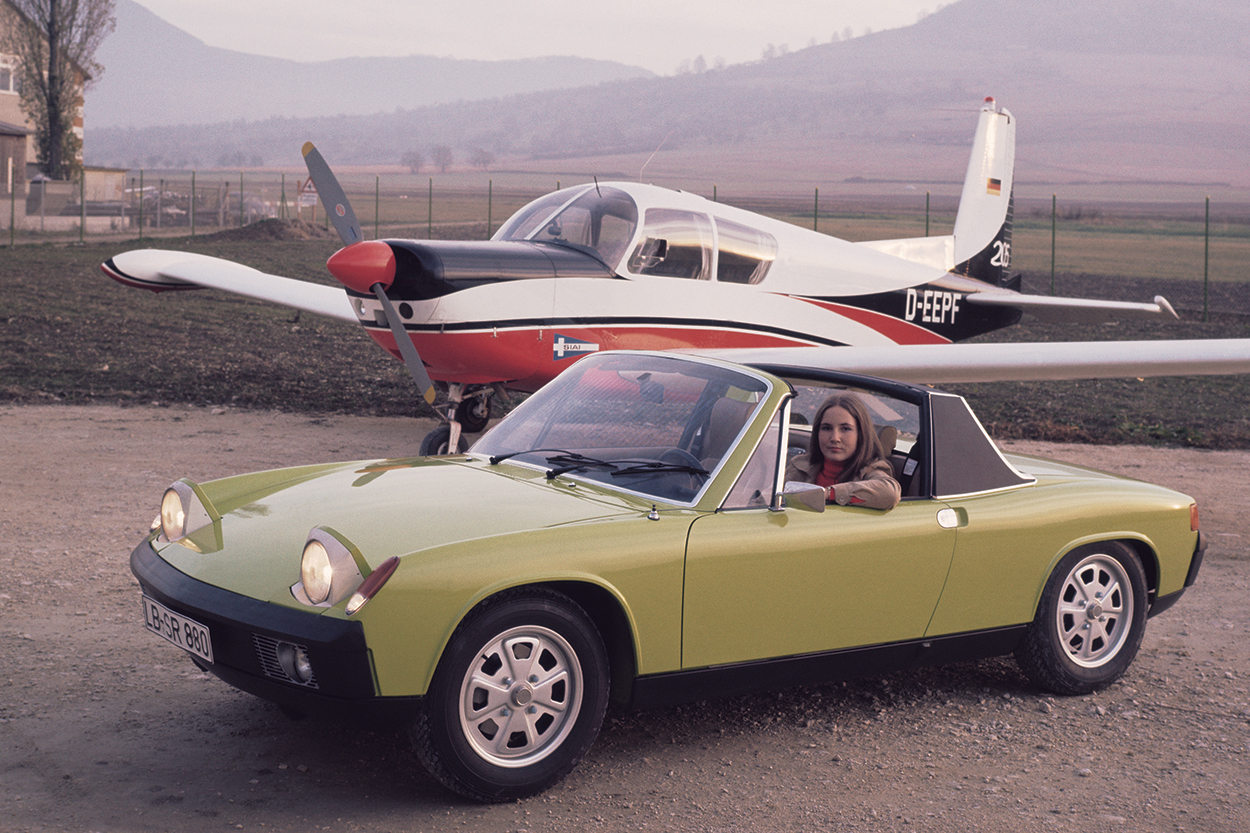
Given how cheap it is, maybe you can afford the plane too?

Still, Porsche built a total of 119.000 914’s between 1969-1975, so to call the model a coplete failure would be exaggerated. Unfortunately, what wasn’t exaggerated were the corrosion issues, which combined with the fact that the 914 never really gained in value and thus often came in the hands of owners not really taking care of them, means that not many of the over 100′ cars are left today. Then again as said, for the ones that remain, prices haven’t evolved anywhere near those of 911’s of the same period!

In Europe the fun starts around EUR 25-30.000 for good cars, with four-cylinder cars easier to find and cheaper both to buy and maintain than the six-cylinder version. In an “everything else equal” world you’d of course choose the latter, but given everything isn’t equal most of the time, I would claim you get almost as much of the 914 feeling with the four-cylinder, and finding a car in good condition is therefore more important than the engine. You’ve probably never had a poster of the 914 on your bedroom wall, but if you’re looking for a relatively cheap entry oldtimer carrying the Porsche badge, the 914 is certainly not a bad place to start!

On EV tanks, stupid politicians and Finnish cobalt…

When I grew up, I remember my parents speaking of most political leaders with (sometimes great) respect. Churchill was still in vivid memory for many, as was JFK. De Gaulle in France was seen as a true statesman and in general as I remember it, although people didn’t necessarily agree with the political leader of the time, there was a fundamental respect for those leading a country.

Oh how times have changed in this regard. It’s a long debate well beyond this blog to try to define where things went in the wrong direction, but what it’s lead to is no doubt an environment where at least some political leaders deserve far less respect than used to be the case. Then again, the blame on that falls on us since in the end, we’re the ones who somehow, directly or indirectly, elected them…

This is not the face of reason. Jennifer Granholm, US Energy Secretary (Source Fox News)

An example in the category of those not deserving much respect is US Energy Department Secretary Jennifer Granholm, who a few weeks ago stated that she fully supports efforts from the Biden administration to require (among others) the U.S. military to implement an all-electric vehicle fleet by 2030. Granholm says that global events like the war in Ukraine aren’t good for (fossil) energy security, conveniently “forgetting” that the US is pretty much self-sufficient in oil.

The team at Doomberg (an excellent geopolitical newsletter I highly recommend to anyone interested) calculated what it would take to electrify the main US battle tank M1 Abrams, weighing 60 tons. The answer is a battery pack weighing 2/3 of the vehicle itself, i.e. 40 tons, and being roughly the size of the tank itself. I’m sure the US military is thrilled at the prospect, and probably also curious as to how Granholm plans to ensure war zones are well covered with charging stations!

No, this isn’t it either. Robert Habeck, Germany’s Finace and Climate Minister

Idiocy is certainly not limited to the US. In Europe the undisputed champion is of course Germany, a country that used to be the backbone of the European economy but that now has transformed to a schoolbook example of failed energy policy. Germany’s Finance and Climate Minister, aka Green Party leader Habeck fully supports the recent decision to turn off the remaining German nuclear plants, while seeing no problem with those in war-torn Ukraine, a country currently being bombed on a daily basis and very much in “nuclear radiation” distance from Germany, continuing to be operational. Nope, I’m not making this up.

Another European privilege is to have a large bunch of politicians in the EU Parliament in Brussels representing the EU member states. They have now – hallelujah! – discovered that there is a risk that neither the lithium, nor certain metals required for the “energy transition” will be available to Europe in the quantities needed over the coming 10 years or so. Well, had they read this blog, for example in early December, they would have saved some time coming to this assessment…

Somehow preferable to a cobalt mine

In order to find a remedy to this annoying reality, various prospecting projects will soon start, aiming to find suitable excavation sites for metals and lithium in Europe itself. There are, hmm, a number of problems with that. Just to name two, there is of course the small fact that the quantities you can hope to find in Europe are far from being sufficient. Also, as opposed to the Congo where we do business by closing your eyes bribing everyone and letting children do the dirty job, that doesn’t really work in Europe.

Take Finland as an example. There is apparently cobalt in various places across the beautiful Finnish landscape of lakes and forests. But, surprise surprise, the Finns would like to keep that landscape as it is and not transform it into a giant cobalt mine. Of course there will be similar resistance in other places as well, meaning that any excavation at all, which again will not cover Europe’s future needs, is at least 10-20 years away, well past the deadline Brussels has set itself.

If your car smokes like this, you should probably see a garage anyway…

Fortunately though the world hasn’t gone completely crazy just yet, because when you really start to lose hope, a few voices of reason have started to emerge. One was heavy lobbying from French and German automakers, resulting in the ban on selling new combustion engine cars being pushed forward from 2030 to 2035, and then also being changed such as to continue to allow combustion as a technology for cars running on clean fuels (more on that below).

Other sensible voices showing resistance is starting to form have included the CEOs of notably Renault and Stellantis who strongly opposed the planned Euro 7 emission rules for diesel and petrol cars, saying the multi-billion investments these would require of manufacturers would only result in a very marginal reduction of greenhouse gases, hardly being worth it if we’re anyway supposed to go all electric a few years later. Or put differently, there’s about 1198 better ways to spend your money…

They are of course right, although if you agree with me (or even if you don’t, but can count), the truth that I’m sure they’re aware of is that full electrification will not happen any time soon, bar a sudden revolution in battery technology. For those new to the blog, this is something I wrote about notably in the post I’ve linked to above (and again here) from December.

A GT4 running on synthetic fuels – no mines required

Interestingly, a lot of people are now all of a sudden also talking about synthetic fuels (see my post from two years ago here on the topic), tacitly admitting as much. This has notably become a big debate in the UK, with pressure being put on politicians to start encouraging promising technologies in the field. Since the post on the topic I linked to above, Porsche has increased production of its synthetic fuels, proving that the technology works, although the cost is still prohibitive and viability of this as a solution at scale is still insecure.

The recognition that the future is perhaps not 100% electric is however best seen in EV prices, when in notably the US market, pre-owned combustion cars are increasing in price again whereas used EV’s have started to fall like stones. As I wrote about back in August last year, that used to be the case for some EV’s but not for others, notably not for Tesla.

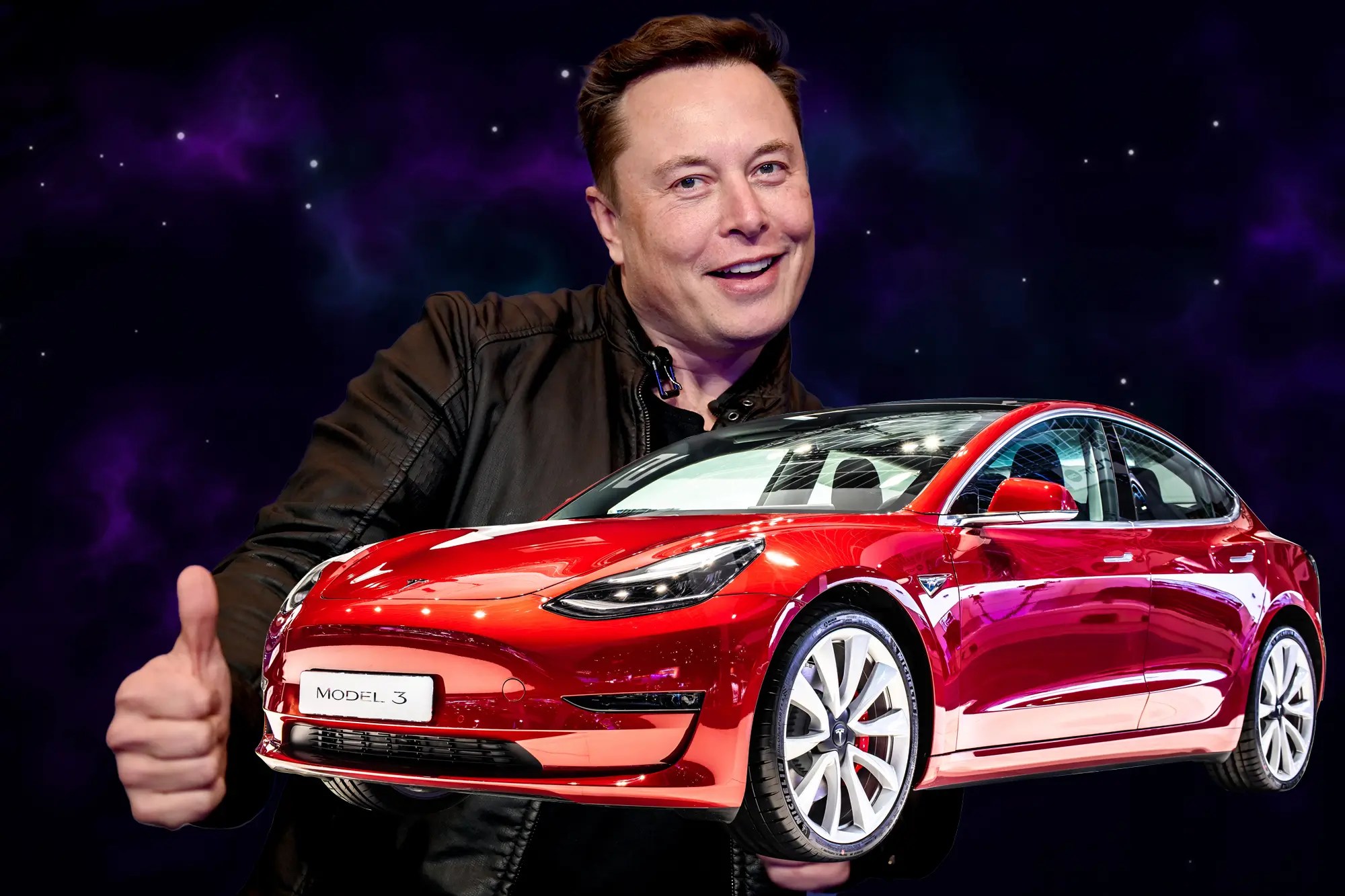
If it’s so great Elon, then why are you cutting the price?

Of course, if like Elon Musk you start cutting the prices of new cars (in itself a good sign itself that things aren’t going that well), that’s hardly beneficial for residual values, but even factoring that in, it’s clear that price falls across all EV’s are heavier than before, and bigger than for (at least some) conventional cars. Could it be that when an increasing number of countries have cut subsidies, or when like here in Switzerland, EV’s will need to pay road tax from next year, and when the electricity price has increased quite dramatically, the whole EV thing isn’t as fun any longer?

We’ll see where all this takes us, but at least the question on what our future car landscape will look like has become a bit less one-dimensional. There’s of course many more issues with the planned electrification that I could have added to those above, making me all the more convinced that the future of new cars is somewhere in the triangle modern hybrids – new battery technology – alternative/synthetic fuels, probably in some combination. But while we figure that out, I can’t help hoping that someone with a sense of humour parks an M1 Abrams tank in Secretary Granholm’s driveway.

Street finds – the Rolls Royce Corniche Cabriolet!

Spring has been slow, cold and wet this year, which is actually the way it is most years if you live in Switzerland. Of course, at least if you’re me, you forget about it being the case over the winter, so I still manage to get as disappointed every year in April when the rain keeps on falling. Last week therefore brought a nice change for the better, also motivating the lucky owner of this magnificent Rolls-Royce Corniche Convertible to bring it out of the garage where it’s no doubt been sleeping through winter, and allowing me to capture the first street find of 2023!

A beautiful Mk III Corniche, as can notably be seen on the bumpers

How do I know it’s slept in the dry over the winter? Well, even though it’s clearly been renovated, and this to an extremely high standard, there is no doubt that this was a car lucky enough to have a meticulous owner who would never leave her outside during the cold season. I’m almost sure the owner has a Range Rover to take him through the dark months, as the two of them would really form an almost ideal pair. Of course, he could have a Cullinan as well, but surely no one with enough taste to renovate a Corniche Cabriolet would buy a Cullinan?

When it was launched in 1971, the Corniche was very appropriately named after the magnificent Haute Corniche, a curvy road stretching from Nice to Monaco on the French Riviera. The automobile (surely you can’t call anything as magnificent simply a car?) became a real long-runner for Rolls Royce. When it was presented, the company had gone over to be owned by the British state, following some not very successful deals involving its flight division. And yet when you see the Corniche, you would never believe it’s been created by anything other than a company awash with cash, such as the opulence it offers its owner. It would be built for all of 24 years until 1995, something today’s car builders can only dream of.

This dark blue beauty with its (no doubt new) cognac hood and interior is a Mk III, meaning it was built sometime between 1989 and 1993. That means it has the updated interior, as can be seen notably on the center console, but still the 3-speed automatic gearbox (a fourth speed would come with the fourth series), and about 200 hp from its 6.75 litre V8. Of course this was the period when Rolls wouldn’t divulge the exact power output, rather referring to it as “sufficient”. It certainly was for the way you’re supposed to drive a Corniche, but by modern standards, 200 hp for a car that weighed close to 2500 kg really isn’t much to write home about.

It should really be the ocean you see ahead!

However Rolls was of course right. You don’t need more power when driving a Corniche, and certainly not the convertible version. It’s a car that fits best along the road it was named after, arriving in Monaco as the sun sets over the Mediterranean in time for a an early supper at the Café de Paris before trying your luck at the Casino. It’s perhaps the ultimate symbol of British blue-bloodedness but above all, to me it’s one of the most beautiful cars ever built. Given the money this owner has invested to keep it in a shape very close to new, I hope we have a sunny and long summer to look forward to!

GTO – three-letter magic!

I spent a few weeks in Singapore some years ago and notably had the opportunity to catch up with a local reader of this very blog, as crazy about cars as I am. He was kind enough to take me to one of the leading, local supercar dealers on what felt like the outskirts of the city, and what he had on offer was very impressive indeed.

The issue is however that if you think speed limits are tough in Europe, that’s nothing compared to Singapore. In addition, the number of cars in the small country is regulated, so before buying a car, you need to buy a license giving you the right to buy one. The number of licenses is of course limited and the price for one varies a bit but was around $100.000 in 2022, and that’s before you’ve spent a dime on the car itself.

It’s not far from Marina Bay to Malaysia…

That said, if you have the money to buy a supercar, spending another 100 grand on a license may not a big deal. The remaining question is however where then to drive the car like it’s supposed to be driven. As it turned out, the supercar crowd in Singapore had a plan for that as well. As a member of the local Ferrari club told me, for their club outings they drive across the border to Malaysia and rent the Sepang F1 circuit for one day. That’s what I call a track day!

Of course, track days is something we have in Europe and the US as well, although in a slightly less dramatic setting. These days however, the car you take to a track day is typically a racing-oriented street car, such as for example a 911 GT2-GT3. Looking back, it used to be the other way around….

One of, if not the, most legendary car in the world – the 250 GTO

To come back to the heading of this post, the three letters GTO have a direct connection to what we today associate with track days. They stand for Grand Turismo Omologato (homologated), meaning the cars a manufacturer had to build for road use for a race version of the same car to be approved. When hearing GTO many of you will directly think of the most expensive and perhaps the most legendary car in the world, the Ferrari 250 GTO, of which 36 cars were homologated for road use.

It’s often referred to as the last true road racing car since after it, safety regulations would put a stop to such extreme machines being used on public roads. In other words, this wasn’t a street car you could race on weekends, but rather a race car you could drive on public roads. Or as Shelby Myers, a car specialist at RM Sotheby’s put it: “this was the last car that you could park in your garage, drive to the track, win the race, and then drive home.”

Racing on Sunday, commuting on Monday…

All 36 Ferrari 250 GTO’s were built between 1962 and 1964, and none of them were identical. They were a development of the 250 GT-series with the center piece being the 3 litre, 300 hp strong V12 with six Weber carburetors and a five-speed gearbox (increased to 4 litres and 390 hp on the three cars built in 1964). The development of the car was led by the legendary Giotto Bizzarrini (read more on him here and here), although he left Ferrari before the GTO was launched.

The cars were built by Scaglietti and Enzo himself apparently selected who was allowed to buy them. With a top speed around 270 km/h, the GTO won the GT World Championships in 1962-1964 and various other races such as Le Mans, Targa Florio (see here) and the 1000 km race at Spa Francorchamps. In total, it accumulated more than 300 race wins under its belt.

At $70m, the price record for this GTO still stands

The GTO is often considered the last great front-engine GT car built by Ferrari. That’s not the only thing it’s been called though. Other descriptions include the most beautiful Ferrari ever built, a true living legend, and rightfully, the most expensive car in the world, It’s perhaps no surprise that buying one takes a big wallet, but just how big is illustrated by the fact that in 2014, a GTO was sold for $38m and in 2018, the current record was set at $70m. The car in question was the 1964 Tour de France winner which thereby became the most expensive vehicle ever sold. Its price as new in today’s money would have been around USD 150′, so in other words, a pretty solid investment return!

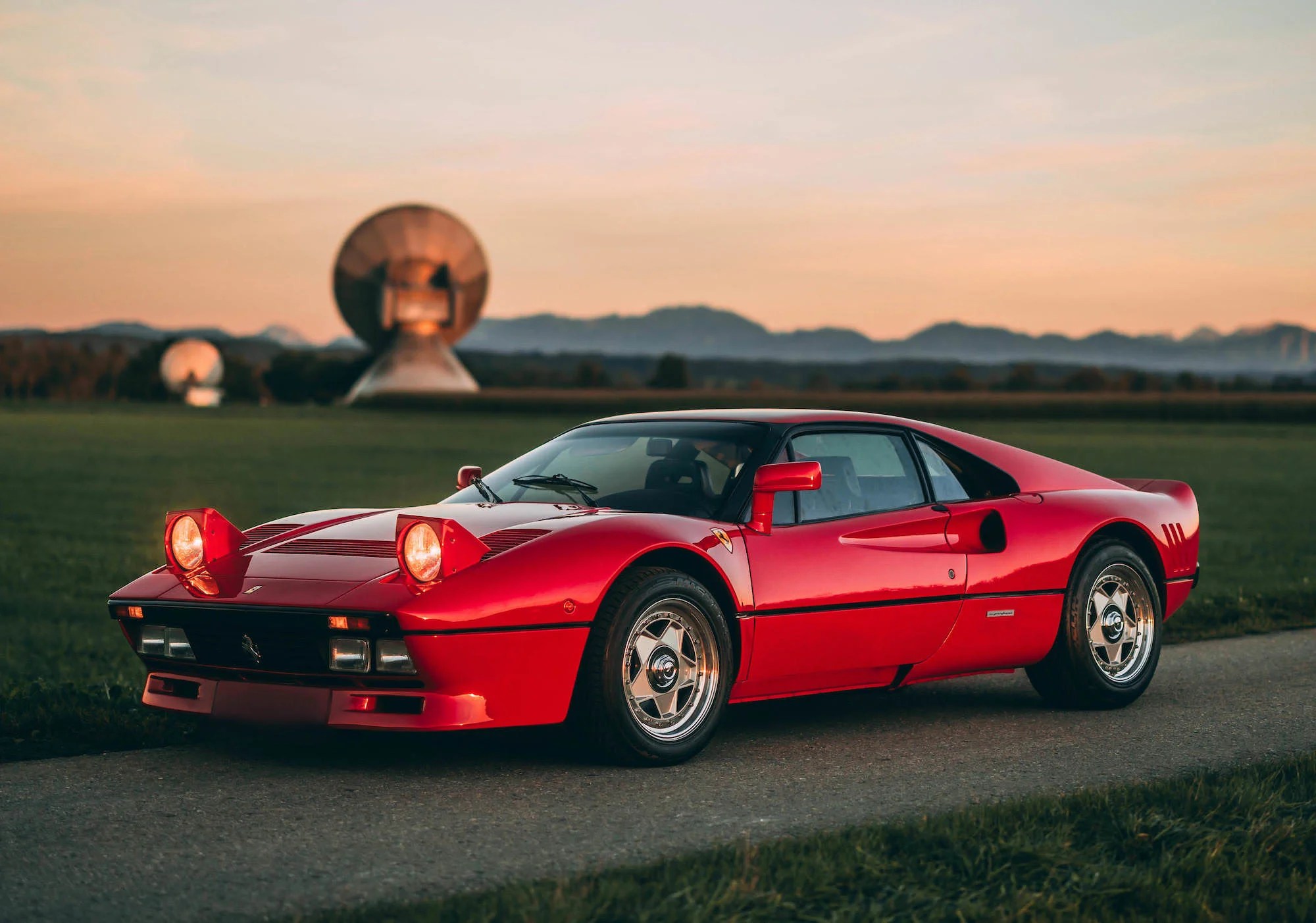
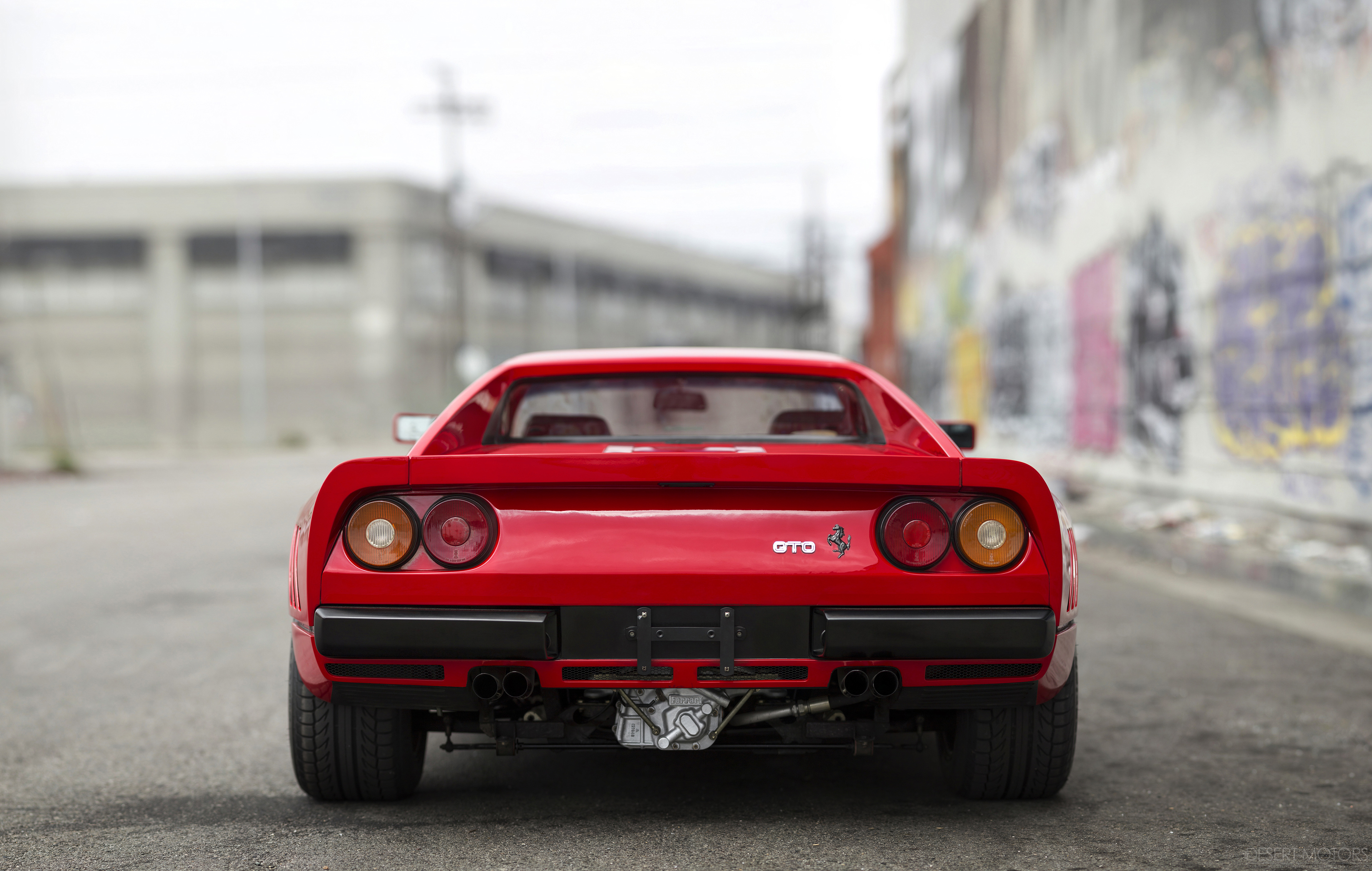
The 250 may thus have been the last true GT car, but it was not the last GTO. Fast forward to 1984, when Ferrari introduced the 288 GTO at the Geneva Auto Salon. The car cost around $300.000 at the time, for which you could have got no less than for example three MB 500 SL’s, and it sold out before the Salon was over. If you find a 288 GTO today you can add a zero to that number, which still makes it a bargain compared to the 250 GTO. It may be far less legendary but not less important – rather the contrary.

The 288 GTO set Ferrari’s hyper car strategy for the future!

The 288 GTO (later called only GTO) was launched in period where Ferrari’s line-up with the 308, 328, Mondial and 412 was not the best it had ever been, and the company wasn’t doing very well financially. The new 512 was indeed an extravagant sports car in Enzo Ferrari’s taste, but he wanted something more. Or was it maybe the changes in the Group B rally regulation that motivated the GTO?

We’ll never know for sure, but what we do know is that the racing version of the GTO never happened. Instead, Ferrari reluctantly agreed to increase the street car production from 200 to 274 cars (yo have to think that some of their most faithful owners were pretty influential people already then…). And hereby, without knowing it, Ferrari had also found the formula for hyper car success that’s taken them all the way to today.

For the untrained eye, a GTO could be mistaken for a regular 308. If you look closer though, you see that it’s a bit longer (110 mm to be exact) different headlights. It’s a beautiful car in a more dynamic way than the original 250 GTO was, and looking at it today, it has an 80’s cool factor about it. The longitudinal, double-turbo 2.9 litre V8 put out 400 hp and given the car only weighed 1300 kg, that was enough for a 300 km/h top speed. The GTO hereby became the fastest Ferrari ever, and one of the fastest cars of its time.

As for Ferrari’s future strategy, the attention the GTO got helped lay the foundation for what would become a very successful formula for hyper cars from Maranello: no more than 500 built, technologically at the top, and buyers carefully selected. The F40 followed the same logic as did the F50, the Enzo, and later the LaFerrari.

As a side benefit the increase in value would follow almost automatically. Apparently the group of owners who were selected and thus own all the cars listed above is larger than you think, and they’re no doubt thankful to the 288 GTO for being not only a great car, but also for making what followed possible!

The most bling-bling of them all!

For most of us including yours truly, the Thrill of Driving (ToD) apart from being the name of this blog, refers to exactly that, i.e. the wonderful feeling you get from driving, say a manual 911 Turbo up a twisty mountain road, for example here in Switzerland. Then again, what really constitutes the thrill varies, also as we get older. Some people will think of it as maximum straightline speed, as in a Tesla Plaid. For others it’s hearing the screaming sound of a 12-cylinder from Sant’Agata. And then again for some, it’s more about the Thrill of Being Seen than the driving itself. And whereas a Lamborghini works pretty well also for this purpose, there used to be a brand out there that was only about turning a maximum number of heads. This week we’ll look at the almost forgotten creations from Excalibur, the craziest thing to ever come out of Milwaukee!

Brooks Stevens was an American industrial designer, specialized in cars and bikes, who worked at Studebaker where he had been commissioned by CEO Sherwood Egbert (yep, really) to design a spectacular car to put on the company’s exhibition stand at the NY motor show in 1964. He came up with the idea of creating a car with modern running gear, but in the style of the pre-war Mercedes-Benz SSK. The chassis came from a Studebaker Lark Daytona, over which a fiberglass body draped. The car was called the Studebaker SS and it was a great success with dozens of orders placed during, and after the motor show.

The Excalibur, inspired by the Mercedes-Benz SSK

Unfortunately Brooks’ creation wasn’t enough to save Studebaker that went broke the same year. Stevens was however determined to bring his car to market and did so by setting up his own company together with his sons. They called it SS Automobiles and the car they launched, very reminiscent of the Studebaker SS, was given the name Excalibur. Equipped with a 300 hp, small block Chevy V8 from the Corvette, production of the Excalibur started in 1965. The car’s low weight of about a ton gave it spectacular acceleration for the time, needing less than six seconds to 100 km/h with a 200 km/h top speed. The car was a success and in 1968, the roadster was complemented by an even more spectacular four-seater, the Phaeton.

All cars from Excalibur were hand-made and thus individual

With two oil crises in less than 10 years, the 70’s was certainly not the decade for V8’s on paper, but it didn’t hinder Excalibur from introducing an even bigger V8 and continue to do well without much of design updates. The general design was of course why clients bought the car in the first place, and given all cars were hand-built, a lot of smaller wishes could still be accomodated, as seen from the multitude of Excalibur models. Still, the company was also slightly schizoophrenic, choosing for example to sacrifice basic things such as roll-down windows (rather than just sidescreens) all the way into the 80’s. The Roadster was by then in its fourth series, but the engine had been heavily capped to a smaller V8 with only 155 hp – not even an Excalibur could completely avoid the oil crisis. The problem was that over the years the weight had almost doubled to close to two tons, meaning this by now was very far from being a performance car. It was also far from being a good deal with the price having increased about as much as the weight, to around USD 170′ in today’s money…

A Phaeton 1978 was definitely not a sports car, especially at 155 hp..

As spectacular as the Excalibur was, buyers no longer found this a very interesting proposition, Stevens had to file for the company’s first bankruptcy in 1986, and this woud be the start of a long line of owners over the coming years who all tried to revive the business, and who all failed. Henry Warner took over Excalibur in 1987, created the Excalibur Marketing Corporation with a plan to sell the Excalibur Series V. The engine was back to the original V8, but prices were roughly the same as before and success wasn’t much bigger. Warner sold far too few cars and had to throw in the towel only three years later, in 1990. A certain Michael Timmer then bought the rights to Excalibur, but he went bust before he’d made any cars at all. The last in the tragic row was Udo Geitlinger who acquired the rights to build Excaliburs in 1991 and relaunched the brand three years later with the Roadster Series VI. They would sell a few dozen cars but towards the end of the 90’s, the Excalibur lights went out for good.

Original Mini-like angle to the steering wheel, not much side support on the seats!

There is still an Excalibur Motor Corporation today, but that is one focused on restoring and maintaining as many of the existing cars as possible, both the Sportster and the Phaeton, with no plans for any new cars. In total, around 3500 Excaliburs were built through the years, all in the company’s home town of Milwaukee. How many have survived to this day isn’t clear, and it also seems to be matter of debate whether you like Excaliburs to have survived at all – no one is indifferent. But in a very uniform car world, isn’t it a breeze of fresh air when someone sets out on an arguably crazy project such as this one, and still manages to build a few thousand cars? Personally though, I don’t have any special feelings for the Excalibur. I’ve never driven one but knowing it’s a 60’s US car with a big V8, lots of power, a steering wheel tilted like a bus and initially radial tires, something tells me it’s more at home in a straight line than on a twisty mountain road. And it’s certainly not a car for the shy!

The EQ XX and efficient efficiency

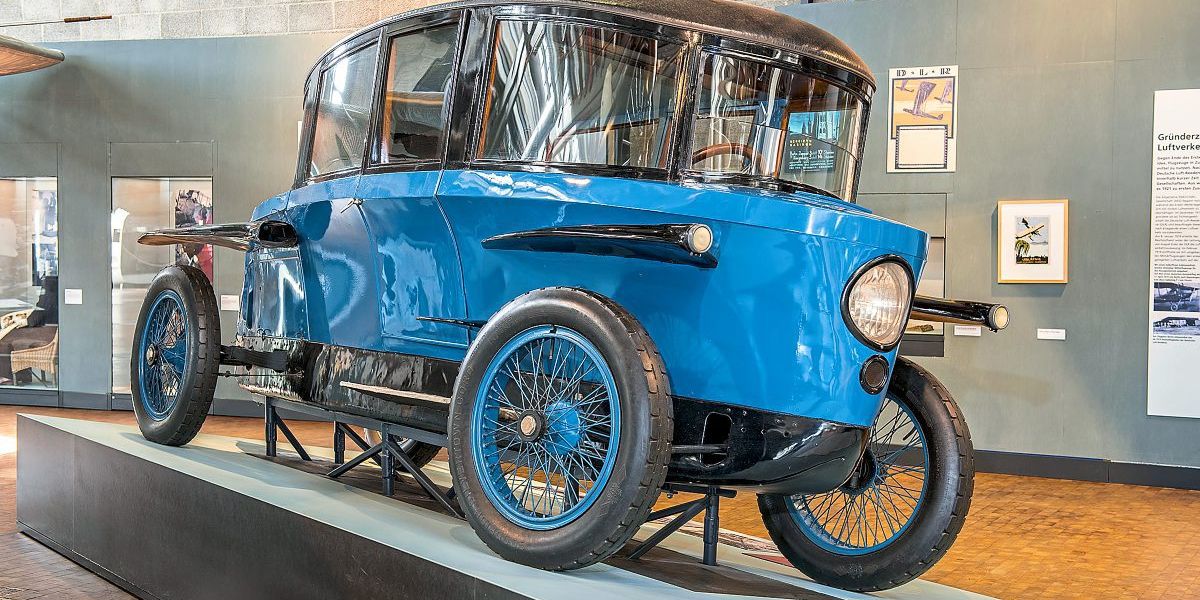
The CW-value, known also as drag coefficient and meaning how smoothly a car (in this case) passes through air, is a notion that has been part of the automobile world since at least a 100 years. In 1921 Edmund Rumpfler’s “Tropfenwagen” (drop car) became the first aerodynamically designed automobile, to be followed over the coming decades by cars like the Chrysler Airflow or the Tatra 77. I first become aware of it at a young age when my father bought a new Audi 80 B4 in the early 90’s that looked like a bar of soap, much like its larger brother did, the Audi 100. No doubt Audi had paid a lot of attention to wind resistance and if memory serves me right, the car had a CW-coefficient just below 0.3. That became a bit of a benchmark from then on that proved difficult to beat, with many cars managing 0.27-0.28, but few going below that. And then we got the horsepower race that we’ve seen over the last years, where less attention was paid to efficiency, as it could just be compensated with a more powerful engine.

The “Tropfenwagen” – the world’s first aerodynamically-designed car

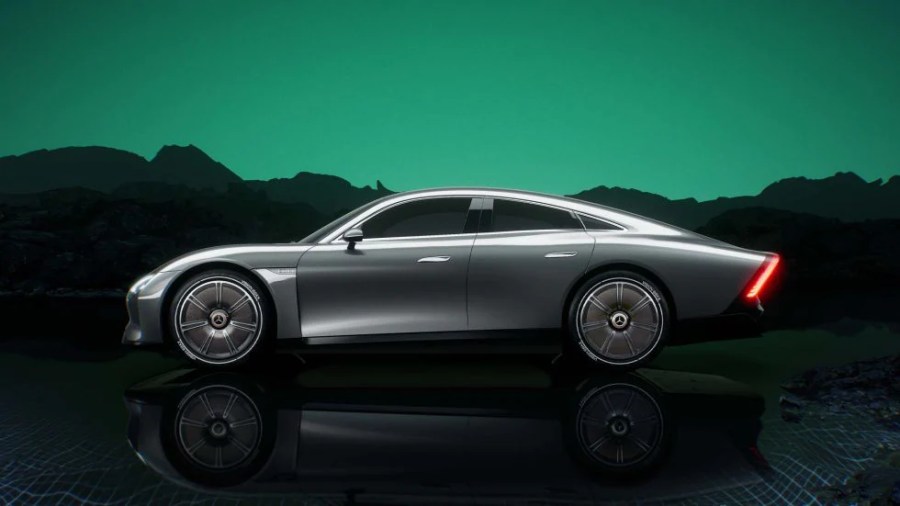
The reason things like the CW-value are more important than ever is of course EV’s, as the fight for every km or range needs to go over as little resistance as possible, especially since every EV is penalized by its weight. Mercedes set a new CW-value record with the EQS (another soap-like car) at 0.20. And then just a few weeks ago, the Stuttgart brand also started showing their project car EQ XX to a wider audience, which has a hitherto unrivaled drag coefficient of only 0.17. That also means that equipped with a 100 KwH battery pack, it is the first EV to have a range of over 1000 km (735 miles). This week we’ll look at what makes the EQ XX an example of efficiency, and what it teaches us in a broader sense?

A CW-value of 0.17 is a new record!

The EQ XX is a prototype car which if it goes into production one day as is rumored, it will not be in its current format. The prototype however looks rather nice, far nicer than any other EV Mercedes currently produces. It’s not reminiscent of Rumpfler’s drop car, but clearly the drop form has been the inspiration, especially over the extended tail. Looking at it from the front, some of the air inlets are also quite similar to a Porsche Taycan. But it takes more than that to get the CW-value of a car down to 0.17, so what has Mercedes done? Well, starting up front and next to the very visible are inlets and outlets, there are also active flaps under the front bumper that will vary their position depending on conditions and speed. There are of course special tires and wheels to reduce air resistance, and the long tail of the car ends with an active, extendable rear diffusor, which at speed reduces wind turbulence. A bit surprisingly the EQ XX doesn’t have side cameras but rather standard mirrors, but there’s a logic to this as well since apparently, the gains in reduced wind resistance of cameras is lost again by the power consumed by the screen that becomes necessary in the gauge cluster or the dash. 

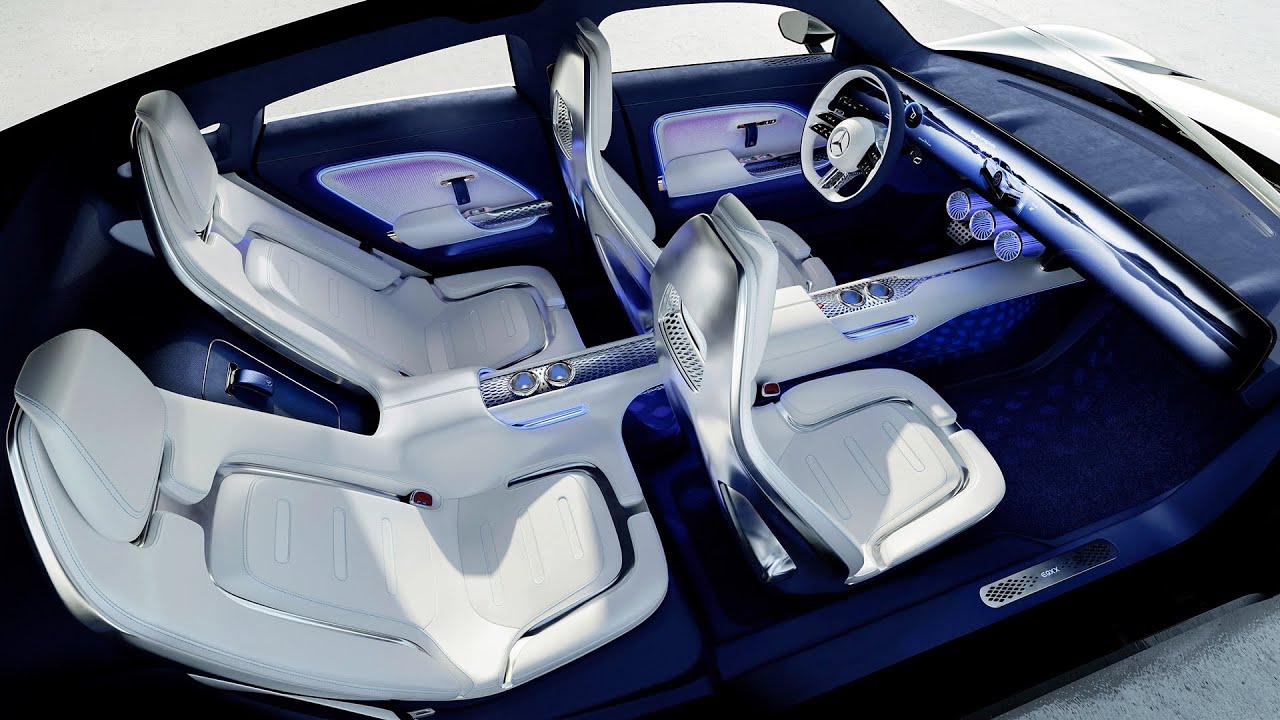
Four seats and a bit cramped in the back…

On the inside (and seen from videos and photos, given Mercedes for some reason didn’t invite me to the launch…), emphasis is on recyclable materials for one, and low weight on the other. Every metal surface is firstly not metal but rather 3-D printed recycled plastic, and secondly, as perforated as possible without it breaking into pieces. There’s a giant micro-LED display going across the whole dash which is said to consume much less power than a regular screen. There’s no sunroof since the roof of the car all the way down the rear window (which is thus also absent) is covered by solar panels. This is something I’ve never understood why you don’t see on more cars (with the exception of the Fisker Karma and perhaps 1-2 others I’ve forgotten about). Of course panels have become much more efficient and on the EQ XX, they are said to power many of the interior functions, producing somewhere around 4 Kwh in a (bright and sunny) day.  

Solar panels cover the roof and the rear window

As impressive as the low wind resistance is no doubt that the fact that the EQ XX weighs in at only a1700 kg, very remarkable for an EV with such a large battery pack. Through that and its efficient shape, it only needs one 180 Kw engine while still managing a time to 100 km/h under seven seconds and a top speed limited to 140 km/h (87 mph). And as mentioned, it has a range that quite easily seems to trump 1000 km, with as much as 1200 km set as record on test drives. The official consumption number is 8.7 KwH per 100 km, which is roughly half of a normal, rather efficient EV. What does it sacrifice? Except for the very limited top speed, it doesn’t offer much room on the inside and as far as I’ve understood, no boot (there is also no frunk given the air outlets). Driving it seems to be an exercise in efficiency, as the dash will constantly show if you’re consuming or generating power, and also how much different functions in the car consume in real time. It also has wind sensors around the car with the wind taken into account for range estimates. 

The power consumption of different parts is shown in real time

Summing it up, from an efficiency point of view, it’s as much the low weight as the wind resistance that impresses with the EQ XX. After all, a Mercedes EQS with only a slightly higher wind resistance at 0.20 is nowhere near 1000 km of range given it weighs at least 800 kg, or almost 50% more. And this is of course the efficiency lesson in an electric world – wind resistance is important, but reducing weight by reducing the comfort features of traditional cars is as crucial. This also highlights the inherent conflict in building heavy luxury cars or SUV’s as EV’s, and so when Mercedes tells us it will bring the G-Wagon in an electric version, you have to wonder where the efficiency thinking went.

It’s really positive to see that advances in materials (recycled plastics etc.) and production methods (especially 3D-printing) will bring weight gains to an increasing number of cars, and at some point when the realization kicks in that we are nowhere near the battery materials required to electrify the whole world (see here if you want more thoughts around that), this will come to benefit combustion cars and hybrids as well. I would guess that exterior design will then also become a bit more the focus again as was the case with Audi back in the 90’s. That’s a good thing, since the world can well do without any more G63’s or 3-ton EV’s. I therefor think we’re heading towards a future that will be of a mix of different drive trains, but if the more traditional of these become more efficient and thereby consume less fuel, that can only be a good thing, both for the wallet and the environment!

Wolfsburg’s hole-in-ones!

About a year ago I wrote a post about one of the real legends among modern cars in general and hot hatches in particular, namely the Mk1 VW Golf GTI. As pointed out back then, the GTI became synonymous with a whole market segment for decades to come, and helped establish the Golf beyond being just another small car. The first Golf series was obviously also the first iteration of a car that’s still around today, although every generation has taken it a bit further away from the purity of that original version. Over the years there have however also been a number of special series of the Golf, or cars produced in larger numbers that have been extra special. This week we’ll look at a small selection of some of these!

Mk II Golf Country (1990-1991)

If most special edition Golfs have been focused on adding performance, the VW Country, arguably the quirkiest one of them all, certainly wasn’t. Rather, it was VW inventing a market segment that didn’t yet exist, namely that of the compact all-road estate or compact SUV. The Country was launched in 1990 at a time when VW was at the height of automotive experimentation and the Golf was rapidly becoming their most successful model. Trying to make it appealing to a wider audience, the Country was given all-wheel Syncro drive and an off-road suspension that both looks the part and gave it all of 21 cm ground clearance, coupled to the 1.8-litre, 97 hp engine. It also had bullbars front and rear, lots of additional headlights and one of the larger, all-terrain wheels fitted to the tailgate.

The Country would take you where no Golf had ever gone!

All this makes it look rather strange and really far too high for its length, but the Country saw quite some success notably in the alpine parts of Europe, and all in all, 7735 examples were produced until 1991 by no one less than Steyer-Daimler-Puch in Austria, builders of the far more famous Mercedes-Benz G-wagon. 50 Country cars were equipped with the GTI engine, giving them an extra 15 hp, and good luck in finding one of those today, Finding a normal Country isn’t that hard unless you’re in the US, as it was never sold there officially. This was however the car said to have inspired Audi to build the much larger Allroad a few years later, and also the whole market segment of small SUV’s such as the Toyota Rav4.

Mk II Rallye Golf (1988-1989)

Another limited series of the Golf that didn’t make it across the pond was the MK II Rallye, although the reason for it is much more tragic. James Fuller, president of VW America and and a big fan of the Rallye Golf was on the Pan Am flight which terrorists brought down over Lockerbie in Scotland in 1988 and with him, the idea of bringing the Rallye to the US died. In Europe, 5.000 homologation cars were built as required by the regulation at the time, and these were fitted with the same 1.8 litre four-pot as the regular Mk II Golf, however with a so called G-lader, a scroll-type supercharger that helped the engine to 160 hp and 225 Nm of torque. The same Syncro four-wheel drive system as on the Country helped bring power to the ground, and the Rallye looked cool in a very 80’s way with squared headlights and flared arches, inspired by the Quattros, M3’s and Delta Integrales of the period.

Very 80’s, very cool, very rare!

Built in 1988-1989 and sold at around twice the price of a regular Golf, the Rallye was expensive. Even more so was the derived Golf Limited, built only 71 times, and essentially a four-door version with the same engine but with classical Golf looks and all options such as leather seats, electrical windows etc.. Finding a Rallye today is still possible although nice ones are getting pricey. Finding a Limited is rather difficult… The G60 engine was however also fitted to the regular Golf Mk II, and those are easier (and cheaper) to come by.

Mk V Golf R32 (2005-2009)

Most Golf enthusiasts agree that the Mk III and IV Golf series were really not much to write home about, with the once so pure Golf only getting fatter and less sporty. The Mk IV had however introduced on one hand the R32, six-cylinder engine and on the other the double-clutch gearbox, making the Golf the first car in the world fitted with a DSG gear change. Both were carried over to the better-looking and better-driving Mk V, from 2005 in Europe and 2007 in the US. The GTI was still there but the R32 was clearly the one to have, with 250 hp and four-wheel drive making it good for a top speed of 250 km/h and a respectable 6.2 seconds to 100 km/h. The chassis was great as was the drive, and the happily revving 3.2 liter V6 is obviously an engine that has been fitted to many other VW and Audi models.

The Mk V R32 was the return to form Golf enthusiasts had been waiting for

The MK V R32 could be had both with Recaro bucket seats and with the mentioned DSG box, which in its manual paddle mode is a far better proposition than the standard manual. Looking for one today, those are the options you want to have and that make the car feel even more special! And in terms of power, with a few exceptions the Golf has also not really evolved further, so 250 hp for only 1500 kg is still pretty much up there!

Mk VII Golf GTI Clubsport S (2016-2017)

The last in this very unofficial listing of special ones is the only front-wheel drive car, which was in no way intentional, but more importantly, the Clubsport series is also the sportiest version of the GTI that can be had these days (alongside the even more powerful R, but that’s again a more refined, four-wheel drive car). So what to say then of the Clubsport S, which compares to the regular Clubsport like the GT3 does to the 911? With a stripped down interior with weight saved notably by removing the back seats as well as the spare wheel, the S weighed in at less than 1300 kgs. It had a far more aggressive suspension setting than the regular Clubsport, a slip differential and was riding on Michelin Sports Cup 2 tires. The four-pot was tuned to deliver 310 hp, helping the S to a top speed of 310 km/h, and also to a record time on the Nürburgring in 2017.

The Clubsport S, a track weapon as understated as they come.

400 Clubsport S were made, and although the regular Clubsport is of course not comparable, it remains the purest and (except for special series) most sports-focused version after many years of the Golf getting more comfortable and ordinary. 265 hp in Mk VII version (the one the S was built on) as well as larger brakes, a lower ride height and different ratios in the seven-speed DSG gearbox compared to the regular GTI all give the Clubsport a different driving experience to the standard GTI. It’s a highly rewarding one and the Clubsport is not only far easier to find than the S, but also much easier to live with on non-track days!

So there we go – four different Golfs over 35 years that have all contributed to holding the Golf flag high, and also testify to the VW engineers’ willingness to engage in less ordinary things – however only up to a certain limit. Because perhaps with the exception of the very visible Golf Country, what they all have in common is that it’s never about power alone, but always in combination with a certain comfort, practicality, quality – and understatement. If they keep at it, the Golf will be with us for many years to come, hopefully bringing even more special ones!

Classic races – the Targa Florio!

It’s high time to return to the my series of classic car races, started last year. Races from a time when motorsport was something very different to today, run in far simpler cars, mostly on muddy roads, and without as much as a seat belt as protection, far away from today’s F1 halos. Better? Not unless you have a death wish, but certainly more genuine, unpredictable and exciting! This time we’ll travel to one of the souternmost parts of Europe, namely Sicily, and look closer at the very genuine, certainly unpredictable, and definitely exciting Targa Florio!

The Targa saw the light of day in 1906 and got its name from its founder Vincenzo Florio, a proud Sicilian who wanted to create a race on his native island. He was looking to do something that would be challenging both for man and machine, and settled on a track (big word…) in the mountainous Madonie region near Palermo. The original route was 148 km long, starting in a village called Cerda and ending in what was to take his name and become known as Floriopolis, by the coast. Ten teams started in the first race that was run over three laps, i.e. 446 km, on steep, mountainous and certainly quite bad roads. After 9 1/2 hours, a brave man called Alessandro Cagno won the first edition, but the race saw a great success right from the start and the year after, no less than 51 teams were at the start.

Vincenzo Florio himself (right) in the 1906 inaugural race

The Targa went on every year until 1914 and then resumed again after WW1 in 1919. The route had then been shortened, but more interesting than the new route was a young Italian driver by the name of Enzo Ferrari. He ended the race in second place in 2020, which would be one of his best results as a racing driver before moving on to other, greater things. Although becoming an international event in the 20’s, the races in this decade would largely be an affair between Alfa Romeo and Bugatti. An exception was however the Hispano-Suiza of French pastis maker André Dubonnet who would finish in sixth place in 1926, in a car with a fram built of tulipwood to save weight! The course kept changing and in the final years before WW2, it was held on the streets of Palermo itself.

Two Maseratis fighting it out on the streets of Palermo in 1938

In 1955 the Targa was included in FIA’s (Fédération Internationale de l’Automobile) World Championship series, together with notably the 24 hours of Le Mans, the Mille Miglia and the 12 hours of Sebring. This established the Targa as an event known worldwide and it was moved from spring to autumn as the last race of the 1955 series. Unfortunately the whole series that year would be overshadowed by a terrible accident in Le Mans, when French driver Pierre Levegh crashed his Mercedes Benz 300 SLR into the grandstands, killing himself and 83 spectators. MB decided to stop their racing activities after that season, but still came to the Targa with three cars and that of Stirling Moss ending as winner after having led the first half of the race, then driven off the road and being puhsed back onto it by spectators, and then catching up with Juan Manuel Fangio towards the very end. Having won the F1 championship the same year, Mercedes ended their race participation for the coming decades in style!

Stirling Moss fighting the laws of physics in Mercedes’ last victory in 1955

The Targa would be run in most years over the coming decades, mostly with Italian cars from Ferrari, Alfa Romeo and Maserati dominating the action, but with Porsche also making a name for itself. A variety of car types were allowed to participate through the years, with monocoques being banned in the early years but dominating proceedings in the late 60’s and early 70’s. It was these faster cars that finally rang the bell for the Targa as it was impossible for the organizers to meet the more stringent safety standards on the local Sicilian roads. The Targa lost it World Championship status after 1973, but remained as a local race over the coming years. It was then changed to a rally which from 1984 would be part of the European Rally Championship. Since the late eighties the Targa has also become a very popular event for historic cars which it remains to this day, with the 2023 event taking place early May.

The historical race remains very popular to this day

If you travel to Sicily and go to Cerda, you will still the run down tribunes as a reminder of the Targa’s glorious past. You will no doubt wonder at the average speed over 100 km/h that the drivers managed to achieve on these roads already back in the 60’s, before some of them were paved. but you will wonder far less at the fact that there were numerous accidents through the years, some of them unfortunately deadly. You will still see some grafitti on the walls in support of some of the drivers from the 70’s and 80’s, and you can also visit the Targa museums of which there are two, in Cerda and Collesano. The Targa Florio was the last of the great open road races and a perfect representation of just how genuine, unpredictable and exciting motor sport was in the old days. Vincenzo Florio’s contribution to the pageant of motor sport is thus firmly rooted in its history!

The graffitti from the old days has proven to be sticky!

The Audi (B8) RS4 – naturally-aspirated legend!

When Ferrari introduced the new Purosangue that I wrote about back in December, many of us were pleasantly surprised to hear that it would be powered by something as exotic these days as a naturally aspirated V12, in this case putting out no less than 725 hp. Supercharged engines are obviously what you mostly see in our time, so Ferrari sticking to the tradition, especially with a 12-cylinder, is great! What’s also pretty great and far cheaper than a new Purosangue are some of the classic naturally aspirated engines from not too long ago, especially those with 8 or 10 cylinders. Audi is then a name that quickly springs to mind and this week, we’ll look at what’s become as much of a bargain as rare in terms of power trains – the B8 Audi RS4!

As practical as a Purosangue, and much cheaper!

The tradition of Audi power wagons starts with the RS2, built by Porsche after they were done with the MB E500 they were commissioned to build for Mercedes and that you can read about here (but that was never available as station wagon). The RS2 was based on the Audi 80 and although it looked a bit more muscular, the fascination came from it retaining the basic family station wagon looks whilst driving like, and having the power of a sports car. Up until then, that had never really been the case. What it didn’t have however was a V8, but rather a 2.2 litre turbo five-cylinder engine putting out 315 hp. The RS2 was only built during three years from 1994 to 1996 and has already become a true legend, priced as such.

When the RS2 was replaced by the RS4 in 1999, the engine had grown by one cylinder, 0.5 litre and 65 hp (to 380 hp), but it wasn’t until the second generation of the RS4 in 2005 that the V8 party got going. The original six-cylinder was then replaced by a 4.2 litre, naturally aspirated V8 putting out 420 hp, and the car was available as sedan, station wagon and convertible. More importantly, the B7 generation as it’s called was only available with a manual six-speed gearbox… At a 40-60 front-back drive train split, it also had a more rear-biased quattro system and also not to forget, it was the first RS4 with the lovely, double oval exhaust pipes! Thinking of where we are today, it’s difficult to imagine a more appealing cocktail than this, however ideally in sedan or station wagon form as the convertible suffered a bit rigidity-wise.

A normal (B8) A4 until above the bumper, all RS4 below!

The V8 lived on to the B8 generation built between 2012-2015, but other body forms than the station wagon didn’t, so the wagon was the only shape the new RS4 was available in. Power had now increased to 450 hp at an almost incredible 8250 rpm, but the manual box was gone, replaced by Audi’s equally excellent (but less fun) 7-speed DSG box. A new differential allowed for as much of 70% going to the front wheels and up to 85% to the back wheels, boosting the entertainment factor. It’s also worth remembering that both the B7 and B8 were light cars by today’s standard, with the former at around 1750 kg and the latter at 1850 kg. The B8 was to be the last V8-powered RS4 and was replaced by the current version which has gone back to a turbo-powered six-cylinder engine.

I hadn’t driven a B8 for a long time until a couple of days ago when I had the pleasure of doing so here in Zurich. The car in question had a pretty amazing history It was sold by the same garage that now had it for sale, to the only owner it ever had. He apparently has a number of cars so that he never used the RS4 in the winter, which given its talents is rather strange. Actually he didn’t use it much at all, as he only put 31.000 km on it since new, but still had it serviced every year in the very same garage. Built in 2014, the car looked absolutely new. Of course, after three weeks of sunshine it had to rain this very day, and I almost got the impression it was the first time the car saw water coming from the sky and not the (manual) car wash…

Beautiful Dayton grey color and black pack. Not a big fan of the wheels.

Starting from the outside, the B8 is a pretty, purposeful and muscular car with the larger body really setting it apart. It’s best from the front and side, with the back being a bit too much normal A4, except of course for the double exhaust and the diffusor in between. As you get in, the first impression is that of quite a tight car. It gives an incredibly solid impression with some nice carbon inlays in the RS4, but a bit less plastic wouldn’t hurt, even if the grey stuff is of excellent quality. As we pulled out of the city in comfort mode, the car very much behaved like any family wagon, albeit one with very precise steering and suspension on the firm side even in this mode. Putting it into Dynamic (together with Individual and Auto the other options, and the most sporty one) changes everything. There’s an immediate change of tone in the exhaust, the suspension firms up and the steering becomes sports car-like direct. As we reached the outskirts of the city the engine was warm, and I was finally able to start pushing it a bit. What an absolute pleasure it was!

The engine is absolutely incredible. Power delivery is immediate and the revs keep rising as long as you hold your foot down, as the tone changes from a deep grumble to more of a singing bariton. The power delivery is naturally aspirated-smooth and the amount of power feels perfect for the car. It’s also noticeable how much tighter the smaller RS4 feels compared to its bigger brother or an E63. The road was really wet and I was on 20-inch Michelin Pilot Sports with an increasingly nervous garage guy next to me so we were nowhere near the edge, but at no point did I feel nervous – the car was glued to the road, the steering made it extremely precise to handle, and the engine kept singing. Motor journalists like to call the RS series and especially the B8 boring and maybe it is on a track. But a station wagon is made for transporting people and stuff whilst still procuring driving pleasure to the person behind the wheel, not for track use, and this is a car that excels at precisely that. Downsides? Some road-noise is one, not helped by the 20-inch wheels. And the size of the manual shift paddles is another – did they run out of metal in Ingolstadt?

Solid, purposeful, but slightly joyless

A well-preserved RS4 of the B8 generation with up to 70-80′ km on the clock will be yours for around EUR 40-50′, which at about 1/3 of its price as new, slightly more than a few years ago, but still an absolute bargain. It’s also a car that can be expected to hold its value very well given it’s one of the last naturally-aspirated V8’s out there. If you really insist on changing gears manually then the B7 is worth considering, but for everyday use I would go with the B8 as it still feels like a modern car. There’s a few options you should think about doing so. Firstly color-wise, the Nogaro blue is the rarest and the most sought-after, but it’s very blue indeed. As a more discrete alternative, the Daytona grey is my favorite. Then, “my” car had both the sports exhaust and the dynamic chassis and you should definitely go for both. You should also make sure it has the B&O sound system, as Audi’s more basic system is awful (most cars have it, but mine didn’t). Finally the panoramic roof is nice and helps lighting things up a bit. Audi’s quality may be top-notch, but you can’t call the interior design overly joyful…

Even though they come from the same naturally-aspirated tradition, it goes without saying that no one considering a Purosangue will be in the market for a used B8 RS4. But if driving pleasure is a priority, a power station wagon will always be a better choice than any SUV. Among these, a V8-powered RS4 is an increasingly rare car and currently one of the best deals to be had. Find one with the right equipment, service and owner history and you will not be disappointed!

Bristol cars – as British as it gets!

What do Sir Richard Branson, Liam Gallagher/Oasis and Tina Turner have in common? I guess Tina or Liam may well have listened to the other’s music while travelling on one of Richard Branson’s Virgin planes but as you’ve guessed, that’s not the connection I’m after. That would rather be that they have been, or still are, owners of a Bristol automobile, perhaps the most British of all UK car manufacturers. With a long-term building philosophy of “no more than 2-3 cars a week”, never more than a single show room in London’s Kensington High Street and an at times very particular view of what good car design is, it’s really no surprise that the brand hasn’t survived until today – but it is a surprise it lived on as long as it did! Before Bristol is completely forgotten, it’s well worth having a deeper look at one of the UK’s quirkiest car companies and some of the wonderful cars they built during the 70 years it was in existence!

As many other car manufacturers, Bristol had its roots in airplane manufacturing but even before that, as a builder of tramways in the UK. The tramway company started operations as early as 1875 and business was especially good during WW1 when the Luftwaffe kept damaging the tramway’s power lines, thereby creating a need for lots of maintenance work. With the tram business up and running and the Wright brothers having flown over the English Channel, it became clear to Bristol’s founder George White that the future was in the air. The airplane business started in 1910 and enjoyed an equally good business in the run-up to WW1. As for so many other military suppliers though, when the war ended, orders no longer came in. Bristol had no choice but to diversify again, creating the Bristol Car Company in 1918. However, it wasn’t until the 1950’s that it really came alive.

The Bristol 400, Bristol’s first car.

What really got the car business going was a collaboration with Frazer Nash, at the time UK importers of BMW. Somehow Frazer Nash came in possession of all the drawings and specifications of the BMW 326-328 after the war and it was based on these that Bristol built and presented its first car in 1946, essentially a remodeled BMW introduced under the name Frazer-Nash-Bristol. The engine was the same straight six the Beamers had under the hood, but this and later Bristol cars weren’t just copies of the respective BMW’s – they were improved in several ways and already in the 50’s earned a very good reputation. Even though the official collaboration with Frazer Nash ended the year after, Bristol’s 400 series would go on and include all cars until the 80’s. Starting with the Bristol 400 in 1947 and along with the following Bristol two and four-seater cars until the 406 (and there were models for all numbers in between), the cars were all powered by the same two-litre, BMW straight six engine.

The Bristol 50’s factory didn’t change as much as others in subsequent years…

From the start, Bristols were thus positioned as luxury cars and comparable to the Jags and Bentleys out there. Of course all cars were hand-built back in the 50’s and 60’s, but Bristol did so in line with the British car building tradition and was quickly seen as an alternative to for example Jaguar. The cars were built to high engineering standards, said to be “built to last”, apparently to the difference to some other cars of the time. This together with the exclusivity that comes from building such small series of cars was what Bristol felt justified the high price. The “no more than 2-3 cars per week” was probably all the company could do anyway back in the 50’s, but the motto lived on through Bristol’s full history, making any Bristol a very rare automobile these days. Some of those will be far more desirable than others. If the early 400 series Bristols from the 50’s drew heavily on BMW, the 60’s and early 70’s models were certainly the high point of Bristol’s own design. You’d be excused for thinking that the design department was on long term leave during the following decades when you see later cars.

The interior of a Bristol 406 – very nice and very British!

Starting with the Bristol 407 the company switched to a Chrysler V8 engine which from the 411 (most cars) and onwards (all cars) was the large 6.2 litre one. The 411 is actually worth a special mention as perhaps the nicest of all Bristol cars. A total of 287 were built between 1969 and 1976, with the big engine making the car capable of a top speed of 230 km/h which you would have to be very brave indeed to exploit. This made Bristol the cool and far less common alternative to the Jaguar XJ-C or the Jensen Interceptor that I wrote about back in October. Engineering-wise it was certainly comparable and in the looks department, it was certainly up there with the XJ-C and some Italian beauties, which is saying a lot!

The 411, perhaps Bristol’s nicest car in my humble opinion

The late 70’s and early 80’s were certainly not known for good design and nowhere was it worse than at Bristol. Starting with the 412, the company’s efforts to modernize the lines failed so spectacularly that fans pretty much gave up on the company, starting its long demise. Cars like the 90’s Blenheim roadster were seen as dated already when they appeared, and it was in a last effort to save the company that Bristol developed the Fighter, built between 2004 and when the company went into administration in 2011 in around a dozen examples (no one knows for sure). It was a pretty extraordinary car, looking like nothing else and powered by Chrysler’s V10 Viper engine, here producing around 500 hp and coupled to a four-speed autobox. Bristol had plans to build around 20 Fighters a year and also to launch a turbo version with twice that power (yes, really!), but that wasn’t to be. Given the low level of interest the Fighter generated, probably due both to the particular design but perhaps even more to the GBP 230′ price tag, no other Bristol car would ever see the light of day.

The Fighter would be Bristol’s last car – not sure about the license plate

Bristol Cars went into administration in 2011 and was then bought by the Swiss Kamkorp group who never managed to bring out any new models so that until the lights were finally turned off in 2020, the company mostly renovated and supplied parts to older Bristol models. In 2016, the Bristol veteran Richard Hackett was one of the founders of a company called SLJ Hackett, today one of the main distributors of older Bristol cars. SLJ offers most Bristol models for sale and with prices starting around GBP 50′, they are more affordable than you may think. So if you want to do what Sir Richard, Tina Turner and Liam Gallagher did, then SLJ Hackett is the company for you. It goes without saying that the driving pleasure will be from the right side only – after all, who would come up with the strange idea of driving on the other side? Unfortunately there’s no place for companies like Bristol in today’s car world and that’s a shame, because it could certainly use a bit more of them!

African children dying for our “green” energy revolution

“A young woman named Priscille stood in one of the pits with a plastic bowl in her right hand. She rapidly scooped dirt and water with the bowl and flung it onto a sieve a few feet in front of her. Her motions were precise and symmetrical, as if she were a piece of machinery designed only for its purpose. After the sieve was filled with gray-colored mud and sand, Priscille yanked the sieve up and down until only the sand remained. That sand contained traces of cobalt, which she scooped with her plastic bowl into a pink raffia sack.

I asked Priscille how long it took her to fill one sack with the sand. “If I work very hard for twelve hours, I can fill one sack each day,” she replied. At the end of the day, the women helped each other to haul their fifty-kilogram sacks about a kilometer to the front of the site where négociants purchased each from them for around $0.80. Priscille said that she had no family and lived in a small hut on her own. Her husband used to work at this site with her, but he died a year ago from a respiratory illness. They tried to have children, but she miscarried twice. “I thank God for taking my babies,” she said. “Here it is better not to be born.”

This terrifying quote is taken from Siddharth Kara’s book “Cobalt Red – how the blood of the Congo powers our lives” that you may remember me mentioning in the first post of the year, before it appeared but after Kara had appeared on Joe Rogan to talk about it.

As a reminder, he has done what no EV buyer or Western politician promoting the “green energy revolution” has ever done, namely travelled to the Democratic Republic of the Congo (DRC) and at considerable risk to his own life, visited all the large cobalt mines around the country that together make up around 70% of the cobalt that powers the Western world’s electrification.

That it doesn’t power the DRC itself or provides it with any riches is well illustrated not only by the $1-2 the diggers earn per day, but also by the fact that the country’s own electrification has so far reached less than 10% of the population. Not measured in EV’s, but in lightbulbs.

When your family is starving, school is not an alternative

The DRC is basically filled with all the minerals, metals and precious stones you can think of, yet its population is one of the world’s poorest. Over the last 150 years it’s been plundered more times than anyone can remember and when it wasn’t by Western colonialists, it was then just as effectively by one in the long line of ruthless dictators who enriched themselves on the back of an increasingly poor population.

The latest robbery is for cobalt of which there is plenty in various parts of the country. Some of it can be found on the surface with a simple shovel, but most of the reserves require tunnels to be dug. A fair amount of such tunnels are artisanal, dug by simple workers with shovels, mostly so small that only young children fit in them. Artisanal tunnels crumble regularly, on average once a week somewhere in the country, thereby severely injuring the children or burying them alive.

You read that right. In spite of no news channel bothering to show you this, 10-11-year old children are regularly buried alive at dozens of meters under ground in complete darkness. 80% of the mines are owned by Chinese operators who share the profits with the dictator in power at the time. Paying taxes, that would potentially support the development of local communities, is however something they do all they can to avoid.

If you ever felt your office was too small, this is the entrance ot his…

When Priscille and the thousands of other diggers across the country have carried their heavy sacks to their “négociant” (the dealer who pays them), these are transported away for further refinement on enormous, diesel-powered trucks.

The traffic to and from the main mines is so intense that there is often long colons of trucks blocking the roads for miles, together with the mine operations themselves contributing to the terrible air quality plaguing most of the primitive villages the diggers live in, and heavily polluting their waterways and lakes.This is a big problem given fish is an essential food for many.

When the trucks reach their destination, their load is mixed with the load of all the other trucks and from that point on, there is no way of separating cobalt from one place from that of another. There is thus no way for any company, Chinese or Western, to claim that their cobalt hasn’t been excavated through child labor. Then again, Kara didn’t find one single mine on his travels where hundreds of children were not heavily at work.

Mines do not appear out of nowhere. They have been developed by mining companies starting around 30 years ago and have seen an exponential growth in the last 10 years when the race for cobalt really got going. There used to be villages, jungle and forests where the mines are today, and the few people who live long enough to remember those days will tell you they were never rich, but they had a decent life.

That changed when the miners came, chopped the trees, burnt the villages, polluted the local water and with time the air, and everything then got worse again when more recently, the Chinese mining companies took over.

Today the same people struggle to survive in primitive sheds and have no other choice than to work in the mines. I guess someone who earns $1-2 a day is technically not a slave, but it’s a very subtle difference. Most don’t live beyond 30 years. And like Priscille, those without children will thank God for that, that many strangely still believe in.

There used to be villages and trees here

Kara’s book appeared in January and is no literary masterpiece, but the fact that its content hasn’t lead to an intense debate and calls for an immediate stop to this murderous practice, which indirectly is subsidized by Western governments through EV subsidies out of our tax money, says a lot about our society.

Around 120 years ago, Belgian king Leopold II spread terror across all of central Africa, killing millions, at the time for rubber. Back then, Westerners could be forgiven for not knowing what was going on, given the lack of information. Today and especially after Siddharth Kara’s book, the information is there for anyone who is interested.

This makes us all guilty because there is cobalt in pretty much every appliance you have at home, but the quantities are measured in grams and not in kg’s as in EV’s, where a large EV battery pack contains around 10 kgs of cobalt. There are currently around 16 million EV’s in the world and children are dying in the Congo every day for them to function.

International climate agreement calls for that number to increase more than five-fold over the coming decades. Putting aside the simple fact that at no point in human history have we succeeded in doubling (much less increasing five-fold) the amount of any input material in a 10-year period, you wonder how many children are yet to die, buried alive, handicapped with crushed legs, or from the poisoned water and air, until the dime drops.

50 kgs in one sack means $1-2 per day

Since reading the book and realizing the full scale of the catastrophy, I’ve taken upon me to try to spread the word about it. Engaging on Twitter on the subject with so called environmentalists (not a practice I would recommend to anyone with heart problems) typically gives two types of reactions. The first is a pretty astounding level of whataboutism, along the lines of oil and natural gas excavation being terrible as well. I’m sure it is, but to my knowledge children aren’t systematically killed on oil wells.

The other is to refer to the constant progress made on batteries and that soon, these problems will be behind us – so let’s close our eyes until that’s the case? It’s true that batteries will evolve but it’s neither for next week, nor for next year. And yes, you can build EV batteries without using cobalt (Tesla does for a fair part of their cars), but that reduces the energy density (i.e. the range), the stability (notably increasing the fire risk) and the longevity. And what replaces the cobalt is mostly nickel, of which Russia is the world’s leading producer.

You’ve seen it before, but this is a graph worth repeating

What goes on in the DRC is far from acceptable in a world that at least on the face of it makes a lot of noise on equal opportunities for all and not just the few. Not a single phone and certainly not a single EV should be built until the mining companies in the DRC can clearly demonstrate that child labor and artisanal mining is a thing of the past, that workers are paid a decent salary (we’d still be well below $10 per hour here, so it wouldn’t kill them), that they’ve built schools for the diggers’ children, and that they’re taking serious action against the environmental catastrophies they continue to cause.

I’m far too old and cynical for thinking that will happen, but I do think it’s at least our duty to try to shed light on this terrible practice. The children currently digging in the mining districts of the Congo are doomed anyway, but perhaps we can contribute to a better life for the next generation. It’s a small hope but if you don’t believe in that, it’s very difficult to believe in anything.

He will never drive a Tesla

Siddharth Kara’s book can be bought on Amazon here. Joe Rogan’s podcast witih him can be found here. If you’re new to the blog, you may want to read one of my previous posts on the topic of the unsustainability of EV’s that you’ll for example find here.

The forgotten lord

The Range Rover is the most legendary luxury SUV out there, and it’s now been around for more than 50 years. The brand new model of which deliveries started early this year is however only the fifth generation in the line-up. The original Range Rover was built for all of 24 years, the third generation L322 for 11 years and the L405, the predecessor to the fifth generation of which I have one in the garage, for 10 years without major modifications. You will have noticed that the second generation, the P38, is missing from the above. This is a car that was never really loved, had the worst reputation of them all and had it been possible to stop, would probably never have been launched in the first place. Doesn’t really sound great, does it? This means that the P38 is very much at the bottom of the Range Rover pack in terms of secondary market values (or put differently, it’s dirt cheap), which is something that always intrigues me. This week, we’ll therefore look at the forgotten lord, the P38, to try to figure out if it’s best left to die, or actually something worth considering!

It was certainly not a very confident Rover company that presented the P38 in 1994. Rover had been taken over by BMW the same year in a merger that will not go down in history as the most thought-through, and when the Bavarians came up to the Rover factory in Solihull and saw the new Range project, they were apparently far from impressed. This was the car that was supposed to succeed the Classic that was was already then a legend, and BMW didn’t feel it was even ready to be released. They were however far too late to do anything about it and in the same year, the P38, somewhat half-heartedly, was presented to the world. Production of the original Range actually continued a couple of years in parallel to the new car, and the development of what was to become its successor in 2001, the L322, had already started. Talk about being an unloved child and with a build-time of only seven years, the P38 is (until today) the shortest-lived car in the Range line-up.

Early P38’s are recognized by yellow turn signals front and back

What is clear just by looking at it is that the design is nothing Rover needed to be ashamed about. What was to become the P38 was developed internally at Rover and the final project was preferred over four other, notably one from Bertone. Rover definitely made the right choice, as the P38 is a good-looking car and unmistakenly a Range Rover. The low waistline and big windows give it a friendly look and have the additional advantage of making it easy to place the car on the road, which to be fair is also helped by the fact that at 4.7 metres length and 1.9 metres width, it’s far smaller than later Ranges. The P38 was available with three engines, two versions of the Rover V8 at 4 and 4.6 litres, and a six-cylinder BMW diesel at 2.5 litres. Of these, the only one you should ever consider is the 4.6 l, as even that only puts out 224 hp and 380 Nm of torque and doesn’t make the Range a fast car. The 2.5 litre diesel delivers a paltry 136 hp, less torque than the V8 and needs a spectacular 17 seconds to make it to 100 km/h. It’s not even very economical doing so. All engines are coupled to a 4-speed automatic in a body-on-frame construction.

As in all later Ranges, the interior of the P38 is a very nice place to be, with a very distinct smell from the leather and other materials used. This was very much intentional as Rover had understood that with the introduction of the P38, these cars would start moving away from the pastures onto the roads, meaning buyers would expect a more luxurious interior. There is thus almost as much leather and wood in one of these as in a modern Range and although comfort is not the same at the same level, the air suspension helps you travel in high comfort. I’ve had the pleasure of doing so several times through the years, and the P38 provides exactly the same commading driving position in a plush chair as later – and more expensive – Ranges do. With an engine that doesn’t encourage anything but soft cruising that’s all you’ll ever do, and the P38 will be an excellent companion. All cars were well equipped by standards at the time, with the HSE being better than the SE, the Autobiography better than the HSE and with special series like the Holland & Holland bringing additional goodies.

A low waist line and large windows give a very airy feel!

So what about the quality and BMW’s feeling that the new car wasn’t ready to be released – has history proved them right? It certainly didn’t take long before the P38 started developing a reputation for bad reliability. This may not have been the case had buyers come from Rover’s traditional crowd, but BMW and other owners who were convinced to spend a lot of money on a new Range were far less understanding than traditional Rover buyers of regularly having to clean oil off their driveway. Having said that, all Ranges have a reputation for bad reliability, including mine which I’ve now had for 18 months and almost 20′ km without a single issue, so you could well imagine there’s a cultural angle here as well and that maybe, the car is better than its reputation. As so often, quality will stand in relation to previous ownership and service history, but it’s clear that the poor reputation has contributed to P38’s loosing value like a stone. There was a time you could have them for literally nothing, and people did, ruining them on the way, meaning the P38 has become rare these days and that prices have therefore started to climb somewhat. It will most probably never develop into a true classic like the RR Classic, but my guess is that values have hit the bottom.

A late 2001 car – cars after 1999 have an improved Bosch engine management system.

So, should you park a P38 in your driveway? I can imagine some good scenarios for doing so, but they’re all based on finding a mechanically sound car, so the regular checks of service history and general condition are very much mandatory. High mileage needs not be an issue if the car has been regularly maintained. During the last three years, the Lucas engine management system was replaced by one from Bosch, generally considered better. Among expensive things to fix, pay attention to the suspension, if it’s harsh or inexistent, that means a problem with the air suspension system which will be expensive to repair. Also check the auto box in Manual and Sport. Otherwise one of the attractions of the P38 over its successor, the L322, is firstly that it looks better, secondly that it weighs almost half a ton less and thirdly, that there’s less (and less complicated) stuff to fix. The P38 remains a very comfortable way to travel and of course, being a Range Rover, an outstanding offroad car, and the few remaining nice examples out there can be had today for less than EUR/USD 10′ with much room for negotiation, which is a true bargain. In the electrified world we’re apparently moving towards, there’s of course a risk is you’ll never get more from it than scrap value when you try to sell it, but what the heck – why not enjoy the ride until then in a car that will always look more expensive than it is!

The F1 season 2023!

Exactly one week after I write this, the F1 season 2023 will (hopefully) have kicked off in Bahrain and we’ll know who claimed the first race of the season. With a week to go it’s therefore high time to check how the new season is shaping up, how the team line-ups look and perhaps even try to figure out who will come out on top, even that if at this stage at best a qualified guess. One thing is however certain already now, namely the there will not be any big changes to neither cars nor rules this season, in stark contrast to last year.

By now all the teams have launched their new cars and whereas some did it in the spirit of not much new to report about, others were much more bullish about their new creations, none more so than Ferrari. CEO Benedetto Vigna wasn’t holding back when he said the SF-23 is “a single-seater that will be unprecedented in terms of speed.” We’ll see if that’s confirmed, but according to rumours, Ferrari have found an extra 30 hp, which would no doubt be helpful given the power shortage they had last year. Mercedes on the other hand have been far more restrained, with team boss Toto Wolff talking about the new car “eventually” becoming competitive enough. Modesty, lack of confidence or playing down expectations? That remains to be seen. What will also be clear to see from the first training is how many cars have taken inspiration from Red Bull’s car from last year. And whereas the Red Bull team was punished by fewer windtunnel tests in preparation of the season as part of the punitive measures for having exceeded the spending limit the year before, few doubt the RB car 2023 will be very fast indeed.

The Red Bull 2023 car

On the driver side, the top teams have the same line-up as last year, but there are some changes in the other teams, with three newcomers and one returning driver. Pierre Gasly is moving to Alpine, taking over Fernando Alonso’s seat as Alonso moves on to Aston Martin to replace Sebastian Vettel, who ended his career after last season. Nico Hülkenberg returns to F1 to take over Mick Schumacher’s seat at Haas, teaming up with Kevin Magnussen. The American-owned team thus goes for two of the most experienced drivers on the grid, in the hope that will help performance and especially consistency. it’s pretty clear that if Haas still doesn’t perform, it will not be because of teh drivers. Which by the way goes for Aston Martin as well, who are said to have invested a lot of money in their new car, which is the most changed of all on the grid, compared to last year.

Aston Martin’s new car – lots of changes, hopefully more speed and consistency!

As for the newcomers, most focus has been on Oscar Pilastri who will join McLaren next to Lando Norris. Being Australian as his predecessor at McLaren, Daniel Ricciardo, Pilastri won the F3 championship in 2020, moved on to F2 and won that championship in his first yeaer. He was Alpine’s reserve driver last year coming out of their driving academy and will hopefully see some success with McLaren this year. Next to him, American Logan Sargeant will drive next to Alex Albon at Williams, replacing Nicolas Latifi and being the first driver from the US since Alex Rossi in 2015. Finally Dutchman Nyck de Vries gets a seat at Alpha Tauri after having been on the edges of F1 in the last years, notably as Mercedes’ reserve driver, and stepping in for Alex Albon / Williams at Monza last season and to everyone’s surprise, claiming P9. Of these three, I’d put my money on Pilastri as being most successful, also given the best car (with a small reservation for what it is Aston has created…).

Hopefully Pilastri will have more success than countryman Riccardo did!

In terms of the season itself, it will as said start in Bahrain next weekend and end in Abu Dhabi on 26 November. There will be a total of six sprint races this year, twice as many as last year. After a total of 23 racing weekends the winner will be decided and if I were a betting man, I’d put most of my money on Max Verstappen claiming another title. This follows from Mercedes’ not very convincing communication so far, indicating the car may well come up to speed at some point but most probably too late to claim the title. At Ferrari, it’s really no surprise that Mattia Binotto was let go of (one thing I actually got right in my predictions last year). He’s replaced by Cédric Vasseur from Alfa Romeo Racing who is an experienced operator, but has one hell of a job of transforming Ferrari such as not to lose points unnecessarily over the whole season. That will most probably take more than one year, meaning that things are looking good for Verstappen – perhaps even with Sergio Perez in second position? In a week, we’ll at least know how it started!

The unique Lancia Stratos!

If competition between car makers has been a trait of the automobile industry for as long as anyone can remember, it’s probably only in Italy that competition between car designers was just as fierce. The two dominant houses in Italian car design are of course Pininfarina and Bertone, both having employed legendary designers through the years who have in turn been responsible for some of the most beautiful car creations to come out of Italy. Usually one of the two big houses would be the main partner for a certain brand, but there was certainly nothing hindering the other one from trying to gain market by various means. Thank God for that because otherwise, the legendary Lancia Stratos would probably never have seen the light of day.

Lancia had historically mostly collaborated with Pininfarina in designing its models, with Bertone eagerly watching from the sidelines. In the late 60’s however, Bertone saw an opportunity as it was obvious that the ageing Lancia Fulvia was up for replacement. Bertone’s gave its legendary designer and our old friend Marcello Gandini, the man behind notably the Lamborghini Miura and Countach, the task of drawing a car that completely broke with the Fulvia and would signal the advent of a new, modern era. So he did, and it was so convincing that the Lancia bosses decided to show the prototype at the Turin Auto Salon in 1970. Gandini was subsequently commissioned with designing the production car that would come to market a couple of years later.

Gandini’s original Stratos prototype was…special!

The Stratos’ predecessor, the Fulvia coupé, had been used on the rally scene in the 60’s with some success, and Lancia saw rally as a way to position the brand as a sporty alternatively notably the the siblings from Fiat. This meant that unlike basically any other rally car at the time (or for that matter, thereafter), the Stratos was developed exclusively with rallying in mind, and not as a civilian car later converted to rally usage. You don’t need to look at the car for long to see this was the case, and also that this was a completely new design language that would follow Gandini notably to the Countach. The ultra short wheelbase of only 2.2 metres carries a body with minimal overhangs but with a big, sweeping front screen giving the driver great visibility. The engine was mid-mounted in the ultra low, rear-wheel drive car, getting in and out of which it is not an exercise suitable for any kind of daily driving. Looking at the Stratos today, it’s surprising how small it really is at 3.7 metres and around 900 kg. Lancia did however have to comply with the rules for any rally car at the time, namely that 500 so called homologation cars for street usage had to be built and sold along side the rally cars themselves.

How most of us remember it – on a clay road in some southern rally!

During the development of the Stratos, Lancia had considered various engines for the car, but the one they really wanted was the 2.4 litre V6 that Ferrari was using in the Dino. After long negotiations, rumour has it that Enzo Ferrari himself agreed to deliver the 500 engines necessary for the homologation of the Stratos. However, after the first 10 engines or so the deliveries suddenly dried up, with Ferrari claiming various production issues. It wasn’t until Lancia threatened to replace the Ferrari engine with another motor that they finally started coming in. Strangely enough, that also coincided with the end of production of the Dino, which Enzo had of course seen as a competitor to the Stratos… In the homologation street cars the engine produced 190 hp, in the rally cars performance was typically between 300-400 hp thanks to a big, old-school turbo. With the car being rear wheel drive, it’s an understatement to see that the Stratos was difficult to drive, but for those who mastered it, it was one hell of a car!
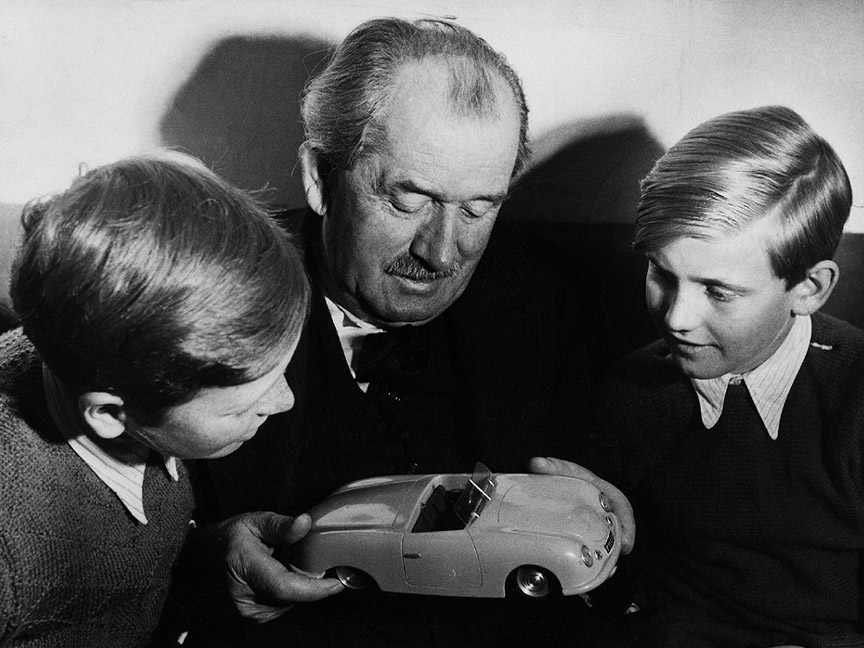
The Stratos premiered in the world rally championships in 1974 and went on to win the title straight away, as it did in 1975 and 1976 as well. It won both the Swedish Rally on snow, and the African rally on clay in the same period. There’s little doubt it would have gone on to win further titles had Lancia let it, but by this time Fiat had taken the somewhat strange decision that the Fiat 131 Abarth, a not very futuristic car that few will remember and that didn’t see much success, would be the rally car (and Fiat thereby the rally brand) in the Torino car family. The last major title the Stratos won was therefore the Monte Carlo Rally in 1977, although private teams continued to race the car and having success doing so after that. Of course Lancia came back on the rally scene a few years later with the Lancia Delta Integrale, that we looked at in an old post from 2015, but that’s another story.

The quite minimalistic interior of the homologation cars

There’s been various initiatives over the years to revive the Stratos, some of which have made it to some of the big car shows, but none of which have so far made it all the way to production. The most promising one was designed by, hold on to your chair now, Pininfarina and not Bertone, although it was, let’s say heavily inspired by the Bertone-designed original. It was built on a Ferrari 430 chassis and was to be built by a company called Manifattura Automobili Torino (MAT). It was shown at the Geneva Auto Salon in 2018, but the project then died off, apparently not because of Covid but rather because of Ferrari vetoing it, unclear why. I included it in my overview of the auto salon back then in a post you can find here.

The Stratos was thus a truly unique car, and to me, one of the coolest cars around to this day. It’s also uniquely small, uniquely focused on rally and if not uniquely, then at least very successful. It’s also a uniquely difficult car to find today should you want one. With 500 built in the early 70’s that’s perhaps no surprise, especially since many of the buyers certainly thought of themselves as hidden rally talents. As I write this in the middle of February, there’s not a single car on the market anywhere in Europe, nor in the US (which is less surprising since the Stratos never made it officially there). The Stratos will thus remain a rally legend for poster walls or these days Youtube, but what a car it was!