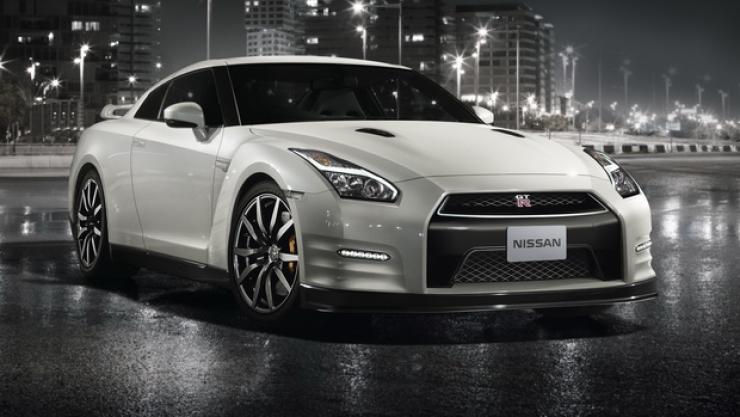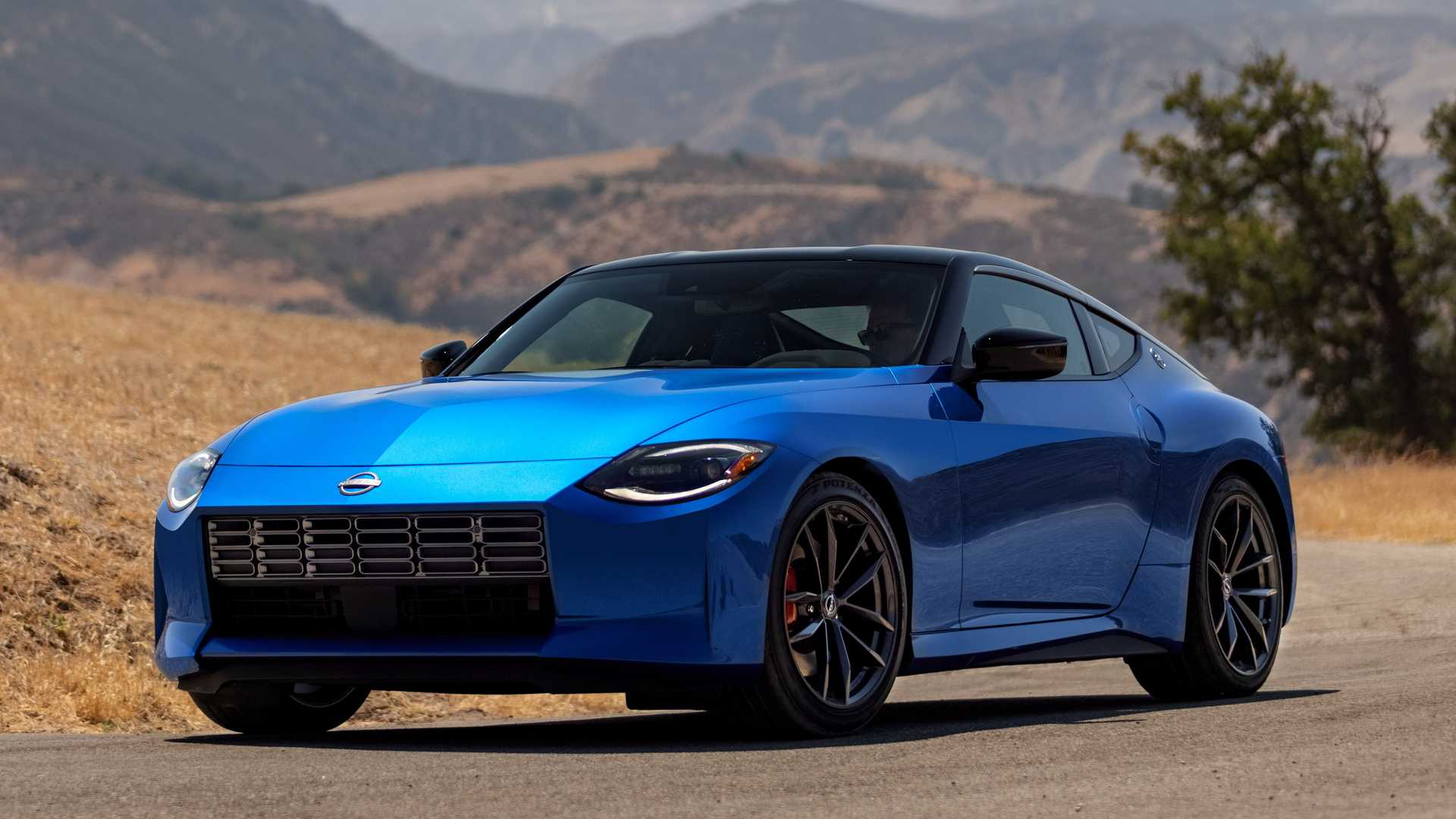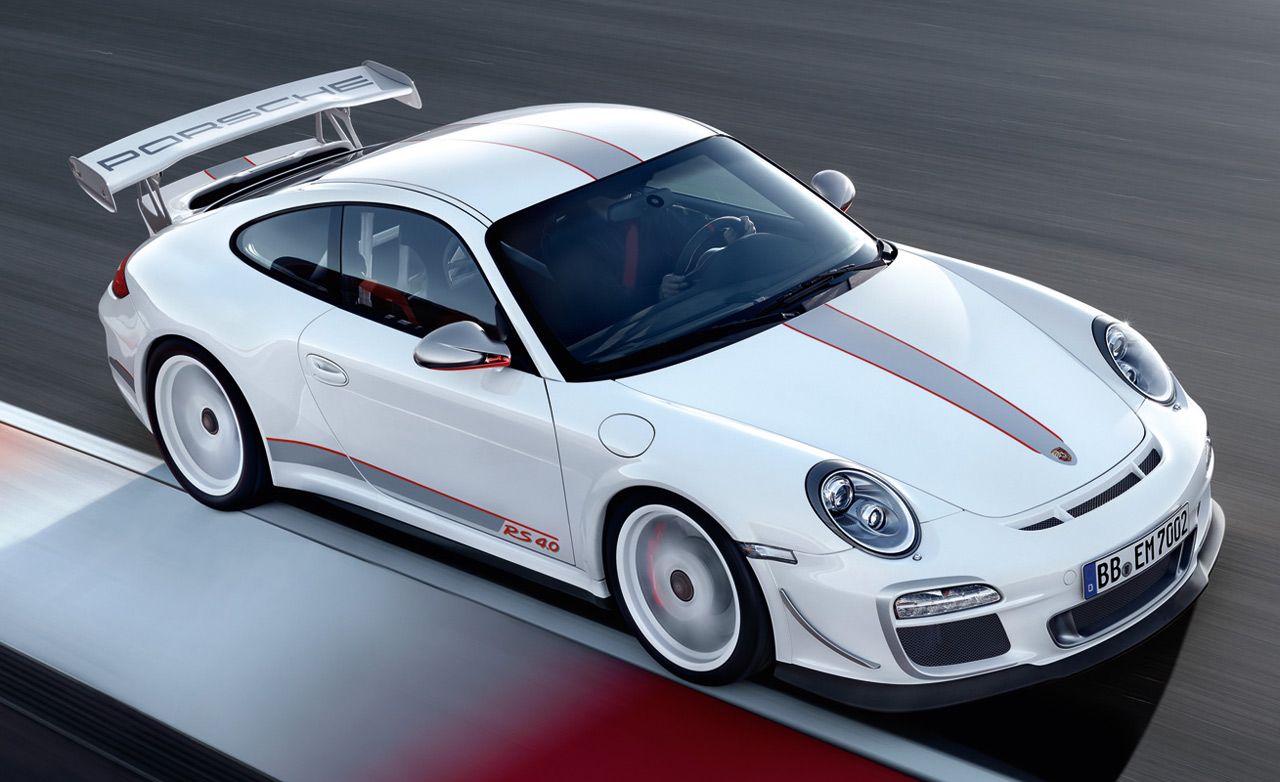
In my first post of 2021 with things to wish for in 2021, I mentioned a hope that Japan would again bring car enthusiasts something to cheer about. Unfortunately they didn’t, and I guess that in terms of combustion cars, it will never happen again. What they did do however the year after, in 2022, was to cancel the production of the Nissan GT-R for the European market. The GT-R is a true beast of a car, perhaps the best sports car ever to come out of the land of the rising sun, aunched 15 years ago to take on the the European supercar bunch but none more than the 911 Turbo as we’ll see later. It more than held its own doing so driving-wise, but without the brand but partly also the elegance of at least two of those three (sorry Lambo…). As production will stop globally this year, it’s time to pay tribute to the brute from Japan!
Back in 2007 I remember a young colleague as crazy about cars as me, telling me that the then brand new GT-R that had just set a record on the Nürburgring of 7 min 38 secs, quicker than the 911 Turbo at the time. He told me this was proof if it being the best sports car in the world, ahead of anything from Stuttgart or Maranello. I told him that wouldn’t matter much for sales numbers, since anyone buying a Ferrari cared far more about the brand than about lap times of the Nürburgring. It’s probably fair fair to say we were both right – the GT-R was and still is one hell of a sports car, but one that hasn’t come near the sales numbers of Porsche and Ferrari that Nissan was certainly hoping for. Unfortunately for Nissan, it didn’t convert many Ferrari drivers either.
When the once so celebrated Carlos Ghosn became CEO of Nissan in 1999, one of the first things he wanted the company to start planning for was a sports car that would represent the vision he had for the brand. His idea was to build on the heritage of the Nissan Skyline GT-R, the sportiest version of the luxury Skyline coupé, a car that never made it officially to the West and was only available as right-hand drive, but which since then has achieved a true hero’s status and been imported privately many times. The new car would retain the round rear lights from the GT-R and importantly, it should also beat the lap time of the 911 Turbo on the German Nürburgring (commonly also referred to as “the green hell”) that Ghosn had set as benchmark. Work on the GT-R thus started in the early 2000’s and in 2003, Ghosn announced the car would be launched at the Tokyo Motor Show in 2007. Unlike a certain Elon Musk, he kept his word!
The chief engineer of the GT-R was a certain Kazutoshi Mizuno, previously chief engineer of the Skyline GT-R and more known as “Mr. GT-R” well beyond Nissan. He was no doubt a key person in the project, notably convincing the not-easily-convinced Ghosn that the new GT-R had to be built on a completely new platform. The car Mizuno put together was one of the most advanced constructions that had been made at that time, with a body combining steel, aluminum and carbon fibre, an advanced chassis, four-wheel drive, crucial in bringing the power of the 3.8 litre, V6 turbo engine to the tarmac, and a dual-clutch, six-speed box mounted in the back in a transaxle construction. Initially the GT-R had around 470 hp which over the years and the different facelifts increased to up to 100 hp more in the standard version. The engine is however also a favorite among tuners, and it’s not difficult to find GT-R’s with well beyond 700 hp.
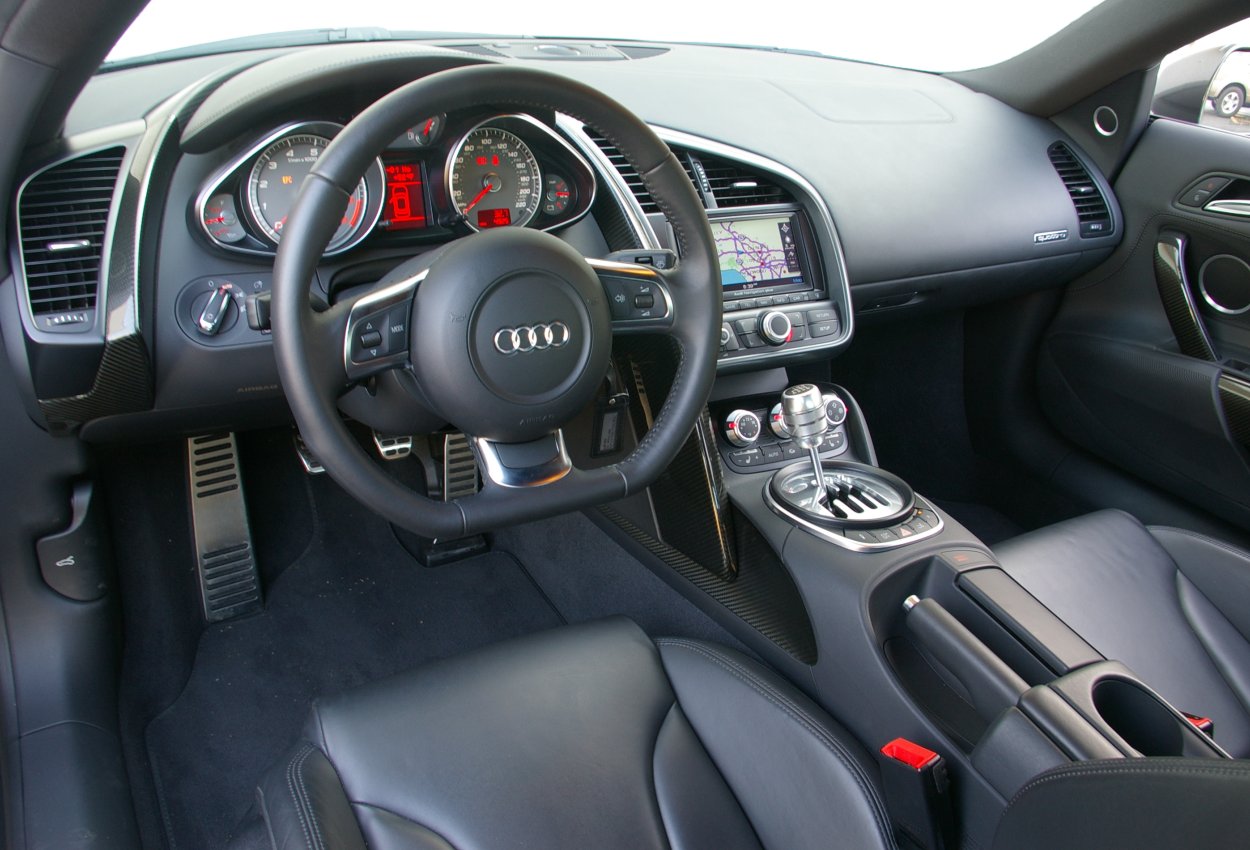
Already in the standard version however the GT-R is an extremely competent car as illustrated by a long list of racing successes in various GT categories. I’ve been lucky enough to experience a few of these over the years, both as a passenger and behind the wheel, and it’s really a car like no other. It has a very muscular, “heavy” appearance, looking bigger than its 1700 kg. Getting behind the wheel feels like stepping into a mix of a spaceship and a video game, with an interior that has what may be the largest amount of buttons on any car, before the large screen infotainment age. It fits the purpose but does so without any frills, fancy materials or much design, which is a bit of a shame. Having said that, and you tend to forget any concerns you may have had the same moment as you turn the key and wake up the lion family under the hood…
The twin-turbocharged 3.8-liter V6 engine produces a growling sound and works in perfect harmony with the six-speed dual clutch box and the razor sharp steering to provide a really pure driving experience. The first version of the GT-R was produced until 2009 is the only one needing more than 3 seconds to 100 km/h (3.2 to be exact), all subsequent cars had more power and made the sprint in less than 3 seconds. Not only that, the torque of at least 600 Nm happily kicks you in the butt whenever you want it to. This is a seriously quick car but not only that, it’s one that outclasses most other cars if you bring it to the track. That may also be the place you want to use your GT-R, given it’s far less practical than the outside may have you think. The back seats are not made for humans and the boot is so small that it barely has enough room for a weekend bag.
There’s been a multitude of updates and versions through the years but I’ll limit it to the two most important here. There was a larger facelift in 2016 that on one hand brought more power and an improved gearbox, but also visual changes on the outside an an upgraded interior with better materials. Before that however, the Nismo edition of the GT-R had been introduced in 2013, being built as the most advanced version of the GT-R ever since. Power in the Nismo was increased to 600 hp and it set what was at the time the fastest time ever around the Nürburgring, shaving around 30 seconds off the already very competent time of the standard GT-R!. Both suspension and brakes were improved as well and on the inside, Recaro seats did their best to hold the driver and passenger in place.
If you’re the no frills kind of person that that puts the driving experience ahead of the logo and being seen, then there’s probably no better sports car in the world than the GT-R. And that’s even before we’ve talked price, because at the price point where GT-R’s trade, this IS quite simply the best sports car in the world – full stop. An early car with sub-100′ km is yours for EUR 50-60′, a post-facelift one will cost you EUR 20′-30′ more, which to me is well invested money. It’s only the Nismo cars that add significantly to the budget, trading for EUR 150′ and upwards. This is of course very much less than any comparable car, be it Italian or German, including Nissan’s benchmark, the 911 Turbo. Not only that, the GT-R has all the Japanese quality you could wish for so given a serious history, a high mileage doesn’t have to be problemtic. You should be careful with tuned cars and as said, go for a post-facelift car if you have the budget but from there, you can’t really go wrong. The GT-R is the best car to ever come out of Japan, and chances are it will remain so!


It was the search for a somewhat more successful car than the C-V8 that led to the Interceptor, Jensen’s by far most well-known car, presented in 1966. This time the design had been commissioned to the Italians at Carrozzeria Touring (another company that would go bust a few years later) and although certainly more convincing than the C-V8, it was definitely still quite original. The front looked like many sports car in the day, the rear which in the UK became known as the “fish bowl”, is rather reminiscent of the 70’s AMC Pacer (which was of course designed after the Interceptor). If the exterior isn’t to everyone’s taste the interior is much more so, with a selection and quality of materials that led to the Interceptor being compared to high-end brands such as Aston Martin, Bristol or even Rolls-Royce.
We’ll make a quick pit stop here for a small side story that I find a wonderful illustration of Jensen and British car industry of the time. Jensen in parallel to the Interceptor built another model referred to as the FF. That’s actually a historic car as it was the first non-SUV passenger car with four-wheel drive, and thus highly innovative for its time. Neither in the 60’s nor now however does it snow a lot in the UK so if you build a four-wheel drive car close to Birmingham, you have to assume it was also intended for exports. All good so far. It’s just that no one in the Jensen factory apparently thought about the fact that most of the world outside of the UK by now had the steering wheel on the left side. So the FF only came as right-hand drive. Let’s just say it wasn’t a tremendous recipe for export success…
Back to the Interceptor, which during the 10-year production came in three series with only subtle design differences between them but where the MK III was by far the most produced. The MK III also came with three different bodies: the most common “glass bowl” saloon, the much rarer and arguably better-looking convertible, and the ultra-rare coupé with a plexiglass rear. All three series had Chrysler big block V8’s and 3-speed automatic transmissions, but whereas the first two shared the same 6.3 litre, 325 hp V8 as the predecessor C-V8, the MK III had an even bigger, 7.2 litre engine, however at 285 hp with less power. This all had to do with the new US emission rules that limited the power of large engines quite heavily. Not only was the 7.2 litre engine less powerful, it was of course also heavier, and just a tad thirstier: apparently we’re talking 25-30 litres per 100 km (8-10 MPG) …
The convertible version of the Interceptor was presented in 1974 and is another example of Jensen’s risk-willingness or complete ignorance of the world beyond the UK, depending on how you see it. At this time most other brands were halting the development of new convertibles altogether, as it was widely expected that US safety authorities would enact a complete ban on open cars without roll-over bar. So Jensen was basically the only brand brave or foolish enough to launch a new convertible in this period. They were ultimately right given a ban was never enacted but they were kind of wrong anyway, since the whole company went bust only two years later, in 1976. By then they had produced about 500 convertibles, out of a total of some 6400 Interceptors.
Although the big block Chrysler engines were quite bullet proof, the fact that they all had carburettors and lots of them, didn’t make them any easier to run or service. The carburettors had to be adjusted frequently for optimal performance, apparently up to as often as every 1000-2000 km. Cooling was another issue Interceptors were known to struggle with and then there was of course the same issue as with all other cars in the 70’s – rust. You can certainly convert the engines to injection and upgrade the cooling system, an idea that some won’t like at all given the car is then no longer original. It will however be far more drivable, and thus possibly a solution for those preferring to spend time on the road rather than in the garage.
Cooling and carburettors aside, the Interceptor is known as quite a wonderful GT car, offering loads of 70’s luxury and charm typically for far less money than a comparable Aston or Rolls (who as we all know also tend to have an issue or two…). There aren’t many in the market which makes pricing uncertain, but good saloons tend to start somewhere around EUR 50′ with convertibles costing much more. If this wonderful example of British ingenuity combined with a dinosaur-engine of a type will certainly never see again, then please make sure that if you’re not mechanically talented, you know someone who is, and go for a car as perfect as possible, as finding replacement parts for an Interceptor risks being as hard as finding a UK prime minister who will stay longer than a few months!