Volvo’s Italian Jobs!

One of my earliest and most vivid childhood meomories dates back to 1977 or 1978, and of course involves a car. Much like me, my father changed his wheels fairly often and had just become the proud owner of a white Volvo 142. As he made clear to everyone around, that “2” was awfully important, since it meant two doors, i.e. a coupe and not a boring four-door sedan. A coupe signalled sportiness and class!

Unfortunately, dad’s new sports coupe was an automatic, and soon after his purchase, when we reached Germany on a drive from from Sweden to southern Europe, the gear box got stuck in second gear. Driving through all of Germany on an unrestricted Autobahn in second gear is not something I would recommend to anyone, but at least, as this text is proof of, it’s an experience you won’t forget. We made it in the end, but the Volvo was soon replaced – by a somewhat sportier BMW 3-series coupe.

At around the same time, Volvo realized that it wasn’t only my father who had a weak spot for coupes, and decided to become a bit more serious about their offering in the segment. Not that they were fully new to it; the P1800, presented in 1961, was then as now one of the most beautiful cars ever built. But the P1800 was more tilted towards sportiniess, at least visually, than what Volvo now had in mind. 1977 was also the year of the brand’s 50th birthday. What better way to celebrate it than with a new coupe?
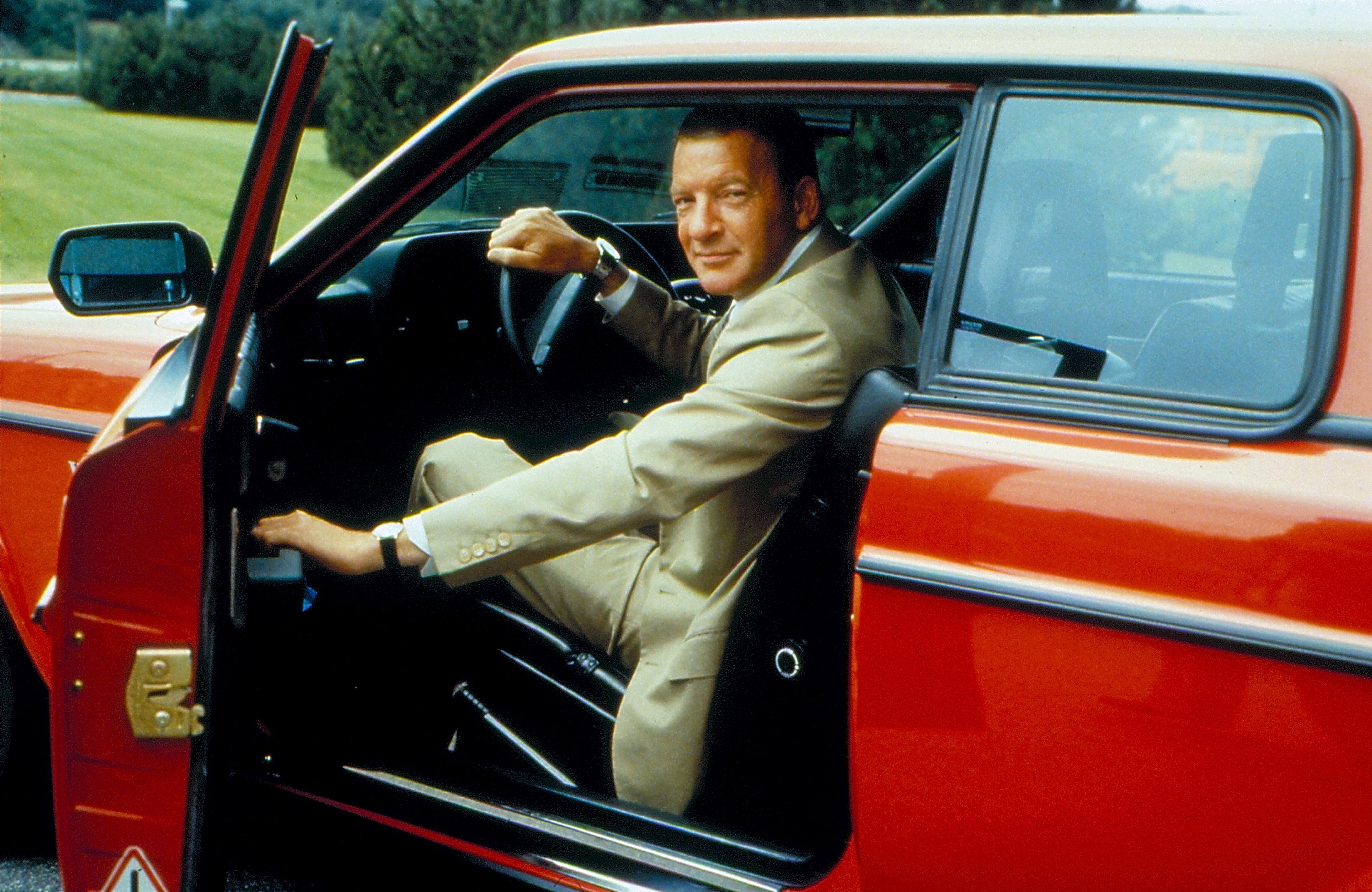
Volvo’s flamboyant CEO PG Gyllenhammar in the 262C

“Volvo” in this instance means its president, Pehr G Gyllenhammar, one of the grand old men of Sweden’s corporate scene and a rather loud and somewhat controversial figure. Gyllenhammar had a personality that was definitely if not larger than life, than at least larger than Sweden, and he had recently spent time in the US admiring the cool Eldorados and other luxury US coupes. In his mind, a similar car would help the Volvo brand move upmarket.

To say that the plan to build a luxury coupe was intuitive and went down well with everyone in the factory on Hisingen, the island close to Gothenburg where Volvo was built, would be exagerated. A coupe was not practical, safe and reasonably priced, all factors Volvo’s image at the time were built on. Esthetics and sexiness was not something the Volvo traditionalists had ever paid attention to or felt comfortable with.

Gyllenhammar, who was CEO of Volvo during 20 years until 1990 and chairman until 1993, was however not someone who took no for an answer. The result was the Volvo 262C by Bertone, launched in 1977. And if the difference between my dad’s Volvo 142 and the corresponding sedan had only been two doors, the changes to the 262C over a regular 242 (the successor to the 142) were at least somewhat more important. Most strikingly, they involved a much lower roofline.
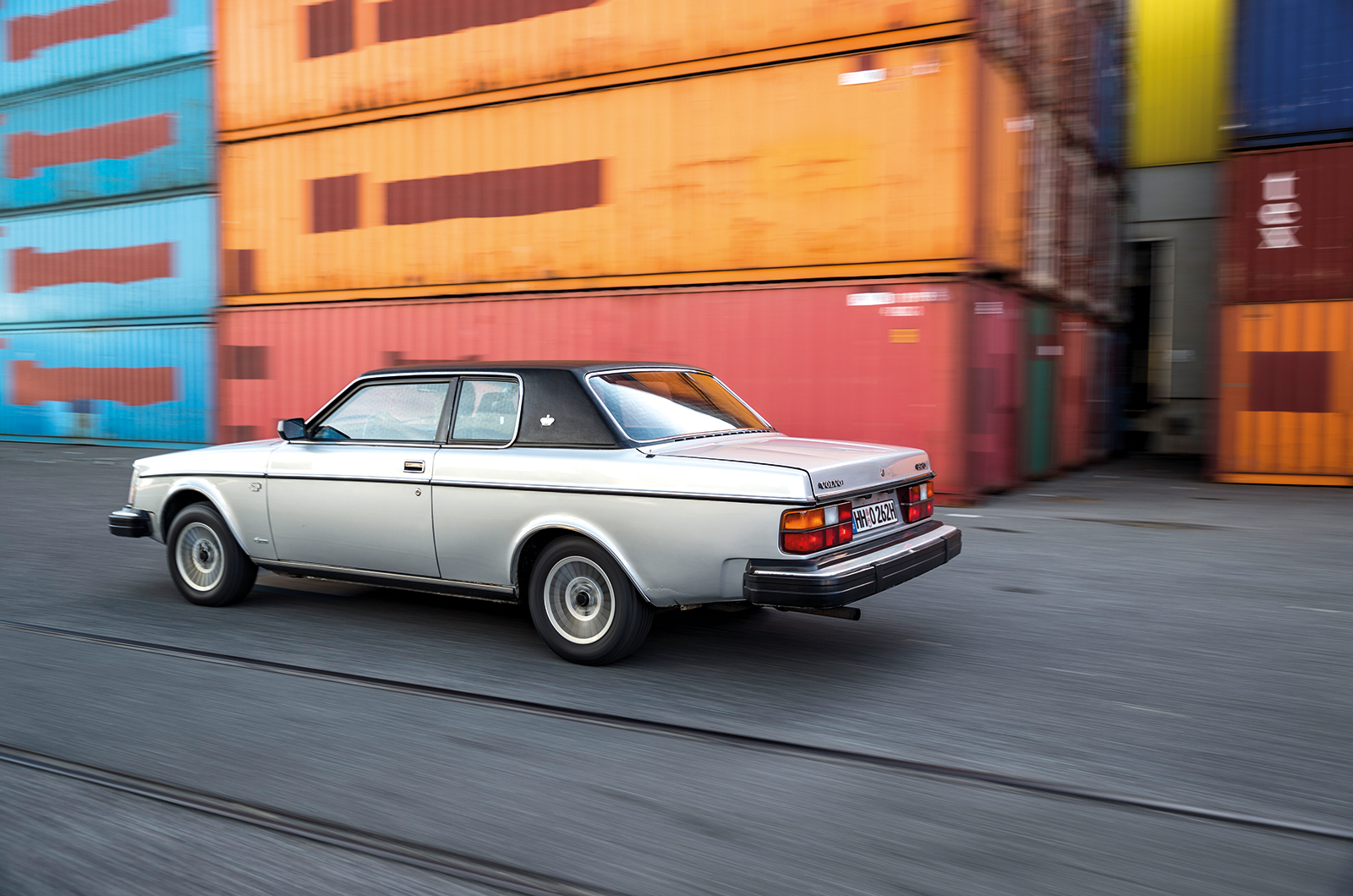
There was only one colour and the black vinyl option in the first two production years.

The 262’s roof pillars were cut by 6cm and the c-pillar design was changed. This gave the car a strange profile, somewhere between a custom car if you’re generous, and something that had been driven under a too low bridge if you’re less so. Practically, the lowered roof meant less passenger headroom and smaller windows, in an interior where Volvo had thrown in all the bells and whistles it had at the time.

Of course bells and whistles in the 70’s wasn’t the same as today, but it included a plush leather interior and comfort features like cruise control, air condition and electric windows. None of these were standard on other Volvos, and the 262C was by far the most luxurious Volvo ever built.

It was also the most expensive, by a margin. Priced in the US at 16′ USD at launch, it cost more than a BMW 528i (not a coupe but, well, a BMW) or a Cadillac Eldorado. Volvo tried to motivate the price by making a big story of the collaboration with the Italian design house Bertone. However, Bertone didn’t lead the design of the car, they were merely advisors to it.

Instead, the 262C was designed by Volvo’s own Jan Wilsgaard, the man behind practically all Volvos from the Amazon to the 850. Bertone did however assemble the 262C in their Turin factory. In the official name 262C by Bertone, “by” thus refers to Bertone as assemblers, not designers.
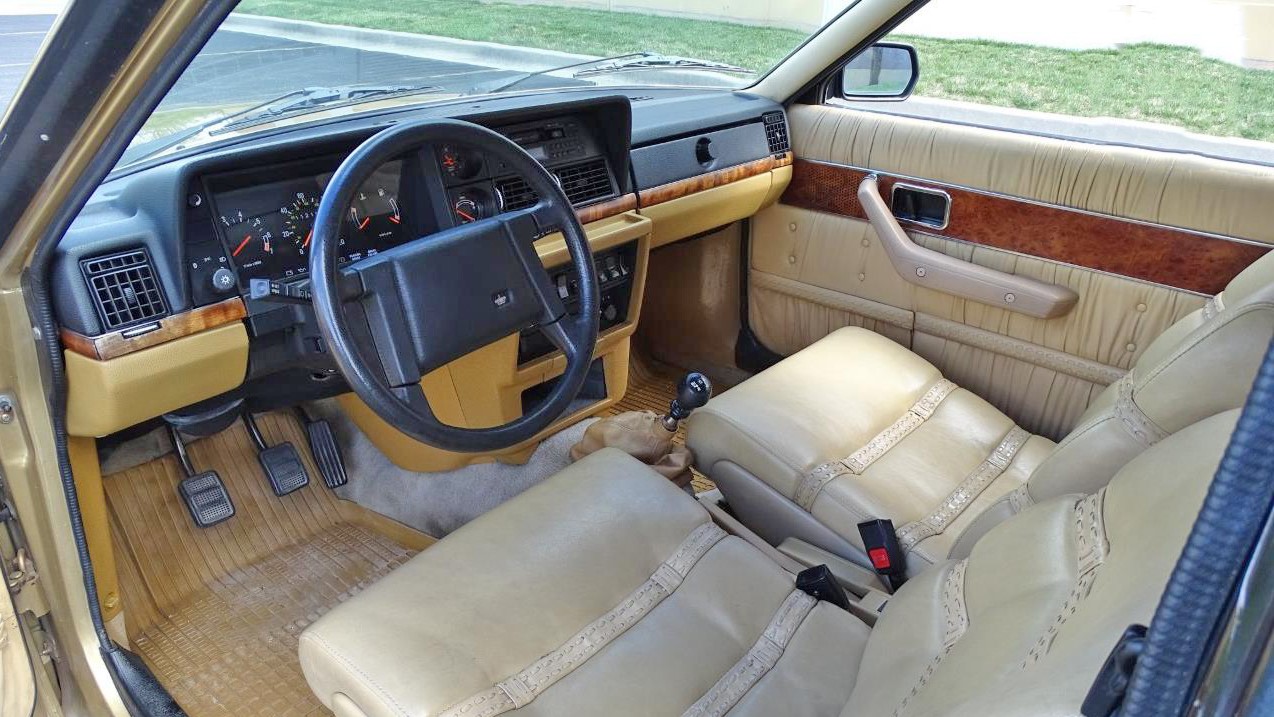
Apart from the leather and wood, the 262C was vstill ery much a Volvo 2-series….

Once you got over the design, it didn’t take long to see that the 262 had quite a few issues that you may not have expected at that price point. The car was still very much a Volvo that didn’t offer any more driving pleasure or power than the standard car it was based on.

Apart from the leather and wood trim, the interior was the same, including the black, plastic dash. The rather uninspired and loud 2.7 litre V6 PRV engine, developed by Volvo together with Renault and Peugeot, only delivered a paltry 140 hp and the 3-speed auto box it was combined with was not the sportiest. For what it offered, the 262C was too expensive, and over four years of production, only 6.600 cars were built with around 5.000 of those going to the US.

The number of cars produced make the 262C sound like a failure, but that’s not how Volvo and especially CEO Gyllenhammar saw it. For him, the 262C had never been intended to sell on volume. As mentioned initially, Gyllenhammar wantd an eye-catcher, a halo car through which Volvo’s image would be lifted. If the odd celebrity or successful Wall Street guy could be spotted driving a 262C, people would look differently at Volvo. At least in theory.
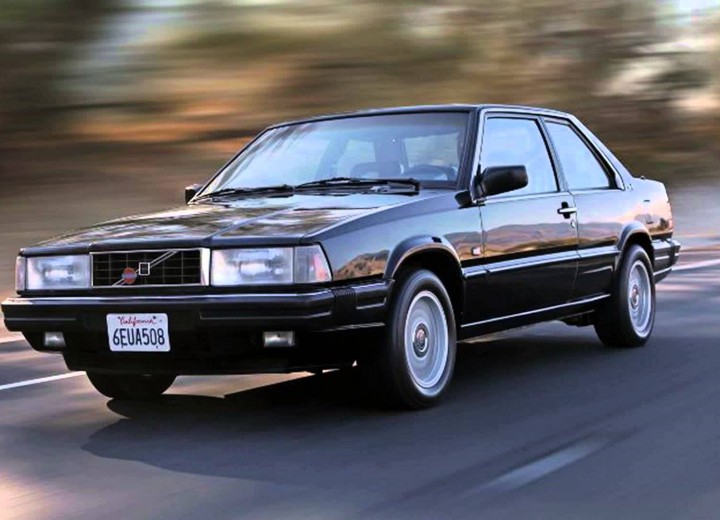
The 780 looked better, was more modern, and even more US-inspired!

A few years later, in the early 80’s, Volvo launched the 7-series which would prove far more effective at moving the brand upmarket than the 262C had ever been. The 7-series had also taken a lot of inspiration from the US, and again, Volvo and Gyllenhammar were set on performing the same coupe trick. This time, however, they went about it in a far better way.

As a starting point, the 7-series was far superior to the preceding 2-series. Also, and even more importantly, the new coupe that would be called the 780 Bertone was its own design with not a single body panel in common with the regular 7-series sedan. This time, Volvo also had the good sense of leaving the design work to Bertone, not just (but also) the assembly.

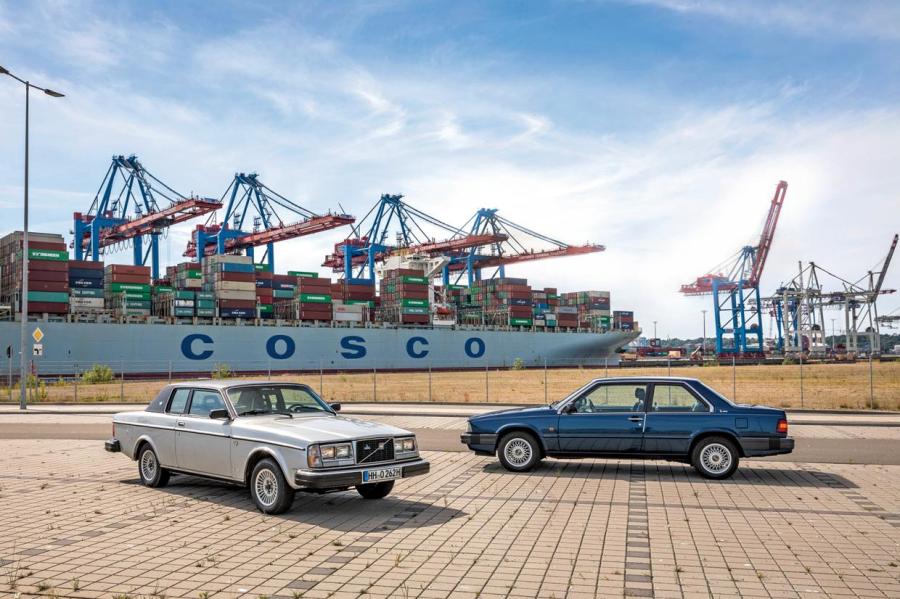
The result was a car that wasn’t intended to compete with the sportiness of a BMW 6-series, but rather present itself as an individualistic, luxury coupe choice. The 780 has a pretty, if somewhat anonymous design, with a deeper front and softer edges than the 7-series. It’s unmistakably a Volvo, just like Gyllenhammar wanted it. The interior was also far more luxurious, putting it far above a regular 7-series and miles ahead of its predecessor, the 262C.
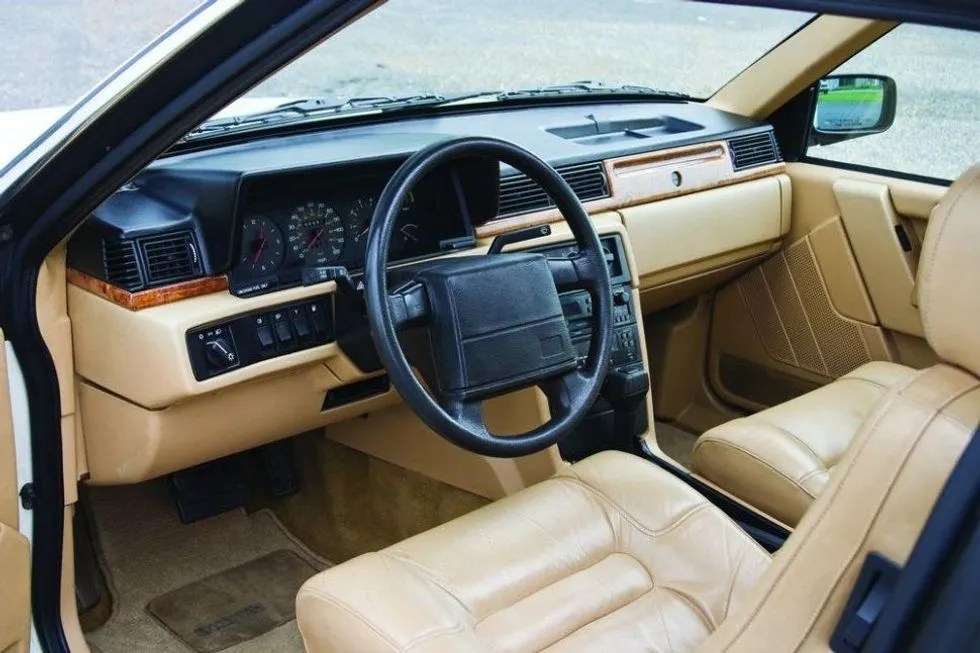
A vast improvement over the 262C, and still a great place to spend time today!

If Volvo had stayed true to their naming convention (the three numbers meaning series-cylinders-doors), I guess the new coupe would have had a V8 up front and no doors. In reality Volvo never had any plans for a V8 and why they broke the naming convention isn’t fully clear, but at least the V6 engine was improved to remove some of its roughness and improve its power output. The ignition, injection, crankshaft and cylinder heads were all new, the volume was increased to 2.8 litres, and power to 156-170 hp depending on model year.

Still, those numbers weren’t very impressive, especially when you consider the weight of the V6 engine. That made the new four-cylinder, turbocharged engines Volvo were developing in the 80’s the better choice, especially the 2.3 turbo, a much lighter, modern four-pot with a higher power output of 177-192 hp. The four-cylinder not only made the 780 faster, but generally a more light-footed and better car.

The interior was also vastly better than it had been in the 262C. There was even more leather, now combined with wood, and far more comfort options. These notably included electric chairs, a sunroof, and last but not least, a cassette radio with a manual equalizer!

After the 780, Volvo’s collaboration with Bertone ended. The next Volvo coupe would be the far less interesting C70 in the late 90’s, then in collaboration with Tim Walkinshaw Racing, but that’s a different story. Whereas the 262C was more a production than a joint venture collaboration, the 780 was a true Italian job, and I would say one Bertone can be proud of.
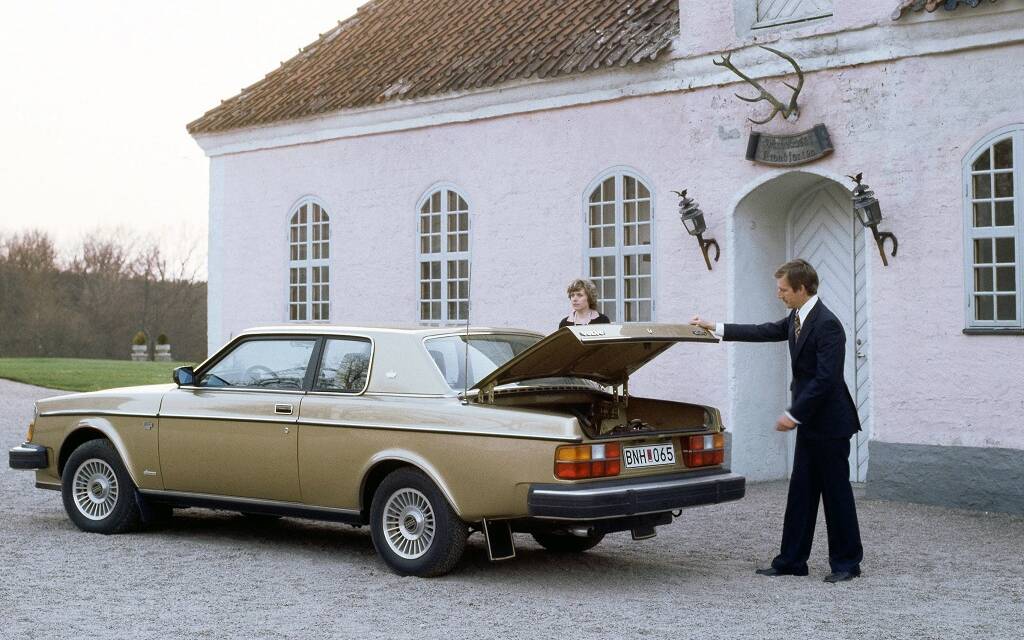
Who said a coupe couldn’t be pratical? The suit is not included.

Around 8.500 780’s were built between 1985-1990 and most of them were again sold to the US. Looking at the market today, that’s no doubt where you’re most likely to find either a 780 or a 262C, should you be the individualist, or for that matter, the Wall Street trader CEO Gyllenhammar had in mind.

If you’re in Europe, you will however still find some in Germany and Sweden. Of the 200 262C’s that were sold in total in its home market Sweden, 22 are still in traffic today. For the 780, the number is a bit more than a 100 cars. In both cases, many of these will however have been re-imported from the US.

Objectively, the choice between Volvo’s Italian jobs is an easy one – the 780 is no doubt the better car, especially with the 2.3 litre engine. Looking at it today though, I can’t help but think that the 262C is the cooler of the two Italians, and also the one that has the highest likelihood to be remembered by history. For better or worse, it really looks like nothing else, and especially, like no other Volvo ever did, and it still has a Bertone logo on the side…

Street finds – the Fiat X1/9!

It’s not only the times that are a’changin, as Bob Dylan noted long ago, but last week in central Europe, very much the weather as well. We thus went from several weeks of wonderful summer days and late dinners on the terrace, to 12-13 degrees C and rain. Luckily things are set to improve, however to something more reminiscent of autumn by the looks of it, so I guess I was very lucky to spot a surprisingly exotic street find just before the weather change – the nowadays very rare Fiat X1/9. It’s no doubt a car that is best enjoyed in the summer, but it’s also a great testament to Bob Dylan’s changing times, as we’ll see!

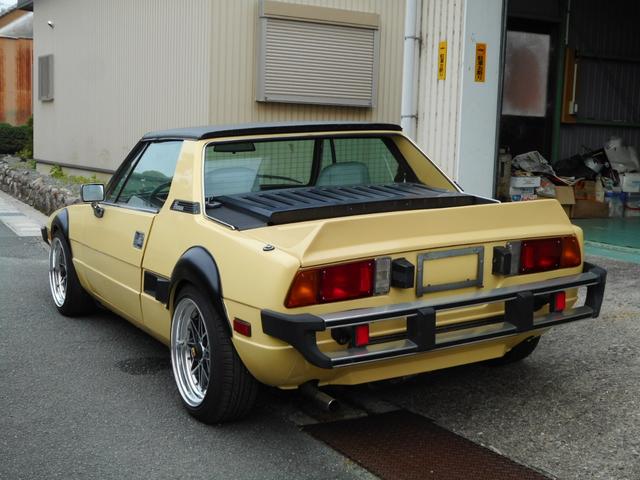
Angular body, engine right behind the seats and thus perfect weight distribution!

The Fiat X1/9 is also very much the flashy family member in an otherwise quite boring group of 60’s and 70’s Fiat cars. It’s the successor to the Fiat 850, a four-cylinder, 60’s creation that looked like a bun (although to be fair, the Spider looked better than the coupé…). But it also belongs to the Fiat 128 family where the rights to the four-door sedan were later sold by Fiat to Soviet Lada, and which most therefore associate with old east-west spy movies.

Contrast both of those with the very futuristic X1/9, and it’s not only the model name that stands out. The angular design with the pop-up headlights was a design that would be if not copied, then definitely repeated in many other 70’s cars, such as the Lotus Esprit and of course the Lamborghini Countach. The X1/9 didn’t look anything like the rest of the family, but somewhat surprisingly Bertone had still designed all siblings, proving design houses can have good and less good days.

Pop-up headlights were of course a must in the 70’s!

As spectacular as the looks was the fact that the engine was right behind the seats, making the X1/9 Fiat’s first mid-engined car. Unfortunately though, that engine came from the boring part of the family, meaning at the launch in 1972 a 1.3 liter, 4-cylinder with a very modest 75 hp, coupled to a 4-speed manual box. In 1980 that grew to 1.5 liters, another 10 hp and five gears. Of course, at around 900 kg it’s fair to say that they X1/9 was a light-weight, but I think we can safely conclude that it looked about five times faster than it really was. That was of course especially true in the US, where emission regulations made the engines even weaker than in Europe.

It wasn’t only emission standards that became strict on in the 70’s, the same was very much the case for safety, again especially in the US. Fiat had actually built the X1/9 with North America in mind and had thus tried to adapt to the coming rules during the development process. Thanks to the mid-mounted engine and the targa body rather than a full convertible, the X1/9 was one of very few cars had no problem complying with what became the new US safety standards.

This gave Fiat’s faltering US a welcome boost, especially since the small coupé was far cheaper than other, somewhat comparable sports cars. Everything was going swell until the mid-70’s when those safety standards were developed further, forcing Fiat to fit what must be the ugliest bumpers in automobile history to the X1/9. Luckily these were later re-adapted to what can be seen on my street find, which is most probably a US import. Around 165.000 X1/9’s were produced in total between 1972 and 1988, and no less than 3/4 of those were sold in the US.

The garden hedge – ugliest bumper ever seen!

As observant readers may have noticed on the first picture, the logo isn’t that of Fiat, but rather of designer Bertone. The reason is to be found back in 1982, when Fiat wanted to discontinue the X1/9 and pull out of the US market, and Bertone therefore bought the rights and continued to produce the car in its name all through 1988. Not much changed on the car in the last years but Bertone would improve both equipment and materials, making the Bertone-branded cars such as the one I saw, the most attractive ones.

So what about the changin’ times? Quite obviously, it’s the concept of a sports car weighing in at less than a ton, making even a small, 1.5 litre engine with less than 100 hp if not plenty, then at least enjoyable enough. This is obviously very far from where we are today and if it sounds like your thing, you may think that with 165.000 cars produced, finding one will be easy. That’s however not the case as very few have survived – estimates talk about less than 1.000 cars in the US. Few are thus up for sale, but those that are tend to come in around EUR 15-20.000 in Europe.

Cars from 1980 had five speeds and (slightly) more power

The only question left to solve is then that around the name, because for a company who have typically been naming cars with real names or with numbers relating to the engine size, how did X1/9 come about? It turns out that prototype cars at Fiat were called X1, with the second number indicating the prototype in the order it was developed counting from a certain start date. The small Autobianchi A112 was for example called X1/2 as prototype, and the X1/9 was thus prototype number nine. It was however the only model to retain the prototype name in actual production and why that was, no one seems to know. But who cares? With the wind in your hair and the humming of a four-cylinder right behind you, you’ll have better things to think about!

The unique Lancia Stratos!

If competition between car makers has been a trait of the automobile industry for as long as anyone can remember, it’s probably only in Italy that competition between car designers was just as fierce. The two dominant houses in Italian car design are of course Pininfarina and Bertone, both having employed legendary designers through the years who have in turn been responsible for some of the most beautiful car creations to come out of Italy. Usually one of the two big houses would be the main partner for a certain brand, but there was certainly nothing hindering the other one from trying to gain market by various means. Thank God for that because otherwise, the legendary Lancia Stratos would probably never have seen the light of day.

Lancia had historically mostly collaborated with Pininfarina in designing its models, with Bertone eagerly watching from the sidelines. In the late 60’s however, Bertone saw an opportunity as it was obvious that the ageing Lancia Fulvia was up for replacement. Bertone’s gave its legendary designer and our old friend Marcello Gandini, the man behind notably the Lamborghini Miura and Countach, the task of drawing a car that completely broke with the Fulvia and would signal the advent of a new, modern era. So he did, and it was so convincing that the Lancia bosses decided to show the prototype at the Turin Auto Salon in 1970. Gandini was subsequently commissioned with designing the production car that would come to market a couple of years later.

Gandini’s original Stratos prototype was…special!

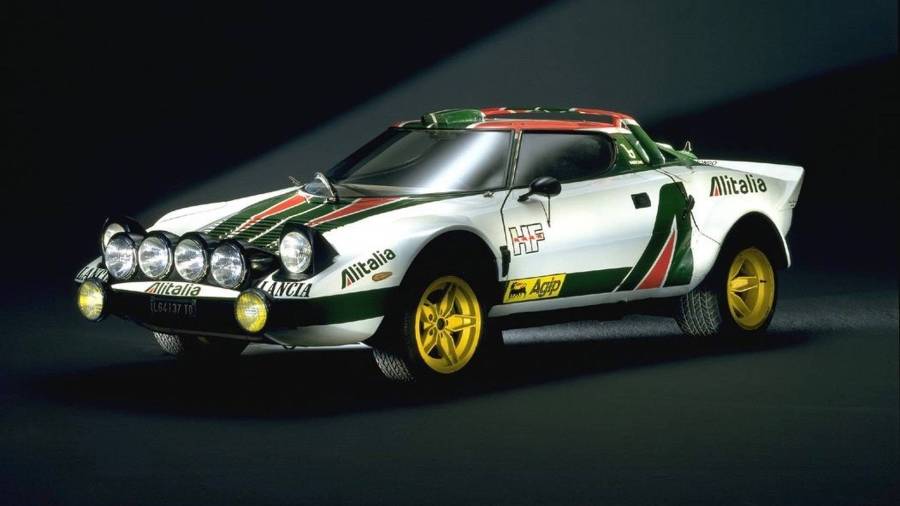
The Stratos’ predecessor, the Fulvia coupé, had been used on the rally scene in the 60’s with some success, and Lancia saw rally as a way to position the brand as a sporty alternatively notably the the siblings from Fiat. This meant that unlike basically any other rally car at the time (or for that matter, thereafter), the Stratos was developed exclusively with rallying in mind, and not as a civilian car later converted to rally usage. You don’t need to look at the car for long to see this was the case, and also that this was a completely new design language that would follow Gandini notably to the Countach. The ultra short wheelbase of only 2.2 metres carries a body with minimal overhangs but with a big, sweeping front screen giving the driver great visibility. The engine was mid-mounted in the ultra low, rear-wheel drive car, getting in and out of which it is not an exercise suitable for any kind of daily driving. Looking at the Stratos today, it’s surprising how small it really is at 3.7 metres and around 900 kg. Lancia did however have to comply with the rules for any rally car at the time, namely that 500 so called homologation cars for street usage had to be built and sold along side the rally cars themselves.

How most of us remember it – on a clay road in some southern rally!

During the development of the Stratos, Lancia had considered various engines for the car, but the one they really wanted was the 2.4 litre V6 that Ferrari was using in the Dino. After long negotiations, rumour has it that Enzo Ferrari himself agreed to deliver the 500 engines necessary for the homologation of the Stratos. However, after the first 10 engines or so the deliveries suddenly dried up, with Ferrari claiming various production issues. It wasn’t until Lancia threatened to replace the Ferrari engine with another motor that they finally started coming in. Strangely enough, that also coincided with the end of production of the Dino, which Enzo had of course seen as a competitor to the Stratos… In the homologation street cars the engine produced 190 hp, in the rally cars performance was typically between 300-400 hp thanks to a big, old-school turbo. With the car being rear wheel drive, it’s an understatement to see that the Stratos was difficult to drive, but for those who mastered it, it was one hell of a car!

The Stratos premiered in the world rally championships in 1974 and went on to win the title straight away, as it did in 1975 and 1976 as well. It won both the Swedish Rally on snow, and the African rally on clay in the same period. There’s little doubt it would have gone on to win further titles had Lancia let it, but by this time Fiat had taken the somewhat strange decision that the Fiat 131 Abarth, a not very futuristic car that few will remember and that didn’t see much success, would be the rally car (and Fiat thereby the rally brand) in the Torino car family. The last major title the Stratos won was therefore the Monte Carlo Rally in 1977, although private teams continued to race the car and having success doing so after that. Of course Lancia came back on the rally scene a few years later with the Lancia Delta Integrale, that we looked at in an old post from 2015, but that’s another story.

The quite minimalistic interior of the homologation cars

There’s been various initiatives over the years to revive the Stratos, some of which have made it to some of the big car shows, but none of which have so far made it all the way to production. The most promising one was designed by, hold on to your chair now, Pininfarina and not Bertone, although it was, let’s say heavily inspired by the Bertone-designed original. It was built on a Ferrari 430 chassis and was to be built by a company called Manifattura Automobili Torino (MAT). It was shown at the Geneva Auto Salon in 2018, but the project then died off, apparently not because of Covid but rather because of Ferrari vetoing it, unclear why. I included it in my overview of the auto salon back then in a post you can find here.

The Stratos was thus a truly unique car, and to me, one of the coolest cars around to this day. It’s also uniquely small, uniquely focused on rally and if not uniquely, then at least very successful. It’s also a uniquely difficult car to find today should you want one. With 500 built in the early 70’s that’s perhaps no surprise, especially since many of the buyers certainly thought of themselves as hidden rally talents. As I write this in the middle of February, there’s not a single car on the market anywhere in Europe, nor in the US (which is less surprising since the Stratos never made it officially there). The Stratos will thus remain a rally legend for poster walls or these days Youtube, but what a car it was!