Urbanization, i.e. the trend of an increasing number of people moving to cities, has been a leading trend globally in the last 100 years and continues to be so, especially in developing countries. A century ago, only 20-30% of the then global population of 2 billion lived in cities. Today, that number is 45% of today’s population, meaning almost 4 billion people. And more people in cities also mean more, large so called megacities, where there is little room for big cars.
The above reasoning was top of mind of German production engineer Norbert Reithofer when he was appointed CEO of BMW in 2006. It soon became clear that the megacity vision was more important to Reithofer than the success BMW was having in the mid-00’s, and as newly appointed CEO, he decided that irrespective of how well things were going, it was time to prepare BMW for the future. If that reminds you of John Elkann’s comments at the launch of the Ferrari Luce, you’re absolutely right.
Reithofer’s vision was for BMW to go from a car manufacturer to a transportation provider, owning city garages, collective transportation means and private cars, all in the new megacity world. And of course, in such a congested environment, the megacity vehicle had to be sustainable and follow his “3i” principle – intelligent, innovative, and international. Engineer thinking by excellence!
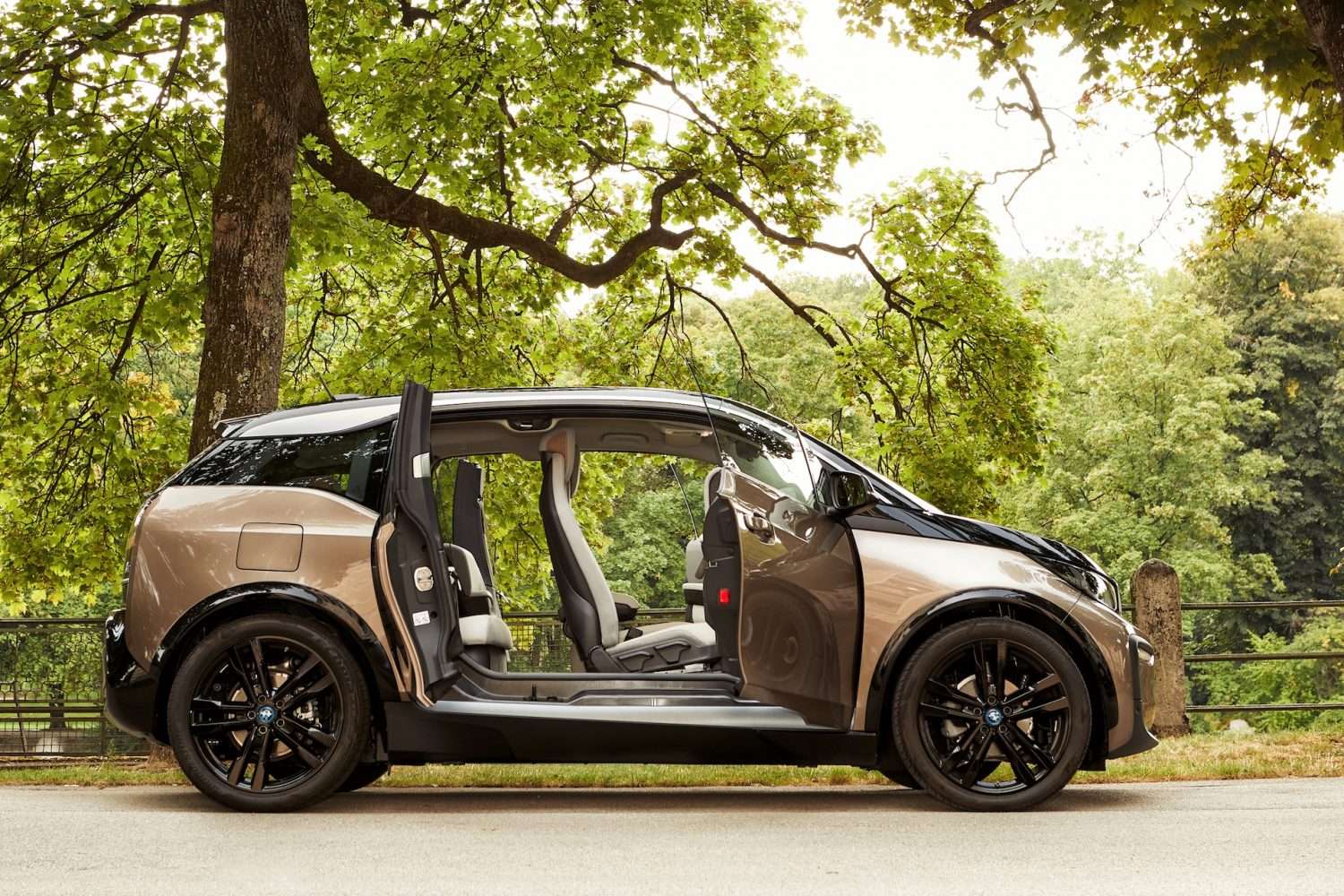
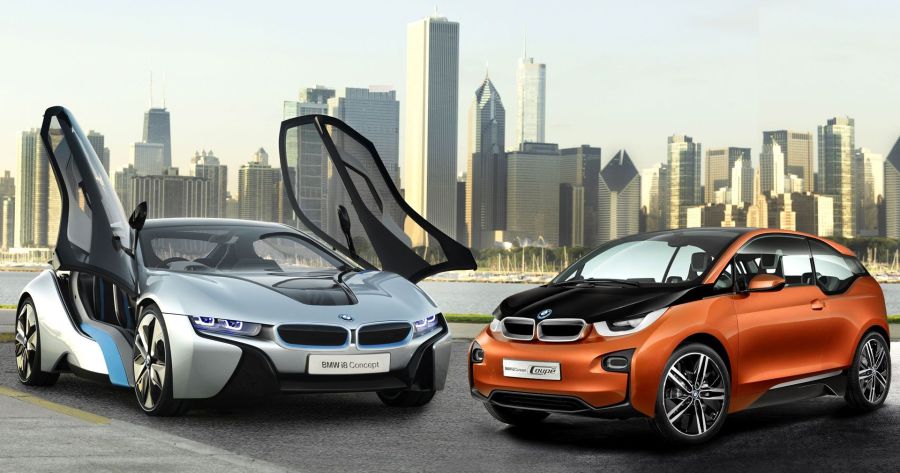
Reithofer’s vision was translated in the BMW i3, launched in 2014 and produced until 2022. The i3 was an early electric car, however with only a 22 KwH battery pack and about 80 km of range. To counter the additional battery weight, BMW produced the whole passenger cell from carbon fibre, leading to a total car weight of around 1300 kgs. Good, but still not sensational.
What was rather more sensational was the i3’s design, that remained practically unchanged throughout the production and still looks as modern today. It has a distinct look of a chic city car which continues in the interior, where materials such as hemp were very innovative for the time. The i3 also had gimmicky clam shell doors on both sides (rear doors being rear-hinged to improve access à la Rolls Royce) and wheels that were thinner than the rear wheel of a serious motorcycle.
What also was if not sensational, then at least intelligent and innovative i.e. responding to two of Reithofer’s 3 i’s, was BMW’s range-extending system. The i3 wasn’t a plug-in hybrid in the traditional sense but still had a small, 600cc scooter engine with 34 hp that only kicked in when the battery was depleted. The idea was for it to be a help of last resort, should the battery be empty before you got home. That’s really all it was good for, since 34 hp and 1300 kgs don’t really work on a motorway.
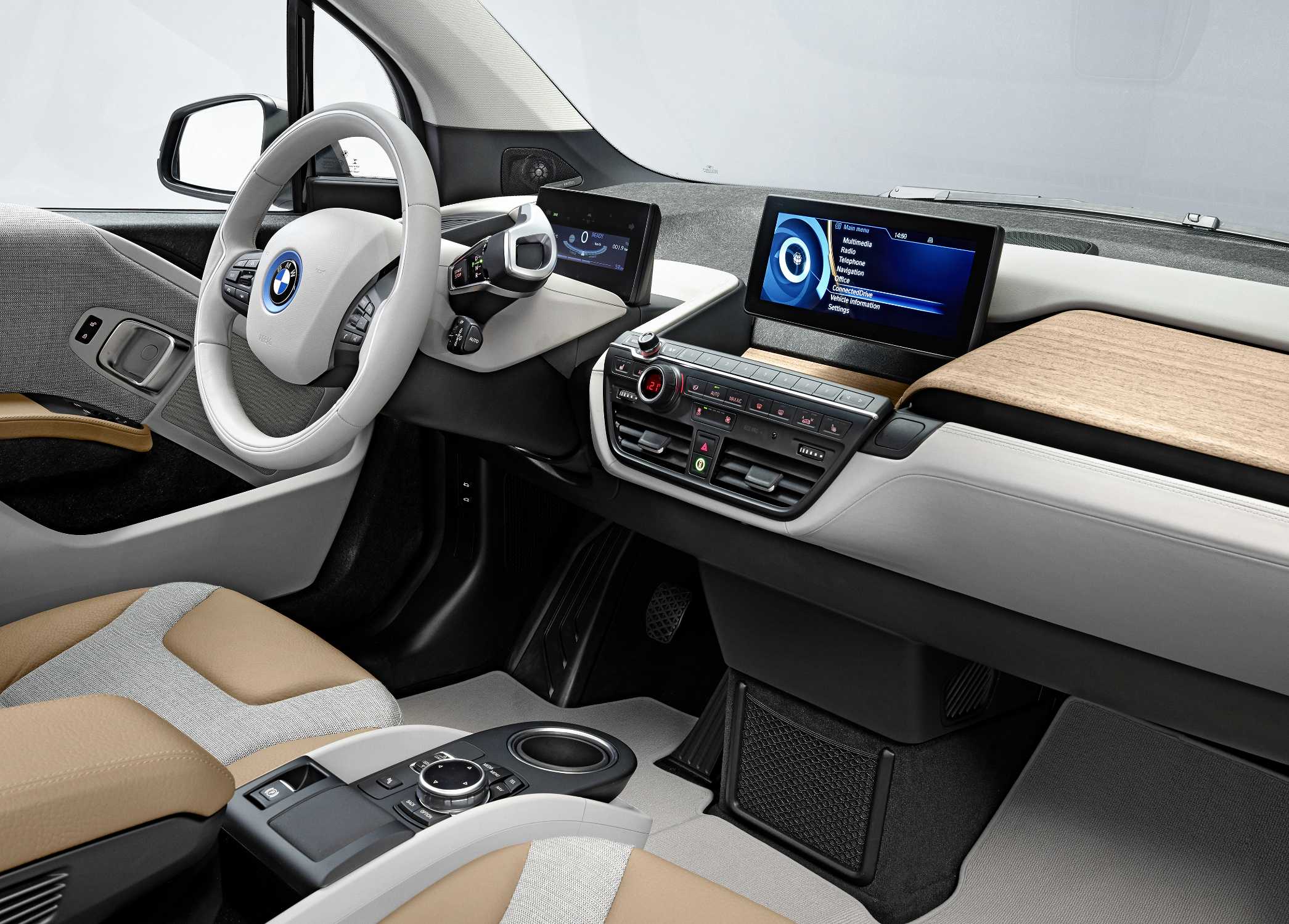
Unfortunately, the i3 also had quite a long list of negatives. The carbon fibre construction may have been futuristic, but it contributed more in price than in weight reduction. The clam-shell back doors didn’t have windows you could open and they couldn’t be opened without opening the front door first. The tires may have been good for reducing friction, but they were unfortunately quite useless for driving, and most motoring journalists described the i3 as a pretty terrible driving experience. All this wasn’t helped by the price of USD 42.000 at launch, much higher than any comparable car.
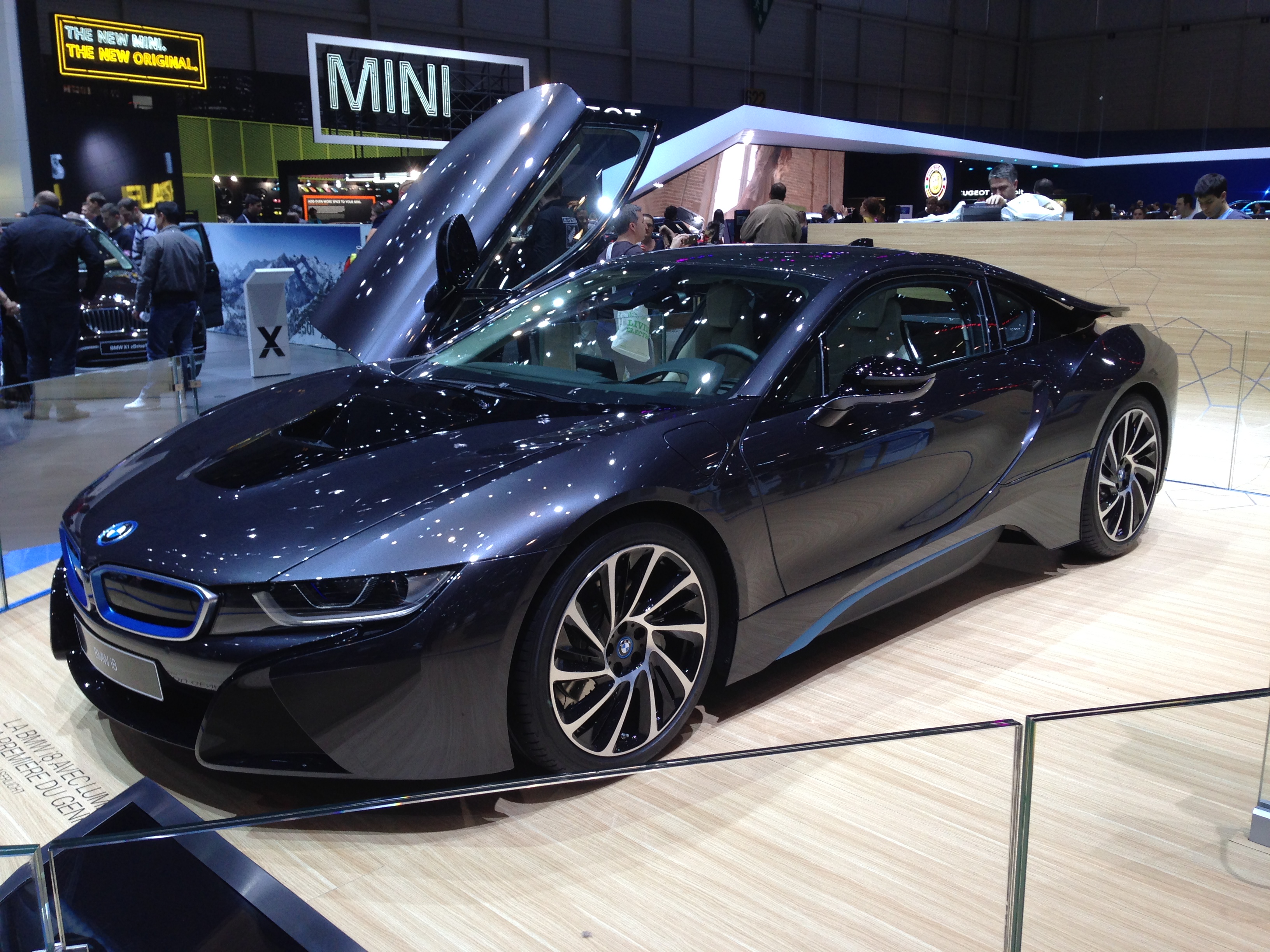
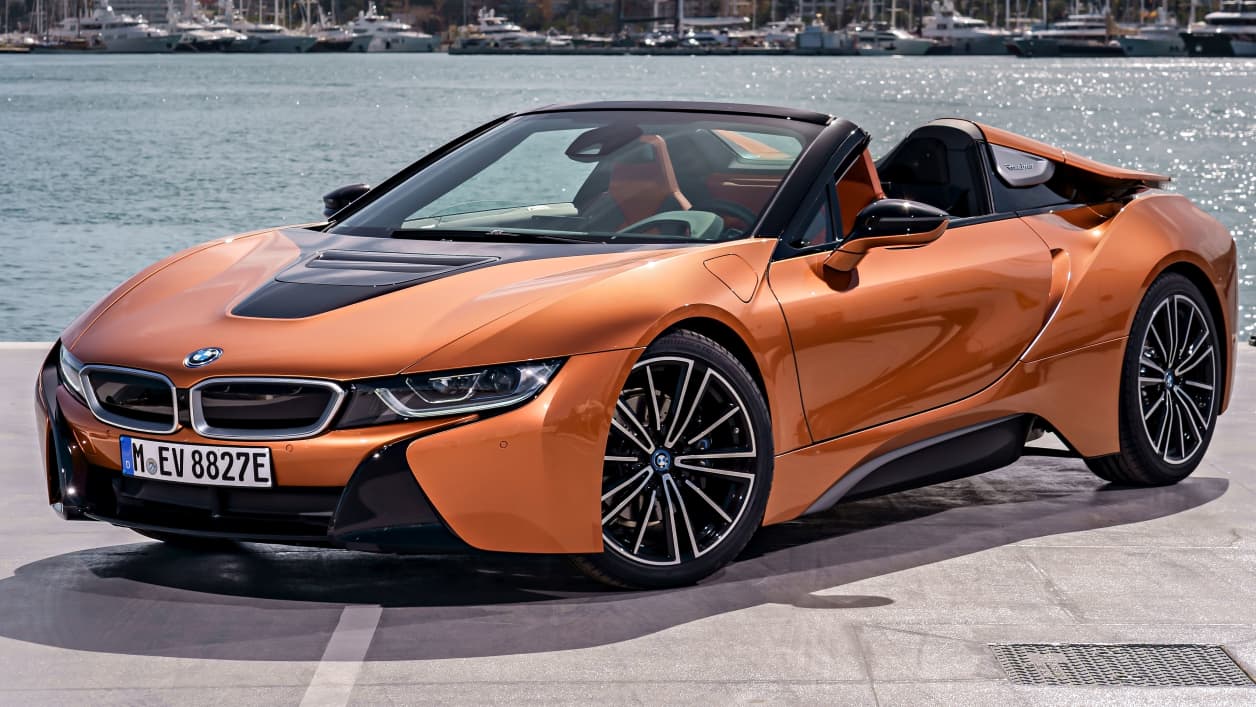
In parallel to the i3 and, one may suspect, to make the whole concept launch a bit sexier than a small EV with bike wheels could, BMW had also shown a concept car called the i8 together with the i3. The idea had never been for it to go into production, but its rather sensational design received such acclaim that BMW changed their minds.
The size and supercar looks of the i8 were definitely less adapted for megacities than the i3, but it was still a hybrid construction. The petrol engine had only three cylinders and a volume of 1.6 litres for a power output of 228 hp, and was combined to an electric engine with 129 hp, giving the i8 about 15 miles of pure electric range.
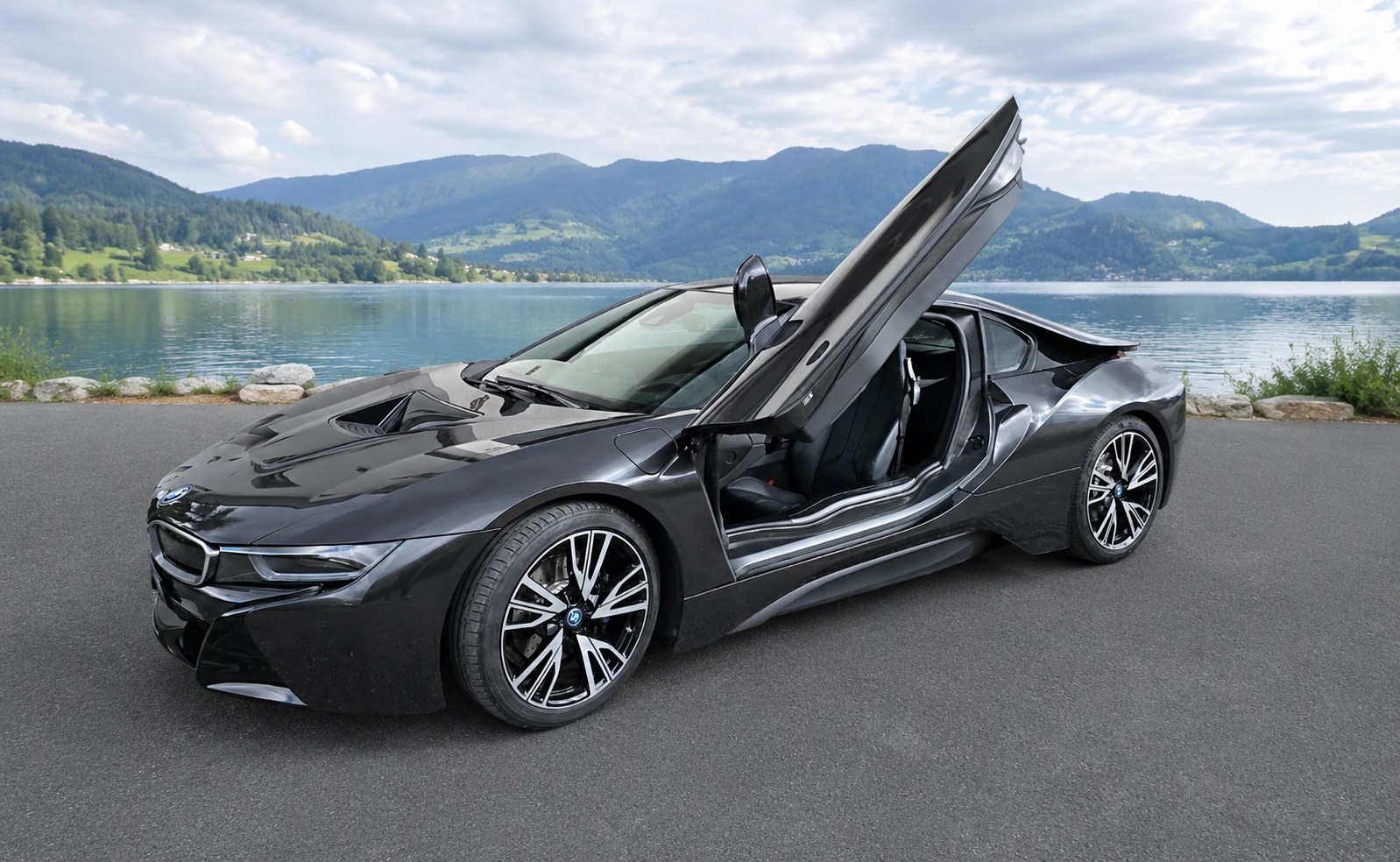
If this isn’t the powertrain you imagine when you look at the car, you’d be forgiven. If you’ve heard an i8 drive by, you will probably think all of the above is wrong. That’s however because the engineers at BMW were early not only in megacity thinking, but also in false sound effects. You see, one of the I8’s two exhausts isn’t connected to the engine, but rather to a kind of sound amplifier.
What comes out of it is thus not engine sound, at least not from the i8, but rather an artificial, recorded sound. Your passengers and bystanders will thus be convinced your fancy car has a big engine, and not a meager three cylinder. A lesson in human psychology that is perhaps worth remembering when politicians and others in-the-know scratch their heads as to why on earth people don’t love EV’s.
The i8 looks as spectacular today as it did 10 years ago. Much like the i3, the design has aged extremely well, if at all. The clam shell doors of the i3 were replaced by far more spectacular butterfly ones on the i8, and the coupe was also available as roadster in the last three production years, from 2018 to 2020. The inside was far less eye-catching though, with a relatively standard BMW cabin of the time. That still meant a high-quality interior with hemp making way for leather in most places.
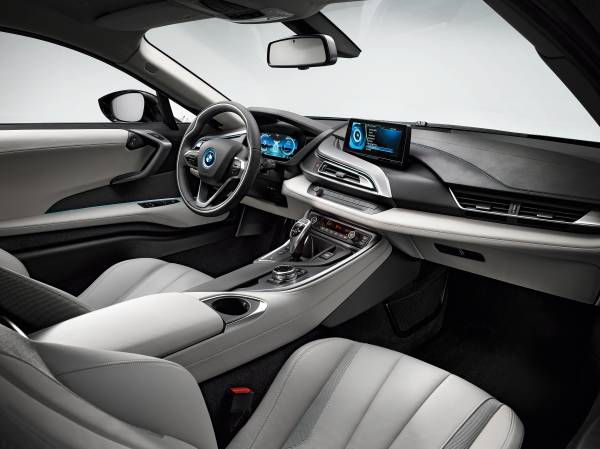
The drive is perhaps also more conventional than the outside promises. The i8 doesn’t have the thin wheels of the i3, but still much thinner ones than a comparable sports car would have. The engine and power output are ok, not more, especially given the weight of around 1500 kgs. The i8 is hereby more of a GT than a real sports car, and one you buy for the looks more than the drive.
What the i8 had in common with the i3 was however that it was expensive – even more so than the i3. At a starting price of USD 135.000 at launch, it cost as much as a 911 GT3 did at the time, whilst weighing around 100 kgs more than the latter in spite of the carbon body. It never became much of a success given that, as for the money, most people expected a bit more volume and power under the hood.
Today you’ll pick up an early i8 for around CHF/EUR 50.000 (USD 60′), with later cars and roadsters fetching up to almost twice that. Prices are stable and seem to start climbing. The small engine and hybrid system means you’ll enjoy low taxes in most countries, but potential maintenance costs of an aging hybrid system shouldn’t be ignored. That said, you’ll get a lot of show for the money!
As we know today, Reithofer’s megacity vision failed, especially since he forgot that most megacities are in the developing world, where buyers with the money to spend for what the i3 cost were, especially at the time, few and far between. Also, both the i3 and the i8 are too compromised to make them any kind of ideal pairing, and the answer to the question in the title is a rather resounding no.
That said, Reithofer was on to something, namely that air pollution will become a theme as cities grow, and in a city environment, a small EV without local emissions is preferable to large SUV’s. And contrary to the huge EV SUV’s that dominate our streets today, a small city EV doesn’t need a huge battery. Smart kind of picked up on that, as Renault is now doing with the ultra-trendy electric R5. There have been a few others, and there will probably be more. In 2014 though, Reithofer’s vision meant that BMW was first to the party!