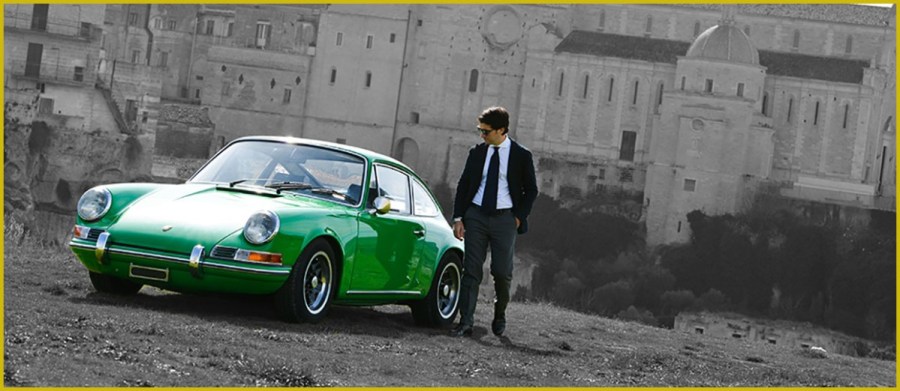
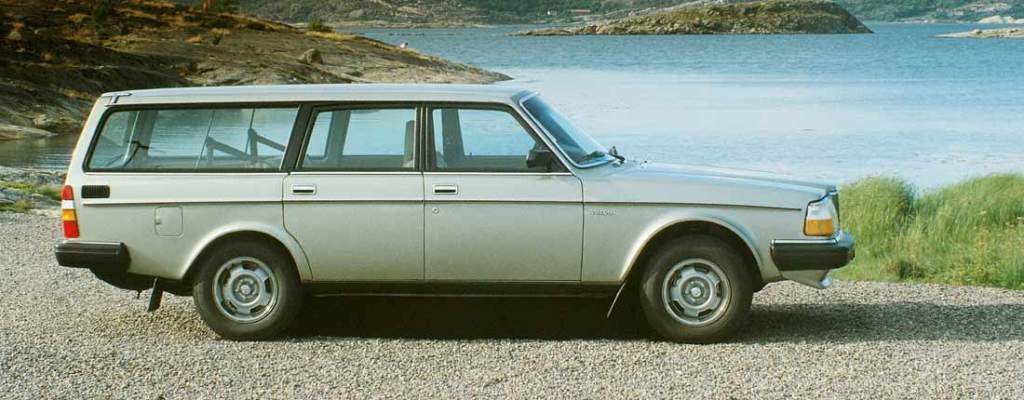
In the last ten years, interest rates in the developed world have been close to nil across the board, and you need to look no further for an explanation to why various kinds of real assets have seen steep increases in price. Cars are definitely part of that group, although it’s unfortunately not the family Volvo that has become a good investment, but rather classic cars and selected sports cars.
If you read this blog, chances are you also read other car blogs or follow some car Youtube channels (perhaps even one or several on my favourite list that you can see here). You don’t need to look far to find someone that describes a classic car such as the Jaguar XJ-S that I wrote about last week (see here) as “a good investment” or something that will “most definitely increase in value”. Personally my stomach turns at such unsubstantiated, general statements, but let’s look into whether there’s any truth to them.
In 2015 we launched the new sub-section “The Thrill of Owning” on this blog. We did so seeing the price evolution many enthusiast cars were starting to take, and I wrote about some cars I believed (without guarantee!) would increase in value over the coming years, adding an economic upside to the ownership experience. The first 5 cars I picked were the Lancia Delta Evo, the Honda NSX, the BMW Z4M, the Porsche 996 and the Ferrari 550. Looking back now five years later, it’s clear that had you bought an NSX, a Delta or a 550 in 2015 that you would sell today, you would get substantially more than you initially paid – the first two have basically doubled in price. For the Z4 and the 996, the evolution has been less steep but still in the right direction. Buying and selling is one thing though. Owning is another that should not be forgotten.

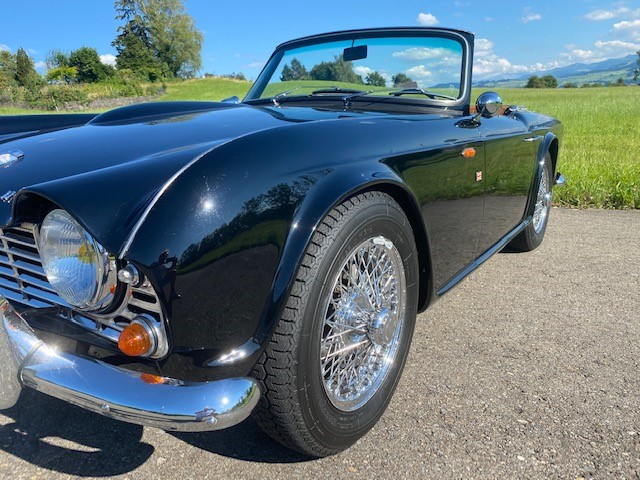
Since close to ten years I’m the owner of a Triumph TR4 from 1965, a car that has brought me great joy and that I’ve been extremely lucky with. It hasn’t left me standing a single time and has generally been close to as problem free as a classic car can be. Nevertheless, and even if I haven’t driven thousands of kilometres per year, it still needs regular servicing and old parts will wear out and need replacing. Also, not to forget on a classic car is that the engine will typically need more adjustments than a modern one. In ten years I have thus had it thoroughly serviced and revised three times, redone the breaks once, and replaced more regular wear and tear parts such as the battery, tires etc. in between. A rough estimate is that the car has cost me around EUR 12-13.000 in servicing and parts costs over my years of ownership. To that should be added tax, registration, garage etc., but given how different those costs are depending on your circumstances and country, we’ll leave them aside for this exercise. You shouldn’t though, when you budget your ownership!
Had I instead bought that Delta Evo in 2015 my costs would most probably not have been lower, as the Deltas are known as cars needing lots of love an attention. That said, the economic upside would definitely have been higher. On a higher level for the 550 as well, at least with the right car. The bullet-proof NSX may have been cheaper to own, had I been lucky. But again, all this will depend on the particular car you buy, its history, condition – and luck. This is why a statement such as something “definitely increasing in value” is quite simply not true. Firstly, it’s very difficult to say which models will increase in value (although if you know your stuff, I agree you can have a pretty good idea). Secondly, it’s all about the condition of the individual car.
Has my Triumph been a good investment? Price-wise it’s worth around CHF 10.000 (30%) more today than I bought it for, thus covering a fair part of my running costs. In my particular case living in Switzerland where owning and running an oldtimer is cheap, I’ve nevertheless had to rent a garage for the ten years I’ve had it and I’ve certainly not covered the costs for that. It should also be noted that a TR4 is quite a basic oldtimer, with an extremely robust, 4-cylinder engine. Friends of mine who own E-Types, Aston Martin V8’s and other, more advanced cars, will give you a number considerably higher than mine, even though most of them are more capable in a garage than I am and thus do a lot themselves.

That’s the economic side of it. On the emotional side, there is no doubt that it’s been a good investment and has brought me much joy and great memories. And that is really the point of all this. Don’t buy a classic car purely as an investment, but also as something to love, drive and enjoy! There will never be any guarantee that an XJS or any other car will be worth more 5 years from now and if you buy the wrong car, you will most certainly not make any money. Arguably it will also reduce the pleasure of ownership, but if this is the car you’ve been dreaming of since you were young, believe me, you will forgive a lot!
Unlike a painting, a car is made for driving. Be thorough in your checks, but also buy with your heart in the sense of loving what you buy, enjoying it, and not to be forgotten, knowing that you will be able to use whatever your dream car is on a regular basis. Good luck!
I hope you like this blog – please help us keep it interesting by subscribing!


 The Thrill of Driving