Auto legends: the story of Ferdinand Piëch!

One of the nice things with writing a blog that enjoys a growing circle of readers, other than boosting your ego, is that the chances increase by the week of actually meeting your readers in the flesh. Of course this has happened before in the circle of close friends, but in the last couple of months I’ve run into people I didn’t know from before, and it’s subsequently become clear that they read this blog. That’s of course great in general, but it’s even more so when they help generate ideas to write about. Because coming up with exciting content every week isn’t always easy, even in the car world!

This week I’ll therefore start a mini series much like the one on classic car races that I write about from time to time. I’ve decided to call this new one Auto Legends, as it will be about the men (and yes, it so happens they are almost exclusively men) who have helped shape and put their mark on the automobile industry. I can almost feel many of you now expecting to see a picture of an old man with big, black sunglasses here below, i.e. Enzo “Il Commendatore” Ferrari. Actually though, to mix it up a bit (and also as there has been a fair bit of “Italinanitâ” on the blog lately), we’ll start in Germany with a man who has a CV that may make even Enzo blush – Ferdinand Piëch.
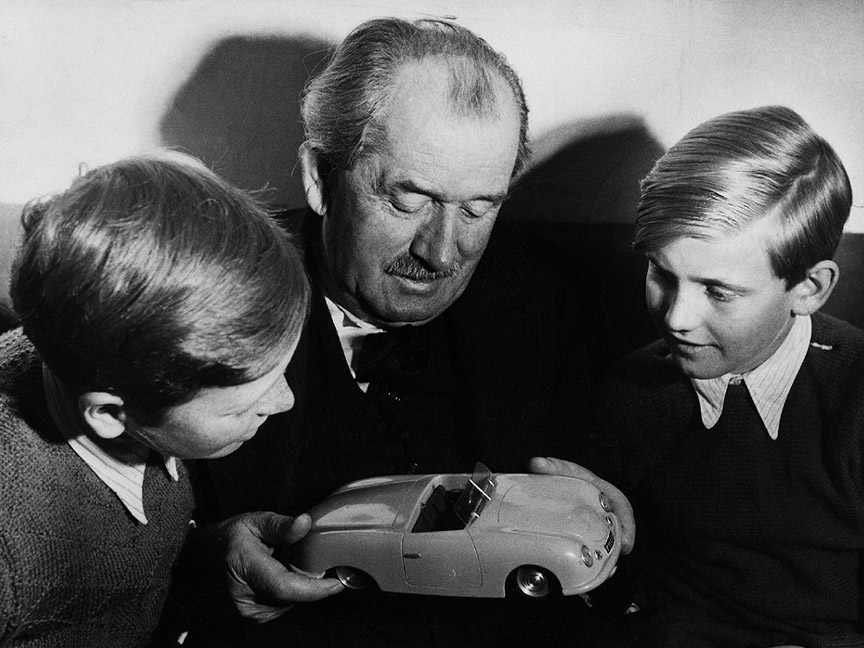
Grand old man Porsche in the middle, young Piëch to the right

If the slightly strange, Austrian name Piëch doesn’t ring a bell with you, the first thing to note is that Ferdinand, born in 1937, was the grandson of another legendary car man with whom he shared his first name, namely Ferdinand Porsche. It’s therefore no big surprise that he started his career at Porsche, but that’s not where he became most well-known. Rather, that was as chairman of VW that he completely re-modelled in the 1990 and 2000’s, turning it into an automobile giant, and earning himself a reputation as a, let’s say less likeable personality. But let’s take it from the start.

Young Ferdinand Piëch was head of the motor sport division at Porsche in the 60’s. This included the role as head of testing, where his focus was on very light racing cars such as the Porsche 906, which after modifications also became known as the 910. From the post on the Targa Florio earlier this year, you may remember that this lead Porsche to completely dominate that and other races in the late 60’s, by which time Piëch was no more than 30 years old. He was also instrumental in the development of the Porsche 914 that we looked at a few weeks ago, and most other things that came out of Zuffenhausen in the 60’s and early 70’s. Then however, following a feud between different fractions of the Porsche family, he had to leave the company.
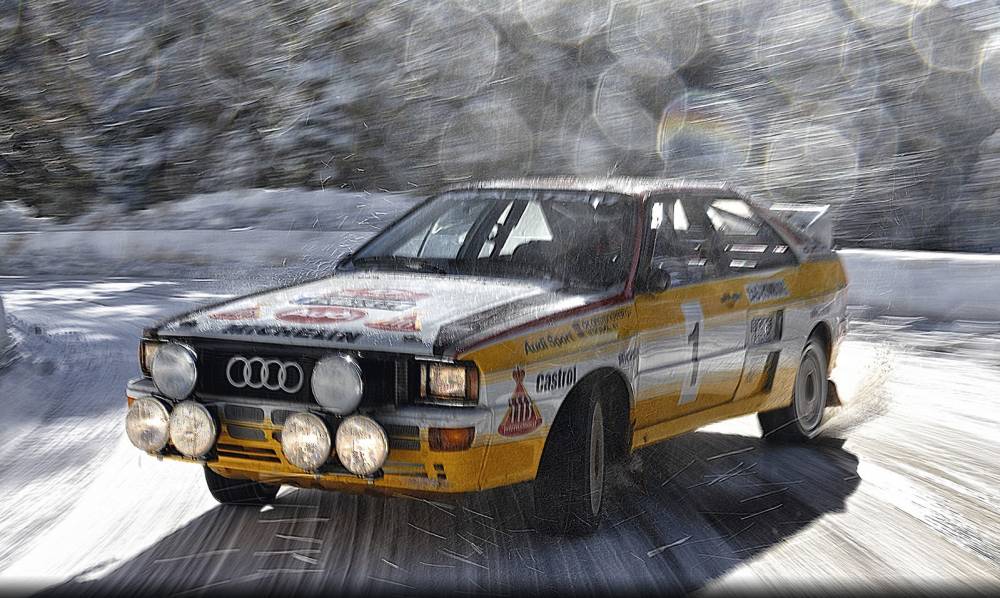
Piéch was the brain behind the four-wheel drive Quattro

In 1975 Piëch thus became head of technical development at Audi, notably leading the development of the Audi Quattro. The subsequent success it had lead Piëch first to the position as co-CEO of the company, and then from the late 80’s its CEO. If you think back to the second half of the 80’s, this is of course exactly the period when Audi went from being a very sleepy brand for old people with hats to something far more modern and desirable. Piéch however kept a strong focus on motor racing when at Audi as well, with next to the rally wins of the Audi Quattro, also various wins notably in the German DTM series for touring cars.

Ferdinand’s star continued to rise on the VW sky and in 1993, he became CEO of the VW group, Audi’s mother company. Having proven his capabilities as a car man, this is the period when his business understanding really starts to shine through. 1998 was a big year in this sense, and more than one eyebrow was raised when in the same year, VW acquired Bentley and Lamborghini (the latter through Audi) and also the rights to the Bugatti trademark.
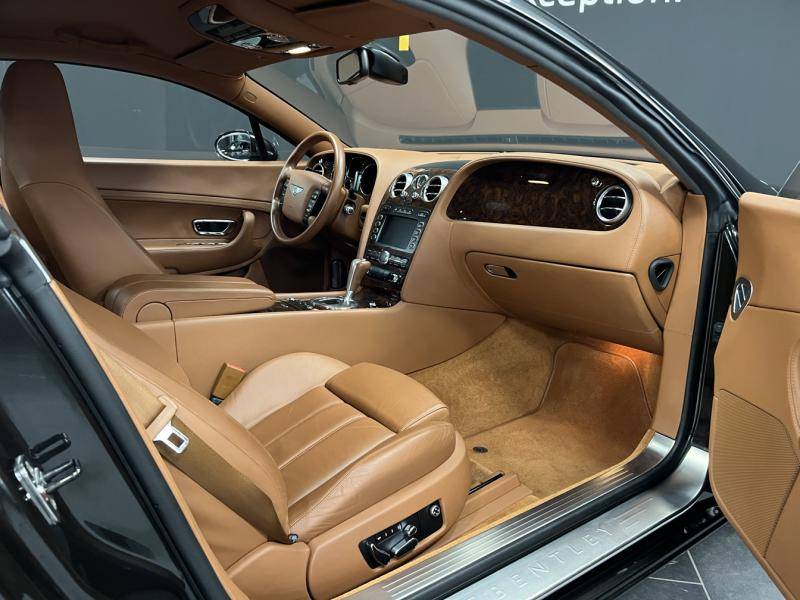
The best Bentley ever – built by an Austrian

The early 00’s then became the period when Piéch aimed for the stars with the whole VW line-up, arguably with a slight lack of understanding of the perceived prestige of some of its brands. The VW Phaeton with a W12 engine thus never became more than a curiosity, but the Audi A8 with the same engine and of course the Bentley Continental saw far more success. Especially the latter was by many considered the best Bentley ever, and Ferdinand certainly took a lot of pride in knowing how to build a British luxury cars better than the Brits. However, one piece was still missing in Ferdinand’s puzzle.

Even if he hadn’t worked actively for the company, Piéch had sat on the board of Porsche, where his career once started, since the early 90’s. Of course he also had family ties to the brand, so it’s no surprise that he felt especially strongly about it. In 1998 however, in one of his razor-sharp statements, he said that for as long as he lived, Porsche would remain independent from VW. Well, that was to change 14 years later when VW acquired Porsche, while Piëch was still very much alive. To Ferdinand, Porsche became the most important brand in the group, and the group he had built had by now also become one of the largest and most profitable car groups in the world.

The Porsche 910, the Bugatti Veyron and the Audi A2 – Piéch was behind them all!

When Piëch passed away in 2019 his legacy was thus utterly impressive, not only in sales numbers, but also in the cars that were developed under his watch (you could also add here the fact that he was the father of no less than 12 children as well…). The W12 Phaeton may not enter the history books, but the Bugatti EB110 certainly will, and without it, we wouldn’t have seen neither the Veyron, nor the Chiron. And without the Bentley Continental, I’m pretty certain that Bentley as a brand would also have belonged to the past. Adding to this the development of Porsche that was on the brink of bankruptcy 30 years ago, what Piëch managed to build is truly fantastic.

So what about the likability part? To start with, I very much doubt there’s a single global company in any sector who has a Mr. Nice Guy as its CEO. That said, Piëch was known for a very authoritarian, if not dictatorial style of management. He had absolutely no time for errors and wouldn’t tolerate mistakes. Maybe the himself legendary Bob Lutz put it best, saying that Piëch although he didn’t agree with his dictatorial style of management, there’s no question that Piëch was a brilliant person and leader. Today’s VW group is the best proof of that!

Vive la République!

Can a supercar that is today worth around EUR 1.5m (or USD 1.6-1.7m) ever be called a bargain? Or actually, let me rephrase that: can a French car worth around 1.5m ever be called a bargain? How you answer that question obviously depends on your economic reality and your relationship to French cars, and you also have to be very clear on the word “bargain” only ever referring to the purchase price – nothing thereafter can be called a bargain, whatever your budget, as we’ll see later. If however you’re lucky enough to have cars above a million being part of your economic reality, then you should certainly have a closer look at the Bugatti Veyron 16.4, built in Mulhouse, France, for all the reasons we’ll look at today!

Most Veyron’s are bi-color, but the real cool ones in my eyes are the single-color ones!

For those of us with slightly smaller bank accounts, the Veyron will remain the stuff of dreams – but what dreams! Every decade has its supercar shining star (Lambo Countach, Ferrari F40, McLaren F1 etc.), but all these fade in comparison with the Veyron. When it was presented in the mid-00’s, no one had seen anything like it. A street car capable of 400 km/h with a 16-cylinder, 8-litre engine with four turbo chargers putting out over 1000 hp, at a level of luxury comparable to the best in the business, and at a new price of around today’s value, i.e. 1.5m. The Veyron was a true revelation and as such, also the precursor to later supercars like the Pagani, Koenigsegg and of course also Bugatti’s Chiron. In that sense, it is and will always remain a true legend of which a total of 450 cars were built during 10 years, from 2005 to 2015.

There are so many fabulous facts around the Veyron that you can’t list them all. As alluded to above, this is a car with a top speed of over 407 km/h, completely unheard of for a road car in 2006 and a number you really don’t need to be embarassed about in any way today either. In comparison, the current top-of-the-range McLaren Speedtail of which McLaren has built (and sold out) 106 cars and which benefits from all the latest hybrid technology “only” manages 403 km/h. Some other crazy facts around the Veyron includes that it takes in as much air in one minute as you breathe – in four days. Or that if you run it at full throttle (for which you require two separate ignition keys, the second to release the full power), the 100 litre tank will be empty in 12 minutes. or that you need to change the tires after 7′-8′ kms or when you’ve exceeded 400 km/h on four occasions, and that they’re not the type that come with a discount at your local tire dealer. And so on. In every single aspect, they Veyron was the most extreme creation the world had ever seen.

Not that you’ll see a Veyron often on the road, but if you do, this is likely to be the angle

Bugatti has a long and pretty troubled history going all the way back to 1909. Ettore Bugatti founded the company in Mulhouse in the French Alsace region, which borders Germany and belonged to Germany at the time, before becoming French after WW2. The company produced some of the most exclusive sports and luxury cars in the world from 1909 until WW2, when the Maginot front line ran practially through the factory. After the war Bugatti wasn’t able to keep up with the times and was unsuccessfully taken over first by Hispano-Suiza in 1963 and subsequently in 1987 by the Italian Romano Artioli who bought the rights to the name and set it up as an Italian company. His ownership lasted 12 years and it was during this time that the EB110 was developed, the only modern Bugatti car before the Veyron and not a huge success. Bugatti continued to balance on the brink of insolvency until 1998 when it was finally taken over by Volkswagen and returned to Mulhouse. Under VW’s ownership, the company started to work on what was to become the Veyron straight away, with a very clear objective: to build the fastest road car the world had ever seen.

The Royale is one of Bugattis most famous cars from the pre-war era

Central to all the Veyron prototypes was the engine, initially planned to be an even larger 18-cylinder monster, basically combining three six-cylinder engines. Technical issues with the highly complex construction led to the company having to settle with “only” 16 cylinders, V-formed and mid-mounted. The whole package with the four turbos weighed more than half a ton, to which should be added the 100 kg of the 7-gear double-clutch gearbox. If you think that sounds like a lot for a gearbox, remember it has to handle a torque of 1250 Nm! The Veyron has a total of 10 radiators with a total system capacity of over 50 litres, and the car’s body is obviously full of air intakes to help cool the massive engine which initially put out 1001 hp and later as much as 1200 hp in the Super Sports version that was built from 2010 onwards.

The Veyron has what I would call a very understated, elegant, sleak design that also looks very aerodynamic in a soap-like kind of way. I’ve seen it live a couple of times and noted it also looks rather small, as supercars often do. It may therefore come as a surprise that in terms of aerodynamics, the Veyron is very far from setting any kind of records. With a wind coefficient of 0.39 it’s worse than most station wagons both then and now, and the problem mainly comes from the giant air intakes required to cool the engine but which upset the air streams. The weight not only of the engine but also of all other mechanical components and of course also the very luxurious interior brings the car to a total weight of around 1900 kg, roughly half a ton more than what was initially planned. If your aim is a top speed of over 400 km/h that kind of wind resistance doesn’t help, and that in combination with the weight helps explain the rather Opec-friendly consumption…

Same style as a Pagani, but far less extravagant!

Seeing a supercar from the inside is usually not very exciting, and going back 20 years, things were certainly not better, rather the contrary. The fact that other supercars were rather crappy perhaps makes the Veyron’s inside even more impressive, but it’s an interior that can easily be compared to the best cars in the business, irrespective of category. It’s a universe of leather and metal, a wonderful analogue universe that in its simplicity makes for example a Pagani look a bit over the top. It’s also the quality of the car that people who have been lucky enough to drive it talk about, and which contributes to completely without drama reaching 100 km/h in 2.5 seconds and then keep going on, and on, and on…

So what about the bargain part? Well, as mentioned, Veyrons today start at around 1.5m. That’s an insane amount of money, but if you compare it to the very small universe of comparable cars, things look a bit different. To take a few examples, the Veyron’s predecessor, the clearly inferior EB110 costs 200’300′ more, as does a Ferrari F40 or a McLaren P1. The Chiron costs around 2.5m, whereas a Ferrari Enzo is around 3m, same as a LaFerrari. And what they all have in common, is that they’re slower than the Veyron! As noted initially, the purchase price is however only half the story because when it comes to the running costs, the Veyron is very much in a league of its own. To take a few examples, an oil change takes 27 hours and costs around USD 20′. That’s about 5′ less than a set of new tires of the only approved type, the Michelin Pilot Sport PAX, and when you’ve replaced these four times, you will also need to replace the magnesium wheels. You don’t want to think about what that costs. I recently heard about a German dealer willing to add a one-year service and guarantee package to a Veyron he has for sale – for EUR 100.000…

The Bugatti factory in Molsheim – impressive and in spite of prices, heavily loss-making!

Of course, talking about the Veyron in terms of service costs is the wrong angle to take. You should instead admire it for the amazing technical creation it is, especially considering its technology is almost 20 years old. Volkswagen’s ambition with the Veyron was to showcase its technical capabilities, and it was willing to take very significant costs to do that. The result is enormously impressive, especially considering it happened almost 20 years ago, but it was also extremely complicated, and thereby expensive. No official numbers are available but it’s been estimated that VW took total losses of around EUR 1.7bn from Bugatti during the first eight years of the Veyron’s production time. That equals around EUR 4.5m per car and if you add the sale price of 1.5m to that, the total is around 6m. Given that and that you can buy a Veyron today for 1/4 of that, how can the Veyron be anything but a bargain??