F1 pitstop: Tik Tok Racing!

The Monaco historical Grand Prix takes place every year at the end of April, a few weeks before the F1 GP which depending on the calendar, falls sometime between late May and early June. The stands and the circuit have already been set up so everything looks the same for the historical GP, except for the paddocks which have been moved to the outer side of the harbor.

Access to the paddocks is included in the entry ticket on the historical GP weekend, meaning you can circulate freely among F1 cars from many decades back to the mid-80’s for a very modest sum indeed. On the Friday practice day, entry including the paddocks is free. On Saturday which is qualifying day, it costs you 50 EUR. And on the final race day Sunday, you’ll have to pay 100 EUR. Or in other words, roughly what two champagne glasses would cost you during the F1 weekend a few weeks later.

Of course a whole bottle of the good stuff would cost you more…

From this year onwards, this makes Monaco’s historical GP, and other similar events in other places, not only the cheapest, but by far the most enjoyable way to experience F1 racing as we’ve come to know it through our lives and have learned to love it. Because what goes on this year on the official F1 circuit has precious little to do traditional racing.

F1 in the Tik Tok era is very different indeed, and it seems to me that everyone is trying to put on a brave face about it. I would love to do so as well but I can’t, which of course makes me feel like the grumpy old man I am. But when races are decided not mainly by driver talent or skill, but rather how well the recuperation of your car’s battery power is set up, I’m happy to admit that they’ve lost me.

We all knew this season would be different, and I described the main differences in my post before the season started. No one was really sure how it would translate around a circuit, but big promises were made. Notably, we were told that the new rules and hybrid engine combination would lead to far more takeovers and excitement.

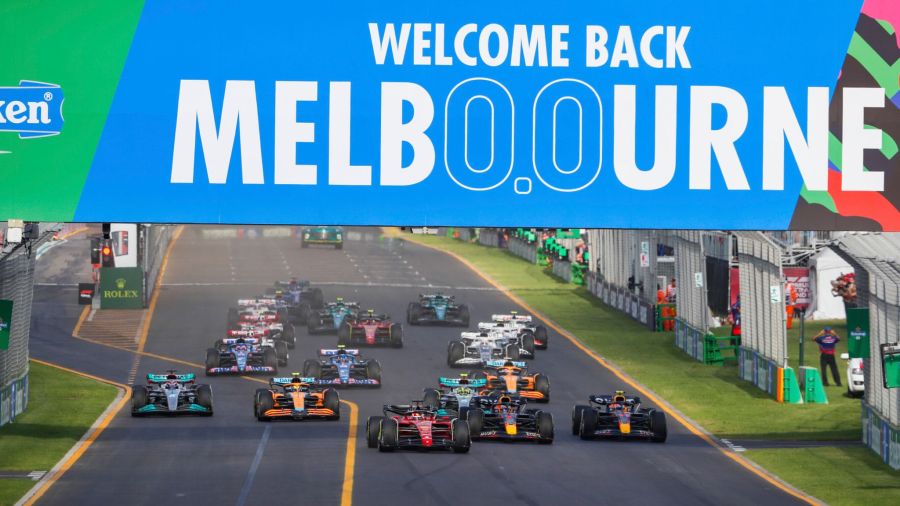
Especially the start in the first races of the season has been intense – less so thereafter.

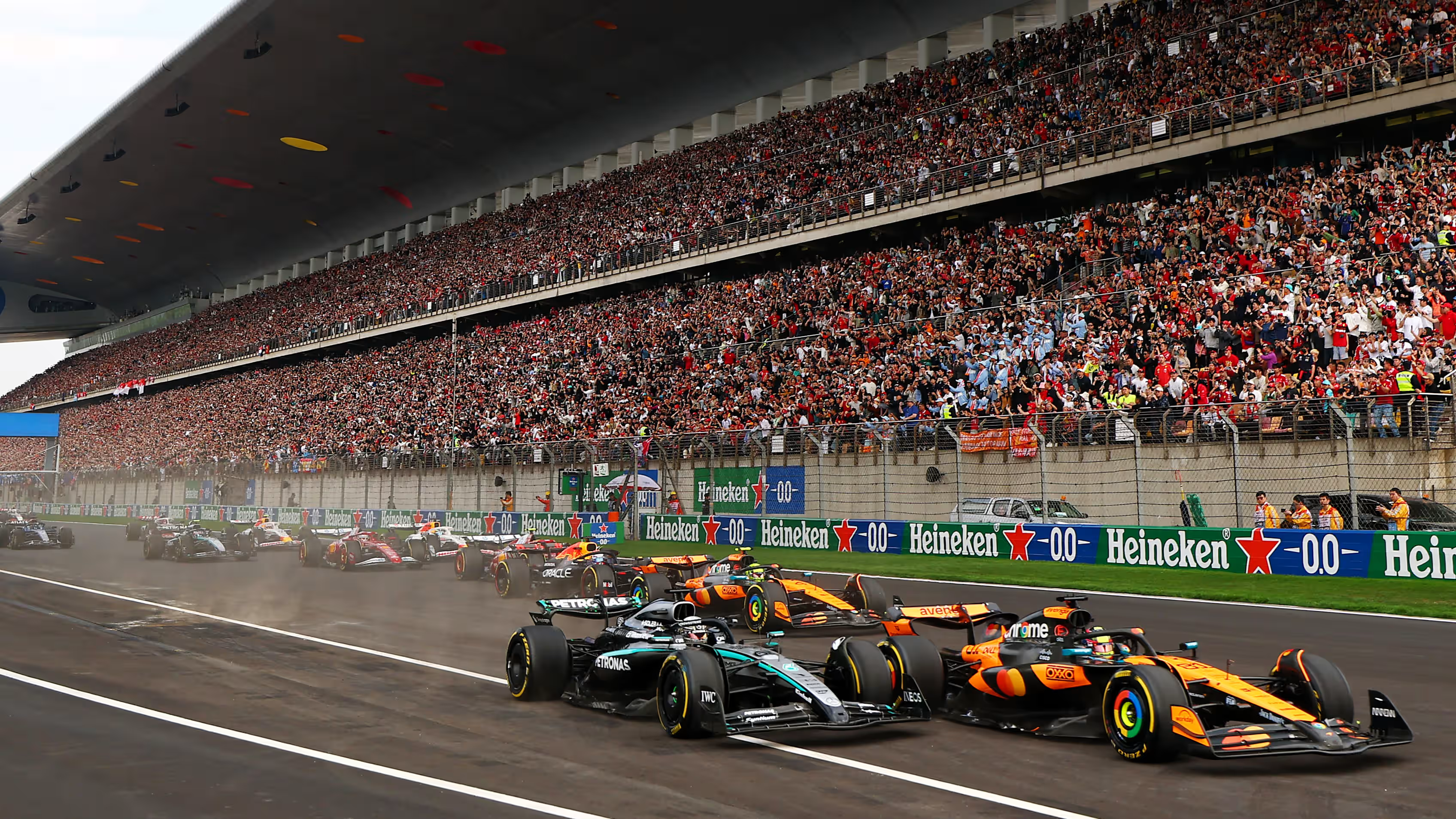
The pundits were right on that one – at least initially. The first two races of the season in Australia and China saw a lot of takeovers especially in the first half of the races, making the Swiss F1 commentator (who’s usually even older and grumpier than me) ecstatic, telling the audience how great this new format is.

What he failed to appreciate was that the takeovers had precious little do to with driver skill, at least in the classical sense, and a lot with vast power differences, coming about since drivers were still unsure how to best go about the battery recuperation. A type of excitement the FIA had certainly not intended occurred during the qualifying of these initial races as well, as the speed difference between two cars, one of which has a full battery and the other a depleted one, is massive. Also, that power can be a bit hard to control, as shown by a number of sudden spins around the tracks by drivers who usually have no problem at all handling their cars.

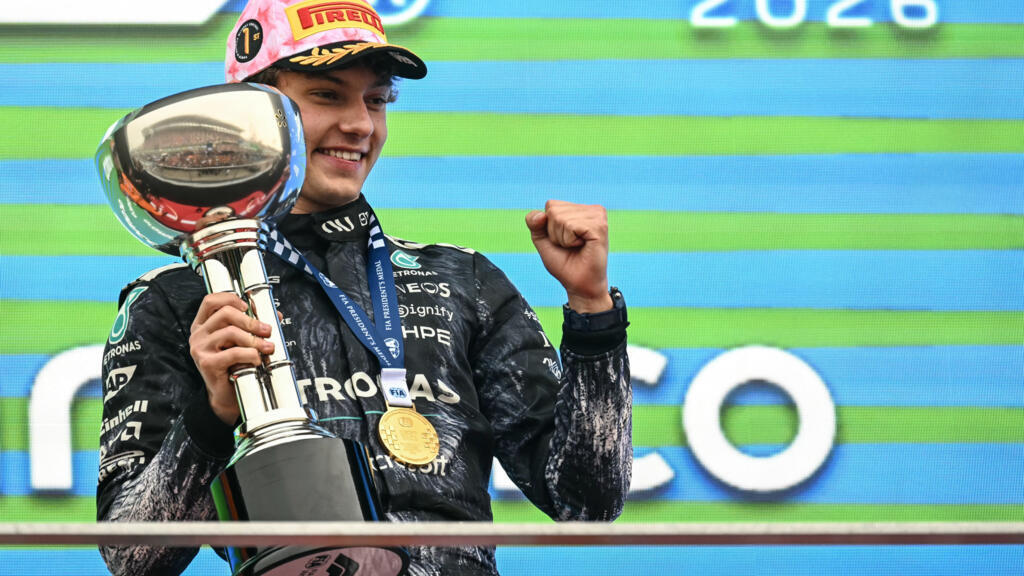
This being F1 however, teams and drivers learnt fast, and the team that from the start had shown to have the best package was of course Mercedes. Somewhat surprisingly, Kimi Antonelli showed himself more apt at handling the new car than George Russell. Young Kimi went on to win his first race in China and has since gone on to win a further two, now clearly leading the Drivers’ ranking ahead of his teammate.

19-year old Kimi, the fastest driver in F1, even has a road driving license now!

If Mercedes thus dominated the first three races, Ferrari looked surprisingly good in second place and it was truly great seeing Lewis Hamilton find some good speed for the first time at Ferrari. Surprisingly, McLaren were pretty far off the pace, and Red Bull even more so. Not even Max Verstappen could make anything sensible out of the Red Bull car and as we went into the unplanned, month long break as the Iran war broke out, it looked pretty certain that Mercedes would continue to dominate the season.

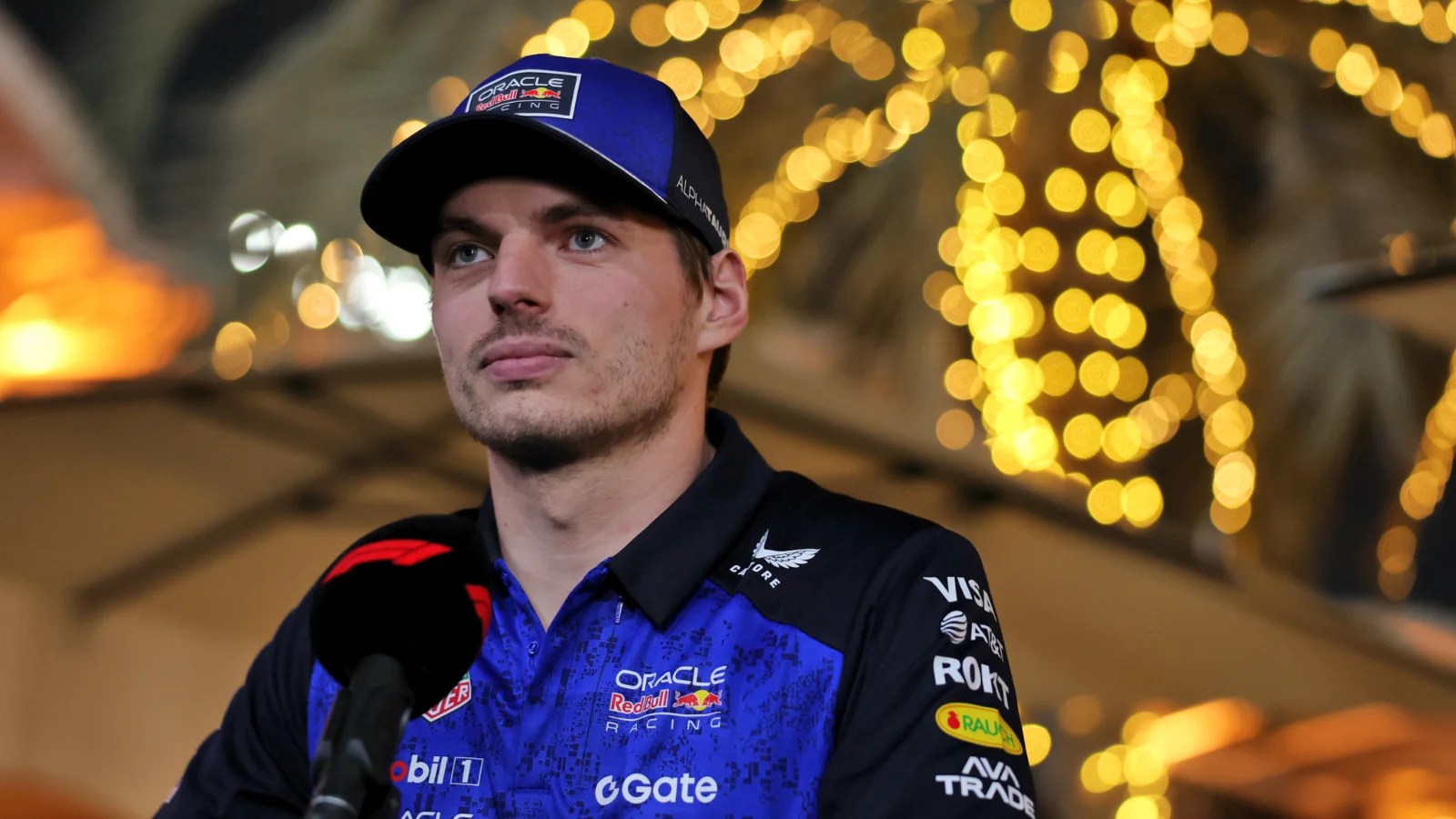
The war meant that the races in Bahrain in Saudi Arabia were cancelled, but also led to the FIA reviewing the regulations following the initial races. They did so partly out of some valid security concerns, but no doubt also following more or less legitimate complaints form the teams. And then there was of course Max Verstappen who kept talking about leaving F1 if things didn’t improve.

Max is not amused – and that’s a problem for F1

The technical changes that came out of that give a good illustration of what this year is about. This is how Honda described them on their website; “The maximum permitted recharge per lap has been reduced from 8MJ to 7MJ. This is intended to increase full-throttle running during hot laps, with the maximum duration of energy harvesting under “super clip” conditions expected to be shortened by approximately 2–4 seconds per lap.”

Right. You’ll be forgiven for not grasping that intuitively, but at the same time, it tells you all you need to know. F1 has gone from being about driving to counting MJ’s – which by the way means mega-joules. There were some additional changes to the power package as well, but I’ll spare you the description of those.

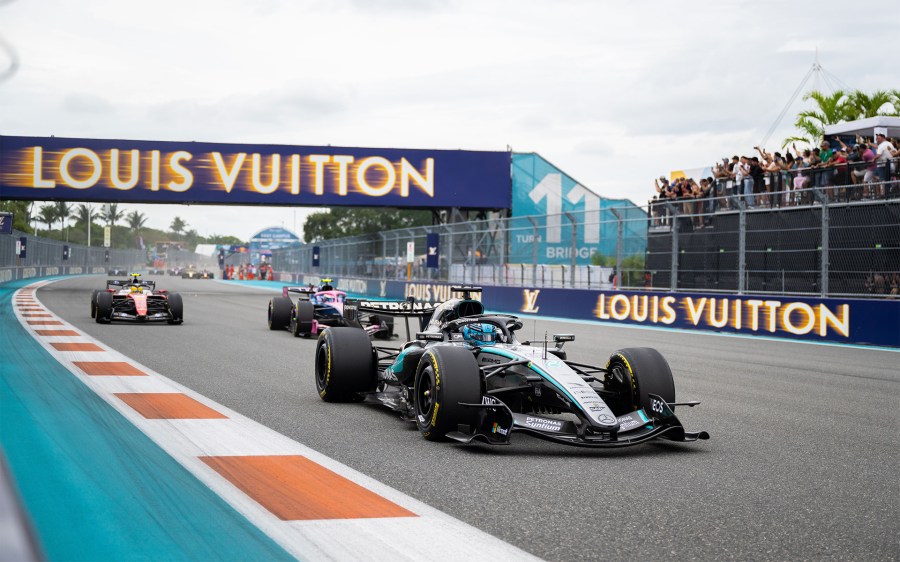
Judging by Miami, the first race after the changes, the FIA seem to have succeeded in evening out the differences between the teams, which in their view is certainly a good thing. Kimi Antonelli still won in Miami, but he did so ahead of the two McLarens and Max Verstappen, so I guess everyone’s happy, or at least happier, now. Unfortunately however, it seems the excitement went out the window with said changes as well. Miami was one of the most boring races in the last years, with practically no racing at all after the initial laps. I guess we can only hope things improve over the coming weekends.

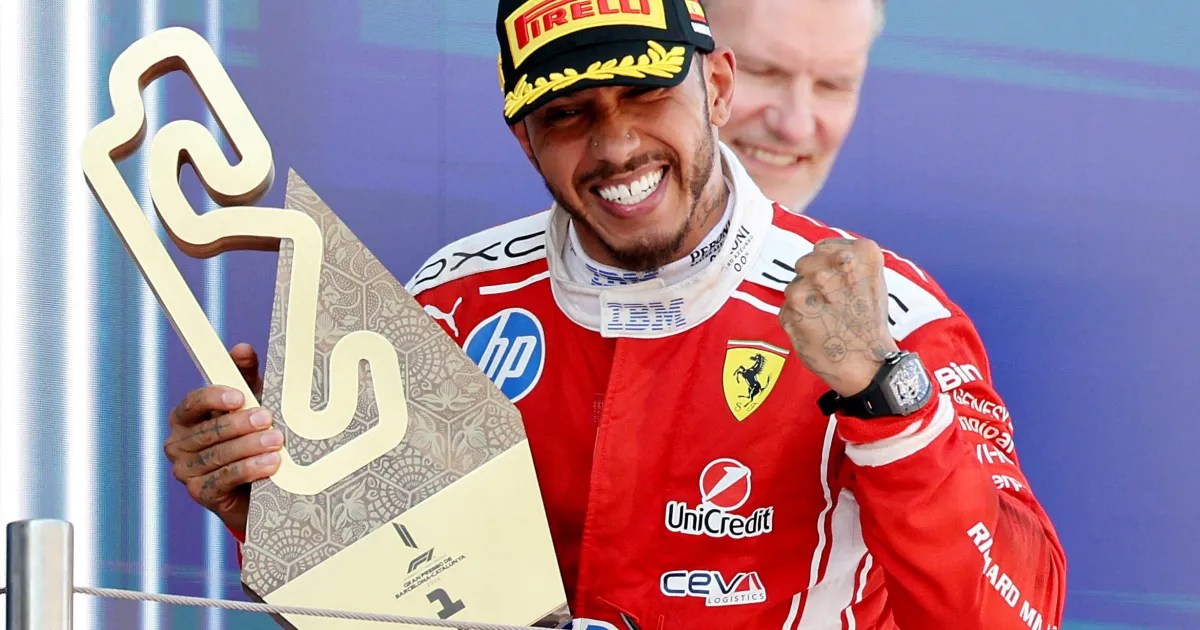
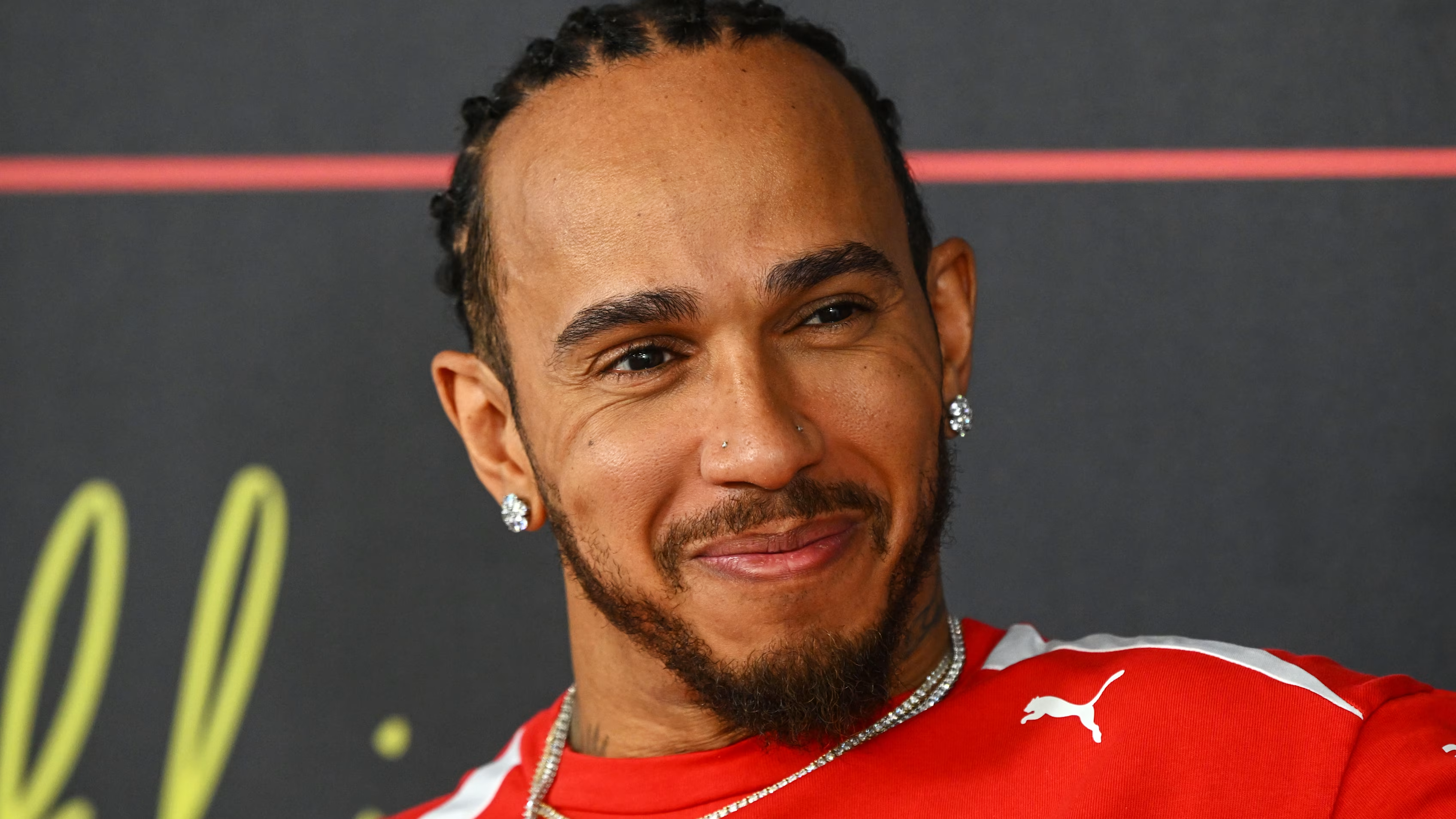
Lewis on the other hand is far happier – turns out Tik Tok racing works for him!

A qualified guess at this stage is probably still that Mercedes will take the championship, but it’s still unclear if in the end, it would then be Antonelli or Russell – remember how Oscar Piastri dipped pretty significantly last year. Together with McLaren, Ferrari will most proabably be among the top 3, unless Red Bull find a bit more speed, which they could well be on the way to. Should that happen, perhaps even Verstappen will enjoy the new rules?

I feel as old and grumpy as ever writing this, but I also realize my generation isn’t the prime target for F1 anymore. Since becoming owners of the F1 circus in 2017, Liberty Media have done a stellar job of making F1 a worldwide success, notably in the US and also attracting the younger generation.

And for them it’s a whole different thing, since they have no clue who Michele Alboreto, Niki Lauda or Gilles Villeneuve are, nor do they care. They know even how a screaming V12 sounds through the Loews’ tunnel in Monaco, and probably think it should be called the Fairmont tunnel these days. For those of us who do remember, the historical GP’s of this world are definitely a better option!

The 2026 F1 (r)evolution!

When I publish this, we’re one week out from the first Grand Prix of the F1 season 2026 down in Melbourne. And on 27 February, Netflix very timely released the latest season of “Drive to Survive”, giving everyone (or at least most of us) enough time to go through the intricacies from last season before the 2026 engines start revving down under. Melbourne usually attracts around half a million spectators during the F1 weekend, making it one of, if not the best attended F1 event during the year.

I will unfortunately not be one of that half million people, but the question is really what the lucky ones will get to see this year. Because the 2026 season promises to be very different indeed. To most, the question seems to be not whether it will be better or worse, but rather how much worse it will be. The changes to the cars are so big that experience could count for less than in many years, potentially leading to completely new podiums. Time will tell but for now, let’s dive in for a closer look at what it’s all about.

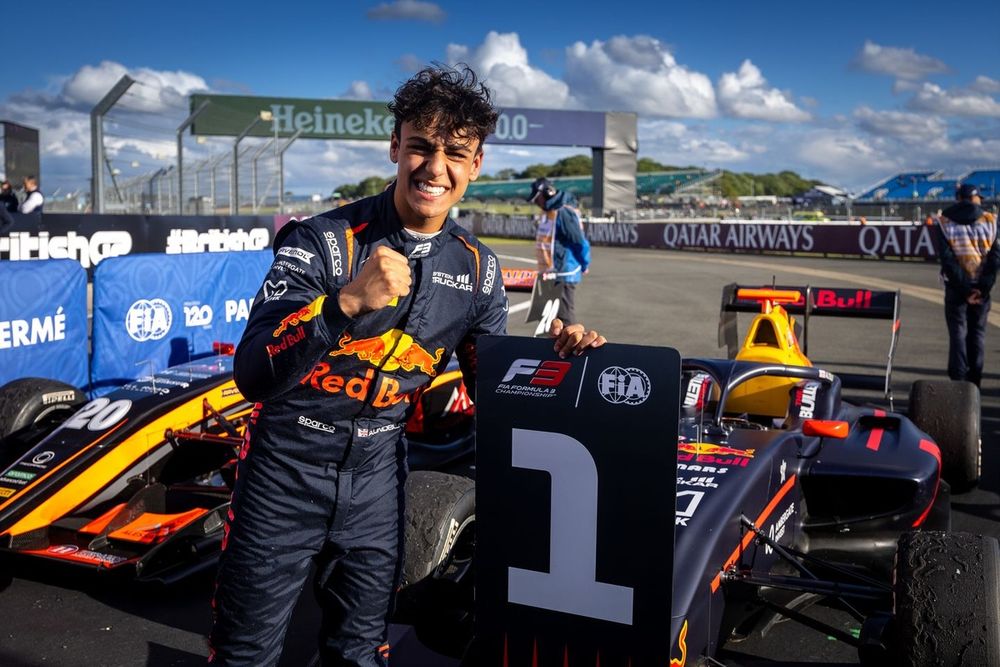
Before looking closer at the new cars, 2026 will see a new team with two old drivers (in all senses of the word), a rebranded team (Kick Sauber becoming Audi) but just one rookie, in stark contrast to the six we had last season. His name is Arvid Lindblad which sounds very Swedish to the Swedes among us. Sadly for us, Arvid is a British driver with a Swedish father and an Indian mother, who’s come up through the Red Bull Academy to take the second seat at Red Bull’s junior team Racing Bulls, next to Liam Lawson.

Arvid may discover that being a rookie in 2026 is better than in many years!

This comes about as Isack Hadjar in his second F1 season moves to Red Bull, replacing Yuki Tsunoda and becoming Max Verstappen’s seventh team mate during his tenure at the team. The move is logical in the sense that Hadjar drove really well in his first season and managed to be in the points in 10 races, making one podium in the Dutch GP as third. As for Tsunoda, he stays with the team but in the role of test driver. No, that’s not a promotion, it’s the price to pay for being the 6th driver who didn’t succeed as nr. 2 at Red Bull. Let’s hope nr. 7 does better.

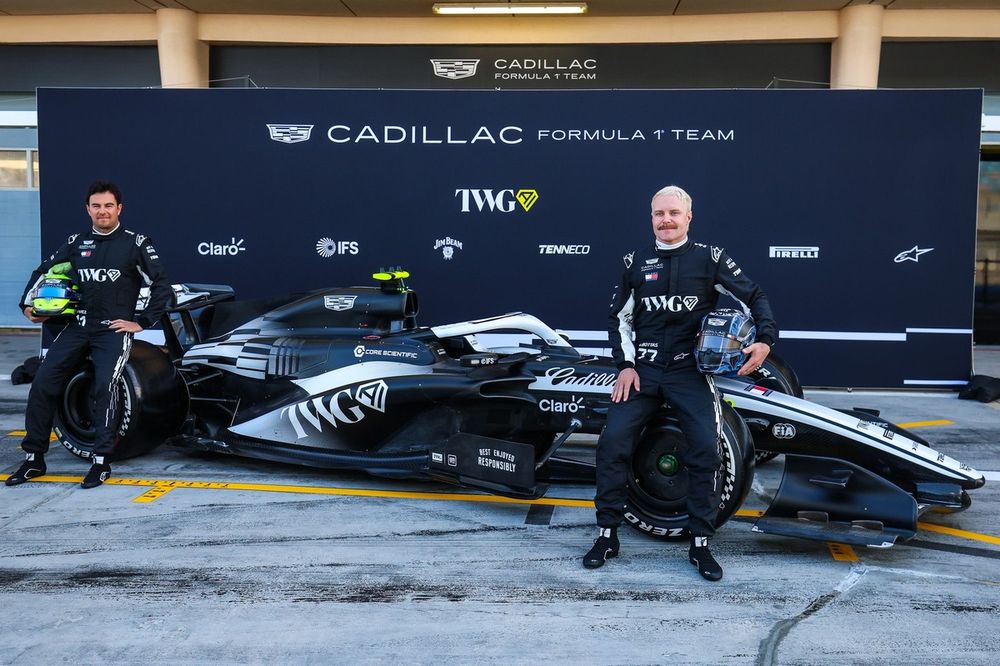
The only other driver move in 2026 is Sergio “Checo” Perez and Valtteri Bottas returning to F1 to drive for the new team on the grid this year – Cadillac. The team is the first to join the F1 circus since Haas did so 10 years ago, and they will also be the last unless another team pulls out. Team principal Graeme Lowdon has built the Cadillac team from the ground up, choosing no less than 500 people out of 143.000 applicants! That says something about how big F1 has become on the other side of the Atlantic.

The Cadillac cars will for now be powered by Ferrari engines. GM is however working on their proper engine, currently expected to be introduced in 2029. That means that next to the two drivers, Cadillac at least has a reputable engine up its sleeve. That’s it however for the good news, since most pundits agree that it will take at least a few years for the team to establish itself in F1. Any points scored in the coming season would thus be a rather big surprise.

At least no team beats Cadillac in driver experience!

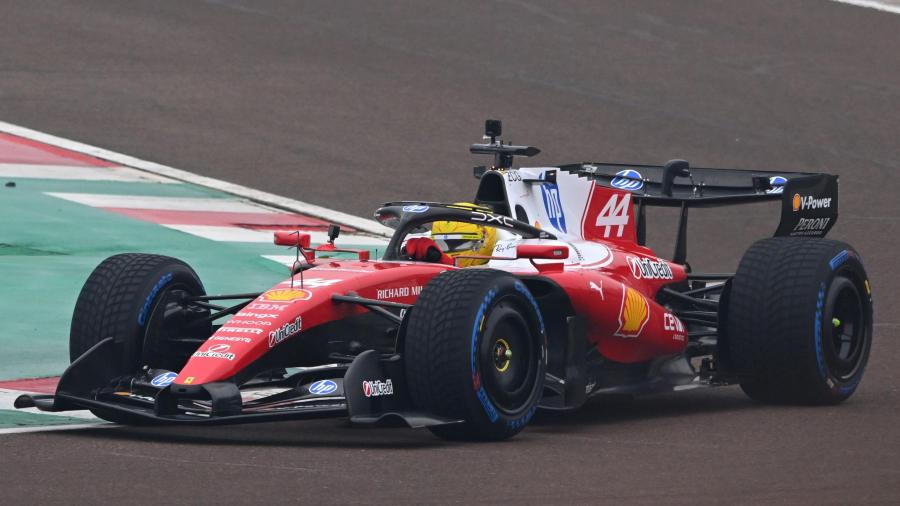
Moving on to the cars, there is a long list of differences compared to the last years that risk turning the season pretty much on its head. The first thing, visible to the eye, is that the cars are smaller. Their minimum weight has been reduced by 30 kgs, as has their maximum width and length. It’s also easy to spot that tires are thinner both in the front and back. What you won’t see as easily is an important reduction in down force of around 30% compared to the 2025 car. If you’re driving at 300 km/h, that makes a pretty big difference!

All of the above is supposed to make the cars nimbler, reversing the trend towards more bulky cars seen in the last years. Because along with the reduced down force comes an even more important reduction in drag, all contributing. to the cars “dancing through corners” in official F1 language. I guess we’ll see about that, but a condition for any kind of dance will be the power unit, and it’s here that changes are the biggest.

The new cars aim for a 50/50 split between combustion and electric engines, meaning the former sees a reduction of power to 400 kW (about 536 hp), the latter a boost of nearly 300% to 350 kW (about 470 hp). Another big change is the elimination of DRS, with cars instead having a Z-mode for cornering with increased downforce, and a low-drag X-mode configuration for increased straight line speed. This is referred to as active aerodynamics, and the X-mode also has a manual override function, allowing the driver to use more power for overtaking when a car is at or closer than one second ahead.

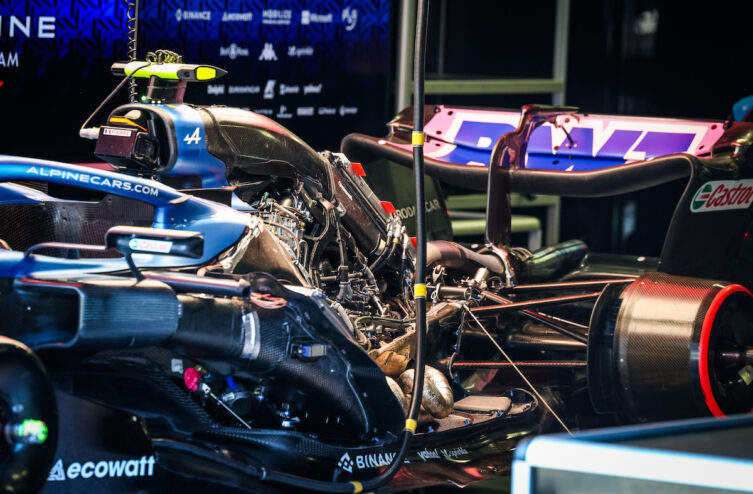
The new power train, here in an Alpine, is nothing for the handyman in the back yard…

If you think that sounds complicated and perhaps slightly over the top, you’re not alone. Of course teams would most probably have complained whatever changes had been introduced, but given the changes more or less alter what F1 has been about so far, the critique from both teams and drivers is understandable. Unfortunately, it’s unlikely that the changes improve what we all tune in to see every two weeks: great racing.

Some of the biggest concerns raised include the complexity of the power train and hereby reliability issues. Another point is the start procedure, where drivers will have a very small window to correctly rev the engine, creating enough turbo pressure whilst also taking into account the somewhat delayed electric power. The two active aerodynamic modes will mean more sliding on straights whilst fast corners can be taken more easily, fundamentally changing the required driving style. Finally, it’s unclear whether overtaking will be possible at all.

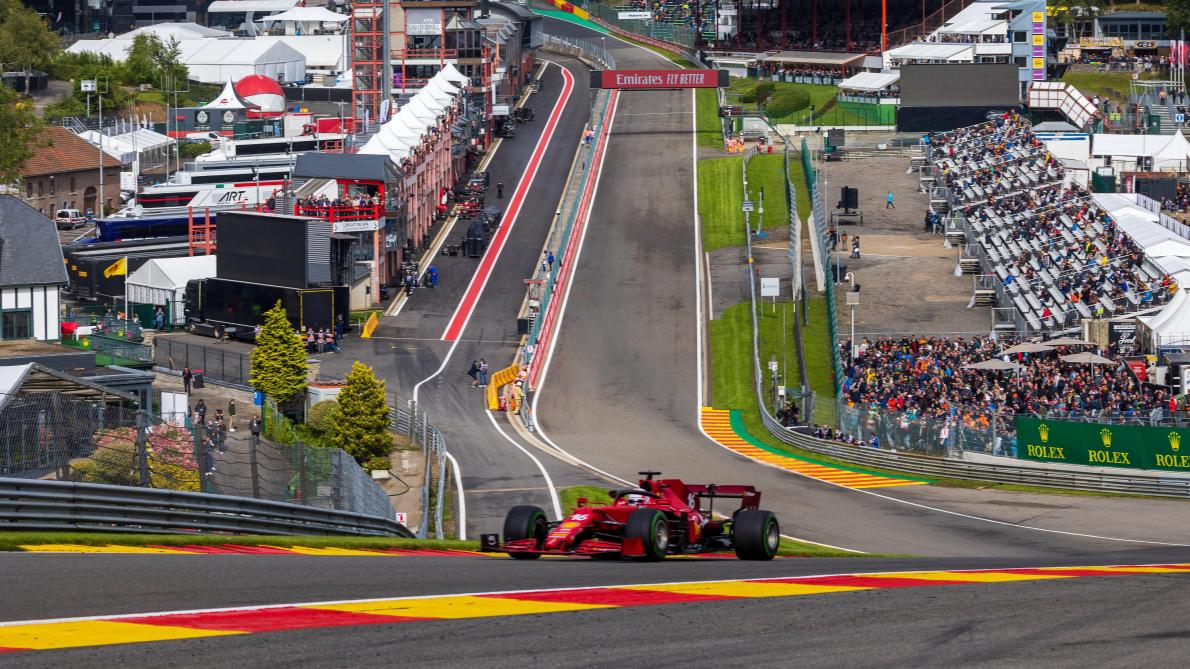
To understand this last point, drivers will need to manage their electrical power carefully as batteries will otherwise deplete half way down the straight, meaning no extra power available for overtaking. They can do this in different ways: by lifting, coasting, or taking corners in lower gears, meaning lower speeds. Quite obviously, none of this comes naturally to an F1 driver, and the skills that traditionally separated the good from the great, such as not lifting when going through Raidillon in Spa, will be far less in demand.

Raidillon used to separate the wheat from the chaff. Not anymore…

Quite obviously, drivers aren’t thrilled about all this. Max Verstappen has made some comments in the direction of the fun of driving being gone, and him not seeing the point of going on if that’s the case. Charles Leclerc sees potential big issues with overtaking, and many others seem more confused than anything else. Unfortunately, the level of confusion wasn’t really reduced during pre-season testing, rather the opposite.

Teams have had two three-day testing sessions in Barcelona and Bahrain pre-season. All teams except for Williams, who weren’t ready for Barcelona, participated in both. Aston Martin had massive issues during both sessions and only managed to complete 1/3 of the laps of test-leading Mercedes. Their main issue was, unsurprisingly, reliability. Among the top teams, all of them completed more than 1000 laps. However, time differences between them and the mid field are far larger than they used to be, up to several seconds per lap. It will be very interesting to see how that turns out racing-wise.

At this stage, I’d like to keep an open mind and hope all of this turns out better than it sounds on paper and we all expect. In a way, it will be interesting to see if the experienced drivers or the younger guys manage to adapt quickest to the new driving style. Hopefully we’ll get some real racing with races being decided by great driving and not power depletion. And hopefully, drivers will all find it fun enough to be worth their while. If not, the “new” F1 risks becoming one of the more painful sacrifices on the altar of world’s electrification!