Summer cars and value appreciation!

If you live anywhere near central Europe or indeed visited this part of the world during the first three weeks of May, you will have experienced what turned out to be the rainiest May in many years in most places. Villages in northern Italy were flooded but also in other parts, it seemed there was no end to the water falling from the sky. And then as always when despair is near, it all turned at the end of the month, and from North to South, Europe has been sunny ever since. Fingers crossed that it remains so!

Had you been in the market for an enthusiast car in early May, odds are therefore that you would have selected something with a roof. Then again, as soon as the sun comes out, all is forgotten and it becomes obvious that a convertible is the right way to travel through summer. In both cases, if you read this blog regularly, you will have seen my posts on various enthusiast cars, with or without roof, modern or old, and quite often with some kind of idea or prediction as to the direction their price may move going forward.

Nothing like enjoying summer in a nice convertible!

I would claim never to have given any kind of guarantee that this or that car is a safe store of value, or the investment of a lifetime. A professional career in finance and more disclaimers than I care to remember have taught me to be very careful with such statements, but even so, it’s of course a valid question to ask whether my more general statements have been correct? Let’s therefore look back at three enthusiast cars I’ve written about in the last years and where I’ve thought they would move up in value, to see if they’ve done so?

For this exercise to be relevant for as many as possible, we’ll do this looking at three different price segments – the perfect convertible summer car for a small budget, the last naturally aspirated Ferrari, and then also the last non-hybrid Ferrari that I called a supercar bargain back in January 2022 in one of the most read posts on this blog.

The Alfa Spider, here in Mk II, was a delightful long-runner!

It was back in August 2020, almost three years ago, that I wrote about the Alfa Romeo Spider, one of Alfa’s longest-running cars given it was built for almost 30 years, and also the last car to have been designed by the grand old man Battista Pininfarina himself. Nothing has changed in three years as to the Spider’s suitability as a perfect summer roadster for two; it’s a pretty car with plenty of room for your better half and you, and your luggage. At only 1100 kg it’s sufficiently motorized by the 1.7 litre or 2 litre engines, and it’s also more reliable than a comparable English roadster, Oh yeah, it’s cheap as well.

At the time, I wrote that the first, “boat-tail” series had started to get expensive but the later series hadn’t, and that “My guess is that especially the later series that today can still be had for EUR 20.000 or even less for nice examples, still have further to go.”. Well, I guess they still may, but they certainly haven’t gone anywhere yet. There seem to be enough Spiders out there still for prices to remain low for now, which is good news if you’re in the market. But in terms of my predictive power, this isn’t one I was right on.
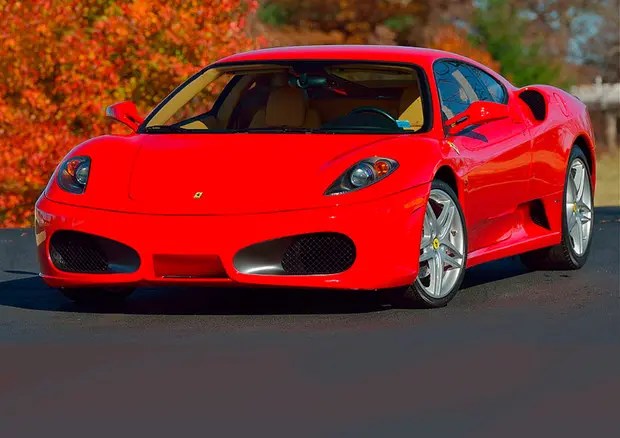
The F430 is one of the all-time greats from Maranello

Let’s next have a look at the Ferrari F430, also known as the Baby-Enzo because of its backlights, that I wrote about a year ago almost to the day. As said at the time, it’s one of my all-time Maranello favourites and of course, the last naturally aspirated eight-cylinder from Ferrari. It wasn’t just the engine though that was a step forward vs its predecessor, the F360. The driving experience, interior and basically the whole car was so as well.

At the time I wrote that the large price premium on the 10% of cars with a manual box (i.e. around 1500 cars all in all) wasn’t motivated, and that “For a “regular” F430, meaning a coupé with the F1 semi-automatic gearbox, prices start around EUR 80-90.000”. Had I written the piece today, I would rather have said that they start at around EUR 100.000, meaning an increase of about 10% over the last 12 months. Not dramatic, but still not bad in such a short time. I would therefore claim that my statement that it had upwards potential given that it was barely more expensive than the F360 at the time, was correct.

The Spider will of course cost you a bit more than the coupe…

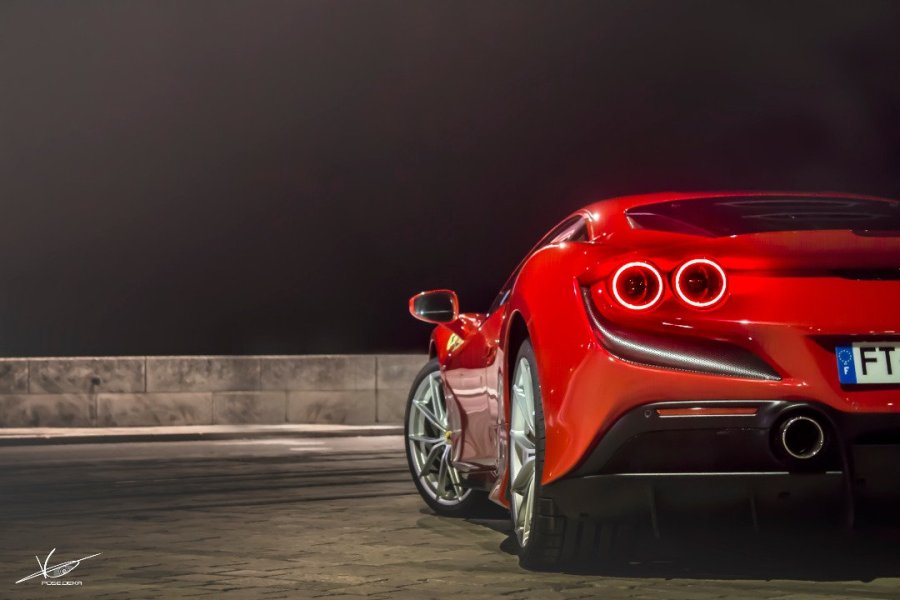
Looking through the stats of the most popular posts on this blog, the one where I called the Ferrari F8 a supercar “bargain” from only six months ago consistently comes out on top. Just like the F430 was the last naturally aspirated V8 from Ferrari, the F8 was the last non-hybrid one. It’s the successor of the 458 and the 488 (a face-lift on a face-lift if you want to be mean) and the model that was the bridge between combustion-engined Ferraris and the new hybrid generation.

At the time of writing, when comparing it especially to its predecessor, the 488 Pista which is a much more hardcore car, the F8 looked very much like a bargain at the EUR 250-260.000 cars then started. That was reinforced by the McLaren 720s that I still think about as the closest competitor, being slightly more expensive. Today, I can only say that I should have acted according to my beliefs, since EUR 290-300.000 is where prices start today, only six months later. And earlier this year production of the F8 ended, so my guess would be that the F8 continues on that trajectory.
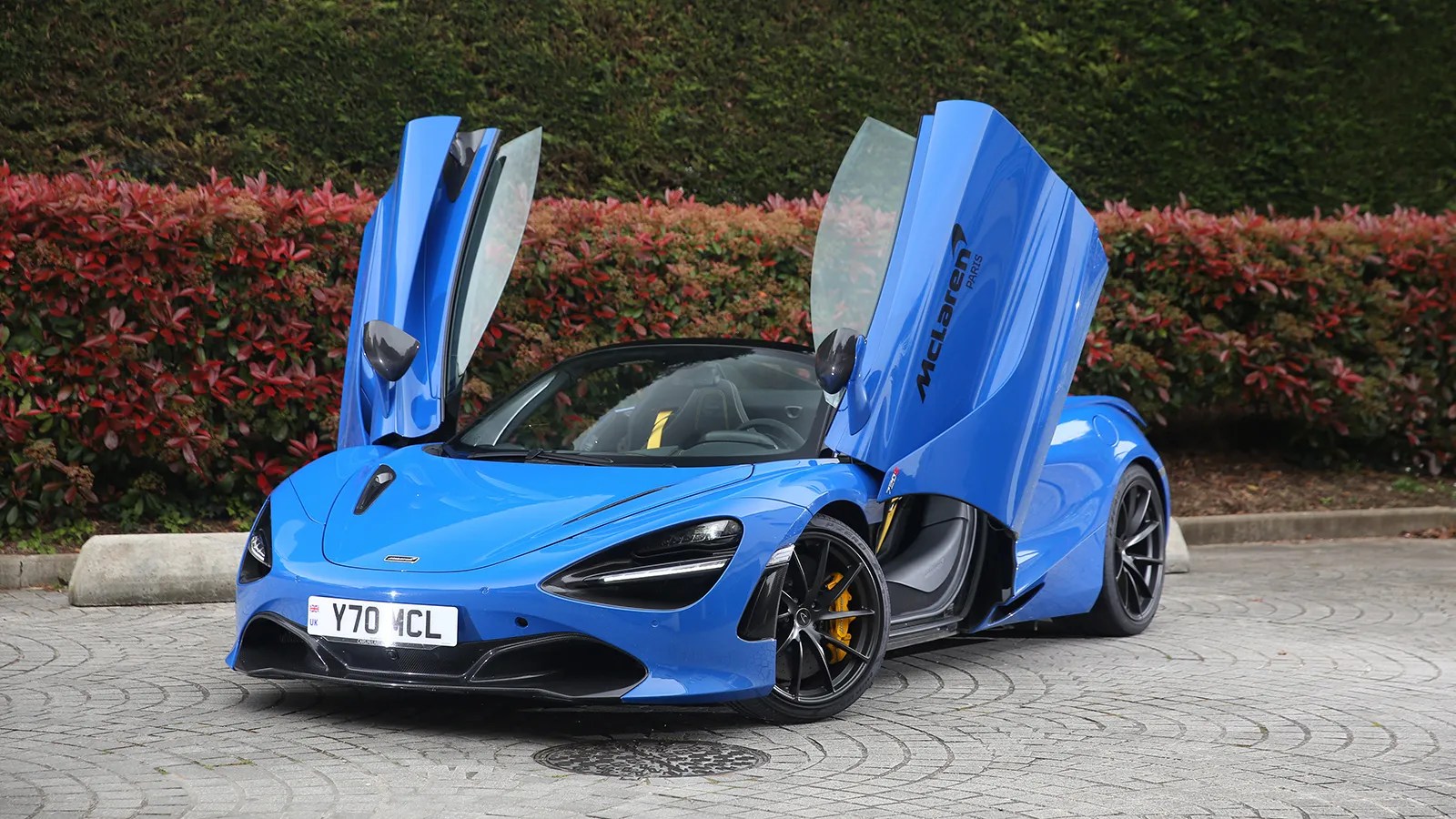
The McLaren 720S that I compared the F8 to on the other hand, keeps losing value.

To come back to those disclaimers we like to use in finance, this is of course only what the market looks now, and given this blog has a global audience, it’s important to say that this is written from a European perspective and there may certainly be price differences between this and other regions. Let me also remind you of my post from two weeks ago where I mentioned not only the importance of buying at the right price, but also not to forget associated costs for maintenance storing, etc.

Then again,disclaimers have never been any fun, so that would be a boring way to end the story. A slightly bolder statement is therefore that Ferraris which are something special, such as both the F430 and the F8, will most probably at least hold their value very well. And at EUR 20-25.000, an Alfa Spider remains very much a bargain that will also not break the bank if something goes wrong. Therefore, whichever segment you’re in, congratulations if you’re in the market, choose wisely, and enjoy the summer!

Baby Enzo comes of age!

There’s a lot of talk among car bloggers and vloggers (me included) about the concept of “real”, in the sense of for example “which is the last real this-and-that?”. These days it often has to do with partial or full electrification, where the last “real” car is understood as the last version before that happened. You only need to wind the clock back a few years however for the debate to have been between naturally aspirated and supercharged, and before that, analogue and digital. I could go on but I think it’s already clear that this is a discussion that’s been going on maybe not since the car was invented, but definitely for a long time (assisted steering? who needs that? Naa, the predecessor was definitely the last “real” car they offered!).

I believe to know that most of those reading this blog will have lived through at least the three stages described above, meaning mechanical/analogue vs digital, naturally aspirated vs supercharged, and petrol vs hybrid/EV. I also think that many of you have a preference for the first world in those three categories. Which is why this week, I thought we’d talk about the last “real” Ferrari corresponding to the above brief in the sense of it being (mostly) analogue, very much naturally aspirated, and definitely only running on gasoline! It also happens to be one of my all-time favourites from Maranello one of the most beautiful cars they ever built. As if that wasn’t enough, today it’s even a bit forgotten, and hence bit of a bargain: ladies and gentlemen, I give you the Ferrari F430!

A beautiful, compact and timeless design by Pininfarina

It was in 2004 that the F430 was presented to the world as the F360’s successor and sales started the year after. This was important for Ferrari since the competitors in Sant’ Agata had launched the Lambo Gallardo, a much more powerful car than the F360, in 2003. The nervousness only lasted until 2005 though, as the F430 was a true competitor to the Gallardo. Outside the changes compared to the F360 could be considered as a major facelift, but they were changes that took the already beautiful F360 to the next level. And obviously, not only the looks did so, but very much the powertrain as well!

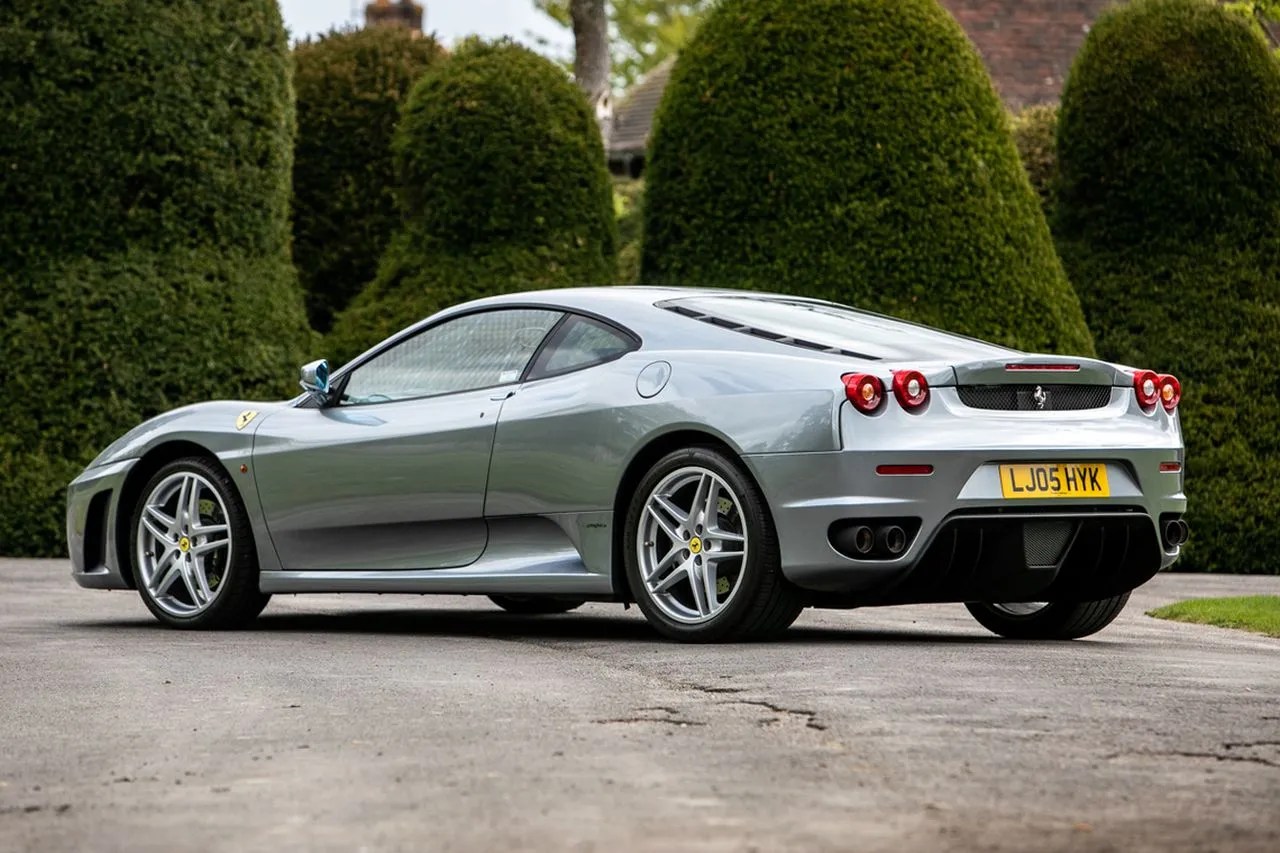
Most noticeable are of course the Enzo rear lights, knowing the Enzo had been introduced two years before and is obviously the main reason the car was often referred to as “baby Enzo”. There’s other details as well though, notably the side mirrors that are held by thin arms such as not to interrupt the air flow to the air intakes on the rear aisles. On the driver side the mirror cap also has the very cool “F430” inscription. Inside the car, the step-up in quality from the F360 is very clear to see. The F430 is still analogue to the extent that it doesn’t have any screens, but a bit depending on the optional extended leather package, the interior feels very high quality. Some people insist on the optional bucket seats but the standard seats not only look better, they also offer enough hold and more comfort and thus fit most people absolutely fine.

The F430 is a Ferrari that doesn’t need to be red!

If the looks can be considered a facelift rather than a full re-design, there were definitely other quite revulationary news on the mechanical side. The wonderful 4.3 litre V8 was a completely new engine replacing the 3.6 litre one in the F360 that could be traced all the way back to the Dino. Weighing only 4 kgs more than its predecessor but putting out 490 hp that had only around 1300-1400 kgs to carry, not only was its power much higher than the F360 but the torque was also significantly higher at 465 Nm. For about 90% of the 15.000 F430’s built, the engine was associated to an F1 semi-automatic gearbox, with only 10% of cars being manual.

The F430 was the first Ferrari to be equipped with the by now classic “manettino”, located on the steering wheel and allowing you to select the different driving programs. Linked to that, it was also the first Ferrari to have the electronic or e-differential, a limited slip active differential that could vary the torque distribution by taking into account lateral acceleration, steering angle and so on. Brakes came from Brembo and carbon-ceramic breaks were available as an option. All this gave as end result a car that had much better downforce than the F360, better handling, and much more power: a time to 100 km/h under 4 seconds and a top speed of 315 km/h is really all you need still today! When you press the throttle, the exhaust sound is quite simply sublime and of a kind only natural aspiration can produce. Sorry Pavarotti, this is Italian opera at its best!

Coupé or Spider, the interior remains the same but the coupé gives you additional storage behind the seats

Initially the F430 was available as a coupé and in 2005 a convertible/Spider was added to the line-up, obviously allowing you to enjoy the action and the sound to the max, but doing so also sacrificing at least a bit of the beautiful lines. In 2007 the F430 Scuderia came out as the racing version and successor to the F360 Challenge Stradale, taking up the competition with notably the 911 GT2 and the Lambo Gallardo Superleggera. The Scuderia weighs 100 kg less and has a few more hp, but only comes with a semi-automatic gearbox – no manual Scuderias were built. The F430 was replaced by the 458 in 2009, the car that took Ferrari into the modern age.

The F430 is thus not only one of Ferrari’s most beautiful creations and a great sports- or even supercar, it’s also the last, naturally aspirated Ferrari. That makes it special but strangely, that doesn’t seem to be fully appreciated by the market yet. For a “regular” F430, meaning a coupé with the F1 semi-automatic gearbox, prices start around EUR 80-90′. The Spider will be slightly more and cars with manual gearboxes will add 40-50%, a premium hardly worth paying. That’s only slightly more than on one hand the predecessor F360, clearly an inferior car, or the Lamborghini Gallardo which, let’s be honest, looks like it was designed by someone who could only draw boxes and has a VW engine. Given that, the standard F430 is clearly the bargain of the lot!

The Scuderia is more than twice as expensive but it’s also quite an extreme car that is really only interesting if you do track days. It does get even better as although boasting supercar performance, the F430 is generally considered quite reasonable to run. We’re obviously not talking a Toyota Prius here, but certainly not Enzo-level either. So in summary, EUR 100′ will easily get you the last real Ferrari without ruining you on the way. In today’s inflationary world, that’s a true bargain for a car that I’m sure we can all agree on is the last real Ferrari!