
Will our automotive future be completely electric? The political will of making it so is certainly there and although a number of questions haven’t been answered (where all the electricity in the Western world is supposed to come from if at the same time we close down base-power providing nuclear energy is one, what to do with all the millions of existing cars is another) at least right now, the signs all point in one direction. Reinforcing that is clearly also the important advances that are made in battery technology, examplified by the brand new Mercedes EQS that has a real life range of 700 km. And although e-fuels such as the solutions Porsche is exploring off Chile’s coast (see here a recent post on it) could present an alternative for making combustion engines “clean” and thus part of the future, they are still far from mass production.

Whatever direction the world takes, it’s clear that downsizing is here to stay. All new combustion engines we see from here on will be smaller, supercharged versions of their predecessors. No one in their right mind would today build a new 10 or 12-cylinder naturally aspirated engine, and thus the large cylinder engines we have on the road today will be the last of their kind. If a big, naturally aspirated engine is your thing (and if you read this blog, I guess there’s a good probability of that!), it’s probably time to act and make that old dream of owning a naturally aspirated 10 or 12-cylinder car come true!
To help you on the way I’ve therefore taken the liberty of selecting three candidates in the price categories up to 30′ EUR, from 30-50′ EUR, and up to 100′ EUR. My logic doing so has been that they should be at least 10 years old such as to be out of the depreciation “J-curve”, and also have no more than 100.000 km on the clock. engine should be a 10- or 12-cylinder naturally aspirated one, sporty in nature and together with the car it’s fitted in, also have the potential for some value appreciation over the coming years. Doing this has been a fun exercise that I can recommend, You could of course have picked different cars across the three price segments, but here is what I came up with!
Up to 30′ EUR – BMW M5 E60/61

You can now find nice E60 sedans for as little as 30′ EUR, which is a true bargain in view of what the car and its fabulous engine offers. The latter, a 10-cylinder, 40-valve, 5 litre naturally aspirated engine developing 507 hp was also used as basis for the M6 of the E63 generation and was BMW’s only 10-cylinder engine. In the M5 it was coupled with an early 7-speed SMG box (i.e. single-clutch, automatic manual) that won’t shoot the lights out today but does the job. There was even a manual version which was however only sold in the US. That’s a shame, then again rumour has it that even the manual isn’t that great. Another rumour also has it that you need a bit more than the initial 30′ EUR as the 10-cylinder isn’t the most reliable engine, certainly a reason for being thorough when selecting the car. The E60 was built between 2005-2010 with a face lift in the first half of 2007, to a total of around 20.000 cars, making it the most popular M5 series.

Interestingly the E60 is so far the only M5 that has been offered as an estate/combi. From 2007 around 1.000 M5 Tourings were built and these are today even more desirable than the sedan. They are however also more expensive at around 50′ EUR, so that would move you to the next price class. In both cases, this generation of the M5 is a great car and the 10-cylinder engine one of the true legends of the naturally-aspirated world!
Between 30′ and 50′ EUR – Dodge Viper RT/10
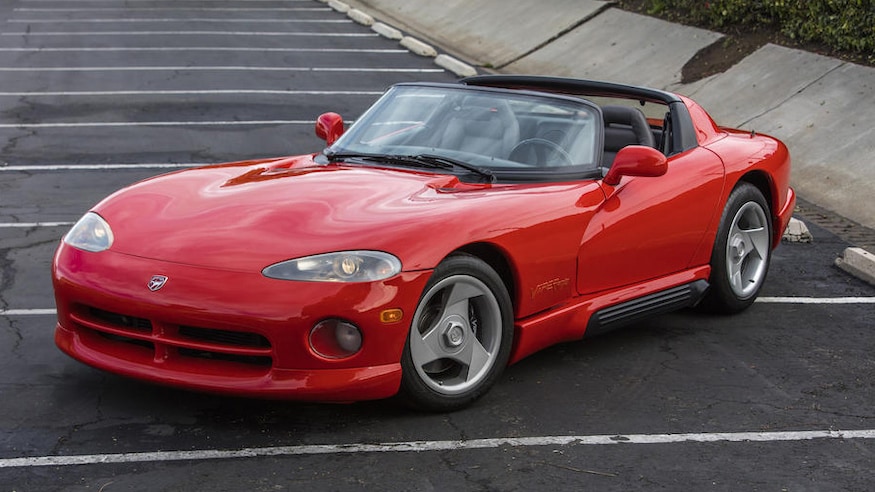
The Viper is quite a rare car in Europe and in many ways a true American muscle car with a massive, 8-litre 10-cylinder engine developing 408 hp (394 hp in Europe) and an even more impressive torque of 664 Nm! It was hereby an odd bird in Europe from the start and is so even more today. It was built during 15 years between 1992-2007 and later cars also had other engines, but the RT/10 is the first generation which was in production until 2002.
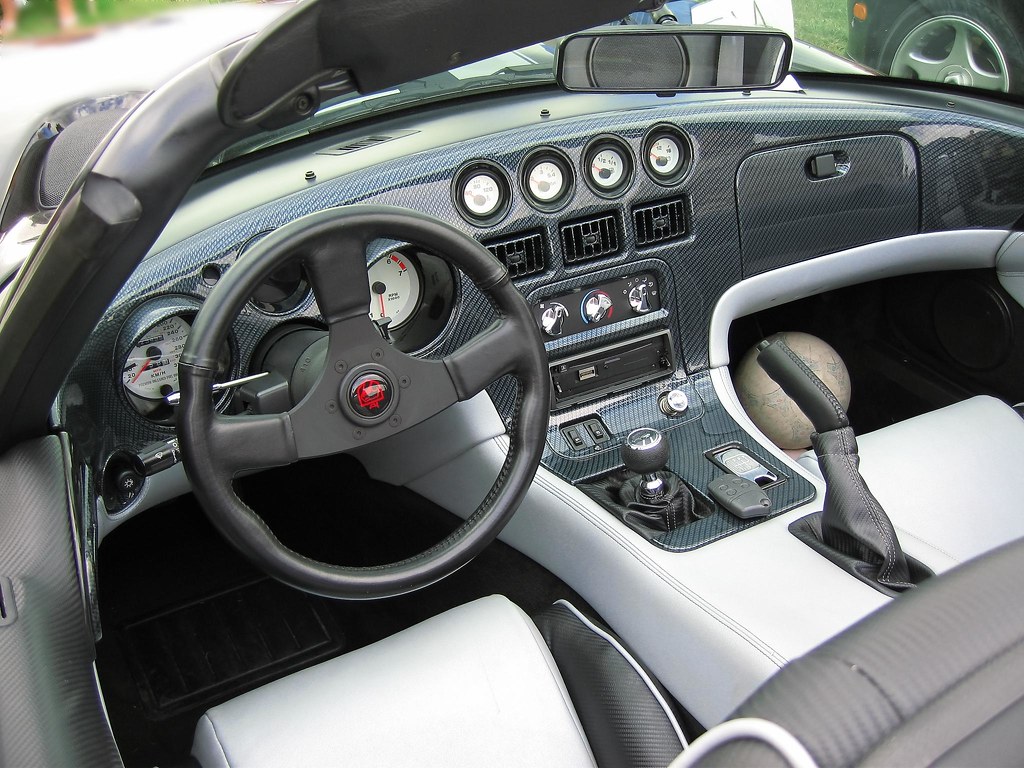
The Viper and especially the first generation was really a car built around the engine, meant as a modern day Cobra. That’s to say that a very minor part of the budget was spent on things like the interior, which is basic, to put it mildly. Other standard items in other cars such as door windows, door handles and airbags were also not prioritized. You have to reach inside the door to open it and the door windows were delivered in a separate bag, to be stuck into the door if you wanted them. Not many did. The Viper also doesn’t have any kind of driving aids, so in many ways it is indeed a true muscle car, something that becomes very clear when you turn the key and are greeted by the sound of the giant engine. Any thoughts on the crappy interior will vanish quickly and as long as you’re slightly careful with applying the power, you’re set to enjoy every meter in this American legend!
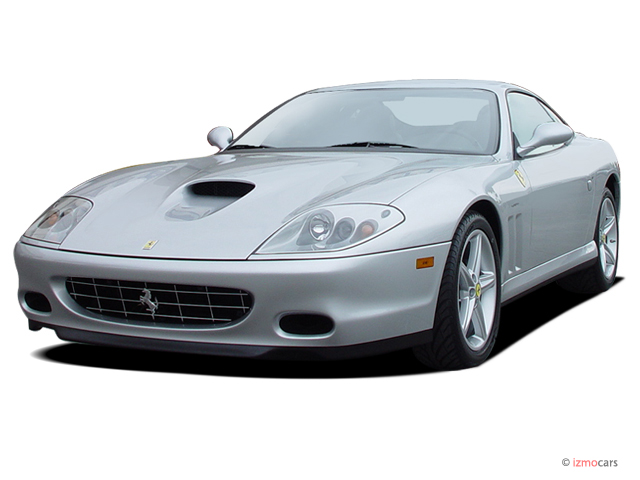
Up to 100′ EUR – Ferrari F550 / F575

Long-term readers of this blog may remember my post on the F550 from back in 2015. I speculated then that it may start appreciating soon which so far hasn’t happened. Depreciation has however stopped and prices have been stable ever since, meaning you can get a fabulous, mechanical 12-cylinder Ferrari for a bit less than EUR 100′. That is as much a bargain today as in 2015 and I’ll stick my head out again and say prices may well be starting to climb soon. I’ll ask you to go back to the 2015 post for full details on the car, but at its heart is the fantastic, 5.5 litre 12-cylinder engine producing around 485 hp, which is paired to a six-speed manual box (the F575 had a slightly bigger and more powerful engine). I wouldn’t bother with the F575 as the very limited facelift and increased power don’t warrant it, especially since most F575’s came with one of those semi-automatic boxes. A good F550 with a full history is a buy you will never regret!
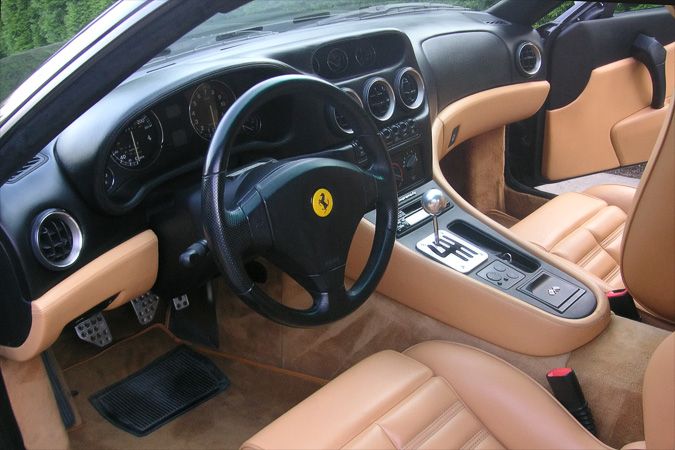
There you go – three budgets, three cars. Grab them now and enjoy them while you can, and I promise you won’t regret it. And if Porsche or someone else is successful with an alternative fuel solution that allows our combustion cars to stay on the road, you’ll definitely be a long time winner!


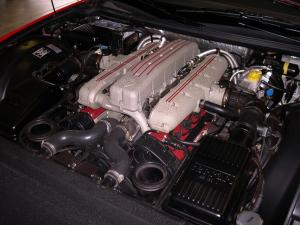 At the heart of the car is a fantastic V-12 cylinder, 5.5 litre engine delivering 485 hp and 580 Nm torque, later increased to 515 hp and 590 Nm torque in the 575, exclusively coupled to a six-gear manual gearbox (in the 550) but where the torque of the engine meant you rarely need to use more than half the gears. The engine is linked to the adjustable suspension such as to limit the max torque in the softer settings and thereby improve power delivery. Surprisingly though the lovely V12 noise is somewhat muted, arguably improving the car’s GT quality but also the reason many cars have received another exhaust system allowing for a bit more tenor and bass.
 The Thrill of Driving