Classic cars as investments

In the last ten years, interest rates in the developed world have been close to nil across the board, and you need to look no further for an explanation to why various kinds of real assets have seen steep increases in price. Cars are definitely part of that group, although it’s unfortunately not the family Volvo that has become a good investment, but rather classic cars and selected sports cars.
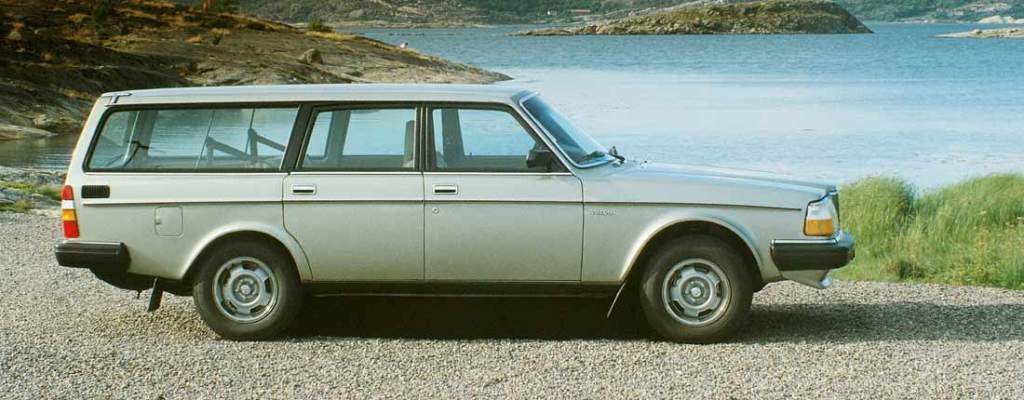
Irrespective of the statement above, the Volvo 240 has actually started to appreciate in value…

If you read this blog, chances are you also read other car blogs or follow some car Youtube channels (perhaps even one or several on my favourite list that you can see here). You don’t need to look far to find someone that describes a classic car such as the Jaguar XJ-S that I wrote about last week (see here) as “a good investment” or something that will “most definitely increase in value”. Personally my stomach turns at such unsubstantiated, general statements, but let’s look into whether there’s any truth to them.

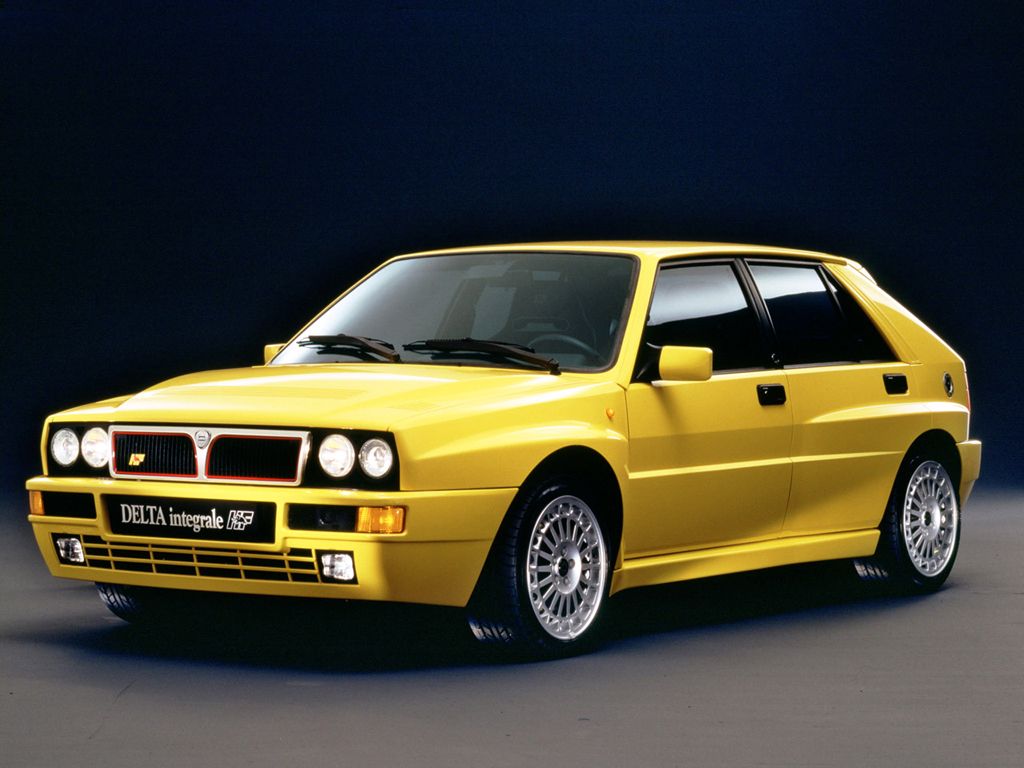
In 2015 we launched the new sub-section “The Thrill of Owning” on this blog. We did so seeing the price evolution many enthusiast cars were starting to take, and I wrote about some cars I believed (without guarantee!) would increase in value over the coming years, adding an economic upside to the ownership experience. The first 5 cars I picked were the Lancia Delta Evo, the Honda NSX, the BMW Z4M, the Porsche 996 and the Ferrari 550. Looking back now five years later, it’s clear that had you bought an NSX, a Delta or a 550 in 2015 that you would sell today, you would get substantially more than you initially paid – the first two have basically doubled in price. For the Z4 and the 996, the evolution has been less steep but still in the right direction. Buying and selling is one thing though. Owning is another that should not be forgotten.

An Evo has basically doubled in value in five years, but is far from cheap to own.

Since close to ten years I’m the owner of a Triumph TR4 from 1965, a car that has brought me great joy and that I’ve been extremely lucky with. It hasn’t left me standing a single time and has generally been close to as problem free as a classic car can be. Nevertheless, and even if I haven’t driven thousands of kilometres per year, it still needs regular servicing and old parts will wear out and need replacing. Also, not to forget on a classic car is that the engine will typically need more adjustments than a modern one. In ten years I have thus had it thoroughly serviced and revised three times, redone the breaks once, and replaced more regular wear and tear parts such as the battery, tires etc. in between. A rough estimate is that the car has cost me around EUR 12-13.000 in servicing and parts costs over my years of ownership. To that should be added tax, registration, garage etc., but given how different those costs are depending on your circumstances and country, we’ll leave them aside for this exercise. You shouldn’t though, when you budget your ownership!
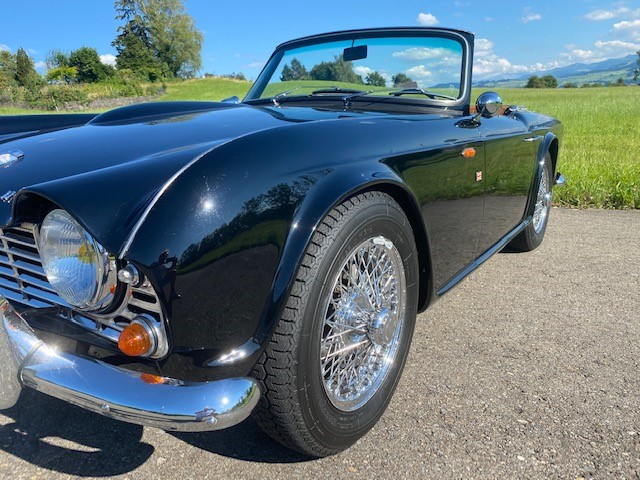
My TR4 is living proof that not all English cars fall to pieces!

Had I instead bought that Delta Evo in 2015 my costs would most probably not have been lower, as the Deltas are known as cars needing lots of love an attention. That said, the economic upside would definitely have been higher. On a higher level for the 550 as well, at least with the right car. The bullet-proof NSX may have been cheaper to own, had I been lucky. But again, all this will depend on the particular car you buy, its history, condition – and luck. This is why a statement such as something “definitely increasing in value” is quite simply not true. Firstly, it’s very difficult to say which models will increase in value (although if you know your stuff, I agree you can have a pretty good idea). Secondly, it’s all about the condition of the individual car.

Has my Triumph been a good investment? Price-wise it’s worth around CHF 10.000 (30%) more today than I bought it for, thus covering a fair part of my running costs. In my particular case living in Switzerland where owning and running an oldtimer is cheap, I’ve nevertheless had to rent a garage for the ten years I’ve had it and I’ve certainly not covered the costs for that. It should also be noted that a TR4 is quite a basic oldtimer, with an extremely robust, 4-cylinder engine. Friends of mine who own E-Types, Aston Martin V8’s and other, more advanced cars, will give you a number considerably higher than mine, even though most of them are more capable in a garage than I am and thus do a lot themselves.

The original V8 Vantage – a beauty when it works, a nightmare when it doesn’t…

That’s the economic side of it. On the emotional side, there is no doubt that it’s been a good investment and has brought me much joy and great memories. And that is really the point of all this. Don’t buy a classic car purely as an investment, but also as something to love, drive and enjoy! There will never be any guarantee that an XJS or any other car will be worth more 5 years from now and if you buy the wrong car, you will most certainly not make any money. Arguably it will also reduce the pleasure of ownership, but if this is the car you’ve been dreaming of since you were young, believe me, you will forgive a lot!

Unlike a painting, a car is made for driving. Be thorough in your checks, but also buy with your heart in the sense of loving what you buy, enjoying it, and not to be forgotten, knowing that you will be able to use whatever your dream car is on a regular basis. Good luck!

I hope you like this blog – please help us keep it interesting by subscribing!

The Thrill of Owning presents: Lancia Delta HF Integrale

Welcome to the Thrill of Owning, the new heading on our blog that at regular intervals (ideally once a month, but please don’t hold us too strictly to it…) will present cars that are not only a thrill to drive but also somewhat of a thrill to own, in the sense that their value has not yet shot through the rough and will not be halved in the coming years. Rather we try to present cars that have yet to take off and in the best of cases, may start to gain in value over time. The main reason for considering them should however be the same reason as reading this blog – that they are a thrill to drive!

Obviously you need to kick of a new section in style, and we do so with a car that no one with the slightest motoring interest born in the late 60’s or 70’s can have missed: the legendary Lancia Delta Integrale. Not because it’s pretty. Not because it, magically, has better build quality than any other Italian car from the 80’s. No – quite simply for the reason best expressed by Evo, the bible of this blog: driving-wise, it’s “one of the finest cars ever built”. And as if that was not enough, the last versions of the Integrale were even called just that – EVO (short for Evoluzione).

images

History
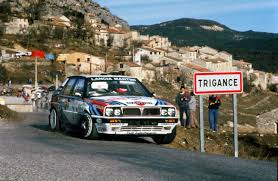
The Integrale dates back to the family hatchback Lancia Delta, launched in 1979. Lancia had been established on the rally scene since the 50’s and was at the time racing the legendary Stratos (that is one car that price-wise has already shot through the roof!) and Beta. The launch of the Audi Quattro in -81 however changed the rules of the game, demonstrating the enormous advantages of four-wheel drive. Both the Stratos and Beta were rear-wheel drive cars, as was the 037, which was based on components of the other two but still managed to clinch the world title in 1983. That was however an exception as it had become clear that Lancia needed a 4wd car to remain competitive on the rally scene. The solution was brought by the Delta that Abarth helped fit a 4-wheel drive system on. The Integrale had thus been launched and it went straight on to win the world championship the first year it took part in 1987, and then continued doing so the five following years until 1992, mostly with Juha Kankkunen behind the wheel.

images-1
Not your typical rally car…

The body of the Delta Integrale started getting fatter already in 1988 to accommodate 4-wheel drive, larger wheels and more advanced suspension components than on the original Delta, and it grew even further in 1991 with the launch of the EVO-series. Production stopped in January 1994 and still today, with six consecutive world rally titles between 1987 and 1992, it is the most successful rally car in history.

Engine – chassis – body
All Integrales share the same 4-cylinder, 1995 cm3 turbo engine that in street versions produced between 185 and 215 hp depending on turbo pressure, with a classical, 80s ketchup-bottle like delay in power delivery. Torque for all cars was slightly above 300 Nm. All versions were 4-wheel drive with a 47/53 front/rear split, contributing to their incredible balance.

lancia__delta_hf_integrale_evo_2__1994_3_lgw
A well-filled engine room – the stabilizing bar only came with the late Evo models

When you stand in front of an Integrale it becomes clear how small it is, compared to modern cars – only 3.90 metres long. At the same time it’s probably the most practical rally car that was ever built, with four doors and a very decent boot. Driving it softly you may even be able to fool your better half into thinking you have bought a normal hatchback, although you may struggle to explain why you went for a not-so-pretty 80’s model… The chassis and suspension saw a constant evolution over the cars lifetime and chassis-wise it is clear that the Evo models are the most advanced. All Integrales are however very well balanced and will cover all the daily needs of middle-aged men with rally memories from their youth.

delta-hf-integrale-evo-2-2
3.90 metres of pure driving pleasure!

The first Integrale in 1987 was 8v, and that engine was produced until 1991 although the 16v was launched already in 1989. This was linked to the introduction of catalyzers at this time, which the 16v version didn’t receive until 1993. The 16v engine is slightly more powerful, developing between 200 and 215 hp depending on year of production, whereas the 8v produced 177 – 185 hp. Torque was however roughly the same in all versions.

On looks, the two Evo versions (Evo 1 (1991-1992 and Evo 2 (1993-1994) are as good a tribute to the 80’s as you will find, and if you are less into the large shoulders and rolled-up sleeves, you may prefer the earlier Integrale versions.

images-3maxresdefault        A rally and a civil Evo on the roads they are made for!

To drive
A few years back I had the opportunity to drive a 16v Integrale Evo 1, unfortunately not for as long as I would have liked to. It was not clear to me at the time what classic this car was about to become, but to this day I remember how incredibly well-balanced it felt and how the power delivery was vastly different from other high-pressure turbo cars I had then experienced (including my father’s Saab 900 Turbo 16v Aero, where you could easily loose the rear of in third gear if there was a bit of gravel on the road)… This was a car that really made you fell like Juha Kankkunen in those fabulous Recaro seats and with one of the most direct stearings I have experienced. As for the rest, in terms of build quality it was pretty much the same feeling as in an 80’s Fiat, but what did I care?

773659637088397123
Fabulous Recaro seats, and an equally fabulous Momo steering wheel!

Which one?
Given the large similarities between the models (even though the Evos 1 and 2 were more technically advanced, especially suspension-wise), the critical point is really to find a good – and original – one. This is at heart a rally car and many have been driven as such, so the challenge is to find one with low mileage, in good shape and ideally with an engine that has not been modified or if so, then only by someone who knows what he’s doing.

The best part is yet to come: even a very good Integrale or Evo will not ruin you, neither in price, nor in maintenance given its relative simplicity. Expect to pay between 20.000 – 30.000 EUR for a good to top Integrale and slightly more for an Evo. The offer is clearly limited, but there are quite a few cars in Germany in decent condition and around half a dozen in Switzerland. An insider’s tip can also be to try and find a car re-imported from Japan, for the simple reason that they have mostly been driven carefully (and by the way, all Integrales were left-hand drive). In terms of equipment there really wasn’t much on the list and that will certainly not be the main concern in buying this car. Some Integrales are fitted with leather (Recaro) seats as an option to the alcantara ones, but the latter are actually to prefer, giving better grip. The optional air condition can be nice if it still cools, but otherwise opening the window is a perfectly good option – it won’t really affect the noise level…

The German Auto Bild Klassik price catalogue, that we use as benchmark for this section, has the Integrales in the same price ranges given above. Price evolution has so far been limited but the trend is clearly pointing upwards. There is good reason to think it will continue to do so, but the biggest smile will be put on your face by driving one of these babies and remember was it was like when the driver, not the ESP, was actually in charge!

For further Integrale impressions I recommend the following clips, featuring first Juha Kankkunen gives driving lessons on an Integrale in 1992 (imagine the crowed standing as close to the cars today!), and then Evo founder Harry Metcalfe showing and driving his fabulous Integrale Evo II.

https://www.youtube.com/watch?v=D_y_UnXOLdU

Have you owned or driven an Integrale? Have you thought about getting one? Do please let us know over the comments field!