How not to lose 30% the first year!

There are many sayings along the same tune: full of joy you pick up your new car at the dealership, and by the time you reach the street, it’s lost 30% of its value. With very few exceptions that used to be the case for more or less all new cars, and depreciation would then continue to eat into the remaining value like rust does to an old 70’s Opel, until some day you reach a bottom where values stabilize and if you’re lucky, even start to rise. You could say that my modest garage consisting of my beloved BMW 650i convertible 2014 and my no less loved RR 5.0 SC 2015, both bought in the last two years, were very much purchased along that logic (and if I dare say, pretty much at the bottom).

At least in some cases, what used to be true isn’t anymore, and we can of course thank the moving parts of the global mess we currently find ourselves in for that. The combination of broken global supply chains, the European energy crisis and inflation are starting to change things. I’ve written previously about prices for used cars being on the rise especially in the US. That trend seems to be softening, although it’s a bit too early to say. It’s still the case that delivery times have in some cases gone bonkers, but here as well things are looking slightly better for most cars, as the stress on delivery chains of certain parts have improved slightly. You’ll still have to wait far longer than used to be the case though. But lately, and the topic of this week’s post, is what is perhaps another logical consequence of the current situation, namely that certain new cars barely lose any value during the first few years.
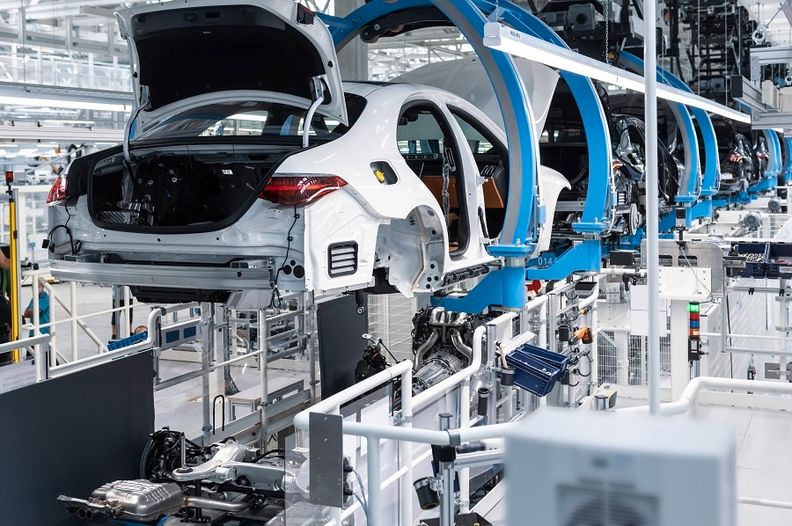
The chip crisis is slowly easing, which is really good news for manufacturers!

It’s still perfectly possible to lose lots of money when buying a new car. An old man’s sedan is for example an excellent way to go about it, especially if you order it in a color scheme that may seem fun at the time of ordering, but far less a week after the car being delivered. Large Mercedes coupés with big engines are also pretty hopeless. Actually, with everything everywhere being about EV’s and with prices at the pump going only in one direction, you’d be forgiven for thinking that buying anything with a big, thirsty engine would be just as good (or bad). That’s not the case though, at least not yet, and it’s also not the case that all EV’s hold their value in the same way the best ones do.

Given that, and if we except the small series hypercars that live in a world of their own price-wise, what should you be looking at if you want a cool, everyday car and prefer buying new, but want to minimize the initial value loss? I’ve taken a few examples below from the SUV world which continues to be the preferred car segment everywhere, and which is therefore a relatively safe bet in this regard.

There’s three different body formats now, from 90 to 130 to choose from

New Land Rover Defender

It was no easy task that Land Rover took on when they decided to build a new version of one of the most legendary cars of all times but in my view, they did an excellent job with the new Defender. I think it balances references to the original car with modern features in just about the right proportions, and apparently the market agrees – not only do you see a lot of new Defenders around, their resale values are excellent. In Europe, when the car was introduced in late 2019 in a version called the First Edition, these 2019 cars today trade only around 10% lower than their original price of around EUR 100.000, in spite of a minor upgrade having just taken place on the 2022 Defender. For now at least, the car that’ll take you anywhere seems to be a safe bet economically as well!

The G63 could also take you most places – it’s just that it never does…

Mercedes-Benz G63 AMG

If Land Rover’s task with the new Defender was daunting, arguably what Mercedes had to do to turn the G-wagon to a modern car (as much as possible) was no less so. It was a year earlier in 2018 that the new G was introduced, and still today you need to look twice to see the difference between old and new – at least from the side. Absurdly enough, the vast majority of new G’s are in the G63 AMG version, that an article I recently read described as “Kardashianesque”, a description as good as any. Few cars have the same street presence though, and 585 hp in car looking like a fridge will keep you laughing all the way to the petrol station. Provided you still see the road that is, because with its completely flat front window, the G63 kills bugs at a speed making you fear bug extinction. Still, should you for some reason want to sell your G63, you’ll be happy to learn that even cars from the first year with moderate km’s on the clock sell for within 10% of their price as new of around EUR 220.000.

The only SUV that looks good in yellow – and many other colours!

Lamborghini Urus

If 585 hp in an SUV isn’t enough for you, then Lamborghini are happy to give you another 65 hp, rounding it off to 650 from the Urus’s 4-litre, 8-cylindre engine. Its looks take more or less getting used to depending on your taste, but the Urus is one hell of a car and no doubt the SUV that drives the most like a sports car. And of course, being a Lambo, it delivers in terms of sound like few others. The Urus was also introduced in late 2018 and costs a bit more than EUR 300′ as new. 2-3 years later without too many kilometres on the clock you will have lost no more than 10%, and it will have been worth everyone of them!

Three examples out of a selection that could clearly have been wider and that illustrates that at least right now, you can buy at least some new cars and not lose much in terms of value even after 2-3 years. If you’re interested in any of these or for that matter other cars with a similar evolution, then the recommendation is of course to buy new, provided the car you’re after can be delivered within a reasonable timeframe. A discount that isn’t larger than 10% doesn’t compensate for neither the compromises in equipment you may have to make, nor for the typically much shorter guarantee you’ll have on the used car.
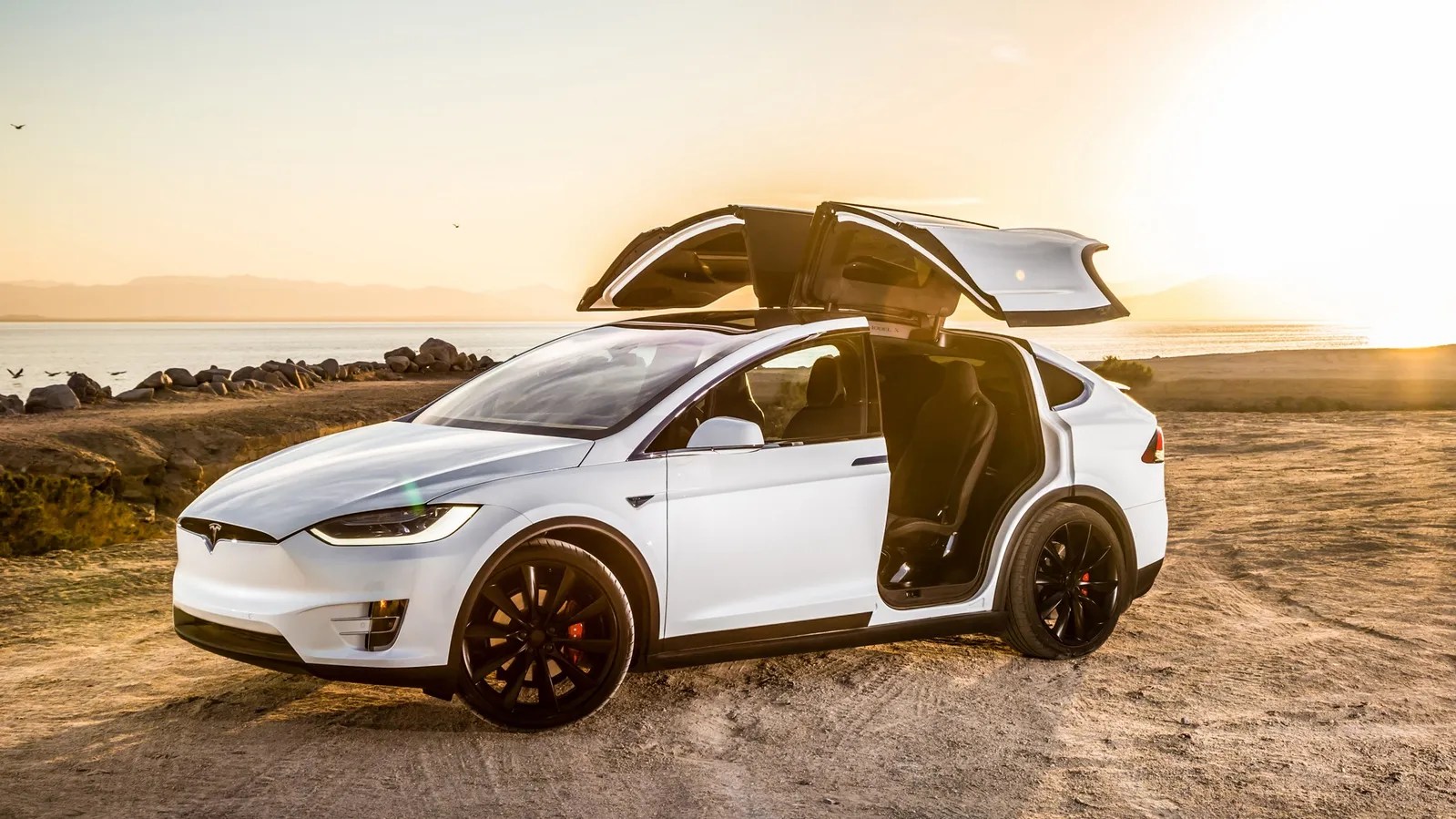
The Model X hardly sells anymore in Europe, but has fantastic residuals!

What about EV’s then? Isn’t that a safe bet when it comes to resale values? With everything happening in general in terms of clean energy, and in the EV market in particular with new models both from new and old brands, you’d certainly be forgiven for thinking so, but actually the picture is a mixed one. The champion in resale values is no doubt Tesla where the 10% value loss discussed above goes even further in terms of mileage or even age. Had you bought an Audi E-tron instead, perhaps convinced by the fact that in everything except for the range it’s a better car, well, then you would have lost almost 50% in the last 2-3 years (making the E-tron a really great bargain today!). Mercedes’ EQC EV SUV doesn’t fare much better, and there are other EV’s in both camps. At least for now therefore, value preservation seems to be more brand-related than depending on the drive train, and part of Tesla’s strong resale value probably also relates to the Apple-like image the brand has among many.

Where does that take us? Well, if you’re after a SUV and you’ve been looking at one of the three mentioned above, it looks like a relatively good investment even if you’re changing cars now and then. However, as the disclaimer says if you buy a financial product, “past performance is no guarantee for future returns”, which is of course especially true now with an energy crisis in Europe and a general trend towards electrification. Remember though that this will take time, and there will conventional cars around for many years to come. If you’re looking for an EV, the resale value and the range speak strongly for Tesla, but it will require you to compromise in build quality compared to some other EV’s, and the competition is no doubt heating up. Personally, I still think a good bargain beats anything presented here, and if I were after an EV, I think I’d go and look closely at that bargain Audi E-tron!
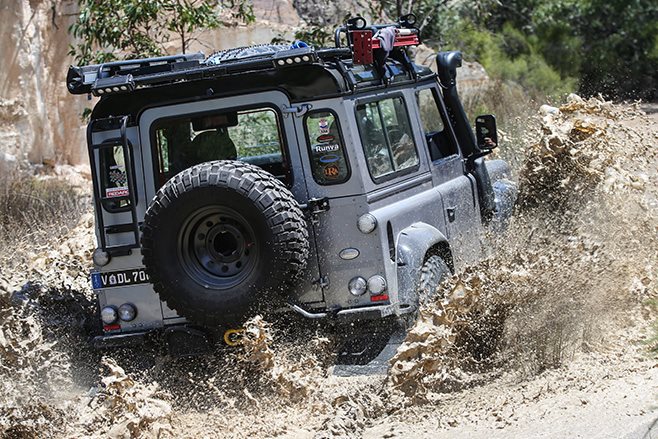
When the going gets tough…

This week we’ll explore three truly unique cars. Unique in the number of years they’ve been built. Unique in being able to take you practically anywhere cars can be imagined to go. They could also be claimed to be uniquely basic, and actually uniquely bad for many quite normal driving conditions. And for two of them, they’re also uniquely cheap. But finally, and perhaps most importantly, I would claim they’re unique in having a soul and a cult factor that only very few automobiles ever reach, an that really has nothing to do with the budget.

We’ll start by going to Tuscany where we enjoyed a few days off a couple of weeks ago, notably visiting friends that have a house down there. As so many houses in the Chianti region it’s a bit isolated and lies at the end of an unpaved road, that can at best be described as rather rudimentary. Slightly more than 2 metres wide, with a hill on one side and relatively little on the other, and in addition it had been raining quite a lot the days before we came down. Luckily it wasn’t my “new” 650 we had taken for the trip but rather the family XC90, so I was quite relaxed about the whole thing – until I first realized that the car was almost as wide as the road, and then the wheels started spinning. You see, our modern, fancy SUV’s are technically more than capable of mastering far more than a muddy road, but not with the low profile tires they’re typically equipped with. They’re also quite simply too big for many off-road situations, not to speak of all the nicely painted body parts that could be damaged in the process. Eventually we made it both there and back, and no, I’m not going to claim it was very dramatic, but it gave me reason to think about the 4×4-driving aspect of the thrill of driving, and cars really adapted for a bit rougher conditions.

If it gets too muddy, just switch the tires!

If you look around in Tuscany the car you see more than any other is the good old first generation Fiat Panda, many in the higher-riding 4×4 version. This is obviously not a coincidence. Next to switchable all-wheel drive, some other features that make up a good terrain cars include a short wheel base, short overhangs and good clearance. That’s the Panda 4×4 for you, adding the further advantage of a low weight of only 850 kg, meaning it doesn’t need a massive engine (and that’s good since the power output is around 50 hp). This makes it a perfect car in a hilly region with many narrow roads such as Chianti. Somehow there’s always enough room for a Panda!

Not much that can break here!

The first generation Panda was built for all of 23 years between 1980 and 2003, with two minor facelifts, although emission regulations prevented it from being sold in Europe after 1996. The four-wheel drive version came in 1983 and was built by Puch in Austria. Its interior (very similar to the standard Panda) redefines the word basic, with hard plastic, exposed metal and chairs that look like they’ve been stolen from a camping site. But who cares? Definitely not the people down in Chianti, and not those of us taken aback by the charm of the capable little fellow, something the modern Panda will never get close to. In addition this is really a car on a budget, as EUR 3.000-4.000 will get you plenty of Panda (and no, you don’t need a mint condition car for the usage you should be planning for it), and insurance, tax and fuel consumption will all be so low you’ll hardly notice them. If you can, try to get one with the large canvas sunroof!

Change of scenery: In the early 90’s I spent a couple of years in Moscow, in the transition between the old Soviet Union and the new Russia (that at the time, many hoped would turn out differently than it did…). If you were a real high-flyer in the Soviet era, one of the cool cars to be had was the Lada Niva. The car never really made it in the West, deservedly so as the general quality was extremely poor, but boy was it a capable off-road car. Again, much the same concept: it’s larger than a Panda but still a small car with a short wheel base, low weight, and even more capable, bigger tires. Built since 1976, the Niva (or 4×4 as it’s called today) is still being manufactured and is practically unchanged since the beginning – that’s enough to give it a huge cult factor, and also makes it the car still in production that has been so the longest, since production of the true record holder, the Land Rover Defender, ceased in 2016.

70’s Niva commercial – happy faces all around!

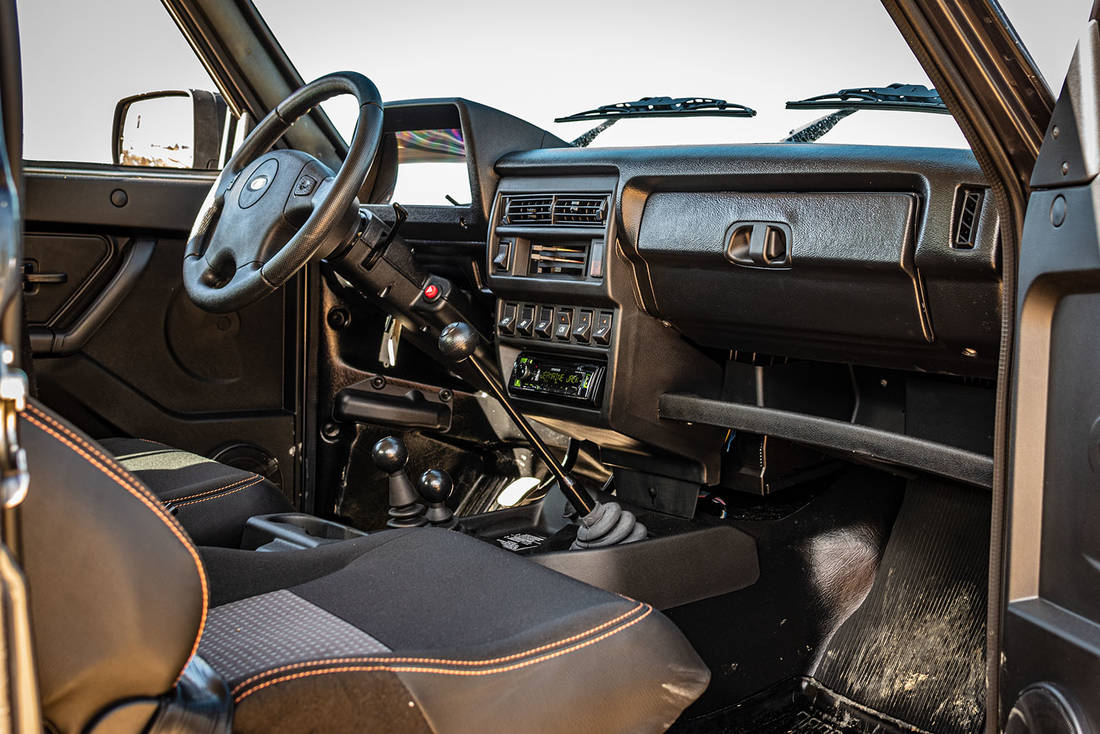
I had a few interesting rides in different Nivas during my time in the wild East, most often with the omnipresent smell of petrol competing with the vodka smell in the driver’s breath. Comfort-wise it’s a catastrophy with uncomfortable seats, terrible suspension, a useless heating system (big problem in the Russian winter!) and the list goes on. But when you turn off the road towards a muddy hill or a forest track, everything changes. Permanent all-wheel drive and switchable differential lock, along with the short wheelbase and low gears make it practically unstoppable. The model year isn’t important since not much has happened anyway, and 3.000-4.000 EUR is plenty of budget in Niva land.

A high-tech Soviet interior

Speaking of the Defender, you can of course not write about long serving cult 4×4’s with true soul without mentioning it, although budget-wise, it puts us in another league. The Defender has a strange appeal across generations: when my son was about five and I took him to the Zurich auto show, the “Africa car” was the only one he was interested in, and when a few years later I borrowed one over a weekend from a friend, pretty much the last thing I was expecting was my wife to say “this is a pretty cool car”. But the Defender is as unique as it is bad in terms of comfort, seating position, noise level etc.

No other car appeals as much to your cave man instincts…

So much has been said and written of it over the many decades it was built (from 1948 to 2016, and I doubt that’s a record the Niva will break!), that not much is left, and there’s not enough room here to go through all the different models. The Defender is a hugely capable terrain car, especially in the 90″ body given the shorter wheelbase, which also looks cooler. They model year is not very important and a car with little terrain usage is obviously to be preferred. Surprisingly enough there’s quite a lot of these, since be it in London or Zurich or elsewhere, for some strange reason this is a car that competes with 911’s as preferred commuting vehicle…

Around EUR 20.000 is where the Defender fun starts, with modern versions or those equipped with high-duty features or camping tents going up to far, far more, making it one of the cars with the least/best depreciation. It’s also been claimed to be the most environmentally-friendly, as no other car averages as many life years as the Defender!

Thie above original Defender from the James Bond “Spectre” movie is currently for sale in Switzerland – for CHF 85.000. Details on request.

So there you go: a charming Italian, a crude Russian and a posh Englishman. All of them a heap of driving fun in their right element, be it in Chianti, Russia or the Scottish highland, and useless in pretty much all other conditions. Why would you buy one unless your house is at the end of a muddy road? Maybe your dream house will one day be just that, and knowing it can easily be handled with the right vehicle puts yo in a better position for the price negotiation. Or maybe, just for the feeling of knowing that if you had to cross the jungle, you could!