Porsche 968 – more than a different number?

Back in the day (here defined as when it was assumed we could drive our cars without 17 cameras in every angle), Porsche was a sports car company with a far larger focus on the 911 than today. SUV’s and other, strange four-door creations were still far from the drawing board, but the company was actively trying not only to diversify away from the 911, but more or less to kill it off. I’ve written about this several times, notably in my posts on the Porsche 928 and 944 respectively, four years ago.

As part of that strategy, it was precisely the Porsche 944, launched in 1982, that was to help where until then, the 928 had failed, and it definitely had a lot going for it. It looked modern in a well-designed and quite practical body, including the pop-up headlights that were mandatory in the 80’s. Especially in later years as it evolved, it was also able to shake off most of the Audi vibes its lesser predecessor, the 924, had given it, at least in the eyes of some. For the purists, that was of course not good enough, as it only had a four-cylinder engine that wasn’t even air-cooled.

Although more modern than the 911, the 944 never won the enthusiasts’ hearts

In spite of that, the 944 continued to evolve with a second series, called S2, launched in 1989, which brought both more power and a far nicer interior. Also, during the S2’s short lifetime of only three years, production was finally moved from the Audi plant in Neckarsulm, Germany, to the Porsche plant in Zuffenhausen near Stuttgart. All that didn’t really help though, as when S2 was discontinued in 1991, it still hadn’t been as successful as Porsche had hoped. And by now, its basic design started to look dated, especially the front and back which went back more than 15 years to the original 924 from the mid-70’s.

Porsche decided to give it one more shot in a Mark III version, internally called the 944 S3. In the eleventh hour, the decision was however taken to change the car more than what had been originally planned, so that when it was launched, Porsche felt it deserved a completely new name – the 968. The exact logic behind the numbers isn’t fully clear, more than Porsche wanting to de-emphasize the connection to the 944, while reinforcing the similarities with the 928 and thereby perhaps also create a positive vibe around the latter.

As always in those days, Porsche supported the launch with some great advertising!

Was this a lot of marketing talk, or was the 968 different enough to motivate the new name? Actually, if you look a bit closer as we’ll do below, I would claim it was. The 968 brought updates in several areas that taken together made it a far more modern car. Prospective buyers obviously felt differently and the 968 was never more of a commercial success than the 944 S2 had been. Fast forward 30 years however and it’s become quite an interesting proposition, as we’ll see.

To start with the exterior, there’s no doubt the 968 took after its bigger sibling, the 928. The pop-up headlights were round and the front spoiler looked the same as on the flagship. The rear was completely re-designed and given completely red rear lights, considered highly modern at the time. The interior was however left pretty much alone as since the S2 revamp, it was fully modern and actually an interior that has stood the test of time really well.

Everything you’ll ever need to drive a car!

The bigger changes were however in the drivetrain, where firstly, thanks to the transaxle construction with the gearbox in the back, the weight distribution pas practically 50/50 (this had obviously been a feature of the 924 and 944 as well). Also, that gearbox was now a new six-speed, replacing the five-speed box of the 944. There was also an automatic option, that we won’t go into more than that. The basis of the engine was not the 944 Turbo but rather the “normal” S2 engine, here as a 3-liter inline four-cylinder with about 240 hp. It was the first Porsche engine to feature Variocam, a system for variable valve timing, improving both performance and efficiency.

This made the 968 less powerful than both the 911 and its predecessor, the 944 Turbo, which in its last iteration had 250 hp, but also less prone to failure than the latter. And in the early 90’s, 6.5 seconds to 100 km/h was still a respectable time. Above all though, the 968 conveys a true Porsche feel of the time in terms of how it drives, less powerful but more predictable than a 911, and much more light-footed and sporty than a 928. Unsurprisingly the 944 Turbo has more low-rev torque, whilst the 968 as naturally aspirated, has a broader performance range and enjoys being revved.

The 3-litre four-cylinder, the biggest in the market at the time, is a brilliant engine!

To prove how good the engine really was, Porsche took it to the Nardo circuit in Italy in the spring of 1992, and drove it flat out for 24 hours. Including fueling stops, the 968 covered a distance of 5566 km, equivalent to an average speed of 232 km/h. Try doing that with an EV!

There’s thus no doubt that the last evolution of the 944 was a pretty big and important one, something I was reminded of when seeing a 968 on the street the other day, and being struck by how good and relatively modern it looked. I did what I’m sure you all do, i.e. checked how much they are these days. To my surprise, it turns out that a nice 968 can easily be yours for around EUR 30.000, with the convertible costing 40-50% more. Somewhat surprisingly, the 944 Turbo is in the same price range as the 968 convertible. As a small comparison, the cheapest 911 of the same age will cost you three times that, and whereas a 928 will be yours for maybe EUR 50.000, it will be much costlier to run than a 968. As will a 911 for that matter, which is also far less practical.

If you have room in your garage and if you still feel confident driving a car without cameras and emergency braking, then you know what to do. And don’t wait too long, as 968’s, of which less than 13.000 were built between 1991 and 1995, are starting to become really rare. The 968 is definitely a real Porsche, and it’s no doubt the best version of the 944 series. It’s both modern and practical enough to be used more than on an occasional Sunday, and all this for a price that is lower than that of a Chinese EV. That makes it really difficult to say no to!
Buying right, and at the right price!

What do you remember about March 2022? Russia had invaded Ukraine only a week earlier, there was a coup d’état in Burkina Faso (yes, I had to look that one up…), and then the Fed started the current rate raising cycle, thereby ending a decade of zero interest rates or if you will, free money. As we know now a year later, the subsequent increases to the current level were the quickest in history, and it’s not clear if we’re done yet. They’ve happened against a background of rising inflation after as said, a decade of zero rates and money printing, by the same central banks who are now trying to contain the inflationary pressures that resulted from it.

When you don’t get any return on your savings, you try to do so by putting your money elsewhere. And so over the last decade, pretty much every type of investment has had a good run that at least partly came to an end a bit more than a year ago. One of the best areas to put your money in this period has been various types of collectible cars – oldtimers, race cars, and then with time, pretty much every car beyond a certain age, never mind really how collectible it really is. That’s what we’ll talk about today, as everything that is priced as a collectible certainly isn’t one, which is something the new market environment will no doubt show us. I have however recently seen some excesses in the market that are frankly just ridiculous and that show that a new balance hasn’t been found yet. Being sensible in your planned car purchase is therefore more important than ever!

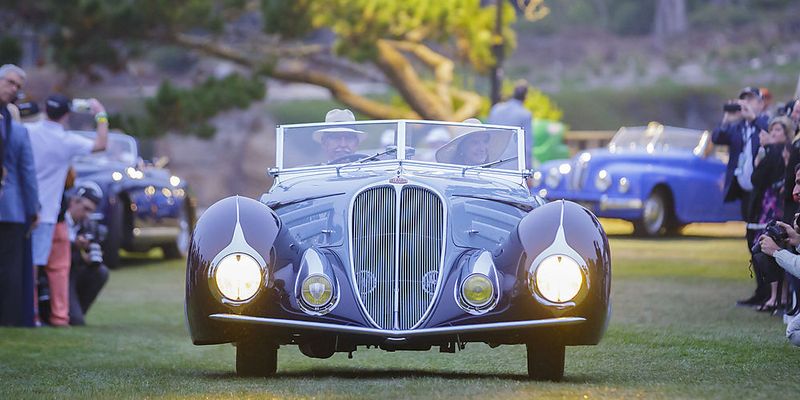
Pebble beach and other car shows have been spectacular in the last years!

Back in 2020 I wrote a post you can find here, where I went into some aspects to consider when buying your dream car. I also emphasized precisely that, i.e. that you should really buy the car because of your love and desire for it – not because you think it will increase in value. Although many cars have continued to do so, that’s worth remembering. Firstly, whether a car will rise in value or not is never a given (except perhaps for a small number of hyper-exclusive and very limited series). Secondly maintenance, storing, insurance and running any car, but especially collectibles, eats up much of the potential value increase, so at the end of the day there often isn’t much left. then again, that’s perfectly alright as long as your priority has been to enjoy the time spent behind the wheel!

You may well think this is too negative, and that value appreciation on, say a manual Porsche 911 of certain series is all but guaranteed since they haven’t yet reached the stratosphere (well, most have, but not all), and they’re becoming fewer and further between. That’s true, but then again so is a Porsche 944 which still hasn’t gone anywhere and probably never will – although its sibling (and less good looking) successor, the 968 has. I’m certainly not claiming there aren’t cars that will rise in value going forward, I’m just saying that you shouldn’t bet on it, and it’s not what should guide your purchase.

Today worth twice as much as its better-looking predecessor…

That said, there are a few clues to help you select a car that is both a joy to drive and can be expected to hold its value relatively well. A manual gearbox is certainly one such thing, if you look for example at a 911, a Ferrari F355, and a bunch of other cars that are 10-20 years old. Production numbers is another, as special series or limited production runs tend to hold values better. The right engine will help, as will provenance, given a famous previous owner tends to do wonders for the price. I find this last one a bit strange since it’s not like it says “this used to belong to (select your favorite famous person)” on the car, but I guess there are things that can’t fully be explained by logic…

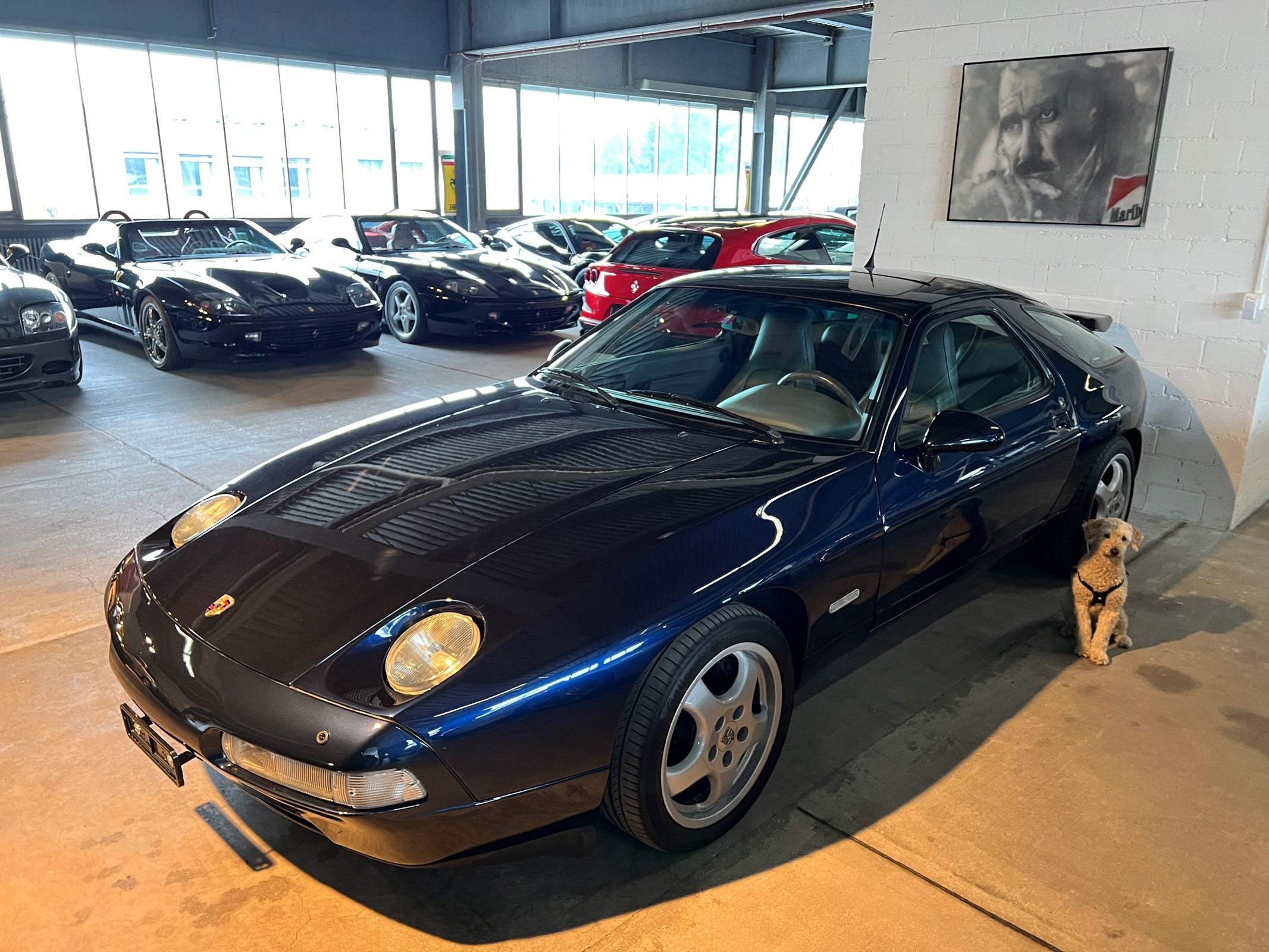
A case in point is a classic dealer in the Zurich area who has a Porsche 928 GTS standing in the showroom. With 90.000 km on the clock the mileage is ok but not exceptional, as is the general condition of the car – very good, but not mint. The GTS was the last iteration of the 928 produced in the early 90’s. At 350 hp it had the highest power output of all 928 series and is for many the most attractive in the range, provided however that it’s a manual, which this wasn’t. The dealer had tried to compensate this with a big sign saying “Prominent Swiss previous owner”.

The dog is not included in the price…

This country is great in many things, but it’s not like we’re lining up famous people. The only two can think of who would motivate paying more for a car according to this logic would be Roger Federer, who’s however tied to Mercedes-Benz through sponsor contracts and, well, Tina Turner, who spent the last 20 years of her life in a magnificent villa on the shores of the Zurich lake. She obviously just passed away, may she rest in peace, but before that was mostly seen in a green Bentley. The “famous previous owner” is thus most probably no one known outside of the local Zurich circle. And it doesn’t warrant you paying – hold on to your chair – around USD 110.000 for this particular 928, especially when a far more desirable manual GTS can be had in similar condition for USD 20-30.000 less. Which is still double what they cost 2-3 years ago.

Another even stranger category is that of cars that someone bought a number of years ago and never drove, so that they’re now sold with very low mileage, most often in a condition close to new – at least on the outside. Obviously, if you’ve stored a car away for 30-40 years, it’s really important to know how it’s been stored, and also if it’s been maintained throughout. Because a car that is left standing for a number of years without no one attending to it, is not a car you want. Then the question is of course also whether there’s anything attractive with the car apart from the fact that no one’s driven it, or if it’s just an old car?

Irresistible? Rather very resistible…

An example of this is a VW Golf GL Diesel from 1983, advertised by one of the most well-known classic car dealers in the region. Someone bought this 50 hp monster 40 years ago, sealed it, and put it away, so that it only has 2.000 km on the clock. I guess the 50 hp were not that exciting even back then… It’s most probably been stored correctly and maintained throughout, but who on earth would pay the asking price of around USD 28.000 for a car that wasn’t even desirable when it was new? I can think of a large number of far better, more modern and certainly more fun small cars for that money, and I’d be really surprised if this example doesn’t sit with the dealer for a long time. As if this wasn’t enough, the 70’s shade of brown really isn’t a particular desirable color,

It’s not all bad though, because the gems are still out there, you just need to be patient and look out for them. Coming back to 911’s, and more specifically one of my favorites, the 997 Turbo, I’ve spotted a manual 2009 car in silver with a red leather interior and all the carbon packs you could have at the time, and around 85.000 km on the clock. It’s in mint condition and has had one previous owner, the F1 driver Jarno Trulli (who raced between 1997-2011 and had the good taste of scoring his only win in Monaco in 2004).

I need to find a good reason to put my money here…

Whether he’s famous or not is not the point, it’s more that I would assume that an F1 driver for one drives the car correctly (albeit fast…) and also knows, and has the money, to maintain it properly. Then again if that isn’t the case, I wouldn’t hesitate going for a car where it is, no matter who the previous owner is. At an ask price of around USD 85.000, the car is only slightly more expensive than comparable cars, but that is probably warranted by its history.

Desirable? To me, absolutely, I’ve had my eye on the 997 Turbo for a while and actually find the red interior pretty cool, although it’s not for everyone. Will it increase in value? Maybe, then again it certainly won’t be free to run. Does it make my “car buying pulse” increase? Definitely – at the thought of driving it that is, not speculating about its potential future value increase. If you ask me, that’s exactly as it should be. Now I just need to find a half-rational argument for it…